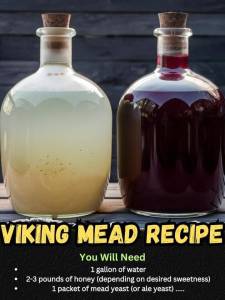
Ingredients:
1 gallon of water
2-3 pounds of honey (depending on desired sweetness)
1 packet of mead yeast (or ale yeast)
1 teaspoon of yeast nutrient (optional but recommended)
Spices (optional, such as cinnamon, cloves, or ginger)
Instructions:
Sanitize equipment. Ensure all your equipment (fermenter, stirring spoon, airlock, etc.) is thoroughly sanitized to prevent contamination.
Prepare the Must:
In a large pot, heat about half of the water (not boiling, just warm enough to dissolve the honey).
Add the honey to the warm water and stir until fully dissolved. This mixture is called the must.
Pour the must into a fermenter and add the remaining water to make up one gallon.
Add Flavorings:
If using spices, add them now. A small amount of cinnamon or a few cloves can add nice flavors.
Pitch the Yeast:
Once the must is at room temperature, sprinkle the yeast into the fermenter.
Add the yeast nutrient if you’re using it. This helps the yeast grow and ferment more effectively.
Fermentation:
Seal the fermenter with an airlock to let gases escape while preventing contaminants from entering.
Place the fermenter in a dark, cool place (around 65-75°F or 18-24°C).
Allow the mead to ferment for about 4-6 weeks. The airlock will bubble as the yeast ferments the sugars into alcohol. When the bubbling slows down significantly, fermentation is nearing completion.
Racking:
Once fermentation is complete, siphon the mead into a clean secondary fermenter to leave behind the sediment (called lees). This process is known as racking.
Allow the mead to age in the secondary fermenter for an additional 1-3 months. This helps to clarify and mature the flavors.
Bottling:
After aging, carefully siphon the mead into sanitized bottles.
Seal the bottles with corks or caps.
It’s best to let the bottled mead age for another few months to a year to allow the flavors to develop fully.
Enjoy:
Once aged to your preference, chill the mead and enjoy a taste of Viking history!
Tips:
Mead improves with age, so patience is key.
Experiment with different spices and fruit additions to create unique flavors.
Ensure all equipment is sanitized to avoid contamination, which can spoil the mead.
Enjoy your homemade Viking mead!
Skål!
 Hālau 'Aha Hui Lānākila