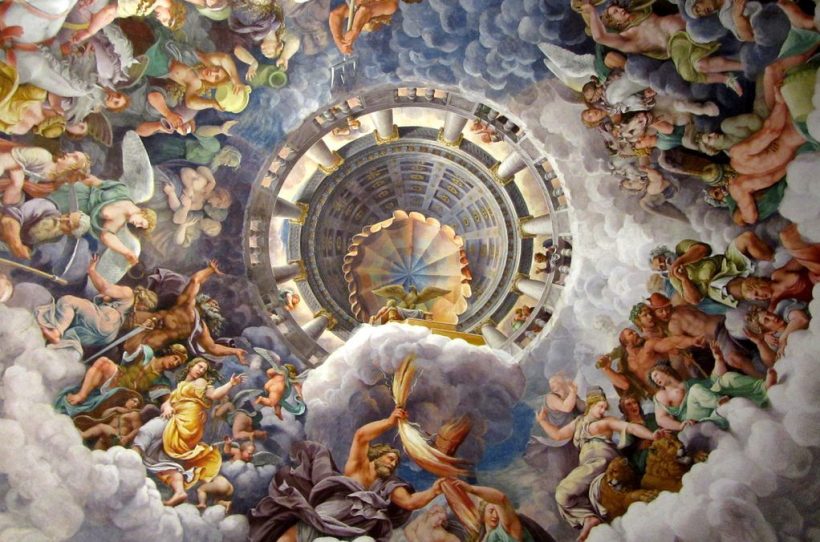
We are already in the second Full Moon of this month, a phenomenon we call Blue Moon. Of course, the Moon is not going to turn blue, nor will you see it in this color. The only color change you wil […]
We are already in the second Full Moon of this month, a phenomenon we call Blue Moon. Of course, the Moon is not going to turn blue, nor will you see it in this color. The only color change you wil […]

Yo ca vassasataṃ jīve
dussīlo asamāhito
ekāhaṃ jīvitaṃ seyyo
sīlavantassa jhāyino.
Better it is to live
one day virtuous and meditative
than to live a hundred years
immoral and uncontrolled.
Dhammapada 8.110
The Dhammapada: The Buddha’s Path of Wisdom, translated from Pāli by Acharya Buddharakkhita

Yo sahassaṃ sahassena
saṅgāme mānuse jine,
ekañca jeyyamattānaṃ
sa ve saṅgāmajuttamo.
Though one may conquer
a thousand times a thousand people in battle,
yet one indeed is the noblest victor
who conquers oneself.
Dhammapada 10.103
The Dhammapada: The Buddha’s Path of Wisdom, translated from Pāli by Acharya Buddharakkhita
Mahalo mai ʻōukou for your Aloha … ‘O ka maluhia no me ‘oe
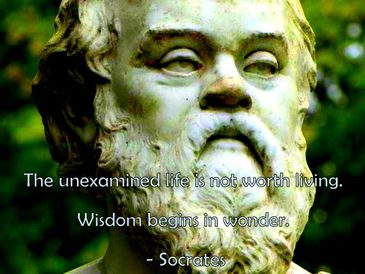
If we trace the English term ‘soul’ to its Greek antecedents and equivalents, we soon find a wide variety of meanings. Even before the time of Socrates, many accretions and materializations had already gathered around the concept. It was compared to the wind. It was also supposed to mean ‘that which breathes,’ ‘that which is alive.’ And it was given many other meanings and often couched in metaphorical terms through analogy with sparks and a central fire. It became crucially significant for Plato to enrich the notion of ‘soul’ and to give it an existentially human meaning to do with the very act of search, the very desire to know the good, the hunger to make distinctions — not only between the good and the bad but between the good and the attractive, not only between the true and the false but between the true and the plausible. The desire to make noetic discriminations becomes the basis for a functional definition of the soul. Plato taught that, metaphysically, the soul may be seen either as perpetual motion or as a self-moving agent. In one passage he refers to a particular kind of motion which is not visible in the material realm but may be properly ascribed to the hidden Logos, the invisible deity. Elsewhere, what he identifies as the soul is connected with volition. What would it avail a man who uses the word in a Socratic sense but does not come to terms with his own will-problem, or worse still, becomes identified intellectually with his weak-willed self?
Language is very important here. The prolonged abuse of the term ‘soul’ in the Middle Ages resulted from a decisive shift in meaning. An active agent was replaced by something passive, something created. In a corruption of the Socratic-Platonic meaning, the ‘soul’ became merely something acted upon, a passive agent receiving reward or punishment. The term ‘soul’ almost became unusable, so that in the Renaissance humanists had to assert the dignity and divinity of man in ways that did not involve them once again in the debased coinage of the terminology of the past. In the twentieth century the term ‘self’ is coming into wide circulation, recovering some of the dignity of the classical conception of the soul.
A person brought up in a corrupt language system could receive tremendous help by borrowing a term from Sanskrit and trying to recognize its open texture. The compassionate Teachers of the Theosophical Movement chose to introduce from that sacred language terms like Manas — the root of the word ‘man,’ from man, ‘to think’ — into the languages of the West. When Emerson eulogizes “man thinking” he is using two English words in a manner that confirms exactly the full glory of the idea of Manas. Yet we also know that both the words ‘man’ and ‘thinking’ can be so degraded in everyday usage that they do not convey the glory of manhood implied by Manas. The term Manas in Sanskrit means not only ‘to think,’ but also ‘to ideate,’ ‘to contemplate.’ To contemplate in this classical sense is to create, to sustain a continuous and controlled act of creative imagination enveloping more and more of the whole, while retaining that core of individuality which signifies responsibility for the consequences of all thoughts, all feelings, all words, and all acts. This is a kingly conception.
It is often advantageous for a person to go outside his particular prison-house of debased language and explore classical concepts. As we grow in our awareness, we may make the beautiful discovery that even in the accents of common speech there are echoes of those pristine meanings. The literal meaning of words is less important than the tone of voice in which we use them. It is possible for a man in the street to say to another, “Hi, man” with unconscious contempt, and for a traveller in the Sierras to say, “Hi, man,” in a manner that expresses genuine fellow-feeling. Miranda in The Tempest, seeing human beings for the first time, exclaims:
O, wonder! How many goodly creatures are there here!
How beauteous mankind is! O brave new world,
That has such people in’t!
Every word has a depth and beauty of feeling that makes ordinary English words rise like wingèd skylarks into the universal empyrean — generous, cosmic and free. Beyond all languages and concepts, the very act of articulation is of immense importance. Perhaps the most beautiful passage on the subject of reincarnation is to be found in The Human Situation by Macneile Dixon. This great lover of the literatures of the world, of Plato and Shakespeare, dared to suggest:
What a handful of dust is man to think such thoughts! Or is he, perchance, a prince in misfortune, whose speech at times betrays his birth? I like to think that, if men are machines, they are machines of a celestial pattern, which can rise above themselves, and, to the amazement of the watching gods, acquit themselves as men. I like to think that this singular race of indomitable, philosophising, poetical beings, resolute to carry the banner of Becoming to unimaginable heights, may be as interesting to the gods as they to us, and that they will stoop to admit these creatures of promise into their divine society.
By speech a man can betray his divine birth, and just as this is true of speech in its most sacred and profound sense, it is also true of human gestures. The simple mode of salutation in the immemorial land of Aryavarta is filled with this beauty. When the two hands come together, they greet another human being in the name of that which is above both, which brings the two together, and includes all others. There is something cosmic, something that has built into it a calculation of the infinite in the expedient, even in this gesture.
But what is true of gestures could be even more true of human utterance. The surest proof of the divinity and immortality of man is that through the power of sound he can create something that is truly magical. He can release vibrations that either bless or curse, heal or hinder other beings. This is determined by motivation, intensity of inmost feeling, and the degree of individual and universal self-consciousness, nurtured and strengthened through constant meditation and self-study.
Suppose one were to ask of the gods, “Give me one of two gifts for all men. Give me first that gift which will suddenly enable all men to say that they know about reincarnation and the soul, and that they believe in immortality. Second, give me that gift which enables all men to help babies to grow with a feeling of dignity, deliberation, beauty and sanctity in regard to human speech.” The wise would know that the latter gift is much more valuable than the former, because mere beliefs will not save human beings even though truly philosophical reflection upon alternatives is part of the prerogative of a Manasic being, a man in Emerson’s sense. These beliefs can only be made to come alive through the exercise of conscious and deliberate speech, with a delicate sensitivity for the existence of other beings, and an immense inner compassion for all that is alive. If human speech were not constantly wasted and made into something so excessive and destructive, so mean and niggardly, we would not find so much of the self-hatred, mutual distrust, pessimism and despair that characterize our lot. We would not find ourselves in a society which is free but where, alas, the loudest voice is the most feared and tends to have the widest impact.
Anyone who can existentially restore the alchemical and healing qualities of sound, speech and silence, to some limited extent, in the smallest contexts — in relations with little children, with all he encounters even in the most trivial situations — does a great deal for the Bodhisattvas. Those Illuminated Men, by their very power of thought and ceaseless ideation, continually benefit humanity by quickening any spark of authentic aspiration in every human soul into the fire which could help others to see. The truth of reincarnation requires much more than a casual scrutiny of our external lives and our spoken language. It must be pondered upon in the very silence of our souls. It is a theme for daily meditation. In the Bhagavad Gita Lord Krishna tells Arjuna that true wisdom is a meditation upon birth, death, decay, sickness, and error. To meditate upon each of these and all of these together is to begin to know more about the cosmic and the human significance of the truth of reincarnation.
Raghavan Iyer
The Gupta Vidya II

Uttiṭṭhe! Nappamajjeyya!
Dhammaṃ sucaritaṃ care.
Dhammacārī sukhaṃ seti
asmiṃ loke paramhi ca.
Arise! Do not be heedless!
Lead a righteous life.
The righteous live happily
both in this world and the next.
Dhammapada 13.168
The Dhammapada: The Buddha’s Path of Wisdom, translated from Pāli by Acharya Buddharakkhita

Manopakopaṃ rakkheyya;
manasā saṃvuto siyā.
Manoduccaritaṃ hitvā,
manasā sucaritaṃ care.
Let one guard oneself against irritability in thought;
let one be controlled in mind.
Abandoning mental misconduct,
let one practice good conduct in thought.
Dhammapada 17.233
The Dhammapada: The Buddha’s Path of Wisdom, translated from Pāli by Acharya Buddharakkhita

Developing the right relationship with our digital technology is a critical step on the path. […]
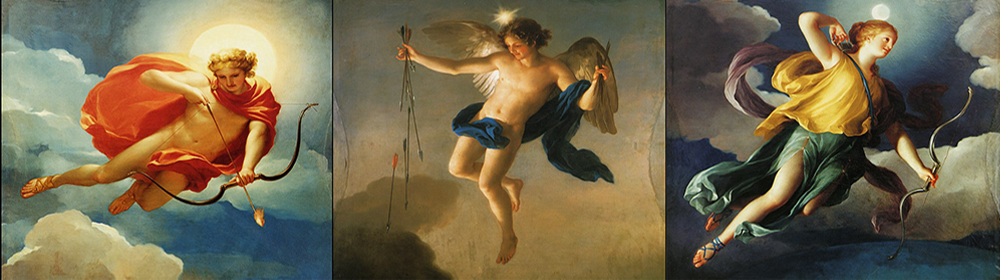
Sun Mars and Uranus are all at 22 degrees Leo, Virgo and Taurus August 15. 22 reduces 4 which is the Emperor/King archetype. Donald Trump numerology he is a 22/4/0 the King and The Fool.

Vacīpakopaṃ rakkheyya;
vācāya saṃvuto siyā.
Vacīduccaritaṃ hitvā,
vācāya sucaritaṃ care.
Let one guard oneself against irritability in speech;
let one be controlled in speech.
Abandoning verbal misconduct,
let one practice good conduct in speech.
Dhammapada 17.232
The Dhammapada: The Buddha’s Path of Wisdom, translated from Pāli by Acharya Buddharakkhita

Keeping kratom consumers needs to be a critical concern for all elected officials in Michigan […]
Source: Opinion | Kratom has given me a better life. Michigan needs regulation | Bridge Michigan
@FreeHawaiiNews – With Hosts Hinaleimoana Wong & Leon Siu Giving The Kanaka Perspective On Issues In Hawaii. Our August Show Reports On The Hawaiian National Soccer Team, Also Mauna Kea Protectors Oppose TMT Construction Permit Extension, Amazing Discoveries In Bern, Switzerland About The Hawaiian Kingdom, Kumu Hinaʻs Mana`o About The Many Meanings Of The Word Lahui, A Report On The “Pacific Way” – A New Movement, Plus Much More.

Mattāsukhapariccāgā
passe ce vipulaṃ sukhaṃ,
caje mattāsukhaṃ dhīro,
sampassaṃ vipulaṃ sukhaṃ.
If by renouncing a lesser happiness
one may realize a greater happiness,
let the wise one renounce the lesser,
having regard for the greater.
Dhammapada 21.290
The Dhammapada: The Buddha’s Path of Wisdom, translated from Pāli by Acharya Buddharakkhita

Yogā ve jāyatī bhūri,
ayogā bhūrisaṅkhayo.
Etaṃ dvedhāpathaṃ ñatvā bhavāya vibhavāya ca,
tathāttānaṃ niveseyya yathā bhūri pavaḍḍhati.
Wisdom springs from meditation;
without meditation wisdom wanes.
Having known these two paths of progress and decline,
let one so conduct oneself that one’s wisdom may increase.
Dhammapada 20.282
The Dhammapada: The Buddha’s Path of Wisdom, translated from Pāli by Acharya Buddharakkhita
Aunty Nona Beamer tells her own story along with family members, and describes the very best of all things Hawaiian: the people, their knowledge, culture, wisdom and aloha.

Appaṃ vata jīvitaṃ idaṃ!
Oraṃ vassasatāpi miyyati,
yo cepi aticca jīvati,
atha kho so jarasāpi miyyati.
How short this life!
You die this side of a century,
but even if you live past,
you die of old age.
Sutta Nipāta 4.810
Translated from Pāli by Thanissaro Bhikkhu
As a scholar, linguist, composer, translator, teacher and kumu hula, Mary Kawena Pukui’s work is the backbone of Hawaiian culture and language. Her hānai daughter Patience Namaka Wiggin Bacon and longtime research assistant Eleanor Williamson go on a journey to share Pukui’s story. Her legacy is evident as we see how students are learning to speak Hawaiian. Plus, marvel at the pageantry of pā‘ū riders.
Kumu hula share their early learning experiences from cultural icons in the Native Hawaiian community.

Paṇḍito sīlasampanno
jalaṃ aggīva bhāsati;
bhoge saṃharamānassa
bhamarasseva irīyato.
One who is virtuous and wise
shines forth like a blazing fire;
like a bee collecting nectar
one acquires wealth by harming none.
Dīgha Nikāya 3.265
Gemstones of the Good Dhamma, compiled and translated by Ven. S. Dhammika

Sabbhireva samāsetha,
sabbhi kubbetha santhavaṃ.
Sataṃ saddhammamaññāya
paññā labbhati nāññato.
Consort only with the good,
come together with the good.
To learn the teaching of the good
gives wisdom like nothing else can.
Saṃyutta Nikāya 1.31
Gemstones of the Good Dhamma, compiled and translated by Ven. S. Dhammika

Manopubbaṅgamā dhammā;
manoseṭṭhā manomayā.
Manasā ce pasannena
bhāsati vā karoti vā,
tato naṃ sukhamanveti
chāyāva anapāyinī.
Mind precedes all things;
mind is their chief, mind is their maker.
If one speaks or does a deed
with a mind that is pure within,
happiness then follows along
like a never departing shadow.
Dhammapada 1.2
Gemstones of the Good Dhamma, compiled and translated by Ven. S. Dhammika
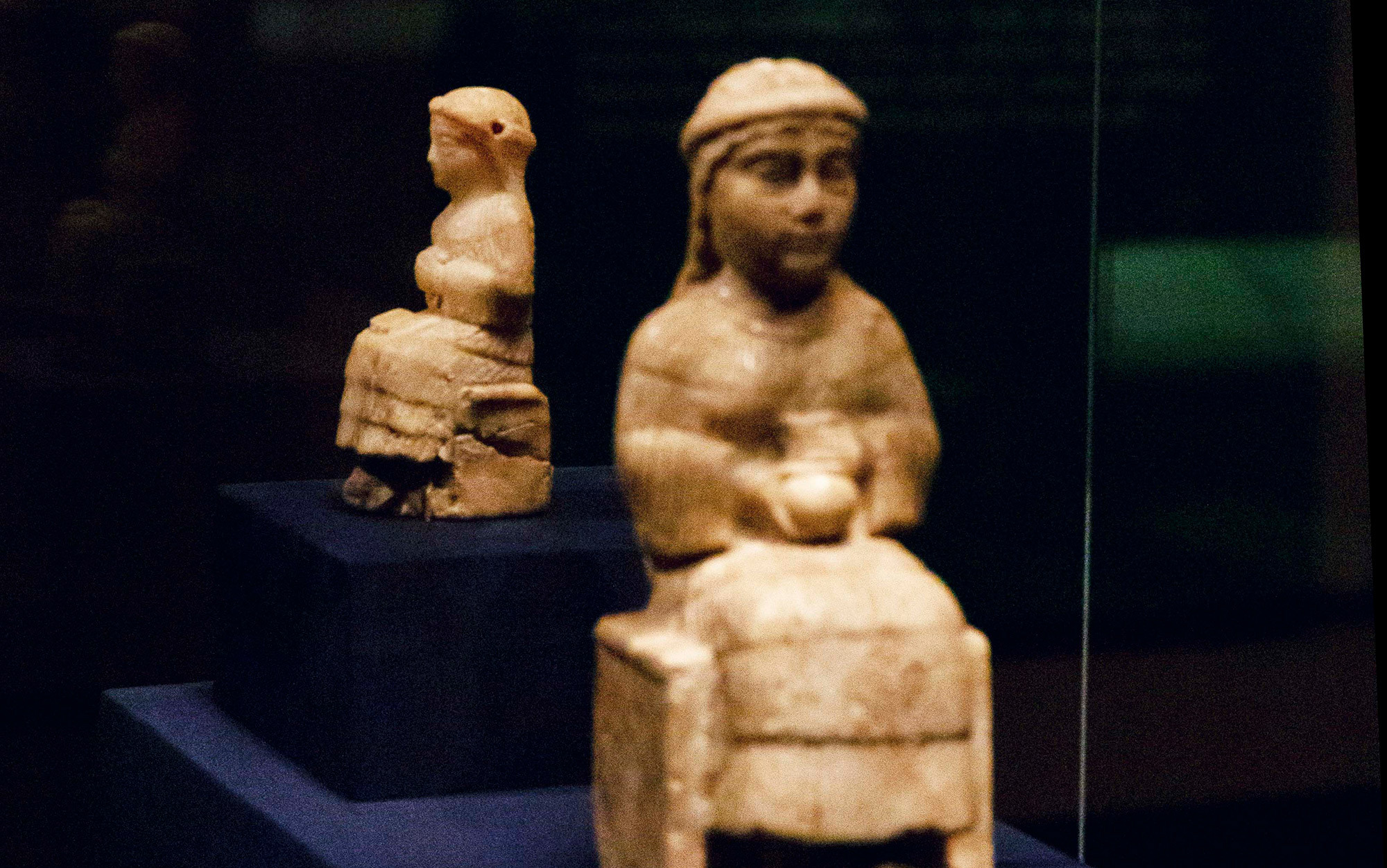
Enheduana is the first known named author. Her poems of strife and upheaval resonate in our own unstable times […]
Source: Ancient Sumerian poetry turns instability into cosmic insight | Aeon Essays

Judging harshly, rather than overstanding what is, leads to loss of peace because there is always an element of rejection and something to be found wanting.

Feel rather foggy and whacked out now? I’ll explain. VENUS and Mercury in LEO in sextile to South Node in Libra, they form a Yod or Finger of God to NEPTUNE at 27 Pisces.

Sududdasaṃ sunipuṇaṃ,
yatthakāmanipātinaṃ;
cittaṃ rakkhetha medhāvī,
cittaṃ guttaṃ sukhāvahaṃ.
Difficult to detect and very subtle,
the mind seizes whatever it wants;
so let a wise one guard one’s mind,
for a guarded mind brings happiness.
Dhammapada 3.36
Gemstones of the Good Dhamma, compiled and translated by Ven. S. Dhammika

Yassa nittiṇṇo paṅko,
maddito kāmakaṇṭako,
mohakkhayaṃ anuppatto,
sukhadukkhesu na vedhatī sa bhikkhū.
One who has crossed over the mire,
crushed the thorn of sensuality,
reached the ending of delusion,
is a monk undisturbed by bliss & pain.
Udāna 3.22
Translated from Pāli by Thanissaro Bhikkhu
Hawaii was an independent nation until January 17, 1893. That day, the archipelago and its monarchical government were overthrown illegally by the United States. Since then, the USA has taken over Hawaii illegitimately, turning the island into a military base that threatens world peace, while sovereignty groups organize to rescue its legitimacy.
Aloha e mahalo nui for this session, Geraldine Convento!
Victoria Generao is an Imperator-General for a Golden Dawn Order, an 18th degree Reiki Grandmaster, and a High Priestess and Mother Abbess of the Magdalena Oedinis Venetae Rosae. Success for her is defined by attainment, accomplishment, and progress. As a practicing ceremonial magician, she’s had a long inner journey into identifying and developing the skills and resources she needs to to carry out her tasks. Also, coming from a bicultural background, she’s had to face a good number of roadblocks, the most important of them being persistence in the face of non-acceptance. In this new episode of The Three Pillars of Success, we discuss the importance of self-knowledge to achieve any accomplishment.

W.Q. Judge stated that “Karma is a doctrine too vast and complicated to be disposed of by set rules applied like balance-sheets to commercial enterprises; but one thing is certain — Karma is action viewed from every side and on each occasion.” In his article entitled “Is Karma Only Punishment?” he points out that one branch of the Law of Karma deals with the vicissitudes of life, with the differing states of men, with rewards and punishments. Each state is the exact result bound to come from acts that disturb or preserve the harmony of Nature. Karmic rewards work both on the material plane and on the inner character, on the circumstances and on the tendencies of the person placed in a particular environment. We are continually fitting our arrows to the bow and shooting them forth, but it is not the arrow or the bow that counts. The important thing is the motive and the thought with which the missile is shot. Again, in his article on “Environment,” Judge held that the real environment to be understood and cared about is that in which karma itself inheres in us. It is only because we see but an infinitesimal part of the long series of karmic precipitations that any apparent confusion or difficulty arises.
The third aphorism on karma points out that “Karma is an undeviating and unerring tendency in the Universe to restore equilibrium, and it operates incessantly.” Aphorism No. 6 states that “Karma is not subject to time, and therefore only those who know the ultimate division of time in this Universe know Karma.” Aphorism No. 13 holds that the effects of Karmic causes already set in motion “may be counteracted or mitigated by the thoughts and acts of oneself or of another.” Further, we know from Aphorism No. 19 that “changes may occur in the instrument [of the Ego] during one life so as to make it appropriate for a new class of Karma,” and this may take place through intensity of thought and the power of a vow and through natural alterations due to complete exhaustion of old causes. Aphorism No. 20 tells us that the soul and mind and body “have each a power of independent action,” so that “any one of these may exhaust, independently of others, some Karmic causes.” Aphorism No. 25 makes it clear that “birth into any sort of body and to obtain the fruits of any sort of Karma is due to the preponderance of the line of Karmic tendency.” Aphorism No. 27 asserts that “measures taken by the Ego to repress tendency, eliminate defects, and to counteract by setting up different causes, will alter the sway of Karmic tendency and shorten its influence in accordance with the strength or weakness of the efforts expended in carrying out the measures adopted.” Finally, Aphorism No. 28 affirms that “no man but a sage or true seer can judge another’s Karma.”
The section on Karma in Light on the Path similarly presents an occult rather than a mechanistic conception of Karma. We learn that the future is not arbitrarily formed by any separate acts of the present but that the whole of the future is in unbroken continuity with the present as the present is with the past. Even a little attention to occultism produces great results. When a man gives up the indecision of ignorance, even one definite and knowing step on the good or evil path produces great karmic results.
He who would escape from the bondage of Karma must raise his individuality out of the shadow into the shine; must so elevate his existence that these threads do not come in contact with soiling substances, do not become so attached as to be pulled awry. He simply lifts himself out of the region in which Karma operates.
This is precisely what Ajamila did. He learned that there was no cure for desire, for the fear of death or the thought of reward and punishment save in the fixing of the sight and hearing upon that which is invisible and soundless. He freed himself from the bonds of karma only by fixing his whole attention on that which is unaffected by karma. If Ajamila was able to invoke the name and the love of God on the approach of death, this must have been because he did not allow his misdeeds to corrupt his inner consciousness or to destroy the line of his ideation in his early life and in previous lives. Ajamila’s repentance may seem to us to be sudden or even easy, but this is precisely where we are mistaken. It is only a highly evolved soul who can refrain from rationalization even when he falls into a nightmare of wrongdoing, who can bring total intensity to his thought of his Higher Self and the God of Love. It is because we are not in a position to know the entire karmic sequence in the lives of Ajamila, it is because we do not see that part of his karma was working through his finer tendencies developed over a long period, that we look upon his dramatic conversion as an easy way of expiation and a setting aside of the Law of Karma.
Many people take a crudely materialistic view of karma and cannot come closer to its profoundly mysterious workings on the subjective planes of consciousness. Every human being has within himself the karma-less fount of being, the Guardian and the Divine Parent who is a spectator of karma but is untouched by it. Mere personal repentance is of no avail and cannot expiate our sins or free us from the effects of our actions. True repentance must belong to our deepest natures, must clearly reveal the root cause of our betrayal of the divine within us, the crucifixion of the God within. Spiritual conversion or resurrection is only possible if we cease to identify ourselves with our personal sheaths while assuming full responsibility for their scars, and if we wholeheartedly activate our vesture of immortality by sacrificial tapas and regenerative meditation. It is a mistake to isolate sinful acts or acts of repentance if we wish to grasp the working of the Law of Karma on the invisible as well as the objective planes of being.
And he said unto them:
Take heed what ye hear: with what measure ye mete, it shall be measured to you; and unto you that hear shall more be given. For he that hath, to him shall be given; and he that hath not, from him shall be taken even that which he hath.
And he said:
So is the kingdom of God, as if a man should cast seed into the ground; and should sleep, and rise night and day, and the seed should spring and grow up, he knoweth not how. For the earth bringeth forth fruit of herself; first the blade, then the ear, after that the full corn in the ear. But when the fruit is brought forth, immediately he putteth in the sickle, because the harvest is come.
And he said:
Whereunto shall we liken the kingdom of God? or with what comparison shall we compare it? It is like a grain of mustard seed, which, when it is sown in the earth, is less than all the seeds that be in the earth; but when it is sown, it groweth up, and becometh greater than all herbs, and shooteth out great branches; so that the fowls of the air may lodge under the shadow of it.
And with many such parables spake he the word unto them, as they were able to hear it.
The Gospel According to Mark 4:24-33
Raghavan Iyer
The Gupta Vidya II

There are two influential doctrines which could colour the attitude of the seeker of wisdom towards the concept of true repentance. Both doctrines contain a germ of truth, but in their extreme formulations they are false and pernicious, dangerous distortions. One is the fatalistic doctrine of mechanical repentance, tied to a severely formal view of punishment. We have the notion that the only way in which we can expiate our sins of omission and commission is by receiving in the future the precise penalties attached to our acts, that there can be no repentance which mitigates our penalties. We may say to a sinner, “You have done wrong; you may regret your action and you may try to learn the lesson of your failure, but you cannot avoid the consequences of your act in the future; your karma is bound to catch up with you sometime and you must be ready to receive your penalties.” The other doctrine is that of sudden repentance, sometimes linked to the idea of vicarious atonement. We have here the notion that it is possible by profound regret and a dramatic act of confession and self-abasement to set aside the inexorable working of the law of Karma. We may say to a sinner, “You have sinned, yet you need not be oppressed by the thought of your future penalties; you can here and now cancel the consequences of your past sins; you can invoke the compassion of the Illustrious Beings who are the Great Guardians of the Law; you can implore the forgiveness and the blessing of the God within you.” Which is worse — a too mechanical or a too lax interpretation of the Law of Karma? What is true repentance?
In order to answer these questions we could usefully turn to the story of Ajamila in Book VI of The Bhagavatam. By means of stories from the lives of prophets and kings, sages and devotees, this great scripture popularizes the truths contained in the Vedas. It would be easy to draw the wrong lessons from these stories or to read into them our own preconceptions. Every story must be seen as a corrective to a prevailing error or a half-truth concerning morality, salvation and the spiritual life. There are the well-known stories about Narada, Kapila, Dhruva and Prahlada and many stories about Sri Krishna. This fascinating work was composed by Vyasa, who handed it down to Suka, who in turn passed it on to King Parikshit, from whose court it was subsequently transmitted by saintly minstrels.
The story of Ajamila is briefly as follows. He was a man who married a woman of evil ways and became very dishonest, an easy prey to wicked and sinful habits. Of his ten sons, his favorite was the youngest named Narayana. One day, when Ajamila thought he was dying, he was terror-stricken by the sight of three ugly, demon-like attendants of the King of Death. He called his son Narayana, but as he uttered the name his mind became wholly concentrated on Narayana or Vishnu, the Lord of Love. While he was thus intently meditating upon God, there appeared before him the attendants of Lord Vishnu who confronted the attendants of Death. The latter asked the former why they were preventing the Law from taking its course. As a man sows, so must he reap, they said. Man is subject to the three gunas and his present life shows plainly his past as well as his future. His deeds leave their impressions on his subtle body and these impressions control his actions, and his future life is determined by all his present deeds. Ajamila was in his early youth, the attendants of Death reminded the attendants of Vishnu, a devout and truthful man, self-controlled, well versed in the scriptures, a friend to all beings and creatures. But one day, while in the woods gathering flowers for worship, he was aroused by the sight of a lustful couple, lost all control of himself, became greatly attached to the woman who was a wanton, forsook his lawful wife for her and gave up the pure life that he had been living. He wasted his entire fortune trying to please this woman and began to employ dishonest means to earn his living. He was now about to die in all his sins, to be taken to the King of Death who would punish him justly, and the suffering he would undergo could purify him.
The attendants of Vishnu replied that Ajamila had expiated all his sins by uttering the name of God and surrendering himself to the Lord. Wrongdoing is not eradicated or expiated, they said, if the mind continues to follow wicked desires, but when the name of God and the love of God have purified the heart all sins are completely destroyed. The mere name of God has power to save even the most depraved. On hearing all this, the attendants of Death went away and Ajamila regained his consciousness and gradually got back his health. He felt that he had received a great blessing perhaps owing to a few good deeds stored up from his past, and his whole life seemed to be transformed. He gave up his evil ways, renounced his home, practised Yoga for many years, attained self-control, and his mind became firmly fixed in the contemplation of the Divine Self. When death finally came to him, he gave up his body while chanting the sacred name of God and absorbed in meditation, thus freeing himself from the bondage of karma.
In the preamble to this story we are told that if a man commits sinful acts which he does not expiate in this life, he must pay the penalty in the next life and his suffering will be great. Expiation and repentance are of no avail to a man who continues to commit sinful acts knowing them to be harmful. All sinful thoughts and evil deeds are caused by ignorance and true expiation comes from illumination. The fire of spiritual knowledge consumes all evil and ignorance, and complete transformation of the inner life is accomplished by following and living the Truth and through the development of the love of God. Even the most sinful man is purified if he surrenders himself to the God of Love and with whole-souled devotion serves his devotees. The path of love is the simplest way by which to free ourselves from sin. Death is conquered and the fear of death is overcome by meditation upon Krishna, the God of Love. This message and the illustrative story of Ajamila seem to imply that a man can, by intense and sudden repentance, earn for himself the right to expiate his sins through prolonged meditation and devotion in this life, even freeing himself from the bonds of karma. It would also seem that such a view is contradictory to the doctrine of exact and inexorable Karmic retribution.
Raghavan Iyer
The Gupta Vidya II

Na taṃ mātā pitā kayirā
aññe vāpi ca ñātakā
sammāpaṇihitaṃ cittaṃ
seyyaso naṃ tato kare.
No mother nor father nor
any other kin can do
greater good for oneself
than a mind directed well.
Dhammapada 3.43
Gemstones of the Good Dhamma, compiled and translated by Ven. S. Dhammika

Anabhijjhālu vihareyya,
abyāpannena cetasā.
Sato ekaggacittassa,
ajjhattaṃ susamāhito.
Live without covetous greed,
fill your mind with benevolence.
Be mindful and one-pointed,
inwardly stable and concentrated.
Aṅguttara Nikāya 4.29
Gemstones of the Good Dhamma, compiled and translated by Ven. S. Dhammika
Karaṇīyamatthakusalena
yanta santaṃ padaṃ abhisamecca:
Sakko ujū ca suhujū ca,
sūvaco cassa mudu anatimānī,
santussako ca subharo ca,
appakicco ca sallahukavutti,
santindriyo ca nipako ca,
appagabbho kulesvananugiddho.
Na ca khuddamācare kiñci
yena viññū pare upavadeyyuṃ.
This is to be done by one skilled in aims
who wants to break through to the state of peace:
Be capable, upright, & straightforward,
easy to instruct, gentle, & not conceited,
content & easy to support,
with few duties, living lightly,
with peaceful faculties, masterful,
modest, & no greed for supporters.
Do not do the slightest thing
that the wise would later censure.
Sutta Nipāta 1.143, 1.144, 1.145
Translated from Pāli by Thanissaro Bhikkhu
Find Your Magic
Tarot Readings, Inspiration, and Self-Empowerment
Making life on earth magick one moon phase at a time.
Astrologer ~ Mystic ~ Writer
of the Collegium Spiritus Sancti, a Golden Dawn Society
An affiliate of the Alpha et Omega Order of Melchizedek
All Knowledge Is Not Contained In Only One School
Connecting the grant community to #LearnGrants
Channelings & Articles
Magic Spell Books & Grimoires
Native Hawaiian Language Revitalization
Poetry & Tales of Love, Mystery, Magic and Spirituality
Organic Herbs, Herbals, Sustainable Gardening
Mother Nature: Feeding The Mind, Body & Soul, with Food, Medicine & Skincare.
"Inheritor of a Dying World, we call thee to the Living Beauty. Wanderer in the Wild Darkness, we call thee to the Gentle Light..."
Time is the most important thing we've been given
Embracing the Divine Within.
"...That I should bear witness to the truth." - John 18:37 // David E. Robinson, Publisher

