Solitude is happiness for one who is content,
who has heard the Dhamma and clearly sees.
Non-affliction is happiness in the world —
harmlessness towards all living beings.
Udāna 2.11
Gemstones of the Good Dhamma, compiled and translated by Ven. S. Dhammika
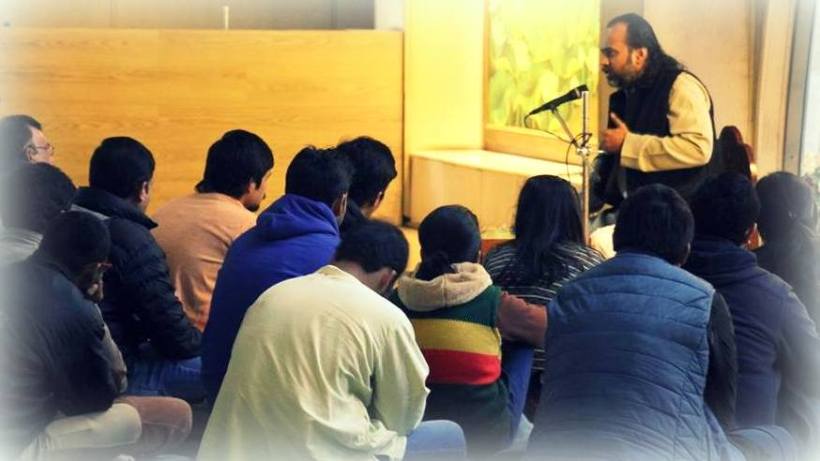
We are glad to share that now seekers from all over the world can get connected with the Master through various initiatives by the volunteers of PrashantAdvait Foundation.“Meet the Master&#…
Pāli Word a Day for March 07, 2017 — mettacittena — with a mind of mettā
Yogā ve jāyatī bhūri,
ayogā bhūrisaṅkhayo.
Etaṃ dvedhāpathaṃ ñatvā bhavāya vibhavāya ca,
tathāttānaṃ niveseyya yathā bhūri pavaḍḍhati.
Wisdom springs from meditation;
without meditation wisdom wanes.
Having known these two paths of progress and decline,
let one so conduct oneself that one’s wisdom may increase.
Dhammapada 20.282
The Dhammapada: The Buddha’s Path of Wisdom, translated from the Pali by Acharya Buddharakkhita
Pranaam. Gayatri Mantra is in honour of Sun. Written in Rigaved, Originally called ‘ Savitr’ Mantr, Savitr is Sanskrit name for Sun. How the name became Gayatri Mantra is not known. Perhaps because it has a 24 Syllables structure (Sanskrit/Vedic grammar calls such hymns – gayatri). Literal meaning:
Om (The life word or the cosmic sound, should emanate from Navel)
Bhur-one who has given life, Bhuvah-one who destroys sorrow
Swaha – brings joy
Tat- that
Savitur – glorious like sun
varenyam – the best (incomparable)
Bhargo – hindi meaning “uddhaar karne wala” closest english ‘ leads to salvation’
devasya – hey prabhu
dhimahi – worthy of self introspection (atma-chintan, or look inwards towards soul)
dhiyo yo nah prachodayat – “O life giving, sorrow remover, who gives joy and happiness, there is no one like whom, who provides salvation to the soul, pray give us strength, intellect and ability to look into our own soul”
As with most of Sanskrit text more than one meaning can be assigned due to the nature of sanskrit grammar. Also many things are difficult to translate exactly in english from Hindi or sankrit, However, In matters of love and devotion, meaning is always secondary, what matters is “bhav” or the feeling generated within self. Feeling, compassion is the Core in Bhakti (Bhakti-Bhav).
By love they will quench the fire of hate,
by wisdom the fire of delusion.
Those supreme ones extinguish delusion
with wisdom that breaks through to truth.
Itivuttaka 3.93
Gemstones of the Good Dhamma, compiled and translated by Ven. S. Dhammika
A group of Indian archaeologists have discovered the ancient remains of an individual whose tomb contained a marking indicating he may have achieved the state of ‘mukthi’, a belief observed by a number of eastern religious traditions, including Hinduism and Buddhism, in which the individual achieves liberation from the body. The term derives from an ancient Sanskrit word meaning ‘liberation without the body’ and refers to ‘moksha’, a state of liberation achieved after death, according to Hindu belief.
Pāli Word a Day for March 01, 2017 – āpādaka — bringing up, taking care of, nurturing
Manopubbaṅgamā dhammā;
manoseṭṭhā manomayā.
Manasā ce pasannena
bhāsati vā karoti vā,
tato naṃ sukhamanveti
chāyāva anapāyinī.
Mind precedes all things;
mind is their chief, mind is their maker.
If one speaks or does a deed
with a mind that is pure within,
happiness then follows along
like a never departing shadow.
Dhammapada 1.2
Gemstones of the Good Dhamma, compiled and translated by Ven. S. Dhammika
Tonight marks a very special night in honour of the consciousness field of Shiva, this is called Maha Shivaratri and literally, means “The Great Night of Shiva”. Traditionally Shiva is one of the three most influential Gods of contemporary Hinduism. Known as the “Transformer” Shiva is revered as a supreme being who creates, protects and transforms the universe.
The Sanskrit etymology of Śiva (Shiva) translates into Śi “in whom all things lie” and va which means the “embodiment of grace”. This has been refined to further translate as the “auspicious one”. At the highest level, Shiva consciousness is regarded as formless, limitless, transcendent and the unchanging absolute true self.
Due to the planetary alignment and transitional point of the Moon being in its 13th/14th waxing phase, tonight Saturday the 25th of February, there is a portal opening and a veil lifting from our dimensions. Generally, the Moons magnetic field controls the physical bodies cellular waters and the ocean tides which in turn controls emotions and thought patterns of the collective’s consciousness.
This particular day is where the collectives mind control will be disabled from the Moons magnetics, and the veil between dimensions will be lifted. This basically means this is a night where spiritual sovereignty and illumination is a higher chance of being embodied because the whole universal positioning for our planet is supporting this timeline.
Also, it has been said by the ancient Rishis this is the one night of the year where Shiva is said to do his Cosmic Dance of Bliss. This is to assist humanity overcoming their karmic ignorance and be transcended into the state of supreme bliss by awakening to one’s true self.
Devotion isn’t a worship model of externalising one’s own divinity towards a separate deity; it is actually leaping into the void of creation, to lie forever in the lap of the divine and be bathed in the supreme bliss of eternal love.
For Today’s Maha Shivaratri, we will be spending the day in meditation and this evening in sacred ceremony, to support this planetary alignment for all sentient life to dance above their shadows of ignorance into the heavenly realms of Supreme bliss. Please feel free to join in via the planetary crystalline grid and share the wave of this monumental energy.
Pāli Word a Day for February 24, 2017 – ṭhiti — stability, steadfastness; duration, continuance
Karaṇīyamatthakusalena
yanta santaṃ padaṃ abhisamecca:
Sakko ujū ca suhujū ca,
sūvaco cassa mudu anatimānī,
santussako ca subharo ca,
appakicco ca sallahukavutti,
santindriyo ca nipako ca,
appagabbho kulesvananugiddho.
Na ca khuddamācare kiñci
yena viññū pare upavadeyyuṃ.
This is to be done by one skilled in aims
who wants to break through to the state of peace:
Be capable, upright, & straightforward,
easy to instruct, gentle, & not conceited,
content & easy to support,
with few duties, living lightly,
with peaceful faculties, masterful,
modest, & no greed for supporters.
Do not do the slightest thing
that the wise would later censure.
Sutta Nipāta 1.143, 1.144, 1.145
Translated from the Pali by Thanissaro Bhikkhu
“If your mind is unsteady and wandering, many-branched and endless are the thoughts and choices. When your mind is clear and one-pointed, there is only one decision.”
The Bon religion exists , since the time when Nagas roamed the earth . This is how the Mahabharata describes the origins of the ancient spiritual tradition.
Can I look without the word at every problem: the problem of fear, the problem of pleasure? Because the word creates, breeds thought; and thought is memory, experience, pleasure, and therefore a distorting factor.
This is really quite astonishingly simple. Because it is simple, we mistrust it. We want everything to be very complicated, very cunning; and all cunning is covered with a perfume of words. If I can look at a flower nonverbally -and I can; anyone can do it, if one gives sufficient attention -can’t I look with that same objective, nonverbal attention at the problems which I have? Can’t I look out of silence, which is nonverbal, without the thinking machinery of pleasure and time being in operation? Can’t I just look? I think that’s the crux of the whole matter -not to approach from the periphery, which only complicates life tremendously, but to look at life, with all its complex problems of livelihood, sex, death, misery, sorrow, the agony of being tremendously alone -to look at all that without association, out of silence, which means without a center, without the word which creates the reaction of thought, which is memory and hence time. I think that is the real problem, the real issue: whether the mind can look at life where there is immediate action, not an idea and then action, and eliminate conflict altogether.
Make an island of yourself,
make yourself your refuge;
there is no other refuge.
Make Dhamma your island,
make Dhamma your refuge;
there is no other refuge.
Dīgha Nikāya 2.165
The Discourse Summaries by S.N. Goenka
Since primeval days to date, the Japanese have regarded certain mountains as objects of worship believing that mountains are places where multitudinous gods (Kami) reside. This belief in mountains as sacred places still lives on and is practiced in the Japanese traditional religion, Shinto, which is based on animism and ancestor worship. Today, this notion of sacredness is generally accepted and understood together with concepts from Chinese philosophies, such as Confucianism and Taoism, and Buddhism, which have evolved over a long time. In Japan, volcanoes or high, well-formed mountains, as well as smaller hills standing close to human settlements, were believed to be sacred places.
The Wisdom: You know well your truth
Validated by the feeling in your belly
And the beating of your heart
As spirit moves with joyousness
In and through you
Impermanent are all compounded things.
When one perceives this with true insight,
then one becomes detached from suffering;
this is the path of purification.
Dhammapada 20.277
The Discourse Summaries by S.N. Goenka
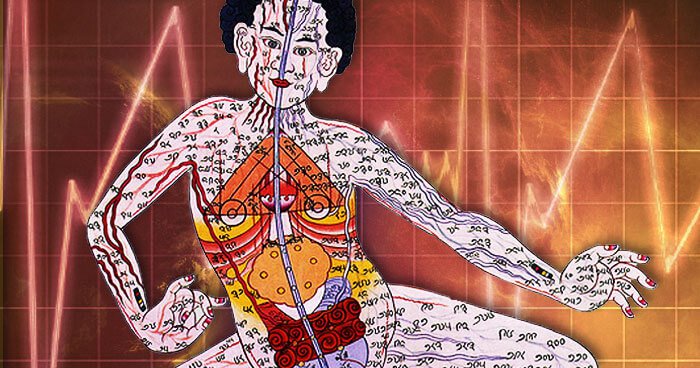
Modern Science has proved what Ancient Healing Traditions have always known about Meridians. Learn how these Energetic Pathways are vital to your Health.
















 Hālau 'Aha Hui Lānākila