In this episode, Leo Zagami makes some apocalyptic revelations about the New World Order, the Illuminati, the Vatican, and the revelation that 40 Catholic Cardinals have allegedly converted to Islam. He says that the Koran was recited in the Vatican in front of the Pope for the first time this year as well.
Month: January 2016
Brain Imaging Shows How Vagus Nerve Stimulation Improves Symptoms of Depression | Brain & Behavior Research Foundation (Formerly NARSAD)
In a study funded in part by the Brain & Behavior Research Foundation, Foundation NARSAD Grantees Charles R. Conway, M.D. and Yvette I. Sheline, M.D., and team found that vagus nerve stimulation (VNS) made positive, long-term changes to the brains of people suffering from major depression.
REvive Now!
Why Crows Hold Funerals
 By sticking close to a crow that was killed, other crows improve their chances of learning about predator species they need to avoid.
Source: Why Crows Hold Funerals
Affirmations Improve Your Life

“My body is simply a projection of my beliefs about myself.”
Do you really and truly understand how powerful affirmations are?
Understanding all that you can about affirmations and how they work can give you a boost like you’ve never seen when it comes to changing things for the better.
There is an outstanding number of tools that can be used to improve our lives. The best thing about having so many different tools to choose from is the fact that it allows people to find the tool that works best for their life. Affirmations are one of these tools and just happen to be one of the most commonly chosen when it comes to personal development.
Some people are quite familiar with affirmations and some people have no idea what they are. If you are a bit unfamiliar with affirmations, you are in luck as this article from Success Consciousness should clear things right up for you.
What Are Affirmations?
They are positive statements that describe a desired situation or goal, and are often repeated, until they get impressed on the subconscious mind.
This process, causes the subconscious mind to to strive and to work on your behalf, to make the positive statement come true.
When you know how to use affirmations, you get a great tool for achieving success and for improving your life.
Most people repeat in their minds negative words and statements concerning the situations and events in their lives, and consequently, create undesirable situations. Words work at both ways, to build or destroy. It is the way we use them that determines whether they are going to bring good or harmful results.
Imagine that you are swimming with your friends in a swimming pool.
They swim fifteen rounds, something you have never done before, and since you want to win their respect, you want to show them that you can make it too.
You start swimming, and at the same time keep repeating in your mind, “I can do it, I can do it…”. You keep thinking and believing that you are going to complete the fifteen rounds.
What are you actually doing? You are repeating positive affirmations.
In a different situation, you might find yourself repeating, “I cannot do this”, “It’s too big for me”, “It is not going to work out”, and consequently, lose ambition, motivation and faith, and actually bring about what you said to yourself.
It would be a good idea to pay attention to the words you repeat in your mind, to discover whether you are using negative statements, such as:
•I cannot do this.
•I am too lazy.
•I lack inner strength.
•I am going to fail.
If you discover that these, or similar words, run through your mind, you should do something to change them.
Your words and thoughts program the mind in the same way that commands and scripts program a computer.
Repeated positive statements help you focus your mind on your aim. They also create corresponding mental images in the conscious mind, which affect the subconscious mind accordingly. In this way, you program your subconscious in accordance with your will. This process is similar to the way creative visualization works.able situations. Words work at both ways, to build or destroy. It is the way we use them that determines whether they are going to bring good This process, causes the subconscious mind to to strive and to work on your behalf, to make the positive statement come true.
When you know how to use affirmations, you get a great tool for achieving success and for improving your life.
Today’s Affirming Meditation
In the mystery of silence and the hush of stillness I plummet to the depths of being.
Body Scanning Yourself – STOP SAYING “I WISH” AND START SAYING “I WILL”

Are you having a hard time connecting mind and body?
There is a technique that you can use to do a “full body scan” and connect everything perfectly.
If you have ever read anything about mindfulness or had any interest in the subject, there’s a good chance you might have heard of the ‘body scan’ technique. For those who haven’t heard of this exercise, it’s a great introduction to mindfulness and also a great way to strengthen your mind/body connection.
This exercise is also a fantastic way to see just how much you miss by being too inside your own head and forgetting to be present. Read on to give it a try…
The Body Scan
The idea of the body scan is to help bring your attention to your own body, your surroundings and the simple experience of ‘being’. It will take you out of your own head and show you just how much sensory information is coming in at any time.
To begin then, bring your attention to your breath and focus on it with each breath inward and outward.
Continue this for a few minutes and as you do you might notice your mind starts to drift. Don’t punish yourself for this, simply make a note of how your mind is working and then bring it back to your experience.
Eventually, you should start to notice other sensations throughout your body. You may notice the feeling of your buttocks on the floor or chair for instance. Perhaps you can feel the light breeze on your skin. Maybe you can feel a slight tension in the muscles of your back.
Gradually expand your awareness to encompass your entire body and then further to encompass the environment around you. Try and listen for sounds in the distance and be aware of how many sounds you can pick up. Don’t engage with them, just be aware of them and be constantly aware of your breathing.
Mindfulness
To extend this to true mindfulness, you’re next going to expand your mindfulness even further – this time to encompass your own thoughts so that you’re aware of them drifting through your mind like clouds. As with the external sounds earlier, the aim here is not to engage with those thoughts – simply to observe them in a passive manner without assessing or judging them.
If you’re interested in trying this exercise but not sure how to go about it yourself, you can find one among my meditation MP3s uploaded on The Halau’s community page on FaceBook or on ReverbNation .
Hauʻoli aloha Poʻaha
 Aloha āwakea kākou a hauʻoli aloha Poʻaha. Ō kā maluhīa no me ʻoe.
Good day to you all and Happy Aloha Thursday. Peace be with you.
Emotion And Creativity: Jazz Improvisation Of Happiness Activates Different Brain Networks Than Sadness
 Feeling happy, sad, or neutral will influence which parts of the brain’s creativity network light up and to what extent: study.
Heart Failure-Related Death Rates On The Rise After 12-Year Decline: CDC
 A new report shows an increase in heart failure-related deaths in the United States, but can’t explain why.
Source: Heart Failure-Related Death Rates On The Rise After 12-Year Decline: CDC
5 Things Your Fingers Say About You, From Penis Size To Sexuality
Your phalanges can reveal a lot more about your health than you might think.

Source: 5 Things Your Fingers Say About You, From Penis Size To Sexuality
MEDITATION – FULL ACTIVATION OF CHAKRAS (15 mins.)
Meditative Practice – Kundalini Yoga – 40-Day Sadhana with Snatum Kaur
Snatam Kaur discusses how to practice Jap Ji for the upcoming Spirit Voyage 40 Day Global Sadhana: Meditation of the Soul – An Experience of Jap Ji. We begin on January 1, 2016. To register in English, click here:
http://www.spiritvoyage.com/globalsadhana/experiencejapji_english
Swordmaker, Instructed in Dreams, Recreates Infallible Sacred Swords of Legend | Ancient Origins
 Chinese legends tell of a kind of infallible sacred sword, forged from meteorite material, that gave its bearer an apparently supernatural advantage over his opponents. The creation of such a sword seems beyond the capabilities of ancient technology, but modern sword-maker Chen Shih-Tsung has revived the art successfully—guided, he says, by instructions imparted to him by celestial beings.
Source: Swordmaker, Instructed in Dreams, Recreates Infallible Sacred Swords of Legend | Ancient Origins
Alaska Gov. and Anchorage Mayor Proclaim Indigenous Peoples’ Day – ICTMN.com
 Alaska became the first state to rename Columbus Day to Indigenous Peoples’ Day with proclamations from Gov. Walker and Anchorage Mayor Berkowitz.
Source: Alaska Gov. and Anchorage Mayor Proclaim Indigenous Peoples’ Day – ICTMN.com
Reiki Peace Garden Upgrade – Bring The Healing Power of Water To Your Garden!

Here’s a 2016 twist on the Reiki Peace Rock Garden idea: add a free-form water feature to your outdoor space!
http://theownerbuildernetwork.co/…/diy…/diy-garden-fountain/
Contrary to how it seems, building a garden fountain yourself is not that difficult! With enough research and planning, it’s a project you can accomplish in a weekend.
Could this be your next weekend project?
Create and GIVE a healing water fountain as a gift this year … Spread your Aloha through Water!
“Drag Me Down”, by Walk Off The Earth
Random Thoughts …
Balance is a way to call the divine and creates a piercing focus of equilibrium in our Being.
Hauʻoli aloha Poʻakolu
 Aloha āwakea kākou a hauʻoli aloha Poʻakolu. Ō kā maluhīa no me ʻoe.
Good day to you all and Happy Aloha Wednesday. Peace be with you.
‘For Allah’ Inscription Found on Viking Era Ring
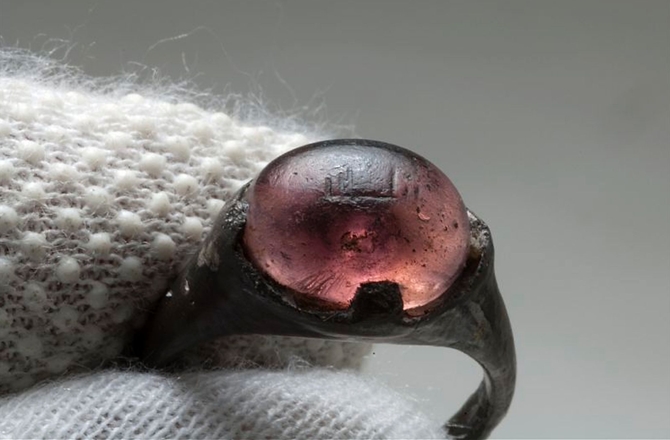 A ring with a rose-colored stone constitutes evidence for direct interactions between the Vikings and the Islamic world.
Hauʻoli aloha Poʻalua
Aloha kākahiaka kākou a hauʻoli aloha Phauʻoli aloha Poʻaluaoʻalua. Ō kā maluhīa no me ʻoe.
Good morning to you all and Happy Aloha Tuesday. Peace be with you.
Aishvarya’s Kitchen: SOYA NUGGET BALL CURRY RECIPE

Soya is rich in protein and calcium. Soya nuggets are easily available in markets. This recipe will provide you a procedure to make it tasty and healthy as well. There are many ways of making Soya nuggets recipe . Some likes tandoor chaaps, few likes fried masala chaaps but I prefer fried soya nuggets ball curry without using onion as it is healthy, tasty and light to eat it.
This stretchy, drug-delivering gel could be the Band-Aid of the future – ScienceAlert

Hauʻoli aloha Poʻakahi
 Aloha kākahiaka kākou a hauʻoli aloha Poʻakahi. Ō kā maluhīa no me ʻoe.
Good morning to you all and Happy Aloha Monday. Peace be with you.
How I Lost 22 Pounds With This Weird Lemon Diet in Just 2 Weeks

The best online personality test that’s scientifically accurate – Tech Insider
 Can you handle the truth?
Source: The best online personality test that’s scientifically accurate – Tech Insider
Why the Myers-Briggs test is totally meaningless – Vox
It’s no more scientifically valid than a BuzzFeed quiz.
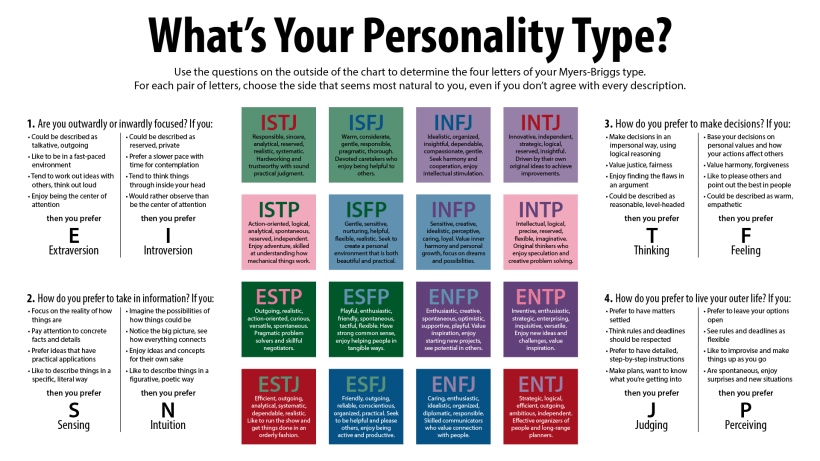
Source: Why the Myers-Briggs test is totally meaningless – Vox
11 Health Benefits Of Tomatoes – To Prevent And Treat Disease | Best of Culture
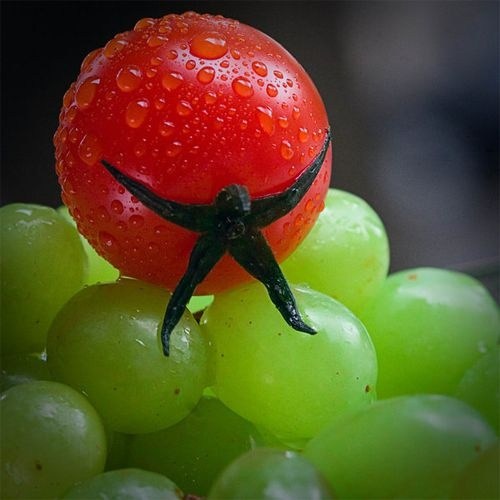 Keeps Skin Healthy Regular consumption of tomatoes will help make your skin look great. Tomatoes have lycopene, an antioxidant that helps protect skin against sun damage. It also makes skin less se…
Source: 11 Health Benefits Of Tomatoes – To Prevent And Treat Disease | Best of Culture
Barcelona Bans Glyphosate in Public Parks – The Detox Project
Barcelona’s public parks and green spaces will no longer be treated with the herbicide glyphosate. Ecological alternatives that are more respectful of the health of people and the environment will be sought, according to the city’s municipal Commission for Ecology, Planning and Mobility. The municipality has established a maximum transition period of one year to […]
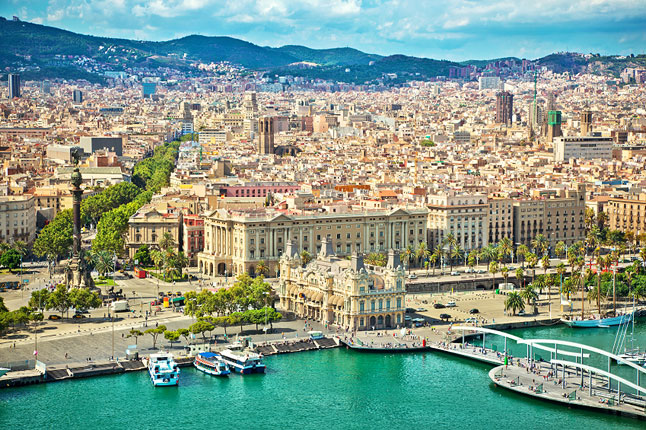
Source: Barcelona Bans Glyphosate in Public Parks – The Detox Project
Theosophy – The Cycles of Time, by HP Blavatsky

THE CYCLES OF TIME
When the astronomical meaning cedes its place to the spiritual and divine — Apollo and Athene transforming themselves into the form of birds, the symbol and glyph of the higher divinities and angels — then the bright god assumes divine creative powers. Apollo becomes the personification of Seership, when he sends the astral double of Æneas to the battle field (II. 431-53), and has the gift of appearing to his Seers without being visible to other persons present — (Iliad, xvii., 322-36) — a gift, however, shared by every high Adept.
The King of the Hyperboreans, was, therefore, the son of Boreas, the north-wind, and the High Priest of Apollo. The quarrel of Latona with Niobe (the Atlantean race) — the mother of seven sons and seven daughters personifying the seven sub-races of the Fourth Race and their seven branches (see Apollodorus for this number) — allegorizes the history of the two continents. The wrath of “the sons of god,” or of “Will and Yoga,” at seeing the steady degradation of the Atlanteans was great (See “The Sons of God and the Sacred Island“); and the destruction of the “children of Niobe” by the children of Latona — Apollo and Diana, the deities of light, wisdom and purity, or the Sun and Moon astronomically, whose influence causes changes in the earth’s axis, deluges and other cosmic cataclysms — is thus very clear.1 The fable about the never-ceasing tears of Niobe, whose grief causes Zeus to change her into a fountain — Atlantis covered with water — is no less graphic as a symbol. Niobe, let it be remembered, is the daughter of one of the Pleiades (or Atlantides) the grand-daughter of Atlas therefore, (See “Metamorphoses of Ovid,” Book VI.), because she represents the last generations of the doomed continent.
A true remark, that of Bailly, which says that Atlantis had an enormous influence on antiquity. “If these names,” he adds, “are mere allegories, then all that those fables contain of truth comes from Atlantis; if the fable is a real tradition — however altered — then the whole of the ancient history is still in it.” (Lettres sur l‘Atlantide, p. 137.)
So much so, that all ancient writings — prose and poetry — are full of the reminiscences of the Lemuro-Atlanteans, the first physical races, though the Third and the Fourth in number. Hesiod records the tradition about the men of the age of Bronze, whom Jupiter had made out of ash-wood and who had hearts harder than diamond. Clad in bronze from head to foot they passed their lives in fighting. Monstrous in size, endowed with a terrible strength, invincible arms and hands descended from their shoulders, says the poet (Hesiod, in oper. and dieb. v. 143). Such were the giants of the first physical races. The Iranians have a reference to the later Atlanteans inYasna ix. 15. Tradition maintains that the “Sons of God,” or the great Initiates of the Sacred Island, took advantage of the Deluge, to rid the earth of all the Sorcerers among the Atlanteans. The said verse addresses Zoroaster as one of the “Sons of God.” It says: “Thou, O Zarathustra, didst make all demons (i.e., Sorcerers), who before roamed the world in human forms, conceal themselves in the earth” (i.e., helped them to get submerged).
The Lemurians, as also the early Atlanteans, were divided into two distinct classes — the “Sons of Night” or Darkness, and the “Sons of the Sun,” or Light. The old books tell us of terrible battles between the two, when the former, leaving their land of Darkness, from whence the Sun departed for long months, descended from their inhospitable regions and “tried to wrench the lord of light” from their better favoured brothers of the equatorial regions. We may be told that the ancients knew nothing of the long night of six months’ duration in the Polar regions. Even Herodotus, more learned than the rest, only mentions a people who slept for six months in the year, and remained awake the other half. Yet the Greeks knew well that there was a country in the north where the year was divided into a day and night of six months’ duration each, for Pliny says so in his Fourth Book, c. 12. They speak of the Cimmerians and of the Hyperboreans, and draw a distinction between the two. The former inhabited the Palus Mæotis(between 45° and 50° latitude). Plutarch explains that they were but a small portion of a great nation driven away by the Scythians, which nation stopped near Tanais, having crossed Asia.“These warlike multitudes lived formerly on the ocean shores, in dense forests, and under a tenebrous sky. There the pole is almost touching the head, there long nights and days divide the year” (in Mario). As to the Hyperboreans, these peoples, as expressed by Solinus Polyhistor (c. 16), “sow in the morning, reap at noon, gather their fruits in the evening, and store them during the night in their caves.”
Even the writers of the Zohar knew of the fact (as shown in iii., fol. 10a), as it is written: “In the Book of Hammannunah, the Old, we learn . . . . there are some countries of the earth which are lightened, whilst others are in darkness; these have the day, when for the former it is night; and there are countries in which it is constantly day, or in which at least the night continues only some instants.” (Isaac Myer’s “Qabbalah,” p. 139).
The island of Delos, the Asteria of the Greek mythology, was never in Greece, a country which, in its day, was not yet in existence, not even in its molecular form. Several writers have shown that it represented a country or an island, far larger than the small dots of land which became Greece. Both Pliny and Diodorus Siculus place it in the Northern seas. One calls itBasilea or “royal” (Vol. II., p. 225 of Diod.); the other, Pliny, names it Osericta (Book xxxvii, c.2), a word, according to Rudbeck (Vol. I., p. 462-464), having had “a significance in the northern languages, equivalent to the Island of the divine Kings or god-Kings,” or again the “royal island of the gods,” because the gods were born there, i.e., the divine dynasties of the kings of Atlantis proceeded from that place. Let geographers and geologists seek for it among that group of islands discovered by Nordenskiold on his Vega voyage in the arctic regions. 2 The secret books inform us that the climate has changed in those regions more than once since the first men inhabited those now almost inaccessible latitudes. They were a paradise before they became hell; the dark Hades of the Greeks and the cold realm of Shades where the Scandinavian Hel, the goddess-Queen of the country of the dead, “holds sway deep down in Helheim and Niflheim.” Yet, it was the birth-place of Apollo, who was the brightest of gods, in heaven — astronomically — as he was the most enlightened of the divine kings who ruled over the early nations, in his human meaning. The latter fact is borne out in the Iliad IV., 239-62, Vide “The Greater gods” — wherein Apollo is said to have appeared four times in his own form (as the god of the four races) and six times in human form, i.e., as connected with the divine Dynasties of the earlier unseparated Lemurians.
It is those early mysterious peoples, their countries (which have now become uninhabitable), as well as the name given to man both dead and alive, which have furnished an opportunity to the ignorant Church fathers for inventing a hell, which they have transformed into a burning instead of a freezing locality. 3
It is, of course, evident that it is neither the Hyperboreans, nor the Cimmerians, the Arimaspes, nor even the Scyths — known to and communicating with the Greeks — who were our Atlanteans. But they were all the descendants of their last sub-races. The Pelasgians were certainly one of the root-races of future Greece, and were a remnant of a sub-race of Atlantis. Plato hints as much in speaking of the latter, whose name it is averred came from pelagus, the great sea. Noah’s Deluge is astronomical and allegorical, but it is not mythical, for the story is based upon the same archaic tradition of men — or rather of nations — which were saved during the cataclysms, in canoes, arks, and ships. No one would presume to say that the Chaldean Xisuthrus, the Hindu Vaivasvata, the Chinese Peirun — the “beloved of the gods,” who rescued him from the flood in a canoe — or the Swedish Belgamer, for whom the gods did the same in the north, are all identical as a personage. But their legends have all sprung from the catastrophe which involved both the continent and the island of Atlantis.
1 So occult and mystic is one of the aspects of Latona that she is made to reappear even in Revelation (xii.) as the woman clothed with the Sun (Apollo) and the Moon (Diana) under her feet, who being with child “cries, travailing in birth, pained to be delivered.” A great red Dragon, etc., stands before the woman ready to devour the child. She brings forth the man child who was to rule all nations with a rod of iron, and who was caught unto the throne of God (the Sun). The woman fled to the wilderness still pursued by the Dragon, who flees again, and casts out of his mouth water as a flood, when the earth helped the woman and swallowed the flood; and the Dragon went to make war with the remnant of her seed who keep the commandment of God, etc. (See xii., 1, 17.) Anyone, who reads the allegory of Latona pursued by the revenge of jealous Juno, will recognise the identity of the two versions. Juno sends Python, the Dragon, to persecute and destroy Latona and devour her babe. The latter is Apollo, the Sun, for “the man-child, who was to rule all nations with a rod of iron” of Revelation, is surely not the meek “Son of God,” Jesus, but the physical Sun, “who rules all nations”; the Dragon being the North Pole, gradually chasing the early Lemurians from the lands which became more and more Hyperborean and unfit to be inhabited by those who were fast developing into physical men, for they now had to deal with the climatic variations. The Dragon will not allow Latona “to bring forth” — (the Sun to appear). “She is driven from heaven, and finds no place where she can bring forth,” until Neptune (the ocean), moved with pity, makes immovable the floating isle of Delos (the nymph Asteria, hitherto hiding from Jupiter under the waves of the ocean) on which Latona finds refuge and where the bright god Dhvlio” is born, the god, who no sooner appears than he kills Python, the cold and frost of the Arctic region, in whose deadly coils all life becomes extinct. In other words, Latona-Lemuria is transformed into Niobe-Atlantis, over which her son Apollo, or the Sun, reigns — with an iron rod, truly, since Herodotus makes the Atlantes curse his too great heat. This allegory is reproduced in its other mystic meaning (another of the seven keys) in the chapter just cited of the Apocalypse. Latona became a powerful goddess indeed, and saw her son receive worship (solar worship) in almost every fane of antiquity. In his occult aspect Apollo is patron of Number 7. He is born on the seventh of the month, and the swans of Myorica swim seven times around Delos singing that event; he is given seven chords to his Lyre — the seven rays of the sun and the seven forces of nature. But this only in the astronomical meaning, whereas the above is purely geological.
2 These islands were “found strewn with fossils of horses, sheep, oxen, etc., among gigantic bTHE CYCLES OF TIME
When the astronomical meaning cedes its place to the spiritual and divine — Apollo and Athene transforming themselves into the form of birds, the symbol and glyph of the higher divinities and angels — then the bright god assumes divine creative powers. Apollo becomes the personification of Seership, when he sends the astral double of Æneas to the battle field (II. 431-53), and has the gift of appearing to his Seers without being visible to other persons present — (Iliad, xvii., 322-36) — a gift, however, shared by every high Adept.
The King of the Hyperboreans, was, therefore, the son of Boreas, the north-wind, and the High Priest of Apollo. The quarrel of Latona with Niobe (the Atlantean race) — the mother of seven sons and seven daughters personifying the seven sub-races of the Fourth Race and their seven branches (see Apollodorus for this number) — allegorizes the history of the two continents. The wrath of “the sons of god,” or of “Will and Yoga,” at seeing the steady degradation of the Atlanteans was great (See “The Sons of God and the Sacred Island”); and the destruction of the “children of Niobe” by the children of Latona — Apollo and Diana, the deities of light, wisdom and purity, or the Sun and Moon astronomically, whose influence causes changes in the earth’s axis, deluges and other cosmic cataclysms — is thus very clear.1 The fable about the never-ceasing tears of Niobe, whose grief causes Zeus to change her into a fountain — Atlantis covered with water — is no less graphic as a symbol. Niobe, let it be remembered, is the daughter of one of the Pleiades (or Atlantides) the grand-daughter of Atlas therefore, (See “Metamorphoses of Ovid,” Book VI.), because she represents the last generations of the doomed continent.
A true remark, that of Bailly, which says that Atlantis had an enormous influence on antiquity. “If these names,” he adds, “are mere allegories, then all that those fables contain of truth comes from Atlantis; if the fable is a real tradition — however altered — then the whole of the ancient history is still in it.” (Lettres sur l’Atlantide, p. 137.)
So much so, that all ancient writings — prose and poetry — are full of the reminiscences of the Lemuro-Atlanteans, the first physical races, though the Third and the Fourth in number. Hesiod records the tradition about the men of the age of Bronze, whom Jupiter had made out of ash-wood and who had hearts harder than diamond. Clad in bronze from head to foot they passed their lives in fighting. Monstrous in size, endowed with a terrible strength, invincible arms and hands descended from their shoulders, says the poet (Hesiod, in oper. and dieb. v. 143). Such were the giants of the first physical races. The Iranians have a reference to the later Atlanteans in Yasna ix. 15. Tradition maintains that the “Sons of God,” or the great Initiates of the Sacred Island, took advantage of the Deluge, to rid the earth of all the Sorcerers among the Atlanteans. The said verse addresses Zoroaster as one of the “Sons of God.” It says: “Thou, O Zarathustra, didst make all demons (i.e., Sorcerers), who before roamed the world in human forms, conceal themselves in the earth” (i.e., helped them to get submerged).
The Lemurians, as also the early Atlanteans, were divided into two distinct classes — the “Sons of Night” or Darkness, and the “Sons of the Sun,” or Light. The old books tell us of terrible battles between the two, when the former, leaving their land of Darkness, from whence the Sun departed for long months, descended from their inhospitable regions and “tried to wrench the lord of light” from their better favoured brothers of the equatorial regions. We may be told that the ancients knew nothing of the long night of six months’ duration in the Polar regions. Even Herodotus, more learned than the rest, only mentions a people who slept for six months in the year, and remained awake the other half. Yet the Greeks knew well that there was a country in the north where the year was divided into a day and night of six months’ duration each, for Pliny says so in his Fourth Book, c. 12. They speak of the Cimmerians and of the Hyperboreans, and draw a distinction between the two. The former inhabited the Palus Mæotis (between 45° and 50° latitude). Plutarch explains that they were but a small portion of a great nation driven away by the Scythians, which nation stopped near Tanais, having crossed Asia. “These warlike multitudes lived formerly on the ocean shores, in dense forests, and under a tenebrous sky. There the pole is almost touching the head, there long nights and days divide the year” (in Mario). As to the Hyperboreans, these peoples, as expressed by Solinus Polyhistor (c. 16), “sow in the morning, reap at noon, gather their fruits in the evening, and store them during the night in their caves.”
Even the writers of the Zohar knew of the fact (as shown in iii., fol. 10a), as it is written: “In the Book of Hammannunah, the Old, we learn . . . . there are some countries of the earth which are lightened, whilst others are in darkness; these have the day, when for the former it is night; and there are countries in which it is constantly day, or in which at least the night continues only some instants.” (Isaac Myer’s “Qabbalah,” p. 139).
The island of Delos, the Asteria of the Greek mythology, was never in Greece, a country which, in its day, was not yet in existence, not even in its molecular form. Several writers have shown that it represented a country or an island, far larger than the small dots of land which became Greece. Both Pliny and Diodorus Siculus place it in the Northern seas. One calls it Basilea or “royal” (Vol. II., p. 225 of Diod.); the other, Pliny, names it Osericta (Book xxxvii, c. 2), a word, according to Rudbeck (Vol. I., p. 462-464), having had “a significance in the northern languages, equivalent to the Island of the divine Kings or god-Kings,” or again the “royal island of the gods,” because the gods were born there, i.e., the divine dynasties of the kings of Atlantis proceeded from that place. Let geographers and geologists seek for it among that group of islands discovered by Nordenskiold on his Vega voyage in the arctic regions. 2 The secret books inform us that the climate has changed in those regions more than once since the first men inhabited those now almost inaccessible latitudes. They were a paradise before they became hell; the dark Hades of the Greeks and the cold realm of Shades where the Scandinavian Hel, the goddess-Queen of the country of the dead, “holds sway deep down in Helheim and Niflheim.” Yet, it was the birth-place of Apollo, who was the brightest of gods, in heaven — astronomically — as he was the most enlightened of the divine kings who ruled over the early nations, in his human meaning. The latter fact is borne out in the Iliad IV., 239-62, Vide “The Greater gods” — wherein Apollo is said to have appeared four times in his own form (as the god of the four races) and six times in human form, i.e., as connected with the divine Dynasties of the earlier unseparated Lemurians.
It is those early mysterious peoples, their countries (which have now become uninhabitable), as well as the name given to man both dead and alive, which have furnished an opportunity to the ignorant Church fathers for inventing a hell, which they have transformed into a burning instead of a freezing locality. 3
It is, of course, evident that it is neither the Hyperboreans, nor the Cimmerians, the Arimaspes, nor even the Scyths — known to and communicating with the Greeks — who were our Atlanteans. But they were all the descendants of their last sub-races. The Pelasgians were certainly one of the root-races of future Greece, and were a remnant of a sub-race of Atlantis. Plato hints as much in speaking of the latter, whose name it is averred came from pelagus, the great sea. Noah’s Deluge is astronomical and allegorical, but it is not mythical, for the story is based upon the same archaic tradition of men — or rather of nations — which were saved during the cataclysms, in canoes, arks, and ships. No one would presume to say that the Chaldean Xisuthrus, the Hindu Vaivasvata, the Chinese Peirun — the “beloved of the gods,” who rescued him from the flood in a canoe — or the Swedish Belgamer, for whom the gods did the same in the north, are all identical as a personage. But their legends have all sprung from the catastrophe which involved both the continent and the island of Atlantis.
1 So occult and mystic is one of the aspects of Latona that she is made to reappear even in Revelation (xii.) as the woman clothed with the Sun (Apollo) and the Moon (Diana) under her feet, who being with child “cries, travailing in birth, pained to be delivered.” A great red Dragon, etc., stands before the woman ready to devour the child. She brings forth the man child who was to rule all nations with a rod of iron, and who was caught unto the throne of God (the Sun). The woman fled to the wilderness still pursued by the Dragon, who flees again, and casts out of his mouth water as a flood, when the earth helped the woman and swallowed the flood; and the Dragon went to make war with the remnant of her seed who keep the commandment of God, etc. (See xii., 1, 17.) Anyone, who reads the allegory of Latona pursued by the revenge of jealous Juno, will recognise the identity of the two versions. Juno sends Python, the Dragon, to persecute and destroy Latona and devour her babe. The latter is Apollo, the Sun, for “the man-child, who was to rule all nations with a rod of iron” of Revelation, is surely not the meek “Son of God,” Jesus, but the physical Sun, “who rules all nations”; the Dragon being the North Pole, gradually chasing the early Lemurians from the lands which became more and more Hyperborean and unfit to be inhabited by those who were fast developing into physical men, for they now had to deal with the climatic variations. The Dragon will not allow Latona “to bring forth” — (the Sun to appear). “She is driven from heaven, and finds no place where she can bring forth,” until Neptune (the ocean), moved with pity, makes immovable the floating isle of Delos (the nymph Asteria, hitherto hiding from Jupiter under the waves of the ocean) on which Latona finds refuge and where the bright god Dhvlio” is born, the god, who no sooner appears than he kills Python, the cold and frost of the Arctic region, in whose deadly coils all life becomes extinct. In other words, Latona-Lemuria is transformed into Niobe-Atlantis, over which her son Apollo, or the Sun, reigns — with an iron rod, truly, since Herodotus makes the Atlantes curse his too great heat. This allegory is reproduced in its other mystic meaning (another of the seven keys) in the chapter just cited of the Apocalypse. Latona became a powerful goddess indeed, and saw her son receive worship (solar worship) in almost every fane of antiquity. In his occult aspect Apollo is patron of Number 7. He is born on the seventh of the month, and the swans of Myorica swim seven times around Delos singing that event; he is given seven chords to his Lyre — the seven rays of the sun and the seven forces of nature. But this only in the astronomical meaning, whereas the above is purely geological.
2 These islands were “found strewn with fossils of horses, sheep, oxen, etc., among gigantic bones of elephants, mammoths, rhinoceroses,” etc. If there was no man on earth at that period “how came horses and sheep to be found in company with the huge antediluvians?” asks a master in a letter. (“Esoteric Buddhism,” 67). The reply is given above in the text.
3 A good proof that all the gods, and religious beliefs, and myths have come from the north, which was also the cradle of physical man, lies in several suggestive words which have originated and remain to this day among the northern tribes in their primeval significance; but although there was a time when all the nations were “of one lip,” these words have received a different meaning with the Greeks and Latins. One such word is Mann, Man, a living being, and Manes, dead men. The Laplanders call their corpses to this day manee, (Voyage de Renard en Laponie I., 184). Mannus is the ancestor of the German race; the Hindu Manu, the thinking being, from man; the Egyptian Menes; and Minos, the King of Crete, judge of the infernal regions after his death — all proceed from the same root or word.
The Secret Doctrine, ii 771-774
H. P. Blavatskyones of elephants, mammoths, rhinoceroses,” etc. If there was no man on earth at that period “how came horses and sheep to be found in company with the huge antediluvians?” asks a master in a letter. (“Esoteric Buddhism,” 67). The reply is given above in the text.
3 A good proof that all the gods, and religious beliefs, and myths have come from the north, which was also the cradle ofphysical man, lies in several suggestive words which have originated and remain to this day among the northern tribes in their primeval significance; but although there was a time when all the nations were “of one lip,” these words have received a different meaning with the Greeks and Latins. One such word is Mann, Man, a living being, and Manes, dead men. The Laplanders call their corpses to this day manee, (Voyage de Renard en Laponie I., 184). Mannus is the ancestor of the German race; the Hindu Manu, the thinking being, from man; the Egyptian Menes; and Minos, the King of Crete, judge of the infernal regions after his death — all proceed from the same root or word.
The Secret Doctrine, ii 771-774
H. P. Blavatsky
12 Ancient Medicinal Herbs to Increase Energy, Strength and Vitality
 The beauty of herbs is that they support the body’s healing process and work to restore balance. Discover 12 medicinal herbs to increase energy, strength and
Source: 12 Ancient Medicinal Herbs to Increase Energy, Strength and Vitality
Viral Alternative News: This Is How I Healed My Mother’s Skin Cancer At Home (With Ingredients)
Thoughts For This Week

O ka mihi laʻau mua, a he piko hou. I lā hoʻokamahaʻo nou a me ʻOhana e na hoaloha. Lawe I ka maʻalea a kuʻonoʻono. A me puʻu wai.
New beginnings start with forgiveness. Relax, have a wonderful day with family and friends. Take wisdom and make it deep..Be generous, open-hearted. Enjoy what you have, give gladly from the heart.
Personal Development: Why Goal Setting is Important? – A Powerful Method to Achieve Your Goals – by Thibaut Meurisse

Why is goal setting so important? Why do people set goals? One of the main reason why setting goals is important is that it is human nature to strive when in pursuit of a goal. Having great goals makes us feel alive, gives meaning to our life. That’s the reason why many people feel empty after they retire from their job if they don’t take the time to set new goals to achieve.
In our professional life, we generally have goals set but we usually don’t take the time to set clear goals for our personal life. Many people spend a considerable amount of time to plan their next vacation in details, looking for the best location, comparing prices, buying the necessary equipment but how many people really take the time to plan their future? If you start planning everything in advance and constantly setting goals you will achieve way more that you would normally achieve.
However, there is no point setting goals you cannot achieve. That’s why you need to have a clear strategy to ensure you will achieve your goals. With the right strategy, most of your goals are achievable. Most of the time the reason people fail to achieve their goals is not because their goal is to hard, but because they don’t have the right strategy.
How to achieve personal goals
The biggest mistake is to set goals that are vague. For instance, “I’m gonna lose weight” or “I want to become rich”. Your goal should be very clear. Clarity is the key!
I will lose 10 kilos by March 31st
I will earn $10,000 per month by December 31st of next year
Decide how much and when.
Decide on the day or even on the hour by which you will achieve your goal. The clearer the better. It is very important! You should constantly try to find a way to measure any of your goals, because otherwise you cannot be held accountable and cannot track your results. When you find a way to measure your goals it will become suddenly more real, more tangible.
Choose a goal that you know you can achieve but that will be quite challenging
You want a goal that will push you out of your comfort and make you feel better once you achieve it. If the goal is out of reach you will have no motivation or you will feel desperate and your self-esteem will suffer. Don’t compare yourself with other people. No matter how small is your achievement, if you had to push yourself a little bit to achieve your goal it is a big success that you should celebrate. It might not be a big deal for others but it is for you. And you matter!
Ambitious goals are good, but they should be followed by massive actions in order to be achievable.
Write all the reasons why you want to achieve that goal
Why is it so important for you? Make sure your goal truly matters to you and is not something you are doing just for your family, your friends or your colleagues. Intrinsic motivation is always better than extrinsic motivation. Make sure you don’t spend years pursuing a goal that is not going to make you happy.
Write down your goals.
Writing down your goals makes them more real. A pen and a piece of paper can work wonder when you think about your life! Make sure you write your goals using positive words and read your goals everyday.
Make the necessary preparations before starting your goal
If you would like to be thinner, spend all your time with skinny people. Have all your meals with skinny people – Vasant Lad
You have a limited willpower. Save it as much as possible. Don’t try to become a vegetarian if your father is a butcher! (just an image :)) Try to create a friendly and supportive environment that will help you achieve your goal. If you want to become a vegetarian buy recipe books, fill you fridge with vegetables and fruits, join a vegetarian association before getting started.
Share your goals with as many people as possible.
For instance, if you want to lose 10 kilos, make a public announcement at work in front of your colleagues. Tell all your family members about your goals. Whenever possible, tell people you encounter that you are on a diet and you will lose 10 kilos by March 31st. You should commit yourself so that you have no way backwards. Make it your reality. If you don’t feel confident enough to do that, it means that your goal might be too ambitious for you right now and or you don’t really want it. In that case, you might want to check whether your goal is achievable or not and modify it if necessary.
When talking about your goals, avoid using vocabulary such as “I will try”, “I think”, “Maybe”, “If it goes well” but use “I will”, “When I will achieve”, “I know I will”, “I definitely will”.
Anticipate all possible ways it can go wrong and elaborate a strategy.
The fastest way to succeed is to double your failure rate – Thomas Watson
We tend to be overoptimistic regarding our ability to achieve a goal and more than often we underestimate the amount of work and the time necessary to perform a task. Ask yourself what things can happen that will prevent you from achieving your goals? If your goals are long-term goals, chances are that you will face multiple setbacks before you succeed. In the past I had many goals but I didn’t achieve most of them. One of the reasons was obviously my lack of confidence. Other major reasons were that I was overly optimistic and was not prepared mentally to face major setbacks. I would try to create a blog about Japan but would give up due to the many technical difficulties I encountered. I would wait for everything to be perfect before launching the blog. This blog was never created. I planned to make videos of my trips abroad and publish them; it never happened. Once I understood that failure was actually part of the process and not an anomaly it helped me significantly to achieve my goals. Here is how I see setbacks or failures: setbacks are here to test you, to see how bad you want it. When you set a goal, you have to be clear not only about your goal but about what you are ready to go through to achieve that goal. If you already made your mind that huge setbacks are likely to occur, you will be prepared to face them and be able to keep pushing and move forward. You should already know how you’re going to react to potential setbacks before they occur.
Avoid putting yourself in difficult situations
If your objective is to lose weight or to stop smoking for instance, you should avoid temptation. Identify all those situations where you are at risk, think of what makes you fail in your previous attempt and see how you can avoid those situations. Maybe you like to have a cigarette when you are drinking coffee, when you eat outside or when you are under stress. Identify those kinds of situations and come up with an effective strategy.
Sharing goals with other people is a great way to push ourselves to take action. Do you have any goals you are working on currently? Please leave me a comment below and let me know how it is going.
Meditation Tips
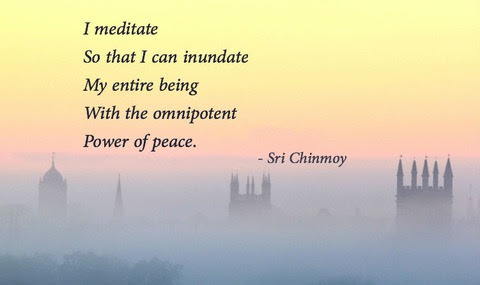
Do you think that you could never achieve a deep, relaxing state of mind?
Believe it or not, meditating really is not that difficult. Just look at it from a simpler point of view for a moment.
There are a lot of people who are interested in meditating because they have heard of the benefits that it can bring into their lives. However, many of the same people refrain from actually meditating, or give up very shortly after trying it, because they feel as if it is too hard or it is something they are not capable of doing.
Believe it or not, meditating really is not that difficult. I would like you to look at things from a simpler point of view for a moment.
Among various possible tips for self-improvement I believe that meditation is a very important one. Often when people hear the word meditation they tend to be a little bit scared. They imagine something somewhat mysterious or religious. They believe it is a very complicated technique that will required them a consequent investment in time and money before they can start getting some hypothetical benefits. Or maybe, if you are like me, you have problems with your knees that prevent you from sitting cross-legged. In this short article I would like to give you simple meditation instructions to get you started.
Meditation Made Simple
Let’s look at what is actually meditation. In a nutshell, meditation is a practice where you focus on your breath while trying not to think about anything. That’s it!
Meditation:
• is not a religious act in itself
• doesn’t required any materials to get started
• doesn’t require you to be a contortionist
• doesn’t have to take a lot of your time
I have only been practicing meditation on a daily basis for several months but I really feel that it helped me become more calm, more at peace and more focused. Meditation is also a great way to enhance well-being in general.
I’m not an expert and it is exactly what I want to tell you: you don’t need to be an expert! If you believe that you need to take meditation classes or read books to get started, only those of you who are really motivated will give it a shot. Since meditation practiced on a daily basis is beneficial for everyone, as a self-improvement advice I would encourage everyone to adopt that new habit.
When you will start meditating, you will realize how hard it is to stop thinking. Your mind won’t stop. Sometimes, people told me: “I can’t even do meditation for 3 minutes, my thoughts are all over the place”. It is totally normal. As long as you are trying to control your thoughts the best you can at your current level, you are doing meditation. And I’m convinced you will get benefits from your daily practice. Meditation will help you become more aware of your thoughts and to better deal with your negative thoughts.
Let’s make it very simple to start with, and progressively work on improving the quality of our meditation practice.
Meditation Exercise
I don’t want to give you any excuses not to try meditation. Here is how you can easily get started:
Close your eyes, breath slowly through your nose, focus on your breath while trying to get rid of any thoughts that come to your mind. Do it just for 3 minutes. That’s it! You can sit on a chair or sit on the floor with your legs crossed. Practice every single day for two weeks, then go for 4 minutes, 5 minutes and so on. If possible aim to reach 20 to 30 minutes per day but it is entirely up to you. Some people do more. If you are busy you can do less. Personally, I’m currently meditating 20 minutes every day but plan to meditate more in the near future. Last but not least, be patient! It takes some time before you feel the benefits of meditation.
 Hālau 'Aha Hui Lānākila