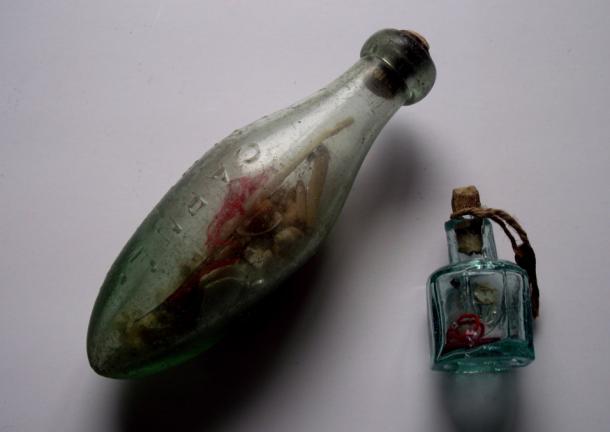
 Witch bottles (known also as ‘spell bottles’) are apotropaic devices (things believed to have the power to avert evil influences).
Source: Weird Witch Bottles, Historic Efforts to Ward Off Evil Spells and Witchcraft | Ancient Origins
Witch bottles (known also as ‘spell bottles’) are apotropaic devices (things believed to have the power to avert evil influences).
Source: Weird Witch Bottles, Historic Efforts to Ward Off Evil Spells and Witchcraft | Ancient Origins
 There are multiple reasons for chronic daily headaches. The primary cause of chronic daily headaches is however unknown. Children may also suffer from chronic daily headaches. Know the causes, signs, symptoms, diagnosis and complications of chronic daily headaches.
Source: Chronic Daily Headaches|Causes|Signs|Symptoms|Complications|Tests
 Florida Governor Rick Scott spoke about plans to stop Zika virus in Florida.
Source: Zika Virus Prompts Florida Governor to Expand State of Emergency to 5th County – ABC News
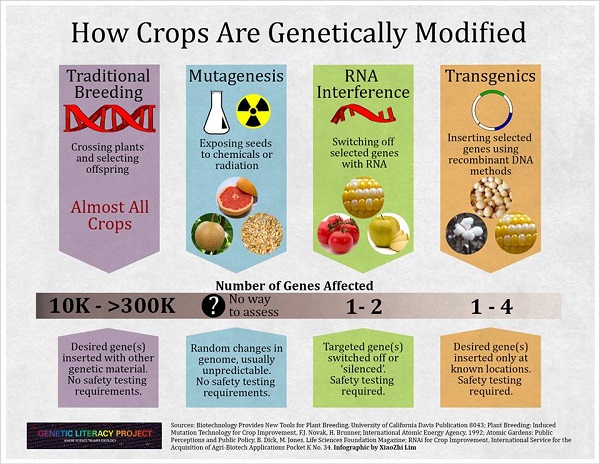 The image above illustrates the type of propaganda that is commonly shared on the Internet about GMOs. Images like those are often shared without the “sharer” taking the time to understand what “genetically modified” actually means and without realizing that they likely already depend on the many of the benefits of genetic modification. Some of…
 An international team of scientists has for the first time shown that mitochondria, the batteries of the cells, are essential for ageing.
 Welina mai a Hau’oli Aloha Pōʻalima ōukou. Aloha pauʻole. Ō ka maluhīa no me ʻoe.
 Aloha kākahiaka kākou a hauʻoli aloha Pōʻakolu. Manaʻolana ʻoe ā hauʻoli lā. Ō ka maluhīa no me ʻoe.
ATLANTIS, NECESSARY TO ETHNOLOGY
And in another number of the same review (Vol. I., p. 143), Mr. Duppa Crotch, M.A., F.L.S., in an article entitled “The Norwegian Lemming and its Migrations,” alludes to the same subject.
“Is it probable that land could have existed where now the broad Atlantic rolls? All tradition says so: old Egyptian records speak of Atlantis, as Strabo and others have told us. The Sahara itself is the sand of an ancient sea, and the shells which are found upon its surface prove that, no longer ago than the Miocene period, a sea rolled over what is now desert. The voyage of the ‘Challenger’ has proved the existence of three long ridges 1 in the Atlantic Ocean, 2 one extending for more than three thousand miles, and lateral spurs may, by connecting these ridges, account for the marvellous similarity of the fauna of the Atlantic islands. 3. . . . The submerged continent of LEMURIA, in what is now the Indian Ocean, is considered to afford an explanation of many difficulties in the distribution of organic life, and, I think, the existence of a MIOCENE ATLANTIS will be found to have a strong elucidative bearing on subjects of greater interest [Truly So!] than the migration of the lemming. At all events, if it can be shown that land existed in former ages where the North Atlantic now rolls, not only is a motive found for these apparently suicidal migrations, but also a strong collateral proof that what we call instincts are but the blind and sometimes even prejudicial inheritance of previously acquired experiences.”
(At certain periods, we learn, multitudes of these animals swim to sea and perish. Coming, as they do, from all parts of Norway, the powerful instinct which survives throughout ages as an inheritance from their progenitors impels them to seek a continent, once existing but now submerged beneath the ocean, and to court a watery grave.)
In an article containing a criticism of Mr. A. R. Wallace’s “Island Life” — a work devoted largely to the question of the distribution of animals, etc. — Mr. Starkie Gardiner writes (“Subsidence and Elevation,” Geological Magazine, June, 1881):
“By a process of reasoning supported by a large array of facts of different kinds, he arrives at the conclusion that the distribution of life upon the land as we now see it, has been accomplished without the aid of important changes in the relative positions of continents and seas. Yet if we accept his views, we must believe that Asia and Africa, Madagascar and Africa, New Zealand and Australia, Europe and America, have been united at some period not remote geologically, and that seas to the depth of 1,000 fathoms have been bridged over; but we must treat as utterly gratuitous and entirely opposed to all the evidences at our command (!!), the supposition that temperate Europe and temperate America, Australia, and South America, have ever been connected except by way of the Arctic or Antarctic circles and that lands now separated by seas of more than 1,000 fathoms depth have ever been united. Mr. Wallace, it must be admitted, has succeeded in explaining the chief features of existing life-distribution, without bridging the Atlantic or Pacific, except towards the Poles, yet I cannot help thinking that some of the facts might perhaps be more easily explained by admitting the former existence of the connection between the coast of Chile and Polynesia 4 and Great Britain and Florida, shadowed by the submarine banks which stretch between them. Nothing is urged that renders the more direct connection impossible, and no physical reason is advanced why the floor of the ocean should not be upheaved from any depth. The route by which (according to the anti-Atlantean and Lemurian hypotheses of Wallace) the floras of South America and Australia are supposed to have mingled, is beset by almost insurmountable obstacles, and the apparently sudden arrival of a number of sub-tropical American plants in our Eocene flora, necessitates a connection more to the south than the present 1,000 fathom line . . . . forces are unceasingly acting, and there is no reason why an elevating force once set in action in the centre of an ocean should cease to act until a continent is formed. They have acted and lifted out from the sea, in comparatively recent geological times, the loftiest mountains on earth. Mr. Wallace himself admits repeatedly that sea-beds have been elevated 1,000 fathoms and islands have risen up from the depths of 3,000 fathoms; and to suppose that the upheaving forces are limited in power, is, it seems to me, ‘utterly gratuitous and entirely opposed to all the evidences at our command.’ “
The “Father” of English Geology — Sir Charles Lyell — was an Uniformitarian in his views of continental formation. On page 492 of his “Antiquity of Man” we find him saying:
“Professor Unger (Die versunkene Insel Atlantis) and Heer (Flora Tertiaria Helvetiæ) have admitted on botanical grounds the former existence of an Atlantic Continent during some part of the Tertiary Period, as affording the only plausible explanation that can be imagined of the analogy between the Miocene flora of central Europe, and the existing flora of Eastern America. Professor Oliver, on the other hand, after showing how many of the American types found fossil in Europe are common to Japan, inclines to the theory, first advanced by Dr. Asa Gray, that the migration of species, to which the community of types in the Eastern States of North America, and the Miocene flora of Europe is due, took place when there was an overland communication from America to central Asia between the fiftieth and sixtieth parallels of latitude, or south of Behring Straits, following the direction of the Aleutian islands. By this course they may have made their way, at any epoch, Miocene, Pliocene, or Pleistocene, antecedently to the Glacial Epoch, to Amoorland, on the East coast of North Asia.”
The unnecessary difficulties and complications here incurred in order to avoid the hypothesis of an Atlantic Continent, are really too apparent to escape notice. If the botanical evidences stood alone, scepticism would be half legitimate; but in this case all branches of science converge to one point. Science has made blunders, and has exposed itself to greater errors than the admission of our two now invisible continents, would lay it open to. It has denied even the undeniable, from the days of the mathematician Laplace down to our own, and that only a few years ago. 5We have Professor Huxley’s authority for saying that there is no a priori improbability whatever against possible evidences supporting the belief. (Vide supra.) But now that the POSITIVE EVIDENCE is brought forward, will that eminent scientist admit the corollary?
Touching on the problem in another place (“Principles of Geology,” pp. 12-13), Sir Charles Lyell tells us: “Respecting the cosmogony of the Egyptian priests, we gather much information from writers of the Grecian sects, who borrowed almost all their tenets from Egypt, and amongst others that of the former successive destruction and renovation of the world. (Continental, not cosmic, catastrophes.) We learn from Plutarch that this was the theme of one of the hymns of Orpheus, so celebrated in the fabulous ages of Greece. It was brought by him from the banks of the Nile; and we even find in his verses, as in the Indian systems, a definite period assigned for the duration of every successive World. The returns of great catastrophes were determined by the present period of the Magnus Annus, or great year — a cycle composed of the revolutions of the sun, moon, and planets, and terminating when these return together to the sign whence they were supposed at some remote epoch to set out. We learn particularly from the Timæus of Plato that the Egyptians believed the world to be subject to occasional conflagrations and deluges. The sect of the Stoics adopted most fully the system of catastrophes destined at intervals to destroy the world. These, they taught, were of two kinds — the cataclysm, or destruction by water, and the Ecpyrosis, or destruction by fire (submarine volcanoes). From the Egyptians they derived the doctrine of the gradual debasement of man from a state of innocence” (nascent simplicity of the first sub-races of each Root-Race). “Towards the termination of each era the gods could no longer bear with the wickedness of man, and a shock of the elements, or a deluge, overwhelmed them; (vide degeneracy into magical practices and gross animality of the Atlanteans) after which calamity, Astræa again descended on the earth to renew the golden age.” (Dawn of a new Root-Race.)
1 Cf. the published reports of the “Challenger” expedition; also Donnelly’s “Atlantis,” p. 468 and pp. 46-56, chap. “The Testimony of the Sea.”
2 Even the cautious Lefevre speaks of the existence of Tertiary men on “upheaved lands, islands and continents then flourishing, but since submerged beneath the waters,” and elsewhere introduces a “possible Atlantis” to explain ethnological facts. Cf. his “Philosophy,” Eng. Ed., pp. 478 and 504. Mr. Donnelly remarks with rare intuition that “modern civilization is Atlantean . . . . the ‘inventive‘ faculty of the present age is taking up the delegated work of Creation where Atlantis left it thousands of years ago” (Atlantis, p. 133). He also refers the origin of culture to theMiocene times. It is, however, to be sought for in the teachings given to the Third Race-men by their Divine Rulers — at a vastly earlier period.
3 An equally “curious” similarity is traced between some of the West Indian and West African fauna.
4 The Pacific portion of the giant Lemurian Continent christened by Dr. Carter Blake, the anthropologist, “Pacificus.”
5 When Howard read, before the Royal Society of London, a paper on the first serious researches that were made on the aerolites, the Geneva naturalist Pictet, who was present, communicated, on his return to Paris, the facts reported to the French Academy of Sciences. But he was forthwith interrupted by Laplace, the great astronomer, who cried: “Stop! we have had enough of such fables, and know all about them,” thus making Pictet feel very small. Globular-shaped lightnings or thunderbolts have been admitted by Science only since Arago demonstrated their existence, says de Rochat (“Forces non-definies,” p. 4): “Every one remembers Dr. Bouilland’s misadventure at the Academy of Medicine when he had declared Edison’s phonograph ‘a trick of ventriloquism!’ ”
The Secret Doctrine, ii 781–785
H. P. Blavatsky
Find Your Magic
Tarot Readings, Inspiration, and Self-Empowerment
Making life on earth magick one moon phase at a time.
Astrologer ~ Mystic ~ Writer
of the Collegium Spiritus Sancti, a Golden Dawn Society
An affiliate of the Alpha et Omega Order of Melchizedek
All Knowledge Is Not Contained In Only One School
Connecting the grant community to #LearnGrants
Channelings & Articles
Magic Spell Books & Grimoires
Native Hawaiian Language Revitalization
Poetry & Tales of Love, Mystery, Magic and Spirituality
Organic Herbs, Herbals, Sustainable Gardening
Mother Nature: Feeding The Mind, Body & Soul, with Food, Medicine & Skincare.
"Inheritor of a Dying World, we call thee to the Living Beauty. Wanderer in the Wild Darkness, we call thee to the Gentle Light..."
Time is the most important thing we've been given
Embracing the Divine Within.
"...That I should bear witness to the truth." - John 18:37 // David E. Robinson, Publisher
 Hālau 'Aha Hui Lānākila