
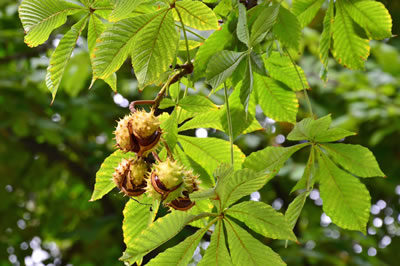
Horse Chestnut
Botanical Name: Aesculus hippocastanum.
Other Common Names: Conker, buckeye, Spanish chestnut, yleinen hevoskastanja (Finnish), almindelig hestekastanie (Danish), hästkastanj (Swedish), hrossakastanía (Icelandic), hestekastanje (Norwegian), Rosskastanie (German), marronnier (French), castaño de India (Spanish).
Family: Hippocastanaceae
TCM Name: Qi Ye Shu
Meridians: Liver, Bladder
Key TCM Actions & Medicinal Uses: Moves and Tonifies Blood/Removes Stasis: thrombosis, hemorrhoids, moderates menses, abdominal pain. Resolves Fever/ Promotes Urination: edema, bloating, fevers, aids weight loss due to water retention. Stops Bleeding: used internally and externally, stops excess uterine bleeding.
Habitat: Horse chestnut is native to the Balkans, West Asia, and the Himalayas. Today, the tree is grown for ornamental purposes in parks and gardens in temperate areas throughout the world, especially in northern and western Europe.
Plant Description: Horse chestnut is a large deciduous tree that can grow up to 40 meters (131 ft) in height and reach an…
View original post 2,181 more words
 Hālau 'Aha Hui Lānākila