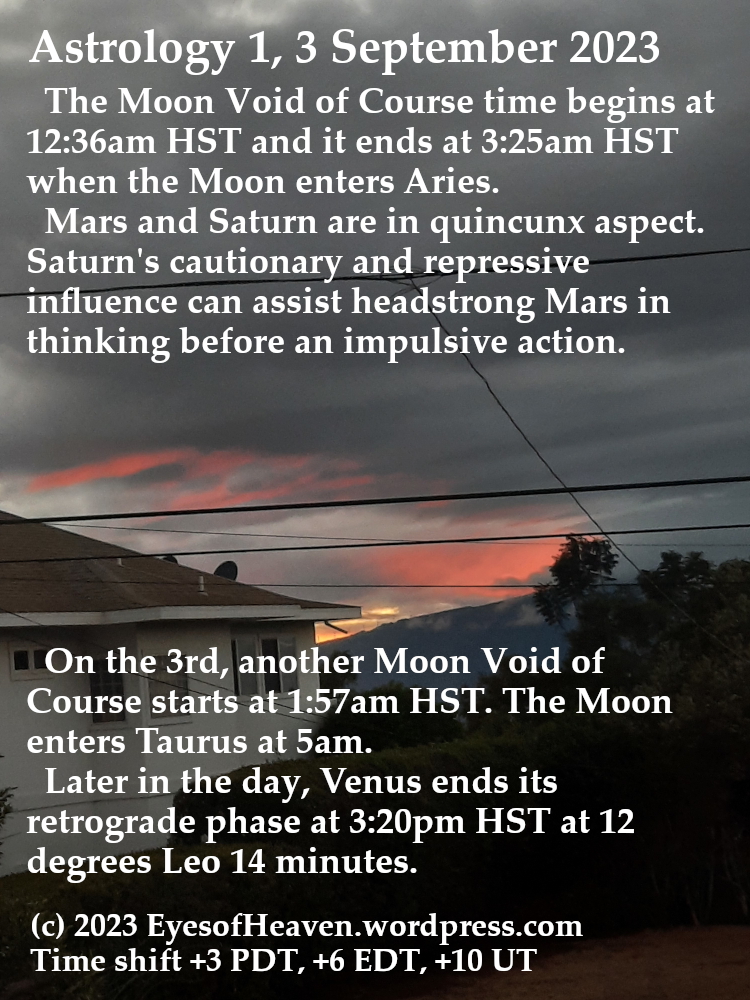
Visit the post for more.
Visit the post for more.
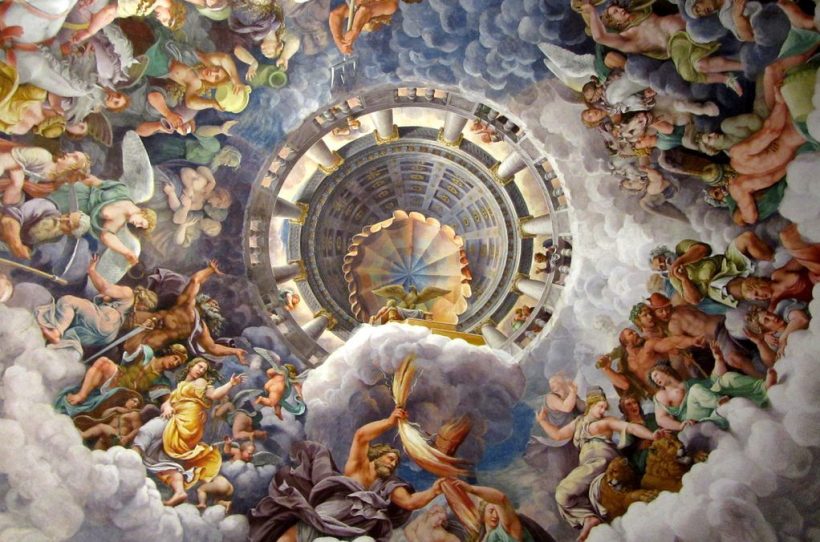
We are already in the second Full Moon of this month, a phenomenon we call Blue Moon. Of course, the Moon is not going to turn blue, nor will you see it in this color. The only color change you wil […]

Yo ca vassasataṃ jīve
dussīlo asamāhito
ekāhaṃ jīvitaṃ seyyo
sīlavantassa jhāyino.
Better it is to live
one day virtuous and meditative
than to live a hundred years
immoral and uncontrolled.
Dhammapada 8.110
The Dhammapada: The Buddha’s Path of Wisdom, translated from Pāli by Acharya Buddharakkhita
August 30, 2023 at 6:35 pm PDT is a full Moon in Pisces. This full Moon is the 3rd of four Super Moons in a row. And it’s a Blue Moon, the 2nd full Moon in one month. No need to be blue! Wate […]
Source: 2023 Pisces Blue Super Moon

Yo sahassaṃ sahassena
saṅgāme mānuse jine,
ekañca jeyyamattānaṃ
sa ve saṅgāmajuttamo.
Though one may conquer
a thousand times a thousand people in battle,
yet one indeed is the noblest victor
who conquers oneself.
Dhammapada 10.103
The Dhammapada: The Buddha’s Path of Wisdom, translated from Pāli by Acharya Buddharakkhita
Mahalo mai ʻōukou for your Aloha … ‘O ka maluhia no me ‘oe

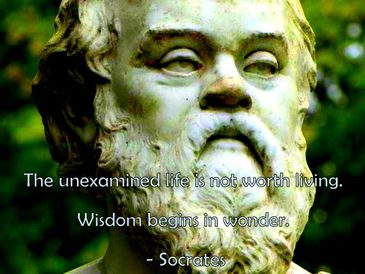
If we trace the English term ‘soul’ to its Greek antecedents and equivalents, we soon find a wide variety of meanings. Even before the time of Socrates, many accretions and materializations had already gathered around the concept. It was compared to the wind. It was also supposed to mean ‘that which breathes,’ ‘that which is alive.’ And it was given many other meanings and often couched in metaphorical terms through analogy with sparks and a central fire. It became crucially significant for Plato to enrich the notion of ‘soul’ and to give it an existentially human meaning to do with the very act of search, the very desire to know the good, the hunger to make distinctions — not only between the good and the bad but between the good and the attractive, not only between the true and the false but between the true and the plausible. The desire to make noetic discriminations becomes the basis for a functional definition of the soul. Plato taught that, metaphysically, the soul may be seen either as perpetual motion or as a self-moving agent. In one passage he refers to a particular kind of motion which is not visible in the material realm but may be properly ascribed to the hidden Logos, the invisible deity. Elsewhere, what he identifies as the soul is connected with volition. What would it avail a man who uses the word in a Socratic sense but does not come to terms with his own will-problem, or worse still, becomes identified intellectually with his weak-willed self?
Language is very important here. The prolonged abuse of the term ‘soul’ in the Middle Ages resulted from a decisive shift in meaning. An active agent was replaced by something passive, something created. In a corruption of the Socratic-Platonic meaning, the ‘soul’ became merely something acted upon, a passive agent receiving reward or punishment. The term ‘soul’ almost became unusable, so that in the Renaissance humanists had to assert the dignity and divinity of man in ways that did not involve them once again in the debased coinage of the terminology of the past. In the twentieth century the term ‘self’ is coming into wide circulation, recovering some of the dignity of the classical conception of the soul.
A person brought up in a corrupt language system could receive tremendous help by borrowing a term from Sanskrit and trying to recognize its open texture. The compassionate Teachers of the Theosophical Movement chose to introduce from that sacred language terms like Manas — the root of the word ‘man,’ from man, ‘to think’ — into the languages of the West. When Emerson eulogizes “man thinking” he is using two English words in a manner that confirms exactly the full glory of the idea of Manas. Yet we also know that both the words ‘man’ and ‘thinking’ can be so degraded in everyday usage that they do not convey the glory of manhood implied by Manas. The term Manas in Sanskrit means not only ‘to think,’ but also ‘to ideate,’ ‘to contemplate.’ To contemplate in this classical sense is to create, to sustain a continuous and controlled act of creative imagination enveloping more and more of the whole, while retaining that core of individuality which signifies responsibility for the consequences of all thoughts, all feelings, all words, and all acts. This is a kingly conception.
It is often advantageous for a person to go outside his particular prison-house of debased language and explore classical concepts. As we grow in our awareness, we may make the beautiful discovery that even in the accents of common speech there are echoes of those pristine meanings. The literal meaning of words is less important than the tone of voice in which we use them. It is possible for a man in the street to say to another, “Hi, man” with unconscious contempt, and for a traveller in the Sierras to say, “Hi, man,” in a manner that expresses genuine fellow-feeling. Miranda in The Tempest, seeing human beings for the first time, exclaims:
O, wonder! How many goodly creatures are there here!
How beauteous mankind is! O brave new world,
That has such people in’t!
Every word has a depth and beauty of feeling that makes ordinary English words rise like wingèd skylarks into the universal empyrean — generous, cosmic and free. Beyond all languages and concepts, the very act of articulation is of immense importance. Perhaps the most beautiful passage on the subject of reincarnation is to be found in The Human Situation by Macneile Dixon. This great lover of the literatures of the world, of Plato and Shakespeare, dared to suggest:
What a handful of dust is man to think such thoughts! Or is he, perchance, a prince in misfortune, whose speech at times betrays his birth? I like to think that, if men are machines, they are machines of a celestial pattern, which can rise above themselves, and, to the amazement of the watching gods, acquit themselves as men. I like to think that this singular race of indomitable, philosophising, poetical beings, resolute to carry the banner of Becoming to unimaginable heights, may be as interesting to the gods as they to us, and that they will stoop to admit these creatures of promise into their divine society.
By speech a man can betray his divine birth, and just as this is true of speech in its most sacred and profound sense, it is also true of human gestures. The simple mode of salutation in the immemorial land of Aryavarta is filled with this beauty. When the two hands come together, they greet another human being in the name of that which is above both, which brings the two together, and includes all others. There is something cosmic, something that has built into it a calculation of the infinite in the expedient, even in this gesture.
But what is true of gestures could be even more true of human utterance. The surest proof of the divinity and immortality of man is that through the power of sound he can create something that is truly magical. He can release vibrations that either bless or curse, heal or hinder other beings. This is determined by motivation, intensity of inmost feeling, and the degree of individual and universal self-consciousness, nurtured and strengthened through constant meditation and self-study.
Suppose one were to ask of the gods, “Give me one of two gifts for all men. Give me first that gift which will suddenly enable all men to say that they know about reincarnation and the soul, and that they believe in immortality. Second, give me that gift which enables all men to help babies to grow with a feeling of dignity, deliberation, beauty and sanctity in regard to human speech.” The wise would know that the latter gift is much more valuable than the former, because mere beliefs will not save human beings even though truly philosophical reflection upon alternatives is part of the prerogative of a Manasic being, a man in Emerson’s sense. These beliefs can only be made to come alive through the exercise of conscious and deliberate speech, with a delicate sensitivity for the existence of other beings, and an immense inner compassion for all that is alive. If human speech were not constantly wasted and made into something so excessive and destructive, so mean and niggardly, we would not find so much of the self-hatred, mutual distrust, pessimism and despair that characterize our lot. We would not find ourselves in a society which is free but where, alas, the loudest voice is the most feared and tends to have the widest impact.
Anyone who can existentially restore the alchemical and healing qualities of sound, speech and silence, to some limited extent, in the smallest contexts — in relations with little children, with all he encounters even in the most trivial situations — does a great deal for the Bodhisattvas. Those Illuminated Men, by their very power of thought and ceaseless ideation, continually benefit humanity by quickening any spark of authentic aspiration in every human soul into the fire which could help others to see. The truth of reincarnation requires much more than a casual scrutiny of our external lives and our spoken language. It must be pondered upon in the very silence of our souls. It is a theme for daily meditation. In the Bhagavad Gita Lord Krishna tells Arjuna that true wisdom is a meditation upon birth, death, decay, sickness, and error. To meditate upon each of these and all of these together is to begin to know more about the cosmic and the human significance of the truth of reincarnation.
Raghavan Iyer
The Gupta Vidya II

A family recipe for our favorite blueberry lemon bread. No mixer required! Like most sweet loaves, it tastes best when allowed to sit for a day, wrapped in plastic wrap.
This Lemon Blueberry Bread recipe produces a perfectly moist, flavorful and delicious loaf of quick bread! Topped with a lemon glaze this easy bread recipe is a classic combination of tart, sweet, and bright flavors! Sure to be a new favorite! […]
Recipe: Lemon-Blueberry Bread
Uttiṭṭhe! Nappamajjeyya!
Dhammaṃ sucaritaṃ care.
Dhammacārī sukhaṃ seti
asmiṃ loke paramhi ca.
Arise! Do not be heedless!
Lead a righteous life.
The righteous live happily
both in this world and the next.
Dhammapada 13.168
The Dhammapada: The Buddha’s Path of Wisdom, translated from Pāli by Acharya Buddharakkhita

These delightful chocolate cherry cookies are the ultimate rich and decadent treat to add to your cookie jar.
Source: Chocolate Cherry Cookies

This Boston cream poke cake is a delicious cake filled with sweet vanilla cream pudding and topped with a rich chocolate ganache.
Source: Boston Cream Poke Cake

Manopakopaṃ rakkheyya;
manasā saṃvuto siyā.
Manoduccaritaṃ hitvā,
manasā sucaritaṃ care.
Let one guard oneself against irritability in thought;
let one be controlled in mind.
Abandoning mental misconduct,
let one practice good conduct in thought.
Dhammapada 17.233
The Dhammapada: The Buddha’s Path of Wisdom, translated from Pāli by Acharya Buddharakkhita

Developing the right relationship with our digital technology is a critical step on the path. […]
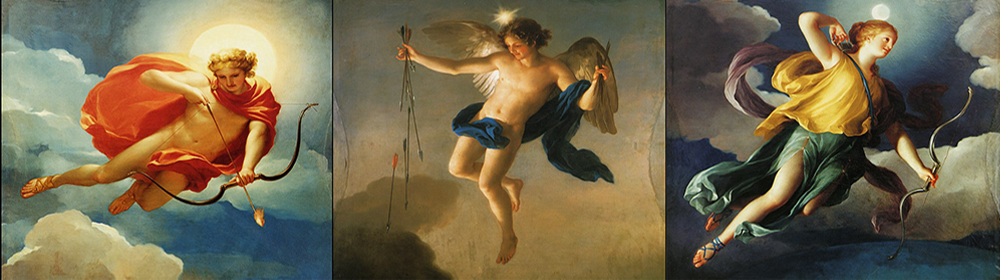
Sun Mars and Uranus are all at 22 degrees Leo, Virgo and Taurus August 15. 22 reduces 4 which is the Emperor/King archetype. Donald Trump numerology he is a 22/4/0 the King and The Fool.

Vacīpakopaṃ rakkheyya;
vācāya saṃvuto siyā.
Vacīduccaritaṃ hitvā,
vācāya sucaritaṃ care.
Let one guard oneself against irritability in speech;
let one be controlled in speech.
Abandoning verbal misconduct,
let one practice good conduct in speech.
Dhammapada 17.232
The Dhammapada: The Buddha’s Path of Wisdom, translated from Pāli by Acharya Buddharakkhita

Visit the post for more.

Keeping kratom consumers needs to be a critical concern for all elected officials in Michigan […]
Source: Opinion | Kratom has given me a better life. Michigan needs regulation | Bridge Michigan
 Haupia, also known as Hawaiian coconut pudding, is a sweet, cool, refreshing treat. This easy recipe only uses 4 ingredients and is perfect to share. […]
@FreeHawaiiNews – With Hosts Hinaleimoana Wong & Leon Siu Giving The Kanaka Perspective On Issues In Hawaii. Our August Show Reports On The Hawaiian National Soccer Team, Also Mauna Kea Protectors Oppose TMT Construction Permit Extension, Amazing Discoveries In Bern, Switzerland About The Hawaiian Kingdom, Kumu Hinaʻs Mana`o About The Many Meanings Of The Word Lahui, A Report On The “Pacific Way” – A New Movement, Plus Much More.

Mattāsukhapariccāgā
passe ce vipulaṃ sukhaṃ,
caje mattāsukhaṃ dhīro,
sampassaṃ vipulaṃ sukhaṃ.
If by renouncing a lesser happiness
one may realize a greater happiness,
let the wise one renounce the lesser,
having regard for the greater.
Dhammapada 21.290
The Dhammapada: The Buddha’s Path of Wisdom, translated from Pāli by Acharya Buddharakkhita

Yogā ve jāyatī bhūri,
ayogā bhūrisaṅkhayo.
Etaṃ dvedhāpathaṃ ñatvā bhavāya vibhavāya ca,
tathāttānaṃ niveseyya yathā bhūri pavaḍḍhati.
Wisdom springs from meditation;
without meditation wisdom wanes.
Having known these two paths of progress and decline,
let one so conduct oneself that one’s wisdom may increase.
Dhammapada 20.282
The Dhammapada: The Buddha’s Path of Wisdom, translated from Pāli by Acharya Buddharakkhita

Mars in Virgo and Mercury oppose Saturn, anxiety levels are high. With Pisces moon prayers help. […]
Visit the post for more.
Aunty Nona Beamer tells her own story along with family members, and describes the very best of all things Hawaiian: the people, their knowledge, culture, wisdom and aloha.

Appaṃ vata jīvitaṃ idaṃ!
Oraṃ vassasatāpi miyyati,
yo cepi aticca jīvati,
atha kho so jarasāpi miyyati.
How short this life!
You die this side of a century,
but even if you live past,
you die of old age.
Sutta Nipāta 4.810
Translated from Pāli by Thanissaro Bhikkhu
As a scholar, linguist, composer, translator, teacher and kumu hula, Mary Kawena Pukui’s work is the backbone of Hawaiian culture and language. Her hānai daughter Patience Namaka Wiggin Bacon and longtime research assistant Eleanor Williamson go on a journey to share Pukui’s story. Her legacy is evident as we see how students are learning to speak Hawaiian. Plus, marvel at the pageantry of pā‘ū riders.
Kumu hula share their early learning experiences from cultural icons in the Native Hawaiian community.
Find Your Magic
Tarot Readings, Inspiration, and Self-Empowerment
Making life on earth magick one moon phase at a time.
Astrologer ~ Mystic ~ Writer
of the Collegium Spiritus Sancti, a Golden Dawn Society
An affiliate of the Alpha et Omega Order of Melchizedek
All Knowledge Is Not Contained In Only One School
Connecting the grant community to #LearnGrants
Channelings & Articles
Magic Spell Books & Grimoires
Native Hawaiian Language Revitalization
Poetry & Tales of Love, Mystery, Magic and Spirituality
Organic Herbs, Herbals, Sustainable Gardening
Mother Nature: Feeding The Mind, Body & Soul, with Food, Medicine & Skincare.
"Inheritor of a Dying World, we call thee to the Living Beauty. Wanderer in the Wild Darkness, we call thee to the Gentle Light..."
Time is the most important thing we've been given
Embracing the Divine Within.
"...That I should bear witness to the truth." - John 18:37 // David E. Robinson, Publisher

 Hālau 'Aha Hui Lānākila