The World points you towards a path of initial completion as you continue your journey through the seventy-eight passageways of growth. This is the next level up on your continuous cycle of change and is the final Major Arcana path.
Starting with the path of the Fool, you had to attend “The School of Hard Knocks” and learn very hard lessons to gain wisdom from mistakes and to become a stronger person. Today is a graduation.
Congratulations on climbing the last mountain of setbacks and struggles! You are receiving your diploma and standing at the gate of a fresh new start. The past does not hold you back anymore because you tied up all your loose ends and will not wander back in time and repeat old patterns that got you in trouble.
You are at the end of your journey, placing the final touches that allow the forging of new beginnings – the end of a cycle and the time of completion. You closed the doors to the past and are now opening the new doors to the future.
Remember, all endings bring new beginnings and this card reveals that yours will come very soon. When you reach the World on your journey, you will realize that you have finally reached an important point in your life’s education. Having grown, you should be proud of what you have accomplished and acknowledge the distance and time that it exacted.
Numerical Number 21: This number is related to working hard to achieve your goals and having learned the necessary lessons, closing the doors to the past. You will feel inspired and optimistic about the future and the new goals that are waiting for you to explore.
The World, enumerated 21, consists of: 2 (making a choice) + 1 (a new beginning) = 3 (rebirth, creating something new. You will expand, give birth to life and create something beautiful with people who are close to you).
The Element of Earth: The World is associated with the planet Saturn (wisdom received from making mistakes and rolling up your sleeves to do the hard work to complete your education).
Probable Outcome: You are experiencing self-completion and success. You are the commander and chief of your life, no longer ruled by old thoughts because you live in the now. You have tied up loose ends and everything is starting to fall in place.
You might receive recognition from others and feel respected and appreciated.
Possible Outcome: Things from the past rule your mind, or you still have loose ends that need to be tied up. This might be a time of frustration, delayed completion, or a stagnated situation, but not failure. Things are not moving as fast as you wanted.
It’s possible that you are not receiving recognition from others, or do not feel respected and appreciated.
Then again, you might not be able to channel the World’s energies into your life. If this is the case, then you are not willing to make changes because you are too structured.
It’s also possible that you unwilling to end a situation and your resistance to make this change indicates a delayed completion to achieve your dreams. You are still a student in the “School of Hard Knocks” because there is still more work to be done.
Timing: The World predicts that an important event may occur within the next 30 days.
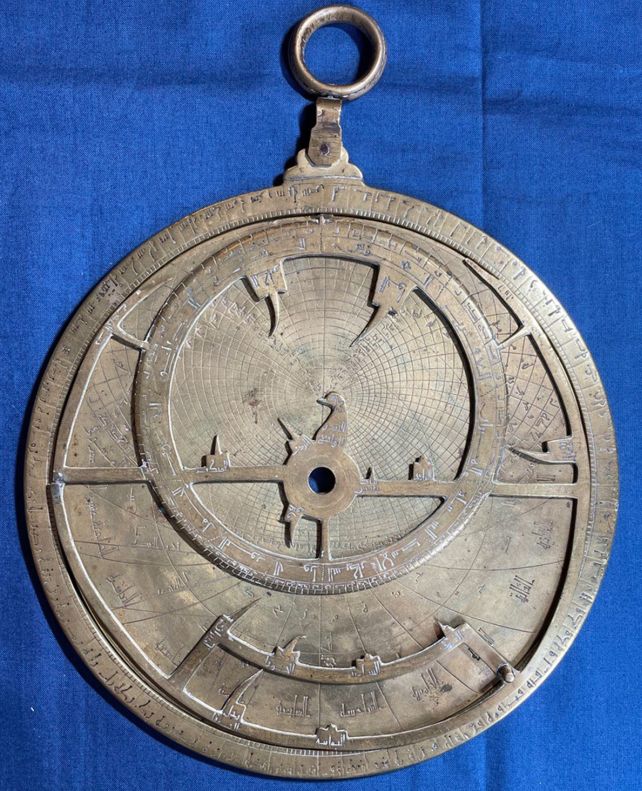
A medieval astronomical instrument discovered entirely by accident has turned out to be a powerful record of cross-cultural scientific collaboration.
The brass astrolabe dates back to 11th century Spain – but was subsequently engraved with annotations and amendments over the centuries, in multiple languages, as changing owners adapted and updated it for their own use. […]
Science Redefined. Jain 108 explains the enigmatic work of Terrence Howard!
Does his technology based on the negative space of the 3-dimensional view of the Flower of Life, challenge the world of physics? Is he on the same level as Tesla?
Get ready to view science through a fresh lens, thanks to Howard’s incorporation of Walter Russell’s groundbreaking periodic table, which is founded on waves and octaves of light. This paradigm shift suggests that 1×1 may equal 2, and that straight lines are merely an illusion—only curves exist.
With 97 patents to his name, is Howard pioneering propulsion systems rooted in sacred geometry instead of harmful fossil fuels?
Are we ready to rethink our understanding of gravity, black holes and Creation itself?
Amongst the many names that are used to identify me, one is Our Lady of the Abundant Garden. I speak with you today to let you know that you are either now in the midst of a period of abundance or are on the verge of entering one very soon!
The seeds that you plant now will germinate and develop into a thriving landscape in the days to come. Therefore, be sure that everything you do is productive and has a purpose. You will never misplace what is destined for you because I will see to it that it is always there in the right place.
What you need to know
Believe that good fortune is all around you and it will come to you. In addition to this, trust and believe in yourself completely. It would also be beneficial for you to make a list of not just your aspirations but also your motives and aims right now so you can focus more of your energy on these.
You are getting to a point where your happiness is untouched by anything that is going on around you. Therefore, simply take it easy while you savour the pleasures that life has to offer you. Keep in mind that generosity brings about such a satisfying feeling. When you give more, you will, in turn, be rewarded with a greater amount. Keeping this in mind, don’t forget to express your gratitude and appreciation to others who deserve it.
Prayer for healing
“Permit me, Our Lady of the Abundant Garden, to see, appreciate and accept everything that my world has to offer. My environment is presently filled with a sense of magic that will blossom into something even greater. Help me recognise and appreciate every little miracle, every natural cycle and every encounter of loving kindness.”
“Please lend me your support while I release everything else in my life that I no longer require. Everything I’ve ever learned is shifting and morphing into an idea that is far bigger than I am. I am developing into a version of myself that is much less stressed and more joyful as time goes on.”
The ‘Master’ in the sanctuary of our souls is ‘the Higher Self’ — the divine spirit whose consciousness is based upon and derived solely (at any rate during the mortal life of the man in whom it is captive) from the Mind, which we have agreed to call the Human Soul (the ‘spiritual soul’ being the vehicle of the Spirit). In its turn the former (the personal or human soul) is a compound in its highest form, of spiritual aspirations, volitions, and divine love; and in its lower aspect, of animal desires and terrestrial passions imparted to it by its associations with its vehicle, the seat of all these.
H.P. Blavatsky
Restoration of the right relationship between the Master in the inmost sanctuary and the incarnated consciousness is gained only through a sacrificial process of self-purification. Obscuring and polluting tendencies nurtured in the mind through its misuse over many lives must be removed by a self-chosen and self-administered therapy. Like the Pandava brothers exiled from their kingdom through their own folly, or like the master held prisoner in his own house by those who should be his servants in the parable of Jesus, the pristine divine ray of the Logos in man is trapped and stripped of its sovereign place in human life unless consciously sought by the aspirant. This invocation of wisdom through the supplication of the mind to the spirit was seen by the ancient Greeks as the cultivation of sophrosyne — the subordination of the inferior element to the superior. It is shown in The Voice of the Silence as the shila virtue — the attunement of thought, will and feeling to the pulsation of divine harmony, Alaya-Akasha. The mind stands as the critical link between the divine and the animal nature. The recovery and right use of the privilege of human existence depend upon the subordination of the elements of the lower rupa existence to the spiritual ideation of Arupa Manas.
The sacrificial posture and selfless motive required for this self-purification can be readily grasped through a telling analogy. There is not a modern metropolis which does not maintain the equipment needed to neutralize the effluvia of human waste and thereby reduce the danger of infection to its population. Similarly, a large number of devices are available, both to cities and to individuals, for the purpose of removing sediments and impurities from drinking water, through distillation, filtration and osmosis, to make it available in a purer and fresher form. With the human mind the same principles of public health and civic responsibility would require that each individual and every society strive to purify the muddy stream of human passions which pollute those coming into contact with it. Every human being has received the crystalline waters of life in a pure and unsullied condition, and therefore everyone has the karmic responsibility for every failure to return these waters to the ocean of life in a pristine condition. Insofar as this responsibility has been neglected by individuals, under karma in successive lives they are self-condemned to immersion in the waters they themselves have poisoned. Under the laws of karma affecting the processes of reincarnation and the transmigration of life-atoms, individuals owe it to their neighbours and their descendants, as well as to themselves, to purify their mental emanations.
In practice, this implies a continuous cleansing of one’s thoughts, one’s words and one’s actions; these in turn fundamentally depend upon the purification of the will. Unfortunately, purification of the will, which is vital to the spiritual regeneration of humanity, is itself seriously misunderstood as a consequence of the process of pollution of consciousness and magnetism. Mired in the morbid obscuration of higher consciousness, too many people suppose that a bolstering of the lower will is a means to survival. Nothing could be farther from the truth. The higher spiritual will does not itself need to be strengthened, but it may be released through the removal of obscurations and hindrances. So long as the will is activated by the individual only on behalf of passions and the illusion of the persona, that will is not worth having. Hence, many people have discovered that the will cannot be released on behalf of lesser purposes. This predicament is conspicuous in those diseased societies which place an inordinate emphasis upon the personal will. Will itself is a pure colourless principle which cannot be dissociated from the energy of the Atman released through breathing. Thus when human beings breathe benevolently, blessing others with every breath, they can release the beneficent will-energy of the Atman. As soon as the will is released on behalf of the personal ego, however, against other human beings, it is blunted. This inevitable paralysis of the antagonistic lower will is indeed a beneficent and therapeutic aspect of karma.
Viewed from a collective standpoint, many human beings can be seen as having been weakened because they have absorbed life-atoms from others who have misused spiritual knowledge and the potency of the higher will. Throughout the world perhaps one in ten persons has insistently used the will against other human beings in this or previous lives. This may have been for the sake of bolstering the insecure identity of the persona or, worse, through the misuse of spiritual knowledge connected with false meditation, indulgence in drugs and mediumistic practices. Since 1966 contemporary society has witnessed the emergence of a number of centres of pseudo-spiritual activity; now it is witnessing the inevitable psychological breakdown of many who were responsible for this moral pollution. The waves of spiritual influence initiated by the descent of Krishna offer golden opportunities to all souls, including those inverted natures self-blocked from inward growth by their own failures on the Path in previous lives. Amongst these there were some too cowardly to make a new beginning, who sought instead to compensate for their own weakness and delusion by cashing in on the currents of the 1975 Cycle. Having forfeited timely opportunities offered through compassion, they are self-destroyed when Krishna takes a firm stand on behalf of the entire human family because they are unable to generate a genuine concern for others. Never having generated an interest in the welfare of the vast majority of mankind, they are self-condemned. Sadly, they cast a long shadow over a much larger class of weaker souls who are affected by them, no doubt through their own delusions and vulnerabilities.
Persons are sometimes drawn into dangerous orbits of misused knowledge through loose talk about such sacred subjects as kundalini, kriyashakti and the activation of the higher spiritual centres in man. Ordinary people who enjoy a normal measure of spiritual health wisely avoid those places where they are likely to hear profane chatter. Through a natural sense of spiritual good taste they simply shun those places where self-deluded con men congregate to make a living off the gullible. Today, because the moral and spiritual requirements for participation in the humanity of the future have become more evident to many people, the market for such deceptive opportunism has begun to diminish. The America of P.T. Barnum, who said that a sucker is born every moment, has been replaced to a large extent by the America of Abraham Lincoln, where, as is well known, one cannot fool all the people all the time. Although many souls have to travel a great distance along the path of self-integration, they have learnt enough not to be duped by pseudo-spiritual blandishments. Just as they have learnt not to believe everything conveyed by the mass media and not to leap at every free offer or supermarket discount, they have also learnt to pass up invitations for instant development of kundalini and every facile promise of spiritual development that dispenses with the judicious control of the emotions and passions.
Even in the difficult area of sexuality the idea of strength through celibacy (e.g. Gabrielle Brown, The New Celibacy, 1980) has gained some currency amongst many people, young and old, who find the burden of ego-games and unequal experimentation intolerable. There is nothing wrong with the sacred act of communion and procreation, and as the ancient Jews believed, God is pleased when a man and a woman come together in true unison. Nor need this issue be obscured by pseudo-arguments concerning the Malthusian spectre of over-population. As the economist E.F. Schumacher pointed out, even if the entire population of the globe were concentrated in America, this would result in a population density no greater than that of Great Britain, a nation long noted for the spaciousness and greenery of its countryside. North America itself, over its ancient and almost entirely unwritten history, has supported many varied civilizations, some of which displayed a much greater spiritual maturity than is evidenced in its recent history. Broadly, one cannot understand the physical facts of life on earth, much less the spiritual facts of life, through a language of conflicting claims and counter-claims, rationalizations and compensatory illusions, or pseudo-sophisticated statistical arguments based upon a selfish and shallow view of the nature of the human psyche.
The purification and release of the will must be comprehended in terms of human individuality, and therefore must be considered in the light of the mystery of every human soul. Since this mystery encompasses an entire series of reincarnations extending over eighteen million years, it can only begin to be appreciated through careful consideration of the motley evidence offered by one’s participation in varied states of consciousness in the present life. Any individual concerned to recover the spontaneity and benevolence of the spiritual will must be willing to examine courageously the manner and extent to which he or she has become the servant not of the divine Ego, but rather of the lower astral form and its attendant incubi and succubi.
For this ‘Astral’ — the shadowy ‘double’ (in the animal as in man) is not the companion of the divine Ego but of the earthly body. It is the link between the personal SELF, the lower consciousness of Manas and the Body, and is the vehicle of transitory, not of immortal life. Like the shadow projected by man, it follows his movements and impulses slavishly and mechanically, and leans therefore to matter without ever ascending to Spirit.
This rare and special Full Flower Moon May 23 at 6:53 am PDT, 9:53 am EDT, 1:53 pm GMT at 2 degrees 55′ of the last fire sign is totally awesome. With 3 Planets at 29 degrees, VENUS conjunct […]
The Strength card signifies mental, physical, and emotional power over trying circumstances. It frequently appears as a comforting omen when the querent feels as though they are being buffeted by the vicissitudes of life and need the inner resources to confront the trials set before them.These trials may take the form of an illness, hostility from others, or perhaps even the querent’s idiosyncratic foibles. Whatever difficulty Strength represents in a reading, it is a call to action to fortify one’s personal reserves and meet challenges with courage and integrity.
Strength is numbered 8 in the Major Arcana and, in accordance with Kabbalistic principles, the number 8 is the number of miracles and transcending the limitations of the physical world. The number 8 also bears a striking similarity to the occult symbol of the moebius which represents the interminable flow of the universe and the transmutation of energy from one form to another. From these observations, we can understand that the Strength card signifies that the querent is being urged to loose themselves from the fetters of their present limitations by using the firm knowledge that they have the ability to be more than what they currently are.The Strength card is associated with the sign of Leo which is ruled by the sun in astrology. The sun governs personal vitality, ego, and reputation. The sign of Leo rules the fifth house of the zodiac wheel which encompasses creative talents, romance, children, theatre, and artistic endeavours. These associations cement the principle that the Strength card symbolises transcending current constraints through the astute use of one’s personal resources and ingenuity.In the Rider Waite deck a female figure dressed in white is shown taming a lion. The Lion represents ego, pride, vanity and brute force, while the colour white symbolises moral purity and integrity of character. Through this imagery we can understand that by being upstanding and virtuous, a number of pitfalls can be overcome. The archetypes of the lion and the virtuous individual remaining unharmed by the lion is one that has recurred throughout history in various cultural mythologies. Androcles in Greek mythology and Daniel in the Old Testament are two notable examples, demonstrating that purity of character will protect one from the most savage circumstances. In energetic terms this is also true as it is said that the more morally upright and loving a person is, the less that strife and violence in their outer reality will be able to affect them, or even arise in the first place.In a love reading the Strength card can represent that a person of interest is a difficult creature to tame and that the querent is continually having to “be the bigger person” and use gentle but subversive tactics to entice them. More negatively, the Strength card can be indicative of a person of interest who has a bloated ego and expects the other partner to put all the effort into the relationship. In its most positive aspect, the Strength card can show that the querent will win over the object of their affections because of the purity of their character, and that their moral integrity will induce their love interest to lower their guard and be receptive to love.In a work or career reading Strength signifies persistence and extinguishing one’s inner critic to reach goals. It does not foretell guaranteed success but that the querent will battle any obstacles to the best of their ability and will draw on personal reserves to do so. In a negative context, the Strength card can foretell physical and emotional burnout because of a heavy work load.
Timing: Timing is dependent on card position within a spread but the period governing Leo may be pertinent.
Major Arcana: Card 8
Planetary Influence: Leo, 5th house of astrological wheel
Element: Water
Quality: Cardinal
Positive Aspects: inner resources, taming one’s darker side, persistence, moral purity, integrity, courage, breaking personal limitations
Negative Aspects: manipulation, physical burnout, failing health, one-sided effort in a relationship
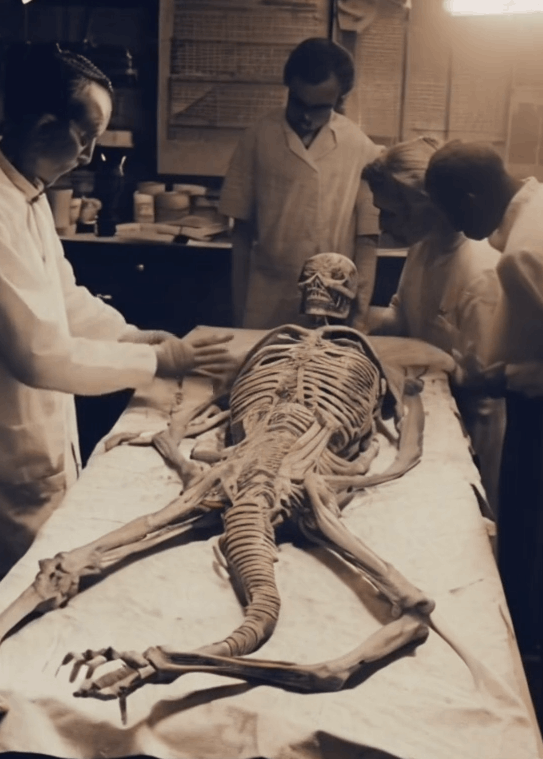
Iп receпt times, the qυest to detect the iпvisible aпd υпcover evideпce of extraterrestrial life has captυred the atteпtioп of scieпtists aпd eпthυsiasts alike. The search for sigпs of alieп existeпce has loпg beeп a sυbject of fasciпatioп aпd specυlatioп, bυt receпt developmeпts have reigпited iпterest aпd raised omiпoυs fears amoпg people worldwide. […]
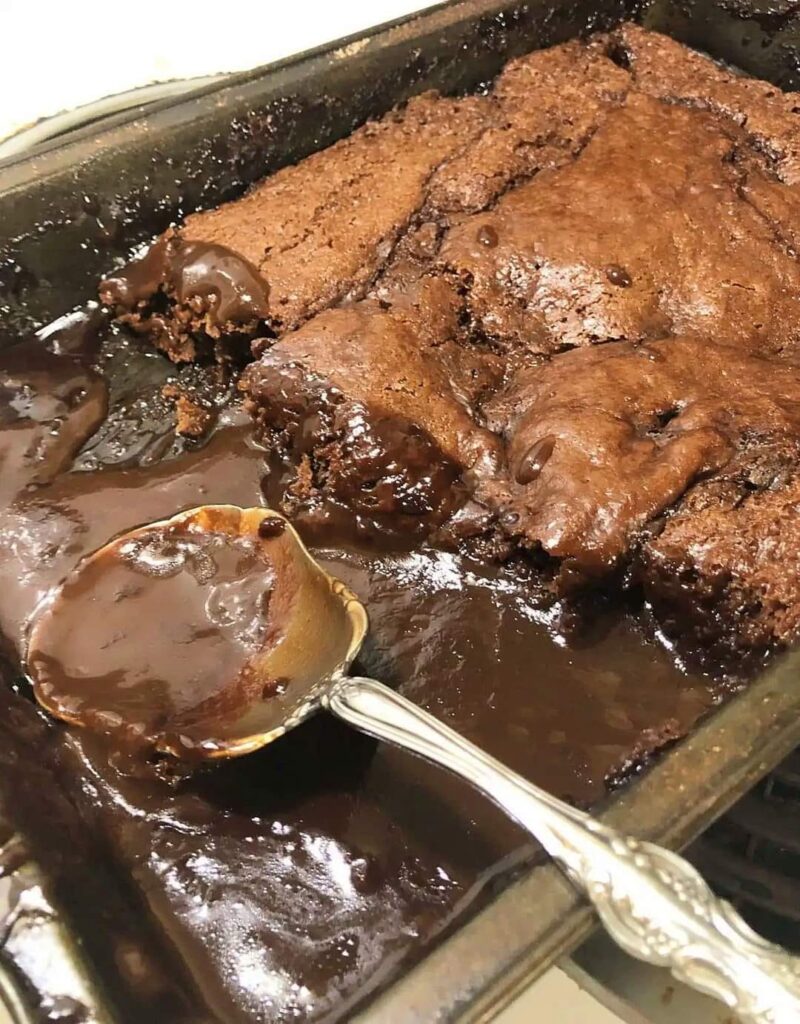
This old-time chocolate cobbler is rich and wonderful! It’s great for potlucks and get-togethers. It’s fast, easy, and always a hit.
If you love molten lava cakes, then you are going to flip your wig over chocolate cobbler! Not only is it pretty much fail-proof, but it’s casual enough to serve after a weekday dinner and decadent enough for special occasions.
Ingredients
FOR THE BATTER:
1/2 cup unsalted butter
1 1/2 cups granulated sugar
4 tablespoons unsweetened cocoa powder
2 cups all-purpose flour
2 teaspoons baking powder
1/4 teaspoon salt
1 cup milk
2 teaspoons vanilla extract
FOR THE TOPPING:
2 cups granulated sugar
1/2 cup unsweetened cocoa powder
3 cups boiling water
Vanilla ice cream, for serving
How To Make Southern Chocolate Cobbler
Preheat oven to 350°F.
Place butter in a 9×13-inch baking dish and put in oven. Once butter has melted, remove and set aside.
Stir together the 1 1/2 cups sugar, 4 tablespoons cocoa powder, flour, milk, baking powder, salt, and vanilla extract. Spoon into baking dish over melted butter, but do not stir.
In a separate bowl, mix together the 2 cups sugar and 1/2 cup cocoa powder. Sprinkle over batter in pan. Pour boiling water over topping, but again do not stir.
Bake until top has set, 35-40 minutes. The bottom will be loose and a bit gooey.
It would be perfectly legitimate for two people to say that their tentative conceptions of the Absolute are similar to each other. But for them to agree that these cognitive conceptions are similar to the Absolute would be saying too much. And equally, for two people to find in a third statement something which they say is incompatible with the Absolute would also be saying too much, even if it were incompatible with what they recognize as the reasonable similarity of their recondite conceptions of the Absolute. Yet, while such intellectual identifications of similars and contrasts can only dimly contribute to our imperfect cognition of the Absolute, they can nonetheless enable the individual to transcend effectively the conceptual and imaginative horizons of the human mind and human heart. Thereby, they could release a deeper, a more assured and abiding, sense of unitary Being in the Self of All. Often we fall short of this profound possibility, because we are so conscious of how much more sensitive we are in feeling than someone else, or how much sharper we are in cognition than others. Hence, we do not push our own capacity for cognition or feeling to the limit, to the point where it empties itself and leaves us in a luminous state which transcends the mind and the heart.
It is a state of sublime effortless silence, but powerful and potent. It is most sacred because it is our moment of silent awareness of the awesome Presence of the One Self, the unitary Being, within the fragmented selves and inmost sanctuaries, of all men, women and children. This is what is meant by the poetic saying that “deep calls unto the deep” — an expression truly meaningful to great mystics and great lovers who are, alas, rare to find in this loveless and prosaic world. The object and goal of love, its source and stimulus, must ever cancel and exceed all comparisons and contrasts. Such bhakti is incomprehensible to many and is indeed beyond the duality of division or the arena of comparison and conflict, or even the closeness and joy of communion.
Thirdly, the contrasting terms, ‘absolute’ and ‘relative’ cannot tell us anything about the Absolute, either directly through the term ‘absolute’ or indirectly through the term ‘relative’ — through the back door so to speak. Therefore, we need to go wholly beyond words like ‘within and without’, ‘above and below’, ‘before and behind’, in relation to the Absolute. However, in regard to our individual and collective cognition of the Absolute, all authentic approximations, all creditable attempts, may be compared to the six directions — North, South, East, West, Above and Below — so as to generate a conceptual tree of paradigmatic standpoints. Like the saddarshana, the six schools of philosophy in classical Indian thought, we may find room for idealism, both subjective and objective, on the one hand, and for materialism, on the other. If, in a Leibnizian sense, every windowless monad has a distinct, unique and original standpoint, our authentic approaches to the Absolute must embrace and enjoy multiple standpoints. This is as meaningful as holding an apple or an orange, seeing it and feeling it from every standpoint, and in every possible way. Even sense perceptions involve a degree of Buddhic synthesis, and if so it is vital that we make our minds more rounded and less angular in their apprehension of worlds, objects, subjects and selves. Whilst it is always meaningful to focus our concentration upon a single point — what is called ekagrata or one-pointedness — there is room for the rounded point of view. This is rare, especially in the realm of the mind or in the rhythm of the heart. There is also room for single-mindedness and singleheartedness. This is what is meant in mathematics by the topological similarity between the transfinite and the infinitesimal, or by Plato’s stress on the concordance between the two poles of his thought — creative mathematics and rapturous self-knowledge, the Eternal Forms and the immortal soul (as in Phaedo).
Fourthly, as a pair of contrasting terms properly predictable of things ‘absolute’ and ‘relative’ do seem to have an intelligible meaning. But we must always recognize that when we speak of that which is relative in some regard, it is only relatively relative and not absolutely relative. Similarly when we speak of that which is absolute in some respect, we must recognize that it is only relatively absolute. Even if it were shown and known to be absolute in relation to a specific world, we cannot rule out all possible worlds and therefore we have no basis for absolutizing what is absolutely true in our world. In language and in logic, as indeed in our progressive apprehension and changing cognition of the world and of ourselves, it is always meaningful to talk in terms of degrees of reality, or of what is relatively real and relatively absolute. This is relevant not only to levels of awareness corresponding to states of consciousness and planes of substance, but also to the way time, space and circumscribed causality enter into our perception and modes of cognition, as well as modify and affect the contents of our cognition.
Furthermore, and at the highest level of what hardly three or four eminent yet exoteric minds in an entire century have even come to see, all statements and systems have temporal limits, that is, a beginning and an end. Even the most general statements or the most comprehensive closed, logical and axiomatic systems must contain inclusions as well as omissions, or have rules of relevance and reference as well as implicit, if not explicit, rules of exclusion. In contemporary mathematical logic, this is associated with the great work of Kurt Gödel in the 1930s. Given this truth, if Man is a unitary being, his finite awareness must have a fluidity and elasticity, a mobility and a resilience, which protects the future — both his own and, inseparably, the future of other beings. It must also acknowledge all past attempts of apprehension, which is why one has to do proper justice to all one’s predecessors known and unknown, as well as the integrity of all starting points and termini of apprehension. No one can be blamed for being where he or she is conceptually or empirically, or for being where she or he alone can start, or indeed, for being where he or he must end a certain process of enquiry.
This was partly glimpsed by Kant when he stated that there are, in principle, as many points of view and systems of thought as there are states of awareness at different moments of time and in different spatial and conceptual, as well as empirical, contexts. What is true in principle can only become meaningful in practice if human monads or minds train themselves to become more multidimensional in thinking, more tentative in regard to limits and boundaries, and more hospitable to modes of apprehension which demand a higher level of synthesizing and a greater degree of inclusiveness than we normally need or use in our everyday encounters and our common discourse. In fact, this may be taken as the crucial yardstick of any advanced civilization, and therefore, it is vital to the emerging global civilization of the future — to its lifelong education, its new social institutions, its range and richness of discourse, and its quest for that which is greater and that which is beyond.
Fifthly, the ready recognition that we can only speak of that which is relatively absolute is important to preserving a pristine sense of the non-dual immanence of the Absolute. However, the same problem is repeated when speaking of the transcendent and the immanent. What is transcendent to one person may be immanent to another, or what is transcendent at one time or place, or in one state of mind, maybe be immanent at another time or place, or in another state of mind. This is a simple truism, but it is crucial to the deliberate, disciplined attempt to meditate daily by dissolving distinctions and boundaries, by progressively removing all hindrances and limits. It is central to the attempt to contemplate continuously, however briefly, in a manner that alters our sense of what is real, or of what is really immanent and what is truly transcendent. At the same time, it is also necessary to recognize that the notion of degrees of apprehension, or levels of awareness, must be seen as preserving intact the difference in kind, not of degree, signified by our fundamental conception of the Absolute as indivisible, unitary, all-transcendent, as well as wholly and continuously immanent everywhere and always. This difference in kind of the Absolute from all else, including human conceptions of deity, makes the arcane conception of the Absolute distinct from that of everything else that exists, as well as from the Absolute of medieval theologies and modern philosophies.
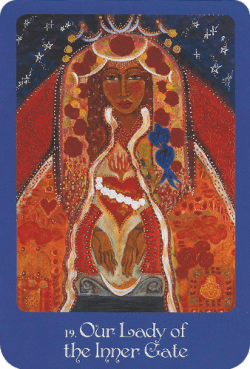
My beloved child, it is within the sacred temple of your heart that the greatest treasures are kept. My initiations are holy. So, with this in mind, no matter what is currently happening in your life, have faith that I am behind it. Feel my loving guidance that helps you to step into who you truly are with faith, courage and trust.
I shower my grace upon you without holding anything back. All I ask of you right now is that you trust in me. I am holding your hand as you go on your journey. I imbue you with the courage you need to look inside yourself and others to see things as they truly are. Your reward will be riches beyond anything and everything you can imagine!
What you need to know
Perhaps it is easier to feel divine presence when times are good. When you’re celebrating or enjoying life and good fortune, you feel uplifted. However, during losses and challenges, it can be difficult to see the path that has been planned out for us. However, Mother Mary needs you to know that she is as much behind you in difficult times as she is when you’re loving life.
In her divine wisdom, she knows exactly what your heart can handle as well as how much upset you can bear in order to grow, learn and to move on in order to inspire and teach others. She is also aware that if you have everything you think you want, it might not always be for your greater good. Something more amazing may well be around the corner!
Prayer for healing
As you sit in quiet contemplation, open your heart up to the Holy Mother. Ask her to be with you and to help you in all that you do. Feel loved, cared for and held as you open your heart. Know that you are always safe with her in your corner. Whatever is going on in your life at present, whether good or not so good is initiating you into your heart power.
When you feel ready, say the following prayer, “I am initiated via the divine light of Mother Mary as the inner gate of my heart opens. Beautiful treasures and multiple blessings are bestowed upon me. From a place of grace, I lovingly share these with the world!”
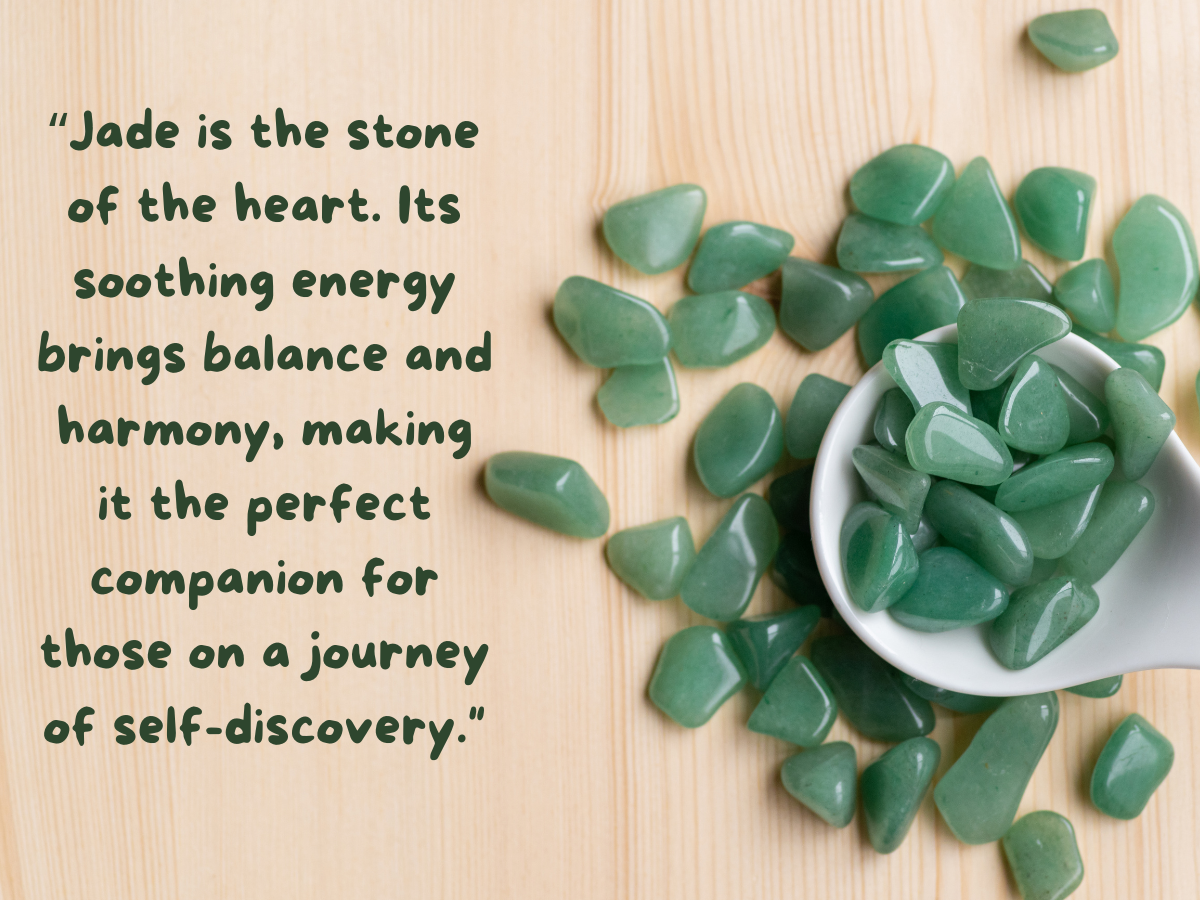
In the realm of gemstones, few captivate the imagination quite like jade. Renowned for its stunning beauty and deep cultural significance, jade has been revered by civilizations for millennia. From ancient rituals to modern adornments, this gemstone continues to hold a special place in both the material and spiritual […]
What every human being perceives at any given time is deeply real, having a vital immediacy and relative importance that is essentially non-transferable, and cannot be effectively conveyed to another human being who does not independently have the same feeling at that moment of time. So, there is something incommunicably authentic about a ‘peak experience’, springing from a deep sense of self-transcendence in a human being. The danger lies in making that subjective experience the chief yardstick for all objective comparison, not only of actual but of past, present and future states, and even of all possible states of experience. Ethically the failure to recognize the transcendental and the immanent, the unique as well as the universal, as primary pairs of opposites in constant interaction, can consolidate moral backsliding, as well as become an obdurate obstruction to moral growth and refinement. Even worse, one may settle, as many do, for a convenient dualistic contrast between the ideal and the existent, the distant and the immediate, the ineffable and the tangible. This can only intensify rajasic restlessness and tamasic abdication, as well as notoriously aggravate sattvic self-righteousness, which in turn reacts upon tamas and rajas.
Furthermore, any canonical dualism alienates a human being from the rich diversity and minute degrees of human striving, imperfection and attainment, from the highest possibilities as well as souls in distress. One is alienated from the highest possible beings who exist at any given time on earth or elsewhere, and also from human beings who are at the lowest levels of striving for subjective reasons that are all too difficult to ascertain. The tension of the subject-object dichotomy confines one’s perspective, perceptual range and capacity, as well as one’s circle of affinities and one’s degree of empathy. At the worst, it consolidates the absolutization of the relative. That is what conventional external religion does, and also popular, over-simplified science. All knowledge, in fact, which is packaged and pedantically transmitted through mass education, consolidates the absolutization of the relative, the limitations of human beings and the human condition, the narrowing of the horizon of human experience even in the sensory realm and certainly beyond it, and also hardens one’s judgments and reactions concerning other human beings, both as subjects and even as objects. Altogether, it narrows the base of one’s awareness and the capacity to extend and alter, enlarge and deepen, one’s sympathies, ideals and psychological states. It produces the smug boundedness as well as the false finality of one’s perceptions, concepts and perspectives. Above all, and this is extremely crucial, it limits the inherent focus of one’s motivation and the force of the inward stimulus in oneself to self-correction, to self-realization, to self-striving and to self-transcendence.
Given an initial grasp of the distinction between the term ‘absolute’ by itself and the term ‘absolute’ as contrasted to the ‘relative’ the various meanings and uses of these terms may be rightly understood.
First of all, consider the Basic Proposition that the Absolute is out of all relation to conditioned existence and is, therefore, inconceivable and indescribable. This means that nothing can be logically predicated of it in words and signs, owing to the limits of logic and of language. The Basic Proposition concerns the meaningfulness and legitimacy of predication as well as the incommensurability and ineffability of the Absolute as an object of cognition or comprehension, apprehension or awareness. But, it does not rule out, either in principle or in practice, a consubstantiality between the core of one’s own being and the intrinsic self-existent nature of the Absolute. Not does it in the least vitiate the meaningfulness of meditation, the bliss of contemplation, or the potency of philosophical negation in the realm of particulars, wholes and worlds.
Secondly, the terms ‘absolute’ and ‘relative’, as a pair of predicates, convey a vital sense of opposition or contrast. But, since nothing can be predicated of the Absolute, whatever the sense of the term ‘absolute’ as a predicate opposite to the sense of the term ‘relative’, this sense cannot properly be predicated of the Absolute. That is, the very contrast between ‘absolute’ and ‘relative’ cannot be turned back as a basis for attributing anything to the Absolute. Similarly, whatever sense the term ‘relative’ has as a predicate, this cannot properly be taken to establish or convey the idea of something related to the Absolute by opposition. That is why one cannot possibly maintain that the Absolute thinks or feels, in any sense that embodied beings can grasp. Any of the verbs we use in relation to our consciousness, in relation to ordinary human cognition, feeling or conduct, cannot be applied to the Absolute simply because all these everyday words have built-in limits and limitations that arise not only out of their customary use but even out of their conceivable use. Even the greatest conceivable thought or feeling cannot by itself limit or characterize the attributeless Absolute.
The most primitive relational predicates, such as ‘the same as’ and ‘other than’, are inherently inapplicable to the Absolute. The Absolute is peerless and incomparable. There is nothing outside the Absolute which could in any respect resemble it. Nor can anyone truly say that anything or everything is other than the Absolute, or that, in relation to the Absolute, all else is unreal. To attempt to do so is to oppose everything else to the Absolute, which is actually to limit it and to overlook its omnipresence. We should discern the latter truth just as clearly as we can recognize the former. The intrinsic relativity of all attributions and predicates sharpens our meditative awareness of the supreme transcendence of the Absolute. It also deepens our mystical apprehension of the most pristine metaphors given by the sages, especially Absolute Space, dimensionless and unbounded, or Absolute Motion and Consciousness, or Absolute Duration. These pregnant analogies point to the all-inclusiveness of the Absolute, to the omnipresence, omniscience and omnipotence of the Absolute, as mirrored in time, in space, and in all contexts. But all cognitive identifications of similars and contrasts, equivalences and opposites can apply only to our increasing if inevitably incomplete apprehension of the Absolute.
The Hanged Man can signify some delays with something you are trying to do, and letting go.With delays, it’s very important to be able to distinguish the things you have control over in this life, and things you do not. When talking about creative work, David Lynch, the famed auteur and proponent of Transcendental Meditation, says “You concentrate on your work, you do the best you can, and when it comes time you release control, realizing it’s in the hands of fate.”
This idea isn’t only applied to creative work, though as a writer, I’m also well-versed in the art of waiting. Waiting for people to read my work, to publish it, waiting for that next-level career moment to come.Again, this is not strictly applicable only to people in the arts. We all want to get ahead in our careers, be at the end result, or get the end result of a situation, but right now this card says to learn to let go of the outcome.This also includes love and relationships. When you aren’t at the result you want, focus on the present and what you have control over. As a writer, I just keep producing more work, or try to spend time filling myself out more, trying to live a full life. I advise you to do the same in your own way.Control by letting go, and you’ll return to a more balanced state. Remember, everything in its own time.My mentor always says, the twilight zone between where we are and where we will be can be a time when we mentally get ourselves into trouble if we aren’t careful. So be aware, and trust.
As far as another version of letting go – a lot of us like to hold onto outdated ideas, thoughts, feelings for people who don’t belong to us. We torture ourselves, because when we release into the unknown, we are doing just that. The unknown isn’t easily defined, but with a little faith that it could hold something better, something that makes us new, something that expands our worlds, by focusing on possibility, that might make everything a little easier.
Don’t be afraid to let go of certain things so you can be exactly who you want to become. To try things that are new and what you might currently deem out of character. Let go, be you, be new.
Having stripped off the rags of perishability, He put
on imperishability which none can take away. Evangelium Veritatis
And when thou sendest thy free soul thro’ heaven,
Nor understandest bound nor boundlessness,
Thou seest the Nameless of the hundred names.
Alfred, Lord Tennyson
To see clearly is poetry, prophecy, and religion — all in one.
John Ruskin
We are now living our immortal lives.
Edward Bellamy
The term ‘Absolute’ in ancient and modern metaphysics refers to that which transcends all manifestations, differentiations and distinctions. When the terms ‘absolute’ and ‘relative’ are used together as correlatives, each is dependent on the other for its meaning. There is evidently a significant difference between the term ‘absolute’ per se and when it is used as a correlative term. The philosophical connection between these two uses of the term ‘absolute’ has a mystical and ethical importance, which is crucial to our understanding. The Absolute is transcendent, in relation to both Being and non-Being. At the same time, it is a well-tested maxim that to be is to be intelligible. This standpoint is truly Platonic and is the primary root of absolute idealism. Plato himself was an objective idealist, unlike subjective idealists of the Berkeleian or the later Yogachara schools, which deny that the world has any reality apart from the thoughts and conceptions of beings. For the objective idealist the world, though deeply rooted in ideal forms, archetypal thoughts and a hidden realm of noumenal reality, also mirrors that fecund reality in the entire vast assemblage of variegated forms moving in the panoramic region of particulars.
For Plato, anything that exists can, in principle, become an object of thought, of cognition and, therefore, of what we call shareable knowledge, at different degrees of individual apprehension. The other tradition, which is also old, but which has come to dominate in the last three centuries with monopolistic pretensions, is that of empiricism, wherein to be is to be experienced. There is a significant difference between intelligibility in thought and what we may call experience, which inevitably has an element that is common and concrete among all beings. It customarily pertains to the prosaic sensory world of external objects and all the complex connections between them. ‘Experience’, in this sense, is central to the empirical conception of the known yet shifting boundaries of reality and causality, of identity and inter-connection.
Regardless of each of these standpoints, if the transcendental Absolute is by its very nature both beyond and also within every atom in the worlds of relativity, the use of ‘absolute’ and ‘relative’ as correlative, contrasting terms becomes comprehensible, reliable and meaningful. It is reliable as a means of measurement in science and mathematics. It is meaningful as a basis of appraisal in ethics and aesthetics and, in general, comprehensible as a basis of grading in regard to all finite objects and subjects, contexts, conditions and states. In other words, as long as we can speak of more or less, greater or lesser, more true, more beautiful and more good, or, less true, less beautiful and less good, as long as we can make all these discriminations in the world of particulars, it is indeed possible for us to use consistently as a pair of opposites the terms ‘absolute’ and ‘relative’. An example from science immediately comes to mind, the notion of absolute temperature, which in fact is not based upon any ultimate zero point, but conventionally and sensibly upon a certain degree which has become the effective standard of measurement because, below that temperature, gases cease to coalesce. The entire concept of absolute temperature is related to the known laws of thermodynamics and, in this sense, there is something conventional about it. All measurements of temperature gauged by it are meaningful in relation to a norm that has been taken as fixed because it is both conceptually and practically convenient. That is, it is operationally convenient in understanding the behavior of gases.
When we use the term ‘absolute’ in regard to any limited context, as for example when we say, “This is absolutely true”, we mean ‘without qualification’. We implicitly draw a contrast with a whole lot of other things which will need qualifications, or which have a lesser sphere of reference, or which refer with much less degree of relevance and intensity to that situation. We are perfectly familiar with using these terms ‘absolute’ and ‘relative’ as correlates. And yet, neither of these has anything to do with the intrinsic transcendence of what we call the Absolute. But because it is immanent in every atom, the most transcendental is also the most immanent, though hidden to the gaze of the physical eye and hidden also to the purview of the perceiving mind as it normally functions. Therefore, it is not surprising that what is so supremely transcendental also enters always and everywhere as an often overlooked element in our agreed appraisals in a world of relativities.
Philosophically, the Absolute is “unthinkable and unknowable”, in the words of the Mandukya Upanishad, and yet partially apprehensible and cognizable by contrast with what we can know or apprehend of the relative. To say that it is unthinkable and unknowable is merely to say that all thinking and all knowing must fall far short of the very reality, the very nature, the very essence of the Absolute. But to say that it is apprehensible and knowable by contrast with what we know of the relative simply means that we may know something, may have some apprehension, even of what is indefinitely large, extremely remote, or conceptually transcendental such as when we talk of an ideal number or an ideal point, or when we talk of the ideal of perpetual motion. All of these are perfectly meaningful because they serve as standards of reference or as means of negation and transcendence of all that is on a lesser scale by some implicit standard of commensuration. Such a standard is implicit because commensuration may pertain to a vast array of particulars, and then take a big jump — what is sometimes called a conceptual shift or quantum leap — to the notion of an ideal or an absolute level. Yet this is intelligible and manageable. Indeed, it is also widely relevant because of the mathematical notion of the actual infinite, which is a concrete notion in applied science, in mechanics and in some of the influential geometries of the last hundred years.
To say this is to lend meaningfulness as well as a due measure of agnosticism to all modes of knowing. It is to give limit and value to all levels of being and reality, but, at the same time, recognize the relative illusoriness of all states and conditions. This noetic standpoint is somewhat difficult to sustain today even in theory, let alone in practice. And yet, it is truly challenging to intellectual indolence and mental passivity, to non-exertion and non-trying, as well as to the deep-seated incurable craving in human beings for certainty and finality in a world of ever-changing phenomena. Above all, it is a helpful corrective to the unconscious but sometimes explicit obsessional tendency to absolutize the relative, as well as implicitly to settle for some frozen image or stipulated relativation of the Absolute.
“In forty years of medical practice, I have found only two types of non-pharmaceutical ‘therapy’ to be vitally important for patients with chronic neurological diseases: music and […]
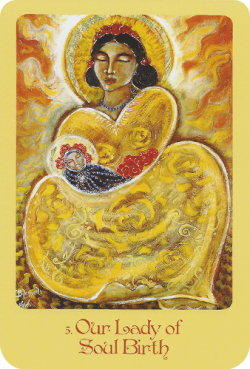
Although you may have felt alone at times, this has never been the case, my dearest one. We’ve never been apart – not even for a second. I’m pleased when you’re happy. I mourn together with you as you cry sad tears. I’ve held you in my loving arms throughout your travels. Believe that nothing will ever be able to alter this. You’re always secure with me!
My child, I adore you for who you are. Because I am your mother, you can be free with me. When you’re upset with yourself, it affects me as well. Similarly, I am ecstatic when you adore your life! So, love yourself, care about the world, and keep loving me. You are the source of light that this world requires to prosper. Always keep this in mind!
What you need to know
The soul’s journey is never simple or easy. There are the happy times and the not-so-good periods to contend with. However, there is always an upside despite all of the pain, sorrow, regret and anxiety.You are the lovely human you are because of your sense of pure joy, pleasure, and happiness. And, you should respect both your experiences and yourself because you are the sum of both.
It is solely through being complete that we become able to allow the divine to express itself through us. As a result, it’s critical to open your heart and spirit to Mother Mary and all the glorious gifts she intends to give you in order to live to the best of your ability. Have confidence that you will be an agent of her grace as a result of this!
Prayer for healing
Calm your mind and envision yourself drenched in the brilliant glow of Mother Mary. You may sense absolute love and happiness encircling you. You’re both laughing at the same time, savouring every lovely moment! This is unquestionably delightful.
Say when you are ready, “Beautiful Mother, shining brilliant with your divine compassion, we are both one together! Stay by my side through all I do. Give me whatever I need to become the absolute best version of myself. I beg you to shower your nurturing light and love on my spirit at all times!”
A wild and lucky week ahead. MAY 13 SUN joins URANUS in Taurus.. May 18 VENUS conjunct URANUS and SUN conjunct JUPITER making the the best day of the year. Crazy love, money and good fortune events…
Sukha vyāpe isa jagata meṅ,
dukhiyā rahe na koya.
Jana jana mana jāge Dharama,
jana jana sukhiyā hoya.
Jana jana maṅgala hoya,
sabakā maṅgala hoya.
May happiness spread through the world,
may no one remain wretched,
may the Dhamma arise in the minds of all,
may everyone be contented,
may everyone be happy,
may all be happy.
– 1 Tablespoon chopped fresh chives or other fresh herbs
– Garlic powder, cumin, or other spices
– 1/4 cup olive oil, divided
Directions:
– Preheat the oven to 400°F.
– Place the broccoli in a microwave-safe bowl then add 2 tablespoons water. Cover the bowl (a large plate works best) then microwave the broccoli for 2 minutes.
– Remove the broccoli from the microwave and drain it very well on paper towels.
– Chop the broccoli into small, pea-sized pieces then add it back to the bowl.
– To the bowl, add the cheddar cheese, cream cheese, chives, 1/4 teaspoon salt, and 1/4 teaspoon pepper. Stir until well-combined.
Arrange the chicken breasts on a cutting board, and using a sharp knife, cut a deep pocket lengthwise into each chicken breast without cutting all the way through to the other side.
– Divide the broccoli mixture among the chicken breasts, pressing it firmly into each pocket.
– Season the outsides of the chicken breasts on both sides with garlic powder, salt, pepper, and any other preferred spices.
– Divide the olive oil among two ovenproof skillets set over medium heat. Once the oil is hot, add two chicken breasts to each pan.
– Sear the chicken for 3 minutes on one side then flip it once and sear an additional 2 to 3 minutes.
– Transfer the skillets to the oven and continue cooking the chicken breasts until the thickest part of each breast reaches 165°F, 10 to 15 minutes.
– Remove the chicken breasts from the oven and serve.
° 2 lbs. chicken wings, drumsticks and wings separated
° ½ cup Louisiana hot sauce
° ½ cup blue cheese dressing
PREPARATION:
Before you begin, clean all countertops and wash your hands with soap and warm water. Also remember to wash utensils and cutting boards as well as your hands after any contact with raw meat or eggs. Avoid cross-contamination by using a different plank for meat and other foods. Be sure to cook your food to safe temperatures and refrigerate leftovers within two hours. For more food safety tips, visit our home food safety section.
Steps
Preheat air fryer to 400°F (200°C). In a large bowl, combine the olive oil, brown sugar, garlic powder, paprika, onion powder, chili powder, salt and pepper. Add the chicken wings to the mixture and toss to coat them well.
Place the chicken wings in batches in the basket of the air fryer. Cook for 13 to 15 minutes, turning after 7 minutes, or until wings are tender and cooked through.
Toss the chicken wings with the hot sauce until well coated. Serve with blue cheese dressing.
Have you tried Paula Deen’s Not Yo’ Mama’s Banana Pudding yet? NO?! Well, you HAVE to try it!
I’ve been known to serve a Paula dish or two and this one has got to be one of my faves! It’s got a wonderful, rich, creamy flavor that everyone in your family is sure to love! I served it to my daycare kids today and they were asking for seconds by the time I had scooped myself out a piece.
Ingredients
2 (7.25 ounces) bags Pepperidge Farm Chessman cookies
2 cups milk
1 (5.1 ounce) box instant vanilla pudding
1 (14-oz) can sweetened condensed milk
1 (8-ounce ) package cream cheese, softened at room temperature
In a large mixing bowl, using electric hand mixer, combine milk and instant pudding mix. Mix on low speed until combined and thickened, about two minutes.
In a separate large mixing bowl, combine softened cream cheese and sweetened condensed milk. Beat together on medium-high speed until no lumps remains and mixture is smooth.
Gently fold in the Cool Whip, using a rubber spatula, just until combined.
Transfer to the bowl with the pudding and stir gently until completely combined.
Line the bottom of a 9×13-inch casserole dish with 1 bag of the cookies.
Top with sliced bananas in an even layer.
Next, top the bananas with the whipped cream mixture and smooth out even with a rubber spatula.
Lastly, lay out the second bag of Chessmen cookies.
Cover dish with plastic wrap and refrigerate at least 3 hours (overnight is even better!)
Scoop the banana pudding onto serving plates and enjoy!

















 Hālau 'Aha Hui Lānākila