Author: Hālau ʻĀha Hūi Lanakila
Aloha Ke 'Ākua! Māhālo nūi lōa for visiting Nā Hālau ʻĀha Hūi Lanakila!
We established our Sanctuary for the exploration and awakening of consciousness, the unfolding of our collective creative and healing potential and realisation of our essential Unity.
Our teachings arise out of direct experience of awakened awareness and emanates the untamable fragrance of freedom whilst radically embracing the mystery and mess of human existence. Our invitation is for you to open to the fullness of life, to say YES to the totality of your experience and to meet reality with radical compassion. Our doors are an open invitation to all who seek authentic freedom and are willing to meet heart to heart in honest and open inquiry.
We were taught that the goal of life is to move through life walking up the mountain of experiences with your Aloha, your Bowl of Light. Life is filled with lessons to learn and teaching moments along the way. When you become angry or jealous, you drop those stones into your bowl of light and those rocks cause leaks in your Mana-sacred power. When your bowl becomes filled with stones, you become a stone that cannot grow. No Aloha! The solution is that at any moment, you can turn your bowl upside down emptying these stones out of your bowl to naturally refill it with YOUR golden light -- your natural Aware and Awakened state of Aloha, your natural state of Divinity. This is the power of Pure Aloha: an Awakened Heart Awakens the Mind.
Awakening hinges on your genuine desire for the discovery of your true nature. If it is to flower in you, you must truly want liberation from everything that is false in you, you must want to give yourself totally to the inquiry into what is true beyond all inherited concepts, ideas and beliefs.
The purpose of our teachings is to ignite this wanting in you. When the flame of this desire becomes an untamable fire, it flips a switch inside of you and the direction of your destiny is irrevocably altered. It’s like turning on the light only to discover that you are this light. This in itself is extra-ordinary: even though you may have heard the words a thousand times, nothing can prepare you for the naked reality that is revealed.
And yet the living experience of this revelation is very ordinary: you have simply re-discovered the innocent wholeness of your essential nature. It’s the you that never was and never will be separate from anything at all. This discovery is the end of suffering and the beginning of freedom.
But awakening is just the beginning. The adventure begins, not in the rarified atmosphere of transcendence, but in the midst of the chaos of life. And living the truth of awakening has perhaps never been more of an imperative than in today’s rapidly changing world.
The invitation is for you to awaken to the pristine perfection of your inner light and then to fully embody and express this light amidst the mystery and mess of human existence.
Come join us!
June 2025 Astrology Forecast: Planetary Ingresses, Lunations & Aspects
This is your June astrology overview. This first part is all about planetary ingresses. When planets move into new signs, shifting they way our thoughts and feelings shift, we and they create rippl […]
Source: June 2025 Astrology Forecast: Planetary Ingresses, Lunations & Aspects
Daily Motivation …
Daily Mana’o for May 18, 2025
Community | A catchy tune explains the world’s ‘isms’ – according to your mum doing the laundry | Aeon Videos

The world’s isms – capitalism, socialism, fascism and so on – explored through the analogy of your mum doing the washing […]
Source: A catchy tune explains the world’s ‘isms’ – according to your mum doing the laundry | Aeon Videos
Astrology | Mutable Energies Lead to Gemini Clarity: Expect a Uranus Bolt ♒️🌬️⚡️
Miracles Abound As the North Node in Pisces continues slowly retrograding its way through Pisces until July 26, 2026. Pisces is the sign of Miracles and with the North Node here this Miracle factor…
Source: Mutable Energies Lead to Gemini Clarity: Expect a Uranus Bolt ♒️🌬️⚡️
Current Events | The Sean Combs (P.Diddy) case. An astrological reading of the Gods and Goddesses of Desire, Power and Extasis

Sean Combs’ natal chart (November 4, 1969, Harlem, New York, birth time unknown — therefore houses are not considered) reveals deep layers of desire, control, and sexual compulsion that reson…
Mana’o Moments | May 16, 2025
Feng Shui | Bagua Placement: Which Way Is Best?
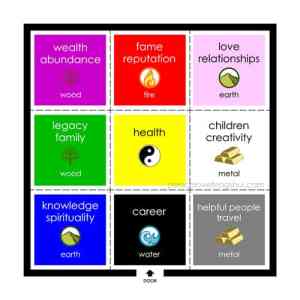
“Feng Shui only applies to you if you have a body and live on Earth” (me) Fawn Chang One of the biggest problems I encountered when I first learned about Feng Shui over 30 years ago w […]
Health and Wellness | Natural Mounjaro Recipe: 4-Ingredient Detox Drink

Try this Natural Mounjaro Recipe, a 4-ingredient detox drink that boosts metabolism, aids digestion, and supports weight loss naturally. […]
Usui Teate Reiki | Introducing Reiki Sensei Shinpiden Chrystian Guardado-Lopez!

Chrystian Sensei is a member of the original Hālau located at Vallejo, California, where he also resides. He is a licensed Massage Therapist on staff at Orcanit Wellness in Oakland, California; a Chi Gung practitioner, and a student of the Western Mysteries Tradition. Aloha e komo mai, Chrystian!
Astrology | Great Conjunction Re-visited

Back in 2020, I wrote an article about the Great Conjunctions (Saturn/Jupiter) and their change into Air signs, which will continue to occur until 2140. I concluded my article as follows: “There is […]
Source: Great Conjunction Re-visited
Theosophy | THE AQUARIAN ELIXIR – II

The relationship between sutratmic continuity and present learning is likely to remain obscure unless one is ready to probe deeply into the simplest things of life. For example, whilst it may seem easy to learn to walk, anyone who has ever made the effort to teach a cat or dog to walk on two legs would soon discover that it is exceedingly difficult. Circus trainers are able to get four-legged animals to walk like two-legged human beings for short lengths of time. With proper stimuli they can produce predictable responses. But these patterned responses are quite different from the intrinsic Manasic ability of children to hold their heads and spines erect and to be able to function as self-moving beings. The Socratic conception of the psuche as a self-moving agent, together with the Platonic idea of nous as the matter-moving mind, points to the initiatory potential inherent within every human being. Whenever an individual makes a new beginning, initiating a considered line of activity during a day, a week, a month or a year, such a commencement could signify the start of a new phase of learning. Whether one takes as the starting-point of such an endeavour one’s birthday or any other cyclic reference-point in life, one is recognizing the permanent possibility for all individuals of making fresh ventures into the unknown. Ordinarily, human beings are protected by not knowing too much about their previous lives or knowing too much even about the immediate future of this one. Since individuals learn to live in ignorance of the unknown, and at the same time venture on the basis of what they do know, clearly there is an indestructible element in every immortal soul which enables a human being again and again to make a fresh start. This permanent element is not simply the Atma-Buddhi or Divine Monad, but also the distilled and assimilated wisdom of past lives gathered in the sutratman, the repository of the fragrant aroma of past learning.
If every human being brings this precious inheritance of prior efforts towards individuation into the present life, and if all have passed through several initiations in distant lives, what relevance does this have to the onset of the Aquarian Age? Commencing on June 19, 1902, and having completed its first degree, the Aquarian Age has already brought about an unprecedented heightening of self-consciousness, and it holds a tremendous potential for the future. Something of the fundamental significance of the Aquarian Age can be glimpsed by recollecting that the year 1902 was not unconnected with the increasing concern to fly in the air. In the nineteenth century, on the other hand, the ocean was the common term of reference for many people in regard to travel, exploration and geopolitics. If people in the last century took many of their analogies and metaphors from the nautical world, this was because they had such an impressive collection of imposing sailing ships and modern steamships. In Greenwich and in Plymouth, from Cathay to Cape Horn, the romance and excitement of the pioneering exploration of the world’s oceans fired the imagination of adults and children alike. Beginning in the sixteenth century, the rapid expansion of sea trade lay at the basis of the commercial and cultural growth of European civilization. By the close of the Victorian Age, the idea of a maritime civilization had become crystallized in the minds of such writers as Mahan and Fisher and consolidated the image of a globe governed by sea power. The construction of large ocean liners capable of sailing thousands of miles at considerable rates of speed provided ordinary people with basic metaphors concerning the conduct of life. The exacting skills needed in navigation received an attention reminiscent of older conceptions in literature and myth, viewing man as the captain of his soul. Yet now, in the twentieth century, with the vast elaboration upon what the Wright Brothers began, there is a fundamentally new outlook that has emerged with reference to the atmosphere surrounding the earth.
Even early in the century, artists and visionaries were stimulated by grand, if sometimes fanciful, conceptions of what the implications of flight could mean to human beings in general. By the time of the First World War, shrewd politicians like Winston Churchill perceived with almost prophetic clarity the significant change in the balance of power brought about by the airplane and the appalling dangers that this new capacity could unleash. For most people, despite pioneering efforts by individuals and businesses, it was not until after the Second World War that they were able on a large scale to travel by air. Then suddenly they experienced what otherwise could only have been done by climbing mountains – they gained some sense of what it is like at different elevations. In the past few decades this upward ascent has passed beyond the proximate atmosphere of the earth, reaching into the empyrean of space. Tapping the theoretical insights of a few and drawing upon the cooperative labours of specialized teams of scientists and engineers, a small coterie of intrepid individuals has travelled into space and brought back beautiful images of the earth as a shining gem suspended in the void. Spacecraft with intricate instruments have ventured towards Mercury, Venus, Mars, Jupiter and Saturn, linked to earth only by the finest etheric threads of electrical impulse, and returning copious information regarding long-recognized globes in our solar system.
Broadly, the Aquarian Age is typified by the concept of vertical ascent, whereas during the nineteenth century and before, the idea of horizontal movement was far more prevalent. This is not to minimize the importance of the great circumnavigations of the globe conducted in the maritime era, nor to discount the considerable knowledge gained by daring explorers and naturalists in regard to diverse forms of life. At their best, the nineteenth century naturalists discovered valuable principles of continuity in living form and developed significant intuitions into the geometry of dynamic growth. But now, in the twentieth century, principally because of air travel, people are much more conscious of the enormous relevance of factors such as altitude and atmosphere in relation to the elevation of consciousness. Through the beneficent invention of pressurized cabins, vast numbers of people have had the opportunity to observe that the earth does not seem the same when seen from an airplane as it does when seen on the plains.
All of this merely suggests that there has been a vital change taking place in human consciousness progressively over the last eighty years. From a merely empirical standpoint the entry of human beings into the airy regions is conclusive of nothing. From the standpoint of the Gupta Vidya, however, these outward changes are emblematic of the shift in the fundamental perspective of human experience. The nature and significance of this change cannot be comprehended through conventional and pseudo-rationalistic schemes of popular astrology. Caught up in erratic frameworks and outdated calculations, most astrologers are no more aware of the true meaning of the Aquarian Age than the average person. Few, if any, have deeply reflected upon the precession of the equinoxes, or upon the essential differences between the Taurean, Piscean and Aquarian Ages. Nonetheless, an increasingly large number of individuals have begun to sense a new awakening of human consciousness. Whether they interpret this from a purely personal standpoint, or connect it to some form of secular or sectarian millennial thinking, they can discern that a fundamental change is taking place in the global atmosphere of human life. Some who are sensitive see this in terms of a subtle beauty and alteration in the atmosphere of the earth itself, whilst those who are more perceptive detect a similar change in the atmosphere that surrounds each human being. In general, there is a growing recognition and widespread acknowledgement of a fresh opportunity for human souls at the present time of metamorphosis. Such glimmerings provide an array of opportunities which bring with them fresh avenues for awakening and growth.
Raghavan Iyer
The Gupta Vidya III
Astrology | 🌕 Full Moon in Libra: A Reckoning of the Heart

This Full Moon in Libra isn’t just about releasing — it’s about cutting away the bullshit that’s been happening in plain sight. This lunation brings with it a wave of feminine rage. Not the kind th […]
Island Moments …

When the sky paints a masterpiece just for you …
Capture the calm, cherish the moment!
Full Moon in Libra – April 13, 2025: Venus Between Shadows, Myths, and the Flame of Rebirth with Chiron
 As we leave March behind, having moved through the first eclipse season of the year — marked by the total Lunar Eclipse in Virgo (ruled by Mercury), which brought the intensification of the U.S. ta […]

Shareable Plant-Based Recipes – Food Sharing Vegan

Browse hundreds of air fryer, Instant Pot, decadent, and delicious plant-based recipes worth sharing. With detailed instructions and expert tips, every recipe is approachable!
Theosophy | AQUARIAN SPIRITUALITY – I

It is argued that the Universal Evolution, otherwise, the gradual development of species in all the kingdoms of nature, works by uniform laws. This is admitted, and the law enforced far more strictly in Esoteric than in modern Science. But we are told also, that it is equally a law that ‘development works from the less to the more perfect, and from the simpler to the more complicated, by incessant changes, small in themselves, but constantly accumulating in the required direction.’ . . . Esoteric Science agrees with it but adds that this law applies only to what is known to it as the Primary Creation – the evolution of worlds from primordial atoms, and the pre-primordial ATOM, at the first differentiation of the former; and that during the period of cyclic evolution in space and time, this law is limited and works only in the lower kingdoms . . . . As the Hindu philosophy very justly teaches, the ‘Aniyamsam Aniyasam,’ can be known only through false notions. It is the ‘many’ that proceed from the ONE – the living spiritual germs or centres of forces – each in a septenary form, which first generate, and then give the PRIMARY IMPULSE to the law of evolution and gradual slow development.
The Secret Doctrine, ii 731-732
Viewed from the impersonal standpoint of collective Karma and cyclic evolution, Nature suffers fools not unkindly but with compassion. Nature will not indefinitely indulge or underwrite human folly, for as Cicero observed, time destroys the speculations of man whilst it confirms the judgement of Nature. Through cyclic opportunities, Nature actually affords individuals innumerable occasions for the clarification and purification of perception and intention. If human judgement and design are to have adequate leverage on Nature, they must have as their stable fulcrum an intuitive apprehension of law. At the most fundamental level, human judgement and natural law alike stand upon a common ground, a single transcendental source of Being. It is only by rejecting all dualisms, mediaeval or modern, and by refusing to absolutize polarities that the designs of men and the differentiations of Nature may be brought into self-conscious harmony. In Gupta Vidya, there is no cleavage between the aim of Self-knowledge (Atma Vidya) and the practical ideal of helping Nature and working on with her (Ahimsa Yagna). To the perfected will of the yogin of Time’s circle (Kalachakra), Nature is the ally, pupil and servant. Fully comprehending that man is the key to the lock of Nature, the wise yogin finds no intrinsic tension been obeisance to the judgement of Nature in Time and obedience to Shiva, the good gardener of Nature in Eternity.
This philosophic fusion of science and religion, of vidya and dharma, is essential to the structure of the Aquarian civilization of the future and enshrined in the axiom that there is no religion higher than Truth. In accordance with this evolutionary programme and in tune with the Avataric vibration of the age, the Brotherhood of Bodhisattvas has actively sought to dispel the delusive dichotomy between science and religion. Krishna conveyed the beautiful synthesis of jnana and bhakti in his classic portrait of the Self-governed Sage in the Bhagavad Gita. Spiritual teachers have repeatedly warned against the degrading effects upon the mind-principle of ahankaric greed and atavistic fear working through materialism and superstition. From the therapeutic standpoint of the ancient Rishis, the murky ferment of the twentieth century is not to be viewed as a creative tension between two viable cultures, the one religious and traditional, the other modern and scientific. Rather, it is to be seen as the ignorant and schizophrenic clash of two largely moribund inversions of authentic culture. Neither secular religion, with its crude demonolatry and selfish salvationism, nor materialistic science, with its cowardly conformity and slavish hedonism, still less the mutual recriminations and denunciations of one by the other, can offer human beings an assured basis for fulfilment and growth. Just as two wrongs do not make a right, no compound of these costly inversions can rectify the malaise of modern civilization. Neither fight nor flight nor unholy alliance can correct the deficiencies of two waning schemes of thought that do little justice to Man or Nature.
In order to participate freely in the regenerative, not the destructive, tendencies of the Aquarian Age, one must recognize that true religion and science do not need to be rescued from contemporary chaos by messianic crusaders. On the contrary, creative individuals must learn to cultivate moral courage and cool magnanimity so that they may plumb the depths of pure science and true religion within themselves. This cannot be done without assuming some degree of responsibility for the intense karmic precipitations during the present period of rapid transition. Without self-confidence based upon inviolable integrity, the bewildered individual will regrettably fall prey to the contagion of despairing diagnoses, sanctimonious effusions and evasive rationalizations offered by self-appointed pundits and critics alike. No shallow conceit, cynical or complacent, can substitute for the mental discernment and spiritual strength required of pathfinders in the Aquarian Age. Rather than sitting in idle judgement upon contemporary history and humanity, wise individuals will seek to insert themselves into the tremendous rethinking initiated by scattered pioneers in regard to the essential core of Man and Nature and the vital relationship between them. If through earnestness, simplicity and dianoia one can radically revise one’s conception of Nature and Man, then one may powerfully assist that silent revolution and subtle healing taking place today behind the clutter of competing slogans and chaotic events.
As individuals increasingly recognize that the faults which bedevil them lie in themselves and not in the stars, they will progressively discern the Aquarian design woven in the heavens. Through the religion of renunciation of the personal self and the science of Buddhic correlation, one can begin the difficult ascent in consciousness towards comprehension of the mysteries of heaven and earth.
As above, so below. Sidereal phenomena, and the behaviour of the celestial bodies in the heavens, were taken as a model, and the plan was carried out below, on earth. Thus, space, in its abstract sense, was called ‘the realm of divine knowledge,’ and by the Chaldees or Initiates Ab Soo, the habitat . . . of knowledge, because it is in space that dwell the intelligent Powers which invisibly rule the Universe.
The Secret Doctrine, ii 502
Conceptions of space have varied significantly over the centuries, depending largely upon cognate conceptions of time, matter and energy. The arcane conception of space as at once an infinite void and an invisible plenum, replete with intelligence, offers a profound challenge not only to post-Einsteinian science but also to post-Gandhian religion. It demands an entirely fresh view of causality and consciousness, of activity and time. From the standpoint of contemporary physics, any object, including the human form, is almost entirely empty space devoid of anything that might be considered matter. Even without studying particle physics, perceptive individuals are prepared to accept that if they could visualize what an X-ray would show, they would find that only about one quadrillionth of any object is constituted of a few particles and that all the rest is seemingly empty space. Similarly, if they could visualize what various detectors operating over the visible and invisible spectrum reveal, they would find that every point in space is the intersection of myriad vibrating fields of energy. Again, if one were prepared to penetrate beneath the surface of personal and collective habits and institutions, through the discerning power of the disciplined conscience and awakened intuition, one would find an array of Monadic individuals suspended like stars in the boundless void of the unmanifest. To the resonant heart, this immense void would reveal itself as alive at every point with the vibration of the Great Breath in its complex rhythmic differentiations. Through such reflection one may recognize that the seeming solidity of things is mayavic. Their surfaces and contours as they appear to the physical senses and the perception of the psyche are enormously deceptive and strangely confining. By using the mind’s eye one can come to see that what is seemingly full is void and that what is seemingly void is extremely full of Atma-Buddhi-Manasic or noumenal aspects of invisible atoms.
Raghavan Iyer
The Gupta Vidya III
Technology | Researchers combine holograms and AI to create uncrackable optical encryption system
WASHINGTON — As the demand for digital security grows, researchers have developed a new optical system that uses holograms to encode information, creating a level of encryption that traditional methods cannot penetrate. This advance could pave the way for more secure communication channels, helping to protect sensitive data.
“From rapidly evolving digital currencies to governance, healthcare, communications and social networks, the demand for robust protection systems to combat digital fraud continues to grow,” said research team leader Stelios Tzortzakis from the Institute of Electronic Structure and Laser, Foundation for Research and Technology Hellas and the University of Crete, both in Greece.

Optica is the leading society in optics and photonics. Quality information and inspiring interactions through publications, meetings, and membership. […]

Source: Optica
Dental Health | Some bacteria in the mouth may play a role in memory loss and dementia
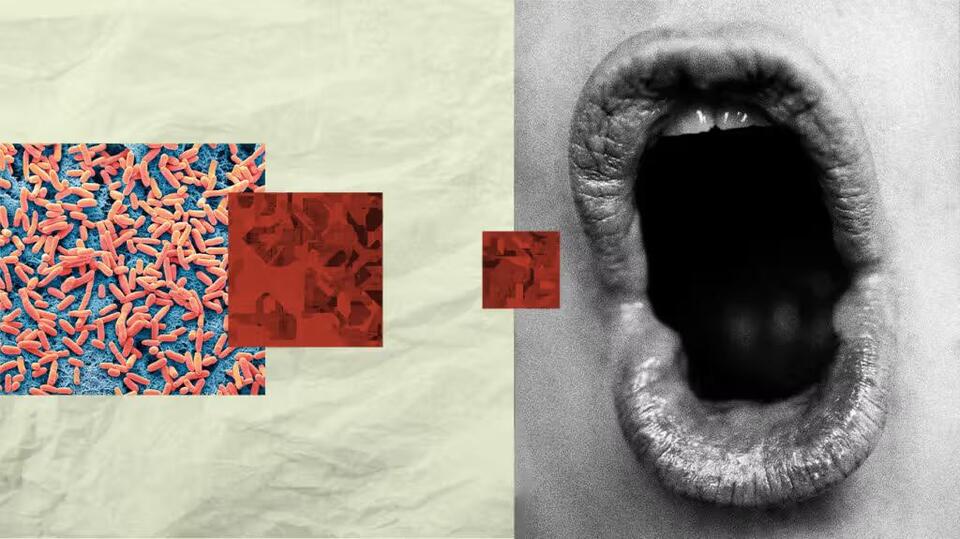
A new study suggests that the bacteria living in the mouth may influence cognitive function, and some harmful bacteria may contribute to the development of […]
Source: Some bacteria in the mouth may play a role in memory loss and dementia – NewsBreak
Health & Wellness | Common Mouth Bacteria Linked to Higher Stroke Risk

A study found that Streptococcus anginosus, a common mouth and gut bacterium, is more prevalent in stroke patients and linked to higher stroke risk and mortality. Streptococcus anginosus, a bacterium commonly found in the mouth and gastrointestinal tract, may be present in high levels in the gut […]
Astrology | Venus in Gemini Woman: Traits, Compatibility, and Relationship Insights

Learn all about the Venus in Gemini woman—her traits, love life, compatibility, and perfect gift ideas. Find out what makes her social, witty, and unique! […]
Source: Venus in Gemini Woman: Traits, Compatibility, and Relationship Insights – covid19uba
Good Eats | Homemade Pupusas

Ingredients: For the dough … 2 cups (228g) masa harina, white or yellow 1 teaspoon chicken bouillon granules, optional 1/2 teaspoon salt 1 1/2 to 2 cups boiling water 2 tablespoons (28g) butter or lard, softened Vegetable oil, for cooking
For the filling … 1 cup shredded mozzarella cheese or Oaxaca cheese 1 cup refried beans, optional TURN TO THE NEXT PAGE TO READ INSTRUCTIONS Directions: Make the dough: In a large […]
Source: Homemade Pupusas – RECIPES
La’au Lapa’au | 9 Best Indoor Plants That Bring Good Things For Your Home

There are many different ways that indoor plants work in a household, from purifying the air around it to bringing more nature to home or even just serving as home décor. They can offer even more, like bring fortune and positive energy. According to science, like humans, plants also have energy and it can make […]

Source: 9 Best Indoor Plants That Bring Good Things For Your Home
La’au Lapa’au | No matter how small your house is, you must grow this plant in your house

Did you know that Vietnamese coriander (Persicaria odorata) flowers and bears fruit annually, especially on plants that are regularly pruned and harvested? This versatile herb is not only a staple vegetable but also a valuable medicinal plant. Here’s why you should consider having a Vietnamese coriander plant at home. Medicinal Properties of Vietnamese Coriander According […]
Source: No matter how small your house is, you must grow this plant in your house.
Earth.com | “Time is an illusion” and does not exist as we know it, theories claim
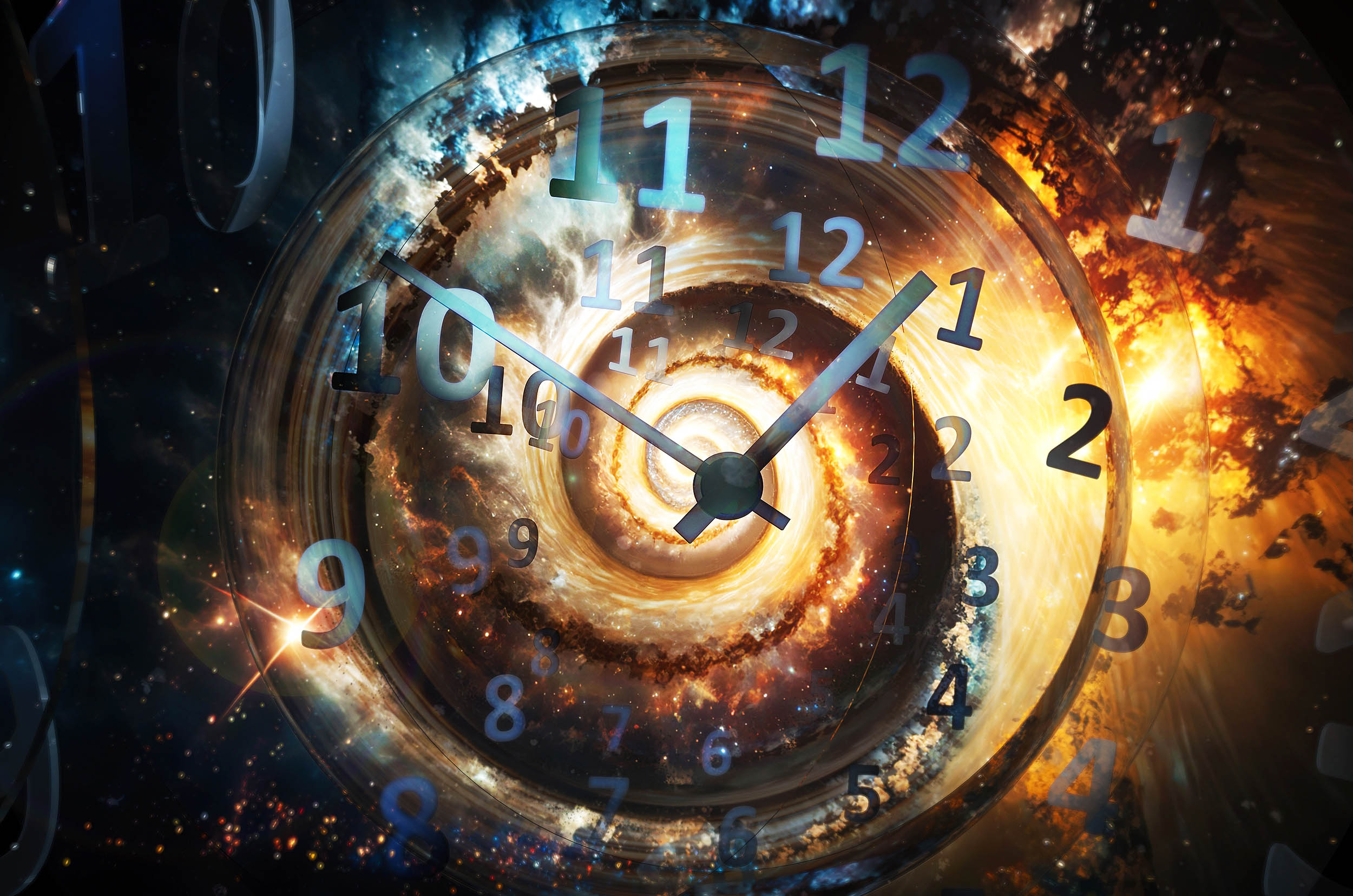
Debate continues to rage in the scientific community about the true meaning of time and about its very existence at a fundamental level. […]
Source: “Time is an illusion” and does not exist as we know it, theories claim – Earth.com
Health | Some types of plant-based milk are linked to mental disorders – Earth.com

New study links plant-based milk to higher anxiety and depression risk. Semi-skimmed cow’s milk shows potential benefits for mental health. […]
Source: Some types of plant-based milk are linked to mental disorders – Earth.com
Good Eats | White German Chocolate Cake with a Cheesecake Center

Ingredients:
For the White German Chocolate Cake:
1 cup (4 oz) German chocolate, chopped
½ cup (1 stick) unsalted butter
1 cup granulated sugar
½ cup brown sugar, packed
3 large eggs, separated
1 teaspoon vanilla extract
2 cups all-purpose flour
1 teaspoon baking powder
½ teaspoon baking soda
½ teaspoon salt
1 cup buttermilk. […]
Source: White German Chocolate Cake with a Cheesecake Center – RECIPES
Good Eats | Delicious Asian-style Beef Ribs

Few dishes are as universally loved as ribs. Tender, juicy, and packed with flavor, they are a true comfort food.
Whether you’re craving the smoky richness of barbecue ribs, the tangy sweetness of an Asian-inspired glaze, or the savory goodness of a slow-cooked stew, beef ribs offer endless possibilities.
This recipe captures the essence of mouthwatering beef ribs, cooked to perfection, with a balance of flavors and textures.
Perfect for gatherings, family dinners, or even solo indulgence, this dish promises to be a hit every time.
Let’s dive into creating the most delicious beef ribs you’ve ever tasted.
Ingredients:
• 1 kg beef ribs (cut into small pieces)
• 2 tbsp soy sauce
• 1 tbsp oyster sauce
• 1 tbsp hoisin sauce
• 1 tbsp sugar or honey (for caramelization)
• 1/2 tsp black pepper
• 2 cloves garlic (minced)
• 2 tbsp cooking oil
• 1/4 cup water
Instructions:
Marinate the Ribs: Mix the beef ribs with soy sauce, oyster sauce, hoisin sauce, sugar, and black pepper. Let it marinate for at least 30 minutes.
Sauté the Garlic: Heat oil in a large pan or wok over medium heat. Add the minced garlic and sauté until fragrant.
Cook the Ribs: Add the marinated ribs into the pan and sear them until they are browned on all sides.
Caramelize: Add water to the pan, lower the heat, and let it simmer. Stir occasionally until the sauce thickens and the ribs are well-coated in a caramelized glaze.
Serve: Once done, remove the ribs from the pan and serve hot with rice.
Tips:
Cooking for Tenderness: Always cook ribs low and slow to achieve tender, fall-off-the-bone meat. Use methods like slow roasting, braising, or cooking in a pressure cooker to lock in moisture and flavor.
For grilled ribs, pre-cook them in the oven or boiling water before finishing them on the grill.
Enhancing Flavor: Marinate the ribs overnight for maximum flavor absorption.
Basting with sauce during the final stages of cooking helps to caramelize the glaze, creating a mouthwatering crust.
Pair your ribs with spices and seasonings that complement the sauce, like smoked paprika, garlic, or a hint of cayenne.
Variations:
Asian-Style Ribs: For a tangy and sweet variation, use a marinade of soy sauce, honey, garlic, and ginger.
Add sesame oil and chili flakes for an extra kick. Glaze the ribs with hoisin or teriyaki sauce while grilling or roasting for a glossy finish.
Classic Barbecue Ribs: Stick to the classic American barbecue style with a smoky dry rub of paprika, brown sugar, cumin, and mustard powder.
Slather the ribs in your favorite barbecue sauce and finish them on the grill for a rich, smoky flavor.
How to Store:
Refrigerating Leftovers: Allow the ribs to cool completely before storing. Place them in an airtight container or wrap them tightly in aluminum foil. Store in the refrigerator for up to 3 days.
Freezing for Later: For longer storage, wrap the ribs in plastic wrap and then in aluminum foil, or use a freezer-safe bag. Freeze for up to 3 months. Thaw in the refrigerator overnight before reheating.
Conclusion
Delicious beef ribs are the ultimate crowd-pleaser, offering a combination of tenderness and bold flavors that leave everyone wanting more.
Whether prepared with an Asian twist, classic barbecue sauce, or your personal favorite style, these ribs are versatile and satisfying.
By mastering the techniques and variations, you can make every beef rib dish a showstopper.
With proper storage, you can enjoy the leftovers or prepare them ahead of time for busy days.
Nothing beats the joy of savoring a perfectly cooked rack of ribs, so treat yourself and your loved ones to this delightful dish!
Good Eats | 12 Quick and Delicious Pasta Recipes for Every Occasion

Pasta is a versatile dish that can be enjoyed in countless ways. From rich and creamy sauces to light and fresh meals, pasta has a way of satisfying cravings for [… Read more …]
Source: 12 Quick and Delicious Pasta Recipes for Every Occasion
Happy New Year 2025 | Year of the Snake: 2025 Is the Year of the Wood Snake, A Time for Personal Evolution
The Year of the Snake: 2025 Chinese Zodiac
The Year of the Snake slinks in on January 29, 2025, at the Aquarius new moon, bringing with it 12 months of renewal and growth. Known for its stealthiness and wisdom, the Snake wants you to move with purpose and precision. Relinquish what no longer serves you so you can evolve. […]
Read on: Wood Snake 2025
Chinese Horoscope 2025: The Year Of Wood Snake Brings Transformation!
Read this special page about the Chinese Horoscope 2025 with a detailed horoscope for the natives belonging to the 12 Chinese zodiac signs.
Source: Chinese Horoscope 2025: The Year Of Wood Snake Brings Transformation!
Spirituality | These Breathing Exercises Will Help You Reconnect to Your Life Force

Breathing came naturally to us, then as we grew up, faced traumas, and started building walls to protect ourselves, we unconsciously cut off our natural breath. […]

Source: These Breathing Exercises Will Help You Reconnect to Your Life Force | Astrology.com
Theosophy | AQUARIAN CIVILIZATION – I
Our races . . . have sprung from divine races, by whatever name they are called . . . . Every nation has either the seven and ten Rishis-Manus and Prajaptis . . . . One and all have been derived from the primitive Dhyan-Chohans of the Esoteric doctrine, or the ‘Builders’ of the Stanzas. From Manu, Thot-Hermes, Oannes-Dagon, and Edris-Enoch, down to Plato and Panadores, all tell us of seven divine Dynasties, of seven Lemurian, and seven Atlantean divisions of the Earth; of the seven primitive and dual gods who descend from their celestial abode and reign on Earth, teaching mankind Astronomy, Architecture, and all the other sciences that have come down to us. These Beings appear first as ‘gods’ and Creators; then they merge in nascent man, to finally emerge as ‘divine-Kings and Rulers’ . . . . There were five Hermes – or rather one, who appeared – as some Manus and Rishis did – in several different characters . . . . But under whichever of these characters, he is always credited with having transferred all the sciences from latent to active potency, i.e., with having been the first to teach magic to Egypt and to Greece, before the days of Magna Graecia, and when the Greeks were not even Hellenes.
The Secret Doctrine, ii 764-765
To take the entire subject of cosmic hierarchies at the human level to its sublime heights, one must start with the momentous recognition that many of the ‘gods’ of the ancient theogonies belonged to the First Race of humanity. Human beings in that First Race were gods or devas, and in the Second Race they were demi-gods – celestial spirits still too ethereal to occupy the human form that was being gestated by the lunar Pitris. Then, in the Third Race, with the lighting-up of Manas and the incarnation of the Manasaputras into human form, humanity underwent an evolution which passed through several stages. Beginning with the androgynous and bisexual, it proceeded through the protracted dual-sexed epoch of the human race. There was the legendary era of great heroes and giants. The seven divine dynasties were thereafter to be found in the Third Race and again in the Fourth Race, the Lemurian and Atlantean periods. Instructing humanity in diverse arts and sciences, they laid the primeval foundations of human culture and civilization around the globe.
Within this broad framework, the extraordinarily evocative power of the name and presence of Hermes is especially relevant to the 1975 Cycle and to the civilization of the future. Hermes is a generic name, associated with potent thought, and linked to Mercury-Buddha – a Dhyani – as well as with multiple incarnations in the history of humanity. As the god Hermes-Thot, he is the pristine archetype of Initiators in ancient Egypt, where he was reverenced as Hermes Trismegistus, a name applying to an entire lineage of Initiators. This solar line of spiritual Teachers can be traced back to Shiva as Dakshinamurti, the Initiator of Initiates. The hoary tradition which holds that Hermes taught all sciences to the nascent Mediterranean civilization suggests that he instructed those ready for divine theurgy. The arcane sciences transferred by Hermes from latent to active potency collectively constitute divine gnosis, a precise and comprehensive knowledge of the complex laws governing the seven kingdoms of Nature. These laws encompass the planes of matter, both visible and invisible, the planes from which noumenal prototypes become precipitated or projected into the phenomenal realm. Science in its essence is concerned with primary causes and is rooted in a mature apprehension of noetic consciousness. This is the true and noble meaning of science, vidya in the old sense, which was mysteriously intimated by the Mahatmas to European civilization in the seventeenth and eighteenth centuries to counteract the corruption of creedal religion.
Modern science is a recent flower, emerging sporadically after the Renaissance, and, in particular, after Giordano Bruno’s activities in Germany and his historic visit to Oxford. The Royal Society was founded by heretical and courageous clergymen, men like the Warden of Wadham, who recognized that Aristotelian scholasticism was throttling the growth of human thought, that theology had become nothing more than a corrosive word-game. Together with bold patrons in the discreetly pagan aristocracy, these pioneering heretics founded a small club in London which they called the Royal Society. It was concerned from the beginning with the systematic support of all earnest experimental investigation into the natural world. In this, its purest sense, early modern science is one of the minor contributions of the Brotherhood of Bodhisattvas to the post-Renaissance world. Yet, in the context of the ancient meaning of science, it is a limited thing indeed, shadowy and modest. Originally, ‘science’ referred to a system of laws capable of application by human consciousness to what later came to be cherished by a few reticent brotherhoods as true magic or divine wisdom. Magic is an exact and definite knowledge of the noumenal laws of invisible Nature. Through the proper use of that carefully transmitted knowledge, one can affect the rates of growth and primary structures of energy on the Akashic and astral planes, and so affect conditions and combinations on the physical plane. Modern science, through its neglect of the primacy of consciousness, can hardly approach such a universal synthesis, fusing meta-geometry, meta-biology and meta-psychology.
In the ancient and archetypal view of noetic magic, there is a summoning from latency to active potency of arcane knowledge that was originally impressed in the imperishable soul-memory of all humanity. Going all the way back to the middle of the Third Root Race, when self-consciousness had been attained, human beings were in astral vestures that were capable of effortless and benevolent use of the spiritual senses. Human beings, therefore, through their intuitive knowledge of the correlations of sound, colour and number, were able to communicate effortlessly. In that Golden Age, shrouded in the myths and mists of antiquity, they showed spontaneous reverence to Magus-Teachers, Hierophant-Adepts moving openly among human beings, teaching in fabled “concord groves” all over the earth. Seated under banyan trees (varieties of ficus religiosa), they bestowed divine wisdom upon those who were ready to learn. In that idyllic time the vast human inheritance of spiritual wisdom and scientific magic was assimilated into the karana sharira, the permanent vesture of the monad. It is in that inmost vesture, which is the container of all soul-memories, that the original wisdom and theurgy of humanity lie latent to this day.
Raghavan Iyer
The Gupta Vidya II
Marine Ecology | ‘Mega momma’ great white shark killed on drumline may reveal secrets about iconic predator

Scientists hope the body of a pregnant great white shark killed on a drumline will reveal some of the mysteries of the species’ reproduction. […]
Source: ‘Mega momma’ great white shark killed on drumline may reveal secrets about iconic predator
 Hālau 'Aha Hui Lānākila