Daily Words of the Buddha for July 18, 2023


Sabbadānaṃ dhammadānaṃ jināti;
sabbarasaṃ dhammaraso jināti;
sabbaratiṃ dhammarati jināti;
taṇhakkhayo sabbadukkhaṃ jināti.

The gift of Dhamma triumphs over all other gifts;
the taste of Dhamma triumphs over all other tastes;
the happiness of Dhamma triumphs over all other pleasures;
the eradication of craving triumphs over all suffering.

Dhammapada 24.354
The Discourse Summaries by S.N. Goenka

Daily Words of the Buddha for July 15, 2023

Puññameva so sikkheyya
āyataggaṃ sukhudrayaṃ.
Dānañca samacariyañca,
mettacittañca bhāvaye.

Train yourself in doing good
that lasts and brings happiness.
Cultivate generosity, the life of peace,
and a mind of boundless love.

Itivuttaka 1.22
Gemstones of the Good Dhamma, compiled and translated by Ven. S. Dhammika

Theosophy | KARMA AND CHOICE – III

 Spiritual and mental diet forms the character. If a person wanted to use this teaching, he would make vast discoveries by doing a little meditation upon the Three Fundamentals of The Secret Doctrine in the light of the idea that their ethical bearing is universal. They enable the person, whoever, whenever, over the years, who decides to become a student of Gupta Vidya, to widen his vision and deepen his understanding. And he can do this at home, at work, in solitude, and in all spheres of life. Wherever he walks, he walks in a sphere of light and he walks as a man with an ever-widening vision. He becomes a man whose character is rock-like in its integrity. His integrity is as firm and unyielding as the spinal cord when it is a true vehicle of the divine fire, and his being is magnanimous with the fullness of his heart. He reaches outside of himself in every direction — his mind and soul compassionately encompassing every possible point of view, especially when embodied in the haunting, stumbling efforts of another human being who is trying to begin by asking, “Who am I?” To truly answer this question could be centrally important to anyone who wants to become, over the next thirty years, in the humanistic phrase of a nineteenth century writer, “A man not of property but of character.”

 The whole practical use of the teaching requires recognition of the distinction between the various classes of karma. If we would understand not merely when karma is expended in spite of ourselves, but when we could make a difference in relation to the expending and altering of effects of karmic influences that work in our lives, we must see the operation of the three classes within the three fields mentioned in the ancient and sacred axioms upon the subject of karma. A crucial aphorism states:

Changes may occur in the instrument during one life so as to make it appropriate for a new class of Karma and this may take place in two ways: through intensity of thought and the power of a vow, and through natural alterations due to complete exhaustion of old causes.

The choice here relates to positive, deliberate, Promethean penances that any man could engage in — intensity of thought and the power of a vow. Intensity of a thought means that the thought is worthy of meditation, of being used for reflection. The stronger the nature, the more impersonal and intense will be the force of the meditation. The more recurrent that meditation, the more that intense thought is generated to a point where it goes into orbit.

 Every time one’s mind turns to meditation, there is, unfortunately, some obscuration. There are forms that arise in connection with it as in the denser part of the earth’s atmosphere. Any person who thinks that with the steam engine of existing thought he is going to propel himself into outer space — and ‘outer space’ equals ‘inner space’ metaphysically — is making a mistake. But there is no reason for a person to aim to start off with reaching the moon or any planet further off from the earth. He might start, however, by hoping that he attains to sufficient intensity in his meditation to begin to become a revolving wheel, such that when it revolves, it lifts him somewhat above the grosser atmosphere of the earth, but which yet, as it revolves, smoothly comes back into earth life. This revolution is, after a point, calm and steady.

 If intensity of thought is understood in this way, the power of a vow is enshrined in the ancient idea of a pilgrimage. Step by step, true pilgrims move by the power of a vow. A vow is taken by a person who, in taking it, stands looking in a certain direction, with a clear purpose in mind. Whatever minor vows we take follow from a great vow — a vow to be a good student of Bodhi DharmaTo bring that down into today means making many decisions, making minor vows. We should not tell anyone these vows unless there is need to do so for the sake of helping others. They should simply be carried out. To combine two analogies, even if a pilgrim comes by borrowed car and mechanical transportation, he has eventually to walk toward the doors of the mystery temple, to be received and come in on his own.

 A vow has to do with an attitude of mind. Unless there is an adjustment and a purification in the attitude of mind, intensity of thought cannot be handled. Intensity of thought will boomerang and it will merely make one’s karma worse. This happens to many people. One does not want it to boomerang except to the extent to which it, Shiva-like, attenuates and destroys the shadowy self-idea. On the other hand, one wants one’s thought to reach out as a beneficent force to all other elementals, mixed with psychic embryos that constitute the universe in its preponderant astral light, as well as the planes above and planes below. A person who can direct such a beneficent motive will find that intensity of thought will be potent and constructive if it is accompanied by the positive and penitent attitude implicit in the taking of a vow.

 To take a vow means, “I am soft, I am shaken that I live like this. If these things are representative of my mental attitudes, I will expiate them, not merely by my suffering and recognition that that is the way I was, but also in a conscious sacrifice of similar intentions upon the altar of that holy and untrodden invisible, unmentioned, intangible ground of the heart.” There alone one may truly worship the causeless cause. There, the only object of worship is the universal spirit. The only priests are good thoughts and good intentions. The only sacrificial victim is the personal self, with its inimical and hostile intentions and thoughts that are incompatible with and unpurifying to the sanctity of the inner sanctuary.

 Because of the great holiness of the subject of karma, and because all vows remind us of the Buddha’s vow, it is appropriate to recall that any human being could learn from the example of Gautama Buddha. From his example we may appreciate the full strength that is possible from a life-binding resolve: self-generated, self-binding, self-administered, constant and consistent, focused upon one main, universal impersonal idea. Anyone who seeks the ancient Path to enlightenment can thereby earn for himself the invisible sacred bond with the Lodge of Mahatmas. He who wishes to be worthy of that association until the moment of death could, by the power of a vow to help and serve other human beings, wipe out many karmic residues. He could gain the immense privilege of accelerating, with a toughness in response and anticipation, the self-conscious purgation of personal and constrictive karma.

 Even though all of this sounds so forbidding, it is like a grain of dust in relation to the voluntary sacrifice of those who descend on earth to take upon themselves the karma of all. They take upon themselves the limitations and weaknesses of all, and do what they  can with that additional burden to increase the opportunities of those struggling souls who, despite their failures of yesteryear and of previous lives, warm at the moment of choice and have earned the joy of a new beginning. Such a soul could say, “I am not worried anymore about the past because I know that I am a manasa.” Such an one will bring his questions about the mysteries of Self and karma to Brahma Vach. He can stand erect and proud as a man and walk like one, silently determined to increase his efforts on behalf of every human being caught in the overwhelming agony of ignorance. It is ignorance of the Bodhi Dharmaignorance of themselves, and ignorance of the self-made windings of karma that make men suffer. It is only by the karmic force of a vow made on behalf of all our fellow men that the dawn of universal enlightenment may be hastened. Such a vow will be a living power in a man’s life, making him a living embodiment of the unity of all beings.

Begin thy work, first having prayed the Gods
To accomplish it. Thou, having mastered this,
That essence of Gods and mortal men shalt know
Which all things permeates, which all obey.
And thou shalt know that Law hath established
The inner nature of all things alike;
So shalt thou hope not for what may not be,
Nor aught, that may, escape thee.

                  PYTHAGORAS 

Raghavan Iyer
The Gupta Vidya II

Daily Words of the Buddha for July 14, 2023

Ubhinnamatthaṃ carati,
attano ca parassa ca;
paraṃ saṅkupitaṃ ñatvā,
yo sato upasammati.

Knowing that the other person is angry,
one who remains mindful and calm
acts for one’s own best interest
and for the other’s interest, too.

Saṃyutta Nikāya 1.188
Gemstones of the Good Dhamma, compiled and translated by Ven. S. Dhammika

Daily Words of the Buddha for July 13, 2023

Attanā hi kataṃ pāpaṃ, attanā saṃkilissati;
attanā akataṃ pāpaṃ, attanāva visujjhati.
Suddhī asuddhi paccattaṃ:
nāñño aññaṃ visodhaye.

By doing evil, one defiles oneself;
by avoiding evil, one purifies oneself.
Purity and impurity depend upon oneself:
no one can purify another.

Dhammapada 12.165
Gemstones of the Good Dhamma, compiled and translated by Ven. S. Dhammika

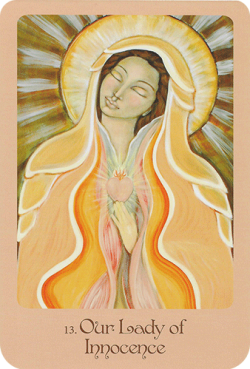
Divine Feminine Oracle | Mother Mary – July 13, 2023

7d3ca9db-ee8a-4db2-b884-f64378580c28.f1a990ccfc579a3cacf92efb503c8977

Mother Mary’s message for you

Today, my most beautiful child, I want you to release any fears you have about being scrutinised. Even though you’ve had to deal with a lot of tragedies in your life, you’re still the same person within. Take a chance on me; I won’t harm you in any way.


You may confide in me about anything since I am able to perceive your innermost thoughts, feelings and desires. When you trust in confiding in me with things that you don’t even feel comfortable admitting to yourself, I will never criticise. I am here to help you grow and accept yourself, my child.

What you need to know

Even if we enjoy the advantages that come with adulthood, we cannot guarantee that they will bring us pleasure. There are instances when a negative event may warp our perspective on life as a whole as well as the people in our immediate environment. However, we are limiting the freedom of our soul by harbouring negative thoughts. Thankfully,  we have the potential to set ourselves free by looking at the world through the eyes of a child.


Know always that you are in Mother Mary’s prayers as she hopes that you have a happy life. She urges you to view the world as if you were seeing it for the first time, with childlike wonder. Enjoy living in the here and now and give yourself permission to laugh as well as to have fun!

Prayer for healing

You are bathed in a kaleidoscope of sound and light that illuminates and encircles you. You feel revitalised as you  feel reborn via this holy water cleansing you from old upsetting memories as well as negative ways of being and seeing yourself.


As you relax, let the comfort of her love wash over you. Then  say, ” Assist me in regaining a sense of innocence and faith in myself, the Mother Mary of Innocence. May I be a beacon of hope for those who need to see their own essential purity. We pray that for the sake of humanity, truth and morality may triumph over lies and ego.”

Daily Words of the Buddha for July 02, 2023

No photo description available.

Atītaṃ nānvāgameyya,
nappaṭikaṅkhe anāgataṃ;
yadatītaṃ pahīnaṃ taṃ,
appattañca anāgataṃ

The past should not be followed after,
and the future not desired;
what is past is dead and gone,
and the future is yet to come.

Majjhima Nikāya 3.272
Gemstones of the Good Dhamma, compiled and translated by Ven. S. Dhammika

Daily Words of the Buddha for July 01, 2023

Upanīyati jīvitamappamāyu.
Jarūpanītassa na santi tāṇā.
Etaṃ bhayaṃ maraṇe pekkhamāno,
lokāmisaṃ pajahe santipekkho.

Life is swept along, next-to-nothing its span.
For one swept to old age no shelters exist.
Perceiving this danger in death,
one should drop the world’s bait and look for peace.

Saṃyutta Nikāya 1.100
Translated from Pāli by Thanissaro Bhikkhu

Daily Words of the Buddha for June 29, 2023

Kodhaṃ chetvā sukhaṃ seti.
Kodhaṃ chetvā na socati.
Kodhassa visamūlassa, madhuraggassa devate
vadhaṃ ariyā pasaṃsanti,
tañhi chetvā na socatī.

Having killed anger you sleep in ease.
Having killed anger you do not grieve.
The noble ones praise the slaying of anger
— with its honeyed crest & poison root —
for having killed it you do not grieve.

Saṃyutta Nikāya 1.71
Translated from Pāli by Thanissaro Bhikkhu

Na Mele | Island Reggae Playlist/Mix! 2023 (Fiji, Rebel Souljahz, House Of Shem, Maoli, Lomez Brown) & More!

0:00 House Of Shem & People Of The PA – Place To Be

3:43 Lomez Brown – Can You Be Mine

8:04 Sons Of Zion – Be My Lady

12:07 DJ Noiz & Mikey Mayz – Still The One

14:21 Fiji – Morning Ride

18:01 Pati & Fiji – Island Girls (ft. O-Shen)

21:24 Fiji – Lonely Days

24:47 Lomez Brown – Magic Potion

28:56 Maoli – Shoot Down

33:16 Siaosi – Feluteni

37:22 Three Houses Down – She Loves Me

41:13 Fiji – Sweet Darlin

45:41 Lomez Brown – Luvin Comes Down

50:17 Bradamon Band – The Golden Road

52:59 Daniel Rae Costello – Dark Moon

57:17 Tomorrow People – Take It Away

1:00:48 Three Houses Down – Smile

1:04:38 Fiji – Jowenna 1:08:28 Lomez Brown – Ain’t What I’m Looking For

#IslandReggaeMix   #reggaelife

Daily Words of the Buddha for June 28, 2023

Attānañce piyaṃ jaññā
na naṃ pāpena saṃyuje,
na hi taṃ sulabhaṃ hoti
sukhaṃ dukkaṭakārinā.

If you hold yourself dear
then don’t fetter yourself with evil,
for happiness isn’t easily gained
by one who commits a wrong-doing.

Saṃyutta Nikāya 1.115
Translated from Pāli by Thanissaro Bhikkhu

Theosophy | KARMA AND CHOICE – II

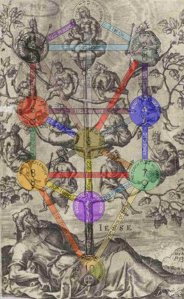
 Metaphysically, in relation to the three planes of the Unmanifested, there is no distinction in the Three-in-One between absolute, attributeless Compassion, absolute, dimensionless Truth, and absolute, unconditional Love. There is no difference because all three together constitute the invisible point in an ever-revolving mainspring that is the vital centre of the great wheel of universal harmony. Through the notion of harmony, a person might come to reflect upon the metaphysical relation between justice and mercy as centripetal and centrifugal forces. The starting point to gain this perspective is self-examination. Take a period in one’s life. A day might be too short for this for the average person — you might take a week, a month, a year — and actually list out on a sheet the number of occasions on which one either omitted or was fortunate to be able to exemplify justice to every other human being. Then on a separate sheet list the number of occasions on which one tried to be merciful to other human beings, or where through thoughtlessness and inconsideration rooted in self-worship — which is nothing but the insecurity of the shadow — one omitted to be merciful. Soon one will make an amazing discovery because one will find that these are two different aspects of a single truth. That truth is the degree to which ignorance was the pole star of one’s life centred in the personal mind, and the extent to which one’s highest ideation became manifest in one’s consciousness and conduct.

 No act is performed without a thought at its root, and this is the basis of karma for thinking beings. This is always the case. What it implies in strict elementary logic is that even the most apparently automatic act has a thought at its core, either at the time of performance or as leading to it. A being who is fully self-conscious, who has attained to universal self-consciousness, and therefore is totally aware of the Self, is incapable of ever engaging in any act at any time without an instantaneous and simultaneous awareness of the intention accompanying it. Because this idea is so sacred, a lot of harm is done by people who talk idly of ‘thought-forms’ and ‘vibrations.’ This is the sad result of dissemination, among the unready mass, of the delusions of the failed students of Philosophia Perennis.

 In ordinary language we all are aware of what it means to say, “Oh, that’s a good idea.” “Oh, that’s a good thought.” Everyone, at some time in his life, maybe at some season of the year, has had a good thought for someone else. “Oh, let me do this for someone else. Let me send this Christmas card. Let me express this goodwill.” Every human being has experienced the most natural form of occultism — having a good thought and seeking for it an appropriate form of expression. In this age where it is so rare, they are very privileged who, through the magic of the madness of love, spend a lot of time not just on the benevolent thought but on the manner and the appropriateness of the expression of the thought. Some people, by a kind of soul-intuition from previous lives, and especially when they are very young, realize that a good idea must have the total purity of privacy if it is to be preserved. There must be an insulation from uncongenial elementals in making that thought inviolate, wrapping it up within an invisible circle of secrecy and privacy, so that it becomes a point in metaphysical space and may find an appropriate form.

 When we begin to see this, we are better able to know what it means to earn the privilege of hearing the teaching that men are manifested gods, creative mind-beings; Manasaputras bearing the burden of the responsibility for raising all manifested matter; carriers of the divine mandate of helping the great architect, the collective demiurge behind the manifested universe. These thrice-blessed “fortune’s favoured soldiers” may suddenly begin to feel the immensity, the grandeur, the glory of the responsibility of being human, a thinking being, capable of choosing at will a thought and, by dwelling upon it and pouring over it the waters of selfless love, being able to find, out of the more subtle matrix of life-atoms which constitute the thought-vehicle, a form for its benevolent expression. In other words, a person who lives by an inner light begins to see that the real form of a true thought is wholly invisible. It has nothing to do with differentiated matter or the externalities of dependent origination in dependent relationships. He really comes to understand something about subtle matter.

 Two alternatives face such a person, and both alternatives apply to different classes of cases, so that he has a constant choice problem, like the choice problem of the Demiurge mentioned in the Timaeus. Out of many worlds is patterned only one world. This is the dilemma which the Demiurge must overcome. The human being, too, must be ready to grasp the fundamental problem of choice facing him. On the one hand, there are certain thoughts which are of such quality — impersonal, universal, unifying, beneficent — that where they are self-consciously generated or drawn from the Akasha, they do not need any form. They are like sparks or like shooting stars that descend with a speed much greater than that of light and they find an appropriate way of sparking off myriads of atoms. On the other hand, there are those thoughts which need to be encased in a purified, distilled essence, but fashioned out of a purified astral form, out of something more than differentiated matter but something less than the pure, undifferentiated, universal, homogeneous essence. Such thoughts, when they are given that kind of force, are deliberately chosen mental assets. They become available for all other human beings encountered in our lives and yet may also become embodied for a very long time to come so that others could draw upon them for almost an indefinite future.

 What a great privilege, then, is open to the human being who has had the good fortune to learn from Brahma Vach. No one should ignore the ideal as a fit object of meditation. Every person is equally entitled to make the attempt, and no one need fear that he is so unworthy that he cannot make it. On the other hand, he should be spared the terrible karma of the delusion that Everest may be climbed quickly. `Climbing Everest here means choosing every single thought. That is very hard. It requires lives. But one can begin right now choosing a few thoughts, having a little less passivity in relation to most thoughts every week, a little less of that disordered, unthinking, thoughtless, machine-like activity which is lower than that of the animal kingdom, and a little more of deliberate thought. One could, within three months, make amazing discoveries about the mystery of karma — more discoveries from three months of this practice than from a lifetime of mere use of the word ‘karma.’

 William Q. Judge pointed out that “the weak and mediocre furnish a weak focus for karma, and in them the general result of a lifetime is limited, although they may feel it all to be very heavy. But that person who has a wide and deep-reaching character and much force will feel the operation of a greater quantity of karma than the weaker person.” A character broad in vision, generous in sympathy, deep in motivation, firm in the degree of deliberation — this is the self-created product of thought ranging from calm consideration to continuous meditation. Whether a man will have “much force” will depend upon becoming one-pointed in the use of force. Kierkegaard spoke about the purity of heart that goes with a concentration of will when it is focused upon one thing at a time. This is the same idea as that expressed by Cardinal Newman in the line, “Lead kindly light, one step enough for me,” which was so much a favourite of Gandhi. These steps form a very beautiful kind of dance. The great pioneers of the future choose to learn this on the physical plane and in the moral realm, but with the intention of making themselves a bridge to other human beings who want to learn to do this dance, step by step by step.

 This means the will is very much involved. The will is weakened by obscurity of mind, by conflict of feelings, by lack of priorities in relation to purposes. The conservation of energy is the baseline upon which every man takes a stand. On this basis alone he determines the degree of intensity to the force that he can release. There have been many men of much force, but their vision was limited. Their motivation was not rooted in the depths of their being, and so they became like Ozymandias. They created huge thought-structures and towards the end of their lives a few wrote manuals for the benefit of others, telling them to do this, that, and the other thing. But the will was disproportionate in relation to the idea. What is most critical, then, in the formation of character is the food that a human being receives in the way of spiritual and mental diet.

Raghavan Iyer
The Gupta Vidya II
Daily Words of the Buddha for June 12, 2023

Yo imasmiṃ dhammavinaye
Appamatto vihassati!
Pahāya jātisaṃsāraṃ dukkhassantaṃ karissatī.

Who so untiringly pursues the Dhamma and the Discipline
Shall go beyond the round of births and make an end of suffering.

Dīgha Nikāya 2.185
Last Days of the Buddha: The Maha-parinibbana Sutta (revised edition), translated from Pāli by Sister Vajira & Francis Story

Daily Words of the Buddha for June 05, 2023

Maraṇenapi taṃ pahīyati
yaṃ puriso mamidanti maññati.
Etampi viditvā paṇḍito,
na mamattāya
nametha māmako.

At death a person abandons
what one construes as mine.
Realizing this, the wise
shouldn’t incline
to be devoted to mine.

Sutta Nipāta 4.812
Translated from Pāli by Thanissaro Bhikkhu

Daily Words of the Buddha for June 03, 2023

Na tena ariyo hoti yena pāṇāni hiṃsati.
Ahiṃsā sabbapāṇānaṃ
“ariyo”ti pavuccati.

One is not noble who injures living beings.
One is called “noble” because
one is harmless towards all living beings.

Dhammapada 19.270
The Dhammapada: The Buddha’s Path of Wisdom, translated from Pāli by Acharya Buddharakkhita

Daily Words of the Buddha for May 24, 2023

Dhamme ca ye ariyapavedite ratā
anuttarā te vacasā, manasā kammunā ca.
Te santisoraccasamādhisaṇṭhitā,
sutassa paññāya ca sāramajjhagū.

Those who are devoted to the Dhamma made known by the Noble Ones
are unsurpassed in speech, thought and action.
They are established in peace, gentleness and concentration,
and have reached the essence of learning and wisdom.

Sutta Nipāta 3.332
The Discourse Collection: Selected Texts from the Sutta Nipāta, translated by John D. Ireland

Divine Feminine Oracle | Mother Mary’s message for May 21, 2023

7d3ca9db-ee8a-4db2-b884-f64378580c28.f1a990ccfc579a3cacf92efb503c8977

You have to be a shining example for others, constantly improve yourself, and work for a higher purpose if you want to fully live. It is imperative that you pay attention to my advice, even if it looks that something you hold dear is starting to lose its lustre or that someone in which you have placed your confidence is letting you down.


I ask that you continue to make yourself open to me even if you are now experiencing feelings of having been betrayed or broken. The same divine fire that is raging inside of of me is now starting to blaze inside of you. Therefore, please have faith that you will overcome all that you need to!

What you need to know

It is easy to be persuaded by less rewarding choices when our spiritual fire is weak. Possibly, we wish for a relationship that never totally transpires, or perhaps occurs for a little while before revealing itself to be considerably less significant than we first anticipated. Perhaps you are one of the many people who dream of making millions of dollars, only to learn that even if you do, you still won’t be totally satisfied.


You see, in order to feel really connected to our divine destiny, we must allow our desires to ignite for something greater than our own selfish wants. We need to burn with holy fire to make the world better and to help others as well as ourselves. We need to truly live a divine life putting Mother Mary at the centre.

Prayer for healing

“Dear Mother Mary, I humbly ask that you help me find my true calling in life. My spiritual embers need to blaze hotter than ever. As I continue to glorify your divine name, I forgive myself for previous mistakes and situations that were not in my best interests.


Please, Our Lady of Holy Fire, enable me to engage you so that you can assist me to make wise decisions as I plan for the future. Rather than relying exclusively on my own poor understanding of the universe, allow me to place my faith in you. Please, Mother, guide me on the right direction in my life.”

Daily Words of the Buddha for May 21, 2023

Sukarāni asādhūni,
attano ahitāni ca.
Yaṃ ve hitañca sādhuñca,
taṃ ve paramadukkaraṃ.

Easy to do are things
that are bad and harmful to oneself.
But exceedingly difficult to do
are things that are good and beneficial.

Dhammapada 12.163
The Dhammapada: The Buddha’s Path of Wisdom, translated from Pāli by Acharya Buddharakkhita

Daily Words of the Buddha for May 20, 2023


Attā hi attano nātho;
ko hi nātho paro siyā?
Attanā hi sudantena,
nāthaṃ labhati dullabhaṃ.

One truly is the protector of oneself;
who else could the protector be?
With oneself fully controlled,
one gains a mastery that is hard to gain.

Dhammapada 12.160
The Dhammapada: The Buddha’s Path of Wisdom, translated from Pāli by Acharya Buddharakkhita

Daily Words of the Buddha for May 17, 2023

Kalyāṇamitto yo bhikkhu, sappatisso sagāravo;
Karaṃ mittānaṃ vacanaṃ, sampajāno patissato;
Pāpuṇe anupubbena, sabbasaṃyojanakkhayaṃ.

When a bhikkhu has good friends, and is reverential and respectful;
Doing what one’s friends advise, clearly comprehending and mindful;
One may progressively attain the destruction of all fetters.

Itivuttaka 1.17
The Udāna and the Itivuttaka, trans. John D. Ireland

Daily Words of the Buddha for May 12, 2023

Khīṇaṃ purāṇaṃ nava
natthi sambhavaṃ,
virattacittāyatike bhavasmiṃ.
Te khīṇabījā, avirūḷhichandā.
Nibbanti dhīrā yathāyaṃ padīpo.

When past conditioning is released
and no fresh one produced,
the mind no longer seeks for future birth.
The seed consumed, cravings no more arise.
Such-minded wise ones cease like [the flame of] this lamp.

Sutta Nipāta 2.238
The Discourse Summaries by S.N. Goenka

Daily Words of the Buddha for May 10, 2023

Idha tappati, pecca tappati,
pāpakārī ubhayattha tappati.
“Pāpaṃ me katan”ti tappati,
bhiyyo tappati, duggatiṃ gato.

Idha nandati, pecca nandati,
katapuñño ubhayattha nandati.
“Puññaṃ me katan”ti nandati,
bhiyyo nandati, suggatiṃ gato.

Agony now, agony hereafter,
the wrong-doer suffers agony in both worlds.
Agonized now by the knowledge that one has done wrong,
one suffers more agony, gone to a state of woe.
Rejoicing now, rejoicing hereafter,
the doer of wholesome actions rejoices in both worlds.
Rejoicing now in the knowledge that one has acted rightly,
one rejoices more, gone to a state of bliss.

Dhammapada 1.17, 1.18
The Discourse Summaries by S.N. Goenka

Daily Words of the Buddha for May 09, 2023

Manopubbaṅgamā dhammā,
manoseṭṭhā manomayā.
Manasā ce paduṭṭhena
bhāsati vā karoti vā,
tato naṃ dukkhamanveti
cakkaṃva vahato padaṃ.

Manopubbaṅgamā dhammā,
manoseṭṭhā manomayā.
Manasā ce pasannena
bhāsati vā karoti vā,
tato naṃ sukhamanveti
chāyāva anapāyinī.

Mind precedes all phenomena,
mind matters most, everything is mind-made.
If with an impure mind
one performs any action of speech or body,
then suffering will follow that person
as the cartwheel follows the foot of the draught animal.
Mind precedes all phenomena,
mind matters most, everything is mind-made.
If with a pure mind
one performs any action of speech or body,
then happiness will follow that person
as a shadow that never departs.

Dhammapada 1.1, 1.2
The Discourse Summaries by S.N. Goenka

Daily Words of the Buddha for May 05, 2023

Gahakāraka, diṭṭhosi!
Puna gehaṃ na kāhasi.
Sabbā te phāsukā bhaggā gahakūṭaṃ visaṅkhataṃ.
Visaṅkhāragataṃ cittaṃ;
taṇhānaṃ khayamajjhagā.

O house-builder, you are seen!
You will not build this house again.
For your rafters are broken and your ridgepole shattered.
My mind has reached the Unconditioned;
I have attained the destruction of craving.

Dhammapada 11.154
The Dhammapada: The Buddha’s Path of Wisdom, translated from Pāli by Acharya Buddharakkhita

Daily Words of the Buddha for May 03, 2023

Mātā yathā niyaṃ
puttamāyusā ekaputtamanurakkhe,
evampi sabbabhūtesu
mānasaṃ bhāvaye aparimāṇaṃ.

As a mother would risk her life
to protect her child, her only child,
even so should one cultivate a limitless heart
with regard to all beings.

Sutta Nipāta 1.149
Translated from Pāli by Thanissaro Bhikkhu