Daily Words of the Buddha for April 04, 2018

Pāli Word a Day for April 04, 2018 — karaṇīya — something that should be done

Sukhā virāgatā loke,
Kāmānaṃ samatikkamo;
Asmimānassa yo vinayo —
etaṃ ve paramaṃ sukhaṃ.

Blissful is passionlessness in the world,
The overcoming of sensual desires;
But the abolition of the conceit I am —
That is truly the supreme bliss.

Udāna 2.11
The Udāna and the Itivuttaka, trans. John D. Ireland

Theosophy | Jiddu Krishnamurti

“We are each one of us responsible for every war because of the aggressiveness of our own lives, because of our nationalism, our selfishness, our gods, our prejudices, our ideals, all of which divide us. And only when we realize, not intellectually but actually, as actually as we would recognise that we are hungry or in pain, that you and I are responsible for all this existing chaos, for all the misery throughout the entire world because we have contributed to it in our daily lives and are part of this monstrous society with its wars, divisions, its ugliness, brutality and greed – only then will we act. But what can a human being do – what can you and I do – to create a completely different society? We are asking ourselves a very serious question. Is there anything to be done at all? What can we do? Will somebody tell us? People have told us. The so-called spiritual leaders, who are supposed to understand these things better than we do, have told us by trying to twist and mould us into a new pattern, and that hasn’t led us very far; sophisticated and learned men have told us and that has led us no further. We have been told that all paths lead to truth – you have your path as a Hindu and someone else has his path as a Christian and another as a Muslim, and they all meet at the same door – which is, when you look at it, so obviously absurd. Truth has no path, and that is the beauty of truth, it is living. A dead thing has a path to it because it is static, but when you see that truth is something living, moving, which has no resting place, which is in no temple, mosque or church, which no religion, no teacher, no philosopher, nobody can lead you to – then you will also see that this living thing is what you actually are – your anger, your brutality, your violence, your despair, the agony and sorrow you live in. In the understanding of all this is the truth, and you can understand it only if you know how to look at those things in your life. And you cannot look through an ideology, through a screen of words, through hopes and fears. So you see that you cannot depend upon anybody. There is no guide, no teacher, no authority. There is only you – your relationship with others and with the world – there is nothing else. When you realize this, it either brings great despair, from which comes cynicism and bitterness, or, in facing the fact that you and nobody else is responsible for the world and for yourself, for what you think, what you feel, how you act, all self-pity goes. Normally we thrive on blaming others, which is a form of self-pity. Can you and I, then, bring about in ourselves without any outside influence, without any persuasion, without any fear of punishment – can we bring about in the very essence of our being a total revolution, a psychological mutation, so that we are no longer brutal, violent, competitive, anxious, fearful, greedy, envious and all the rest of the manifestations of our nature which have built up the rotten society in which we live our daily lives?”

~ Jiddu Krishnamurti

Daily Words of the Buddha for April 03, 2018

Pāli Word a Day for April 03, 2018 — jita — conquered, subdued, mastered, victory

Bahumpi ce saṃhita bhāsamāno,
na takkaro hoti naro pamatto,
gopova gāvo gaṇayaṃ paresaṃ,
na bhāgavā sāmaññassa hoti.

Much though one recites the sacred texts,
but acts not accordingly,
that heedless one is like a cowherd
who only counts the cows of others —
one does not partake of the blessings of the holy life.

Dhammapada 1.19
The Dhammapada: The Buddha’s Path of Wisdom, translated from Pāli by Acharya Buddharakkhita

Daily Words of the Buddha for April 02, 2018

Pāli Word a Day for April 02, 2018 —  anoma — not inferior, superior, perfect, supreme

Idha modati pecca modati;
katapuñño ubhayattha modati.
So modati so pamodati,
disvā kammavisuddhimattano.

The doer of good rejoices here and hereafter;
one rejoices in both the worlds.
One rejoices and exults,
recollecting one’s own pure deeds.

Dhammapada 1.16
The Dhammapada: The Buddha’s Path of Wisdom, translated from Pāli by Acharya Buddharakkhita

Daily Words of the Buddha for April 01, 2018

Pāli Word a Day for April 01, 2018 — sacca — real, true

Tato adinnaṃ parivajjayeyya
kiñci kvaci sāvako bujjhamāno.
Na hāraye harataṃ nānujaññā.
Sabbaṃ adinnaṃ parivajjayeyya.

A disciple should avoid taking
anything from anywhere knowing it (to belong to another).
One should not steal nor incite another to steal.
One should completely avoid theft.

Sutta Nipāta 2.397
The Discourse Collection: Selected Texts from the Sutta Nipāta, translated by John D. Ireland

Daily Words of the Buddha for March 31, 2018

Pāli Word a Day for March 31, 2018  —  pamāda — carelessness, negligence, indolence, remissness

Pāṇaṃ na hane na ca ghātayeyya,
na cānujaññā hanataṃ paresaṃ,
sabbesu bhūtesu nidhāya daṇḍaṃ.
Ye thāvarā ye ca tasā santi loke.

One should not kill a living being,
nor cause it to be killed,
nor should one incite another to kill.
Do not injure any being, either strong or weak, in the world.

Sutta Nipāta 2.396
The Discourse Collection: Selected Texts from the Sutta Nipāta, translated by John D. Ireland

Daily Words of the Buddha for March 30, 2018

Pāli Word a Day for March 30, 2018  —  paricāraṇā — care, attention, looking after; pleasure, feasting, satisfaction

Idha socati pecca socati;
pāpakārī ubhayattha socati.
So socati so vihaññati,
disvā kammakiliṭṭhamattano.

The evil-doer grieves here and hereafter;
one grieves in both the worlds.
One laments and is afflicted,
recollecting one’s own impure deeds.

Dhammapada 1.15
The Dhammapada: The Buddha’s Path of Wisdom, translated from Pāli by Acharya Buddharakkhita

Daily Words of the Buddha for March 29, 2018

Pāli Word a Day for March 29, 2018 — dhaja — a flag, banner; mark, emblem, sign, symbol

Yadā have pātubhavanti dhammā
Ātāpino jhāyato brāhmaṇassa,
Athassa kaṅkhā vapayanti sabbā
Yato pajānāti sahetudhammaṃ.

When things become manifest
To the ardent meditating brahmin,
All one’s doubts then vanish since one understands
Each thing along with its cause.

Udāna 1.1
The Udāna and the Itivuttaka, trans. John D. Ireland

Daily Words of the Buddha for March 28, 2018

Pāli Word a Day for March 28, 2018  —  pamodati — to rejoice, enjoy, to be delighted, to be glad or satisfied

Yathā agāraṃ ducchannaṃ vuṭṭhī samativijjhati,
evaṃ abhāvitaṃ cittaṃ rāgo samativijjhati.

Just as rain breaks through an ill-thatched house,
so passion penetrates an undeveloped mind.

Dhammapada 1.13
The Dhammapada: The Buddha’s Path of Wisdom, translated from Pāli by Acharya Buddharakkhita

Daily Words of the Buddha for March 27, 2018

Pāli Word a Day for March 27, 2018 — saddhā — faith, confidence

Asāre sāramatino
sāre cāsāradassino,
te sāraṃ nādhigacchanti,
micchāsaṅkappagocarā.

Those who mistake the unessential to be essential
and the essential to be unessential,
dwelling in wrong thoughts,
never arrive at the essential.

Dhammapada 1.11
The Dhammapada: The Buddha’s Path of Wisdom, translated from Pāli by Acharya Buddharakkhita

Daily Words of the Buddha for March 26, 2018

Pāli Word a Day for March 26, 2018  —  upadesa — pointing out, indication, instruction, advice

Atītaṃ nānusocanti,
nappajappanti nāgataṃ,
paccuppannena yāpenti,
tena vaṇṇo pasīdati.

They do not lament over the past,
they yearn not for what is to come,
they maintain themselves in the present,
thus their complexion is serene.

Saṃyutta Nikāya 1.10
Gemstones of the Good Dhamma, compiled and translated by Ven. S. Dhammika

Significance of Six Tastes in Ayurveda

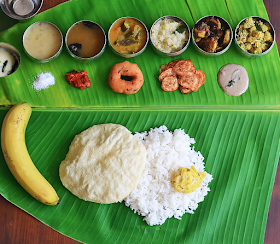
According to Ayurveda, it is incredibly important to taste our foods, our herbs – our lives. Rasa, the Sanskrit word for taste, has a number of potent meanings, among them: experience, enthusiasm, juice, plasma (as in rasa dhatu), and essence. These diverse meanings only hint at the significance of taste within the Ayurveda tradition. Rasa is, in a very real way, the essence of life and quite literally affects every aspect of our being – from structure and physiology, straight through to our overall state of mind and consciousness. […]

Source:  Natural Wellness Guide

Daily Words of the Buddha for March 25, 2018

Pāli Word a Day for March 25, 2018 — pabhāsa — shining, splendour, beauty

Yo ca mettaṃ bhāvayati
Appamāṇaṃ paṭissato
Tanū saṃyojanā honti,
Passato upadhikkhayaṃ.

For one who mindfully develops
Boundless loving-kindness
Seeing the destruction of clinging,
The fetters are worn away.

Itivuttaka 1.27
The Udāna and the Itivuttaka, trans. John D. Ireland

Daily Words of the Buddha for March 24, 2018

Pāli Word a Day for March 24, 2018 — bhesajja — a remedy, medicament, medicine

Kāyena saṃvaro sādhu; sādhu vācāya saṃvaro;
manasā saṃvaro sādhu. Sādhu sabbattha saṃvaro.
Sabbattha saṃvuto bhikkhu
sabbadukkhā pamuccati.

Good is restraint in the body; good is restraint in speech;
good is restraint in thought. Restraint everywhere is good.
The monk restrained in every way
is freed from all suffering.

Dhammapada 25.361
The Dhammapada: The Buddha’s Path of Wisdom, translated from Pāli by Acharya Buddharakkhita

Daily Words of the Buddha for March 23, 2018

Pāli Word a Day for March 23, 2018 nāyaka — a leader, guide, lord, mostly as epithet of buddha (lokanāyaka “lord of the world”)

Cakkhumā,
visamānīva,
vijjamāne parakkame.
Paṇḍito jīvalokasmiṃ,
pāpāni parivajjaye.

A person with good eyes,
encountering a treacherous, uneven place,
would try hard to avoid it.
A wise person, in the world of life,
should avoid evil deeds.

Udāna 5.43
Translated from Pāli by Thanissaro Bhikkhu

Daily Words of the Buddha for March 22, 2018

Pāli Word a Day for March 22, 2018 — dayā —sympathy, compassion, kindness

Muñca pure, muñca pacchato,
majjhe muñca, bhavassa pāragū.
Sabbattha vimuttamānaso,
na punaṃ jātijaraṃ upehisi.

Let go of the past, let go of the future,
let go of the present, and cross over to the farther shore of existence.
With mind wholly liberated,
you shall come no more to birth and death.

Dhammapada 24.348
The Dhammapada: The Buddha’s Path of Wisdom, translated from Pāli by Acharya Buddharakkhita

Daily Words of the Buddha for March 20, 2018

Pāli Word a Day for March 20, 2018 — nissanga — unattached, unobstructed, disinterested, unselfish

Attā hi attano nātho,
attā hi attano gati.
Tasmā saṃyamamattānaṃ
assaṃ bhadraṃva vāṇijo.

One is one’s own protector,
one is one’s own refuge.
Therefore, one should control oneself,
even as a trader controls a noble steed.

Dhammapada 25.380
The Dhammapada: The Buddha’s Path of Wisdom, translated from Pāli by Acharya Buddharakkhita

Daily Words of the Buddha for March 19, 2018

Pāli Word a Day for March 19, 2018  — khema — full of peace, safe, tranquil, calm

Kodhaṃ chetvā sukhaṃ seti,
kodhaṃ chetvā na socati.
Kodhassa visamūlassa
madhuraggassa brāhmaṇa;
vadhaṃ ariyā pasaṃsanti
tañhi chetvā na socatī.

Slay anger and you will be happy,
slay anger and you will not sorrow.
For the slaying of anger in all its forms
with its poisoned root and sweet sting —
that is the slaying the nobles praise;
with anger slain one weeps no more.

Saṃyutta Nikāya 1.187
Gemstones of the Good Dhamma, compiled and translated by Ven. S. Dhammika

Daily Words of the Buddha for March 18, 2018

Pāli Word a Day for March 18, 2018 — vipāka — fruit, fruition, product, mostly it is used as ‘result, effect, consequence (of ones action)’, either as good & meritorious (kusala) or bad & detrimental (akusala)

Sukhaṃ yāva jarā sīlaṃ,
sukhā saddhā patiṭṭhitā,
sukho paññāya paṭilābho,
pāpānaṃ akaraṇaṃ sukhaṃ.

Good is virtue until life’s end,
good is faith that is steadfast,
good is the acquisition of wisdom,
and good is the avoidance of evil.

Dhammapada 23.333
The Dhammapada: The Buddha’s Path of Wisdom, translated from Pāli by Acharya Buddharakkhita

Daily Words of the Buddha for March 17, 2018

Pāli Word a Day for March 17, 2018 — pamoda — joy, delight

Sace labhetha nipakaṃ sahāyaṃ
saddhiṃ caraṃ sādhuvihāridhīraṃ,
abhibhuyya sabbāni parissayāni,
careyya tenattamano satīmā.

If for company you find a wise and prudent friend
who leads a good life,
you should, overcoming all impediments,
keep their company joyously and mindfully.

Dhammapada 23.328
The Dhammapada: The Buddha’s Path of Wisdom, translated from Pāli by Acharya Buddharakkhita

Daily Words of the Buddha for March 16, 2018

Pāli Word a Day for March 16, 2018 — nibbhaya — free from fear or danger, fearless, unafraid

Yo ca dhammamabhiññāya
dhammamaññāya paṇḍito,
rahadova nivāte ca
anejo vūpasammati.

Thoroughly understanding the Dhamma
and freed from longing through insight,
the wise one rid of all desire
is calm as a pool unstirred by wind.

Itivuttaka 3.92
Gemstones of the Good Dhamma, compiled and translated by Ven. S. Dhammika

Daily Words of the Buddha for March 15, 2018

Pāli Word a Day for March 15, 2018 — cariya — conduct, behavior, state of, life

Appamādaratā hotha!
Sacittamanurakkhatha!
Duggā uddharathattānaṃ,
paṅke sannova kuñjaro.

Delight in heedfulness!
Guard well your thoughts!
Draw yourself out of this bog of evil,
even as an elephant draws itself out of the mud.

Dhammapada 23.327
The Dhammapada: The Buddha’s Path of Wisdom, translated from Pāli by Acharya Buddharakkhita

Meditation:  The Metta Prayer 

Om Mani Pedme Hum …

“May all beings be well and safe, may they be at ease.

Whatever living beings there may be, whether moving or standing still, without exception, whether large, great, middling, or small, whether tiny or substantial,

Whether seen or unseen, whether living near or far,

Born or unborn; may all beings be happy.

Let none deceive or despise another anywhere. Let none wish harm to another, in anger or in hate.”

Source: The Metta Prayer – Wildmind

Daily Words of the Buddha for March 14, 2018

Pāli Word a Day for March 14, 2018 — pāvaka — pure, bright, clear, shining

Yañca kāmasukhaṃ loke,
yañcidaṃ diviyaṃ sukhaṃ,
taṇhakkhayasukhassete,
kalaṃ nāgghanti soḷasiṃ.

Any sensual bliss in the world,
any heavenly bliss,
isn’t worth one sixteenth-sixteenth
of the bliss of the ending of craving.

Udāna 2.12
Translated from Pāli by Thanissaro Bhikkhu

Daily Words of the Buddha for March 13, 2018

Pāli Word a Day for March 13, 2018 — upekkhā — equanimity, evenness of mind, a state of inner equipoise that cannot be upset by gain and loss, honor and dishonor, praise and blame, pleasure and pain

Sukhā matteyyatā loke,
atho petteyyatā sukhā,
sukhā sāmaññatā loke,
atho brahmaññatā sukhā.

In this world, good it is to serve one’s mother,
good it is to serve one’s father,
good it is to serve the monks and nuns,
and good it is to serve the holy ones.

Dhammapada 23.332
The Dhammapada: The Buddha’s Path of Wisdom, translated from Pāli by Acharya Buddharakkhita

Daily Words of the Buddha for March 12, 2018

Pāli Word a Day for March 12, 2018 — dīpa — the island

Sabbapāpassa akaraṇaṃ,
kusalassa upasampadā,
sacittapariyodapanaṃ —
etaṃ buddhāna sāsanaṃ.

To avoid all evil,
to cultivate good,
and to purify one’s mind —
this is the teaching of the Buddhas.

Dhammapada 14.183
The Dhammapada: The Buddha’s Path of Wisdom, translated from Pāli by Acharya Buddharakkhita