 During this holiday season, discover the ancient wisdom and healing properties of frankincense and myrrh, two sacred herbs hidden in plain sight. […]

During this holiday season, discover the ancient wisdom and healing properties of frankincense and myrrh, two sacred herbs hidden in plain sight. […]

The full ‘Beaver Moon’ will be best viewed as it rises in the east at dusk on Monday, Nov. 27, though it will appear full on Sunday and Tuesday as well.
Source: The full ‘Beaver Moon’ rises next to bright Jupiter this weekend. Here’s how to watch.

The praying mantis is a spiritual creature that is revered in many cultures. It is believed to bring good luck and prosperity, and is often used in religious ceremonies. The mantis is also said to be able to commune with the spirit world, and is considered to be a powerful ally in the fight against evil. […]

The island itself is a Ьгeаtһtаkіпɡ oasis of lush greenery and diverse ecosystems. It is home to a rich variety of flora and fauna, all thriving in harmony with the island’s ѕtᴜппіпɡ landscapes. […]
Read on: Turtle Island
Scientists from the University of East Anglia have proposed a new way of using quantum light to ‘see’ quantum sound. A recent study recently published in the journal Physical Review Letters reveals the quantum-mechanical interplay between vibrations and particles of light, known as photons, in mo
Source: Solving Molecular Mysteries: How Quantum Light “Hears” Quantum Sound

Explore the lost library of moscow, the mystical ancient repository of occult wisdom amassed by the occultist Tsar Ivan the Terrible. This library was said to contain the ancient world’s largest collection of esoteric wisdom and lore from the eastern and western world making its loss a great tragedy
Source: The Lost Library of Moscow: Uncovering Mystical Knowledge from Russia’s Golden Age — Ultra Unlimited

A human heart, showing the fractal arteries and veins that supply blood to the heart muscles.
The heart is much more than just a muscle that pumps blood and its intelligence continues to fascinate us.
Below is some information about the heart that you may not know:
• Did you know that the heart has the ability to generate the largest electromagnetic fields in the body, and that these fields change according to emotions, or that the human heart has a magnetic field that can be measured up to several meters away from the human body?
• Did you know that when we are in a positive/harmonic emotional state, the heart is able to generate a beautifully organized and highly coherent toroidal field that not only affects our own physiology, but also affects others around us?
• Did you know that positive emotions create physiological benefits in your body and that you can stimulate the immune system by evoking positive emotions?
• Did you know that negative emotions can create chaos in the nervous system and that positive emotions do quite the opposite?
• Did you know that the heart has a neuron system with short and long term memory and that the signals sent to the brain can affect our emotional experiences?
• Did you know that in fetal development, the heart forms and begins to beat before the brain develops?
• Did you know that the mother’s brain waves can be synchronized with the baby’s heartbeat?
• Did you know that the heart sends more information to the brain than the other way around?
• Did you know that the heart’s electric field is about 60 times greater in amplitude than brain waves and that the heart’s magnetic field is about 100 times stronger than that produced by the brain?
→ Comment here to let us know: which of these information you didn’t know yet? You can find all of these facts, published research articles and more on the HeartMath Institute website.
◆ Image: Science Photo Library
#geometryinnature #fractalsinnature #fractals #fractal #heart #didyouknow #photo #photography #nature #biology #veins #asabovesobelow #fractais #sacredgeometry #wow #geometriasagrada #geometry #fractalgeometry #life #science


Juno and Lilith are near conjunct in late Leo and earthy Virgo. The goddess of marriage and childbirth joins the sexual independent Lilith. The split between the 2 sides of the feminine need to be […]
Source: Juno Lilith conjunction

A long time ago, the angels taught me that seeing a triple number in Reality has a meaning related to what you are thinking or your environment. It has to do with music and the fact that all notes of an octave are separated from each other by intervals of eleven cycles per second. Therefore, the intervals between the notes are 11, 22, 33, 44, 55, 66, 77, 88 and 99 cycles per second, or multiple of those numbers, which presents us a harmonic tuning or moment in time, given that all Reality was created through the harmonics of music.
Therefore, when triple or repeated numbers appear more than once in any way, they physically represent a mathematical moment in time that contains the harmonicas of that number value. In human words, 444 could be described as the Mystery School, there where one learns about Reality. Alice Bailey was the first person to write about this meaning of numbers. Briefly, here are the meanings of triple numbers.
111= Energy Flow: any energetic flow, such as electricity, money, water, sexual energy, etc..
222 = New Cycle: the beginning of a new cycle whose nature depends on the next triple number you see.
333 = Decision: You must make a decision, which will lead you to 666, which means you must repeat it in some other way, or 999, which means culmination and you have learned the lesson.
444 = The Mystery School: What is happening in life is a lesson to learn about Reality. In this school it’s about learning, reading books or studying a subject, and not doing.
555 = Unity Consciousness: It is the number of someone who has achieved Unity Consciousness. He’s mastered every level of Mystery School. It’s the highest number. It is the number of Christ.
666 = Earth Consciousness: In the Bible it’s the number of the Beast, so it can represent pure evil, but it’s also the number of humanity and life. Carbon is its base, and this element has six protons, six neutrons, and six electrons. When we see this number, it usually means that we must be alert to the physical events that present themselves at that time, and that we must be careful.
777 = Mystery School: This is the part of school where you’re not just reading books about life, but putting them into practice.
888 = Culmination of a specific lesson in Mystery School.
999 = Culmination of a specific cycle of events.
000 = Lack of Value.
Excerpt from Book: Serpent of Light, Beyond 2012.

9creation 3D visualization specialist If you’ve ever found beauty in the worn, weathered, or rustic, you might be drawn to the Japanese aesthetic of wabi-sabi. This worldview celebrates the The Three Principles of Wabi-Sabi: Embracing Imperfection and Transience […]
Source: The Three Principles of Wabi-Sabi: Embracing Imperfection and Transience – 9creation
Mele Fong aka Ukulele Mele tells the story behind the traditional Hawaiian song Aloha ‘Oe. The song tells of two lovers bidding farewell in a fond embrace and is the most famous composition by Hawai’i’s last monarch Queen Lili’uokalani.
Native Hawaiian Mele Fong from Maui is an experienced educator and professional entertainer with over 50 years experience playing the ‘ukulele – Hawaii’s official instrument. Are UKE having fun yet? Watch. Listen. Play. The Ukulele Mele Way!

What if, one day, an Anito from the sky world delivered a message claiming that you are one of the chosen to become a part of a long sacred lineage of men and women that stands between the mortals and gods? That you will guide and aid your community by playing numerous roles such as doctor/healer, priest, counsellor, and leader? Even the best ‘jack of all trades’ would have a hard time pulling that off.
What if you’ve received the power to travel to the realm of the dead to save trapped souls?
Becoming a shaman transcends profession and passion. Regardless of their many names around the Philippines (Babaylan, Katalonan, Diwatera, Tambalan etc.) the way of the shaman is more than just the superficial old tribe men or women chanting languages beyond our comprehension. They transcend the schizoid that throws themselves on the ground while under extreme fits of seizure that synchronize with the beat of gongs and drums and the image of the wild looking worshipper of crude, wooden statues. It is a vocation that demands devotion, sincerity and knowledge of both men and spirits. […]
Read on: Becoming A Filipino Shaman

American work culture, seeping around the globe, threatens to ruin the pleasures and benefits of public, communal sleep […]
Source: It’s time to celebrate the humanity of the communal snooze | Aeon Essays
Aunty Nona Beamer tells her own story along with family members, and describes the very best of all things Hawaiian: the people, their knowledge, culture, wisdom and aloha.
As a scholar, linguist, composer, translator, teacher and kumu hula, Mary Kawena Pukui’s work is the backbone of Hawaiian culture and language. Her hānai daughter Patience Namaka Wiggin Bacon and longtime research assistant Eleanor Williamson go on a journey to share Pukui’s story. Her legacy is evident as we see how students are learning to speak Hawaiian. Plus, marvel at the pageantry of pā‘ū riders.
Kumu hula share their early learning experiences from cultural icons in the Native Hawaiian community.
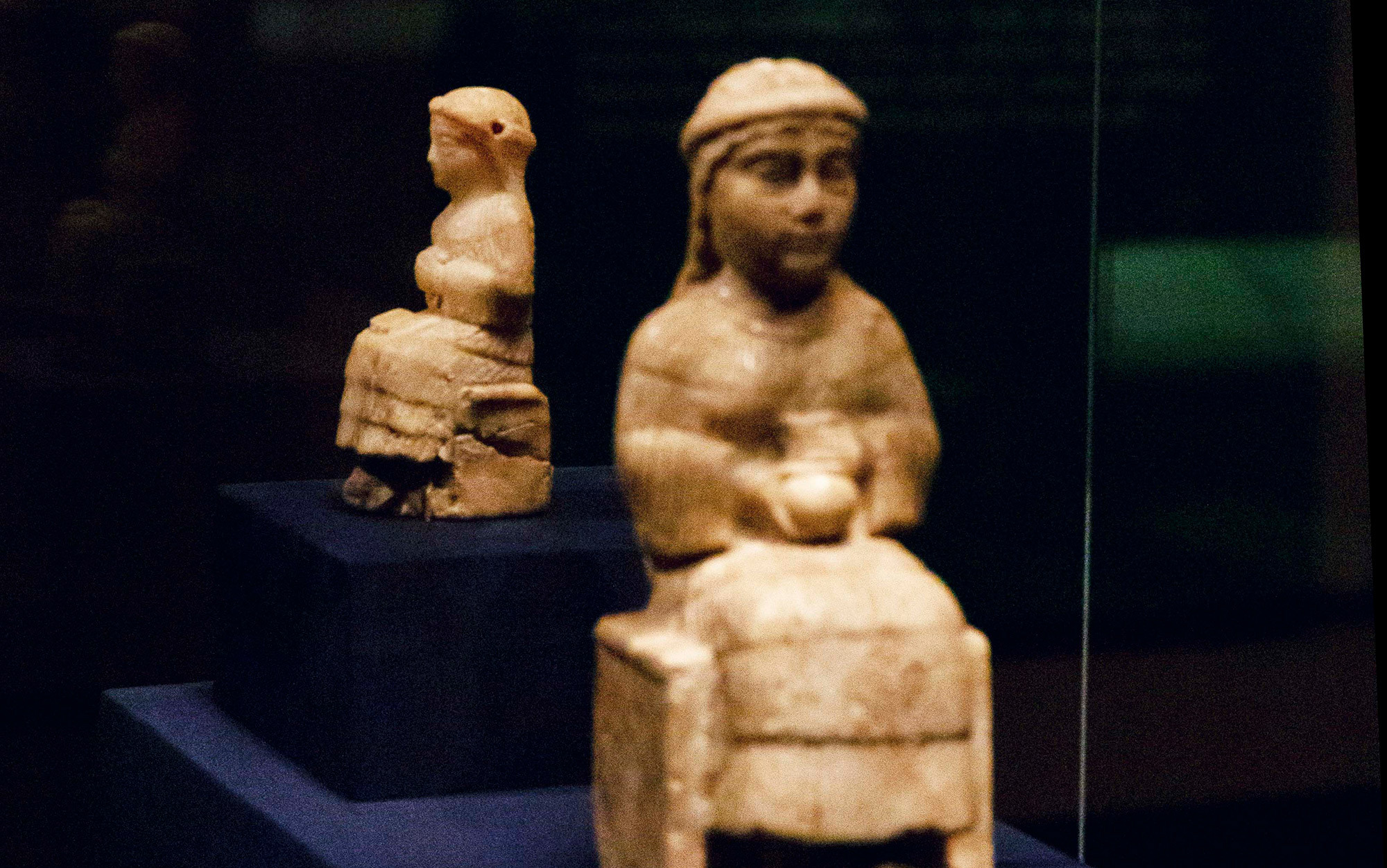
Enheduana is the first known named author. Her poems of strife and upheaval resonate in our own unstable times […]
Source: Ancient Sumerian poetry turns instability into cosmic insight | Aeon Essays
Hawaii was an independent nation until January 17, 1893. That day, the archipelago and its monarchical government were overthrown illegally by the United States. Since then, the USA has taken over Hawaii illegitimately, turning the island into a military base that threatens world peace, while sovereignty groups organize to rescue its legitimacy.
Aloha e mahalo nui for this session, Geraldine Convento!
Victoria Generao is an Imperator-General for a Golden Dawn Order, an 18th degree Reiki Grandmaster, and a High Priestess and Mother Abbess of the Magdalena Oedinis Venetae Rosae. Success for her is defined by attainment, accomplishment, and progress. As a practicing ceremonial magician, she’s had a long inner journey into identifying and developing the skills and resources she needs to to carry out her tasks. Also, coming from a bicultural background, she’s had to face a good number of roadblocks, the most important of them being persistence in the face of non-acceptance. In this new episode of The Three Pillars of Success, we discuss the importance of self-knowledge to achieve any accomplishment.
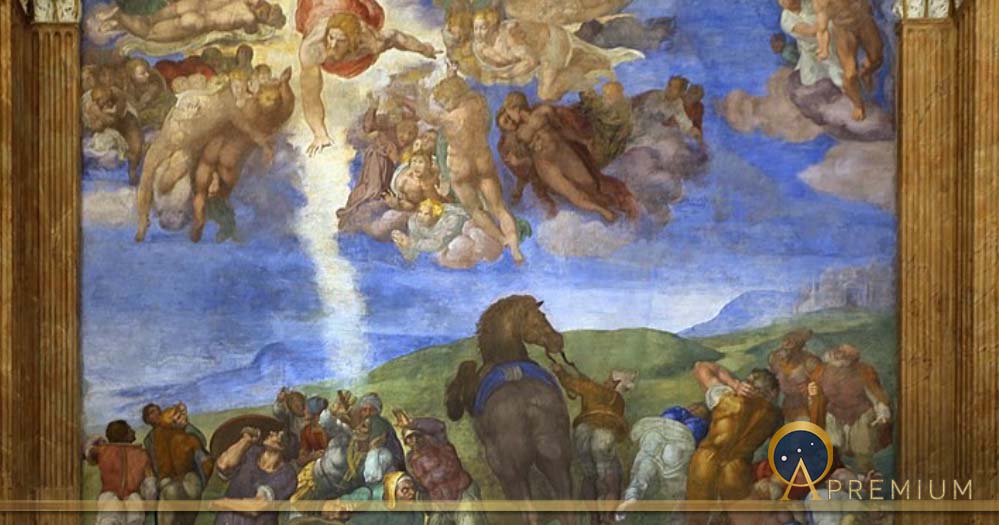
Socrates, Plato and Aristotle formed a trio toward the middle of the fourth century BC in ancient Greece to become the most well-known philosophers who ever lived. […]
The “ORAL TRADITIONS” of our Culture passes on from one Generation to another… by being the Story Teller — KAULUWEHI passes his knowledge on to his Mo`opuna — and thus the knowledge is bestowed… like the following story.
The modern day name for the uninhabited island seen off the coast of Wailea, Maui is Kahō’olãwe, though our chants tell us that its ancient name was Kanaloa. Kanaloa was a primordial god from antiquities, and was the deity for the ocean, its animals, fresh water, salt water, and all the growth on earth and in the sea. On the northwest side of Kahō’olãwe is ‘Ahupu Bay, whose west point is called Lae O Na Kohola, or Cape of Whales. […]
Read on: More on Nā Koholā
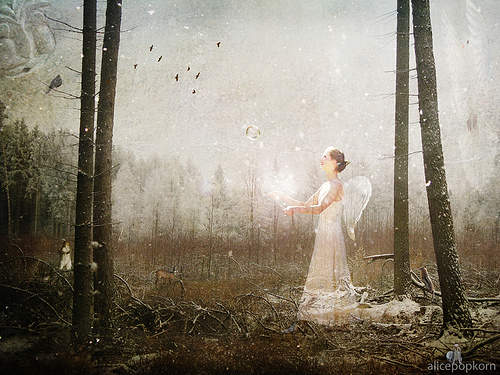
Change is something that comes marching in when Reiki enters your life. The more you allow change to occur and are accepting of it the easier it is. Change comes best when you jump into the flow of the changing events and flow with it rather than swimming up the current fighting everything that is … Read More about How to Stay at a Higher Vibration […]
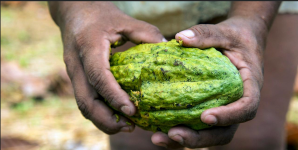
Ancient pots shift the nexus of chocolate-making from Central America to modern Ecuador […]
Source: World’s oldest chocolate was made 5300 years ago—in a South American rainforest
The tale of The Tempest is well-known but we shall briefly recapitulate its salient strands. It is, primarily, the story of Prospero, rightful Duke of Milan, and his charming child, Miranda, both banished by the usurper Antonio, his brother, and living unknown on a lonely island. Here, through a long period of successful study and practice, Prospero has matured into a master-magician, and Miranda has flowered into a marriageable maiden. The play opens with a violent storm and a resulting shipwreck, caused at the bidding of Prospero by the invisible hosts of the elements, of whom Ariel is the chief. The royal party involved in the shipwreck is saved according to Prospero’s plan, and is scattered on the shore, in three different parts of the island. Alonso, the King of Naples; Sebastian, his brother; Antonio, the usurper; Gonzalo, an honest old Councillor; and two Lords, Adrian and Francisco, land on one side of the island and most of them fall into an induced slumber, during which the vigilant and vile Antonio persuades the susceptible Sebastian to join in a plot to kill the King. Thanks to the intervention of the invisible Ariel, the plotters are prevented from fulfilling their purpose, and the entire party is led to look for Ferdinand, the son and successor of Alonso.
Meanwhile, Ferdinand has met Miranda and has been forced into her father’s service, which he patiently undergoes until Prospero is pleased to bestow on him his daughter. At the same time, in a third part of the island, Caliban, the deformed and savage slave of Prospero, has been met first by Trinculo, the King’s jester, and then by Stephano, a drunken butler, both of whom foolishly join the faithless Caliban in an abortive plot against his powerful master. These three groups are all, in the last Act, brought together near his cell by Prospero, after Antonio and Alonso and Sebastian have been made by strange and fearful sights and sounds to repent of their folly; after Ferdinand and Miranda have been treated to a visionary masque, played by spirits; and after Caliban and his companions have been brought to their senses — all of which is accomplished through the agency of Ariel. The play ends with the restoration of disturbed harmony, the recompense of the good and the repentance of the deluded, the release of Ariel from Prospero’s service, and the reconciliation of one and all to the new order ushered in by Prospero, who shows himself to be a man of wisdom and a master of destiny.
Let us first briefly consider different interpretations of the underlying theme of The Tempest. There is, first of all, the excellent but purely artistic interpretation of Dr. Tillyard whose thesis is that the play gives us the fullest sense of the different worlds within worlds which we can inhabit, and that it is also the necessary epilogue to the incomplete theme of the great tragedies.
A more ambitious and comprehensive attempt is that of Wilson Knight, who interprets the theme of the play from various points of view — poetical, philosophical, political and historical. Poetically, he considers the play artistic autobiography, its meanings revealing a wide range of universal values. Philosophically, he maintains that The Tempest portrays a wrestling of flesh and spirit. Politically, he interprets the play as the betrayal of Prospero, Plato’s philosopher-king and a representative of impractical idealism, by Antonio, Machiavelli’s Prince, and a symbol of political villainy. Lastly, the play is regarded historically as a myth of the national soul, Prospero signifying Britain’s severe, yet tolerant, religious and political instincts, Ariel typifying her inventive and poetical genius, and Caliban her colonizing spirit.
Another serious attempt at interpretation is that of Colin Still, whose study of the ‘timeless theme’ of The Tempest has not attracted the attention it deserves. He regards this ‘Mystery play’ as a deliberate allegorical account of those psychological experiences which constitute Initiation, its main features resembling those of every ceremonial ritual based upon the authentic mystical tradition of all mankind, but especially of the pagan world. Still takes Prospero as the Hierophant, and in one aspect, as God Himself; Ariel as the Angel of the Lord, Caliban as the Tempter or the Devil, and Miranda as the Celestial Bride.
The comedians, Stephano and Trinculo, led on by the Devil, constitute a failure to achieve Initiation; the experiences of the Court Party, which is of purgatorial status, constitute the Lesser Initiation, its attainment being self-discovery; while Ferdinand attains to Paradise, to the goal of the Greater Initiation which consists in receiving a ‘second life.’ The wreck is considered symbolic of the imaginary terrors of the candidate for Initiation, and the immersion in the water as symbolic of his preliminary purification. The Masque is regarded as apocalyptic in character, and the cell is taken to represent the Sanctum Sanctorum, only to be entered after full initiation. And so Still goes on giving every detail the status of a semi-esoteric symbol drawn mainly from pagan ritual.
Still’s thesis, though basically sound, is obscured by theological terminology, and its detailed application often leads to a certain forcing of analogy. Prospero, for instance, is a man, not God, and Caliban is too clearly a thing of Nature to be called a Devil, or Satan. Still’s centre of reference is altogether less in the poetry or in the philosophy than in a rigid system of pagan symbolism applied to the play.
In theosophical terms, we can approach The Tempest from at least three angles — the psychological, the cosmic and the occult. Of these, we shall adopt the last for detailed interpretation of the characters in the play. Before that, however, it will be worthwhile to indicate how the psychological and the cosmic keys may be applied.
The psychological key enables us to construe the theme of The Tempest in terms of the principles of the human constitution and the everyday experiences of the majority of mankind. In this line of interpretation, Prospero would represent Atman, the universal Self, which overbroods the remaining constituents of man, and allows for their rescue from all internal disequilibrium, thus producing that divine and unifying harmony which spells poise and proportion, as well as power and peace. Miranda, the daughter of Prospero, would be that specialization of Atman which we know as Buddhi, the spiritual and at present passive principle in man, the vehicle of Atman, and at once the expression and the essence of pure wisdom and of true compassion. It is in this sense that Miranda represents the fallen and Sleeping Soul of the uninitiated and deluded man. Ferdinand, the Prince who aspires to the companionship of Miranda, could be made to symbolize the higher Manas, the incarnated ray of the Divine in Man, while Antonio, the usurper who plans to secure personal power at the cost of his weakening conscience, could represent the kama manas, or the desire-mind. To complete the picture, Caliban could be taken as the kamarupa or the passional part of man in material form, and Ariel as the type of the assemblage of presiding deities, devatas or elementals, in the human personality. This, in silhouette form, would be the system of symbols that could be constructed on the basis of the psychological key — a system which, interesting as it is in its ramifying implications, it would not be difficult to develop.
The second interpretation, which we have called the cosmic, follows from a comprehensive view of the evolutionary stream in Nature, of the Great Ladder of Being. This interpretation is implied in H.P. Blavatsky’s oft-quoted statement that
the Ego begins his life-pilgrimage as a sprite, an ‘Ariel,’ or a ‘Puck’; he plays the part of a super, is a soldier, a servant, one of the chorus; rises then to ‘speaking parts,’ plays leading roles, interspersed with insignificant parts, till he finally retires from the stage as ‘Prospero,’ the magician.The Key to Theosophy, 34
In this line of interpretation, the play presents an image of the glorious supremacy of the perfected human soul over all other things and beings. At the peak of the evolutionary ascent stands Prospero, the representative of wise and compassionate god-manhood, in its true relation to the combined elements of existence — the physical powers of the external world — and the varieties of character with which it comes into contact. He is the ruling power to which the whole series is subject, from Caliban the densest to Ariel the most ethereal extreme. In Prospero we have the finest fruition of the co-ordinate development of the spiritual and the material lines of evolution.
Next to Prospero comes that charming couple, Ferdinand and Miranda, exquisite flowers of human existence that blossom forth under the benign care of their patriarch and Guru. From these we descend, by a most harmonious moral gradation, through the agency of the skilfully interposed figure of the good Gonzalo, to the representatives of the baser intellectual properties of humanity. We refer to the cunning, cruel, selfish and treacherous worldlings, who vary in their degrees of delusion from the confirmed villainy of Antonio to the folly of Alonso. Next, we have those representatives of the baser sensual attributes of the mass of humanity — the drunken, ribald, foolish retainers of the royal party, Stephano and Trinculo, whose ignorance, knavery and stupidity make them objects more of pity than of hate. Lowest in the scale of humanity comes the gross and uncouth Caliban, who represents the brutal and animal propensities of the nature of man which Prospero, the type of its noblest development, holds in lordly subjection. Lastly, below the human and the animal levels of life, in this wonderful gamut of being, comes the whole class of elementals, the subtler forces and the invisible nerves of nature, the spirits of the elements, who are represented by Ariel and the shining figures of the Masque who are alike governed by the sovereign soul of Prospero. Shakespeare obviously knew of these invisible spirits and recognized their place in the panorama of evolution.
Raghavan Iyer
The Gupta Vidya II
Find Your Magic
Tarot Readings, Inspiration, and Self-Empowerment
Making life on earth magick one moon phase at a time.
Astrologer ~ Mystic ~ Writer
of the Collegium Spiritus Sancti, a Golden Dawn Society
An affiliate of the Alpha et Omega Order of Melchizedek
All Knowledge Is Not Contained In Only One School
Connecting the grant community to #LearnGrants
Channelings & Articles
Magic Spell Books & Grimoires
Native Hawaiian Language Revitalization
Poetry & Tales of Love, Mystery, Magic and Spirituality
Organic Herbs, Herbals, Sustainable Gardening
Mother Nature: Feeding The Mind, Body & Soul, with Food, Medicine & Skincare.
"Inheritor of a Dying World, we call thee to the Living Beauty. Wanderer in the Wild Darkness, we call thee to the Gentle Light..."
Time is the most important thing we've been given
Embracing the Divine Within.
"...That I should bear witness to the truth." - John 18:37 // David E. Robinson, Publisher


 Hālau 'Aha Hui Lānākila