La’au Lapa’au | Southwest Herb Gardening: What To Plant In June, and Watering In June

Crooked Bear Creek Organic Herbs's avatarCrooked Bear Creek Organic Herbs

We recommend most plants be planted in the fall or spring. However, if you must plant during the summer months watering may need to be more frequent and you must be diligent about observing your newly planted plants for signs of water stress. Follow the guidelines in the Watering section.

Many cacti and warm-season succulents can still be planted in the summer. When transplanting cacti and succulents, mark either the south or west side and plant facing the orientation you marked to avoid the burning of tender tissues. Most nurseries will mark the side of the container to help you determine proper planting orientation. However, if the original orientation is not known, newly planted cacti and succulents need to be covered with shade cloth if the plant surface appears to yellow or pale suddenly. Use a shade cloth rated between 30-60% as anything higher will block most of the sunlight and…

View original post 1,557 more words
La’au Lapa’au | Southwest Herb Gardening: June In The Low Desert

Crooked Bear Creek Organic Herbs's avatarCrooked Bear Creek Organic Herbs

June in the low desert is generally the driest and hottest month. Desert gardeners often must begin their garden activities in the early morning or at sunset to avoid the intense sunlight. Plants must endure the intense heat throughout the day. Many native and desert-adapted plants have numerous adaptations that enable them to live successfully in the desert, such as succulence, drought-deciduousness, and small leaves, to name a few examples. Even with these numerous adaptations, desert plants sometimes need a little help to keep them healthy and thriving in your garden. Native and desert-adapted plants that were newly planted and those that are not established in the landscape need to be watered until they become established in the landscape and can then survive with natural rainfall. Even established plantings will need an occasional supplemental watering during long periods of drought to keep them healthy and stress-free.

Summer is the prime…

View original post 1,684 more words

La’au Lapa’au | A Summer Herb: Ground Ivy {Glechoma hederacea}

Crooked Bear Creek Organic Herbs's avatarCrooked Bear Creek Organic Herbs

Also, Known As:

  • Alehoof
  • Cat’s-foot
  • Creeping Charlie
  • Field Balm
  • Gill Run Over
  • Ground Ivy
  • Haymaids
  • Hedge Maid
  • Wild Snakeroot

Ground ivy is a herb-like plant that grows perennially up to a height of 8 inches to 20 inches (20 cm to 50 cm) and has a square stem that produces circular, having well-serrated leaves. The flowers of this herb have a purple-blue hue, which has the propensity to become pale mauve. This is primarily owing to the fact because the blossoming may endure for three months or even more – which is basically extraordinary for any wildflower. The leaves emit a camphor smell having an essence of peppermint and citronella.

There was a time when ground ivy was very well accepted for its therapeutic as well as culinary properties. However, currently, homeowners consider this plant bearing violet-blue blooms as a weed since it invades the lawns. Even herbalists practically neglect…

View original post 1,491 more words

Lāʻau Lapaʻau | Peppermint

The Wonky Pot Apothecary's avatarThe Wonky Pot Apothecary

PeppermintOilUpdate_Header

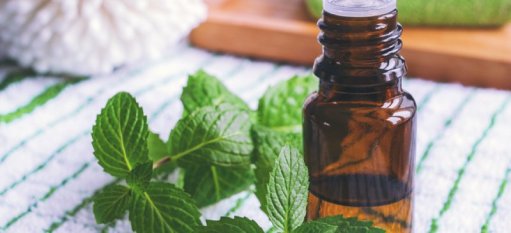
Peppermint

Botanical Name: Mentha x piperita.

Family Name: LAMIACEAE or LABIATAE

All true mints belong to the genus Mentha. Peppermint is a hybrid plant, a cross between watermint (Mentha aquatica) and spearmint (Mentha spicata). 

Common Names: Peppermint, mint, menthol

Habitat: Peppermint is found growing wild in the moist soils of the warmer parts of Europe, Asia, and America. It was cultivated in Europe but also in America, where it has become a vital crop over the last one hundred years. Peppermint is a perennial shrub which grows best in very moist soils with high water-holding capacity. While the plant has proved invaluable in medicine, for both topical and oral uses, it is also used widely in the perfume, soap and of course the food industries, becoming the most commercially important of the Mentha species. It has a fresh odor and a persistent cooling…

View original post 1,477 more words
Lāʻau Lapaʻau | Powerful Herbal Pain Relief

Crooked Bear Creek Organic Herbs's avatarCrooked Bear Creek Organic Herbs

A few days ago, I had the pleasure of visiting the home of a gracious woman who deals in antiques. As I admired the many fine pieces displayed there, I came to realize that I, too, am something of a period piece a baby boomer who’s fundamentally sound but sporting the odd creaky hinge or two.
Fortunately, the herbal apothecary holds promise. Its medicines are good alternatives to non-steroidal anti-inflammatory drugs for chronic, mild to moderate aches and can reduce the need for prescription drugs.
More than 100 plants are known to have pain-relieving properties, but some are really outstanding. Reporting on herbal painkillers for arthritis, a review of clinical trials in the Clinical Journal of Pain says devil’s claw {Harpagophytum procumbens}, capsaicin from hot chiles {Capsicum spp.}, gamma-linolenic acid {GLA} from seed oils, and certain blended herbal extracts are especially good. Other studies indicate broader pain-relieving…

View original post 4,174 more words
Reiki | It’s All About The Attitude Of Gratitude

Gratitude. Appreciation. Giving thanks. No matter what words you use it all means the same thing. Happy. We’re supposed to be happy … grateful for friends, family … happy to just be alive. Maybe we’re not supposed to be happy. Maybe gratitude has nothing to do with joy. Maybe being grateful means recognizing what you have for what it is, admiring the struggle it takes simply to be human. Maybe we’re thankful for the familiar things we know … and maybe we’re thankful for the things we’ll never know. At the end of the day, the fact that we have the courage to still be standing is reason enough to celebrate.

Lāʻau Lapaʻau | Nettle

The Wonky Pot Apothecary's avatarThe Wonky Pot Apothecary

nettle

Nettle

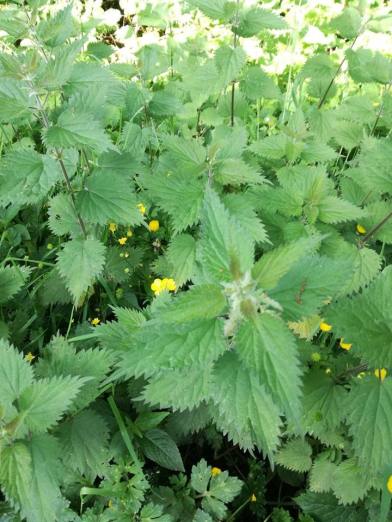
Botanical Name: Urtica dioica, Urtica galeopsifolia. The annual nettle species dwarf nettle (Urtica urens L.) can be used in a similar manner as the stinging nettle in herbal medicine.

Family Urticaceae

Other Common Names of Stinging Nettle: Big string nettle, common nettle, Nettle, devil’s leaf, European nettle, Grosse Brennesse (German), grande ortie (French), ortiga (Spanish), brenninetla (Icelandic), brænde nælde (Danish).

TCM Name: Xun Ma

Meridians: Lung, Liver, Kidney

Key TCM Actions & Medicinal Uses: Tonifies the Lungs/Treats Skin: eczema, congested lungs, coughs, asthma, shingles. Purifies Blood: cleanses the Blood from environmental toxins and toxins in food.  Drains Phlegm/Astringing; urinary tract infections, allergy congestion, gout, edema. Builds Blood/Enriches Kidney and Liver Yin: hot flashes, night sweats, dry skin, dull hair, brittle nails, regulate menses. Stops Bleeding: hemorrhage, post partum bleeding, heavy menses. Regulates Metabolism: improves stamina, poor appetite, improves lactation.

Habitat: While originally from the cold…

View original post 1,178 more words
Angel Wisdom | For June 13, 2018

Respect the beauty and vastness of the universe, remember that there is always something more to learn and be humble before the vastness of universal wisdom.  The angels want to remind you that it is never too late to start studying, get a new qualification, or get more deeply involved in some area, so perhaps now is the time to apply for a Master’s degree, specialization or directly a whole new education in the field that is of interest to you.  Also, the angels would like t mention again that knowledge and wisdom are two different things.  In order to be able to call yourself a wise person, apart from the purely rational knowledge and logic, it is also necessary to refract everything through your own life experiences, emotional intelligence and steady value system.

If you’re wondering about some important issue, this message is a clear sign that you have been given the necessary wisdom to make the right decision, or that you have a very wise person next to you who’s ready to give you the right advice … so do not hesitate.

Contemplations …

A couple hundred years ago, Benjamin Franklin shared with the world the secret of his success: “never leave that to tomorrow what you can do today.” This is the man who discovered electricity. You’d think more of us would listen to what he had to say. I don’t know why we put things off, but if I had to guess I’d say that it has a lot to do with fear. Fear of failure. Fear of pain. Fear of rejection. Sometimes, the fear is just in making a decision because … what if you’re wrong? What if you’re making a mistake you can’t undo? Whatever it is we’re afraid of, one thing is true. By the time the pain of not doing the thing gets worse than the fear of doing it, it can feel like we’re carrying around a giant tumor. The early bird catches the worm. A stitch in time saves nine. He who hesitates is lost. We can’t pretend we haven’t been told. We’ve all heard the proverbs. We’ve heard the philosophers. We’ve heard our grandparents warning us about wasted time. We’ve even heard the damn poets urging us to “seize the day”. Still, sometimes, we have to see for ourselves. We have to make our own mistakes. We have to learn our own lessons. We have to sweep today’s possibilities under tomorrow’s rug until we can’t anymore … until we finally understand for ourselves what Benjamin Franklin meant when he said that knowing is better than wondering … that waking is better than sleeping … and that even the biggest failure, even the worst most intractable mistake beats the hell out of never trying.

Contemplations …

Life … there’s another way to survive this competition, a way no one seems to tell you about … one you have to learn for yourself. It’s not about the race, at all. There are no winners or losers. Victories are counted by the number of lives you save. And, once in a while … if you’re smart … a life you save could be your own. Life was surely made for fools like me.

Intimacy is a four-syllable word for “here are my heart and soul; please grind them into hamburger, and enjoy!” It’s both desired, and feared. Difficult to live with and impossible to live without. Intimacy also comes attached to life’s Three R’s: Relatives, Romance and Roommates. There are some things you can’t escape, and others you just don’t want to know. I wish there were a rule book for intimacy. Some kind of a guide that can tell you when you’ve crossed the line. It would be nice if you could see it coming, but I don’t know how you could fit it on a map. You take it where you can get it and keep it as long as you can. And, as for rules, maybe there are none. Maybe the rules of intimacy are something you’ve got to define for yourself.

Remember when you were a kid, and your biggest worry was if you’d get a bike for your birthday, or, if you’d get to eat cookies for breakfast. Being an adult? Totally overrated. I mean, seriously. Don’t be fooled by all the hot shoes, and the great sex, and the no-parents-anywhere-telling-you-what-to-do. Adulthood is a great responsibility. Responsibility? It really does suck … it really, really sucks. Adults have to be places, and do things, and earn a living and pay the rent. Hello!? Talk about responsibility! It all kinda makes just wanting bikes and cookies look really, really good. The scariest part of responsibility: when you screw up and let it slip right through your fingers. Responsibility: it really does suck. Unfortunately, once you get past the ages of braces and training bras, responsibility doesn’t go away. It can’t be avoided. Either someone makes us face it, or we suffer the consequences. And still, adulthood has its perks. I mean … the shoes, the sex, the no-parents-anywhere-telling-you-what-to-do … that’s pretty damn good.

Lāʻau Lapaʻau | Natural Eye Care

The Wonky Pot Apothecary's avatarThe Wonky Pot Apothecary

Natural Eye Care…. Where do I begin….. The Skin around the eyes is only about 0.04mm thick, where as by comparison over the rest of the body its generally about 0.1mm thick and at its thickest on the feet. So putting anything on or around the eyes has to be done delicately. Over the years that i have been making skincare, i have made numerous products for eye care, from a soothing gel for Dry Eyes, an Eye oil in a roller ball to an eye cream all of which have helped numerous amounts of people. So below i thought i would talk about some other conditions, which can make the eyes uncomfortable.

Puffiness: Under eye puffiness can be caused by a variety of reason, Diet, Allergies or extra fluid in your system. To treat Morning puffiness, splash your face with very cold water, then with a very light touch…

View original post 630 more words
Angel Messages | For June 8, 2018

“Love is the main way to God; love the others and you will naturally be connected with God.”  This message can be viewed in several aspects.  On the one hand, it shows that in your life, on the love front, things are going very well.  If you currently have a long-term relationship, it may pass to the next level — marriage/children, or you can achieve a new, greater depth of spiritual unity with your partner.  If you do not have such a relationship, it is possible that you meet a very suitable person quite soon.  Don’t refuse invitations to outings, meetings with new people and casual dating; it’s a big world out there and love can find you anywhere.  Whatever we do, we ought to do it with love because this is the creative energy of life and the feeling that can make us happy.

Cymatics | 417 Hz ❯ CLEANSE ALL THAT TRAPPED NEGATIVE ENERGY from the Past ❯ Solfeggio Frequency Music

Beautiful Kaleidoscopic Art and Music based on Solfeggio Frequency of 417 Hz to release and cleanse all the trapped negativity from the past. We highly recommend that to practice Gratitude Meditation along with this. And at least meditate for 7 Days continuously to see the affect of this frequency and your own meditation. If chanting meditation works better for you, simply chanting OM or Humming meditation along with this will be very helpful in calming the mind.

Lāʻau Lapaʻau | Administration and Dosing of Medical Cannabis

Crooked Bear Creek Organic Herbs's avatarCrooked Bear Creek Organic Herbs

Despite centuries of medical use and several modern studies, 80 years of cannabis (Cannabis sativa, Cannabaceae) prohibition have left clinicians undereducated about its therapeutic uses. A 2017 US study found that 89.5% of surveyed residents and fellows felt unprepared to prescribe cannabis and just 35.5% felt prepared to answer patients’ questions about it. Only 9% of US medical schools include clinical cannabis content in curricula.* While there is a lack of randomized controlled trials (RCTs) in cannabis therapeutics, researchers and caregivers are recognizing RCTs’ limitations in applicability to individual patients, who may be better served by individualized evidence-based practices. Cannabis’ effects vary depending on many factors. It is desirable to find a “sweet spot” of dosing that provides symptom relief without adverse effects (AEs) like unwanted euphoria. The authors combine a review of the literature and their own clinical observations to offer guidance on Good Clinical Practices (GCPs)…

View original post 836 more words
Lāʻau Lapaʻau | Bergamot

The Wonky Pot Apothecary's avatarThe Wonky Pot Apothecary

bergamot-Uses

Bergamot

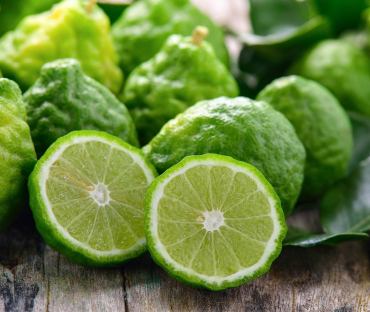
Botanical Name Citrus Bergamia.  

Common Name Bergamot Orange, Bergamott (Swedish), Bergamottorange (Danish), Bergamotte, (German), Bergamotier (French).

Family Name Rutaceae

Ayurvedic/ Tcm Name: Fo Shou Gan

Meridians: Liver, Spleen, Stomach, Heart

Key TCM Actions & Medicinal Uses: Liver and Spleen Qi Stagnation/Moves Qi: digestive disorders, gas, depression, emptiness, grief, nausea, bloating, loss of appetite, vomiting. Lifts and Harmonizes Qi/Calms Shen: mental fatigue, depression, insomnia, anxiety, mood swings.

Parts Used The Essential Oil, Which Is A Light Yellow Or Pale Green Liquid With An Extremely Rich, Sweet And Fruity Taste.

Native Region The Plant Is Endemic To Tropical Southeast Asia. Today It Is Cultivated In Many Subtropical Areas Around The World, Especially In Southern Italy And The Ivory Coast.

Botanical Description Bergamot Is A Small Tree Of The Rutaceae Family (The Rue Or Citrus Family). It Can Grow Up To 4.5 M High And Has Smooth, Oval Leaves And…

View original post 1,173 more words

Health | The Mind-Body Practice That Helped Me Cope With A Lyme Diagnosis

“The body achieves what the mind believes.”

Four years ago, I discovered that I had a severe parasite infection. I had picked up these pesky parasites from adventures I’d taken around the world (think fly-fishing in the Amazon, a safari in Africa, and trekking through northern Thailand) 20 years prior. Unbeknownst to me, these hitchhikers had made my body their home and become deeply embedded in my tissues and organs. By the time I discovered them, they had put holes in my organs and eaten away at some of my endocrine glands.  […]

Source: The Mind-Body Practice That Helped Me Cope With A Lyme Diagnosis

Lāʻau Lapaʻau | Health Benefits of Reishi {Ganoderma lucidum}

Crooked Bear Creek Organic Herbs's avatarCrooked Bear Creek Organic Herbs

Also, Known As:

  • Ling Chi
  • Ling Zhi
  • Reishi

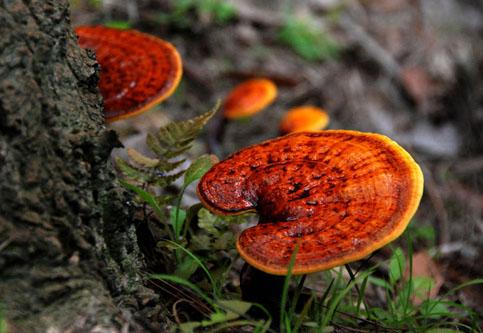
Known in Japan as the ‘phantom mushroom’ because it can be so very difficult to find, the reishi generally grows on old Japanese plum trees. Reishi is so rare that only about 10 mushrooms would be found growing on about 100,000 plum trees. Finally, it was the Japanese Shigeaki Mori who perfected the art of growing the reishi indoors. This art involved culturing wild reishi spores on plum-tree sawdust over an elaborate and arduous two-year time period. The fruiting body of the reishi can be used medicinally.

Also popularly known as the hing zhi “herb of spiritual potency”, the reishi is, in essence, a mushroom that can grow on old rotten logs, fallen tree stumps and other similar areas throughout the coastal regions of China. However, reishi is cultivated in areas as diverse as North America, Taiwan, Japan, Korea, and China for…

View original post 1,024 more words

Lāʻau Lapaʻau | Harvesting Herbs

Crooked Bear Creek Organic Herbs's avatarCrooked Bear Creek Organic Herbs

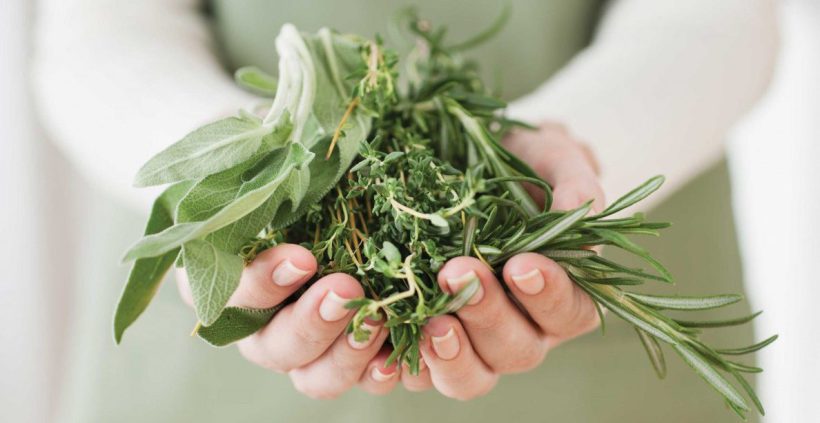
Whether you are collecting the flowers, leaves or stems, you should always harvest them on a sunlit day and only when the dew has dispersed from the plants and prior to the garden being filled with the day’s full heat. In case the plants contain volatile oils, for instance, lemon balm and mints, it is best to harvest them immediately prior to noon. This is because the oils get enough time to move to the leaves, but they have not been evaporated by the heat of the day. As it has been found that rain sweeps away some amount of the aromatic volatile oils, it is advisable that you should wait for at least one day after a rainstorm and then harvest the leaves. Preferably, you should wait for two to three days prior to harvesting, as this will give the plants sufficient time to gather their essential oils.

In…

View original post 2,045 more words

Lāʻau Lapaʻau | What Is Oats {Avena sativa}

Crooked Bear Creek Organic Herbs's avatarCrooked Bear Creek Organic Herbs

Also, Known As:

  • Avena Sativa
  • Common Oats
  • Groats
  • Oats
  • Wild Oats

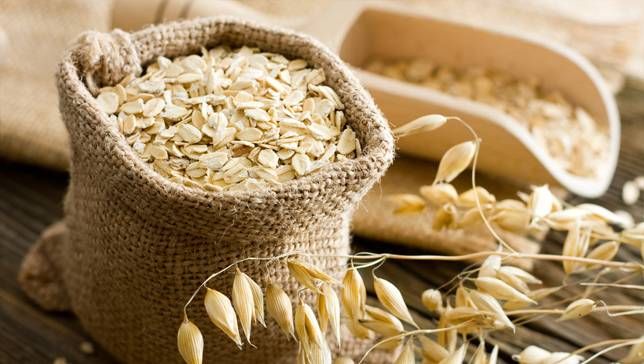
The plant-based cereals called the oats – botanical name: Avena sativa – is a very nutritious food and remedy. The oat is rich in protein, has lots of beneficial minerals such as calcium and magnesium, trace elements and potassium as well as iron – while also being very high in vitamin content. The presence of these bodybuilding nutrients in the oats makes for strong bones and teeth, most of these vital minerals found in the oats are also necessary for the maintenance of a healthy nervous system in a human being. Remedies made from the oats were traditionally used as a herbal nerve tonic; this tonic was given to patients to treat problems like depression, and mental debility as well as nervous exhaustion. Eating oats is a very good remedy when withdrawing from the effects of tranquilizers and antidepressant medications. The oats not only stimulates the body but also boosts energy levels up…

View original post 1,378 more words

Lāʻau Lapaʻau | What Is Horsetail {Equisetum arvense}

Crooked Bear Creek Organic Herbs's avatarCrooked Bear Creek Organic Herbs

Also, Known As:

  • Bottlebrush
  • Horsetail
  • Mare’s Tail
  • Scouring Rush
  • Shave Grass

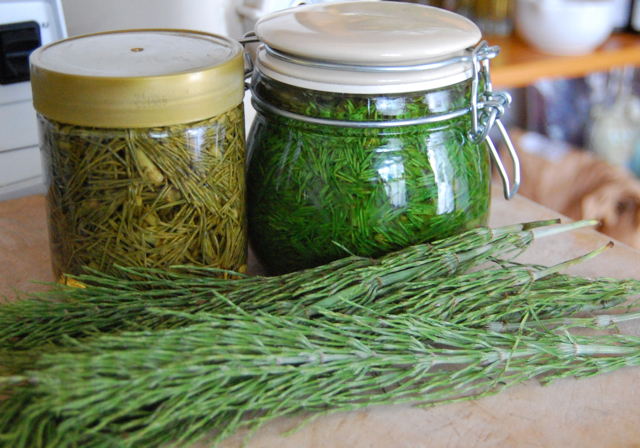
Horsetail is a well-known herb; it is a perennial herb growing in moist loamy or sandy soil found in much of the North American continent, as well as in similar climates in Europe and Asia. The morphology of the horsetail herb is very strange and the plant has a creeping or string-like root name. The roots at the nodes are turned into numerous hollow stems of two kinds. Horsetail begins growth in two stages, initial growth of the plant is through a fertile and flesh-colored stem, this stem can grow to a height of four to seven inches and comes out a cone like a spike – this spike contains spores of the plant. The initial stem does not last long and withers away. The second stem is a green and sterile structure reaching a length of eighteen inches in height…

View original post 2,622 more words

Lāʻau Lapaʻau | What Is Licorice Root?

Crooked Bear Creek Organic Herbs's avatarCrooked Bear Creek Organic Herbs

Glycyrrhiza glabra

Also, Known As:

  • Chinese Licorice
  • Gan Cao
  • Kan-ts’ao
  • Kuo-lao
  • Licorice
  • Licorice Root
  • Ling-t’ung
  • Liquorice
  • Mei-ts’ao
  • Mi-kan
  • Mi-ts’ao
  • Sweet Licorice
  • Sweet Wood
  • Yasti Madhu

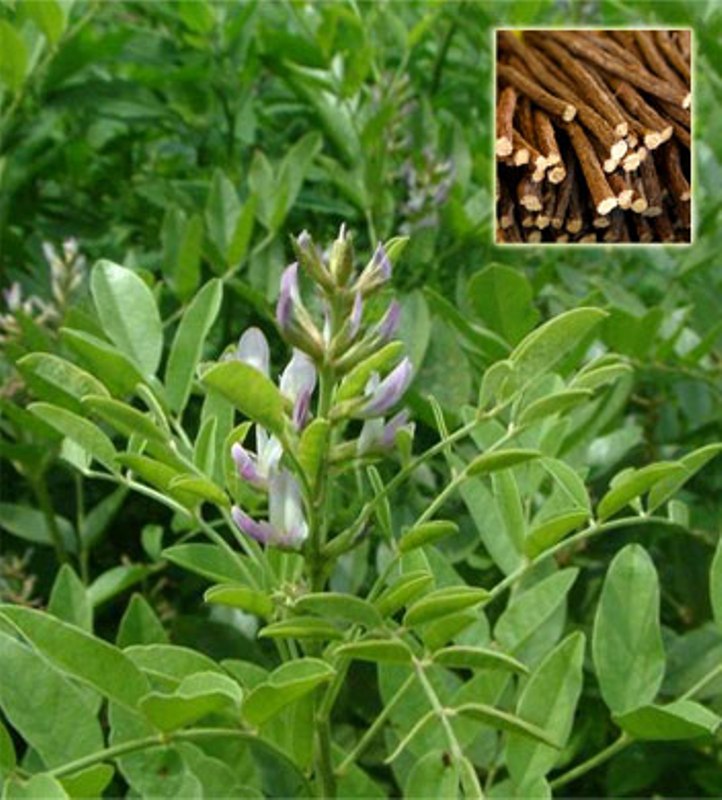
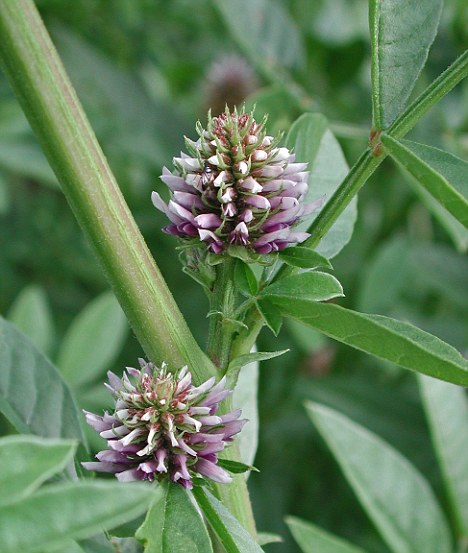
Licorice refers to the roots and rhizome of a variety of plants belonging to the species Glycyrrhiza glabra L. of the family Fabaceae. This is a European species and possesses a sweet yellow wood. There are also Asian species of the plant like Glycyrrhiza uralensis Fisch. and others. In the commercially available licorice in the US markets, all these species are included since a significant part of licorice is imported from China and other Asian countries.

licorice root plant
The herb has expectorant and demulcent properties and has been used traditionally in the treatment of common cold and coughs. The medication is commonly called licorice root or Glycyrrhiza and has also been in use as a flavoring agent. Licorice has been popular for long, in many parts of the…

View original post 3,009 more words