Category: Seminary
Daily Words of the Buddha for February 22, 2023

Anupubbena medhāvī, thokaṃ thokaṃ, khaṇe khaṇe,
Kammāro rajatasseva,
niddhame malamattano.
One by one, little by little, moment by moment,
a wise one should remove one’s own impurities,
as a smith removes dross from silver.
Dhammapada 18.239
The Dhammapada: The Buddha’s Path of Wisdom, translated from Pāli by Acharya Buddharakkhita
Energy Update | February 14, 2023

Sound Healing | ULTIMATE SOLFEGGIO SOUNDBATH | The Complete Restoration | 9 Divine Frequencies
Immerse yourself in these mystical sound baths featuring 9 divine frequencies known for their healing and positive vibrations. Immerse yourself in these mystical sound baths featuring 9 divine frequencies known for their healing and positive vibrations.
♡ Find the frequency you resonate with
00:00 – 174Hz | Reduces Pain
09:09 – 285Hz | Tissue Regeneration
18:18 – 396Hz | Letting Go fear, anxiety
27:28 – 417Hz | Removing negative energy
36:37 – 528Hz | Brings positive transformation
45:46 – 639Hz | Attracts Love, Compassion
54:56 – 741Hz | Spiritual and Emotional Detox
01:04:05 – 852Hz | Third Eye & Intuition
01:13:15 – 963Hz | Pineal Gland Activation & Crown Chakra
Theosophy | The Tempest – II

The tale of The Tempest is well-known but we shall briefly recapitulate its salient strands. It is, primarily, the story of Prospero, rightful Duke of Milan, and his charming child, Miranda, both banished by the usurper Antonio, his brother, and living unknown on a lonely island. Here, through a long period of successful study and practice, Prospero has matured into a master-magician, and Miranda has flowered into a marriageable maiden. The play opens with a violent storm and a resulting shipwreck, caused at the bidding of Prospero by the invisible hosts of the elements, of whom Ariel is the chief. The royal party involved in the shipwreck is saved according to Prospero’s plan, and is scattered on the shore, in three different parts of the island. Alonso, the King of Naples; Sebastian, his brother; Antonio, the usurper; Gonzalo, an honest old Councillor; and two Lords, Adrian and Francisco, land on one side of the island and most of them fall into an induced slumber, during which the vigilant and vile Antonio persuades the susceptible Sebastian to join in a plot to kill the King. Thanks to the intervention of the invisible Ariel, the plotters are prevented from fulfilling their purpose, and the entire party is led to look for Ferdinand, the son and successor of Alonso.
Meanwhile, Ferdinand has met Miranda and has been forced into her father’s service, which he patiently undergoes until Prospero is pleased to bestow on him his daughter. At the same time, in a third part of the island, Caliban, the deformed and savage slave of Prospero, has been met first by Trinculo, the King’s jester, and then by Stephano, a drunken butler, both of whom foolishly join the faithless Caliban in an abortive plot against his powerful master. These three groups are all, in the last Act, brought together near his cell by Prospero, after Antonio and Alonso and Sebastian have been made by strange and fearful sights and sounds to repent of their folly; after Ferdinand and Miranda have been treated to a visionary masque, played by spirits; and after Caliban and his companions have been brought to their senses — all of which is accomplished through the agency of Ariel. The play ends with the restoration of disturbed harmony, the recompense of the good and the repentance of the deluded, the release of Ariel from Prospero’s service, and the reconciliation of one and all to the new order ushered in by Prospero, who shows himself to be a man of wisdom and a master of destiny.
Let us first briefly consider different interpretations of the underlying theme of The Tempest. There is, first of all, the excellent but purely artistic interpretation of Dr. Tillyard whose thesis is that the play gives us the fullest sense of the different worlds within worlds which we can inhabit, and that it is also the necessary epilogue to the incomplete theme of the great tragedies.
A more ambitious and comprehensive attempt is that of Wilson Knight, who interprets the theme of the play from various points of view — poetical, philosophical, political and historical. Poetically, he considers the play artistic autobiography, its meanings revealing a wide range of universal values. Philosophically, he maintains that The Tempest portrays a wrestling of flesh and spirit. Politically, he interprets the play as the betrayal of Prospero, Plato’s philosopher-king and a representative of impractical idealism, by Antonio, Machiavelli’s Prince, and a symbol of political villainy. Lastly, the play is regarded historically as a myth of the national soul, Prospero signifying Britain’s severe, yet tolerant, religious and political instincts, Ariel typifying her inventive and poetical genius, and Caliban her colonizing spirit.
Another serious attempt at interpretation is that of Colin Still, whose study of the ‘timeless theme’ of The Tempest has not attracted the attention it deserves. He regards this ‘Mystery play’ as a deliberate allegorical account of those psychological experiences which constitute Initiation, its main features resembling those of every ceremonial ritual based upon the authentic mystical tradition of all mankind, but especially of the pagan world. Still takes Prospero as the Hierophant, and in one aspect, as God Himself; Ariel as the Angel of the Lord, Caliban as the Tempter or the Devil, and Miranda as the Celestial Bride.
The comedians, Stephano and Trinculo, led on by the Devil, constitute a failure to achieve Initiation; the experiences of the Court Party, which is of purgatorial status, constitute the Lesser Initiation, its attainment being self-discovery; while Ferdinand attains to Paradise, to the goal of the Greater Initiation which consists in receiving a ‘second life.’ The wreck is considered symbolic of the imaginary terrors of the candidate for Initiation, and the immersion in the water as symbolic of his preliminary purification. The Masque is regarded as apocalyptic in character, and the cell is taken to represent the Sanctum Sanctorum, only to be entered after full initiation. And so Still goes on giving every detail the status of a semi-esoteric symbol drawn mainly from pagan ritual.
Still’s thesis, though basically sound, is obscured by theological terminology, and its detailed application often leads to a certain forcing of analogy. Prospero, for instance, is a man, not God, and Caliban is too clearly a thing of Nature to be called a Devil, or Satan. Still’s centre of reference is altogether less in the poetry or in the philosophy than in a rigid system of pagan symbolism applied to the play.
In theosophical terms, we can approach The Tempest from at least three angles — the psychological, the cosmic and the occult. Of these, we shall adopt the last for detailed interpretation of the characters in the play. Before that, however, it will be worthwhile to indicate how the psychological and the cosmic keys may be applied.
The psychological key enables us to construe the theme of The Tempest in terms of the principles of the human constitution and the everyday experiences of the majority of mankind. In this line of interpretation, Prospero would represent Atman, the universal Self, which overbroods the remaining constituents of man, and allows for their rescue from all internal disequilibrium, thus producing that divine and unifying harmony which spells poise and proportion, as well as power and peace. Miranda, the daughter of Prospero, would be that specialization of Atman which we know as Buddhi, the spiritual and at present passive principle in man, the vehicle of Atman, and at once the expression and the essence of pure wisdom and of true compassion. It is in this sense that Miranda represents the fallen and Sleeping Soul of the uninitiated and deluded man. Ferdinand, the Prince who aspires to the companionship of Miranda, could be made to symbolize the higher Manas, the incarnated ray of the Divine in Man, while Antonio, the usurper who plans to secure personal power at the cost of his weakening conscience, could represent the kama manas, or the desire-mind. To complete the picture, Caliban could be taken as the kamarupa or the passional part of man in material form, and Ariel as the type of the assemblage of presiding deities, devatas or elementals, in the human personality. This, in silhouette form, would be the system of symbols that could be constructed on the basis of the psychological key — a system which, interesting as it is in its ramifying implications, it would not be difficult to develop.
The second interpretation, which we have called the cosmic, follows from a comprehensive view of the evolutionary stream in Nature, of the Great Ladder of Being. This interpretation is implied in H.P. Blavatsky’s oft-quoted statement that
the Ego begins his life-pilgrimage as a sprite, an ‘Ariel,’ or a ‘Puck’; he plays the part of a super, is a soldier, a servant, one of the chorus; rises then to ‘speaking parts,’ plays leading roles, interspersed with insignificant parts, till he finally retires from the stage as ‘Prospero,’ the magician.The Key to Theosophy, 34
In this line of interpretation, the play presents an image of the glorious supremacy of the perfected human soul over all other things and beings. At the peak of the evolutionary ascent stands Prospero, the representative of wise and compassionate god-manhood, in its true relation to the combined elements of existence — the physical powers of the external world — and the varieties of character with which it comes into contact. He is the ruling power to which the whole series is subject, from Caliban the densest to Ariel the most ethereal extreme. In Prospero we have the finest fruition of the co-ordinate development of the spiritual and the material lines of evolution.
Next to Prospero comes that charming couple, Ferdinand and Miranda, exquisite flowers of human existence that blossom forth under the benign care of their patriarch and Guru. From these we descend, by a most harmonious moral gradation, through the agency of the skilfully interposed figure of the good Gonzalo, to the representatives of the baser intellectual properties of humanity. We refer to the cunning, cruel, selfish and treacherous worldlings, who vary in their degrees of delusion from the confirmed villainy of Antonio to the folly of Alonso. Next, we have those representatives of the baser sensual attributes of the mass of humanity — the drunken, ribald, foolish retainers of the royal party, Stephano and Trinculo, whose ignorance, knavery and stupidity make them objects more of pity than of hate. Lowest in the scale of humanity comes the gross and uncouth Caliban, who represents the brutal and animal propensities of the nature of man which Prospero, the type of its noblest development, holds in lordly subjection. Lastly, below the human and the animal levels of life, in this wonderful gamut of being, comes the whole class of elementals, the subtler forces and the invisible nerves of nature, the spirits of the elements, who are represented by Ariel and the shining figures of the Masque who are alike governed by the sovereign soul of Prospero. Shakespeare obviously knew of these invisible spirits and recognized their place in the panorama of evolution.
Raghavan Iyer
The Gupta Vidya II
Gnosticism – The Apocryphon / Secret Writing of John – Introduction to Gnostic Texts Scriptures
Gnosticism has produced some of the richest and most difficult spiritual texts of the ancient world. With the discovery of the Nag Hammadi library one is confronted with numerous, often obscure and difficult texts – where to begin? This episode of Esoterica argues that the best first text is the Apocryphon / Secret Writing of John, a text found two recensions (long and short) in four manuscripts from antiquity. Here we introduce, summarize and discuss this amazing gnostic text.
Theosophy | The Tempest – I

The more one delves into the genius of Shakespeare, the greater is the realization that, as veil after veil is lifted, there will remain “veil upon veil behind.” Who was Shakespeare? What manner of man was he? What was the power behind his plays? These are questions more easily asked than answered. The vicissitudes of Shakespeare’s reputation and the vagaries of critical opinion alike substantiate H.P. Blavatsky’s statement that Shakespeare, like Aeschylus, “will ever remain the intellectual ‘Sphinx’ of the ages.”
The scattered hints in Theosophical literature, though few and far between, are sufficiently suggestive to indicate the protean and profound nature of Shakespeare and his message. “My good friend — Shakespeare,” wrote Mahatma K.H., quoting from him in a letter. In her editorial opening the first volume of Lucifer, H.P. Blavatsky declared that
Shakespeare’s deep and accurate science in mental philosophy’ (Coleridge) has proved more beneficent to the true philosopher in the study of the human heart — therefore, in the promotion of truth — than the more accurate but certainly less deep, science of any Fellow of the Royal Institution.
Again, we know from her letter to A.P. Sinnett that she wanted a student to write out “the esoteric meaning of some of Shakespeare’s plays” for inclusion in The Secret Doctrine. Lastly, we have W.Q. Judge’s statement: “The Adepts assert that Shakespeare was, unconsciously to himself, inspired by one of their own number.”
Shakespeare was a magnificent creative genius who, coming under Nirmanakayic influence, became a myriad-minded master of life and language. His amazing and expansive knowledge of the super-physical and the invisible, his penetrating and compassionate insight into human nature, his transcendent and kaleidoscopic imagination, his intuitive perception and his inspired passages — all these are at once the expression and the evidence of the deep inwardness of his plays, and of the luminous influence of Adepts.
What was the nature of Adept influence upon the mind of Shakespeare? It is not to be thought that Shakespeare was, from the first, under the special care and observation of the Great Lodge, but rather that the superior possibilities embedded within himself were what higher inspiration spurred into stronger activity. This was possible because of the largeness of his mind and the receptivity of his soul. The breadth of his Soul-Life could cause the offspring of his Fancy “to share richly in the vital Fire that burns in the higher (Image-making) Power.” Above all, he possessed the power, as John Masefield has written, to touch “energy, the source of all things, the reality behind all appearance,” and to partake of the storehouse of pure thought.
We will not, however, find it an easy task to unravel the mystery locked up in the allegory, symbol and character portrayal of the great plays. For, “the very fact that Shakespeare remained unconscious of the Nirmanakayic influence which his genius attracted shows that we must not expect the unadulterated expression of Divine Wisdom in all he created.”
There are two possible ways of studying any of Shakespeare’s plays in terms of Gupta Vidya. The first is the easier one of extracting hints of esoteric truth out of the significant lines and passages of the play. The second is the more difficult one of interpreting the entire tale and theme of the play according to one or more of the seven keys of symbolism suggested in The Secret Doctrine. We will use both methods, but concentrate on the second, which, if less easy, will be found more fascinating.
The group of plays to which The Tempest belongs and of which it is presumably the last, was written in the final period of Shakespeare’s life. All these plays are romances, neither tragic nor comic but both, full of unexacting and exquisite dreams, woven within a world of mystery and marvel, of shifting visions and confusing complications, “a world in which anything may happen next.” Strangely remote from ‘real’ life is this preternatural world of Shakespeare’s final period, and the universe of his invention is peopled with many creatures more or less human, beings belonging to different orders of life. The romantic character of these plays is reflected in the richness of their style. Here we have the primary facts of poetry, suggestion, colour, imagery, together with complicated and incoherent periods, softened and accentuated rhythms, tender and evanescent beauties. These plays reach the very apex of poetic art, revealing a matured magnificence of diction and the haunting magic of the purest lyricism, altogether appealing more to the imagination than the intellect.
The fundamental feature, however, of these plays of the final period is the archetypal pattern of prosperity, destruction and re-creation which their plots follow. Virtue is not only virtuous, but also victorious, triumphant, and villainy is not only frustrated, but also forgiven. These are dramas of reconciliation between estranged kinsmen, of wrongs righted through repentance, not revenge, of pardon and of peace. Tragedy is fully merged into mysticism, and the theme is rendered in terms of myth and music, reflecting the grandeur of true immortality and spiritual conquest within apparent death and seeming defeat.
Upon the firm foundation of the accepted conclusions regarding the chronological order of the plays of Shakespeare, and of the peculiar features of the final period, modern critics have been only too eager to build their plausible and picturesque interpretations.
We have, first, the Dowden doctrine, supported in different degrees by other critics, likening Shakespeare to a ship, beaten and storm-tossed, yet entering harbour with sails full-set to anchor in Stratford-on-Avon in a state of calm content and serene self-possession. This view gives the final period of the playwright the attractive appellation of “On the Heights”, and perceives in these last plays the charm of meditative romance and the peace of the highest vision. The Tempest is reverentially regarded as the supreme essence of Shakespeare’s final benignity.
Lytton Strachey’s contrary thesis, echoed partially by Granville-Barker, is that these faulty and fantastic last plays show that Shakespeare ended his days in boredom, cynicism and disillusionment. Dr. E.M.W. Tillyard and John Middleton Murry not only see no lack of vitality, no boredom with things, no poverty of versification in these later plays, but, in fact, evidences of the work of one whose poetical faculty was at its height.
The best interpretation is that of Wilson Knight in The Crown of Life. He regards Shakespeare as equivalent to the dynamic spiritual power manifest in his plays, and finds in the Shakespearean sequence the ring of reason, order and necessity. His plays spell the universal rhythm of the motion of the spirit of man, progressing from spiritual pain and despair through stoic acceptance and endurance to a serene and mystic joy. Whereas in the tragedies is expressed the anguish of the aspiring human soul, crying out from within its frail sepulchre of flesh against the unworthiness of the world, these last plays portray the joyous conquest of life’s pain.
It is, however, important to point out the danger of stereotyping the divisions of Shakespeare’s life, and the need to be wary how we apply our labels and demarcations to “so mobile a thing as the life and work of man.” In the last analysis, Shakespeare was all of one piece; he developed, but in his development cast nothing away; his attitude towards life deepened, but his essential outlook always remained the same.
We could attribute the surpassing majesty of the plays of the final period to the great expansion of the creative power and dramatic skill which had first begun to show themselves in their grandeur in the tragic productions of ‘the middle period.’ This expansion was the product, as it is the proof, of the Adept Inspiration from which Shakespeare progressively benefited and on which he increasingly drew. Thus, we are fully prepared to regard the final period as the culmination of a spiritual odyssey which found its consummation in The Tempest, his last and greatest of plays. In this view, then, The Tempest is a broader, deeper “embodiment of the qualities drawn from the higher planes of man’s being in which Imagination rules,” a perfect pattern of myth and magic as of music and marvel.
Raghavan Iyer
The Gupta Vidya II
Reiki | Energy Healing and Meditation Session
8 hours of music for the practice of Reiki and Meditation. This music was created to increase and facilitate thoughts control during reiki treatment or meditation. Namaste
00:00:00 Reiki Music, Energy Healing, Nature Sounds, Zen Meditation, Positive Energy, Healing Music https://youtu.be/x7e2Dm5WdNg
02:15:36 Reiki Music, Energy Healing, Zen Meditation, Reiki Healing, Positive Energy, Chakra, Relax https://youtu.be/A9yjPSbn4Qg
04:38:35 432 Hz Cleanse Negative Energy, Reiki Music, Healing Meditation, Energy Cleanse https://youtu.be/pF5xXy-6drI
06:39:41 Reiki Music, Physical, Mental, Emotional and Spiritual Healing, Spiritual Cleansing, Angelic Healing https://youtu.be/Igw32MXr28E
Matt Kahn | Do You Ever Feel Invisible?

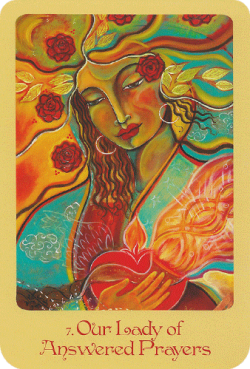
Divine Feminine Oracle | Mother Mary – January 8, 2023

Ayahuasca compilation – Shamanic meditation music #music #meditation #shaman #egodeath #healing
** What is actually Ayahuasca and what its ceremony includes **
An Ayahuasca Ceremony is an opportunity to receive treatment for the spirit and take part in your own healing. Ayahuasca ceremony participants arrive in the early evening, as ceremonies are held at night. Participants arrive before the ceremony begins to show respect for the healer, or curanderos, leading the ceremony. The Maestro curanderos first prepares for the ceremony, after introductions, if necessary. Preparation includes cleaning of the space and implements with mapacho tobacco, prayers, and other blessings. The ceremony begins after preparation of the space and ceremonial tools.
** Music in ceremony **
Songs are an important part of healing experience, and curanderos use healing songs called “icaros”. These songs help curanderos to communicate with spirits and ask for help in healing treatments for the patients. Each icaro has a specific purpose in the healing process. Curanderos sing to open every ceremony, inviting spirits to be present in the ceremony in order to perform healings. The curandero sings throughout the ceremony as the patients navigate their own experiences. The curanderos also use the icaros to raise and lower the intensity of the experience.
** Closing the Ayahuasca Ceremony **
The ceremony ends with an icaro to close the healing circle. The curandero also provide patients with protection from spiritual vulnerability before they leave the ceremony. After the end of the ceremony, lights are lit and brief discussion takes place before people leave to go to sleep.
Theosophy | INDIVIDUATION AND INITIATION – II

In the ancient schools one would not be allowed to begin serious study of yoga until one had mastered one’s temper. In the school of Pythagoras candidates were tested from the first day in regard to their personal vulnerability. That was the stringent standard of all schools preparing for the mysteries of initiation. The laws have not changed even though the external rules may seem to have been modified. It remains an inescapable fact of Nature and karma that if one loses one’s temper even after a lifetime of spiritual development, one’s progress is destroyed in a single mood. Like a city or a work of art, the time to construct is long, but destruction can be swift. One has to think out one’s true internal and external state of being, even if one goes to the Tolstoyan extreme of seeing every kind of fault in oneself. Tolstoy did not do this out of pride but rather because he was so thoroughly honest that he simply could not think of a single fault in anyone else which he could not see present in himself. This sense of commonality, rooted in ethical self-awareness, leaves no room for judging anyone else or for running away from anyone because one sees that the whole army of human foibles is in oneself, and that every elemental is connected with internal propensities in one’s astral form. To think this out Manasically is crucial in the Aquarian Age. The wise disciple will recognize that thoroughness, urgency and earnestness are quite different from fatuous haste and impulsiveness. Even if it takes months and years to think out and learn to apply the elementary axioms of the Science of Spirituality, it is necessary to be patient and persistent, rather than revel in fantasies that leave residues in successive lives. When something so obvious which one can test and comprehend is taught, this is an opportunity for growth which demands honesty in thought and intelligence in response. To receive the timeless teaching in this way enables the self to be the true friend of the Self. Not to do this is one of the myriad ways in which the self becomes the enemy of the Self because it is afraid of facing the facts and the laws of nature connected with relations and patterns in the vestures. Self-regeneration is a precise science and it is possible to test oneself in a manner that fosters sophrosyne.
This spiritual intelligence test is not a matter of making some sweeping moral judgement about oneself, because that will have no meaning for the immortal soul. It would simply not be commensurate with eighteen million years of self-conscious existence. It is really a waste of time to say “I’m no good, I’m this kind of person, I’m bound to do this.” Such exclamations are absurd because they do not account for the internal complexity and psychological richness of sevenfold man, let alone the immensity of the human pilgrimage. It is more important to understand and recognize critical incipient causes, to see how the karmic process takes place, and to arrest the downward slide into fragmented consciousness. To do this firmly with compassion at the root, one has to meditate upon some fundamental idea. One might benefit from the golden example set by disciples who practise the precept: “All the time everything that comes to me I not only deserve but I desire.” This form of mental asceticism is the reverse of psychic passivity and self-indulgent fatalism. It is a clear and crisp recognition that there is karmic meaning to every single event, that nothing is unnecessary even though one may not yet know what its meaning is. Ignorance of the process of adjustment of internal and external relations is merely a reflection of the limitation of one’s own growth at the level of lower mind. To accept totally one’s karma is like a swimmer recognizing the necessity of accepting the tidal currents of the ocean. A swimmer is not doing a favour to the ocean by accepting its sway. Deliberate and intelligent acceptance of oceanic currents is the difference between drowning and surviving.
When it comes to karma on the causal plane with reference to human consciousness and invisible forces, the same principle applies. That is why Buddha said, “Ye who suffer, know ye suffer from yourselves.” Though the teaching seems obvious when stated, it must really be thought through at the core of one’s being if one is going to alter the karmic tendencies of the forces at work. One must ask whether the whole of one’s being is cooperating with the totality of one’s karma. Unless one engages in this meditation and willingly accepts all karma even though one does not understand most of it, no regrets or resolves will make any difference. The constant task of learning, which is a matter of activating and sensitizing all the centres of perception, has an intimate bearing upon diminishing the range and reach of the irrational in one’s responses to life. There is a direct connection between the kundalini force of adjustment of internal and external relations, which moves in a curved path, and the karmic predominance of the various elemental powers in the human constitution. In the words of Hermes Trismegistus:
All these Genii preside over mundane affairs, they shake and overthrow the constitution of States and of individuals; they imprint their likeness on our Souls, they are present in our nerves, our marrow, our veins, our arteries, and our very brain-substance . . . at the moment when each of us receives life and being, he is taken in charge by the genii (Elementals) who preside over births, and who are classed beneath the astral powers (Super-human astral Spirits). They change perpetually, not always identically, but revolving in circles.
Ibid., i 294
Throughout the cyclic development of each soul, the proportional composition of the vestures out of the five elements is continually being adjusted. Through the attraction and repulsion of their coessence to the vestures, certain elements become the dominant ruling factors in one’s life. Unless one engages in noetic mental asceticism, one will invariably remain passive to the psychic sway of these irrational forces. Without ratio, harmony and proportion, one cannot employ the vestures as channels for the benevolent transmutation of life-atoms: rather one will needlessly compound the karma of selfishness. The compassionate projection of the spiritual energies of the soul requires that the genii be made subordinate to the awakened Buddhi-Manasic reason. The genii
permeate by the body two parts of the Soul, that it may receive from each the impress of his own energy. But the reasonable part of the Soul is not subject to the genii; it is designed for the reception of (the) God, who enlightens it with a sunny ray. Those who are thus illumined are few in number, and from them the genii abstain: for neither genii nor Gods have any power in the presence of a single ray of God.
Ibid., i 294-295
By the “few in number” is meant those Initiates and Adepts for whom there is no ‘God’ but the one universal and unconditioned Deity in boundless space and eternal duration.
The truly reasonable part of the soul is extremely important in the Aquarian Age. To think clearly, logically and incisively must be the true purpose of education. To unfold the immense powers of pure thought, the reasonable part of the soul must be given every opportunity to develop so that the irrational side is reduced. Its false coherence must be broken by seeing it causally. One must begin with a willingness to acknowledge it readily, and see that there is no gain in merely pushing it aside. The development of the reasonable part of the soul, which is not subject to the genii, culminates in the reception of the god who enlightens it with a sunny ray, the Chitkala that is attracted by contemplation. Clear, pure reason characterizes the immortal ray which is connected with the star that has its genii, good and evil by nature. The use of reason and clarity of perception in the spiritual and metaphysical sense involves the heart as well as the mind because they cooperate in seeing and thinking clearly. Once this is grasped, one can make a decisive difference to the amount of unnecessary karma involved in one’s irrational emanations and wasteful emotions. One can begin to let go of all that and calmly cultivate the deepest feelings.
At a certain point it will become natural for the mind to move spontaneously to spiritual teachings and universal ideas whenever it has an opportunity. It would not have to be told, nor would one have to make rules, because that would be what it would enjoy. When it becomes more developed in the art of solitary contemplation, it will always see everything from the higher standpoint whilst performing duties in the lower realm, thus transforming one’s whole way of living. This will make a profound difference to the conservation of energy and the clarification of one’s karma. It will also strengthen the power of progressive detachment whereby one can understand what it means to say that the Sage, the Jivanmukta, the perfected Yogin, is characterized by the golden talisman of doing only what is truly necessary. He only thinks what is necessary. He only feels what is necessary. There is so powerful a sense of what is necessary in the small, but from the standpoint of the whole, that there is no other way of life that is conceivable or imaginable. This internal Buddhic logic can never be understood by reference to external rules and characteristics because one has to come to it from a high plane of meditation and total detachment from the realm of external expression.
When the disciple is sufficiently self-evolved from within without, then the further individuation of the soul through self-conscious initiations may proceed. Prepared by testing and by trials, the reasonable part of the soul may receive a sunny ray, communicated by its spiritual ancestors, themselves inseparable from the disciple’s own seventh principle. The parentless progenitors of spiritual intelligence or consciousness are known at one level as Bodhisattvas, at another level as Dhyani Buddhas, at still another level as Manushi Buddhas. All of these are spiritual ancestors of what is called Buddhi — individually one’s own intuitive principle, but in a strict philosophical sense the pure vehicle of one universal light. Buddhi as a principle is its emanation, a gift from a Dhyani Buddha or spiritual progenitor. Seen in this way, all the higher principles are pure emanations from spiritual instructors and parents, in the same way that until the age of seven a terrestrial parent is the spiritual and mental progenitor of the thinking of a child. The child’s own intelligence is involved, and children vary in their responses because of accumulated karma. So too with the chela on the Path. The language that parents use, the ideas that they evoke, and their mode of consciousness colour the child’s psyche during the day, giving a certain tone to the environment. Though most parents hardly think deliberately about what is at stake, owing to their lack of knowledge and insight, nonetheless they have the inimitable opportunity of initiating the child into the wise use of its latent powers. This is only an imperfect analogy on the lower plane of differentiated consciousness and everyday relationships between highly vulnerable personalities. It can scarcely intimate the magical privilege of communicating with Adepts and Initiates, and of participating in the compassionate ideation that permeates the magnetic field in which the chela grows. As an immortal soul, each individual is potentially an inheritor of the whole field of human consciousness over eighteen million years; as an initiated chela each may freely assume this sacred birthright as a spiritual inheritor of the parentless Anupadaka.
The Bodhisattva Path of self-regeneration and of initiation into the mysteries of the higher principles begins and ends with the quickening of the reverential feeling of devotion and gratitude for every single being who ever did anything for oneself. Those who are fortunate enough to perfect that power of endless, boundless gratitude and spontaneous reverence to every teacher they ever learnt from are in a better position to understand how to invoke the highest gift of self-consciousness from the greatest spiritual progenitors. In a fearless way but also in a proper posture of true devotion and reverence, one can invoke the Dhyani Buddhas in dawn meditation, during the day, in the evening and at night, whenever and how often one reaches out in consciousness to them. Before this can be done effectively, one must learn to cleanse the lunar vesture, calm the mind and purify the heart. Every thought or feeling directed against another being makes that heart unworthy to feel the hebdomadal vibration of the Dhyani Buddhas.
Self-concern pollutes rather than protects. Self-purification and self-correction strengthen the capacity to liberate oneself from the karmic accretions of lives of ignorance and foolish participation in the collective dross. Such are the laws of spiritual evolution that this purification can only proceed through the sacrificial invocation of the whole of one’s karma. Then one can begin to become truly self-conscious in one’s interior relationship to the Dhyani Buddhas, the Daimon, the Genius which can speak to one through the Kwan Yin, the Chitkala, the Inner Voice. Just as a vast portion of the world’s sublimest music is only theoretically available to the average person, the finest vibrations of Akasha-Alaya must remain of little avail to most mortals until they fit themselves to come and sit close to the Teachers of Brahma Vach. “To live to benefit mankind is the first step.”
Raghavan Iyer
The Gupta Vidya II
Theosophy | INDIVIDUATION AND INITIATION – I

The Daimones are . . . the guardian spirits of the human race; ‘those who dwell in the neighbourhood of the immortals, and thence watch over human affairs,’ as Hermes has it. In Esoteric parlance, they are called Chitkala, some of which are those who have furnished man with his fourth and fifth Principles from their own essence; and others the Pitris so-called. . . .The root of the name is Chiti, ‘that by which the effects and consequences of actions and kinds of knowledge are selected for the use of the soul,’ or conscience, the inner Voice in man. With the Yogis, the Chiti is a synonym of Mahat, the first and divine intellect; but in Esoteric philosophy Mahat is the root of Chiti, its germ; and Chiti is a quality of Manas in conjunction with Buddhi, a quality that attracts to itself by spiritual affinity a Chitkala when it develops sufficiently in man. This is why it is said that Chiti is a voice acquiring mystic life and becoming Kwan-Yin.
The Secret Doctrine, i 288
The integral relationship between initiation and individuation can be grasped through the essential logic of the entire process of evolution. From the standpoint of matter, the logic of transformation involves increasing heterogeneity, differentiation and complexity. At the same time, there is a commensurate withdrawal of subjective and spiritual faculties which cannot function freely through limited projections or distorted reflections. The degree of spiritual volition depends upon the texture of the reflecting medium. In the collective thrust of evolution every single life-atom in all the seven kingdoms of Nature is touched by the same primal universal impulse towards self-consciousness. Within the broad perspective and purpose of evolution as a whole, the possibilities of initiation are enriched by individuation at a high level of self-consciousness. Initiation, in its most hallowed meaning, must always involve the merging of minds of Guru and chela into a state of oneness with the ineffable Source of Divine Wisdom. This mystical and magical relation of Manas and Mahat was comprehended and transmitted in secret sanctuaries. It was intimated in the enigmatic etymology of the word Upanishad, ‘to come and sit close’, so that there could be direct communion of minds and hearts. Sacred teachings are conveyed and communicated through the eyes and not merely through words, although mantramic sounds have a sacred and vital function. In the Bhagavad Gita Arjuna’s earnest enquiries and Krishna’s cosmic affirmations and psychological adjustments bring to birth within the mind of the chela the seed of chit, a level of consciousness which negates, transcends, and also heightens individuality. Initiation is the highest mode of individual communication, and it necessarily involves a mystic rapport between one who has gone before and one who is to come after, rather like the magnetic transference between mother and child. Such a relation is inherent in the logic of evolution because, as a result of an extremely long period of evolution, it is impossible to find any mechanical sameness between all human beings. They are identical in their inmost essence but so markedly different in the internal relations of their vestures that there cannot be complete equivalence between any two persons. Hence experience and reflection reveal both the mystery of each individual human being and the commonality of what it is to be human.
At one level of communication The Secret Doctrine is a metaphysical treatise on cosmic and human evolution. But at another level, for those who are Buddhic, it is not merely a book, but the initiatory presence of the compelling voice of the Verbum or Brahma Vach, reverberating in the society of sages, the Rishis who are of one mind and one lip. For the ardent seeker of Divine Wisdom, The Secret Doctrine is a series of stepping-stones, as the Upanishads and the great scriptures of all times have been, towards initiations into the mysteries of Selfhood. Through ever-renewed contact with the teaching, the chela begins to enact self-consciously and by degrees the realities which ordinary individuals sporadically experience at some level through deep sleep. This process comes alive through prolonged meditation for the sake of universal compassion, making one’s breathing more benevolent for the purpose of elevating all beings in all the kingdoms of Nature. When a person begins to do this, it is the awakening of Bodhichitta, the seed of enlightenment. It is the first step in translating knowledge into wisdom, words into realities, and resolves into actions. Having turned the key of compassion in the lock of the heart, the disciple will come to realize, through inward communication with the Teacher, the fuller meaning of the Upanishads:
Upa-ni-shad being a compound word meaning ‘the conquest of ignorance by the revelation of secret, spiritual knowledge’. . . They speak of the origin of the Universe, the nature of Deity, and of Spirit and Soul, as also of the metaphysical connection of mind and matter. In a few words: They CONTAIN the beginning and the end of all human knowledge. . .
The Secret Doctrine, i 269-270
The practical import of the metaphysical teaching of The Secret Doctrine lies in the fact that the highest spiritual powers are partly used by each human being every day but without fully knowing it. Light is universal, but it makes all the difference whether one has a blurred sense of perception and merely consumes light, or whether one can take a magnifying glass and concentrate light. There are also those who are like the laser beam which can direct a concentrated shaft of light to destroy cancerous cells and produce a range of extraordinary effects upon the physical plane. There is something of kundalini at work in every human being. Electricity and magnetism are sevenfold and work at the highest cosmic level of Akasha, but they also work at the most heterogeneous and diffusive level because everything is electrical and magnetic, from the occult standpoint. The aspirant must grasp, even at a preliminary level, the moral and psychological implications of this metaphysical “power or Force which moves in a curved path” in man and Nature.
It is the Universal life-Principle manifesting everywhere in nature. This force includes the two great forces of attraction and repulsion. Electricity and magnetism are but manifestations of it. This is the power which brings about that ‘continuous adjustment of internal relations to external relations‘ which is the essence of life according to Herbert Spencer, and that ‘continuous adjustment of external relations to internal relations’ which is the basis of transmigration of souls . . .
Ibid., i 293
The two aspects of this omnipresent power mentioned here have to be totally mastered by the initiated yogi in all their possible manifestations. Long before this stage is reached, the disciple must begin to learn to govern these internal and external relations through Buddhi Yoga in order to fulfil the prerequisite conditions of magnetic rapport with a true Teacher of Wisdom.
The universal process of adjustment of the external to the internal, which leads to involuntary reincarnation for human beings, must be understood in terms of karma. At the most primary level, whenever human beings entertain and succumb to emotional reactions, they establish mental deposits and astral grooves which require many lives for proper adjustment. That is why over eighteen million years so many people approach the Path again and again but stumble and lose their track just as often. They cannot make a fundamental breakthrough even when in the presence of great teaching. For those who have made the teaching an internal living power in their consciousness, this is comprehensible as essential, just as the world seems clear to a child when its eyes are directed to the light of the sun. Whilst this is true for all human souls, the philosophical recognition of how this works is important. Every emotion registers an appropriate record in the astral vesture. It is wear and tear on the linga sharira and is at the expense of something or someone else. Thus selfishness is increased. This is true even if the emotion is benevolent for emotion itself is a form of passivity. Emotion is quite different from deep feeling which is unmodified by cyclic change or external event and is totally independent of outward demonstration. Emotion is like cashing a check: whilst it makes money available, it depletes the account. It is a way of demanding proof. As a form of external indulgence it is a passive fantasy which weighs heavily upon the astral vesture. To that extent it obscures one’s inmost feelings which are detached and compassionate. All the higher feelings are ontologically powerful and at the same time they constitute a pure negation psychologically. Though only an initial understanding of the problem, this is sufficient to explain why merely sitting down to postures and trying to control the external breath by hatha yoga exercises cannot make a significant difference to the inevitable adjustment of internal and external relations inherent in life itself. There is no substitute for facing oneself, asking what one is truly living for, how one is affected by likes and dislikes, and how one’s temper — or sophrosyne — is unbalanced through various irritations.
Raghavan Iyer
The Gupta Vidya II
Louise Hay: The Secret Of Successful Day | Make Your Successful Day And Achieve Everything In Life
A Rainy Day at The Temple – Japanese Zen Music – Japanese Flute Music For Soothing, Meditation
Ambient With Flute is a Japanese-style channel where you can find the most diverse and rich Japanese landscapes with the aim of bringing moments of peace, relaxation and tranquility. Did you know that you can use these music to combat distraction, increase work performance, study or use them as a method to support sleep, relaxation, etc.
Nicola Tesla’s 3-6-9 Code | Healing Power of 396Hz | The Secret of Universe
Experience the healing power for 396Hz. Today’s track is inspired by Nicola Tesla’s 3-6-9 code with the core sound frequency of 396Hz. This particular frequency is said to help with freeing oneself from fear, guilt, and trauma. The secret of the universe.
Tesla was a lifelong believer in the power of the number 3, 6, and 9. He believed that these numbers were the key to unlocking the secrets of the universe. In a 1931 interview, Tesla said, “If you only knew the magnificence of the 3, 6 and 9, then you would have a key to the universe.” Tesla was convinced that the number 3, 6, and 9 were the key to understanding the universe and its mysteries.
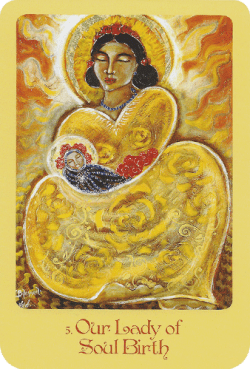
Divine Feminine | Mother Mary Oracle – December 13, 2022

Crows are self-aware just like us, says new study
Crows have their own version of the human cerebral cortex.
- Crows and the rest of the corvid family keep turning out to be smarter and smarter.
- New research observes them thinking about what they’ve just seen and associating it with an appropriate response.
- A corvid’s pallium is packed with more neurons than a great ape’s. […]
Theosophy | THE PLEDGE OF KWAN YIN – II

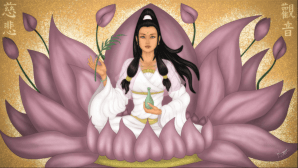
The light of daring is essential to the timely taking of the Kwan Yin pledge. In the Kwan Yin Sutra there is a reference to the flames of agony that consume personal consciousness. Kwan Yin in its metaphysical meaning is bound up with fire and water. Kwan Yin is connected with the primordial Light of the Logos, which is the paradigm and the pristine source of all creativity in the cosmos, of the hidden power in every human being to produce a result that is beneficent. If Kwan Yin is ontologically connected with light, but is also compared to the ocean, what then is the meaning of the textual reference to extinguishing the flames of agony? This is a metaphysical paradox. What is light on the most abstract level of undifferentiated primordial matter is the darkness of non-being, such as that which is around the pavilion of God in the Old Testament, or that which is sometimes simply referred to as “In the beginning”, the Archaeus, the dark abysm of Space. Kwan Yin is rooted in Boundless Space and therefore involves noumenal existence at so high a level of attributeless compassion in Eternal Duration that it is the paradigm of all the vows and pledges taken by vast numbers of pilgrims throughout unrecorded history. It is also called Bath-Kol, the Daughter of the Voice, in the Hebrew tradition, that which when sought within the inmost sanctuary bestows a merciful response within the human heart. There is a latent Kwan Yin in every human being. It is the voice of conscience at the commonest level. It is the Chitkala of the developed disciple. At the highest level it is Nada, the Voice of the Silence, the Soundless Sound, that which is comprehended in initiation, and ceaselessly reverberates in the Anahata, the deathless centre of the human body, transformed into a divine temple.
The deeper meaning of the Kwan Yin pledge is enshrined in profound metaphysics, but at the same time, it reaches down to the level of human ignorance and pain, at all levels extinguishing the intensity of craving, the fires of nescience. This is the teaching of the Kwan Yin Sutra. When that which is light at the highest level descends, it becomes like unto cool water, although intrinsically it is so radiant that it would be blinding. But when it is diffused it converts its state into a fluid which is extremely soothing, sometimes compared to the cool rays of the moon. And then it is capable of giving comfort and sustenance. When a person is soothed and cooled, it is possible to let go, to relinquish the intensity of self-concern. Personal heat is intensely painful when it is experienced without any awareness of alternatives. But when one finds that it may be displaced by soothing wisdom, the cooling waters of compassion, then it is possible to ease the pain and to convert one’s mind from a falsely fiery state, which is destructive, into a cooling and regenerative condition. These are all alchemical expressions of processes that are involved in making deliberate changes in states of consciousness connected with different levels of matter.
Theosophically, every level of thought corresponds to and is consubstantial with a level of differentiation of substance. Therefore, one can even discover in ordinary language certain words that tend to heat up the psycho-mental atmosphere. The very way in which one characterizes one’s own condition may do a lot of violence through language. One can burn oneself or become totally suffocated by the flames, though the Hasidic mystics remind us that even if the castle is burning, there is a lord. Even while one is burning there can be some recognition of that incorruptible, inconsumable essence in oneself. This possibility is the root of all faith in one’s power of spiritual survival, as well the basis of all notions of physical survival, which are only shadowy representations of this deeper urge to persist and prevail. If one has everyday experience of how certain words and shibboleths can engender a lower heat, one can also employ gentler words, healing metaphors and analogies, broader categories, that soothe and cool one’s atmosphere. Even learning to do this is an art, one that can only be practised in a human being’s sincere efforts at apprenticeship to the great masters of the art. Kwan Yin is the cosmic archetype of the art. She who expresses compassion in every conceivable context shows how inexhaustible are the ways of compassion of wise beings, how Initiates use every opportunity to release help. This is part of the universal inheritance of humanity. It is also mirrored in every mother or father who, despite all the lower levels of concern, somewhere knows that what he or she does cannot really be put into the language of calculation, cannot really be weighed or measured.
Gratitude cannot be compelled, but without it life would not go on. It is as if human beings impose upon what they innately know a false structure of expectations, which entangles them in mental cobwebs that are entirely self-created. If emotion becomes sufficiently intense, bitter and sour, there can be a tremendous burden, but even that burden is an act of compassion of the spirit because its weight eventually burns out the tanha, the persisting thirst for material sensation, for false personal life. It will dissolve at the moment of death, but this does not happen all at once. It will receive certain shocks in life, and thereby human beings come to throw off the enormous excesses of their own compulsive cerebration, a great deal of the wastage and the futility of their own emotions, the wear and tear upon the subtle vestures through their own anxieties.
What Nature does as a matter of course can be aided by conscious thought. But where it is aided by conscious thought in the name of the highest cosmic principle and in the company of a long lineage, a golden company of great exemplars of the vow and the pledge for universal enlightenment, one can truly consecrate one’s life and thereby refrain from becoming too tensely involved in the process of everyday psychological alchemy. This is implicit in what Buddha taught. If one truly enjoys the very thought of what Kwan Yin is, and of what is in the Kwan Yin pledge, this enjoyment should itself help to reduce much of the agony and the anxiety, the tension and strain of daily striving. The real problem is to be wholehearted with as undivided a mind as can be brought to the pledge. This must be done without qualifications, without contradictions, but with that holy simplicity of which the mystics speak, a childlike innocence, candour and trust. It is an act of acceptance of the universe and a letting go of whatever comes in the way. When anything does interfere, it must be consumed in the fires of sacrificial change that alone will lead to true spiritual growth. Many a monk on the Bodhisattva Path has found immense benefit through the talismanic use of these three verses:
If you are unable to exchange your happiness
For the suffering of other beings,
You have no hope of attaining Buddhahood
Or even of happiness in this lifetime.If one whom I have helped my best
And from whom I expect much
Harms me in an inconceivable way,
May I regard that person as my best teacher.I consider all living beings
More precious than ‘wish-fulfilling gems’,
A motivation to achieve the greatest goal:
So may I at all times care for them.
Raghavan Iyer
The Gupta Vidya II

Neuroscience News | How Trauma Changes the Brain
Researchers discover changes to the brain’s salience network occur when a person experiences trauma.
Exposure to trauma can be life-changing—and researchers are learning more about how traumatic events may physically change our brains. But these changes are not happening because of physical injury; rather, the brain appears to rewire itself after these experiences. […]
Psychology | A sense of humour – even a dark one – is a moral virtue
A sense of humour is a moral virtue that can help people flourish, even in dire conditions that are conducive to unhappiness […]
Source: A sense of humour – even a dark one – is a moral virtue | Psyche Ideas
Theosophy | THE PLEDGE OF KWAN YIN – I

Never will I seek nor receive private, individual salvation; never will I enter into final peace alone; but forever and everywhere will I live and strive for the redemption of every creature throughout the world from the bonds of conditioned existence.
Kwan Yin
Unconditional affirmation of the Kwan Yin pledge can only come from the unconditional core of the human being. Words are uttered in time, and usually delimit meaning. They express thought, but they also obscure thought. To be able to use words in a manner that reaches beyond limits is to recognize prior to the utterance and to realize after the utterance, that one is participating only on the plane of that which has a beginning and an end, though in emulation and celebration of that which is beginningless and endless. Every word and each day is like an incarnation. Silence and deep sleep convey an awareness of duration that cannot be inserted into ordinary time, but indicate the return to a primal sense of being where one is neither conditioned by nor identified with external events, memories, anticipations, likes and dislikes, hopes and fears, possibilities and limitations. Common speech and ordinary wakefulness, for most individuals, are but clouded mirrors dimly reflecting the resonance and radiance of spiritual wakefulness. Any sacred pledge may be uttered by a human being with a wavering mind and a fickle heart, but it can also be authentically affirmed in the name of the larger Self that is far beyond the utterance and the formulation, yet immanent in both.
This is the time-honoured basis of religious rites, as well as the original source of civil laws. Émile Durkheim explained how early in the evolution of societies human beings learnt to transfer the potency of religious oaths to secular restraints and thereby established a high degree of reliability in human relationships. Mohandas Gandhi spoke of the sun, the planets and the mighty Himalayas as expressing the ultimate reliability of the universe, and taught that when human beings bind themselves by the power of a vow, they seek to become wholly reliable. If reliability essentially connotes a consistent standard of unqualified and unconditional success, then in taking a vow one is necessarily seeing beyond one’s limitations. If one is wise one allows for the probability of failure and the possibility of forgetfulness, but somewhere deep in oneself one still wants to be measured and tested by that vow. Thereby a vow which is unconditional, which releases the spiritual will, calibrates one’s highest self-respect and is vitally relevant to the mystery of self-transformation.
The Kwan Yin pledge is a Bodhisattvic vow taken on behalf of all living beings. It is closely connected with the Bodhichitta, wisdom-seeking mind, the seed of enlightenment. The idea that an unenlightened human being can effectively generate a seed of enlightenment is the central assumption behind the compassionate teaching of Mahatmas and Bodhisattvas, of the Buddhas and Christs. A drop of water is suggestive of an ocean; a flashing spark or single flame is analogous to an ocean of light; the miniscule mirrors the large. Herein lies the hidden strength of the Kwan Yin pledge. What may seem small from the standpoint of the personal self, when it is genuinely offered on behalf of the limitless universe of living beings and of all humanity past, present and future, can truly negate the finality of finitude, the ultimacy of what seems urgent, the immensity of what appears immediate. The human mind ceaselessly creates false valuations, giving ephemera an excessive sense of reality, to uphold itself in a world of flux. To negate this tendency in advance and to assign reality only to the whole requires a profound mental courage. It requires, while one is alive, a recognition of the connection between the moment of birth and the moment of death, of the intimate relationship between the pain of one human being and the sorrow of all humanity. But it also involves a recognition that greater beings than oneself have taken precisely such a vow, have affirmed this pledge again and again. Therefore, one can invite oneself, however frail, however feeble, into the family of those who are the self-chosen, unacknowledged but unvanquished friends of the human race.
The prospect of such a vow is naturally perplexing to the lower mind which is almost totally ignorant of the priorities of the immortal soul, and knows very little about even this life, let alone about previous lives. On what basis could the personality assume a gnostic authority in regard to its own limitations? If one simply looks at the last ten years of one’s life, one will readily see that many things which looked irrelevant, remote, even impossible in the past, unexpectedly become part of one’s way of thinking, one’s depth of feeling. If a human being does not truly know himself, merely to be aware of himself at the personal level in terms of persisting limitations is frustrating. This does not take into account in oneself that which is ineffable and unexpressed, whatever cannot come through the confining parameters of thought, the truncating crudities of speech and the stultifying restrictions of action.
The Kwan Yin pledge can be taken by anyone at any time, but the level of thought and intensity with which it is taken will determine the degree and reliability of response of the whole of one’s being. Shantideva puts this in the form of an ordination:
When the Sugatas of former times committed themselves to the Bodhichitta, they gradually established themselves in the practice of a Bodhisattva. So, I too commit myself to the Bodhichitta for the welfare of all beings and will gradually establish myself in the practice of a Bodhisattva.
Today my birth has become fruitful; my birth as a human being is justified.
Today I am born in the Buddha Family; I am now a son of the Buddha.
Now I am determined to perform those acts appropriate to my Family; I will not violate the purity of this faultless, noble Family.
To be able to take one’s place in the glorious company of Bodhisattvas is not to assume that one can, purely on one’s own, fulfil this exalted aim. But once one has truly affirmed it, no other aim has any comparable significance. This recognition would be critical to a timely taking of the mighty vow of the Buddha, the sacred pledge of Kwan Yin, the Bodhisattva ordination of Shantideva. Timeliness in this sense would mean that one simply cannot imagine an alternative. If a person were to take the pledge prematurely, lacking this sense of necessity, it would precipitate difficulties, making that person guilty, tortured with anxiety, involved even more in futile comparisons and contrasts with other human beings, more depressed, more desolate. But out of all these failures there may come some sense of timeliness at a later moment of ripeness. Timeliness does not occur all at once. Timeliness, like all wisdom, must be the ripe fruit of time-bound experiments and time-bound errors. Because these are time-bound, they are evanescent; they are not enduring. In the same way in which one stumbled and learnt to walk, or mumbled the multiplication tables, one may rediscover something about grace in movement or the deep logic of elementary numbers. So also one may rediscover the higher stage, the fuller meaning, the larger significance for the whole of one’s life, of the pledge one took. Suppose a person truly resolves to injure no human being and wishes to release love in every direction. If one is deeply attracted by this affirmation, what does it matter if there is something imperfect and inconclusive in one’s repeated efforts to embody it? Mature individuals, who have done this again and again, know that soon after one has made such an affirmation one is going to be tested. One has invited the Light of the Logos to shine upon the dark corners of one’s being. Through heightened awareness one sees unconscious elements in one’s nature which one did not even imagine were apt to give offense, but are now discerned as obscurations of one’s deepest feelings, one’s finest nature, one’s truest, profoundest sense of brotherhood. These discoveries are significant, but the hardest lesson at all times is the paramount necessity of patience and persistence. This is a pledge in favour of selfless service, and it cannot ever be premature. It will always be timely, though compelling timeliness can only come when there is serene insight, supported by the strength of personal invulnerability.
It is the immemorial teaching that the pristine seed of enlightenment, however small, may germinate far in the future into a flowering tree of wisdom, a mighty trunk of enlightenment. Inherent to the pure seed is a potency that represents the complete disavowal of considerations of success and failure for oneself, separate from the whole world. There is a fundamental abnegation of all the earthly criteria of happiness, power and achievement. For the immortal soul, the pledge could never be premature. Nevertheless, every sacred utterance should be the result of deep thought and true feeling, and should be renewed in silence, enriched by contemplation, and carried over from waking through dreamless sleep into the day of daily manifestation. If a person knows this much, then that person knows what is the essential nature of the task of self-transformation. As the task also involves self-forgetfulness and reaching out to all human beings, a point must surely come when the very thought of one’s own progress or lack of it in relation to the pledge will shrink into insignificance simply because one’s consciousness becomes so occupied with the greater growth, the larger welfare of the human race. If a person thought this out carefully, he or she could safeguard against the greatest danger, ignoring which is the mark of immaturity: the cold forgetfulness that arises from the initial unwisdom or psychic heat in taking a vow. A vow is sacred; it must germinate in silence. It invokes sacred speech, but it must ripen through suffering. Where the vow involves a recognition of the ubiquity of human suffering and where one chooses to make one’s own suffering meaningful and creative for a larger purpose, the vow has self-correction built into it. Those who have received this great teaching and have been inspired by the very highest ideal, will be wise to take the Kwan Yin pledge at some level. In the words of Buddha, “Anyone who even hears about Kwan Yin begins the search then and there for enlightenment.”
Raghavan Iyer
The Gupta Vidya II
Nature | Crows are self-aware just like us, says new study
Crows have their own version of the human cerebral cortex. […]
Pohaku La’au | Carmeltazite – Alien Crystal Harder Than Diamonds

The mineral was discovered encrusted in sapphire while mining in volcanic rock in northern Israel’s Zevulun Valley near Mt. Carmel and was appropriately dubbed “carmeltazite” after the location of its discovery. It was discovered to be tougher than diamond during density testing.
Carmeltazite resembles ruby and sapphire in appearance and chemical makeup, yet it is unlike any other sapphire found in the globe. In fact, the material had previously only been discovered in outer space.
It was difficult to mine and identify since the business discovered it trapped within or in the fractures of jewels within volcanic rock on Mount Carmel.
Carmeltazite has a distinct crystal structure.
It was formed by volcanic explosions in Cretaceous, dinosaur-ruled Israel along the Carmel crest, when 14 volcanic vents were regularly shooting out lava that eroded and drowned the Mediterranean.
So far, the largest stone discovered weighs 33.3 carats.
The material has been patented as “Carmel sapphire” by the Israeli business, and it has also been approved as a new mineral by the International Mineralogical Association’s Commission on New Minerals. While the approval of new minerals is not uncommon, the discovery of this mineral has surprised many due to its remarkable rarity.
Though the business has mentioned certain prospective locations along Mt. Carmel for additional exploration of the mineral, it is still rarer than diamonds. “Gemstone pricing are frequently a function of rarity,” said Abraham Taub, CEO of Shefa Yamim, an Israeli gemstone mining company. Carmeltazite, if delivered to the mineral market, will very certainly be far more expensive than them.
Reference(s): MiningWeekly
Perceptions | Bruno Latour showed us how to think with the things of the world
Bruno Latour showed us how to think with the things of the world, respecting their right to exist and act on their own terms […]
Source: Bruno Latour showed us how to think with the things of the world | Aeon Essays
Perceptions | The regenerative visions of dreaming across time and species
We’re not the only beings that dream. What visions might sleep bring to a cell, an insect, a mollusk, an ape? […]
Source: The regenerative visions of dreaming across time and species | Aeon Essays
Sanctuarium | Scientists Fed the Fibonacci Sequence Into a Quantum Computer and Something Strange Happened
By shooting a laser pulse imitating the Fibonacci Sequence into qubits, physicists created a new phase of matter far better at maintaing a quantum state. […]
Source: Scientists Fed the Fibonacci Sequence Into a Quantum Computer and Something Strange Happened
Theosophy | A Sufi Story from Rumi

Once in a village, Woman saw three old Men sitting outside her house. They were sitting there for quite a while.
Woman went outside and said,
I saw that you are sitting here for long, you must be hungry. Please come in and have something to eat.
Men asked,
Is the man of the house at home ?
Woman replied, No.
Men replied,
Then we cannot come in.
Woman went inside. In the evening when her husband came, she told him about people sitting outside and all that had happened.
The husband told his wife to go and ask those Men to come in and have some food.
Woman went out and said,
My husband is home. He is inviting you all. Please come inside and have food.
They replied,
We do not go inside a house together.
Woman questioned, Why ?
Then one of those old Men explained.
Pointing to one of his friends, he said :
His name is Wealth.
If he goes with you, your home will be filled with wealth always.
Then pointing to another old Man he said :
He is Success.
If he goes with you, you will always be successful in any endeavor you start.
He then introduced himself as Love.
If I go with you, then your home will be filled with love always.
Then he said,
Now you go in and discuss with your husband which one of us you want in your home.
Woman went inside and told her husband about what the old Man said.
Her husband was overjoyed hearing about it and said,
Let’s invite Wealth.
Let him come and fill our home with wealth.
Wife disagreed and said, Why don’t we invite Success ?
Their daughter-in-law was listening to this.
She came to them and suggested,
Wouldn’t it be better if we invite Love in our home ?
Then our home will be filled with love forever.
Husband and wife agreed to this advice.
Woman again went out and said,
Which one of you is Love ? Please come in and be our guest.
Love got up and started walking toward the house. Just then the other two also got up and started following him.
Woman asked,
You said that not all can come together.
I invited only Love.
Why are you all coming in ?
The old Men replied,
If you had invited Wealth or Success then the other two would have stayed outside, but since you invite Love, wherever he goes, we go with him.
Wherever there is Love, Wealth and Success will follow.
Sufi Story ![]()
Na Mana’o | Cultural Appropriation or Appreciation?
Listen now (28 min) | What is cultural appropriation? Who does it? And what should be done about it? We find out it all depends on who you’re asking and what their motives are. Is borrowing from another culture always offensive? Can it be a positive thing? The debate is on! […]
Divine Feminine | Mother Mary Oracle – October 15, 2022

La’au Lapa’au | 10 Herbs You Can Grow Indoors in Water All Year Long
Herbs often have medicinal, relaxation, and culinary properties, and it is great if we can have them throughout the entire year in the home. In fact, we can! We will reveal a way to grow certain herbs in the kitchen and provide a pleasant flavor in it. What best about it all is that you […]
Source: 10 Herbs You Can Grow Indoors in Water All Year Long
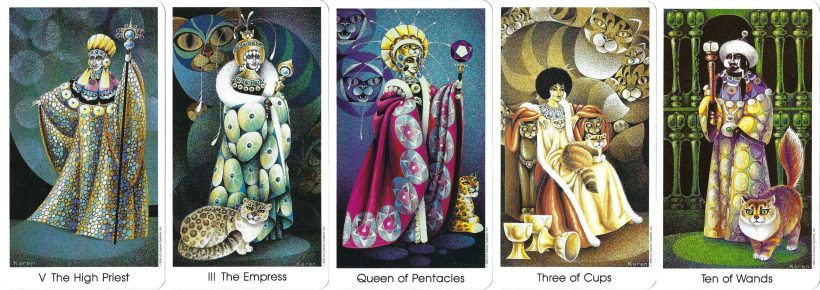
Three Types of Tarot Cards – Joy Vernon Astrology * Tarot * Reiki
The tarot deck contains three types of tarot cards: action cards, portrait cards, and archetype cards. Learn these types and the best way to read each one. […]
Source: Three Types of Tarot Cards – Joy Vernon Astrology * Tarot * Reiki
Divine Feminine | Mother Mary – “Our Lady With the Moon at her Feet” – September 30, 2022

Nā Manāʻo | Ten questions about the hard limits of human intelligence.
Science and mathematics may never fully capture the physical universe. Are there hard limits to human intelligence?
Source: Ten questions about the hard limits of human intelligence | Aeon Essays
Divine Feminine | Messages from Mary: “Our Lady Who Sends the Angels”