
Biological and spiritual properties of cinnamon and how to incorporate cinnamon in your Reiki healing sessions. […]
Source: Healing with Cinnamon
Instruction and Learning
Biological and spiritual properties of cinnamon and how to incorporate cinnamon in your Reiki healing sessions. […]
Source: Healing with Cinnamon


All seekers must seize the teaching which refers to taking the first crucial step on the Path. One may begin with a genuine feeling of gratitude for all one’s gifts and advantages in life. Every limitation and setback could be seen as an invaluable opportunity for learning the lessons of life as well as the mysterious workings of karma. Such an attitude of mind is assuredly helpful for any person trying to gain an initial self-understanding before treading the Path. At another level, it is even more important to realize what The Voice of the Silence calls the ‘priceless boon of learning truth, the right perception of existing things, the knowledge of the non-existent’. Nachiketas is an archetypal seeker, a Golden Age figure who lived at a time when many people were aware that nothing was more precious than the sacred teaching about immortality and the Supreme Self. Men and women searched all their lives and went through many trials and tribulations simply for the sake of coming closer to anyone who served the secret Brotherhood of Bodhisattvas, Rishis and Mahatmas. Now, in Kali Yuga, the Iron Age of Darkness, only those who have devoted many lives to the Path can know the magnitude of what has already been given to mankind. It would be a sad mistake not to take full advantage and make the best possible use, within one’s own situation and spiritual limitations, of the golden opportunity to respond gratefully and reverentially to real teachers of Divine Wisdom, Brahma Vach. This can only be authentically achieved through honest attempts to live by and for the sacred teachings. Though the initial responses may be faltering and even fearful, the moment a seeker begins to nurture a holy resolve whereby one will neither remit nor run away from the sacred task to one’s last breath, even a modest effort at the start will be charged with meaning and depth by the unconditional nature of the soul’s affirmation.
The value of the first step is much enhanced when a person, instead of starting off with a shrunken conception of individual success and personal failure, thinks instead of human need, human pain and ignorance. The stakes are high for multitudes of souls in our time, and immense could be the harvest from seeds sown in the right places with a wise detachment toward results. Souls, galvanized by spontaneous love of their fellows in dire need, can be sustained till the last breath by a steadfast determination to persist and never abandon the quest. When the seeker truly wakes up and stands firm, then he or she may seek spiritual instruction from those who bear witness to the Master-soul within. The neophyte can thus increase the possibilities of conscious, constant access to Sat (truth), Chit (ideation) and Ananda (bliss), which abide as a luminous triadic force and feeling within the still depths of the spiritual heart. Even if one may feel, in times of stress, that one can never be wholly attuned to the Krishna-Christos within, one must continually seek and yearn, keeping alive the Nachiketas flame of devotion.
To comprehend this teaching in terms of the spiritual heart, one must start from the cosmic and descend to the human. The pulsating rhythm of noumenal life can never be perceived until a person begins to inhabit those higher planes which permit a conscious and compassionate use of subtle supersensuous substance, in relation to which the physical body is like a coat of skin or a garment of gross matter. The Upanishads teach that for a wise man death is not an event. No one would think that the shadow is alive in the same sense in which the body is. For the sage, the body is like a shadow of that which is subtler and which it dimly reflects. The subtle body in turn is a shadow in relation to something still more supple which it partially mirrors. The dialectical method of the Hermetic fragments and the neo-Platonic mystics requires us to keep rethinking our view of light and shadow at many levels as we travel inwards and upwards. One may approach the vast mystery of life by sensing the visible sun as a great heart which is constantly beating. There is a systole and diastole to the cosmic heart of the invisible sun, without which no single heart could beat. The thrill of life in every atom and mineral, in every plant and animal, and in every human heart, is merely a derivative expression of perpetual motion in the ceaseless, rhythmic breathing of the hebdomadic heart of the invisible cosmos.
Everything is sevenfold and acts upon seven planes. Descending by analogy and correspondence to that miniature solar system which is the individual human being, one discerns an outwardly disordered and harmonious system. But this is only true apparently, not fundamentally. Each and every person consists of a multi-faceted hierarchy of dynamic and complex systems, among which the most invisible are the most ordered and harmonious. What is most visible is the most disordered, being the most heterogeneous and entropic. On the external plane there are many obscurations and many violent, discordant movements. It is thus difficult to grasp the majesty and grandeur of the proposition that every human being is a microcosm, a miniature universe. But the core of the teaching of Buddhi Yoga is that each human soul is capable, out of the region of the disordered and disharmonious, of coming closer through a series of progressive awakenings to that realm wherein one spontaneously affirms the mantram of Jesus Christ, “I and my Father are one.” Manifested consciousness may be yoked to the unmanifest consciousness of the unembodied Self — the miniature Spiritual Sun in the heart of each and all, ever abiding in a proper relationship to every planet and to the subtlest vestures of the soul.
Anyone may begin by releasing the highest feelings of which he or she is capable. This unravels the paradox, for Gupta Vidya is the only key by which souls may unlock the sacred chamber of the deepest wisdom, which by definition must be secret, as suggested in the Upanishads and their best commentaries. The word upanishad itself implies secret, direct teaching from Guru to chela, Master to pupil. Gupta Vidya or the Heart Doctrine must be felt before one will be ready to use freely the sacred teachings about the inner analogues — in the realms of ideation, emotion and vital energy or volition — of the circulatory, respiratory and other systems and sub-systems in the human frame. A beautiful Sanskrit word for the heart occurs in the Upanishads: — guhya, ‘that which is hidden, that which is in secret’. It is like the sanctum sanctorum of an old Hindu cave temple, with its suggestive analogies to the human body. Even if one goes into the temple, and even if one is admitted into the sanctum sanctorum, there is nevertheless a mystery beyond that which is seen and heard, tasted and smelt and touched. There is a sixth sense of supersensuous touch, sound and hearing, and a seventh sense, analogous to the mathematical concept of limit, whereby one senses that one will never quite arrive at the end, the sense of the ineffable and infinite, invisible, inaudible and intangible.
The wise know that this is the deepest symbolism of the temple: even if one presses into the darkest place in the sanctum sanctorum of the temple, it is only a point of entry into subtler states of consciousness and beyond, to the deepest depths of eternal duration and perpetual motion and boundless space. The term guhya refers to what anyone who grows self-consciously in regard to the various subtle sheaths of the human constitution is going to discover — the astral brain and astral heart, and beyond them their noumenal antetypes. There are subtle senses, and those who develop them can experience their tremendous range and reach, along with appropriate problems which would not be intelligible in terms of the physical plane. So too with the brain and the heart. There would be a progressive series of discoveries of correspondences at different levels in the different sheaths of the Supreme Self, in an ascending order of closeness to their cosmic analogues.
Anyone who feels that there is a divine spark in every human soul, about which one could silently think and with which one could inwardly commune, taps the potential wisdom of the hidden fire within the spiritual heart. Those who at some level begin to live this truth in every thought and feeling-impulse that they generate, deepen their inmost feeling for the sacred cause of the spiritual elevation of the human race, the deliberate pursuit of self-knowledge for the sake of all souls. The more they can light up and rekindle, deepen and sustain this heart-feeling as a constant flame of devotion, the more they can take what might look like thin, frail candles and light up their hearts. In time, the Nachiketas flame blazes up and is established on the square platform of the altar in the sanctuary of the spiritual heart. There it can shine in its resplendent glory as a hidden regenerator of the sacred temple in which the immortal soul abides, and which is its share in the seven kingdoms of Nature. Thus the true beginning is in the sphere of soul-feelings. Until and unless one’s inmost heart can vibrate with the generosity and compassion, even a fraction of the immense heart-pulsation behind invisible Nature and the mighty host of hierophants — those Rishis and Mahatmas who recorded the Vedas and bequeathed the Upanishads — one will not be able to light up one’s own pathway to conscious immortality. This heart-light can take the persistent and patient seeker from the broad plains to the entrance to the secret Path, of which it has always been true that ‘many are called, but few are chosen’.
Raghavan Iyer
The Gupta Vidya II

As Gautama Buddha taught, one soon realizes upon entering the Path that it is impossible to fall back with impunity into thoughtlessness and heedlessness. Eternal vigilance is the price of spiritual freedom, and is constantly stressed in the training of srotapattis and would-be Bodhisattvas. On the razor-edged Path, as it is called in the Katha Upanishad, everything is finely balanced and highly energized. The greater the knowledge, the greater must be the responsibility and courage to accept the consequences of all thoughts, images, emotions and acts. More and more, one must feel a profound and cool heart-awareness of one’s kinship with all those whose self-created fetters have become, through ignorance and cupidity, like the entwining coils of a venomous snake. Unconditional compassion (karuna) and wise action (upaya) cannot come without the moral stamina to stay on the Path, despite seductive distractions, insidious rationalizations and specious excuses for sluggishness and backsliding. The sacred lineages of true Teachers (the Guruparampara) vivify the immemorial teachings by the light of measureless love and wisdom-compassion, effortlessly exemplified in their celebration of universal unity and human solidarity, and the supreme transcendence of the sovereign Self in the temporal realm of maya.
It is only through the Guru that the chela has the golden opportunity of lighting up ‘the Nachiketas flame’ of discernment and daring. Once lit, it must be sedulously guarded and tended by the chela, and eventually fanned into the fire of wisdom-sacrifice (jnana yajna) which gives light to all and takes from none. Established on this hoary Path, a stage will definitely come when all indifference to earthly reward will be natural and easy. In the Katha Upanishad Nachiketas simply could not see the point of the glittering gifts Yama, the god of death, offered him: riches, kingship, kingdoms and earthly happiness. All these had no meaning for Nachiketas because he knew too well the deceptive trappings of a life he had long since outgrown. He sought only the secret of immortality, and was unreservedly willing to honour the privilege of receiving the secret and retaining it with constant gratitude. Every skill and faculty is needed while climbing the steep mountain precipices of the secret Path. It must never be forgotten that all the needed resources are within oneself, and they will all have to be summoned and utilized, on this razor-edged Path. Having heard about the Path and having grasped that one cannot evade this recognition, however partial or fleeting, one must see the profound sense in which the Path is difficult to tread.
The powerful metaphors — indeed the entire parable — of the Katha Upanishad have manifold layers and levels of meaning, all pointing to the secret spiritual heart. In The Voice of the Silence the Paramita Path is connected with antaskarana, the inward bridge between the impersonal and personal selves. The time will come when the seeker must choose between the two, for either must prevail. One cannot both be upon the Path and also maintain the absurd but prevalent misconception that there is a personal entity inside oneself, a ‘ghost in the machine’, to whom things are happening and who is holding the reins in life’s journey. This is the root illusion in the eyes of enlightened seers; no such entity really exists; there is only a bundle of propensities and reflexes, images and fantasies. The concatenation of elemental entities comprising the shadowy self are engaged in their own activity, propelled by the gunas expounded in the closing chapters of the Bhagavad Gita. The evanescent and everchanging personality may cling to the illusory misconception that it is acting freely, but it is no more than a congeries of numerous life-atoms pursuing their own predetermined proclivities. The celebrated metaphor of the chariot, also deployed in Plato’s Phaedrus, is given a vast extension in the Katha Upanishad as it is applicable to cosmic as well as to human activity. The Katha Upanishad may be seen not only as a philosophical dialogue, but also as an alchemical text, replete with deeply evocative, enigmatic and magical mantrams.
At some point one must mentally let go of the route by which one has come, what Gautama Buddha called the Raft and The Voice of the Silence terms the antaskarana bridge. This letting go is depicted in the image of the complete sacrifice (mahasmashana) of the ‘assemblage of sins’ and the namarupa (name and form) to the impersonal, immortal Self upon the altar of the secret heart. For a Manasa to be engaged in embodied existence means that an impersonal cosmos has made an immense sacrifice. This is symbolized physically by the sacrifice of the father giving of his life-essence, and mentally by the magnanimous sacrifice of a great being giving freely of his spiritual essence so that evolution may go on. It is also evident in the noble sacrifice of the mother who, over a period of painful gestation, gives everything to the astral body (linga sharira) of the soul coming into the world, just as the maternal matrix of Akasha nourishes the embryo of the globe. The impersonal has sacrificed for the sake of manifestation on the personal plane. This must be deliberately reversed through an intense awareness of what one owes to one’s father, mother, and all one’s teachers, especially to one’s spiritual parents and preceptors. The conscious reversal involves taking everything one has, with all one’s powers and limitations, and readily sacrificing it for the sake of the self-conscious re-emergence on the plane of manifestation of the inward god, the inner sovereign, who otherwise would remain the silent Self. One must allow that Self within, who is no different from the Self of all, to assume divine kingship within the human estate.
No one can tap the highest resources without becoming secure enough to want nothing for the puny, shadowy self. Moved solely by desires that elevate the whole of humanity and the entirety of creation, and established in that proper mental posture, one can abandon the antaskarana bridge, because one can re-create it at will. Seeing one’s personal self as no different from other personal selves, one can do the bidding of the divine through the instrumentality of anything in Nature, including, therefore, the use of one’s persona, in which one has renounced absolutely all proprietary interest. Becoming aware of the life-atoms in one’s vesture, one realizes that there is no such thing as the ‘personal self’ save in a metaphorical sense. Life-atoms are constantly streaming in and out as part of the ceaseless spiritual transmutation of matter on seven planes and the awesome law of sacrifice within the seven kingdoms of Nature. The true hotri or hierophant is an initiated alchemist able to send forth beneficent emanations through a mighty current of concentrated thought, mystic meditation, noetic vision and unconditional compassion, consciously quickening the upward movement of all the available life-atoms. To such a sage or magus, the antaskarana Path does not have its former significance, except as a drawbridge to be extended at will in the service of universal welfare.
Raghavan Iyer
The Gupta Vidya II
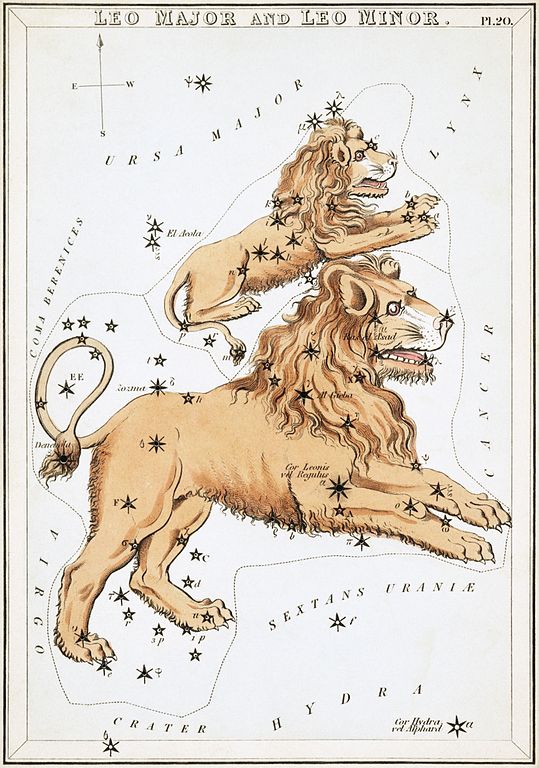
Venus in LEO July 11- August 4 Love, strength, drama and courage abound. Women step into leadership roles. A short heart-racing role playing time. […]
A deep immersive journey into the heart of the Hawaiian islands. Through the stewards of ‘aina, Kanaka Maoli.
Aloha! In this video I spend the day with Unko I and do a catch and cook. Alot of people were curious about why only Hawaiian’s can live in this area so he talks about it.
Contact Ben for hunts, fishing & adventures on Molokai: florendoben84@gmail.com or 808-269-1149
Out in the Hawaiian islands is a place that stands out on its own. Molokai is the island (outside of unaccessible Niihau) that’s kept development away. This is old Hawaii, a place without traffic lights or bustle. Here, time stands still, and the locals have fought hard to keep it this way. Join me on an epic adventure with a Molokai local into a Hawaiian island that has stayed true to its roots.

Can we save coral reefs from the ravages of climate change? Why engineering heat-tolerant species is our moral imperative …
Many people have an aversion to human interventions into the natural world. However, as Corals: On the Brink explores, this mindset can overlook both the responsibilities humans already bear for the state of the world around them, and the potentially extraordinary consequences of inaction. Centred on the work of Line Bay, a research scientist at the Australian Institute of Marine Science (AIMS), and Ryan Phelan, Executive Director of the conservation organisation Revive & Restore, the short documentary details their efforts to leverage emerging technologies to engineer coral species that are more resilient in the face of dire threats posed by man-made global warming. Situated at the nexus of genetics, climate and risk management, the piece makes a compelling case that the only way to save coral ecosystems, which are invaluable to human and nonhuman animals alike, may be human intervention and innovation. […]
Source: It’s our responsibility to engineer corals that can weather the world we’ve created | Aeon Videos

A hundred and one are the heart’s channels; of these one passes to the crown. Going up by this, he comes to the immortal.
Katha Upanishad
Viraga — indifference to pleasure and pain, illusion conquered, truth alone perceived — marks the beginning of the razor-edged Path. For reasons connected with the cosmogony of Gupta Vidya, human beings find the first step on the Path most difficult. They must come to an initial standpoint of detachment from the world, with its false values, its fickle glamour and attractions, its febrile nightmares and anguish. Indifference simply means perceiving no essential difference between pleasure and pain because both arise from compulsive cerebral reactions to sensory stimuli. They are alike devoid of intrinsic meaning for that impartite Self which sustains its own transcendent conception of spiritual growth. Two individuals, from seemingly identical experiences of pleasure or pain, may come to contrasting conclusions and derive radically different implications. Consider two persons who enjoyed identical dinners, containing ingredients guaranteed to produce an acute stomach-ache, such that both suffered severe gastric pains the next day. Similar facts yield no insights into the diverse meanings that persons might ascribe to their experiences. This points towards the philosophical basis for self-reference and voluntary action. Man is a reality-assigning, value-assessing and meaning-ascribing agent, who needs minimal freedom from titillation and disturbance induced by pleasurable or painful experiences. Once this initial standpoint of philosophical detachment is established even to a small extent, one will soon find out for oneself that it shows the spiral Path of inward growth.
When one averts attention from the chaos of external events, through the dawning realization that ascribing meaning and assessing value is one’s own task (svadharma), one rapidly confronts a host of unresolved elements (unappeased devas and devatas) — repressed longings, fears and fantasies — within what is often wrongly called the ‘unconscious’. Once they are set in motion, one risks slipping into alternating euphoric and terrifying states of mind, losing hold over the real world of supernal light one seeks as well as the public domain of shared sensory impressions. To dare to face oneself fully is difficult, if only because the more illusions one strips away, the more illusions crop up, like a hydra-headed monster. The protracted and painful, self-reinforcing nature of mundane illusions is boringly familiar, but they must be firmly cut through. Sufficient detachment helps one to glimpse the central but undiscovered truth of transcendental Selfhood, shining behind and beyond the world of maya. This truth about the hidden SELF is also the truth about the secret Path, which must be trodden in solitude. Only by taking each step is the next revealed. Like a winding mountain path which cannot be discerned from a hazy distance, it cannot be traced without treading it.
One must foster steadiness, determination and constancy, remaining fixed in the recognition of the spiritual insignificance of the passing panorama of the lunar subconscious and the supreme value of the single truth one now partly sees and wholly seeks. When a willing resignation (vairagya) is sustained at this level, one is ready to experience greater fearlessness (abhaya) and penetrating insight (prajna). Viraga is ‘the Gate of Balance’. Repeatedly, at different levels of inward growth, through daunting trials at successive stages of spiritual life, one needs to establish a stable fulcrum in consciousness, reflecting a mentally renewed standpoint of calm steadiness and cheerful balance. Though seemingly complicated, this is not unlike walking, or balancing on a bicycle, or standing on a tightrope. One only knows for oneself that it is possible to maintain balance, or that it is necessary to preserve absolute faith in one’s strength of mind and soul-wisdom. A tightrope walker cannot mechanically teach a doubter how to balance and perform delicate maneuvers upon a very thin, taut wire. The experienced acrobat can take all the appropriate security measures in regard to the wire, but it is the apprentice learner who must not move one iota from an absolute, immovable conviction that he can both maintain and restore balance, and that even if he experiences a sudden loss of balance, he can still bring himself back to a steady state of balance. Existential equilibrium cannot be taught to someone who is not whole-heartedly engaged in the elusive quest for balance amidst ceaselessly shifting variables and parameters. Yet, the more one gains proficiency in the practice of viraga, the more it becomes as natural as breathing.
One must be yoked through raja yoga, by regular meditation (dhyana), deep self-study (svadhyaya), unconditional devotion (bhakti), sustained reflection (dianoia) and sagacious equanimity (sophrosyne) to the universal and indwelling Self (Avalokiteshvara) of Krishna-Christos. That Self is veiled rather than revealed by compulsive speech and chaotic thought-vibrations. One must sustain in the daily round of duties a secret spiritual discipline which no one else can discern from peering at perfunctory externals. This ‘divine discipline’ has to do with fidelity to that sovereign standpoint which steadily sees the unmanifest Self behind the mental furniture of the world and manifest selves. What is at first a simple exercise in repeated restraint and resilient balancing can become, after a while, a rhythmic mental breathing as natural as physical breathing, leading to a state of inmost tranquillity. The Voice of the Silence enjoins the lanoo or disciple to be ready to find “thy body agitated, thy mind tranquil, thy Soul as limpid as a mountain lake”. It is certainly feasible to realize this fully within oneself, to abide constantly in those depths of spiritual self-awareness (svasamvedana), wherein there are no waves or ripples, but rather a sublime experience of serene limpidity, crystalline clarity and radiant translucence, which are all intrinsic to Alaya, the universal Paramatman. This state of self-awareness must be brought down into the realm of the higher mind in a manner that makes for steady self-tranquillization and self-regeneration, which is compatible with vigorous incarnation in the sphere of active duty. Like all subtle delineations of spiritual detachment, these helpful lines from The Voice of the Silence have a hallowed, archetypal significance. These are vitally relevant at the very start, but they presage the sweet efflorescence at the end, and they have crucial applications all along the ancient Path.
The Katha Upanishad teaches that once one hears of the secret Path to enlightenment and conscious immortality, one cannot pretend life will be the same again. Once the flashing insight has torn away ‘the loathsome mask’, the blazing words of truth cannot be set aside as if they were never heard. All who enter the sacred orbit of Great Teachers and true gurus are self-condemned: they will never again be able to nestle in the soft folds of delusion, for the ‘Hound of Heaven’ will pursue them to the bitter end. Not to recognize this is either naïve ignorance about oneself and the cosmos, or bovine perversity in the face of the precarious incarnation of supernal light within the imperfect vestures and inherent limitations of the deceptive world of samsara. Since supple balance in motion requires both vision and verve, when one is in right earnest about treading the Path, one will find that one cannot keep one’s feet on that arduous Path without the sustained practice of spiritual archery, taught in the Mundaka Upanishad. This requires the repeated realignment of mental vision, symbolized in archery by the correct relation of eyesight to the distant target, allowing for the trajectory of the arrow, the texture of the bow, wind and weather. AUM is the sacred bow, the arrow is spiritual resolve, and the fixed target is the indestructible, invisible, formless, supreme Self (Paramatman), mirrored in the embodied Self (Jivatman), the divine Triad within and beyond one’s manifest identity.
Raghavan Iyer
The Gupta Vidya II
Mililani Trask (Kanaka Oiwi) is a Native Hawaiian political speaker, attorney, and champion of indigenous and human rights. During the Hawaiian sovereignty movement in the 1980s, Trask founded Ka Lahui Hawaii, a Native Hawaiian initiative for self governance. She worked as a diplomat and has testified multiple times at the United Nations, advocating for the passage of the UN Declaration on the Rights of Indigenous Peoples. She remains prominent in Native Hawaiian politics, and currently serves as an advisor to Innovations Development Group, a firm focused on bringing clean, renewable, energy to Hawaiian communities.
Phanem-anon: Celebrating Indigenous Women and Leadership – May 4-5
We invite the Dartmouth community and the public to join in the conversation with Jennifer Rose Denetdale (dine), Winona LaDuke (Ojibwe), Mililani Trask (Kanaka Oiwi), and Ellen Gabriel (Mohawk). Their involvement in indigenous resistance movements include DAPL, the Keystone XL Pipeline, Indigenous gender issues, Treaty rights, history, the United Nations Declaration of Rights of Indigenous peoples, and more. Please join the Native American community at Dartmouth in welcoming these extraordinary women, while engaging in opportunities to bring awareness to prominent indigenous issues.
Sponsored by: Native American Studies Program, Office of the Provost, Environmental Studies Department, the John Sloan Dickey Center for International Understanding, the Office of Sustainability, Porter Family Fund for Sustainability in the Curriculum, Office of Residential Life and the Living Learning Communities, Native American Program, and the First Year Student Enrichment Program
The Pacific and the world are mourning the loss of Hawaiian scholar and activist Haunani-Kay Trask, who died at the weekend aged 71.
In 1991 Tagata Pasifika had the privilege of interviewing Professor Trask for the documentary The Hawaiians. Trask, a fearless advocate for the Kānaka Maoli, spoke passionately about Native Hawaiian rights and indigenous sovereignty.
“As far as I’m concerned, I’m a patriot of the Hawaiian nation. The Hawaiian nation burns in our hearts. It’s still alive. It’s right here on my land.”
Our alofa to Haunani-Kay Trask’s family, friends and the Hawaiian community.
Dr Haunani-Kay Trask 03 October 1949 – 03 July 2021
Hawaii was a recognized independent nation prior to January 17, 1893. On that day, the nation and government was illegally overthrown by the United States. Since then, the USA has illegally assumed control over Hawaii turning the islands into Military Bases that threaten world peace.
The United States claims that Hawaii was lawfully annexed as the 50th State.
What would you think when you find out that is Not True! In fact the United States government signed a Joint Resolution of the Congress in 1993 that “acknowledges that the overthrow of the Kingdom of Hawaii occurred with the active participation of agents and citizens of the United States and further acknowledges that the Native Hawaiian people never directly relinquished to the United States their claims to their inherent sovereignty as a people over their national lands, either through the Kingdom of Hawaii or through a plebiscite or referendum”.
Director : Luis Castro

1. To remove the odour from your hands after cutting onions, chicken or fish, just wash your hands with salt and water, then you will have no more smell.
2. To avoid the feeling of the hotness of pepper on your hands after cutting/slicing it with your hands, rub them with salt and vegetable oil or red oil and wash them.
3. When pepper mistakenly enter your eye, put a pinch of salt in your mouth, the hotness of the pepper will disappear and you will see the magic.
4. When storing empty containers or bottle, throw in a pinch of salt to help them from getting stinky.
5. Sprinkling some salt on your fresh peppers while pounding it, helps to make it pound quickly.
6. Soaking bitter leaves in salt and hot water, helps to remove extra bitterness before cooking with it.
7. If your liquid milk always spoil before you finish it, You can add pinch of salt when you first open it, it will help the milk to stay fresh longer.
8. Salt and detergent mixture can help you to kill ants and cockroaches disturbing you in the kitchen.
9. Placing your overripe tomatoes in a cold and salty water overnight, will help to make them fresh and firm.
10. If you cut lemon and you do not want to use it finish, sprinkle salt on it, it would stay fresh for 3 days. Make sure you rinse it before using it again.
11. Salt can be used as a preservative method for preserving meat, fish or vegetables. It helps to prevent bacteria growth.
12. Grease fires or small fire can be put out with the use of salt.
13. To store your fermented locust beans (ogiri, iru or dawadawa), mix it with salt and put it in a container. Your fermented locust beans will stay fresh for years without getting spoil.
14. When boiling eggs, add a pinch of salt to keep the shells from cracking and peeling the eggs will also be easy.
15. If you don’t want your spaghetti to gum together while cooking, add a drop of vegetable oil into a salty boiling water and it will come out separately.
16. Soaking your rice with hot water and salt before cooking it, will help to remove excess starch.
17. You can use salt to parboil your rice in order to remove the starch from the rice quickly.
18. Adding salt on your cocoyam when it starts boiling helps to make it soften quickly.
19. Salt is used to sanitize your kitchen sponges. It is used to kill the bacteria, germs in them. Soak the sponge in a hot salty water.
20. Salt improves the texture of the meat as it helps to break down the tough proteins, thus tenderizing the meat.
21. When chopping/cutting vegetables, sprinkle little salt onto the chopping/cutting board, it will keep the vegetables from moving or flying around while cutting/chopping.
Immediately after saying I AM FREE NOW, a rampaging 75-mph wind came to a complete stop. This was just one of many stunning Archangel Michael telekinetic events that David recounts in this powerful sequel to Part One:  • David Wilcock LIVE: The Archangel Mic…
Also, in perhaps the ultimate “I’m Not Racist” social proof in the history of this community, within minutes of enduring your way through this film, David drops a slightly-rushed rendition of “Mr. Bozack” by EPMD (1991).
In the original this was done completely without music after 31 years. We added the music back in so you can rate how well D-dub did!
Go to thedisclosure.com for more updates!
PLEASE NOTE: The comments section has been MASSIVELY infected with spam accounts claiming they are David and want to speak to you.
David does NOT use Telegram whatsoever. David does NOT text people. David does NOT reach out and make personal contacts. He’s alone in a house with a dog and a turkey. That’s it.
Almost every single heartfelt comment you write is getting pounded by one of these. It appears to be nearly impossible to stop. We do not have the time to do all the labor. Please do not respond to them!
With that being said, the comments are overwhelmingly fantastic and we are not going to let “Our Friend” get in the way of appreciating you… at a distance, not by text!

The absolute Queen of the Night joins the Sun God in his own territory, in the eternally moving waters of Cancer, a sign that rules unhesitatingly. The mood swings and emotional states of the Crab […]

Source: FULL MOON in Cancer on the 5/6 July, 2024 and the Conjuction Saturn-Nessus in Pisces

The Four of Cups indicates that we are lost in the working of our own mind rather than trusting our connection with the universal heart.
While the universal heart tenderly ensures our protection, we remain self-absorbed in irrelevant contemplation. This contemplation is taking us deeper into the illusion that we are helping ourselves.
We convince ourselves that our being contemplative is helping us solve an emotional problem.
Are you trying to think your way out of a challenge and actually exacerbating it? Take a deep look. Is all this internal philosophizing a way to distract you from feelings? It’s okay to take a break from hardship, but thoughts won’t solve this particular predicament.
Eventually you will need to sit with your emotions which will neutralize, become calmed, from your love. This will bring you back to the universal heart. Guidance will be profound.
Right now you are not receiving the guidance as you are determined to run your own show, use your own mental apparatus to control, feel like you are the one who knows. This need to control has isolated you while the problem continues to fester inside.
The universe compassionately holds you, reminding you that waters of healing and wellness are yours when you are ready to face your own vulnerability.
It is possible that you got in this predicament by saying an imbalanced yes to people too many times. You may need to learn how to hold the loving force of a healthy no when you come out of your mental retreat.
What feeling propelled you into your excessive thinking? What emotion was unbearable? Can you identify where that emotion is in your body? Aim to be so present with this feeling that it takes you to new waters! It is suggested that you work with a healer or therapist to do this process as it can bring up a lot of vulnerability.
When you are ready to experience the emotions that have taken you into your mind, great liberation and freedom awaits. It will feel like drinking and bathing in deeply healing waters. The Lemurian Hawaii waters are yours from within when you are ready. Relief will then come.
When you reject the Four of Cups consciousness, you are cleverly distracting yourself with excessive mental activity that entices others. You are being a funny clown or entertainer who takes yourself far away from your heart and soul. While others are clapping, headed toward distracting rides themselves, your self-imposed sham will vanish or crash. In time, you will be forced to look into the gifts that call you more deeply!
The Four of Cups appears when growth is on hold, an emotion is purposefully blocked and you are taking a time out, looking for false solutions. It’s okay. When you are ready for your bounty, you will do the work-play required!
Contemplation
Which emotions am I running from or fighting?
Meditation
What feeling is in my heart? Go through the layers of what you find in your own heart. It is recommended that you do this with the help of a trustworthy healer or therapist.
May your happiest dreams be actualized and may your life be full of miracles!
Laurie

With the Ten of Pentacles experience, you know the virtue of wealth but you also know the joke of life. It feels great to have far more than enough. It feels great to laugh. It’s good to seriously thank life for gifts.
It’s good to see how arbitrary and self-propagated all human dramas are. You created the wealth from knowing what it does and doesn’t mean, so now you sit in gleeful enjoyment. You give joyous thank with a wink to the divine!
You have lived too many lifetimes in the cycles to glorify self-imposed poverty in hopes of enlightenment. You know the neutral. You see the whole world is a comical play. You don’t give undeserved power to your thoughts or anyone else’s. Yet you do use your thoughts well.
You construct wealth from air, mental wisdom and proper action. You stay aware of the nothing out of which all something happens. You laugh a lot. And of course, little can perturb you. You have the balance of the inside openness, the awakened consciousness and the duality street wisdom. You pay no heed to others’ dogmas.
The Ten of Pentacles is a very blessed card. You have compassion for people. You give to others. Your wealth is intricately related to all your tithing or service in one form or another! No guilt. No embarrassment,. No shame. You passed on those long ago,
You feel grateful to receive and grateful to give. Natural to you. You don’t take the merry-go-round of life too seriously but you give thanks non-stop. And so you invite richness in as you take it all with a light laugh, forever willing to lend a hand and having the ability to steer clear of other’s dramatically self-created agendas.
Ten of Pentacles consciousness lives in completion with loved ones. Family, animals, nature are all valued. Beauty abounds. Fullness is the norm. Focus is on what is good, genuine contentment. Good for all which includes self is your only care. Light shines straight out of your heart and into your yard. Your family members generate balanced bright auras.
When you reject the energy of this card, you just don’t comprehend how wealth or enlightenment work. You sure think you do. You betray the generosity of wealth with self-aggrandizement for your vows of poverty. You pretend you are enlightened when you are very attached to your ego trip. Give it up already. Who are your pleasing?
The Ten of Pentacles is the love of material wealth used for a foundation of warm, happy environment to support the deep union of love, health, family, community of all species, and contentment. You don’t create problems to solve. You don’t escalate difficulty to be a hero. You don’t intensify difficulty to get sympathy. You don’t escalate challenges to build false philosophies, medical establishments, spiritual paths, or religions. You don’t entertain yourself with trouble.
You let life be deeply good. You maintain an equilibrium of care and non-attachment, empathic love and individual protection, gratitude and laughter in ideal balance. If the rest of the world wants to dance in chaos, so be it. You gave up the heal-the-world routine seven lifetimes back. You lend a hand and generously share your wealth to anyone with a good heart or a genuine need. You fund artists, the hungry, and the garden growers.
You feel very at home being your partially-conservative, partly-quirky and slightly-eccentrically green self.
Good for you!
Contemplation
You are done. Nothing to contemplate. Maintain your observational devotion and subtle sense of humor about it all.
Meditation
Nothing new to mediate upon. Life is your meditation.
May your happiest dreams be actualized and may your life be full of miracles!
Laurie

Triple Cancer season! Venus and Mercury in Cancer, Scorpio Moon emotional overwhelm. Mercury enters Cancer June 17 at 5:07 A.M. EDT until July. Solstice is June 20. […]

Can a butterfly’s wings trigger a distant hurricane? The answer depends on the perspective you take: physics or human agency […]
Source: Does chaos theory square classical physics with human agency? | Aeon Essays

Śīla hamāre puṣṭa hoṅ,
hove citta aḍola.
Pragyā jāge bīndhatī,
deya granthiyāṅ khola.
May we be strong in moral conduct,
may our minds be unwavering,
may penetrating insight arise
to untie our bonds.
–S.N. Goenka
Allow yourself to relax into Supergiant Wind Chimes Sound Bath. This recording is intended to give you Maximum Relaxation and Relief from Stress and Tension. Imagine yourself immersed in a Sonic Bath. One that Submerges you in Waves of Pure Sound. One that Cleanses your Soul and Detoxifies Your Body. Close your eyes and imagine you are the best version of you. Listen to the Chimes as your Higher Mind gives you evidence that you are perfect in this moment. Peace, Love and Joy to You. ❤️🙏🏻👍🏻

There are times in our lives when we must accept inevitable change and allow things to come to a natural end.
The Judgment card is often referred to as a time of resurrection and awakening, a time when a phase or period of our life comes to an absolute end making way for dynamic new beginnings.
It may be that a long-term relationship or marriage has had its time and whilst it may feel painful to accept this finality, the Judgment card is saying try and accept that this is a time of fast-moving, positive change and action for you.
Whether it’s the end of a career, a time when your children have flown the nest, or a turn of events that make you wish your life was different, this card represents karmic change and it indicates that bigger and better things are yet to come into your life.
Quite often, fantastic events and opportunities follow sad and difficult challenges and this card can represent any events that may feel like ‘Judgment Day’ has come. Changes that may be indicated upon the appearance of this card can be significant, so this would not be a time for regret and fear but a time for courage and rejoicing in what you have achieved and what you are yet to achieve.
Your life may well pick up a pace when this card appears, so whatever future possibilities are indicated in your reading, these events may happen quite quickly.
If the Judgment card comes up in a reading about legal issues, it is a positive sign that any ruling will be in your favor. However, if this card is surrounded by negative cards, it may indicate legal battles ahead and the possibility of having a ruling made against you.
In general readings, if this card is surrounded by negative cards, it could be that the swift conclusions foretold by the positive aspect of this card may be delayed. This can mean that you are fearful of such significant change and may be ignoring opportunities that may well promise a brighter future.
I also feel that when this card comes up, it’s important to use your own judgment wisely and not to judge yourself too harshly. It is a signal for you to open your heart and mind to accept that all things come to an end and nothing lasts forever, yet for each ending there is always a new beginning.
Embrace such significant and inevitable change and a whole new world of opportunity can unfold for you – the Judgment card is a calling for you to be all that you can be.
Best wishes
LT

We need two ingredients for life to start on a planet: dry land and (fresh) water. Strictly, the water doesn’t have to be fresh, but fresh water can only occur on dry land.

To those who knew that there was more than one key to theogonic symbolism, it was a mistake to have expressed it in a language so crude and misleading. For if the educated and learned philosopher could discern the kernel of wisdom under the coarse rind of the fruit, and knew that the latter concealed the greatest laws and truths of psychic and physical nature, as well as the origin of all things — not so with the uninitiated profane. For him the dead letter was religion; the interpretation — sacrilege. And this dead letter could neither edify nor make him more perfect, seeing that such an example was given him by his gods. . . . Now all the gods of Olympus, as well as those of the Hindu Pantheon and the Rishis, were the septiform personations (1) of the noumena of the intelligent Powers of nature; (2) of Cosmic Forces; (3) of celestial bodies; (4) of gods or Dhyan Chohans; (5) of psychic and spiritual powers; (6) of divine kings on earth (or the incarnations of the gods); and (7) of terrestrial heroes or men. The knowledge how to discern among these seven forms the one that is meant, belonged at all times to the Initiates, whose earliest predecessors had created this symbolical and allegorical system.
The Secret Doctrine, ii 764-765
It is, according to Gautama Buddha, a greater feat to govern oneself than to command all the elements in Nature. All Nature and its powers bend heavenwards before the gentle, irresistible theurgy of the perfected Bodhisattva, the pilgrim-soul who has reached the summit of the Path and become the son of the Dhyanis, compassionator of the triple worlds, greater than all gods. The potential of pure swaraj or self-rule is latent in every Monad, and is quickened by the fiery ray of the Manasa Dhyanis. When first the dark fire of their formless intelligence ignited self-consciousness in the evolved forms of terrestrial humanity over eighteen million years ago, man became a living link between heaven and earth. Conscious of the divine presence within his preceptors, his companions and himself, he was governed by a natural impulse towards gratitude, devotion and benevolence. He lived in effortless sympathy with the hosts of bright devas and devatas that he found in and around himself and throughout the entire realm of Nature. Reflecting the Akashic ideation infused into him by the Manasa, his actions radiated a benign and spontaneous magic.
Although the impress of that primordial time is ineradicable, human beings have descended so low in consciousness that they can scarcely believe, much less recall, their original estate. Emerson’s charitable characterization of man as God playing the fool cannot account for the awful process by which man has become spiritually self-orphaned and blinded, becoming a burden to himself and a parasite on Nature. What, one might ask, are the strange gods and alien altars towards which human beings have directed their pristine powers in degrading themselves? Since there is no power greater than that which made Monads self-conscious, one need not look beyond oneself to find the cause of one’s own impoverishment. Nor need one look anywhere but within to find the means whereby one may embody the divine impulsion towards its transcendent end. The regeneration and restoration of humanity requires individuals to heed the wisdom of Krishna’s teaching that all beings go to the gods they worship, and thereby awaken to self-conscious immortality in unison with the unmanifest godhead.
Such an awakening can be neither metaphysically cheap nor psychologically simple; one must skillfully navigate between the Scylla of desperate salvationism and the Charybdis of cynical materialism. If man is potentially a self-conscious link between heaven and earth, one might ask how man is specifically connected with the earth and with heaven. The elements constituting the human vestures are indeed consubstantial with the fabric of Nature outside the human form. Thus, man is linked to the earth through the five sense-organs, each of which has its astral analogue, and also through a variety of classes of elementals. Through each of the astro-physical senses, and especially the sense of inner touch, man is continuously involved in complex processes of interaction with the elemental kingdoms. On the other side, he is connected with the Dhyanis and the devas through daimons, which are the invisible essences of the elements, elastic, ethereal and semi-corporeal, in Nature. These daimons are made up of a much more subtle matter than that which composes the astral form of the average human being. By consciously drawing upon them, one can bring about the progressive etherealization of one’s vestures. Just as the crucifixion of Jesus symbolizes the bondage of spirit on the cross of matter, so too the Eucharist signifies the spiritualization of material vestures and the liberation of the spirit. This process must be initiated through meditation, intensified through refinement in consciousness, through reverence, renunciation and compassion. If one can suffuse one’s whole being with benevolent and elevated thoughts and feelings, it is possible, over a period of seven years, to reform the life-atoms that constitute the astro-physical form. Such a radical renewal will be apparent in one’s hands, face, toes and tongue — indeed at every point in the body.
This in itself is only one small application of the vast body of arcane and exact knowledge regarding the hosts and hierarchies of beings involved in human evolution. In neo-Platonic thought these beings were divided into three broad classes:
According to the doctrine of Proclus, the uppermost regions from the Zenith of the Universe to the Moon belonged to the Gods or Planetary Spirits, according to their hierarchies and classes. The highest among them were the twelve Huperouranioi, or Supercelestial Gods, with whole legions of subordinate Daimons at their command. They are followed next in rank and power by the Egkosmioi, the Inter-cosmic Gods, each of these presiding over a great number of Daimons, to whom they impart their power and change it from one to another at will. These are evidently the personified forces of nature in their mutual correlation, the latter being represented by the third class, or the Elementals.
H.P. Blavatsky
In every aspect of life, human beings are intimately and immediately engaged with these ordered ranks and legions of daimons or elementals. The elementals are neither immortal spirits nor tangible bodies; they are merely astral forms of the celestial and super-celestial ideas that move them. They are a combination of sublimated matter and rudimentary mind, centres of force with instinctive desires but no consciousness in the human sense. Acting collectively, they are the nature-spirits — the gnomes and sylphs, salamanders and undines of alchemical tradition.
All these daimons, together with the higher gods, are connected with the seven sacred elements. At the highest metaphysical level, these elements have nothing to do with what we call fire, air, earth and water. For, in essence, these elements are not material, nor may they be understood in terms of visible functions on the physical plane. Just as the hosts of celestial and super-celestial gods are guided from within by the power of formless spiritual essences, and act outwardly in their dominion over the daimons of the elements, so these daimons themselves preside directly over the elements of the four kingdoms of organic life, ensouling them and giving them their outward capacities of action. Thus, when human beings arouse Buddhi in kama, the reflection of the sixth principle in the fourth,Buddhi will transmute the lower Manas. In the antaskarana, in the channel of aspiration, the force of Buddhi in Manas will actually become manifest in the fingers, nostrils and lungs.Buddhi will be aroused in all the centres of the brain and the heart. It will then be possible to invite or invoke the chief controllers of the many classes of daimons. When this takes place, the teaching that man is a living link between heaven and earth takes on a concrete meaning in benevolent magic based upon arcane science.
Raghavan Iyer
The Gupta Vidya II

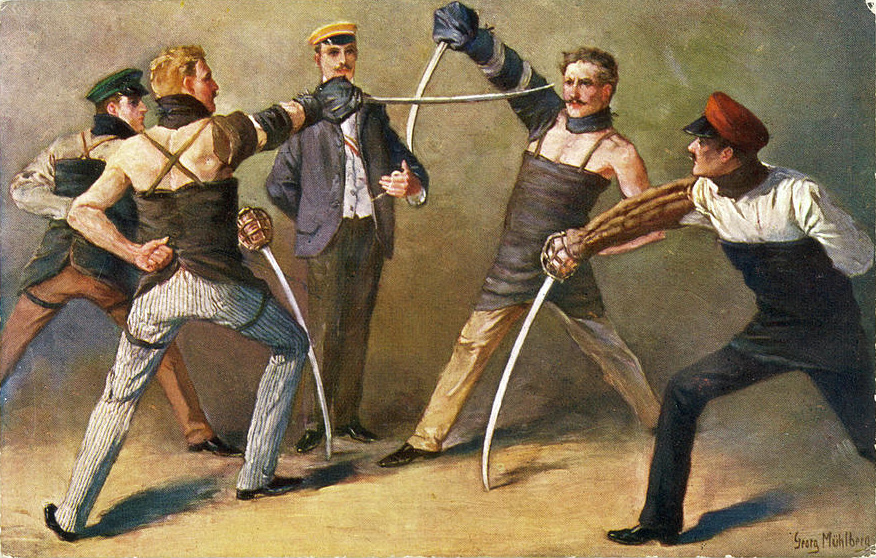
Weekly Astrology June 10-16 JUNE 11 MARS SQUARE PLUTO- ARE YOU UP FOR CHALLENGES? MARS in TAURUS is forming a square to PLUTO Retrograde. Rules by VENUS in GEMINI right now, it may be a war of word […]

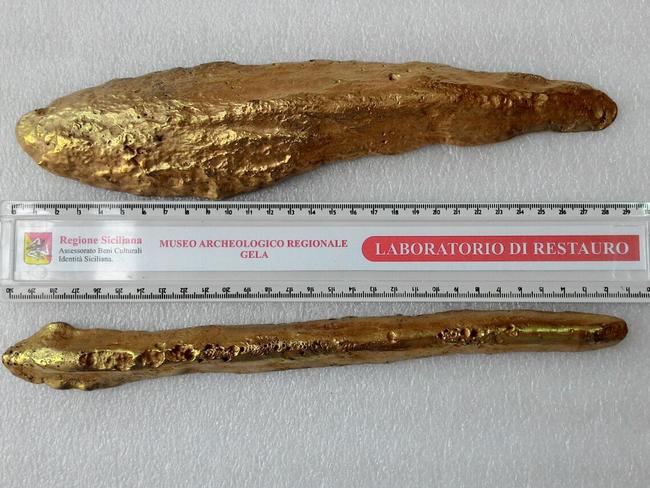
MYSTERIOUS metal ingots linked to the mythical civilisation of Atlantis have been recovered from an ancient shipwreck off the coast of Sicily.
Archaeologists last month recovered a wealth of ingots of an unusual golden alloy from the wreck sitting in about 3m of water, 300m off the coast of Gela in southern Sicily. […]
Source: Orichalcum

You arrive at the path of achieving and enjoying success…
The King of Pentacles represents someone who is unusually successful in business dealings and acquiring material possessions. I call this Pentacle “The Midas Touch” or “The Husband Card” in my deck. This King could represent you, a friend, family member, father figure, boss, lawyer, businessman, mentor, potential lover, potential marriage partner, or even an open enemy.
The Court Cards represent significant people who will enter your life. The Minor Arcana represents your choices and actions throughout the realization of your destiny. The Tarot card Kings represent authority, sound judgment, control, and strongly influence your current situation. The Pentacles represent your desire for material success, good health, and a happy home life.
Astrologically the King of Pentacles is related to the earth sign of Capricorn, the ambitious hardworking user of people and lover of things whose mind rules the heart and who is serious, traditional, economical, cautious and business-like, or domineering, egotistical, unforgiving, fatalistic, stubborn, inhibited and status-seeking.
The King of Pentacles astrological relatives are the planets Saturn (the structured teacher, lord of karma and lessons to be learned through trial and error), Venus (the morning and evening star that guides you to higher ideals. However, Venus is beauty or the beast. The beauty of a relationship that grows, or the beast of a relationship contract that could not achieve resolution and balance), and Mercury (the speed with how you gather information and think).
Symbolism
The King of Pentacles wears a golden crown decorated with red roses, yellow lilies, and a yellow and blue knotted laurel braid. The red roses represent the King’s passions, desires and actions, and the yellow lilies represent that the archetype is inspired with every step he takes. The tightly-knotted laurel braid indicates the King’s dedication, education, experience, and the status of his business achievements.
The King’s throne is decorated with goats (determination). Goats like to explore high vistas and climb the mountains of success.
The castle in the background represents goals and the solid foundation built to support these goals. The flag (announcement) flying over the blue (thought) roof may indicate that the archetype is thinking about announcing that a new business contract is in the works.
The King’s robe is decorated with grapevine leaves (growth) and red berries (the harvest of wealth). In one hand this archetype holds a globe scepter (indicating a businessperson who works worldwide). In the other hand the King holds one pentacle (new business opportunity).
The King shows only one steel boot, a sign that he would trample his would-be enemies if needed. The other boot is hidden because this King would never reveal all his cards.
My Interpretation of the King of Pentacles
The King of Pentacles has the Midas touch, is wealthy and loves the finer things in life. He embodies the combined royal qualities of the Tarot Kings with the earth-based qualities of the ambitious Capricorn mountain goat. He uses his authority, sound judgment, discipline, and his desire for structure to obtain status, social acceptance, a distinguished position, and financial security.
He is a financial genius, a business-savvy wizard, and a comfort seeking pleasure-lover. He is willing to work hard and may suffer many hardships in order to reach his goals and realize his dreams. Once he has obtained what he was pursuing, he is content to enjoy his well-earned rewards.
The King of Pentacles is a dedicated family man who follows tradition and expects the same from his partner and family members. He is the poster-boy of proper social behavior. He is solid as a rock and a good provider.
However, the King is always in control of his of environment or his castle. He handles conflicts by getting to the root of the problem to find the solution, and will also hold others accountable for their actions.
Positive Position: You may make solid business decisions and wise investments for yourself, a friend, family member, father figure, boss, lawyer, businessman, or mentor. The King may represent a potential lover or potential marriage partner, someone who is trusted, honest and dedicated and may sweep you off your feet. You may deal with an open enemy who has hidden intentions. See Note below.
Negative Position: You might be controlling, inflexible, rigid, nasty, and narrow minded. If you consider people to be unequal or of a lower social status, you may treat them badly. You may have trouble with a love relationship or your marriage may be in trouble. You could receive a bad performance review at work or lose your job. You may meet an open enemy who goes out of the way to ruin your reputation. See Note:
Note: You need to pull a clarifying card and cross the King of Pentacles to see if the energies are positive or negative to understand their intentions. Crossing cards indicate energies that need resolution. Swords = conflicts and challenges, Pentacles = growth and development, Wands = taking action with what you desire to achieve, Cups = love, feelings and emotions.
Timing is unpredictable and unknown.
With Love,
Safina

Plato explains, in a myth in the Timaeus, that when the Demiurge was fashioning the form of man, he endowed the human body with a stomach. This was done, according to the myth, out of compassion because otherwise man, unlike the animal, would be in danger of eating continually. Not only would this be disastrous for human health, but it would needlessly preoccupy consciousness with the intake and elimination of physical food. If human consciousness is to mature fully, it cannot be preoccupied with the persona, with the stomach and the libido, with physical space, time and motion. Consciousness must be freed to contemplate eternal motion, boundless space and infinite duration. This liberation from the bonds of the persona cannot be accomplished all at once but must be attempted again and again, through persistent efforts over a lifetime of meditation.
The radical reorientation of consciousness, away from the persona and towards the Divine, requires ceaseless striving and unremitting patience. Such continuity cannot be sustained over a lifetime unless it can be sustained for a year or even a week. In this arena, where clean beginnings and steadiness of application are crucial, one may gain great help from the example of the good gardener, who comes again and again to tend seedlings and plants, and yet allows nature time to work its magic. In fact, people who actually do some planting can gain considerable benefit through the restoration of their contact with the earth and by gaining an organic sense of growth. They can learn that all life is sacred, including the human body, and that every form of life can and should be treated with due respect. To recover this lost sense of the inviolable integrity of nature, however, one must be able to insert oneself into the whole, gaining intimations of what it is like to be a single blade of grass in a field or a single tree in a vast forest. As a modest experiment one might go to a nursery and purchase a seed, a pot and some soil. If one asks properly, the clerk will give whatever instructions are necessary and then one can take these materials home, carefully and with respect. Then after planting the seed in the soil with humility and love, treating it not as a symbol but as life, one can set the pot firmly upright in a place prepared for it. Each day one can give to the growing plant what it requires by way of water and nourishment, but it is important to do this with an assurance and confidence that comes with humility before nature. Forgetting oneself and without anxiety, one can observe the process of organic growth. In doing this properly, one will also be sowing in oneself the seeds of a new confidence rooted not in fear, not in deceit, but rather in fearlessness and truth, the source of authentic humility.
As one spends a few moments each day noting the growth of the plant, one may see this as linked magnetically to the seed of the new astral form which one seeks to gestate within oneself out of the soil of the old astral. This old astral is chiefly composed of patterns of selective memories, which are instinctual, habitual and compulsive, as well as somewhat inefficient and so unreliable that they would be unacceptable in any court of law. Having no firm basis in either fact or truth, they are primarily externalizations based upon misconceptions and predilections directed against those to whom we owe so much. Rather than remaining captive to an appalling burden of memories and an attendant tendency to judgmentalism towards parents, grandparents and ancestors — of whose trials and difficulties one knows little or nothing — one should mainly concentrate the mind upon the nurturing of the new astral form to which one is attempting to give birth. Indeed, one’s motive in doing this should be to benefit all those who have come before and to whom one should be grateful. One is aiming at the attainment of an active state, where one has energy, but in which one is not bound to one’s persona and irrational self through the forces of kama, krodha and lobha — desire, anger and greed. Speaking of the purifying and benevolent energy of the spiritual will, H.P. Blavatsky pointed to the fundamental requirements of spiritual regeneration and their connection with the discovery of one’s true immortality.
It is only when the power of the passions is dead altogether, and when they have been crushed and annihilated in the retort of an unflinching will; when not only all the lusts and longings of the flesh are dead, but also the recognition of the personal Self is killed out and the ‘astral’ has been reduced in consequence to a cipher, that the Union with the ‘Higher Self’ can take place.
H.P. Blavatsky
The path of inner gestation and self-regeneration depends critically upon the recovery of the capacity to think clearly, freely and creatively. This prerogative, guaranteed to every human being by the cosmos, which never has been (and nor can it ever be) abridged by any terrestrial institution, is the sacred and sacrificial birthright of every Monad blessed with the fire of Manas. Whilst true thinking may be rare, this is not the fault of any society or governments and it is irresponsible and immature in the extreme to blame one’s lack of thoughtfulness upon anything outside oneself. Thinking, in fact, has nothing to do with blame; the more one thinks, the less one will be involved with blaming altogether. As Merlin exhorted Arthur, “Think! Think! THINK!” It is extraordinary how rare true thinking is, but as soon as one does begin to think, thinking things through — dianoia — then one begins to concentrate and gains the ability to go back to an original moment. Those who have completed this training, true disciples who have gained effortless mastery over their astral forms at will, can instantly summon the moment of birth or of death. Herein lies the authenticity and integrity of the true spiritual Path. If ever one hears someone speak of astral travel who is unable to say what his thoughts were before the moment of birth, one should know immediately that such a person is deluded, or a dupe. It is too late to be taken in by such twaddle, much less participate in it.
One should begin by trying to think through what is essential in one’s life, seeking to recover, if not one’s moment of birth, then one’s moment of spiritual awakening in this life. What were one’s dreams as a child before seven? Was there any moment of awakening then, when one realized that one was worth more than all of one’s toys and trinkets? Was there any moment of awakening between the ages of seven and fourteen, when bright possibilities of the future were glimpsed and was there a moment around the age of puberty, when one was filled with hopes and ideals in relation to human brotherhood? Did the possibilities of human growth, beauty, fulfillment and promise fire one’s imagination? What were the secret dreams and longings for the good that one whispered to one’s closest friend in school but did not mention to adults? Were there certain withdrawn and sensitive moments in one’s life which one did not mention to another living soul, but rather honoured in the heart? Each person must self-consciously recover these golden moments for himself or herself because no one else can do this for another. Each person must discover the seeds of goodness within himself or herself and nurture them. If one is to take into account one’s failures, mistakes and errors, then it is only fair that one should also note in one’s life-ledger one’s golden dreams and finest thoughts. One should learn to accentuate the positive and not become preoccupied with the negative. The best means to do this is not to speak very much about oneself to others. Be silent for awhile. Learn to talk less and think more. Then, as one takes note of the truest things in one’s life, one will begin gradually to see connections within, and one will no longer be a slave to connections imposed from outside by others.
Ultimately, one’s life is one’s own. It does not belong to parents or friends or spouse or any other. In one’s spiritual life one cannot come closer to the Guru until one has become worthy of the blessing, and this can only be done by voluntarily putting oneself through vows within a period of probation. During that period of probation there will be a tremendous testing brought on by no one else but oneself. By putting oneself as oil in a refinery, or as a jewel in a cleansing solvent, one chooses precisely which trials and tests are to be brought upon oneself by oneself. Through the power of one’s resolve one enters upon an alchemical process of removal and burning out of impurities in one’s nature. If, for example, one pronounces a sacred word like Atman, then one both blesses and curses oneself. One curses oneself in that the darkness will be drawn out; one blesses oneself in that the Light of the Atman will be shed upon one’s nature. One can choose to stand in the Light of the Atman, but then there will be war — war between that part of oneself which loves and is one with the Light, and that part which is incompatible with the Light. It is impossible to cling to Light and darkness at the same time. One cannot worship both God and Mammon. One must choose, and even though one cannot choose all at once, each choice on behalf of the Light increases self-respect. Every time one chooses to meditate instead of cerebrate, every time one chooses to contemplate instead of chit-chat, every time one chooses to learn from other human beings instead of becoming judgmental, one gains dignity and a measure of self-respect. And unless one respects oneself, one cannot earn the respect of others. This does not mean that one should work at this anxiously and with strain. Rather, one should accept and recognize one’s unimportance, seeing oneself as only one amongst billions of human beings, treating this not as an excuse but as one of the primary facts of life.
Human beings must find out for themselves individually the meaning and purpose of their life. Each human soul in incarnation has a sacred mission and goal. One must have the courage to discover what one has come to earth to do. If one has come to work for the City of Man, then one must train oneself. One must come out of the Necropolis, the city of the dead. One cannot work for the City of Man whilst remaining captive to the city of the dead. One must learn compassion for the morally and mentally crippled, the blind and lame, the victims of crime and ignorance, as well as the criminals themselves. One must become a person of strong nerves capable of loving more and more people, and along with this one must become aware of what one can handle and what one cannot. Each individual is different, and it is necessary to learn something about the plastic potency of one’s own astral vesture. What are its capabilities and what its limitations? There is also great meaning and value in meditating upon a vast and general promise which is the glorious goal of universal human evolution. It is good to envisage in the mind, not merely for oneself but on behalf of all, the prospect of that sacred moment far along the Path when, as H.P. Blavatsky said:
the ‘Astral’ reflects only the conquered man, the still living but no more the longing selfish personality, then the brilliant Augoeides, the divine , can vibrate in conscious harmony with both the poles of the human Entity — the man of matter purified, and the ever pure Spiritual Soul — and stand in the presence of the MASTER SELF, the Christos of the mystic Gnostic, blended, merged into, and one with IT forever.
Mahatma K. H., commenting upon the Tibetan proverb that everyone is master of his own wisdom, states that each is at liberty either to honour or degrade the slave. He then goes on to link this with the eternal process of evolving subjective matter into objective atoms. This intimates that one must, through the power of meditation upon extremely abstract and subjective thoughts, evolve new life-atoms. It is these fresh and pure life-atoms which will push out the old life-atoms of one’s astral body. This is analogous to taking a purgative medicine to clean out unhealthy and unwanted residues in the body. It is even more analogous to the taking of an antibiotic, such as penicillin which was discovered in bread mould by Sir Alexander Fleming. One must, so to speak, extract out of the fungus of one’s chaotic mind a purifying idea capable of cleansing one’s entire mental field. One must directly and deliberately intervene in the war between creators and the destroyers within one’s astral frame. Like an antibiotic medicine derived from life itself, yet capable of destroying harmful bacteria, one’s heartfelt ideals, distilled and clarified through meditation, have the power to release the purifying and benevolent energy of the spiritual will. This is only an analogy pointing to the process of mental self-purification through sacrificial meditation, which is a vital part of the sacred science of spirituality. That science is mathematically exact and precise in its laws and is therefore not possessed by human beings who are captive to the illusions of terrestrial existence. It is an arcane science which combines meta-chemistry with meta-biology, and it is rooted in a metaphysics which only becomes dynamized and activated when it is rendered into meta-psychology — that wisdom which is used and applied in daily life. When it is properly used, and this has nothing to do with mere words — though it has a great deal to do with the use of the tongue — it is extremely powerful and is equivalent to the release of the spiritual will flowing from the Atman.
For the neophyte, the initial step is to become a true pragmatist by putting to use the idealism which is within the soul and which is consubstantial with the plane of Mahatmic ideation in the cosmos. It will then become possible to bring into the unreal world of time, which ordinary human beings mistake for reality, the fruit of meditation, the flower of contemplation and the fragrance of self-study and self-correction. When one is filled with the milk of human kindness, it will become possible to extract from the depths of one’s divine nature the ambrosia of immortality. In deep sleep, when one is far from the persona, when the personal nature is reduced to a cipher, one may receive the gift of Krishna, a drop of the divine elixir. The personal nature will know nothing of this secret gift, and when one awakens, it matters little what the personality makes of the change. What is important is that one honour and treasure it and go forth into the day, sifting and selecting that which is of value, that which is good and true and beautiful. One should not do this strenuously, but rather with a lightness and relaxation consistent with one’s own sense of unimportance in relation to the entirety of mankind.
All forms of over-exertion and strain are signs of a sense of personal self-importance and a desire for attention incompatible with spiritual maturity. Karma cannot condone an abnormal desire for attention for oneself at the expense of the human race, because karma cannot shelter the propensity to indulge in attention to the shadowy persona. Therefore, one must learn and enjoy a new set of rules wherein one does not ask for more ego space than one is entitled to. But if one understands what it is to be only one amongst billions of human beings upon the earth and only one of a smaller though extensive class of beings who have come into the Avataric orbit, then one will know how to do this. Instead of yielding to the backward tendency to impose one’s personality and problems upon others, one will learn to do tapas in silence, so as to prepare oneself for the opportunity to serve which comes with being in the presence of other human souls.
If one would become worthy of being in the presence of Krishna, then one must begin by attempting to understand what Krishna meant when he said that he established this entire universe with but a single portion of himself and yet remains separate from it. Whatever be the percentage of that portion of himself, and that would vary with the needs of the era, his essential nature remains Kutastha — He who standeth apart. The sense in which Krishna is separate from the universe is mystical and metaphysical, but one cannot hope to begin to understand this if one remains subject to the delusion that one can understand oneself by understanding Krishna. This is a typically Western misconception. One must understand oneself through understanding other human beings; when one has understood oneself through all other human beings, then one may begin to understand Krishna. Through love and devotion one can cross the barriers of the mind and the heart and the self, and prepare oneself for Mahasmashana — the burning of the corpse of the persona. There one is consumed by the fire of devotion so as to be reborn to live purely for the sake of others and not at all for oneself. Only those who have crossed that sacred threshold, difficult of approach, can participate in the conscious creation of their lower self. Very few have heard of this mystical threshold, and of these, even fewer have been able to approach it. Fewer still are those who have made a burning-ground of their hearts for the sake of the Guru, and thereby truly entered his service. Yet such is the great teaching and rich promise given by Krishna to his devotees, to all those heroic souls who would become willing servants of the City of Man.
Raghavan Iyer
The Gupta Vidya II
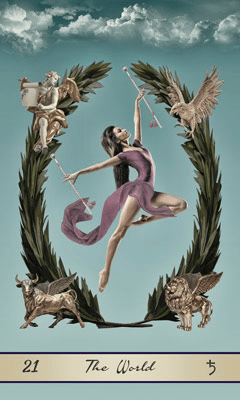
The World points you towards a path of initial completion as you continue your journey through the seventy-eight passageways of growth. This is the next level up on your continuous cycle of change and is the final Major Arcana path.
Starting with the path of the Fool, you had to attend “The School of Hard Knocks” and learn very hard lessons to gain wisdom from mistakes and to become a stronger person. Today is a graduation.
Congratulations on climbing the last mountain of setbacks and struggles! You are receiving your diploma and standing at the gate of a fresh new start. The past does not hold you back anymore because you tied up all your loose ends and will not wander back in time and repeat old patterns that got you in trouble.
You are at the end of your journey, placing the final touches that allow the forging of new beginnings – the end of a cycle and the time of completion. You closed the doors to the past and are now opening the new doors to the future.
Remember, all endings bring new beginnings and this card reveals that yours will come very soon. When you reach the World on your journey, you will realize that you have finally reached an important point in your life’s education. Having grown, you should be proud of what you have accomplished and acknowledge the distance and time that it exacted.
Numerical Number 21: This number is related to working hard to achieve your goals and having learned the necessary lessons, closing the doors to the past. You will feel inspired and optimistic about the future and the new goals that are waiting for you to explore.
The World, enumerated 21, consists of: 2 (making a choice) + 1 (a new beginning) = 3 (rebirth, creating something new. You will expand, give birth to life and create something beautiful with people who are close to you).
The Element of Earth: The World is associated with the planet Saturn (wisdom received from making mistakes and rolling up your sleeves to do the hard work to complete your education).
Probable Outcome: You are experiencing self-completion and success. You are the commander and chief of your life, no longer ruled by old thoughts because you live in the now. You have tied up loose ends and everything is starting to fall in place.
You might receive recognition from others and feel respected and appreciated.
Possible Outcome: Things from the past rule your mind, or you still have loose ends that need to be tied up. This might be a time of frustration, delayed completion, or a stagnated situation, but not failure. Things are not moving as fast as you wanted.
It’s possible that you are not receiving recognition from others, or do not feel respected and appreciated.
Then again, you might not be able to channel the World’s energies into your life. If this is the case, then you are not willing to make changes because you are too structured.
It’s also possible that you unwilling to end a situation and your resistance to make this change indicates a delayed completion to achieve your dreams. You are still a student in the “School of Hard Knocks” because there is still more work to be done.
Timing: The World predicts that an important event may occur within the next 30 days.
With Love,
Safina
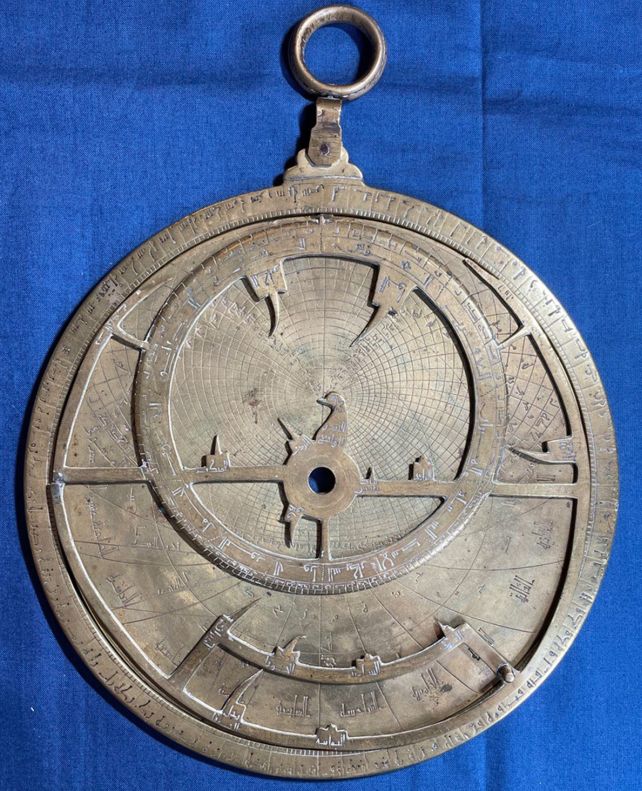
A star chart across time and space.
A medieval astronomical instrument discovered entirely by accident has turned out to be a powerful record of cross-cultural scientific collaboration.
The brass astrolabe dates back to 11th century Spain – but was subsequently engraved with annotations and amendments over the centuries, in multiple languages, as changing owners adapted and updated it for their own use. […]
Source: ‘Incredibly Rare’ Astronomical Object Has Markings in Multiple Languages
Science Redefined. Jain 108 explains the enigmatic work of Terrence Howard!
Does his technology based on the negative space of the 3-dimensional view of the Flower of Life, challenge the world of physics? Is he on the same level as Tesla?
Get ready to view science through a fresh lens, thanks to Howard’s incorporation of Walter Russell’s groundbreaking periodic table, which is founded on waves and octaves of light. This paradigm shift suggests that 1×1 may equal 2, and that straight lines are merely an illusion—only curves exist.
With 97 patents to his name, is Howard pioneering propulsion systems rooted in sacred geometry instead of harmful fossil fuels?
Are we ready to rethink our understanding of gravity, black holes and Creation itself?
Jain 108
http://www.jain108academy.com

Apanā bhī hove bhalā,
bhalā sabhī kā hoya.
Jisase jaga kā ho bhalā,
śuddha Dharama hai soya.
Apanā bhī hove bhalā,
bhalā jagat kā hoya.
Jismain sabka ho bhalā,
Dharama śuddha hai soya.
Good for oneself,
good for everyone,
good for the world—
this is pure Dhamma.
Good for oneself,
good for the world
good for everyone—
this is pure Dhamma.
–S.N. Goenka

The ‘Master’ in the sanctuary of our souls is ‘the Higher Self’ — the divine spirit whose consciousness is based upon and derived solely (at any rate during the mortal life of the man in whom it is captive) from the Mind, which we have agreed to call the Human Soul (the ‘spiritual soul’ being the vehicle of the Spirit). In its turn the former (the personal or human soul) is a compound in its highest form, of spiritual aspirations, volitions, and divine love; and in its lower aspect, of animal desires and terrestrial passions imparted to it by its associations with its vehicle, the seat of all these.
H.P. Blavatsky
Restoration of the right relationship between the Master in the inmost sanctuary and the incarnated consciousness is gained only through a sacrificial process of self-purification. Obscuring and polluting tendencies nurtured in the mind through its misuse over many lives must be removed by a self-chosen and self-administered therapy. Like the Pandava brothers exiled from their kingdom through their own folly, or like the master held prisoner in his own house by those who should be his servants in the parable of Jesus, the pristine divine ray of the Logos in man is trapped and stripped of its sovereign place in human life unless consciously sought by the aspirant. This invocation of wisdom through the supplication of the mind to the spirit was seen by the ancient Greeks as the cultivation of sophrosyne — the subordination of the inferior element to the superior. It is shown in The Voice of the Silence as the shila virtue — the attunement of thought, will and feeling to the pulsation of divine harmony, Alaya-Akasha. The mind stands as the critical link between the divine and the animal nature. The recovery and right use of the privilege of human existence depend upon the subordination of the elements of the lower rupa existence to the spiritual ideation of Arupa Manas.
The sacrificial posture and selfless motive required for this self-purification can be readily grasped through a telling analogy. There is not a modern metropolis which does not maintain the equipment needed to neutralize the effluvia of human waste and thereby reduce the danger of infection to its population. Similarly, a large number of devices are available, both to cities and to individuals, for the purpose of removing sediments and impurities from drinking water, through distillation, filtration and osmosis, to make it available in a purer and fresher form. With the human mind the same principles of public health and civic responsibility would require that each individual and every society strive to purify the muddy stream of human passions which pollute those coming into contact with it. Every human being has received the crystalline waters of life in a pure and unsullied condition, and therefore everyone has the karmic responsibility for every failure to return these waters to the ocean of life in a pristine condition. Insofar as this responsibility has been neglected by individuals, under karma in successive lives they are self-condemned to immersion in the waters they themselves have poisoned. Under the laws of karma affecting the processes of reincarnation and the transmigration of life-atoms, individuals owe it to their neighbours and their descendants, as well as to themselves, to purify their mental emanations.
In practice, this implies a continuous cleansing of one’s thoughts, one’s words and one’s actions; these in turn fundamentally depend upon the purification of the will. Unfortunately, purification of the will, which is vital to the spiritual regeneration of humanity, is itself seriously misunderstood as a consequence of the process of pollution of consciousness and magnetism. Mired in the morbid obscuration of higher consciousness, too many people suppose that a bolstering of the lower will is a means to survival. Nothing could be farther from the truth. The higher spiritual will does not itself need to be strengthened, but it may be released through the removal of obscurations and hindrances. So long as the will is activated by the individual only on behalf of passions and the illusion of the persona, that will is not worth having. Hence, many people have discovered that the will cannot be released on behalf of lesser purposes. This predicament is conspicuous in those diseased societies which place an inordinate emphasis upon the personal will. Will itself is a pure colourless principle which cannot be dissociated from the energy of the Atman released through breathing. Thus when human beings breathe benevolently, blessing others with every breath, they can release the beneficent will-energy of the Atman. As soon as the will is released on behalf of the personal ego, however, against other human beings, it is blunted. This inevitable paralysis of the antagonistic lower will is indeed a beneficent and therapeutic aspect of karma.
Viewed from a collective standpoint, many human beings can be seen as having been weakened because they have absorbed life-atoms from others who have misused spiritual knowledge and the potency of the higher will. Throughout the world perhaps one in ten persons has insistently used the will against other human beings in this or previous lives. This may have been for the sake of bolstering the insecure identity of the persona or, worse, through the misuse of spiritual knowledge connected with false meditation, indulgence in drugs and mediumistic practices. Since 1966 contemporary society has witnessed the emergence of a number of centres of pseudo-spiritual activity; now it is witnessing the inevitable psychological breakdown of many who were responsible for this moral pollution. The waves of spiritual influence initiated by the descent of Krishna offer golden opportunities to all souls, including those inverted natures self-blocked from inward growth by their own failures on the Path in previous lives. Amongst these there were some too cowardly to make a new beginning, who sought instead to compensate for their own weakness and delusion by cashing in on the currents of the 1975 Cycle. Having forfeited timely opportunities offered through compassion, they are self-destroyed when Krishna takes a firm stand on behalf of the entire human family because they are unable to generate a genuine concern for others. Never having generated an interest in the welfare of the vast majority of mankind, they are self-condemned. Sadly, they cast a long shadow over a much larger class of weaker souls who are affected by them, no doubt through their own delusions and vulnerabilities.
Persons are sometimes drawn into dangerous orbits of misused knowledge through loose talk about such sacred subjects as kundalini, kriyashakti and the activation of the higher spiritual centres in man. Ordinary people who enjoy a normal measure of spiritual health wisely avoid those places where they are likely to hear profane chatter. Through a natural sense of spiritual good taste they simply shun those places where self-deluded con men congregate to make a living off the gullible. Today, because the moral and spiritual requirements for participation in the humanity of the future have become more evident to many people, the market for such deceptive opportunism has begun to diminish. The America of P.T. Barnum, who said that a sucker is born every moment, has been replaced to a large extent by the America of Abraham Lincoln, where, as is well known, one cannot fool all the people all the time. Although many souls have to travel a great distance along the path of self-integration, they have learnt enough not to be duped by pseudo-spiritual blandishments. Just as they have learnt not to believe everything conveyed by the mass media and not to leap at every free offer or supermarket discount, they have also learnt to pass up invitations for instant development of kundalini and every facile promise of spiritual development that dispenses with the judicious control of the emotions and passions.
Even in the difficult area of sexuality the idea of strength through celibacy (e.g. Gabrielle Brown, The New Celibacy, 1980) has gained some currency amongst many people, young and old, who find the burden of ego-games and unequal experimentation intolerable. There is nothing wrong with the sacred act of communion and procreation, and as the ancient Jews believed, God is pleased when a man and a woman come together in true unison. Nor need this issue be obscured by pseudo-arguments concerning the Malthusian spectre of over-population. As the economist E.F. Schumacher pointed out, even if the entire population of the globe were concentrated in America, this would result in a population density no greater than that of Great Britain, a nation long noted for the spaciousness and greenery of its countryside. North America itself, over its ancient and almost entirely unwritten history, has supported many varied civilizations, some of which displayed a much greater spiritual maturity than is evidenced in its recent history. Broadly, one cannot understand the physical facts of life on earth, much less the spiritual facts of life, through a language of conflicting claims and counter-claims, rationalizations and compensatory illusions, or pseudo-sophisticated statistical arguments based upon a selfish and shallow view of the nature of the human psyche.
The purification and release of the will must be comprehended in terms of human individuality, and therefore must be considered in the light of the mystery of every human soul. Since this mystery encompasses an entire series of reincarnations extending over eighteen million years, it can only begin to be appreciated through careful consideration of the motley evidence offered by one’s participation in varied states of consciousness in the present life. Any individual concerned to recover the spontaneity and benevolence of the spiritual will must be willing to examine courageously the manner and extent to which he or she has become the servant not of the divine Ego, but rather of the lower astral form and its attendant incubi and succubi.
For this ‘Astral’ — the shadowy ‘double’ (in the animal as in man) is not the companion of the divine Ego but of the earthly body. It is the link between the personal SELF, the lower consciousness of Manas and the Body, and is the vehicle of transitory, not of immortal life. Like the shadow projected by man, it follows his movements and impulses slavishly and mechanically, and leans therefore to matter without ever ascending to Spirit.
H.P. Blavatsky
Raghavan Iyer
The Gupta Vidya II

This rare and special Full Flower Moon May 23 at 6:53 am PDT, 9:53 am EDT, 1:53 pm GMT at 2 degrees 55′ of the last fire sign is totally awesome. With 3 Planets at 29 degrees, VENUS conjunct […]
Source: Sagittarius Full Flower Moon, Rare Venus Jupiter conjunct at 29

| The Strength card signifies mental, physical, and emotional power over trying circumstances. It frequently appears as a comforting omen when the querent feels as though they are being buffeted by the vicissitudes of life and need the inner resources to confront the trials set before them.These trials may take the form of an illness, hostility from others, or perhaps even the querent’s idiosyncratic foibles. Whatever difficulty Strength represents in a reading, it is a call to action to fortify one’s personal reserves and meet challenges with courage and integrity. Strength is numbered 8 in the Major Arcana and, in accordance with Kabbalistic principles, the number 8 is the number of miracles and transcending the limitations of the physical world. The number 8 also bears a striking similarity to the occult symbol of the moebius which represents the interminable flow of the universe and the transmutation of energy from one form to another. From these observations, we can understand that the Strength card signifies that the querent is being urged to loose themselves from the fetters of their present limitations by using the firm knowledge that they have the ability to be more than what they currently are.The Strength card is associated with the sign of Leo which is ruled by the sun in astrology. The sun governs personal vitality, ego, and reputation. The sign of Leo rules the fifth house of the zodiac wheel which encompasses creative talents, romance, children, theatre, and artistic endeavours. These associations cement the principle that the Strength card symbolises transcending current constraints through the astute use of one’s personal resources and ingenuity.In the Rider Waite deck a female figure dressed in white is shown taming a lion. The Lion represents ego, pride, vanity and brute force, while the colour white symbolises moral purity and integrity of character. Through this imagery we can understand that by being upstanding and virtuous, a number of pitfalls can be overcome. The archetypes of the lion and the virtuous individual remaining unharmed by the lion is one that has recurred throughout history in various cultural mythologies. Androcles in Greek mythology and Daniel in the Old Testament are two notable examples, demonstrating that purity of character will protect one from the most savage circumstances. In energetic terms this is also true as it is said that the more morally upright and loving a person is, the less that strife and violence in their outer reality will be able to affect them, or even arise in the first place.In a love reading the Strength card can represent that a person of interest is a difficult creature to tame and that the querent is continually having to “be the bigger person” and use gentle but subversive tactics to entice them. More negatively, the Strength card can be indicative of a person of interest who has a bloated ego and expects the other partner to put all the effort into the relationship. In its most positive aspect, the Strength card can show that the querent will win over the object of their affections because of the purity of their character, and that their moral integrity will induce their love interest to lower their guard and be receptive to love.In a work or career reading Strength signifies persistence and extinguishing one’s inner critic to reach goals. It does not foretell guaranteed success but that the querent will battle any obstacles to the best of their ability and will draw on personal reserves to do so. In a negative context, the Strength card can foretell physical and emotional burnout because of a heavy work load. Timing: Timing is dependent on card position within a spread but the period governing Leo may be pertinent. Major Arcana: Card 8 Planetary Influence: Leo, 5th house of astrological wheel Element: Water Quality: Cardinal Positive Aspects: inner resources, taming one’s darker side, persistence, moral purity, integrity, courage, breaking personal limitations Negative Aspects: manipulation, physical burnout, failing health, one-sided effort in a relationship Kind Regards Medusa |
Find Your Magic
Tarot Readings, Inspiration, and Self-Empowerment
Making life on earth magick one moon phase at a time.
Astrologer ~ Mystic ~ Writer
of the Collegium Spiritus Sancti, a Golden Dawn Society
An affiliate of the Alpha et Omega Order of Melchizedek
All Knowledge Is Not Contained In Only One School
Connecting the grant community to #LearnGrants
Channelings & Articles
Magic Spell Books & Grimoires
Native Hawaiian Language Revitalization
Poetry & Tales of Love, Mystery, Magic and Spirituality
Organic Herbs, Herbals, Sustainable Gardening
Mother Nature: Feeding The Mind, Body & Soul, with Food, Medicine & Skincare.
"Inheritor of a Dying World, we call thee to the Living Beauty. Wanderer in the Wild Darkness, we call thee to the Gentle Light..."
Time is the most important thing we've been given
Embracing the Divine Within.
"...That I should bear witness to the truth." - John 18:37 // David E. Robinson, Publisher
 Hālau 'Aha Hui Lānākila