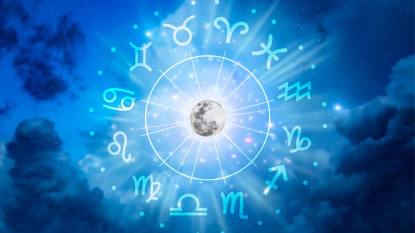
The full moon in Virgo on February 24 just may be just the thing you need to boost your spirits. Learn why now!
Source: The 2024 Full Moon in Virgo Horoscope: What’s in Store for You Come February 24
The full moon in Virgo on February 24 just may be just the thing you need to boost your spirits. Learn why now!
Source: The 2024 Full Moon in Virgo Horoscope: What’s in Store for You Come February 24

Yañca kāmasukhaṃ loke,
yañcidaṃ diviyaṃ sukhaṃ,
taṇhakkhayasukhassete,
kalaṃ nāgghanti soḷasiṃ.
Any sensual bliss in the world,
any heavenly bliss,
isn’t worth one sixteenth-sixteenth
of the bliss of the ending of craving.
Udāna 2.12
Translated from Pāli by Thanissaro Bhikkhu

What is sea moss and what are the benefits of eating it? Read on to the learn more about its uses, benefits, side effects, and more.
Sea moss is a type of sea algae that people may add to food or take as a nutritional supplement. Sea moss benefits may include supporting the immune system, thyroid function, and hair and skin health.
In this article, we will discuss the nutritional information of sea moss, how to prepare it, and any potential benefits and side effects. […]

%2Fuses-for-mullein-1762299-01-7d3ada5f59144cb7bf2daa6eace322a9.jpg&f=1&nofb=1&ipt=ab535b0ebbe810e888bc45d7d5556844a3e99a193187b4729c3a09d742f08ebb&ipo=images)
Mullein (Verbascum ) is a common weed used for centuries in herbal medicine. Herbalists often use mullein flowers and leaves to treat respiratory problems, digestive issues, and skin conditions, among other health concerns.1
Mullein contains numerous active ingredients, including flavonoids and saponins with proven anti-inflammatory, antioxidant, and antihypertensive properties, among others. But, there is very little evidence in support of using mullein to treat any medical condition.1
This article explains the traditional uses of mullein in herbal medicine, how it is commonly administered, and what you need to know about side effects, precautions, and interactions when taking it. […]
![Mullein: Top 15 Health Benefits [Insane List] - urbol.com](https://external-content.duckduckgo.com/iu/?u=https%3A%2F%2Furbol.com%2Fwp-content%2Fuploads%2F2015%2F10%2Fdscf1913.jpg&f=1&nofb=1&ipt=014bb050d6e431d074bad90f80eb0f9f6e3a63aaea7147d088aa150bf1ea85ab&ipo=images)
Source: All About Mullein

Yo ca vassasataṃ jīve
apassaṃ udayabbayaṃ
ekāhaṃ jīvitaṃ seyyo
passato udayabbayaṃ.
Better it is to live one day
seeing the rise and fall of things
than to live a hundred years
without ever seeing the rise and fall of things.
Dhammapada 8.113
The Dhammapada: The Buddha’s Path of Wisdom, translated from Pāli by Acharya Buddharakkhita


Yo ca vassasataṃ jīve
dussīlo asamāhito
ekāhaṃ jīvitaṃ seyyo
sīlavantassa jhāyino.
Better it is to live
one day virtuous and meditative
than to live a hundred years
immoral and uncontrolled.
Dhammapada 8.110
The Dhammapada: The Buddha’s Path of Wisdom, translated from Pāli by Acharya Buddharakkhita
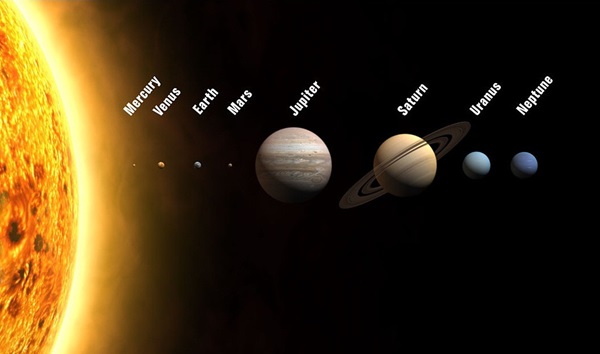
This is how long a year is on other planets in our solar system, beginning with Mercury at about 176 Earth days to complete its orbit. […]

Historians and divers are trying to retrieve prehistoric clues from beneath the waves—but they have to act fast.
Read on: Ancient Underwater World
Geometric Art has fascinated me for a long time in many ways and in this video I wanted to demonstrate how geometric form connects the different layers of our realities and I wanted to inspire you to reflect upon the connections that are demonstrated in this video. It has been a long journey leading up to this video. This introduction video summarizes my understanding of Geometric Design & Art. Something that I wanted to do for a long time but was not yet capable of because of the vast amount of information related to this knowledge. I have finally finished a part of the challenge. Yet it essentially is nothing more than a short introduction of this subject. And this video is also in many ways an introduction to the course that I have been working on called “Journal Series’. If you are interested in signing up for the course then you can sign up for the course on the website below the video.
Sukho viveko tuṭṭhassa,
sutadhammassa passato.
Abyāpajjaṃ sukhaṃ loke —
pāṇabhūtesu saṃyamo.
Solitude is happiness for one who is content,
who has heard the Dhamma and clearly sees.
Non-affliction is happiness in the world —
harmlessness towards all living beings.
Udāna 2.11
Gemstones of the Good Dhamma, compiled and translated by Ven. S. Dhammika

Sabbadā sīlasampanno,
paññavā susamāhito;
ajjhattacintī satimā,
oghaṃ tarati duttaraṃ.
In every virtue all-accomplished,
with wisdom full and mind composed,
looking within and ever mindful–
thus one crosses the raging flood.
Sutta Nipāta 1.176
Gemstones of the Good Dhamma, compiled and translated by Ven. S. Dhammika

Manopubbaṅgamā dhammā;
manoseṭṭhā manomayā.
Manasā ce pasannena
bhāsati vā karoti vā,
tato naṃ sukhamanveti
chāyāva anapāyinī.
Mind precedes all things;
mind is their chief, mind is their maker.
If one speaks or does a deed
with a mind that is pure within,
happiness then follows along
like a never departing shadow.
Dhammapada 1.2
Gemstones of the Good Dhamma, compiled and
translated by Ven. S. Dhammika
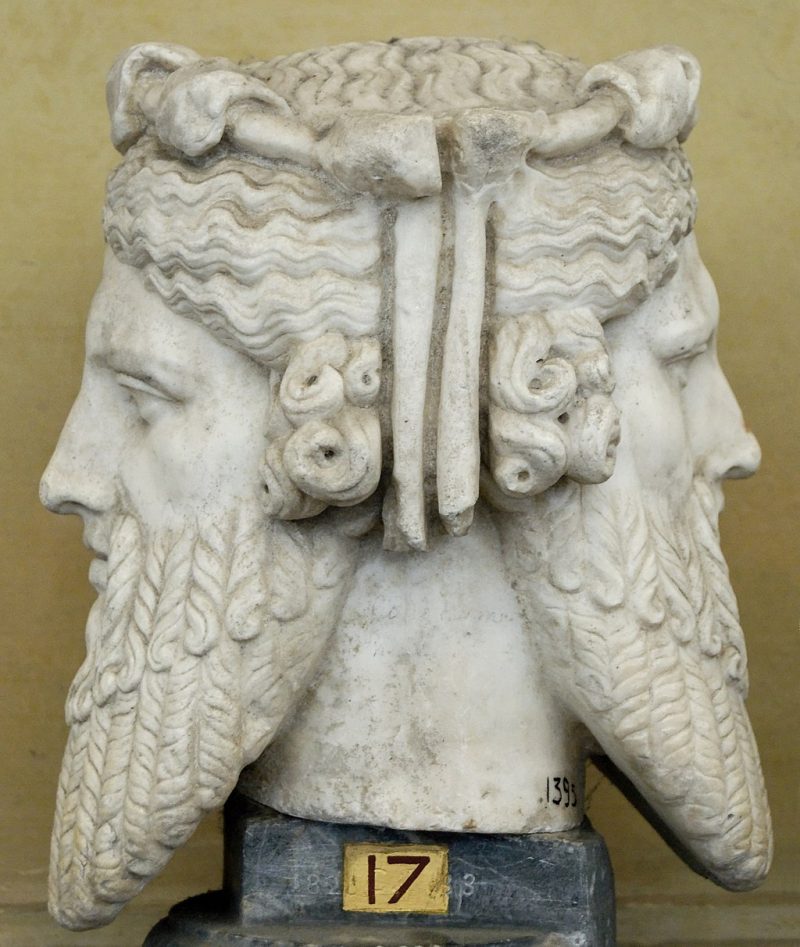
Roman God Janus (month of January) Wishing you a happy New Year and good fortune in 2024! Note the Mercury retrograde dates when making your travel plans. Include the shadow period one week before […]
Source: 2024 Mercury Retrogrades
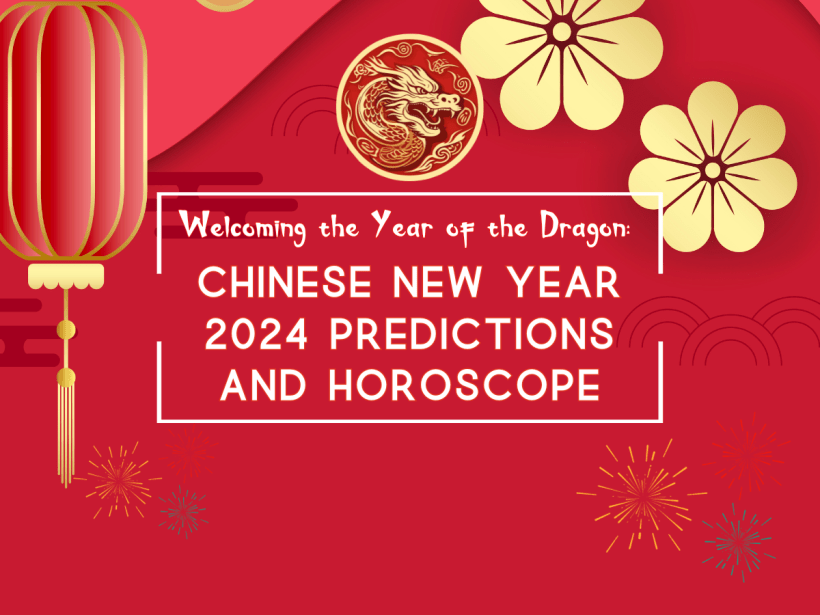
In Chinese astrology, the Year of the Dragon holds a special place, embodying power, wisdom, and unparalleled success. This article delves into the essence of this iconic zodiac sign, exploring its historical significance and its relevance in the upcoming Year 2024. The Dragon in Chinese Zodiac The Chinese Zodiac opera […]

1. “If you live in fear, you will not live long.” – Miyamoto Musashi2. “Embrace death without fear, and you shall never truly die.” – Yamamoto Tsunetomo3. “True strength lies not in the arm but in the soul.” – Samurai proverb4. “A true hero is one who knows when to restrain and when to act.” – Minamoto Yoshitsune5. “If you want to win, teach your opponent how to fight.” – Samurai proverb6. “Do not let the past control your present, and do not let the fear of the future rob you of your ability to live in the present.” – Miyamoto Musashi7. “A Samurai always keeps his word, no matter how small the promise.” – Samurai proverb8. “Do not hesitate to face challenges, for it is through them that you can become the best version of yourself.” – Samurai saying9. “The patience of a Samurai is not the acceptance of failure but the ability to improve step by step.” – Unknown10. “If you do not have the courage to face yourself, how can you face the world?” – Samurai proverb

Kāmaṃ kāmayamānassa,
tassa ce taṃ samijjhati, addhā pītimano hoti.
Laddhā macco yadicchati.
Tassa ce — kāmayānassa, chandajātassa — jantuno
te kāmā parihāyanti,
sallaviddhova ruppati.
If one, longing for sensual pleasure,
achieves it, yes, one’s enraptured at heart.
The mortal gets what one wants.
But if for that person — longing, desiring —
the pleasures diminish,
one’s shattered, as if shot with an arrow.
Sutta Nipāta 4.772, 4.773
Translated from Pāli by Thanissaro Bhikkhu
 During this holiday season, discover the ancient wisdom and healing properties of frankincense and myrrh, two sacred herbs hidden in plain sight. […]

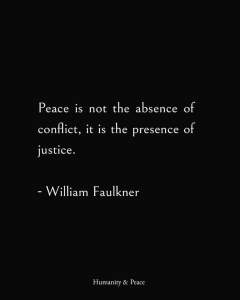
Attānañce piyaṃ jaññā
na naṃ pāpena saṃyuje,
na hi taṃ sulabhaṃ hoti
sukhaṃ dukkaṭakārinā.
If you hold yourself dear
then don’t fetter yourself with evil,
for happiness isn’t easily gained
by one who commits a wrong-doing.
Saṃyutta Nikāya 1.115
Translated from Pāli by Thanissaro Bhikkhu
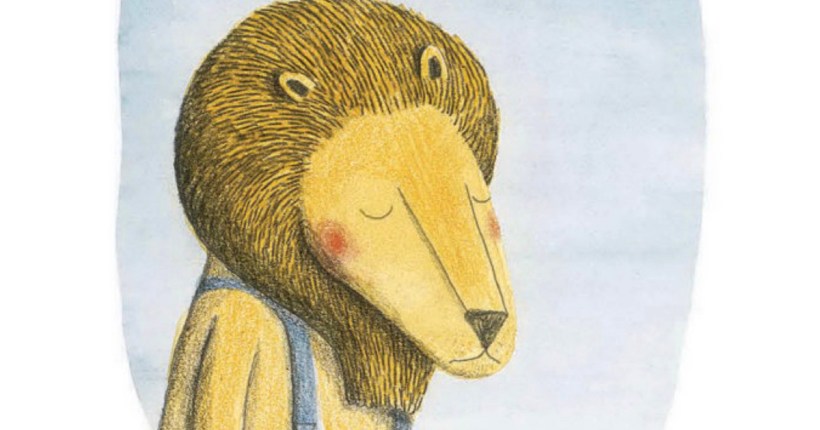
“It’s permitted to receive solace for whatever you did or didn’t do, pitiful, beautiful human.” […]
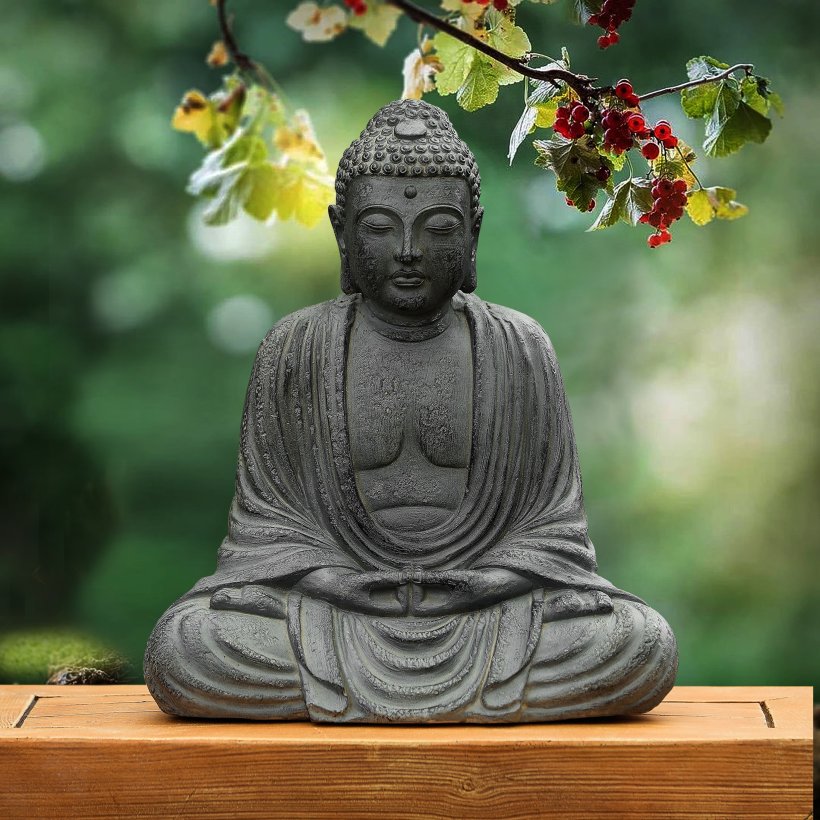
Sabbā āsattiyo chetvā,
vineyya hadaye daraṃ,
upasanto sukhaṃ seti,
santiṃ pappuyya cetasā.
With all one’s attachments cut,
with the heart’s pining subdued,
calm and serene and happy is one,
for one has attained peace of mind.
Saṃyutta Nikāya 1.242
Gemstones of the Good Dhamma, compiled and translated by Ven. S. Dhammika

Sukhakāmāni bhūtāni,
yo daṇḍena na hiṃsati
attano sukhamesāno,
pecca so labhate sukhaṃ.
One who, while oneself seeking happiness,
does not oppress with violence other beings
who also desire happiness,
will find happiness hereafter.
Dhammapada 10.132
The Dhammapada: The Buddha’s Path of Wisdom, translated from Pāli by Acharya Buddharakkhita

The full ‘Beaver Moon’ will be best viewed as it rises in the east at dusk on Monday, Nov. 27, though it will appear full on Sunday and Tuesday as well.
Source: The full ‘Beaver Moon’ rises next to bright Jupiter this weekend. Here’s how to watch.

The praying mantis is a spiritual creature that is revered in many cultures. It is believed to bring good luck and prosperity, and is often used in religious ceremonies. The mantis is also said to be able to commune with the spirit world, and is considered to be a powerful ally in the fight against evil. […]
Upakāro ca yo mitto,
sukhe dukkhe ca yo sakhā,
atthakkhāyī ca yo mitto,
yo ca mittānukampako —
etepi mitte cattāro iti viññāya paṇḍito
sakkaccaṃ payirupāseyya
mātā puttaṃ va orasaṃ.
The friend who is a helpmate,
the friend in happiness and woe,
the friend who gives good counsel,
the friend who sympathises too —
these four as friends the wise behold
and cherish them devotedly
as does a mother her own child.
Dīgha Nikāya 3.265
Everyman’s Ethics: Four Discourses by the Buddha (WH 14), translated by Narada Thera

The One Life comes into a world of differentiation through prismatically differentiated rays. We can sense in the gentle quality of dawn light something that does not participate in the opalescent colours of the day, something removed from what we call heat and light, cold and shade — a quality of virginal light that is a reminder of states of matter appropriate to states of consciousness which are created and held as potential by beings in general. Then we can begin to see that the whole point of human suffering in its collective meaning is to overcome pain and the false sense of separation. This is the point in consciousness where human beings as individuals could maintain a noetic and complete wakefulness — turiya, a profound awareness from a standpoint which transcends the greatest magnitudes of spacetime. It goes beyond solar systems and intimates that the depths of space represent in the very core of apparently nothing, a subtle creative gestation of matter. If one can see the whole world in terms of its plastic potency, as radiant material for a single universal spiritual sun, then one gains the dignity and the divinity of being a self-conscious individuating instrument of the universal Logos.
This is the sacred teaching of all Initiates. It is the teaching of Jesus in the Gospel According to John, the teaching of Buddha in the Heart Sutra, and the teaching of Krishna in the Bhagavad Gita and in the Shrimad Bhagavatam. These beings, fully awake, see that all human life, including human suffering, is a projection of a false involvement in a false sense of self. They bear witness to the reality of universal consciousness, not as something potential but as that which can be used as plastic material for new forms of spiritual creation. Creative imagination is not an abstract immaterial force, but the most rarefied and subtle form of material energy that exists. It can be tapped by concentration. By repeated and regular attempts at concentration upon this conception of the One, negating the false sense of the self, one builds and gives coherence to one’s subtler vehicles, shaping what is now chaotic matter and forming a temple, a worthy vesture for a self-conscious being aware of the divinity of all beings and capable of maintaining that awareness through waking, dreaming and deep sleep. Having entered into the void, having entered into the light beyond these states of consciousness, the awakened soul remains in it by choice, while giving the impetus to other human beings to make the same attempt. Suffering and ignorance are collective; enlightenment and spiritual creativity are universal. This is the great hope of the timeless teaching concerning true continuity of consciousness.
Within the limits of time, however, which is an illusion produced by the succession of states of consciousness, there is only a before and an after, and no full scope for creativity. Consider, for example, a moment of love. Suppose you suddenly come into contact with someone of whom you could say, like the poet Yeats, “I loved the pilgrim-soul in you.” There is a magical, intense flow between two pairs of eyes, and in one instant, a taste of eternity. If two individuals later tried to understand this in terms of what was there the day before and what was there the day after, they would have simply slipped onto another plane. If two people who have such a golden moment of co-awareness later on forget it or identify it with passing and contemporary illusions, then of course they might see it simply as a date in a calendar to be remembered by ceremonial tokens. That is not the same as re-enactment, because the essential quality of that moment was the absence of before and after, or any noticeable succession of states of consciousness. It was not as if they met calculatingly with anticipations and fears, and it was not as though soon after they thought of it as a memory of an event. They simply experienced in a moment of fusion of consciousness a freedom from the false division of eternal duration into a past, a present and a future. It was as if they stood not in one city, not in one street, not in one place, but in eternal space. This is an experience which by its very nature is so profound and beautiful that many people desperately look for it. This may be where the critical mistake is made. In the very attempt to look for it, one might overlook opportunities and arenas where it is more likely to happen. The very notion of seeking it, or wanting it, of maneuvering it, is stifling.
Our experience of time involves craving and memory. Time is bound up with fragmented consciousness in a universe of change and a constantly moving world of process. At best, it is a deceptive device of convenience for gaining a sense of control in eternal duration, to serve purposes arising from the standpoint of the narrow needs of some particularized self in relation to other particularized selves, where it is useful to talk in terms of a before and an after. Consider a good physician who has seen you at different times and to whom you are more than a file. When receiving an examination, it is as if you are both friends looking together at a common medium which is the physical body you inhabit and which has certain cycles and a history. Two minds looking together at the same body can suddenly see connections between before and after. Patterns emerge and a serial view of time has practical convenience.
We have, however, another view of time which allows us to discover other types of patterns and connections. If all patterns and connections had to be discovered exclusively by individual human beings, then the human predicament would be even more grave than it now seems. Because many patterns are already given, it is a case of looking for them with a deep detachment, so that one does not cut up and fragment the process. Suddenly one may see that there is a certain moment here and another point, tendency or characteristic there with which it connects. E.M. Forster employed this idea in his novels and expressed it as a mantram — “Let us connect.” To him, in pre-1914 England, the whole difference between human beings moving from the sheltered world of 1914 into the increasingly stormy and socially disordered world of Europe after the First World War, was in the extent to which they could survive the collapse of inherited identities and self-consciously create their own connections. Either human beings forge their own connections or connections will be made for them, but then they will sound arbitrary or malignant, suggesting that some dark, hostile Fate as in Thomas Hardy’s novels, is causing everything. When human beings can self-consciously make these connections, they begin to live with an increasing sense of freedom from time. Time may be seen in terms of eternal duration, which is prior to it, and hence there are golden moments. Time may also be seen in terms of mere convenience, according to a calendar, to help facilitate a limited involvement between human beings, in limited roles and contexts, to take place in a reliable manner. This mode of time may even be made to approximate some broader concept of distributive justice. Time must be seen as an illusion, must be seen for what it is, if a person is to gain the real continuity of consciousness connected with true creativity.
Today there are various fascinating studies of creativity, which cite examples such as Kekule’s dream that was critical in biology. Kekule dreamt one night of a serpent eating its tail and when he woke up, he got a flashing insight into the circular rather than linear nature of certain processes of growth which are fundamental in molecular biology. The more one looks at such cases, the more one comes to see that truly creative beings cannot be programmed. Even in a society fearfully hostile to creativity, creative minds can still use available resources compassionately. Typically, creativity is difficult to attain because there is too much desire to have it programmed and delivered according to a schedule set by personal consciousness. This comes out in capitalist society in its most extreme form when people feel that there must be a kind of pre-established, controlled, and mechanistic way in which one could have creativity by numbers. By emphasizing substitutability and measurability, by regarding human beings as labour-units who are convertible terms, one can evolve an aggregated view of output and product which is truly dead for the creative artist. A great potter has no sense of excitement in looking at a pot. It is already dead. What was alive was the process of visualization and the process of taking that mental image, while the potter’s wheel was moving, and seeing the shape emerging. The magical moment of emergence is real. Human beings in general have a parasitic attachment to the products of creativity but the vital process of creativity eludes them because it defies ordinary modes of division of time.
Here, then, is the most critical point, both in relation to continuity of consciousness and in relation to the Demiurge. The Demiurge in the old myths and in many a rustic Hindu painting, is like Vishnu asleep, from whose navel a lotus emerges which is the universe. Mahavishnu is floating upon the great blue waters of space. Around the serpent on which this Great Being rests there is a circle within which a whitish milky curdling is taking place. Intense activity surrounds the periphery of the great wheel of eternity, on which is resting in a state of supreme, pure inactivity, the divine Demiurge, itself only an aspect of the Logos. The great Rig Vedic hymn states, “The One breathed breathless.” It was alone and there was no second. Alone it breathed breathless. There is a transcending sense of boundless space, in relation to which all the notions of space that we have — of an expanding universe, of a closed universe, of solar systems, and galaxies — all of these are like maps and diagrams relating points that are already conceptually separated out and which have boundaries, but are merely partial representations or surface appearances upon the depths of a space which has no boundaries or contours, and which is never delineated in diagrams.
If continuity of consciousness is to be seen not as something individual but rather universal, embedded in the very process of the manifestation of the One in and through the many, then it is necessary to think away from conceptions of time that are arbitrary and to a view of space which is boundless. Metaphysically, the reason why the Demiurge can both be involved in space fashioning many systems, and also witness all of these like bubbles upon a surface, is because space is not empty. After three hundred years of thought and experiment, modern science is catching up with ancient wisdom and is beginning to see that there is no such thing as empty space, that the content of space is not dependent on other categories of measurement or upon other standpoints of perception. What looks like pitch-black darkness could in fact be enormously full from another and more profound understanding. In one of the great passages in the early part of The Secret Doctrine, the commentary upon the Stanzas of Dzyan says that what to the Initiate is full is very different from what appears full to the ordinary man. The more human beings self-consciously expand awareness, the more they can free their deeply felt conceptions of the world, of reality, and of themselves from the notions of part and limit, from future anticipations and a present cut up into separate particular events, and the more they can bring a conscious sense of reality to their own mental awareness of space as a void — what the Buddha called sunyata, Emptiness — and the more they can replace the ordinary conception of form by the Platonic, which is not bound up with anything fixed.
Raghavan Iyer
The Gupta Vidya II

Suffering arises out of exaggerated involvement in a world of colour, forms and objects, maintained by a false sense of personal identity. As long as people persist in this pseudo-continuum of existence, they necessarily forfeit the exercise of their inner creative capacities and cannot fully seize the opportunities of self-conscious evolution. Human beings produce a false sense of self out of a series of intense particularizations of will, thought and feeling, all of which become the tokens of selfhood. As a result, in the very process of fragmenting oneself into a diversity of desires and conflicting and colliding aims, or of limiting oneself by conceptions which must be concretized in some narrow programme in space and time, suffering is built into one’s life. All exaggerations of the void and illusory ego, all failures to recognize the overarching One, all attempts to live as if one were the centre of the world and without any self-conscious awareness of the beyond, mean that one can only gain happiness, pleasure or fulfilment at a cost. An obscuring shadow follows all pleasure — a compulsive feedback, a necessary negation, an unavoidable depression. When people do not detach themselves and negate excessive involvement in advance of every thought, the negation must come from outside, and after a point people lose their hold over the central thread of unifying or synthesizing awareness.
Suffering is the obscuration of the light of universal understanding. As long as we live in terms of narrow conceptions of ourselves, shrunken conceptions of space and of time, and with an exaggerated intensity that will necessarily be followed by an external negation, suffering is built into our life. It is coeval with that ignorance of the real which makes what we call human life possible. Human life is a passing shadow-play in which human beings identify with roles and, like candles, are eventually snuffed out. It is a play with a brief intensity focused upon a paltry role and based upon identifications with name and form. One who experiences great suffering, or who reflects deeply upon the relationships at the very root of this process, may come to see that the world and oneself are not apart.
The world is at least partly of one’s own making but it is also made by the limiting conceptions of other human beings. They have become involved in the creation of a world in which limitation is a necessary part, and they too have forgotten what they innately knew. All human beings begin life by sounding the OM. They all have a cool awareness of the ineffable when they are little children, before they begin to lisp and to speak. In the youth of their sense-organs they experience wonder in relation to the whole of life. In the process of growing up, however, they take on the illusions of others — of parents, elders, teachers, and a variety of people around them — and then they become forgetful of what they already knew. We may reawaken awareness only by self-conscious self-renewal. Awareness is like a colourless universal light for which there are as many focusing media as there are metaphysical points in abstract space. Each human being is a ray of that light. To the extent to which that ray projects out into a world of differentiated light and shade, and limitations of form and colour, it is tinctured by the colouring that comes to it from a mental environment. Philosophically, the mental environment is far more important than the external physical environment.
When one sees this process archetypally, one recognizes that there is no separation between oneself and the world except in language, reactive gestures, and in certain uncriticized assumptions. Most importantly, there is no separation of oneself from other human beings as centres of consciousness. The notions of ‘mine’ and ‘thine’, attached to pleasure and pain, to joy and suffering, are arbitrary and false. Is that which gives one great joy exclusively one’s own? And, on what grounds do we assume that the suffering of human beings in numerous states of acute self-limitation is purely theirs? Does each one have his own exclusive property rights in collective human suffering and thereby have nothing to do with us? Suffering is intrinsic to the universal stream of conditioned existence. Most living is a kind of pseudo-participation in what seem to be events, but which are merely arbitrary constructions of space-time, and are largely non-events. When a human being comes to see that involvement of a single universal consciousness in a single homogeneous material medium, the very notion of the individual ‘I’ has dissolved.
We are all aware when we go to the dentist and submit ourselves to something that seems physically painful, through our very awareness of what is happening and our deliberate attempt to think away from our identified involvement with the part of the physical body which is suffering, we can control our sensations to some extent rather than being wholly controlled by them. If this insight could be extended, we might see that the stream of universal consciousness is like an ever-flowing river — in which all conceptions of ‘I’ and ‘you’ and ‘this’ and ‘that’ are mere superimpositions — and then we could begin to stand consciously at some remove from the process of life. Suppose a person came to listen to a discourse of the Buddha with petty expectations, because somebody said it would be quite good, or worth hearing, or fairly interesting. Someone else might have come with a deeper idea because he or she was awake as a soul and had the thought that it is a tremendous privilege to be in the magnanimous presence of a Mahatma, and hence he or she might be lit up. If one is truly lit up, one’s wakefulness makes the greatest difference to the whole of one’s life. It could be gathered up self-consciously at the moment of death. But even a person who comes with so profound a thought into a collective orbit where there are many souls in states of only relative wakefulness and caught up in residual illusions, may forget the original moment.
The suffering of human life is a jolt which the whole gives the part, the individual ray, to re-awaken in it a memory and awareness of the original moment. Here we can see the significance of certain meditations undertaken by Bhikshus. In Buddhist philosophy there are references to meditations on the moment of birth. Yet how are we to meditate on it when it is an event that has no sense of reality for us? It is simply a certain date on the calendar. The mystery of individuality lies in the privilege and the possibility of making one’s own connections within what otherwise would be a vast, fragmented chaos of events. One could make these connections simply by habit, in terms of one’s first thoughts, or in terms of the reactions of the world and the opinions of others. Or one could make them self-consciously from the standpoint of the whole. This, of course, is very difficult to experience immediately, but every human being can begin to grow in this direction.
A fearless and dispassionate examination of the past shows that a lot of what once seemed extremely important was utterly insignificant and a lot of what looked impossible to go through was relatively easy. One could take stock of one’s awareness independent of external events and focus it upon intense periods in the past which seemed to be especially painful, meaningless, or terrifying, but which one came through. Then one can ask whether, just as one now feels a kind of remoteness from past events, so too at the very moment of birth, did one feel a kind of remoteness from future events? Was one really involved, or only involved in one part of oneself? Then one can shift to the moment of death and raise the difficult question whether one can see oneself dying. Can one actually see a certain moment where there is an abandonment of a corpse which, through the natural processes of life, must decay and disintegrate and, while seeing this, still hold to an immense awareness of the whole? A person who is able to imagine what it would have been like to stand at a distance from the foetus that became the baby boy or girl can also imagine being at a distance from the corpse which is being discarded. He or she can also see that there is a thread that links these moments, and that the succession is no more arbitrary than the pattern of a necklace when seen from the standpoint of the whole.
Raghavan Iyer
The Gupta Vidya II
Step into the cosmic gateway of the 11/11 Portal with our transformative meditation music. Tuned to the frequencies of 111Hz, 444Hz, and 777Hz, this composition is designed to enhance your spiritual manifestation during this powerful alignment. Feel the energies aligning and manifesting positive change in your life. #1111 #1111portal #spiritualawakening
Nov 13, 2023 at 1:27 am PT is a new Moon in Scorpio. Water sign Scorpio rules the eighth house of sex, death, and rebirth. Therefore, this lunar month will bring powerful emotions and deep-felt pas […]
Susukhaṃ vata jīvāma,
verinesu averino.
Verinesu manussesu,
viharāma averino.
Happy indeed we live,
friendly amidst the hostility.
Amidst hostile people,
we dwell free from hatred.
Dhammapada 15.197
The Dhammapada: The Buddha’s Path of Wisdom, translated from Pāli by Acharya Buddharakkhita
Find Your Magic
Tarot Readings, Inspiration, and Self-Empowerment
Making life on earth magick one moon phase at a time.
Astrologer ~ Mystic ~ Writer
of the Collegium Spiritus Sancti, a Golden Dawn Society
An affiliate of the Alpha et Omega Order of Melchizedek
All Knowledge Is Not Contained In Only One School
Connecting the grant community to #LearnGrants
Channelings & Articles
Magic Spell Books & Grimoires
Native Hawaiian Language Revitalization
Poetry & Tales of Love, Mystery, Magic and Spirituality
Organic Herbs, Herbals, Sustainable Gardening
Mother Nature: Feeding The Mind, Body & Soul, with Food, Medicine & Skincare.
"Inheritor of a Dying World, we call thee to the Living Beauty. Wanderer in the Wild Darkness, we call thee to the Gentle Light..."
Time is the most important thing we've been given
Embracing the Divine Within.
"...That I should bear witness to the truth." - John 18:37 // David E. Robinson, Publisher

 Hālau 'Aha Hui Lānākila