During March of 1895, US business owners in Hawaii illegally overthrew the monarchy and arrested Queen Liliuokalani. During her imprisonment, Queen Liliuokalani wrote this prayer on March 22, 1895, and soon set it to this melody. In this hymn, the queen tells of her great love for God, a love great enough to ask for the forgiveness of those who imprisoned her. In Hawaii today, this hymn is sung expressively with great reverence and devotion.
Category: Seminary
Instruction and Learning
Daily Words of the Buddha for October 01, 2023
Sukhakāmāni bhūtāni
yo daṇḍena vihiṃsati,
attano sukhamesāno,
pecca so na labhate sukhaṃ.
Sukhakāmāni bhūtāni
yo daṇḍena na hiṃsati,
attano sukhamesāno,
pecca so labhate sukhaṃ.
Whoever takes a stick
to beings desiring ease,
when one is looking for ease,
will meet with no ease after death.
Whoever doesn’t take a stick
to beings desiring ease,
when one is looking for ease,
will meet with ease after death.
Udāna 2.13
Translated from Pāli by Thanissaro Bhikkhu
Daily Words of the Buddha for September 29, 2023

Te jhāyino sātatikā, niccaṃ daḷhaparakkamā,
phusanti dhīrā nibbānaṃ, yogakkhemaṃ anuttaraṃ
The wise ones, ever meditative and steadfastly persevering,
alone experience Nibbana, the incomparable freedom from bondage.
Dhammapada 2.23
The Dhammapada: The Buddha’s Path of Wisdom, translated from Pāli by Acharya Buddharakkhita
Daily Words of the Buddha for September 28, 2023
Appamādo amatapadaṃ.
Pamādo maccuno padaṃ.
Appamattā na mīyanti.
Ye pamattā yathā matā.
Heedfulness is the path to the Deathless.
Heedlessness is the path to death.
The heedful die not.
The heedless are as if dead already.
Dhammapada 2.21
The Dhammapada: The Buddha’s Path of Wisdom, translated from Pāli by Acharya Buddharakkhita
Divine Feminine Oracle | Mother Mary for September 27, 2023

Mother Mary’s message for you
At the moment, you’re filled with a dazzling celestial light. There’s a fire burning within you, whether or not you’re aware of it. Passion, concentration and excitement exude from you. Be grateful for the little pleasures in life and let go of whatever worries or anxieties you may have.
I have provided for you since the day you came into this world. I will continue to do this forever, so, have faith that you can fully enjoy all the gifts that life has to offer you. You are creating, doing and giving, which is so positive for you as well as the people around you!
What you need to know
Your current lack of excitement about life may cause you concern right now. Alternatively, you may also feel that you have a set life goal and a desire that has no limits! However you currently feel, know that a seed of fire, holiness and honesty was sown by Our Lady within you. Even if you think you know what your life’s purpose is, you’re about to experience a significant shift in perspective and understanding.
You’re working for a greater goal. Basically, it’s the sum total of all of your thoughts, actions, relationships, goals, etc. Fortunately, you have access to all the spiritual support you could ever need. Your life’s objective is to become the person you were meant to be!
Prayer for healing
“Kindness is the only thing I ask of you. Mother Mary, may your uplifting energies flow into the core of my soul, purifying and restoring me to fullness and vigour. As I pursue my life’s mission, I’m guided by the kindness of Mother Mary as well as the aspirations in my own heart.”
“I have all the support and encouragement I require to be successful. My genuine calling is shown through my devotion. The divine is orchestrating every detail of my existence now and forever. I give thanks to the spiritual realm for their beautiful blessings every day!”
Daily Words of the Buddha for September 26, 2023
Appampi ce saṃhita bhāsamāno,
dhammassa hoti anudhammacārī,
rāgañca, dosañca, pahāya mohaṃ,
sammappajāno suvimuttacitto,
anupādiyāno idha vā huraṃ vā,
sa bhāgavā sāmaññassa hoti.
Little though one recites the sacred texts,
but puts the Teaching into practice,
forsaking lust, hatred, and delusion,
with true wisdom and emancipated mind,
clinging to nothing of this or any other world —
one indeed partakes of the blessings of a holy life.
Dhammapada 1.20
The Dhammapada: The Buddha’s Path of Wisdom, translated from Pāli by Acharya Buddharakkhita
Kahu Kahealani Satchitananda | The Sacred Hawaiian Way

Kahu Kahealani Satchitananda is a loving dynamic woman of power, purpose, passion, prosperity and inner peace. She imbibes the True Spirit of Living Aloha. She is a Hawaiian metaphysical minister, Healy Resonance and Ho’oponopono practitioner, TimeWaver Analyst, Science of Mind practitioner, consultant and one of a council of eleven respected elders who were chosen, initiated, and given the sacred duty of offering an ancestral ho’omanamana blessing to the world, an amazing process that must be experienced. She was first taught ho’oponopono by her mother, auntie Ku’ualohaemaliakalawaianui and her kupuna, tutuwahine Kawaiolamanaloapa’akaula from the island of Molokai.
Her very deep love is supporting the healing process for individuals, couples, parents and children. Her focus Is family & business wealth, health & happiness. […]

Read on: Kahu Kahealani Satchitananda
Nā Mele | Kū Haʻaheo Music Video
Inspired by the recent events on Maunakea, some of Hawaiʻi’s most notable and accomplished recording artists and composers joined their voices to record “Kū Haʻaheo E Kuʻu Hawaiʻi.” Composed by Hinaleimoana Wong, this mele has become a rallying call for our lāhui to aloha ʻāina.
“Kū Haʻaheo” will be included on a soon to be released album entitled “Kūhaʻo Maunakea” – a compilation featuring 18 new compositions documenting the events and swell of Hawaiian community unity around aloha ʻāina associated with the Kū Kiaʻi Mauna movement.
The album will be available digitally through iTunes in late September and 100% of all sales will be donated to the Hawaiian Unity and Liberation Institute (HULI), which provides logistical support to the protectors on the frontline of Maunakea. Donations to HULI can be made at https://actionnetwork.org/fundraising….
Lyrics & Translation
Kū Haʻaheo E Kuʻu Hawaiʻi
by Hinaleimoana Wong
Kaiko’o ka moana kā i lana nei Hawai’i
Nāueue a hālulu ka honua a Haumea
Nākulukulu e ka lani ki’eki’e kau mai i luna
Auē ke aloha ‘ole a ka malihini
*Ho’ōho:
Kū ha’aheo e ku’u Hawai’i
Mamaka kaua o ku’u ‘āina
‘O ke ehu kakahiaka o nā ‘ōiwi o Hawai’i nei
No ku’u lahui e hā’awi pau a i ola mau
Auhea wale ‘oukou pū’ali koa o Keawe
Me ko Kamalālāwalu la me Kākuhihewa
‘Alu mai pualu mai me ko Manokalanipō
Ka’i mai ana me nā kama a Kahelelani
E nāue imua e nā poki’i a e inu wai ‘awa’awa
E wiwo’ole a ho’okūpa’a ‘a’ohe hope e ho’i mai ai
A na’i wale nō kākou kaukoe mau i ke ala
Auē ke aloha ‘ole a ka malihini
E lei mau i lei mau kākou e nā mamo aloha
I lei wehi ‘a’ali’i wehi nani o ku’u ‘āina
Hoe a mau hoe a mau no ka pono sivila
A ho’iho’i hou ‘ia mai ke kū’oko’a
Translation:
The sea of Hawai’i surges in turmoil
The earth of Haumea rumbles and shakes
The highest heavens shudder up above
Alas! Woeful indeed are the heartless foreigners
*Stand tall my Hawai’i
Band of warriors of my land
The new dawn for our people of Hawai’i is upon us
For my nation I give my all so that our legacy lives on
Where are you soldiers of Keawe
Along with those of Maui and O’ahu
Unite, join together with those of Kaua’i
Marching alongside the descendants of Ni’ihau
Move forward young ones and drink of the bitter waters
Be fearless, steadfast for there is no turning back
Let’s press onward straight on the path of victory
Alas! Woeful are the heartless foreigners!
Be honored always oh beloved descendants of the land
Let us wear the honored ‘a’ali’i of our beloved land
Paddle on in our pursuit of civil justice
Until our dignity and independence is restored.
Credits
Executive Producer: Kanaeokana
Project Manager: Chad Takatsugi
Music Producer: Zachary Lum
Audio Engineer: Michael Grande
Video Producer: ʻŌiwi TV
Solos
Hinaleimoana Wong
Lehua Kalima
Manu Boyd
Robert Uluwehi Cazimero
Starr Kalāhiki
Josh Tatofi
Robi Kahakalau
Keao Costa
Hōkū Zuttermeister
Chad Takatsugi
Natalie Ai Kamauu
ʻIolani Kamauu
Snowbird Bento
Del Beazley
Amy Hānaialiʻi
Kealiʻi Reichel
Chorus
Keawe Lopes
Moon Kauakahi
Horace Dudoit
Matt Sproat
Mele Apana
Shannon Scott
Tracie Lopes
Kapalaiʻula de Silva
Kalena DeLima
Ānuenue Pūnua
Piʻikea Lopes
Kaʻōnohi Lopes
Glen Smith
David Kamakahi
Keliʻi Kotubetey
Kale Hannahs
Kanaiʻa Nakamura
Halehaku Seabury-Akaka
Kamalei “Bubba” Kawaʻa
Nani Dudoit
Zachary Lum
What is Gnosis?
Daily Words of the Buddha for September 23, 2023
Idha modati pecca modati;
katapuñño ubhayattha modati.
So modati so pamodati,
disvā kammavisuddhimattano.
The doer of good rejoices here and hereafter;
one rejoices in both the worlds.
One rejoices and exults,
recollecting one’s own pure deeds.
Dhammapada 1.16
The Dhammapada: The Buddha’s Path of Wisdom, translated from Pāli by Acharya Buddharakkhita
Theosophy | DEATH AND IMMORTALITY – IV

Most human beings are unable to attain the seed idea of enlightenment which is fructified in the form of an imperishable vesture by those who have fully prepared before death to enter into the state of immortality. For most people, even the seed idea of immortality cannot be grasped, and therefore they are quickly drawn to all the various samskaras or attributes which come back to them. There is a persisting matrix made up of all these attributes, revivified by one’s own newly-formed desire or attachment. Then one begins to make one’s first entry into physical life through having formed a line of attachment with particular parents. Such people dream about mating couples and get so involved with the purely physical side of life that they are very soon caught in the illusory process of birth. They cannot expect to know what birth means because they did not know what death meant.
So, this whole teaching is highly significant if we can see its practical implications and various facets. By reading The Tibetan Book of the Dead, or by looking at Tibetan pictures of the visions of the dead, one could accumulate a vast amount of detail about the symbolic forty-nine days of the bardo with all its day-to-day visions. But merely accumulating a great deal of fantastic knowledge does not add anything to our meditation on death. The moment we start with ourselves and ask not why we are afraid of death but why we hold on to life, the moment we begin to see significant connections, it will be possible for us to discern that at all times we have available to us either the standpoint of nirvana or the standpoint of samsara. If we are ready to see this, we can come to understand those who have gained or can gain immortality in this scheme of things.
Ordinarily, according to Tibetan teachings, people will not incarnate immediately. When someone has died, that person will not linger or be drawn back to earth-life except in three cases. First are those Bodhisattvas, those enlightened sages who deliberately linger, having renounced nirvana, to assist and help other human beings to gain the knowledge that they have of the meaning of all these states. Secondly, there are those people who die with a total obsession with one line of thinking, not necessarily bad or sinful beings, but those with an idée fixe. These people will also linger. They will prolong the entry into the bardo state, and the more they prolong it, the more difficult it will be for them to pass from the swoon into the state of awakening, into a new consciousness, and benefit front it. The third class of beings who are drawn back and hover around earth-life are those who had so intense a love — like a mother’s love for children — a sense of unfulfilled or uncompleted love, or a love which, however much fulfilled, is still so powerful and so personal that it binds people and draws them back to earthly life. But even these will not appear as bhuts or ghosts unless they are galvanized into activity by adepts in the art of necromancy, a practice strongly condemned in pure Buddhist teaching.
Such nefarious practices do go on in the name of Buddhist tradition among several Red Cap sects, especially in places like Bhutan. They have actually been put forward as Tibetan Buddhist, in the name of scholarship, by people who have quoted supposed authorities who have never even visited Lhasa, let alone had the privilege of some kind of initiation into the pure teachings of the Panchen Lama and the Dalai Lama. It is not therefore a question of considering all the various forms which possession could take that would constitute a true understanding of the Tibetan teaching of death, let alone of immortality. That there must be such demonic usurpers is not difficult to conceive. But they are unnatural. Tibetan teachings do refer to the victims of suicides and murders, people who are in the state of swoon and could be used by other beings who function freely on subtle planes of consciousness, using subtle vestures for their own foul purpose. But this is not something that need concern us.
The crucial insight that we gain from Tibetan teaching is that immortality is not something to be achieved or won, not a prize to be awarded to a favoured few. Immortality is nothing but another aspect of mortality. Even now we either live immortally or live mortally. We either die every moment or we live and thirst, depending on whether we are focused upon the nirvanic or upon the samsaric aspect of embodied consciousness. If we are constantly able to sift the meaning of experiences and to see our formal vestures for what they are and pass from one plane of perception to another, then indeed it may be possible, when blessed with the vision of clear, pure light — the great vision of sunyata — to enter straightaway into that vesture which enables us to remain free from the compulsion of return to earthly life. But this cannot happen unless it flows naturally out of the line of life’s meditation. It cannot happen all of a sudden. It is not some kind of special dispensation. It is itself a product of the working of Karma.
Beings who have undergone this condition of final illumination have either chosen to remain immortal but in the Dharmakaya vesture, unrelated to manifested beings and humanity, or they have chosen the Nirmanakaya vesture and deliberately chosen to enter into relationships with human beings. These Nirmanakayas ceaselessly point to the basic truths concerning the meaning of death and the perpetual possibility of immortality. They teach people that within themselves they are Buddhas without knowing it. Now, the Prajnaparamita states that the Buddhas are themselves only personifications and therefore they could become illusions for us. What is it that we are going to meditate upon when we consider the immortals? Are we going to think of them as glorified physical personalities, archangels in radiant raiment, somehow idealized and more beautiful but related to our own physical conception of physical life? Or are we going to think of them as minds, a great gathering of extraordinary and powerful minds who collectively constitute the great mind of the universe? Or are we going to look upon them simply as beings who have become aware of their true Buddha nature and have therefore become instruments for the working of consciousness, instruments that will be helpful and unifying, because that is the nature of consciousness, whereas the nature of form is divisive.
Thus the whole doctrine, even of the Lha, those gods seemingly tucked away in a limbo, refers to beings who not merely work in relation to the world but also by their ceaseless collective ideation maintain in the world the force of the Buddha nature. The Buddha nature is not some abstract principle. It is actually embodied in the collective consciousness of such beings perpetually in the universe. We come to see that the various phases in the process of the concretization of the universe from an absolute realm, through archetypes, through individualized forms of thought, and ultimately to material forms, that this whole process is re-enacted in the bardo state, between death and rebirth. A great re-enactment has taken place. Who knows what re-enactment takes place within the embryo especially during the first seven months in the mother’s womb? Science and medicine know almost nothing about what happens then or why. These are the great mysteries connected with the primal facts of birth and death. If we can consider that there is available in Buddhist teaching the knowledge that there is regular re-enactment of a continuous cosmic process before the eye of the soul, then we can see that enlightenment is not the great terminus to a laborious and boring process of striving, but a ceaseless opportunity which inheres in this very world of woe and delusion, which we call samsara, and to which we cling like blind fools, knowing not Life and afraid of death.
Raghavan Iyer
The Gupta Vidya II
They who are on the summit of a mountain can see all men; in like manner they who are intelligent and free from sorrow are enabled to ascend above the paradise of the Gods; and when they there have seen the subjection of man to birth and death and the sorrows by which he is afflicted, they open the doors of the immortal. — TCHED-DU BRJOD-PAI TSOMS
. . . as ‘there is more courage to accept being than non-being, life than death,’ there are those among the Bodhisatwas and the Lha — ‘and as rare as the flower of udambara are they to meet with’ — who voluntarily relinquish the blessing of the attainment of perfect freedom, and remain in their personal selves, whether in forms visible or invisible to mortal sight — to teach and help their weaker brothers.
— A Gelung Of The Inner Temple
Daily Words of the Buddha for September 22, 2023

Tato adinnaṃ parivajjayeyya
kiñci kvaci sāvako bujjhamāno.
Na hāraye harataṃ nānujaññā.
Sabbaṃ adinnaṃ parivajjayeyya.
A disciple should avoid taking
anything from anywhere knowing it (to belong to another).
One should not steal nor incite another to steal.
One should completely avoid theft.
Sutta Nipāta 2.397
The Discourse Collection: Selected Texts from the Sutta Nipāta, translated by John D. Ireland
Cymatics | Elimina TODA Energía Negativa – Baño de Sonido 432 Hz
Daily Words of the Buddha for September 20, 2023

Idha socati pecca socati;
pāpakārī ubhayattha socati.
So socati so vihaññati,
disvā kammakiliṭṭhamattano.
The evil-doer grieves here and hereafter;
one grieves in both the worlds.
One laments and is afflicted,
recollecting one’s own impure deeds.
Dhammapada 1.15
The Dhammapada: The Buddha’s Path of Wisdom, translated from Pāli by Acharya Buddharakkhita
Daily Words of the Buddha for September 18, 2023

Yathā agāraṃ ducchannaṃ vuṭṭhī samativijjhati,
evaṃ abhāvitaṃ cittaṃ rāgo samativijjhati.
Just as rain breaks through an ill-thatched house,
so passion penetrates an undeveloped mind.
Dhammapada 1.13
The Dhammapada: The Buddha’s Path of Wisdom, translated from Pāli by Acharya Buddharakkhita
Daniel DeGuzman | 6 Guidelines for Becoming a Filipino Shaman

What if, one day, an Anito from the sky world delivered a message claiming that you are one of the chosen to become a part of a long sacred lineage of men and women that stands between the mortals and gods? That you will guide and aid your community by playing numerous roles such as doctor/healer, priest, counsellor, and leader? Even the best ‘jack of all trades’ would have a hard time pulling that off.
What if you’ve received the power to travel to the realm of the dead to save trapped souls?
Becoming a shaman transcends profession and passion. Regardless of their many names around the Philippines (Babaylan, Katalonan, Diwatera, Tambalan etc.) the way of the shaman is more than just the superficial old tribe men or women chanting languages beyond our comprehension. They transcend the schizoid that throws themselves on the ground while under extreme fits of seizure that synchronize with the beat of gongs and drums and the image of the wild looking worshipper of crude, wooden statues. It is a vocation that demands devotion, sincerity and knowledge of both men and spirits. […]
Read on: Becoming A Filipino Shaman
Daily Words of the Buddha for September 17, 2023

Asāre sāramatino
sāre cāsāradassino,
te sāraṃ nādhigacchanti,
micchāsaṅkappagocarā.
Those who mistake the unessential to be essential
and the essential to be unessential,
dwelling in wrong thoughts,
never arrive at the essential.
Dhammapada 1.11
The Dhammapada: The Buddha’s Path of Wisdom, translated from Pāli by Acharya Buddharakkhita
Diivine Feminine Oracle | Mother Mary for September 14, 2023

Cymatics | All 9 Solfeggio Frequencies by Ambient Stream

Daily Words of the Buddha for September 12, 2023

Muñca pure, muñca pacchato,
majjhe muñca, bhavassa pāragū.
Sabbattha vimuttamānaso,
na punaṃ jātijaraṃ upehisi.
Let go of the past, let go of the future,
let go of the present, and cross over to the farther shore of existence.
With mind wholly liberated,
you shall come no more to birth and death.
Dhammapada 24.348
The Dhammapada: The Buddha’s Path of Wisdom, translated from Pāli by Acharya Buddharakkhita
It’s time to celebrate the humanity of the communal snooze

American work culture, seeping around the globe, threatens to ruin the pleasures and benefits of public, communal sleep […]
Source: It’s time to celebrate the humanity of the communal snooze | Aeon Essays
Daily Words of the Buddha for September 10, 2023
Kodhaṃ chetvā sukhaṃ seti,
kodhaṃ chetvā na socati.
Kodhassa visamūlassa
madhuraggassa brāhmaṇa;
vadhaṃ ariyā pasaṃsanti
tañhi chetvā na socatī.
Slay anger and you will be happy,
slay anger and you will not sorrow.
For the slaying of anger in all its forms
with its poisoned root and sweet sting —
that is the slaying the nobles praise;
with anger slain one weeps no more.
Saṃyutta Nikāya 1.187
Gemstones of the Good Dhamma, compiled and translated by Ven. S. Dhammika
Perspectives | LIFE: A GAME OF CHESS

In the grand tapestry of existence, life unfolds as a magnificent game of chess. We are all players, navigating the board of possibilities, facing diverse challenges and striving for victory. Each battle we encounter, every move we make, teaches us profound lessons about resilience, strategy and the boundless potential that lies within us.
Just as in chess, life presents us with an array of adversaries and obstacles. We face setbacks, disappointments and unforeseen circumstances that attempt to obstruct our path. Yet, it is during these moments of adversity that we truly discover our inner strength and determination.
Consider the humble pawn. At the outset of the game, it may appear insignificant and limited in its capabilities. But as the game progresses, the pawn moves forward, overcoming obstacles and gradually transforming into a queen—a symbol of power, influence and unlimited potential.
Similarly, in life, we often begin as pawns, seemingly small and insignificant. We may feel constrained by our circumstances or limited by our perceived abilities. But let me remind you, dear friend, that even the lowliest pawn can rise to the highest heights. It is through our unwavering spirit, tenacity and refusal to succumb to defeat that we can transcend our limitations and become magnificent forces of change.
Every move we make, every decision we take, shapes our journey. Sometimes, we must sacrifice certain pieces of our lives, just as a chess player sacrifices a bishop or a knight to gain a strategic advantage. These sacrifices may be painful, but they propel us forward, guiding us closer to our goals and aspirations.
In the game of life, patience is a virtue. We must navigate the board with wisdom, considering the consequences of each action. Just as a master chess player foresees the potential outcomes of their moves, we too must think ahead and plan for the future. But remember, life is not a rigid set of rules. It is an ever-evolving, dynamic experience. Adaptability is key, for the unexpected can swiftly alter the course of our lives.
In the face of adversity, never lose hope. Every setback is an opportunity for growth, every defeat a chance to learn. Just as a chess player analyzes their losses to improve their strategy, we too must embrace failure as a stepping stone towards success. It is through perseverance and resilience that we transform setbacks into comebacks.
So, as you navigate the intricate game of life, remember that you possess the power to overcome any challenge. Your journey may have its share of twists and turns, victories and losses, but it is through these experiences that you will emerge stronger, wiser and more triumphant.
Believe in your potential, trust in your intuition and never cease to chase your dreams. Just as a pawn can become a queen, you too can transcend the limitations that confine you. Embrace the game of life with open arms, for within its challenges lie the remarkable opportunities to become the grand master of your destiny.
May your moves be bold, your strategy be shrewd and your spirit be indomitable. Remember, the game is not over until you say checkmate.
Science | Breakthrough Brain Cell Discovery Shocks Neuroscientists

Scientists have discovered a new type of brain cell that promises to shake up the field of neuroscience.
The discovery brings an end to a decades-old controversy and may pave the way for new targeted treatments for a range of health conditions.
The results, from neuroscientists at the University of Lausanne in Switzerland and the Wyss Center for Bio and Neuroengineering in Geneva, were published on September 6 in the journal Nature.
To understand the relevance of the study, let’s first establish what we already know about brain cells. […]
Read on: Breakthrough Brain Cell Discovery
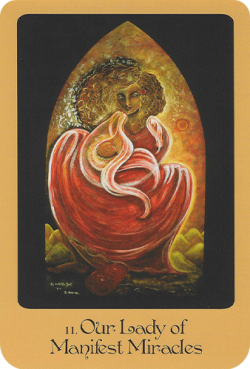
Divine Feminine Oracle | Mother Mary, for September 6, 2023
Daily Words of the Buddha for September 06, 2023

Appamādaratā hotha!
Sacittamanurakkhatha!
Duggā uddharathattānaṃ,
paṅke sannova kuñjaro.
Delight in heedfulness!
Guard well your thoughts!
Draw yourself out of this bog of evil,
even as an elephant draws itself out of the mud.
Dhammapada 23.327
The Dhammapada: The Buddha’s Path of Wisdom, translated from Pāli by Acharya Buddharakkhita
Daily Words of the Buddha for September 01, 2023

Pāpañce puriso kayirā,
na naṃ kayirā punappunaṃ.
Na tamhi chandaṃ kayirātha,
dukkho pāpassa uccayo.
Should a person commit evil,
let one not do it again and again.
Let one not find pleasure therein,
for painful is the accumulation of evil.
Dhammapada 9.117
The Dhammapada: The Buddha’s Path of Wisdom, translated from Pāli by Acharya Buddharakkhita
Astrology | BLUE SUPER FULL MOON in Pisces, August 30-31, 2023
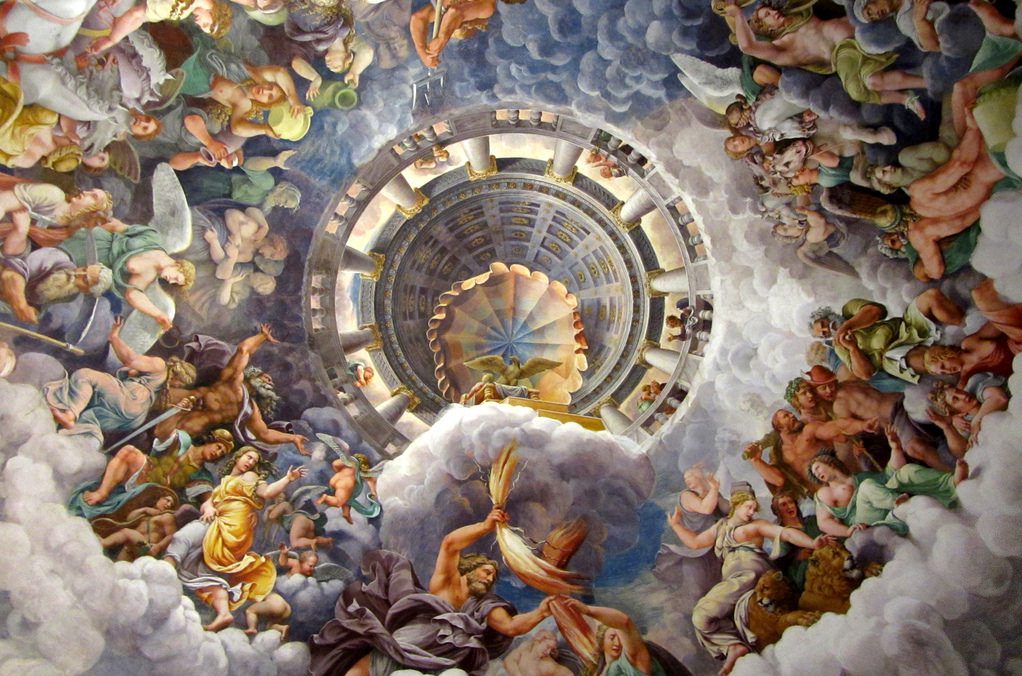
We are already in the second Full Moon of this month, a phenomenon we call Blue Moon. Of course, the Moon is not going to turn blue, nor will you see it in this color. The only color change you wil […]
Daily Words of the Buddha for August 30, 2023
Yo ca vassasataṃ jīve
dussīlo asamāhito
ekāhaṃ jīvitaṃ seyyo
sīlavantassa jhāyino.
Better it is to live
one day virtuous and meditative
than to live a hundred years
immoral and uncontrolled.
Dhammapada 8.110
The Dhammapada: The Buddha’s Path of Wisdom, translated from Pāli by Acharya Buddharakkhita
Daily Words of the Buddha for August 27, 2023
Yo sahassaṃ sahassena
saṅgāme mānuse jine,
ekañca jeyyamattānaṃ
sa ve saṅgāmajuttamo.
Though one may conquer
a thousand times a thousand people in battle,
yet one indeed is the noblest victor
who conquers oneself.
Dhammapada 10.103
The Dhammapada: The Buddha’s Path of Wisdom, translated from Pāli by Acharya Buddharakkhita
Guided Meditation | Who Am I?
40-day Vigil | Pray Psalm 91 daily and weave our Lei of Peace and Aloha Where You Are … for Mau’i
Mahalo mai ʻōukou for your Aloha … ‘O ka maluhia no me ‘oe
Theosophy | REINCARNATION AND SILENCE – III
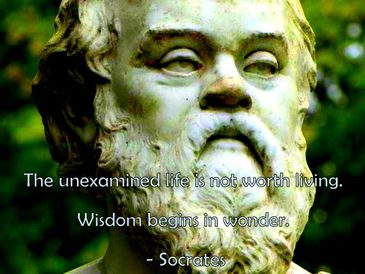
If we trace the English term ‘soul’ to its Greek antecedents and equivalents, we soon find a wide variety of meanings. Even before the time of Socrates, many accretions and materializations had already gathered around the concept. It was compared to the wind. It was also supposed to mean ‘that which breathes,’ ‘that which is alive.’ And it was given many other meanings and often couched in metaphorical terms through analogy with sparks and a central fire. It became crucially significant for Plato to enrich the notion of ‘soul’ and to give it an existentially human meaning to do with the very act of search, the very desire to know the good, the hunger to make distinctions — not only between the good and the bad but between the good and the attractive, not only between the true and the false but between the true and the plausible. The desire to make noetic discriminations becomes the basis for a functional definition of the soul. Plato taught that, metaphysically, the soul may be seen either as perpetual motion or as a self-moving agent. In one passage he refers to a particular kind of motion which is not visible in the material realm but may be properly ascribed to the hidden Logos, the invisible deity. Elsewhere, what he identifies as the soul is connected with volition. What would it avail a man who uses the word in a Socratic sense but does not come to terms with his own will-problem, or worse still, becomes identified intellectually with his weak-willed self?
Language is very important here. The prolonged abuse of the term ‘soul’ in the Middle Ages resulted from a decisive shift in meaning. An active agent was replaced by something passive, something created. In a corruption of the Socratic-Platonic meaning, the ‘soul’ became merely something acted upon, a passive agent receiving reward or punishment. The term ‘soul’ almost became unusable, so that in the Renaissance humanists had to assert the dignity and divinity of man in ways that did not involve them once again in the debased coinage of the terminology of the past. In the twentieth century the term ‘self’ is coming into wide circulation, recovering some of the dignity of the classical conception of the soul.
A person brought up in a corrupt language system could receive tremendous help by borrowing a term from Sanskrit and trying to recognize its open texture. The compassionate Teachers of the Theosophical Movement chose to introduce from that sacred language terms like Manas — the root of the word ‘man,’ from man, ‘to think’ — into the languages of the West. When Emerson eulogizes “man thinking” he is using two English words in a manner that confirms exactly the full glory of the idea of Manas. Yet we also know that both the words ‘man’ and ‘thinking’ can be so degraded in everyday usage that they do not convey the glory of manhood implied by Manas. The term Manas in Sanskrit means not only ‘to think,’ but also ‘to ideate,’ ‘to contemplate.’ To contemplate in this classical sense is to create, to sustain a continuous and controlled act of creative imagination enveloping more and more of the whole, while retaining that core of individuality which signifies responsibility for the consequences of all thoughts, all feelings, all words, and all acts. This is a kingly conception.
It is often advantageous for a person to go outside his particular prison-house of debased language and explore classical concepts. As we grow in our awareness, we may make the beautiful discovery that even in the accents of common speech there are echoes of those pristine meanings. The literal meaning of words is less important than the tone of voice in which we use them. It is possible for a man in the street to say to another, “Hi, man” with unconscious contempt, and for a traveller in the Sierras to say, “Hi, man,” in a manner that expresses genuine fellow-feeling. Miranda in The Tempest, seeing human beings for the first time, exclaims:
O, wonder! How many goodly creatures are there here!
How beauteous mankind is! O brave new world,
That has such people in’t!
Every word has a depth and beauty of feeling that makes ordinary English words rise like wingèd skylarks into the universal empyrean — generous, cosmic and free. Beyond all languages and concepts, the very act of articulation is of immense importance. Perhaps the most beautiful passage on the subject of reincarnation is to be found in The Human Situation by Macneile Dixon. This great lover of the literatures of the world, of Plato and Shakespeare, dared to suggest:
What a handful of dust is man to think such thoughts! Or is he, perchance, a prince in misfortune, whose speech at times betrays his birth? I like to think that, if men are machines, they are machines of a celestial pattern, which can rise above themselves, and, to the amazement of the watching gods, acquit themselves as men. I like to think that this singular race of indomitable, philosophising, poetical beings, resolute to carry the banner of Becoming to unimaginable heights, may be as interesting to the gods as they to us, and that they will stoop to admit these creatures of promise into their divine society.
By speech a man can betray his divine birth, and just as this is true of speech in its most sacred and profound sense, it is also true of human gestures. The simple mode of salutation in the immemorial land of Aryavarta is filled with this beauty. When the two hands come together, they greet another human being in the name of that which is above both, which brings the two together, and includes all others. There is something cosmic, something that has built into it a calculation of the infinite in the expedient, even in this gesture.
But what is true of gestures could be even more true of human utterance. The surest proof of the divinity and immortality of man is that through the power of sound he can create something that is truly magical. He can release vibrations that either bless or curse, heal or hinder other beings. This is determined by motivation, intensity of inmost feeling, and the degree of individual and universal self-consciousness, nurtured and strengthened through constant meditation and self-study.
Suppose one were to ask of the gods, “Give me one of two gifts for all men. Give me first that gift which will suddenly enable all men to say that they know about reincarnation and the soul, and that they believe in immortality. Second, give me that gift which enables all men to help babies to grow with a feeling of dignity, deliberation, beauty and sanctity in regard to human speech.” The wise would know that the latter gift is much more valuable than the former, because mere beliefs will not save human beings even though truly philosophical reflection upon alternatives is part of the prerogative of a Manasic being, a man in Emerson’s sense. These beliefs can only be made to come alive through the exercise of conscious and deliberate speech, with a delicate sensitivity for the existence of other beings, and an immense inner compassion for all that is alive. If human speech were not constantly wasted and made into something so excessive and destructive, so mean and niggardly, we would not find so much of the self-hatred, mutual distrust, pessimism and despair that characterize our lot. We would not find ourselves in a society which is free but where, alas, the loudest voice is the most feared and tends to have the widest impact.
Anyone who can existentially restore the alchemical and healing qualities of sound, speech and silence, to some limited extent, in the smallest contexts — in relations with little children, with all he encounters even in the most trivial situations — does a great deal for the Bodhisattvas. Those Illuminated Men, by their very power of thought and ceaseless ideation, continually benefit humanity by quickening any spark of authentic aspiration in every human soul into the fire which could help others to see. The truth of reincarnation requires much more than a casual scrutiny of our external lives and our spoken language. It must be pondered upon in the very silence of our souls. It is a theme for daily meditation. In the Bhagavad Gita Lord Krishna tells Arjuna that true wisdom is a meditation upon birth, death, decay, sickness, and error. To meditate upon each of these and all of these together is to begin to know more about the cosmic and the human significance of the truth of reincarnation.
Raghavan Iyer
The Gupta Vidya II
Daily Words of the Buddha for August 19, 2023
Uttiṭṭhe! Nappamajjeyya!
Dhammaṃ sucaritaṃ care.
Dhammacārī sukhaṃ seti
asmiṃ loke paramhi ca.
Arise! Do not be heedless!
Lead a righteous life.
The righteous live happily
both in this world and the next.
Dhammapada 13.168
The Dhammapada: The Buddha’s Path of Wisdom, translated from Pāli by Acharya Buddharakkhita
Daily Words of the Buddha for August 15, 2023

Manopakopaṃ rakkheyya;
manasā saṃvuto siyā.
Manoduccaritaṃ hitvā,
manasā sucaritaṃ care.
Let one guard oneself against irritability in thought;
let one be controlled in mind.
Abandoning mental misconduct,
let one practice good conduct in thought.
Dhammapada 17.233
The Dhammapada: The Buddha’s Path of Wisdom, translated from Pāli by Acharya Buddharakkhita
 Hālau 'Aha Hui Lānākila