Hawai’i was an independent nation until January 17, 1893. That day, the archipelago and its monarchical government were overthrown illegally by the United States. Since then, the USA has taken over Hawai’i illegitimately, turning the island into a military base that threatens world peace, while sovereignty groups organize to rescue its legitimacy.
Category: Spirituality
Hau’olu aloha Pō’aha

Aloha a me ka maikāʻi oʻ kā kākahiāka, ī nā mea a pau ʻia ‘ōukōu kanaka a maikāʻi. Kākou nō ma ka hānā hebedoma hapalua ʻala. Mālāma nēʻe ‘īmua, hula manāwa ʻua ʻaneane ʻaneʻi. Ī kā maikāʻi oʻ kā lā. Nūi ke aloha.
Hello and good morning to all you good people. We are half way through the work week. Keep moving forward, play time is almost here. Have a beautiful day.
Hauʻōli lā Pōʻakolu

Aloha kākahiaka e hauʻoli lā Pōʻakolu kākou. E hiki ia oukou a pau i ka pomaika’i ō ka lā. Ō kā malukhia no me ʻoe.
Good morning and Happy Wednesday, everyone. May you all have a blessed day. Peace be with you.
THEOSOPHY | SPIRITUAL WILL – I
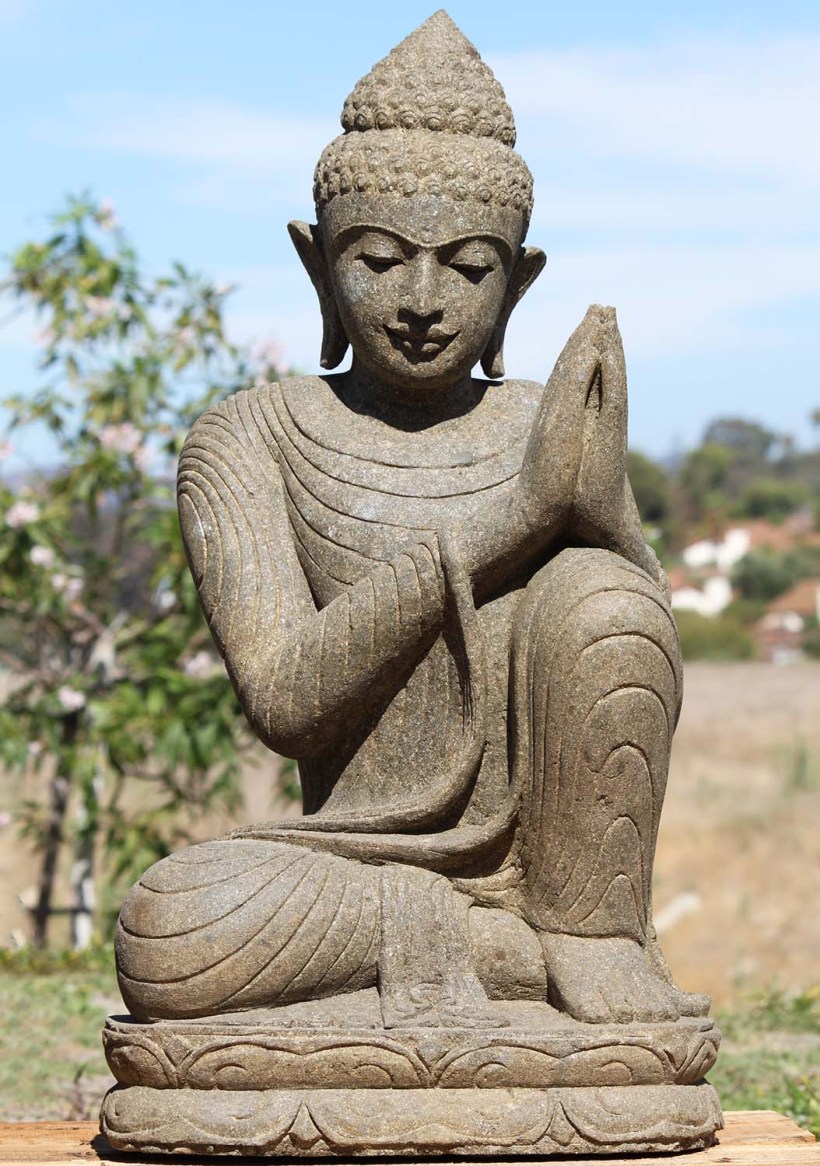
The vital interrelationship of Nature and of humanity, as well as the complex process of evolution and of history, is essentially the manifestation of unity in diversity. Every human being is a compact kingdom with manifold centres of energy that are microcosmic foci connected with macrocosmic influences. There is a fundamental logic to the vast unfolding from One Source through rays of light in myriad directions into numerous centres that are all held together by a single Fohatic force, an ordering principle of energy. The logic of emanation is the same for the cosmos and for the individual. The arcane teaching of the divine Hierarchies, of Dhyani Buddhas, of the three sets of Builders and of the mysterious Lipika conveys intimations of invisible, ever-present, noumenal patterns that underlie this immense cosmos of which every human being is an integral part. The ordered movement of the vast whole is also mirrored in the small, in all the atoms, and is paradigmatically present in the symmetries and asymmetries of the human form with its differentiated and specialized organs of perception and of action.
Modern man, burdened by irrelevant and chaotic cerebration, often fails to ask the critical, central questions: What does it mean to have a human form? Why does the face have seven orifices? What does it mean to have a hand with five fingers? Why is one finger called the index finger and what is the purpose of pointing in human life? What is the significance of the thumb and what is its connection with will and determination, which must be both strong and flexible? Can flexibility and fluidity be combined in human life in ways analogous to what is exemplified in the physical world by all the lunar hierarchies impressed with the intelligence that comes from higher planes? What is the function of the little finger, which is associated with Mercury? What is the connection between speech and this seemingly unimportant digit which is important for those who have skill in the use of hands, whether in instrumental music or in craftsmanship? When one is ready to ask questions of this kind, taking nothing for granted, then one can look at statues of the Buddha and of various gods in many traditions, where the placement of the hand is extraordinarily significant: whether it is pointing above, pointing below, whether it is extended outwards, whether it is in the form of an oblation or receiving an offering, or in the familiar mudra of the hand that blesses. What is the meaning of joining the thumb and the central finger, which is given great importance in mystical texts like the Hymn to Dakshinamurti?
The moment one begins to raise such innocent questions about the most evident aspects of human existence, it immediately becomes clear that pseudo-sophisticated people are prisoners of the false idea that they already know. And yet self-reliance and spontaneous trust are so scarce in the world of the half-educated. Many people are so lacking in elementary self-knowledge that when a person meets another, instead of a natural response of receptivity and trust, there is an entrenched bias engendered by fear and suspicion. This has been consolidated through the establishment of a Nietzschean conceptual framework in which all human relationships are viewed simply in terms of domination and being dominated. This obsessive standpoint drains human relationships of deeper content, of spiritual meaning and moral consciousness. All moral categories and considerations become irrelevant when one entirely focuses upon an ethically neutral and colourless conception of the will. To assume and act as if everything turns upon the master-slave relation is a major block to the development of self-consciousness, as Hegel recognized. Humanity has left behind its feverish preoccupation with false dominance in formal structures. The seventeenth and eighteenth centuries witnessed the emergence of a higher plateau of individual and collective self-consciousness. All men and women are the inheritors of the Enlightenment, with its unequivocal affirmation of the inalienable dignity of the individual, who can creatively relate to other human beings in meaningful dialogue and constructive cooperation.
Rooted in a simplistic but assertive mentality, dissolving all moral issues, the language of confrontation and of submission is irrelevant to the universal human condition and to the hierarchical complexity of Nature. Any person with a modicum of thought who begins to ask questions about the marvellous intricacy and dynamic interrelationships of Nature – questions about the sun and the stars, the trees and forests, the rivers and oceans, and above all about human growth – will readily recognize that no real understanding of the organic processes of Nature can be properly expressed in terms of such jejune categories as dominance and submission. Nor can any meaningful truths about the archetypal relations between teachers and disciples, parents and children, friends and companions, be apprehended through the truncated notion of an amoral will. Human life is poetic, musical and poignant. It has an open texture, with recurrent rhythms, and it continuously participates in concurrent cycles. To know this is to recognize, when viewing the frail fabric of modern societies, that human evolution has not abrogated the primordial principles of mutuality and interdependence, but indeed abnormal human beings and societies have become alienated from their inner resources of true strength and warmth, trust and reciprocity. The Golden Rule remains universal in scope and significance. There is not a culture or portion of the human race, not an epoch in history, in which the Golden Rule was not understood. Without this awareness there would be no social survival, let alone its translation into the language of roles and obligations and into the logic of markets. Reciprocity is intrinsic to the human condition.
Raghavan Iyer
The Gupta Vidya III
Hau’ōli la Pō’akōlu
Hau’ōli aloha Pō’alua

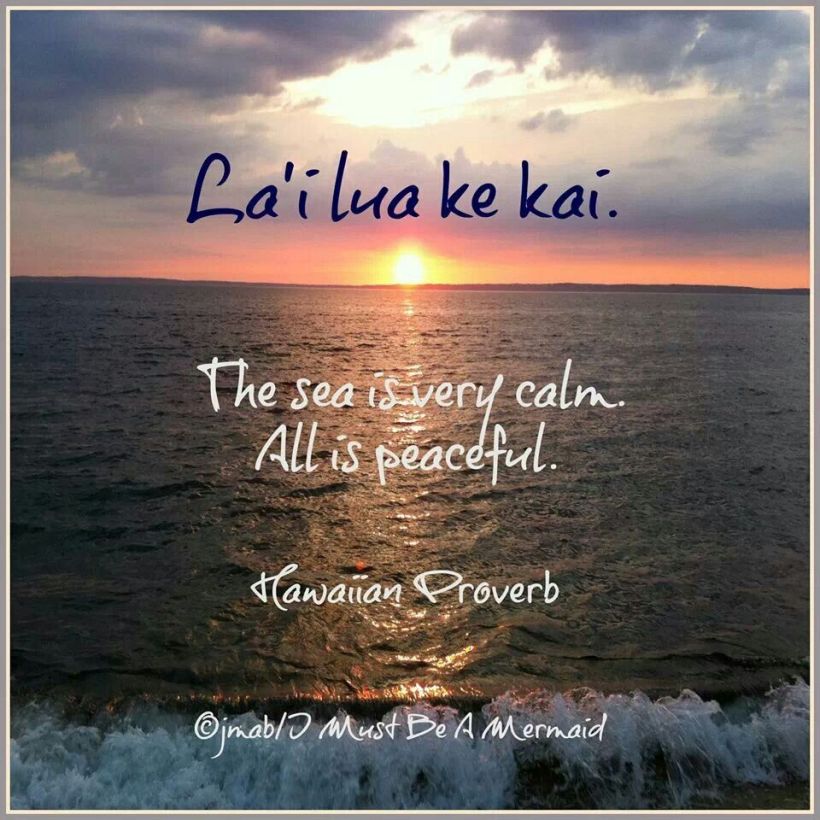
ʻAhuwale kā pōʻokela ī kau hānā ʻia hāʻi. Ī lā maikāʻi nōu. Maluhia a me aloha mau lōa nā hōaloha a me ʻŌhana.
It is through the way you serve others that your greatness will be felt. Have a nice day. Peace and love always, my friends and family.
How to better your Hawaiian accent when speaking Hawaiian – Olelo Hawaii – Hawaiian language lessons
Hau’ōli aloha Pō’alima

Ahuwale kā po ʻokela ī kau hānā ʻia hāʻi. Ī lā hōʻokamahāʻo nōu ʻōukōu. ʻO kā maluhia nō me ʻoe.
It is through the way you serve others that your greatness will be felt. Everyone have a wonderful day. Peace be with you.
‘Olelo ‘Oiwi | Learning To Converse In Hawai’ian | Lessons 1-3
Energy Update | June 15, 2021

Hauʻōli lā Pōʻalua

Aloha ‘āwakea e Hauʻōli lā Pōʻalua ʻōukōu. Hōʻomanāʻo kā lā hiki ‘ōla. Ō kā maluhia nō me ʻoe.
Good day and Happy Tuesday, everyone. Remember to Live the day to the fullest, and live it as your day. Peace be with you.
Hau’oli aloha La’pule

Aloha kākahiāka kākōu a Hau’ōli Lā’pūle. Ē hō’omanāʻo mālāma kekāhi ī kekāhi. Hanu Aloha. Ī lā nani nōu ʻōukōu. Hoihoi!
Good morning and a Happy Sunday to you all. Let’s remember to always take care of and keep well each other. Breathe Aloha. Have a wonderful day. Enjoy!
Hau’ōli lā ʻAlī’i Kamehameha!!

Happy King Kamehameha Day!
Hau’oli aloha Po’alima

Hau’oli aloha Po’aha

ʻUa ʻōla lōkō ī ke aloha. Kokūa ʻaku, kokūa mai. Pēlā kā nohona ʻōhana. ʻŌ kā maluhia nō me ʻoe.
Love gives life within. Watch, observe. Help others and accept help. That is the family way. Peace be with you.
La’au Lapa’au | Grow Mushrooms at Home In A 5 Gallon Bucket (Easy – No Sterilization!)
Growing mushrooms can be complicated- but it doesn’t have to be! In this video, I go over one of the simplest methods of growing mushrooms that pretty much anyone can do at home.
All you need is:
+ A 5 Gallon Bucket
+ Aspen Wood Chips (even from the pet store!)
+ Oyster Mushroom Grain Spawn Happy growing!
La’au Lapa’au | Making Herbal Teas, Tinctures, and Salves with Bevin Cohen
Explore the value of using wildcrafted and locally grown herbs from your own bio-region with Bevin Cohen. Bevin will discuss the quality, potency and sustainability of locally sourced herbs. He will also share the benefits of many well-known herbs, and a variety of methods that can be used to harness their healing properties; including teas, tinctures, salves and more. This will be a fun and fast-paced presentation, packed with useful information for herb enthusiasts of all skill levels.
La’au Lapa’au | How To Use Plantain as Herbal Medicine
In this video, learn how to use plantain as herbal medicine. This instruction is part of home herbalism. Home herbalism is the use of plant medicine for personal health and wellbeing. It means taking care of ourselves, our families, and our loved ones with natural remedies. It is the herbal medicine that we have easy and affordable access to for life’s most common healing situations. You can become a part of this growing movement towards increased personal health, more self-reliance and taking a central role in your own wellbeing. Thank you for watching this video.
Disclaimer: This course is intended to provide educational information for the viewer on the covered subject. It is not intended to take the place of personalized medical counseling, diagnosis and treatment from a trained health professional.
Total Lunar Eclipse | May 26, 2021, 4:00 AM PDST


Meditation | 9Hz 99Hz 999Hz Infinite Healing Golden WaveㅣVibration of 5 Dimension FrequencyㅣPositive Energy
Corona Virus | Indigenous Elders’ knowledge has saved lives during the pandemic
 Memories of deadly disease outbreaks and traditional wisdom have prepared First Nations for COVID-19
Source: Indigenous Elders’ knowledge has saved lives during the pandemic
Hau’oli aloha Pō’alima

Aloha Pō’akahi

Aloha Pō’aono
THEOSOPHY | THE INMOST SANCTUARY – I
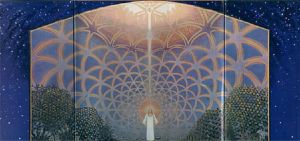
The ‘Master’ in the sanctuary of our souls is ‘the Higher Self’ — the divine spirit whose consciousness is based upon and derived solely (at any rate during the mortal life of the man in whom it is captive) from the Mind, which we have agreed to call the Human Soul (the ‘spiritual soul’ being the vehicle of the Spirit). In its turn the former (the personal or human soul) is a compound in its highest form, of spiritual aspirations, volitions, and divine love; and in its lower aspect, of animal desires and terrestrial passions imparted to it by its associations with its vehicle, the seat of all these.
H.P. Blavatsky
Restoration of the right relationship between the Master in the inmost sanctuary and the incarnated consciousness is gained only through a sacrificial process of self-purification. Obscuring and polluting tendencies nurtured in the mind through its misuse over many lives must be removed by a self-chosen and self-administered therapy. Like the Pandava brothers exiled from their kingdom through their own folly, or like the master held prisoner in his own house by those who should be his servants in the parable of Jesus, the pristine divine ray of the Logos in man is trapped and stripped of its sovereign place in human life unless consciously sought by the aspirant. This invocation of wisdom through the supplication of the mind to the spirit was seen by the ancient Greeks as the cultivation of sophrosyne — the subordination of the inferior element to the superior. It is shown in The Voice of the Silence as the shila virtue — the attunement of thought, will and feeling to the pulsation of divine harmony, Alaya-Akasha. The mind stands as the critical link between the divine and the animal nature. The recovery and right use of the privilege of human existence depend upon the subordination of the elements of the lower rupa existence to the spiritual ideation of Arupa Manas.
The sacrificial posture and selfless motive required for this self-purification can be readily grasped through a telling analogy. There is not a modern metropolis which does not maintain the equipment needed to neutralize the effluvia of human waste and thereby reduce the danger of infection to its population. Similarly, a large number of devices are available, both to cities and to individuals, for the purpose of removing sediments and impurities from drinking water, through distillation, filtration and osmosis, to make it available in a purer and fresher form. With the human mind the same principles of public health and civic responsibility would require that each individual and every society strive to purify the muddy stream of human passions which pollute those coming into contact with it. Every human being has received the crystalline waters of life in a pure and unsullied condition, and therefore everyone has the karmic responsibility for every failure to return these waters to the ocean of life in a pristine condition. Insofar as this responsibility has been neglected by individuals, under karma in successive lives they are self-condemned to immersion in the waters they themselves have poisoned. Under the laws of karma affecting the processes of reincarnation and the transmigration of life-atoms, individuals owe it to their neighbours and their descendants, as well as to themselves, to purify their mental emanations.
In practice, this implies a continuous cleansing of one’s thoughts, one’s words and one’s actions; these in turn fundamentally depend upon the purification of the will. Unfortunately, purification of the will, which is vital to the spiritual regeneration of humanity, is itself seriously misunderstood as a consequence of the process of pollution of consciousness and magnetism. Mired in the morbid obscuration of higher consciousness, too many people suppose that a bolstering of the lower will is a means to survival. Nothing could be farther from the truth. The higher spiritual will does not itself need to be strengthened, but it may be released through the removal of obscurations and hindrances. So long as the will is activated by the individual only on behalf of passions and the illusion of the persona, that will is not worth having. Hence, many people have discovered that the will cannot be released on behalf of lesser purposes. This predicament is conspicuous in those diseased societies which place an inordinate emphasis upon the personal will. Will itself is a pure colourless principle which cannot be dissociated from the energy of the Atman released through breathing. Thus when human beings breathe benevolently, blessing others with every breath, they can release the beneficent will-energy of the Atman. As soon as the will is released on behalf of the personal ego, however, against other human beings, it is blunted. This inevitable paralysis of the antagonistic lower will is indeed a beneficent and therapeutic aspect of karma.
Viewed from a collective standpoint, many human beings can be seen as having been weakened because they have absorbed life-atoms from others who have misused spiritual knowledge and the potency of the higher will. Throughout the world perhaps one in ten persons has insistently used the will against other human beings in this or previous lives. This may have been for the sake of bolstering the insecure identity of the persona or, worse, through the misuse of spiritual knowledge connected with false meditation, indulgence in drugs and mediumistic practices. Since 1966 contemporary society has witnessed the emergence of a number of centres of pseudo-spiritual activity; now it is witnessing the inevitable psychological breakdown of many who were responsible for this moral pollution. The waves of spiritual influence initiated by the descent of Krishna offer golden opportunities to all souls, including those inverted natures self-blocked from inward growth by their own failures on the Path in previous lives. Amongst these there were some too cowardly to make a new beginning, who sought instead to compensate for their own weakness and delusion by cashing in on the currents of the 1975 Cycle. Having forfeited timely opportunities offered through compassion, they are self-destroyed when Krishna takes a firm stand on behalf of the entire human family because they are unable to generate a genuine concern for others. Never having generated an interest in the welfare of the vast majority of mankind, they are self-condemned. Sadly, they cast a long shadow over a much larger class of weaker souls who are affected by them, no doubt through their own delusions and vulnerabilities.
Persons are sometimes drawn into dangerous orbits of misused knowledge through loose talk about such sacred subjects as kundalini, kriyashakti and the activation of the higher spiritual centres in man. Ordinary people who enjoy a normal measure of spiritual health wisely avoid those places where they are likely to hear profane chatter. Through a natural sense of spiritual good taste they simply shun those places where self-deluded con men congregate to make a living off the gullible. Today, because the moral and spiritual requirements for participation in the humanity of the future have become more evident to many people, the market for such deceptive opportunism has begun to diminish. The America of P.T. Barnum, who said that a sucker is born every moment, has been replaced to a large extent by the America of Abraham Lincoln, where, as is well known, one cannot fool all the people all the time. Although many souls have to travel a great distance along the path of self-integration, they have learnt enough not to be duped by pseudo-spiritual blandishments. Just as they have learnt not to believe everything conveyed by the mass media and not to leap at every free offer or supermarket discount, they have also learnt to pass up invitations for instant development of kundalini and every facile promise of spiritual development that dispenses with the judicious control of the emotions and passions.
Even in the difficult area of sexuality the idea of strength through celibacy (e.g. Gabrielle Brown, The New Celibacy, 1980) has gained some currency amongst many people, young and old, who find the burden of ego-games and unequal experimentation intolerable. There is nothing wrong with the sacred act of communion and procreation, and as the ancient Jews believed, God is pleased when a man and a woman come together in true unison. Nor need this issue be obscured by pseudo-arguments concerning the Malthusian spectre of over-population. As the economist E.F. Schumacher pointed out, even if the entire population of the globe were concentrated in America, this would result in a population density no greater than that of Great Britain, a nation long noted for the spaciousness and greenery of its countryside. North America itself, over its ancient and almost entirely unwritten history, has supported many varied civilizations, some of which displayed a much greater spiritual maturity than is evidenced in its recent history. Broadly, one cannot understand the physical facts of life on earth, much less the spiritual facts of life, through a language of conflicting claims and counter-claims, rationalizations and compensatory illusions, or pseudo-sophisticated statistical arguments based upon a selfish and shallow view of the nature of the human psyche.
Raghavan Iyer
Hermes, February 1982
Aloha Po’alima

Theosophy | THE MYSTERY OF THE EGO – I
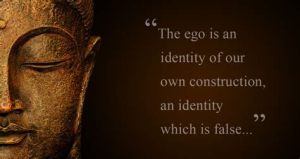
If we feel not our spiritual death, how should we dream of invoking life?
Claude de St.-Martin
The sure test that individuals have begun to ascend to higher planes of consciousness is that they find an increasing fusion of their ideas and their sympathies. Breadth of mental vision is supported by the depth of inmost feeling. Words are inadequate to convey these modes of awareness. Mystics cannot readily communicate the ineffable union of head and heart which has sometimes been called a mystic marriage. Such veiled metaphorical language may often refer to specific centres of consciousness in the human body. If the body is the living temple of an imprisoned divine intelligence, the metaphorical language of the mystics points to a tuning and activation of interrelated centres in the body. There is a mystical heart that is different in location and function from the physical heart. There is also a seed of higher intellection, “the place between thine eyes”, which is distinct from those centres of the brain that are involved in ordinary cerebration. The more a person is able to hold consciousness on a plane that is vaster in relation to time and space, subtler in relation to cause and motion, than normal sensory awareness, the more these higher centres are activated. Since this cannot take place without also arousing deeper feelings, the original meaning of the term ‘philosophy’ – ‘love of wisdom’ – is suggestive and significant. There is a level of energy released by love that is conjoined with a profound reverence for truth per se. This energy releases a greater capacity to experience self-conscious attunement to what is behind the visible phantasmagoria of the whole of life, drawing one closer to what is gestating under the soil in the hidden roots of being, and closer to the unarticulated longings of all other human beings. Everyone senses this kinship at critical moments. Sometimes, in the context of a shared tragedy or at a time of crisis caused by a sudden catastrophe, many people experience an authentic oneness with each other despite the absence of any tokens of tangible expression.
To bring the disciplined and developed creative imagination into full play is to do much more than merely to have a passive awareness of sporadic moments of human solidarity. These moments are only intermittent, imperfect and partial expressions of vaster capacities in the realms of thought and feeling. To draw out these capacities fully requires that we withdraw support from everything that is restrictive. The higher Eros presupposes a kind of negative Eros, a withdrawal of exaggerated emotional involvement in the things of this world, in sensations and sense-objects, in name and form and in ever-changing personalities. This withdrawal is based upon a recognition that there is a lie involved in superficial emotion, and a calm awareness of a noumenal reality which is unmanifest. To realize this is to prepare for the potential release of the higher Eros, but this is truly difficult because to negate means to come to a void. There is no way to withdraw from the froth of psychic emotion and the tangles of discursive reasoning without experiencing a haunting loneliness and immense void wherein everything appears meaningless. Though painful and even terrifying, this is the necessary condition through which the seeker must pass if he is to die so that he may be reborn. The Voice of the Silence teaches that “the mind needs breadth and depth and points to draw it towards the Diamond Soul”. It must actively generate these mental linkages through deep meditation upon the suffering of humanity, seeing all individual strivings as part of a collective quest for enlightenment, focussing with compassion upon the universal suffering that transcends yet includes all the pains and agonies of all living beings.
When a person can connect and coordinate these periods of deliberate meditation and conscious cultivation of universal compassion, and experiences ordinary life through these contacts with the realm of non-being, then the purification and renovation of the temple has begun. There is a starving out of entire clusters of elementals, minute constellations of matter that have been given a murky colouring and destructive impress, and which make up the astral vesture. These matrices of frustration, limitation, anger and self-hatred are gradually replaced by new clusters of life-energy – readily available throughout nature – which are more attuned to the highest abstract conceptions of space, time and motion. Thus there is a greater incarnation of the indwelling divine nature. Every human body may be seen as a mystic cross upon which the Christos within is being crucified. To nurture radical renovations in the vestures through the concentrated mind and disciplined imagination, by forging connections between points touched in meditation and in everyday life, is to make possible, after the Gethsemane necessitated by collective Karma, a fuller manifestation of the Christos, the god within. This long journey is coeval and coequal with the whole of life and the entirety of mankind. When individuals discern in their own quest a cosmic dimension, impersonality and selflessness in their endeavours become an authentic affirmation of what is potentially within all. It is impossible to grow in awareness of what one truly is without finding that the barrier between oneself and other beings weakens. There is an internal integrity to this quest, and, therefore, it is pointless to pretend that all at once, simply by words, gestures and rituals, one can suddenly come to a universal love of all mankind. Of course, some desperate people, through drugs or other adventitious aids, experience enthralling intimations of the wonder of life or of its unity. These are the result of temporarily loosening the screws in the complex psychophysical organism called the human body and should not be mistaken for true wisdom. The crucial difference lies in continuity.
The more consciously one is able to sense the universal presence of the true Self, the more one can maintain continuity. The more one can see the moment of death and its connection with the present moment, the more one can participate in the unmanifest core of the universal quest. While the mystical capacity for sensing cosmic Eros grows, the desire to express it declines. Those who are caught up in external appearances crave messianic miracles and want to treat the universe as if they could manipulate it. This is a stumbling block to the quest. The real quest has an integrity that can be tested continuously because it must release an energy of commitment to the whole. Just as it is only through the cessation of the repetitive revolutions of the lower mind that higher thought is released, it is only by the cessation of limiting desires on the heterogeneous plane of perception that the true Eros may be released.
The Voice of the Silence teaches: “Shun ignorance, and likewise shun illusion. Avert thy face from world deceptions: mistrust thy senses; they are false. But within thy body – the shrine of thy sensations, seek in the Impersonal for the ‘Eternal Man’; and having sought him out, look inward: thou art Buddha.” Tragically, the divine origin of human consciousness is all too often forgotten by individuals who permit themselves to become entrapped in “world deceptions”. Just as people in a room with artificial light forget the light of the sun, consciousness, when it is focussed through a lucid zone that points in the realm of externals in one direction, is in the very activity of awareness shutting off a larger consciousness. Human beings reinforce each other in assigning reality to the visible tip of the whole of life, to that which is maintained and activated by words, names and desires which have public criteria of recognition that can be fulfilled on the plane of external events. On the other hand, an individual who senses the rays of the Spiritual Sun, enfolded in the blackness of the midnight sky, comes closer to wisdom. Participating in the reflections of lesser lights, while retaining an inward reverence for the cosmic ocean of light, is living within the moment with a calm awareness of eternity. The Secret Doctrine suggests that what is called light is a shadowy illusion and that beyond what are normally called light and darkness there is noumenal Darkness which is eternally radiant.
Raghavan Iyer
The Gupta Vidya II
Aloha Po’aha
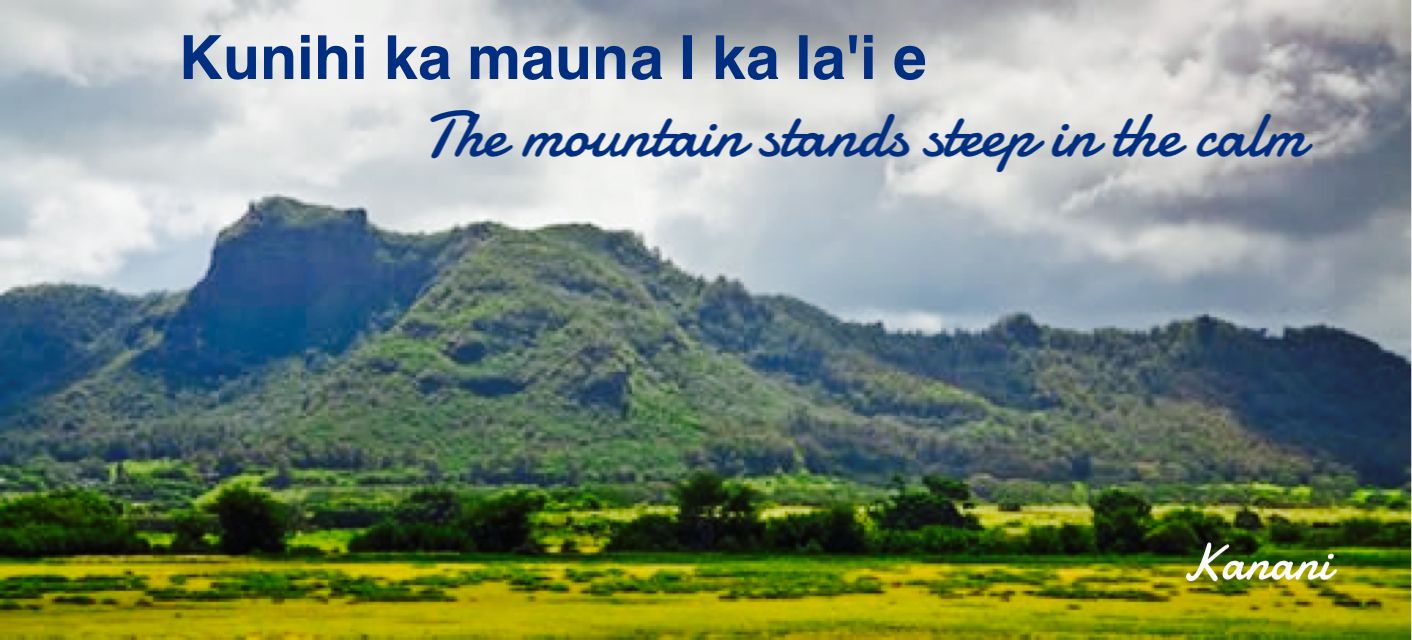
Aloha Po’alua

Welina mai a aloha kākahiāka kākōu. Kona kupanaha Pōʻalua. Hōʻouna aloha ī na mea a pau ʻo ʻōukōu. Loāʻa he nūi lā kākōu. ʻO kā maluhia no me ʻoe.
Greetings and good morning,everyone. It’s a wonderful Tuesday. Sending aloha to you. Everyone have a great day. Peace be with you.
Happy Mothers Day!


Reiki | Congratulations, Grandmaster Keidra Hoskins

La’au Lapa’au | Plantain Salve – How to make it, and why you’d want to
This plantain salve recipe is so easy to make and a great introduction to the fascinating world of homemade herbal products. Use it on the whole family, for bites, stings and other skin irritations.
Aloha Po’alima
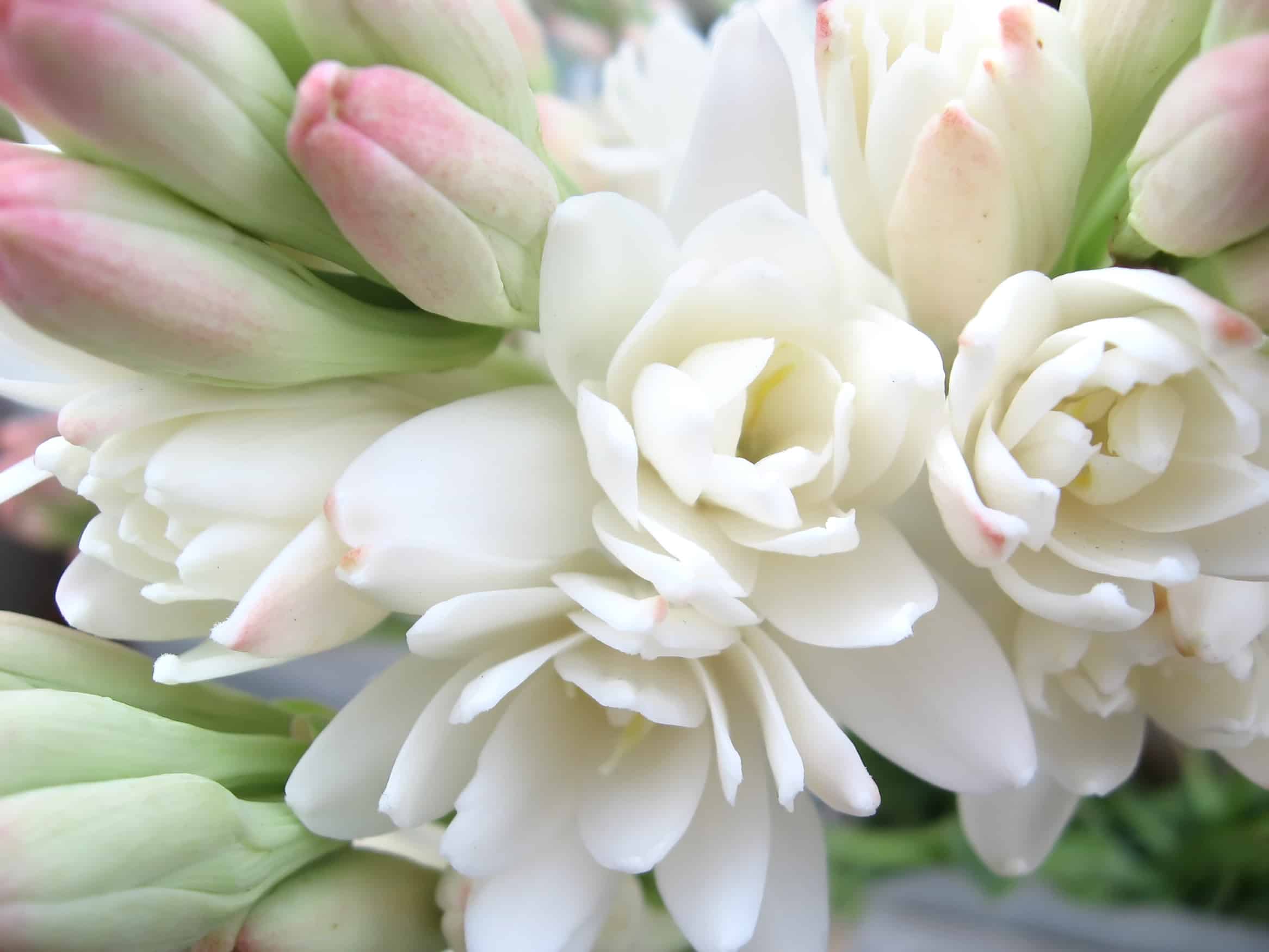
ʻŌla Aloha, Ē Aloha, Pūʻu Aloha, Hanu ke aloha ī kā hānā Pono.
Living aloha, being Aloha and breathing aloha is righteous inner spiritual work.
Hau’oli la Po’aono

Ē hōʻokomo ī ke ʻĀkūa koa ī lōkō ʻo ʻōukōu ē hōʻomālāmalama ī ko ʻōukōu mālāmalama. Lawe ī kōu lā ā ʻapo ʻeā ʻēa. ʻO kā maluhia nō me ʻoe.
Be the warrior God put inside you and let your light shine. Take your day and embrace it. Peace be with you.
Hau’oli aloha Po’aono
Ē loāʻa ī kahi lā weliweli. Noho pōmaikāʻi a me kā maluhia nō me ʻoe.
Let’s have a terrific day. Stay blessed and peace be with you.
 Hālau 'Aha Hui Lānākila