Metaphysical imagination, continuous reflection and deep meditation are required for real understanding. One could learn by looking at Nature, the inimitable teacher. Nature is a servant of Adepts, but a teacher to everyone else. Even on the physical plane, potential energy has something to do with height. Consider what happens to the immense electrical energy potentially available in the downward trickle of mountain streams. Where does it come from? It represents nature’s work as an alchemist in taking the moisture in the ocean and evaporating it through heat. Through the evaporation and raising of moisture to a sufficient height, nature is able to convert alchemically that water so that it is not energically the same as it is when at sea level. There are only a few drops where a stream begins, but there is a vast potential energy present. Yet that potential energy is in fact an actual energy in relation to the potential energy which went into the whole process of alchemization begun by heat and which will also be present when the process is complete.
There is something in higher states of consciousness analogous to the experience of a condition which is neither hot nor cold, but where there is a vivifying participation in the cool blue flames of a soft light which can release a steady stream of energy and which could be used at will in any direction on any plane beginning with ideation and working downward. One soon reaches a point where one has to relinquish conventional distinctions and also recognize the poverty of all mundane concepts. There is some similarity between the image-making power of a newborn babe, innocently floating on the ocean of life, and the disciplined imagination, gently guided by a benevolent will, of the detached and all-seeing Adept. There is more similarity between these than between the disciplined imagination of the Adept and the impressionistic visions of excitable prophets. These latter are chaotic, and have only a limited validity in relation to the illusions of men in the realm of so-called reality made up of divisive and tortuous, impotent and aborted, actualizations. Confused visions are not merely crude and delusive, but actually generate a perverse and demonic energy.
Patanjali’s Yoga Sutras refers to two kinds of energy. One kind of energy, which might be called a sort of higher prana, gives one level of understanding. The other kind of energy cannot remotely be tapped, except through a serene continuity of consciousness called sama or similitude. In such a state, a person can consciously make luminous the sphere surrounding his rupa and effortlessly sustain self-luminosity. This is only possible at a high level of ceaseless meditation upon the one secondless, universal source of divine light. It involves the theurgy wherein a person sees all beings as spheres of light within a vast universe which is a limitless, boundless sphere of light. From this perspective, one would be able self-consciously to transmute every atom of one’s grosser vestures and radiate out, from above below and from within without, that supreme self-luminous noetic energy which can light up the atoms and arouse the potentials that slumber in human beings. No society, group or civilization can self-consciously harness this energy – even for the sake of the collective good – without fulfilling the moral and psychological prerequisites that are needed. There is no possibility of access to Akashic energy without fulfilling the ethical preconditions that prevent its misuse. People might, however, in a misguided search for the Alkahest, foster a multitude of delusions. Strictly speaking, all the psychic states are shadowy and insignificant in relation to the wisdom of noetic insight.
One could, with unwavering detachment, profound disinterestedness, and unconditional benevolence towards all, sustain a higher indifference in relation to every aspect of this world of manifestation, and yet see all relativities from the standpoint of unconditioned consciousness in which the self-luminosity of the divine is ceaselessly present. It is necessary to discriminate between the turbulent atmosphere of divisive, separative thought coalescing with psychic forces and the pellucid strength generated by the noetic energies of sustained altruistic thought. Proximity on the physical plane has nothing to do with co-adunition and consubstantiality on higher planes of consciousness. Human beings carry their own problems around them, creating and living in their own world. Maya or deception accompanies the notion that because people are close together on the physical planes they therefore share a common access to the same current of ideation. The situation is quite different if persons are consciously aware of the thoughts and energies they release. At the highest level, there is no real distinction between thoughts and feelings and noetic energies. They are intermeshed. They are emanations which involve noetic thought, Buddhic feeling and spiritual energy. These emanations will always bless, but especially those who are willing to expel from their own vestures chaotic and befouled energies.
All aspirants must do something on their own. It cannot be done for them. They must aid in the conscious and continual purgation of these muddled matrices, the fuel of their kama manas, so that the void can be filled by streams of noetic energy. But this would be very misleading if a person expected it to happen suddenly: hence Plato’s metaphor of the leaky jar in Gorgias. If a person made it a habit of allowing himself to be filled up with foul matrices only to eliminate them, merely out of soul-disgust, and then was able out of unconscious receptivity to receive a great outpouring of higher energy – it could not be retained. One cannot retain noetic energies if one has cut astral grooves that can only channel lower emanations. One would be like a leaky jar that has been so befouled that every time it is emptied, and pure fresh water is put into it, the fresh water gets contaminated. In the process of dynamic interchange of life-atoms, the fresh water would be expelled by evaporation.
A person has to do those basic things which will help produce more fundamental, stable, reliable and long-term changes in his vestures. One must establish points of contact and connections between the highest thoughts, feelings and states which one can maintain in daily life. One can experience the vibrant ocean of life-energy when at sunrise or at sunset one is able to experience the majesty and joy of the burgeoning light hidden behind the vast vista of Nature’s wealth of manifestation. Old cultures practised self-conscious modes of purification. What is the equivalent on the mental plane to bathing, to becoming ready to receive the manna that one hopes will fall from heaven? What is the equivalent of wanting to share it on the plane of thought and feeling with those who need help, or with those whom through the natural course of events one could help? One’s own integrity and honesty, as well as toughness, are involved. Fearlessness is the defining characteristic of spiritual strength, and is the only basis upon which one could release truly noetic energy. No man could suddenly jump from being a concatenation of fears to supreme fearlessness. The very fact that one wants to jump means one is somewhere afraid of failure, hoping for spiritual favours or that partiality will work on one’s behalf. What is that self that one is so anxious to protect, and on behalf of which one has to be so afraid and to seek favours?
In the Bhagavad Gita one could see unlimited applications of the central teachings, not merely to life conceived in terms of events, external decisions and particular duties, but in terms of a noble and noetic consciousness that must be vigilantly maintained with increasing detachment and without fear or wish for favour. Then, in a state of inward receptivity, one could enter the world of divine light, the light of the Logos within every man and behind and beyond the universe, a world in which every thought and feeling is instantaneously translated into altruistic action for the sake of all.
In order to release soul-memory and activate one’s higher faculties, one must be fortunate enough to have come consciously and voluntarily to the spiritual life, not out of any compensatory motives but out of love and reverence for Divine Wisdom and with a deep longing to benefit humanity. Only those who live and breathe benevolently can avoid the awful consequences of misappropriating the higher energies in the service of the lower, thereby forfeiting the great opportunity gained under karma of coming closer to the immemorial Teachings and to authentic spiritual Teachers. For such seekers who are suffused with a profound humility and a deep desire for learning for the sake of others, there will be a natural protection. True shravakas or learners will be able to use the archetypal method from the first, proceeding from above below and from within without and emphasizing at each stage the steady assimilation of mental and spiritual food through moral practice. There need be no partiality and imbalance, no one-sidedness or bias, in the apprehension and application of Gupta Vidya. As Mahatma M. pointed out,
In our doctrine you will find necessary the synthetic method; you will have to embrace the whole – that is to say to blend the macrocosm and microcosm together – before you are enabled to study the parts separately or analyze them with profit to your understanding. Cosmology is the physiology of the universe spiritualized, for there is but one Law.
In order to embrace the whole, one must grasp the fundamental continuity of cosmic and human evolution, establishing one’s consciousness in a current of Buddhic compassion and unconditional love for all that lives. One must learn to move back and forth continuously between the macrocosmic and the microcosmic. One must strive to see the relevance of universal ideation to specific contexts. One must ever seek to bridge the universal and the particular in waking consciousness, maximizing the good even in highly imperfect situations. Tremendous aid can come through the Buddhic stream of Hermetic wisdom pouring forth from the Brotherhood of Bodhisattvas. With a mind moistened by wisdom and compassion, one may return again and again in meditation and self-study to seek appropriate connections and correspondences between the macrocosm and the microcosm. Drawing upon the rich resources of Gupta Vidya, one must grasp its universal synthesis before attempting to study the parts separately or analytically. This means that one must engage in daily tapas or mental asceticism. In the Aquarian Age we need to relinquish the entrenched modes of the inductive and analytic mind, replacing them by cultivated skill in deep concentration, creative imagination and calm receptivity towards universal ideation. In this way one will come to comprehend the connections between the most primordial and abstract and the most dense and differentiated levels of manifestation of consciousness and matter. The continuity of consciousness which one seeks is, in fact, a mode of mirroring the metaphysical integrity of cosmic unity.
If one can learn to let go of the rationalizing pseudo-intelligence of the personality, then one can begin to draw upon the natural strength of Manas. One must learn to take the simplest ideas and apply them universally. Action based upon spiritual insight has a moral simplicity that neither can be understood nor imitated by the lower mind. For a long time in the life of any disciple, it is wise to consider the spiritual vision of the Third Eye as equivalent to moral discrimination. This is eloquently illustrated in the life of Mohandas Gandhi, who was skilful in finding potent analogies between the circulation of blood and global economics or psychological health. Anyone who arouses Buddhi can take seriously the integrity of the cosmos and deduce practical wisdom. One can learn to perceive vital connections between the mental and spiritual health of individuals and society as a whole, and apply these perceptions to oneself.
If one gains some proficiency in this daily use of Buddhic intuition, one will soon find that it becomes meaningful to use the myths and symbols of Gupta Vidya as a basis for meditation upon the structure and function of the human form. One must learn to contemplate the cosmic dimension of human existence and become capable of deriving from such contemplation a vital sense of sanctity, plasticity and potentiality in relation to the physical body. Great philosophers and mystics have done this, seeing in the human form the paradigmatic metaphor for all growth. They have used the analogy of sight when speaking of soul-knowledge and spiritual wisdom, referring to the eye of the soul and the mind’s eye. But even to appreciate this analogy, one must to some degree awaken Buddhi. Just as one can hardly convey the operation of sight and vision to a person born blind, one cannot readily communicate the nature of spiritual vision to those in whom it is totally blocked. Similarly, one could hardly convey the thrills and challenges of mental perception to persons with undeveloped mental sight.
As the ability to apprehend analogies is itself an essential element in soul-vision and also conducive to the awakening of the inward capacity for noetic insight, it is always wise to recognize and acknowledge the limits and levels of human experience. Without actually developing spiritual and mental insight and tasting the ineffable bliss of authentic mystical vision, one cannot comprehend or even appreciate the scope and range of possible peak experiences. Owing to the pervasive principle of continuity in the cosmic order and in human nature, there is the ever-present possibility of transcending the limits of known and shared experience. By using analogies and correspondences to move from the familiar and the bounded to the unfamiliar and the unbounded, one may gain sufficient skill in the dialectical art to subdue the mind and absorb it into the pulsating consciousness of the spiritual heart. In a mystical sense, one can make the mind whole, and enlist it into the service of the heart, while at the same time making the heart intelligent and strong.
In order to attain a state of heightened spiritual awareness and effortless vigilance, compassion and receptivity, it is essential to recognize and remove persisting discontinuities in consciousness. The familiar gaps between sleeping and waking, between dreaming and deep sleep, between ephemeral fantasies and enduring commitments, are connected with lesions in the subtle vestures which induce a fragmentation and distortion of spiritual insights. One must patiently identify these deficiencies, seek out their root causes, and initiate an appropriate course of corrective exercises. In the meantime, it is meaningful to establish and strengthen a continuous current of deep ideation upon the highest conceivable ideals, principles and goals relevant to the future of humanity. The mind and heart may be fused through an ardent devotion to Bodhisattvic exemplars of continuity of consciousness in the ceaseless service of all humanity. Through this very attempt, even the sick may slowly heal themselves and seek satsang, the company of the wise, who can help to nurture the seed of bodhichitta, the potent resolve to awaken the Wisdom Eye for the sake of universal welfare.
During the descent of Spirit into matter, the spiritual and physiological processes are strictly coordinate. For example, if there is a loss in the inward power of seeing, the organ of sight is also commensurately weakened. This is equally true of all human faculties and their physical centres. Various atrophied organs survive in the human constitution, and these are hardly understood by contemporary physiology or medicine. They are virtually irrelevant to the vast majority of human beings. Sages of old knew that the disciplines which can truly help to reawaken inner vision are radically different from the artificial stimuli avidly sought during the latter Atlantean age. Yet, the appeal of these poor substitutes points to the pervasiveness and inevitability of the eclipse of the inner senses by overdeveloped outer senses. Most human beings shared in this psycho-physical heredity that was caused by the gross abuse of faculties and powers during the Atlantean period.
If there is an excessive development of the physiological eyes at the expense of the Third Eye during a particular phase of evolution, and if all human beings are involuntary participants in this process, then as later phases of evolution are reached human beings could awaken flashes of that original interior perception. As the balance of evolution shifts from the phase of involution of Spirit into matter to the evolution of Spirit out of matter, there is a corresponding lightening of the vestures and a quickening of the veiled organs of inner vision. Human beings could have flashes of perception, even though they might not be able to recover that perception fully, let alone quickly. In meditation they might experience a certain swelling and expansion, an agitation or heating up, connected with the intensity of activity in the pineal gland. No known physiological function may be assigned to the pineal gland, and however much medical practitioners study the human corpse, they will never discover its real importance during life. Some do recognize that the pineal gland indirectly regulates hormone-producing glands, and it is now known that in animals it is sensitive to light. In fact, human beings can during deep contemplation or during some states of ecstatic trance have flashes of the expansion and contraction that affect the pineal gland and pituitary body. These in turn affect their perception of images and sounds. Even though there was an inescapable element in the loss of its original function, the Third Eye itself was not wholly lost. It is still dormant and remains intact in the subtle vestures. The problem for present humanity is the proper coordination between the functioning of the Third Eye in the subtle vestures and the physical body with its two eyes and the atrophied pineal organ.
If the natural veiling of spiritual sight through the inordinate development of the physiological vesture was the whole story, then humanity would not have melancholy recollections of the Golden Age, nor such a strong propensity towards gloom and doom, externalization and salvationism. In fact, the persisting dominance of entire theologies based upon guilt and sin at this particular point in human evolution is itself indicative of the perfidious moral history connected with the loss of the Third Eye. No matter how much contrasting theories of guilt and sin claim to account for the present human predicament, they can only gain credence through vulnerabilities in the human psyche. These revolve around a morbid sense of failure, pretence and pride, which are the unnatural result of past misuse of spiritual powers. Human beings may identify evil with violence and separativeness, with everything that is inimical and arises out of blindness and greed, stupidity and self-deception. Nonetheless, all these represent secondary effects. At the causal level, evil pertains to the perverse misuse of the very highest spiritual gifts. Such misuse induced religions to fall victim to priestcraft and lose touch with the Mysteries. Spiritual evil made human beings, who innately have extraordinary powers such as Kriyashakti and Itchashakti, lose all of them. Spiritual evil and deliberate misuse were a violation of the evolutionary programme of Nature.
When spirituality and all the divine powers and attributes of the deva-man of the Third had been made the hand-maidens of the newly-awakened physiological and psychic passions of the physical man, instead of the reverse, the eye lost its powers. But such was the law of Evolution, and it was, in strict accuracy, no FALL. The sin was not in using those newly-developed powers, but in misusing them; in making of the tabernacle, designed to contain a god, the fane of every spiritual iniquity.
The Secret Doctrine, ii 302
The deleterious consequences of this profanation cannot be blamed upon the logic of descent of Spirit into matter. They are the terrible karma of those who, far from merely becoming enslaved by selfish desire and sensory indulgence, in fact became proficient in treachery, blasphemy, profanation and betrayal of the sacred, especially in sacrificing the welfare of others for the sake of self. This has nothing to do with any passing weakness owing to a natural obscuration of faculties. Whatever the ‘ills’ that mortal flesh may be heir to, the physical body is not the source of spiritual iniquity. As H.P. Blavatsky indicated,
the reader who would feel perplexed at the use of the term ‘spiritual’ instead of ‘physical’ iniquity, is reminded of the fact that there can be no physical iniquity. The body is simply the irresponsible organ, the tool of the psychic, if not of the ‘Spiritual man’. While in the case of the Atlanteans, it was precisely the Spiritual being which sinned, the Spirit element being still the ‘Master’ principle in man in those days. Thus it is in those days that the heaviest Karma of the Fifth Race was generated by our Monads.
Ibid, ii 302
One must calmly contemplate how this spiritual sin arose and how it engendered enormous ruthlessness and extreme selfishness as well as an overpowering obsession with external dominance and a deeply entrenched resistance to admitting any fault, acknowledging any responsibility or making any amends. Through the perverse misuse of the highest powers with which they were entrusted, vast numbers of sick souls were trapped in a tragic condition wherein they were unable and unwilling to come to terms with their own karma and virtually incapable of finding or even seeking their proper place in the moral order of the cosmos and of society. Owing to this diseased perversion and compulsive inversion, an appalling corruption of consciousness resulted, which cannot be suddenly remedied at some future point in evolution, even when the interconnection between the subtle centres and physiological organs is radically altered. It is indeed imperative for the spiritually corrupt to begin now to reverse the karma of past misuse if they would at all reawaken spiritual vision and continue to participate in self-conscious human evolution in future races.
Certainly, it would be of great help to seek, and show true humility, amidst the company of stronger souls whose karma is untainted by ingratitude and perfidy in former lives. It is always salutary for everyone to admire and emulate freedom from a sense of separativeness wherever one sees it in others. This is ever preferable to the contagion of abject selfishness, stark ingratitude, rancour and envy. Anyone can attempt to make real for oneself the latent spiritual goodness, purity and innocence that one can re-cognize in any others around. Authentic admiration and emulation can be powerful purifiers for any human being, let alone for those who come into the magnetic orbit of a spiritual Teacher. It can bring one in closer touch with one’s own spiritual heritage from the Third Root Race, which is even now recapitulated in childhood and infancy. Nonetheless, the root causes of spiritual and moral blindness must be faced. Until they are confronted, the proper awakening of spiritual vision is impossible. This brings up the ultimate question of authentically accommodating the idea of universal compassion and enlightenment.
Can one develop sufficient self-transcendence and such a profound concern for the spiritual welfare of all human souls that one’s entire conception of desire is revolutionized? When this becomes possible, one can be so creative and so saturated with universal compassion that one simply does not have any craving, let alone a compulsive need, to consider any other human being as a mere object for one’s own sensuous gratification. There is a radical change in one’s level of consciousness, and this has a decisive effect on the tropism and texture of elements and life-atoms in the subtle vestures and in the physical body. The flow of energy within the spinal cord is transformed, affecting the interaction between the pineal gland and the pituitary body, together with the medulla oblongata and the multiple centres of the brain.
It is only if one apprehends the necessity of these fundamental transformations in human nature that one can recognize that the essential logic of human evolution did not envisage such damage to spiritual vision. To grasp this is to be ready to engage in an examination of one’s motives, one’s potentials, one’s capacities and the hindrances that obstruct one’s consciousness. Through tapas and daily meditation one may appreciate the feasibility of increasing continuity of consciousness between waking and sleeping, between life and death, bridging all the pairs of opposites and transcending the succession of time. One may then come to comprehend that the Third Eye has retreated from without inwardly because an earlier phase of the logic of evolution extruded it from within without. The withdrawal inward of the organ of the Third Eye corresponds to a greater withdrawal of consciousness from concretization, which is indeed crucial in the current phase of human growth and maturation. Concretization of consciousness does not refer only to the amount of stimuli on the physical or sensory plane; it also takes place through limiting concepts and mental ossification, through craving for certainty, through harsh judgementalism and an addiction to self-pity and even nihilism. The inability to restore the fluidity of ideation on metaphysical abstractions, spiritual ideas and moral ideals is the sad consequence of concretization and externalization.
Whatever corruption of consciousness originally occurred has been compounded many times over through repeated failures to come to terms with the propensity to prolong spiritual iniquity and accelerate self-destruction. This cannot be put right instantly, and to imagine otherwise is only a symptom of the basic problem. One must resolve to try, to try and try again. In order to strengthen this resolve, the Teachers of Gupta Vidya have sought to share relevant portions of arcane knowledge about the history of the Third and Fourth Root Races. Some understanding of past evolution is essential if one seeks to grasp the logic and significance of systematic self-training and self-testing. In order to rejoin the forward movement of humanity, one must realize that all human beings are fallen gods, disinherited from their divine estate through the loss of the eye of wisdom. As a result, they have become almost exclusively dependent upon sensory perception. And yet, the actual range of the physical sense-organs has become narrower and narrower over time. Since the energy of spiritual life is independent of physical form and matter, the more preoccupied one is with the physical form and with sense-perceptions, the more one is alienated from the true source of strength, volition and self-direction.
When individuals initially confront this problem, they run the risk of entangling themselves in what might be called a meta-problem. Contacting the Teachings of Gupta Vidya and reading about the earlier races of humanity, the karma of Atlantis and the loss of the Third Eye release latent forces within one’s nature. The processes which originally held one back can repeat themselves in one’s apprehension and use of arcane wisdom. If one’s basic loyalty is to the world and to one’s self-image on the personal plane, then whatever vows and resolves one adopts can only operate and have force on that plane. One may maintain a sanctimonious charade reminiscent of hypocritical religion and monkish façades. One may even manage to conceal the persistent play-acting from oneself for a long time. Inevitably, the time comes when one recoils from the sham with self-loathing and a mixture of indignation and despair. This is a tragic and pitiable condition for any human soul. The danger of becoming trapped in this meta-problem must be coolly confronted, since the restoration of spiritual vision cannot occur without unleashing the very tendencies that originally led to spiritual blindness.
Typically, this problem shows itself in a grasping attitude towards the Teachings of Gupta Vidya. Instead of putting oneself in the position of a postulant who is wide awake, who absorbs through osmosis and calmly assimilates the Teachings, seeking to apply them to daily duties and encounters, one becomes addicted to over-analysis and judgementalism. Through one’s continuing contact with the Teachings, there is a powerful quickening of the energies available to the restless lower mind and the attendant risk that these energies will be appropriated by the ahankaric and acquisitive self. When the individual receives more spiritual food than he or she is able to assimilate on a higher plane, then kama manas becomes hyperactive, destructive and harsh. Fascinated with its own weaknesses and faults, it ceaselessly looks for vulnerabilities in others and even becomes adroit in self-serving rationalizations and endless excuses. As a result there arises a powerful blockage to the release of intuitive insight.
It is through the power of Buddhic intuition that individuals are initially drawn to the Teachings of Gupta Vidya. In learning a language, one must try to speak, making mistakes, correcting them, and thereby gradually gaining facility. If this is true of ordinary language, it is much more so with the language of the soul. Spiritual intuition is like fire. It is only through the use of real fire that fuel can be kindled, and wherever real fire is used, there is the risk that it will be misused. This is paradigmatically true with regard to the Promethean fire of mind given to humanity over eighteen million years ago. Every neophyte who would approach the Mystery-fires must be prepared to assume full responsibility for the right use of the fire of knowledge. The more one has the proper qualifications to become a chela, the more one is able to assimilate and reflect deeply and patiently upon the Teachings, endowing them with vivid relevance to daily life. The fire of Buddhi can become quickened through the study, contemplation and practice of Gupta Vidya. As Krishna affirmed in the Bhagavad Gita, in the course of time spiritual knowledge will spring up spontaneously within oneself.
One must use with care those living messengers called words, and this reference to messengers has to do with different classes of elementals, all the myriad invisible centres of energy that permeate the diverse departments of Nature. To be full of the fire of devotion and to do the best work one can, one must have the right basis in thinking. The immortal soul is capable of immortal love, of immortal longings that may summon the life-essence that permeates this globe, the omnipresent spirit that is dateless and deathless. Everyone is inherently capable of an unending, unconditional love and courage and endurance, ready “to suffer woes hope thinks infinite”. The depth of devotion depends upon the level of being. Those who are unafraid of death, who see themselves neither in terms of the body nor in terms of the mind, but as immortal monads, can generate and sustain devotion to the greater hearts and minds of the Bodhisattvas. This constant devotion is in the context of universal mind or Mahat, and the hebdomadal heart of the cosmos. They come under the protection of supreme compassion, the universal umbrella of Dharma. When devotion thus becomes a sovereign talisman, it is continually enriched by yajna and tapas, sacrificial meditation. The wise are those who, starting from small drops of genuine devotion, humility and wisdom, make them grow. They are wise because they grow the way Nature grows. They will, of course, make mistakes, but as long as they maintain their original recognition of the utter simplicity, the transparency and truth of devotion, they can strengthen the current of resolve and regeneration. Magic is possible where there is authenticity, continuity and a sense of proportion, where there is sacrifice, care and a willingness to learn, as well as a capacity to merge the little self in the greater Self.
The path of spiritual attention is not easy, although anyone can make a beginning by trying to understand. Those who still have desires should pursue the path of sublimation through sacrificial works. To those who are neither completely indifferent nor too much attached, the devotional path bears fruit. One is not expected to be perfectly indifferent to everything nor suddenly to show effortless mastery in the practice of devotion. Devotees have their many limitations, but they are expected to moderate their attachment to the fruits of results. Then the path of devotion will bear fruit at the moment of death or in other lives. The mathematics of the universe is exact; one merely does the best one can and leaves the rest to the Law. It is necessary to elevate what is mortal and unreal with the help of a mental posture which involves true obeisance. To remember properly the original moment is to gain glimpses into the future. The divisions of time into night and day, clock time and calendars, engender an illusory sense of past and present and future. It may be that in a certain year upon a certain day one had a spiritual awakening because one came into the presence of spiritual wisdom. If so, to be true to that means to keep going back again and again to the original moment, because the more one can do that, the more one will come closer to the Teachers of Wisdom. If on any issue one understood the original moment, then one would see that the whole story is compressed in that original moment. In that is already determined and defined the future outcome of everything that is connected with that original moment.
One cannot awaken the powers of spiritual attention if one is preoccupied with externals. One cannot be spiritually awake and attentive if one has forgotten that one is an immortal soul. Even if at some level one knew it and then forgot it, that is going to have an effect upon the power of attention. Understanding means making connections. When one truly enjoys thinking about what one is trying to recall, then one can summon other ideas connected with the same line of thinking. Correlations begin to emerge and connections can be made. With calm and detachment and true love of something larger than oneself, there can be access to a vaster perspective. The reason why people forget and why they fantasize is that they do not really know in the present. The reason they do not know in the present is that they are not fully attentive as immortal souls. They are misled by the sensorium, by the shadowy screen of prejudice, by the film of false anticipation and by the burden of failure, shame and regret. Therefore, they have neither lightness nor freedom nor joy, neither do they have any fullness of receptivity and devotion. The path of spiritual reminiscence has to be summoned, and the future is obscure to those who desperately want clues or cues from the outside.
Human beings define themselves during the day by how they relate to deep sleep, and during their lifetime by how they relate to their golden moments. They could know their karma if only they would have the courage to look at their vows, at their highest moments and the extent of their fidelity to them. If they can say that they have at some level made an effort to be true but failed, then they should go on and say that they are willing for Karma to work. They must be honest with themselves if they would gain the strength they need through rekindling a golden moment. This could again become real for them in the present. Then they do not have to see their future only in terms of failures, betrayals, forgetfulness and loss of vision. They could see it in terms of a renewal of vision and a rekindling of strength.
To work with Karma is to learn why one is what one is at any given time on any plane, to look at one’s strengths and with the help of this awareness to recognize the seeds of former resolve. One always has the opportunity to be grateful to those who made it possible, to have the courage to look at one’s weaknesses and understand calmly how they arose, and be determined to counteract them. Then one has a sense of actually shaping the future on the basis of true knowledge, not on the basis of mere chance or the whim of a capricious god. This is true spiritual knowledge based upon a courageous correction of one’s own relationship to the divine spirit within, the indwelling Ishwara.
Great teachers work under a law where every genuine striving is noticed, but all human beings throughout the world come under the same law. Those who can see the past, the present and the future simultaneously will only let their gaze fall where it is merited, because where it falls there is a tremendous quickening of opportunities for growth, but also an enormous increase of the hazards of neglect. In a dynamic universe of thought and of consciousness, a great difference can be made in one’s understanding of causality and of energy through one’s concept of time which is determined by one’s concept of selfhood and being. This is truly a function of how one thinks at this moment today, how one sleeps tonight and how one wakes up tomorrow, in a cycle of progressive awakenings through meditation and ethical practice, not for the sake of oneself but for the sake of all living beings in the visible and invisible cosmos.
The persistent asking of the question “Who am I?” raises a person beyond the boundaries of the personality. The lower mind is typically trapped in the realm of external differentiation, of comparison and contrast. It is fragmented through the fleeting succession of states of consciousness which produces the illusion of time. It is delusively dependent through its polarization between past and future, regrets and anticipations, fears and fantasies. Through deep meditation it is indeed possible to silence the lower mind and initiate a state of true calm. It is essential to release the serene awareness of the higher mind, which is inherently capable of abstraction, universalization and thinking through particulars (dianoia). By repeated and regular efforts in meditation and self-scrutiny, one could correct the more glaring discontinuities. One might make it a daily practice to prepare before sleep by reflecting upon the Anahata, the deathless vibration in the secret heart, the ceaseless pulsation of the AUM. This could be fused with a true feeling of compassion for all beings, as evoked by The Voice ofthe Silence in its poignant lament:
Alas, alas, that all men should possess Alaya, be one with the Great Soul, and that possessing it, Alaya should so little avail them! Behold how like the moon, reflected in the tranquil waves, Alaya is reflected by the small and by the great, is mirrored in the tiniest atoms, yet fails to reach the heart of all. Alas, that so few men should profit by the gift, the priceless boon of learning truth, the right perception of existing things, the knowledge of the non-existent!
All rays of light emanate from a single source. Once one has abstracted from habitual identification with a name and a form and assumed the mental posture of an individual ray of light, one may experience the effulgence of the Atman. Self-knowledge will spontaneously arise through active contemplation, which will be food for the soul. If one found that despite proper preparation at night, one still woke up with no lucid recollection in the mind, intense self-questioning is needed. Who is the ‘I’ that entered sushupti and what is the ‘I’ that cannot remember? One has to make daily experiments with truth. All of this is valuable and valid as a process of knowing, though it is only the partial awareness of a partly self-conscious being of dim reflections of a deeper realm. Nothing learnt is ever lost by the immortal soul. It is important to see the painful process of progressive knowing as constructive and continuous. It is helpful to lose the thraldom and tension of effort by devotedly meditating upon the invisible form of the Guru, the Atmajnani in whom the knower, knowing and the known are all one. This is uplifting because it elevates one’s level of consciousness to meditate on the Self as incarnated in a fully self-conscious Sage, who is outside time and yet in contact with the temporal, who is beyond visible space yet omnipresent, and always accessible on subtler planes of manifestation.
One is only partly awake when asking questions about the true Self; one is more awake when one actively meditates and even more awake when one ardently seeks the Knower of the Atman. The Atmajnani is in a steady state of turiya, continuous spiritual wakefulness. Total wakefulness is only possible on the plane of the Atman, wherein no distinctions made by the mind have any meaning. It is a pure, primordial state of consciousness which is incommunicable. It can neither be described nor characterized but it is approached to some extent when emptying out, when negating and questioning. It is the miniature light in the eyes of every human being. To kindle the small spark of light into the blazing fire of divine wisdom is the task of many lifetimes. The yogin is fully consumed, says Shankaracharya, in the fire of true knowledge. The important thing for each and every person is to make an honest effort to keep moving towards an ideal state of inward freedom. One must grasp all available opportunities for greater knowing, for deeper self-knowledge, profounder knowledge of the Self and pure selflessness.
The feeling of responsibility is the first step towards selflessness. All spiritual Teachers promulgate what everyone already knows at some level – that everything adds up, that nothing is lost, that no one can evade anything. The homilies and proverbs of all traditions only point to the accumulated wisdom of humanity. The half-asleep individual has lost the key and does not know how to use the heritage of universal truth. Great Teachers descend amidst humanity so that a second birth is possible for the disciples who are ready. This profound awakening of spiritual consciousness takes place among many at critical thresholds in human evolution. The karma of the whole of humanity for the duration of an epoch is nobly assumed by one of the Brotherhood of Sages, who comes into the world and becomes responsible for the progress of humanity during a cycle of awakening. The Bodhisattva elevates the idea of responsibility to its greatest height. What does it mean to be responsible for an age and to be responsible for the whole of humanity? This is an awesome and staggering conception. How can it be even sensed by those who refuse to recognize their errors and the future consequences to be faced?
In general, an awareness of individual responsibility is the mark of a Manasa, a thinking being and moral agent. Though one cannot put everything right in this life and all the people one has affected are no longer around or alive, still some things can be rectified right now. It is possible to clean up one’s copybook significantly without any clues to the complex mathematics of the cosmos. It is a waste of energy to fret and fume over the past, which is already part of our present make-up. Every cell of one’s being carries the imprint of every thought, feeling, emotion, word and deed that one emanated in this life. At least, one can be responsible in relation to what one can see. At the present point of history the sense of responsibility has been enormously heightened for the whole of humanity. Never before have there been so many millions of human beings in search of divine wisdom, the science of self-regeneration. The Voice of the Silence instructs the disciple: “Look not behind or thou art lost.” It is an exercise in futility to look behind because what has receded will recur. Instead of idle regret, it is possible to use the gospel of gratitude to transmute every precipitation of Karma into an avenue for fundamental growth through courageous self-correction.
Gratitude is no longer a threatening term, even in the United States. Many people everywhere respond to the beauty of reverence as it is truly innate to the human soul. Miseducation may foster mental presumption but it cannot extinguish the immortal spark of devotion. In all human beings there are natural feelings and intuitions which can be awakened and quickened. It would indeed be wrong to think that purely by penitence one could wipe out the consequences of past irresponsibility. This is a costly failure to understand the law of ethical causation. If one already has wronged others wilfully or thoughtlessly, feelings of remorse or empathy cannot erase past debts. This untenable doctrine of moral evasion did much harm over two thousand years. It was a travesty of true religion, an arbitrary breach of natural harmony. The irresponsible dogma of vicarious atonement traduced the exalted ethical teaching of Jesus. He taught that the Divine is not mocked: as ye sow, so shall ye reap. This is a central tenet in the teachings of all Initiates, and the erosion of the idea of responsibility is everywhere the consequence of priestcraft and ceremonialism. There are myriad ways in which people run away from the mature acceptance of full responsibility for past misdeeds. The Aquarian sees that true responsibility begins in the realm of thought and must include every thought. Surely one can appreciate the profound integrity of the teaching that every thought connects each human being with every other. The intuitive recognition of universal interdependence and of human solidarity is the basis of an ever-expanding conception of moral responsibility, renewed and refined through successive lives of earthly probation by a galaxy of immortal souls in a vast pilgrimage of self-discovery reaching towards universal self-consciousness.
Sit evenly, erect, at ease, with palms folded on the lap, with eyes fixed on the nose; cleanse your lungs by taking a deep breath, holding it in and then discharging it, raise in your heart the OM sounding like the tolling of a bell, and in the lotus of your heart, contemplate My form as encircled by light.
The path of knowledge is for those who are weary of life; those who still have desires should pursue the path of sublimation through works; and to those who are not completely indifferent nor too much attached the devotional path bears fruit.
Perform your actions for Me and with thoughts fixed on Me; untainted like the sky, see yourself within your self; consider all beings as Myself and adore them; bow to everybody, high or low, great or small, kind or cruel; by seeing Me constantly in all, rid yourself of jealousy, intolerance, violence and egoism. Casting aside your pride, prestige, and sense of shame, fall prostrate in humility before all, down to the dog and ass. This is the knowledge of the learned, the wisdom of the wise – that man attains the Real with the unreal and the Immortal with the mortal.
Krishna to Uddhava
The universe is mostly unmanifest, and every human being is a microcosmic reflection of the entire egg-like cosmos. Each individual is a vast but largely hidden force-field, but all are manifesting with varying degrees of knowledge, deliberation and discrimination. These diversities are the product of a long history of use, overuse and misuse of the sheaths and vestures in which immortal monads have been embodied in myriad environments over eighteen million years. Given this far-reaching perspective, how can any person use this potent teaching in order to become a better human being? How can an individual become more attentive and discriminating in using the sacred gift of creative imagination, training the mind as an instrument for concentrated thought, directed with a benevolent feeling towards goals compatible with the purposes of all living beings, towards universal good? Strange as it may seem, everyone can discover indispensable clues for answering this question in the simple fact that he or she is a certain kind of human being. The whole story is recorded from head to toe: the way a person walks and talks; the way a person holds himself or herself; the way a person thinks, feels and acts; the way a person relates to other beings; but, above all, the way a person lives through waking and sleeping from day to day, passing through the three halls of consciousness – jagrat,swapna and sushupti– connecting moments in childhood through the seasons of human life, growing, maturing and mellowing with intermittent glimpses of wisdom.
Every person can test motives and methods in the daily attempts to translate thought and intention into outer modes of expression. If someone gets a chance to work upon certain details of some part of a larger work in which the levels of motivation markedly vary, that person can learn through what karma brings to him or her. If, by mistake, one became involved in more than one can manage, this would be known within a short time because one would get burnt. To be unready is to have a shrunken sense of self and therefore a force-field that is very congested with blurred, contradictory and weak currents liable to short circuits and shocks. As long as there is the opportunity to learn and to correct, it is always possible to make a difference because all human beings are capable in their finest moments of the highest possible motivation. There is hardly a person who has not had moments of pure love of the human race. There are few who have gone through the whole of life without even once having looked at the stars and sky and wondered at the magnitude of the universe. Nature cannot support a human being who cannot ever negate the suffocation of confinement within shallow perspectives of mind and heart. As long as there is the beneficence of sleep, every human being has abundant opportunities to renew the larger Self, the greater motive, the fuller perspective. The problem then is not that a human being is without spiritual resources, but rather how to make those resources tapped during deep dreamless sleep relevant when one is out in the field of duty, Kurukshetra. Wakeful deployment of resources will require sufficient noetic detachment to avert captivity to compulsive activity, and thereby avoid being cut off from the greater Self. When the only correction available is sleep, it is too inefficient to rely upon automatically because the daily passage through confused dream states vitiates the healing effects of deeper dreamless states.
Meditation is the source of noetic understanding, but this depends upon an initial humbling of the false self that otherwise undermines every effort. Learning without unlearning is not only useless, but, like eating without elimination, it can be fatal. Bad habits must be unlearnt while learning new ways of doing things that come from new ways of thinking, and in this continuous process one has to be courageous in assessing one’s spiritual strivings. By seeing where one is going wrong and why, it is possible to make significant connections between causes and consequences and then see where a real difference can be made. It is always possible to make a difference, but only on the basis of self-examination that leaves one more determined and relaxed – more relaxed because of seeing oneself in relation to the whole of humanity. Without running away from the facts, it is possible to take an honest inventory, and if this is done, one will soon begin to discover that it is not that one’s motive is entirely bad or that one is altogether no good. It is rather that one is not very good at learning because of having created blockages in the self through pride, blockages in the mind through prejudice, blockages in the heart through partiality, blockages in the will through perversity. These blockages precipitate very quickly in the presence of great resolves, and if they are not faced, it is difficult to avoid walking backwards. But if this realization brings a sense of defeat, that means one never really understood the teaching of Karma. The Self that has to make the effort of understanding is that ray of the immortal soul which is put in charge of the kingdom in which the different parts of one’s being must be dynamically balanced. When there is a greater harmony within, it is possible to contribute more to harmony without. This is what each is meant to do. The general accounting can be left to Karma. By altering radically one’s attitude to work, to motive and method, and one’s way of balancing them, there is the opportunity for growth on the basis of a larger and a firmer recognition of the invisible forces, realities and laws constantly at work in Nature and in oneself.
Fix thy Soul’s gaze upon the star whose ray thou art, the flaming star that shines within the lightless depths of ever-being, the boundless fields of the Unknown.
The Voice of the Silence
Every human being is endowed with a mind which is a focussing mirror for concentrated thought and cognition. Every being in the seven kingdoms of Nature is sentient at some level of intrinsic and potential intelligence and apperception. Human beings, as self-conscious monads, are capable of deliberate reflection, of making every item in the external world an object of intense thought, and also pondering upon themselves in relation to other selves. If all beings participate in an expanding universe of mind, in degrees of awareness which are heightened by the plastic power of self-consciousness, what is the basis of the ubiquitous distinction between knower and known, subject and object? If there is to be an intelligible universe of multiple manifestation arising from a single source but only partly related to it, there must also be an array of minds capable of focussing the light of universal awareness in varying degrees in relation to fields of cognition that are partly governed by the porosity of material vestures – the physical body, the astral form, the subtler veils that belong to every being and which are more distinctly differentiated at the human level. Consciousness in a world of heterogeneous objects differentiated through a variety of vestures must necessarily involve the ever-changing contrast between the knower and the known. It takes a long series of meditations to discern the unmodified unity behind the multiplicity of objects. To understand this ethically is even more difficult. It means using the persistent distinction between subject and object as the foothold for recovering a sense of unity in the realm of relativities and contrasts.
Ethically, the thinking individual encounters the need to put oneself into the position of another person, who is both an active knower and a moral agent. Given the initial difficulty of apprehending the contrast of subject and object, how can one comprehend the mystical teaching of Shankaracharya which seems to suggest that the knower is an illusion? If the knower is an illusion, what sense is to be made of knowing? If a person sees the illusion of separateness, what meaning may be assigned to percepts, concepts and the very act of cognition? Such questions merely start the protracted process of enquiry into the knower, the known and knowing. A person who has passed through a preliminary period of earnest questioning may reach a point where he or she may meditate upon the ancient teaching concerning the Atman and the Atmajnani. The Atman, the one source of all light, life and energy, is itself the pristine reflection of the attributeless reality of the Divine Ground, Brahman. The Atman is the light in every atom and the Logos overbrooding every human being. It is the fully incarnated deity in the Atmajnani, the self-governed Sage, the initiator into Atmavidya, the wisdom of the Atman.
How can the ordinary human being make use of a recondite teaching about what seems far beyond everyday experience and ordinary modes of thinking? The kernel of Shankaracharya’s teaching is that in reality there is no above and beyond, there is no near and far. Atmavidya is itself dimensionless like the Atman. The Atman is without axes in either physical or conceptual space. The Atman is omnipresent, homogeneous and impenetrable. If the light of the Atman is hidden in the heart of every human being, its radiance is reflected in all human longings. One must love the Atman if one hopes to focus upon the light of the Atman and if one aspires to unite completely with the Atman. True meditation is self-sustaining to some degree. For the Sage it is utterly uninterrupted at all times because he is ever established in that exalted state of meditation. He merely assumes a mayavic form for the sake of serving a self-chosen mission of mercy in the sphere of cyclic time. If every human being daily comes closer to the Atman in deep sleep, everyone is essentially capable of that Atmic awareness which transcends the polarity of known and unknown, knower and knowing. Human beings live ostensibly in a world of fugitive time, fragmented space and differentiated objects. Time is differentiated in terms of seconds and minutes, days and months, for the sake of availing oneself of cyclic rhythms and linear succession. Space is differentiated by place and relationship, and this helps one to locate oneself and one’s role in a world of shifting boundaries and continuous reconstruction.
How can one make use of a metaphysical teaching that is typically realized only in a few moments of dreamless sleep every night? The only way this can become continually relevant is by a conscious exercise of contemplation. We need to enter repeatedly into that state of consciousness which transcends the polarities and pairs of opposites, the fluctuating contrasts of light and shade. Since this is far from easy, the opportunity must be taken to do something in this direction on a regular basis, to concentrate the mind on a central truth, to see it from the standpoint of one’s own immediate needs but also to grasp it philosophically and impersonally. To look at an idea independently of one’s personal standpoint requires effort; to see it from the standpoint of many other people is even more difficult. Nonetheless, it is vital to sustain the effort, to increase continuity by recognizing and overcoming discontinuities. So as long as there is discontinuity in consciousness, the mind will be captive to the sharp distinction between the knower and the known and knowing, will reinforce rather than transcend the sense of separateness. Self-correction is the basis of science and philosophy, but such correction is usually confined to the level of perception or awareness at which the error is identified and the subsequent correction is applied.
Through daily meditation one has a firm basis for self-study, for scrutinizing one’s sets of thoughts, behaviour patterns and modes of cognition in terms of discontinuity and continuity. If one is truly trying to maintain continuity, then one is most concerned to examine why one loses it. By persisting in self-study on a regular basis, one may come to see clearly the causes of recurring patterns of deviation, forgetfulness and irresponsibility. At some point of intensive enquiry, one isolates the root causes of sporadic effort, shallow resolve and diffused desire. Shankaracharya teaches that the chief cause of bondage is captivity to a false identity which has no basis in reality but is merely like a photograph one mistakes for oneself. The true Self cannot be known until one can consciously live in and through other beings. Every person does this to a limited extent. Otherwise, there would be no possibility of communication, no extension of empathy, no growth in understanding. Yet human beings are not sufficiently motivated to strengthen the innate capacity for transcendence of the false self. Scattering of consciousness arises through mistaken identification with the persona, with name and form, likes and dislikes, borrowed opinions and ill-digested insights, with everything that is like excess luggage which cannot be carried by the immortal soul at the moment of death when the lower vestures are discarded. For the immortal soul – the Atman in its pristine ray – there is no illusion of separateness, no tension through duality, no captivity to the conceptualization of particulars.
The Atman dwells within, free from attachment and beyond all action. A man must separate this Atman from every object of experience, as a stalk of grass is separated from its enveloping sheath. Then he must dissolve into the Atman all those appearances which make up the world of name and form. He is indeed a free soul who can remain thus absorbed in the Atman alone.
The relationship between sutratmic continuity and present learning is likely to remain obscure unless one is ready to probe deeply into the simplest things of life. For example, whilst it may seem easy to learn to walk, anyone who has ever made the effort to teach a cat or dog to walk on two legs would soon discover that it is exceedingly difficult. Circus trainers are able to get four-legged animals to walk like two-legged human beings for short lengths of time. With proper stimuli they can produce predictable responses. But these patterned responses are quite different from the intrinsic Manasic ability of children to hold their heads and spines erect and to be able to function as self-moving beings. The Socratic conception of the psuche as a self-moving agent, together with the Platonic idea of nous as the matter-moving mind, points to the initiatory potential inherent within every human being. Whenever an individual makes a new beginning, initiating a considered line of activity during a day, a week, a month or a year, such a commencement could signify the start of a new phase of learning. Whether one takes as the starting-point of such an endeavour one’s birthday or any other cyclic reference-point in life, one is recognizing the permanent possibility for all individuals of making fresh ventures into the unknown. Ordinarily, human beings are protected by not knowing too much about their previous lives or knowing too much even about the immediate future of this one. Since individuals learn to live in ignorance of the unknown, and at the same time venture on the basis of what they do know, clearly there is an indestructible element in every immortal soul which enables a human being again and again to make a fresh start. This permanent element is not simply the Atma-Buddhi or Divine Monad, but also the distilled and assimilated wisdom of past lives gathered in the sutratman, the repository of the fragrant aroma of past learning.
If every human being brings this precious inheritance of prior efforts towards individuation into the present life, and if all have passed through several initiations in distant lives, what relevance does this have to the onset of the Aquarian Age? Commencing on June 19, 1902, and having completed its first degree, the Aquarian Age has already brought about an unprecedented heightening of self-consciousness, and it holds a tremendous potential for the future. Something of the fundamental significance of the Aquarian Age can be glimpsed by recollecting that the year 1902 was not unconnected with the increasing concern to fly in the air. In the nineteenth century, on the other hand, the ocean was the common term of reference for many people in regard to travel, exploration and geopolitics. If people in the last century took many of their analogies and metaphors from the nautical world, this was because they had such an impressive collection of imposing sailing ships and modern steamships. In Greenwich and in Plymouth, from Cathay to Cape Horn, the romance and excitement of the pioneering exploration of the world’s oceans fired the imagination of adults and children alike. Beginning in the sixteenth century, the rapid expansion of sea trade lay at the basis of the commercial and cultural growth of European civilization. By the close of the Victorian Age, the idea of a maritime civilization had become crystallized in the minds of such writers as Mahan and Fisher and consolidated the image of a globe governed by sea power. The construction of large ocean liners capable of sailing thousands of miles at considerable rates of speed provided ordinary people with basic metaphors concerning the conduct of life. The exacting skills needed in navigation received an attention reminiscent of older conceptions in literature and myth, viewing man as the captain of his soul. Yet now, in the twentieth century, with the vast elaboration upon what the Wright Brothers began, there is a fundamentally new outlook that has emerged with reference to the atmosphere surrounding the earth.
Even early in the century, artists and visionaries were stimulated by grand, if sometimes fanciful, conceptions of what the implications of flight could mean to human beings in general. By the time of the First World War, shrewd politicians like Winston Churchill perceived with almost prophetic clarity the significant change in the balance of power brought about by the airplane and the appalling dangers that this new capacity could unleash. For most people, despite pioneering efforts by individuals and businesses, it was not until after the Second World War that they were able on a large scale to travel by air. Then suddenly they experienced what otherwise could only have been done by climbing mountains – they gained some sense of what it is like at different elevations. In the past few decades this upward ascent has passed beyond the proximate atmosphere of the earth, reaching into the empyrean of space. Tapping the theoretical insights of a few and drawing upon the cooperative labours of specialized teams of scientists and engineers, a small coterie of intrepid individuals has travelled into space and brought back beautiful images of the earth as a shining gem suspended in the void. Spacecraft with intricate instruments have ventured towards Mercury, Venus, Mars, Jupiter and Saturn, linked to earth only by the finest etheric threads of electrical impulse, and returning copious information regarding long-recognized globes in our solar system.
Broadly, the Aquarian Age is typified by the concept of vertical ascent, whereas during the nineteenth century and before, the idea of horizontal movement was far more prevalent. This is not to minimize the importance of the great circumnavigations of the globe conducted in the maritime era, nor to discount the considerable knowledge gained by daring explorers and naturalists in regard to diverse forms of life. At their best, the nineteenth century naturalists discovered valuable principles of continuity in living form and developed significant intuitions into the geometry of dynamic growth. But now, in the twentieth century, principally because of air travel, people are much more conscious of the enormous relevance of factors such as altitude and atmosphere in relation to the elevation of consciousness. Through the beneficent invention of pressurized cabins, vast numbers of people have had the opportunity to observe that the earth does not seem the same when seen from an airplane as it does when seen on the plains.
All of this merely suggests that there has been a vital change taking place in human consciousness progressively over the last eighty years. From a merely empirical standpoint the entry of human beings into the airy regions is conclusive of nothing. From the standpoint of the Gupta Vidya, however, these outward changes are emblematic of the shift in the fundamental perspective of human experience. The nature and significance of this change cannot be comprehended through conventional and pseudo-rationalistic schemes of popular astrology. Caught up in erratic frameworks and outdated calculations, most astrologers are no more aware of the true meaning of the Aquarian Age than the average person. Few, if any, have deeply reflected upon the precession of the equinoxes, or upon the essential differences between the Taurean, Piscean and Aquarian Ages. Nonetheless, an increasingly large number of individuals have begun to sense a new awakening of human consciousness. Whether they interpret this from a purely personal standpoint, or connect it to some form of secular or sectarian millennial thinking, they can discern that a fundamental change is taking place in the global atmosphere of human life. Some who are sensitive see this in terms of a subtle beauty and alteration in the atmosphere of the earth itself, whilst those who are more perceptive detect a similar change in the atmosphere that surrounds each human being. In general, there is a growing recognition and widespread acknowledgement of a fresh opportunity for human souls at the present time of metamorphosis. Such glimmerings provide an array of opportunities which bring with them fresh avenues for awakening and growth.
It is argued that the Universal Evolution, otherwise, the gradual development of species in all the kingdoms of nature, works by uniform laws. This is admitted, and the law enforced far more strictly in Esoteric than in modern Science. But we are told also, that it is equally a law that ‘development works from the less to the more perfect, and from the simpler to the more complicated, by incessant changes, small in themselves, but constantly accumulating in the required direction.’ . . . Esoteric Science agrees with it but adds that this law applies only to what is known to it as the Primary Creation – the evolution of worlds from primordial atoms, and the pre-primordial ATOM, at the first differentiation of the former; and that during the period of cyclic evolution in space and time, this law is limited and works only in the lower kingdoms . . . . As the Hindu philosophy very justly teaches, the ‘Aniyamsam Aniyasam,’ can be known only through false notions. It is the ‘many’ that proceed from the ONE – the living spiritual germs or centres of forces – each in a septenary form, which first generate, and then give the PRIMARY IMPULSE to the law of evolution and gradual slow development.
The Secret Doctrine, ii 731-732
Viewed from the impersonal standpoint of collective Karma and cyclic evolution, Nature suffers fools not unkindly but with compassion. Nature will not indefinitely indulge or underwrite human folly, for as Cicero observed, time destroys the speculations of man whilst it confirms the judgement of Nature. Through cyclic opportunities, Nature actually affords individuals innumerable occasions for the clarification and purification of perception and intention. If human judgement and design are to have adequate leverage on Nature, they must have as their stable fulcrum an intuitive apprehension of law. At the most fundamental level, human judgement and natural law alike stand upon a common ground, a single transcendental source of Being. It is only by rejecting all dualisms, mediaeval or modern, and by refusing to absolutize polarities that the designs of men and the differentiations of Nature may be brought into self-conscious harmony. In Gupta Vidya, there is no cleavage between the aim of Self-knowledge (Atma Vidya) and the practical ideal of helping Nature and working on with her (Ahimsa Yagna). To the perfected will of the yogin of Time’s circle (Kalachakra), Nature is the ally, pupil and servant. Fully comprehending that man is the key to the lock of Nature, the wise yogin finds no intrinsic tension been obeisance to the judgement of Nature in Time and obedience to Shiva, the good gardener of Nature in Eternity.
This philosophic fusion of science and religion, of vidya and dharma, is essential to the structure of the Aquarian civilization of the future and enshrined in the axiom that there is no religion higher than Truth. In accordance with this evolutionary programme and in tune with the Avataric vibration of the age, the Brotherhood of Bodhisattvas has actively sought to dispel the delusive dichotomy between science and religion. Krishna conveyed the beautiful synthesis of jnana and bhakti in his classic portrait of the Self-governed Sage in the Bhagavad Gita. Spiritual teachers have repeatedly warned against the degrading effects upon the mind-principle of ahankaric greed and atavistic fear working through materialism and superstition. From the therapeutic standpoint of the ancient Rishis, the murky ferment of the twentieth century is not to be viewed as a creative tension between two viable cultures, the one religious and traditional, the other modern and scientific. Rather, it is to be seen as the ignorant and schizophrenic clash of two largely moribund inversions of authentic culture. Neither secular religion, with its crude demonolatry and selfish salvationism, nor materialistic science, with its cowardly conformity and slavish hedonism, still less the mutual recriminations and denunciations of one by the other, can offer human beings an assured basis for fulfilment and growth. Just as two wrongs do not make a right, no compound of these costly inversions can rectify the malaise of modern civilization. Neither fight nor flight nor unholy alliance can correct the deficiencies of two waning schemes of thought that do little justice to Man or Nature.
In order to participate freely in the regenerative, not the destructive, tendencies of the Aquarian Age, one must recognize that true religion and science do not need to be rescued from contemporary chaos by messianic crusaders. On the contrary, creative individuals must learn to cultivate moral courage and cool magnanimity so that they may plumb the depths of pure science and true religion within themselves. This cannot be done without assuming some degree of responsibility for the intense karmic precipitations during the present period of rapid transition. Without self-confidence based upon inviolable integrity, the bewildered individual will regrettably fall prey to the contagion of despairing diagnoses, sanctimonious effusions and evasive rationalizations offered by self-appointed pundits and critics alike. No shallow conceit, cynical or complacent, can substitute for the mental discernment and spiritual strength required of pathfinders in the Aquarian Age. Rather than sitting in idle judgement upon contemporary history and humanity, wise individuals will seek to insert themselves into the tremendous rethinking initiated by scattered pioneers in regard to the essential core of Man and Nature and the vital relationship between them. If through earnestness, simplicity and dianoia one can radically revise one’s conception of Nature and Man, then one may powerfully assist that silent revolution and subtle healing taking place today behind the clutter of competing slogans and chaotic events.
As individuals increasingly recognize that the faults which bedevil them lie in themselves and not in the stars, they will progressively discern the Aquarian design woven in the heavens. Through the religion of renunciation of the personal self and the science of Buddhic correlation, one can begin the difficult ascent in consciousness towards comprehension of the mysteries of heaven and earth.
As above, so below. Sidereal phenomena, and the behaviour of the celestial bodies in the heavens, were taken as a model, and the plan was carried out below, on earth. Thus, space, in its abstract sense, was called ‘the realm of divine knowledge,’ and by the Chaldees or Initiates Ab Soo, the habitat . . . of knowledge, because it is in space that dwell the intelligent Powers which invisibly rule the Universe.
The Secret Doctrine, ii 502
Conceptions of space have varied significantly over the centuries, depending largely upon cognate conceptions of time, matter and energy. The arcane conception of space as at once an infinite void and an invisible plenum, replete with intelligence, offers a profound challenge not only to post-Einsteinian science but also to post-Gandhian religion. It demands an entirely fresh view of causality and consciousness, of activity and time. From the standpoint of contemporary physics, any object, including the human form, is almost entirely empty space devoid of anything that might be considered matter. Even without studying particle physics, perceptive individuals are prepared to accept that if they could visualize what an X-ray would show, they would find that only about one quadrillionth of any object is constituted of a few particles and that all the rest is seemingly empty space. Similarly, if they could visualize what various detectors operating over the visible and invisible spectrum reveal, they would find that every point in space is the intersection of myriad vibrating fields of energy. Again, if one were prepared to penetrate beneath the surface of personal and collective habits and institutions, through the discerning power of the disciplined conscience and awakened intuition, one would find an array of Monadic individuals suspended like stars in the boundless void of the unmanifest. To the resonant heart, this immense void would reveal itself as alive at every point with the vibration of the Great Breath in its complex rhythmic differentiations. Through such reflection one may recognize that the seeming solidity of things is mayavic. Their surfaces and contours as they appear to the physical senses and the perception of the psyche are enormously deceptive and strangely confining. By using the mind’s eye one can come to see that what is seemingly full is void and that what is seemingly void is extremely full of Atma-Buddhi-Manasic or noumenal aspects of invisible atoms.
Our races . . . have sprung from divine races, by whatever name they are called . . . . Every nation has either the seven and ten Rishis-Manus and Prajaptis . . . . One and all have been derived from the primitive Dhyan-Chohans of the Esoteric doctrine, or the ‘Builders’ of the Stanzas. From Manu, Thot-Hermes, Oannes-Dagon, and Edris-Enoch, down to Plato and Panadores, all tell us of seven divine Dynasties, of seven Lemurian, and seven Atlantean divisions of the Earth; of the seven primitive and dual gods who descend from their celestial abode and reign on Earth, teaching mankind Astronomy, Architecture, and all the other sciences that have come down to us. These Beings appear first as ‘gods’ and Creators; then they merge in nascent man, to finally emerge as ‘divine-Kings and Rulers’ . . . . There were five Hermes – or rather one, who appeared – as some Manus and Rishis did – in several different characters . . . . But under whichever of these characters, he is always credited with having transferred all the sciences from latent to active potency, i.e., with having been the first to teach magic to Egypt and to Greece, before the days of Magna Graecia, and when the Greeks were not even Hellenes.
The Secret Doctrine, ii 764-765
To take the entire subject of cosmic hierarchies at the human level to its sublime heights, one must start with the momentous recognition that many of the ‘gods’ of the ancient theogonies belonged to the First Race of humanity. Human beings in that First Race were gods or devas, and in the Second Race they were demi-gods – celestial spirits still too ethereal to occupy the human form that was being gestated by the lunar Pitris. Then, in the Third Race, with the lighting-up of Manas and the incarnation of the Manasaputras into human form, humanity underwent an evolution which passed through several stages. Beginning with the androgynous and bisexual, it proceeded through the protracted dual-sexed epoch of the human race. There was the legendary era of great heroes and giants. The seven divine dynasties were thereafter to be found in the Third Race and again in the Fourth Race, the Lemurian and Atlantean periods. Instructing humanity in diverse arts and sciences, they laid the primeval foundations of human culture and civilization around the globe.
Within this broad framework, the extraordinarily evocative power of the name and presence of Hermes is especially relevant to the 1975 Cycle and to the civilization of the future. Hermes is a generic name, associated with potent thought, and linked to Mercury-Buddha – a Dhyani – as well as with multiple incarnations in the history of humanity. As the god Hermes-Thot, he is the pristine archetype of Initiators in ancient Egypt, where he was reverenced as Hermes Trismegistus, a name applying to an entire lineage of Initiators. This solar line of spiritual Teachers can be traced back to Shiva as Dakshinamurti, the Initiator of Initiates. The hoary tradition which holds that Hermes taught all sciences to the nascent Mediterranean civilization suggests that he instructed those ready for divine theurgy. The arcane sciences transferred by Hermes from latent to active potency collectively constitute divine gnosis, a precise and comprehensive knowledge of the complex laws governing the seven kingdoms of Nature. These laws encompass the planes of matter, both visible and invisible, the planes from which noumenal prototypes become precipitated or projected into the phenomenal realm. Science in its essence is concerned with primary causes and is rooted in a mature apprehension of noetic consciousness. This is the true and noble meaning of science, vidya in the old sense, which was mysteriously intimated by the Mahatmas to European civilization in the seventeenth and eighteenth centuries to counteract the corruption of creedal religion.
Modern science is a recent flower, emerging sporadically after the Renaissance, and, in particular, after Giordano Bruno’s activities in Germany and his historic visit to Oxford. The Royal Society was founded by heretical and courageous clergymen, men like the Warden of Wadham, who recognized that Aristotelian scholasticism was throttling the growth of human thought, that theology had become nothing more than a corrosive word-game. Together with bold patrons in the discreetly pagan aristocracy, these pioneering heretics founded a small club in London which they called the Royal Society. It was concerned from the beginning with the systematic support of all earnest experimental investigation into the natural world. In this, its purest sense, early modern science is one of the minor contributions of the Brotherhood of Bodhisattvas to the post-Renaissance world. Yet, in the context of the ancient meaning of science, it is a limited thing indeed, shadowy and modest. Originally, ‘science’ referred to a system of laws capable of application by human consciousness to what later came to be cherished by a few reticent brotherhoods as true magic or divine wisdom. Magic is an exact and definite knowledge of the noumenal laws of invisible Nature. Through the proper use of that carefully transmitted knowledge, one can affect the rates of growth and primary structures of energy on the Akashic and astral planes, and so affect conditions and combinations on the physical plane. Modern science, through its neglect of the primacy of consciousness, can hardly approach such a universal synthesis, fusing meta-geometry, meta-biology and meta-psychology.
In the ancient and archetypal view of noetic magic, there is a summoning from latency to active potency of arcane knowledge that was originally impressed in the imperishable soul-memory of all humanity. Going all the way back to the middle of the Third Root Race, when self-consciousness had been attained, human beings were in astral vestures that were capable of effortless and benevolent use of the spiritual senses. Human beings, therefore, through their intuitive knowledge of the correlations of sound, colour and number, were able to communicate effortlessly. In that Golden Age, shrouded in the myths and mists of antiquity, they showed spontaneous reverence to Magus-Teachers, Hierophant-Adepts moving openly among human beings, teaching in fabled “concord groves” all over the earth. Seated under banyan trees (varieties of ficus religiosa), they bestowed divine wisdom upon those who were ready to learn. In that idyllic time the vast human inheritance of spiritual wisdom and scientific magic was assimilated into the karana sharira, the permanent vesture of the monad. It is in that inmost vesture, which is the container of all soul-memories, that the original wisdom and theurgy of humanity lie latent to this day.
In order to gather together the afflicted, the Divine Cowherd summons all awakened souls, wherever and however disguised, through the sounding of the mighty conch. Independent of all modes of external communication, and relying upon the oldest mode of communication known to the Ancient of Days – controlled transference of benevolent thought and ineffable sound – the call is heard by scattered volunteers “in the fierce strife between the living and the dead.” As with Jacob’s ladder in his dream, heaven and earth are reunited, even if momentarily. In this manner, over the coming years the world will move through the darkness, yet mysteriously, step by step, faltering and failing yet persisting, it will move towards that moment when Anno Domini has ceased to be, and a new era will dawn with a new name. There will then be no U.S.A. but a new Republic of Conscience which will take its place in the community of mankind which would have come of age and declared itself as one family.
This is a grand prospect for which there can be inherently no empirical or merely rational proof. Yet it may be tested by any intuitive individual who is courageous enough to pour his or her deepest unspoken feelings, unarticulated dreams and unexpressed inner agony into the alchemical crucible of spiritual striving on behalf of others. It is a tryst that such souls make with destiny, but also with the grandchildren of persons yet unborn. It is a tryst with the humanity of the future, and with the full promise of the Aquarian Age which dawned on the nineteenth of June, 1902, ninety-three years ago, with mathematical precision. This has an exact relationship to that moment five thousand and ninety-seven years ago, in 3102 B.C., when Krishna, having witnessed the outcome of the Mahabharatan war between the greedy Kauravas and the foolish Pandavas, was able to end his seeming life on earth and withdraw from the terrestrial scene. Thus standing apart from this universe, into which he never really enters, he creates therein his mayavi rupas through the mighty magic of prakriti, the seminal potency of mystic thought in the eternal life of self-ideation. Again and again, under different names, it is the same being behind every divine incarnation, whether past or future.
As Dakshinamurti, the Initiator of Initiates, he is seated immovable above Mount Kailaś, in mystic meditation since over eighteen million years ago from the time when there was no Mount Kailaś and no Himalayas as presently understood. Coming down through all the subsequent recorded and unrecorded eras, he carries forth in unbroken continuity the onward spiritual current which is the irresistible, unconquerable, ineluctable forward march of humanity. He is Shiva-Mahadeva, reborn as the four Kumaras in the successive races of humanity, and that still more mysterious and solitary Being alluded to in the secret teachings.
The inner man of the first * * * only changes his body from time to time; he is ever the same, knowing neither rest nor Nirvana, spurning Devachan and remaining constantly on Earth for the salvation of mankind.
The Secret Doctrine, ii p. 281
Attuned to the rhythms of the cosmic ocean of Divine Thought, he is the still motionless centre in its depths around which revolve, like myriad mathematical points in spinning circles, the scattered hosts of humanity. Amidst the larger and larger circles of ripples upon ripples, waves upon waves, all souls are citizens of that universe which is much vaster than the disordered kingdom which, as earthlings, they may seem to inherit but to which they have no claim except as members of a single family.
This mystic vision can only be fleetingly glimpsed and partially understood by beginning to ask sincere if faulty, searching if somewhat confused, questions. Herein lies the starting-point of the dialectical method taught by Krishna in the fourth chapter of the Gita. The sacred teaching of the kingly science was originally given by Krishna to Vivasvat, who in turn imparted it to Manu. Then Vaivaswat Manu taught it to Ikshvaku, who stands for all the regal Initiates of forgotten antiquity in the golden ages of myth and fable. Thus the vigilant preservers and magnanimous rulers of this world, without abdicating from their essential state of Mahatmic wisdom, assumed the guise of visible corporeality to descend on earth and reign upon it as King-Hierophants and Divine Instructors of the humanity then incarnated upon the globe. It is this self-same eternal wisdom that Krishna gives unto Arjuna, an unhappy warrior, not for his own sake, especially when he was not entirely ready to assimilate the Teaching, but for the sake of his work in the world and his help in concluding the Mahabharatan war.
In the great summation of the eighteenth chapter of the Gita, Krishna reveals secrets upon secrets, wrapped in each other in seemingly unending layers, like a Chinese treasure. Every time a secret is revealed, there is more and yet more, because in the end one is speaking of that which is part of the secret of every human soul in its repeated strivings and recurrent lives upon earth. Amidst the chaos and obscuration of misplayed roles, faded memories and fragmented consciousness, coupled with the fatigue of mental confusion, there is also the power of persistence, the sutratmanand its conatus which enables every person to breathe from day to day and through each night. In deep sleep, as in profound meditation and the intervals between incarnations, the immortal soul enters into the orbit of the midnight sun and emerges out of the muddle of mundane life and mangled dreams. There it discerns the melody of the flute of Krishna, the music of the spheres, and the hidden magic of the ages which, when heard self-consciously, frees the soul from the fatuous burden of self-imposed delusions. It is the priceless prerogative of every Arjuna in our time to seek once more the pristine wisdom, the sovereign purifier, through unremitting search, through fearless questions, through grateful devotion and selfless service.
Surveying the wreckage of this century in bewilderment and dismay, many have sought an understanding of events in the oft-quoted, though little understood, remarks of H.P. Blavatsky concerning the role of the New World in the evolution of the races of humanity. Too many have submitted to the delusion, to the strange idea, that spiritual evolution is possible only for a few. The idea that any single people out of the globe’s teeming millions, selected at random and fed on the fat of the land, weighted down by the gifts of blind fortune, should be preferred by Krishna must be firmly repudiated. No instrument of the real work of the Lodge of Mahatmas can ever be permitted to become the refuge of the few, the chosen avenue for the exclusive salvation or cloistered comfort of any élite. Now, thanks to many benefactors and blessings in disguise, Americans are being made to slow down to the point where they may hear some of the echoes of what the pilgrim fathers heard when they landed in Plymouth over three centuries ago. In a way which could not have been known clearly to them, their setting out upon a long and difficult sea voyage was reminiscent of far more ancient voyages of seed-pilgrims across the waters of floods guided by Manu. These pilgrims to the New World had set out after having formed a compact with each other, which was a pure act of faith in themselves and in the future and in whatever their God had to offer them. This was one of many precious moments in the long and unwritten history of this mighty continent, whose vastness extends from the Arctic Circle to the Straits of Magellan, encompassing great rivers, the Grand Canyon, and awesome ranges of mountains girdling a third of the globe.
There is much more in the civilizations and peoples of pre-Columbian history than can ever be garnered through perfunctory reading of post-Columbian events. The brief journey of Columbus from Spain to the Caribbean, in search of India, but resulting in the rediscovery of America, could foretell little of the future birth in these lands of old Hindus from the India of a million years ago. It could convey few hints of the far-flung variety of spiritual strivings that would occur on the American continent, or of the enormous blasphemy, pride and temerity of inscribing the Third Eye upon the dollar bill. Yet somewhere, past all the humbug of petty educators, pompous bureaucrats and self-serving politicians, an impartial witness can only feel a genuine empathy with the series of lonely men carrying a strenuous burden of leadership in the emerging American republics.
We are only in the Fourth Round, and it is in the Fifth that the full development of Manas, as a direct ray from the Universal MAHAT – a ray unimpeded by matter – will be finally reached. Nevertheless, as every sub-race and nation have their cycles and stages of developmental evolution repeated on a smaller scale, it must be the more so in the case of a Root-Race. Our race then has, as a Root-race, crossed the equatorial line and is cycling onward on the Spiritual side; but some of our sub-races still find themselves on the shadowy descending arc of their respective national cycles; while others again – the oldest – having crossed their crucial point, which alone decides whether a race, a nation, or a tribe will live or perish, are at the apex of spiritual development as sub-races.
The Secret Doctrine, ii p. 301
Ranging from the minutest circles of daily life to the massive arcs of cosmic evolution, the spiralling progress of spiritual humanity has successive phases and synchronous aspects, marked by critical turns and decisive epochs. There are fateful times of birth and death, of transfiguration and rebirth, for individuals as well as civilizations. The majestic beating of the karmic heart of the cosmos resonates within the breast of every intrepid pilgrim-soul so that none is exempt from the challenge of the hour nor impervious to the clarion call of the Mahabharatan “war between the living and the dead.” Days and hours are marked by moments of going forth (pravritti) and going within (nivritti), whilst decades and centuries have their own coded rhythms of activity and rest. In a universe of inexorable law and ceaseless transformation, no two moments in the life of any being are exactly alike. Similarly, in the lifetimes of races the accumulated karma of the past converges with the archetypal logic of cycles to precipitate climacteric moments.
At the present historical moment there is a rapid descent of Dharmakshetra into Kurukshetra and an awesome re-enactment, before the soul’s eye, of the titanic struggle between Kronos and Zeus. To serve the Mahatmas, and through them all of humanity, is the most meaningful and precious privilege open to any person. The readiness to serve is helped by the fusion of an altruistic motive with skill in timely action. These may be gestated through deep meditation on behalf of the good of all beings and an authentic renunciation of earthly concerns for the sake of the many who are lost. One must lay one’s heart open to the present plight of millions of souls who are wandering adrift and are much afflicted by the psychological terror prophesied in Tibet. Not even affording the visible reference of an external cataclysm, this psychological convulsion is needed for the transformation of the humanity of the past into the humanity of the future.
The ramifications of this crucial transition were anticipated and provided for by the Brotherhood of Bodhisattvas. The Avataric descent of the Seventh Impulsion into the moral chaos consequent upon two World Wars and the world weariness of the present epoch marks the culmination of a seven hundred-year cycle extending back to Tsong-Kha-Pa. Whilst this may be more than can be encompassed in the cribbed and cabined conceptions of mortals, it is scarcely an instant in the eyes of those who ever reside on the plane of Shamballa. Sages are fully aware that the voluntary descent of a spiritual Teacher into Myalba merely provides the outward illusion of passage through various phases of earthly life, using but a small portion of an essentially unmanifest Self. Impervious to containment by form, the true being of the Avatar abides in timeless duration, always honouring the One without a second, Tad ekam, that which as the central Spiritual Sun is the single source of all that lives and breathes throughout the seven kingdoms of nature, and of all that is lit up at any level of reflected intelligence from the tiniest atom to the mightiest star in this vast cosmos which extends far beyond the solar system and this earth. One with the unmanifest Logos, Dakshinamurti remains poised at the threshold of the realm of boundless Light, the mathematical circle dividing infinity from finitude, and reposes as achutya – unfallen. As H.P. Blavatsky declared:
The first lesson taught in Esoteric philosophy is that the incognizable Cause does not put forth evolution, whether consciously or unconsciously, but only exhibits periodically different aspects of itself to the perception of finite Minds.
The Secret Doctrine, ii 487
In the Bhagavad Gita, Krishna disclosed that he incarnates on earth periodically for the preservation of the just, the destruction of the wicked and the establishment of righteousness. In Hindu iconography Narayana holds the conch shell, symbolizing his ability to rock the earth through sound, the potency of the Logos as Shabdabrahman, the Soundless Sound of the indestructible Akshara behind and beyond and within all the spaces of “the AUM throughout eternal ages”. This clarion call has gone out to heroic souls incarnated in the last half century for the solemn purpose of gathering together those spread out across the globe who readily recognize the immense danger to humanity from itself, the spiritual danger of self-destruction. It is a summons to halt the desecration of the sacred soil of the good earth upon which all human beings must find their common ground, regardless of race, sex, religion, creed, atheistic philosophy, indifferentism, or any set of beliefs and values. Regardless of whatsoever labels and idiosyncracies of form, all human beings are sharers of the Nur of Allah, the Light that lighteth up every soul that cometh into the world, that Light which is beyond Darkness itself. It is the One Light which has been known by diverse names amongst the many forgotten peoples of our globe over millions and millions of years, in civilizations long buried under deserts and mountains or slipped beneath the sea before existing continents emerged. Infinitely resplendent in eternal duration, it is the Light which was transmitted over eighteen million years ago when the Manas of humanity was lit up by divine beings of one lip, one race, one mind, one heart, seers of whom the Vedas speak.
The mysteries of Heaven and Earth, revealed to the Third Race by their celestial teachers in the days of their purity, became a great focus of light, the rays from which became necessarily weakened as they were diffused and shed upon an uncongenial, because too material soil.
Ibid., ii 281
Truly God is one, but manifold are its names. As the Q’uran teaches, there are as many ways to God as there are children of the breaths of men. Tragically, as mankind became progressively enwrapped in the illusion of material existence, its eyes and ears dimmed, though the light within remained inviolate. Outside the circle of ever vigilant custodians of the Mysteries, the arcane teaching of the universal sound and light of the Logos was obscured, distorted and lost. Today those who call themselves Muslims, Christians, Jews, Hindus, Jains, Sikhs, Buddhists or Zoroastrians, men and women of every sect and nation throughout every continent of the globe, are bereft of the lost Word, Shabdabrahman. Although lost, it has yet been fervently sought by many more millions in our time than ever before in recorded history or even in earlier epochs of antiquity shrouded in myth and mist. The unseen tablets of nature, which are a vast reservoir of enigmatic glyphs and symbols and eternal verities, record the unknown strivings of innumerable human beings, groping in their gloom, sometimes with shame but often with nothing else to support them than the pathos of their search. It is a search to find one’s way back home, out of exile from the kingdom of God, the land of the midnight sun.
The universe is even as a great temple. – Claude De St. Martin
The central truths of Gupta Vidya are not derived from any ancient or modern sect but represent the accumulated wisdom of the ages, the unrecorded inheritance of humanity. Its vast scheme of cosmic and human evolution furnishes all true seekers with the symbolic alphabet necessary to interpret their recurrent visions as well as the universal framework and metaphysical vocabulary, drawn from many mystics and seers, which enable them to communicate their own intuitive perceptions. All authentic mystical writings are enriched by the alchemical flavour of theosophical thought. Gupta Vidya is an integrated system of fundamental verities taught by initiates and adepts across millennia. It is the Philosophia Perennis, the philosophy of human perfectibility, the science of spirituality and the religion of responsibility. It is the primeval fount of myriad religious systems as well as the hidden essence and esoteric wisdom of each. Its cosmology is known as Brahma Vidya and its gnoetic psychology is known as Atma Vidya. Man, an immortal monad, has been able to preserve this sacred heritage through the sacrificial efforts of enlightened and compassionate individuals, or Bodhisattvas, who constitute an ancient Brotherhood. They quietly assist in the ethical evolution and spiritual development of the whole of humanity. Gupta Vidya is Divine Wisdom, transmitted and verified over aeons by the sages who belong to this secret Brotherhood.
The supreme presupposition of Gupta Vidya is an eternal substance-principle postulated as the ineffable Ground of all being. It is called a substance-principle because it becomes increasingly substantial and differentiated on the plane of manifestation, while it essentially remains a homogeneous principle in abstract space and eternal duration. The perceived universe is a complex mirroring of this Unknown Source, all finite conceptions of which are necessarily incomplete. It is the Absolute Negation of all that exists. It is Be-ness or Sat, the Secondless Reality, the No-thing of ancient philosophy, the ‘Boundless Lir’, the Unknown Beginning of Celtic cosmogony. Compared with It, all manifestation is no more than an impermanent illusion or maya, a kaleidoscopic medium through which the one Reality shows itself in a series of reflections. Spirit and matter are the two facets of this indivisible principle which only seem to be separate during a vast period of cosmic manifestation. They radiate from this transcendent source, yet are not causally related to It, since neither quality nor mode may properly be ascribed to It. They appear periodically on the objective plane as the opposite poles of this Reality yet they are not inherently separate, but mutually coexist as spirit-matter. In manifestation this substratum differentiates itself into seven planes of increasing density, reaching towards the region of sense data. Everywhere the root essence of homogeneous substance is the same, transforming itself by minute degrees from the most ethereal to the most gross.
The seven planes of manifestation may be seen as condensations of rarefied matter and also as living streams of intelligences – primordial rays proceeding from an invisible Spiritual Sun. All modes of activity in the Universe are internally guided by powers and potencies arrayed in an almost endless series of hierarchies, each with its exact function and precise scope of action. They are called Dhyan Chohans in Tibetan cosmogony and bear many other titles in the rich panoply of religious traditions – Angels, Devas, Dhyani Buddhas, Gods, Elohim, etc. All these are transmitting agents of cosmic Law (̣ṛta) which guides the evolution of each atom on every plane in space, the hierarchies varying enormously in their respective degrees of creative consciousness and monadic intelligence. As an aggregate, this immense host of forces forms the manifesting Verbum of an unmanifest Presence, constituting simultaneously the active Mind of the cosmos and its immutable Law. The idea of myriad hierarchies of intelligences animating visible Nature is a vital key to understanding all true mysticism. Many flashes of intuitive perception reveal multitudes of radiant beings elaborating the interior architecture of matter. Great mystics show a reverential recognition of the Logos or Verbum, the Army of the Voice, operating behind the screen of surface events as the noumenal cause of natural phenomena. This involves deciphering the signs of these intelligent forces by following the traces of their effects. The natural world bears the signatures of a divine archetypal world. With proper keys to archaic symbolism, the true seeker can read these signatures and recover the lost knowledge which would restore a primeval state of gnosis equivalent to that of the Gods. The letters composing the Sanskrit language are the phenomenal expressions of these finer forces, and by understanding them one could discover the root vibration, the ineffable Word, reverberating throughout the sentient world of visible Nature.
The arcane teaching concerning the Great Chain of Being in the supernatural realm continually reappears in human history as the inexhaustible fountain-head of aesthetic expression, heroic action and mystic illumination. The diverse expressions of creativity in the arts, religion and philosophy stem from this common unseen source, and the search for its origin is the hallowed mission of many a mystic and artist. The problem of tracing particulars to universals is as crucial to art as to psychology. The sevenfold classification of man’s inner constitution corresponds to seven cosmic planes of being. Man is truly a microcosm and miniature copy of the macrocosm. Like the macrocosm, the individual is divine in essence, a direct radiation from the central Spiritual Sun. As pure spirit, every human being needs the vestures through which life may be experienced on differentiated planes of existence, so that one can become fully conscious of individual immortality and one’s indissoluble identity with the whole. Every person is a complete reflection of the universe, revealing oneself to oneself by means of seven differentiations. In one’s deepest self, the individual is Atman, the universal spirit which is mirrored in the luminous soul or Buddhi. The light of Buddhi is focussed through Manasor impersonal intellect, the source of human individuation. These three together constitute the imperishable fire in man, the immortal Triad that undertakes an immense pilgrimage through successive incarnations to emerge as an effortlessly self-conscious agent of the divine will, the Light of the Logos, Brahma Vach.
Below this overbrooding Triad is the volatile quaternary of principles drawn from the lower planes of cosmic matter: they are kama, the force of blind passion and chaotic desire shared by man with animal life; prana, the life-current energizing the whirling atoms on the objective plane of existence; the astral paradigmatic body (linga sharira), the original form around which the physical molecules shape themselves, and hence the model for the physical frame (sthula sharira). This quaternary of principles is evanescent and changeable, established for man’s use at the time of incarnation and dissolved at death into its primary constituents on their corresponding planes. The real man, the higher Triad, recedes from the physical plane to await the next incarnation. The function of each of these sheaths differs from one individual to another according to the level of spiritual development of the incarnated soul. The astral body of the Adept is of a much higher degree of resilience and purity than that of the average man. In visionaries and mystics, the sheaths intervening between the spiritual man and the brain-mind are sufficiently transparent so that they can receive communications from the overbrooding Triad in a relatively lucid manner. Man is a compound being simultaneously experiencing two worlds, inner and outer. Each person’s present life experience is but a minute portion of what was witnessed by the immortal individuality in previous incarnations. Thus if men and women assiduously search within themselves, they can recover a vast heritage of knowledge spanning aeons. These memories are locked in mansions of the soul which only ardent desire and strong discipline can penetrate.
One must be willing to become fearless in the spirit of virya, the dauntless energy and unwavering courage to enter into the realm of unconditional Truth — SAT. The root teaching of voidness has to do with the emptiness of the notion of self-sufficiency and independence, the falsity of the notion that there is anything that is disconnected from the entire chain. All of this has got to be negated. It is a delusion that arises from linguistic tricks and convention, lax mental habits, refusal to confront the fact of death, unwillingness to confront the life process as it works in Nature. Ultimately, it is a refusal to recognize that conscious immortality means entering the light beyond all forms and conditions. It is, as The Secret Doctrine shows, a fundamental abrogation of one’s destiny as an evolving human being:
. . . as long as we enjoy our five senses and no more, and do not know how to divorce our all-perceiving Ego (the Higher Self) from the thraldom of these senses — so long will it be impossible for the personal Ego to break through the barrier which separates it from a knowledge of things in themselves (or Substance). That Ego, progressing in an arc of ascending subjectivity, must exhaust the experience of every plane. But not till the Unit is merged in the ALL, whether on this or any other plane, and Subject and Object alike vanish in the absolute negation of the Nirvanic State (negation, again, only from our plane), is scaled that peak of Omniscience — the Knowledge of things-in-themselves; and the solution of the yet more awful riddle approached, before which even the highest Dhyan Chohan must bow in silence and ignorance — the unspeakable mystery of that which is called by the Vedantins, the PARABRAHMAM.
The Secret Doctrine, i 329-330
Only when one can prepare oneself through degrees of dhyana rooted in supreme detachment — vairagya — can one enter the light of unconditioned Truth or SAT and remain there in ceaseless contemplation. Wherever there is conditionality, there is the inevitability of discontinuity. Conditionality and discontinuity go together. Instead of becoming disturbed by them, however, one should rejoice in the lesson. The more one becomes unconditional, the more one can confront latent conditionality. Thus, one may begin to discern the persistent origins and causes of distortion, discontinuity and tension. The neophyte should understand at the outset that even when one attains to dhyana in its true sense, as a confirmed chela on the Path, there are still seven lives of the most vigorous self-training yet ahead. Once one understands this, one can let go of all the tension that comes from taking on false burdens. Instead of cluttering the mind with mere words and shadows, the undigested cuds of unchewed ideas, one should learn how to take a phrase, a sentence, an idea from the teaching, and chew on it as thoroughly as possible. In every ancient tradition of dhyana, it is impossible to dispense with higher analysis. Skill lies in striking the right balance — neither too much nor too little. As one engages in the process of dhyana, various hard knots will emerge. It is necessary to stand back and subject them to analysis. One must see the components, the causes, the combinations that form the knot. Along Dhyana Marga there will be a periodic need for such analysis — a kind of self-administered open mind and open heart surgery. It can be done when the need arises if one has prepared adequately and honestly and if one is surcharged by a tremendous love of one’s fellow beings and an ardent desire to become a meditator.
In time, one will begin to generate a continuous rhythm of meditation, broken occasionally bypassing thoughts, but fundamentally flowing as ceaselessly as a current in the heart. When it is interrupted in a more serious way, one will immediately strive to repair one’s foundations through some detailed analysis of the problem so that one may be purged and freed of a particular impediment. Once a momentum of meditation is established, these interruptions become a much rarer occurrence than expected. Depending upon one’s earnestness in meditation, which can only be understood in relation to love of the whole human race, one’s own so-called pain and difficulties will become trifling in relation to the world’s pain. Unless one gets these balances right early on, one will have a distorted importance of the preparatory phase of one’s own quest. That could stall the whole voyage. But once one is truly moved by that fire of universal feeling that exists in everyone, one will find the courage needed to maintain the quest. Taking advantage of the rhythms of the seasons, of Nature, of the teachings of the Cycle, one will become more assured and so more able to stay, for longer periods, in an uninterrupted state of meditation.
One will probably not attain the higher stages of dhyana in waking meditation for quite a while, perhaps a lifetime. Nonetheless, one is invited to think about these stages, to visualize and resonate to them. This is extremely important and has to do with the release of the powers of the soul. One should completely forget about whether one can or cannot do some particular thing right now. One should not be afraid to contemplate any of the glorious possibilities of the very greatest human beings and Masters of meditation. One should take every opportunity to adore perfected human beings; in adoring them one will give life to the seeds and germs of dhyana in oneself. This does not amount to some mechanical and harsh doctrine of pseudo-equality. Rather, it depends upon recognizing that every human being has an exact karmic degree in relation to dhyana and prajna. Paradoxically, it is only by recognizing this that one can truly understand what it means to say that all human beings stand in the same sacred unmanifest ground of the unmodified, impartite Divine Spirit. Thus, as one grows in understanding of these soul powers, one may enjoy reflecting upon higher states of meditation, as represented by the portraits of perfected beings in the sacred texts and scriptures of all traditions. It is irrelevant and counterproductive to be bothered by the inevitable fact that one will not immediately experience these high states of consciousness.
One may, for example, reflect upon that state of dhyanalikened to the calm depths of the ocean, recognizing in the metaphor the freedom of the universal Self. To abide in that is like remaining in the Egg of Brahmā. Though this high state of true self-government may seem very distant, one may nevertheless deeply reflect upon it. One may ask what it would be like to have a mind that is so oceanic and so cosmic, so profoundly expansive and inclusive of all things in all minds, that it is capable of reverberating to everything in the mind of Nature. Certainly one should include such lofty thoughts in one’s horizon. In this way, one will come to recognize that what at first seemed a burdensome and laborious task is in fact a joyous working out, stage by stage, of clusters of karma. It is also a lightening and a loosening, in each context, so that there may be a flow from the subtler ethereal vestures into the grosser vestures. How this will actually affect the visible vesture in this life will vary from one individual to the next. Many meditators become wizened, but they have no regrets because they have no attachment to the external skin and shell. Instead, they rejoice in the inner purification that has taken place. Even one’s perspective changes in regard to what is truly helpful to the immortal soul and what is harmful. Once one touches the current of this supreme detachment and begins to enter the light of the void through efforts at dhyana, one may begin to make one’s own honest and yet heroic, courageous and cheerful way towards gaining greater continuity, control and proficiency in meditation. Blending the mind and heart, one may enter the way that leads to the dhyana haven:
The Dhyana gate is like an alabaster vase, white and transparent; within there burns a steady golden fire, the flame of Prajna that radiates from Atma.
Thou art that vase.
The Voice of the Silence
What is it the aspirant of Yoga Vidya strives after if not to gain Mukti by transferring himself gradually from the grosser to the next more ethereal body, until all the veils of Mayabeing successively removed his Atmabecomes one with Paramatma? Does he suppose that this grand result can be achieved by a two or four hours’ contemplation? For the remaining twenty or twenty-two hours that the devotee does not shut himself up in his room for meditation — is the process of the emission of atoms and their replacement by others stopped? If not, then how does he mean to attract all this time — only those suited to his end? From the above remarks it is evident that just as the physical body requires incessant attention to prevent the entrance of a disease, so also the inner man requires an unremitting watch, so that no conscious or unconscious thought may attract atoms unsuited to its progress. This is the real meaning of contemplation. The prime factor in the guidance of the thought is WILL.
The present period is one of those watersheds in human evolution that represent the end of a complex series of events in recorded history. It involves the end of the old monastic orders, including the Hindu, Tibetan, Chaldean, Egyptian, Jewish and Christian. All of these will disappear in their older forms. If one is attached to these forms, this will seem to be a great loss, a sort of spiritual discontinuity in human affairs. If, on the other hand, one is detached and therefore able to penetrate to the core of the cycle, one will understand the continuity of the transition and sense that which will tap the quintessence of these old orders and yet transcend them. At the end of every long epoch of human evolution, at the dawning of a new epoch, there is inevitably a night of disintegration. Even if one is able to overcome one’s doubts, fears and anxieties in the face of the necessary dissolution of forms, it is still difficult to envisage in advance which of the inexhaustible possibilities of Divine Wisdom will be realized in a subsequent period of development. The wisest of beings are truly agnostic about the future. All neophytes would be wise in their turn not to attempt to extrapolate on the basis of what they think they know about recorded history and the tragedies of the twentieth century. Most human beings are so self-absorbed in their petty personal concerns that they know almost nothing even of the little story called recorded history over three thousand years, much less the broader global developments that have taken place in the first five thousand years of the Kali Yuga.
So long as one is worried about what has happened, is happening and will happen — so long as one is caught up in the illusions of the past, present and future — one cannot hope to understand or assimilate the perspective of meta-history. It is possible, nonetheless, in golden moments to glimpse the presence of the powerful vibration that was predominant in the golden age of humanity a million years ago at the dawn of the Fifth Root Race, an epoch hearkening back to that which existed eighteen and three-quarters million years ago in the Third Root Race. Manifestation itself is a complex-seeming superimposition of derivative vibrations upon the primal Soundless Sound. Moments in history such as the present should not be understood in terms of the seemingly static, though exceedingly ephemeral, images that waver on the surface of space but rather in terms of the vibrant impulsions behind these transitory forms. Thus, at present, the vibration of the Third Root Race may be felt as superimposed upon the process in which there is an inevitable end of all that has become degraded in recorded history. Everything in historical time eventually becomes unusable to the spirit, becomes warped and distorted, attracts lower elementals — forces bound up with human failure, greed, exploitation, self-righteousness, moralism and also universal human ignorance. Buddha put this simply in saying that existence is suffering. Put in another way, most human beings would agree that whatever specific form of happiness they might envisage, they will find it a torment to be condemned to the eternal experience of this form of happiness. Bondage to form is inconsistent with the freedom and immortality of the spirit; it is not in the order of Nature.
The vibration of the Logos associated with Hermes-Mercury-Budha which rejoices in the void anticipates, encompasses and transcends all historical parameters. This vibration represents the reverberation of Brahma Vach, unaffected and unmodified by the great vicissitudes of the historical process and the cycles of manifestation. It is archetypally and magnificently summed up in the figure of Sage Bhusunda in Valmiki’s Yoga Vasishtha. When asked by Sage Vasishtha how he had remained untouched by the dissolution of worlds, Bhusunda replied:
When at the end of a kalpa age the order of the world and the laws of Nature are broken and dissolved, we are compelled to forsake our abode, like a man departing from his best friend.
We then remain in the air, freed from all mundane conceptions, the members of our bodies becoming devoid of their natural functions, and our minds released from all volitions.
When the zodiacal suns blaze forth in their full vigour, melting down the mountains by their intense heat, I remain with intellect fixed in the Varuna mantram.
When the diluvian winds burst with full force, shattering and scattering the huge mountains all around, it is by attending to the Parvati mantram that I remain as stable as a rock.
When the earth with its mountains is dissolved into the waters, presenting the face of a universal ocean, it is by the volatile power of the Vayu mantram that I bear myself aloft.
I then convey myself beyond this perceptible world and rest in the holy ground of Pure Spirit. I remain as if in profound sleep, unagitated in body or mind.
I abide in this quiescence until the lotus-born Brahmā is again employed in his work of creation, and then I re-enter the confine of the re-created world.
Yoga Vasishtha Maharamayana
Nirvana Prakarana XXI
Surveying vast worlds, epochs, civilizations and historical eras, Bhusunda stood apart, rooted in dharana and dhyana. He represents the eternal spectator, unaffected and unmodified by the vicissitudes of the process of history. It is this supreme detachment rooted in meditation that may be called the Hermes current. When that Logoic current is self-consciously sounded at the level of SAT —Truth-Wisdom — it becomes the mirroring in time, on the lower planes of manifested existence, of the eternal vibration of Brahma Vach. To understand this is to see that everything emerging from that Hermes current is a preparation for dhyana — irreversible and boundless meditation. Thus there is already in the rich resources of the 1975 Cycle nourishment available for earnest souls eager to learn how to engage in deep, strong and firm meditation, so as to become lenses for the light of Divine Wisdom.
If this is the nature of the great undertaking of dhyana, and if some individuals confront many difficulties in rising to meet the opportunities of the Cycle, it ultimately must be due to a lack of sufficient motivation. No explanation of deficiency in meditation owing to this or that circumstance can ever be adequate. It is illogical to attempt to explain an inability to maintain continuity of consciousness in the formless realm by pointing to any collection of circumstances in the derivative regions of form. Hence there is strong emphasis in every authentic spiritual tradition upon the purification and cleansing of the heart. Before one can really master the mind, one must cleanse the heart. It is necessary to see all the distorted, complex and awkward elements in one’s feeling nature. And yet there is hardly a human being alive who does not know what it is to care for another, who does not know what it is to suffer, and who does not want to relieve the suffering of others. In fact, the very sense of the hideousness of the deformities of one’s feeling nature is nothing but a reflection of the soul’s awareness of its intrinsic beauty and purity. Like a craftsman with the highest standard of excellence, the soul surveys its self-evolved vestures with an objective eye.
Rather than becoming fascinated with that in oneself, much less in others, which must be let go because it does not measure up to the best in oneself, one must learn to hold fast to those authentic elements that represent, in every human heart, the vibration of a minute point of universal life, light and love. This dharma-energy can be used to purify the heart so that one can bring not just part of oneself but the whole of one’s being into line with a single strong motivation so as to be of help to all living beings. One may release the will to be of service in the relief of human ignorance and the alleviation of the deeper cause of all human pain that is the false notion of the self. One may begin to learn the positive joy of bringing down the light of wisdom and letting that light diffuse into as many beings as it possibly can. When such motivation begins to pervade one’s being, becoming strong and firm, it gives a buoyancy and lightness, an incentive and resolve to keep going.
Once this current is established, one sees that one’s past failures stemmed from either the inability to commit oneself completely and irrevocably to the quest, or a neglect of the detailed and difficult task of burning out every impure element in the heart. In any event, through the release of heart energy, one is prepared to begin burning out all the corrosive motivations that arise from fear, self-protection, body identification, identification with the astral form, with tanha — the clinging to forms in general. Clinging to the realm of sensations is at the root of the hardness and impermeability of the lower mind. Once one begins to understand how much pain obscurity of the mind produces within and without, one can bring a greater honesty and maturity, a greater intensity, to the task of self-purification. One will find it easier if one lets go of the notions of personal salvation, progress and enlightenment, discarding all elements of fascination with the ups and downs of the personal nature. All these represent only the outer rind of human life; they are of little consequence at the moment of death.
Ere thou canst settle in Dhyana-Marga and call it thine, thy Soul has to become as the ripe mango fruit: as soft and sweet as its bright golden pulp for others’ woes, as hard as that fruit’s stone for thine own throes and sorrows, O Conqueror of Weal and Woe.
Make hard thy Soul against the snares of Self; deserve for it the name of ‘Diamond Soul’. For, as the diamond buried deep within the throbbing heart of earth can never mirror back the earthly lights, so are thy mind and Soul; plunged in Dhyana-Marga, these must mirror nought of Maya’s realm illusive.
The Voice of the Silence
Every authentic system of spiritual discipline indicates different stages upon the path of progressive mastery over the mind. The path of progressive awakening to supreme unconditional universal Truth is an arduous course of intensified practice leading to serene contemplation. Dhyana Marga — the Path of Meditation — is an inward fusion of mentality and morality that releases the mystical energies of enlightenment. Transcending ratiocinative analysis and ethical endeavour, though yielding to the full fruition of both, dhyana is the mysterious catalyst spoken of by Jesus which “leavens the whole”. It is the living presence of the Dhyani energies vital to any lasting nucleus of universal brotherhood formed by sincere aspirants and neophytes on the Path. Like the fabulous wish-fulfilling gem or the pearl of great price, dhyana is one of the priceless treasures of the Path which must, at a certain stage of development, be earned by the disciple before there can be any further advance. If this is true of the cyclic process of individual growth, it is even more true of the evolutionary stream of humanity.
From the beginning of the 1975 Cycle emphasis has been laid upon reaching beyond discursive reasoning and analytic study. Though skilful analysis can be helpful, it is no more efficacious than one wing of a bird in flight. The other wing is ethical practice, purification of motive and steadfastness in reference to one’s deepest integrity and fidelity of commitment. The balance between these two aspects of development has been stressed from the start, but as in the life of a bird a definite stage comes at which further development of the wings is neither possible nor desirable, so too in the growth of a committed group of sincere individuals, many of whom have bound themselves by commitments to the spirit of the Pledge of Kwan-Yin. Touched by the potent vibration of the Cycle, a strong nucleus of seekers has persisted, despite ups and downs, in creating a distinct current of direction in their lives. In ways known and unknown to themselves, they have resonated to the current Seventh Cycle of the Theosophical Movement, the last of the series initiated by Tsong-Kha-Pa in the fifteenth century in Tibet. It is deeply fitting that all aspirants upon the path of The Voice of the Silence should now seek to become more firm and steadfast with regard to dhyana or meditation.
True meditation begins with intense concentration or dharana — bringing the mind to a clear focus, which then gives way to the uninterrupted contemplation that is the beginning of dhyana. In its full unfoldment it can lead to true wisdom — prajna— complete absorption in one’s higher consciousness with universal self-consciousness, a state of being marked by the attunement of Atma-Buddhi-Manas to the Cosmic Triad. The actual level of attainment reached by anyone attempting this meditation and the pace of his or her development are relatively unimportant. Whatever doubts, anxieties or ambitions some may bring to such attempts are largely irrelevant. What is significant is that a definite and increasing number of human beings should make an attempt, at whatever pace, to learn the practice of true meditation. The simple fact that a number of human beings recognize this common undertaking and obligation, sensing the common joy in the quest for gaining greater proficiency in dhyana, is propitious and encouraging to the alchemical work of the Theosophical Movement. It is a positive contribution to the profound impact of the 1975 Cycle, to the elevation of human consciousness in the world as a whole, and to the careful preparation of the ground for the Mystery Temples of the future.
The apprentice on the path of Dhyana Marga must learn that the senses are liars; it is precisely at that moment when one seems outwardly to be most alone and engaged in the difficult task of acquiring mental concentration that one is in fact most directly related to humanity. Once one sees this clearly, it becomes possible to insert one’s honest and humble efforts in the practice of dhyanainto a larger effort by a number of people. If they bind themselves together by invisible threads spun through firmness and contemplation and by a continuous current of meditation, they can leaven up the world, in the metaphor of Jesus. This has nothing to do with any individualistic accomplishment. Rather, through their meditation, they can create a magnetic field into which can be focused the wisdom of Avalokiteshvara, the wisdom of the collective Hosts of Dhyani Buddhas, Mahatmas and Bodhisattvas. Metaphysically, it is the totality of actual and invisible wisdom behind the whole of this system of worlds, which is itself a partial emanation of the primal Adi-Buddha. The aggregate sum-total of actual and potential wisdom forming the radiant core of the system of worlds is nothing but a spark of that absolute and infinite ocean of purely transcendental Wisdom from which arises the possibility of all worlds and all periods of manifestation.
Wisdom is neither created nor destroyed, neither increased nor decreased, but is universal, inexhaustible and vast. It is already self-existent on a primordial plane and is in fact the very ground of the possibility of existence. It may be represented in thought and in collective manifestation as a Host of beings called the Army of the Voice. This is merely a metaphor to intimate something of the virtually inconceivable grandeur and precision of the array of divine elements and beings that constitute the living cosmos. It is possible to focus that light of universal wisdom, continual contemplation and eternal ideation within a matrix created by the love, unity and joint heroic efforts of a nucleus of human beings formed over a period of time. Thus, it is possible to bring down onto the plane of mundane human existence glimpses and rays, sparks and flashes, of that divine light of wisdom that is all-potent on its own plane but is otherwise latent and unavailable. Collectively, a group of human beings can become like a great lens for the drawing down of the light of unmanifest wisdom into our globe to meet the cries of pain, the hungers and the longings of myriads of minds and hearts.
To begin to become an apprentice of eternal wisdom in time, one must gain some minimal understanding of cycles. There can be no practice of concentration and meditation and dhyana unless one can rise above the sequence of alternating states of consciousness involved in the breath, the pulse, sleeping and waking, the passage of seasons, septenates of years, life and death and rebirth. Whilst it would be a false and self-imposed burden to expect to comprehend complex evolutionary cycles, one may, nonetheless, bring a minimal sense of the marriage of continuity and detachment to one’s understanding of the collective human pilgrimage. The 1975 Cycle of the Theosophical Movement, its Seventh Impulsion, marks its anniversary on November 17, a date that is significant not only in the nineteenth and twentieth centuries of the Christian era, but in relation to human consciousness on this earth in general. According to Clement of Alexandria, it was the true birthday of Jesus. Historically, it was the birthday of Pico della Mirandola, the light of the Renaissance. It is also the anniversary of many extraordinary events in history, both recorded and unrecorded. It is one of a series of occult points in the year that may be thought of as birthdays of the Dhyanis, points of intersection in cyclic time of aspects of Avalokiteshvara with manifested humanity. Thus, whilst the Seventh Impulsion of the Theosophical Movement is directly linked to this particular aspect of the manifestation of Avalokiteshvara, it cannot be separated from the other manifestations of the Logos present at other cyclic intervals.
All seekers must seize the teaching which refers to taking the first crucial step on the Path. One may begin with a genuine feeling of gratitude for all one’s gifts and advantages in life. Every limitation and setback could be seen as an invaluable opportunity for learning the lessons of life as well as the mysterious workings of karma. Such an attitude of mind is assuredly helpful for any person trying to gain an initial self-understanding before treading the Path. At another level, it is even more important to realize what The Voice of the Silence calls the ‘priceless boon of learning truth, the right perception of existing things, the knowledge of the non-existent’. Nachiketas is an archetypal seeker, a Golden Age figure who lived at a time when many people were aware that nothing was more precious than the sacred teaching about immortality and the Supreme Self. Men and women searched all their lives and went through many trials and tribulations simply for the sake of coming closer to anyone who served the secret Brotherhood of Bodhisattvas, Rishis and Mahatmas. Now, in Kali Yuga, the Iron Age of Darkness, only those who have devoted many lives to the Path can know the magnitude of what has already been given to mankind. It would be a sad mistake not to take full advantage and make the best possible use, within one’s own situation and spiritual limitations, of the golden opportunity to respond gratefully and reverentially to real teachers of Divine Wisdom, Brahma Vach. This can only be authentically achieved through honest attempts to live by and for the sacred teachings. Though the initial responses may be faltering and even fearful, the moment a seeker begins to nurture a holy resolve whereby one will neither remit nor run away from the sacred task to one’s last breath, even a modest effort at the start will be charged with meaning and depth by the unconditional nature of the soul’s affirmation.
The value of the first step is much enhanced when a person, instead of starting off with a shrunken conception of individual success and personal failure, thinks instead of human need, human pain and ignorance. The stakes are high for multitudes of souls in our time, and immense could be the harvest from seeds sown in the right places with a wise detachment toward results. Souls, galvanized by spontaneous love of their fellows in dire need, can be sustained till the last breath by a steadfast determination to persist and never abandon the quest. When the seeker truly wakes up and stands firm, then he or she may seek spiritual instruction from those who bear witness to the Master-soul within. The neophyte can thus increase the possibilities of conscious, constant access to Sat (truth), Chit (ideation) and Ananda (bliss), which abide as a luminous triadic force and feeling within the still depths of the spiritual heart. Even if one may feel, in times of stress, that one can never be wholly attuned to the Krishna-Christos within, one must continually seek and yearn, keeping alive the Nachiketas flame of devotion.
To comprehend this teaching in terms of the spiritual heart, one must start from the cosmic and descend to the human. The pulsating rhythm of noumenal life can never be perceived until a person begins to inhabit those higher planes which permit a conscious and compassionate use of subtle supersensuous substance, in relation to which the physical body is like a coat of skin or a garment of gross matter. The Upanishads teach that for a wise man death is not an event. No one would think that the shadow is alive in the same sense in which the body is. For the sage, the body is like a shadow of that which is subtler and which it dimly reflects. The subtle body in turn is a shadow in relation to something still more supple which it partially mirrors. The dialectical method of the Hermetic fragments and the neo-Platonic mystics requires us to keep rethinking our view of light and shadow at many levels as we travel inwards and upwards. One may approach the vast mystery of life by sensing the visible sun as a great heart which is constantly beating. There is a systole and diastole to the cosmic heart of the invisible sun, without which no single heart could beat. The thrill of life in every atom and mineral, in every plant and animal, and in every human heart, is merely a derivative expression of perpetual motion in the ceaseless, rhythmic breathing of the hebdomadic heart of the invisible cosmos.
Everything is sevenfold and acts upon seven planes. Descending by analogy and correspondence to that miniature solar system which is the individual human being, one discerns an outwardly disordered and harmonious system. But this is only true apparently, not fundamentally. Each and every person consists of a multi-faceted hierarchy of dynamic and complex systems, among which the most invisible are the most ordered and harmonious. What is most visible is the most disordered, being the most heterogeneous and entropic. On the external plane there are many obscurations and many violent, discordant movements. It is thus difficult to grasp the majesty and grandeur of the proposition that every human being is a microcosm, a miniature universe. But the core of the teaching of Buddhi Yogais that each human soul is capable, out of the region of the disordered and disharmonious, of coming closer through a series of progressive awakenings to that realm wherein one spontaneously affirms the mantram of Jesus Christ, “I and my Father are one.” Manifested consciousness may be yoked to the unmanifest consciousness of the unembodied Self — the miniature Spiritual Sun in the heart of each and all, ever abiding in a proper relationship to every planet and to the subtlest vestures of the soul.
Anyone may begin by releasing the highest feelings of which he or she is capable. This unravels the paradox, for Gupta Vidya is the only key by which souls may unlock the sacred chamber of the deepest wisdom, which by definition must be secret, as suggested in the Upanishads and their best commentaries. The word upanishad itself implies secret, direct teaching from Guru to chela, Master to pupil. Gupta Vidya or the Heart Doctrine must be felt before one will be ready to use freely the sacred teachings about the inner analogues — in the realms of ideation, emotion and vital energy or volition — of the circulatory, respiratory and other systems and sub-systems in the human frame. A beautiful Sanskrit word for the heart occurs in the Upanishads: — guhya, ‘that which is hidden, that which is in secret’. It is like the sanctum sanctorum of an old Hindu cave temple, with its suggestive analogies to the human body. Even if one goes into the temple, and even if one is admitted into the sanctum sanctorum, there is nevertheless a mystery beyond that which is seen and heard, tasted and smelt and touched. There is a sixth sense of supersensuous touch, sound and hearing, and a seventh sense, analogous to the mathematical concept of limit, whereby one senses that one will never quite arrive at the end, the sense of the ineffable and infinite, invisible, inaudible and intangible.
The wise know that this is the deepest symbolism of the temple: even if one presses into the darkest place in the sanctum sanctorum of the temple, it is only a point of entry into subtler states of consciousness and beyond, to the deepest depths of eternal duration and perpetual motion and boundless space. The term guhya refers to what anyone who grows self-consciously in regard to the various subtle sheaths of the human constitution is going to discover — the astral brain and astral heart, and beyond them their noumenal antetypes. There are subtle senses, and those who develop them can experience their tremendous range and reach, along with appropriate problems which would not be intelligible in terms of the physical plane. So too with the brain and the heart. There would be a progressive series of discoveries of correspondences at different levels in the different sheaths of the Supreme Self, in an ascending order of closeness to their cosmic analogues.
Anyone who feels that there is a divine spark in every human soul, about which one could silently think and with which one could inwardly commune, taps the potential wisdom of the hidden fire within the spiritual heart. Those who at some level begin to live this truth in every thought and feeling-impulse that they generate, deepen their inmost feeling for the sacred cause of the spiritual elevation of the human race, the deliberate pursuit of self-knowledge for the sake of all souls. The more they can light up and rekindle, deepen and sustain this heart-feeling as a constant flame of devotion, the more they can take what might look like thin, frail candles and light up their hearts. In time, the Nachiketas flame blazes up and is established on the square platform of the altar in the sanctuary of the spiritual heart. There it can shine in its resplendent glory as a hidden regenerator of the sacred temple in which the immortal soul abides, and which is its share in the seven kingdoms of Nature. Thus the true beginning is in the sphere of soul-feelings. Until and unless one’s inmost heart can vibrate with the generosity and compassion, even a fraction of the immense heart-pulsation behind invisible Nature and the mighty host of hierophants — those Rishis and Mahatmas who recorded the Vedas and bequeathed the Upanishads — one will not be able to light up one’s own pathway to conscious immortality. This heart-light can take the persistent and patient seeker from the broad plains to the entrance to the secret Path, of which it has always been true that ‘many are called, but few are chosen’.
As Gautama Buddha taught, one soon realizes upon entering the Path that it is impossible to fall back with impunity into thoughtlessness and heedlessness. Eternal vigilance is the price of spiritual freedom, and is constantly stressed in the training of srotapattis and would-be Bodhisattvas. On the razor-edged Path, as it is called in the Katha Upanishad, everything is finely balanced and highly energized. The greater the knowledge, the greater must be the responsibility and courage to accept the consequences of all thoughts, images, emotions and acts. More and more, one must feel a profound and cool heart-awareness of one’s kinship with all those whose self-created fetters have become, through ignorance and cupidity, like the entwining coils of a venomous snake. Unconditional compassion (karuna) and wise action (upaya) cannot come without the moral stamina to stay on the Path, despite seductive distractions, insidious rationalizations and specious excuses for sluggishness and backsliding. The sacred lineages of true Teachers (the Guruparampara) vivify the immemorial teachings by the light of measureless love and wisdom-compassion, effortlessly exemplified in their celebration of universal unity and human solidarity, and the supreme transcendence of the sovereign Self in the temporal realm of maya.
It is only through the Guru that the chela has the golden opportunity of lighting up ‘the Nachiketas flame’ of discernment and daring. Once lit, it must be sedulously guarded and tended by the chela, and eventually fanned into the fire of wisdom-sacrifice (jnana yajna) which gives light to all and takes from none. Established on this hoary Path, a stage will definitely come when all indifference to earthly reward will be natural and easy. In the Katha Upanishad Nachiketas simply could not see the point of the glittering gifts Yama, the god of death, offered him: riches, kingship, kingdoms and earthly happiness. All these had no meaning for Nachiketas because he knew too well the deceptive trappings of a life he had long since outgrown. He sought only the secret of immortality, and was unreservedly willing to honour the privilege of receiving the secret and retaining it with constant gratitude. Every skill and faculty is needed while climbing the steep mountain precipices of the secret Path. It must never be forgotten that all the needed resources are within oneself, and they will all have to be summoned and utilized, on this razor-edged Path. Having heard about the Path and having grasped that one cannot evade this recognition, however partial or fleeting, one must see the profound sense in which the Path is difficult to tread.
The powerful metaphors — indeed the entire parable — of the Katha Upanishadhave manifold layers and levels of meaning, all pointing to the secret spiritual heart. In The Voice of the Silence the Paramita Path is connected with antaskarana, the inward bridge between the impersonal and personal selves. The time will come when the seeker must choose between the two, for either must prevail. One cannot both be upon the Path and also maintain the absurd but prevalent misconception that there is a personal entity inside oneself, a ‘ghost in the machine’, to whom things are happening and who is holding the reins in life’s journey. This is the root illusion in the eyes of enlightened seers; no such entity really exists; there is only a bundle of propensities and reflexes, images and fantasies. The concatenation of elemental entities comprising the shadowy self are engaged in their own activity, propelled by the gunas expounded in the closing chapters of the Bhagavad Gita. The evanescent and everchanging personality may cling to the illusory misconception that it is acting freely, but it is no more than a congeries of numerous life-atoms pursuing their own predetermined proclivities. The celebrated metaphor of the chariot, also deployed in Plato’s Phaedrus, is given a vast extension in the Katha Upanishad as it is applicable to cosmic as well as to human activity. The Katha Upanishad may be seen not only as a philosophical dialogue, but also as an alchemical text, replete with deeply evocative, enigmatic and magical mantrams.
At some point one must mentally let go of the route by which one has come, what Gautama Buddha called the Raft and The Voice of the Silence terms the antaskarana bridge. This letting go is depicted in the image of the complete sacrifice (mahasmashana) of the ‘assemblage of sins’ and the namarupa(name and form) to the impersonal, immortal Self upon the altar of the secret heart. For a Manasa to be engaged in embodied existence means that an impersonal cosmos has made an immense sacrifice. This is symbolized physically by the sacrifice of the father giving of his life-essence, and mentally by the magnanimous sacrifice of a great being giving freely of his spiritual essence so that evolution may go on. It is also evident in the noble sacrifice of the mother who, over a period of painful gestation, gives everything to the astral body (linga sharira) of the soul coming into the world, just as the maternal matrix of Akasha nourishes the embryo of the globe. The impersonal has sacrificed for the sake of manifestation on the personal plane. This must be deliberately reversed through an intense awareness of what one owes to one’s father, mother, and all one’s teachers, especially to one’s spiritual parents and preceptors. The conscious reversal involves taking everything one has, with all one’s powers and limitations, and readily sacrificing it for the sake of the self-conscious re-emergence on the plane of manifestation of the inward god, the inner sovereign, who otherwise would remain the silent Self. One must allow that Self within, who is no different from the Self of all, to assume divine kingship within the human estate.
No one can tap the highest resources without becoming secure enough to want nothing for the puny, shadowy self. Moved solely by desires that elevate the whole of humanity and the entirety of creation, and established in that proper mental posture, one can abandon the antaskarana bridge, because one can re-create it at will. Seeing one’s personal self as no different from other personal selves, one can do the bidding of the divine through the instrumentality of anything in Nature, including, therefore, the use of one’s persona, in which one has renounced absolutely all proprietary interest. Becoming aware of the life-atoms in one’s vesture, one realizes that there is no such thing as the ‘personal self’ save in a metaphorical sense. Life-atoms are constantly streaming in and out as part of the ceaseless spiritual transmutation of matter on seven planes and the awesome law of sacrifice within the seven kingdoms of Nature. The true hotrior hierophant is an initiated alchemist able to send forth beneficent emanations through a mighty current of concentrated thought, mystic meditation, noetic vision and unconditional compassion, consciously quickening the upward movement of all the available life-atoms. To such a sage or magus, the antaskarana Path does not have its former significance, except as a drawbridge to be extended at will in the service of universal welfare.
A hundred and one are the heart’s channels; of these one passes to the crown. Going up by this, he comes to the immortal.
Katha Upanishad
Viraga — indifference to pleasure and pain, illusion conquered, truth alone perceived — marks the beginning of the razor-edged Path. For reasons connected with the cosmogony of Gupta Vidya, human beings find the first step on the Path most difficult. They must come to an initial standpoint of detachment from the world, with its false values, its fickle glamour and attractions, its febrile nightmares and anguish. Indifference simply means perceiving no essential difference between pleasure and pain because both arise from compulsive cerebral reactions to sensory stimuli. They are alike devoid of intrinsic meaning for that impartite Self which sustains its own transcendent conception of spiritual growth. Two individuals, from seemingly identical experiences of pleasure or pain, may come to contrasting conclusions and derive radically different implications. Consider two persons who enjoyed identical dinners, containing ingredients guaranteed to produce an acute stomach-ache, such that both suffered severe gastric pains the next day. Similar facts yield no insights into the diverse meanings that persons might ascribe to their experiences. This points towards the philosophical basis for self-reference and voluntary action. Man is a reality-assigning, value-assessing and meaning-ascribing agent, who needs minimal freedom from titillation and disturbance induced by pleasurable or painful experiences. Once this initial standpoint of philosophical detachment is established even to a small extent, one will soon find out for oneself that it shows the spiral Path of inward growth.
When one averts attention from the chaos of external events, through the dawning realization that ascribing meaning and assessing value is one’s own task (svadharma), one rapidly confronts a host of unresolved elements (unappeased devas and devatas) — repressed longings, fears and fantasies — within what is often wrongly called the ‘unconscious’. Once they are set in motion, one risks slipping into alternating euphoric and terrifying states of mind, losing hold over the real world of supernal light one seeks as well as the public domain of shared sensory impressions. To dare to face oneself fully is difficult, if only because the more illusions one strips away, the more illusions crop up, like a hydra-headed monster. The protracted and painful, self-reinforcing nature of mundane illusions is boringly familiar, but they must be firmly cut through. Sufficient detachment helps one to glimpse the central but undiscovered truth of transcendental Selfhood, shining behind and beyond the world of maya. This truth about the hidden SELF is also the truth about the secret Path, which must be trodden in solitude. Only by taking each step is the next revealed. Like a winding mountain path which cannot be discerned from a hazy distance, it cannot be traced without treading it.
One must foster steadiness, determination and constancy, remaining fixed in the recognition of the spiritual insignificance of the passing panorama of the lunar subconscious and the supreme value of the single truth one now partly sees and wholly seeks. When a willing resignation (vairagya) is sustained at this level, one is ready to experience greater fearlessness (abhaya) and penetrating insight (prajna). Viraga is ‘the Gate of Balance’. Repeatedly, at different levels of inward growth, through daunting trials at successive stages of spiritual life, one needs to establish a stable fulcrum in consciousness, reflecting a mentally renewed standpoint of calm steadiness and cheerful balance. Though seemingly complicated, this is not unlike walking, or balancing on a bicycle, or standing on a tightrope. One only knows for oneself that it is possible to maintain balance, or that it is necessary to preserve absolute faith in one’s strength of mind and soul-wisdom. A tightrope walker cannot mechanically teach a doubter how to balance and perform delicate maneuvers upon a very thin, taut wire. The experienced acrobat can take all the appropriate security measures in regard to the wire, but it is the apprentice learner who must not move one iota from an absolute, immovable conviction that he can both maintain and restore balance, and that even if he experiences a sudden loss of balance, he can still bring himself back to a steady state of balance. Existential equilibrium cannot be taught to someone who is not whole-heartedly engaged in the elusive quest for balance amidst ceaselessly shifting variables and parameters. Yet, the more one gains proficiency in the practice of viraga, the more it becomes as natural as breathing.
One must be yoked through raja yoga, by regular meditation (dhyana), deep self-study (svadhyaya), unconditional devotion (bhakti), sustained reflection (dianoia) and sagacious equanimity (sophrosyne) to the universal and indwelling Self (Avalokiteshvara) of Krishna-Christos. That Self is veiled rather than revealed by compulsive speech and chaotic thought-vibrations. One must sustain in the daily round of duties a secret spiritual discipline which no one else can discern from peering at perfunctory externals. This ‘divine discipline’ has to do with fidelity to that sovereign standpoint which steadily sees the unmanifest Self behind the mental furniture of the world and manifest selves. What is at first a simple exercise in repeated restraint and resilient balancing can become, after a while, a rhythmic mental breathing as natural as physical breathing, leading to a state of inmost tranquillity. The Voice of the Silence enjoins the lanoo or disciple to be ready to find “thy body agitated, thy mind tranquil, thy Soul as limpid as a mountain lake”. It is certainly feasible to realize this fully within oneself, to abide constantly in those depths of spiritual self-awareness (svasamvedana), wherein there are no waves or ripples, but rather a sublime experience of serene limpidity, crystalline clarity and radiant translucence, which are all intrinsic to Alaya, the universal Paramatman. This state of self-awareness must be brought down into the realm of the higher mind in a manner that makes for steady self-tranquillization and self-regeneration, which is compatible with vigorous incarnation in the sphere of active duty. Like all subtle delineations of spiritual detachment, these helpful lines from The Voice of the Silence have a hallowed, archetypal significance. These are vitally relevant at the very start, but they presage the sweet efflorescence at the end, and they have crucial applications all along the ancient Path.
The Katha Upanishadteaches that once one hears of the secret Path to enlightenment and conscious immortality, one cannot pretend life will be the same again. Once the flashing insight has torn away ‘the loathsome mask’, the blazing words of truth cannot be set aside as if they were never heard. All who enter the sacred orbit of Great Teachers and true gurus are self-condemned: they will never again be able to nestle in the soft folds of delusion, for the ‘Hound of Heaven’ will pursue them to the bitter end. Not to recognize this is either naïve ignorance about oneself and the cosmos, or bovine perversity in the face of the precarious incarnation of supernal light within the imperfect vestures and inherent limitations of the deceptive world of samsara. Since supple balance in motion requires both vision and verve, when one is in right earnest about treading the Path, one will find that one cannot keep one’s feet on that arduous Path without the sustained practice of spiritual archery, taught in the Mundaka Upanishad. This requires the repeated realignment of mental vision, symbolized in archery by the correct relation of eyesight to the distant target, allowing for the trajectory of the arrow, the texture of the bow, wind and weather. AUM is the sacred bow, the arrow is spiritual resolve, and the fixed target is the indestructible, invisible, formless, supreme Self (Paramatman), mirrored in the embodied Self (Jivatman), the divine Triad within and beyond one’s manifest identity.
To those who knew that there was more than one key to theogonic symbolism, it was a mistake to have expressed it in a language so crude and misleading. For if the educated and learned philosopher could discern the kernel of wisdom under the coarse rind of the fruit, and knew that the latter concealed the greatest laws and truths of psychic and physical nature, as well as the origin of all things — not so with the uninitiated profane. For him the dead letter was religion; the interpretation — sacrilege. And this dead letter could neither edify nor make him more perfect, seeing that such an example was given him by his gods. . . . Now all the gods of Olympus, as well as those of the Hindu Pantheon and the Rishis, were the septiform personations (1) of the noumena of the intelligent Powers of nature; (2) of Cosmic Forces; (3) of celestial bodies; (4) of gods or Dhyan Chohans; (5) of psychic and spiritual powers; (6) of divine kings on earth (or the incarnations of the gods); and (7) of terrestrial heroes or men. The knowledge how to discern among these seven forms the one that is meant, belonged at all times to the Initiates, whose earliest predecessors had created this symbolical and allegorical system.
The Secret Doctrine, ii 764-765
It is, according to Gautama Buddha, a greater feat to govern oneself than to command all the elements in Nature. All Nature and its powers bend heavenwards before the gentle, irresistible theurgy of the perfected Bodhisattva, the pilgrim-soul who has reached the summit of the Path and become the son of the Dhyanis, compassionator of the triple worlds, greater than all gods. The potential of pure swaraj or self-rule is latent in every Monad, and is quickened by the fiery ray of the Manasa Dhyanis. When first the dark fire of their formless intelligence ignited self-consciousness in the evolved forms of terrestrial humanity over eighteen million years ago, man became a living link between heaven and earth. Conscious of the divine presence within his preceptors, his companions and himself, he was governed by a natural impulse towards gratitude, devotion and benevolence. He lived in effortless sympathy with the hosts of bright devas and devatas that he found in and around himself and throughout the entire realm of Nature. Reflecting the Akashic ideation infused into him by the Manasa, his actions radiated a benign and spontaneous magic.
Although the impress of that primordial time is ineradicable, human beings have descended so low in consciousness that they can scarcely believe, much less recall, their original estate. Emerson’s charitable characterization of man as God playing the fool cannot account for the awful process by which man has become spiritually self-orphaned and blinded, becoming a burden to himself and a parasite on Nature. What, one might ask, are the strange gods and alien altars towards which human beings have directed their pristine powers in degrading themselves? Since there is no power greater than that which made Monads self-conscious, one need not look beyond oneself to find the cause of one’s own impoverishment. Nor need one look anywhere but within to find the means whereby one may embody the divine impulsion towards its transcendent end. The regeneration and restoration of humanity requires individuals to heed the wisdom of Krishna’s teaching that all beings go to the gods they worship, and thereby awaken to self-conscious immortality in unison with the unmanifest godhead.
Such an awakening can be neither metaphysically cheap nor psychologically simple; one must skillfully navigate between the Scylla of desperate salvationism and the Charybdis of cynical materialism. If man is potentially a self-conscious link between heaven and earth, one might ask how man is specifically connected with the earth and with heaven. The elements constituting the human vestures are indeed consubstantial with the fabric of Nature outside the human form. Thus, man is linked to the earth through the five sense-organs, each of which has its astral analogue, and also through a variety of classes of elementals. Through each of the astro-physical senses, and especially the sense of inner touch, man is continuously involved in complex processes of interaction with the elemental kingdoms. On the other side, he is connected with the Dhyanis and the devas through daimons, which are the invisible essences of the elements, elastic, ethereal and semi-corporeal, in Nature. These daimons are made up of a much more subtle matter than that which composes the astral form of the average human being. By consciously drawing upon them, one can bring about the progressive etherealization of one’s vestures. Just as the crucifixion of Jesus symbolizes the bondage of spirit on the cross of matter, so too the Eucharist signifies the spiritualization of material vestures and the liberation of the spirit. This process must be initiated through meditation, intensified through refinement in consciousness, through reverence, renunciation and compassion. If one can suffuse one’s whole being with benevolent and elevated thoughts and feelings, it is possible, over a period of seven years, to reform the life-atoms that constitute the astro-physical form. Such a radical renewal will be apparent in one’s hands, face, toes and tongue — indeed at every point in the body.
This in itself is only one small application of the vast body of arcane and exact knowledge regarding the hosts and hierarchies of beings involved in human evolution. In neo-Platonic thought these beings were divided into three broad classes:
According to the doctrine of Proclus, the uppermost regions from the Zenith of the Universe to the Moon belonged to the Gods or Planetary Spirits, according to their hierarchies and classes. The highest among them were the twelve Huperouranioi, or Supercelestial Gods, with whole legions of subordinate Daimons at their command. They are followed next in rank and power by the Egkosmioi, the Inter-cosmic Gods, each of these presiding over a great number of Daimons, to whom they impart their power and change it from one to another at will. These are evidently the personified forces of nature in their mutual correlation, the latter being represented by the third class, or the Elementals.
H.P. Blavatsky
In every aspect of life, human beings are intimately and immediately engaged with these ordered ranks and legions of daimons or elementals. The elementals are neither immortal spirits nor tangible bodies; they are merely astral forms of the celestial and super-celestial ideas that move them. They are a combination of sublimated matter and rudimentary mind, centres of force with instinctive desires but no consciousness in the human sense. Acting collectively, they are the nature-spirits — the gnomes and sylphs, salamanders and undines of alchemical tradition.
All these daimons, together with the higher gods, are connected with the seven sacred elements. At the highest metaphysical level, these elements have nothing to do with what we call fire, air, earth and water. For, in essence, these elements are not material, nor may they be understood in terms of visible functions on the physical plane. Just as the hosts of celestial and super-celestial gods are guided from within by the power of formless spiritual essences, and act outwardly in their dominion over the daimons of the elements, so these daimons themselves preside directly over the elements of the four kingdoms of organic life, ensouling them and giving them their outward capacities of action. Thus, when human beings arouse Buddhi in kama, the reflection of the sixth principle in the fourth,Buddhi will transmute the lower Manas. In the antaskarana, in the channel of aspiration, the force of Buddhi in Manas will actually become manifest in the fingers, nostrils and lungs.Buddhi will be aroused in all the centres of the brain and the heart. It will then be possible to invite or invoke the chief controllers of the many classes of daimons. When this takes place, the teaching that man is a living link between heaven and earth takes on a concrete meaning in benevolent magic based upon arcane science.
Plato explains, in a myth in the Timaeus, that when the Demiurge was fashioning the form of man, he endowed the human body with a stomach. This was done, according to the myth, out of compassion because otherwise man, unlike the animal, would be in danger of eating continually. Not only would this be disastrous for human health, but it would needlessly preoccupy consciousness with the intake and elimination of physical food. If human consciousness is to mature fully, it cannot be preoccupied with the persona, with the stomach and the libido, with physical space, time and motion. Consciousness must be freed to contemplate eternal motion, boundless space and infinite duration. This liberation from the bonds of the persona cannot be accomplished all at once but must be attempted again and again, through persistent efforts over a lifetime of meditation.
The radical reorientation of consciousness, away from the persona and towards the Divine, requires ceaseless striving and unremitting patience. Such continuity cannot be sustained over a lifetime unless it can be sustained for a year or even a week. In this arena, where clean beginnings and steadiness of application are crucial, one may gain great help from the example of the good gardener, who comes again and again to tend seedlings and plants, and yet allows nature time to work its magic. In fact, people who actually do some planting can gain considerable benefit through the restoration of their contact with the earth and by gaining an organic sense of growth. They can learn that all life is sacred, including the human body, and that every form of life can and should be treated with due respect. To recover this lost sense of the inviolable integrity of nature, however, one must be able to insert oneself into the whole, gaining intimations of what it is like to be a single blade of grass in a field or a single tree in a vast forest. As a modest experiment one might go to a nursery and purchase a seed, a pot and some soil. If one asks properly, the clerk will give whatever instructions are necessary and then one can take these materials home, carefully and with respect. Then after planting the seed in the soil with humility and love, treating it not as a symbol but as life, one can set the pot firmly upright in a place prepared for it. Each day one can give to the growing plant what it requires by way of water and nourishment, but it is important to do this with an assurance and confidence that comes with humility before nature. Forgetting oneself and without anxiety, one can observe the process of organic growth. In doing this properly, one will also be sowing in oneself the seeds of a new confidence rooted not in fear, not in deceit, but rather in fearlessness and truth, the source of authentic humility.
As one spends a few moments each day noting the growth of the plant, one may see this as linked magnetically to the seed of the new astral form which one seeks to gestate within oneself out of the soil of the old astral. This old astral is chiefly composed of patterns of selective memories, which are instinctual, habitual and compulsive, as well as somewhat inefficient and so unreliable that they would be unacceptable in any court of law. Having no firm basis in either fact or truth, they are primarily externalizations based upon misconceptions and predilections directed against those to whom we owe so much. Rather than remaining captive to an appalling burden of memories and an attendant tendency to judgmentalism towards parents, grandparents and ancestors — of whose trials and difficulties one knows little or nothing — one should mainly concentrate the mind upon the nurturing of the new astral form to which one is attempting to give birth. Indeed, one’s motive in doing this should be to benefit all those who have come before and to whom one should be grateful. One is aiming at the attainment of an active state, where one has energy, but in which one is not bound to one’s persona and irrational self through the forces of kama, krodha and lobha — desire, anger and greed. Speaking of the purifying and benevolent energy of the spiritual will, H.P. Blavatsky pointed to the fundamental requirements of spiritual regeneration and their connection with the discovery of one’s true immortality.
It is only when the power of the passions is dead altogether, and when they have been crushed and annihilated in the retort of an unflinching will; when not only all the lusts and longings of the flesh are dead, but also the recognition of the personal Self is killed out and the ‘astral’ has been reduced in consequence to a cipher, that the Union with the ‘Higher Self’ can take place.
H.P. Blavatsky
The path of inner gestation and self-regeneration depends critically upon the recovery of the capacity to think clearly, freely and creatively. This prerogative, guaranteed to every human being by the cosmos, which never has been (and nor can it ever be) abridged by any terrestrial institution, is the sacred and sacrificial birthright of every Monad blessed with the fire of Manas. Whilst true thinking may be rare, this is not the fault of any society or governments and it is irresponsible and immature in the extreme to blame one’s lack of thoughtfulness upon anything outside oneself. Thinking, in fact, has nothing to do with blame; the more one thinks, the less one will be involved with blaming altogether. As Merlin exhorted Arthur, “Think! Think! THINK!” It is extraordinary how rare true thinking is, but as soon as one does begin to think, thinking things through — dianoia — then one begins to concentrate and gains the ability to go back to an original moment. Those who have completed this training, true disciples who have gained effortless mastery over their astral forms at will, can instantly summon the moment of birth or of death. Herein lies the authenticity and integrity of the true spiritual Path. If ever one hears someone speak of astral travel who is unable to say what his thoughts were before the moment of birth, one should know immediately that such a person is deluded, or a dupe. It is too late to be taken in by such twaddle, much less participate in it.
One should begin by trying to think through what is essential in one’s life, seeking to recover, if not one’s moment of birth, then one’s moment of spiritual awakening in this life. What were one’s dreams as a child before seven? Was there any moment of awakening then, when one realized that one was worth more than all of one’s toys and trinkets? Was there any moment of awakening between the ages of seven and fourteen, when bright possibilities of the future were glimpsed and was there a moment around the age of puberty, when one was filled with hopes and ideals in relation to human brotherhood? Did the possibilities of human growth, beauty, fulfillment and promise fire one’s imagination? What were the secret dreams and longings for the good that one whispered to one’s closest friend in school but did not mention to adults? Were there certain withdrawn and sensitive moments in one’s life which one did not mention to another living soul, but rather honoured in the heart? Each person must self-consciously recover these golden moments for himself or herself because no one else can do this for another. Each person must discover the seeds of goodness within himself or herself and nurture them. If one is to take into account one’s failures, mistakes and errors, then it is only fair that one should also note in one’s life-ledger one’s golden dreams and finest thoughts. One should learn to accentuate the positive and not become preoccupied with the negative. The best means to do this is not to speak very much about oneself to others. Be silent for awhile. Learn to talk less and think more. Then, as one takes note of the truest things in one’s life, one will begin gradually to see connections within, and one will no longer be a slave to connections imposed from outside by others.
Ultimately, one’s life is one’s own. It does not belong to parents or friends or spouse or any other. In one’s spiritual life one cannot come closer to the Guru until one has become worthy of the blessing, and this can only be done by voluntarily putting oneself through vows within a period of probation. During that period of probation there will be a tremendous testing brought on by no one else but oneself. By putting oneself as oil in a refinery, or as a jewel in a cleansing solvent, one chooses precisely which trials and tests are to be brought upon oneself by oneself. Through the power of one’s resolve one enters upon an alchemical process of removal and burning out of impurities in one’s nature. If, for example, one pronounces a sacred word like Atman, then one both blesses and curses oneself. One curses oneself in that the darkness will be drawn out; one blesses oneself in that the Light of the Atman will be shed upon one’s nature. One can choose to stand in the Light of the Atman, but then there will be war — war between that part of oneself which loves and is one with the Light, and that part which is incompatible with the Light. It is impossible to cling to Light and darkness at the same time. One cannot worship both God and Mammon. One must choose, and even though one cannot choose all at once, each choice on behalf of the Light increases self-respect. Every time one chooses to meditate instead of cerebrate, every time one chooses to contemplate instead of chit-chat, every time one chooses to learn from other human beings instead of becoming judgmental, one gains dignity and a measure of self-respect. And unless one respects oneself, one cannot earn the respect of others. This does not mean that one should work at this anxiously and with strain. Rather, one should accept and recognize one’s unimportance, seeing oneself as only one amongst billions of human beings, treating this not as an excuse but as one of the primary facts of life.
Human beings must find out for themselves individually the meaning and purpose of their life. Each human soul in incarnation has a sacred mission and goal. One must have the courage to discover what one has come to earth to do. If one has come to work for the City of Man, then one must train oneself. One must come out of the Necropolis, the city of the dead. One cannot work for the City of Man whilst remaining captive to the city of the dead. One must learn compassion for the morally and mentally crippled, the blind and lame, the victims of crime and ignorance, as well as the criminals themselves. One must become a person of strong nerves capable of loving more and more people, and along with this one must become aware of what one can handle and what one cannot. Each individual is different, and it is necessary to learn something about the plastic potency of one’s own astral vesture. What are its capabilities and what its limitations? There is also great meaning and value in meditating upon a vast and general promise which is the glorious goal of universal human evolution. It is good to envisage in the mind, not merely for oneself but on behalf of all, the prospect of that sacred moment far along the Path when, as H.P. Blavatsky said:
the ‘Astral’ reflects only the conquered man, the still living but no more the longing selfish personality, then the brilliant Augoeides, the divine , can vibrate in conscious harmony with both the poles of the human Entity — the man of matter purified, and the ever pure Spiritual Soul — and stand in the presence of the MASTER SELF, the Christos of the mystic Gnostic, blended, merged into, and one with IT forever.
Mahatma K. H., commenting upon the Tibetan proverb that everyone is master of his own wisdom, states that each is at liberty either to honour or degrade the slave. He then goes on to link this with the eternal process of evolving subjective matter into objective atoms. This intimates that one must, through the power of meditation upon extremely abstract and subjective thoughts, evolve new life-atoms. It is these fresh and pure life-atoms which will push out the old life-atoms of one’s astral body. This is analogous to taking a purgative medicine to clean out unhealthy and unwanted residues in the body. It is even more analogous to the taking of an antibiotic, such as penicillin which was discovered in bread mould by Sir Alexander Fleming. One must, so to speak, extract out of the fungus of one’s chaotic mind a purifying idea capable of cleansing one’s entire mental field. One must directly and deliberately intervene in the war between creators and the destroyers within one’s astral frame. Like an antibiotic medicine derived from life itself, yet capable of destroying harmful bacteria, one’s heartfelt ideals, distilled and clarified through meditation, have the power to release the purifying and benevolent energy of the spiritual will. This is only an analogy pointing to the process of mental self-purification through sacrificial meditation, which is a vital part of the sacred science of spirituality. That science is mathematically exact and precise in its laws and is therefore not possessed by human beings who are captive to the illusions of terrestrial existence. It is an arcane science which combines meta-chemistry with meta-biology, and it is rooted in a metaphysics which only becomes dynamized and activated when it is rendered into meta-psychology — that wisdom which is used and applied in daily life. When it is properly used, and this has nothing to do with mere words — though it has a great deal to do with the use of the tongue — it is extremely powerful and is equivalent to the release of the spiritual will flowing from the Atman.
For the neophyte, the initial step is to become a true pragmatist by putting to use the idealism which is within the soul and which is consubstantial with the plane of Mahatmic ideation in the cosmos. It will then become possible to bring into the unreal world of time, which ordinary human beings mistake for reality, the fruit of meditation, the flower of contemplation and the fragrance of self-study and self-correction. When one is filled with the milk of human kindness, it will become possible to extract from the depths of one’s divine nature the ambrosia of immortality. In deep sleep, when one is far from the persona, when the personal nature is reduced to a cipher, one may receive the gift of Krishna, a drop of the divine elixir. The personal nature will know nothing of this secret gift, and when one awakens, it matters little what the personality makes of the change. What is important is that one honour and treasure it and go forth into the day, sifting and selecting that which is of value, that which is good and true and beautiful. One should not do this strenuously, but rather with a lightness and relaxation consistent with one’s own sense of unimportance in relation to the entirety of mankind.
All forms of over-exertion and strain are signs of a sense of personal self-importance and a desire for attention incompatible with spiritual maturity. Karma cannot condone an abnormal desire for attention for oneself at the expense of the human race, because karma cannot shelter the propensity to indulge in attention to the shadowy persona. Therefore, one must learn and enjoy a new set of rules wherein one does not ask for more ego space than one is entitled to. But if one understands what it is to be only one amongst billions of human beings upon the earth and only one of a smaller though extensive class of beings who have come into the Avataric orbit, then one will know how to do this. Instead of yielding to the backward tendency to impose one’s personality and problems upon others, one will learn to do tapas in silence, so as to prepare oneself for the opportunity to serve which comes with being in the presence of other human souls.
If one would become worthy of being in the presence of Krishna, then one must begin by attempting to understand what Krishna meant when he said that he established this entire universe with but a single portion of himself and yet remains separate from it. Whatever be the percentage of that portion of himself, and that would vary with the needs of the era, his essential nature remains Kutastha — He who standeth apart. The sense in which Krishna is separate from the universe is mystical and metaphysical, but one cannot hope to begin to understand this if one remains subject to the delusion that one can understand oneself by understanding Krishna. This is a typically Western misconception. One must understand oneself through understanding other human beings; when one has understood oneself through all other human beings, then one may begin to understand Krishna. Through love and devotion one can cross the barriers of the mind and the heart and the self, and prepare oneself for Mahasmashana — the burning of the corpse of the persona. There one is consumed by the fire of devotion so as to be reborn to live purely for the sake of others and not at all for oneself. Only those who have crossed that sacred threshold, difficult of approach, can participate in the conscious creation of their lower self. Very few have heard of this mystical threshold, and of these, even fewer have been able to approach it. Fewer still are those who have made a burning-ground of their hearts for the sake of the Guru, and thereby truly entered his service. Yet such is the great teaching and rich promise given by Krishna to his devotees, to all those heroic souls who would become willing servants of the City of Man.
The ‘Master’ in the sanctuary of our souls is ‘the Higher Self’ — the divine spirit whose consciousness is based upon and derived solely (at any rate during the mortal life of the man in whom it is captive) from the Mind, which we have agreed to call the Human Soul (the ‘spiritual soul’ being the vehicle of the Spirit). In its turn the former (the personal or human soul) is a compound in its highest form, of spiritual aspirations, volitions, and divine love; and in its lower aspect, of animal desires and terrestrial passions imparted to it by its associations with its vehicle, the seat of all these.
H.P. Blavatsky
Restoration of the right relationship between the Master in the inmost sanctuary and the incarnated consciousness is gained only through a sacrificial process of self-purification. Obscuring and polluting tendencies nurtured in the mind through its misuse over many lives must be removed by a self-chosen and self-administered therapy. Like the Pandava brothers exiled from their kingdom through their own folly, or like the master held prisoner in his own house by those who should be his servants in the parable of Jesus, the pristine divine ray of the Logos in man is trapped and stripped of its sovereign place in human life unless consciously sought by the aspirant. This invocation of wisdom through the supplication of the mind to the spirit was seen by the ancient Greeks as the cultivation of sophrosyne — the subordination of the inferior element to the superior. It is shown in The Voice of the Silence as the shila virtue — the attunement of thought, will and feeling to the pulsation of divine harmony, Alaya-Akasha. The mind stands as the critical link between the divine and the animal nature. The recovery and right use of the privilege of human existence depend upon the subordination of the elements of the lower rupa existence to the spiritual ideation of Arupa Manas.
The sacrificial posture and selfless motive required for this self-purification can be readily grasped through a telling analogy. There is not a modern metropolis which does not maintain the equipment needed to neutralize the effluvia of human waste and thereby reduce the danger of infection to its population. Similarly, a large number of devices are available, both to cities and to individuals, for the purpose of removing sediments and impurities from drinking water, through distillation, filtration and osmosis, to make it available in a purer and fresher form. With the human mind the same principles of public health and civic responsibility would require that each individual and every society strive to purify the muddy stream of human passions which pollute those coming into contact with it. Every human being has received the crystalline waters of life in a pure and unsullied condition, and therefore everyone has the karmic responsibility for every failure to return these waters to the ocean of life in a pristine condition. Insofar as this responsibility has been neglected by individuals, under karma in successive lives they are self-condemned to immersion in the waters they themselves have poisoned. Under the laws of karma affecting the processes of reincarnation and the transmigration of life-atoms, individuals owe it to their neighbours and their descendants, as well as to themselves, to purify their mental emanations.
In practice, this implies a continuous cleansing of one’s thoughts, one’s words and one’s actions; these in turn fundamentally depend upon the purification of the will. Unfortunately, purification of the will, which is vital to the spiritual regeneration of humanity, is itself seriously misunderstood as a consequence of the process of pollution of consciousness and magnetism. Mired in the morbid obscuration of higher consciousness, too many people suppose that a bolstering of the lower will is a means to survival. Nothing could be farther from the truth. The higher spiritual will does not itself need to be strengthened, but it may be released through the removal of obscurations and hindrances. So long as the will is activated by the individual only on behalf of passions and the illusion of the persona, that will is not worth having. Hence, many people have discovered that the will cannot be released on behalf of lesser purposes. This predicament is conspicuous in those diseased societies which place an inordinate emphasis upon the personal will. Will itself is a pure colourless principle which cannot be dissociated from the energy of the Atman released through breathing. Thus when human beings breathe benevolently, blessing others with every breath, they can release the beneficent will-energy of the Atman. As soon as the will is released on behalf of the personal ego, however, against other human beings, it is blunted. This inevitable paralysis of the antagonistic lower will is indeed a beneficent and therapeutic aspect of karma.
Viewed from a collective standpoint, many human beings can be seen as having been weakened because they have absorbed life-atoms from others who have misused spiritual knowledge and the potency of the higher will. Throughout the world perhaps one in ten persons has insistently used the will against other human beings in this or previous lives. This may have been for the sake of bolstering the insecure identity of the persona or, worse, through the misuse of spiritual knowledge connected with false meditation, indulgence in drugs and mediumistic practices. Since 1966 contemporary society has witnessed the emergence of a number of centres of pseudo-spiritual activity; now it is witnessing the inevitable psychological breakdown of many who were responsible for this moral pollution. The waves of spiritual influence initiated by the descent of Krishna offer golden opportunities to all souls, including those inverted natures self-blocked from inward growth by their own failures on the Path in previous lives. Amongst these there were some too cowardly to make a new beginning, who sought instead to compensate for their own weakness and delusion by cashing in on the currents of the 1975 Cycle. Having forfeited timely opportunities offered through compassion, they are self-destroyed when Krishna takes a firm stand on behalf of the entire human family because they are unable to generate a genuine concern for others. Never having generated an interest in the welfare of the vast majority of mankind, they are self-condemned. Sadly, they cast a long shadow over a much larger class of weaker souls who are affected by them, no doubt through their own delusions and vulnerabilities.
Persons are sometimes drawn into dangerous orbits of misused knowledge through loose talk about such sacred subjects as kundalini, kriyashakti and the activation of the higher spiritual centres in man. Ordinary people who enjoy a normal measure of spiritual health wisely avoid those places where they are likely to hear profane chatter. Through a natural sense of spiritual good taste they simply shun those places where self-deluded con men congregate to make a living off the gullible. Today, because the moral and spiritual requirements for participation in the humanity of the future have become more evident to many people, the market for such deceptive opportunism has begun to diminish. The America of P.T. Barnum, who said that a sucker is born every moment, has been replaced to a large extent by the America of Abraham Lincoln, where, as is well known, one cannot fool all the people all the time. Although many souls have to travel a great distance along the path of self-integration, they have learnt enough not to be duped by pseudo-spiritual blandishments. Just as they have learnt not to believe everything conveyed by the mass media and not to leap at every free offer or supermarket discount, they have also learnt to pass up invitations for instant development of kundalini and every facile promise of spiritual development that dispenses with the judicious control of the emotions and passions.
Even in the difficult area of sexuality the idea of strength through celibacy (e.g. Gabrielle Brown, The New Celibacy, 1980) has gained some currency amongst many people, young and old, who find the burden of ego-games and unequal experimentation intolerable. There is nothing wrong with the sacred act of communion and procreation, and as the ancient Jews believed, God is pleased when a man and a woman come together in true unison. Nor need this issue be obscured by pseudo-arguments concerning the Malthusian spectre of over-population. As the economist E.F. Schumacher pointed out, even if the entire population of the globe were concentrated in America, this would result in a population density no greater than that of Great Britain, a nation long noted for the spaciousness and greenery of its countryside. North America itself, over its ancient and almost entirely unwritten history, has supported many varied civilizations, some of which displayed a much greater spiritual maturity than is evidenced in its recent history. Broadly, one cannot understand the physical facts of life on earth, much less the spiritual facts of life, through a language of conflicting claims and counter-claims, rationalizations and compensatory illusions, or pseudo-sophisticated statistical arguments based upon a selfish and shallow view of the nature of the human psyche.
The purification and release of the will must be comprehended in terms of human individuality, and therefore must be considered in the light of the mystery of every human soul. Since this mystery encompasses an entire series of reincarnations extending over eighteen million years, it can only begin to be appreciated through careful consideration of the motley evidence offered by one’s participation in varied states of consciousness in the present life. Any individual concerned to recover the spontaneity and benevolence of the spiritual will must be willing to examine courageously the manner and extent to which he or she has become the servant not of the divine Ego, but rather of the lower astral form and its attendant incubi and succubi.
For this ‘Astral’ — the shadowy ‘double’ (in the animal as in man) is not the companion of the divine Ego but of the earthly body. It is the link between the personal SELF, the lower consciousness of Manas and the Body, and is the vehicle of transitory, not of immortal life. Like the shadow projected by man, it follows his movements and impulses slavishly and mechanically, and leans therefore to matter without ever ascending to Spirit.
It would be perfectly legitimate for two people to say that their tentative conceptions of the Absolute are similar to each other. But for them to agree that these cognitive conceptions are similar to the Absolute would be saying too much. And equally, for two people to find in a third statement something which they say is incompatible with the Absolute would also be saying too much, even if it were incompatible with what they recognize as the reasonable similarity of their recondite conceptions of the Absolute. Yet, while such intellectual identifications of similars and contrasts can only dimly contribute to our imperfect cognition of the Absolute, they can nonetheless enable the individual to transcend effectively the conceptual and imaginative horizons of the human mind and human heart. Thereby, they could release a deeper, a more assured and abiding, sense of unitary Being in the Self of All. Often we fall short of this profound possibility, because we are so conscious of how much more sensitive we are in feeling than someone else, or how much sharper we are in cognition than others. Hence, we do not push our own capacity for cognition or feeling to the limit, to the point where it empties itself and leaves us in a luminous state which transcends the mind and the heart.
It is a state of sublime effortless silence, but powerful and potent. It is most sacred because it is our moment of silent awareness of the awesome Presence of the One Self, the unitary Being, within the fragmented selves and inmost sanctuaries, of all men, women and children. This is what is meant by the poetic saying that “deep calls unto the deep” — an expression truly meaningful to great mystics and great lovers who are, alas, rare to find in this loveless and prosaic world. The object and goal of love, its source and stimulus, must ever cancel and exceed all comparisons and contrasts. Such bhakti is incomprehensible to many and is indeed beyond the duality of division or the arena of comparison and conflict, or even the closeness and joy of communion.
Thirdly, the contrasting terms, ‘absolute’ and ‘relative’ cannot tell us anything about the Absolute, either directly through the term ‘absolute’ or indirectly through the term ‘relative’ — through the back door so to speak. Therefore, we need to go wholly beyond words like ‘within and without’, ‘above and below’, ‘before and behind’, in relation to the Absolute. However, in regard to our individual and collective cognition of the Absolute, all authentic approximations, all creditable attempts, may be compared to the six directions — North, South, East, West, Above and Below — so as to generate a conceptual tree of paradigmatic standpoints. Like the saddarshana, the six schools of philosophy in classical Indian thought, we may find room for idealism, both subjective and objective, on the one hand, and for materialism, on the other. If, in a Leibnizian sense, every windowless monad has a distinct, unique and original standpoint, our authentic approaches to the Absolute must embrace and enjoy multiple standpoints. This is as meaningful as holding an apple or an orange, seeing it and feeling it from every standpoint, and in every possible way. Even sense perceptions involve a degree of Buddhic synthesis, and if so it is vital that we make our minds more rounded and less angular in their apprehension of worlds, objects, subjects and selves. Whilst it is always meaningful to focus our concentration upon a single point — what is called ekagrata or one-pointedness — there is room for the rounded point of view. This is rare, especially in the realm of the mind or in the rhythm of the heart. There is also room for single-mindedness and singleheartedness. This is what is meant in mathematics by the topological similarity between the transfinite and the infinitesimal, or by Plato’s stress on the concordance between the two poles of his thought — creative mathematics and rapturous self-knowledge, the Eternal Forms and the immortal soul (as in Phaedo).
Fourthly, as a pair of contrasting terms properly predictable of things ‘absolute’ and ‘relative’ do seem to have an intelligible meaning. But we must always recognize that when we speak of that which is relative in some regard, it is only relatively relative and not absolutely relative. Similarly when we speak of that which is absolute in some respect, we must recognize that it is only relatively absolute. Even if it were shown and known to be absolute in relation to a specific world, we cannot rule out all possible worlds and therefore we have no basis for absolutizing what is absolutely true in our world. In language and in logic, as indeed in our progressive apprehension and changing cognition of the world and of ourselves, it is always meaningful to talk in terms of degrees of reality, or of what is relatively real and relatively absolute. This is relevant not only to levels of awareness corresponding to states of consciousness and planes of substance, but also to the way time, space and circumscribed causality enter into our perception and modes of cognition, as well as modify and affect the contents of our cognition.
Furthermore, and at the highest level of what hardly three or four eminent yet exoteric minds in an entire century have even come to see, all statements and systems have temporal limits, that is, a beginning and an end. Even the most general statements or the most comprehensive closed, logical and axiomatic systems must contain inclusions as well as omissions, or have rules of relevance and reference as well as implicit, if not explicit, rules of exclusion. In contemporary mathematical logic, this is associated with the great work of Kurt Gödel in the 1930s. Given this truth, if Man is a unitary being, his finite awareness must have a fluidity and elasticity, a mobility and a resilience, which protects the future — both his own and, inseparably, the future of other beings. It must also acknowledge all past attempts of apprehension, which is why one has to do proper justice to all one’s predecessors known and unknown, as well as the integrity of all starting points and termini of apprehension. No one can be blamed for being where he or she is conceptually or empirically, or for being where she or he alone can start, or indeed, for being where he or he must end a certain process of enquiry.
This was partly glimpsed by Kant when he stated that there are, in principle, as many points of view and systems of thought as there are states of awareness at different moments of time and in different spatial and conceptual, as well as empirical, contexts. What is true in principle can only become meaningful in practice if human monads or minds train themselves to become more multidimensional in thinking, more tentative in regard to limits and boundaries, and more hospitable to modes of apprehension which demand a higher level of synthesizing and a greater degree of inclusiveness than we normally need or use in our everyday encounters and our common discourse. In fact, this may be taken as the crucial yardstick of any advanced civilization, and therefore, it is vital to the emerging global civilization of the future — to its lifelong education, its new social institutions, its range and richness of discourse, and its quest for that which is greater and that which is beyond.
Fifthly, the ready recognition that we can only speak of that which is relatively absolute is important to preserving a pristine sense of the non-dual immanence of the Absolute. However, the same problem is repeated when speaking of the transcendent and the immanent. What is transcendent to one person may be immanent to another, or what is transcendent at one time or place, or in one state of mind, maybe be immanent at another time or place, or in another state of mind. This is a simple truism, but it is crucial to the deliberate, disciplined attempt to meditate daily by dissolving distinctions and boundaries, by progressively removing all hindrances and limits. It is central to the attempt to contemplate continuously, however briefly, in a manner that alters our sense of what is real, or of what is really immanent and what is truly transcendent. At the same time, it is also necessary to recognize that the notion of degrees of apprehension, or levels of awareness, must be seen as preserving intact the difference in kind, not of degree, signified by our fundamental conception of the Absolute as indivisible, unitary, all-transcendent, as well as wholly and continuously immanent everywhere and always. This difference in kind of the Absolute from all else, including human conceptions of deity, makes the arcane conception of the Absolute distinct from that of everything else that exists, as well as from the Absolute of medieval theologies and modern philosophies.
What every human being perceives at any given time is deeply real, having a vital immediacy and relative importance that is essentially non-transferable, and cannot be effectively conveyed to another human being who does not independently have the same feeling at that moment of time. So, there is something incommunicably authentic about a ‘peak experience’, springing from a deep sense of self-transcendence in a human being. The danger lies in making that subjective experience the chief yardstick for all objective comparison, not only of actual but of past, present and future states, and even of all possible states of experience. Ethically the failure to recognize the transcendental and the immanent, the unique as well as the universal, as primary pairs of opposites in constant interaction, can consolidate moral backsliding, as well as become an obdurate obstruction to moral growth and refinement. Even worse, one may settle, as many do, for a convenient dualistic contrast between the ideal and the existent, the distant and the immediate, the ineffable and the tangible. This can only intensify rajasic restlessness and tamasic abdication, as well as notoriously aggravate sattvic self-righteousness, which in turn reacts upon tamas and rajas.
Furthermore, any canonical dualism alienates a human being from the rich diversity and minute degrees of human striving, imperfection and attainment, from the highest possibilities as well as souls in distress. One is alienated from the highest possible beings who exist at any given time on earth or elsewhere, and also from human beings who are at the lowest levels of striving for subjective reasons that are all too difficult to ascertain. The tension of the subject-object dichotomy confines one’s perspective, perceptual range and capacity, as well as one’s circle of affinities and one’s degree of empathy. At the worst, it consolidates the absolutization of the relative. That is what conventional external religion does, and also popular, over-simplified science. All knowledge, in fact, which is packaged and pedantically transmitted through mass education, consolidates the absolutization of the relative, the limitations of human beings and the human condition, the narrowing of the horizon of human experience even in the sensory realm and certainly beyond it, and also hardens one’s judgments and reactions concerning other human beings, both as subjects and even as objects. Altogether, it narrows the base of one’s awareness and the capacity to extend and alter, enlarge and deepen, one’s sympathies, ideals and psychological states. It produces the smug boundedness as well as the false finality of one’s perceptions, concepts and perspectives. Above all, and this is extremely crucial, it limits the inherent focus of one’s motivation and the force of the inward stimulus in oneself to self-correction, to self-realization, to self-striving and to self-transcendence.
Given an initial grasp of the distinction between the term ‘absolute’ by itself and the term ‘absolute’ as contrasted to the ‘relative’ the various meanings and uses of these terms may be rightly understood.
First of all, consider the Basic Proposition that the Absolute is out of all relation to conditioned existence and is, therefore, inconceivable and indescribable. This means that nothing can be logically predicated of it in words and signs, owing to the limits of logic and of language. The Basic Proposition concerns the meaningfulness and legitimacy of predication as well as the incommensurability and ineffability of the Absolute as an object of cognition or comprehension, apprehension or awareness. But, it does not rule out, either in principle or in practice, a consubstantiality between the core of one’s own being and the intrinsic self-existent nature of the Absolute. Not does it in the least vitiate the meaningfulness of meditation, the bliss of contemplation, or the potency of philosophical negation in the realm of particulars, wholes and worlds.
Secondly, the terms ‘absolute’ and ‘relative’, as a pair of predicates, convey a vital sense of opposition or contrast. But, since nothing can be predicated of the Absolute, whatever the sense of the term ‘absolute’ as a predicate opposite to the sense of the term ‘relative’, this sense cannot properly be predicated of the Absolute. That is, the very contrast between ‘absolute’ and ‘relative’ cannot be turned back as a basis for attributing anything to the Absolute. Similarly, whatever sense the term ‘relative’ has as a predicate, this cannot properly be taken to establish or convey the idea of something related to the Absolute by opposition. That is why one cannot possibly maintain that the Absolute thinks or feels, in any sense that embodied beings can grasp. Any of the verbs we use in relation to our consciousness, in relation to ordinary human cognition, feeling or conduct, cannot be applied to the Absolute simply because all these everyday words have built-in limits and limitations that arise not only out of their customary use but even out of their conceivable use. Even the greatest conceivable thought or feeling cannot by itself limit or characterize the attributeless Absolute.
The most primitive relational predicates, such as ‘the same as’ and ‘other than’, are inherently inapplicable to the Absolute. The Absolute is peerless and incomparable. There is nothing outside the Absolute which could in any respect resemble it. Nor can anyone truly say that anything or everything is other than the Absolute, or that, in relation to the Absolute, all else is unreal. To attempt to do so is to oppose everything else to the Absolute, which is actually to limit it and to overlook its omnipresence. We should discern the latter truth just as clearly as we can recognize the former. The intrinsic relativity of all attributions and predicates sharpens our meditative awareness of the supreme transcendence of the Absolute. It also deepens our mystical apprehension of the most pristine metaphors given by the sages, especially Absolute Space, dimensionless and unbounded, or Absolute Motion and Consciousness, or Absolute Duration. These pregnant analogies point to the all-inclusiveness of the Absolute, to the omnipresence, omniscience and omnipotence of the Absolute, as mirrored in time, in space, and in all contexts. But all cognitive identifications of similars and contrasts, equivalences and opposites can apply only to our increasing if inevitably incomplete apprehension of the Absolute.
Having stripped off the rags of perishability, He put
on imperishability which none can take away. Evangelium Veritatis
And when thou sendest thy free soul thro’ heaven,
Nor understandest bound nor boundlessness,
Thou seest the Nameless of the hundred names.
Alfred, Lord Tennyson
To see clearly is poetry, prophecy, and religion — all in one.
John Ruskin
We are now living our immortal lives.
Edward Bellamy
The term ‘Absolute’ in ancient and modern metaphysics refers to that which transcends all manifestations, differentiations and distinctions. When the terms ‘absolute’ and ‘relative’ are used together as correlatives, each is dependent on the other for its meaning. There is evidently a significant difference between the term ‘absolute’ per se and when it is used as a correlative term. The philosophical connection between these two uses of the term ‘absolute’ has a mystical and ethical importance, which is crucial to our understanding. The Absolute is transcendent, in relation to both Being and non-Being. At the same time, it is a well-tested maxim that to be is to be intelligible. This standpoint is truly Platonic and is the primary root of absolute idealism. Plato himself was an objective idealist, unlike subjective idealists of the Berkeleian or the later Yogachara schools, which deny that the world has any reality apart from the thoughts and conceptions of beings. For the objective idealist the world, though deeply rooted in ideal forms, archetypal thoughts and a hidden realm of noumenal reality, also mirrors that fecund reality in the entire vast assemblage of variegated forms moving in the panoramic region of particulars.
For Plato, anything that exists can, in principle, become an object of thought, of cognition and, therefore, of what we call shareable knowledge, at different degrees of individual apprehension. The other tradition, which is also old, but which has come to dominate in the last three centuries with monopolistic pretensions, is that of empiricism, wherein to be is to be experienced. There is a significant difference between intelligibility in thought and what we may call experience, which inevitably has an element that is common and concrete among all beings. It customarily pertains to the prosaic sensory world of external objects and all the complex connections between them. ‘Experience’, in this sense, is central to the empirical conception of the known yet shifting boundaries of reality and causality, of identity and inter-connection.
Regardless of each of these standpoints, if the transcendental Absolute is by its very nature both beyond and also within every atom in the worlds of relativity, the use of ‘absolute’ and ‘relative’ as correlative, contrasting terms becomes comprehensible, reliable and meaningful. It is reliable as a means of measurement in science and mathematics. It is meaningful as a basis of appraisal in ethics and aesthetics and, in general, comprehensible as a basis of grading in regard to all finite objects and subjects, contexts, conditions and states. In other words, as long as we can speak of more or less, greater or lesser, more true, more beautiful and more good, or, less true, less beautiful and less good, as long as we can make all these discriminations in the world of particulars, it is indeed possible for us to use consistently as a pair of opposites the terms ‘absolute’ and ‘relative’. An example from science immediately comes to mind, the notion of absolute temperature, which in fact is not based upon any ultimate zero point, but conventionally and sensibly upon a certain degree which has become the effective standard of measurement because, below that temperature, gases cease to coalesce. The entire concept of absolute temperature is related to the known laws of thermodynamics and, in this sense, there is something conventional about it. All measurements of temperature gauged by it are meaningful in relation to a norm that has been taken as fixed because it is both conceptually and practically convenient. That is, it is operationally convenient in understanding the behavior of gases.
When we use the term ‘absolute’ in regard to any limited context, as for example when we say, “This is absolutely true”, we mean ‘without qualification’. We implicitly draw a contrast with a whole lot of other things which will need qualifications, or which have a lesser sphere of reference, or which refer with much less degree of relevance and intensity to that situation. We are perfectly familiar with using these terms ‘absolute’ and ‘relative’ as correlates. And yet, neither of these has anything to do with the intrinsic transcendence of what we call the Absolute. But because it is immanent in every atom, the most transcendental is also the most immanent, though hidden to the gaze of the physical eye and hidden also to the purview of the perceiving mind as it normally functions. Therefore, it is not surprising that what is so supremely transcendental also enters always and everywhere as an often overlooked element in our agreed appraisals in a world of relativities.
Philosophically, the Absolute is “unthinkable and unknowable”, in the words of the Mandukya Upanishad, and yet partially apprehensible and cognizable by contrast with what we can know or apprehend of the relative. To say that it is unthinkable and unknowable is merely to say that all thinking and all knowing must fall far short of the very reality, the very nature, the very essence of the Absolute. But to say that it is apprehensible and knowable by contrast with what we know of the relative simply means that we may know something, may have some apprehension, even of what is indefinitely large, extremely remote, or conceptually transcendental such as when we talk of an ideal number or an ideal point, or when we talk of the ideal of perpetual motion. All of these are perfectly meaningful because they serve as standards of reference or as means of negation and transcendence of all that is on a lesser scale by some implicit standard of commensuration. Such a standard is implicit because commensuration may pertain to a vast array of particulars, and then take a big jump — what is sometimes called a conceptual shift or quantum leap — to the notion of an ideal or an absolute level. Yet this is intelligible and manageable. Indeed, it is also widely relevant because of the mathematical notion of the actual infinite, which is a concrete notion in applied science, in mechanics and in some of the influential geometries of the last hundred years.
To say this is to lend meaningfulness as well as a due measure of agnosticism to all modes of knowing. It is to give limit and value to all levels of being and reality, but, at the same time, recognize the relative illusoriness of all states and conditions. This noetic standpoint is somewhat difficult to sustain today even in theory, let alone in practice. And yet, it is truly challenging to intellectual indolence and mental passivity, to non-exertion and non-trying, as well as to the deep-seated incurable craving in human beings for certainty and finality in a world of ever-changing phenomena. Above all, it is a helpful corrective to the unconscious but sometimes explicit obsessional tendency to absolutize the relative, as well as implicitly to settle for some frozen image or stipulated relativation of the Absolute.
Reflective human beings find that there is something that maintains and sustains systems, industries and institutions, something impersonal, unaffected by who comes and goes, arising out of collective need, articulation and incarnation, maintained in existence and given life by collective wills, minds and imaginations. When a person asks himself what in him is dying and relinquishes what is already passing, he releases a golden opportunity to re-create himself. When a person balances out in one’s own daily equations what is dying against what is opening out from within, one becomes a free human being who existentially discovers in time the secret of immortality. One also discerns that the secret of immortality is merely a puzzling phrase in ordinary language. But where a person gains self-awareness through intensive self-knowledge of all the variables and sub-sets that constitute one’s emotional and psychic natures, one’s mind-being and one’s own sense of physical and mental selfhood, one may become a magician. By abstracting oneself away from all that in which one had contained one’s sense of self, one can attain an amazing capacity to see an expansive Self that has no relationship to events, persons or places, to yesterday and tomorrow, to bits and pieces of oneself emotionally, psychically or mentally. One begins to live with a new awareness actuated from deep within one’s consciousness. One begins to activate the Buddha-body of the Buddhist tradition, the light-body of mystical texts, the resurrection-body in Christian mysticism. This subtlest of all vestures is gestated by the primordial root causes which are ontologically prior to all the constellations of secondary and superficial causes. One’s critical decisions arise out of basic desires, ultimately rooted in a fundamental willingness to endorse a limited sense of reality.
Between the unmanifested world and the SELF we find the truly ‘real’. What is real is prior both to what is latent and to what is active, and yet it is posterior to SELF. That SELF has nothing to do with what is usually called the self, collective or individual, wholly parasitic upon the process of manifestation. Everyone knows the differences among human beings arising from how they see themselves. To flee every intimation of one’s deeper Self out of fear for the manifesting and ever-dying self is not to live at all. This is the toughest aspect of the immemorial teaching of Theosophia — the ever-present beginning. The Theosophical Movement since 1875 seems to have made a relatively small difference to the scene of recorded history in modern civilization, and it even appears at times as if Krishna, Buddha, Shankara, Pythagoras, Plato and Christ came in vain. There is an essential sense in which they all came in vain in the midst of unregenerate humanity. The first step of initial detachment is the most difficult and threatening for disciples. It is a detachment in which a person is willing to put one’s entire sense of self upon the dissecting table and to renounce it while doing this with no promise, no guarantee, nothing to comfort one in relation to the great venture, a dark and unknown journey. It is a deeply private journey, and it is a journey where the first step is the most difficult. In recent years many people have been playing an intolerable game of talking ignorantly about this sacred journey, but suddenly they discover something painful about each other — that there is a new breed of cowards who lack the will of those with older illusions who put their frothy energies to practical use. These are weak-willed men and women wanting to be saved, dramatically and messianically, and they unconsciously engender a nefarious vampirism, stealing energy from those more vulnerable and susceptible. It is a ghoulish game of those who cannot go back to the old illusions and yet do not have the courage to commence the spiritual path in earnest.
Brahma Vidya is exacting because it instructs the individual who is truly serious about apprehending the meaning of death and discovering the secret of immortality — “Give up thy life, if thou would’st live.” Give up everything associated with so-called living. See it for what it is. Only after a sufficient period of courageous persistence can one begin to live. This painful recognition might well have the dignity and the power of a vow. It could summon a fresh release of creative energy from the inexhaustible, indescribable Self within, which has been repeatedly denied but which is relentlessly chasing one like the Hound of Heaven. It is oneself, one’s only friend, one’s best ally and invisible escort, one’s own priest and authentic prophet, the guru and the guide, the radiant Christos within. To hold firmly to this sovereign truth is to make a new beginning and a radical change in consciousness. A person cannot move from the first part of the injunction, “Give up thy life”, to the second, “if thou would’st live”, on individualistic and separative terms, because no personal life means anything to the passionless and ever-revolving universe. New life may be found only by those who can find some meaning in the lives of others, can throw themselves into a vaster vision of life which is universifiable, in which others can share and participate. It is elementary wisdom and commonsense that makes a human being recognize that the larger circle must prevail.
Each and every person must go along with the ever-expanding circle or be left behind in the great pilgrimage of humanity. Many men and women cling to their own contracting circles of confining allegiances, limiting ideas, base and petty plans, prating about absurd delusions of self-importance — all because they are terrified of the uncharted Void which is the creative abyss from which tomorrow must spring. And for such people necessarily there is a Götterdämmerung: they are doomed through avoidable selfishness and there is no providential or accidental escape. But when, from the very intensity of one’s own concern with the Götterdämmerung, a human being really begins to extend out the radius of selfhood, then one suddenly begins to find that one lives in a radically new sense. In such a totally different way of life, one is apparently wholly involved, but only because one is always laughing, always voiding, always seeing through, without hurting the feelings of others, without denying to oneself the unsought opportunity of participating in the play.
One gradually becomes a person for whom it is true that in giving up life, one begins to live. One has learned that it is possible to be and not to be — to be in space-time and yet not to be in space-time. This is to live infinitely, eternally, and immortally. It is to live the sovereign life of the king with the inward light of indissoluble consciousness focused through a continuous golden thread of mystic meditation, upon which could be strung, like so many beads, everything that is meaningful within the great reservoir of experience. This tremendous vista restores to life its fundamentally joyous optimism, its core of creativity. They are wise who say, even at the level of a slogan, that the person of tomorrow is mature in some sense that was not true of the people of the past. It requires a new kind of adult hope, a new kind of maturity, to live coolly in this new dimension in a manner that transcends past societies. To live is to maintain that kind of coolness which is sustained by an ever-expanding, living warmth for all beings on earth. One can only inherit the kingdom by claiming it. Hence the Biblical saying that the kingdom of God must be taken by force — the force of courage. This is the courage to be alone, to be a raja within one’s own realm, and to re-establish order among the insurgents that masquerade as unavoidable drives, basic necessities and necessary patterns. To restore order in the kingdom of one’s life is to attain the sovereignty of a truly free human being who is at once determining the value to put upon things and voiding them as well. One is living and not living, dying and not dying. One is constantly reclaiming the virgin nature of a boundless consciousness that flows through one in a stream, reclaiming it from the necessary process of disintegration that must characterize all forms and finitude.
One finds out for oneself that immortality can have no meaning except in reference to a recognition and acceptance of mortality. Though the language is paradoxical, the experience is possible. Alas, many men and women fail to come closer to experiencing it because they are excessively afraid to die. Ascribing mortality to parts, one can consciously do what Nature does with organisms, thereby maintaining one’s individuality in the whole. Through letting go of particular things, one keeps the core of one’s identity beyond time and space, beyond flux and cessation, beyond form, colour and limitation. A person who attains to this point moves naturally in embodied consciousness into a condition of something like serenity, obeisance and discipleship. Such an individual is sufficiently on the threshold to want the full incarnation of the Triad that is above him, to seek it with the whole of his being. One makes room for it (because Nature abhors a vacuum) by expelling all lesser energies and persisting in silent mental obeisance to the god within. The Triad has begun to mirror itself. It has not yet fully incarnated in the disciple, but the Triad overbroods and its mirroring shows in the calm of one’s nature.
The peace that passeth all understanding is like the calm of the depths of an infinite ocean. It is beyond description, but once experienced or realized, it can never be confounded with what the self-deluded call pleasure. There can be no ego-satisfaction, for this calm involves self-forgetfulness. It is a calm where there is no awareness of being calm. It is a flow that is not aware of itself as separate in the great process of life. The Triad can incarnate gradually. Every time it enters the soul there will be a kickback in the shadowy self. When it fully descends, it can maintain itself only by a self-conscious union with the Brahmā-Vishnu-Shiva Triad — pure creativity, patient preservation of the essential and meaningful, and passionless elimination of the redundant and irrelevant. When this is attained, it becomes a rhythmic process coeval with the whole of one’s life. Then it becomes as natural as breathing. As the Brihad Aranyaka intimates:
Then the point of the heart grows luminous, and when it has grown luminous, it lights the soul upon its way: from the head or from the eye or from other parts of the body. And as the soul rises upwards the life-breath rises upwards with it; and as the life-breath rises upwards with it, the powers rise up with the Brahmā life-breath. The soul becomes conscious and enters into Consciousness.
Then his wisdom and works take him by the hand, and the knowledge gained of old. Then as a caterpillar when it comes to the end of a leaf, reaching forth to another foothold, draws itself over to it, so the soul, leaving the body, and putting off unwisdom, reaching another foothold there, draws itself over to it.
As a worker in gold, taking an ornament, moulds it to another form newer and fairer; so in truth the soul, leaving the body here, and putting off unwisdom, makes for itself another form newer and fairer: a form like the forms of departed souls, or of the seraphs, or of the gods, or of the creators, or of the Eternal, or of other beings.
The soul of man is the Eternal. It is made of consciousness, it is made of feeling, it is made of life, it is made of vision, it is made of hearing; it is made of the earth, it is made of the waters, it is made of the air, it is made of the ether, it is made of the radiance and what is beyond the radiance; it is made of desire and what is beyond desire, it is made of wrath and what is beyond wrath, it is made of the law and what is beyond the law; it is made of the All. The soul is made of this world and of the other world . . .
As they said of old: Man verily is formed of desire; as his desire is, so is his will; as his will is, so he works; and whatever work he does, in the likeness of it he grows.
Consciousness is prior to form. Consciousness defies categorization. Consciousness is indefinable. All states of mind are only arbitrarily connected with an apparent succession of moments in time. Time is only an illusion produced by the succession of our states of consciousness as we travel through eternal duration. It does not exist where no consciousness exists in which the illusion can be produced. There could not be a world of objects perceived by human beings unless it were a kaleidoscope of forms which had the illusion of stasis. Yet this is a universe of perpetual motion in which the appearance of stasis in form is a psychological trap resulting from an optical illusion. This persistent illusion becomes inescapable because one has a magnified sense of one’s own existence. One’s ego-sickness thus becomes a form of health. The excess of exaggerated valuation becomes normal because it can neither be contradicted nor falsified. When a boy first meets a girl and says he loves her, thinking that his love for her is infinite and inexhaustible, that she is infinitely worth loving and his love is the greatest thing on earth, this is really a truth about himself. If he believes in it, he is the only one who can verify or falsify that belief. No one else can deny it to him, and no one can confirm it. If a person gets into the habit of excessive valuation of seemingly separate objects which are apparently static in a universe of motion, he must do this as a conscious participant or as an unconscious agent in the illusion. He could do so as a conscious negator who has to use the language of stasis in the discourse of daily life and in the ritual responses of everyday human encounter. He has to be many selves. But at any given time, only that self is alive and relevant to him which he can actualize and maintain in a collective context. This means that the self which engenders his deepest thoughts and feelings, woven from the fabric of his private meditation and secret heart, that self which has no assignable name or date, which has no reference to events, is a self that simply cannot be rendered in language. Only by a systematic and deliberate process of inverting the naming game can a person become self-conscious of that which is fundamental to life itself — the ceaseless motion at the very core of life which cannot be subsumed under any pair of opposites, even life and death.
At this point, mythic images and archetypal analogies are more helpful than the tortured language of discursive reason. The greatest living image of antiquity is the cosmic dance of Shiva. Brahmā — from brih, ‘to expand’ — is the creative expansive force that nurtures the universe of differentiated life. Vishnu is the preserving and sustaining continuity in the field of consciousness which enables a world to maintain itself. Death and regeneration may summon that supremely enigmatic god Shiva, engaged in a spectacular cosmic dance which effortlessly negates all ephemeral expectations. Shiva’s magically fluidic movement in the sublime cosmic dance (Tandava Nritya) re-enacts the continual victory of immortality over death, of consciousness over form, of the ever-existent over the necessarily limited and evanescent. And yet Shiva has the appearance of being immobile. It is an overwhelming image. Anyone who has seen a statue of Shiva Nataraja could recognize that it is full of a burgeoning potential energy, immeasurable yet motionless. It is a glorious presentment in a divinely human form of the universe as a whole — a rhythmic, harmonious, ceaseless motion. While there are sporadic staccato movements, while there are dense shadows and great empty spaces in contrast to the dramatic intensity of movement, at the same time it is like a blank screen. From one standpoint one sees form and nothingness, lights and shadows; from another point of view one senses something deeper which relativates light and shadow and makes both equally unreal in relation to primordial, ever-existent darkness pregnant with infinite possibility. There is inconceivably more light than could ever be shown by visual contrast with darkness. Metaphysically, a profound and purifying theme for deep meditation is the Void or Darkness, the Mysterium Tremendum, beyond all light and darkness.
As an aid to understanding, one might think of the mystical analogy of the midnight sun. Most human beings under the sun cannot transcend the awareness of what the sun does for all, beyond complimenting the sun by saying that it is gorgeous or great. To be able to visualize the reality of the sun without form or visible representation is an act of philosophical re-creation, metaphysically and magically enshrined in the great myth of Shiva. There is the glorious prospect of self-conscious godhood in man which accepts, enjoys and celebrates; of continuity of consciousness which looks forward to recurrent psychological death as a necessary step in a subtle process of invisible growth; of cancellation and negation, voluntarily chosen or compelled by Nature, which makes possible endless re-creation. There is only one ultimate choice for the human being. He must either void his puny plans, his absurdly narrow impositions upon the world and the great fluid process of life, or it will be done for him in a universe of constant interaction and total interdependence. There is a tremendous difference between taking the standpoint of a being who is unconditioned, who sees beyond form, who stands behind the veil of appearance and yet participates in the flux and thereby cooperates with the negations of his own externalizations, and the personal stance of someone who lives as if he dare not know what other people think of him. He sadly dwells in a protected cocoon of self-spun illusion from which he will never emerge, hiding from everything which threatens the false stasis and equilibrium derived from a premature cohesion that he imposes, preserves and reinforces in his plausible identifications. In the words of Plotinus:
The Soul is bound to the body by a conversion to the corporeal passions; and is again liberated by becoming impassive to the body. That which Nature binds, Nature also dissolves; and that which the Soul binds, the Soul likewise dissolves. Nature, indeed, bound the body to the Soul; but the Soul binds herself to the body. Nature, therefore, liberates the body from the Soul; but the Soul must liberate herself from the body. Hence there is a two-fold ‘death’; the one, indeed, universally known, in which the body is liberated from the Soul; but the other, peculiar to philosophers, in which the Soul liberates herself from the body. Nor does the one entirely follow the other.
Although this esoteric doctrine is far-reaching and fundamental, it is meaningless for a person who does not seriously use it in daily life in alert “care of the soul”, as Plato taught. This is also true of the whole of Brahma Vidya. Buddha taught the doctrine of anatta, ‘non-self’, and Buddhist monks insisted on the idea that there is no personal entity or separate existence. One finds similar utterances by Krishna, Shankaracharya and Christ, and by all true Teachers, showing the supreme need for self-transcendence and second birth. Being alive in a world where the common denominator of illusions constantly throws a shadow upon the screen of time compels even those who know better to drink the muddy waters of collective delusion. Everyone has ample experience of this dross. One may generate a sense of what one is going to do this week, of premeditation and deliberation, allowing quiet spaces between moments and events, being alone, determining what one wants to do, deciding how much value to put upon each engagement in the week. Taking mental stock in advance of every week is a talismanic act of courage, and it must be repeatedly tested. How else will one know that one is aligned with any realistic thinking about the future, about the coming season or decade? Having resolved to live one’s own life as well as possible for an entire week, one enters into one or another institution replete with the drugged — doped on alcohol, amphetamines, or one or another illusion — wandering around like psychic automata, heavy with fatigue, uttering words without meaning and making gestures without faith. One is going to fall prey to the collective psychic turba and one is going to forget. According to the Buddhist texts on meditation, if a person truly meditates upon tathata, he soon comes to comprehend the wheel of births and deaths. He will begin to see why people cling to those few oases in their spiritually desolate lives where they enjoy a sense of the timeless, states of mind unconcerned with the succession of events, where they can appreciate a natural flow. These periods have become rare, and so that which takes place unconsciously during sleep or in the trance state cannot be made relevant to the conscious self. A person must put these aside and accept the fact that life is one tedious thing after another. Being able to live from within, meaningfully and creatively, to live without illusion by negating without suspicion and distrust, is extraordinarily difficult to understand. Yet it is this mystical paradox which is the secret of immortality represented by the ceaseless outpouring of life and light from the sun. There is a rhythmic solar breathing in and breathing out, recapitulated for each human being in the heartbeat — the systole and diastole, the contraction and expansion that maintains in continuity a living process that sustains itself. The process is not wholly self-generating because there is no such thing in the realm of differentiated gross matter; nonetheless, even in the realm of matter, the process of life assumes a certain rhythm of self-replenishment.
Great spiritual teachers know that the only way to overcome time is through the untapped wisdom of the soul, which is immutable and immortal in relation to all its vehicles. By returning to the very root of consciousness, it is possible on the plane of thought or ideation to create around oneself a self-sustaining field, at a certain critical distance from form, out of a living awareness which is always deeper than that needed to maintain and sustain activity in existence. Self-consciousness at its very beginning is like the 1that commences the arithmetical series. Form at its root is geometrical and assumes the primary geometrical expression — that of a sphere. Thus, every human being must think of the Self as the One that is pre-existent to all the manifestations of one’s own personal self, one’s own states of mind and emotion, one’s ties through time to the past and the future through memory, anticipation and regret, through destructive and wasteful re-enactment of what has gone, reliving in advance what cannot therefore be truly experienced. For a person to do all this is continually to restore the full awareness that, as the Katha Upanishad teaches,
Higher than the impulses, higher than the bodily powers and the emotions is the soul, and higher still is the Self. Higher than this is the unmanifest and higher than the unmanifest is the Spirit.
This is the hidden SELF. It is prior to all manifestation. What is unmanifested in that SELF is ontologically prior to and psychologically more potent than all that is manifested. To use a simple analogy, a truly creative architect is absorbed in the intrinsic activity of creation out of the alembic of his imagination, against the plastic and fluidic energy of the materials with which he works. For him to visit a building that he has planned and built is really to see something with which he has very little concern. He does not involve himself in that which shows itself, for it is lost in the limbo of the past. There are human beings in life who can relate in this way to other human beings, situations and events by self-consciously managing minimal involvement sufficiently well to make the involvement meaningful for others. This requires a conscious training of the ‘I’, an increasing ability to invoke that which is beyond all the actors present. Every good actor knows what is meant by the Shakespearean utterance, “The play’s the thing.” So too with every walk of life.
Guarding the nest beneath through the life-breath, the Spirit of man rises immortal above the nest. Brihad Aranyaka Upanishad
In earlier eras death and regeneration were often no more than remote subjects of philosophical curiosity or idle speculation. In contemporary history, however, this is increasingly the burning issue in the daily lives of innumerable individuals. Many people are afraid to formulate the central concern, but somehow they sadly acknowledge to themselves that Hamlet’s question — “To be or not to be” — no longer has for them the literary flavour of a formal soliloquy. It is an anguished question so acutely pertinent at any moment that many people approaching the moment of death, as well as half-alive hosts of young men and women, are anxiously asking what is the meaning of modern life, and the possibilities of sustaining a clear, firm hope for the future. At a time of critical transition from obsolete formulae and shallow answers to a stark future without familiar guarantees, the very idea of survival takes on a strange and awesome meaning. In the early nineteenth century, when Prince Talleyrand was asked what he did during the French Revolution, he simply replied, “I survived.” This is poignantly true of millions of people today. The mere fact of existing through one day from morning to evening, one week, one month, seems like a singular achievement. Is this because, as some rashly assert, a malign historical fate in the form of some tyrannical and frightening monster or ever-resourceful and vindictive scapegoat is responsible? Or does the explanation lie hidden in a new intensity of psychological pain of vast numbers of people nurtured by an inexplicable convergence of individual insights? People sense something about each other because of what they partly know about themselves. They recognize that many of the illusions that made modern life a spectacular caravan of glittering progress have become insupportable. These illusions are seen to be either deliberately manufactured lies or pathetically ineffectual forms of perception.
A person who really does believe that “God’s in his heaven, all’s right with the world”, may either have had an inexplicable stroke of good fortune or some apparent reason for smug satisfaction in personal or professional life measured in terms of status or achievement. Even if such a person senses the grandeur of the world, he can no longer expect other men and women to concur with him. If they are tolerant and good-humoured in the way so many young people were for a golden moment in 1967, they might concede, “If it makes you feel good, go ahead.” But such indulgence is now a luxury that few people apparently can afford. A person dare not admit to himself that he is enjoying himself. To do so seems somehow to hurl a blasphemous curse upon the social scene. Is this really because the sufferings of men are visible tokens of physical torment, or rather because there is a profound and pervasive soul-frustration? Behind the restlessness of vast ill-directed energy are haunting questions. Human beings do not find time for thought or contemplation. They do not sit down and calmly question where they are going, who they are, why they are doing what they are doing, why they share with many other human beings a seeming paralysis of will. Those who have been fortunate, owing to their early upbringing in easier times, to build up an infrastructure of habits which enable them to get up early and to greet the dawn, or to smile after breakfast and to have a sense that they had planned the day, at least have a sense of being able to cope at some level with life. But their sense of coping with it is wholly parasitic upon the acceptance of an excessive valuation placed upon something which is sacred only so long as no one questions it. The same people, late in the evening or around the time of twilight, or over the dulling effect of mixed drinks, suddenly only too readily admit the emptiness of their day. They willingly plunge in the opposite direction into a malaise which they dare not acknowledge during the day.
The rare opportunity at this moment lies in an increasing recognition by many that the time is past for diagnosis, patter and endless stating of the obvious. It is time to find out what one can do to make a difference in one’s own life. The difference is, at heart, between the living and the dead. One might deliberately assume a critical distance from the contemporary scene and ask why the original impulse behind the technological culture with its staggering vitality — unprecedented in recorded history — seems to have run down. One might ask even more fundamental questions in terms of essential categories of apprehension that transcend history as a chronicle of events. That history is a tedious catalogue of sins, crimes and misfortunes is no new discovery. Gibbon came to this conclusion when examining the Roman Empire. Hegel held that the only lesson learnt from history is that nothing is learnt. Far more is needed than a feeble explanation of the contemporary hiatus with its anomie in terms of any rationalist philosophy of history. The relationship between propositions about collectivities and their fate and the individual’s inability to give credible meaning to his own life is difficult to establish. Psychologically, the problem manifests as the apparent need for constant reinforcement. This has taken such an acute psychophysiological form that most human beings today manage to cope with the enormous flux of sensory stimuli only by attenuating or toning down the impact of external stimuli. If they attempted the opposite, magnifying auditory and visual responses, intensifying sense-perceptions in general, they would be utterly lost. They would be smoked out amidst the blazing chaos of the surrounding world. So they take the opposite path — though seldom choosing it consciously — and it consolidates into a habitual pattern. They tone down, turn off, maintain a seemingly safe standpoint of passivity in relation to the world. They purchase magazines they do not read, see pictures they cannot grasp, greet people they do not truly notice. They deal with seemingly diverse objects of interest with minimal involvement. In a short time, this inevitably becomes self-defeating.
The more one reduces the impact of external stimuli upon one’s sensorium, the more one needs more intense inputs of the same kind to sustain any residual capacity for assimilation. Therefore, it is not just metaphorically true that the U.S.A. is now a nation in which vast numbers of people suffer from spiritual hypoglycemia, an inability to distil the essence of experience into a form that could meaningfully channel energy, nurture creativity and sustain commitments. It is deeply threatening to many on the Pacific Coast that the sun shines, suspended like a blazing jewel over the ocean. Nature’s abundant intimations may remind some of Athens, Alexandria and Knossos, of places far apart in historical time but where seminal impulses from a tempestuous intellectual and psychic ferment led in time to a tidal wave of creative energy, a renaissance of the human spirit. Though many may have a dim awareness that something like this seems to be imminent, they cannot in any meaningful manner connect themselves with what they see around them. The sense of the emptiness of all, the voidness of one’s life, the meaninglessness of everything into which one is tempted to throw oneself with a false intensity, is intensifying so rapidly that all words seem irrelevant mutterings. Promises of golden citadels in the future resemble the unsecured promissory notes of a defunct company. Vision has no point of contact with anything in daily experience which all can use, to feel that they are truly affecting the world. It provides no basis for growth, no stimulus to the acceptance of pain, denial and death. The physical body, owing to its homeostatic metabolism and the involuntary processes of Nature, functions as a system which can continually restore equilibrium. This is hard to achieve on the psychological plane in relation to the arbitrary fabrication of namarupa, name and form.
Brahma Vach speaks directly to any human being willing to get to the root of his own self-questioning. One has to ask fundamental questions. Is one willing to grant that this vast universe is a macrocosm, a single system, beyond comprehension and cataloguing, dateless yet with a future history which is unknown? If Nature exhibits processes that seem to move in opposing directions — expansion and contraction, withdrawal and involvement, separation and integration, aggregation and disintegration — can these be seen as the warp and woof of a single texture, interdependent aspects of an intelligent life-force? If this is true, why is it that human life has become so detached from the ordering principle in the cosmos? Why is the hazy conception of organic growth in Nature, man-made conceptions, human lives and plans and notions of success and failure, satisfaction and misery, so inadequate to resolve fundamental questions about wholeness and disease? Is the individual prepared to concede that the physical body is fighting a constant and futile battle against inevitable disintegration, without which the organism could not even maintain itself? It surely seems like a losing battle. One is dying every moment. But is a person psychologically prepared to welcome this inescapable truth? Is one prepared to create for oneself, at least as an abstraction, a viable sense of identity that has no relationship to heredity and environment, to past events and future hopes, anticipations and regrets, fears, muddles and neuroses? Is one willing to see oneself not as a static sum of psycho-social conditions but as a dynamic series of states of mind over which one has little control, especially over their unavoidable shadows?
Could a person place his or her sense of selfhood beyond the proscenium of the theatre in which there are disordered scenes, a chaotic flux of deranged events with no inner connection? Is it perhaps meaningful for a person to say that to be a human being lies in the very act of seeking connections? If so, in discovering connections between events, past, present and future, between different elements in oneself, between elements in oneself and in others, why is it that one is such a cocksure coward? Why is one so willing to edit perceptions and memories to a degree that shuts out intermediary facts? Why is it that one will refuse to face what is readily confirmable by statistics concerning the untoward consequences of certain lines of activity? Human beings have become clever at avoiding the cancelling of their illusions to a point where they could not live. They have become adroit in avoiding those extreme conclusions that in concentration camps, in arenas of acute suffering, individuals in our own time have been forced to consider. The stark language of existentialism can be purchased so easily that anyone may quote Sartre or discourse in romantic terms about the promethean agony and the burden of living. It is too easy to entertain the deceptive feeling of sharing in the poignant experience of Camus’ The Stranger or of some piteous character in Sartre’s No Exit.
In a deep sense human beings are afraid that neither the past nor the present contains clues to the future, collectively, historically or individually. The recognition that the restless intensity of men and women in pursuit of so-called progress was achieved only by making a Faustian deal with the devil, with some illicit external authority, is sufficient to show that the deal can no longer be made. Human beings cannot go back in the same direction; least of all can they do this if they inherit more opportunities for choice and greater psychological and social mobility than has ever been available to so many. All the games are over. Suddenly people are discovering the full implications of what it is to live in a society without moorings, charts or maps. Many are not even concerned to destroy the pathetic delusions of others because they feel that merely by ignoring them, these illusions are shown to be the more brittle. If a person consults the wisdom of the ancients, he will come to recognize that there is something true of nature as a whole which is also fundamentally significant to the human psyche.
Two contraries are simultaneously true of every person. First of all, at all times and in all contexts, any person can only live by making some unchallenged assumptions — that he is the centre of the world, that the world exists for his benefit, that his parents lived to bring him into the world, his teachers laboured to help him to get on in the world, his friends exist to support him in the world, that the vast panorama of visible nature exists for his enjoyment. Evil exists for his own moral education; he can recognize his assured detachment from evil by readily condemning it. The whole world for every man is seemingly a spectacle of which he is the central actor, the hero in a drama which, though private, can extend in every direction and become coterminous with as much of the social scene, of contemporary history and of the cosmos as he chooses to make it. At the same time, however, the contrary proposition is also true: the universe is indifferent to him. He is a very small affair in relation not only to the whole universe, to humanity or his nation, but even in relation to his immediate neighbourhood. For a man to feel fully conscious of both propositions at the same time is extraordinarily difficult — like telling a man who pleads, “To be or not to be, that is the question”, that the unavoidable answer is “To be and not to be”. This has little meaning unless one begins to ask what it means to say that one is or one is not. What is the very basis, the cash value, the logical foundation, the raison d’être, the psychological significance of existing in a world unless one can understand what it is to exist in a world, to be anything at all? Why do men and women assume that because their categories, utterances and theories limit human consciousness, any difference is made to the vast energy-fields in the universe?
Man is the sole being in the natural order who is not compelled to pursue the same road invariably.
Claude De St. Martin
The Mundaka Upanishad provides the archetypal image of the spiritual archer. His is the unremitting quest for divine wisdom, seeking complete unison with Brahman, the ultimate Reality. In this quest there must be no thoughtlessness. Lack of thought is a serious impediment to the cultivation of skill in the art of creative action. At the same time, The Voice of the Silence enjoins disciples to free themselves from all particular thoughts and be attuned to All-Thought.
Thou hast to reach that fixity of mind in which no breeze, however strong, can waft an earthly thought within. Thus purified, the shrine must of all action, sound, or earthly light be void; e’en as the butterfly, o’ertaken by the frost, falls lifeless at the threshold — so must all earthly thoughts fall dead before the fane.
Wherein lies the difference between thoughtlessness and that state of transcendence which is rooted in a serene identification with the Divine Mind?
There are myriad paradoxes in relation to the spiritual path, as everyone knows who makes a strenuous attempt to incarnate in daily life the immeasurable wisdom of Brahma Vach. These paradoxes are pertinent for anyone who is in earnest, who is not merely ready to plunge into the stream, but who has already entered the stream as a srotapatti and laved in its rushing waters. There are those who delay this crucial step for lifetimes, even after the privilege of coming into the orbit of great Teachers from the Lodge of Mahatmas. They are afraid to take the first step into the stream. But those who have soaked in the struggle know that the recurring paradoxes are far from being instantly resolved, especially by the ratiocinative mind with its obsessive craving for certitude. Mystical paradoxes deepen as veil upon veil lifts and one finds veil upon veil behind. This must be so, for otherwise we would live in a static universe and Mahatmas would be but icons to be worshipped, like the discarded archangels of the past, periodically placated out of fear or the wish for favours. There is none of this in the vast philosophical cosmogony of TheSecret Doctrine. It postulates one universal stream of consciousness which, at its source, is unconditioned and beyond all forms, qualities, colours and representations, beyond every finite locus in spacetime. But equally, within this immense stream of encompassing and transcending consciousness, everything counts. Every being is significant and every single error has its consequence. It is difficult to accommodate so awesome a conception within one’s mind and to insert one’s own odyssey into the vaster odyssey of all. There is nothing in our upbringing, nothing in the limiting language of common conversation and trivial talk, that can sufficiently prepare one for the grandeur of the enterprise, so that one may feel the authentic joy of comradeship with the mightiest men of meditation. They are the immortal embodiments of universal Mahat who can, with a casual, relaxed and joyful sense of proportionality hit the mark amidst the limitations of collective Karma. This means, paradoxically, that they cannot hit the mark every single time either, and this too is involved in hitting the mark.
The root of these paradoxes in relation to thoughtfulness and transcendence lies in the insuperable problem of formulating the aim. The aim cannot be anything less than Brahman. That is the eternal hope. Every single act can have that aim because each act focuses upon a specific target in time and space which is Brahman. That is, at one level, the joy and the absurdity of it. In every act of manifestation — bathing, walking, mailing a message — the Logos is present. There is a sense in which the aim — the transcendental Brahman — is present in each moment of time as well as in every act at each point of space and in every thought. What, then, obscures the aim of a manifold human being of becoming totally one and remaining constantly attuned to Brahman? Why does a person need the sacred OM as the bow and to be continually tuning all one’s instruments? Can one ever receive in a world of shadowy knowledge any real teaching concerning the inward meaning of the Soundless Sound? Who will teach the true intonation of the OM and everything to which it corresponds in thought, motive, act and feeling? As the mystery deepens, one must come to recognize that even in the largest perspectives of life, one can discern something that is false and which obscures still greater realities.
The correction that needs to be made in the lesser perspective is archetypally related to the correction needed in the larger perspective. Whenever one has a sense of self-encouraging exaggeration — not only verbally or in terms of external expression, but in the feeling-content and motivational coloration of particular thoughts — there is falsity and distortion. Brahman could not be in everything if each single thing does not appropriately mirror Brahman and, in an ever-changing universe, recede into non-being. There is an intrinsic illusoriness in the shadowy self that emerges like a smoky haze. In Platonic language, this temporary excess necessarily implies temporal deficiency and therefore imbalance. This may become obsessional — like infatuation — and all cognate thoughts are thereby tainted. The condition is even worse for a person lacking in mental steadiness. One discovers this speedily when one really wants to concentrate on something and even more painfully when one sits down to meditation. The moment one tries to meditate on that which is above and beyond and includes all, one confronts limitations in one’s conception of selfhood. There is no way even to ponder the profoundest of vows, the holiest motive of the Bodhisattvas, in relation to the ceaseless quest for the sake of every sentient being. One will encounter a multitude of hindrances. Most thoughts are premature, feeble and abortive. One is not truly awake, but is rather in a dizzy phantasmagoria in which distorted shadows flit. Through an illusory sense of self, one is attached to a misshapen bundle of memories and identified with a form, an image and a name. Persisting thoughtlessness means that one has fallen into a state of fragmented consciousness, and this is not only owing to the imperfections shared with all other human beings, but also through an irreverent attitude to the vestures brought over from previous lives. Such are the scars of failures from former times of opportunity to strengthen and perfect the spiritual will for the sake of universal good. Myriad are the ways in which many souls have frequently failed over an immense period of evolution.

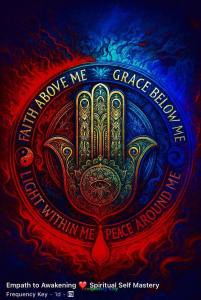
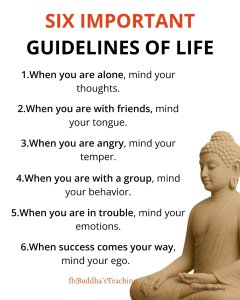


















 Hālau 'Aha Hui Lānākila