Category: Theosophy
Theosophy – Relationship and Solitude (part 1), by Raghaven Iyer

RELATIONSHIP AND SOLITUDE – I
The principle that all human beings should be treated as ends in themselves and not as means constitutes the core of Kantian morality. It rests upon an older conception of the world as a coherent structure intelligible to the pure reason of man. This world is a moral order precisely because human beings are an integral part of it. The human mind, by an act of pure, universal, impersonal reason, is able to discern the ethical order within the natural order. Each human being is a self-determining agent within a universe which itself may be seen as a kingdom of ends. Every human being as a responsible agent can become a monarch within his or her own modest kingdom by living in terms of ends that are self-chosen. We rule ourselves by making those ends meaningful in our lives.
For the practical realization of this possibility, we must assume that every human being is inherently capable of acting spontaneously without interfering with other human beings. We know that this noble mode of action is not achieved because reason is clouded by irrational passion. Pure universal affirmation is distorted, dissolved and even destroyed in the midst of the blinding partialities of confused human beings captive to conflicting impulses, aims, motives and desires. Suppose, however, that these self-chosen ends were intrinsically compatible, and that each person, in willing an end, asked the question, “If everyone wills this end, is it compatible for all human beings individually to pursue it without mutual interference?” At one level, a general answer would only yield a formal criterion of action. Is there a practical way, however, in which we could readily recognize in ourselves any fall from the autonomous state of a self-determining, rational being? We must identify any desire to interfere with others as springing from a part of ourselves which cannot be underwritten by the moral order and which the universe cannot protect.
Although theoretical formulations have a certain value; nonetheless, in the familiar but treacherous territory of tortuous rationalization and sinuous self-deception, as well as the psychological pessimism of our time, they only communicate negatively. And yet, while we may not fully know what it means to pursue our own ends without interfering with other individuals, we can surely recognize instances where one human being is crudely using another. We recognize this in its extreme form in politics, but the idea that any government could have total control over the human mind is self-contradictory if human beings are intrinsically self-determining agents. This also applies to any theory of continuous interference through conditioning, any supposedly benevolent, massive manipulation such as “Skinnerism.”
The crucial challenge is whether we can, long before we are confronted by extreme cases, apply to all contexts a truly philosophical framework of indefinite growth in human relationships. Can we recognize not only the obvious ways in which we use other people, but also the pure ideal wherein we determine a chosen end without ever treating anyone else as a means? Can we understand the complexities of lower Manas solely through the desire for universal affirmation? We need a more complex view of human nature and especially a subtler understanding of the mind. It is not enough to see human beings merely in terms of use and misuse, least of all in the Benthamite language of self-interest, because people generally do not really know what is to their advantage over a long period of time in every context. All utilitarian formulations eventually tend to break down. It may even be better to think away altogether, in human relationships, from the ends-means dichotomy because it has been tainted by narrow and short-sighted perspectives.
Is there a nobler way by which we can come to understand what it is for two human beings to help each other, to share with each other, and not to use each other? Even though the sacred idea of love is degraded every day, there is no human being who does not understand what love means at some level. The counterfeit of love is false romantic idealization which soon becomes empty and irrelevant. True love involves the many complexities of human beings, the manifest weaknesses and also the hidden poignancy in the archetypal relationships between father and child, husband and wife, teacher and pupil, and between two friends. If two people can sense something beyond themselves, can they also see how the direction of their relationship could be meaningful? Even though in their weakest moments there is a tendency for either to take advantage of the other unconsciously or in the name of the good, is there still a feasible possibility of self-correction? Must relationships tend to become prisons or can they evolve in the direction of liberation? In the everyday contexts of human relationships, the critical question is whether we are becoming more tyrannical in relation to others or are allowing our closest encounters to enhance the joys of individuation.
These fundamental inquiries hurt because any pertinent discovery of the subtle forms by which the tyrannical will masquerades as love destroys our delusive relationships. Mere intellectual awareness does not help, and this is the point we have reached in contemporary culture. People know so much about all abuses of trust that they are terrified of any irrevocable commitment. They are afraid to spend time with their relatives; afraid to assume burdens of responsibility in relation to children; afraid of intimacy with others and most of all afraid of deep introspection and meditative solitude. Relationships have broken down because many have become painfully aware of all the ambiguities, perversions and tyrannical elements in the human psyche. The atmosphere is so polluted that we almost dare not breathe. Therefore, the most simple, natural analogies, let alone idyllic models of archetypal relationships, do not speak to the disillusioned. They need a fundamental solution and not only an acute awareness of human failings. There is no total solution in the empirical realm that is compatible with the sum-total of goodness in the universe, but a fundamental solution can emerge when individuals are willing to rethink their conceptions of themselves.
The therapeutic counsel of the great healers of souls is as relevant now as it was in the days of the Buddha and the Christ. There are those whom the immemorial teaching does not transform, even though they spend a lifetime with it. There are those who are afraid it is going to alter them and therefore never enter the stream. There are those who progressively find it affecting them, and are able by an unspoken trust to use it and be benefitted by it. And then there are those very few who are deeply grateful for the supreme privilege of witnessing the presence of this timeless teaching. They are constantly focussed upon the eternal example nobly re-enacted by Avatars who portray the magnificent capacity to maintain, with beautiful balance and ceaseless rhythm, the awesome heights of cosmic detachment and boundless love. These mighty men of meditation are also illustrious exemplars of the art of living and masterly archers in the arena of action. They cannot be understood in terms of external marks or signs. It is only through their inner light that individuals can come into closer contact with the inner lives of beings so much wiser and nobler than themselves. Those who cherish this truth may find the inner light within their own silent sanctuary through deep meditation, in their incommunicable experience of poignant emotions, in response to soul-stirring music, or in their ethical endeavours through honesty and self-examination.
Hermes, June 1977
Raghavan Iyer
Manly P. Hall – The Secret Doctrine – YouTube

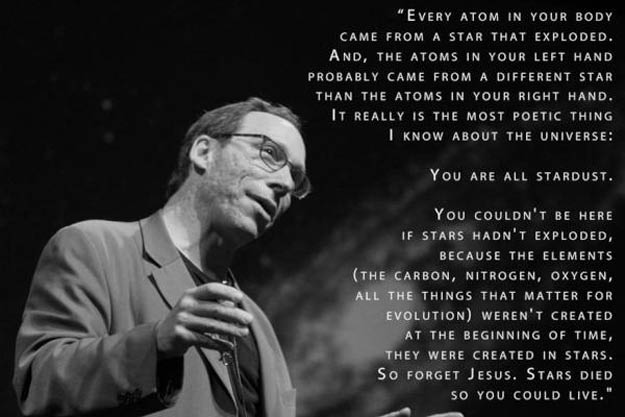
Thought For Today … from Lawrence Krauss
Alchemy – The Metaphorical Search For The Spiritual Gold
Discussion – Is There A Guardian Angel, with Manly P. Hall
Theosophy – “Proofs of the Existence of Submerged Continents,” by HP Blavatsky

PROOFS OF THE
EXISTENCE OF SUBMERGED CONTINENTS
IT may not be amiss — for the benefit of those who resolve the tradition of a lost Miocene Atlantis into an “antiquated myth,” to append a few scientific admissions on this point. Science, it is true, is largely indifferent to such questions. But there are Scientists ready to admit that, in any case, a cautious agnosticism as to geological problems concerning the remote past is far more philosophical than a priori denial, or even hasty generalizations on insufficient data.
Meanwhile two very interesting instances, that have been lately met with, may be pointed out as “confirming” certain passages in the letter of a Master, published in “Esoteric Buddhism.” The eminence of the authorities will not be questioned:
Extract from p. 61 of “Esoteric Buddhism.”
No. 1
“The sinking of the Atlantis (the group of continents and islands) began during the Eocene period . . . and it culminated in the Miocene, first in the final disappearance of the largest, an event coincident with the elevation of the Alps, and second in the sinking of the last of the fair islands mentioned by Plato.”
No. 2
“Lemuria cannot any more be confounded with the Atlantis continent than Europe with America. Both sank and were drowned with all their ‘gods’; yet, between the two catastrophes a short period of about some 700,000 years elapsed; Lemuria flourishing and ending her career just about that trifling lapse of time before the early Eocene Age, since its Race was the Third. Behold the relics of that once great race in some of the flat-headed aborigines of your AUSTRALIA.” (“Esoteric Buddhism,” p. 55.)
Extract from a Lecture by W. Pengelly, F.R.S., F.G.S.
No. 1
“Was there, as some have believed, an Atlantis — a continent or Archipelago of large islands occupying the area of the North Atlantic? There is, perhaps, nothing unphilosophical in the hypothesis. For since, as geologists state, ‘The Alps have acquired 4,000 and even in some places more than 10,000 feet of their present altitude since the commencement of the Eocene epoch‘ (Lyell’s Principles, 2nd Ed. p. 256.) — a post-Miocene depression might have carried the hypothetical Atlantis into almost abysmal depths.” 1
No. 2
“It would be premature to say, because no evidence has yet been adduced, that men may not have existed in the Eocene Age, especially as it can be shown that a race of men, the lowest we know of, co-exists with that remnant of the Eocene flora which still survives on the continent and islands of Australia.” (Extract from an article in “Popular Science Review,” Vol. V. p. 18, by Professor Seemann, Ph.D., F.L.S., P.A.S.). Hæckel, who fully accepts the reality of a former Lemuria, also regards the Australians as direct descendants of the Lemurians. “Persistent forms (of both his Lemurian stems,) are in all probability still surviving . . . Papuans and Hottentots . . . Australians . . . one division of the Malays.”
With regard to a former civilization, of which a portion of these degraded Australians are the last surviving offshoot, the opinion of Gerland is strongly suggestive. Commenting upon the religion and mythology of the tribes, he writes, “The statement that the Australian civilization (?) indicates a higher grade, is nowhere more clearly proved than here, where everything resounds like the expiring voices of a previous and richer age. The idea that the Australians have no religion or mythology is thoroughly false. But this religion is certainly quite deteriorated.“(Cited in Schmidt’s “Doctrine of Descent of Darwinism,” pp. 301-2.) As to his other statement, namely, that the Australians are a “division of the Malays” (Vide his ethnological theories in the “Pedigree of Man“), Hæckel is in error, if he classes the Australians with the rest. The Malays and Papuans are a mixed stock, resulting from the intermarriages of the low Atlantean sub-races with the Seventh sub-race of the Third Root-Race. Like the Hottentots, they are of indirectLemuro-Atlantean descent. It is a most suggestive fact — to those concrete thinkers who demand a physical proof of Karma — that the lowest races of men are now rapidly dying out; a phenomenon largely due to an extraordinary sterility setting in among the women, from the time that they were first approached by the Europeans. A process of decimation is taking place all over the globe, among those races, whose “time is up” — among just those stocks, be it remarked, which esoteric philosophy regards as the senile representatives of lost archaic nations. It is inaccurate to maintain that the extinction of a lower race is invariably due to cruelties or abuses perpetrated by colonists. Change of diet, drunkenness, etc., etc., have done much; but those who rely on such data as offering an all-sufficient explanation of the crux, cannot meet the phalanx of facts now so closely arrayed. “Nothing,” says even the materialist Lefevre, “can savethose that have run their course. . . . It would be necessary to extend their destined cycle. . . . The peoples that have been most spared . . . Hawaiians or Maories, have been no less decimated than the tribes massacred or tainted by European intrusion.” (“Philosophy,” p. 508.)
True; but is not the phenomenon here confirmed of the operation of CYCLIC LAW difficult to account for on materialist lines? Whence the “destined cycle” and the order here testified to? Why does this (Karmic) sterility attack and root out certain races at their “appointed hour”? The answer that it is due to a “mental disproportion” between the colonizing and aboriginal races is obviously evasive, since it does not explain the sudden “checks to fertility“which so frequently supervene. The dying out of the Hawaiians, for instance, is one of the most mysterious problems of the day. Ethnology will sooner or later have to recognize with Occultists that the true solution has to be sought for in a comprehension of the workings of Karma. As Lefevre remarks, “the time is drawing near when there will remain nothing but three great human types” (before the Sixth Root-Race dawns), the white (Aryan, Fifth Root-Race), the yellow, and the African negro — with their crossings (Atlanto-European divisions). Redskins, Eskimos, Papuans, Australians, Polynesians, etc., etc. — all are dying out. Those who realize that every Root-Race runs through a gamut of seven sub-races with seven branchlets, etc., will understand the “why.” The tide-wave of incarnating EGOS has rolled past them to harvest experience in more developed and less senile stocks; and their extinction is hence a Karmic necessity. Some extraordinary andunexplained statistics as to Race extinction are given in de Quatrefages’ “Human Species,” p. 428et seq. No solution, except on the occult lines, is able to account for these.
But we have digressed from our direct subject. Let us hear now what Professor Huxley has to say on the subject of former Atlantic and Pacific Continents.
He writes in “Nature,” Nov. 4th, 1880: “There is nothing, so far as I am aware, in the biological or geological evidence at present accessible, to render untenable the hypothesis that an area of the mid–Atlantic or Pacific sea-bed as big as Europe, should have been uplifted as high as Mont Blanc, and have subsided again, any time since the Palæozoic epoch, if there were any grounds for entertaining it.”
That is to say, then, that there is nothing which can militate against positive evidence to the fact; nothing, therefore, against the geological postulates of the Esoteric Philosophy. Dr. Seemann assures us in the “Popular Science Review” (Vol. V., p. 18), article “Australia and Europe formerly one Continent,” 2 that:
“The facts which botanists have accumulated for reconstructing these lost maps of the globe are rather comprehensive; and they have not been backward in demonstrating the former existence of large tracts of solid land in parts now occupied by the great oceans. The many striking points of contact between the present flora of the United States and Eastern Asia, induced them to assume that, during the present order of things, there existed a continental connection between South-Eastern Asia and Western America. The singular correspondence of the present flora of the Southern United States with that of the lignite flora of Europe induces them to believe that, in the Miocene period, Europe and America were connected by a land passage, of which Iceland, Madeira, and the other Atlantic islands are remnants; that, in fact, the story of an Atlantis, which an Egyptian priest told to Solon, is not purely fictitious, but rests on a solid historical basis. . . . Europe of the Eocene period received the plants which spread over mountains and plains, valleys and river-banks (from Asia generally), neither exclusively from the South nor from the East. The west also furnished additions, and if at that period these were rather meagre, they show, at all events, that the bridge was already building, which, at a late period, was to facilitate communication between the two continents in such a remarkable manner. At that time some plants of the Western Continent began to reach Europe by means of the island of Atlantis, then probably just rising (?) above the ocean.”
1 Having already given several instances of the vagaries of Science, it is delightful to find such agreement in this particular case. Read in connection with the scientific admission (cited elsewhere) of the geologists’ ignorance of even the approximate duration of periods, the following passage is highly instructive: “We are not yet able to assign an approximate date for the most recent epoch at which our Northern Hemisphere was covered with glaciers. According to Mr. Wallace, this epoch may have occurred seventy thousand years ago, while others would assign to it an antiquity of at least two hundred thousand years, and there are yet others who urge strong arguments on behalf of the opinion that a million of years is barely enough to have produced the changes which have taken place since that event.” (Fiske, “Cosmic Philosophy,” Vol. II., p. 304). Prof. Lefevre, again, gives us as his estimate 100,000 years. Clearly, then, if modern Science is unable to estimate the date of so comparatively recent an era as the Glacial Epoch, it can hardly impeach the Esoteric Chronology of Race-Periods and Geological Ages.
2 Undoubtedly a fact and a confirmation of the esoteric conception of the Lemuria which originally not only embraced great areas in the Indian and Pacific oceans, but projected round South Africa into the North Atlantic. Its Atlantic portion subsequently became the geological basis of the future home of the Fourth Race Atlanteans.
The Secret Doctrine, ii 778–781
H. P. Blavatsky
Theosophy – BETWEEN HEAVEN AND EARTH – Part III, by Raghavan Iyer
BETWEEN HEAVEN AND EARTH – III
All who take advantage of this matchless means of true self-renewal can inaugurate a fundamental change in the polluted Manas through Agniyoga, the sacred science of baptism through the fires of self-purgation. Kama manas, the inverted reflection of Manas, becomes constricted through the cohesion of the delusive image of personal identity bound up with intellectual autoeroticism, physical sensations, sights and sounds, deceptive externalities, and the knots of perversion tightening the myriad cords of foreshortened conceptions of space-time. Kama manas is the externalizing and rationalizing mind that needlessly negates others as well as oneself. It is the mediocre mis-educated insecure mind that cuts up everything and dismisses the divine with faint praise and the sneer of guilty derision! Kama manas is discontinuous and it creates a monotonous movement from one extreme to the opposite so that it cannot come to rest, but is constantly enslaved by restless caution and is constitutionally incapable of transcending its own meanness and spiritual sterility. All of this is the unnatural legacy of the Fourth Race of graceless giants. Whilst, in the economy of Nature, even such tendencies to grossness represent the tortured descent of the light of consciousness to the lesser hierarchies and lower emanations, the excess of humbug with which this self-assassination is perpetrated through cowardly speech is indeed abnormal. This is the origin of obsessive guilt and compulsive fear, arising from the degradation of the Holy of Holies, the desecration of the sacred tabernacle, the massacre of innocents, the endlessly evasive abdication of responsibility through pride in hypocrisy, self-torment, and the dressing up of moral blindness in the cloak of false modesty. On the other hand, all human beings of every race and tribe, every creed and nihilistic sect, innately enjoy a residual sense of decency, a feeling for tenderness, forgiveness and magnanimity towards the unloved. This is innate in all human beings because it was the great gift of the gods to the Third Race of Innocents. Without a spark of empathy there would be no conatus, no basis for a rational self-preservation except in the case of those soulless beings who behave like machines and robots. Knowing all this at some level, one can invoke the blessing of the Avatars to fan the faint spark of Buddhi buried within the burnt-out charcoal of a self-throttled Manas. Krishna hinted in the Uttara Gita that even the elongated shadow of self-betrayal could be slowly shrunk by self-attenuation through sacred speech and abstention from harm to the helpless life-atoms.
Each and all must restore what is natural to the whole of humanity and was exemplified par excellence by the authentically initiated Brahmins of antiquity who had little to do with the India of recent millennia, but were true transmitters of the oral traditions of theurgic utterance until the time of betrayal of the Buddha except in cloistered sanctuaries ofyogins and sannyasins.
When, moved by the law of Evolution, the Lords of Wisdom infused into him the spark of consciousness, the first feeling it awoke to life and activity was a sense of solidarity, of one-ness with his spiritual creators. As the child’s first feeling is for its mother and nurse, so the first aspirations of the awakening consciousness in primitive man were for those whose element he felt within himself, and who yet were outside, and independent of him. DEVOTION arose out of that feeling, and became the first and foremost motor in his nature; for it is the only one which is natural in our heart, which is innate in us. . . .
It lives undeniably, and has settled in all its ineradicable strength and power in the Asiatic Aryan heart from the Third Race direct through its first ‘mind-born’ sons – the fruits of Kriyasakti. As time rolled on the holy caste of Initiates produced but rarely, and from age to age, such perfect creatures: beings apart, inwardly, though the same as those who produced them, outwardly.
The Secret Doctrine, i 210-211
The Initiates of the deathless Race scattered the seeds of primordial wisdom among all the races of men and the Mystery Schools in cloistered gardens, caves and sanctuaries around the globe. The innate feeling of devotion throbbed in the sacred chamber of every human heart, but to be able to exemplify it naturally and instantly has become the lost art of magnanimity in the age of Varna Shankar or the Tower of Babel. The gift of graciousness cannot be bequeathed by external structures or physical heredity in Kali Yuga, the Age of Iron. The class of souls which delayed incarnation – owing to pride in purity, cowardly caution, fear of involvement in the mire of human fallibility, and a stubbornly selfish refusal to move into more differentiated realms – paradoxically became those very beings who, once they had incarnated, were captive to carnality, weakness of will, and fear-ridden worship of the printed word. The iron of self-contempt and false toughness, image-crippling and spiritual circumcision, entered into their souls, their blood and brain-cells. In the legends and myths of antiquity, the original fear of incarnation, owing to deficiency in active meditation upon the entire scale of ascent and descent, resulted in the perverse or compulsive pollution of the powers of thought, imagination and reverence for life. The resulting corruption of consciousness and simian imitativeness became the karmic burden of the Pratyeka Buddhas of spiritual selfishness. The atoms of matter were tainted by the double sin of the mindless and miscegenation. As a result, many gluttonous men and women are constantly caught up in those material particles, or become mediumistic through foul thoughts and fear of invasion. Among the sorcerers, traducers and traitors the power of the Aum was lost. The Third Eye closed, with a consequent suffocation of spiritual intuitions in the moral dwarfs of humanity.
The therapeutic restoration of the porosity of the brain-mind to the light of Atma-Buddhi is possible. It depends upon the progressive exemplification of five criteria of what is natural to human self-consciousness. First is the irrepressible feeling of reverence for the unbroken line of descent of the Great Sacrifice of the Hierophantic Host under the eternal Initiator of Initiates, the Evergreen Trees of Knowledge, Enlightenment and Immortality. Honouring others is innate to the human heart: it would show as a true reverence for Nature, for the Spiritual Sun and its myriad rays among all humanity, for all the constellations and the seven kingdoms and the Illustrious Predecessors, Light-Bringers and Pathfinders, reverence that is natural. Anything less is unnatural and abnormal, a moral monstrosity. Second, there is a longing for the ideal forms and archetypes, a great joy in withdrawing from the pressure of concern with the concrete to the empyrean of invisible potentials, a pure love of Truth, Beauty and Goodness in all forms, selfless ideation on metaphysical paradigms, parapolitical ideals and Universal Good – the Agathon. Third, and this is certainly a very decisive test, an innate, instructive and ineradicable conviction (regardless of culture) that the sexual act is sacred, that the Lesser Mysteries of Eros must mirror the pristine Light of the Logos invoked through Sound and Silence in the Greater Mysteries. Anything else runs the risk of ever-increasing desecration of the dignity of human beings, the sanctity of the Holy of Holies, as well as the fecundity of human potentials. Fourth, there is devotion, the only feeling natural to the hearts of men and women of all races, common to the human babe and the young of animals. Devotion, understood rightly, shows in the Rishis and Sages as well as in a child’s simplicity which co-exists with authentic solemnity and inner depth. Inherent in the human heart is the ever-present sense of the sacred and the feeling that everything in human worship of the Divine is worthy of minimal respect. This is magically shown in that which corresponds to Manas among all the senses, the synthesizing sense of touch. The fifth criterion of culture is a recognition of the human body as a temple, not a tomb, of the pilgrim-soul in every person. There is but one temple in the universe, and that is the body of man. Nothing is holier than that high form. . . . We touch heaven when we lay our hand on a human body! . . . If well meditated it will turn out to be a scientific fact; the expression . . . of the actual truth of the thing. We are the miracle of miracles – the great inscrutable Mystery.
The Secret Doctrine, i 212
The pervasive sense of the sacred and universal respect for freedom of thought and choice have become obscured in many victims of modernity owing to a hypnotic fascination with corruption and evil, forgetfulness of the divine mission of the immortal Soul, alienation from others and oneself, especially through fear of failure, estrangement through loneliness, distrust of oneself, and possible misuse in former lives due to cowardice and false ideas connected with evasion of the laws of Nature. Corruption of consciousness must be healed, and what is natural must be restored through the Golden Rule of reciprocity. Already, since 1963, many souls have taken birth in diverse cultures who have a recognition of the need to restore the ethical foundation of human society. This transcends the claims of all cultures to pre-eminence. Such souls will increase in number until a time comes when there will be so many for whom this is so natural that any encouragement given them will help the regeneration of the human race. This will be a distinctly different class of souls from those who came mauled and tormented by the degradation of two world wars, which helped to make popular the works of the corrupt. The attempt to make normal what was abnormal has failed, so far. It was tried in every way, but once the alternatives are known, then what is abnormal had to become more and more desperate and self-destructive because it could not any more pretend to be normal.
The twilight hour of sadists and masochists has now struck, and myriads of pilgrim-souls seek the Midnight Sun and the sacred constellation of the Aquarian Age, which began soon after the fin de siecle. The invisible dawn of the cosmopolis is summoned by the flute of the divine cowherd, beckoning home the matured innocents that dared to dream of a Golden Age. Meanwhile, Nataraja of Kailas and Kala-Hamsa enacts the Tandava Dance over the heads of epicurean giants, stoical dwarfs and cynical eunuchs. The age of sectarian religions, technocratic politics and cultural envy is dead. Kama manas has been dethroned by Buddhi-Taijasi, the Light of the Logos. The age of humanistic science, authentic spirituality and mini-communes has just begun, foreshadowing the end of the twentieth century and the emergence of the City of Man. The inevitable return of initiative to the scattered supporters of what is innate, universal and spiritual, merely suggests that no special pleading is needed for true gratitude and an authentic sense of the sacred. Despite the failures of so many, the philosophy of perfectibility, the religion of responsibility and the science of spirituality will spread far and wide, like the myriad branches of the Ashwatha tree, with its roots in heaven.
The collective self-consciousness that has been perverted must be released through love and wit. If one sees clearly the sacredness of the indestructible teaching of antiquity, one can recognize the Kama Manasic self-interest of Arjuna as a necessary tool in the service of Krishna in the Great War between psuche and nous, the Tower of Babel and the New Jerusalem, the head and the heart of every human being on earth. The true spark of universal brotherhood, reverence for teachers, gratitude to the good earth, and reticent sanctity may, even from a spark, be fanned into the fires of creativity in the service of the civilization of the future. This is the great hope which hides the golden promise. If even a few theophilanthropists would now serve the Bodhi-Tree and the City of Man, the Isle of the Blessed would be grateful beyond measure. Every such sincere effort is assuredly of help in relieving the pain of the human heart, which is widespread today, and also in laying down the universal cornerstones of the academies and ashramsof the future. All cultures need to rediscover what it means to be truly humane. Builders of bridges between Heaven and Earth are few and far between, and always have been; they may be readily recognized by their unswerving fidelity to pledges on behalf of mankind. Citizens of the cosmopolis will unite when they have nothing to lose but their masks of misanthropy – or their fugitive souls, on earth as in heaven.
Hermes, December 1980
Raghavan Iyer
The Removal of the Divine Feminine

Theosophy – ATLANTIS, NECESSARY TO ETHNOLOGY, by HP Blavatsky

ATLANTIS, NECESSARY TO ETHNOLOGY
And in another number of the same review (Vol. I., p. 143), Mr. Duppa Crotch, M.A., F.L.S., in an article entitled “The Norwegian Lemming and its Migrations,” alludes to the same subject.
“Is it probable that land could have existed where now the broad Atlantic rolls? All tradition says so: old Egyptian records speak of Atlantis, as Strabo and others have told us. The Sahara itself is the sand of an ancient sea, and the shells which are found upon its surface prove that, no longer ago than the Miocene period, a sea rolled over what is now desert. The voyage of the ‘Challenger’ has proved the existence of three long ridges 1 in the Atlantic Ocean, 2 one extending for more than three thousand miles, and lateral spurs may, by connecting these ridges, account for the marvellous similarity of the fauna of the Atlantic islands. 3. . . . The submerged continent of LEMURIA, in what is now the Indian Ocean, is considered to afford an explanation of many difficulties in the distribution of organic life, and, I think, the existence of a MIOCENE ATLANTIS will be found to have a strong elucidative bearing on subjects of greater interest [Truly So!] than the migration of the lemming. At all events, if it can be shown that land existed in former ages where the North Atlantic now rolls, not only is a motive found for these apparently suicidal migrations, but also a strong collateral proof that what we call instincts are but the blind and sometimes even prejudicial inheritance of previously acquired experiences.”
(At certain periods, we learn, multitudes of these animals swim to sea and perish. Coming, as they do, from all parts of Norway, the powerful instinct which survives throughout ages as an inheritance from their progenitors impels them to seek a continent, once existing but now submerged beneath the ocean, and to court a watery grave.)
In an article containing a criticism of Mr. A. R. Wallace’s “Island Life” — a work devoted largely to the question of the distribution of animals, etc. — Mr. Starkie Gardiner writes (“Subsidence and Elevation,” Geological Magazine, June, 1881):
“By a process of reasoning supported by a large array of facts of different kinds, he arrives at the conclusion that the distribution of life upon the land as we now see it, has been accomplished without the aid of important changes in the relative positions of continents and seas. Yet if we accept his views, we must believe that Asia and Africa, Madagascar and Africa, New Zealand and Australia, Europe and America, have been united at some period not remote geologically, and that seas to the depth of 1,000 fathoms have been bridged over; but we must treat as utterly gratuitous and entirely opposed to all the evidences at our command (!!), the supposition that temperate Europe and temperate America, Australia, and South America, have ever been connected except by way of the Arctic or Antarctic circles and that lands now separated by seas of more than 1,000 fathoms depth have ever been united. Mr. Wallace, it must be admitted, has succeeded in explaining the chief features of existing life-distribution, without bridging the Atlantic or Pacific, except towards the Poles, yet I cannot help thinking that some of the facts might perhaps be more easily explained by admitting the former existence of the connection between the coast of Chile and Polynesia 4 and Great Britain and Florida, shadowed by the submarine banks which stretch between them. Nothing is urged that renders the more direct connection impossible, and no physical reason is advanced why the floor of the ocean should not be upheaved from any depth. The route by which (according to the anti-Atlantean and Lemurian hypotheses of Wallace) the floras of South America and Australia are supposed to have mingled, is beset by almost insurmountable obstacles, and the apparently sudden arrival of a number of sub-tropical American plants in our Eocene flora, necessitates a connection more to the south than the present 1,000 fathom line . . . . forces are unceasingly acting, and there is no reason why an elevating force once set in action in the centre of an ocean should cease to act until a continent is formed. They have acted and lifted out from the sea, in comparatively recent geological times, the loftiest mountains on earth. Mr. Wallace himself admits repeatedly that sea-beds have been elevated 1,000 fathoms and islands have risen up from the depths of 3,000 fathoms; and to suppose that the upheaving forces are limited in power, is, it seems to me, ‘utterly gratuitous and entirely opposed to all the evidences at our command.’ “
The “Father” of English Geology — Sir Charles Lyell — was an Uniformitarian in his views of continental formation. On page 492 of his “Antiquity of Man” we find him saying:
“Professor Unger (Die versunkene Insel Atlantis) and Heer (Flora Tertiaria Helvetiæ) have admitted on botanical grounds the former existence of an Atlantic Continent during some part of the Tertiary Period, as affording the only plausible explanation that can be imagined of the analogy between the Miocene flora of central Europe, and the existing flora of Eastern America. Professor Oliver, on the other hand, after showing how many of the American types found fossil in Europe are common to Japan, inclines to the theory, first advanced by Dr. Asa Gray, that the migration of species, to which the community of types in the Eastern States of North America, and the Miocene flora of Europe is due, took place when there was an overland communication from America to central Asia between the fiftieth and sixtieth parallels of latitude, or south of Behring Straits, following the direction of the Aleutian islands. By this course they may have made their way, at any epoch, Miocene, Pliocene, or Pleistocene, antecedently to the Glacial Epoch, to Amoorland, on the East coast of North Asia.”
The unnecessary difficulties and complications here incurred in order to avoid the hypothesis of an Atlantic Continent, are really too apparent to escape notice. If the botanical evidences stood alone, scepticism would be half legitimate; but in this case all branches of science converge to one point. Science has made blunders, and has exposed itself to greater errors than the admission of our two now invisible continents, would lay it open to. It has denied even the undeniable, from the days of the mathematician Laplace down to our own, and that only a few years ago. 5We have Professor Huxley’s authority for saying that there is no a priori improbability whatever against possible evidences supporting the belief. (Vide supra.) But now that the POSITIVE EVIDENCE is brought forward, will that eminent scientist admit the corollary?
Touching on the problem in another place (“Principles of Geology,” pp. 12-13), Sir Charles Lyell tells us: “Respecting the cosmogony of the Egyptian priests, we gather much information from writers of the Grecian sects, who borrowed almost all their tenets from Egypt, and amongst others that of the former successive destruction and renovation of the world. (Continental, not cosmic, catastrophes.) We learn from Plutarch that this was the theme of one of the hymns of Orpheus, so celebrated in the fabulous ages of Greece. It was brought by him from the banks of the Nile; and we even find in his verses, as in the Indian systems, a definite period assigned for the duration of every successive World. The returns of great catastrophes were determined by the present period of the Magnus Annus, or great year — a cycle composed of the revolutions of the sun, moon, and planets, and terminating when these return together to the sign whence they were supposed at some remote epoch to set out. We learn particularly from the Timæus of Plato that the Egyptians believed the world to be subject to occasional conflagrations and deluges. The sect of the Stoics adopted most fully the system of catastrophes destined at intervals to destroy the world. These, they taught, were of two kinds — the cataclysm, or destruction by water, and the Ecpyrosis, or destruction by fire (submarine volcanoes). From the Egyptians they derived the doctrine of the gradual debasement of man from a state of innocence” (nascent simplicity of the first sub-races of each Root-Race). “Towards the termination of each era the gods could no longer bear with the wickedness of man, and a shock of the elements, or a deluge, overwhelmed them; (vide degeneracy into magical practices and gross animality of the Atlanteans) after which calamity, Astræa again descended on the earth to renew the golden age.” (Dawn of a new Root-Race.)
1 Cf. the published reports of the “Challenger” expedition; also Donnelly’s “Atlantis,” p. 468 and pp. 46-56, chap. “The Testimony of the Sea.”
2 Even the cautious Lefevre speaks of the existence of Tertiary men on “upheaved lands, islands and continents then flourishing, but since submerged beneath the waters,” and elsewhere introduces a “possible Atlantis” to explain ethnological facts. Cf. his “Philosophy,” Eng. Ed., pp. 478 and 504. Mr. Donnelly remarks with rare intuition that “modern civilization is Atlantean . . . . the ‘inventive‘ faculty of the present age is taking up the delegated work of Creation where Atlantis left it thousands of years ago” (Atlantis, p. 133). He also refers the origin of culture to theMiocene times. It is, however, to be sought for in the teachings given to the Third Race-men by their Divine Rulers — at a vastly earlier period.
3 An equally “curious” similarity is traced between some of the West Indian and West African fauna.
4 The Pacific portion of the giant Lemurian Continent christened by Dr. Carter Blake, the anthropologist, “Pacificus.”
5 When Howard read, before the Royal Society of London, a paper on the first serious researches that were made on the aerolites, the Geneva naturalist Pictet, who was present, communicated, on his return to Paris, the facts reported to the French Academy of Sciences. But he was forthwith interrupted by Laplace, the great astronomer, who cried: “Stop! we have had enough of such fables, and know all about them,” thus making Pictet feel very small. Globular-shaped lightnings or thunderbolts have been admitted by Science only since Arago demonstrated their existence, says de Rochat (“Forces non-definies,” p. 4): “Every one remembers Dr. Bouilland’s misadventure at the Academy of Medicine when he had declared Edison’s phonograph ‘a trick of ventriloquism!’ ”
The Secret Doctrine, ii 781–785
H. P. Blavatsky
Theosophy – Between Heaven and Earth (Part 2), by Sri Raghavan Iyer
BETWEEN HEAVEN AND EARTH – II
Many seekers have genuinely attempted such an authentic and generous discipline but have still been unable to extricate themselves from their own inane servitude to their shadow, their envy and suspicion, their compulsive expansion of that shadow of inherent inferiority through fear and doubt, through obsessional thinking and delusional feeling, and the overwhelming chaos of undeliberate, undiscriminating responses to the worlds of form. This is not only fatal but also like a terminal case of cancer in a human being who has used the priceless boon of truth for blocking the door to the humanity of the future. Regardless however, of the mistakes and failures of most neophytes, there must come a decisive moment of choice when one is prepared to combine solemnity and simplicity in a joyous acceptance of one’s own spiritual mission as a pilgrim-soul, as a true disciple upon the Path, as a vigilant listener to the utterance of Divine Wisdom, as a Happy Warrior in the Army of the Voice, and as a creative restorer of the natural order of spontaneous fellow-feeling towards the whole of humanity. One must cherish constantly the light of daring, the moral courage to take the Kwan Yinpledge – an irrevocable decision that confers true dignity, spiritual wakefulness and the resonance of responsibility. For such a sacred resolve to be an exemplar of spiritual strength, all of one’s being must be involved, without withholding any asset or evading any obligation. Nature is by no means ungenerous in affording seasonal opportunities for honest rededication to self-renewal and service. The fortnight commencing with the winter solstice and culminating on the fourth of January, consecrated to Hermes-Buddha, marks the potent seed-time for the coming year. Soren Kierkegaard once observed that “Life can only be understood backwards, but it must be lived forwards.” It is important that a sensitive person should prepare for the future by taking a firm, all-inclusive, unconditional position gestated out of deep reflection. One should set apart abundant time for that noble purpose to be truly able to generate the permanent basis of alchemical resolution and spiritual will. Then as one comes down from that exalted state of samadhi, enriched by constant meditation and manvantaric sleep, one could renew and resume this profound preparation in the dawn and the dusk, using all the precious time available to “get ready for Dubjed“. If this is done between the ages of fourteen and thirty-five, then the time between the solstice and fourth of January could be used annually to light the fires in all souls of the irrevocable and effortlessly selfless commitment to the whole of life and to all the solar and lunar ancestors. If anyone truly performed this yajna in the sacred name of the Guru of Gurus, the Hierophant of Hierophants, the Initiator of Initiates, one would receive untold benefits from the service of Krishna, the Purna Avatar, the Logos in the Cosmos and the God in man.
Those who wish to enjoy this sanctification might well look back calmly at the lost years and wasted lives, not in self-serving images in elaborate detail but philosophically in terms of ingrained tendencies and fear-ridden preoccupations. Even through looking back over one year, one could make many discoveries about human vulnerabilities, excuses and rationalizations. One may also see in one’s pseudo-Promethean struggles the neglected hooking-points that support one’s better self in surviving the pralaya of a disintegrating bimillennial epoch and in widely sharing all one’s truest perceptions and finest perspectives. While venturing upon this meditative retrospection, one must recognize that one is only seeking the sacred tribe of those who have effortlessly renewed their Bodhisattvic pledges in recurring cycles of descent and incarnations of ascent for the sake of all. One is imbibing strength from those to whom this is as natural as breathing, as effortless as meditating upon the mantrams of Lanoos and Arhats. Having assimilated the sacred teaching of Jnana Yajna,one must deeply desire (Itchasakti) to insert one’s own labours of love and acts of devotion into the Great Sacrifice (Maha Yajna). People are both cursed and blessed by being told these things, because if they listen to Krishna’s secret teaching and do nothing about it, then their karma is needlessly burdensome. There is always a risk assumed in intoning Brahma Vach. In general, Gandhi’s axiom is fundamental: human nature is such that it must either soar or sink, and whether one goes forward or backward is determined by the benevolent use of modern knowledge and ancient Wisdom.
When spiritual knowledge is made the enduring basis of deep reflection, where it is moistened by the liquid fire of devotion to Universal Good and by the concentrated current of aspiration, then it becomes a breakthrough into inner space. With noetic insight, one can burn out at the core all those defeatist devices of thinking, feeling, speaking and acting which continually toss the initiative back to the illusory self, thereby making spiritual life seem a wearisome, defensive and cheerless struggle, with tension and tightness, and little sweetness or light. In fact, the taking of a Vow during a rising cycle of immense promise for mankind means the restoration of the reins of kingship to the Sovereign Self, and the firm refusal to allow the initiative to be smothered in the ashes of vain hopes and burnt-out ideals. This requires a period of intense tapas, a time of mental and physical fasting, self-renewal through silence, abstention and calmness: otherwise, one remains compulsively caught up in muddy streams of sterile emanations and the accompanying flotsam of fuzzy elementals that crowd in and clog the nerve-currents of noetic will. At the root of this dismal predicament is the false idea of who one is and a delusive image of oneself as the egocentric pivot of a world upon which one may make myriad claims. The sacrificial, humane, adult, mellow and mature outlook is the exact opposite. Dag Hammarskjold once wrote that human life involves a bringing together of oil and air, and then there is a spark. The moment one thinks of rights, there is no spark; the oil and air will never come together. Sadly, human beings repeatedly abort, murder or damage their own chances as souls because they cannot get rid of this fundamentally false idea of a separate self, and even more sadly, in the light of divine teaching, they sometimes cling to it with melodramatic versatility. This is such piteous karma that it is all too poignant to contemplate – on behalf of a single human soul. Therefore one should, for the sake of all, awake, arise and seek the Great Sacrifice, and seek a pellucid reflection in the waters of wisdom. Thus the soil of the brain-mind is stirred, washed and prepared to receive the hidden seed of moral resolution, releasing the spiritual will in silence and secrecy, strengthened by inner humility and true courage during the seed-time of the golden harvest that will feed the hungry.
Those who are dedicated to serve Krishna should meditate upon the hymnody to the Great Sacrifice, or the rhapsody of the Self-Governed Sage in the second chapter of the Bhagavad Gita, or on any one of the magnificent portraits of Avatars (Magus-Teachers) in any sacred text, each of which is a great gift which Rishis (Sages) are ceaselessly beatified to hear and chant. If this is the endearing characteristic of all Mahatmas and Bodhisattvas, surely the least any human being can do who has the golden opportunity to use such a text is to become somewhat worthy of the sacred privilege. It is now time to awake from preparatory slumber and truly meditate upon those mantramic texts (in Sanskritic English or German and Russian) and taking even a few sentences, think deeply about their meaning and use. All sacred texts will suggest to their ardent devotees the different stages in reference to mind control, the method of collecting the mind, and the infallible means for removing the delusion and commotion of worldly concern. Having learnt how to settle the mind in a state of calm so that it is like the still lagoon or swan lake, one can let it expand like the blue vault of the sky when enshrined in that serene state. In time, one will come to see the golden sphere of cosmic light within the hollow of the heart in the expanding universe of the Hiranyagarbha, the Egg of Brahma. This will reverse the polarities in the laya centres for those who persist in the discipline of selflessness. This secret teaching is jewelled in the hidden heart of every authentic tradition, is always given for the sake of all humanity to those who silently serve the City of Man. Since samsara is merely a mirage of the mind, the disciple must examine and expunge all thoughts that pollute the holy avenues of expression. To do this, one has to meditate upon mighty spiritual conceptions, readily forgetting oneself and thrilling with a feeling of universal gratitude and individual responsibility, reverence and renunciation. From within the spiritual heart, one must evoke the cool courage to look at one’s faults with the unerring eye of Buddhic discernment.
It is always crucial to growth that the positive meditations shall be far greater than the negative sacrifices, and that one should really savour the sheer joy of mental procreation and self-cancellation. One should lose one’s morbid taste for self-righteous condemnation and image-crippling which is rooted in the paralysing fear of failure and sprouts into the cankerous weeds of an asuric and demonic way of life. Thinking in terms of votive offerings rather than death sentences could vitalize that vacuum in the brain and the heart where lies hidden the elixir of decisiveness and definiteness, a crispness and magnanimity which authenticate the true signature of self-hood. Too many human beings have repeatedly subverted their lives owing to their obsession with their own repulsiveness instead of learning the lesson that they must confront the lie in the soul which conceals the virginal beauty within the antediluvian monster. They have hugely enjoyed meditating upon themselves as total failures, thereby insulting the integrity of the Mahatmas and also doing immeasurable harm because they would have been able to do much good with even a little of this mental prostration to Krishna. One has to recover an exquisite sense of the sacred, the numinous and the unmanifest. One has to reach out repeatedly to that light of the Logos which is above the cerebrum, that which is without any limits or reservations, that divine lustre which can never be mirrored except through Buddhi in Manas. This is the pristine ray of Mahat-Atman, the Universal Self of the Maha Yoginserenely seated upon Mount Kailas while dancing amidst the ghouls of the graveyard, releasing them from self-torture and their unending cruelty to gnomes and undines, sylphs and salamanders. Buddhi is latent in every atom, and yet as Buddhi mirrors Atman, there is an infallible result, a humbling decisiveness and sovereign assurance which comes from nowhere else than the transcendental Buddhas of Compassion. Nishchaya in Sanskrit means ‘without any shadow’. When a true yogi, from the depths of his or her meditation upon human suffering and the need for Divine Wisdom, vitalizes that immaculate light of the Atman in the inmost brain, perfectly mirrored in the cells of the occipital lobe, there arises an ancient assurance and selfless certainty which is concealed and can never be erased. It can never be shown to the blasphemous even though it remains as a hidden lamp behind the borrowed mask. The light of true conviction engenders an irreversible current throughSachakriya, a sacred affirmation of the truth of a lifetime. Even though a fallen disciple has languished for long with wasted words, harsh sounds, violent speech, empty offerings, even though enormous karma has been generated by the Atlantean rakshasa (monster), all of which will have to be rendered in full account in future lives, nevertheless if he invokes the grace of Krishna-Christos through penitential meditations upon the Soundless Sound, he can place the demonic dwarf beneath the feet of the Divine Dancer and rescue from the debris of shipwreck the white dove of peace, the olive branch of humility, and the self-cancelled pledge of true service.
Hermes, December 1980
Raghavan Iyer
Theosophy – Between Heaven and Earth (Part 1) – Sri Raghavan Iyer
BETWEEN HEAVEN AND EARTH – I
The great antique heart, how like a child’s in its simplicity, like a man’s in its earnest solemnity and depth! heaven lies over him wheresoever he goes or stands on the earth making all the earth a mystic temple to him, the earth’s business all a kind of worship. Glimpses of bright creatures flash in the common sunlight; angels yet hover, doing God ‘s messages among men…. A great law of duty, high as these two infinitudes (heaven and hell), dwarfing all else, annihilating all else – it was a reality, and it is one: the garment only of it is dead; the essence of it lives through all times and all eternity!
The essence of our being, the mystery in us that calls itself ‘I’ – what words have we for such things? – it is a breath of Heaven, the highest Being reveals himself in man. This body, these faculties, this life of ours, is it not all as a vesture for the UNNAMED?Thomas Carlyle
Rounds and Races are integral to cosmic and human evolution. This septenary teaching is of crucial significance to the conceptual framework of the Gupta Vidya. Metaphysics and ethics are fused in one unbroken series of instinctual and intuitive states of unfolding monadic consciousness in slowly evolving material vestures. Of the seven planes of Kosmic consciousness, the lower four rupa planes provide the seemingly objective matrix for the seven globes of the Earth Chain. The upper three arupa planes are almost incomprehensible by the uninitiated and are closely connected with the ineffable mystery of Mahatic self-consciousness, at once the source and support of universal progress upon the seven globes of human evolution.
These seven planes correspond to the seven states of consciousness in man. It remains with him to attune the three higher states in himself to the three higher planes in Kosmos. But before he can attempt to attune, he must awaken the three ‘seats’ to life and activity.
The Secret Doctrine, i 199
Any human being who is truly serious about activating these dormant spiritual centres and selflessly attuning them to the three higher planes of Kosmic consciousness must think away entirely from the enveloping vestures and move upon the “waters of Space”, the empyrean of ‘airy nothings’, the Akashic void within the Hebdomadic Heart, the Kingdom of Heaven on Earth. In the alchemical process of progressive self-attenuation the enlightened person makes fruitful discoveries about the limits and possibilities, the tendencies and tropisms, of all the varying classes of elementals in the illusory vestures. If any seeker of truth is Buddhic regarding the broad scheme of evolution, which is triple in function and sevenfold in the great circlings of globes by the Monadic Host, then the voluntary assumption of incarnation by Divine Self-consciousness at a certain critical stage of global evolution yields a richer view of the true stature of being human, God in actu.
If any sensitive person fully thought out what it means to be a self-conscious being, making meaningful connections in reference to all aspects of life and death, then one would verily become capable of cooperating with the evolutionary scheme by staying in line with those gods and sages who are the unthanked Teachers of Humanity. No such fundamental revolution in consciousness is possible without becoming intensely aware of both motive and method. Motive has to do with morality in the metaphysical sense, the rate of vibration of one’s spiritual volition. Is the individual soul consciously seeking to help, heal and elevate every single life-atom? Or, owing to fear, ignorance, suspicion and doubt, is the fugitive soul trapped in a mechanical repetition of moribund hostilities inimical to those whom it irrationally and unintentionally injures? Through unremitting attention to such internal obstructions, one could rise above the lower or lunar planes of consciousness, seeing compulsive tendencies for what they are, and thus introduce by renewed acts of noetic will a strong current of spiritual benevolence. This would be the basis of Bodhisattvic ethics, a joyous mode of relaxed breathing. In pursuing this Aquarian life-style, one is certain to encounter various difficulties in the realm of the mind in regard to one’s permeability to astral forces, one’s personal vulnerability to reversals, perversion and pride, and also a strange susceptibility to distortions and awkwardnesses that come between what is spontaneously felt at the core of one’s being and its deliberate enactment in the chaotic context of social intercourse. One would have to become mathematically objective about the fluctuating patterns of mental deposits and tendencies that have cut deep grooves in the volatile vestures of personal existence. One would have to see all this in relation to human evolution as a whole, asking relevant questions about the uncouth Fourth Race as well as concerning what one really learnt in the first sub-race of the Fifth Race of original thinkers and theophilanthropists who were effortlessly capable of creative ideation and concentrated endeavour. In asking such questions one has to lift ethical sensitivity beyond the level of the individual monad, through active concern with all humanity, to cosmic planes of cognition. In so doing one could gradually come to make fundamental readjustments in the elusive relationship between one’s lower and higher centres of perception, volition and empathy.
Although such a prospect of self-sovereignty may seem to be an enormous evolutionary advance, in retrospect, once it is attained, it will be seen as no more than a self-conscious restoration of the primeval modes of moral awareness of the Third Root Race. Soon after the descent of the gods, the pristine Sons of Wisdom who incarnated into the Third Race, they engendered through Kriyashakti the sacred progeny of the truly twice-born, the fabled Sons of Ad, the mythic ‘Sons of the Fire-Mist’, the immaculate Sons of Will and Yoga. What they emanated in unison was a wondrous collective being (Bodhisattvic Golden Egg), a mysteriousBodhi-Tree and deathless fountainhead, the Tree of Noetic Knowledge, from which arose all the initiated Adepts and god-men, gurus and sages of the human race in subsequent epochs of evolution. The arcane teachings affirm that Dakshinamurti, the Initiator of Initiates, was the original Jagadguru (Amitabha), Rishi Narayan or Shri Krishna, the Ancient of Days who stood as Shiva (Avalokiteshwara) behind Buddha, Shankara, Pythagoras and Plato, Confucius and Lao Tzu, Christ and Paul, Count St. Germain and Claude St. Martin, Cagliostro and Mesmer, H.P. Blavatsky and W.Q. Judge. There have always existed on earth the secret mystery-temples in which the whole life of the neophyte through a series of preparatory initiations must eventually lead to grateful prostration before the Great Sacrifice (Adhiyajna) and a Host of Hierophants, the Buddhas of Contemplation, silently sustaining the whole world, the Wheel of Samsara, the Great Chain of Being. It was H.P. Blavatsky’s accredited privilege to transmit this ancient and sacred teaching in a memorable hymnody in The Secret Doctrine, from which every Lanoo may derive inspiration and strength in reawakening the mighty power of sacrifice, the invocation ofAdhiyajna through Agniyoga by the grace of Adi Sanat, the Mahat-Atman.
The ‘BEING’ just referred to, which has to remain nameless, is the Tree from which, in subsequent ages, all the great historically known Sages and Hierophants, such as the Rishi Kapila, Hermes, Enoch, Orpheus, etc., etc., have branched off. As objective man, he is the mysterious (to the profane – the ever invisible) yet ever present Personage about whom legends are rife in the East, especially among the Occultists and the students of the Sacred Science. It is he who changes form, yet remains ever the same. And it is he again who holds spiritual sway over the initiated Adepts throughout the whole world. He is, as said, the ‘Nameless One’ who has so many names, and yet whose names and whose very nature are unknown. He is the ‘Initiator,’ called the ‘GREAT SACRIFICE.’ For, sitting at the threshold of LIGHT, he looks into it from within the circle of Darkness, which he will not cross; nor will he quit his post till the last day of this life-cycle. Why does the solitary Watcher remain at his self- chosen post? Why does he sit by the fountain of primeval Wisdom, of which he drinks no longer, as he has naught to learn which he does not know – aye, neither on this Earth, nor in its heaven? Because the lonely, sore-footed pilgrims on their way back to their home are never sure to the last moment of not losing their way in this limitless desert of illusion and matter called Earth- Life. Because he would fain show the way to that region of freedom and light, from which he is a voluntary exile himself, to every prisoner who has succeeded in liberating himself from the bonds of flesh and illusion. Because, in short, he has sacrificed himself for the sake of mankind, though but a few Elect may profit by the GREAT SACRIFICE.
It is under the direct, silent guidance of this MAHA – (great) – GURU that all the other less divine Teachers and instructors of mankind became, from the first awakening of human consciousness, the guides of early Humanity. It is through these ‘Sons of God’ that infant humanity got its first notions of all the arts and sciences as well as of spiritual knowledge; and it is they who have laid the first foundation-stone of those ancient civilizations that puzzle so sorely our modern generation of students and scholars.
The Secret Doctrine, i 207-20
This sublime portrait must speak to the imperishable spiritual intuition in the inmost heart of every human being who seeks to cross the threshold. It is truly a theme for reflection, and if used as the basis of deep and daily meditation, it should act upon the sovereign spiritual will. It should lend hidden strength to the capacity to marshal and concentrate in one’s divine sphere all sacrificial thoughts, feelings, energies, words and acts. It should also give the indestructible strength to remain like the solitary watcher totally bound to his self-chosen post. The very idea of any shadow of turning or variation from one’s sacred commitment would be deeply repugnant to one’s nature. The esoteric teaching given above was always whispered but only enacted within the sanctum sanctorum of the Mystery Schools. It is a theurgic teaching meant to fire a human being through Agniyoga and arouse soul-memories (anamnesis) from pre-manvantaric aeons in cosmic evolution. To be able to incarnate such a therapeutic teaching is to light up the rising flame of resolve such as will never be extinguished in the mighty task of universal enlightenment.
Hermes, December 1980
Raghavan Iyer
Evening Discussion with Alan Watts, Terence McKenna and Santos Bonacci – Thought-Provoking!
Your mind has no boundaries unless limited by Fear of the unknown. Do you know all? Do you, really? How much have you questioned the fictions around you?
Theosophy – The Cycles of Time, by HP Blavatsky
THE CYCLES OF TIME
When the astronomical meaning cedes its place to the spiritual and divine — Apollo and Athene transforming themselves into the form of birds, the symbol and glyph of the higher divinities and angels — then the bright god assumes divine creative powers. Apollo becomes the personification of Seership, when he sends the astral double of Æneas to the battle field (II. 431-53), and has the gift of appearing to his Seers without being visible to other persons present — (Iliad, xvii., 322-36) — a gift, however, shared by every high Adept.
The King of the Hyperboreans, was, therefore, the son of Boreas, the north-wind, and the High Priest of Apollo. The quarrel of Latona with Niobe (the Atlantean race) — the mother of seven sons and seven daughters personifying the seven sub-races of the Fourth Race and their seven branches (see Apollodorus for this number) — allegorizes the history of the two continents. The wrath of “the sons of god,” or of “Will and Yoga,” at seeing the steady degradation of the Atlanteans was great (See “The Sons of God and the Sacred Island“); and the destruction of the “children of Niobe” by the children of Latona — Apollo and Diana, the deities of light, wisdom and purity, or the Sun and Moon astronomically, whose influence causes changes in the earth’s axis, deluges and other cosmic cataclysms — is thus very clear.1 The fable about the never-ceasing tears of Niobe, whose grief causes Zeus to change her into a fountain — Atlantis covered with water — is no less graphic as a symbol. Niobe, let it be remembered, is the daughter of one of the Pleiades (or Atlantides) the grand-daughter of Atlas therefore, (See “Metamorphoses of Ovid,” Book VI.), because she represents the last generations of the doomed continent.
A true remark, that of Bailly, which says that Atlantis had an enormous influence on antiquity. “If these names,” he adds, “are mere allegories, then all that those fables contain of truth comes from Atlantis; if the fable is a real tradition — however altered — then the whole of the ancient history is still in it.” (Lettres sur l‘Atlantide, p. 137.)
So much so, that all ancient writings — prose and poetry — are full of the reminiscences of the Lemuro-Atlanteans, the first physical races, though the Third and the Fourth in number. Hesiod records the tradition about the men of the age of Bronze, whom Jupiter had made out of ash-wood and who had hearts harder than diamond. Clad in bronze from head to foot they passed their lives in fighting. Monstrous in size, endowed with a terrible strength, invincible arms and hands descended from their shoulders, says the poet (Hesiod, in oper. and dieb. v. 143). Such were the giants of the first physical races. The Iranians have a reference to the later Atlanteans inYasna ix. 15. Tradition maintains that the “Sons of God,” or the great Initiates of the Sacred Island, took advantage of the Deluge, to rid the earth of all the Sorcerers among the Atlanteans. The said verse addresses Zoroaster as one of the “Sons of God.” It says: “Thou, O Zarathustra, didst make all demons (i.e., Sorcerers), who before roamed the world in human forms, conceal themselves in the earth” (i.e., helped them to get submerged).
The Lemurians, as also the early Atlanteans, were divided into two distinct classes — the “Sons of Night” or Darkness, and the “Sons of the Sun,” or Light. The old books tell us of terrible battles between the two, when the former, leaving their land of Darkness, from whence the Sun departed for long months, descended from their inhospitable regions and “tried to wrench the lord of light” from their better favoured brothers of the equatorial regions. We may be told that the ancients knew nothing of the long night of six months’ duration in the Polar regions. Even Herodotus, more learned than the rest, only mentions a people who slept for six months in the year, and remained awake the other half. Yet the Greeks knew well that there was a country in the north where the year was divided into a day and night of six months’ duration each, for Pliny says so in his Fourth Book, c. 12. They speak of the Cimmerians and of the Hyperboreans, and draw a distinction between the two. The former inhabited the Palus Mæotis(between 45° and 50° latitude). Plutarch explains that they were but a small portion of a great nation driven away by the Scythians, which nation stopped near Tanais, having crossed Asia.“These warlike multitudes lived formerly on the ocean shores, in dense forests, and under a tenebrous sky. There the pole is almost touching the head, there long nights and days divide the year” (in Mario). As to the Hyperboreans, these peoples, as expressed by Solinus Polyhistor (c. 16), “sow in the morning, reap at noon, gather their fruits in the evening, and store them during the night in their caves.”
Even the writers of the Zohar knew of the fact (as shown in iii., fol. 10a), as it is written: “In the Book of Hammannunah, the Old, we learn . . . . there are some countries of the earth which are lightened, whilst others are in darkness; these have the day, when for the former it is night; and there are countries in which it is constantly day, or in which at least the night continues only some instants.” (Isaac Myer’s “Qabbalah,” p. 139).
The island of Delos, the Asteria of the Greek mythology, was never in Greece, a country which, in its day, was not yet in existence, not even in its molecular form. Several writers have shown that it represented a country or an island, far larger than the small dots of land which became Greece. Both Pliny and Diodorus Siculus place it in the Northern seas. One calls itBasilea or “royal” (Vol. II., p. 225 of Diod.); the other, Pliny, names it Osericta (Book xxxvii, c.2), a word, according to Rudbeck (Vol. I., p. 462-464), having had “a significance in the northern languages, equivalent to the Island of the divine Kings or god-Kings,” or again the “royal island of the gods,” because the gods were born there, i.e., the divine dynasties of the kings of Atlantis proceeded from that place. Let geographers and geologists seek for it among that group of islands discovered by Nordenskiold on his Vega voyage in the arctic regions. 2 The secret books inform us that the climate has changed in those regions more than once since the first men inhabited those now almost inaccessible latitudes. They were a paradise before they became hell; the dark Hades of the Greeks and the cold realm of Shades where the Scandinavian Hel, the goddess-Queen of the country of the dead, “holds sway deep down in Helheim and Niflheim.” Yet, it was the birth-place of Apollo, who was the brightest of gods, in heaven — astronomically — as he was the most enlightened of the divine kings who ruled over the early nations, in his human meaning. The latter fact is borne out in the Iliad IV., 239-62, Vide “The Greater gods” — wherein Apollo is said to have appeared four times in his own form (as the god of the four races) and six times in human form, i.e., as connected with the divine Dynasties of the earlier unseparated Lemurians.
It is those early mysterious peoples, their countries (which have now become uninhabitable), as well as the name given to man both dead and alive, which have furnished an opportunity to the ignorant Church fathers for inventing a hell, which they have transformed into a burning instead of a freezing locality. 3
It is, of course, evident that it is neither the Hyperboreans, nor the Cimmerians, the Arimaspes, nor even the Scyths — known to and communicating with the Greeks — who were our Atlanteans. But they were all the descendants of their last sub-races. The Pelasgians were certainly one of the root-races of future Greece, and were a remnant of a sub-race of Atlantis. Plato hints as much in speaking of the latter, whose name it is averred came from pelagus, the great sea. Noah’s Deluge is astronomical and allegorical, but it is not mythical, for the story is based upon the same archaic tradition of men — or rather of nations — which were saved during the cataclysms, in canoes, arks, and ships. No one would presume to say that the Chaldean Xisuthrus, the Hindu Vaivasvata, the Chinese Peirun — the “beloved of the gods,” who rescued him from the flood in a canoe — or the Swedish Belgamer, for whom the gods did the same in the north, are all identical as a personage. But their legends have all sprung from the catastrophe which involved both the continent and the island of Atlantis.
1 So occult and mystic is one of the aspects of Latona that she is made to reappear even in Revelation (xii.) as the woman clothed with the Sun (Apollo) and the Moon (Diana) under her feet, who being with child “cries, travailing in birth, pained to be delivered.” A great red Dragon, etc., stands before the woman ready to devour the child. She brings forth the man child who was to rule all nations with a rod of iron, and who was caught unto the throne of God (the Sun). The woman fled to the wilderness still pursued by the Dragon, who flees again, and casts out of his mouth water as a flood, when the earth helped the woman and swallowed the flood; and the Dragon went to make war with the remnant of her seed who keep the commandment of God, etc. (See xii., 1, 17.) Anyone, who reads the allegory of Latona pursued by the revenge of jealous Juno, will recognise the identity of the two versions. Juno sends Python, the Dragon, to persecute and destroy Latona and devour her babe. The latter is Apollo, the Sun, for “the man-child, who was to rule all nations with a rod of iron” of Revelation, is surely not the meek “Son of God,” Jesus, but the physical Sun, “who rules all nations”; the Dragon being the North Pole, gradually chasing the early Lemurians from the lands which became more and more Hyperborean and unfit to be inhabited by those who were fast developing into physical men, for they now had to deal with the climatic variations. The Dragon will not allow Latona “to bring forth” — (the Sun to appear). “She is driven from heaven, and finds no place where she can bring forth,” until Neptune (the ocean), moved with pity, makes immovable the floating isle of Delos (the nymph Asteria, hitherto hiding from Jupiter under the waves of the ocean) on which Latona finds refuge and where the bright god Dhvlio” is born, the god, who no sooner appears than he kills Python, the cold and frost of the Arctic region, in whose deadly coils all life becomes extinct. In other words, Latona-Lemuria is transformed into Niobe-Atlantis, over which her son Apollo, or the Sun, reigns — with an iron rod, truly, since Herodotus makes the Atlantes curse his too great heat. This allegory is reproduced in its other mystic meaning (another of the seven keys) in the chapter just cited of the Apocalypse. Latona became a powerful goddess indeed, and saw her son receive worship (solar worship) in almost every fane of antiquity. In his occult aspect Apollo is patron of Number 7. He is born on the seventh of the month, and the swans of Myorica swim seven times around Delos singing that event; he is given seven chords to his Lyre — the seven rays of the sun and the seven forces of nature. But this only in the astronomical meaning, whereas the above is purely geological.
2 These islands were “found strewn with fossils of horses, sheep, oxen, etc., among gigantic bTHE CYCLES OF TIME
When the astronomical meaning cedes its place to the spiritual and divine — Apollo and Athene transforming themselves into the form of birds, the symbol and glyph of the higher divinities and angels — then the bright god assumes divine creative powers. Apollo becomes the personification of Seership, when he sends the astral double of Æneas to the battle field (II. 431-53), and has the gift of appearing to his Seers without being visible to other persons present — (Iliad, xvii., 322-36) — a gift, however, shared by every high Adept.
The King of the Hyperboreans, was, therefore, the son of Boreas, the north-wind, and the High Priest of Apollo. The quarrel of Latona with Niobe (the Atlantean race) — the mother of seven sons and seven daughters personifying the seven sub-races of the Fourth Race and their seven branches (see Apollodorus for this number) — allegorizes the history of the two continents. The wrath of “the sons of god,” or of “Will and Yoga,” at seeing the steady degradation of the Atlanteans was great (See “The Sons of God and the Sacred Island”); and the destruction of the “children of Niobe” by the children of Latona — Apollo and Diana, the deities of light, wisdom and purity, or the Sun and Moon astronomically, whose influence causes changes in the earth’s axis, deluges and other cosmic cataclysms — is thus very clear.1 The fable about the never-ceasing tears of Niobe, whose grief causes Zeus to change her into a fountain — Atlantis covered with water — is no less graphic as a symbol. Niobe, let it be remembered, is the daughter of one of the Pleiades (or Atlantides) the grand-daughter of Atlas therefore, (See “Metamorphoses of Ovid,” Book VI.), because she represents the last generations of the doomed continent.
A true remark, that of Bailly, which says that Atlantis had an enormous influence on antiquity. “If these names,” he adds, “are mere allegories, then all that those fables contain of truth comes from Atlantis; if the fable is a real tradition — however altered — then the whole of the ancient history is still in it.” (Lettres sur l’Atlantide, p. 137.)
So much so, that all ancient writings — prose and poetry — are full of the reminiscences of the Lemuro-Atlanteans, the first physical races, though the Third and the Fourth in number. Hesiod records the tradition about the men of the age of Bronze, whom Jupiter had made out of ash-wood and who had hearts harder than diamond. Clad in bronze from head to foot they passed their lives in fighting. Monstrous in size, endowed with a terrible strength, invincible arms and hands descended from their shoulders, says the poet (Hesiod, in oper. and dieb. v. 143). Such were the giants of the first physical races. The Iranians have a reference to the later Atlanteans in Yasna ix. 15. Tradition maintains that the “Sons of God,” or the great Initiates of the Sacred Island, took advantage of the Deluge, to rid the earth of all the Sorcerers among the Atlanteans. The said verse addresses Zoroaster as one of the “Sons of God.” It says: “Thou, O Zarathustra, didst make all demons (i.e., Sorcerers), who before roamed the world in human forms, conceal themselves in the earth” (i.e., helped them to get submerged).
The Lemurians, as also the early Atlanteans, were divided into two distinct classes — the “Sons of Night” or Darkness, and the “Sons of the Sun,” or Light. The old books tell us of terrible battles between the two, when the former, leaving their land of Darkness, from whence the Sun departed for long months, descended from their inhospitable regions and “tried to wrench the lord of light” from their better favoured brothers of the equatorial regions. We may be told that the ancients knew nothing of the long night of six months’ duration in the Polar regions. Even Herodotus, more learned than the rest, only mentions a people who slept for six months in the year, and remained awake the other half. Yet the Greeks knew well that there was a country in the north where the year was divided into a day and night of six months’ duration each, for Pliny says so in his Fourth Book, c. 12. They speak of the Cimmerians and of the Hyperboreans, and draw a distinction between the two. The former inhabited the Palus Mæotis (between 45° and 50° latitude). Plutarch explains that they were but a small portion of a great nation driven away by the Scythians, which nation stopped near Tanais, having crossed Asia. “These warlike multitudes lived formerly on the ocean shores, in dense forests, and under a tenebrous sky. There the pole is almost touching the head, there long nights and days divide the year” (in Mario). As to the Hyperboreans, these peoples, as expressed by Solinus Polyhistor (c. 16), “sow in the morning, reap at noon, gather their fruits in the evening, and store them during the night in their caves.”
Even the writers of the Zohar knew of the fact (as shown in iii., fol. 10a), as it is written: “In the Book of Hammannunah, the Old, we learn . . . . there are some countries of the earth which are lightened, whilst others are in darkness; these have the day, when for the former it is night; and there are countries in which it is constantly day, or in which at least the night continues only some instants.” (Isaac Myer’s “Qabbalah,” p. 139).
The island of Delos, the Asteria of the Greek mythology, was never in Greece, a country which, in its day, was not yet in existence, not even in its molecular form. Several writers have shown that it represented a country or an island, far larger than the small dots of land which became Greece. Both Pliny and Diodorus Siculus place it in the Northern seas. One calls it Basilea or “royal” (Vol. II., p. 225 of Diod.); the other, Pliny, names it Osericta (Book xxxvii, c. 2), a word, according to Rudbeck (Vol. I., p. 462-464), having had “a significance in the northern languages, equivalent to the Island of the divine Kings or god-Kings,” or again the “royal island of the gods,” because the gods were born there, i.e., the divine dynasties of the kings of Atlantis proceeded from that place. Let geographers and geologists seek for it among that group of islands discovered by Nordenskiold on his Vega voyage in the arctic regions. 2 The secret books inform us that the climate has changed in those regions more than once since the first men inhabited those now almost inaccessible latitudes. They were a paradise before they became hell; the dark Hades of the Greeks and the cold realm of Shades where the Scandinavian Hel, the goddess-Queen of the country of the dead, “holds sway deep down in Helheim and Niflheim.” Yet, it was the birth-place of Apollo, who was the brightest of gods, in heaven — astronomically — as he was the most enlightened of the divine kings who ruled over the early nations, in his human meaning. The latter fact is borne out in the Iliad IV., 239-62, Vide “The Greater gods” — wherein Apollo is said to have appeared four times in his own form (as the god of the four races) and six times in human form, i.e., as connected with the divine Dynasties of the earlier unseparated Lemurians.
It is those early mysterious peoples, their countries (which have now become uninhabitable), as well as the name given to man both dead and alive, which have furnished an opportunity to the ignorant Church fathers for inventing a hell, which they have transformed into a burning instead of a freezing locality. 3
It is, of course, evident that it is neither the Hyperboreans, nor the Cimmerians, the Arimaspes, nor even the Scyths — known to and communicating with the Greeks — who were our Atlanteans. But they were all the descendants of their last sub-races. The Pelasgians were certainly one of the root-races of future Greece, and were a remnant of a sub-race of Atlantis. Plato hints as much in speaking of the latter, whose name it is averred came from pelagus, the great sea. Noah’s Deluge is astronomical and allegorical, but it is not mythical, for the story is based upon the same archaic tradition of men — or rather of nations — which were saved during the cataclysms, in canoes, arks, and ships. No one would presume to say that the Chaldean Xisuthrus, the Hindu Vaivasvata, the Chinese Peirun — the “beloved of the gods,” who rescued him from the flood in a canoe — or the Swedish Belgamer, for whom the gods did the same in the north, are all identical as a personage. But their legends have all sprung from the catastrophe which involved both the continent and the island of Atlantis.
1 So occult and mystic is one of the aspects of Latona that she is made to reappear even in Revelation (xii.) as the woman clothed with the Sun (Apollo) and the Moon (Diana) under her feet, who being with child “cries, travailing in birth, pained to be delivered.” A great red Dragon, etc., stands before the woman ready to devour the child. She brings forth the man child who was to rule all nations with a rod of iron, and who was caught unto the throne of God (the Sun). The woman fled to the wilderness still pursued by the Dragon, who flees again, and casts out of his mouth water as a flood, when the earth helped the woman and swallowed the flood; and the Dragon went to make war with the remnant of her seed who keep the commandment of God, etc. (See xii., 1, 17.) Anyone, who reads the allegory of Latona pursued by the revenge of jealous Juno, will recognise the identity of the two versions. Juno sends Python, the Dragon, to persecute and destroy Latona and devour her babe. The latter is Apollo, the Sun, for “the man-child, who was to rule all nations with a rod of iron” of Revelation, is surely not the meek “Son of God,” Jesus, but the physical Sun, “who rules all nations”; the Dragon being the North Pole, gradually chasing the early Lemurians from the lands which became more and more Hyperborean and unfit to be inhabited by those who were fast developing into physical men, for they now had to deal with the climatic variations. The Dragon will not allow Latona “to bring forth” — (the Sun to appear). “She is driven from heaven, and finds no place where she can bring forth,” until Neptune (the ocean), moved with pity, makes immovable the floating isle of Delos (the nymph Asteria, hitherto hiding from Jupiter under the waves of the ocean) on which Latona finds refuge and where the bright god Dhvlio” is born, the god, who no sooner appears than he kills Python, the cold and frost of the Arctic region, in whose deadly coils all life becomes extinct. In other words, Latona-Lemuria is transformed into Niobe-Atlantis, over which her son Apollo, or the Sun, reigns — with an iron rod, truly, since Herodotus makes the Atlantes curse his too great heat. This allegory is reproduced in its other mystic meaning (another of the seven keys) in the chapter just cited of the Apocalypse. Latona became a powerful goddess indeed, and saw her son receive worship (solar worship) in almost every fane of antiquity. In his occult aspect Apollo is patron of Number 7. He is born on the seventh of the month, and the swans of Myorica swim seven times around Delos singing that event; he is given seven chords to his Lyre — the seven rays of the sun and the seven forces of nature. But this only in the astronomical meaning, whereas the above is purely geological.
2 These islands were “found strewn with fossils of horses, sheep, oxen, etc., among gigantic bones of elephants, mammoths, rhinoceroses,” etc. If there was no man on earth at that period “how came horses and sheep to be found in company with the huge antediluvians?” asks a master in a letter. (“Esoteric Buddhism,” 67). The reply is given above in the text.
3 A good proof that all the gods, and religious beliefs, and myths have come from the north, which was also the cradle of physical man, lies in several suggestive words which have originated and remain to this day among the northern tribes in their primeval significance; but although there was a time when all the nations were “of one lip,” these words have received a different meaning with the Greeks and Latins. One such word is Mann, Man, a living being, and Manes, dead men. The Laplanders call their corpses to this day manee, (Voyage de Renard en Laponie I., 184). Mannus is the ancestor of the German race; the Hindu Manu, the thinking being, from man; the Egyptian Menes; and Minos, the King of Crete, judge of the infernal regions after his death — all proceed from the same root or word.
The Secret Doctrine, ii 771-774
H. P. Blavatskyones of elephants, mammoths, rhinoceroses,” etc. If there was no man on earth at that period “how came horses and sheep to be found in company with the huge antediluvians?” asks a master in a letter. (“Esoteric Buddhism,” 67). The reply is given above in the text.
3 A good proof that all the gods, and religious beliefs, and myths have come from the north, which was also the cradle ofphysical man, lies in several suggestive words which have originated and remain to this day among the northern tribes in their primeval significance; but although there was a time when all the nations were “of one lip,” these words have received a different meaning with the Greeks and Latins. One such word is Mann, Man, a living being, and Manes, dead men. The Laplanders call their corpses to this day manee, (Voyage de Renard en Laponie I., 184). Mannus is the ancestor of the German race; the Hindu Manu, the thinking being, from man; the Egyptian Menes; and Minos, the King of Crete, judge of the infernal regions after his death — all proceed from the same root or word.
The Secret Doctrine, ii 771-774
H. P. Blavatsky
Theosophy – Esoteric Psychology

Esoteric Psychology.
“Know ye, ye are threefold in nature,
physical, astral and mental in one…
On Earth, man is in bondage,
bound by space and time to the earth plane.
Encircling each planet, a wave of vibration,
binds him to his plane of unfoldment.
Yet within man is the Key to releasement,
within man may freedom be found.”— Emerald Tablet XV
Image quote: Helena Blavatsky; The Secret Doctrine.
Bruce Lee on Self-Actualization and the Crucial Difference Between Pride and Self-Esteem | Brain Pickings
 “The less promise and potency in the self, the more imperative is the need for pride. The core of pride is self-rejection.”
The Story of the Chinese Farmer | KarmaTube
In “The Story of the Chinese Farmer,” philosopher Alan Watts looks at the idea of what we consider good or bad fortune with the parable of a Chinese farmer, who refuses to see anything as positive or negative. This beautifully animated video will make you question whether one can truly know if something is good or bad when you can never know the consequences.
Theolosphy ~ THE GOLDEN THREAD – III — by Raghavan Iyer
The good of all is the key to the Golden Thread. No wonder Pythagoras’ disciple Plato taught that the best subject for meditation is the universal Good – to agathon. He who wishes to meditate on the universal Sun, the source of life and light, is invited to dwell on the sacredmantram, the Gayatri:
Aum bhur bhuvah svah
tatsavitur varenyam bhargo devasya dhimahi
dhiyo yo nah prachodayat. Om.
Let us adore the supremacy of that divine sun who illuminates all, from whom all proceed, to whom all must return, whom we invoke to direct our understandings aright in our progress towards his holy seat.
Anyone who wishes to meditate upon the Sun must see beyond the planets, beyond the diversity of the myriads of galaxies, to the midnight sun in the darkness of the firmament. He must see the Sun as the source of one flame from which shoots a ray of light that kindles every spark in every atom. It is that which is differentiated into innumerable monads and is the only line that persists through its reflection within the human being. Therefore, this is the thread upon which hang like pearls all the personalities of human beings over an immensity of lives in the long journey already extending over some eighteen million years of human existence on this planet.
Every human being has played every role from Puck to Prospero. There is hardly a person who has not held the burden of kingly office. There is no human being who has not known the iniquity of poverty and deprivation. Thoreau understood this when he said, “I was in Judea once, in Greece, in Egypt, everywhere.” Whitman knew this and sang of it with love in his heart in the Song of the Open Road so that we may all become compassionaters, brothers and lovers of all men, nations and races. It is a teaching sung throughout the history of this Republic. Theosophy is an integral part of the inheritance of the American Republic, originally conceived as a Republic of Conscience.
It has been forgotten. Men have tried to limit America. Men have tried to say that this is a three-religion country, and that each American has to choose between being a Catholic, a Protestant, or a Jew. Now, there is a great deal to learn from the Jewish tradition. It speaks of justice. It speaks of the joy of God when a man and woman come together. It is linked up with the honesty of the psychiatric tradition. Every human being is an honorary wandering Jew. But every human being can also learn from the Catholic tradition, in terms of its current emphasis upon simple decency and the beauty of simple things that can be made sacramental. Just as every boy who is born Jewish has the right of choosing to be as Jewish as he pleases, so every Catholic boy or girl must choose his or her own ways of making moments in daily life sacramental. Also, we are all Protestants because we are all protesting against the views of authority. This was at the very basis of the inspiration of the Constitution. It is imperfect, but it is too late merely to condemn the Protestant tradition. Perhaps it is not three cheers, but it is surely at least two, for the Protestant ethic. It came with the Reformation as a part of the work of Tsong-Kha-Pa and the Brotherhood for the sake of a spiritual reformation within Christianity, comparable to a concurrent spiritual reformation within Hinduism and Buddhism and earlier work within the Catholic church. The last Adept actually to work within the church was Nicolas of Cusa.
No religion or institution is exempt from the all-seeing gaze of Migmar, whose eye sweeps over slumbering Earth. Every sincere human being who seeks to become a true disciple of the divine discipline of the Wisdom-Religion has the protective aura of the hand of Lhagpa over his head. When things go wrong we cannot blame our Teachers. Accepting or assuming our own limitations, we must not limit the Brotherhood. Men have often limited and crucified those the Brotherhood sent. They did it again in a subtle psychological way in the nineteenth century. They will surely attempt to do it in this century and in the future, but will always fail because a great galaxy of Beings is involved, within a carefully designed plan providing lines of retreat to one and all. It was only the Buddha who could take the sacred decision in Kali Yuga, where all men have failed and no man can condemn another as a sinner, that although the rules cannot be changed (since occult laws are inviolable), nonetheless access could be made easier for more souls in every part of the world to the wisdom and its mystery temple.
The key always lies within. Tom Paine was prophetic when he anticipated the religion of the future as a trimming away of all the excrescences upon the original substratum. In the beginning was the Word, the Verbum. That was Theosophia. Students of Theosophy should not be sensitive to ill-considered criticisms by those non-Theosophists who are also non-everything else, due to the fear of belonging to anything. This fear has become an obsession among human beings consumed with fear for themselves and therefore of others. Instead of worrying about the opinions of others, Theosophists should display the courage of the lion wed to the gentleness of the dove.
Because Theosophy is ultimately beyond names, the Wisdom-Religion is known by many names in all times. Today, the largeness and magnificence of the Wisdom-Religion is a Golden Thread of retreat for any man who wishes to make his own contributions to the future or who wishes to come out and become separate from the cycles of the past which must run their course. He should learn from the old man in the Japanese film Ikiru, who, when suddenly told that he had only another week to live, said “Good heavens, what can I do in a week?” He tried everything he had tried before – drinking, doing this, doing that – but time was running out. Suddenly it occurred to him that he had never really lived, or at least that there was still something fundamental he had yet to learn about living. There was no time to make a trip to Tibet or Timbuctu. He had to find his inspiration where he was. He sat sadly, very sadly, until he saw some children playing. He saw how they were doing what Buckminster Fuller teaches – making a little go far – getting a great deal of fun out of very little. They did not even have a proper children’s park, but they were having a whale of a time. Then he knew he had something which he could use, that he had tremendous gifts in certain areas. He rushed like a man on a mission and organized with all his wisdom a park where these and many more children might play and enjoy themselves. In effect, he followed the advice that the inventor of supermarkets, Edward Bellamy, gave in the nineteenth century as the secret of self-transcendence. Bellamy felt that the time would come when the only self-transcendence that people would know – and he said it would not work – would be the lesser mystery, sexual love. He predicted that men would desperately want some other mode of seeing beyond themselves, and advised that there is a joy and a thrill which every human being knows in losing himself within the welfare of others. Without this, mothers would not have brought their children to birth and suffered the trials that all mothers have suffered to see their children grow.
Life is a great teacher of the Self and of the teaching about the Self. The Golden Thread binds the various centres within the human constitution. In every human being thesutratman, the thread-soul, is sutratma buddhi. It is reflected in an innate sense of intuitive recognition, decency, fairness, kindness and minimum self-transcendence. In our cultureminima have become profoundly important. They will be the foundations for the maxima of the future. Anyone who has contacted the Path of the Wisdom-Religion can, at the minimum, grasp the simple message, a reminder of what everyone already knows, that it is possible atthis moment to make a difference to the moment of death. Follow the injunction of The Voice of the Silence:
“Great Sifter” is the name of the “Heart Doctrine,” O Disciple. The wheel of the Good Law moves swiftly on. It grinds by night and day. The worthless husks it drives from out the golden grain, the refuse from the flour.
Every man can sift from experience what is worth saving from what cannot be taken or must later be discarded. This was part of the training of the disciples of Pythagoras. It is part of the American Dream. Every human being can, with psychological as well as social mobility, rearrange his critical luggage in the realm of the mind. This has to do with chains of self-reproductive thought, which cannot be stilled suddenly by a dramatic attempt at meditation. Meditation involves the hindering of hindrances. Patanjali’s Yoga Sutra defines meditation as the hindering of the modifications of the thinking principle. Each must do this in his own way. In the old traditions of Tibet, where all the various schools of Buddhism respected each other and tolerance and civility were shown between the different orders, the distinctive teaching of the Gelukpa Yellow Cap tradition was that the best thing to meditate upon is meditation.
The Golden Thread eludes us when we try too hard to think about it. At the same time, when we do make the attempt we must think seriously about what it is and what it is not. The Golden Thread cannot be discerned in the realm of the physical body which lives through food – the annamaya kosha, the lowest, grossest sheath. The Golden Thread cannot be discerned in the pranamaya kosha, the sheath in which the lower currents of energy circulate. The Golden Thread is not to be picked up from those portions of the manomaya kosha which are made up of thought-patterns that come from outside and that do not originate from above. The Golden Thread can be picked up in that aspect of the manomaya sheath which negates externals and seeks the sheath of Atman, the vignanamaya kosha, having to do withvignam, discrimination or buddhi.
The Golden Thread can only be genuinely picked up in the realm of discriminative insight, available to every man. When it is picked up, then one must seek by negation to become self-conscious in one’s awareness of continuity of consciousness. Thereby, manas itself can shine and then in turn illuminate the sutratma thread which is sutratma buddhi. This, then, can become manas sutratman. A person could become self-consciously a being who knows “I am I” and could proudly take his place in the cosmic scheme of things. Every human being is a unit ray reflecting the light of the Logos. It is the light with which every man was born, according to the gospel of St. John, and with which he may become resplendent in its fullness. It may be found by all men who choose the heroic steps outlined in the Book of the Golden Precepts:
Shun ignorance, and likewise shun illusion. Avert thy face from world deceptions: mistrust thy senses; they are false. But within thy body – the shrine of thy sensations – seek in the Impersonal for the “Eternal Man”; and having sought him out, look inward: thou art Buddha.
Hermes, November 1976
Raghavan Iyer
Evening Discussion with Alan Watts (11 mins.)
Theosophy ~ “Choosing The Tao” – Part 3
CHOOSING THE TAO – III
Look, it cannot be seen – it is beyond form.
Listen, it cannot be heard – it is beyond sound.
Grasp, it cannot be held – it is intangible.
These three are indefinable;
Therefore they are joined in one.Lao Tzu
There is not a person who could not at any time enter his inmost sanctuary and so come closer to the Krishna-Christos within. “Where two or three are gathered in my name, there I am present.” Those potent words of promise, uttered as a benediction by the Avatars, were not meant only for a chosen few or for any particular tribe. It is possible at any time for any human being to invoke and invite the sacred presences of any of the divine Teachers. They are not in any one place or epoch – they are always here, there and everywhere. One cannot say of enlightened beings that physical proximity in space and time determines the nearness or closeness or their sphere of divine radiance. By the strength of mind and the spiritual will released through true sacrifice, one may consecrate the altar within the secret heart and kindle the sacrificial fire, thereby becoming worthy of the living benediction of those who are ancestral in a spiritual sense, who are ageless and parentless, Anupadaka. Enlightened Sages are eternally in unison with the supernal light of Shekinah, the perennial wisdom ofSvabhavat, the ceaseless ideation of Svayambhu or Self-Existent, the absoluteness of the Tao.
The Tao antecedes all ancestors by reaching out to that which was before everything and yet which has no beginning, which ever exists and embraces every moment and the myriad beings who are sustained by its inexhaustible strength. It reaches beyond name and utterance, colour and form. It is the Soundless Sound, the divine intonation, the Svabhavatwhich cannot be aroused except by those who enter the light and become one with its unending compassion. Its potency is limitless. It can heal the sick and raise the dead. It is that light which never shone on land or sea, yet lighteth every man that cometh into the world. If any sincere seeker wishes to invoke that primordial light which is parentless, Anupadaka, he must create an oasis of calm within the mind, a haven of peace within the heart, a diffused quiescence in the whole of his being. He cannot do this all at once, but must, as Krishna teaches, adopt the strategy of recurrent exercise (abhyasa) in a spirit of disinterestedness(viraga). In the course of time he will build his bridge, his mental pathway to the light ofAtman in the lamp of Buddhi. For any human being there is nothing more beneficent than, by concentrating upon that which corresponds to the throat, opening up the devotional channel within his wandering mind between his heart-light and the star overhead.
All Avatars are apparent manifestations of Mahapurusha, while every Enlightened Being is an eternal branch of the ever-living Banyan, the Tree of Immortals. By invoking in consciousness with a proper reverence taught by the Tao, every true devotee may enter the radiant sphere of the spiritually wise and transmit to others the sweetness and light of the Tao. Every child experimenting with a palette of colours discovers rapidly that there are not only the seven prismatic hues but also many shades, tones and blends, that unforeseen combinations are possible by an adroit mixing of colours. It also learns through fumbling beginnings at mixing pigments for the sake of painting a landscape that mistakes and false starts must be endured. There is not a child that starts to paint who does not take many distracting bypaths, and sometimes fiercely assumes the posture of Shiva, destroying its own work. Sometimes it adopts the posture of Vishnu, thinking, “I am pleased.” At other times it assumes the posture of Brahmâ and attempts something new and original. All human beings as creative agents participate in the myriad scatterings and subtle hues of the prismatic seven.
Every human being in some life chooses the Tao, the pristine light which is colourless and beyond the differentiation of hues. Each of the great religions – originally a pure ray pointing to the One Light – in time produces tints that anathematize other people, thus resulting in walls of separation. This repeatedly arises because, as people no longer have access to the colourless light, they fall off the line of direction along the ray of their immortal individuality pointing towards the One that transcends all and yet is immanent in all. Sectarians thus speciously identify the pristine light with the namarupa of its reflected ray. They proclaim that all is contained in this particular book or that special scroll. But All is in every sacred book, is in the book of Nature. It is inscribed in every atom, and is in the pinpoint of light within every human eye. Men and women limit the inexhaustible richness of the All through fear, which kills the will and stays all progress. This is sad, and it arises because they become unbalanced. Either they have aggressively sought a selfish end or – when this went wrong – they retreated into some inversion and christened it by profane names such as cynicism, liberalism, this or that ism, protecting an insupportable illusion.
The harmony of the Tao is ever alive because it allows for endless change while at the same time ceaselessly balancing out. This is graphically represented in the familiar symbol of yinand yang within the invisible circle of Tao. When a person watches a slowly revolving wheel, studying the spokes, he will begin to understand the great wheel on which all beings revolve and in which all are involved. Those who cling to the circumference feel most the motion of the wheel. Those who cling to the spokes, the colours and the tints, find they do not have any sense of the subtler rhythm. The cyclic spin of the smaller wheel moves faster, so rapidly that it seems to be motionless. It has a centre which is an invisible, mathematical point. This may seem to be a mental abstraction and logical construction, but it is known on a subtler plane of homogeneous matter in a serene mental state of purified consciousness. Such centres could be consciously activated, thereby becoming gyroscopic in their power to awaken potential energies lying everywhere.
Every person may consciously choose to return to the central source, the pure light-energy of the motionless Tao without a name. This does not mean one should cease breathing. That would be a hasty reading of the Tao because one cannot live without breathing in and breathing out, and in this rhythmic activity one participates in the Tao, the Mother of Ten Thousand Things. When people are running or rushing they do not breathe rhythmically, but needlessly distort the rhythm. It is always possible to balance the chaotic breathing and the disorderly motions of daily life by providing spaces within the passage of time for a self-conscious return to the inner stillness, the serenity of meditation whereby one may renew oneself. Nature provides priceless opportunities for daily regeneration, and the Tao is experienced each night by every human being in deep, dreamless sleep. The Tao could also be known during waking life by the vigilant and contented person who practises deliberate mental withdrawal, self-surrender and non-violent action. The true seeker may heed the talismanic counsel of the Sage:
In meditation, go deep in the heart.
In dealing with others, be gentle and kind.
In work, be diligent.
In action, watch the timing.
Hermes, November 1978
Raghavan Iyer
Mid-Afternoon Respite with Alan Watts and the Humpback Whales
Theosophy ~ “Choosing The Tao” – Part 2
CHOOSING THE TAO – II
The wisest disciples, teachers and sages learn from the Tao all the time. The Tao is not a book. The Tao is not a scripture. The Tao was not given by any one person for the first time to other people. It is everywhere and nowhere. It is what some call God, what others designate as the One Reality, and what still others salute merely by saying “I do not know.” To the extent to which men do not understand the Tao, instead of their choosing the Tao, the Tao seems to use them. A great deal of what is often called choosing is an illusion. No one chooses except by the power of the Tao. No one chooses thoughts except by a self-conscious comprehension of what is behind the energy of the Tao. No one can be a knower of the Tao, a true Taoist, without becoming a skilled craftsman of Akasa, a silent magician of the Alkahest, a self-conscious channel for the universal divine flame which, in its boundless, colourless, intangible, soundless and inexhaustible energy, may be used only for the sake of all. Only these universal, deathless, eternal verities may become living germs in the emerging matrix of the awakening mind of the age of Aquarius, a current of consciousness that flows into the future.
Following the ever-young example of the Ancient of Days, each and every person today may focus his mind upon the eternal relevance of the ever-flexible and never-caring Tao:
Under heaven all can see beauty as beauty only because there is ugliness.
All can know good as good only because there is evil.
Tao Teh Ching, 2
How can one be flexible if one is fiercely attached to any external forms of good and of evil? There is the same mutual relation between existence and non-existence in respect to creation as there is between striving and spontaneity, effort and ease, in respect to accomplishment. What is easy for one person is hard for another; what is easy for the same person at any time was hard once; and what is difficult now might become easy in the future. Fumbling with the strings of a musical instrument may be rather painful in the long period of apprenticeship, yet all can find supreme enjoyment in listening at any time to a great master of music who plays his enchanted instrument with lightness and versatile adeptship. The seeker who is patient and persistent, like the good gardener who plants the seed but does not examine it daily to gauge its growth, does no more than is needed, giving Nature time to do its own alchemical work.
How, then, can one contrive a hard-and-fast distinction between effort and ease in the many modes of human striving? Furthermore, is there any reason for preference between one person and another in human excellence? Not from the serene standpoint of the Sage. Those who enjoy good music do not feel threatened every time they listen to a great musician, but merge their selves into the motion of the music. There is that which every human being knows and yet forgets, though if one chooses one may remind oneself. A person always knows that what helped one to walk as a child may also help one to maintain oneself in a world of turmoil. Through the archetypal logic of non-action in activity, he can move away from the turba and the tumult of the crowd, and discover an inner peace through deliberate but casual control in the midst of spontaneous activity. The same mutual relation exists between long and short in respect to form, as between high and low in respect to pitch. What seem to be precipitous mountains in one country might be seen as hilly ranges in a distant land. The Alps are unquestionably beautiful, but, as Byron suggested, there are beauties in Derbyshire which are no less enjoyable than the Alps. The Sierras may be more inviting than the forbidding Himalayas. Each can make the most of what he finds where he can find it, between treble and bass on the scale of musical pitch, between before and after in the contest of priorities. There are no seniors and juniors among human souls – all alike are pilgrims on multitudinous pathways to enlightenment. All souls have participated variously in the immense pilgrimage extending through and beyond successive millennia. The Voice of the Silence teaches: “Such are the falls and rises of the Karmic Law in nature.” He who was a prince is a beggar now, the Buddha taught, and he who is exalted today may tomorrow “wander earth in rags”.
In the eyes of the Sage, all temporal distinctions are absurd not only because they are foreshortened in time but also because they pretend to an ultimacy which cannot be upheld except by coercion. No one who has not conquered the will to coerce could freely practise the art of Wu-Wei even in everyday encounters. The Tao is the ontological basis of the archetypal teaching of non-violence, non-retaliation and true benevolence. Nature is not partial, partisan or sentimentally benevolent. This is known to the Sage, who fuses wisdom in action with compassion.
Heaven and earth are ruthless;
They see the ten thousand things as dummies.
The wise are ruthless;
They see the people as dummies.
Tao Teh Ching, 5
From a superficial standpoint, it looks as if God is the chief conspirator, but there is no arbitrary theism in the vision of Tao. The inscrutable mathematics of cosmic balance needs nothing like what Hegel called the cunning of history to upset the best-laid plans of mice and men. From a broader perspective, it seems as if what appears bad in the beginning turns out in time for the better, even for the best. The Good Law ever moves inexorably towards righteousness. The Sage is not benevolent to personal claims. He treats all with a light inexorability. From an external locus in the realm of changing appearances, nothing that is true could ever be said or could even be found. It is only by the inner light that a person becomes a disciple of the Tao, and in the progress of time may even become a friend of the Tao with the help of those who are the Masters of the Tao.
In China reverence for the primordial Divine Instructors of mankind eventually degenerated into empty rituals of ancestor worship. As with ancient Chinese civilization, so also with classical Indian culture there was a progressive diffusion and inward loss of meaning. In ancient India there was a solemn kindling of the sacrificial fire, and every sacred word and ritual act were offered at the altar of the Prajapatis, the Kumaras, the Rishis, the Agnishwatha Pitris or Solar Fathers. In time such practices were reduced to ritual propitiation of the dead for fear of consequences. The weaker souls who participated in that ritualization in China and India are no different from those who incarnated in European and American bodies. Immigrants came in succeeding waves from different parts of the world to the American continent not only for the sake of their own future, but also, under Karma, as pathfinders of the future of mankind. That which caused violence and deception in the past must return, but cyclical justice will also bring back gentleness and truth and beauty in the nobler ancestors. No human being is without ancestors of whom one could be proud. Over a thousand years every man and woman has had a million ancestors. Nothing that was accomplished by a million people over a thousand years is irrelevant to any person. Everyone has a lineage that ultimately traces one back to the Divine Instructors of the human family. Everyone has kinship to those who are the Friends of all beings and who forever abide as Silent Watchers in the night, guarding orphan humanity.
Hermes, November 1978
Raghavan Iyer
Theosophy ~ “Choosing The Tao” – Part 1
CHOOSING THE TAO – I
Inflexibility of modes cripples our contemporary institutions. Inertia of thought dulls our mental faculties, whilst insensitivity of moral perception weakens the will-power to realize good resolutions. It is conspicuously difficult for the brain-mind, faintly mirroring the chaotic flux of sense-impressions, to sift essential meaning from the monotonous succession of trivia. The Tao Teh Ching invites us to withdraw the mind from the cacophony of the world, to liberate the heart from the jungle fever of the passions. Above all, it counsels us to renounce our constricting conceptions of ourselves. These merely echo fleeting externalities extolled by the fickle opinions of the epimethean crowd, which is sadly captive to crude conceptions of success and failure, status and reward. All such shallow distinctions are entrenched in the feudal shibboleths and the petit-bourgeois vocabulary of a commercial culture. They are entangling weeds of pain, sprouting in the parched soil of cavernous delusion, choking the living germs of human encounter. Flexibility is elusive without some degree of detachment. Until a person attains to a mature indifference to the illusory objects of desire and the volatile pairs of opposites, he cannot be truly practical. He cannot become sufficiently plastic in mind, resilient in imagination, creative in sentiment and speech, to enjoy the divine estate to which every human being is heir. To become constructively flexible requires a preliminary purification of the passions, a thorough cleansing of the mind, a deliberate sorting out of the chaos that bewilders one’s shadowy self. In seeking to do this, one may initially be restless, anxious and devoid of calm.
One must face the perilous paradox set forth in the ancient mystical texts – the beginning foreshadows the end, the end inheres in the beginning. Without a valiant attempt to negate the world and to void one’s very conception of oneself, it is not feasible to take the first critical step on the Path to Enlightenment. Many are called, but few constitute themselves as truly chosen to become sincere and credible servants of the whole of mankind. Nevertheless, many thinking beings have already reached a point of maturation from which they can see through the negative, contradictory and melodramatic valuations of the necropolis. This is a moment in history when Time itself seems to have stopped. Most people know too well that behind the futile exaggerations and false claims of external institutions and structures, there is an emptiness and hollowness, an unfathomable void. At a time of poignant and ever-increasing distance between human beings, there is a danger that aggression and desperation will enter even into the spiritual quest, thereby closing the door to spiritual awakening for myriad lives. This awful if unintended tragedy can be remedied only by courage and toughness in braving mental agony. Divine manliness consists in becoming heroic when it counts and where it hurts, in sacrificing every puny conception of selfhood. Everyone not only glimpses the fundamental truths known to poets, philosophers and sages, but hears them now on the lips of millions of messengers on earth.
The present historical moment offers a golden opportunity to learn from the wisdom of the Tao. For many centuries men contemplated the Tao, though no one in China would have claimed to comprehend it. The first commentary was written in the middle of the second century before Christ, perhaps about four centuries and a half after the appearance of the great Master, Lao Tzu. From birth Lao Tzu was greeted as an old man because he began by showing a mellow awareness of the teaching, and was apparently known by more than one name. Among his closest disciples the most influential was Confucius, in whose memory elaborate rituals emerged over millennia which eventually became frozen into stylized play-acting, with massive pride masked by self-mockery, a tradition of hypocrisy which terminated in a total disruption of the old order. A fearless Mandarin hinted fifty years ago that what China needed then was not more gentlemen but more prisons for its corrupt politicians. The anger of the masses was directed against endless game-playing in the name of the Confucian Analects. This is a predictable part of the recurring story of mankind.
The Tao can only be attained by the human being who approaches the Tao through the Tao. One must become the Tao. One must meditate ceaselessly upon the Tao while seeming to be engrossed in the daily round and common task. One must find the secret sanctuary of inner peace and repose within it from dawn through dusk to midnight, while retaining calm continuity of contemplation in the soul’s shrine through the sleep of the night and even amidst dislocating dreams. The process of self-surrender takes time because it can only become continuous and constant when it flows from within without, from above below. The Tao is the motionless centre of all the wheels of cyclic change. It is the centre which is everywhere, in every point of space, in every moment of time. Yet no boundaries can ever be drawn to contain it. Everything participates in the illusion of birth and in the inertia of systems that hide the simultaneous disintegration and decay known among men and women as sickness, error, suffering and death. The Tao teaches that in no single thing will be found any freedom or exemption from the eternal process of ceaseless change behind the shadow-play of colours, forms and events. Everything that has a beginning in time and space must have a limit in space and an end in time.
Everyone must necessarily seek the Tao within oneself. Each must seek that which is consubstantial with the Tao that is before all things. Words like “before” and “behind”, “below” and “above”, can only be relevant to the seeming reflections of the Tao. The Tao is formless form, the primordial pure substance prior to all differentiation, and it is accessible to all human beings as the one and only Source of eternal energy streaming forth in limitless light from the Invisible Sun. It is hidden within what seems to be darkness but is in truth absolute light. It is ever bestowing nourishment and sustenance, shedding light and yielding the vital power of hidden growth. The causal principle of true growth is necessarily invisible to the naked eye. If one is to come to understand how the transcendent Tao is in oneself, or how one can come closer to the Tao within, one must calmly ask how one’s false mind and fictitious barriers – self-created, self-maintained, self-imposed limitations – may be pierced by the light of pure awareness. One may become the Tao more and more consciously yet effortlessly, starting from small beginnings, and patiently allowing for gradual, silent growth.
All growth is invisible. No one can see or measure the growth of a baby or a little child from moment to moment. No one can mark by visible and external tokens the point of transition from childhood to youth. No one can put a date on the boundary between youth and manhood. These divisions are arbitrary and relative. When a person remains constant in his cool awareness of the utter relativity of all of these false and over-valued distinctions, he comes to understand that there is nothing dead and nothing alive. He is no less and no more than the Tao, and so is everyone else. The divisions and distinctions in consciousness arising from sense-objects, through words and by images, are a smoke-screen that obscures, limits and distorts reality. The supreme, carefree joy of non-striving that flows from the omnipresent light can no more be conveyed by one to another than the taste of water can be described to someone who has never drunk a drop. No truly meaningful experience can be communicated to another except in terms of his own modes of living.
Hermes, November 1978
Raghavan Iyer
Israel – A Nation Founded Upon a Monumental Lie » The Event Chronicle
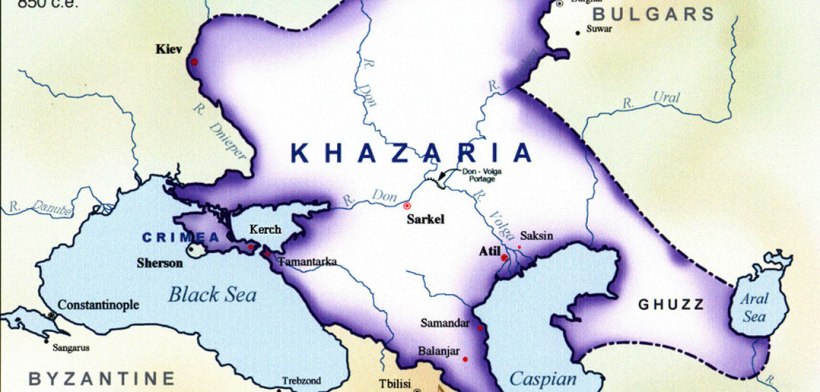 Once upon a time, hundreds of years ago, there was an extraordinarily evil kingdom. A land ruled by a wicked king who filled his court with practitioners of ancient Babylonian black arts, and occult oligarchs. A land inhabited by an aggressive demented race of thieves, murderers, and highwaymen
Source: Israel – A Nation Founded Upon a Monumental Lie » The Event Chronicle
The Sanctuarium ~ Lessons in Esoterica ~ The Vitruvian Man

The image below depicts the occult anatomy of the human body, as projected on the Vitruvian Man (originally done, obviously, by Leonardo da Vinci). It unifies the Tree of Life, the Yogic Chakras, and information from Kundalini Yoga, Tantra, Astrology, Tarot and Alchemy.
Theosophy ~ THE SACRED ISLANDS AND CONTINENTS EXPLAINED ESOTERICALLY

All that which precedes was known to Plato, and to many others. But as no Initiate had the right to divulge and declare all he knew, posterity got only hints. Aiming more to instruct as a moralist than as a geographer and ethnologist or historian, the Greek philosopher merged the history of Atlantis, which covered several million years, into one event which he located on one comparatively small island 3000 stadia long by 2000 wide; (or about 350 miles by 200, which is about the size of Ireland), whereas the priests spoke of Atlantis as a continent vast as “all Asia and Lybia” put together. But, however altered in its general aspect, Plato’s narrative bears the impress of truth upon it.1 It was not he who invented it, at any rate, since Homer, who preceded him by many centuries, also speaks of the Atlantes (who are our Atlanteans) and of their island in his Odyssey. Therefore the tradition was older than the bard of Ulysses. The Atlantes and the Atlantides of mythology are based upon the Atlantes and the Atlantides of history. Both Sanchoniathon and Diodorus have preserved the histories of those heroes and heroines, however much these accounts may have become mixed up with the mythical element.
In our own day we witness the stupendous fact that such comparatively recent personages as Shakespeare and William Tell are all but denied, an attempt being made to show one to be a nom de plume, and the other a person who never existed. What wonder then, that the two powerful races — the Lemurians and the Atlanteans — have been merged into and identified, in time, with a few half mythical peoples, who all bore the same patronymic?
Herodotus speaks of the Atlantes — a people of Western Africa which gave its name to Mount Atlas; who were vegetarians, and “whose sleep was never disturbed by dreams”; and who, moreover, “daily cursed the sun at his rising and at his setting because his excessive heat scorched and tormented them.”
These statements are based upon moral and psychic facts and not on physiological disturbance. The story of Atlas (Vide supra) gives the key to it. If the Atlanteans never had their sleep disturbed by dreams, it is because that particular tradition is concerned with the earliest Atlanteans, whose physical frame and brain were not yet sufficiently consolidated, in the physiological sense, to permit the nervous centres to act during sleep. With regard to that other statement — namely, that they daily “cursed the Sun” — this again has nothing to do with the heat, but with the moral degeneration that grew with the race. It is explained in our Commentaries. “They (the sixth sub-race of the Atlanteans) used magic incantations even against the Sun” — failing in which, they cursed it. The sorcerers of Thessaly were credited with the power of calling down the moon, as Greek history assures us. The Atlanteans of the later period were renowned for their magic powers and wickedness, their ambition and defiance of the gods. Thence the same traditions taking form in the Bible about the antediluvian giants and the Tower of Babel, found also in the “Book of Enoch.”
Diodorus records another fact or two: the Atlanteans boasted of possessing the land in which all the gods had received their birth; as also of having had Uranus for their first King, he being also the first to teach them astronomy. Very little more than this has come down to us from Antiquity.
The myth of Atlas is an allegory easily understood. Atlas is the old continents of Lemuria and Atlantis, combined and personified in one symbol. The poets attribute to Atlas, as to Proteus, a superior wisdom and an universal knowledge, and especially a thorough acquaintance with the depths of the ocean:because both continents bore races instructed by divine masters, and because both were transferred to the bottom of the seas, where they now slumber until their next reappearance above the waters. Atlas is the son of an ocean nymph, and his daughter is Calypso — “the watery deep,” (See Hesiod’s Theogony, 507-509, and Odyssey 1, 51): Atlantis has been submerged beneath the waters of the ocean, and its progeny is now sleeping its eternal sleep on the ocean floors. The Odyssey makes of him the guardian and the “sustainer” of the huge pillars that separate the heavens from the earth (1, 52-53). He is their “supporter.” And as both Lemuria, destroyed by submarine fires, and Atlantis, submerged by the waves, perished in the ocean deeps, 2 Atlas is said to have been compelled to leave the surface of the earth, and join his brother Iapetos in the depths of Tartarus. Sir Theodore Martin is right in interpreting this allegory as meaning, Atlas “standing on the solid floor of the inferior hemisphere of the universe and thus carrying at the same time the disc of the earth and the celestial vault — the solid envelope of the superior hemisphere” . . . (Memoires de l‘Academie des Inscriptions, p. 176). For Atlas is Atlantis which supports the new continents and their horizons on its “shoulders.”
Decharme, in his Mythologie de la Grèce Antique, expresses a doubt as to the correctness of Pierron’s translation of the Homeric word ἔχει by sustinet, as it is not possible to see “how Atlas can support or bear at once several pillars situated in various localities.” If Atlas were an individual it would be an awkward translation. But, as he personifies a continent in the west said to support heaven and earth at once (Æschylus, “Prometheus Vinctus,” 351, 429, etc.) — i.e., the feet of the giant tread the earth while his shoulders support the celestial vault, an allusion to the gigantic peaks of the Lemurian and Atlantean continents — the epithet “supporter” becomes very correct. The term “conservator” for the Greek word ἔχει, which Decharme, following Sir Theodore Martin, understands as meaning φυλάσσει and ἐπιμελἓἳται, does not render the same sense.
The conception was certainly due to the gigantic mountain chain running along the terrestrial border (or disc). These mountain peaks plunged their roots into the very bottom of the seas, while they raised their heads heavenward, their summits being lost in the clouds. The ancient continents had more mountains than valleys on them. Atlas, and the Teneriffe Peak, now two of the dwarfed relics of the two lost continents, were thrice as lofty during the day of Lemuria and twice as high in that of Atlantis. Thus, the Lybians called Mount Atlas “the pillar of Heaven,” according to Herodotus (IV., 184), and Pindar qualified the later Ætna as “the celestial pillar” (Pyth. 1, 20; Decharme, 315). Atlas was an inaccessible island peak in the days of Lemuria, when the African continent had not yet been raised. It is the sole Western relic which survives, independent, of the continent on which the Third Race was born, developed and fell, 3 for Australia is now part of the Eastern continent. Proud Atlas, according to esoteric tradition, having sunk one third of its size into the waters, its two parts remained as an heirloom of Atlantis.
This again was known to the priests of Egypt and to Plato himself, the solemn oath of secrecy, which extended even to the mysteries of Neo-Platonism, alone preventing the whole truth from being told. 4 So secret was the knowledge of the last islands of Atlantis, indeed, — on account of the superhuman powers possessed by its inhabitants, the last direct descendants of the gods or divine Kings, as it was thought — that to divulge its whereabouts and existence was punished by death. Theopompus says as much in his ever-suspected Meropis, when he speaks of the Phœnicians as being the only navigators in the seas which wash the Western coast of Africa; and who did it with such mystery that very often they sunk their own vessels to make the too inquisitive foreigners lose all trace of them.
1 Plato’s veracity has been so unwarrantably impeached by even such friendly critics as Professor Jowett, when the “story of Atlantis” is discussed, that it seems well to cite the testimony of a specialist on the subject. It is sufficient to place mere literary cavillers in a very ridiculous position: —
“If our knowledge of Atlantis was more thorough, it would no doubt appear that in every instance wherein the people of Europe accord with the people of America, they were both in accord with the people of Atlantis. . . . . It will be seen that in every case where Plato gives us information in this respect as to Atlantis, we find this agreement to exist. It existed in architecture, sculpture, navigation, engraving, writing, an established priesthood, the mode of worship, agriculture, and the construction of roads and canals; and it is reasonable to suppose that the same correspondence extended down to all the minor details.” (Donnelly, “Atlantis,” p. 194.)
2 Christians ought not to object to this doctrine of the periodical destruction of continents by fire and water; for St. Peter speaks of the earth “standing out of the water, and in the water, which earth, being overflowed, perished, but is now reserved unto fire” (See also the “Lives of Alchemystical Philosophers,“ p. 4, London, 1815).
3 This does not mean that Atlas is the locality where it fell, for this took place in Northern and Central Asia; but that Atlas formed part of the continent.
4 Had not Diocletian burned the esoteric works of the Egyptians in 296, together with their books on alchemy — “περι χυμείας αργύρου καὶ κρυσοῦ”; Cæsar 700,000 rolls at Alexandria, and Leo Isaurus 300,000 at Constantinople (viiith cent.); and the Mahomedans all they could lay their sacrilegious hands on — the world might know to-day more of Atlantis than it does. For Alchemy had its birth-place in Atlantis during the Fourth Race, and had only its renaissance in Egypt.
The Secret Doctrine, ii 760–764
H. P. Blavatsky
Alan Watts – Don’t Worry, Don’t Panic! None of This Really Matters Much
Alan Wilson Watts (6 January 1915 – 16 November 1973) was a British-born philosopher, writer, and speaker, best known as an interpreter and populariser of Eastern philosophy for a Western audience. Born in Chislehurst, England, he moved to the United States in 1938 and began Zen training in New York. Pursuing a career, he attended Seabury-Western Theological Seminary, where he received a master’s degree in theology. Watts became an Episcopal priest in 1945, then left the ministry in 1950 and moved to California, where he joined the faculty of the American Academy of Asian Studies.
Watts gained a large following in the San Francisco Bay Area while working as a volunteer programmer at KPFA, a Pacifica Radio station in Berkeley. Watts wrote more than 25 books and articles on subjects important to Eastern and Western religion, introducing the then-burgeoning youth culture to The Way of Zen (1957), one of the first bestselling books on Buddhism. In Psychotherapy East and West (1961), Watts proposed that Buddhism could be thought of as a form of psychotherapy and not a religion. He also explored human consciousness, in the essay “The New Alchemy” (1958), and in the book The Joyous Cosmology (1962).
Towards the end of his life, he divided his time between a houseboat in Sausalito and a cabin on Mount Tamalpais. His legacy has been kept alive by his son, Mark Watts, and many of his recorded talks and lectures are available on the Internet. According to the critic Erik Davis, his “writings and recorded talks still shimmer with a profound and galvanizing lucidity.”
Today’s Inspiration … from the Upanishads
“A man becomes good by good works, evil by evil.” Brihadaranyaka Upanishad. 3. 2.13
Brihadaranyaka Upanishad 4:4.3-7 continues giving more detailed concepts and goes on to explain the concept as follows:
“When a caterpillar has come to the end of a blade of grass, it reaches out to another blade, and draws itself over to it. In the same way the soul, having coming to the end of one life, reaches out to another body, and draws itself over to it.

“Just as a goldsmith, having taken a piece of gold, makes another form, new and more beautiful, so also, verily the Atman having cast off this body and having put away Avidya or ignorance, makes another new and more beautiful form” (Brihadaranyaka Upanishad).

“As people act, so they become. If their actions are good, they become good; if their actions are bad, they become bad. Good deeds purify those who perform them; bad deeds pollute those who perform them.
“Thus we may say that we are what we desire. Our will springs from our desires; our actions spring from our will; and what we are, springs from our actions. We may conclude, therefore, that the state of our desires at the time of death determines our next life; we return to earth in order to satisfy those desires.
“Consider those who in the course of many lives on earth have become free from desire. By this we mean that all their desires have found fulfillment within the soul itself. They do not die as others do. Since they understand God, they merge with God.
‘When all the desires clinging to the heart fall away, the mortal becomes immortal. When all the knots of desire strangling the heart are loosened, liberation occurs.
“As the snake discards its skin, leaving it lifeless on an anthill, so the soul free from desire discards the body, and unites with God who is eternal life and boundless light.”

Katha Upanishad 6.1-5, 10-11, 13-16
“The tree of eternity has its roots in the sky, and its branches reach down to earth. It is God; it is the immortal soul.
The whole universe comes from God; his energy burns like fire, and his power reverberates like thunder, in every part of the universe. In honor of God the sun shines, the clouds rain, and the winds blow. Death itself goes about its business in fear of God.

If you fail to see God in the present life, then after death you must take on another body; if you see God, then you will break free from the cycle of birth and death. God can be seen, like the reflection in a mirror, in a pure heart.
When the senses are calm and the mind is motionless, then your heart is pure; you have reached the highest state of consciousness, in which you are unified with God. If this state of consciousness is firm and secure, so it can never be broken, then you are free.
To calm the senses and still the mind, you must abandon the self. You must renounce ‘I’ and ‘me’ and ‘mine’. You must suppress every desire that surges around the heart. You must untie every knot of attachment.
A hundred and one lights radiate from the heart. One of them shines upwards to the crown of the head. This points the way to immortality. Every other light points to death.”
“Like corn, does a mortal ripen; like corn, does he spring to life again” (Kathopanishad).
Theosophy ~ What Is Thought? How Do We Think? (U.G. Krishnamurti)
U.G. Krishnamurti is swinging in this discussion. Does your heart know it keeps you alive? Can you ever be free of thoughts? How can someone describe the experience of no thoughts or no ego if there is not an ego or thought there to remember the experience?
This man is a must watch since he trashes all that no-ego, don’t think, you are something special, spiritual – and all that comfortable ego feeding that is promoted and attracts the masses into a never-ending self indulging ”finding myself” ”finding happiness” and whatever.
Theosophy ~ “The Illogic of the Evolutionists,” from The Secret Doctrine by H.P. Blavatsky

THE ILLOGIC OF THE EVOLUTIONISTS
Instead of keeping to this, what does many a so-called man of science do in these days? He rushes into the domains of pure metaphysics, while deriding it. He delights in rash conclusions and calls it “a deductive law from the inductive law” of a theory based upon and drawn out of the depths of his own consciousness: that consciousness being perverted by, and honeycombed with, one-sided materialism. He attempts to explain the “origin” of things, which are yet embosomed only in his own conceptions. He attacks spiritual beliefs and religious traditions millenniums old, and denounces everything, save his own hobbies, as superstition. He suggests theories of the Universe, a Cosmogony developed by blind, mechanical forces of nature alone, far more miraculous and impossible than even one based upon the assumption of fiat lux out of nihil – and tries to astonish the world by such a wild theory; which, being known to emanate from a scientific brain, is taken on blind faith as very scientific and the outcome of SCIENCE.
Are those the opponents Occultism would dread? Most decidedly not. For such theories are no better treated by real (not empirical) Science than our own. Hæckel, hurt in his vanity by du Bois-Reymond, never tires of complaining publicly of the latter’s onslaught on his fantastic theory of descent. Rhapsodizing on “the exceedingly rich storehouse of empirical evidence,” he calls those “recognised physiologists” who oppose every speculation of his drawn from the said “storehouse” – ignorant men. “If many men,” he declares – “and among them even some scientists of repute – hold that the whole of phylogeny is a castle in the air, and genealogical trees (from monkeys?) are empty plays of phantasy, they only in speaking thus demonstrate their ignorance of that wealth of empirical sources of knowledge to which reference has already been made” (“Pedigree of Man,” p. 273).
We open Webster’s Dictionary and read the definitions of the word “empirical”: “Depending upon experience or observation alone, without due regard to modern science and theory.“This applies to the Occultists, Spiritualists, Mystics, etc., etc. Again, “an Empiric –One who confines himself to applying the results of his own observations” (only) (which is Hæckel’s case); “one wanting Science . . . . an ignorant and unlicensed practitioner; a quack; a CHARLATAN.”
No Occultist or “magician,” has ever been treated to any worse epithets. Yet the Occultist remains on his own metaphysical grounds, and does not endeavour to rank his knowledge,the fruits of his personal observation and experience, among the exact sciences of modern learning. He keeps within his legitimate sphere, where he is master. But what is one to think of a rank materialist, whose duty is clearly traced before him, who uses such an expression as this:
“The origin of man from other mammals, and most directly from the catarrhine ape, is a deductive law that follows necessarily from the inductive law of the THEORY OF DESCENT.” (“Anthropogeny,” p. 392).
A “theory” is simply a hypothesis, a speculation, and no law. To say otherwise is only one of the many liberties taken now-a-days by scientists. They enunciate an absurdity, and then hide it behind the shield of Science. Any deduction from theoretical speculation is no better than a speculation on a speculation. Now Sir W. Hamilton has already shown that the word theory is now used “in a very loose and improper sense” . . . . ” that it is convertible intohypothesis, and hypothesis is commonly used as another term for conjecture, whereas the terms ‘theory’ and ‘theoretical’ are properly used in opposition to the term practice andpractical.”
But modern Science puts an extinguisher on the latter statement, and mocks at the idea. Materialistic philosophers and Idealists of Europe and America may be agreed with the Evolutionists as to the physical origin of man – yet it will never become a general truth with the true metaphysician, and the latter defies the materialists to make good their arbitrary assumptions. That the ape-theory theme 1 of Vogt and Darwin, on which the Huxley-Hæckelians have composed of late such extraordinary variations, is far less scientific – because clashing with the fundamental laws of that theme itself – than ours can ever be shown to be, is very easy of demonstration. Let the reader only turn to the excellent work on “Human Species” by the great French naturalist de Quatrefages, and our statement will at once be verified.
Moreover, between the esoteric teaching concerning the origin of man and Darwin’s speculations, no man, unless he is a rank materialist, will hesitate. This is the description given by Mr. Darwin of “the earliest ancestors of man.”
“They were without doubt once covered with hair; both sexes having beards; their ears were pointed and capable of movement; and their bodies were provided with a tail, having the proper muscles. Their limbs and bodies were acted on by many muscles which now only occasionally reappear in man, but which are still normally present in the quadrumana . . . . The foot, judging from the condition of the great toe in the fœtus, was then prehensile, and our progenitors, no doubt, werearboreal in their habits, frequenting some warm forest-clad land, and the males were provided with canine teeth which served as formidable weapons. . . .” 2
Darwin connects him with the type of the tailed catarrhines, “and consequently removes him a stage backward in the scale of evolution. The English naturalist is not satisfied to take his stand upon the ground of his own doctrines, and, like Hæckel, on this point places himself in direct variance with one of the fundamental laws which constitute the principal charm of Darwinism . . . ” And then the learned French naturalist proceeds to show how this fundamental law is broken. “In fact,” he says, “in the theory of Darwin, transmutations do not take place, either by chance or in every direction. They are ruled by certain laws which are due to the organization itself. If an organism is once modified in a given direction, it can undergo secondary or tertiary transmutations, but will still preserve the impress of the original. It is the law of permanent characterization, which alone permits Darwin to explain the filiation of groups, their characteristics, and their numerous relations. It is by virtue of this law that all the descendants of the first mollusc have been molluscs; all the descendants of the first vertebrate have been vertebrates. It is clear that this constitutes one of the foundations of the doctrine . . . . It follows that two beings belonging to two distinct types can be referred to a common ancestor, but the one cannot be the descendant of the other” (p. 106).
“Now man and ape present a very striking contrast in respect to type. Their organs . . . correspond almost exactly term for term: but these organs are arranged after a very different plan. In man they are so arranged that he is essentially a walker, while in apes they necessitate his being a climber . . . . There is here an anatomical and mechanical distinction . . . . A glance at the page where Huxley has figured side by side a human skeleton and the skeletons of the most highly developed apes is a sufficiently convincing proof.”
The consequence of these facts, from the point of view of the logical application of the law of permanent characterizations, is that man cannot be descended from an ancestor who is already characterized as an ape, any more than a catarrhine tailless ape can be descended from a tailed catarrhine. A walking animal cannot be descended from a climbing one.
1 The mental barrier between man and ape, characterized by Huxley as an “enormous gap, a distancepractically immeasurable“! – is, indeed, in itself conclusive. Certainly it constitutes a standing puzzle to the materialist, who relies on the frail reed of “natural selection.” The physiological differences between Man and the Apes are in reality – despite a curious community of certain features – equally striking. Says Dr. Schweinfurth, one of the most cautious and experienced of naturalists:
“In modern times there are no animals in creation that have attracted more attention from the scientific student than the great quadrumana (the anthropoids), bearing such a striking resemblance to the human form as to have justified the epithet of anthropomorphic being conferred on them. . . . But all investigation at present only leads human intelligence to a confession of its insufficiency; and nowhere is caution more to be advocated, nowhere is premature judgment more to be deprecated than in the attempt to bridge over theMYSTERIOUS CHASM which separates man and beast.” “Heart of Africa” i., 520.
2 A ridiculous instance of evolutionist contradictions is afforded by Schmidt (“Doctrine of Descent and Darwinism,” on page 292). He says, “Man’s kinship with the apes is not impugned by the bestial strength of the teeth of the male orang or gorilla.” Mr. Darwin, on the contrary, endows this fabulous being with teeth used as weapons!
The Secret Doctrine, ii 664–667
H. P. Blavatsky
Theosophy ~ Races of Giants, excerpted from Blavatsky’s “The Secret Doctrine”

That which is known and accepted is, that several races of gigantic men have existed and left distinct traces. In the journal of the Anthropological Institute (Vol. 1871, art. by Dr. C. Carter Blake) such a race is shown as having existed at Palmyra and possibly in Midian, exhibiting cranial forms quite different from those of the Jews. It is not improbable that another such race existed in Samaria, and that the mysterious people who built the stone circles in Galilee, hewed neolithic flints in the Jordan valley and preserved an ancient Semitic language quite distinct from the square Hebrew character — was of a very large stature. The English translations of the Bible can never be relied upon, even in their modern revised forms. They tell us of the Nephilim, translating the word by “giants,” and further adding that they were “hairy” men, probably the large and powerful prototypes of the later satyrs so eloquently described by the patristic fancy; some of the Church Fathers assuring their admirers and followers that they had themselves seen these “Satyrs” — some alive, others pickled and preserved. The word “giants” being once adopted as a synonym of Nephilim, the commentators have since identified them with the sons of Anak. The filibusters who seized on the Promised Land, found a pre-existing population far exceeding their own in stature, and called it a race of giants. But the races of really gigantic men had disappeared ages before the birth of Moses. This tall people existed in Canaan, and even in Bashan, and may have had representatives in the Nabatheans of Midian. They were of far greater stature than the undersized Jews. Four thousand years ago their cranial conformation and large stature separated them from the children of Heber. Forty thousand years ago their ancestors may have been of still more gigantic size, and four hundred thousand years earlier they must have been in proportion to men in our days as the Brobdingnagians were to the Lilliputians. The Atlanteans of the middle period were called the Great Dragons, and the first symbol of their tribal deities, when the “gods” and the Divine Dynasties had forsaken them, was that of a giant Serpent.
The mystery veiling the origin and the religion of the Druids, is as great as that of their supposed fanes is to the modern Symbologist, but not to the initiated Occultists. Their priests were the descendants of the last Atlanteans, and what is known of them is sufficient to allow the inference that they were eastern priests akin to the Chaldeans and Indians, though little more. It may be inferred that they symbolized their deity as the Hindus do their Vishnu, as the Egyptians did their Mystery God, and as the builders of the Ohio Great-Serpent mound worshipped theirs — namely under the form of the “mighty Serpent,” the emblem of the eternal deity TIME (the Hindu Kala). Pliny called them the “Magi of the Gauls and Britons.” But they were more than that. The author of “Indian Antiquities” finds much affinity between the Druids and the Brahmins of India. Dr. Borlase points to a close analogy between them and the Magi of Persia1; others will see an identity between them and the Orphic priesthood of Thrace: simply because they were connected, in their esoteric teachings, with the universal Wisdom Religion, and thus presented affinities with the exoteric worship of all.
Like the Hindus, the Greeks and Romans (we speak of the Initiates), the Chaldees and the Egyptians, the Druids believed in the doctrine of a succession of worlds, as also in that of seven “creations” (of new continents) and transformations of the face of the earth, and in a seven-fold night and day for each earth or globe (See “Esoteric Buddhism“). Wherever the Serpent with the egg is found, there this tenet was surely present. Their Dracontia are a proof of it. This belief was so universal that, if we seek for it in the esotericism of various religions, we shall discover it in all. We shall find it among the Aryan Hindus and Mazdeans, the Greeks, the Latins, and even among the old Jews and early Christians, whose modern stocks hardly comprehend now that which they read in their Scriptures. See what Seneca says in Epistle 9, and Quaest. Nat. III., c., ult.: “The world being melted and having re-entered the bosom of Jupiter, this god continues for some time to remain absorbed in himself and concealed, wholly immersed in contemplation. After which a new world springs from him. . . . An innocent race of men and animals are produced anew . . . etc.” Then again when speaking of periodical mundane dissolution involving universal death, he (Seneca) says that “when the laws of nature shall be buried in ruin, and the last day of the world shall come, the southern pole shall crush, as it falls, all the regions of Africa, and the North pole shall overwhelm all the countries beneath its axis. The affrighted sun shall be deprived of its light; the palace of heaven falling to decay shall produce at once both life and death, and some kind of dissolution shall equally seize upon all deities, who thus shall return into their original chaos” (Quoted in “Book of God,” p. 160.)
One might imagine oneself reading the Purânic account by Parasâra of the greatPralaya. It is nearly the same thing, idea for idea. Has Christianity nothing of the kind? It has, we say. Let the reader open any English Bible and read chapter iii. of the Second Epistle of Peter, from verse iii. till the xivth, and he will find there the same ideas. . . . “There shall come in the last days scoffers . . . saying, ‘where is the promise of his coming? . . . . Since the fathers fell asleep all things continue as they were from the beginning of creation.’ For, they are ignorant . . . . that by the word of God the heavens were of old, andthe earth standing out of the water and in the water: whereby the world that then was, being overflowed with water, perished. But the heavens and the earth that are now, are reserved unto the fire . . . . wherein the heavens . . . . shall be dissolved, and the elements shall melt with fervent heat . . . . we nevertheless look for new heavens and new earth, etc., etc.” If the interpreters chose to see in this a reference to creation, the deluge, and the promised coming of Christ, when they will live in a new Jerusalem in heaven, this is no fault of “Peter.” What the writer of the Epistles meant was the destruction of this Fifth Race of ours by subterranean fires and inundations, and the appearance of new continents for the Sixth Root-Race. For the writers of these Epistles were all learned in symbology if not in the sciences.
1 But the Magi of Persia were never Persians — not even Chaldeans. They came from a far-off land, the Orientalists being of opinion that the said land was Media. This may be so, but from what part of Media? To this we receive no answer.
The Secret Doctrine, ii 755–757
H. P. Blavatsky
Theosophy ~ from The Book of Dzyan, by H.P. Blavatsky

A moment’s thought shows that such a state can only be symbolized; to describe it, is impossible. Nor can it be symbolized except in negatives; for, since it is the state of Absoluteness per se, it can possess none of those specific attributes which serve us to describe objects in positive terms. Hence that state can only be suggested by the negatives of all those most abstract attributes which men feel rather than conceive, as the remotest limits attainable by their power of conception.
— Stanza 1, The Book of Dzyan, H.P. Blavatsky
Theosophy ~ GIANTS AND THE ASTOUNDING CONTRADICTIONS OF ARCHÆOLOGY

The modern archæologist, though speculating ad infinitum upon the dolmens and their builders, knows, in fact, nothing of them or their origin. Yet, these weird, and often colossal monuments of unhewn stones — which consist generally of four or seven gigantic blocks placed together — are strewn over Asia, Europe, America, and Africa, in groups or rows. Stones of enormous size are found placed horizontally and variously upon two, three, four, and as in Poitou, upon six and seven blocks. People name them “devil’s altars,” druidic stones, and giant tombs. The stones of Carnac in the Morbihan, Brittany — nearly a mile in length and numbering 11,000 ranged in eleven rows — are twin sisters of those at Stonehenge. The Conical menhir of Loch-Maria-ker in Morbihan, measures twenty yards in length and nearly two yards across. The Menhir of Champ Dolent (near St. Malo) rises thirty feet above the ground, and is fifteen feet in depth below. Such dolmens and prehistoric monuments are met with in almost every latitude. They are found in the Mediterranean basin; in Denmark (among the local tumuli from twenty-seven to thirty-five feet in height); in Shetland, and in Sweden, where they are called ganggriften (or tombs with corridors); in Germany, where they are known as the giant tombs (Hunengraben); in Spain (see the dolmen of Antiguera near Malaga), and Africa; in Palestine and Algeria; in Sardinia (see the Nuraghi and Sepolture dei giganti, or tombs of giants); in Malabar, in India, where they are called the tombs of the Daityas (giants) and of the Râkshasas, the men-demons of Lanka; in Russia and Siberia, where they are known as the Koorgan;in Peru and Bolivia, where they are termed the chulpas orburial places, etc., etc., etc.
There is no country from which they are absent. Who built them? Why are they all connected with Serpents and Dragons, with Alligators and Crocodiles? Because remains of “palæolithic man” were, it is thought, found in some of them, and because in the funeral mounds of America bodies of later races were discovered with the usual paraphernalia of bone necklaces, weapons, stone and copper urns, etc., hence they are declared ancient tombs. But surely the two famous mounds — one in the Mississippi valley and the other in Ohio — known respectively as “the Alligator Mound” and “the Great Serpent Mound,” were never meant for tombs 1 (Vide infra). Yet one is told authoritatively that the Mounds, and the Mound or Dolmen Builders, are all “Pelasgic” in Europe, antecedent to the Incas, in America, yet of “not extremely distant times.” They are built by “no race of Dolmen Builders,” which never existed (opinion of De Mortillet, Bastian, and Westropp) save in the earlier archæological fancy. Finally Virchow’s opinion of the giant tombs of Germany is now accepted as an axiom: “The tombs alone are gigantic, and not the bones they contain” — says that German biologist; and archæology has but to bow and submit to the decision. 2
That no gigantic skeletons have been hitherto found in the “tombs” is yet no reason to say there never were the remains of giants in them.Cremation was universal till a comparatively recent period — some 80, or 100,000 years ago. The real giants, moreover, were nearly all drowned with Atlantis. Nevertheless, the classics, as shown elsewhere, often speak of giant skeletons still excavated in their day. Besides this, human fossils may be counted on the fingers, as yet. No skeleton ever yet found is older than between 50, or 60,000 years, 3 and man’s size was reduced from 15 to 10 or 12 feet, ever since the third sub-race of the Aryan stock, which sub-race — born and developed in Europe and Asia Minor under new climates and conditions — had become European. Since then, as said, it has steadily been decreasing. It is truer therefore to say, that the tombs alone are archaic, and not necessarily the bodies of men occasionally found in them; and that those tombs, since they are gigantic, must have contained giants, 4 or rather the ashes of generations of giants.
Nor were all such cyclopean structures intended for sepulchres. It is with the so-called Druidical remains, such as Carnac in Brittany and Stonehenge in Great Britain, that the travelling Initiates above alluded to had to do. And these gigantic monuments are all symbolic records of the World’s history. They are not Druidical, but universal. Nor did the Druids build them, for they were only the heirs to the cyclopean lore left to them by generations of mighty builders and — “magicians,” both good and bad.
It will always be a subject of regret that history, rejecting a priori the actual existence of giants, has preserved us so little of the records of antiquity concerning them. Yet in nearly every mythology — which after all is ancient history — the giants play an important part. In the old Norse mythology, the giants, Skrymir and his brethren, against whom the sons of the gods fought, were potent factors in the histories of deities and men. The modern exegesis, that makes these giants to be the brethren of the dwarfs, and reduces the combats of the gods to the history of the development of the Aryan race, will only receive credence amongst the believers in the Aryan theory, as expounded by Max Müller. Granting that the Turanian races were typified by the dwarfs (Dwergar), and that a dark, round-headed, and dwarfish race was driven northward by the fair-faced Scandinavians, or Æsir, the gods being like unto men, there still exists neither in history nor any other scientific work any anthropological proof whatever of the existence in time or space of a race of giants. Yet that such exist, relatively and de facto side by side with dwarfs, Schweinfurth can testify. The Nyam-Nyam of Africa are regular dwarfs, while their next neighbours (several tribes of comparatively fair-complexioned Africans) are giants when confronted with the Nyam-Nyams, and very tall even among Europeans, for their women are all above 6 ½ feet high. (Vide Schweinfurth’s latest works.)
In Cornwall and in ancient Britain the traditions of these giants are, on the other hand, excessively common; they are said to live even down to the time of King Arthur. All this shows that giants lived to a later date amongst the Celtic than among the Teutonic peoples.
If we turn to the New World, we have traditions of a race of giants at Tarija on the eastern slopes of the Andes and in Ecuador, who combated gods and men. These old beliefs, which term certain localities “Los campos de los gigantes“ — “the fields of giants,” are always concomitant with the existence of pliocene mammalia and the occurrence of pliocene raised beaches. “All the giants are not under Mount Ossa,” and it would be poor anthropology indeed that would restrict the traditions of giants to Greek and Bible mythologies. Slavonian countries, Russia especially, teem with legends about the bogaterey (mighty giants) of old; and their folklore, most of which has served for the foundation of national histories, their oldest songs, and their most archaic traditions, speak of the giants of old. Thus we may safely reject the modern theory that would make of the Titans mere symbols standing for cosmic forces. They were real living men, whether twenty or only twelve feet high. Even the Homeric heroes, who, of course, belonged to a far more recent period in the history of the races, appear to have wielded weapons of a size and weight beyond the strength of the strongest men of modern times.
“Not twice ten men the mighty bulk could raise,
Such men as live in these degenerate days.”
If the fossil footprints from Carson, Indiana, U.S.A., are human, they indicate gigantic men. Of their genuineness there can remain no doubt. It is to be deplored that the modem and scientific evidence for gigantic men should rest on footprints alone. Over and over again, the skeletons of hypothetical giants have been identified with those of elephants and mastodons. But all such blunders before the days of geology, and even the traveller’s tales of Sir John Mandeville, who says that he saw giants 56 feet high, in India, only show that belief in the existence of giants has never, at any time, died out of the thoughts of men.
1 We take the following description from a scientific work. “The first of these animals (the alligator) designed with considerable skill, is no less than 250 ft. long. . . . . The interior is formed of a heap of stones, over which the form has been moulded in fine stiff clay. The great serpent is represented with open mouth, in the act of swallowing an egg of which the diameter is 100 ft. in the thickest part; the body of the animal is wound in graceful curves and the tail is rolled into a spiral. The entire length of the animal is 1,100 ft. This work is unique . . . . and there is nothing on the old continent which offers any analogy to it.” Except its symbolism, however, of the Serpent — the cycle of Time — swallowing Kosmos, the egg.
2 It might be better, perhaps, for FACT had we more Specialists in Science and fewer “authorities” on universal questions. One never heard that Humboldt gave authoritative and final decisions in the matter of polypi, or the nature of an excrescence.
3 57,000 years is the date assigned by Dr. Dowler to the remains of the human skeleton, found buried beneath four ancient forests at New Orleans on the banks of the Mississippi river.
4 Murray says of the Mediterranean barbarians that they marvelled at the prowess of theAtlanteans. “Their physical strength was extraordinary (witness indeed their cyclopean buildings), the earth shaking sometimes under their tread. Whatever they did, was done speedily. . . . . . They were wise and communicated their wisdom to men” (Mythology, p. 4).
The Secret Doctrine, ii 752–755
H. P. Blavatsky
 Hālau 'Aha Hui Lānākila