Welina mai a me Hau’ōli lā Pōʻalima ʻōukōu. Hōʻomanāʻo ʻīa aloha kekāhi ī kekāhi. ‘Ō kā maluhīa nō me ʻoe.
Warmest greetings and a Happy Friday, everyone. Remember to love one another always. Peace be with you.


 These shrimp and pork egg rolls are fried twice for extra crunch, and served with two simple, homemade dipping sauces.


Sukhakāmāni bhūtāni
yo daṇḍena vihiṃsati,
attano sukhamesāno,
pecca so na labhate sukhaṃ.
Sukhakāmāni bhūtāni
yo daṇḍena na hiṃsati,
attano sukhamesāno,
pecca so labhate sukhaṃ.
Whoever takes a stick
to beings desiring ease,
when one is looking for ease,
will meet with no ease after death.
Whoever doesn’t take a stick
to beings desiring ease,
when one is looking for ease,
will meet with ease after death.
Udāna 2.13
Translated from Pāli by Thanissaro Bhikkhu


Uṭṭhānavato satīmato
sucikammassa nisammakārino,
saññatassa dhammajīvino, appamattassa yasobhivaḍḍhati.
Ever grows the glory of one
who is energetic, mindful and pure in conduct,
discerning and self-controlled, righteous and heedful.
Dhammapada 2.24
The Dhammapada: The Buddha’s Path of Wisdom, translated from Pāli by Acharya Buddharakkhita


When a Hawaiian name is bestowed, a connection is made, a story told, history preserved, someone honored, a hope expressed.


The process of obtaining self-awareness … according to Alan Watts.

The critical fact for any human being as a self-conscious agent is the capacity of objectivizing, of putting upon a mental screen as an object of reflection anything, in principle, that one wishes. A human being recognizes the range of self-consciousness through a process of progressive abstraction. This includes familiarization with what looks initially like mental blankness – like pitch-black night, where there are no conventional signs, no contours or landmarks, no north or south, east or west. A person who begins to sense the depths of subtle matter will discover that what seems to be a void or darkness is in fact a rich, pulsating light-substance that is porous to the profoundest thought. Then one realizes what initially was simply a bald fact about human beings – taken for granted and therefore forgotten – that all things are mutually and vitally interrelated. Human beings are generally so conditioned by mechanical responses to the ordinary calendar and clock-time that they can hardly apprehend the immensity of the doctrine of relationality, which presupposes that the visible world is a vast psychological field of awareness. The universe exists because there are minds capable of generating conceptions that have points of common contact and thereby an outwardness and extension sustaining an entire field of consciousness. As one cannot set any limit in advance to the range and development, the potency and the scope of all the minds that exist, one cannot readily imagine what it is like to negate everything that exists, to stand totally outside it.
Initially, it is extremely difficult to imagine all of this, so the whole world is at first apprehended as so unfathomably mysterious as to engender a feeling of alienation and fear. But why should moving into more expanded states of consciousness make one afraid? Who is afraid, and afraid for what? At any given time there is a film or shadowy image that is one’s false self between one’s inherent capacity to make a vaster state of consciousness come alive and one’s captivity to the familiar array of objects and opinions. One is like the fabled monkey which, in trying to collect nuts from a jar, held onto them so tightly that he was not able to open his hands and get any. There is an impersonal, impartial sweep to the mental vision of a Man of Meditation that simply cannot correlate and connect with, or take at face value, the common concerns of the world. It is necessary to grasp the strength and richness of viewing the universe as an interior object of intense thought which could be expanded indefinitely, eliminating self-imposed and narrow notions of identity and embracing vaster conceptions of the Self. The significance of this standpoint lies in that continuity is upheld but not formulated. Herein is the basis of indefinite expansion, of growth without hindrance. Existing frontiers of knowledge cannot provide the basis of judgement of the potential realm of the knowable. What is now known is meagre in relation to the immensity of the unknown. It is meaningful to relinquish the delusive sense of certainty to which so many people cling at the expense of an ever-deepening apprehension of relationality.
In general, human beings seem to need the illusions that sustain them. There is something self-protective in relation to all illusions. At least people are thereby helped from becoming fixated on obsessional delusions. There is even something enigmatic about why particular persons are going through whatever they endure. A great deal of human frustration, pain and anxiety, fear and uncertainty, arises from the desperate attempt to keep alive a puny sense of self in an alien world. Individuality arises only through the act of making oneself responsible for the consequences of choices, of seeing the world as capable of being affected by one’s attitudes and, above all, as an opportunity for knowing and rejoicing in wisdom and for rising to the levels of awareness of higher beings. The plane of consciousness on which such beings exist is accessible to all those who are willing to stretch themselves, patiently persist in going through the abyss of gloom, and endure all trials. Infallibly, they can enter those exalted planes and experience a strong sense of fellowship with beings who at one time would have seemed inaccessible. This ancient teaching is worthy of deep reflection. Its abstract meaning pertains to the elastic relation between subject and object, subjectivity and objectivity, and their mutual relativity as illustrated in one’s daily experience. A vast freedom is implicit in this no-ownership theory of selfhood. It is helpful to break up one’s life into periods and patterns, to note one’s most persistent ideas, ambitions and illusions, as well as those points on which one’s greatest personal sensitivity lies, and to make of these an object of calm and dispassionate study, to be able to see by questioning and tracing back what would be the assumptions which would have to be true for all of these to exist. To do this is to engage in what Plato calls dianoia, ‘thinking things through’, whereby in one day a person could wipe out what otherwise would hang like a fog over many lives. There is a fusion of philosophical penetration and oceanic devotion which is characteristic of high states of consciousness. There is no separation between thought and feeling – between Manas and Buddhi – such as is ordinarily experienced.
At one time a natural reverence existed in all cultures in ritual forms which eventually became empty of significance or could no longer be made meaningful when languages were lost or philosophical conceptions were neglected. Individuals today cannot force themselves to be able to feel any of the traditional emotional responses to any single system or ritual. Human beings should creatively find their own ways of making sacred whatever it is that comes naturally to them. What is sacred as an external object to one person need not be to another. The forms of ritualization have all become less important than they were, and that is not only due to the rapid pace of change but also because of the volatile mixture of concepts and of peoples all over the world, together with a growing awareness of the psychological dimension of seemingly objective conceptions of reality. But even though there is a pervasive desacralization of outward forms, the deepest feelings of souls are unsullied by doubt. It is only by arousing the profoundest heart-feelings that one can open the door to active spiritual consciousness. There is in the heart of every person the light of true devotion, the spontaneous capacity to show true recognition and reverence. To do this demands a greater effort for some people than for others. When human beings come to understand the law of interdependence that governs all states of consciousness, their impersonal reason as well as their intense feelings will point in the same direction. It is only this single-minded and whole-hearted mode of devotion which will endure, but its focus must be upon universal well-being.
It is not the individual and determined purpose of attaining Nirvana – the culmination of all Knowledge and wisdom, which is after all only an exalted and glorious selfishness – but the self-sacrificing pursuit of the best means to lead on the right path our neighbour, to cause to benefit by it as many of our fellow creatures as we possibly can, which constitutes the true Theosophist.
Raghavan Iyer
The Gupta Vidya II
To be kind to those who are unkind in return only seems one-sided to the one ‘keeping score’. When reciprocity doesn’t come from people around you, but from the will of the Universe moving through a depiction of characters, you will come to realize how people’s behavior is more reflective of where they are in their journey and never a reflection of your intention or self-worth. While you certainly don’t have to be best friends or lovers with those who ‘take’ with nothing else to ‘give’, because you are serving the will of the Universe, you are always being celebrated by the loving intelligence of divinity for all that you do– even when received by people solely designed to reflect your progress out of the plight of unfairness and into the light of eternal faith.
In today’s video Mike sits down with Wild Bill to learn how to identify Turquoise Sterling Silver Jewelry along with how to determine if it is real or fake. Wild Bill also shows us some of his personal native turquoise sterling silver jewelry.
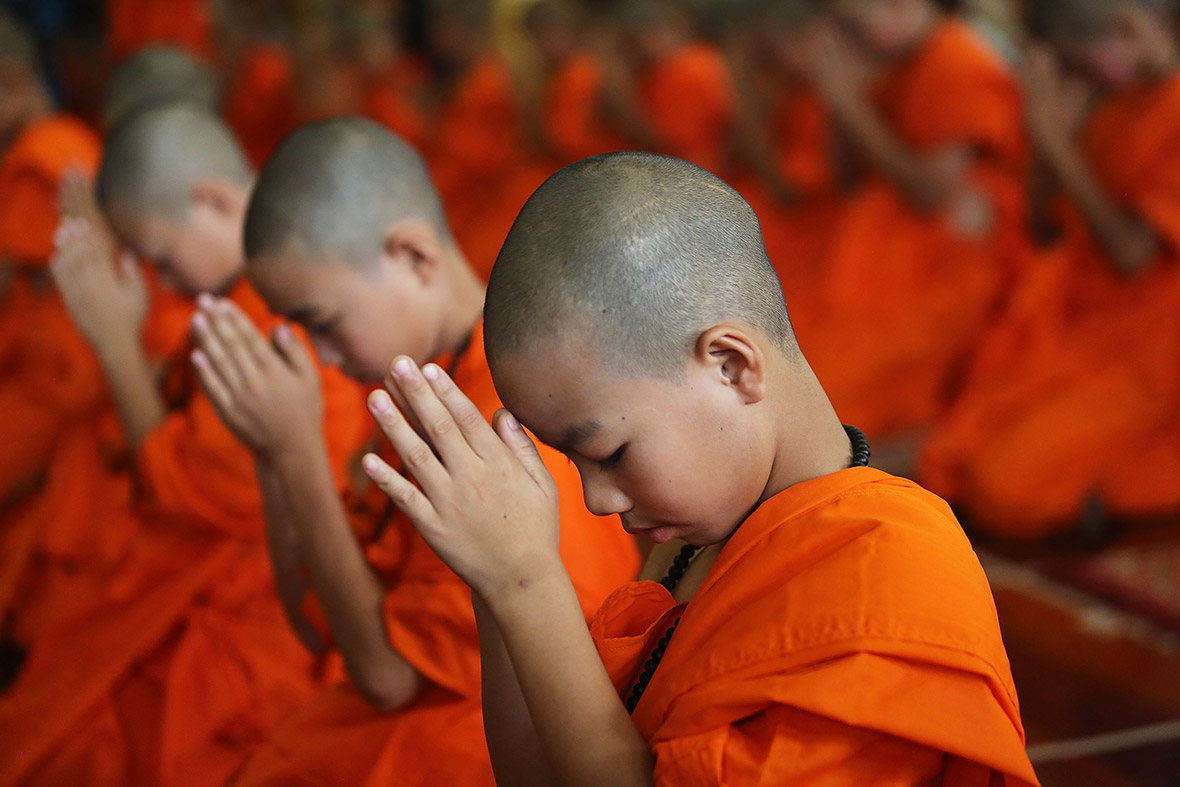
Uṭṭhahatha! nisīdatha!
Daḷhaṃ sikkhatha santiyā.
Mā vo pamatte viññāya,
maccurājā amohayittha vasānuge.
Rouse yourself! Sit up!
Resolutely train yourself to attain peace.
Do not let the king of death, seeing you are careless,
lead you astray and dominate you.
Sutta Nipāta 2.334
The Discourse Collection: Selected Texts from the Sutta Nipāta, translated by John D. Ireland
Hawai’i was an independent nation until January 17, 1893. That day, the archipelago and its monarchical government were overthrown illegally by the United States. Since then, the USA has taken over Hawai’i illegitimately, turning the island into a military base that threatens world peace, while sovereignty groups organize to rescue its legitimacy.
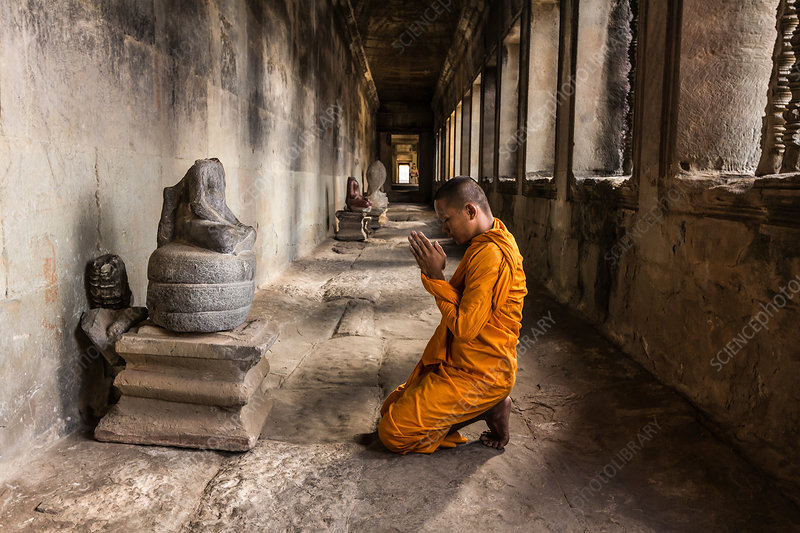
Appampi ce saṃhita bhāsamāno,
dhammassa hoti anudhammacārī,
rāgañca, dosañca, pahāya mohaṃ,
sammappajāno suvimuttacitto,
anupādiyāno idha vā huraṃ vā,
sa bhāgavā sāmaññassa hoti.
Little though one recites the sacred texts,
but puts the Teaching into practice,
forsaking lust, hatred, and delusion,
with true wisdom and emancipated mind,
clinging to nothing of this or any other world —
one indeed partakes of the blessings of a holy life.
Dhammapada 1.20
The Dhammapada: The Buddha’s Path of Wisdom, translated from Pāli by Acharya Buddharakkhita

Aloha a me ka maikāʻi oʻ kā kākahiāka, ī nā mea a pau ʻia ‘ōukōu kanaka a maikāʻi. Kākou nō ma ka hānā hebedoma hapalua ʻala. Mālāma nēʻe ‘īmua, hula manāwa ʻua ʻaneane ʻaneʻi. Ī kā maikāʻi oʻ kā lā. Nūi ke aloha.
Hello and good morning to all you good people. We are half way through the work week. Keep moving forward, play time is almost here. Have a beautiful day.


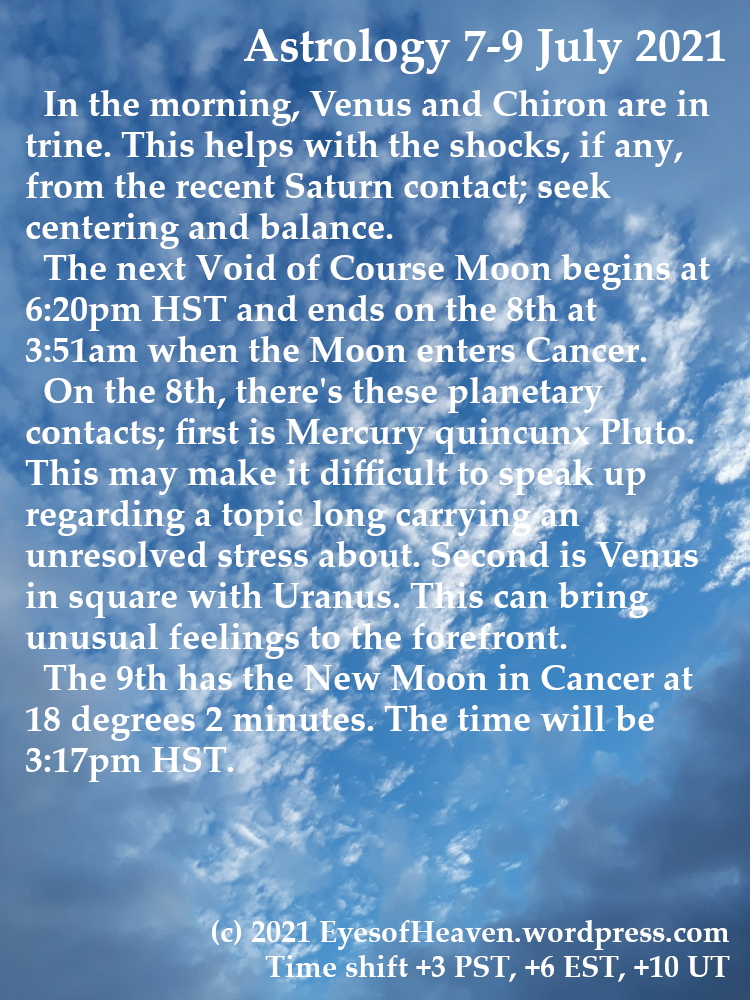
July 9, 2021 at 6:16 pm PDT is a new Moon in Cancer. Water sign Cancer rules the 4th house of family, home, and heritage. This new Moon begins Sheep lunar month through August 8. The gentle summer month of Sheep is time for healing, cultivating kindness, and to focus on home and family. Therefore, this lunar month is an opportunity for you to re-feather your nest this summer, especially after Covid stay at home.
The new Moon and Sun in Cancer trine Neptune in Pisces. It’seasier to follow your intuition or gut feelings, with empathy and sensitivity to the energy around you. If you are feeling stuck emotionally or spiritually, schedule time toclear out old belongings and make way for Neptune inspiration and creativity this summer. Contact me for your tarot reading, astrology forecast, or feng shui consultation for guidance.
Venus conjunct Mars in Fire sign Leo brings increased…
View original post 179 more words

Bahumpi ce saṃhita bhāsamāno,
na takkaro hoti naro pamatto,
gopova gāvo gaṇayaṃ paresaṃ,
na bhāgavā sāmaññassa hoti.
Much though one recites the sacred texts,
but acts not accordingly,
that heedless one is like a cowherd
who only counts the cows of others —
one does not partake of the blessings of the holy life.
Dhammapada 1.19
The Dhammapada: The Buddha’s Path of Wisdom, translated from Pāli by Acharya Buddharakkhita


jātimant — of good birth, having natural or genuine qualities, noble, excellent
Tato adinnaṃ parivajjayeyya
kiñci kvaci sāvako bujjhamāno.
Na hāraye harataṃ nānujaññā.
Sabbaṃ adinnaṃ parivajjayeyya.
A disciple should avoid taking
anything from anywhere knowing it (to belong to another).
One should not steal nor incite another to steal.
One should completely avoid theft.
Sutta Nipāta 2.397
The Discourse Collection: Selected Texts from the Sutta Nipāta, translated by John D. Ireland

Yadā have pātubhavanti dhammā
Ātāpino jhāyato brāhmaṇassa,
Athassa kaṅkhā vapayanti sabbā
Yato pajānāti sahetudhammaṃ.
When things become manifest
To the ardent meditating brahmin,
All one’s doubts then vanish since one understands
Each thing along with its cause.
Udāna 1.1
The Udāna and the Itivuttaka, trans. John D. Ireland

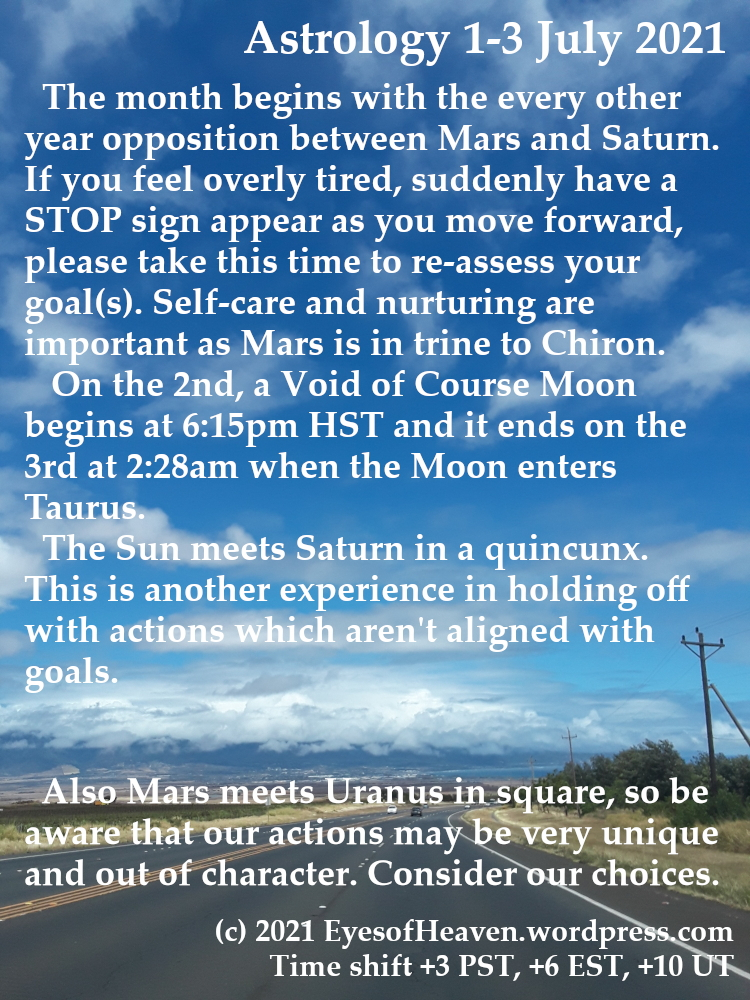
July is going to be major intense month, it starts with a bang and so much is going on. Watch the video of the Live July Astrology and tarot card preview below-
JULY ASTROLOGY ASPECTS
OVERVIEW
July starts off very intensely, MARS/SATURN opposition which lasts till July 4.
JULY 11 MERCURY changes sign twice from CANCER JULY 27 to LEO.
July 15 CHIRON turns RETROGRADE in ARIES.
July 21 VENUS enters VIRGO.
JULY 30 MARS enters VIRGO.
JULY 9 NEW MOON in CANCER
July 23 FULL MOON in AQUARIUS
July 28 JUPITER re-enters AQUARIUS
July 1 MARS in LEO / SATURN in AQUARIUS opposition at 12 degrees a RED-LETTER DAY also T-square URANUS in TAURUS
This is a passionately hot intense month for Fixed signs.
July 1 MARS in LEO opposes SATURN in AQUARIUS T-square URANUS in TAURUS at 12 degrees which completes on July ¾.
This is a…
View original post 1,332 more words

Feeling, while going about, that he is a wave of the ocean of self; while sitting, that he is a bead strung on the thread of universal consciousness; while perceiving objects of sense, that he is realizing himself by perceiving the self; and, while sleeping, that he is drowned in the ocean of bliss; he who, inwardly constant, spends his whole life thus is, among all men, the real seeker of liberation.
Shankaracharya
All the varied vestures of the incarnated human being are distinct sheaths on adjoining planes of consciousness, each with its own rates of vibration, all participating in the potency of ideation and mirroring archetypal relations. What is implied in the Vedantin association of the lower vestures with unwisdom is the false sense of separateness, the illusory stability and entitative existence that we ascribe to a form. What is the significance of the seven orifices in the human face and the thirty-three vertebrae of the spine? What is to be understood from the varying textures of the different layers of skin? Is the physical body to be analysed in terms of its constituent elements, or is it to be viewed in relation to the pulsating rhythmic movement in the heart? Such questions are rarely asked. Most human beings take for granted a haphazardly acquired and habitually retained assemblage of sensory perceptions and residues identified with a name and form which is really a static mind-image of the body. Individuals deny themselves the possibility of direct experience without the mediation of routinized anticipations or of frozen images projected upon objects. Anyone may learn to discern and comprehend the recurring patterns, resistances and responses of the body. Even more, a person may come to view the body, as the Gita depicts, as a nine-gated city. A person can learn to use the body as a musician wields a musical instrument, self-consciously impressing energy upon its myriad life-atoms caught up in chains of interconnected intelligence.
The body is a vast and complex matrix of interdependent centres of energy, each of which puts a human being in touch potentially, and therefore in many cases unconsciously, with everything else that exists on the physical plane. The body exists at a certain level of material density, with a biological entropy built into it, as well as a degree of homeostatic resistance to the atmosphere around. This level of resistance in the physical body enables it to maintain itself and is the basis of physical survival. Those who truly reflect upon this could make a significant difference by the deliberate and creative interaction of their own ideas and feelings. For example, while eating food, a person’s thoughts, emotional states, magnetic field and inward reverence to the invisible elements of food can make a fundamental difference to the qualitative osmosis of energies transmitted to the organism. The body can be seen as a sacred instrument in rethinking one’s entire relationship with the world. There is reflective intelligence at the lunar level and the astral and physical vestures are subject to various cycles and different rates of motion. These cycles are mathematical equations and patterns at the cellular level. The mathematics of the complex system that is the physical body, with all its cycles, corresponds closely to the mathematics of the galaxies and the vast cosmos. One could come to learn from the natural cycles and then from the particular bent given to them by one’s own emanations, thus gaining some grasp of one’s dominant anticipations and typical responses. Whoever engages in daily self-study could come to discern the distinct ways in which the body affects the mind during different portions of the day and the week, as well as the succeeding phases of the lunar month.
Shankaracharya lived at a time when ritualistic practices were widely prevalent, and many had become blindly dependent upon detailed and complex knowledge of what to do, when, during each of the many subdivisions of the day. All of this knowledge would not enable a person to get to the core of the causal body – the delusive identification through an ‘I’ with limiting conceptions of space and time, together with the persisting notion of oneself as the actor. Shankara taught that one must get to the root of the ‘I-making’ tendency – the illusory sense in which one is separate from the world which is supposed to exist as clay material for one’s purpose. This false conception of selfhood becomes deeply rooted because it is pleasurable, owing to passive identification with those sensations that have pleasing responses in different parts of the body. It is reinforced in the language and the milieu of those valuations of segmented aspects of conduct which tend to routinize, making a person take experience totally for granted, just as the physical senses can lead an unthinking person to take for granted that the more solid a thing seems to the tactile sense, the more it is solid in reality. There is a radical failure to understand that the whole visible world is like a screen, hiding a vast mathematical activity, and that for all its bewildering complexity, this phenomenal realm may be reduced to certain primary relationships that archetypally correspond to the numbers between zero and ten.
By rethinking much of what one took for granted before, one could come to conceive of an exalted state such as Shankara conveyed in The Crest Jewel of Wisdom. In this serene state an individual would be devoid of all sense of psychological involvement in any of the desires and aims, any of the obsessions, passions, infatuations and concerns of the world, in any of the criteria of success and failure or pseudo-valuations of people generally. Furthermore, having no sense of tightness, of excessive anxious-ridden involvement in the activities of the body, such a person begins to experience a tremendous exhilaration, a rhythmic breathing and a profound peace. It is like seeing a part of oneself carry out its natural functions, and yet remaining totally outside every kind of manifestation in which any single portion of oneself is involved. A person who reaches this stage can combine with this detachment a deep gratitude, a joyous affirmation that there is a certain value to the body as a pristine vesture. At the causal level – in what is called the karana sarira or causal body – fundamental ideas prevail which are often hidden to most human beings but which, if they were examined, would wipe out whole chains of thinking, complex patterns of activity over many years. They would all be eradicated by getting to the core of a fundamental idea. A person who steadily works on the plane of ideation so renovates the thought-body that it becomes possible to release self-consciously the inexhaustible potentiality of divine energy. The entry points between the causal body and the astral vesture are made more porous and, in time, the physical body may reflect and transmit the radiant joy of universal ideation.
A person may learn to live in attunement to the plane of those enlightened free men who are not captive even to the vast conceptions of space and time associated with the universe as a whole. Such a person will be ever engaged in intense meditation upon the Unmanifest, which increasingly becomes the only reality. A person who begins to see through the eyes and with the help of the illumination of the Guru finds that the physical body is only a dim reflector of light-energy and also provides a means of shielding the divine radiance. By extending the possibilities of human excellence to the uttermost heights of control, purification, refinement and plasticity that can be brought about by the deliberate impact of disciplined thought upon gross matter, one can revolutionize one’s conception of matter. Einstein pointed out in the twenties that a lot of what is called matter simply dissolves into a prior, primordial notion of space. The body can become an architectonic pattern in space which has within its own intricate symmetry an inherent intelligence that is not transparent at the level of image and form. It has the capacity of holding, releasing and reflecting the highest elemental associations that accompany the profoundest thoughts. Nature is the great magician and alchemist. The wise man is an effortless master of lunar forces, correlations, patterns and potencies.
Raghavan Iyer
The Gupta Vidya II
Find Your Magic
Tarot Readings, Inspiration, and Self-Empowerment
Making life on earth magick one moon phase at a time.
Astrologer ~ Mystic ~ Writer
of the Collegium Spiritus Sancti, a Golden Dawn Society
An affiliate of the Alpha et Omega Order of Melchizedek
All Knowledge Is Not Contained In Only One School
Connecting the grant community to #LearnGrants
Channelings & Articles
Magic Spell Books & Grimoires
Native Hawaiian Language Revitalization
Organic Herbs, Herbals, Sustainable Gardening
Mother Nature: Feeding The Mind, Body & Soul, with Food, Medicine & Skincare.
"Inheritor of a Dying World, we call thee to the Living Beauty. Wanderer in the Wild Darkness, we call thee to the Gentle Light..."
Time is the most important thing we've been given
Embracing the Divine Within.
"...That I should bear witness to the truth." - John 18:37 // David E. Robinson, Publisher
Increasing Consciousness Awareness