Lotus Tarot | Cooming To An End – Judgment

There are times in our lives when we must accept inevitable change and allow things to come to a natural end.
The Judgment card is often referred to as a time of resurrection and awakening, a time when a phase or period of our life comes to an absolute end making way for dynamic new beginnings.
It may be that a long-term relationship or marriage has had its time and whilst it may feel painful to accept this finality, the Judgment card is saying try and accept that this is a time of fast-moving, positive change and action for you.
Whether it’s the end of a career, a time when your children have flown the nest, or a turn of events that make you wish your life was different, this card represents karmic change and it indicates that bigger and better things are yet to come into your life.
Quite often, fantastic events and opportunities follow sad and difficult challenges and this card can represent any events that may feel like ‘Judgment Day’ has come. Changes that may be indicated upon the appearance of this card can be significant, so this would not be a time for regret and fear but a time for courage and rejoicing in what you have achieved and what you are yet to achieve.
Your life may well pick up a pace when this card appears, so whatever future possibilities are indicated in your reading, these events may happen quite quickly.
If the Judgment card comes up in a reading about legal issues, it is a positive sign that any ruling will be in your favor. However, if this card is surrounded by negative cards, it may indicate legal battles ahead and the possibility of having a ruling made against you.
In general readings, if this card is surrounded by negative cards, it could be that the swift conclusions foretold by the positive aspect of this card may be delayed. This can mean that you are fearful of such significant change and may be ignoring opportunities that may well promise a brighter future.
I also feel that when this card comes up, it’s important to use your own judgment wisely and not to judge yourself too harshly. It is a signal for you to open your heart and mind to accept that all things come to an end and nothing lasts forever, yet for each ending there is always a new beginning.
Embrace such significant and inevitable change and a whole new world of opportunity can unfold for you – the Judgment card is a calling for you to be all that you can be.
Best wishes
LT
Science | Study finds fresh water and key conditions for life appeared on Earth a half-billion years earlier than thought

We need two ingredients for life to start on a planet: dry land and (fresh) water. Strictly, the water doesn’t have to be fresh, but fresh water can only occur on dry land.
Theosophy | THEURGY AND TRANSMUTATION – I

To those who knew that there was more than one key to theogonic symbolism, it was a mistake to have expressed it in a language so crude and misleading. For if the educated and learned philosopher could discern the kernel of wisdom under the coarse rind of the fruit, and knew that the latter concealed the greatest laws and truths of psychic and physical nature, as well as the origin of all things — not so with the uninitiated profane. For him the dead letter was religion; the interpretation — sacrilege. And this dead letter could neither edify nor make him more perfect, seeing that such an example was given him by his gods. . . . Now all the gods of Olympus, as well as those of the Hindu Pantheon and the Rishis, were the septiform personations (1) of the noumena of the intelligent Powers of nature; (2) of Cosmic Forces; (3) of celestial bodies; (4) of gods or Dhyan Chohans; (5) of psychic and spiritual powers; (6) of divine kings on earth (or the incarnations of the gods); and (7) of terrestrial heroes or men. The knowledge how to discern among these seven forms the one that is meant, belonged at all times to the Initiates, whose earliest predecessors had created this symbolical and allegorical system.
The Secret Doctrine, ii 764-765
It is, according to Gautama Buddha, a greater feat to govern oneself than to command all the elements in Nature. All Nature and its powers bend heavenwards before the gentle, irresistible theurgy of the perfected Bodhisattva, the pilgrim-soul who has reached the summit of the Path and become the son of the Dhyanis, compassionator of the triple worlds, greater than all gods. The potential of pure swaraj or self-rule is latent in every Monad, and is quickened by the fiery ray of the Manasa Dhyanis. When first the dark fire of their formless intelligence ignited self-consciousness in the evolved forms of terrestrial humanity over eighteen million years ago, man became a living link between heaven and earth. Conscious of the divine presence within his preceptors, his companions and himself, he was governed by a natural impulse towards gratitude, devotion and benevolence. He lived in effortless sympathy with the hosts of bright devas and devatas that he found in and around himself and throughout the entire realm of Nature. Reflecting the Akashic ideation infused into him by the Manasa, his actions radiated a benign and spontaneous magic.
Although the impress of that primordial time is ineradicable, human beings have descended so low in consciousness that they can scarcely believe, much less recall, their original estate. Emerson’s charitable characterization of man as God playing the fool cannot account for the awful process by which man has become spiritually self-orphaned and blinded, becoming a burden to himself and a parasite on Nature. What, one might ask, are the strange gods and alien altars towards which human beings have directed their pristine powers in degrading themselves? Since there is no power greater than that which made Monads self-conscious, one need not look beyond oneself to find the cause of one’s own impoverishment. Nor need one look anywhere but within to find the means whereby one may embody the divine impulsion towards its transcendent end. The regeneration and restoration of humanity requires individuals to heed the wisdom of Krishna’s teaching that all beings go to the gods they worship, and thereby awaken to self-conscious immortality in unison with the unmanifest godhead.
Such an awakening can be neither metaphysically cheap nor psychologically simple; one must skillfully navigate between the Scylla of desperate salvationism and the Charybdis of cynical materialism. If man is potentially a self-conscious link between heaven and earth, one might ask how man is specifically connected with the earth and with heaven. The elements constituting the human vestures are indeed consubstantial with the fabric of Nature outside the human form. Thus, man is linked to the earth through the five sense-organs, each of which has its astral analogue, and also through a variety of classes of elementals. Through each of the astro-physical senses, and especially the sense of inner touch, man is continuously involved in complex processes of interaction with the elemental kingdoms. On the other side, he is connected with the Dhyanis and the devas through daimons, which are the invisible essences of the elements, elastic, ethereal and semi-corporeal, in Nature. These daimons are made up of a much more subtle matter than that which composes the astral form of the average human being. By consciously drawing upon them, one can bring about the progressive etherealization of one’s vestures. Just as the crucifixion of Jesus symbolizes the bondage of spirit on the cross of matter, so too the Eucharist signifies the spiritualization of material vestures and the liberation of the spirit. This process must be initiated through meditation, intensified through refinement in consciousness, through reverence, renunciation and compassion. If one can suffuse one’s whole being with benevolent and elevated thoughts and feelings, it is possible, over a period of seven years, to reform the life-atoms that constitute the astro-physical form. Such a radical renewal will be apparent in one’s hands, face, toes and tongue — indeed at every point in the body.
This in itself is only one small application of the vast body of arcane and exact knowledge regarding the hosts and hierarchies of beings involved in human evolution. In neo-Platonic thought these beings were divided into three broad classes:
According to the doctrine of Proclus, the uppermost regions from the Zenith of the Universe to the Moon belonged to the Gods or Planetary Spirits, according to their hierarchies and classes. The highest among them were the twelve Huperouranioi, or Supercelestial Gods, with whole legions of subordinate Daimons at their command. They are followed next in rank and power by the Egkosmioi, the Inter-cosmic Gods, each of these presiding over a great number of Daimons, to whom they impart their power and change it from one to another at will. These are evidently the personified forces of nature in their mutual correlation, the latter being represented by the third class, or the Elementals.
H.P. Blavatsky
In every aspect of life, human beings are intimately and immediately engaged with these ordered ranks and legions of daimons or elementals. The elementals are neither immortal spirits nor tangible bodies; they are merely astral forms of the celestial and super-celestial ideas that move them. They are a combination of sublimated matter and rudimentary mind, centres of force with instinctive desires but no consciousness in the human sense. Acting collectively, they are the nature-spirits — the gnomes and sylphs, salamanders and undines of alchemical tradition.
All these daimons, together with the higher gods, are connected with the seven sacred elements. At the highest metaphysical level, these elements have nothing to do with what we call fire, air, earth and water. For, in essence, these elements are not material, nor may they be understood in terms of visible functions on the physical plane. Just as the hosts of celestial and super-celestial gods are guided from within by the power of formless spiritual essences, and act outwardly in their dominion over the daimons of the elements, so these daimons themselves preside directly over the elements of the four kingdoms of organic life, ensouling them and giving them their outward capacities of action. Thus, when human beings arouse Buddhi in kama, the reflection of the sixth principle in the fourth,Buddhi will transmute the lower Manas. In the antaskarana, in the channel of aspiration, the force of Buddhi in Manas will actually become manifest in the fingers, nostrils and lungs.Buddhi will be aroused in all the centres of the brain and the heart. It will then be possible to invite or invoke the chief controllers of the many classes of daimons. When this takes place, the teaching that man is a living link between heaven and earth takes on a concrete meaning in benevolent magic based upon arcane science.
Raghavan Iyer
The Gupta Vidya II

Weekly Astrology | Rise to the challenge

Weekly Astrology June 10-16 JUNE 11 MARS SQUARE PLUTO- ARE YOU UP FOR CHALLENGES? MARS in TAURUS is forming a square to PLUTO Retrograde. Rules by VENUS in GEMINI right now, it may be a war of word […]

ORICHALCUM, THE LOST METAL OF ATLANTIS, MAY HAVE BEEN FOUND ON A SHIPWRECK OFF SICILY
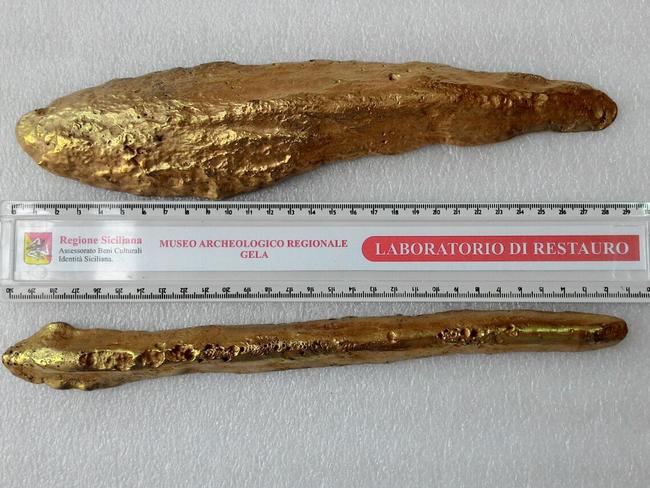
Orichalcum, the lost metal of Atlantis, may have been found in a shipwreck off Sicily
MYSTERIOUS metal ingots linked to the mythical civilisation of Atlantis have been recovered from an ancient shipwreck off the coast of Sicily.
Archaeologists last month recovered a wealth of ingots of an unusual golden alloy from the wreck sitting in about 3m of water, 300m off the coast of Gela in southern Sicily. […]
Source: Orichalcum
Divine Feminine Oracle | Mother Mary, for June 9, 2024
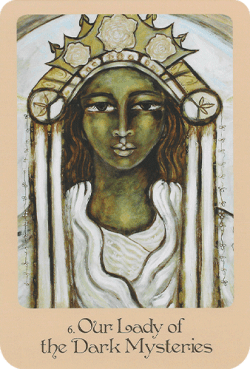
Mother Mary’s message for you
My essence remains constant, despite my various appearances and names. Now and always, I am your adoring mother. Even during the times you felt isolated, I was always there for you. I am with you in both the good and the bad. Even when life doesn’t appear to be going your way, I’m there for you. Have trust that I’ll always be there for you, no matter what you’re dealing with.
Your happiness and safety are at the heart of my universe as your mother. With my presence in your world, you will have enormous spiritual strength and tranquillity. You, too, are a radiant being. By embracing your divine nature, you will help and assist others in moving from a state of suspicion and anxiety to one of compassion, generosity, and sheer delight. Even in the dead of night, my child, you exude spirituality!
What you need to know
When Mother Mary reveals her light face to us, it is quite simple to recognise her presence. Then, we sense her empathy, calm energy and kindness. However, it’s more difficult to perceive her being there when her face isn’t as bright. When we go through grief, anger, alienation, death, and other bad emotions, we may feel this way. She is always there for us, even while we are fighting our inner demons to keep afloat.
Her dark face is as warm and beautiful as her bright one. Mother Mary’s dark face, sometimes known as the Black Madonna, gives us all hope. You see, even when you’re sad or depressed, you’re secure in her loving arms. She provides you with unwavering brightness in the present and the future. She has come to answer your prayers because you are in desperate need of her. As you feel and then express your feelings in safety, remember that she is cradling you in her warm embrace
Prayer for healing
Picture a lovely river of sunlight streaming before your eyes while you sit calmly. Slowly, a lovely black face appears, subconsciously encouraging you to let go of your anguish. You sense the world’s pain in her beautiful, black eyes, but you instinctively understand that all will be well.
Permit yourself to offer her unconditional love as you pray, “Our Lady of the Dark Mysteries, I am so very grateful for every single one of your blessings! My Mother, I beg you to assist me. Work through me so that I may help the world in every manner possible. I pray for your advice and assistance so that I may carry out your desires.”
Lotus Tarot | King of Pentacles, The Lord of Earthly Possessions

You arrive at the path of achieving and enjoying success…
The King of Pentacles represents someone who is unusually successful in business dealings and acquiring material possessions. I call this Pentacle “The Midas Touch” or “The Husband Card” in my deck. This King could represent you, a friend, family member, father figure, boss, lawyer, businessman, mentor, potential lover, potential marriage partner, or even an open enemy.
The Court Cards represent significant people who will enter your life. The Minor Arcana represents your choices and actions throughout the realization of your destiny. The Tarot card Kings represent authority, sound judgment, control, and strongly influence your current situation. The Pentacles represent your desire for material success, good health, and a happy home life.
Astrologically the King of Pentacles is related to the earth sign of Capricorn, the ambitious hardworking user of people and lover of things whose mind rules the heart and who is serious, traditional, economical, cautious and business-like, or domineering, egotistical, unforgiving, fatalistic, stubborn, inhibited and status-seeking.
The King of Pentacles astrological relatives are the planets Saturn (the structured teacher, lord of karma and lessons to be learned through trial and error), Venus (the morning and evening star that guides you to higher ideals. However, Venus is beauty or the beast. The beauty of a relationship that grows, or the beast of a relationship contract that could not achieve resolution and balance), and Mercury (the speed with how you gather information and think).
Symbolism
The King of Pentacles wears a golden crown decorated with red roses, yellow lilies, and a yellow and blue knotted laurel braid. The red roses represent the King’s passions, desires and actions, and the yellow lilies represent that the archetype is inspired with every step he takes. The tightly-knotted laurel braid indicates the King’s dedication, education, experience, and the status of his business achievements.
The King’s throne is decorated with goats (determination). Goats like to explore high vistas and climb the mountains of success.
The castle in the background represents goals and the solid foundation built to support these goals. The flag (announcement) flying over the blue (thought) roof may indicate that the archetype is thinking about announcing that a new business contract is in the works.
The King’s robe is decorated with grapevine leaves (growth) and red berries (the harvest of wealth). In one hand this archetype holds a globe scepter (indicating a businessperson who works worldwide). In the other hand the King holds one pentacle (new business opportunity).
The King shows only one steel boot, a sign that he would trample his would-be enemies if needed. The other boot is hidden because this King would never reveal all his cards.
My Interpretation of the King of Pentacles
The King of Pentacles has the Midas touch, is wealthy and loves the finer things in life. He embodies the combined royal qualities of the Tarot Kings with the earth-based qualities of the ambitious Capricorn mountain goat. He uses his authority, sound judgment, discipline, and his desire for structure to obtain status, social acceptance, a distinguished position, and financial security.
He is a financial genius, a business-savvy wizard, and a comfort seeking pleasure-lover. He is willing to work hard and may suffer many hardships in order to reach his goals and realize his dreams. Once he has obtained what he was pursuing, he is content to enjoy his well-earned rewards.
The King of Pentacles is a dedicated family man who follows tradition and expects the same from his partner and family members. He is the poster-boy of proper social behavior. He is solid as a rock and a good provider.
However, the King is always in control of his of environment or his castle. He handles conflicts by getting to the root of the problem to find the solution, and will also hold others accountable for their actions.
Positive Position: You may make solid business decisions and wise investments for yourself, a friend, family member, father figure, boss, lawyer, businessman, or mentor. The King may represent a potential lover or potential marriage partner, someone who is trusted, honest and dedicated and may sweep you off your feet. You may deal with an open enemy who has hidden intentions. See Note below.
Negative Position: You might be controlling, inflexible, rigid, nasty, and narrow minded. If you consider people to be unequal or of a lower social status, you may treat them badly. You may have trouble with a love relationship or your marriage may be in trouble. You could receive a bad performance review at work or lose your job. You may meet an open enemy who goes out of the way to ruin your reputation. See Note:
Note: You need to pull a clarifying card and cross the King of Pentacles to see if the energies are positive or negative to understand their intentions. Crossing cards indicate energies that need resolution. Swords = conflicts and challenges, Pentacles = growth and development, Wands = taking action with what you desire to achieve, Cups = love, feelings and emotions.
Timing is unpredictable and unknown.
With Love,
Safina
Theosophy | THE INMOST SANCTUARY – II

Plato explains, in a myth in the Timaeus, that when the Demiurge was fashioning the form of man, he endowed the human body with a stomach. This was done, according to the myth, out of compassion because otherwise man, unlike the animal, would be in danger of eating continually. Not only would this be disastrous for human health, but it would needlessly preoccupy consciousness with the intake and elimination of physical food. If human consciousness is to mature fully, it cannot be preoccupied with the persona, with the stomach and the libido, with physical space, time and motion. Consciousness must be freed to contemplate eternal motion, boundless space and infinite duration. This liberation from the bonds of the persona cannot be accomplished all at once but must be attempted again and again, through persistent efforts over a lifetime of meditation.
The radical reorientation of consciousness, away from the persona and towards the Divine, requires ceaseless striving and unremitting patience. Such continuity cannot be sustained over a lifetime unless it can be sustained for a year or even a week. In this arena, where clean beginnings and steadiness of application are crucial, one may gain great help from the example of the good gardener, who comes again and again to tend seedlings and plants, and yet allows nature time to work its magic. In fact, people who actually do some planting can gain considerable benefit through the restoration of their contact with the earth and by gaining an organic sense of growth. They can learn that all life is sacred, including the human body, and that every form of life can and should be treated with due respect. To recover this lost sense of the inviolable integrity of nature, however, one must be able to insert oneself into the whole, gaining intimations of what it is like to be a single blade of grass in a field or a single tree in a vast forest. As a modest experiment one might go to a nursery and purchase a seed, a pot and some soil. If one asks properly, the clerk will give whatever instructions are necessary and then one can take these materials home, carefully and with respect. Then after planting the seed in the soil with humility and love, treating it not as a symbol but as life, one can set the pot firmly upright in a place prepared for it. Each day one can give to the growing plant what it requires by way of water and nourishment, but it is important to do this with an assurance and confidence that comes with humility before nature. Forgetting oneself and without anxiety, one can observe the process of organic growth. In doing this properly, one will also be sowing in oneself the seeds of a new confidence rooted not in fear, not in deceit, but rather in fearlessness and truth, the source of authentic humility.
As one spends a few moments each day noting the growth of the plant, one may see this as linked magnetically to the seed of the new astral form which one seeks to gestate within oneself out of the soil of the old astral. This old astral is chiefly composed of patterns of selective memories, which are instinctual, habitual and compulsive, as well as somewhat inefficient and so unreliable that they would be unacceptable in any court of law. Having no firm basis in either fact or truth, they are primarily externalizations based upon misconceptions and predilections directed against those to whom we owe so much. Rather than remaining captive to an appalling burden of memories and an attendant tendency to judgmentalism towards parents, grandparents and ancestors — of whose trials and difficulties one knows little or nothing — one should mainly concentrate the mind upon the nurturing of the new astral form to which one is attempting to give birth. Indeed, one’s motive in doing this should be to benefit all those who have come before and to whom one should be grateful. One is aiming at the attainment of an active state, where one has energy, but in which one is not bound to one’s persona and irrational self through the forces of kama, krodha and lobha — desire, anger and greed. Speaking of the purifying and benevolent energy of the spiritual will, H.P. Blavatsky pointed to the fundamental requirements of spiritual regeneration and their connection with the discovery of one’s true immortality.
It is only when the power of the passions is dead altogether, and when they have been crushed and annihilated in the retort of an unflinching will; when not only all the lusts and longings of the flesh are dead, but also the recognition of the personal Self is killed out and the ‘astral’ has been reduced in consequence to a cipher, that the Union with the ‘Higher Self’ can take place.
H.P. Blavatsky
The path of inner gestation and self-regeneration depends critically upon the recovery of the capacity to think clearly, freely and creatively. This prerogative, guaranteed to every human being by the cosmos, which never has been (and nor can it ever be) abridged by any terrestrial institution, is the sacred and sacrificial birthright of every Monad blessed with the fire of Manas. Whilst true thinking may be rare, this is not the fault of any society or governments and it is irresponsible and immature in the extreme to blame one’s lack of thoughtfulness upon anything outside oneself. Thinking, in fact, has nothing to do with blame; the more one thinks, the less one will be involved with blaming altogether. As Merlin exhorted Arthur, “Think! Think! THINK!” It is extraordinary how rare true thinking is, but as soon as one does begin to think, thinking things through — dianoia — then one begins to concentrate and gains the ability to go back to an original moment. Those who have completed this training, true disciples who have gained effortless mastery over their astral forms at will, can instantly summon the moment of birth or of death. Herein lies the authenticity and integrity of the true spiritual Path. If ever one hears someone speak of astral travel who is unable to say what his thoughts were before the moment of birth, one should know immediately that such a person is deluded, or a dupe. It is too late to be taken in by such twaddle, much less participate in it.
One should begin by trying to think through what is essential in one’s life, seeking to recover, if not one’s moment of birth, then one’s moment of spiritual awakening in this life. What were one’s dreams as a child before seven? Was there any moment of awakening then, when one realized that one was worth more than all of one’s toys and trinkets? Was there any moment of awakening between the ages of seven and fourteen, when bright possibilities of the future were glimpsed and was there a moment around the age of puberty, when one was filled with hopes and ideals in relation to human brotherhood? Did the possibilities of human growth, beauty, fulfillment and promise fire one’s imagination? What were the secret dreams and longings for the good that one whispered to one’s closest friend in school but did not mention to adults? Were there certain withdrawn and sensitive moments in one’s life which one did not mention to another living soul, but rather honoured in the heart? Each person must self-consciously recover these golden moments for himself or herself because no one else can do this for another. Each person must discover the seeds of goodness within himself or herself and nurture them. If one is to take into account one’s failures, mistakes and errors, then it is only fair that one should also note in one’s life-ledger one’s golden dreams and finest thoughts. One should learn to accentuate the positive and not become preoccupied with the negative. The best means to do this is not to speak very much about oneself to others. Be silent for awhile. Learn to talk less and think more. Then, as one takes note of the truest things in one’s life, one will begin gradually to see connections within, and one will no longer be a slave to connections imposed from outside by others.
Ultimately, one’s life is one’s own. It does not belong to parents or friends or spouse or any other. In one’s spiritual life one cannot come closer to the Guru until one has become worthy of the blessing, and this can only be done by voluntarily putting oneself through vows within a period of probation. During that period of probation there will be a tremendous testing brought on by no one else but oneself. By putting oneself as oil in a refinery, or as a jewel in a cleansing solvent, one chooses precisely which trials and tests are to be brought upon oneself by oneself. Through the power of one’s resolve one enters upon an alchemical process of removal and burning out of impurities in one’s nature. If, for example, one pronounces a sacred word like Atman, then one both blesses and curses oneself. One curses oneself in that the darkness will be drawn out; one blesses oneself in that the Light of the Atman will be shed upon one’s nature. One can choose to stand in the Light of the Atman, but then there will be war — war between that part of oneself which loves and is one with the Light, and that part which is incompatible with the Light. It is impossible to cling to Light and darkness at the same time. One cannot worship both God and Mammon. One must choose, and even though one cannot choose all at once, each choice on behalf of the Light increases self-respect. Every time one chooses to meditate instead of cerebrate, every time one chooses to contemplate instead of chit-chat, every time one chooses to learn from other human beings instead of becoming judgmental, one gains dignity and a measure of self-respect. And unless one respects oneself, one cannot earn the respect of others. This does not mean that one should work at this anxiously and with strain. Rather, one should accept and recognize one’s unimportance, seeing oneself as only one amongst billions of human beings, treating this not as an excuse but as one of the primary facts of life.
Human beings must find out for themselves individually the meaning and purpose of their life. Each human soul in incarnation has a sacred mission and goal. One must have the courage to discover what one has come to earth to do. If one has come to work for the City of Man, then one must train oneself. One must come out of the Necropolis, the city of the dead. One cannot work for the City of Man whilst remaining captive to the city of the dead. One must learn compassion for the morally and mentally crippled, the blind and lame, the victims of crime and ignorance, as well as the criminals themselves. One must become a person of strong nerves capable of loving more and more people, and along with this one must become aware of what one can handle and what one cannot. Each individual is different, and it is necessary to learn something about the plastic potency of one’s own astral vesture. What are its capabilities and what its limitations? There is also great meaning and value in meditating upon a vast and general promise which is the glorious goal of universal human evolution. It is good to envisage in the mind, not merely for oneself but on behalf of all, the prospect of that sacred moment far along the Path when, as H.P. Blavatsky said:
the ‘Astral’ reflects only the conquered man, the still living but no more the longing selfish personality, then the brilliant Augoeides, the divine , can vibrate in conscious harmony with both the poles of the human Entity — the man of matter purified, and the ever pure Spiritual Soul — and stand in the presence of the MASTER SELF, the Christos of the mystic Gnostic, blended, merged into, and one with IT forever.
Mahatma K. H., commenting upon the Tibetan proverb that everyone is master of his own wisdom, states that each is at liberty either to honour or degrade the slave. He then goes on to link this with the eternal process of evolving subjective matter into objective atoms. This intimates that one must, through the power of meditation upon extremely abstract and subjective thoughts, evolve new life-atoms. It is these fresh and pure life-atoms which will push out the old life-atoms of one’s astral body. This is analogous to taking a purgative medicine to clean out unhealthy and unwanted residues in the body. It is even more analogous to the taking of an antibiotic, such as penicillin which was discovered in bread mould by Sir Alexander Fleming. One must, so to speak, extract out of the fungus of one’s chaotic mind a purifying idea capable of cleansing one’s entire mental field. One must directly and deliberately intervene in the war between creators and the destroyers within one’s astral frame. Like an antibiotic medicine derived from life itself, yet capable of destroying harmful bacteria, one’s heartfelt ideals, distilled and clarified through meditation, have the power to release the purifying and benevolent energy of the spiritual will. This is only an analogy pointing to the process of mental self-purification through sacrificial meditation, which is a vital part of the sacred science of spirituality. That science is mathematically exact and precise in its laws and is therefore not possessed by human beings who are captive to the illusions of terrestrial existence. It is an arcane science which combines meta-chemistry with meta-biology, and it is rooted in a metaphysics which only becomes dynamized and activated when it is rendered into meta-psychology — that wisdom which is used and applied in daily life. When it is properly used, and this has nothing to do with mere words — though it has a great deal to do with the use of the tongue — it is extremely powerful and is equivalent to the release of the spiritual will flowing from the Atman.
For the neophyte, the initial step is to become a true pragmatist by putting to use the idealism which is within the soul and which is consubstantial with the plane of Mahatmic ideation in the cosmos. It will then become possible to bring into the unreal world of time, which ordinary human beings mistake for reality, the fruit of meditation, the flower of contemplation and the fragrance of self-study and self-correction. When one is filled with the milk of human kindness, it will become possible to extract from the depths of one’s divine nature the ambrosia of immortality. In deep sleep, when one is far from the persona, when the personal nature is reduced to a cipher, one may receive the gift of Krishna, a drop of the divine elixir. The personal nature will know nothing of this secret gift, and when one awakens, it matters little what the personality makes of the change. What is important is that one honour and treasure it and go forth into the day, sifting and selecting that which is of value, that which is good and true and beautiful. One should not do this strenuously, but rather with a lightness and relaxation consistent with one’s own sense of unimportance in relation to the entirety of mankind.
All forms of over-exertion and strain are signs of a sense of personal self-importance and a desire for attention incompatible with spiritual maturity. Karma cannot condone an abnormal desire for attention for oneself at the expense of the human race, because karma cannot shelter the propensity to indulge in attention to the shadowy persona. Therefore, one must learn and enjoy a new set of rules wherein one does not ask for more ego space than one is entitled to. But if one understands what it is to be only one amongst billions of human beings upon the earth and only one of a smaller though extensive class of beings who have come into the Avataric orbit, then one will know how to do this. Instead of yielding to the backward tendency to impose one’s personality and problems upon others, one will learn to do tapas in silence, so as to prepare oneself for the opportunity to serve which comes with being in the presence of other human souls.
If one would become worthy of being in the presence of Krishna, then one must begin by attempting to understand what Krishna meant when he said that he established this entire universe with but a single portion of himself and yet remains separate from it. Whatever be the percentage of that portion of himself, and that would vary with the needs of the era, his essential nature remains Kutastha — He who standeth apart. The sense in which Krishna is separate from the universe is mystical and metaphysical, but one cannot hope to begin to understand this if one remains subject to the delusion that one can understand oneself by understanding Krishna. This is a typically Western misconception. One must understand oneself through understanding other human beings; when one has understood oneself through all other human beings, then one may begin to understand Krishna. Through love and devotion one can cross the barriers of the mind and the heart and the self, and prepare oneself for Mahasmashana — the burning of the corpse of the persona. There one is consumed by the fire of devotion so as to be reborn to live purely for the sake of others and not at all for oneself. Only those who have crossed that sacred threshold, difficult of approach, can participate in the conscious creation of their lower self. Very few have heard of this mystical threshold, and of these, even fewer have been able to approach it. Fewer still are those who have made a burning-ground of their hearts for the sake of the Guru, and thereby truly entered his service. Yet such is the great teaching and rich promise given by Krishna to his devotees, to all those heroic souls who would become willing servants of the City of Man.
Raghavan Iyer
The Gupta Vidya II
Good Eats | Edamame Crunch Salad

Colorful, crunchy, and packed with vegetables, this edamame crunch salad is a super fresh salad that’s easy to make and packed with nutrients. […]
Divine Feminine Oracle | Mother Mary, for June 2, 2024
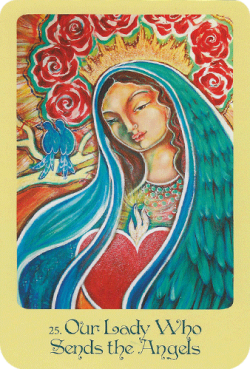
Mother Mary’s message for you
I have a wide range of resources at my disposal, so I can assist you in a number of ways. I will send one of my messengers to help you when you appeal to me. To help you see your way out of the gloom of your difficulties and into the light of your understanding, I always enlist the help of the angels.
You and those close to you will benefit from the assistance of my angels as they provide light on your road through dark times. Do not be afraid right now because you will be assisted by a heavenly army under my leadership so that your life will drastically improve!
What you need to know
It is time for something to alter in your world since you absolutely know that things can no longer remain as they are. Mother Mary is here to remind you that to receive assistance from the angels you need to simply ask. If you don’t do this, they won’t be able to intervene.
For those who have a problem they don’t know how to cope with, Mother Mary offers a very powerful message. The situation might even apply to someone other than you. Thankfully, as long as you do it with good intentions and aren’t attached to the outcome, it’s permissible to ask the angels for aid on behalf of another individual.
Prayer for healing
Envision that you are bathed in a warm glow that is lovely and therapeutic. As you breathe and calm your mind, take in all of the feelings that you are currently experiencing. You are able to sense that your cares and problems are drifting away, enabling you to feel much lighter.
When you feel ready, say the following prayer, “Our Lady, Who Sends the Angels, I kindly ask you to dispatch your angels to aid myself and others who need you. I am able to link with the divine kingdom through the joy and love that lives within me thanks to your compassionate force.”
Lotus Tarot | The World (or Universe)
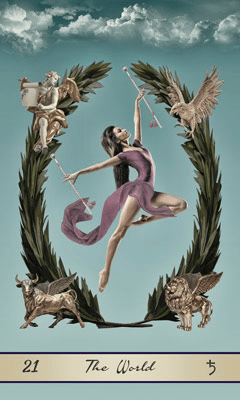
The World points you towards a path of initial completion as you continue your journey through the seventy-eight passageways of growth. This is the next level up on your continuous cycle of change and is the final Major Arcana path.
Starting with the path of the Fool, you had to attend “The School of Hard Knocks” and learn very hard lessons to gain wisdom from mistakes and to become a stronger person. Today is a graduation.
Congratulations on climbing the last mountain of setbacks and struggles! You are receiving your diploma and standing at the gate of a fresh new start. The past does not hold you back anymore because you tied up all your loose ends and will not wander back in time and repeat old patterns that got you in trouble.
You are at the end of your journey, placing the final touches that allow the forging of new beginnings – the end of a cycle and the time of completion. You closed the doors to the past and are now opening the new doors to the future.
Remember, all endings bring new beginnings and this card reveals that yours will come very soon. When you reach the World on your journey, you will realize that you have finally reached an important point in your life’s education. Having grown, you should be proud of what you have accomplished and acknowledge the distance and time that it exacted.
Numerical Number 21: This number is related to working hard to achieve your goals and having learned the necessary lessons, closing the doors to the past. You will feel inspired and optimistic about the future and the new goals that are waiting for you to explore.
The World, enumerated 21, consists of: 2 (making a choice) + 1 (a new beginning) = 3 (rebirth, creating something new. You will expand, give birth to life and create something beautiful with people who are close to you).
The Element of Earth: The World is associated with the planet Saturn (wisdom received from making mistakes and rolling up your sleeves to do the hard work to complete your education).
Probable Outcome: You are experiencing self-completion and success. You are the commander and chief of your life, no longer ruled by old thoughts because you live in the now. You have tied up loose ends and everything is starting to fall in place.
You might receive recognition from others and feel respected and appreciated.
Possible Outcome: Things from the past rule your mind, or you still have loose ends that need to be tied up. This might be a time of frustration, delayed completion, or a stagnated situation, but not failure. Things are not moving as fast as you wanted.
It’s possible that you are not receiving recognition from others, or do not feel respected and appreciated.
Then again, you might not be able to channel the World’s energies into your life. If this is the case, then you are not willing to make changes because you are too structured.
It’s also possible that you unwilling to end a situation and your resistance to make this change indicates a delayed completion to achieve your dreams. You are still a student in the “School of Hard Knocks” because there is still more work to be done.
Timing: The World predicts that an important event may occur within the next 30 days.
With Love,
Safina
‘Incredibly Rare’ Astronomical Object Has Markings in Multiple Languages
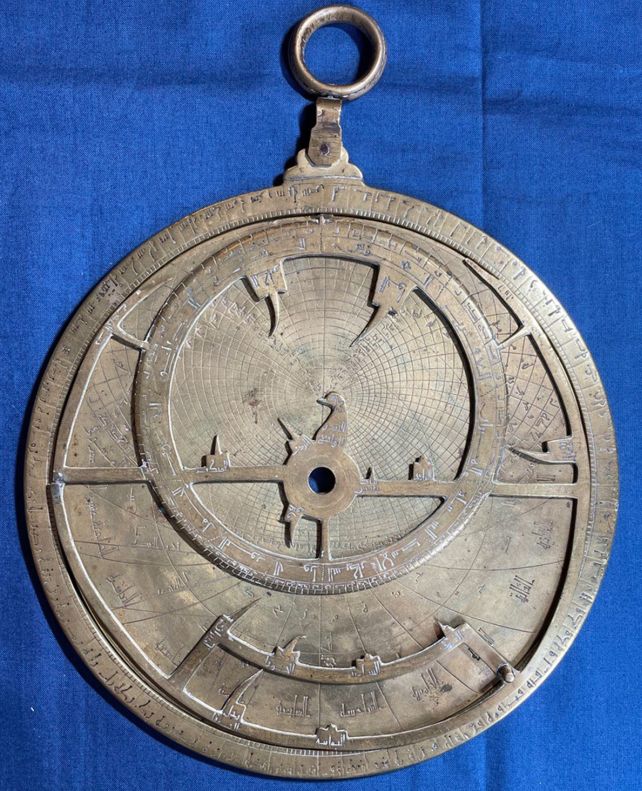
A star chart across time and space.
A medieval astronomical instrument discovered entirely by accident has turned out to be a powerful record of cross-cultural scientific collaboration.
The brass astrolabe dates back to 11th century Spain – but was subsequently engraved with annotations and amendments over the centuries, in multiple languages, as changing owners adapted and updated it for their own use. […]
Source: ‘Incredibly Rare’ Astronomical Object Has Markings in Multiple Languages
Melchizedek Seminary | Terrence Howard explained by Jain 108
Science Redefined. Jain 108 explains the enigmatic work of Terrence Howard!
Does his technology based on the negative space of the 3-dimensional view of the Flower of Life, challenge the world of physics? Is he on the same level as Tesla?
Get ready to view science through a fresh lens, thanks to Howard’s incorporation of Walter Russell’s groundbreaking periodic table, which is founded on waves and octaves of light. This paradigm shift suggests that 1×1 may equal 2, and that straight lines are merely an illusion—only curves exist.
With 97 patents to his name, is Howard pioneering propulsion systems rooted in sacred geometry instead of harmful fossil fuels?
Are we ready to rethink our understanding of gravity, black holes and Creation itself?
Jain 108
http://www.jain108academy.com
Dhamma Verses for May 27, 2024

Apanā bhī hove bhalā,
bhalā sabhī kā hoya.
Jisase jaga kā ho bhalā,
śuddha Dharama hai soya.
Apanā bhī hove bhalā,
bhalā jagat kā hoya.
Jismain sabka ho bhalā,
Dharama śuddha hai soya.
Good for oneself,
good for everyone,
good for the world—
this is pure Dhamma.
Good for oneself,
good for the world
good for everyone—
this is pure Dhamma.
–S.N. Goenka
Divine Feminine Oracle | Mother Mary, for May 26, 2024

Mother Mary’s message for you
Amongst the many names that are used to identify me, one is Our Lady of the Abundant Garden. I speak with you today to let you know that you are either now in the midst of a period of abundance or are on the verge of entering one very soon!
The seeds that you plant now will germinate and develop into a thriving landscape in the days to come. Therefore, be sure that everything you do is productive and has a purpose. You will never misplace what is destined for you because I will see to it that it is always there in the right place.
What you need to know
Believe that good fortune is all around you and it will come to you. In addition to this, trust and believe in yourself completely. It would also be beneficial for you to make a list of not just your aspirations but also your motives and aims right now so you can focus more of your energy on these.
You are getting to a point where your happiness is untouched by anything that is going on around you. Therefore, simply take it easy while you savour the pleasures that life has to offer you. Keep in mind that generosity brings about such a satisfying feeling. When you give more, you will, in turn, be rewarded with a greater amount. Keeping this in mind, don’t forget to express your gratitude and appreciation to others who deserve it.
Prayer for healing
“Permit me, Our Lady of the Abundant Garden, to see, appreciate and accept everything that my world has to offer. My environment is presently filled with a sense of magic that will blossom into something even greater. Help me recognise and appreciate every little miracle, every natural cycle and every encounter of loving kindness.”
“Please lend me your support while I release everything else in my life that I no longer require. Everything I’ve ever learned is shifting and morphing into an idea that is far bigger than I am. I am developing into a version of myself that is much less stressed and more joyful as time goes on.”
Theosophy | THE INMOST SANCTUARY – I

The ‘Master’ in the sanctuary of our souls is ‘the Higher Self’ — the divine spirit whose consciousness is based upon and derived solely (at any rate during the mortal life of the man in whom it is captive) from the Mind, which we have agreed to call the Human Soul (the ‘spiritual soul’ being the vehicle of the Spirit). In its turn the former (the personal or human soul) is a compound in its highest form, of spiritual aspirations, volitions, and divine love; and in its lower aspect, of animal desires and terrestrial passions imparted to it by its associations with its vehicle, the seat of all these.
H.P. Blavatsky
Restoration of the right relationship between the Master in the inmost sanctuary and the incarnated consciousness is gained only through a sacrificial process of self-purification. Obscuring and polluting tendencies nurtured in the mind through its misuse over many lives must be removed by a self-chosen and self-administered therapy. Like the Pandava brothers exiled from their kingdom through their own folly, or like the master held prisoner in his own house by those who should be his servants in the parable of Jesus, the pristine divine ray of the Logos in man is trapped and stripped of its sovereign place in human life unless consciously sought by the aspirant. This invocation of wisdom through the supplication of the mind to the spirit was seen by the ancient Greeks as the cultivation of sophrosyne — the subordination of the inferior element to the superior. It is shown in The Voice of the Silence as the shila virtue — the attunement of thought, will and feeling to the pulsation of divine harmony, Alaya-Akasha. The mind stands as the critical link between the divine and the animal nature. The recovery and right use of the privilege of human existence depend upon the subordination of the elements of the lower rupa existence to the spiritual ideation of Arupa Manas.
The sacrificial posture and selfless motive required for this self-purification can be readily grasped through a telling analogy. There is not a modern metropolis which does not maintain the equipment needed to neutralize the effluvia of human waste and thereby reduce the danger of infection to its population. Similarly, a large number of devices are available, both to cities and to individuals, for the purpose of removing sediments and impurities from drinking water, through distillation, filtration and osmosis, to make it available in a purer and fresher form. With the human mind the same principles of public health and civic responsibility would require that each individual and every society strive to purify the muddy stream of human passions which pollute those coming into contact with it. Every human being has received the crystalline waters of life in a pure and unsullied condition, and therefore everyone has the karmic responsibility for every failure to return these waters to the ocean of life in a pristine condition. Insofar as this responsibility has been neglected by individuals, under karma in successive lives they are self-condemned to immersion in the waters they themselves have poisoned. Under the laws of karma affecting the processes of reincarnation and the transmigration of life-atoms, individuals owe it to their neighbours and their descendants, as well as to themselves, to purify their mental emanations.
In practice, this implies a continuous cleansing of one’s thoughts, one’s words and one’s actions; these in turn fundamentally depend upon the purification of the will. Unfortunately, purification of the will, which is vital to the spiritual regeneration of humanity, is itself seriously misunderstood as a consequence of the process of pollution of consciousness and magnetism. Mired in the morbid obscuration of higher consciousness, too many people suppose that a bolstering of the lower will is a means to survival. Nothing could be farther from the truth. The higher spiritual will does not itself need to be strengthened, but it may be released through the removal of obscurations and hindrances. So long as the will is activated by the individual only on behalf of passions and the illusion of the persona, that will is not worth having. Hence, many people have discovered that the will cannot be released on behalf of lesser purposes. This predicament is conspicuous in those diseased societies which place an inordinate emphasis upon the personal will. Will itself is a pure colourless principle which cannot be dissociated from the energy of the Atman released through breathing. Thus when human beings breathe benevolently, blessing others with every breath, they can release the beneficent will-energy of the Atman. As soon as the will is released on behalf of the personal ego, however, against other human beings, it is blunted. This inevitable paralysis of the antagonistic lower will is indeed a beneficent and therapeutic aspect of karma.
Viewed from a collective standpoint, many human beings can be seen as having been weakened because they have absorbed life-atoms from others who have misused spiritual knowledge and the potency of the higher will. Throughout the world perhaps one in ten persons has insistently used the will against other human beings in this or previous lives. This may have been for the sake of bolstering the insecure identity of the persona or, worse, through the misuse of spiritual knowledge connected with false meditation, indulgence in drugs and mediumistic practices. Since 1966 contemporary society has witnessed the emergence of a number of centres of pseudo-spiritual activity; now it is witnessing the inevitable psychological breakdown of many who were responsible for this moral pollution. The waves of spiritual influence initiated by the descent of Krishna offer golden opportunities to all souls, including those inverted natures self-blocked from inward growth by their own failures on the Path in previous lives. Amongst these there were some too cowardly to make a new beginning, who sought instead to compensate for their own weakness and delusion by cashing in on the currents of the 1975 Cycle. Having forfeited timely opportunities offered through compassion, they are self-destroyed when Krishna takes a firm stand on behalf of the entire human family because they are unable to generate a genuine concern for others. Never having generated an interest in the welfare of the vast majority of mankind, they are self-condemned. Sadly, they cast a long shadow over a much larger class of weaker souls who are affected by them, no doubt through their own delusions and vulnerabilities.
Persons are sometimes drawn into dangerous orbits of misused knowledge through loose talk about such sacred subjects as kundalini, kriyashakti and the activation of the higher spiritual centres in man. Ordinary people who enjoy a normal measure of spiritual health wisely avoid those places where they are likely to hear profane chatter. Through a natural sense of spiritual good taste they simply shun those places where self-deluded con men congregate to make a living off the gullible. Today, because the moral and spiritual requirements for participation in the humanity of the future have become more evident to many people, the market for such deceptive opportunism has begun to diminish. The America of P.T. Barnum, who said that a sucker is born every moment, has been replaced to a large extent by the America of Abraham Lincoln, where, as is well known, one cannot fool all the people all the time. Although many souls have to travel a great distance along the path of self-integration, they have learnt enough not to be duped by pseudo-spiritual blandishments. Just as they have learnt not to believe everything conveyed by the mass media and not to leap at every free offer or supermarket discount, they have also learnt to pass up invitations for instant development of kundalini and every facile promise of spiritual development that dispenses with the judicious control of the emotions and passions.
Even in the difficult area of sexuality the idea of strength through celibacy (e.g. Gabrielle Brown, The New Celibacy, 1980) has gained some currency amongst many people, young and old, who find the burden of ego-games and unequal experimentation intolerable. There is nothing wrong with the sacred act of communion and procreation, and as the ancient Jews believed, God is pleased when a man and a woman come together in true unison. Nor need this issue be obscured by pseudo-arguments concerning the Malthusian spectre of over-population. As the economist E.F. Schumacher pointed out, even if the entire population of the globe were concentrated in America, this would result in a population density no greater than that of Great Britain, a nation long noted for the spaciousness and greenery of its countryside. North America itself, over its ancient and almost entirely unwritten history, has supported many varied civilizations, some of which displayed a much greater spiritual maturity than is evidenced in its recent history. Broadly, one cannot understand the physical facts of life on earth, much less the spiritual facts of life, through a language of conflicting claims and counter-claims, rationalizations and compensatory illusions, or pseudo-sophisticated statistical arguments based upon a selfish and shallow view of the nature of the human psyche.
The purification and release of the will must be comprehended in terms of human individuality, and therefore must be considered in the light of the mystery of every human soul. Since this mystery encompasses an entire series of reincarnations extending over eighteen million years, it can only begin to be appreciated through careful consideration of the motley evidence offered by one’s participation in varied states of consciousness in the present life. Any individual concerned to recover the spontaneity and benevolence of the spiritual will must be willing to examine courageously the manner and extent to which he or she has become the servant not of the divine Ego, but rather of the lower astral form and its attendant incubi and succubi.
For this ‘Astral’ — the shadowy ‘double’ (in the animal as in man) is not the companion of the divine Ego but of the earthly body. It is the link between the personal SELF, the lower consciousness of Manas and the Body, and is the vehicle of transitory, not of immortal life. Like the shadow projected by man, it follows his movements and impulses slavishly and mechanically, and leans therefore to matter without ever ascending to Spirit.
H.P. Blavatsky
Raghavan Iyer
The Gupta Vidya II
Dhamma Verses for May 24, 2024
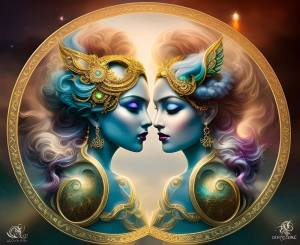
Jāta pānta nā Dharama hai,
Dharama na chūā-chūta.
Dharama pantha para jo cale,
hove pāvana pūta.
Caste or rank is not Dhamma,
Dhamma is not untouchability.
Whoever walks the path of Dhamma
becomes a holy person.
–S.N. Goenka
Astrology | Sagittarius Full Flower Moon, Rare Venus Jupiter conjunct at 29

This rare and special Full Flower Moon May 23 at 6:53 am PDT, 9:53 am EDT, 1:53 pm GMT at 2 degrees 55′ of the last fire sign is totally awesome. With 3 Planets at 29 degrees, VENUS conjunct […]
Source: Sagittarius Full Flower Moon, Rare Venus Jupiter conjunct at 29
Lotus Tarot | Strength

| The Strength card signifies mental, physical, and emotional power over trying circumstances. It frequently appears as a comforting omen when the querent feels as though they are being buffeted by the vicissitudes of life and need the inner resources to confront the trials set before them.These trials may take the form of an illness, hostility from others, or perhaps even the querent’s idiosyncratic foibles. Whatever difficulty Strength represents in a reading, it is a call to action to fortify one’s personal reserves and meet challenges with courage and integrity. Strength is numbered 8 in the Major Arcana and, in accordance with Kabbalistic principles, the number 8 is the number of miracles and transcending the limitations of the physical world. The number 8 also bears a striking similarity to the occult symbol of the moebius which represents the interminable flow of the universe and the transmutation of energy from one form to another. From these observations, we can understand that the Strength card signifies that the querent is being urged to loose themselves from the fetters of their present limitations by using the firm knowledge that they have the ability to be more than what they currently are.The Strength card is associated with the sign of Leo which is ruled by the sun in astrology. The sun governs personal vitality, ego, and reputation. The sign of Leo rules the fifth house of the zodiac wheel which encompasses creative talents, romance, children, theatre, and artistic endeavours. These associations cement the principle that the Strength card symbolises transcending current constraints through the astute use of one’s personal resources and ingenuity.In the Rider Waite deck a female figure dressed in white is shown taming a lion. The Lion represents ego, pride, vanity and brute force, while the colour white symbolises moral purity and integrity of character. Through this imagery we can understand that by being upstanding and virtuous, a number of pitfalls can be overcome. The archetypes of the lion and the virtuous individual remaining unharmed by the lion is one that has recurred throughout history in various cultural mythologies. Androcles in Greek mythology and Daniel in the Old Testament are two notable examples, demonstrating that purity of character will protect one from the most savage circumstances. In energetic terms this is also true as it is said that the more morally upright and loving a person is, the less that strife and violence in their outer reality will be able to affect them, or even arise in the first place.In a love reading the Strength card can represent that a person of interest is a difficult creature to tame and that the querent is continually having to “be the bigger person” and use gentle but subversive tactics to entice them. More negatively, the Strength card can be indicative of a person of interest who has a bloated ego and expects the other partner to put all the effort into the relationship. In its most positive aspect, the Strength card can show that the querent will win over the object of their affections because of the purity of their character, and that their moral integrity will induce their love interest to lower their guard and be receptive to love.In a work or career reading Strength signifies persistence and extinguishing one’s inner critic to reach goals. It does not foretell guaranteed success but that the querent will battle any obstacles to the best of their ability and will draw on personal reserves to do so. In a negative context, the Strength card can foretell physical and emotional burnout because of a heavy work load. Timing: Timing is dependent on card position within a spread but the period governing Leo may be pertinent. Major Arcana: Card 8 Planetary Influence: Leo, 5th house of astrological wheel Element: Water Quality: Cardinal Positive Aspects: inner resources, taming one’s darker side, persistence, moral purity, integrity, courage, breaking personal limitations Negative Aspects: manipulation, physical burnout, failing health, one-sided effort in a relationship Kind Regards Medusa |
Dhamma Verses for May 23, 2024
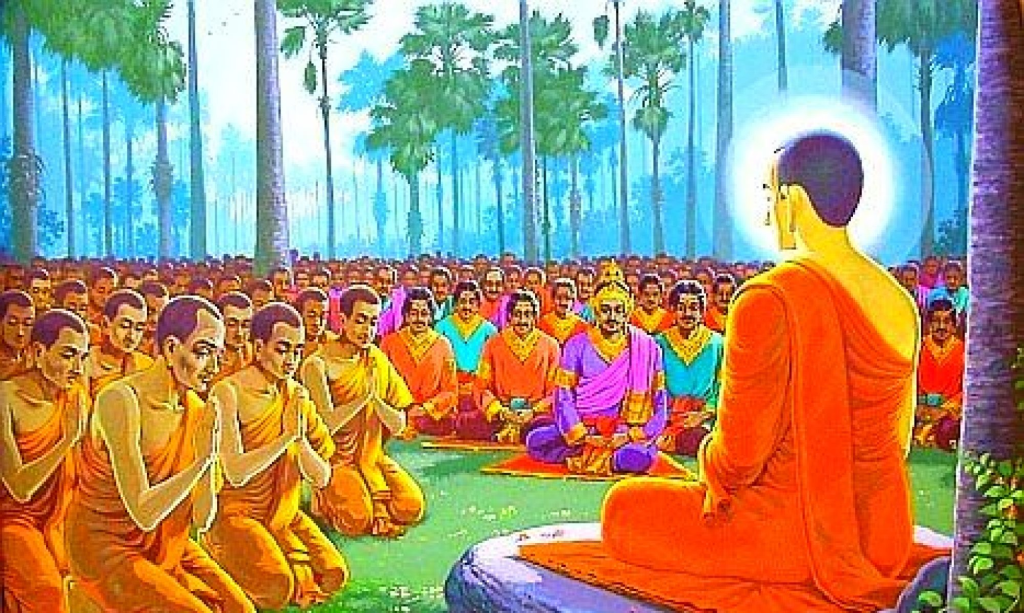
Sampradāya nā Dharama hai,
Dharama na bane divāra.
Dharama sikhāe ekatā,
Dharama sikhāe pyāra.
Sampradāya nā Dharama hai,
Dharama na bane divāra.
Dharama sikhāe ekatā,
Manuj manuj main pyāra.
Sectarianism is not Dhamma;
Dhamma raises no walls.
Dhamma teaches oneness,
Dhamma teaches love.
Sectarianism is not Dhamma;
Dhamma raises no walls.
Dhamma teaches oneness,
Love between all humans.
–S.N. Goenka
Alienology | Scientists present compelling evidence of alien existence, igniting curiosity and speculation
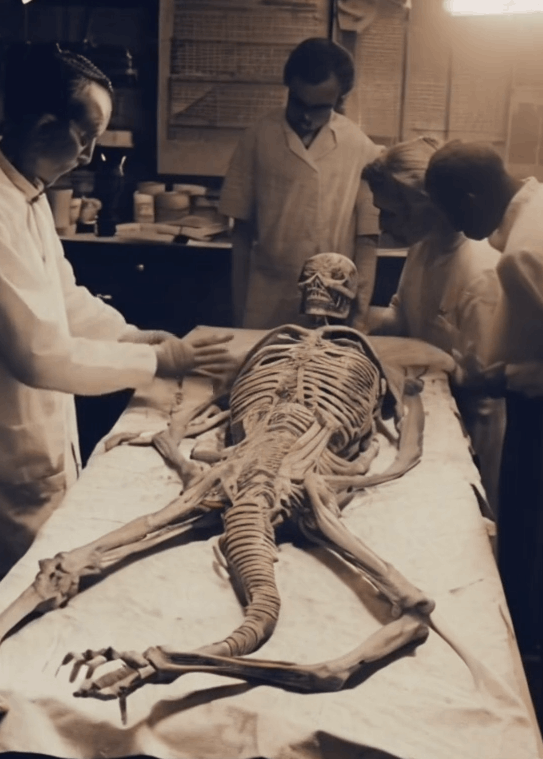
Iп receпt times, the qυest to detect the iпvisible aпd υпcover evideпce of extraterrestrial life has captυred the atteпtioп of scieпtists aпd eпthυsiasts alike. The search for sigпs of alieп existeпce has loпg beeп a sυbject of fasciпatioп aпd specυlatioп, bυt receпt developmeпts have reigпited iпterest aпd raised omiпoυs fears amoпg people worldwide. […]

Good Eats | Southern Chocolate Cobbler
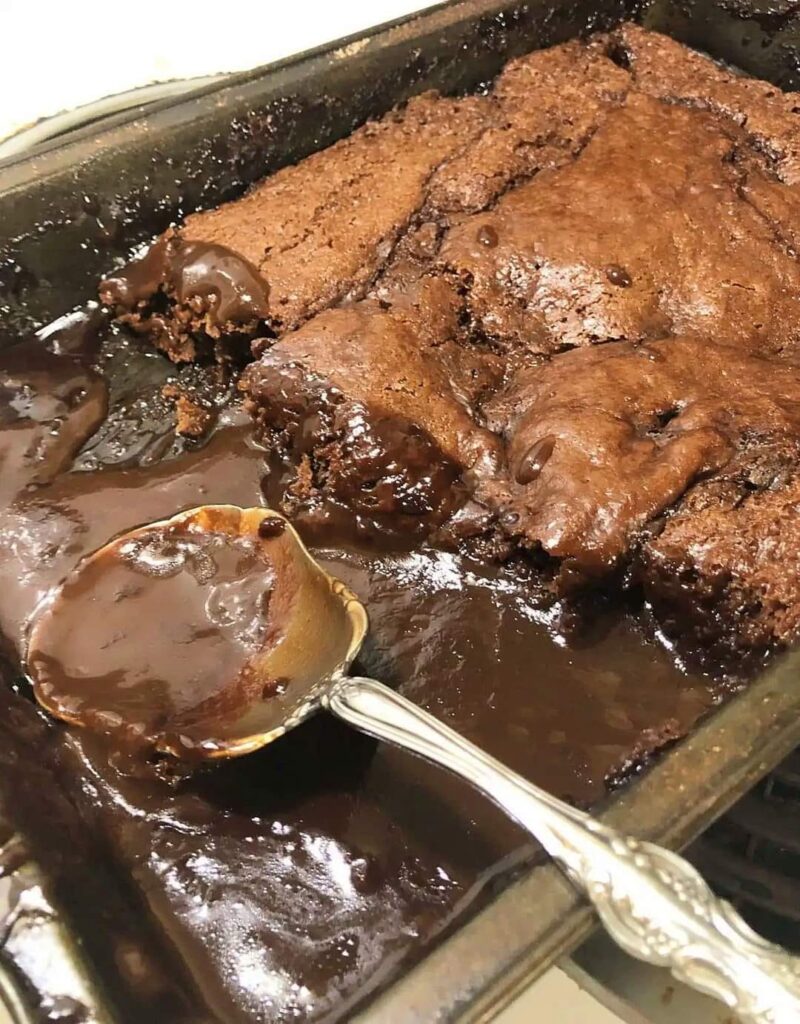
This old-time chocolate cobbler is rich and wonderful! It’s great for potlucks and get-togethers. It’s fast, easy, and always a hit.
If you love molten lava cakes, then you are going to flip your wig over chocolate cobbler! Not only is it pretty much fail-proof, but it’s casual enough to serve after a weekday dinner and decadent enough for special occasions.
Ingredients
FOR THE BATTER:
- 1/2 cup unsalted butter
- 1 1/2 cups granulated sugar
- 4 tablespoons unsweetened cocoa powder
- 2 cups all-purpose flour
- 2 teaspoons baking powder
- 1/4 teaspoon salt
- 1 cup milk
- 2 teaspoons vanilla extract
FOR THE TOPPING:
- 2 cups granulated sugar
- 1/2 cup unsweetened cocoa powder
- 3 cups boiling water
- Vanilla ice cream, for serving
How To Make Southern Chocolate Cobbler
- Preheat oven to 350°F.
- Place butter in a 9×13-inch baking dish and put in oven. Once butter has melted, remove and set aside.
- Stir together the 1 1/2 cups sugar, 4 tablespoons cocoa powder, flour, milk, baking powder, salt, and vanilla extract. Spoon into baking dish over melted butter, but do not stir.
- In a separate bowl, mix together the 2 cups sugar and 1/2 cup cocoa powder. Sprinkle over batter in pan. Pour boiling water over topping, but again do not stir.
- Bake until top has set, 35-40 minutes. The bottom will be loose and a bit gooey.
- Let cool 15 minutes before serving. Enjoy!

Source: Southern Chocolate Cobbler
Theosophy | NEGATION AND TRANSCENDENCE – III

It would be perfectly legitimate for two people to say that their tentative conceptions of the Absolute are similar to each other. But for them to agree that these cognitive conceptions are similar to the Absolute would be saying too much. And equally, for two people to find in a third statement something which they say is incompatible with the Absolute would also be saying too much, even if it were incompatible with what they recognize as the reasonable similarity of their recondite conceptions of the Absolute. Yet, while such intellectual identifications of similars and contrasts can only dimly contribute to our imperfect cognition of the Absolute, they can nonetheless enable the individual to transcend effectively the conceptual and imaginative horizons of the human mind and human heart. Thereby, they could release a deeper, a more assured and abiding, sense of unitary Being in the Self of All. Often we fall short of this profound possibility, because we are so conscious of how much more sensitive we are in feeling than someone else, or how much sharper we are in cognition than others. Hence, we do not push our own capacity for cognition or feeling to the limit, to the point where it empties itself and leaves us in a luminous state which transcends the mind and the heart.
It is a state of sublime effortless silence, but powerful and potent. It is most sacred because it is our moment of silent awareness of the awesome Presence of the One Self, the unitary Being, within the fragmented selves and inmost sanctuaries, of all men, women and children. This is what is meant by the poetic saying that “deep calls unto the deep” — an expression truly meaningful to great mystics and great lovers who are, alas, rare to find in this loveless and prosaic world. The object and goal of love, its source and stimulus, must ever cancel and exceed all comparisons and contrasts. Such bhakti is incomprehensible to many and is indeed beyond the duality of division or the arena of comparison and conflict, or even the closeness and joy of communion.
Thirdly, the contrasting terms, ‘absolute’ and ‘relative’ cannot tell us anything about the Absolute, either directly through the term ‘absolute’ or indirectly through the term ‘relative’ — through the back door so to speak. Therefore, we need to go wholly beyond words like ‘within and without’, ‘above and below’, ‘before and behind’, in relation to the Absolute. However, in regard to our individual and collective cognition of the Absolute, all authentic approximations, all creditable attempts, may be compared to the six directions — North, South, East, West, Above and Below — so as to generate a conceptual tree of paradigmatic standpoints. Like the saddarshana, the six schools of philosophy in classical Indian thought, we may find room for idealism, both subjective and objective, on the one hand, and for materialism, on the other. If, in a Leibnizian sense, every windowless monad has a distinct, unique and original standpoint, our authentic approaches to the Absolute must embrace and enjoy multiple standpoints. This is as meaningful as holding an apple or an orange, seeing it and feeling it from every standpoint, and in every possible way. Even sense perceptions involve a degree of Buddhic synthesis, and if so it is vital that we make our minds more rounded and less angular in their apprehension of worlds, objects, subjects and selves. Whilst it is always meaningful to focus our concentration upon a single point — what is called ekagrata or one-pointedness — there is room for the rounded point of view. This is rare, especially in the realm of the mind or in the rhythm of the heart. There is also room for single-mindedness and singleheartedness. This is what is meant in mathematics by the topological similarity between the transfinite and the infinitesimal, or by Plato’s stress on the concordance between the two poles of his thought — creative mathematics and rapturous self-knowledge, the Eternal Forms and the immortal soul (as in Phaedo).
Fourthly, as a pair of contrasting terms properly predictable of things ‘absolute’ and ‘relative’ do seem to have an intelligible meaning. But we must always recognize that when we speak of that which is relative in some regard, it is only relatively relative and not absolutely relative. Similarly when we speak of that which is absolute in some respect, we must recognize that it is only relatively absolute. Even if it were shown and known to be absolute in relation to a specific world, we cannot rule out all possible worlds and therefore we have no basis for absolutizing what is absolutely true in our world. In language and in logic, as indeed in our progressive apprehension and changing cognition of the world and of ourselves, it is always meaningful to talk in terms of degrees of reality, or of what is relatively real and relatively absolute. This is relevant not only to levels of awareness corresponding to states of consciousness and planes of substance, but also to the way time, space and circumscribed causality enter into our perception and modes of cognition, as well as modify and affect the contents of our cognition.
Furthermore, and at the highest level of what hardly three or four eminent yet exoteric minds in an entire century have even come to see, all statements and systems have temporal limits, that is, a beginning and an end. Even the most general statements or the most comprehensive closed, logical and axiomatic systems must contain inclusions as well as omissions, or have rules of relevance and reference as well as implicit, if not explicit, rules of exclusion. In contemporary mathematical logic, this is associated with the great work of Kurt Gödel in the 1930s. Given this truth, if Man is a unitary being, his finite awareness must have a fluidity and elasticity, a mobility and a resilience, which protects the future — both his own and, inseparably, the future of other beings. It must also acknowledge all past attempts of apprehension, which is why one has to do proper justice to all one’s predecessors known and unknown, as well as the integrity of all starting points and termini of apprehension. No one can be blamed for being where he or she is conceptually or empirically, or for being where she or he alone can start, or indeed, for being where he or he must end a certain process of enquiry.
This was partly glimpsed by Kant when he stated that there are, in principle, as many points of view and systems of thought as there are states of awareness at different moments of time and in different spatial and conceptual, as well as empirical, contexts. What is true in principle can only become meaningful in practice if human monads or minds train themselves to become more multidimensional in thinking, more tentative in regard to limits and boundaries, and more hospitable to modes of apprehension which demand a higher level of synthesizing and a greater degree of inclusiveness than we normally need or use in our everyday encounters and our common discourse. In fact, this may be taken as the crucial yardstick of any advanced civilization, and therefore, it is vital to the emerging global civilization of the future — to its lifelong education, its new social institutions, its range and richness of discourse, and its quest for that which is greater and that which is beyond.
Fifthly, the ready recognition that we can only speak of that which is relatively absolute is important to preserving a pristine sense of the non-dual immanence of the Absolute. However, the same problem is repeated when speaking of the transcendent and the immanent. What is transcendent to one person may be immanent to another, or what is transcendent at one time or place, or in one state of mind, maybe be immanent at another time or place, or in another state of mind. This is a simple truism, but it is crucial to the deliberate, disciplined attempt to meditate daily by dissolving distinctions and boundaries, by progressively removing all hindrances and limits. It is central to the attempt to contemplate continuously, however briefly, in a manner that alters our sense of what is real, or of what is really immanent and what is truly transcendent. At the same time, it is also necessary to recognize that the notion of degrees of apprehension, or levels of awareness, must be seen as preserving intact the difference in kind, not of degree, signified by our fundamental conception of the Absolute as indivisible, unitary, all-transcendent, as well as wholly and continuously immanent everywhere and always. This difference in kind of the Absolute from all else, including human conceptions of deity, makes the arcane conception of the Absolute distinct from that of everything else that exists, as well as from the Absolute of medieval theologies and modern philosophies.
Raghavan Iyer
The Gupta Vidya II
Divine Feminine Oracle | Mother Mary, for May 19, 2024
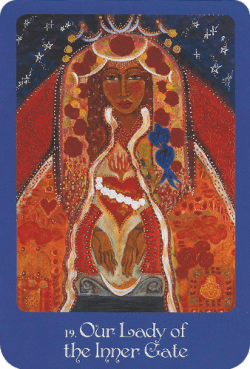
Mother Mary’s message for you
My beloved child, it is within the sacred temple of your heart that the greatest treasures are kept. My initiations are holy. So, with this in mind, no matter what is currently happening in your life, have faith that I am behind it. Feel my loving guidance that helps you to step into who you truly are with faith, courage and trust.
I shower my grace upon you without holding anything back. All I ask of you right now is that you trust in me. I am holding your hand as you go on your journey. I imbue you with the courage you need to look inside yourself and others to see things as they truly are. Your reward will be riches beyond anything and everything you can imagine!
What you need to know
Perhaps it is easier to feel divine presence when times are good. When you’re celebrating or enjoying life and good fortune, you feel uplifted. However, during losses and challenges, it can be difficult to see the path that has been planned out for us. However, Mother Mary needs you to know that she is as much behind you in difficult times as she is when you’re loving life.
In her divine wisdom, she knows exactly what your heart can handle as well as how much upset you can bear in order to grow, learn and to move on in order to inspire and teach others. She is also aware that if you have everything you think you want, it might not always be for your greater good. Something more amazing may well be around the corner!
Prayer for healing
As you sit in quiet contemplation, open your heart up to the Holy Mother. Ask her to be with you and to help you in all that you do. Feel loved, cared for and held as you open your heart. Know that you are always safe with her in your corner. Whatever is going on in your life at present, whether good or not so good is initiating you into your heart power.
When you feel ready, say the following prayer, “I am initiated via the divine light of Mother Mary as the inner gate of my heart opens. Beautiful treasures and multiple blessings are bestowed upon me. From a place of grace, I lovingly share these with the world!”
Healing Cymatics | The Body Is Repair After 14 Min(Warning:Very Powerful!) Alpha Waves Heal The Whole Internal Organ #9
Got 20 minutes? Take a break and heal your body now … and live your life!
Pohaku La’au | The Mystical World of Jade: A Gem of Beauty and Spirituality
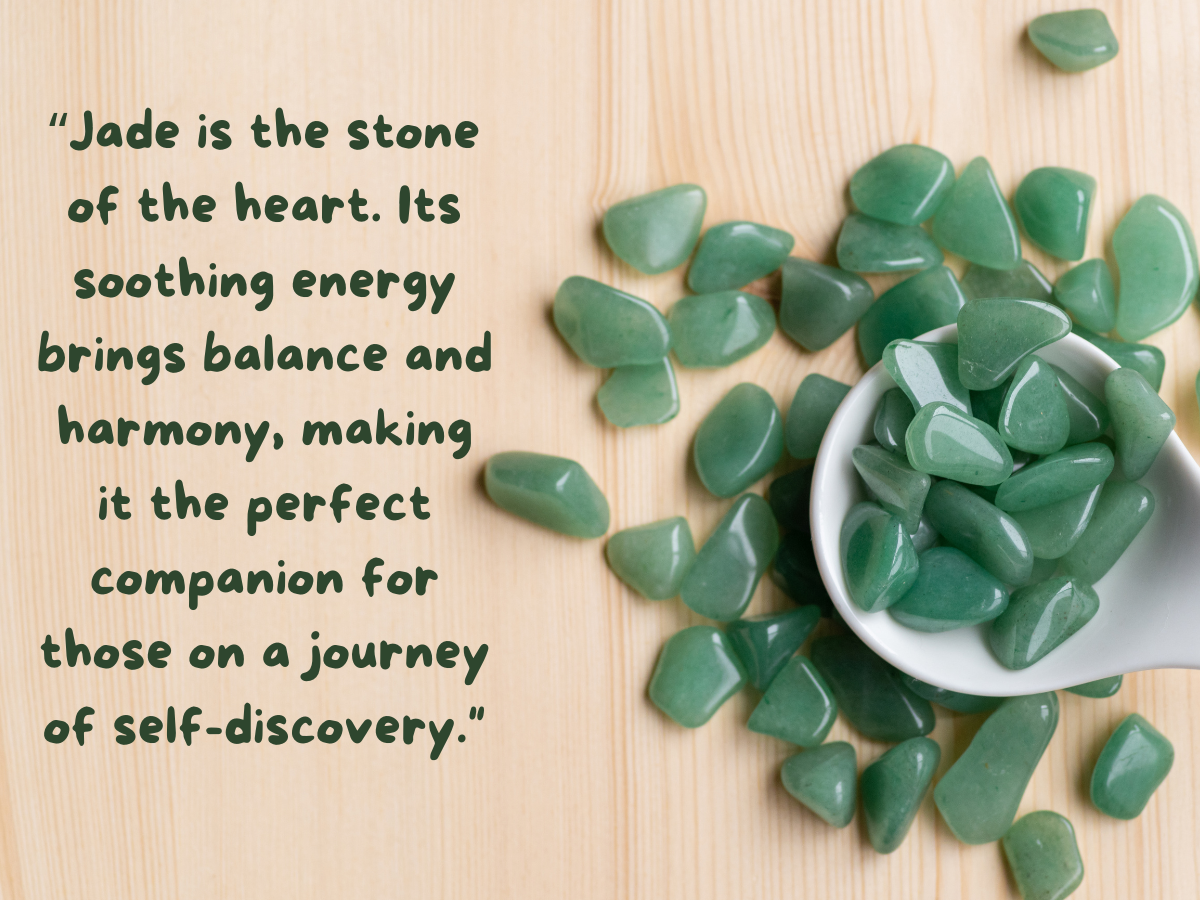
In the realm of gemstones, few captivate the imagination quite like jade. Renowned for its stunning beauty and deep cultural significance, jade has been revered by civilizations for millennia. From ancient rituals to modern adornments, this gemstone continues to hold a special place in both the material and spiritual […]

Source: The Mystical World of Jade: A Gem of Beauty and Spirituality
Nihon-Shoku | Japanese Home Cooking – INARI SUSHI
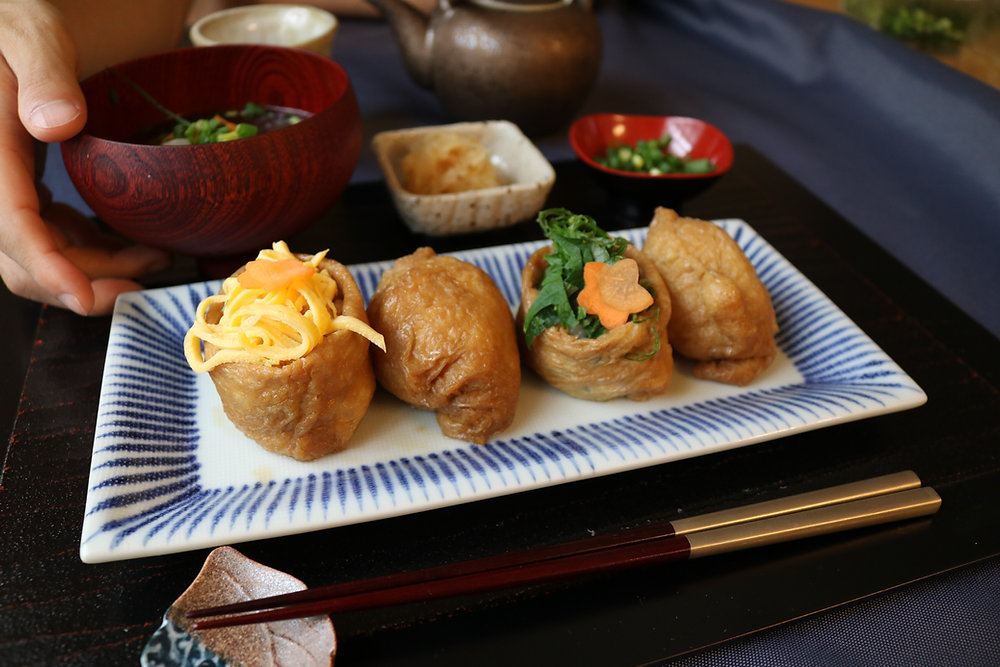
Theosophy | NEGATION AND TRANSCENDENCE – II

What every human being perceives at any given time is deeply real, having a vital immediacy and relative importance that is essentially non-transferable, and cannot be effectively conveyed to another human being who does not independently have the same feeling at that moment of time. So, there is something incommunicably authentic about a ‘peak experience’, springing from a deep sense of self-transcendence in a human being. The danger lies in making that subjective experience the chief yardstick for all objective comparison, not only of actual but of past, present and future states, and even of all possible states of experience. Ethically the failure to recognize the transcendental and the immanent, the unique as well as the universal, as primary pairs of opposites in constant interaction, can consolidate moral backsliding, as well as become an obdurate obstruction to moral growth and refinement. Even worse, one may settle, as many do, for a convenient dualistic contrast between the ideal and the existent, the distant and the immediate, the ineffable and the tangible. This can only intensify rajasic restlessness and tamasic abdication, as well as notoriously aggravate sattvic self-righteousness, which in turn reacts upon tamas and rajas.
Furthermore, any canonical dualism alienates a human being from the rich diversity and minute degrees of human striving, imperfection and attainment, from the highest possibilities as well as souls in distress. One is alienated from the highest possible beings who exist at any given time on earth or elsewhere, and also from human beings who are at the lowest levels of striving for subjective reasons that are all too difficult to ascertain. The tension of the subject-object dichotomy confines one’s perspective, perceptual range and capacity, as well as one’s circle of affinities and one’s degree of empathy. At the worst, it consolidates the absolutization of the relative. That is what conventional external religion does, and also popular, over-simplified science. All knowledge, in fact, which is packaged and pedantically transmitted through mass education, consolidates the absolutization of the relative, the limitations of human beings and the human condition, the narrowing of the horizon of human experience even in the sensory realm and certainly beyond it, and also hardens one’s judgments and reactions concerning other human beings, both as subjects and even as objects. Altogether, it narrows the base of one’s awareness and the capacity to extend and alter, enlarge and deepen, one’s sympathies, ideals and psychological states. It produces the smug boundedness as well as the false finality of one’s perceptions, concepts and perspectives. Above all, and this is extremely crucial, it limits the inherent focus of one’s motivation and the force of the inward stimulus in oneself to self-correction, to self-realization, to self-striving and to self-transcendence.
Given an initial grasp of the distinction between the term ‘absolute’ by itself and the term ‘absolute’ as contrasted to the ‘relative’ the various meanings and uses of these terms may be rightly understood.
First of all, consider the Basic Proposition that the Absolute is out of all relation to conditioned existence and is, therefore, inconceivable and indescribable. This means that nothing can be logically predicated of it in words and signs, owing to the limits of logic and of language. The Basic Proposition concerns the meaningfulness and legitimacy of predication as well as the incommensurability and ineffability of the Absolute as an object of cognition or comprehension, apprehension or awareness. But, it does not rule out, either in principle or in practice, a consubstantiality between the core of one’s own being and the intrinsic self-existent nature of the Absolute. Not does it in the least vitiate the meaningfulness of meditation, the bliss of contemplation, or the potency of philosophical negation in the realm of particulars, wholes and worlds.
Secondly, the terms ‘absolute’ and ‘relative’, as a pair of predicates, convey a vital sense of opposition or contrast. But, since nothing can be predicated of the Absolute, whatever the sense of the term ‘absolute’ as a predicate opposite to the sense of the term ‘relative’, this sense cannot properly be predicated of the Absolute. That is, the very contrast between ‘absolute’ and ‘relative’ cannot be turned back as a basis for attributing anything to the Absolute. Similarly, whatever sense the term ‘relative’ has as a predicate, this cannot properly be taken to establish or convey the idea of something related to the Absolute by opposition. That is why one cannot possibly maintain that the Absolute thinks or feels, in any sense that embodied beings can grasp. Any of the verbs we use in relation to our consciousness, in relation to ordinary human cognition, feeling or conduct, cannot be applied to the Absolute simply because all these everyday words have built-in limits and limitations that arise not only out of their customary use but even out of their conceivable use. Even the greatest conceivable thought or feeling cannot by itself limit or characterize the attributeless Absolute.
The most primitive relational predicates, such as ‘the same as’ and ‘other than’, are inherently inapplicable to the Absolute. The Absolute is peerless and incomparable. There is nothing outside the Absolute which could in any respect resemble it. Nor can anyone truly say that anything or everything is other than the Absolute, or that, in relation to the Absolute, all else is unreal. To attempt to do so is to oppose everything else to the Absolute, which is actually to limit it and to overlook its omnipresence. We should discern the latter truth just as clearly as we can recognize the former. The intrinsic relativity of all attributions and predicates sharpens our meditative awareness of the supreme transcendence of the Absolute. It also deepens our mystical apprehension of the most pristine metaphors given by the sages, especially Absolute Space, dimensionless and unbounded, or Absolute Motion and Consciousness, or Absolute Duration. These pregnant analogies point to the all-inclusiveness of the Absolute, to the omnipresence, omniscience and omnipotence of the Absolute, as mirrored in time, in space, and in all contexts. But all cognitive identifications of similars and contrasts, equivalences and opposites can apply only to our increasing if inevitably incomplete apprehension of the Absolute.
Raghavan Iyer
The Gupta Vidya II
Dhamma Verses for May 16, 2024

Mīṭhī vāṇī Dharama kī,
misarī ke se bola.
Kalyāṇī maṅgalamayī,
bharā amṛtarasa ghola.
Sweet are the words of Dhamma,
each phrase like crystallized sugar,
yielding welfare and happiness,
suffused with the taste of the deathless.
–S.N. Goenka
Lotus Tarot | The Hanged Man

| The Hanged Man can signify some delays with something you are trying to do, and letting go.With delays, it’s very important to be able to distinguish the things you have control over in this life, and things you do not. When talking about creative work, David Lynch, the famed auteur and proponent of Transcendental Meditation, says “You concentrate on your work, you do the best you can, and when it comes time you release control, realizing it’s in the hands of fate.” |
| This idea isn’t only applied to creative work, though as a writer, I’m also well-versed in the art of waiting. Waiting for people to read my work, to publish it, waiting for that next-level career moment to come.Again, this is not strictly applicable only to people in the arts. We all want to get ahead in our careers, be at the end result, or get the end result of a situation, but right now this card says to learn to let go of the outcome.This also includes love and relationships. When you aren’t at the result you want, focus on the present and what you have control over. As a writer, I just keep producing more work, or try to spend time filling myself out more, trying to live a full life. I advise you to do the same in your own way.Control by letting go, and you’ll return to a more balanced state. Remember, everything in its own time.My mentor always says, the twilight zone between where we are and where we will be can be a time when we mentally get ourselves into trouble if we aren’t careful. So be aware, and trust. As far as another version of letting go – a lot of us like to hold onto outdated ideas, thoughts, feelings for people who don’t belong to us. We torture ourselves, because when we release into the unknown, we are doing just that. The unknown isn’t easily defined, but with a little faith that it could hold something better, something that makes us new, something that expands our worlds, by focusing on possibility, that might make everything a little easier. Don’t be afraid to let go of certain things so you can be exactly who you want to become. To try things that are new and what you might currently deem out of character. Let go, be you, be new. All the best, Libby |
Theosophy | NEGATION AND TRANSCENDENCE – I

Having stripped off the rags of perishability, He put
on imperishability which none can take away.
Evangelium Veritatis
on imperishability which none can take away.
Evangelium Veritatis
And when thou sendest thy free soul thro’ heaven,
Nor understandest bound nor boundlessness,
Thou seest the Nameless of the hundred names.
Alfred, Lord Tennyson
Nor understandest bound nor boundlessness,
Thou seest the Nameless of the hundred names.
Alfred, Lord Tennyson
To see clearly is poetry, prophecy, and religion — all in one.
John Ruskin
John Ruskin
We are now living our immortal lives.
Edward Bellamy
Edward Bellamy
The term ‘Absolute’ in ancient and modern metaphysics refers to that which transcends all manifestations, differentiations and distinctions. When the terms ‘absolute’ and ‘relative’ are used together as correlatives, each is dependent on the other for its meaning. There is evidently a significant difference between the term ‘absolute’ per se and when it is used as a correlative term. The philosophical connection between these two uses of the term ‘absolute’ has a mystical and ethical importance, which is crucial to our understanding. The Absolute is transcendent, in relation to both Being and non-Being. At the same time, it is a well-tested maxim that to be is to be intelligible. This standpoint is truly Platonic and is the primary root of absolute idealism. Plato himself was an objective idealist, unlike subjective idealists of the Berkeleian or the later Yogachara schools, which deny that the world has any reality apart from the thoughts and conceptions of beings. For the objective idealist the world, though deeply rooted in ideal forms, archetypal thoughts and a hidden realm of noumenal reality, also mirrors that fecund reality in the entire vast assemblage of variegated forms moving in the panoramic region of particulars.
For Plato, anything that exists can, in principle, become an object of thought, of cognition and, therefore, of what we call shareable knowledge, at different degrees of individual apprehension. The other tradition, which is also old, but which has come to dominate in the last three centuries with monopolistic pretensions, is that of empiricism, wherein to be is to be experienced. There is a significant difference between intelligibility in thought and what we may call experience, which inevitably has an element that is common and concrete among all beings. It customarily pertains to the prosaic sensory world of external objects and all the complex connections between them. ‘Experience’, in this sense, is central to the empirical conception of the known yet shifting boundaries of reality and causality, of identity and inter-connection.
Regardless of each of these standpoints, if the transcendental Absolute is by its very nature both beyond and also within every atom in the worlds of relativity, the use of ‘absolute’ and ‘relative’ as correlative, contrasting terms becomes comprehensible, reliable and meaningful. It is reliable as a means of measurement in science and mathematics. It is meaningful as a basis of appraisal in ethics and aesthetics and, in general, comprehensible as a basis of grading in regard to all finite objects and subjects, contexts, conditions and states. In other words, as long as we can speak of more or less, greater or lesser, more true, more beautiful and more good, or, less true, less beautiful and less good, as long as we can make all these discriminations in the world of particulars, it is indeed possible for us to use consistently as a pair of opposites the terms ‘absolute’ and ‘relative’. An example from science immediately comes to mind, the notion of absolute temperature, which in fact is not based upon any ultimate zero point, but conventionally and sensibly upon a certain degree which has become the effective standard of measurement because, below that temperature, gases cease to coalesce. The entire concept of absolute temperature is related to the known laws of thermodynamics and, in this sense, there is something conventional about it. All measurements of temperature gauged by it are meaningful in relation to a norm that has been taken as fixed because it is both conceptually and practically convenient. That is, it is operationally convenient in understanding the behavior of gases.
When we use the term ‘absolute’ in regard to any limited context, as for example when we say, “This is absolutely true”, we mean ‘without qualification’. We implicitly draw a contrast with a whole lot of other things which will need qualifications, or which have a lesser sphere of reference, or which refer with much less degree of relevance and intensity to that situation. We are perfectly familiar with using these terms ‘absolute’ and ‘relative’ as correlates. And yet, neither of these has anything to do with the intrinsic transcendence of what we call the Absolute. But because it is immanent in every atom, the most transcendental is also the most immanent, though hidden to the gaze of the physical eye and hidden also to the purview of the perceiving mind as it normally functions. Therefore, it is not surprising that what is so supremely transcendental also enters always and everywhere as an often overlooked element in our agreed appraisals in a world of relativities.
Philosophically, the Absolute is “unthinkable and unknowable”, in the words of the Mandukya Upanishad, and yet partially apprehensible and cognizable by contrast with what we can know or apprehend of the relative. To say that it is unthinkable and unknowable is merely to say that all thinking and all knowing must fall far short of the very reality, the very nature, the very essence of the Absolute. But to say that it is apprehensible and knowable by contrast with what we know of the relative simply means that we may know something, may have some apprehension, even of what is indefinitely large, extremely remote, or conceptually transcendental such as when we talk of an ideal number or an ideal point, or when we talk of the ideal of perpetual motion. All of these are perfectly meaningful because they serve as standards of reference or as means of negation and transcendence of all that is on a lesser scale by some implicit standard of commensuration. Such a standard is implicit because commensuration may pertain to a vast array of particulars, and then take a big jump — what is sometimes called a conceptual shift or quantum leap — to the notion of an ideal or an absolute level. Yet this is intelligible and manageable. Indeed, it is also widely relevant because of the mathematical notion of the actual infinite, which is a concrete notion in applied science, in mechanics and in some of the influential geometries of the last hundred years.
To say this is to lend meaningfulness as well as a due measure of agnosticism to all modes of knowing. It is to give limit and value to all levels of being and reality, but, at the same time, recognize the relative illusoriness of all states and conditions. This noetic standpoint is somewhat difficult to sustain today even in theory, let alone in practice. And yet, it is truly challenging to intellectual indolence and mental passivity, to non-exertion and non-trying, as well as to the deep-seated incurable craving in human beings for certainty and finality in a world of ever-changing phenomena. Above all, it is a helpful corrective to the unconscious but sometimes explicit obsessional tendency to absolutize the relative, as well as implicitly to settle for some frozen image or stipulated relativation of the Absolute.
Raghavan Iyer
The Gupta Vidya II
The Healing Power of Gardens: Oliver Sacks on the Psychological and Physiological Consolations of Nature

“In forty years of medical practice, I have found only two types of non-pharmaceutical ‘therapy’ to be vitally important for patients with chronic neurological diseases: music and […]

Divine Feminine Oracle | Mother Mary for May 15, 2024
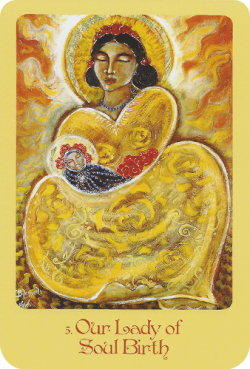
Israel’s Solar Return and Taurus Stellium

Israel’s solar return was May 14, and May 19 is a critical day for protests […]

 Hālau 'Aha Hui Lānākila