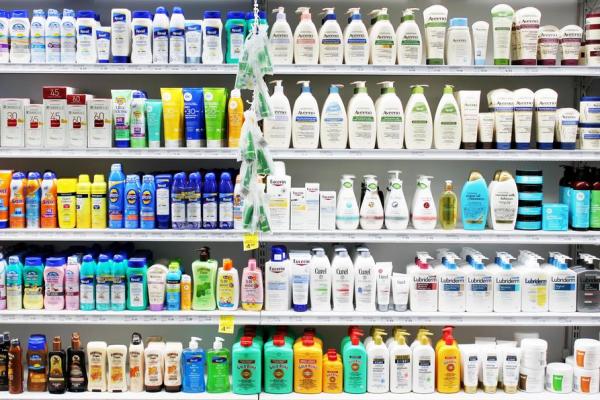
 Parabens, a type of preservative used in personal care products such as shampoos, cosmetics and sunscreens, may cause cancer at lower levels than thought.
Source: Study: Parabens in personal products dangerous at low levels – UPI.com
Parabens, a type of preservative used in personal care products such as shampoos, cosmetics and sunscreens, may cause cancer at lower levels than thought.
Source: Study: Parabens in personal products dangerous at low levels – UPI.com
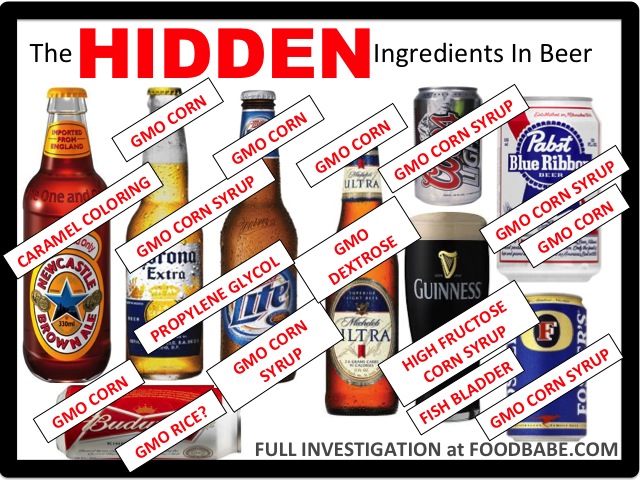
All of use enjoy in a good beer once in a while, especially with a good snack. But very few of us know that all beers are not the same, especially in their value. Most people don’t actually know that contents of the beer they enjoy on occasions. Did you know that there are GMO beers?
There are various types of beer, and they all possess their own distinct taste, but they all also possess a potential to cause different problems for the body.
Always bear in mind that beer is one of the only types of beverage that is not monitored by the FDA.
So, if you are one of those that enjoy a cold one you should be aware of the eight most dangerous types of beer! The following ones contain some unfavorable ingredients so you should avoid them at all costs:
Newcastle Brown Ale and beers like it have caramel coloring in their content, which is not good for your health. Class 3 and 4 caramel coloring is made from ammonia, which is classified as a carcinogen. Thus, your chances of developing cancer are increased by this carcinogenetic addition to the beer.
This beer was also proved to be very dangerous, and probably many Budweiser drinkers out there will not be happy with this discovery. Even though so much advertised, this type of beer is very dangerous for your health. This iconic beer contains genetically modified (GMO) corn. In 2007, Greenpeace discovered experimental GMO rice in Budweiser’s beer.
Michelob Ultra is also high ranking on our dangerous list. Given the dangers associated with a sweetener it contains, professionals urge you to eliminate this beer from your choices. Namely, this beer contains a GMO sweetener, otherwise known as GMO dextrose.
Stay clear of this historical beer, your body will thank you. It actually contains two dangerous substances, the first one being a GMO corn, which is bad enough, and the second one is a GMO corn syrup.
This one has been tested and proven to also contain GMO corn and GMO corn syrup. As mentioned before, these key ingredients are detrimental to your health.
There are some dangerous ingredients that are used to produce this popular beer as well. Guinness is contained in glass, which comes from fish bladder. Moreover, it also contains fructose corn syrup that has been banned from many different types of food and drinks. Nevertheless, Guinness claims they no more use fructose corn syrup.
Many people are not aware of the dangers associated with Coors Light. This beer also contains GMO corn syrup, which has proved to be costly for your health. So try to avoid it although it is very popular, and often advertised well.
Corona contains GMO corn syrup and Propylene Glycol, which is said to also extremely harmful to your health. Many of you love to enjoy a Corona occasionally, but now you are aware of the ingredients that are used in its production.
So, next time you are having a couple of drinks, remember the above facts and choose a beer that is not featured on this list, or better, avoid drinking beer at all.
Source: www.fhfn.org
Other included sources linked in FHFN’s article:
http://www.realfarmacy.com/8-beers-that-you-should-stop-drinking-immediately/
http://www.webmd.com/vitamins-supplements/ingredientmono-1007-beer.aspx?activeingredientid=1007&activeingredientname=beer

Green Med Info | Research shows that prenatal exposure to parabens can cause long-term problems to the growing baby. We now know that parabens cross the human placenta. The good news is that there are ways to protect your developing baby.
Endocrine disruptors have been repeatedly associated with pregnancy and fetal complications in animals, but there is limited research about how these chemicals behave inside the human body. We now know that the omnipresent preservatives known as parabens can easily cross the human placenta and accumulate in the blood of the growing baby.
The US pilot study, which clarified this issue, was published in May 2015 and evaluated the levels of commonly used parabens in the blood of 50 pregnant women and upon delivery, in the blood of their babies (1). Parabens where found in 94% of women and their newborns. This makes sense, since it is estimated that parabens are included in approximately 22,000 products, so avoiding them is not exactly a piece of cake. However, the most impressive finding of this small study was the fact that in more than 50% of the cases, the babies had significantly higher amounts of the most popular paraben (methyl-paraben) in their blood than their mother did. The mean concentration of methyl-paraben in pregnant women was 20.41 ng/l, while newborn babies had a mean concentration of 36.54 ng/l. This is a significant difference and a whole lot of parabens for a newborn baby with immature kidneys and detoxification mechanisms.
There is plenty of research proving that prenatal exposure to parabens can cause long-term problems to the growing baby. As many endocrine disruptors, parabens mimic estrogen and affect the sensitive hormonal balance required for a healthy pregnancy and baby. Accurate hormone signals regulate the proper development of the baby during pregnancy, which justifies the fears that parabens can affect the baby´s health in the long-run.
The list of possible effects of parabens to babies is long. Selected research in animals suggests that prenatal exposure to parabens is linked to autistic-like behavioral symptoms in infants (4), impaired social behavior (5), decreased sperm number and motility later in life (6) and learning difficulties (7) among other problems. But this is not just about the babies; women can be harmed by parabens too. Scientific research suggests that parabens may be linked to breast cancer, which is a reasonable concern, given the fact that inside the body, parabens act like a weak type of estrogen.
Tainted Science and Lack of Regulation
Since parabens are mainly found in cosmetics and personal care products, a considerable effort has been made by the industry to convince that parabens are practically non-toxic in the concentrations used in cosmetics. The latest report by the Cosmetic Ingredient Review (CIR) Expert Panel, which is exclusively funded by the Personal Care Products Council (the industry trade association), is worryingly reassuring the safety of parabens and indirectly promotes the use of parabens in cosmetics by setting very high safety threshold for adults and especially for infants (2,3). Unfortunately the specific report does not take into account the fact that people are exposed to a cocktail of parabens, rather than a single paraben, on a daily basis. In other words, there is no assessment of the additive and cumulative risk of multiple paraben exposure from daily use of multiple cosmetics and personal care products.
Bear in mind that parabens, and other endocrine disruptors (i.e. phthalates), are not regulated by the FDA, which essentially means that the cosmetics industry is unregulated when it comes to the ingredients of their products.
4 steps to limit parabens exposure
References
[1] Towers CV, Terry PD, Lewis D, Howard B, Chambers W, Armistead C, Weitz B, Porter S, Borman CJ, Kennedy RC, Chen J. 2015. Transplacental passage of antimicrobial paraben preservatives. J Expo Sci Environ Epidemiol.
http://www.ncbi.nlm.nih.gov/pubmed/25944699
[2] Final amended report on the safety assessment of Methylparaben, Ethylparaben, Propylparaben, Isopropylparaben, Butylparaben, Isobutylparaben, and Benzylparaben as used in cosmetic products. Int J Toxicol. 2008;27 Suppl 4:1-82.
http://www.ncbi.nlm.nih.gov/pubmed/19101832
[3] Cosmetic Ingredient review. http://www.ctfa.org/
[4] Ali EH, Elgoly AH. 2013. Combined prenatal and postnatal butyl paraben exposure produces autism-like symptoms in offspring: comparison with valproic acid autistic model. Pharmacol Biochem Behav. 111:102-10.
http://www.ncbi.nlm.nih.gov/pubmed/24036472
[5] Kawaguchi M, Morohoshi K, Imai H, Morita M, Kato N, Himi T. Maternal exposure to isobutyl-paraben impairs social recognition in adult female rats. Exp Anim. 2010;59(5):631-5.
http://www.ncbi.nlm.nih.gov/pubmed/21030791
[6] Kang KS, Che JH, Ryu DY, Kim TW, Li GX, Lee YS. 2002. Decreased sperm number and motile activity on the F1 offspring maternally exposed to butyl p-hydroxybenzoic acid (butyl paraben). J Vet Med Sci. 64(3):227-35.
http://www.ncbi.nlm.nih.gov/pubmed/11999442
[7] Kawaguchi M, Irie K, Morohoshi K, Watanabe G, Taya K, Morita M, Kondo Y, Imai H, Himi T. Maternal isobutyl-paraben exposure alters anxiety and passive avoidance test performance in adult male rats. Neurosci Res. 65(2):136-40.
http://www.ncbi.nlm.nih.gov/pubmed/19560493
[8] Karpuzoglu E, Holladay SD, Gogal RM Jr. 2013. Parabens: potential impact of low-affinity estrogen receptor binding chemicals on human health. J Toxicol Environ Health B Crit Rev. 16(5):321-35.
Find Your Magic
Tarot Readings, Inspiration, and Self-Empowerment
Making life on earth magick one moon phase at a time.
Astrologer ~ Mystic ~ Writer
of the Collegium Spiritus Sancti, a Golden Dawn Society
An affiliate of the Alpha et Omega Order of Melchizedek
All Knowledge Is Not Contained In Only One School
Connecting the grant community to #LearnGrants
Channelings & Articles
Magic Spell Books & Grimoires
Native Hawaiian Language Revitalization
Poetry & Tales of Love, Mystery, Magic and Spirituality
Organic Herbs, Herbals, Sustainable Gardening
Mother Nature: Feeding The Mind, Body & Soul, with Food, Medicine & Skincare.
"Inheritor of a Dying World, we call thee to the Living Beauty. Wanderer in the Wild Darkness, we call thee to the Gentle Light..."
Time is the most important thing we've been given
Embracing the Divine Within.
"...That I should bear witness to the truth." - John 18:37 // David E. Robinson, Publisher
 Hālau 'Aha Hui Lānākila