
Under the guise of empowerment and freedom, politicians and business are offloading life-threatening risk to individuals. […]
Source: Why governments and business like to offload risk to individuals | Aeon Essays
Under the guise of empowerment and freedom, politicians and business are offloading life-threatening risk to individuals. […]
Source: Why governments and business like to offload risk to individuals | Aeon Essays
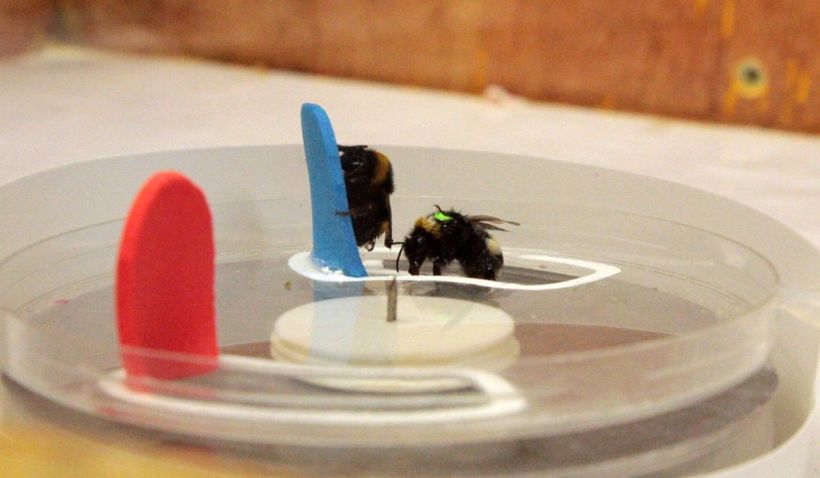
We’re not the only animals that can learn complex, problem-solving behaviours from each other – bumblebees can do it too. […]
Source: What’s this buzz about bees having culture? Inside a groundbreaking experiment | Aeon Videos

AI could lead to new ways for people to abuse animals for financial gain. That’s why we need strong ethical guidelines […]
Source: How to reduce the ethical dangers of AI-assisted farming | Aeon Essays

Papaya seed health benefits, how to prepare and eat the seeds, correct dosage, potential side effects and 7 little-known uses and beneficial properties […]
Source: 7 Benefits Of Papaya Seeds: Uses, Side Effects & How To Eat

The next time you slice into a colorful papaya, don’t discard its tiny round seeds! Believe it or not, these little morsels are tasty, easy to prepare, and can add medicinal properties to practically any dish.[1] In this article, we’ll teach you how to eat, dry, and grind papaya seeds to improve your intestinal health and boost your daily dose of vitamins. So, what are you waiting for? Grab a spoon, and let’s get scooping! […]

Click here to see my NBC California Live interview on Feng Shui for Spring Equinox:
March 25, 2024 at 12:00 am PT is a full Moon in Libra, and a lunar eclipse at 12:14 pm PT. Air sign Libra rules the 7th house of marriage and partnerships. This powerful eclipse in Libra augers changes in relationships. There can be a new awareness of those around you, and a stronger understanding of emotions to find balance in partnerships.
This full Moon trines Pluto in Aquarius bringing an intensity of insights and feelings for rewarding experiences. Keep communication channels clear because this full Moon begins the one-week shadow period before Mercury retrograde April 1 – 25 which can lead to mixed messages. Focus on your communication, and keep loved ones on the same page with you.
Venus, Mars, Saturn, and Neptune are all in Pisces. Time for renewed creativity, or to review your current creative projects during Mercury retrograde. Note that people can become very sentimental, especially now during the peak of Rabbit lunar month. But do not allow sentiment to prevent you from growing. Avoid walking forward while looking back.
Contact me for your tarot reading, astrology forecast, or feng shui consultation this spring. Creative communication is for everyone, and makes strongest change for Air signs Libra, Aquarius, and Gemini and those born in Dog, Tiger, Horse, and Rabbit years.
Happy full Moon,
Susan
Source: 2024 Libra Full Moon Eclipse

Man is the sole being in the natural order who is not compelled to pursue the same road invariably.
Claude De St. Martin
The Mundaka Upanishad provides the archetypal image of the spiritual archer. His is the unremitting quest for divine wisdom, seeking complete unison with Brahman, the ultimate Reality. In this quest there must be no thoughtlessness. Lack of thought is a serious impediment to the cultivation of skill in the art of creative action. At the same time, The Voice of the Silence enjoins disciples to free themselves from all particular thoughts and be attuned to All-Thought.
Thou hast to reach that fixity of mind in which no breeze, however strong, can waft an earthly thought within. Thus purified, the shrine must of all action, sound, or earthly light be void; e’en as the butterfly, o’ertaken by the frost, falls lifeless at the threshold — so must all earthly thoughts fall dead before the fane.
Wherein lies the difference between thoughtlessness and that state of transcendence which is rooted in a serene identification with the Divine Mind?
There are myriad paradoxes in relation to the spiritual path, as everyone knows who makes a strenuous attempt to incarnate in daily life the immeasurable wisdom of Brahma Vach. These paradoxes are pertinent for anyone who is in earnest, who is not merely ready to plunge into the stream, but who has already entered the stream as a srotapatti and laved in its rushing waters. There are those who delay this crucial step for lifetimes, even after the privilege of coming into the orbit of great Teachers from the Lodge of Mahatmas. They are afraid to take the first step into the stream. But those who have soaked in the struggle know that the recurring paradoxes are far from being instantly resolved, especially by the ratiocinative mind with its obsessive craving for certitude. Mystical paradoxes deepen as veil upon veil lifts and one finds veil upon veil behind. This must be so, for otherwise we would live in a static universe and Mahatmas would be but icons to be worshipped, like the discarded archangels of the past, periodically placated out of fear or the wish for favours. There is none of this in the vast philosophical cosmogony of The Secret Doctrine. It postulates one universal stream of consciousness which, at its source, is unconditioned and beyond all forms, qualities, colours and representations, beyond every finite locus in spacetime. But equally, within this immense stream of encompassing and transcending consciousness, everything counts. Every being is significant and every single error has its consequence. It is difficult to accommodate so awesome a conception within one’s mind and to insert one’s own odyssey into the vaster odyssey of all. There is nothing in our upbringing, nothing in the limiting language of common conversation and trivial talk, that can sufficiently prepare one for the grandeur of the enterprise, so that one may feel the authentic joy of comradeship with the mightiest men of meditation. They are the immortal embodiments of universal Mahat who can, with a casual, relaxed and joyful sense of proportionality hit the mark amidst the limitations of collective Karma. This means, paradoxically, that they cannot hit the mark every single time either, and this too is involved in hitting the mark.
The root of these paradoxes in relation to thoughtfulness and transcendence lies in the insuperable problem of formulating the aim. The aim cannot be anything less than Brahman. That is the eternal hope. Every single act can have that aim because each act focuses upon a specific target in time and space which is Brahman. That is, at one level, the joy and the absurdity of it. In every act of manifestation — bathing, walking, mailing a message — the Logos is present. There is a sense in which the aim — the transcendental Brahman — is present in each moment of time as well as in every act at each point of space and in every thought. What, then, obscures the aim of a manifold human being of becoming totally one and remaining constantly attuned to Brahman? Why does a person need the sacred OM as the bow and to be continually tuning all one’s instruments? Can one ever receive in a world of shadowy knowledge any real teaching concerning the inward meaning of the Soundless Sound? Who will teach the true intonation of the OM and everything to which it corresponds in thought, motive, act and feeling? As the mystery deepens, one must come to recognize that even in the largest perspectives of life, one can discern something that is false and which obscures still greater realities.
The correction that needs to be made in the lesser perspective is archetypally related to the correction needed in the larger perspective. Whenever one has a sense of self-encouraging exaggeration — not only verbally or in terms of external expression, but in the feeling-content and motivational coloration of particular thoughts — there is falsity and distortion. Brahman could not be in everything if each single thing does not appropriately mirror Brahman and, in an ever-changing universe, recede into non-being. There is an intrinsic illusoriness in the shadowy self that emerges like a smoky haze. In Platonic language, this temporary excess necessarily implies temporal deficiency and therefore imbalance. This may become obsessional — like infatuation — and all cognate thoughts are thereby tainted. The condition is even worse for a person lacking in mental steadiness. One discovers this speedily when one really wants to concentrate on something and even more painfully when one sits down to meditation. The moment one tries to meditate on that which is above and beyond and includes all, one confronts limitations in one’s conception of selfhood. There is no way even to ponder the profoundest of vows, the holiest motive of the Bodhisattvas, in relation to the ceaseless quest for the sake of every sentient being. One will encounter a multitude of hindrances. Most thoughts are premature, feeble and abortive. One is not truly awake, but is rather in a dizzy phantasmagoria in which distorted shadows flit. Through an illusory sense of self, one is attached to a misshapen bundle of memories and identified with a form, an image and a name. Persisting thoughtlessness means that one has fallen into a state of fragmented consciousness, and this is not only owing to the imperfections shared with all other human beings, but also through an irreverent attitude to the vestures brought over from previous lives. Such are the scars of failures from former times of opportunity to strengthen and perfect the spiritual will for the sake of universal good. Myriad are the ways in which many souls have frequently failed over an immense period of evolution.
Raghavan Iyer
The Gupta Vidya II
 A very very rare Conjunction of Neptune in the Heart of the SUN March 17 lasts 11 hours and brings great Hope faith, compassion, forgiveness and Oneness. Only 4 Sun Naptune Cazimi’s have happ…
Source: March 17, Ultra Rare, Sun Neptune Cazimi, Compassion for the world
A very very rare Conjunction of Neptune in the Heart of the SUN March 17 lasts 11 hours and brings great Hope faith, compassion, forgiveness and Oneness. Only 4 Sun Naptune Cazimi’s have happ […]
Source: March 17, Ultra Rare, Sun Neptune Cazimi, Compassion for the world

Sukhā virāgatā loke,
Kāmānaṃ samatikkamo;
Asmimānassa yo vinayo —
etaṃ ve paramaṃ sukhaṃ.
Blissful is passionlessness in the world,
The overcoming of sensual desires;
But the abolition of the conceit I am —
That is truly the supreme bliss.
Udāna 2.11
The Udāna and the Itivuttaka, trans. John D. Ireland

Bahumpi ce saṃhita bhāsamāno,
na takkaro hoti naro pamatto,
gopova gāvo gaṇayaṃ paresaṃ,
na bhāgavā sāmaññassa hoti.
Much though one recites the sacred texts,
but acts not accordingly,
that heedless one is like a cowherd
who only counts the cows of others —
one does not partake of the blessings of the holy life.
Dhammapada 1.19
The Dhammapada: The Buddha’s Path of Wisdom, translated from Pāli by Acharya Buddharakkhita

Games that I played while growing up have a special place in my heart and none more so than the humble but elegant game of Hanafuda or flower cards. I loved competing with my grandparents in Hanafuda because the cards were visually stunning and mysteriously old-fashioned. Perhaps the biggest reason for my enthusiasm is that … Continue reading →
Source: Hanafuda: Japanese Culture Dealt in a Deck of Cards – Entoten


Idha socati pecca socati;
pāpakārī ubhayattha socati.
So socati so vihaññati,
disvā kammakiliṭṭhamattano.
The evil-doer grieves here and hereafter;
one grieves in both the worlds.
One laments and is afflicted,
recollecting one’s own impure deeds.
Dhammapada 1.15
The Dhammapada: The Buddha’s Path of Wisdom, translated from Pāli by Acharya Buddharakkhita

Both folktales and formal philosophy unsettle us into thinking anew about our cherished values and views of the world […]
Source: Folktales like philosophy startle us into rethinking our values | Aeon Essays

At this pivotal time in history, may we accelerate our evolutionary progress by aligning with Divinity in a more deliberate and inspired way. As the world ebbs and flows, may we see it as a chance to anchor the vibration of peace, expanding access points into higher timelines and realities for all sentient beings.
May our hearts become portals of prayerful response. May our words be expressed as the power of intention continually set into motion.
May our choices be offered as demonstrations of the change we wish to see—regardless of how the collapsing of collective ego structures continues to play out. May we remember the malleable nature of the fabric of time that can be accelerated into new chapters of grace and resolve as we dare to live in greater alignment with heart-centered consciousness.
|

Asāre sāramatino
sāre cāsāradassino,
te sāraṃ nādhigacchanti,
micchāsaṅkappagocarā.
Those who mistake the unessential to be essential
and the essential to be unessential,
dwelling in wrong thoughts,
never arrive at the essential.
Dhammapada 1.11
The Dhammapada: The Buddha’s Path of Wisdom, translated from Pāli by Acharya Buddharakkhita

Bitcoing to hit ATH. energies are wild, watch the weather, financial markets and your passions run wild as Venus then Mars square Uranus until March 9 […]
Source: Love and Money Shocks, Venus then Mars square Uranus this week
Find Your Magic
Tarot Readings, Inspiration, and Self-Empowerment
Making life on earth magick one moon phase at a time.
Astrologer ~ Mystic ~ Writer
of the Collegium Spiritus Sancti, a Golden Dawn Society
An affiliate of the Alpha et Omega Order of Melchizedek
All Knowledge Is Not Contained In Only One School
Connecting the grant community to #LearnGrants
Channelings & Articles
Magic Spell Books & Grimoires
Native Hawaiian Language Revitalization
Poetry & Tales of Love, Mystery, Magic and Spirituality
Organic Herbs, Herbals, Sustainable Gardening
Mother Nature: Feeding The Mind, Body & Soul, with Food, Medicine & Skincare.
"Inheritor of a Dying World, we call thee to the Living Beauty. Wanderer in the Wild Darkness, we call thee to the Gentle Light..."
Time is the most important thing we've been given
Embracing the Divine Within.
"...That I should bear witness to the truth." - John 18:37 // David E. Robinson, Publisher

 Hālau 'Aha Hui Lānākila