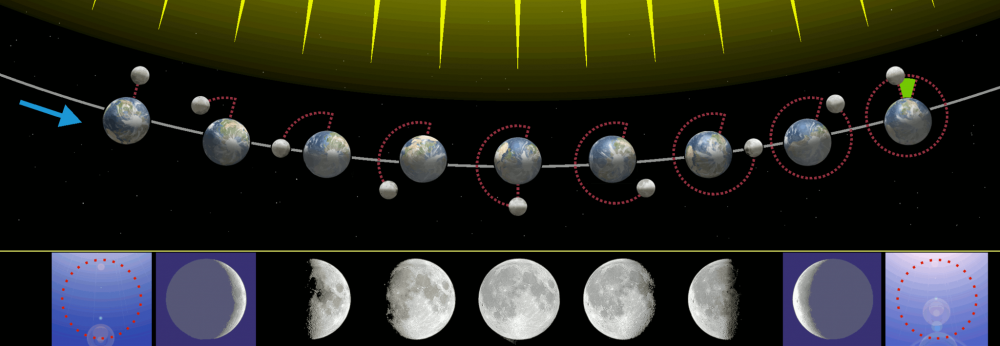
The Moon’s placement is always what the mood of the day is. Here’s the guide from July 22-July 31 […]
The Moon’s placement is always what the mood of the day is. Here’s the guide from July 22-July 31 […]

Ere thou canst settle in Dhyana-Marga and call it thine, thy Soul has to become as the ripe mango fruit: as soft and sweet as its bright golden pulp for others’ woes, as hard as that fruit’s stone for thine own throes and sorrows, O Conqueror of Weal and Woe.
Make hard thy Soul against the snares of Self; deserve for it the name of ‘Diamond Soul’. For, as the diamond buried deep within the throbbing heart of earth can never mirror back the earthly lights, so are thy mind and Soul; plunged in Dhyana-Marga, these must mirror nought of Maya’s realm illusive.
The Voice of the Silence
Every authentic system of spiritual discipline indicates different stages upon the path of progressive mastery over the mind. The path of progressive awakening to supreme unconditional universal Truth is an arduous course of intensified practice leading to serene contemplation. Dhyana Marga — the Path of Meditation — is an inward fusion of mentality and morality that releases the mystical energies of enlightenment. Transcending ratiocinative analysis and ethical endeavour, though yielding to the full fruition of both, dhyana is the mysterious catalyst spoken of by Jesus which “leavens the whole”. It is the living presence of the Dhyani energies vital to any lasting nucleus of universal brotherhood formed by sincere aspirants and neophytes on the Path. Like the fabulous wish-fulfilling gem or the pearl of great price, dhyana is one of the priceless treasures of the Path which must, at a certain stage of development, be earned by the disciple before there can be any further advance. If this is true of the cyclic process of individual growth, it is even more true of the evolutionary stream of humanity.
From the beginning of the 1975 Cycle emphasis has been laid upon reaching beyond discursive reasoning and analytic study. Though skilful analysis can be helpful, it is no more efficacious than one wing of a bird in flight. The other wing is ethical practice, purification of motive and steadfastness in reference to one’s deepest integrity and fidelity of commitment. The balance between these two aspects of development has been stressed from the start, but as in the life of a bird a definite stage comes at which further development of the wings is neither possible nor desirable, so too in the growth of a committed group of sincere individuals, many of whom have bound themselves by commitments to the spirit of the Pledge of Kwan-Yin. Touched by the potent vibration of the Cycle, a strong nucleus of seekers has persisted, despite ups and downs, in creating a distinct current of direction in their lives. In ways known and unknown to themselves, they have resonated to the current Seventh Cycle of the Theosophical Movement, the last of the series initiated by Tsong-Kha-Pa in the fifteenth century in Tibet. It is deeply fitting that all aspirants upon the path of The Voice of the Silence should now seek to become more firm and steadfast with regard to dhyana or meditation.
True meditation begins with intense concentration or dharana — bringing the mind to a clear focus, which then gives way to the uninterrupted contemplation that is the beginning of dhyana. In its full unfoldment it can lead to true wisdom — prajna — complete absorption in one’s higher consciousness with universal self-consciousness, a state of being marked by the attunement of Atma-Buddhi-Manas to the Cosmic Triad. The actual level of attainment reached by anyone attempting this meditation and the pace of his or her development are relatively unimportant. Whatever doubts, anxieties or ambitions some may bring to such attempts are largely irrelevant. What is significant is that a definite and increasing number of human beings should make an attempt, at whatever pace, to learn the practice of true meditation. The simple fact that a number of human beings recognize this common undertaking and obligation, sensing the common joy in the quest for gaining greater proficiency in dhyana, is propitious and encouraging to the alchemical work of the Theosophical Movement. It is a positive contribution to the profound impact of the 1975 Cycle, to the elevation of human consciousness in the world as a whole, and to the careful preparation of the ground for the Mystery Temples of the future.
The apprentice on the path of Dhyana Marga must learn that the senses are liars; it is precisely at that moment when one seems outwardly to be most alone and engaged in the difficult task of acquiring mental concentration that one is in fact most directly related to humanity. Once one sees this clearly, it becomes possible to insert one’s honest and humble efforts in the practice of dhyana into a larger effort by a number of people. If they bind themselves together by invisible threads spun through firmness and contemplation and by a continuous current of meditation, they can leaven up the world, in the metaphor of Jesus. This has nothing to do with any individualistic accomplishment. Rather, through their meditation, they can create a magnetic field into which can be focused the wisdom of Avalokiteshvara, the wisdom of the collective Hosts of Dhyani Buddhas, Mahatmas and Bodhisattvas. Metaphysically, it is the totality of actual and invisible wisdom behind the whole of this system of worlds, which is itself a partial emanation of the primal Adi-Buddha. The aggregate sum-total of actual and potential wisdom forming the radiant core of the system of worlds is nothing but a spark of that absolute and infinite ocean of purely transcendental Wisdom from which arises the possibility of all worlds and all periods of manifestation.
Wisdom is neither created nor destroyed, neither increased nor decreased, but is universal, inexhaustible and vast. It is already self-existent on a primordial plane and is in fact the very ground of the possibility of existence. It may be represented in thought and in collective manifestation as a Host of beings called the Army of the Voice. This is merely a metaphor to intimate something of the virtually inconceivable grandeur and precision of the array of divine elements and beings that constitute the living cosmos. It is possible to focus that light of universal wisdom, continual contemplation and eternal ideation within a matrix created by the love, unity and joint heroic efforts of a nucleus of human beings formed over a period of time. Thus, it is possible to bring down onto the plane of mundane human existence glimpses and rays, sparks and flashes, of that divine light of wisdom that is all-potent on its own plane but is otherwise latent and unavailable. Collectively, a group of human beings can become like a great lens for the drawing down of the light of unmanifest wisdom into our globe to meet the cries of pain, the hungers and the longings of myriads of minds and hearts.
To begin to become an apprentice of eternal wisdom in time, one must gain some minimal understanding of cycles. There can be no practice of concentration and meditation and dhyana unless one can rise above the sequence of alternating states of consciousness involved in the breath, the pulse, sleeping and waking, the passage of seasons, septenates of years, life and death and rebirth. Whilst it would be a false and self-imposed burden to expect to comprehend complex evolutionary cycles, one may, nonetheless, bring a minimal sense of the marriage of continuity and detachment to one’s understanding of the collective human pilgrimage. The 1975 Cycle of the Theosophical Movement, its Seventh Impulsion, marks its anniversary on November 17, a date that is significant not only in the nineteenth and twentieth centuries of the Christian era, but in relation to human consciousness on this earth in general. According to Clement of Alexandria, it was the true birthday of Jesus. Historically, it was the birthday of Pico della Mirandola, the light of the Renaissance. It is also the anniversary of many extraordinary events in history, both recorded and unrecorded. It is one of a series of occult points in the year that may be thought of as birthdays of the Dhyanis, points of intersection in cyclic time of aspects of Avalokiteshvara with manifested humanity. Thus, whilst the Seventh Impulsion of the Theosophical Movement is directly linked to this particular aspect of the manifestation of Avalokiteshvara, it cannot be separated from the other manifestations of the Logos present at other cyclic intervals.
Raghavan Iyer
The Gupta Vidya II

July 21, 2024 at 3:17 am PT is a full Moon in Capricorn. Capricorn rules the tenth house of career, social involvement, and your place in society. Capricorn is an Earth sign focusing on earthly mat […]

Biological and spiritual properties of cinnamon and how to incorporate cinnamon in your Reiki healing sessions. […]
Source: Healing with Cinnamon

Blueberry Buckle with Brown Sugar Topping is a classic and indulgent dessert that tantalizes the taste buds with a perfect blend of sweet and tart flavors. This delectable treat typically features a moist and tender cake base generously studded with plump, juicy blueberries. The berries burst with flavor, creating pockets of sweetness throughout the buckle.
What sets this dessert apart is the delightful brown sugar topping that crowns the cake. A heavenly mixture of brown sugar, butter, and sometimes cinnamon or nutmeg is sprinkled generously over the batter before baking. As the buckle bakes, this topping caramelizes, forming a luscious and slightly crunchy layer that adds depth and richness to every bite.
The cake itself is a comforting combination of pantry staples – flour, sugar, butter, eggs, and leavening agents – but it’s the addition of buttermilk or sour cream that imparts a subtle tanginess and ensures a moist crumb. The batter is carefully folded with the blueberries to ensure an even distribution of the fruit throughout the cake.
Once baked to golden perfection, the Blueberry Buckle is often allowed to cool slightly before being sliced into generous portions. The aroma of sweet blueberries and warm spices wafts through the air, inviting anyone nearby to indulge in this delightful dessert.
This timeless treat is not only a favorite for dessert but also doubles as a delightful addition to brunch or afternoon tea. The burst of blueberries, the tender cake, and the irresistible brown sugar topping make Blueberry Buckle a crowd-pleaser that captures the essence of homemade comfort with every heavenly bite. Whether served warm or at room temperature, this dessert embodies the simple joys of baking and is sure to become a cherished recipe in any culinary repertoire.
Servings: 8
– For the cake:
– 2 cups all-purpose flour
– 1 1/2 teaspoons baking powder
– 1/2 teaspoon salt
– 3/4 cup granulated sugar
– 1/4 cup unsalted butter, softened
– 1 large egg
– 1 teaspoon vanilla extract
– 1/2 cup milk
– 2 cups fresh blueberries
– For the topping:
– 1/2 cup brown sugar
– 1/3 cup all-purpose flour
– 1/2 teaspoon ground cinnamon
– 1/4 cup unsalted butter, chilled and diced
1. Preheat your oven to 375°F (190°C) and grease a 9-inch square baking dish.
2. For the cake, in a medium bowl, whisk together the 2 cups of flour, baking powder, and salt.
3. In another large bowl, cream together the 3/4 cup granulated sugar and 1/4 cup softened butter until light and fluffy. Beat in the egg and vanilla extract.
4. Gradually add the flour mixture to the butter mixture, alternating with the milk, and mix just until incorporated. Gently fold in the blueberries and spread the batter evenly in the prepared baking dish.
5. For the topping, combine the brown sugar, 1/3 cup flour, and cinnamon in a bowl. Cut in the chilled butter with a pastry blender or your fingers until the mixture resembles coarse crumbs. Sprinkle evenly over the batter in the dish.
6. Bake for 35 to 40 minutes, until a toothpick inserted in the center comes out clean and the topping is golden brown.
7. Allow the buckle to cool slightly before slicing and serving warm.
Variations & Tips:
– If blueberries aren’t your berry of choice, feel free to substitute them with blackberries or a mix of berries for a Summer Berry Buckle.
– For those with dietary restrictions, swap the all-purpose flour with your preferred gluten-free blend and use a plant-based milk and butter to keep it dairy-free.
– Sprinkle chopped nuts into the topping for an added crunch.
– To ensure the cake remains moist, do not overmix the batter once you’ve added the flour.
– Remember, the buckle can be quite hot coming out of the oven, so let it sit for a moment before serving – especially to the little ones. Enjoy this buckle with love, and watch it become a new tradition in your home as it has in mine.

1 cup (250g) natural peanut butter (no added sugar or oil)
1/2 cup (100g) granulated sugar substitute (such as erythritol or stevia)
1 large egg
1 teaspoon vanilla extract
1/2 teaspoon baking soda
1/4 teaspoon salt
Preheat and Prep Preheat your oven to 350°F (175°C). Line a baking sheet with parchment paper.
Mix Wet Ingredients In a mixing bowl, combine the natural peanut butter, granulated sugar substitute, large egg, and vanilla extract. Mix until the ingredients are well incorporated and the mixture is smooth.
Add Dry Ingredients Add the baking soda and salt to the wet mixture. Stir until the dry ingredients are fully integrated into the dough.
Shape the Cookies Scoop small portions of dough, about 1 tablespoon each, and roll them into balls. Place the cookie dough balls on the prepared baking sheet, leaving some space between them.
Create Cookie Marks Using a fork, gently press down on each cookie dough ball to create a crisscross pattern on top. This also helps flatten the cookies slightly.
Bake to Perfection Bake the cookies in the preheated oven for about 10-12 minutes, or until they are lightly golden around the edges. Keep in mind that they will continue to firm up as they cool.
Cool and Enjoy! Once out of the oven, let the cookies cool on the baking sheet for a few minutes before transferring them to a wire rack to cool completely. The cookies will become slightly more stable as they cool.


All seekers must seize the teaching which refers to taking the first crucial step on the Path. One may begin with a genuine feeling of gratitude for all one’s gifts and advantages in life. Every limitation and setback could be seen as an invaluable opportunity for learning the lessons of life as well as the mysterious workings of karma. Such an attitude of mind is assuredly helpful for any person trying to gain an initial self-understanding before treading the Path. At another level, it is even more important to realize what The Voice of the Silence calls the ‘priceless boon of learning truth, the right perception of existing things, the knowledge of the non-existent’. Nachiketas is an archetypal seeker, a Golden Age figure who lived at a time when many people were aware that nothing was more precious than the sacred teaching about immortality and the Supreme Self. Men and women searched all their lives and went through many trials and tribulations simply for the sake of coming closer to anyone who served the secret Brotherhood of Bodhisattvas, Rishis and Mahatmas. Now, in Kali Yuga, the Iron Age of Darkness, only those who have devoted many lives to the Path can know the magnitude of what has already been given to mankind. It would be a sad mistake not to take full advantage and make the best possible use, within one’s own situation and spiritual limitations, of the golden opportunity to respond gratefully and reverentially to real teachers of Divine Wisdom, Brahma Vach. This can only be authentically achieved through honest attempts to live by and for the sacred teachings. Though the initial responses may be faltering and even fearful, the moment a seeker begins to nurture a holy resolve whereby one will neither remit nor run away from the sacred task to one’s last breath, even a modest effort at the start will be charged with meaning and depth by the unconditional nature of the soul’s affirmation.
The value of the first step is much enhanced when a person, instead of starting off with a shrunken conception of individual success and personal failure, thinks instead of human need, human pain and ignorance. The stakes are high for multitudes of souls in our time, and immense could be the harvest from seeds sown in the right places with a wise detachment toward results. Souls, galvanized by spontaneous love of their fellows in dire need, can be sustained till the last breath by a steadfast determination to persist and never abandon the quest. When the seeker truly wakes up and stands firm, then he or she may seek spiritual instruction from those who bear witness to the Master-soul within. The neophyte can thus increase the possibilities of conscious, constant access to Sat (truth), Chit (ideation) and Ananda (bliss), which abide as a luminous triadic force and feeling within the still depths of the spiritual heart. Even if one may feel, in times of stress, that one can never be wholly attuned to the Krishna-Christos within, one must continually seek and yearn, keeping alive the Nachiketas flame of devotion.
To comprehend this teaching in terms of the spiritual heart, one must start from the cosmic and descend to the human. The pulsating rhythm of noumenal life can never be perceived until a person begins to inhabit those higher planes which permit a conscious and compassionate use of subtle supersensuous substance, in relation to which the physical body is like a coat of skin or a garment of gross matter. The Upanishads teach that for a wise man death is not an event. No one would think that the shadow is alive in the same sense in which the body is. For the sage, the body is like a shadow of that which is subtler and which it dimly reflects. The subtle body in turn is a shadow in relation to something still more supple which it partially mirrors. The dialectical method of the Hermetic fragments and the neo-Platonic mystics requires us to keep rethinking our view of light and shadow at many levels as we travel inwards and upwards. One may approach the vast mystery of life by sensing the visible sun as a great heart which is constantly beating. There is a systole and diastole to the cosmic heart of the invisible sun, without which no single heart could beat. The thrill of life in every atom and mineral, in every plant and animal, and in every human heart, is merely a derivative expression of perpetual motion in the ceaseless, rhythmic breathing of the hebdomadic heart of the invisible cosmos.
Everything is sevenfold and acts upon seven planes. Descending by analogy and correspondence to that miniature solar system which is the individual human being, one discerns an outwardly disordered and harmonious system. But this is only true apparently, not fundamentally. Each and every person consists of a multi-faceted hierarchy of dynamic and complex systems, among which the most invisible are the most ordered and harmonious. What is most visible is the most disordered, being the most heterogeneous and entropic. On the external plane there are many obscurations and many violent, discordant movements. It is thus difficult to grasp the majesty and grandeur of the proposition that every human being is a microcosm, a miniature universe. But the core of the teaching of Buddhi Yoga is that each human soul is capable, out of the region of the disordered and disharmonious, of coming closer through a series of progressive awakenings to that realm wherein one spontaneously affirms the mantram of Jesus Christ, “I and my Father are one.” Manifested consciousness may be yoked to the unmanifest consciousness of the unembodied Self — the miniature Spiritual Sun in the heart of each and all, ever abiding in a proper relationship to every planet and to the subtlest vestures of the soul.
Anyone may begin by releasing the highest feelings of which he or she is capable. This unravels the paradox, for Gupta Vidya is the only key by which souls may unlock the sacred chamber of the deepest wisdom, which by definition must be secret, as suggested in the Upanishads and their best commentaries. The word upanishad itself implies secret, direct teaching from Guru to chela, Master to pupil. Gupta Vidya or the Heart Doctrine must be felt before one will be ready to use freely the sacred teachings about the inner analogues — in the realms of ideation, emotion and vital energy or volition — of the circulatory, respiratory and other systems and sub-systems in the human frame. A beautiful Sanskrit word for the heart occurs in the Upanishads: — guhya, ‘that which is hidden, that which is in secret’. It is like the sanctum sanctorum of an old Hindu cave temple, with its suggestive analogies to the human body. Even if one goes into the temple, and even if one is admitted into the sanctum sanctorum, there is nevertheless a mystery beyond that which is seen and heard, tasted and smelt and touched. There is a sixth sense of supersensuous touch, sound and hearing, and a seventh sense, analogous to the mathematical concept of limit, whereby one senses that one will never quite arrive at the end, the sense of the ineffable and infinite, invisible, inaudible and intangible.
The wise know that this is the deepest symbolism of the temple: even if one presses into the darkest place in the sanctum sanctorum of the temple, it is only a point of entry into subtler states of consciousness and beyond, to the deepest depths of eternal duration and perpetual motion and boundless space. The term guhya refers to what anyone who grows self-consciously in regard to the various subtle sheaths of the human constitution is going to discover — the astral brain and astral heart, and beyond them their noumenal antetypes. There are subtle senses, and those who develop them can experience their tremendous range and reach, along with appropriate problems which would not be intelligible in terms of the physical plane. So too with the brain and the heart. There would be a progressive series of discoveries of correspondences at different levels in the different sheaths of the Supreme Self, in an ascending order of closeness to their cosmic analogues.
Anyone who feels that there is a divine spark in every human soul, about which one could silently think and with which one could inwardly commune, taps the potential wisdom of the hidden fire within the spiritual heart. Those who at some level begin to live this truth in every thought and feeling-impulse that they generate, deepen their inmost feeling for the sacred cause of the spiritual elevation of the human race, the deliberate pursuit of self-knowledge for the sake of all souls. The more they can light up and rekindle, deepen and sustain this heart-feeling as a constant flame of devotion, the more they can take what might look like thin, frail candles and light up their hearts. In time, the Nachiketas flame blazes up and is established on the square platform of the altar in the sanctuary of the spiritual heart. There it can shine in its resplendent glory as a hidden regenerator of the sacred temple in which the immortal soul abides, and which is its share in the seven kingdoms of Nature. Thus the true beginning is in the sphere of soul-feelings. Until and unless one’s inmost heart can vibrate with the generosity and compassion, even a fraction of the immense heart-pulsation behind invisible Nature and the mighty host of hierophants — those Rishis and Mahatmas who recorded the Vedas and bequeathed the Upanishads — one will not be able to light up one’s own pathway to conscious immortality. This heart-light can take the persistent and patient seeker from the broad plains to the entrance to the secret Path, of which it has always been true that ‘many are called, but few are chosen’.
Raghavan Iyer
The Gupta Vidya II

July 15 the WIld dangerous Mars/Uranus conunction is in effect on Algol The Medusa’s Head infamous Demon star. This was Trumps’ public face degree, assassination attempt on July 13.


1 tablespoon olive oil
1 tablespoon butter
1 medium white onion, finely diced
1 carrot, peeled and finely diced
1 rib celery, finely diced
Salt
Black pepper
4 cloves garlic, pressed through garlic press
1 pound ground beef (85/15 ratio lean to fat)
1 ½ teaspoons Italian seasoning
½ teaspoon white pepper
1 tablespoon tomato paste
2 tablespoons Worcestershire sauce
3 level tablespoons all-purpose flour
1 ¼ cups beef stock or broth
1 medium russet potato, peeled and diced into ¼ -½ inch cubes
2 teaspoons fresh thyme leaves, plus extra for garnish
1 tablespoon finely chopped parsley
¼ cup green peas
2 (17.3 ounce) packages puff pastry sheets, frozen
1 egg, whisked for egg wash
Flaky salt, optional garnish
Begin by gathering and prepping all of your ingredients (except for the puff pastry sheets—keep those frozen) according to the ingredients list above.
Place a large, deep skillet or Dutch oven oven medium-high heat, and add the butter and the olive oil. Once the butter is melted, add in the onion, carrot, celery, plus a couple of good pinches of salt and pepper, and saute the veggies for a few minutes until just softened.
Add in the garlic, and once aromatic, add in the ground beef along with the Italian seasoning, the white pepper plus a couple more pinches of salt and pepper, and use your spoon or spatula to crumble the beef into a fine consistency, cooking it for a few minutes until no longer pink.
Next, add in the tomato paste along with the Worcestershire sauce and stir that into the beef mixture, then sprinkle in the flour and stir that in to blend well.Add in the beef stock or broth, followed by the diced potato, and stir to combine. Cover the pan and allow the filling to gently simmer just until the potatoes are tender and the sauce thickened, roughly 25-35 minutes.
To finish the filling, add the thyme leaves, the chopped parsley and the peas, and stir to combine. Check to see if any additional salt or pepper is needed, and allow the beef filling to completely cool.
Once your filling is nearly cooled, take your puff pastry sheets out of the freezer (you should have a total of 4 sheets), and allow them to thaw at room temp, roughly 40 to 45 minutes (if the pastry sheets thaw before your filling has cooled, place them into the fridge to keep cold.)
When the puff pastry sheets have thawed, place one sheet at a time in front of you on a work surface. Roll the puff pastry sheet out to a size that is 10 by 10 inches, and cut it into 4, 5 inch squares. Place the squares onto a wax or parchment paper-lined sheet tray to hold while you repeat the process with all of the puff pastry sheets, placing more parchment paper or wax paper between layers of squares as needed to help prevent sticking.
Once all of your puff pastry sheets are rolled and cut into 5” squares (you should end up with 16 squares in total), then place about 4 squares at a time in front of you. Add about ½ cup of the beef filling to the center of each square, forming it so that it is a slightly rectangular shaped mound, leaving some border to allow for sealing.
Wet the edges of the filled square with a touch of water, and place another puff pastry square over top, covering the filling as if you were making a pie. Press the edges together (you can use a fork for this), then trim any excess edge to create a smaller “package” or rectangular parcel. Place onto a large baking sheet lined with parchment paper (or use two baking sheets, if needed), and repeat the process by assembling the rest of the hand pies. (You will have a total of 8 hand pies once assembled.)
Once assembled, cut 2 to 3 small slits or “vents” into the top of each hand pie, to allow steam to escape while they bake. Then, place the hand pies into the freezer for 15-20 minutes to chill.
Preheat your oven to 400°.
Once chilled, brush some egg wash over each savory hand pie, sprinkle with a small touch of flaky salt, if using, and bake them for 24 to 26 minutes, or until a deep, golden brown.
Allow the hand pies to cool for 10 minutes on a wire rack before eating, as the filling will be very hot.

As Gautama Buddha taught, one soon realizes upon entering the Path that it is impossible to fall back with impunity into thoughtlessness and heedlessness. Eternal vigilance is the price of spiritual freedom, and is constantly stressed in the training of srotapattis and would-be Bodhisattvas. On the razor-edged Path, as it is called in the Katha Upanishad, everything is finely balanced and highly energized. The greater the knowledge, the greater must be the responsibility and courage to accept the consequences of all thoughts, images, emotions and acts. More and more, one must feel a profound and cool heart-awareness of one’s kinship with all those whose self-created fetters have become, through ignorance and cupidity, like the entwining coils of a venomous snake. Unconditional compassion (karuna) and wise action (upaya) cannot come without the moral stamina to stay on the Path, despite seductive distractions, insidious rationalizations and specious excuses for sluggishness and backsliding. The sacred lineages of true Teachers (the Guruparampara) vivify the immemorial teachings by the light of measureless love and wisdom-compassion, effortlessly exemplified in their celebration of universal unity and human solidarity, and the supreme transcendence of the sovereign Self in the temporal realm of maya.
It is only through the Guru that the chela has the golden opportunity of lighting up ‘the Nachiketas flame’ of discernment and daring. Once lit, it must be sedulously guarded and tended by the chela, and eventually fanned into the fire of wisdom-sacrifice (jnana yajna) which gives light to all and takes from none. Established on this hoary Path, a stage will definitely come when all indifference to earthly reward will be natural and easy. In the Katha Upanishad Nachiketas simply could not see the point of the glittering gifts Yama, the god of death, offered him: riches, kingship, kingdoms and earthly happiness. All these had no meaning for Nachiketas because he knew too well the deceptive trappings of a life he had long since outgrown. He sought only the secret of immortality, and was unreservedly willing to honour the privilege of receiving the secret and retaining it with constant gratitude. Every skill and faculty is needed while climbing the steep mountain precipices of the secret Path. It must never be forgotten that all the needed resources are within oneself, and they will all have to be summoned and utilized, on this razor-edged Path. Having heard about the Path and having grasped that one cannot evade this recognition, however partial or fleeting, one must see the profound sense in which the Path is difficult to tread.
The powerful metaphors — indeed the entire parable — of the Katha Upanishad have manifold layers and levels of meaning, all pointing to the secret spiritual heart. In The Voice of the Silence the Paramita Path is connected with antaskarana, the inward bridge between the impersonal and personal selves. The time will come when the seeker must choose between the two, for either must prevail. One cannot both be upon the Path and also maintain the absurd but prevalent misconception that there is a personal entity inside oneself, a ‘ghost in the machine’, to whom things are happening and who is holding the reins in life’s journey. This is the root illusion in the eyes of enlightened seers; no such entity really exists; there is only a bundle of propensities and reflexes, images and fantasies. The concatenation of elemental entities comprising the shadowy self are engaged in their own activity, propelled by the gunas expounded in the closing chapters of the Bhagavad Gita. The evanescent and everchanging personality may cling to the illusory misconception that it is acting freely, but it is no more than a congeries of numerous life-atoms pursuing their own predetermined proclivities. The celebrated metaphor of the chariot, also deployed in Plato’s Phaedrus, is given a vast extension in the Katha Upanishad as it is applicable to cosmic as well as to human activity. The Katha Upanishad may be seen not only as a philosophical dialogue, but also as an alchemical text, replete with deeply evocative, enigmatic and magical mantrams.
At some point one must mentally let go of the route by which one has come, what Gautama Buddha called the Raft and The Voice of the Silence terms the antaskarana bridge. This letting go is depicted in the image of the complete sacrifice (mahasmashana) of the ‘assemblage of sins’ and the namarupa (name and form) to the impersonal, immortal Self upon the altar of the secret heart. For a Manasa to be engaged in embodied existence means that an impersonal cosmos has made an immense sacrifice. This is symbolized physically by the sacrifice of the father giving of his life-essence, and mentally by the magnanimous sacrifice of a great being giving freely of his spiritual essence so that evolution may go on. It is also evident in the noble sacrifice of the mother who, over a period of painful gestation, gives everything to the astral body (linga sharira) of the soul coming into the world, just as the maternal matrix of Akasha nourishes the embryo of the globe. The impersonal has sacrificed for the sake of manifestation on the personal plane. This must be deliberately reversed through an intense awareness of what one owes to one’s father, mother, and all one’s teachers, especially to one’s spiritual parents and preceptors. The conscious reversal involves taking everything one has, with all one’s powers and limitations, and readily sacrificing it for the sake of the self-conscious re-emergence on the plane of manifestation of the inward god, the inner sovereign, who otherwise would remain the silent Self. One must allow that Self within, who is no different from the Self of all, to assume divine kingship within the human estate.
No one can tap the highest resources without becoming secure enough to want nothing for the puny, shadowy self. Moved solely by desires that elevate the whole of humanity and the entirety of creation, and established in that proper mental posture, one can abandon the antaskarana bridge, because one can re-create it at will. Seeing one’s personal self as no different from other personal selves, one can do the bidding of the divine through the instrumentality of anything in Nature, including, therefore, the use of one’s persona, in which one has renounced absolutely all proprietary interest. Becoming aware of the life-atoms in one’s vesture, one realizes that there is no such thing as the ‘personal self’ save in a metaphorical sense. Life-atoms are constantly streaming in and out as part of the ceaseless spiritual transmutation of matter on seven planes and the awesome law of sacrifice within the seven kingdoms of Nature. The true hotri or hierophant is an initiated alchemist able to send forth beneficent emanations through a mighty current of concentrated thought, mystic meditation, noetic vision and unconditional compassion, consciously quickening the upward movement of all the available life-atoms. To such a sage or magus, the antaskarana Path does not have its former significance, except as a drawbridge to be extended at will in the service of universal welfare.
Raghavan Iyer
The Gupta Vidya II
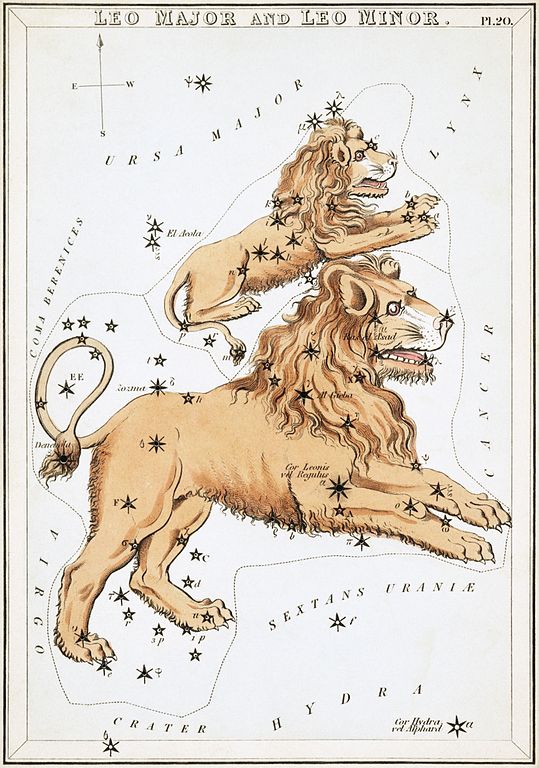
Venus in LEO July 11- August 4 Love, strength, drama and courage abound. Women step into leadership roles. A short heart-racing role playing time. […]
The Conversation showcases a film honoring Dick Brewer’s contributions to the world of surfing. A master shaper and visionary, he helped top athletes harness the energy of the waves. […]
Read on: New film honors the life of master surfboard shaper Dick Brewer
A deep immersive journey into the heart of the Hawaiian islands. Through the stewards of ‘aina, Kanaka Maoli.
Aloha! In this video I spend the day with Unko I and do a catch and cook. Alot of people were curious about why only Hawaiian’s can live in this area so he talks about it.
Contact Ben for hunts, fishing & adventures on Molokai: florendoben84@gmail.com or 808-269-1149
Out in the Hawaiian islands is a place that stands out on its own. Molokai is the island (outside of unaccessible Niihau) that’s kept development away. This is old Hawaii, a place without traffic lights or bustle. Here, time stands still, and the locals have fought hard to keep it this way. Join me on an epic adventure with a Molokai local into a Hawaiian island that has stayed true to its roots.

Can we save coral reefs from the ravages of climate change? Why engineering heat-tolerant species is our moral imperative …
Many people have an aversion to human interventions into the natural world. However, as Corals: On the Brink explores, this mindset can overlook both the responsibilities humans already bear for the state of the world around them, and the potentially extraordinary consequences of inaction. Centred on the work of Line Bay, a research scientist at the Australian Institute of Marine Science (AIMS), and Ryan Phelan, Executive Director of the conservation organisation Revive & Restore, the short documentary details their efforts to leverage emerging technologies to engineer coral species that are more resilient in the face of dire threats posed by man-made global warming. Situated at the nexus of genetics, climate and risk management, the piece makes a compelling case that the only way to save coral ecosystems, which are invaluable to human and nonhuman animals alike, may be human intervention and innovation. […]
Source: It’s our responsibility to engineer corals that can weather the world we’ve created | Aeon Videos

A hundred and one are the heart’s channels; of these one passes to the crown. Going up by this, he comes to the immortal.
Katha Upanishad
Viraga — indifference to pleasure and pain, illusion conquered, truth alone perceived — marks the beginning of the razor-edged Path. For reasons connected with the cosmogony of Gupta Vidya, human beings find the first step on the Path most difficult. They must come to an initial standpoint of detachment from the world, with its false values, its fickle glamour and attractions, its febrile nightmares and anguish. Indifference simply means perceiving no essential difference between pleasure and pain because both arise from compulsive cerebral reactions to sensory stimuli. They are alike devoid of intrinsic meaning for that impartite Self which sustains its own transcendent conception of spiritual growth. Two individuals, from seemingly identical experiences of pleasure or pain, may come to contrasting conclusions and derive radically different implications. Consider two persons who enjoyed identical dinners, containing ingredients guaranteed to produce an acute stomach-ache, such that both suffered severe gastric pains the next day. Similar facts yield no insights into the diverse meanings that persons might ascribe to their experiences. This points towards the philosophical basis for self-reference and voluntary action. Man is a reality-assigning, value-assessing and meaning-ascribing agent, who needs minimal freedom from titillation and disturbance induced by pleasurable or painful experiences. Once this initial standpoint of philosophical detachment is established even to a small extent, one will soon find out for oneself that it shows the spiral Path of inward growth.
When one averts attention from the chaos of external events, through the dawning realization that ascribing meaning and assessing value is one’s own task (svadharma), one rapidly confronts a host of unresolved elements (unappeased devas and devatas) — repressed longings, fears and fantasies — within what is often wrongly called the ‘unconscious’. Once they are set in motion, one risks slipping into alternating euphoric and terrifying states of mind, losing hold over the real world of supernal light one seeks as well as the public domain of shared sensory impressions. To dare to face oneself fully is difficult, if only because the more illusions one strips away, the more illusions crop up, like a hydra-headed monster. The protracted and painful, self-reinforcing nature of mundane illusions is boringly familiar, but they must be firmly cut through. Sufficient detachment helps one to glimpse the central but undiscovered truth of transcendental Selfhood, shining behind and beyond the world of maya. This truth about the hidden SELF is also the truth about the secret Path, which must be trodden in solitude. Only by taking each step is the next revealed. Like a winding mountain path which cannot be discerned from a hazy distance, it cannot be traced without treading it.
One must foster steadiness, determination and constancy, remaining fixed in the recognition of the spiritual insignificance of the passing panorama of the lunar subconscious and the supreme value of the single truth one now partly sees and wholly seeks. When a willing resignation (vairagya) is sustained at this level, one is ready to experience greater fearlessness (abhaya) and penetrating insight (prajna). Viraga is ‘the Gate of Balance’. Repeatedly, at different levels of inward growth, through daunting trials at successive stages of spiritual life, one needs to establish a stable fulcrum in consciousness, reflecting a mentally renewed standpoint of calm steadiness and cheerful balance. Though seemingly complicated, this is not unlike walking, or balancing on a bicycle, or standing on a tightrope. One only knows for oneself that it is possible to maintain balance, or that it is necessary to preserve absolute faith in one’s strength of mind and soul-wisdom. A tightrope walker cannot mechanically teach a doubter how to balance and perform delicate maneuvers upon a very thin, taut wire. The experienced acrobat can take all the appropriate security measures in regard to the wire, but it is the apprentice learner who must not move one iota from an absolute, immovable conviction that he can both maintain and restore balance, and that even if he experiences a sudden loss of balance, he can still bring himself back to a steady state of balance. Existential equilibrium cannot be taught to someone who is not whole-heartedly engaged in the elusive quest for balance amidst ceaselessly shifting variables and parameters. Yet, the more one gains proficiency in the practice of viraga, the more it becomes as natural as breathing.
One must be yoked through raja yoga, by regular meditation (dhyana), deep self-study (svadhyaya), unconditional devotion (bhakti), sustained reflection (dianoia) and sagacious equanimity (sophrosyne) to the universal and indwelling Self (Avalokiteshvara) of Krishna-Christos. That Self is veiled rather than revealed by compulsive speech and chaotic thought-vibrations. One must sustain in the daily round of duties a secret spiritual discipline which no one else can discern from peering at perfunctory externals. This ‘divine discipline’ has to do with fidelity to that sovereign standpoint which steadily sees the unmanifest Self behind the mental furniture of the world and manifest selves. What is at first a simple exercise in repeated restraint and resilient balancing can become, after a while, a rhythmic mental breathing as natural as physical breathing, leading to a state of inmost tranquillity. The Voice of the Silence enjoins the lanoo or disciple to be ready to find “thy body agitated, thy mind tranquil, thy Soul as limpid as a mountain lake”. It is certainly feasible to realize this fully within oneself, to abide constantly in those depths of spiritual self-awareness (svasamvedana), wherein there are no waves or ripples, but rather a sublime experience of serene limpidity, crystalline clarity and radiant translucence, which are all intrinsic to Alaya, the universal Paramatman. This state of self-awareness must be brought down into the realm of the higher mind in a manner that makes for steady self-tranquillization and self-regeneration, which is compatible with vigorous incarnation in the sphere of active duty. Like all subtle delineations of spiritual detachment, these helpful lines from The Voice of the Silence have a hallowed, archetypal significance. These are vitally relevant at the very start, but they presage the sweet efflorescence at the end, and they have crucial applications all along the ancient Path.
The Katha Upanishad teaches that once one hears of the secret Path to enlightenment and conscious immortality, one cannot pretend life will be the same again. Once the flashing insight has torn away ‘the loathsome mask’, the blazing words of truth cannot be set aside as if they were never heard. All who enter the sacred orbit of Great Teachers and true gurus are self-condemned: they will never again be able to nestle in the soft folds of delusion, for the ‘Hound of Heaven’ will pursue them to the bitter end. Not to recognize this is either naïve ignorance about oneself and the cosmos, or bovine perversity in the face of the precarious incarnation of supernal light within the imperfect vestures and inherent limitations of the deceptive world of samsara. Since supple balance in motion requires both vision and verve, when one is in right earnest about treading the Path, one will find that one cannot keep one’s feet on that arduous Path without the sustained practice of spiritual archery, taught in the Mundaka Upanishad. This requires the repeated realignment of mental vision, symbolized in archery by the correct relation of eyesight to the distant target, allowing for the trajectory of the arrow, the texture of the bow, wind and weather. AUM is the sacred bow, the arrow is spiritual resolve, and the fixed target is the indestructible, invisible, formless, supreme Self (Paramatman), mirrored in the embodied Self (Jivatman), the divine Triad within and beyond one’s manifest identity.
Raghavan Iyer
The Gupta Vidya II
Aloha! In this video I go spearfishing and then Masta Chef Unko E makes some magic happen!
A deep immersive journey into the heart of the Hawaiian islands. Through the stewards of ‘aina, Kanaka Maoli.

July 5, 2024 at 3:57 pm PT is a new Moon in Cancer. Water sign Cancer rules the fourth house of motherhood, home, and ancestry. Cancer’s symbol is the crab who carries its home on its back, making …
Mililani Trask (Kanaka Oiwi) is a Native Hawaiian political speaker, attorney, and champion of indigenous and human rights. During the Hawaiian sovereignty movement in the 1980s, Trask founded Ka Lahui Hawaii, a Native Hawaiian initiative for self governance. She worked as a diplomat and has testified multiple times at the United Nations, advocating for the passage of the UN Declaration on the Rights of Indigenous Peoples. She remains prominent in Native Hawaiian politics, and currently serves as an advisor to Innovations Development Group, a firm focused on bringing clean, renewable, energy to Hawaiian communities.
Phanem-anon: Celebrating Indigenous Women and Leadership – May 4-5
We invite the Dartmouth community and the public to join in the conversation with Jennifer Rose Denetdale (dine), Winona LaDuke (Ojibwe), Mililani Trask (Kanaka Oiwi), and Ellen Gabriel (Mohawk). Their involvement in indigenous resistance movements include DAPL, the Keystone XL Pipeline, Indigenous gender issues, Treaty rights, history, the United Nations Declaration of Rights of Indigenous peoples, and more. Please join the Native American community at Dartmouth in welcoming these extraordinary women, while engaging in opportunities to bring awareness to prominent indigenous issues.
Sponsored by: Native American Studies Program, Office of the Provost, Environmental Studies Department, the John Sloan Dickey Center for International Understanding, the Office of Sustainability, Porter Family Fund for Sustainability in the Curriculum, Office of Residential Life and the Living Learning Communities, Native American Program, and the First Year Student Enrichment Program
The Pacific and the world are mourning the loss of Hawaiian scholar and activist Haunani-Kay Trask, who died at the weekend aged 71.
In 1991 Tagata Pasifika had the privilege of interviewing Professor Trask for the documentary The Hawaiians. Trask, a fearless advocate for the Kānaka Maoli, spoke passionately about Native Hawaiian rights and indigenous sovereignty.
“As far as I’m concerned, I’m a patriot of the Hawaiian nation. The Hawaiian nation burns in our hearts. It’s still alive. It’s right here on my land.”
Our alofa to Haunani-Kay Trask’s family, friends and the Hawaiian community.
Dr Haunani-Kay Trask 03 October 1949 – 03 July 2021
Hawaii was a recognized independent nation prior to January 17, 1893. On that day, the nation and government was illegally overthrown by the United States. Since then, the USA has illegally assumed control over Hawaii turning the islands into Military Bases that threaten world peace.
The United States claims that Hawaii was lawfully annexed as the 50th State.
What would you think when you find out that is Not True! In fact the United States government signed a Joint Resolution of the Congress in 1993 that “acknowledges that the overthrow of the Kingdom of Hawaii occurred with the active participation of agents and citizens of the United States and further acknowledges that the Native Hawaiian people never directly relinquished to the United States their claims to their inherent sovereignty as a people over their national lands, either through the Kingdom of Hawaii or through a plebiscite or referendum”.
Director : Luis Castro

1. To remove the odour from your hands after cutting onions, chicken or fish, just wash your hands with salt and water, then you will have no more smell.
2. To avoid the feeling of the hotness of pepper on your hands after cutting/slicing it with your hands, rub them with salt and vegetable oil or red oil and wash them.
3. When pepper mistakenly enter your eye, put a pinch of salt in your mouth, the hotness of the pepper will disappear and you will see the magic.
4. When storing empty containers or bottle, throw in a pinch of salt to help them from getting stinky.
5. Sprinkling some salt on your fresh peppers while pounding it, helps to make it pound quickly.
6. Soaking bitter leaves in salt and hot water, helps to remove extra bitterness before cooking with it.
7. If your liquid milk always spoil before you finish it, You can add pinch of salt when you first open it, it will help the milk to stay fresh longer.
8. Salt and detergent mixture can help you to kill ants and cockroaches disturbing you in the kitchen.
9. Placing your overripe tomatoes in a cold and salty water overnight, will help to make them fresh and firm.
10. If you cut lemon and you do not want to use it finish, sprinkle salt on it, it would stay fresh for 3 days. Make sure you rinse it before using it again.
11. Salt can be used as a preservative method for preserving meat, fish or vegetables. It helps to prevent bacteria growth.
12. Grease fires or small fire can be put out with the use of salt.
13. To store your fermented locust beans (ogiri, iru or dawadawa), mix it with salt and put it in a container. Your fermented locust beans will stay fresh for years without getting spoil.
14. When boiling eggs, add a pinch of salt to keep the shells from cracking and peeling the eggs will also be easy.
15. If you don’t want your spaghetti to gum together while cooking, add a drop of vegetable oil into a salty boiling water and it will come out separately.
16. Soaking your rice with hot water and salt before cooking it, will help to remove excess starch.
17. You can use salt to parboil your rice in order to remove the starch from the rice quickly.
18. Adding salt on your cocoyam when it starts boiling helps to make it soften quickly.
19. Salt is used to sanitize your kitchen sponges. It is used to kill the bacteria, germs in them. Soak the sponge in a hot salty water.
20. Salt improves the texture of the meat as it helps to break down the tough proteins, thus tenderizing the meat.
21. When chopping/cutting vegetables, sprinkle little salt onto the chopping/cutting board, it will keep the vegetables from moving or flying around while cutting/chopping.

You will devour these taco cupcakes! A fun twist on taco night. 
 ”
”
Main Ingredients:
Ground beef  : 1 lb
Taco seasoning : 1 packet
Black beans  : 1 can
Cheddar cheese  : 1 cup, shredded
Green onions  : 3, chopped
Won ton wrappers  : 24
: 24
Instructions:
Preheat the oven to 375°F (190°C). Grease a 12-cup muffin tin.
In a skillet over medium heat, cook the ground beef until browned. Drain excess fat.
Stir in the taco seasoning and cook according to packet instructions. Remove from heat.
Press a won ton wrapper into each muffin cup, allowing the edges to extend over the sides.
Layer each won ton wrapper with a spoonful of taco meat, a spoonful of black beans, a sprinkle of cheddar cheese, and some chopped green onions.
Fold the edges of the won ton wrappers over the filling, creating a cupcake shape.
Bake in the preheated oven for 18-20 minutes, or until the won ton wrappers are golden brown and crispy.
Remove from the oven and let cool in the pan for a few minutes before transferring to a serving platter.
Serve warm with your favorite taco toppings like salsa, sour cream, or guacamole.
Enjoy your delicious taco cupcakes!

Ingredients :
1 package Cheddar Bay Biscuit Mix
1 tsp garlic
1 tsp Italian Seasoning
Crab:
1 pound lump crab meat, be sure it is fully cooked
¼ tsp paprika
½ tsp onion powder
½ + cup mayonnaise
1 tbsp mustard
½ sleeve Ritz crackers, crushed
1 cup grated parmesan
How To Make Crab Stuffed Cheddar Bay Biscuits with Lemon Butter:
Make the biscuit mix according to package directions, set to the side.
Preheat the oven to 375*, spray two muffin tins with nonstick spray.
In a bowl, combine the crab meat, paprika, onion powder, mustard, mayonnaise and crushed crackers.
Stir to combine well, adding a touch more mayonnaise if needed.
Using a scoop, place some biscuit mix on your hand that has been dusted with flour; form a cup type of biscuit in your hand.
Take a scoop of the crab mix and place it in the bowl part of the biscuit.
Cover the biscuit with a little more biscuit dough. Continue until you have used all the dough.
Place each biscuit into a muffin tray. Bake for 12 to 15 minutes.
Brush with a mixture of melted butter and 1 tsp of lemon juice

You’re going to start by cooking your chicken breasts in the very same skillet you’ll use for the rest of the recipe. Just season them, brown them in some olive oil, and then braise them for a bit in some chicken broth until they’re cooked through. Then just set them aside for a bit while you start to work on the other components.
2 tablespoons olive oil
2 boneless skinless chicken breasts
2 1/2 cups chicken broth
1 1/2 cups heavy cream
1 teaspoon dried basil
1/2 teaspoon garlic powder
10 lasagna noodles
1 1/2 cups mozzarella cheese, grated
1/2 cup Parmesan cheese, freshly grated
2 cups baby spinach leaves
Kosher salt and freshly ground black pepper, to taste
Heat olive oil in a large skillet over medium heat.
Season chicken breasts and cook until one side is browned, 3-5 minutes.
Turn chicken, then add chicken broth to pan. Bring to a simmer, then cover and cook until chicken is cooked through, 10-15 minutes.
Remove chicken to a cutting board and set aside.
To skillet, add cream, basil, and garlic powder. Stir in lasagna noodles and bring to a simmer once more. Cover and cook until noodles are tender, about 15 minutes, stirring often.
While noodles cook, shred chicken. Once noodles are soft, stir in 1/2 cup of the mozzarella and parmesan, along with the shredded chicken and the spinach. Season to taste with salt and pepper.
Stir to combine, then top with remaining mozzarella cheese. Cover skillet and remove from heat. Let rest 5 minutes to allow cheese to melt.
Enjoy !

Immediately after saying I AM FREE NOW, a rampaging 75-mph wind came to a complete stop. This was just one of many stunning Archangel Michael telekinetic events that David recounts in this powerful sequel to Part One:  • David Wilcock LIVE: The Archangel Mic…
Also, in perhaps the ultimate “I’m Not Racist” social proof in the history of this community, within minutes of enduring your way through this film, David drops a slightly-rushed rendition of “Mr. Bozack” by EPMD (1991).
In the original this was done completely without music after 31 years. We added the music back in so you can rate how well D-dub did!
Go to thedisclosure.com for more updates!
PLEASE NOTE: The comments section has been MASSIVELY infected with spam accounts claiming they are David and want to speak to you.
David does NOT use Telegram whatsoever. David does NOT text people. David does NOT reach out and make personal contacts. He’s alone in a house with a dog and a turkey. That’s it.
Almost every single heartfelt comment you write is getting pounded by one of these. It appears to be nearly impossible to stop. We do not have the time to do all the labor. Please do not respond to them!
With that being said, the comments are overwhelmingly fantastic and we are not going to let “Our Friend” get in the way of appreciating you… at a distance, not by text!
Find Your Magic
Tarot Readings, Inspiration, and Self-Empowerment
Making life on earth magick one moon phase at a time.
Astrologer ~ Mystic ~ Writer
of the Collegium Spiritus Sancti, a Golden Dawn Society
An affiliate of the Alpha et Omega Order of Melchizedek
All Knowledge Is Not Contained In Only One School
Connecting the grant community to #LearnGrants
Channelings & Articles
Magic Spell Books & Grimoires
Native Hawaiian Language Revitalization
Poetry & Tales of Love, Mystery, Magic and Spirituality
Organic Herbs, Herbals, Sustainable Gardening
Mother Nature: Feeding The Mind, Body & Soul, with Food, Medicine & Skincare.
"Inheritor of a Dying World, we call thee to the Living Beauty. Wanderer in the Wild Darkness, we call thee to the Gentle Light..."
Time is the most important thing we've been given
Embracing the Divine Within.
"...That I should bear witness to the truth." - John 18:37 // David E. Robinson, Publisher


 Hālau 'Aha Hui Lānākila