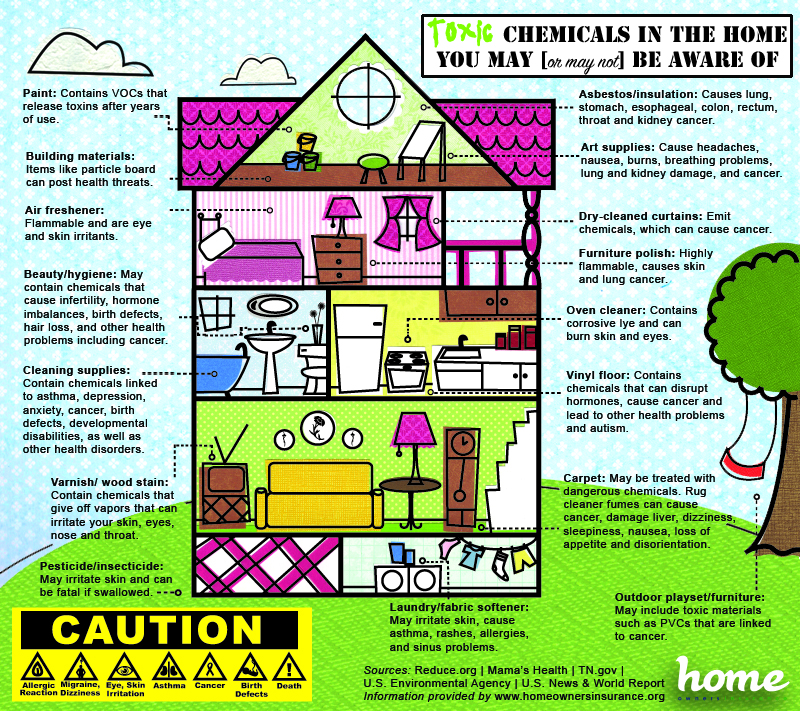
Toxic chemicals in the home can be eliminated simply by making thoughtful choices. In the supermarket after educating oneself about where the hazards are in common consumer products. How can you determine what toxics you have in your home? Take this “toxic tour
In the Kitchen
All -purpose cleaner, ammonia-based cleaner, bleach, brass or other metal polishes, dishwater detergent, disinfectant, drain cleaner, floor wax or polish, glass cleaner, dishwashing detergent, oven cleaner, and scouring powder contain dangerous chemicals. Some examples are:
Sodium hypochlorite (in chlorine bleach): if mixed with ammonia, releases toxic chloramine gas. Short-term exposure may cause mild asthmatic symptoms or more serious respiratory problems;
Petroleum distillates (in metal polishes): short-term exposure can cause temporary eye clouding; longer exposure can damage the nervous system, skin, kidneys, and eyes.
Ammonia (in glass cleaner): eye irritant, can cause headaches and lung irritation.
Phenol and cresol (in disinfectants): corrosive; can cause diarrhea, fainting, dizziness, and kidney and liver damage.
Nitrobenzene (in furniture and floor polishes): can cause skin discoloration, shallow breathing, vomiting, and death: associated with cancer and birth defects;
Formaldehyde (a preservative, in may products): suspected human carcinogen strong irritant to eyes, throat, skin, and lungs.
In the Utility Closet
A number of products are likely to contain toxic ingredients: carpet cleaner, room deodorizer, laundry softener, laundry detergent, anti-cling sheets, mold and mildew cleaner, mothballs, and spot remover all usually contain irritant or toxic substances. Examples:
Perchloroethylene or 1-1 trichloroethane solvents (in spot removers and carpet cleaners): can cause liver and kidney damage if ingested, perchloroethylene is an animal carcinogen and suspected human carcinogen;
Naphthalene or paradichlorobenzene (in mothballs): naphthalene is a suspected human carcinogen that may damage eyes, blood, liver, kidneys, skin, and the central nervous system; paradichlorobenzene can harm the central nervous system, liver, and kidneys.
Hydrochloric acid or sodium acid sulfate in toilet bowl cleaner; either can burn the skin or cause vomiting diarrhea and stomach burns if swallowed; also can cause blindness, if inadvertently splashed in the eyes.
Residues from fabric softeners, as well as the fragrances commonly used in them, can be irritating to susceptible people.
Possible ingredients of spray starch (aside from the starch) include formaldehyde, phenol, and pentachlorophenol. In addition, any aerosolized particle, including cornstarch, may irritate the lungs.
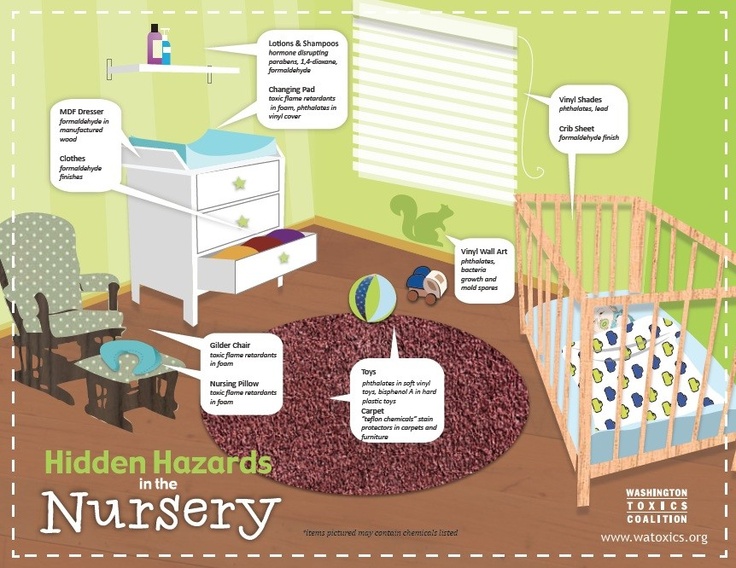
In the Living Room and Bedroom
Even the furnishings of the typical American home can be harmful. Fabrics that are labeled “wrinkle-resistant” are usually treated with a formaldehyde resin. These include no iron sheets and bedding, curtains, sleep wear, any woven fabric, but especially polyester/cotton blends, marketed as “permanent press” or “easy care.” More modern furniture is made of pressed wood products emits formaldehyde and other chemicals. Carpeting is usually made of synthetic fibers that have been treated with pesticides and fungicide. Many office carpets emit a chemical called 4 phenylcyclohexene, an inadvertent additive to the latex backing used in more commercial and home carpets, which is thought to be one of the chemicals responsible for “sick” office buildings.
In the Bath
Numerous cosmetics and personal hygiene products contain hazardous substances. Examples: cresol, formaldehyde, glycols, nitrates/nitrosamines and sulfur compounds in shampoos; butane propellants in hair spray (replacing carcinogenic methylene chloride), as well as formaldehyde resins; aerosol propellants, ammonia, formaldehyde, triclosan , aluminum chlorhydrate in antiperspirants and deodorants’ glycols, phenol, fragrance, and colors in lotions, creams, and moisturizers.
In the Studio or Hobby Room
Although legislation controlling may of the dangerous ingredients in hobby materials has recently been passed, exposure to certain art materials remains a health risk. Dangerous chemicals and metals include: cadmium in silver solders, pigments, ceramic glazes and fluxes; chromium in paint pigments and ceramic colors; manganese dioxide in ceramic colors and some brown oil and acrylic paint pigments; cobalt in some blue oil and acrylic paint pigments; formaldehyde as a preservation in many acrylic paints and photographic products; aromatic hydrocarbons in paint and varnish removers, aerosol sprays, permanent markers, etc.; chlorinated hydrocarbons (solvents) in ink, varnish, and paint removers, rubber cement, aerosol sprays; petroleum distillated (solvents) in paint and rubber cement thinners, spray adhesive, silk screen inks; glycol ethers and acetates in photography products, lacquer thinners, paints, and aerosol sprays.
In the Garage
A number of dangerous substances are frequently present, including paint, paint thinner, benzene, kerosene, mineral spirits, turpentine, lubricating/motor oils, and gasoline. Hazards among them include these chemicals: chlorinated aliphatic and aromatic hydrocarbons in paint thinner can cause liver and kidney damage; petroleum hydrocarbons, an ingredient of gasoline, motor oils, and benzene, are associated with skin and lung cancer; mineral spirits in oil based paint are a skin, eyes, nose throat, and lung irritant. High air concentrations can cause nervous system damage, unconsciousness and death; ketones in paint thinner may cause respiratory ailments; vary according to specific form of the chemical; ketones and toluene in wood putty; toluene in highly toxic, may cause skin, kidney, liver, central nervous system damage; may damage reproductive system.
In the Garden Shed
Pesticides, one of the most important single hazards in the home. Around 1,400 pesticides, herbicides, and fungicides are ingredients in consumers products. Combined with other toxic substances such as solvents, pesticides are present in more than 34,000 different product formulations.
On the Patio
Charcoal lighter fluid contains petroleum distillates. Besides being flammable and imparting a chemical taste to food, some petroleum distillates contain benzene, a known human carcinogen.
Safe Substitutes for Household Toxics
Until World War II and the zenith of the Chemical Age that followed war-related research, householders use a limited number of simple substances to keep most objects in the house clean, order-free, and pest-free. Soap, vinegar, baking soda, washing soda, ammonia, borax, alcohol, cornstarch, and certain food ingredients were used to lift out spots and stains, deodorize, polish wood or metal, disinfect, scrub, repel pests, clean pets, wash and starch clothes, and to perform countless other household tasks. Simple cosmetic preparations kept hair and skin supplied with the aid of ingredients such as: eggs, oil , clay, vinegar, and herbs.
The garden was fertilized and pests were kept down with naturally occurring substances. Weeds were weeded by hand even though some natural pesticides, like nicotine and rotenone, were indeed toxic to humans, they were not persistent in the environment. They degrade soon after application. Pyrethrum, a pesticide derived from a variety of chrysanthemum, which is nontoxic to mammals, controlled a wide spectrum of pests. Although it is till widely used, it is usually mixed with other chemicals to increase its potency.
Buildings of the past were made with wood, brick, stone, glass, plaster, and cement. Furniture was made of solid wood, oiled to keep it polished. Rugs or carpets were made of wool or cotton. Insulation was built in by making walls thick, and roofing was constructed from wood shingles or tiles of clay or stone. Walls were plastered. Windows were made to be opened, so at least in good weather there was plenty of natural ventilation.
But, toxic materials also were present in homes of the past. Not knowing enough about their hazards, housewives used such chemicals as: arsenic, lead , and mercury to perform certain household chores. Interior and exterior paints were often made with lead; many American children are still living with the legacy of lead poisoning caused by eating chips of leaded paint. Asbestos, called a miracle mineral, when its fire resistant properties were discovered, is now known to be a cancer causer that contaminates hundreds of thousands of residences, schools, and other buildings in this country.
We do not need to return to the ways of the past to avoid exposure to house toxics, but we can take some lessons from the past for a better future. How can we do this?
But Safe Substitutes. For example, search for a soap based garden insecticide (at least one national brand is available) instead of chemically based ones. Appendix 1 for sources of safe substitutes.
When in Doubt, Leave it Out. In cases where there is no effective safe substitute for a toxic product, reevaluate how important the goal really is. Must you absolutely get rid of all insects in your garden? or can you live with some chewed up leaves? If the goal is absolutely imperative, such as ensuring that termites do not invade your house, it is important to educate yourself thoroughly. You may have more healthful alternatives than your local pest company tells you.
Safe Substitutes in the Kitchen and Bath
One shelf of simple and relatively safe ingredients can be used to perform most home cleaning chores. All that’s needed is a knowledge of how they work and how different ingredients should be combined to get the cleaning power needed for a specific job.
Baking Soda is sodium bicarbonate. It has a number of useful properties. It can neutralize acid, scrub shiny materials without scratching, deodorize, and extinguish grease fires. It can be used as a deodorizer in the refrigerator, on smelly carpet, on upholstery and on vinyl. It can help deodorize drains. It can clean and polish aluminum, chrome, jewelry, plastic, porcelain, silver, stainless steel, and tin. It also softens fabrics and removes certain stains. Baking soda can soften hard water and makes a relaxing bath time soak; it can be used as an underarm and as a toothpaste, too.
Borax is a naturally occurring mineral, soluble in water. It can deodorize, inhibit the growth of mildew and mold, boost the cleaning power of soap or detergent, remove stains, and can be use with attractants such as sugar to kill cockroaches.
Cornstarch, derived from corn, can be used to clean windows, polish furniture, shampoo for carpets and rugs, and starch clothes.
Isopropyl Alcohol is an excellent disinfectant.
Lemon Juice, which contains citric acid, is a deodorant and can be used to clean glass and remove stains from aluminum, clothes, and porcelain. It is a mild lightener or bleach if used with sunlight.
Mineral Oil, derived from seeds, is an ingredient in several furniture polish and floor wax recipes.
Soap (NOT detergent) is made in several ways. Castle soap can be used as a shampoo or as a body soap. Olive oil based soap is gentlest to the skin. An all purpose liquid soap can be made by simple dissolving the old ends of bar soap (or grated slivers of bar soap) in warm water.
Steel Wool is an abrasive strong enough to remove rust and stubborn food residues and to scour barbeque grills.
TSP is trisodium phosphate, a mixture of soda ash and phosphoric acid. TSP is toxic if swallowed, but it can be used on many jobs, such as cleaning drains or removing old paint, that would normally require much more caustic and poisonous chemicals, and it does not create any fumes.
Vinegar is made from soured applied juice, grain, or wine. It contains about 5 percent acetic acid, which makes it a mild acid. Vinegar can dissolve mineral deposits, grease, remove traces of soap, remove mildew or wax buildup, polish some metals, and deodorize. Vinegar can clean brick or stone, and is an ingredient in some natural carpet cleaning recipes. Use vinegar is normally used in a solution with water, but it can be used straight.
Washing Soda or Salt Soda is a sodium carbonate decahydrate, a mineral. It can cut stubborn grease on grills, broiler pans, and ovens. It can be used with soda instead of laundry detergent, and it softens hard water. These items are available from drug and chemical supply stores.
For common household tasks, try these nontoxic strategies using the above ingredients:
Freshen Air by opening windows and doors for a short period; distribute partially filled dishes of vinegar around the kitchen to combat unpleasant cooking odors; boil cinnamon and cloves in a pan of water to scent the air; sprinkle 1/2 cup borax in the bottom of garbage pails or diaper pails to inhibit mold and bacteria growth that can cause odors; rub vinegar on hands before and after slicing onions to remove the smell; use bowls of potpourri to give inside air a pleasant scent.
All purpose cleaner can be made from a vinegar and salt mixture or from 4 tablespoons baking soda dissolved in 1 quart warm water.
Disinfectant means anything that will reduce the number of harmful bacteria on surface. Practically no surface treatment will completely eliminate bacteria. Try regular cleaning with soap and hot water,or mix 1/2 cup borax into 1 gallon of hot water to disinfect and deodorize. Isopropyl alcohol is an excellent disinfectant, but use gloves and keep it away from children.
Drain cleaner. Try a plunger first, though not after using any commercial drain opener. To open clogs, pour 1/2 cup baking soda down drain, add 1/2 cup white vinegar, and cover the drain. The resulting chemical reaction can break fatty acids down into the soap and glycerine, allowing the clog to wash down the drain. Again, do not use this method after trying a commercial drain opener the vinegar can react with the drain opener to create dangerous fumes.
Floor cleaner and polish can be as simple as a few drops of vinegar in the cleaner water to remove soap traces. For vinyl or linoleum, add a capful of baby oil to the water to preserve and polish. For wood floors, apply a thin coat of 1:1 oil and vinegar and rub in well. For painted wooden floors, mix 1 teaspoon washing soda into 1 gallon hot water. For brick and stone tiles, use 1 cup white vinegar in 1 gallon water and rinse with clear water.
Metal cleaners and polishes are different for each metal– just as in commercial cleaners. Clean aluminum with a solution of cream of tartar and water. Brass may be polished with a soft cloth dipped in lemon-and baking soda solution, or vinegar- and solution. Polish chrome with baby oil. vinegar, or aluminum foil shiny slide out. Clean tarnished copper by boiling the article in a pot of water with 1 tablespoon salt and 1 cup white vinegar, or try differing mixtures of salt, vinegar, baking soda, lemon juice, and cream of tartar. Clean gold with toothpaste, pewter with a paste of salt, vinegar, and flour. Silver can be polished by boiling it in a pan lined with aluminum foil and filled with water to which a teaspoon each of baking soda and salt have been added. Stainless steel can be cleaned with undiluted white vinegar.
Oven cleaner. Sprinkle baking soda on moist surface and scrub with steel wool, or use Arm & Hammer Oven cleaner, declared nontoxic by Consumers Union.
Scouring power can be made from baking soda or dry table salt. Or try Bon-Ami Cleaning Power or Bon-Ami Polishing cleaner.
Toilet bowl cleaner can be made from straight bleach (do NOT mix with any other substance except water), baking soda and vinegar, or borax and lemon juice.
Tub and tile cleaner can be as easy as rubbing in baking soda with a damp sponge and rinsing, or wiping with vinegar first and following with baking soda as a souring powder.
Window and glass cleaner is easy with these tips: to avoid streaks, don’t wash windows when the sun is shining. Use a vinegar-and -water solution, cornstarch-vinegar-and-water solution, or lemon juice and water. Wipe with newspaper unless you are sensitive to the inks in newsprint.
Safe Substitutes for Laundry Products
Detergent is specially adapted to clean synthetic fabrics, and it has the added advantage of not leaving soil residues even in hard water. However, detergents are generally derived from petrochemicals, and people are sensitive to these compounds may find it hard to tolerate detergents or the fragrances they are scented with. In addition, most detergents contain phosphates, which build up in streams, lakes and upset the natural balance in waterways, causing blooms of algae which deplete the dissolved oxygen fish need to live. Some detergent may even contain naphthalene or phenol, both hazardous substances.
An effective alternative to using detergents is to return to soap. Soap is an effective cleaner for natural fabrics, leaving such items as diapers softer than detergent can. For cotton and linen, use soap to soften water. A cup of vinegar added to the wash can help keep colors bright (but Do NOT use vinegar if you are using bleach — the resulting fumes are hazardous). One half to three quarters of a cup of baking soda will leave clothes soft and fresh smelling. Silks and wools may be hand washed with mild soap or a protein shampoo, down or feathers with mild soap or baking soda.
For synthetic fabrics or blends (including most no-iron fabrics), there are biodegradable detergents on the market that do not contain phosphates, fragrances, or harsh chemicals. They are often imported from Europe and are available at health food stores or by mail order.
Safe Substitutes for Personal Hygiene and Cosmetic Products
We use cosmetics and hygiene products for a fairly narrow range of reasons: to keep skin moist and supple; to clean hair without stripping it of natural oils; to eliminate unpleasant body or mouth orders; to prevent skin oiliness and clogged skin pores; and simply for the pleasure of relaxing and pampering ourselves with body care or facial care treatments. The following ingredients can help achieve these purpose without the use of toxic additives, synthetic fragrances, or artificial colorings: Moisturizers and conditioners egg yolk, milk, yogurt safflower oil (for light moisturizing), olive oil (for dry skin or hair), water, oatmeal, jojoba oil.
Astringents/after shaves: witch hazel, diluted isopropyl alcohol.
Deodorants: baking soda, white clay, deodorant crystals.
Toothpastes: baking soda, salt.
Soaps cleaning agents: castle soap, olive oil based soap.
Perfumes: essential oils provide nontoxic fragrances that can be used to scent shampoo, bath soaks, or even, in the case of peppermint, to flavor toothpaste.
Although it’s easy to make healthful alternatives to many cosmetic and hygiene products, any natural foods store has a fairly wide selection of shampoos, moisturizers, toothpastes, after shaves, soaps, and bath products that do not contain the harmful ingredients in many commercial preparations.
Safe Substitutes for Art and Hobby Materials
There are some nontoxic choices that can be made when buying art or craft supplies, but because some techniques require certain materials, minimizing exposure may be the best you can do.
In painting and print making, ready-mixed water-based paints or links can be used. If you must be exposed to paint dust, use toxic dust respirator approved by the National Institute for Occupational Safety and Health (NIOSH). Ventilate the space thoroughly whenever using any kind of solvents, whether in painting or in lithography, intaglio, or photoetching. Solvents also should be avoided while pregnant.
Enamels are usually lead-based, and can contain other toxic metals such as cadmium and nickel. Use lead-free-enamels whenever possible, and make sure kilns are vented outside.
In pottery as well, outside vented kilns are important, as is a careful choice of materials–most potters know to avoid lead glazes and lead frits, but many don’t know that flint, feldspars, fluorspar, and some compounds containing barium, lithium, manganese, or nickel can also be toxic. Children should avoid the pottery studio, as they are more highly susceptible to the toxics use in pottery than are adults.
Photography presents a number of toxic hazards which are difficult to avoid. Minimize exposure to photo chemical by using gloves, mixing chemicals in a mixing box with holes in the sides for gloved hands, and providing adequate ventilation. The Health and Welfare Office of Canada suggests at least 10 room air changes per hour. Children under 12 should avoid the darkroom.
Safe Substitutes for Pesticides in Home and Garden
Against pests in the home, the best offense is a good defense. The first step is to make the house–especially the kitchen–unattractive to insects by cleaning up food spills immediately, keeping hard-to-reach areas reasonably clean, and removing clutter that can hide pests. Store foods attractive to pests, such as flour, in the refrigerator. water attracts pests, such as flour, in the refrigerator. Water attracts pest, so leaky faucets and pipes should be promptly repaired. Doors and windows should be well screened. Cloths should be regularly cleaned and aired, and properly stored in paper or cardboard boxes sealed against moths.
A Number of nontoxic substances can be used to repel insects, generally, they are highly fragrant or volatize herbs or spices powdered red chill peppermint, bay leaves cloves citrus oil lavender, rosemary, tobacco, peppercorns, and cedar oil can repel various types of insects.
Insects can be trapped and killed without resorting to dangerous chemicals:
Generally a poison nontoxic to humans is mixed with a food that insects find attractive, and spread in the infested area. example are oatmeal (attractive) and plaster-of Paris (poisonous), and cocoa powder and flour (attractive) and borax (poisonous). Old-fashioned flypaper–not a hanging strip of insecticide — is an effective trap. For specific house pests, try these solutions:
For ants: sprinkle powdered red chill pepper, paprika, dried peppermint, or borax where the ants are entering.
For beetles: kill manually when you see them.
For cockroaches: Mix by stirring and sifting 1 ounce TSP, 6 ounces borax, 4 ounces sugar, and 8 ounces flour. Spread on floor of infested area. Repeat after 4 days and again after 2 weeks.
For fleas: Feed pet brewer’s yeast in powder mixed with food or by tablets.
For moths: Air clothes well in the sun; store in airtight containers, and scatter sachets of lavender, cedar chips, or dried tobacco in with clothing.
For rats and mice: Again, prevention may be the best cure. Holes in exterior or interior walls should be closed off and storage spaces kept orderly. Garbage should be kept tightly covered. To catch rodents, the most efficient system is the oldest: a cat. next best are mouse and rat traps.
For termites: Any wooden parts of the house should be at least 18 inches off the ground, as subterranean termites cannot tolerate being exposed to air and light. They have to build easily visible mud tunnels to get at available wood. However, most existing houses have only about an 8 inch clearance between wooden parts and the ground, which makes the wood vulnerable. Metal shields may help discourage termites, but they cannot prevent infestations.
To treat existing termite infestations, there are a few nontoxic alternatives: the “Extermax” system, available in California; and the use of a particular species of nematodes to eat them, a system available from N-Viro Products, Ltc.
For gardens: In hardware stores, look for new brands of safer insecticides that use soap-and water solution to get rid of aphids, or pyrethrum for a number of applications. As more and more people understand the hazards of organic chemicals in the home, market pressure will encourage the introduction of safer products.
Several naturally derived pesticides exist which , in some cases, are less toxic to humans the organophosphates, carbamates, or organochlorines now widely used. Nicotine is the most toxic poisonous both to humans and to other mammals, as well as to birds and fish. It is not available commercially for home gardeners because of its hazards. Rotenone, moderately toxic to humans, kill a wide range of insects; however, it should never be used near a waterway, as it is very toxic to fish. Ryania kills only a few species, including the European corn borer, codling moth, and cranberry fruit worm. Pyrethrum is relatively nontoxic to humans and only slightly toxic to aquatic life, so it may be the best choice for home gardens. Sabadilla controls lice, leafhoppers, squash bugs, striped cucumber beetles, and chinch bugs. It has low toxicity to wildlife, but it may be toxic to bees.
For lawns: herbicides are most often used to kill “unsightly” weeds in gardens and yards, and by lawn care companies to maintain the perfect appearance of turf around homes and on lawns and golf courses. Basically the safe alternative to herbicides is simple: pull weeds by hand. There are no really safe herbicides.
Safe Substitutes for the Patio
A simple and much more effective alternative exists for the charcoal lighter fluid used to start the backyard barbeque. A metal, chimney-pipe cylinder, which holds the charcoal above a burning piece of newspaper and relies on the air flow under the charcoal to quickly bring it to glowing hot, is available at most discount stores. It readies the charcoal for cooking much more quickly without the chemical taste and fire hazard of lighter fluid.
 What’s getting lost in translation in your life? See if there’s another way you express yourself today. When you start with a heartfelt offering, you never know where life may take you next. True art selects and paraphrases, but seldom gives a verbatim translation.