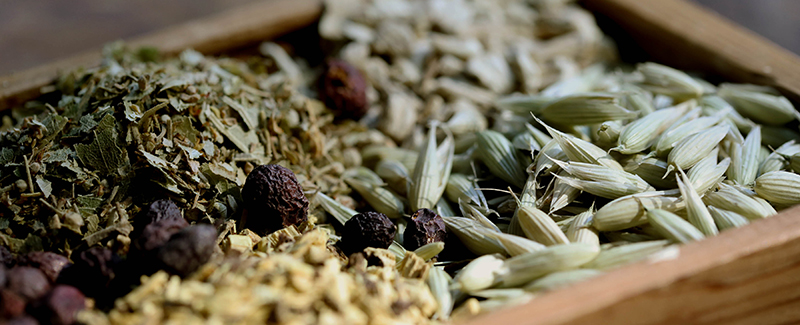
In Traditional Chinese Medicine, summer is the time of Fire and Heart. Support movement, activity, expression and joy with Gan Mai Da Zao Tang. […]
Source: Traditional Chinese Medicine (TCM) Formula for Summer Wellness
In Traditional Chinese Medicine, summer is the time of Fire and Heart. Support movement, activity, expression and joy with Gan Mai Da Zao Tang. […]
Source: Traditional Chinese Medicine (TCM) Formula for Summer Wellness
Dear friends, Enjoy our Live Weekend stream. Listening to meditation/relaxing music has no side effects. There have been numerous studies that prove to be helpful to enhance health, focus and concentration, and many more. But none have ever reported any adverse side effects on you. Moreover it doesn’t even cost you much. It can be purchased inexpensively from music stores, or simply downloaded from the internet, which is often free. Choosing the right music can be tricky task though. While choosing your music, it is better to pick something at least an hour long. Rain sounds, wind sounds, chiming of bells, or music with flutes or simply a chant of “Om” can help you relax. Listening to something that is too loud may spur your mind and body rather than helping you relax.

By Peggy Riccio

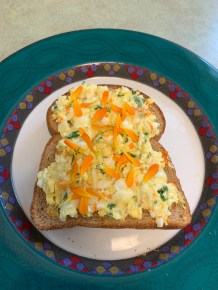
During this time of “unintentional pausing” I have been diving even deeper into the world of herbs. I am growing a wider variety of herbs, watching herbal webinars and cooking demonstrations, and experimenting in the kitchen. Recently, I learned that flowers from culinary herbs are edible. “Edible” in this case simply means one can eat them — not that they are necessarily “tasty.” However, because the flowers are edible, regardless of their taste, they can be used for botanical color and decoration. Think of a painter’s palette with each paint symbolizing a culinary herb in your garden. Think of how that flower can add color and interest to your meals and beverages. Imagine how the flower would look whole, separated, or even minced. The following are great for adding botanical color.
View original post 568 more words

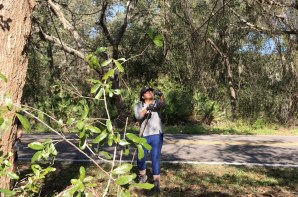 While on a volunteer trip in Orlando, Florida, I was desperate for bug spray. In the middle of December, the mosquitoes nibbled on any exposed skin they could find, leaving me and the rest of the unprepared Maryland native participants with patches of red swollen bumps on our ankles and arms. Our guides, a retired couple who volunteers with the state parks, became our heroes on the second day of the trip. During our lunch break, the husband saunters over to us, carrying a branch from a nearby shrub and states, “This is spicebush. Crush its leaves and rub it onto your arms. Keeps the bugs away and helps the itch.” Immediately, we passed the branch around, ripped the leaves off the branch, crumpled them, and rubbed the lemon-peppery scented oil onto our skin.
A couple years later, I would learn that spicebush (Lindera benzoin)…
View original post 547 more words


Be consistent right now. Keep the visualizations going. Keep the affirmations going. Keep being positive about everything. Every moment counts. Don’t judge yourself or even judge the timing of everything. Enter a state of gratitude, celebration, and completion of your manifestations. Everything is already yours. What you think about belongs to you. What you feel is making its way towards you. What you want wants you. What you give your energy to grows and amplifies in your awareness. Stay focused on purpose. Let what goes, go. Let what comes, enter. Just keep speaking, thinking, and feeling power over your life. Nothing is complicated when you learn to just breathe, believe, and trust that everything is already happening for you. You just need to keep shinning from within and being patient with yourself. Be loving to yourself. You are very special and you being here right now shows that your life means so much more than what you can understand sometimes. Start noticing the beauty about existence. The small things like your aliveness and your energy. Your mind. Your abilities. The billion things happening every second for you that doesn’t require your conscious attention. You are being supported so feel light today. Feel warmth and love. Feel energized to be your greatest through recognizing it and allowing it now. Keep going.

Atītaṃ nānusocanti,
nappajappanti nāgataṃ,
paccuppannena yāpenti,
tena vaṇṇo pasīdati.
They do not lament over the past,
they yearn not for what is to come,
they maintain themselves in the present,
thus their complexion is serene.
Saṃyutta Nikāya 1.10
Gemstones of the Good Dhamma, compiled and translated by Ven. S. Dhammika


Pineapple Upside Down Cake with moist yellow cake and caramelized pineapple and cherries. This classic dessert is pretty as it is tasty, and always a hit! […]
Source: Pineapple Upside Down Cake from Scratch – Kawaling PInoy
By Debbie Boutelier, HSA Past President & GreenBridgesTM Chair

It’s summer and the living is easy for our pollinators. There is an abundance of blooming plants from which to choose. A little here, a little there, moving pollen around from plant to plant and increasing the abundance. It’s glorious now, but come later in the year, it will not be as easy. Our little miracle workers will be struggling to get enough to eat. I’m also reminded as I watch these miracle workers in action that all of this is threatened, and without our help a lot of the abundance may disappear forever.
What can we do to ensure that these summer miracles continue? We can construct GreenBridgesTM that will provide places of respite and offer safe passage for our native plants and our pollinators. The Herb Society of America offers a program to do just that. Get…
View original post 554 more words

I rarely post anything political on this blog. That’s not what it’s for. But sometimes—like when your city has been invaded by goon squads kidnapping citizens—it’s hard to write about anything else. And so, for a lead-in to today’s post about ancient Egyptian sexuality and Isis, I am proud to introduce you to “Naked Athena.”
THIS. This is why I love this city. This is the power of a vulnerable, naked human body. This is the power of Art.

Now, here’s another photo of the same kind of vulnerable power:

View original post 1,404 more words
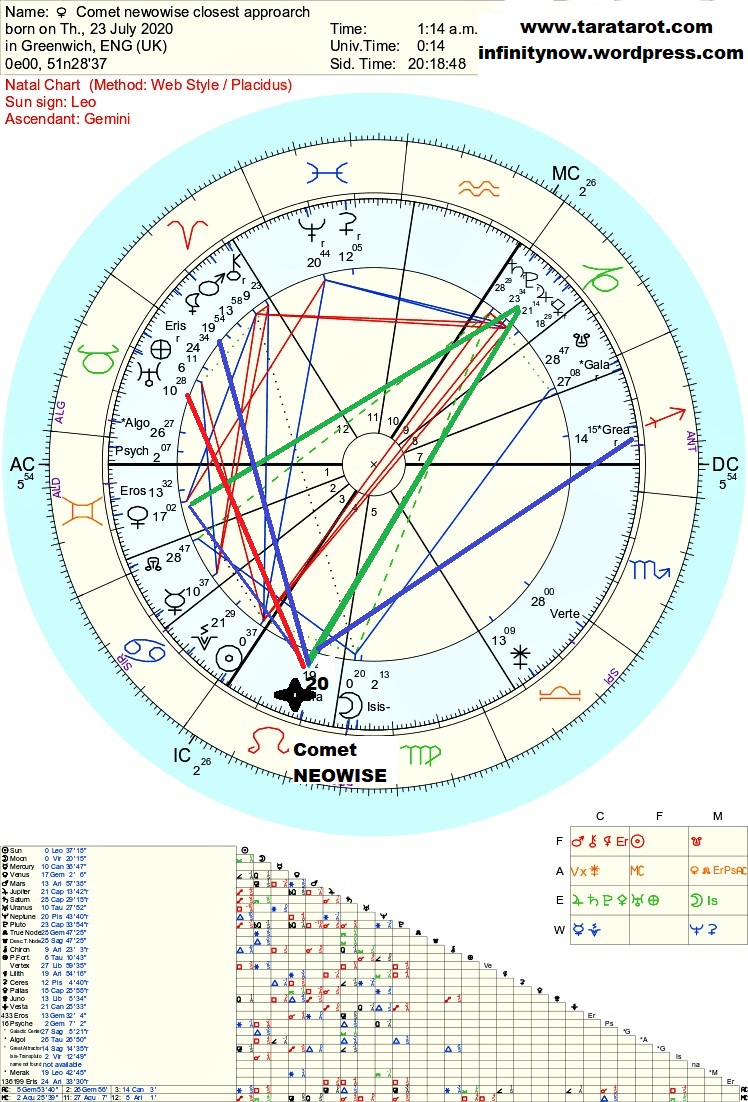

Tonight July 23 comet Neowise makes its closest approach to the earth at 01:14 UT/GMT, at a distance of 0.69 AU (103 million km; 64 million mi) while located in the constellation of Ursa Major the Big Dipper or Bear.
For the next few days with the naked eye Comet, Neowise will be visible then fading as it appears closer to the sun. It will still be visible with binoculars but then it’s by bye for another 6,000+ years until it returns again.
The Birth chart of the closest approach on July 23
What stands out as Comet Neowise at 20 degrees LEO conjunct Fixed Star MERAK in the Side of the Great Bear, the second-largest star of this constellation.
“Fixed star Merak is like Mars (violent death, ultimate ruin by folly or pride. If rising, wealth, power, courage, generosity, ingenuity, rise to authority, martial success, subject to cuts, wounds…
View original post 624 more words



Yo ca mettaṃ bhāvayati
Appamāṇaṃ paṭissato
Tanū saṃyojanā honti,
Passato upadhikkhayaṃ.
For one who mindfully develops
Boundless loving-kindness
Seeing the destruction of clinging,
The fetters are worn away.
Itivuttaka 1.27
The Udāna and the Itivuttaka, trans. John D. Ireland



Kāyena saṃvaro sādhu; sādhu vācāya saṃvaro;
manasā saṃvaro sādhu. Sādhu sabbattha saṃvaro.
Sabbattha saṃvuto bhikkhu
sabbadukkhā pamuccati.
Good is restraint in the body; good is restraint in speech;
good is restraint in thought. Restraint everywhere is good.
The monk restrained in every way
is freed from all suffering.
Dhammapada 25.361
The Dhammapada: The Buddha’s Path of Wisdom, translated from Pāli by Acharya Buddharakkhita


Cakkhumā,
visamānīva,
vijjamāne parakkame.
Paṇḍito jīvalokasmiṃ,
pāpāni parivajjaye.
A person with good eyes,
encountering a treacherous, uneven place,
would try hard to avoid it.
A wise person, in the world of life,
should avoid evil deeds.
Udāna 5.43
Translated from Pāli by Thanissaro Bhikkhu




Aloha e Hauʻōli lā Pōʻalūa kākōu. Mei ʻo kā hopena ʻo kāu mau moeʻuhane a me kōu mau hihīʻo. ʻŌ kā maluhīa nō me ʻoe.
Hello and Happy Tuesday to you all. May all your dreams and visions come true. Peace be with you.

Hau’ōli Aloha Lāʻpūle ka pōʻe ʻapau. Nō ko ʻianei manāʻo ʻia ʻōukōu a pau i kā ʻĀiwa lā ʻe hele aku, ʻāe hana hou ‘aoʻao me ko ʻōukōu aloha keiki. Noho malaria kōʻu mau makamaka a me ʻŌhana.
Happy aloha Sunday, everyone. Wishing you all a fantastic day. Go out and create new cherished memories with loved ones. Stay safe, my friends and family.

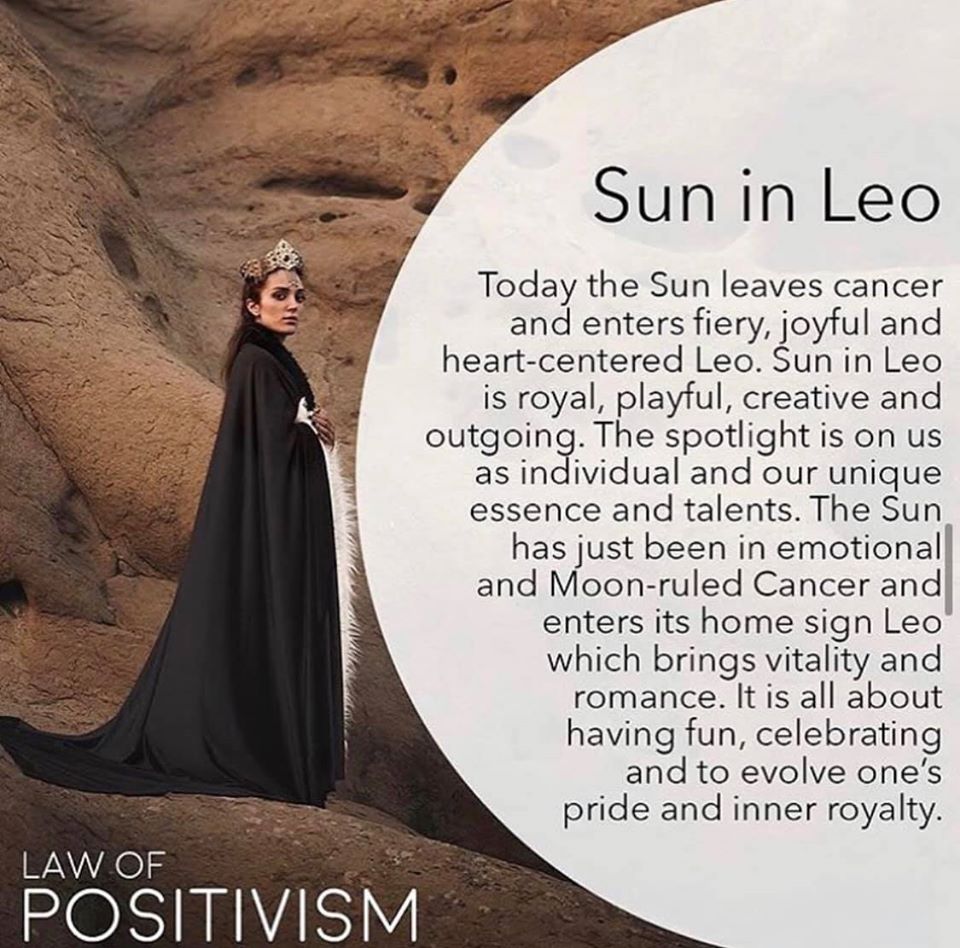
July 20 2020 at 10:33 am PDT is a new Moon in Cancer, the second Cancer new Moon in a row. This is because 2020 is a leap year with two additional lunar cycles. There have been two Metal Snake months in May and June in Chinese astrology, and two Cancer new Moons in June and July in Western astrology.
The Moon is ruled by Cancer, a very comfortable sign for the Moon. Cancer rules the 4th house of home, family, and nurturing. Continue to take care of self and others, focus on family connections, and creative ways to nurture.
This new Moon begins Water Sheep month in Chinese astrology. Sensitive Water Sheep is a kind and gentle soul, bringing a peaceful and gracious tone to this lunar month. Sheep is a symbol of love and peace, making this the time for healing after the exciting yet chaotic energy of…
View original post 170 more words
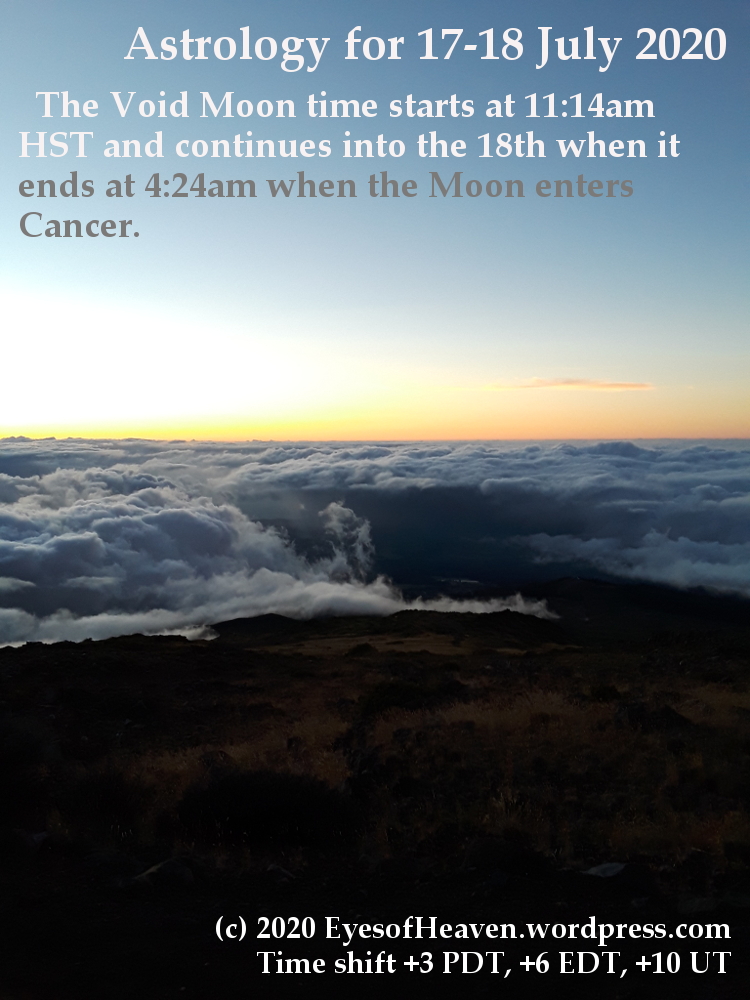
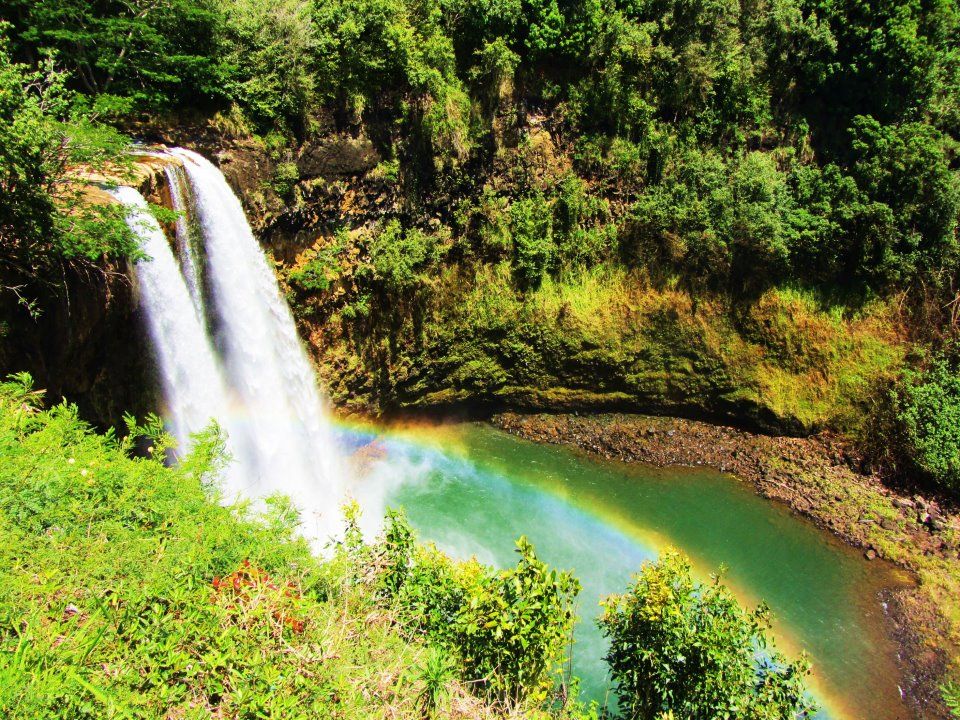
View is from an overlook on Haleakala, Maui. Looking down about 9,000′ to the north shore.

So I thought I’d take some time to write about some of the herbs that I feel will be important upon exposure to CoV-2, but first, to help put some of this in perspective.

Mexican elder leaf (Sambucus mexicana, syn. S. cerulea subsp. mexicana, syn. S. cerulea, etc.)
Elder s one that is often brought up in any discussion of viruses. Not only does elder help prevent attachment through inhibition of neuraminidase, but it also protects ACE-2 making it exceptionally important at the early stages of prevention and limiting the initial impact of the virus. Another aspect of the elder’s effect on humoral immunity is to increase T cell production. This is important due to the virus’ effects on the dendritic cells of the lungs as the progression advances. This hinders…
View original post 1,386 more words
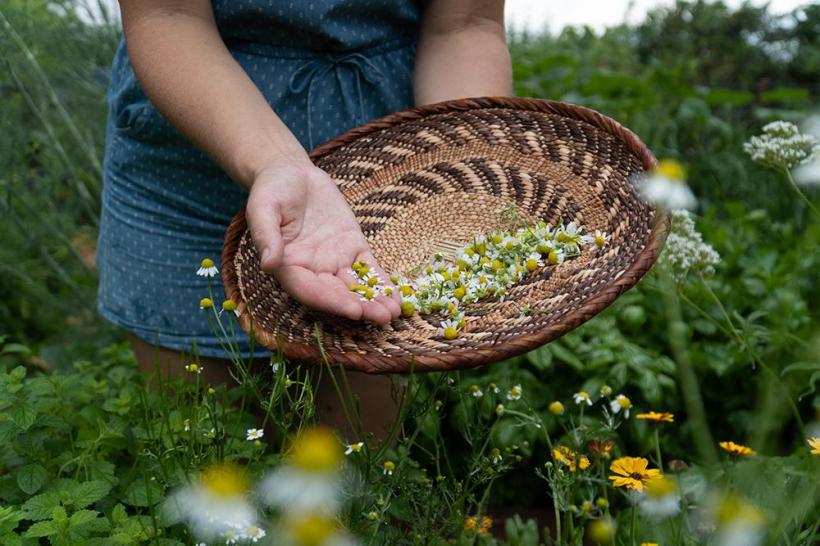
That’s the promise I made at the start of the season. It will be a daily ritual, a practice to keep me in tune with the growth and health of the garden, and a sure way not to miss a bit of garden gossip. Like a bustling city full of honking horns, buses whizzing by, and street conversations half-heard, there is endless activity to observe. Cucumber beetles rapidly working to destroy the cucumber crop. Birds ravishing the cherry tree singing loudly to their friends to join in on the feast. Earthworms patiently turning the soil underfoot. Never a dull moment, but you need to go to the garden every day to keep up.
That has been my biggest lesson gardening this year. If you’re not there to enjoy the first ripe strawberries, the squirrels will be happy to take on that…
View original post 1,040 more words
Attā hi attano nātho,
attā hi attano gati.
Tasmā saṃyamamattānaṃ
assaṃ bhadraṃva vāṇijo.
One is one’s own protector,
one is one’s own refuge.
Therefore, one should control oneself,
even as a trader controls a noble steed.
Dhammapada 25.380
The Dhammapada: The Buddha’s Path of Wisdom, translated from Pāli by Acharya Buddharakkhita

Kodhaṃ chetvā sukhaṃ seti,
kodhaṃ chetvā na socati.
Kodhassa visamūlassa
madhuraggassa brāhmaṇa;
vadhaṃ ariyā pasaṃsanti
tañhi chetvā na socatī.
Slay anger and you will be happy,
slay anger and you will not sorrow.
For the slaying of anger in all its forms
with its poisoned root and sweet sting —
that is the slaying the nobles praise;
with anger slain one weeps no more.
Saṃyutta Nikāya 1.187
Gemstones of the Good Dhamma, compiled and translated by Ven. S. Dhammika

The Moons in GEMINI and its all about the communication. Mercury is newly straightforward from turning Direct July 12. So we are just getting up to speed.
Moon sextiles CHIRON in ARIES the wounded healer making it easy to whisper about what ails you.
Moon sextiles MARS in ARIES
Talking about impatience, anger, frustration, feeling imprisoned by Covid-19 restrictions, vent, let off some steam, debate. Hot argument day.
Moon conjuncts VENUS
VENUS is in her beautiful evening star formation watch her live here
Talking romantically with the Moon and with another Star as she loves to have two lovers, admirers, conversations, things to do at the same time.
Use your Charm its off the charts right now. Venus is at Her beautiful evening Star journey. Romance and flirty sparks will fly
NOTE the MOON will be OUT OF BOUNDS JULY 18-20
Expect a wild chaotic emotional ride July 18-20 when…
View original post 67 more words

Find Your Magic
Tarot Readings, Inspiration, and Self-Empowerment
Making life on earth magick one moon phase at a time.
Astrologer ~ Mystic ~ Writer
of the Collegium Spiritus Sancti, a Golden Dawn Society
An affiliate of the Alpha et Omega Order of Melchizedek
All Knowledge Is Not Contained In Only One School
Connecting the grant community to #LearnGrants
Channelings & Articles
Magic Spell Books & Grimoires
Native Hawaiian Language Revitalization
Organic Herbs, Herbals, Sustainable Gardening
Mother Nature: Feeding The Mind, Body & Soul, with Food, Medicine & Skincare.
"Inheritor of a Dying World, we call thee to the Living Beauty. Wanderer in the Wild Darkness, we call thee to the Gentle Light..."
Time is the most important thing we've been given
Embracing the Divine Within.
"...That I should bear witness to the truth." - John 18:37 // David E. Robinson, Publisher
Increasing Consciousness Awareness