Category: Newsletter
Recipe — Amazing Poached Eggs!

Serves: One egg per person
Ingredients:
– One and a half Tbsp. oil
– Three minced garlic cloves
– One chopped small onion
– Two cups crushed tomato
– One Tbsp. Worcestershire sauce
– 1/2 tsp cayenne pepper
– 1/2 tsp cumin
– 1/2 tsp paprika
– One tomato diced
– 1/4 cup of parsley
– Three room temperature eggs
– Chopped parsley
– Feta cheese
Here’s how to make it:
Heat oil over medium heat, add garlic and onions and cook until onions have softened and garlic is fragrant. Add the crushed tomatoes, Worcestershire sauce, cayenne pepper, cumin and paprika. Stir to incorporate. Add dice tomato and cook until sauce has thickened. Using a spoon, create wells for the eggs, crack an egg into each well. Cover and cook for another five to eight minutes, until the egg whites are cooked but the yolk is still a bit runny. Garnish with parsley and feta cheese. Enjoy!
Show less

I’m NEVER Going To Buy Cough Medicine Again… I Wish I Knew This Before!
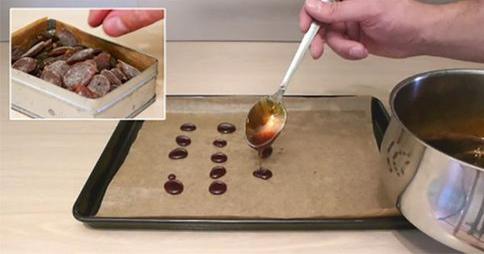 Never Buy Cough Medicine …We all know that coughs and colds are most common in winter season and unfortunately you cannot avoid them…here is how…RECIPE
Source: I’m NEVER Going To Buy Cough Medicine Again… I Wish I Knew This Before!
Mid-Afternoon Respite with Alan Watts and the Humpback Whales
Viral Alternative News: Neosporin Causes Cancer And Weakens Your Immune System. Make Your Own Natural First Aid Ointment

How To Begin A Meditation Habit
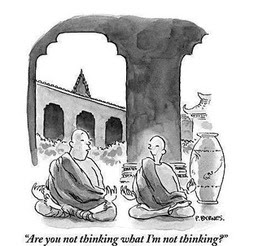
Meditation is something that we’re constantly being encouraged to use. Every self-help guru, every highly successful individual and even many athletes trumpet its many benefits and the research too seems to back-up its value.
So why don’t more people practice it?
The main problem for most of us is that it’s really rather daunting, obtuse and complicated. Meditation is ultimately about reaching enlightenment and an inner peace right? Sounds a bit heavy for a Friday evening!
The real question for many people then is where to start. This article will provide you with a good starting point and help you with your first meditative experience. From there, you should feel a little more confident to try it again in future…
Some Tips to Begin With
The first tip is to set yourself a timer for 10 minutes. 10 minutes is a short enough amount of time that most of us will be able to fit it into our busy schedules and by setting an alarm you prevent yourself from having to keep checking the clock to see how much longer you have – this is not conducive to meditation as you might imagine.
The next tip is to sit comfortably in a chair or cross legged. You don’t want to lie down for fear of falling asleep but you should be comfortable.
Focus
The next thing you’re going to do is to focus. This can mean focusing on your breath, or repeating a mantra (a word of your choice) over and over. This will be your ‘anchor’ and you will come back to this whenever your mind starts to wander.
If you struggle with these anchors, another option is to watch a flame. Lighting a candle and watching it can be a surprisingly effective form of meditation.
Just ‘Be’
Now just ‘be’ for 10 minutes. The mistake many people make here is to try and force themselves to have a ‘still mind’ devoid of thoughts. This is almost impossible for a beginner and will lead to nothing but stress.
Instead, we’ll take the mindfulness approach of simply letting the mind wander. When it does, make a note of it and simply focus back on your anchor. This removes the stress and gives you a safe environment in which to practice directing your attention inwards. The same goes for itching and coughing – just let it happen and then return.
Try to repeat this three times a week for a couple of months and see what happens… You’ll be glad you did!
11 Reasons Christmas In Hawaii Is The Absolute Best
 When you think of a traditional holiday season, the Hawaiian Islands are probably the last place to cross your mind. But Christmas in Hawaii is magical.
10 Hidden Treasures In Hawaii
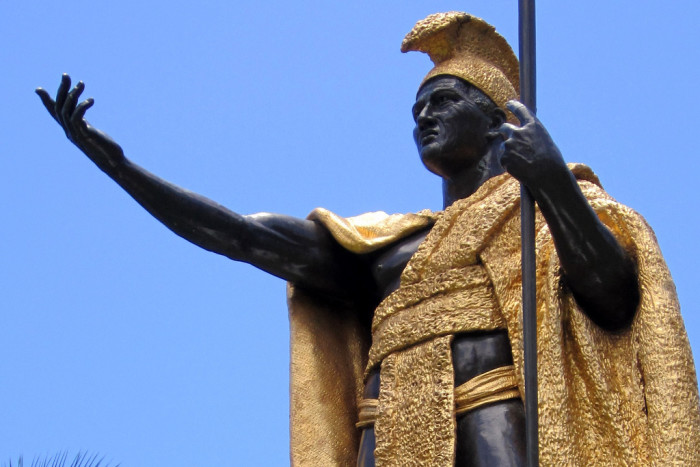 From pirates treasure to the burial site of King Kamehameha, these 10 hidden riches across Hawaii are sure to leave you yearning for adventure.
Source: 10 Hidden Treasures In Hawaii
Recipe ~ Bolo de Laranja – Orange Cake
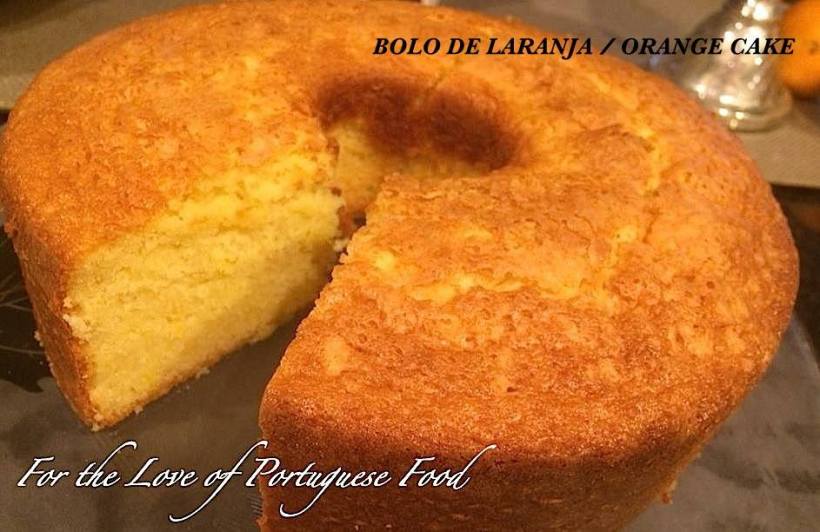
Ingredients:
1 cup of freshly squeezed orange juice (juice from 3-4 oranges)
5 eggs
2 cups of flour, sifted
1 tsp of baking powder
2 cups of sugar
1 cup of canola oil
Directions:
Preheat oven to 350 degrees.
Squeeze the oranges until you have 1 cup of freshly squeezed orange juice.
Grease a tube pan and lightly coat with flour.
In a bowl, add the baking powder to the flour and blend well with a wooden spoon.
In a separate bowl, with a mixer, beat the egg yolks, sugar and oil until well blended. To this, add the juice, flour and baking powder. Beat ingredients until a smooth batter is formed.
In a another separate bowl, beat the eggs whites until stiff peaks form.
With a spatula, fold the egg whites into the egg yolk / flour mixture until all ingredients are well blended.
Pour the batter into the tube pan and bake for approximately 1 hour or until baked. When cooled remove from tube pan and place on cake plate. Optional: sprinkle some powdered sugar on top.
Ex-SeaWorld Employee Gives Chilling New Details About Orca Mistreatment
 For the love of animals. Pass it on.
Source: Ex-SeaWorld Employee Gives Chilling New Details About Orca Mistreatment
Read Between the Bubbles: How Beluga Whales Communicate Their Feelings – Modern Notion
 For years, no one could understand why Beluga whales blow bubbles underwater. Now, it appears it’s all about their mood.
Source: Read Between the Bubbles: How Beluga Whales Communicate Their Feelings – Modern Notion
The Occult Daily
 Source: The Occult Daily
Recipe ~ Vegetable Latkes

Celebrate Hanukkah with Vegetable Latkes!
Latkes are a favorite Jewish dish that is a deep fried, traditionally made with potatoes and ground Matzo crackers and topped with sour cream (lots of it, for me!)
For this recipe, I grated zucchini, carrots, parsnips and potatoes, with a little thinly sliced onions and parsley to make a bright and crispy Vegetable Latkes recipe.
This video was filmed during Passover, so you’ll hear me referring to Passover. But Vegetable Latkes are definitely worthy and traditional for Hanukkah as well! And whether or not you celebrate Hanukkah, I promise this is one simple and affordable recipe that you and your family will love.
Enjoy the video and I hope you see just how easy it is to make Vegetable Latkes at home!
Happy Hanukkah!
Irie Hemp Company Launches Socially Conscious Irie CBD Hemp Extract (Cannabidiol)… — SAN DIEGO, Calif., Dec. 1, 2015 /PRNewswire/ —

The Meaning of Namaste: Many Translations, One Universal Intention | The Mind Unleashed
This statement is overused in some circles. Make sure you are using it the right way.
Stephanie Lucas, Guest, Quantum Stones | Regardless of culture, humans seem to have a universal need to greet one another upon meeting and parting.…
Source: The Meaning of Namaste: Many Translations, One Universal Intention | The Mind Unleashed
Theosophy ~ “Choosing The Tao” – Part 2

CHOOSING THE TAO – II
The wisest disciples, teachers and sages learn from the Tao all the time. The Tao is not a book. The Tao is not a scripture. The Tao was not given by any one person for the first time to other people. It is everywhere and nowhere. It is what some call God, what others designate as the One Reality, and what still others salute merely by saying “I do not know.” To the extent to which men do not understand the Tao, instead of their choosing the Tao, the Tao seems to use them. A great deal of what is often called choosing is an illusion. No one chooses except by the power of the Tao. No one chooses thoughts except by a self-conscious comprehension of what is behind the energy of the Tao. No one can be a knower of the Tao, a true Taoist, without becoming a skilled craftsman of Akasa, a silent magician of the Alkahest, a self-conscious channel for the universal divine flame which, in its boundless, colourless, intangible, soundless and inexhaustible energy, may be used only for the sake of all. Only these universal, deathless, eternal verities may become living germs in the emerging matrix of the awakening mind of the age of Aquarius, a current of consciousness that flows into the future.
Following the ever-young example of the Ancient of Days, each and every person today may focus his mind upon the eternal relevance of the ever-flexible and never-caring Tao:
Under heaven all can see beauty as beauty only because there is ugliness.
All can know good as good only because there is evil.
Tao Teh Ching, 2
How can one be flexible if one is fiercely attached to any external forms of good and of evil? There is the same mutual relation between existence and non-existence in respect to creation as there is between striving and spontaneity, effort and ease, in respect to accomplishment. What is easy for one person is hard for another; what is easy for the same person at any time was hard once; and what is difficult now might become easy in the future. Fumbling with the strings of a musical instrument may be rather painful in the long period of apprenticeship, yet all can find supreme enjoyment in listening at any time to a great master of music who plays his enchanted instrument with lightness and versatile adeptship. The seeker who is patient and persistent, like the good gardener who plants the seed but does not examine it daily to gauge its growth, does no more than is needed, giving Nature time to do its own alchemical work.
How, then, can one contrive a hard-and-fast distinction between effort and ease in the many modes of human striving? Furthermore, is there any reason for preference between one person and another in human excellence? Not from the serene standpoint of the Sage. Those who enjoy good music do not feel threatened every time they listen to a great musician, but merge their selves into the motion of the music. There is that which every human being knows and yet forgets, though if one chooses one may remind oneself. A person always knows that what helped one to walk as a child may also help one to maintain oneself in a world of turmoil. Through the archetypal logic of non-action in activity, he can move away from the turba and the tumult of the crowd, and discover an inner peace through deliberate but casual control in the midst of spontaneous activity. The same mutual relation exists between long and short in respect to form, as between high and low in respect to pitch. What seem to be precipitous mountains in one country might be seen as hilly ranges in a distant land. The Alps are unquestionably beautiful, but, as Byron suggested, there are beauties in Derbyshire which are no less enjoyable than the Alps. The Sierras may be more inviting than the forbidding Himalayas. Each can make the most of what he finds where he can find it, between treble and bass on the scale of musical pitch, between before and after in the contest of priorities. There are no seniors and juniors among human souls – all alike are pilgrims on multitudinous pathways to enlightenment. All souls have participated variously in the immense pilgrimage extending through and beyond successive millennia. The Voice of the Silence teaches: “Such are the falls and rises of the Karmic Law in nature.” He who was a prince is a beggar now, the Buddha taught, and he who is exalted today may tomorrow “wander earth in rags”.
In the eyes of the Sage, all temporal distinctions are absurd not only because they are foreshortened in time but also because they pretend to an ultimacy which cannot be upheld except by coercion. No one who has not conquered the will to coerce could freely practise the art of Wu-Wei even in everyday encounters. The Tao is the ontological basis of the archetypal teaching of non-violence, non-retaliation and true benevolence. Nature is not partial, partisan or sentimentally benevolent. This is known to the Sage, who fuses wisdom in action with compassion.
Heaven and earth are ruthless;
They see the ten thousand things as dummies.
The wise are ruthless;
They see the people as dummies.
Tao Teh Ching, 5
From a superficial standpoint, it looks as if God is the chief conspirator, but there is no arbitrary theism in the vision of Tao. The inscrutable mathematics of cosmic balance needs nothing like what Hegel called the cunning of history to upset the best-laid plans of mice and men. From a broader perspective, it seems as if what appears bad in the beginning turns out in time for the better, even for the best. The Good Law ever moves inexorably towards righteousness. The Sage is not benevolent to personal claims. He treats all with a light inexorability. From an external locus in the realm of changing appearances, nothing that is true could ever be said or could even be found. It is only by the inner light that a person becomes a disciple of the Tao, and in the progress of time may even become a friend of the Tao with the help of those who are the Masters of the Tao.
In China reverence for the primordial Divine Instructors of mankind eventually degenerated into empty rituals of ancestor worship. As with ancient Chinese civilization, so also with classical Indian culture there was a progressive diffusion and inward loss of meaning. In ancient India there was a solemn kindling of the sacrificial fire, and every sacred word and ritual act were offered at the altar of the Prajapatis, the Kumaras, the Rishis, the Agnishwatha Pitris or Solar Fathers. In time such practices were reduced to ritual propitiation of the dead for fear of consequences. The weaker souls who participated in that ritualization in China and India are no different from those who incarnated in European and American bodies. Immigrants came in succeeding waves from different parts of the world to the American continent not only for the sake of their own future, but also, under Karma, as pathfinders of the future of mankind. That which caused violence and deception in the past must return, but cyclical justice will also bring back gentleness and truth and beauty in the nobler ancestors. No human being is without ancestors of whom one could be proud. Over a thousand years every man and woman has had a million ancestors. Nothing that was accomplished by a million people over a thousand years is irrelevant to any person. Everyone has a lineage that ultimately traces one back to the Divine Instructors of the human family. Everyone has kinship to those who are the Friends of all beings and who forever abide as Silent Watchers in the night, guarding orphan humanity.
Hermes, November 1978
Raghavan Iyer
La’au Lapa’au ~ Herbal Homeopathy – “Sage” Wisdom, by Nick Polizzi

Winter hasn’t officially started yet, but you could’ve fooled me. Just about everyone I know has been fighting off some sort of cold or flu these past few weeks.
We all know the feeling – rummaging through the natural medicine cabinet with nose running and the first cough coming on, while the inner voice cries out “why me?!?!?” After all, once the symptoms start it’s normally at least a few days before they begin to go away.
One of the oldest medical texts in Traditional Chinese Medicine, known as the Nei Ching, states:
“To cure an illness after it arises is like forging weapons after the battle has started, or digging a well after you have become thirsty.”
But is it really too late?
Today I want to share a “super-herb” tea recipe that may be able to turn the tables on your cold or flu, in heroic fashion. It’s also wonderful for sore throats.
The leafy celebrity at the heart of this tasty potion is none other than sage, the sacred plant many of us burn routinely in our homes for its aromatic energy-clearing powers. Did you know that it also packs a serious wallop for colds, viruses and bacterial infections?
Also known as Salvia officianalis, sage is an antibacterial, antiviral, antimicrobial, anti-inflammatory, anti… pretty much anti-anything-that-feels-lousy.
All joking aside, this is a highly medicinal herb that is effective for a host of minor ailments like cold and flu, as well as major ones like cancer, Alzheimer’s, and diabetes.
Call me an earth medicine nerd, but I get so much joy working with powerful ancient plants like these. They leave modern medicine in the dust, and feel like teachers in your body when you take them!
Below is a delicious sage tea recipe that master herbalists swear by because of its fast-acting effects:
Sage Tea Recipe
*Important: never use aluminum utensils or containers for your tea extractions. Glass, porcelain, silver, and Pyrex are best!
Ingredients:
1 Quart Water
12 Fresh Sage Leaves (Dry is ok too, but fresh is more potent!)
2 Tablespoons Local Honey
2 Tablespoons Fresh Lemon Juice
A pinch of Cayenne Pepper
Preparation:
1. In a teapot or saucepan, bring water to a boil.
2. Add the sage leaves and remove the teapot or saucepan from heat.
3. Let steep for 15 minutes.
4. Stir in the remaining ingredients.
5. Pour a cup full, breath in the beautiful aroma, say a healing blessing, and enjoy!
Two to three cups of sage tea per day is always part of the winter sickness healing protocol in my house. Sage is generally viewed as being a very safe herb to experiment with, but as always, do your own research and make sure it feels right for you.
Whether you celebrate Saturnalia, Christmas, Kwanzaa, Hanukkah, or abstain completely from all the commotion, one thing is for sure – life is a lot more enjoyable when you’re upright and vibrant. Hopefully this information will help you enjoy the fullness of the upcoming winter solstice!
Herbs Hands Healing – Online Shop

Mysterious 10,000 Year-Old Underwater Ruins in Japan | Ancient Origins
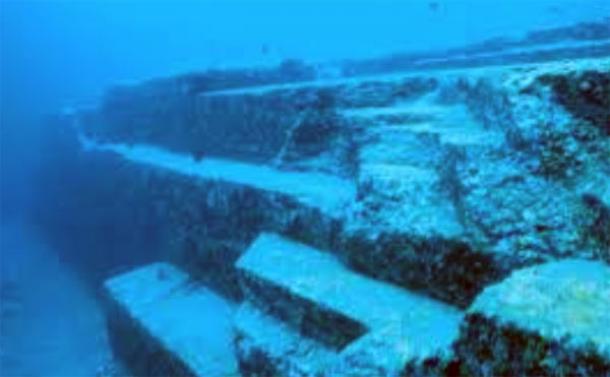 On the southern coast of Yonaguni, Japan, lie submerged ruins estimated to be around 10,000 years old.
Source: Mysterious 10,000 Year-Old Underwater Ruins in Japan | Ancient Origins
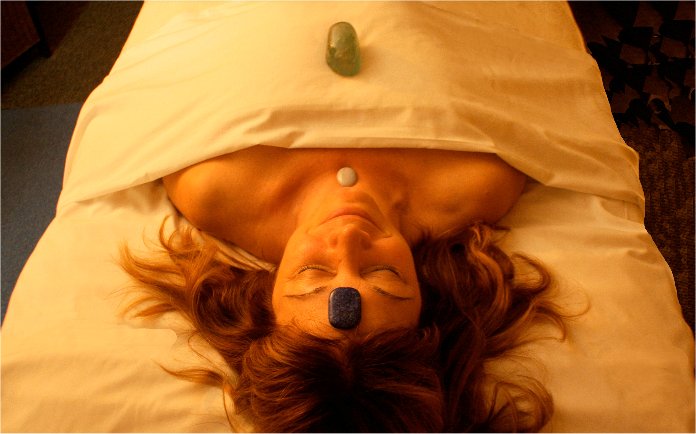
Add Crystals And Stones To Your Meditation Practice For An Enlightening Experience! : In5D Esoteric, Metaphysical, and Spiritual Database
What Did Abraham Lincoln Dream About? 8 Stories of Famous Dreams | Atlas Obscura
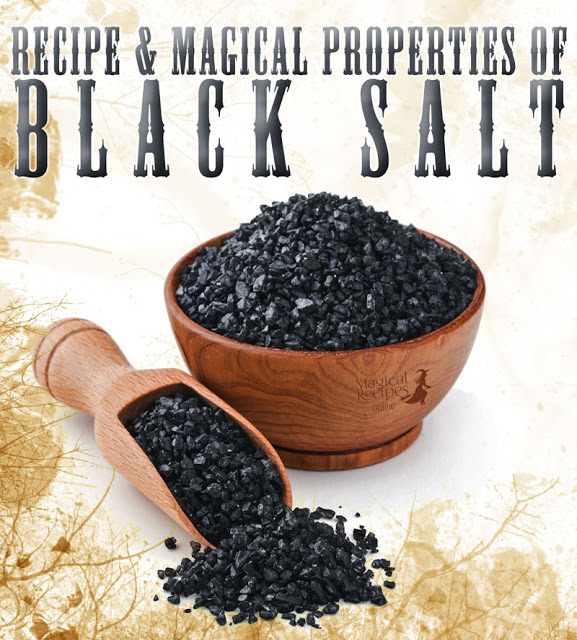
Dark Arts Defence: Ancient Formula Recipe, how to make Black Salt – Magical Recipes Online
My Triple Threat Knock-Out Punch For Bladder Infections!

Object of Intrigue: London’s Life-Saving, Publicly Accessible Enema Kits | Atlas Obscura

The Occult Daily
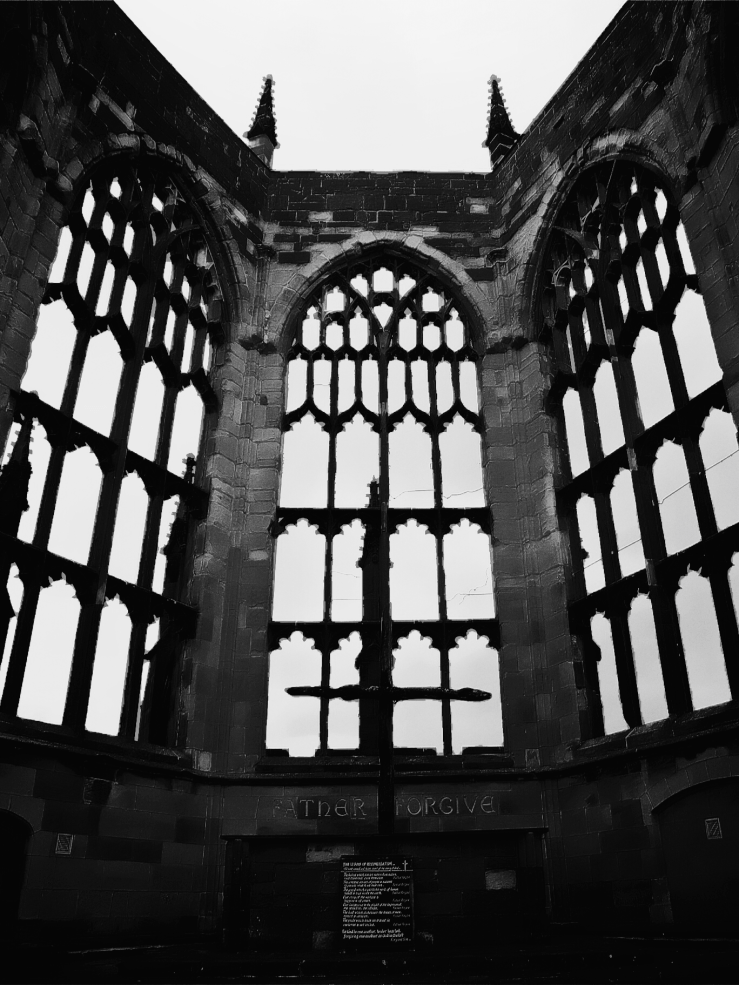 Source: The Occult Daily
The Magickal Uses of Valerian – Herbal Riot
Thoughts on Love of Life and the Art of Awareness
Acclaimed Nobel Peace Prize author, Albert Camus, once said, “Those who prefer their principles over their happiness, refuse to be happy outside the conditions they seem to have attached to their happiness.”
Indeed, our principles tend to harden into habits and although habits give shape to our inner lives, they can mutate into the rigidity of routine and create a kind of momentum that, rather than expanding our capacity for happiness, contracts it. In the trance of routine and principled productivity, we end up showing up for our daily lives while being absent from them.
And, like my friend RevDruanna Johnston has shown us on FB, few things break us out of our routines and awaken us to the living substance of happiness more powerfully than travel. What gives value to travel is fear. It breaks down a kind of inner structure we have created through our “daily grind” of work and remaining in familiar surroundings. One can no longer cheat — hide behind the hours spent at the office or at the plant (those hours we protest so loudly, which protect us so well from the pain of being alone). Far from our own people, our own language, stripped of all our props, deprived of our masks (one doesn’t know the fare on the streetcars, or anything else), we are completely on the surface of ourselves. But also, soul-sick, we restore to every being and every object its miraculous value.
For my part, my entire life has been undergirded by the ethos that happiness is our moral obligation. My love of life also carries with it a silent passion for what would perhaps escape me, a bitterness beneath a flame. Each day I leave this cloister I call home … like a woman lifted from herself, inscribed for a brief moment in the continuance of the world … and have come to realize that there is no love of life without despair of life. Absolute bliss necessitates an equal capacity for contact with absolute despair.
Where am I going with this? My emotions are not just the fuel that powers the psychological mechanism of a reasoning creature: they are parts, highly complex and messy parts, of this creature’s reasoning itself.
What counts is to be human and simple. No, what counts is to be true, and then everything fits in, humanity and simplicity. When am I truer than when I am the world? My cup brims over before I have time to desire. Eternity is there and I was hoping for it. What I wish for now is no longer happiness but simply awareness.
Have a great week, Everyone. I love you … Aloha! heart emoticon
Ayurvedic Medicine: A Traditional Knowledge of Life from India that Has Endured the Passage of Time | Ancient Origins
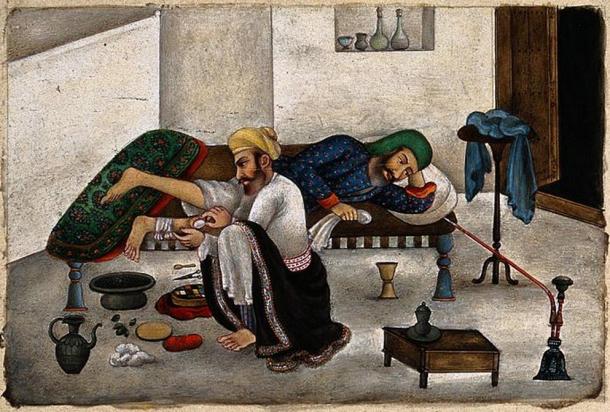 Ayurveda, known also as Ayurvedic medicine, is an ancient medical system that has its roots in India, and has been considered by many as one of the oldest healthcare systems in the world.
Theosophy ~ “Choosing The Tao” – Part 1
CHOOSING THE TAO – I
Inflexibility of modes cripples our contemporary institutions. Inertia of thought dulls our mental faculties, whilst insensitivity of moral perception weakens the will-power to realize good resolutions. It is conspicuously difficult for the brain-mind, faintly mirroring the chaotic flux of sense-impressions, to sift essential meaning from the monotonous succession of trivia. The Tao Teh Ching invites us to withdraw the mind from the cacophony of the world, to liberate the heart from the jungle fever of the passions. Above all, it counsels us to renounce our constricting conceptions of ourselves. These merely echo fleeting externalities extolled by the fickle opinions of the epimethean crowd, which is sadly captive to crude conceptions of success and failure, status and reward. All such shallow distinctions are entrenched in the feudal shibboleths and the petit-bourgeois vocabulary of a commercial culture. They are entangling weeds of pain, sprouting in the parched soil of cavernous delusion, choking the living germs of human encounter. Flexibility is elusive without some degree of detachment. Until a person attains to a mature indifference to the illusory objects of desire and the volatile pairs of opposites, he cannot be truly practical. He cannot become sufficiently plastic in mind, resilient in imagination, creative in sentiment and speech, to enjoy the divine estate to which every human being is heir. To become constructively flexible requires a preliminary purification of the passions, a thorough cleansing of the mind, a deliberate sorting out of the chaos that bewilders one’s shadowy self. In seeking to do this, one may initially be restless, anxious and devoid of calm.
One must face the perilous paradox set forth in the ancient mystical texts – the beginning foreshadows the end, the end inheres in the beginning. Without a valiant attempt to negate the world and to void one’s very conception of oneself, it is not feasible to take the first critical step on the Path to Enlightenment. Many are called, but few constitute themselves as truly chosen to become sincere and credible servants of the whole of mankind. Nevertheless, many thinking beings have already reached a point of maturation from which they can see through the negative, contradictory and melodramatic valuations of the necropolis. This is a moment in history when Time itself seems to have stopped. Most people know too well that behind the futile exaggerations and false claims of external institutions and structures, there is an emptiness and hollowness, an unfathomable void. At a time of poignant and ever-increasing distance between human beings, there is a danger that aggression and desperation will enter even into the spiritual quest, thereby closing the door to spiritual awakening for myriad lives. This awful if unintended tragedy can be remedied only by courage and toughness in braving mental agony. Divine manliness consists in becoming heroic when it counts and where it hurts, in sacrificing every puny conception of selfhood. Everyone not only glimpses the fundamental truths known to poets, philosophers and sages, but hears them now on the lips of millions of messengers on earth.
The present historical moment offers a golden opportunity to learn from the wisdom of the Tao. For many centuries men contemplated the Tao, though no one in China would have claimed to comprehend it. The first commentary was written in the middle of the second century before Christ, perhaps about four centuries and a half after the appearance of the great Master, Lao Tzu. From birth Lao Tzu was greeted as an old man because he began by showing a mellow awareness of the teaching, and was apparently known by more than one name. Among his closest disciples the most influential was Confucius, in whose memory elaborate rituals emerged over millennia which eventually became frozen into stylized play-acting, with massive pride masked by self-mockery, a tradition of hypocrisy which terminated in a total disruption of the old order. A fearless Mandarin hinted fifty years ago that what China needed then was not more gentlemen but more prisons for its corrupt politicians. The anger of the masses was directed against endless game-playing in the name of the Confucian Analects. This is a predictable part of the recurring story of mankind.
The Tao can only be attained by the human being who approaches the Tao through the Tao. One must become the Tao. One must meditate ceaselessly upon the Tao while seeming to be engrossed in the daily round and common task. One must find the secret sanctuary of inner peace and repose within it from dawn through dusk to midnight, while retaining calm continuity of contemplation in the soul’s shrine through the sleep of the night and even amidst dislocating dreams. The process of self-surrender takes time because it can only become continuous and constant when it flows from within without, from above below. The Tao is the motionless centre of all the wheels of cyclic change. It is the centre which is everywhere, in every point of space, in every moment of time. Yet no boundaries can ever be drawn to contain it. Everything participates in the illusion of birth and in the inertia of systems that hide the simultaneous disintegration and decay known among men and women as sickness, error, suffering and death. The Tao teaches that in no single thing will be found any freedom or exemption from the eternal process of ceaseless change behind the shadow-play of colours, forms and events. Everything that has a beginning in time and space must have a limit in space and an end in time.
Everyone must necessarily seek the Tao within oneself. Each must seek that which is consubstantial with the Tao that is before all things. Words like “before” and “behind”, “below” and “above”, can only be relevant to the seeming reflections of the Tao. The Tao is formless form, the primordial pure substance prior to all differentiation, and it is accessible to all human beings as the one and only Source of eternal energy streaming forth in limitless light from the Invisible Sun. It is hidden within what seems to be darkness but is in truth absolute light. It is ever bestowing nourishment and sustenance, shedding light and yielding the vital power of hidden growth. The causal principle of true growth is necessarily invisible to the naked eye. If one is to come to understand how the transcendent Tao is in oneself, or how one can come closer to the Tao within, one must calmly ask how one’s false mind and fictitious barriers – self-created, self-maintained, self-imposed limitations – may be pierced by the light of pure awareness. One may become the Tao more and more consciously yet effortlessly, starting from small beginnings, and patiently allowing for gradual, silent growth.
All growth is invisible. No one can see or measure the growth of a baby or a little child from moment to moment. No one can mark by visible and external tokens the point of transition from childhood to youth. No one can put a date on the boundary between youth and manhood. These divisions are arbitrary and relative. When a person remains constant in his cool awareness of the utter relativity of all of these false and over-valued distinctions, he comes to understand that there is nothing dead and nothing alive. He is no less and no more than the Tao, and so is everyone else. The divisions and distinctions in consciousness arising from sense-objects, through words and by images, are a smoke-screen that obscures, limits and distorts reality. The supreme, carefree joy of non-striving that flows from the omnipresent light can no more be conveyed by one to another than the taste of water can be described to someone who has never drunk a drop. No truly meaningful experience can be communicated to another except in terms of his own modes of living.
Hermes, November 1978
Raghavan Iyer
The Cancer Fighting Medicine That’s in Your Yard
 What is the cancer fighting medicine that is likely in your yard right now?
Legendary Locks: Can Hair Act as a Sixth Sense, Protecting us from Danger? | Ancient Origins
 Humans have ever styled their hair in a multitude of creative and symbolic ways, and the various cuts, colors and presentations reflected across the ages are nearly unlimited.
Source: Legendary Locks: Can Hair Act as a Sixth Sense, Protecting us from Danger? | Ancient Origins
Forgotten Rituals and Magical Practices in Ancient History | Ancient Origins
Throughout history, magic rituals involving divination, invocation of spirits, possession, necromancy and many others, have been practiced among many cultures and civilizations. Many of these ancient rites remain recorded in old and obscure texts, while others have been lost to the pages of history. Over the centuries, historic texts have recorded a large number of rituals – magical or religious – some of which have been preserved in modified forms, while others remain only in obscure, old bo
Source: Forgotten Rituals and Magical Practices in Ancient History | Ancient Origins
Affirmations
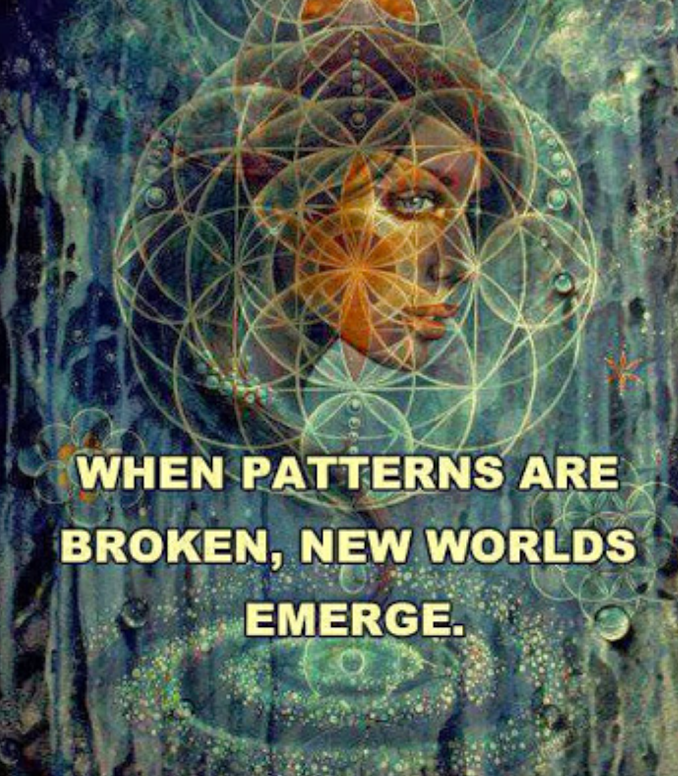
As I let go of the limiting beliefs that contract my body and mind, I attract to me the gifts that the Universe has to offer.
Shifting the Brainwave State: 6 Powerful Practices to Expand Your Consciousness and Harmonize Your Brain | Wake Up World
 This article includes 6 powerful practices for shifting your brainwaves in a positive direction, expanding your consciousness and harmonizing brain function.
The Mysterious Aboriginal Rock Art of the Wandjinas | Ancient Origins
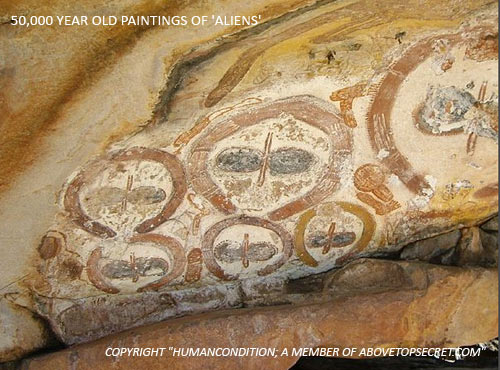
 One of the most intriguing and perplexing legends of the Australian Aboriginal people is that of the Wandjinas, the supreme spirit beings and creators of the land and people.
Source: The Mysterious Aboriginal Rock Art of the Wandjinas | Ancient Origins
 Hālau 'Aha Hui Lānākila