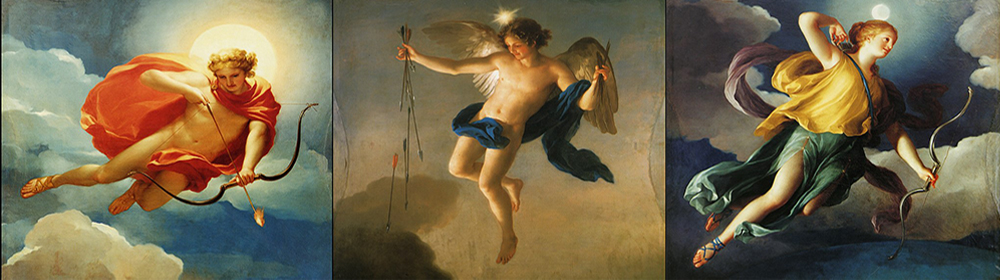
Aquarius season begins 5:45 pm PDT, 8:45 pm EDT, January 20 1:45 am GMT. A very intense Venus Pluto Conjunction at 3° Aquarius 8:04 pm PT., 11:04 pm ET, Jan. 20 4:04 am GMT. Venus and Pluto are sym […]
Source: January 19 daily Astrology
Aquarius season begins 5:45 pm PDT, 8:45 pm EDT, January 20 1:45 am GMT. A very intense Venus Pluto Conjunction at 3° Aquarius 8:04 pm PT., 11:04 pm ET, Jan. 20 4:04 am GMT. Venus and Pluto are sym […]
Source: January 19 daily Astrology

Metaphysical imagination, continuous reflection and deep meditation are required for real understanding. One could learn by looking at Nature, the inimitable teacher. Nature is a servant of Adepts, but a teacher to everyone else. Even on the physical plane, potential energy has something to do with height. Consider what happens to the immense electrical energy potentially available in the downward trickle of mountain streams. Where does it come from? It represents nature’s work as an alchemist in taking the moisture in the ocean and evaporating it through heat. Through the evaporation and raising of moisture to a sufficient height, nature is able to convert alchemically that water so that it is not energically the same as it is when at sea level. There are only a few drops where a stream begins, but there is a vast potential energy present. Yet that potential energy is in fact an actual energy in relation to the potential energy which went into the whole process of alchemization begun by heat and which will also be present when the process is complete.
There is something in higher states of consciousness analogous to the experience of a condition which is neither hot nor cold, but where there is a vivifying participation in the cool blue flames of a soft light which can release a steady stream of energy and which could be used at will in any direction on any plane beginning with ideation and working downward. One soon reaches a point where one has to relinquish conventional distinctions and also recognize the poverty of all mundane concepts. There is some similarity between the image-making power of a newborn babe, innocently floating on the ocean of life, and the disciplined imagination, gently guided by a benevolent will, of the detached and all-seeing Adept. There is more similarity between these than between the disciplined imagination of the Adept and the impressionistic visions of excitable prophets. These latter are chaotic, and have only a limited validity in relation to the illusions of men in the realm of so-called reality made up of divisive and tortuous, impotent and aborted, actualizations. Confused visions are not merely crude and delusive, but actually generate a perverse and demonic energy.
Patanjali’s Yoga Sutras refers to two kinds of energy. One kind of energy, which might be called a sort of higher prana, gives one level of understanding. The other kind of energy cannot remotely be tapped, except through a serene continuity of consciousness called sama or similitude. In such a state, a person can consciously make luminous the sphere surrounding his rupa and effortlessly sustain self-luminosity. This is only possible at a high level of ceaseless meditation upon the one secondless, universal source of divine light. It involves the theurgy wherein a person sees all beings as spheres of light within a vast universe which is a limitless, boundless sphere of light. From this perspective, one would be able self-consciously to transmute every atom of one’s grosser vestures and radiate out, from above below and from within without, that supreme self-luminous noetic energy which can light up the atoms and arouse the potentials that slumber in human beings. No society, group or civilization can self-consciously harness this energy – even for the sake of the collective good – without fulfilling the moral and psychological prerequisites that are needed. There is no possibility of access to Akashic energy without fulfilling the ethical preconditions that prevent its misuse. People might, however, in a misguided search for the Alkahest, foster a multitude of delusions. Strictly speaking, all the psychic states are shadowy and insignificant in relation to the wisdom of noetic insight.
One could, with unwavering detachment, profound disinterestedness, and unconditional benevolence towards all, sustain a higher indifference in relation to every aspect of this world of manifestation, and yet see all relativities from the standpoint of unconditioned consciousness in which the self-luminosity of the divine is ceaselessly present. It is necessary to discriminate between the turbulent atmosphere of divisive, separative thought coalescing with psychic forces and the pellucid strength generated by the noetic energies of sustained altruistic thought. Proximity on the physical plane has nothing to do with co-adunition and consubstantiality on higher planes of consciousness. Human beings carry their own problems around them, creating and living in their own world. Maya or deception accompanies the notion that because people are close together on the physical planes they therefore share a common access to the same current of ideation. The situation is quite different if persons are consciously aware of the thoughts and energies they release. At the highest level, there is no real distinction between thoughts and feelings and noetic energies. They are intermeshed. They are emanations which involve noetic thought, Buddhic feeling and spiritual energy. These emanations will always bless, but especially those who are willing to expel from their own vestures chaotic and befouled energies.
All aspirants must do something on their own. It cannot be done for them. They must aid in the conscious and continual purgation of these muddled matrices, the fuel of their kama manas, so that the void can be filled by streams of noetic energy. But this would be very misleading if a person expected it to happen suddenly: hence Plato’s metaphor of the leaky jar in Gorgias. If a person made it a habit of allowing himself to be filled up with foul matrices only to eliminate them, merely out of soul-disgust, and then was able out of unconscious receptivity to receive a great outpouring of higher energy – it could not be retained. One cannot retain noetic energies if one has cut astral grooves that can only channel lower emanations. One would be like a leaky jar that has been so befouled that every time it is emptied, and pure fresh water is put into it, the fresh water gets contaminated. In the process of dynamic interchange of life-atoms, the fresh water would be expelled by evaporation.
A person has to do those basic things which will help produce more fundamental, stable, reliable and long-term changes in his vestures. One must establish points of contact and connections between the highest thoughts, feelings and states which one can maintain in daily life. One can experience the vibrant ocean of life-energy when at sunrise or at sunset one is able to experience the majesty and joy of the burgeoning light hidden behind the vast vista of Nature’s wealth of manifestation. Old cultures practised self-conscious modes of purification. What is the equivalent on the mental plane to bathing, to becoming ready to receive the manna that one hopes will fall from heaven? What is the equivalent of wanting to share it on the plane of thought and feeling with those who need help, or with those whom through the natural course of events one could help? One’s own integrity and honesty, as well as toughness, are involved. Fearlessness is the defining characteristic of spiritual strength, and is the only basis upon which one could release truly noetic energy. No man could suddenly jump from being a concatenation of fears to supreme fearlessness. The very fact that one wants to jump means one is somewhere afraid of failure, hoping for spiritual favours or that partiality will work on one’s behalf. What is that self that one is so anxious to protect, and on behalf of which one has to be so afraid and to seek favours?
In the Bhagavad Gita one could see unlimited applications of the central teachings, not merely to life conceived in terms of events, external decisions and particular duties, but in terms of a noble and noetic consciousness that must be vigilantly maintained with increasing detachment and without fear or wish for favour. Then, in a state of inward receptivity, one could enter the world of divine light, the light of the Logos within every man and behind and beyond the universe, a world in which every thought and feeling is instantaneously translated into altruistic action for the sake of all.
Raghavan Iyer
The Gupta Vidya III

Congratulations for making it to the end of 2025! We’re still in the middle of the pivot into the new fire/air era but that process finally completes in 2026 when events will accelerate. There’s a …
Source: The Astrology of 2026

Beloved Practitioners, Teachers, and Keepers of the Current,
Twenty six years ago, a small intention was placed gently into the world, like hands resting over the heart. No spectacle. No urgency. Just trust in the quiet intelligence of healing and the willingness to listen. From that simple beginning, a living lineage has grown.
A school is not walls, syllabi, or certificates. A Reiki school is a field. It is shaped every time one of you pauses, breathes, and allows harmony to move where it is needed most. Over twenty six years, that field has been strengthened by thousands of such moments. Unseen, yet unmistakable.
You have carried Reiki into homes, hospitals, classrooms, offices, and sacred spaces. You have offered it in times of grief, transition, birth, exhaustion, and renewal. Often without recognition. Often without words. Always with presence. This is how real traditions endure.
Twenty six years marks more than longevity. It marks trust. Trust in the practice. Trust in one another. Trust in the quiet power of hands guided by compassion rather than force. In a world that constantly demands speed and certainty, you have chosen attunement and listening.
May this anniversary remind you that your practice matters, even when it feels subtle. Especially when it feels subtle. Healing rarely announces itself loudly. It arrives softly, rearranging things from the inside out.
As we step into the years ahead, may curiosity stay alive in your hands. May humility keep your practice clear. May joy remain part of your discipline. And may the current that first brought us together continue to flow through you, steady and generous.
Thank you for twenty six years of dedication, care, and quiet courage.
The work continues, and so does the blessing of walking it together.
Mahalo Ke ʻĀkūa,
Lanakilaonakupuna
Kumu ‘Akahi
Reiki Grandmaster, 18th dan
Usui Teate System of Natural Healing

In order to release soul-memory and activate one’s higher faculties, one must be fortunate enough to have come consciously and voluntarily to the spiritual life, not out of any compensatory motives but out of love and reverence for Divine Wisdom and with a deep longing to benefit humanity. Only those who live and breathe benevolently can avoid the awful consequences of misappropriating the higher energies in the service of the lower, thereby forfeiting the great opportunity gained under karma of coming closer to the immemorial Teachings and to authentic spiritual Teachers. For such seekers who are suffused with a profound humility and a deep desire for learning for the sake of others, there will be a natural protection. True shravakas or learners will be able to use the archetypal method from the first, proceeding from above below and from within without and emphasizing at each stage the steady assimilation of mental and spiritual food through moral practice. There need be no partiality and imbalance, no one-sidedness or bias, in the apprehension and application of Gupta Vidya. As Mahatma M. pointed out,
In our doctrine you will find necessary the synthetic method; you will have to embrace the whole – that is to say to blend the macrocosm and microcosm together – before you are enabled to study the parts separately or analyze them with profit to your understanding. Cosmology is the physiology of the universe spiritualized, for there is but one Law.
In order to embrace the whole, one must grasp the fundamental continuity of cosmic and human evolution, establishing one’s consciousness in a current of Buddhic compassion and unconditional love for all that lives. One must learn to move back and forth continuously between the macrocosmic and the microcosmic. One must strive to see the relevance of universal ideation to specific contexts. One must ever seek to bridge the universal and the particular in waking consciousness, maximizing the good even in highly imperfect situations. Tremendous aid can come through the Buddhic stream of Hermetic wisdom pouring forth from the Brotherhood of Bodhisattvas. With a mind moistened by wisdom and compassion, one may return again and again in meditation and self-study to seek appropriate connections and correspondences between the macrocosm and the microcosm. Drawing upon the rich resources of Gupta Vidya, one must grasp its universal synthesis before attempting to study the parts separately or analytically. This means that one must engage in daily tapas or mental asceticism. In the Aquarian Age we need to relinquish the entrenched modes of the inductive and analytic mind, replacing them by cultivated skill in deep concentration, creative imagination and calm receptivity towards universal ideation. In this way one will come to comprehend the connections between the most primordial and abstract and the most dense and differentiated levels of manifestation of consciousness and matter. The continuity of consciousness which one seeks is, in fact, a mode of mirroring the metaphysical integrity of cosmic unity.
If one can learn to let go of the rationalizing pseudo-intelligence of the personality, then one can begin to draw upon the natural strength of Manas. One must learn to take the simplest ideas and apply them universally. Action based upon spiritual insight has a moral simplicity that neither can be understood nor imitated by the lower mind. For a long time in the life of any disciple, it is wise to consider the spiritual vision of the Third Eye as equivalent to moral discrimination. This is eloquently illustrated in the life of Mohandas Gandhi, who was skilful in finding potent analogies between the circulation of blood and global economics or psychological health. Anyone who arouses Buddhi can take seriously the integrity of the cosmos and deduce practical wisdom. One can learn to perceive vital connections between the mental and spiritual health of individuals and society as a whole, and apply these perceptions to oneself.
If one gains some proficiency in this daily use of Buddhic intuition, one will soon find that it becomes meaningful to use the myths and symbols of Gupta Vidya as a basis for meditation upon the structure and function of the human form. One must learn to contemplate the cosmic dimension of human existence and become capable of deriving from such contemplation a vital sense of sanctity, plasticity and potentiality in relation to the physical body. Great philosophers and mystics have done this, seeing in the human form the paradigmatic metaphor for all growth. They have used the analogy of sight when speaking of soul-knowledge and spiritual wisdom, referring to the eye of the soul and the mind’s eye. But even to appreciate this analogy, one must to some degree awaken Buddhi. Just as one can hardly convey the operation of sight and vision to a person born blind, one cannot readily communicate the nature of spiritual vision to those in whom it is totally blocked. Similarly, one could hardly convey the thrills and challenges of mental perception to persons with undeveloped mental sight.
As the ability to apprehend analogies is itself an essential element in soul-vision and also conducive to the awakening of the inward capacity for noetic insight, it is always wise to recognize and acknowledge the limits and levels of human experience. Without actually developing spiritual and mental insight and tasting the ineffable bliss of authentic mystical vision, one cannot comprehend or even appreciate the scope and range of possible peak experiences. Owing to the pervasive principle of continuity in the cosmic order and in human nature, there is the ever-present possibility of transcending the limits of known and shared experience. By using analogies and correspondences to move from the familiar and the bounded to the unfamiliar and the unbounded, one may gain sufficient skill in the dialectical art to subdue the mind and absorb it into the pulsating consciousness of the spiritual heart. In a mystical sense, one can make the mind whole, and enlist it into the service of the heart, while at the same time making the heart intelligent and strong.
In order to attain a state of heightened spiritual awareness and effortless vigilance, compassion and receptivity, it is essential to recognize and remove persisting discontinuities in consciousness. The familiar gaps between sleeping and waking, between dreaming and deep sleep, between ephemeral fantasies and enduring commitments, are connected with lesions in the subtle vestures which induce a fragmentation and distortion of spiritual insights. One must patiently identify these deficiencies, seek out their root causes, and initiate an appropriate course of corrective exercises. In the meantime, it is meaningful to establish and strengthen a continuous current of deep ideation upon the highest conceivable ideals, principles and goals relevant to the future of humanity. The mind and heart may be fused through an ardent devotion to Bodhisattvic exemplars of continuity of consciousness in the ceaseless service of all humanity. Through this very attempt, even the sick may slowly heal themselves and seek satsang, the company of the wise, who can help to nurture the seed of bodhichitta, the potent resolve to awaken the Wisdom Eye for the sake of universal welfare.
Raghavan Iyer
The Gupta Vidya III

Irina Sensei is a 4th degree Reiki Sensei Shinpiden from San Ramon, and a member of our Main Hālau HQ in Vallejo, CA. She is also a certified Massage Therapist practicing in Oakland, CA, with Sensei Chrystian Guardado-Lopez.


In many spiritual and mythic traditions, the feminine life cycle is symbolized by the Triple Goddess: Maiden, Mother, and Crone. This triad offers a poetic map of growth, fertility, and wisdom. Yet […]
Source: The Transitional Archetypes between Mother and Crone
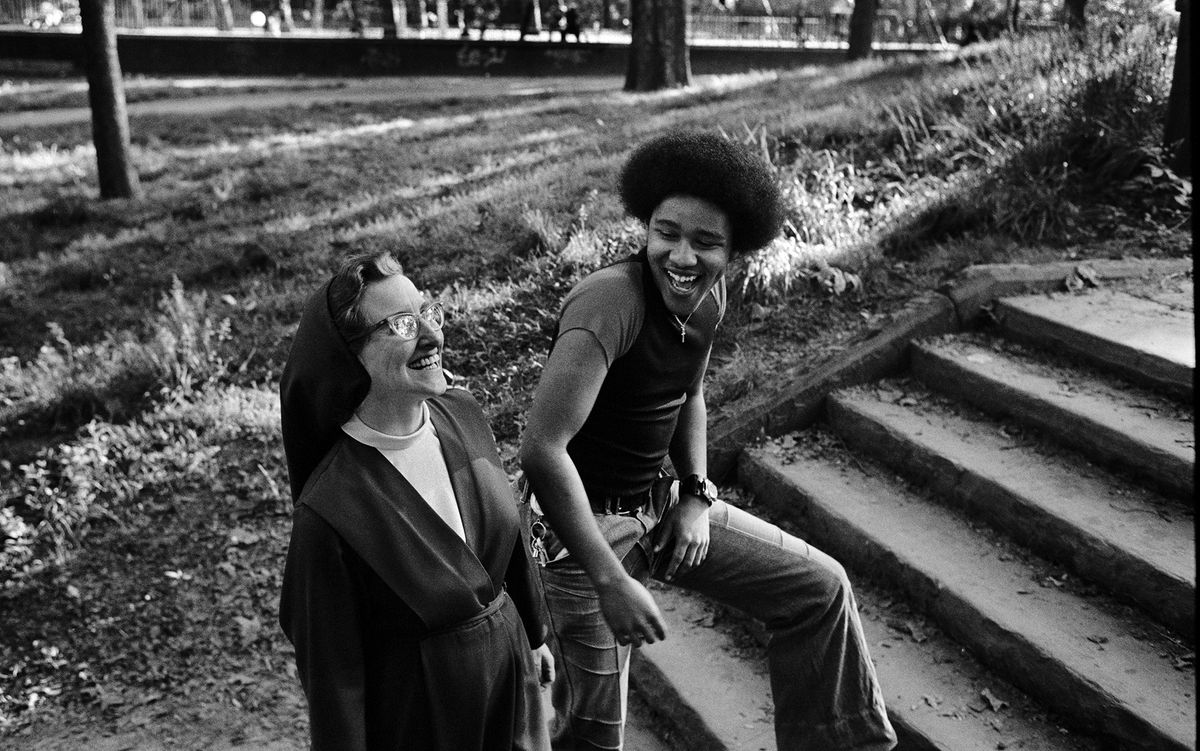
For philosopher Henri Bergson, laughter solves a serious human conundrum: how to keep our minds and social lives elastic […]
Source: For Henri Bergson, laughter is what keeps us elastic and free | Aeon Essays

The persistent asking of the question “Who am I?” raises a person beyond the boundaries of the personality. The lower mind is typically trapped in the realm of external differentiation, of comparison and contrast. It is fragmented through the fleeting succession of states of consciousness which produces the illusion of time. It is delusively dependent through its polarization between past and future, regrets and anticipations, fears and fantasies. Through deep meditation it is indeed possible to silence the lower mind and initiate a state of true calm. It is essential to release the serene awareness of the higher mind, which is inherently capable of abstraction, universalization and thinking through particulars (dianoia). By repeated and regular efforts in meditation and self-scrutiny, one could correct the more glaring discontinuities. One might make it a daily practice to prepare before sleep by reflecting upon the Anahata, the deathless vibration in the secret heart, the ceaseless pulsation of the AUM. This could be fused with a true feeling of compassion for all beings, as evoked by The Voice of the Silence in its poignant lament:
Alas, alas, that all men should possess Alaya, be one with the Great Soul, and that possessing it, Alaya should so little avail them! Behold how like the moon, reflected in the tranquil waves, Alaya is reflected by the small and by the great, is mirrored in the tiniest atoms, yet fails to reach the heart of all. Alas, that so few men should profit by the gift, the priceless boon of learning truth, the right perception of existing things, the knowledge of the non-existent!
All rays of light emanate from a single source. Once one has abstracted from habitual identification with a name and a form and assumed the mental posture of an individual ray of light, one may experience the effulgence of the Atman. Self-knowledge will spontaneously arise through active contemplation, which will be food for the soul. If one found that despite proper preparation at night, one still woke up with no lucid recollection in the mind, intense self-questioning is needed. Who is the ‘I’ that entered sushupti and what is the ‘I’ that cannot remember? One has to make daily experiments with truth. All of this is valuable and valid as a process of knowing, though it is only the partial awareness of a partly self-conscious being of dim reflections of a deeper realm. Nothing learnt is ever lost by the immortal soul. It is important to see the painful process of progressive knowing as constructive and continuous. It is helpful to lose the thraldom and tension of effort by devotedly meditating upon the invisible form of the Guru, the Atmajnani in whom the knower, knowing and the known are all one. This is uplifting because it elevates one’s level of consciousness to meditate on the Self as incarnated in a fully self-conscious Sage, who is outside time and yet in contact with the temporal, who is beyond visible space yet omnipresent, and always accessible on subtler planes of manifestation.
One is only partly awake when asking questions about the true Self; one is more awake when one actively meditates and even more awake when one ardently seeks the Knower of the Atman. The Atmajnani is in a steady state of turiya, continuous spiritual wakefulness. Total wakefulness is only possible on the plane of the Atman, wherein no distinctions made by the mind have any meaning. It is a pure, primordial state of consciousness which is incommunicable. It can neither be described nor characterized but it is approached to some extent when emptying out, when negating and questioning. It is the miniature light in the eyes of every human being. To kindle the small spark of light into the blazing fire of divine wisdom is the task of many lifetimes. The yogin is fully consumed, says Shankaracharya, in the fire of true knowledge. The important thing for each and every person is to make an honest effort to keep moving towards an ideal state of inward freedom. One must grasp all available opportunities for greater knowing, for deeper self-knowledge, profounder knowledge of the Self and pure selflessness.
The feeling of responsibility is the first step towards selflessness. All spiritual Teachers promulgate what everyone already knows at some level – that everything adds up, that nothing is lost, that no one can evade anything. The homilies and proverbs of all traditions only point to the accumulated wisdom of humanity. The half-asleep individual has lost the key and does not know how to use the heritage of universal truth. Great Teachers descend amidst humanity so that a second birth is possible for the disciples who are ready. This profound awakening of spiritual consciousness takes place among many at critical thresholds in human evolution. The karma of the whole of humanity for the duration of an epoch is nobly assumed by one of the Brotherhood of Sages, who comes into the world and becomes responsible for the progress of humanity during a cycle of awakening. The Bodhisattva elevates the idea of responsibility to its greatest height. What does it mean to be responsible for an age and to be responsible for the whole of humanity? This is an awesome and staggering conception. How can it be even sensed by those who refuse to recognize their errors and the future consequences to be faced?
In general, an awareness of individual responsibility is the mark of a Manasa, a thinking being and moral agent. Though one cannot put everything right in this life and all the people one has affected are no longer around or alive, still some things can be rectified right now. It is possible to clean up one’s copybook significantly without any clues to the complex mathematics of the cosmos. It is a waste of energy to fret and fume over the past, which is already part of our present make-up. Every cell of one’s being carries the imprint of every thought, feeling, emotion, word and deed that one emanated in this life. At least, one can be responsible in relation to what one can see. At the present point of history the sense of responsibility has been enormously heightened for the whole of humanity. Never before have there been so many millions of human beings in search of divine wisdom, the science of self-regeneration. The Voice of the Silence instructs the disciple: “Look not behind or thou art lost.” It is an exercise in futility to look behind because what has receded will recur. Instead of idle regret, it is possible to use the gospel of gratitude to transmute every precipitation of Karma into an avenue for fundamental growth through courageous self-correction.
Gratitude is no longer a threatening term, even in the United States. Many people everywhere respond to the beauty of reverence as it is truly innate to the human soul. Miseducation may foster mental presumption but it cannot extinguish the immortal spark of devotion. In all human beings there are natural feelings and intuitions which can be awakened and quickened. It would indeed be wrong to think that purely by penitence one could wipe out the consequences of past irresponsibility. This is a costly failure to understand the law of ethical causation. If one already has wronged others wilfully or thoughtlessly, feelings of remorse or empathy cannot erase past debts. This untenable doctrine of moral evasion did much harm over two thousand years. It was a travesty of true religion, an arbitrary breach of natural harmony. The irresponsible dogma of vicarious atonement traduced the exalted ethical teaching of Jesus. He taught that the Divine is not mocked: as ye sow, so shall ye reap. This is a central tenet in the teachings of all Initiates, and the erosion of the idea of responsibility is everywhere the consequence of priestcraft and ceremonialism. There are myriad ways in which people run away from the mature acceptance of full responsibility for past misdeeds. The Aquarian sees that true responsibility begins in the realm of thought and must include every thought. Surely one can appreciate the profound integrity of the teaching that every thought connects each human being with every other. The intuitive recognition of universal interdependence and of human solidarity is the basis of an ever-expanding conception of moral responsibility, renewed and refined through successive lives of earthly probation by a galaxy of immortal souls in a vast pilgrimage of self-discovery reaching towards universal self-consciousness.
Raghavan Iyer
The Gupta Vidya III

Sit evenly, erect, at ease, with palms folded on the lap, with eyes fixed on the nose; cleanse your lungs by taking a deep breath, holding it in and then discharging it, raise in your heart the OM sounding like the tolling of a bell, and in the lotus of your heart, contemplate My form as encircled by light.
The path of knowledge is for those who are weary of life; those who still have desires should pursue the path of sublimation through works; and to those who are not completely indifferent nor too much attached the devotional path bears fruit.
Perform your actions for Me and with thoughts fixed on Me; untainted like the sky, see yourself within your self; consider all beings as Myself and adore them; bow to everybody, high or low, great or small, kind or cruel; by seeing Me constantly in all, rid yourself of jealousy, intolerance, violence and egoism. Casting aside your pride, prestige, and sense of shame, fall prostrate in humility before all, down to the dog and ass. This is the knowledge of the learned, the wisdom of the wise – that man attains the Real with the unreal and the Immortal with the mortal.
Krishna to Uddhava
The universe is mostly unmanifest, and every human being is a microcosmic reflection of the entire egg-like cosmos. Each individual is a vast but largely hidden force-field, but all are manifesting with varying degrees of knowledge, deliberation and discrimination. These diversities are the product of a long history of use, overuse and misuse of the sheaths and vestures in which immortal monads have been embodied in myriad environments over eighteen million years. Given this far-reaching perspective, how can any person use this potent teaching in order to become a better human being? How can an individual become more attentive and discriminating in using the sacred gift of creative imagination, training the mind as an instrument for concentrated thought, directed with a benevolent feeling towards goals compatible with the purposes of all living beings, towards universal good? Strange as it may seem, everyone can discover indispensable clues for answering this question in the simple fact that he or she is a certain kind of human being. The whole story is recorded from head to toe: the way a person walks and talks; the way a person holds himself or herself; the way a person thinks, feels and acts; the way a person relates to other beings; but, above all, the way a person lives through waking and sleeping from day to day, passing through the three halls of consciousness – jagrat, swapna and sushupti – connecting moments in childhood through the seasons of human life, growing, maturing and mellowing with intermittent glimpses of wisdom.
Every person can test motives and methods in the daily attempts to translate thought and intention into outer modes of expression. If someone gets a chance to work upon certain details of some part of a larger work in which the levels of motivation markedly vary, that person can learn through what karma brings to him or her. If, by mistake, one became involved in more than one can manage, this would be known within a short time because one would get burnt. To be unready is to have a shrunken sense of self and therefore a force-field that is very congested with blurred, contradictory and weak currents liable to short circuits and shocks. As long as there is the opportunity to learn and to correct, it is always possible to make a difference because all human beings are capable in their finest moments of the highest possible motivation. There is hardly a person who has not had moments of pure love of the human race. There are few who have gone through the whole of life without even once having looked at the stars and sky and wondered at the magnitude of the universe. Nature cannot support a human being who cannot ever negate the suffocation of confinement within shallow perspectives of mind and heart. As long as there is the beneficence of sleep, every human being has abundant opportunities to renew the larger Self, the greater motive, the fuller perspective. The problem then is not that a human being is without spiritual resources, but rather how to make those resources tapped during deep dreamless sleep relevant when one is out in the field of duty, Kurukshetra. Wakeful deployment of resources will require sufficient noetic detachment to avert captivity to compulsive activity, and thereby avoid being cut off from the greater Self. When the only correction available is sleep, it is too inefficient to rely upon automatically because the daily passage through confused dream states vitiates the healing effects of deeper dreamless states.
Meditation is the source of noetic understanding, but this depends upon an initial humbling of the false self that otherwise undermines every effort. Learning without unlearning is not only useless, but, like eating without elimination, it can be fatal. Bad habits must be unlearnt while learning new ways of doing things that come from new ways of thinking, and in this continuous process one has to be courageous in assessing one’s spiritual strivings. By seeing where one is going wrong and why, it is possible to make significant connections between causes and consequences and then see where a real difference can be made. It is always possible to make a difference, but only on the basis of self-examination that leaves one more determined and relaxed – more relaxed because of seeing oneself in relation to the whole of humanity. Without running away from the facts, it is possible to take an honest inventory, and if this is done, one will soon begin to discover that it is not that one’s motive is entirely bad or that one is altogether no good. It is rather that one is not very good at learning because of having created blockages in the self through pride, blockages in the mind through prejudice, blockages in the heart through partiality, blockages in the will through perversity. These blockages precipitate very quickly in the presence of great resolves, and if they are not faced, it is difficult to avoid walking backwards. But if this realization brings a sense of defeat, that means one never really understood the teaching of Karma. The Self that has to make the effort of understanding is that ray of the immortal soul which is put in charge of the kingdom in which the different parts of one’s being must be dynamically balanced. When there is a greater harmony within, it is possible to contribute more to harmony without. This is what each is meant to do. The general accounting can be left to Karma. By altering radically one’s attitude to work, to motive and method, and one’s way of balancing them, there is the opportunity for growth on the basis of a larger and a firmer recognition of the invisible forces, realities and laws constantly at work in Nature and in oneself.
Raghavan Iyer
The Gupta Vidya III

In the realm of archetypal psychology, the Crone emerges not as a passive figure of decline, but as a potent symbol of transformation. She is the final embodiment of the tripartite feminine cycle—M…
Fix thy Soul’s gaze upon the star whose ray thou art, the flaming star that shines within the lightless depths of ever-being, the boundless fields of the Unknown.
The Voice of the Silence
Every human being is endowed with a mind which is a focussing mirror for concentrated thought and cognition. Every being in the seven kingdoms of Nature is sentient at some level of intrinsic and potential intelligence and apperception. Human beings, as self-conscious monads, are capable of deliberate reflection, of making every item in the external world an object of intense thought, and also pondering upon themselves in relation to other selves. If all beings participate in an expanding universe of mind, in degrees of awareness which are heightened by the plastic power of self-consciousness, what is the basis of the ubiquitous distinction between knower and known, subject and object? If there is to be an intelligible universe of multiple manifestation arising from a single source but only partly related to it, there must also be an array of minds capable of focussing the light of universal awareness in varying degrees in relation to fields of cognition that are partly governed by the porosity of material vestures – the physical body, the astral form, the subtler veils that belong to every being and which are more distinctly differentiated at the human level. Consciousness in a world of heterogeneous objects differentiated through a variety of vestures must necessarily involve the ever-changing contrast between the knower and the known. It takes a long series of meditations to discern the unmodified unity behind the multiplicity of objects. To understand this ethically is even more difficult. It means using the persistent distinction between subject and object as the foothold for recovering a sense of unity in the realm of relativities and contrasts.
Ethically, the thinking individual encounters the need to put oneself into the position of another person, who is both an active knower and a moral agent. Given the initial difficulty of apprehending the contrast of subject and object, how can one comprehend the mystical teaching of Shankaracharya which seems to suggest that the knower is an illusion? If the knower is an illusion, what sense is to be made of knowing? If a person sees the illusion of separateness, what meaning may be assigned to percepts, concepts and the very act of cognition? Such questions merely start the protracted process of enquiry into the knower, the known and knowing. A person who has passed through a preliminary period of earnest questioning may reach a point where he or she may meditate upon the ancient teaching concerning the Atman and the Atmajnani. The Atman, the one source of all light, life and energy, is itself the pristine reflection of the attributeless reality of the Divine Ground, Brahman. The Atman is the light in every atom and the Logos overbrooding every human being. It is the fully incarnated deity in the Atmajnani, the self-governed Sage, the initiator into Atmavidya, the wisdom of the Atman.
How can the ordinary human being make use of a recondite teaching about what seems far beyond everyday experience and ordinary modes of thinking? The kernel of Shankaracharya’s teaching is that in reality there is no above and beyond, there is no near and far. Atmavidya is itself dimensionless like the Atman. The Atman is without axes in either physical or conceptual space. The Atman is omnipresent, homogeneous and impenetrable. If the light of the Atman is hidden in the heart of every human being, its radiance is reflected in all human longings. One must love the Atman if one hopes to focus upon the light of the Atman and if one aspires to unite completely with the Atman. True meditation is self-sustaining to some degree. For the Sage it is utterly uninterrupted at all times because he is ever established in that exalted state of meditation. He merely assumes a mayavic form for the sake of serving a self-chosen mission of mercy in the sphere of cyclic time. If every human being daily comes closer to the Atman in deep sleep, everyone is essentially capable of that Atmic awareness which transcends the polarity of known and unknown, knower and knowing. Human beings live ostensibly in a world of fugitive time, fragmented space and differentiated objects. Time is differentiated in terms of seconds and minutes, days and months, for the sake of availing oneself of cyclic rhythms and linear succession. Space is differentiated by place and relationship, and this helps one to locate oneself and one’s role in a world of shifting boundaries and continuous reconstruction.
How can one make use of a metaphysical teaching that is typically realized only in a few moments of dreamless sleep every night? The only way this can become continually relevant is by a conscious exercise of contemplation. We need to enter repeatedly into that state of consciousness which transcends the polarities and pairs of opposites, the fluctuating contrasts of light and shade. Since this is far from easy, the opportunity must be taken to do something in this direction on a regular basis, to concentrate the mind on a central truth, to see it from the standpoint of one’s own immediate needs but also to grasp it philosophically and impersonally. To look at an idea independently of one’s personal standpoint requires effort; to see it from the standpoint of many other people is even more difficult. Nonetheless, it is vital to sustain the effort, to increase continuity by recognizing and overcoming discontinuities. So as long as there is discontinuity in consciousness, the mind will be captive to the sharp distinction between the knower and the known and knowing, will reinforce rather than transcend the sense of separateness. Self-correction is the basis of science and philosophy, but such correction is usually confined to the level of perception or awareness at which the error is identified and the subsequent correction is applied.
Through daily meditation one has a firm basis for self-study, for scrutinizing one’s sets of thoughts, behaviour patterns and modes of cognition in terms of discontinuity and continuity. If one is truly trying to maintain continuity, then one is most concerned to examine why one loses it. By persisting in self-study on a regular basis, one may come to see clearly the causes of recurring patterns of deviation, forgetfulness and irresponsibility. At some point of intensive enquiry, one isolates the root causes of sporadic effort, shallow resolve and diffused desire. Shankaracharya teaches that the chief cause of bondage is captivity to a false identity which has no basis in reality but is merely like a photograph one mistakes for oneself. The true Self cannot be known until one can consciously live in and through other beings. Every person does this to a limited extent. Otherwise, there would be no possibility of communication, no extension of empathy, no growth in understanding. Yet human beings are not sufficiently motivated to strengthen the innate capacity for transcendence of the false self. Scattering of consciousness arises through mistaken identification with the persona, with name and form, likes and dislikes, borrowed opinions and ill-digested insights, with everything that is like excess luggage which cannot be carried by the immortal soul at the moment of death when the lower vestures are discarded. For the immortal soul – the Atman in its pristine ray – there is no illusion of separateness, no tension through duality, no captivity to the conceptualization of particulars.
The Atman dwells within, free from attachment and beyond all action. A man must separate this Atman from every object of experience, as a stalk of grass is separated from its enveloping sheath. Then he must dissolve into the Atman all those appearances which make up the world of name and form. He is indeed a free soul who can remain thus absorbed in the Atman alone.
Raghavan Iyer
The Gupta Vidya III
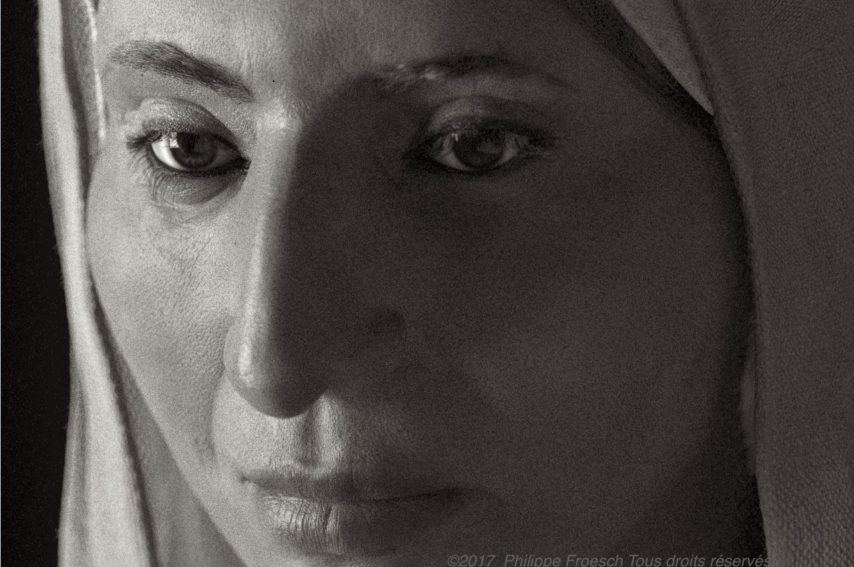
I attended the conference of Dr. Philippe Charlier, medical examiner, at the Royal Convent in St Maximin by the Association of Friends of the Basilica. […]
Source: Mary Magdalene’s face reconstructed by scientists – Magdalene Sacred Journeys
This is your June astrology overview. This first part is all about planetary ingresses. When planets move into new signs, shifting they way our thoughts and feelings shift, we and they create rippl […]
Source: June 2025 Astrology Forecast: Planetary Ingresses, Lunations & Aspects

Miracles Abound As the North Node in Pisces continues slowly retrograding its way through Pisces until July 26, 2026. Pisces is the sign of Miracles and with the North Node here this Miracle factor…

Source: Mutable Energies Lead to Gemini Clarity: Expect a Uranus Bolt ♒️🌬️⚡️

“Feng Shui only applies to you if you have a body and live on Earth” (me) Fawn Chang One of the biggest problems I encountered when I first learned about Feng Shui over 30 years ago w […]

Try this Natural Mounjaro Recipe, a 4-ingredient detox drink that boosts metabolism, aids digestion, and supports weight loss naturally. […]

Chrystian Sensei is a member of the original Hālau located at Vallejo, California, where he also resides. He is a licensed Massage Therapist on staff at Orcanit Wellness in Oakland, California; a Chi Gung practitioner, and a student of the Western Mysteries Tradition. Aloha e komo mai, Chrystian!

The relationship between sutratmic continuity and present learning is likely to remain obscure unless one is ready to probe deeply into the simplest things of life. For example, whilst it may seem easy to learn to walk, anyone who has ever made the effort to teach a cat or dog to walk on two legs would soon discover that it is exceedingly difficult. Circus trainers are able to get four-legged animals to walk like two-legged human beings for short lengths of time. With proper stimuli they can produce predictable responses. But these patterned responses are quite different from the intrinsic Manasic ability of children to hold their heads and spines erect and to be able to function as self-moving beings. The Socratic conception of the psuche as a self-moving agent, together with the Platonic idea of nous as the matter-moving mind, points to the initiatory potential inherent within every human being. Whenever an individual makes a new beginning, initiating a considered line of activity during a day, a week, a month or a year, such a commencement could signify the start of a new phase of learning. Whether one takes as the starting-point of such an endeavour one’s birthday or any other cyclic reference-point in life, one is recognizing the permanent possibility for all individuals of making fresh ventures into the unknown. Ordinarily, human beings are protected by not knowing too much about their previous lives or knowing too much even about the immediate future of this one. Since individuals learn to live in ignorance of the unknown, and at the same time venture on the basis of what they do know, clearly there is an indestructible element in every immortal soul which enables a human being again and again to make a fresh start. This permanent element is not simply the Atma-Buddhi or Divine Monad, but also the distilled and assimilated wisdom of past lives gathered in the sutratman, the repository of the fragrant aroma of past learning.
If every human being brings this precious inheritance of prior efforts towards individuation into the present life, and if all have passed through several initiations in distant lives, what relevance does this have to the onset of the Aquarian Age? Commencing on June 19, 1902, and having completed its first degree, the Aquarian Age has already brought about an unprecedented heightening of self-consciousness, and it holds a tremendous potential for the future. Something of the fundamental significance of the Aquarian Age can be glimpsed by recollecting that the year 1902 was not unconnected with the increasing concern to fly in the air. In the nineteenth century, on the other hand, the ocean was the common term of reference for many people in regard to travel, exploration and geopolitics. If people in the last century took many of their analogies and metaphors from the nautical world, this was because they had such an impressive collection of imposing sailing ships and modern steamships. In Greenwich and in Plymouth, from Cathay to Cape Horn, the romance and excitement of the pioneering exploration of the world’s oceans fired the imagination of adults and children alike. Beginning in the sixteenth century, the rapid expansion of sea trade lay at the basis of the commercial and cultural growth of European civilization. By the close of the Victorian Age, the idea of a maritime civilization had become crystallized in the minds of such writers as Mahan and Fisher and consolidated the image of a globe governed by sea power. The construction of large ocean liners capable of sailing thousands of miles at considerable rates of speed provided ordinary people with basic metaphors concerning the conduct of life. The exacting skills needed in navigation received an attention reminiscent of older conceptions in literature and myth, viewing man as the captain of his soul. Yet now, in the twentieth century, with the vast elaboration upon what the Wright Brothers began, there is a fundamentally new outlook that has emerged with reference to the atmosphere surrounding the earth.
Even early in the century, artists and visionaries were stimulated by grand, if sometimes fanciful, conceptions of what the implications of flight could mean to human beings in general. By the time of the First World War, shrewd politicians like Winston Churchill perceived with almost prophetic clarity the significant change in the balance of power brought about by the airplane and the appalling dangers that this new capacity could unleash. For most people, despite pioneering efforts by individuals and businesses, it was not until after the Second World War that they were able on a large scale to travel by air. Then suddenly they experienced what otherwise could only have been done by climbing mountains – they gained some sense of what it is like at different elevations. In the past few decades this upward ascent has passed beyond the proximate atmosphere of the earth, reaching into the empyrean of space. Tapping the theoretical insights of a few and drawing upon the cooperative labours of specialized teams of scientists and engineers, a small coterie of intrepid individuals has travelled into space and brought back beautiful images of the earth as a shining gem suspended in the void. Spacecraft with intricate instruments have ventured towards Mercury, Venus, Mars, Jupiter and Saturn, linked to earth only by the finest etheric threads of electrical impulse, and returning copious information regarding long-recognized globes in our solar system.
Broadly, the Aquarian Age is typified by the concept of vertical ascent, whereas during the nineteenth century and before, the idea of horizontal movement was far more prevalent. This is not to minimize the importance of the great circumnavigations of the globe conducted in the maritime era, nor to discount the considerable knowledge gained by daring explorers and naturalists in regard to diverse forms of life. At their best, the nineteenth century naturalists discovered valuable principles of continuity in living form and developed significant intuitions into the geometry of dynamic growth. But now, in the twentieth century, principally because of air travel, people are much more conscious of the enormous relevance of factors such as altitude and atmosphere in relation to the elevation of consciousness. Through the beneficent invention of pressurized cabins, vast numbers of people have had the opportunity to observe that the earth does not seem the same when seen from an airplane as it does when seen on the plains.
All of this merely suggests that there has been a vital change taking place in human consciousness progressively over the last eighty years. From a merely empirical standpoint the entry of human beings into the airy regions is conclusive of nothing. From the standpoint of the Gupta Vidya, however, these outward changes are emblematic of the shift in the fundamental perspective of human experience. The nature and significance of this change cannot be comprehended through conventional and pseudo-rationalistic schemes of popular astrology. Caught up in erratic frameworks and outdated calculations, most astrologers are no more aware of the true meaning of the Aquarian Age than the average person. Few, if any, have deeply reflected upon the precession of the equinoxes, or upon the essential differences between the Taurean, Piscean and Aquarian Ages. Nonetheless, an increasingly large number of individuals have begun to sense a new awakening of human consciousness. Whether they interpret this from a purely personal standpoint, or connect it to some form of secular or sectarian millennial thinking, they can discern that a fundamental change is taking place in the global atmosphere of human life. Some who are sensitive see this in terms of a subtle beauty and alteration in the atmosphere of the earth itself, whilst those who are more perceptive detect a similar change in the atmosphere that surrounds each human being. In general, there is a growing recognition and widespread acknowledgement of a fresh opportunity for human souls at the present time of metamorphosis. Such glimmerings provide an array of opportunities which bring with them fresh avenues for awakening and growth.
Raghavan Iyer
The Gupta Vidya III

This Full Moon in Libra isn’t just about releasing — it’s about cutting away the bullshit that’s been happening in plain sight. This lunation brings with it a wave of feminine rage. Not the kind th […]

When the sky paints a masterpiece just for you …
Capture the calm, cherish the moment!

It is argued that the Universal Evolution, otherwise, the gradual development of species in all the kingdoms of nature, works by uniform laws. This is admitted, and the law enforced far more strictly in Esoteric than in modern Science. But we are told also, that it is equally a law that ‘development works from the less to the more perfect, and from the simpler to the more complicated, by incessant changes, small in themselves, but constantly accumulating in the required direction.’ . . . Esoteric Science agrees with it but adds that this law applies only to what is known to it as the Primary Creation – the evolution of worlds from primordial atoms, and the pre-primordial ATOM, at the first differentiation of the former; and that during the period of cyclic evolution in space and time, this law is limited and works only in the lower kingdoms . . . . As the Hindu philosophy very justly teaches, the ‘Aniyamsam Aniyasam,’ can be known only through false notions. It is the ‘many’ that proceed from the ONE – the living spiritual germs or centres of forces – each in a septenary form, which first generate, and then give the PRIMARY IMPULSE to the law of evolution and gradual slow development.
The Secret Doctrine, ii 731-732
Viewed from the impersonal standpoint of collective Karma and cyclic evolution, Nature suffers fools not unkindly but with compassion. Nature will not indefinitely indulge or underwrite human folly, for as Cicero observed, time destroys the speculations of man whilst it confirms the judgement of Nature. Through cyclic opportunities, Nature actually affords individuals innumerable occasions for the clarification and purification of perception and intention. If human judgement and design are to have adequate leverage on Nature, they must have as their stable fulcrum an intuitive apprehension of law. At the most fundamental level, human judgement and natural law alike stand upon a common ground, a single transcendental source of Being. It is only by rejecting all dualisms, mediaeval or modern, and by refusing to absolutize polarities that the designs of men and the differentiations of Nature may be brought into self-conscious harmony. In Gupta Vidya, there is no cleavage between the aim of Self-knowledge (Atma Vidya) and the practical ideal of helping Nature and working on with her (Ahimsa Yagna). To the perfected will of the yogin of Time’s circle (Kalachakra), Nature is the ally, pupil and servant. Fully comprehending that man is the key to the lock of Nature, the wise yogin finds no intrinsic tension been obeisance to the judgement of Nature in Time and obedience to Shiva, the good gardener of Nature in Eternity.
This philosophic fusion of science and religion, of vidya and dharma, is essential to the structure of the Aquarian civilization of the future and enshrined in the axiom that there is no religion higher than Truth. In accordance with this evolutionary programme and in tune with the Avataric vibration of the age, the Brotherhood of Bodhisattvas has actively sought to dispel the delusive dichotomy between science and religion. Krishna conveyed the beautiful synthesis of jnana and bhakti in his classic portrait of the Self-governed Sage in the Bhagavad Gita. Spiritual teachers have repeatedly warned against the degrading effects upon the mind-principle of ahankaric greed and atavistic fear working through materialism and superstition. From the therapeutic standpoint of the ancient Rishis, the murky ferment of the twentieth century is not to be viewed as a creative tension between two viable cultures, the one religious and traditional, the other modern and scientific. Rather, it is to be seen as the ignorant and schizophrenic clash of two largely moribund inversions of authentic culture. Neither secular religion, with its crude demonolatry and selfish salvationism, nor materialistic science, with its cowardly conformity and slavish hedonism, still less the mutual recriminations and denunciations of one by the other, can offer human beings an assured basis for fulfilment and growth. Just as two wrongs do not make a right, no compound of these costly inversions can rectify the malaise of modern civilization. Neither fight nor flight nor unholy alliance can correct the deficiencies of two waning schemes of thought that do little justice to Man or Nature.
In order to participate freely in the regenerative, not the destructive, tendencies of the Aquarian Age, one must recognize that true religion and science do not need to be rescued from contemporary chaos by messianic crusaders. On the contrary, creative individuals must learn to cultivate moral courage and cool magnanimity so that they may plumb the depths of pure science and true religion within themselves. This cannot be done without assuming some degree of responsibility for the intense karmic precipitations during the present period of rapid transition. Without self-confidence based upon inviolable integrity, the bewildered individual will regrettably fall prey to the contagion of despairing diagnoses, sanctimonious effusions and evasive rationalizations offered by self-appointed pundits and critics alike. No shallow conceit, cynical or complacent, can substitute for the mental discernment and spiritual strength required of pathfinders in the Aquarian Age. Rather than sitting in idle judgement upon contemporary history and humanity, wise individuals will seek to insert themselves into the tremendous rethinking initiated by scattered pioneers in regard to the essential core of Man and Nature and the vital relationship between them. If through earnestness, simplicity and dianoia one can radically revise one’s conception of Nature and Man, then one may powerfully assist that silent revolution and subtle healing taking place today behind the clutter of competing slogans and chaotic events.
As individuals increasingly recognize that the faults which bedevil them lie in themselves and not in the stars, they will progressively discern the Aquarian design woven in the heavens. Through the religion of renunciation of the personal self and the science of Buddhic correlation, one can begin the difficult ascent in consciousness towards comprehension of the mysteries of heaven and earth.
As above, so below. Sidereal phenomena, and the behaviour of the celestial bodies in the heavens, were taken as a model, and the plan was carried out below, on earth. Thus, space, in its abstract sense, was called ‘the realm of divine knowledge,’ and by the Chaldees or Initiates Ab Soo, the habitat . . . of knowledge, because it is in space that dwell the intelligent Powers which invisibly rule the Universe.
The Secret Doctrine, ii 502
Conceptions of space have varied significantly over the centuries, depending largely upon cognate conceptions of time, matter and energy. The arcane conception of space as at once an infinite void and an invisible plenum, replete with intelligence, offers a profound challenge not only to post-Einsteinian science but also to post-Gandhian religion. It demands an entirely fresh view of causality and consciousness, of activity and time. From the standpoint of contemporary physics, any object, including the human form, is almost entirely empty space devoid of anything that might be considered matter. Even without studying particle physics, perceptive individuals are prepared to accept that if they could visualize what an X-ray would show, they would find that only about one quadrillionth of any object is constituted of a few particles and that all the rest is seemingly empty space. Similarly, if they could visualize what various detectors operating over the visible and invisible spectrum reveal, they would find that every point in space is the intersection of myriad vibrating fields of energy. Again, if one were prepared to penetrate beneath the surface of personal and collective habits and institutions, through the discerning power of the disciplined conscience and awakened intuition, one would find an array of Monadic individuals suspended like stars in the boundless void of the unmanifest. To the resonant heart, this immense void would reveal itself as alive at every point with the vibration of the Great Breath in its complex rhythmic differentiations. Through such reflection one may recognize that the seeming solidity of things is mayavic. Their surfaces and contours as they appear to the physical senses and the perception of the psyche are enormously deceptive and strangely confining. By using the mind’s eye one can come to see that what is seemingly full is void and that what is seemingly void is extremely full of Atma-Buddhi-Manasic or noumenal aspects of invisible atoms.
Raghavan Iyer
The Gupta Vidya III

There are many different ways that indoor plants work in a household, from purifying the air around it to bringing more nature to home or even just serving as home décor. They can offer even more, like bring fortune and positive energy. According to science, like humans, plants also have energy and it can make […]

Source: 9 Best Indoor Plants That Bring Good Things For Your Home

Did you know that Vietnamese coriander (Persicaria odorata) flowers and bears fruit annually, especially on plants that are regularly pruned and harvested? This versatile herb is not only a staple vegetable but also a valuable medicinal plant. Here’s why you should consider having a Vietnamese coriander plant at home. Medicinal Properties of Vietnamese Coriander According […]
Source: No matter how small your house is, you must grow this plant in your house.

The Year of the Snake slinks in on January 29, 2025, at the Aquarius new moon, bringing with it 12 months of renewal and growth. Known for its stealthiness and wisdom, the Snake wants you to move with purpose and precision. Relinquish what no longer serves you so you can evolve. […]
Read on: Wood Snake 2025
Read this special page about the Chinese Horoscope 2025 with a detailed horoscope for the natives belonging to the 12 Chinese zodiac signs.
Source: Chinese Horoscope 2025: The Year Of Wood Snake Brings Transformation!

Breathing came naturally to us, then as we grew up, faced traumas, and started building walls to protect ourselves, we unconsciously cut off our natural breath. […]

Source: These Breathing Exercises Will Help You Reconnect to Your Life Force | Astrology.com

Our races . . . have sprung from divine races, by whatever name they are called . . . . Every nation has either the seven and ten Rishis-Manus and Prajaptis . . . . One and all have been derived from the primitive Dhyan-Chohans of the Esoteric doctrine, or the ‘Builders’ of the Stanzas. From Manu, Thot-Hermes, Oannes-Dagon, and Edris-Enoch, down to Plato and Panadores, all tell us of seven divine Dynasties, of seven Lemurian, and seven Atlantean divisions of the Earth; of the seven primitive and dual gods who descend from their celestial abode and reign on Earth, teaching mankind Astronomy, Architecture, and all the other sciences that have come down to us. These Beings appear first as ‘gods’ and Creators; then they merge in nascent man, to finally emerge as ‘divine-Kings and Rulers’ . . . . There were five Hermes – or rather one, who appeared – as some Manus and Rishis did – in several different characters . . . . But under whichever of these characters, he is always credited with having transferred all the sciences from latent to active potency, i.e., with having been the first to teach magic to Egypt and to Greece, before the days of Magna Graecia, and when the Greeks were not even Hellenes.
The Secret Doctrine, ii 764-765
To take the entire subject of cosmic hierarchies at the human level to its sublime heights, one must start with the momentous recognition that many of the ‘gods’ of the ancient theogonies belonged to the First Race of humanity. Human beings in that First Race were gods or devas, and in the Second Race they were demi-gods – celestial spirits still too ethereal to occupy the human form that was being gestated by the lunar Pitris. Then, in the Third Race, with the lighting-up of Manas and the incarnation of the Manasaputras into human form, humanity underwent an evolution which passed through several stages. Beginning with the androgynous and bisexual, it proceeded through the protracted dual-sexed epoch of the human race. There was the legendary era of great heroes and giants. The seven divine dynasties were thereafter to be found in the Third Race and again in the Fourth Race, the Lemurian and Atlantean periods. Instructing humanity in diverse arts and sciences, they laid the primeval foundations of human culture and civilization around the globe.
Within this broad framework, the extraordinarily evocative power of the name and presence of Hermes is especially relevant to the 1975 Cycle and to the civilization of the future. Hermes is a generic name, associated with potent thought, and linked to Mercury-Buddha – a Dhyani – as well as with multiple incarnations in the history of humanity. As the god Hermes-Thot, he is the pristine archetype of Initiators in ancient Egypt, where he was reverenced as Hermes Trismegistus, a name applying to an entire lineage of Initiators. This solar line of spiritual Teachers can be traced back to Shiva as Dakshinamurti, the Initiator of Initiates. The hoary tradition which holds that Hermes taught all sciences to the nascent Mediterranean civilization suggests that he instructed those ready for divine theurgy. The arcane sciences transferred by Hermes from latent to active potency collectively constitute divine gnosis, a precise and comprehensive knowledge of the complex laws governing the seven kingdoms of Nature. These laws encompass the planes of matter, both visible and invisible, the planes from which noumenal prototypes become precipitated or projected into the phenomenal realm. Science in its essence is concerned with primary causes and is rooted in a mature apprehension of noetic consciousness. This is the true and noble meaning of science, vidya in the old sense, which was mysteriously intimated by the Mahatmas to European civilization in the seventeenth and eighteenth centuries to counteract the corruption of creedal religion.
Modern science is a recent flower, emerging sporadically after the Renaissance, and, in particular, after Giordano Bruno’s activities in Germany and his historic visit to Oxford. The Royal Society was founded by heretical and courageous clergymen, men like the Warden of Wadham, who recognized that Aristotelian scholasticism was throttling the growth of human thought, that theology had become nothing more than a corrosive word-game. Together with bold patrons in the discreetly pagan aristocracy, these pioneering heretics founded a small club in London which they called the Royal Society. It was concerned from the beginning with the systematic support of all earnest experimental investigation into the natural world. In this, its purest sense, early modern science is one of the minor contributions of the Brotherhood of Bodhisattvas to the post-Renaissance world. Yet, in the context of the ancient meaning of science, it is a limited thing indeed, shadowy and modest. Originally, ‘science’ referred to a system of laws capable of application by human consciousness to what later came to be cherished by a few reticent brotherhoods as true magic or divine wisdom. Magic is an exact and definite knowledge of the noumenal laws of invisible Nature. Through the proper use of that carefully transmitted knowledge, one can affect the rates of growth and primary structures of energy on the Akashic and astral planes, and so affect conditions and combinations on the physical plane. Modern science, through its neglect of the primacy of consciousness, can hardly approach such a universal synthesis, fusing meta-geometry, meta-biology and meta-psychology.
In the ancient and archetypal view of noetic magic, there is a summoning from latency to active potency of arcane knowledge that was originally impressed in the imperishable soul-memory of all humanity. Going all the way back to the middle of the Third Root Race, when self-consciousness had been attained, human beings were in astral vestures that were capable of effortless and benevolent use of the spiritual senses. Human beings, therefore, through their intuitive knowledge of the correlations of sound, colour and number, were able to communicate effortlessly. In that Golden Age, shrouded in the myths and mists of antiquity, they showed spontaneous reverence to Magus-Teachers, Hierophant-Adepts moving openly among human beings, teaching in fabled “concord groves” all over the earth. Seated under banyan trees (varieties of ficus religiosa), they bestowed divine wisdom upon those who were ready to learn. In that idyllic time the vast human inheritance of spiritual wisdom and scientific magic was assimilated into the karana sharira, the permanent vesture of the monad. It is in that inmost vesture, which is the container of all soul-memories, that the original wisdom and theurgy of humanity lie latent to this day.
Raghavan Iyer
The Gupta Vidya II

Purslane, scientifically known as Portulaca oleracea, is a herb native to Asia with a global presence. Often dismissed as a weed, this plant is not only edible but also exceptionally nutritious. Loaded with antioxidants, minerals, omega-3 fatty acids, and beneficial plant compounds, purslane boasts significant health benefits. Abundant in beta-carotene, the pigment responsible for its […]

Source: If you see this in your yard, do not break it under any circumstances

Nae karama bāndhe nahīṅ,
kṣīṇa purātana hoya.
Kṣaṇa kṣaṇa jāgrata hī rahe,
sahaja mukta hai soya.
Nae karama bāndhe nahīṅ,
kṣīṇa purātana hoya.
Pratikṣaṇa jāgrata hī rahe,
sahaja mukta hai soya.
Do not generate new karma,
let the old be extinguished,
every moment remain vigilant,
and naturally you become liberated.
Do not generate new karma,
let the old be extinguished,
every moment remain vigilant,
and naturally you become liberated.
–S.N. Goenka
Find Your Magic
Tarot Readings, Inspiration, and Self-Empowerment
Making life on earth magick one moon phase at a time.
Astrologer ~ Mystic ~ Writer
of the Collegium Spiritus Sancti, a Golden Dawn Society
An affiliate of the Alpha et Omega Order of Melchizedek
All Knowledge Is Not Contained In Only One School
Connecting the grant community to #LearnGrants
Channelings & Articles
Magic Spell Books & Grimoires
Native Hawaiian Language Revitalization
Poetry & Tales of Love, Mystery, Magic and Spirituality
Organic Herbs, Herbals, Sustainable Gardening
Mother Nature: Feeding The Mind, Body & Soul, with Food, Medicine & Skincare.
"Inheritor of a Dying World, we call thee to the Living Beauty. Wanderer in the Wild Darkness, we call thee to the Gentle Light..."
Time is the most important thing we've been given
Embracing the Divine Within.
"...That I should bear witness to the truth." - John 18:37 // David E. Robinson, Publisher
 Hālau 'Aha Hui Lānākila