Science/Archeology | Scientists Are Racing to Unearth the Secrets of an Ancient Underwater World

ruins of the atlantis civilization underwater ruins

Historians and divers are trying to retrieve prehistoric clues from beneath the waves—but they have to act fast.

  • Around 8,000 years ago, many civilizations thrived on plains that are now submerged by the North and Baltic seas.
  • Now, scientists from a variety of northern European research institutions are undergoing a major study to analyze these regions and find evidence of these past civilizations.
  • Time is of the essence, as many of the regions scientists hope to probe are also prime real estate for growing wind farm installations that are needed to combat rising sea levels in this era.

Read on:  Ancient Underwater World

Theosophy |  CONTINUITY AND CHOICE – II

 The One Life comes into a world of differentiation through prismatically differentiated rays. We can sense in the gentle quality of dawn light something that does not participate in the opalescent colours of the day, something removed from what we call heat and light, cold and shade — a quality of virginal light that is a reminder of states of matter appropriate to states of consciousness which are created and held as potential by beings in general. Then we can begin to see that the whole point of human suffering in its collective meaning is to overcome pain and the false sense of separation. This is the point in consciousness where human beings as individuals could maintain a noetic and complete wakefulness — turiya, a profound awareness from a standpoint which transcends the greatest magnitudes of spacetime. It goes beyond solar systems and intimates that the depths of space represent in the very core of apparently nothing, a subtle creative gestation of matter. If one can see the whole world in terms of its plastic potency, as radiant material for a single universal spiritual sun, then one gains the dignity and the divinity of being a self-conscious individuating instrument of the universal Logos.

 This is the sacred teaching of all Initiates. It is the teaching of Jesus in the Gospel According to John, the teaching of Buddha in the Heart Sutra, and the teaching of Krishna in the Bhagavad Gita and in the Shrimad Bhagavatam. These beings, fully awake, see that all human life, including human suffering, is a projection of a false involvement in a false sense of self. They bear witness to the reality of universal consciousness, not as something potential but as that which can be used as plastic material for new forms of spiritual creation. Creative imagination is not an abstract immaterial force, but the most rarefied and subtle form of material energy that exists. It can be tapped by concentration. By repeated and regular attempts at concentration upon this conception of the One, negating the false sense of the self, one builds and gives coherence to one’s subtler vehicles, shaping what is now chaotic matter and forming a temple, a worthy vesture for a self-conscious being aware of the divinity of all beings and capable of maintaining that awareness through waking, dreaming and deep sleep. Having entered into the void, having entered into the light beyond these states of consciousness, the awakened soul remains in it by choice, while giving the impetus to other human beings to make the same attempt. Suffering and ignorance are collective; enlightenment and spiritual creativity are universal. This is the great hope of the timeless teaching concerning true continuity of consciousness.

 Within the limits of time, however, which is an illusion produced by the succession of states of consciousness, there is only a before and an after, and no full scope for creativity. Consider, for example, a moment of love. Suppose you suddenly come into contact with someone of whom you could say, like the poet Yeats, “I loved the pilgrim-soul in you.” There is a magical, intense flow between two pairs of eyes, and in one instant, a taste of eternity. If two individuals later tried to understand this in terms of what was there the day before and what was there the day after, they would have simply slipped onto another plane. If two people who have such a golden moment of co-awareness later on forget it or identify it with passing and contemporary illusions, then of course they might see it simply as a date in a calendar to be remembered by ceremonial tokens. That is not the same as re-enactment, because the essential quality of that moment was the absence of before and after, or any noticeable succession of states of consciousness. It was not as if they met calculatingly with anticipations and fears, and it was not as though soon after they thought of it as a memory of an event. They simply experienced in a moment of fusion of consciousness a freedom from the false division of eternal duration into a past, a present and a future. It was as if they stood not in one city, not in one street, not in one place, but in eternal space. This is an experience which by its very nature is so profound and beautiful that many people desperately look for it. This may be where the critical mistake is made. In the very attempt to look for it, one might overlook opportunities and arenas where it is more likely to happen. The very notion of seeking it, or wanting it, of maneuvering it, is stifling.

 Our experience of time involves craving and memory. Time is bound up with fragmented consciousness in a universe of change and a constantly moving world of process. At best, it is a deceptive device of convenience for gaining a sense of control in eternal duration, to serve purposes arising from the standpoint of the narrow needs of some particularized self in relation to other particularized selves, where it is useful to talk in terms of a before and an after. Consider a good physician who has seen you at different times and to whom you are more than a file. When receiving an examination, it is as if you are both friends looking together at a common medium which is the physical body you inhabit and which has certain cycles and a history. Two minds looking together at the same body can suddenly see connections between before and after. Patterns emerge and a serial view of time has practical convenience.

 We have, however, another view of time which allows us to discover other types of patterns and connections. If all patterns and connections had to be discovered exclusively by individual human beings, then the human predicament would be even more grave than it now seems. Because many patterns are already given, it is a case of looking for them with a deep detachment, so that one does not cut up and fragment the process. Suddenly one may see that there is a certain moment here and another point, tendency or characteristic there with which it connects. E.M. Forster employed this idea in his novels and expressed it as a mantram — “Let us connect.” To him, in pre-1914 England, the whole difference between human beings moving from the sheltered world of 1914 into the increasingly stormy and socially disordered world of Europe after the First World War, was in the extent to which they could survive the collapse of inherited identities and self-consciously create their own connections. Either human beings forge their own connections or connections will be made for them, but then they will sound arbitrary or malignant, suggesting that some dark, hostile Fate as in Thomas Hardy’s novels, is causing everything. When human beings can self-consciously make these connections, they begin to live with an increasing sense of freedom from time. Time may be seen in terms of eternal duration, which is prior to it, and hence there are golden moments. Time may also be seen in terms of mere convenience, according to a calendar, to help facilitate a limited involvement between human beings, in limited roles and contexts, to take place in a reliable manner. This mode of time may even be made to approximate some broader concept of distributive justice. Time must be seen as an illusion, must be seen for what it is, if a person is to gain the real continuity of consciousness connected with true creativity.

 Today there are various fascinating studies of creativity, which cite examples such as Kekule’s dream that was critical in biology. Kekule dreamt one night of a serpent eating its tail and when he woke up, he got a flashing insight into the circular rather than linear nature of certain processes of growth which are fundamental in molecular biology. The more one looks at such cases, the more one comes to see that truly creative beings cannot be programmed. Even in a society fearfully hostile to creativity, creative minds can still use available resources compassionately. Typically, creativity is difficult to attain because there is too much desire to have it programmed and delivered according to a schedule set by personal consciousness. This comes out in capitalist society in its most extreme form when people feel that there must be a kind of pre-established, controlled, and mechanistic way in which one could have creativity by numbers. By emphasizing substitutability and measurability, by regarding human beings as labour-units who are convertible terms, one can evolve an aggregated view of output and product which is truly dead for the creative artist. A great potter has no sense of excitement in looking at a pot. It is already dead. What was alive was the process of visualization and the process of taking that mental image, while the potter’s wheel was moving, and seeing the shape emerging. The magical moment of emergence is real. Human beings in general have a parasitic attachment to the products of creativity but the vital process of creativity eludes them because it defies ordinary modes of division of time.

 Here, then, is the most critical point, both in relation to continuity of consciousness and in relation to the Demiurge. The Demiurge in the old myths and in many a rustic Hindu painting, is like Vishnu asleep, from whose navel a lotus emerges which is the universe. Mahavishnu is floating upon the great blue waters of space. Around the serpent on which this Great Being rests there is a circle within which a whitish milky curdling is taking place. Intense activity surrounds the periphery of the great wheel of eternity, on which is resting in a state of supreme, pure inactivity, the divine Demiurge, itself only an aspect of the Logos. The great Rig Vedic hymn states, “The One breathed breathless.” It was alone and there was no second. Alone it breathed breathless. There is a transcending sense of boundless space, in relation to which all the notions of space that we have — of an expanding universe, of a closed universe, of solar systems, and galaxies — all of these are like maps and diagrams relating points that are already conceptually separated out and which have boundaries, but are merely partial representations or surface appearances upon the depths of a space which has no boundaries or contours, and which is never delineated in diagrams.

 If continuity of consciousness is to be seen not as something individual but rather universal, embedded in the very process of the manifestation of the One in and through the many, then it is necessary to think away from conceptions of time that are arbitrary and to a view of space which is boundless. Metaphysically, the reason why the Demiurge can both be involved in space fashioning many systems, and also witness all of these like bubbles upon a surface, is because space is not empty. After three hundred years of thought and experiment, modern science is catching up with ancient wisdom and is beginning to see that there is no such thing as empty space, that the content of space is not dependent on other categories of measurement or upon other standpoints of perception. What looks like pitch-black darkness could in fact be enormously full from another and more profound understanding. In one of the great passages in the early part of The Secret Doctrine, the commentary upon the Stanzas of Dzyan says that what to the Initiate is full is very different from what appears full to the ordinary man. The more human beings self-consciously expand awareness, the more they can free their deeply felt conceptions of the world, of reality, and of themselves from the notions of part and limit, from future anticipations and a present cut up into separate particular events, and the more they can bring a conscious sense of reality to their own mental awareness of space as a void — what the Buddha called sunyata, Emptiness — and the more they can replace the ordinary conception of form by the Platonic, which is not bound up with anything fixed.

Raghavan Iyer
The Gupta Vidya II

Theosophy | CONTINUITY AND CHOICE – I

 Suffering arises out of exaggerated involvement in a world of colour, forms and objects, maintained by a false sense of personal identity. As long as people persist in this pseudo-continuum of existence, they necessarily forfeit the exercise of their inner creative capacities and cannot fully seize the opportunities of self-conscious evolution. Human beings produce a false sense of self out of a series of intense particularizations of will, thought and feeling, all of which become the tokens of selfhood. As a result, in the very process of fragmenting oneself into a diversity of desires and conflicting and colliding aims, or of limiting oneself by conceptions which must be concretized in some narrow programme in space and time, suffering is built into one’s life. All exaggerations of the void and illusory ego, all failures to recognize the overarching One, all attempts to live as if one were the centre of the world and without any self-conscious awareness of the beyond, mean that one can only gain happiness, pleasure or fulfilment at a cost. An obscuring shadow follows all pleasure — a compulsive feedback, a necessary negation, an unavoidable depression. When people do not detach themselves and negate excessive involvement in advance of every thought, the negation must come from outside, and after a point people lose their hold over the central thread of unifying or synthesizing awareness.

 Suffering is the obscuration of the light of universal understanding. As long as we live in terms of narrow conceptions of ourselves, shrunken conceptions of space and of time, and with an exaggerated intensity that will necessarily be followed by an external negation, suffering is built into our life. It is coeval with that ignorance of the real which makes what we call human life possible. Human life is a passing shadow-play in which human beings identify with roles and, like candles, are eventually snuffed out. It is a play with a brief intensity focused upon a paltry role and based upon identifications with name and form. One who experiences great suffering, or who reflects deeply upon the relationships at the very root of this process, may come to see that the world and oneself are not apart.

 The world is at least partly of one’s own making but it is also made by the limiting conceptions of other human beings. They have become involved in the creation of a world in which limitation is a necessary part, and they too have forgotten what they innately knew. All human beings begin life by sounding the OM. They all have a cool awareness of the ineffable when they are little children, before they begin to lisp and to speak. In the youth of their sense-organs they experience wonder in relation to the whole of life. In the process of growing up, however, they take on the illusions of others — of parents, elders, teachers, and a variety of people around them — and then they become forgetful of what they already knew. We may reawaken awareness only by self-conscious self-renewal. Awareness is like a colourless universal light for which there are as many focusing media as there are metaphysical points in abstract space. Each human being is a ray of that light. To the extent to which that ray projects out into a world of differentiated light and shade, and limitations of form and colour, it is tinctured by the colouring that comes to it from a mental environment. Philosophically, the mental environment is far more important than the external physical environment.

 When one sees this process archetypally, one recognizes that there is no separation between oneself and the world except in language, reactive gestures, and in certain uncriticized assumptions. Most importantly, there is no separation of oneself from other human beings as centres of consciousness. The notions of ‘mine’ and ‘thine’, attached to pleasure and pain, to joy and suffering, are arbitrary and false. Is that which gives one great joy exclusively one’s own? And, on what grounds do we assume that the suffering of human beings in numerous states of acute self-limitation is purely theirs? Does each one have his own exclusive property rights in collective human suffering and thereby have nothing to do with us? Suffering is intrinsic to the universal stream of conditioned existence. Most living is a kind of pseudo-participation in what seem to be events, but which are merely arbitrary constructions of space-time, and are largely non-events. When a human being comes to see that involvement of a single universal consciousness in a single homogeneous material medium, the very notion of the individual ‘I’ has dissolved.

 We are all aware when we go to the dentist and submit ourselves to something that seems physically painful, through our very awareness of what is happening and our deliberate attempt to think away from our identified involvement with the part of the physical body which is suffering, we can control our sensations to some extent rather than being wholly controlled by them. If this insight could be extended, we might see that the stream of universal consciousness is like an ever-flowing river — in which all conceptions of ‘I’ and ‘you’ and ‘this’ and ‘that’ are mere superimpositions — and then we could begin to stand consciously at some remove from the process of life. Suppose a person came to listen to a discourse of the Buddha with petty expectations, because somebody said it would be quite good, or worth hearing, or fairly interesting. Someone else might have come with a deeper idea because he or she was awake as a soul and had the thought that it is a tremendous privilege to be in the magnanimous presence of a Mahatma, and hence he or she might be lit up. If one is truly lit up, one’s wakefulness makes the greatest difference to the whole of one’s life. It could be gathered up self-consciously at the moment of death. But even a person who comes with so profound a thought into a collective orbit where there are many souls in states of only relative wakefulness and caught up in residual illusions, may forget the original moment.

 The suffering of human life is a jolt which the whole gives the part, the individual ray, to re-awaken in it a memory and awareness of the original moment. Here we can see the significance of certain meditations undertaken by Bhikshus. In Buddhist philosophy there are references to meditations on the moment of birth. Yet how are we to meditate on it when it is an event that has no sense of reality for us? It is simply a certain date on the calendar. The mystery of individuality lies in the privilege and the possibility of making one’s own connections within what otherwise would be a vast, fragmented chaos of events. One could make these connections simply by habit, in terms of one’s first thoughts, or in terms of the reactions of the world and the opinions of others. Or one could make them self-consciously from the standpoint of the whole. This, of course, is very difficult to experience immediately, but every human being can begin to grow in this direction.

 A fearless and dispassionate examination of the past shows that a lot of what once seemed extremely important was utterly insignificant and a lot of what looked impossible to go through was relatively easy. One could take stock of one’s awareness independent of external events and focus it upon intense periods in the past which seemed to be especially painful, meaningless, or terrifying, but which one came through. Then one can ask whether, just as one now feels a kind of remoteness from past events, so too at the very moment of birth, did one feel a kind of remoteness from future events? Was one really involved, or only involved in one part of oneself? Then one can shift to the moment of death and raise the difficult question whether one can see oneself dying. Can one actually see a certain moment where there is an abandonment of a corpse which, through the natural processes of life, must decay and disintegrate and, while seeing this, still hold to an immense awareness of the whole? A person who is able to imagine what it would have been like to stand at a distance from the foetus that became the baby boy or girl can also imagine being at a distance from the corpse which is being discarded. He or she can also see that there is a thread that links these moments, and that the succession is no more arbitrary than the pattern of a necklace when seen from the standpoint of the whole.

Raghavan Iyer
The Gupta Vidya II

Solving Molecular Mysteries:  How Quantum Light “Hears” Quantum Sound

Scientists from the University of East Anglia have proposed a new way of using quantum light to ‘see’ quantum sound. A recent study recently published in the journal Physical Review Letters reveals the quantum-mechanical interplay between vibrations and particles of light, known as photons, in mo

Source: Solving Molecular Mysteries: How Quantum Light “Hears” Quantum Sound

Science and Philosophy | Quantum Breakthrough: Scientists Rethink the Nature of Reality

Whenever measurement precision nears the uncertainty limit set by quantum mechanics, the results become dependent on the interaction dynamics between the measuring device and the system. This finding may explain why quantum experiments often produce conflicting results and may contradict basic assum [… ]

Source: Quantum Breakthrough: Scientists Rethink the Nature of Reality

Helen Demetriou | Venus, the Mother of Jerusalem, The Light Bringer

“According to Eusebius, Hadrian built a temple dedicated to the Roman goddess Venus to bury the cave in which Jesus had been buried. The Orthodox Church celebrates the Dedication of the Church of the Holy Sepulchre on September 26 (Gregorian), the same date as the ancient Roman festival of Venus.”
Melchizedek was the king of Shalem also known as Shalim. Shalim is a god in the Canaanite religion pantheon, mentioned in inscriptions found in Ugarit (Ras Shamra) in Syria. William F. Albright identified Shalim as the god of dusk, and Shahar as Goddess and sometimes known as god of the dawn. Shalim is also identified as the deity representing Venus or the “Evening Star”, and Shahar, the “Morning Star”.His name derives from the triconsonantal Semitic root S-L-M. Many scholars believe that the name of Shalim is preserved in the name of the city Jerusalem and both Shalim and Shahar were the patrons of Shalim.
This tells us that Melchizedek was the high priest of the most high God Shalim which is Venus yet when we look further back we see that Shalim and Shahar were indeed deities of Venus because they had been birthed from Venus herself whom we know to be Inanna, Ishtar, Aphrodite, Astarte, Asherah, Mary Magdalene, Mother Mary etc So in truth, Jerusalem is the city of Venus.
We call the planet Venus the morning star when it appears in the east at sunrise, and the evening star when it appears in the west at sunset, although the ancients called it Hesperus in the evening and Phosphorus, or Lucifer, in the morning. Because of the distances of the respective orbits of Venus and the Earth from the Sun, Venus is never visible more than three hours before sunrise nor three hours after sunset, and it may also surprise you that Venus can be seen in broad daylight, provided you know where, and when, to look after reference to an almanac.
-Masonic Library
After Jesus was born in Bethlehem in Judea, during the time of King Herod, Magi from the east arrived in Jerusalem, asking, “Where is the One who has been born King of the Jews? We saw His star in the east and have come to worship Him.”
-Matthew 2:2
The study of Phoenician gods revealed three goddesses to be different aspects of the planet Venus. A similar trilogy exists in the Norse pantheon, but with different names. It is believed that the Phoenicians, or Canaanites carried their beliefs with them when working on the Temple for Solomon and may have affected its ultimate design.
It is said that the first known name for the city of Jerusalem was Urushalim, “Uru’ founded by “Shalem”, the name of the Canaanite god of Venus in its evening setting, but Solomon’s Temple was facing in the opposite direction, towards Venus rising in its role as morning star. We can be certain that King Solomon’s Temple was built by Canaanites who were known to worship Venus, also we can understand that Solomon had no tradition of his own to give him the knowledge of how to build a temple that was properly constructed to interface with the heavens. However it is perplexing that these Venus worshipping Phoenicians were allowed to build the house of God.
Biblical scholars have noted from passages such as I Kings 11.5 that Venus was worshipped by Solomon in her special form as the deity of the Phoenicians and he fell out of favour with God. The official worship of Venus as Astarte, the Queen of Heaven continued in the Kingdom of Judah until circa 600 BCE.
Moses created Princes of the Tabernacle and the initiations took place when the Pentagram, or blazing star was to be seen in the east. A blazing star that is referred to as a Pentagram can only be a reference to Venus which had long been associated with the pentagram because of the planet’s apparent movement around the sun when observed from Earth. It is suggested that when the Romans destroyed Jerusalem and the Temple in year 70 of the Christian Era, a number of the Princes of the Tabernacle managed to escape to locations across Europe. It was from these families that the men came, who went on to found the Knights Templar.
-Masonic Library
Venus is represented by the pentagram, hexagram, heptagram and octagram. For a time, a pentagram was the official seal of the city of Jerusalem and it was also the symbol of the Pythagoreans.
In later times, it was used by medieval Christians to symbolize the five wounds of Christ, and figured in the heavily symbolic Arthurian romances. In medieval times, the pentagram represented the proportions of the human body.
In alchemical texts, the four elements (in Latin)- flatus, ignus, aqua, terra, superseded by light, or divine energy- illustrated the process of creation, and the biblical motto Fiat Lux, or, “let there be light.” Venus and the pentagram is the symbol of the Light Bringer, the Morning Star who is also known as Lucifer in Latin and Phosphorus in Greek.
This Venus, this Morning Star, is the same star the Jesus called himself and it is through Venus that all of the elements of Jerusalem, David and Melchizedek are connected. The star that rose out of the House of Jacob is both David and Jesus and that star is Venus and that scepter was passed on as the divine seed from the bloodlines of Jacob, through to David, through to Joseph and then to Jesus himself.
In many icons you will see Mother Mary associated with the star which symbolizes Venus. The church fathers were well aware that Mary manifested from her previous known names of Venus which grew out from ancient mesopotamia. Venus has always been the Queen of Heaven, Earth and the underworld and she has always been known as the mother of the sun, who is the dying and resurrected fertility god which is again, another connection with the original name of Bethlehem.
She is Venus herself who produces the messenger of light who comes to Earth to bring the Christ Logos which is the divine Word. As the Mother of the Mysteries, it is through her son that the world becomes enlightened should they choose to follow his Way which leads straight back to her, which is the soul.

Theosophy | DEATH AND IMMORTALITY – IV

 Most human beings are unable to attain the seed idea of enlightenment which is fructified in the form of an imperishable vesture by those who have fully prepared before death to enter into the state of immortality. For most people, even the seed idea of immortality cannot be grasped, and therefore they are quickly drawn to all the various samskaras or attributes which come back to them. There is a persisting matrix made up of all these attributes, revivified by one’s own newly-formed desire or attachment. Then one begins to make one’s first entry into physical life through having formed a line of attachment with particular parents. Such people dream about mating couples and get so involved with the purely physical side of life that they are very soon caught in the illusory process of birth. They cannot expect to know what birth means because they did not know what death meant.

 So, this whole teaching is highly significant if we can see its practical implications and various facets. By reading The Tibetan Book of the Dead, or by looking at Tibetan pictures of the visions of the dead, one could accumulate a vast amount of detail about the symbolic forty-nine days of the bardo with all its day-to-day visions. But merely accumulating a great deal of fantastic knowledge does not add anything to our meditation on death. The moment we start with ourselves and ask not why we are afraid of death but why we hold on to life, the moment we begin to see significant connections, it will be possible for us to discern that at all times we have available to us either the standpoint of nirvana or the standpoint of samsara. If we are ready to see this, we can come to understand those who have gained or can gain immortality in this scheme of things.

 Ordinarily, according to Tibetan teachings, people will not incarnate immediately. When someone has died, that person will not linger or be drawn back to earth-life except in three cases. First are those Bodhisattvas, those enlightened sages who deliberately linger, having renounced nirvana, to assist and help other human beings to gain the knowledge that they have of the meaning of all these states. Secondly, there are those people who die with a total obsession with one line of thinking, not necessarily bad or sinful beings, but those with an idée fixe. These people will also linger. They will prolong the entry into the bardo state, and the more they prolong it, the more difficult it will be for them to pass from the swoon into the state of awakening, into a new consciousness, and benefit front it. The third class of beings who are drawn back and hover around earth-life are those who had so intense a love — like a mother’s love for children — a sense of unfulfilled or uncompleted love, or a love which, however much fulfilled, is still so powerful and so personal that it binds people and draws them back to earthly life. But even these will not appear as bhuts or ghosts unless they are galvanized into activity by adepts in the art of necromancy, a practice strongly condemned in pure Buddhist teaching.

 Such nefarious practices do go on in the name of Buddhist tradition among several Red Cap sects, especially in places like Bhutan. They have actually been put forward as Tibetan Buddhist, in the name of scholarship, by people who have quoted supposed authorities who have never even visited Lhasa, let alone had the privilege of some kind of initiation into the pure teachings of the Panchen Lama and the Dalai Lama. It is not therefore a question of considering all the various forms which possession could take that would constitute a true understanding of the Tibetan teaching of death, let alone of immortality. That there must be such demonic usurpers is not difficult to conceive. But they are unnatural. Tibetan teachings do refer to the victims of suicides and murders, people who are in the state of swoon and could be used by other beings who function freely on subtle planes of consciousness, using subtle vestures for their own foul purpose. But this is not something that need concern us.

 The crucial insight that we gain from Tibetan teaching is that immortality is not something to be achieved or won, not a prize to be awarded to a favoured few. Immortality is nothing but another aspect of mortality. Even now we either live immortally or live mortally. We either die every moment or we live and thirst, depending on whether we are focused upon the nirvanic or upon the samsaric aspect of embodied consciousness. If we are constantly able to sift the meaning of experiences and to see our formal vestures for what they are and pass from one plane of perception to another, then indeed it may be possible, when blessed with the vision of clear, pure light — the great vision of sunyata — to enter straightaway into that vesture which enables us to remain free from the compulsion of return to earthly life. But this cannot happen unless it flows naturally out of the line of life’s meditation. It cannot happen all of a sudden. It is not some kind of special dispensation. It is itself a product of the working of Karma.

 Beings who have undergone this condition of final illumination have either chosen to remain immortal but in the Dharmakaya vesture, unrelated to manifested beings and humanity, or they have chosen the Nirmanakaya vesture and deliberately chosen to enter into relationships with human beings. These Nirmanakayas ceaselessly point to the basic truths concerning the meaning of death and the perpetual possibility of immortality. They teach people that within themselves they are Buddhas without knowing it. Now, the Prajnaparamita states that the Buddhas are themselves only personifications and therefore they could become illusions for us. What is it that we are going to meditate upon when we consider the immortals? Are we going to think of them as glorified physical personalities, archangels in radiant raiment, somehow idealized and more beautiful but related to our own physical conception of physical life? Or are we going to think of them as minds, a great gathering of extraordinary and powerful minds who collectively constitute the great mind of the universe? Or are we going to look upon them simply as beings who have become aware of their true Buddha nature and have therefore become instruments for the working of consciousness, instruments that will be helpful and unifying, because that is the nature of consciousness, whereas the nature of form is divisive.

 Thus the whole doctrine, even of the Lha, those gods seemingly tucked away in a limbo, refers to beings who not merely work in relation to the world but also by their ceaseless collective ideation maintain in the world the force of the Buddha nature. The Buddha nature is not some abstract principle. It is actually embodied in the collective consciousness of such beings perpetually in the universe. We come to see that the various phases in the process of the concretization of the universe from an absolute realm, through archetypes, through individualized forms of thought, and ultimately to material forms, that this whole process is re-enacted in the bardo state, between death and rebirth. A great re-enactment has taken place. Who knows what re-enactment takes place within the embryo especially during the first seven months in the mother’s womb? Science and medicine know almost nothing about what happens then or why. These are the great mysteries connected with the primal facts of birth and death. If we can consider that there is available in Buddhist teaching the knowledge that there is regular re-enactment of a continuous cosmic process before the eye of the soul, then we can see that enlightenment is not the great terminus to a laborious and boring process of striving, but a ceaseless opportunity which inheres in this very world of woe and delusion, which we call samsara, and to which we cling like blind fools, knowing not Life and afraid of death.

Raghavan Iyer
The Gupta Vidya II


They who are on the summit of a mountain can see all men; in like manner they who are intelligent and free from sorrow are enabled to ascend above the paradise of the Gods; and when they there have seen the subjection of man to birth and death and the sorrows by which he is afflicted, they open the doors of the immortal. — TCHED-DU BRJOD-PAI TSOMS

. . . as ‘there is more courage to accept being than non-being, life than death,’ there are those among the Bodhisatwas and the Lha — ‘and as rare as the flower of udambara are they to meet with’ — who voluntarily relinquish the blessing of the attainment of perfect freedom, and remain in their personal selves, whether in forms visible or invisible to mortal sight — to teach and help their weaker brothers.
A Gelung Of The Inner Temple

Theosophy | REINCARNATION AND SILENCE – III

 If we trace the English term ‘soul’ to its Greek antecedents and equivalents, we soon find a wide variety of meanings. Even before the time of Socrates, many accretions and materializations had already gathered around the concept. It was compared to the wind. It was also supposed to mean ‘that which breathes,’ ‘that which is alive.’ And it was given many other meanings and often couched in metaphorical terms through analogy with sparks and a central fire. It became crucially significant for Plato to enrich the notion of ‘soul’ and to give it an existentially human meaning to do with the very act of search, the very desire to know the good, the hunger to make distinctions — not only between the good and the bad but between the good and the attractive, not only between the true and the false but between the true and the plausible. The desire to make noetic discriminations becomes the basis for a functional definition of the soul. Plato taught that, metaphysically, the soul may be seen either as perpetual motion or as a self-moving agent. In one passage he refers to a particular kind of motion which is not visible in the material realm but may be properly ascribed to the hidden Logos, the invisible deity. Elsewhere, what he identifies as the soul is connected with volition. What would it avail a man who uses the word in a Socratic sense but does not come to terms with his own will-problem, or worse still, becomes identified intellectually with his weak-willed self?

 Language is very important here. The prolonged abuse of the term ‘soul’ in the Middle Ages resulted from a decisive shift in meaning. An active agent was replaced by something passive, something created. In a corruption of the Socratic-Platonic meaning, the ‘soul’ became merely something acted upon, a passive agent receiving reward or punishment. The term ‘soul’ almost became unusable, so that in the Renaissance humanists had to assert the dignity and divinity of man in ways that did not involve them once again in the debased coinage of the terminology of the past. In the twentieth century the term ‘self’ is coming into wide circulation, recovering some of the dignity of the classical conception of the soul.

 A person brought up in a corrupt language system could receive tremendous help by borrowing a term from Sanskrit and trying to recognize its open texture. The compassionate Teachers of the Theosophical Movement chose to introduce from that sacred language terms like Manas — the root of the word ‘man,’ from man, ‘to think’ — into the languages of the West. When Emerson eulogizes “man thinking” he is using two English words in a manner that confirms exactly the full glory of the idea of Manas. Yet we also know that both the words ‘man’ and ‘thinking’ can be so degraded in everyday usage that they do not convey the glory of manhood implied by Manas. The term Manas in Sanskrit means not only ‘to think,’ but also ‘to ideate,’ ‘to contemplate.’ To contemplate in this classical sense is to create, to sustain a continuous and controlled act of creative imagination enveloping more and more of the whole, while retaining that core of individuality which signifies responsibility for the consequences of all thoughts, all feelings, all words, and all acts. This is a kingly conception.

 It is often advantageous for a person to go outside his particular prison-house of debased language and explore classical concepts. As we grow in our awareness, we may make the beautiful discovery that even in the accents of common speech there are echoes of those pristine meanings. The literal meaning of words is less important than the tone of voice in which we use them. It is possible for a man in the street to say to another, “Hi, man” with unconscious contempt, and for a traveller in the Sierras to say, “Hi, man,” in a manner that expresses genuine fellow-feeling. Miranda in The Tempest, seeing human beings for the first time, exclaims:

O, wonder! How many goodly creatures are there here!
How beauteous mankind is! O brave new world,
That has such people in’t!

 Every word has a depth and beauty of feeling that makes ordinary English words rise like wingèd skylarks into the universal empyrean — generous, cosmic and free. Beyond all languages and concepts, the very act of articulation is of immense importance. Perhaps the most beautiful passage on the subject of reincarnation is to be found in The Human Situation by Macneile Dixon. This great lover of the literatures of the world, of Plato and Shakespeare, dared to suggest:

 What a handful of dust is man to think such thoughts! Or is he, perchance, a prince in misfortune, whose speech at times betrays his birth? I like to think that, if men are machines, they are machines of a celestial pattern, which can rise above themselves, and, to the amazement of the watching gods, acquit themselves as men. I like to think that this singular race of indomitable, philosophising, poetical beings, resolute to carry the banner of Becoming to unimaginable heights, may be as interesting to the gods as they to us, and that they will stoop to admit these creatures of promise into their divine society.

By speech a man can betray his divine birth, and just as this is true of speech in its most sacred and profound sense, it is also true of human gestures. The simple mode of salutation in the immemorial land of Aryavarta is filled with this beauty. When the two hands come together, they greet another human being in the name of that which is above both, which brings the two together, and includes all others. There is something cosmic, something that has built into it a calculation of the infinite in the expedient, even in this gesture.

 But what is true of gestures could be even more true of human utterance. The surest proof of the divinity and immortality of man is that through the power of sound he can create something that is truly magical. He can release vibrations that either bless or curse, heal or hinder other beings. This is determined by motivation, intensity of inmost feeling, and the degree of individual and universal self-consciousness, nurtured and strengthened through constant meditation and self-study.

 Suppose one were to ask of the gods, “Give me one of two gifts for all men. Give me first that gift which will suddenly enable all men to say that they know about reincarnation and the soul, and that they believe in immortality. Second, give me that gift which enables all men to help babies to grow with a feeling of dignity, deliberation, beauty and sanctity in regard to human speech.” The wise would know that the latter gift is much more valuable than the former, because mere beliefs will not save human beings even though truly philosophical reflection upon alternatives is part of the prerogative of a Manasic being, a man in Emerson’s sense. These beliefs can only be made to come alive through the exercise of conscious and deliberate speech, with a delicate sensitivity for the existence of other beings, and an immense inner compassion for all that is alive. If human speech were not constantly wasted and made into something so excessive and destructive, so mean and niggardly, we would not find so much of the self-hatred, mutual distrust, pessimism and despair that characterize our lot. We would not find ourselves in a society which is free but where, alas, the loudest voice is the most feared and tends to have the widest impact.

 Anyone who can existentially restore the alchemical and healing qualities of sound, speech and silence, to some limited extent, in the smallest contexts — in relations with little children, with all he encounters even in the most trivial situations — does a great deal for the Bodhisattvas. Those Illuminated Men, by their very power of thought and ceaseless ideation, continually benefit humanity by quickening any spark of authentic aspiration in every human soul into the fire which could help others to see. The truth of reincarnation requires much more than a casual scrutiny of our external lives and our spoken language. It must be pondered upon in the very silence of our souls. It is a theme for daily meditation. In the Bhagavad Gita Lord Krishna tells Arjuna that true wisdom is a meditation upon birth, death, decay, sickness, and error. To meditate upon each of these and all of these together is to begin to know more about the cosmic and the human significance of the truth of reincarnation.

Raghavan Iyer
The Gupta Vidya II

Theosophy | KARMA AND REPENTANCE – II

 W.Q. Judge stated that “Karma is a doctrine too vast and complicated to be disposed of by set rules applied like balance-sheets to commercial enterprises; but one thing is certain — Karma is action viewed from every side and on each occasion.” In his article entitled “Is Karma Only Punishment?” he points out that one branch of the Law of Karma deals with the vicissitudes of life, with the differing states of men, with rewards and punishments. Each state is the exact result bound to come from acts that disturb or preserve the harmony of Nature. Karmic rewards work both on the material plane and on the inner character, on the circumstances and on the tendencies of the person placed in a particular environment. We are continually fitting our arrows to the bow and shooting them forth, but it is not the arrow or the bow that counts. The important thing is the motive and the thought with which the missile is shot. Again, in his article on “Environment,” Judge held that the real environment to be understood and cared about is that in which karma itself inheres in us. It is only because we see but an infinitesimal part of the long series of karmic precipitations that any apparent confusion or difficulty arises.

 The third aphorism on karma points out that “Karma is an undeviating and unerring tendency in the Universe to restore equilibrium, and it operates incessantly.” Aphorism No. 6 states that “Karma is not subject to time, and therefore only those who know the ultimate division of time in this Universe know Karma.” Aphorism No. 13 holds that the effects of Karmic causes already set in motion “may be counteracted or mitigated by the thoughts and acts of oneself or of another.” Further, we know from Aphorism No. 19 that “changes may occur in the instrument [of the Ego] during one life so as to make it appropriate for a new class of Karma,” and this may take place through intensity of thought and the power of a vow and through natural alterations due to complete exhaustion of old causes. Aphorism No. 20 tells us that the soul and mind and body “have each a power of independent action,” so that “any one of these may exhaust, independently of others, some Karmic causes.” Aphorism No. 25 makes it clear that “birth into any sort of body and to obtain the fruits of any sort of Karma is due to the preponderance of the line of Karmic tendency.” Aphorism No. 27 asserts that “measures taken by the Ego to repress tendency, eliminate defects, and to counteract by setting up different causes, will alter the sway of Karmic tendency and shorten its influence in accordance with the strength or weakness of the efforts expended in carrying out the measures adopted.” Finally, Aphorism No. 28 affirms that “no man but a sage or true seer can judge another’s Karma.”

 The section on Karma in Light on the Path similarly presents an occult rather than a mechanistic conception of Karma. We learn that the future is not arbitrarily formed by any separate acts of the present but that the whole of the future is in unbroken continuity with the present as the present is with the past. Even a little attention to occultism produces great results. When a man gives up the indecision of ignorance, even one definite and knowing step on the good or evil path produces great karmic results.

 He who would escape from the bondage of Karma must raise his individuality out of the shadow into the shine; must so elevate his existence that these threads do not come in contact with soiling substances, do not become so attached as to be pulled awry. He simply lifts himself out of the region in which Karma operates.

 This is precisely what Ajamila did. He learned that there was no cure for desire, for the fear of death or the thought of reward and punishment save in the fixing of the sight and hearing upon that which is invisible and soundless. He freed himself from the bonds of karma only by fixing his whole attention on that which is unaffected by karma. If Ajamila was able to invoke the name and the love of God on the approach of death, this must have been because he did not allow his misdeeds to corrupt his inner consciousness or to destroy the line of his ideation in his early life and in previous lives. Ajamila’s repentance may seem to us to be sudden or even easy, but this is precisely where we are mistaken. It is only a highly evolved soul who can refrain from rationalization even when he falls into a nightmare of wrongdoing, who can bring total intensity to his thought of his Higher Self and the God of Love. It is because we are not in a position to know the entire karmic sequence in the lives of Ajamila, it is because we do not see that part of his karma was working through his finer tendencies developed over a long period, that we look upon his dramatic conversion as an easy way of expiation and a setting aside of the Law of Karma.

 Many people take a crudely materialistic view of karma and cannot come closer to its profoundly mysterious workings on the subjective planes of consciousness. Every human being has within himself the karma-less fount of being, the Guardian and the Divine Parent who is a spectator of karma but is untouched by it. Mere personal repentance is of no avail and cannot expiate our sins or free us from the effects of our actions. True repentance must belong to our deepest natures, must clearly reveal the root cause of our betrayal of the divine within us, the crucifixion of the God within. Spiritual conversion or resurrection is only possible if we cease to identify ourselves with our personal sheaths while assuming full responsibility for their scars, and if we wholeheartedly activate our vesture of immortality by sacrificial tapas and regenerative meditation. It is a mistake to isolate sinful acts or acts of repentance if we wish to grasp the working of the Law of Karma on the invisible as well as the objective planes of being.

And he said unto them:

Take heed what ye hear: with what measure ye mete, it shall be measured to you; and unto you that hear shall more be given. For he that hath, to him shall be given; and he that hath not, from him shall be taken even that which he hath.

And he said:

So is the kingdom of God, as if a man should cast seed into the ground; and should sleep, and rise night and day, and the seed should spring and grow up, he knoweth not how. For the earth bringeth forth fruit of herself; first the blade, then the ear, after that the full corn in the ear. But when the fruit is brought forth, immediately he putteth in the sickle, because the harvest is come.

And he said:

Whereunto shall we liken the kingdom of God? or with what comparison shall we compare it? It is like a grain of mustard seed, which, when it is sown in the earth, is less than all the seeds that be in the earth; but when it is sown, it groweth up, and becometh greater than all herbs, and shooteth out great branches; so that the fowls of the air may lodge under the shadow of it.

And with many such parables spake he the word unto them, as they were able to hear it.

The Gospel According to Mark 4:24-33


Raghavan Iyer
The Gupta Vidya II


Theosophy |  KARMA AND REPENTANCE – I

 There are two influential doctrines which could colour the attitude of the seeker of wisdom towards the concept of true repentance. Both doctrines contain a germ of truth, but in their extreme formulations they are false and pernicious, dangerous distortions. One is the fatalistic doctrine of mechanical repentance, tied to a severely formal view of punishment. We have the notion that the only way in which we can expiate our sins of omission and commission is by receiving in the future the precise penalties attached to our acts, that there can be no repentance which mitigates our penalties. We may say to a sinner, “You have done wrong; you may regret your action and you may try to learn the lesson of your failure, but you cannot avoid the consequences of your act in the future; your karma is bound to catch up with you sometime and you must be ready to receive your penalties.” The other doctrine is that of sudden repentance, sometimes linked to the idea of vicarious atonement. We have here the notion that it is possible by profound regret and a dramatic act of confession and self-abasement to set aside the inexorable working of the law of Karma. We may say to a sinner, “You have sinned, yet you need not be oppressed by the thought of your future penalties; you can here and now cancel the consequences of your past sins; you can invoke the compassion of the Illustrious Beings who are the Great Guardians of the Law; you can implore the forgiveness and the blessing of the God within you.” Which is worse — a too mechanical or a too lax interpretation of the Law of Karma? What is true repentance?

 In order to answer these questions we could usefully turn to the story of Ajamila in Book VI of The BhagavatamBy means of stories from the lives of prophets and kings, sages and devotees, this great scripture popularizes the truths contained in the Vedas. It would be easy to draw the wrong lessons from these stories or to read into them our own preconceptions. Every story must be seen as a corrective to a prevailing error or a half-truth concerning morality, salvation and the spiritual life. There are the well-known stories about Narada, Kapila, Dhruva and Prahlada and many stories about Sri Krishna. This fascinating work was composed by Vyasa, who handed it down to Suka, who in turn passed it on to King Parikshit, from whose court it was subsequently transmitted by saintly minstrels.

 The story of Ajamila is briefly as follows. He was a man who married a woman of evil ways and became very dishonest, an easy prey to wicked and sinful habits. Of his ten sons, his favorite was the youngest named Narayana. One day, when Ajamila thought he was dying, he was terror-stricken by the sight of three ugly, demon-like attendants of the King of Death. He called his son Narayana, but as he uttered the name his mind became wholly concentrated on Narayana or Vishnu, the Lord of Love. While he was thus intently meditating upon God, there appeared before him the attendants of Lord Vishnu who confronted the attendants of Death. The latter asked the former why they were preventing the Law from taking its course. As a man sows, so must he reap, they said. Man is subject to the three gunas and his present life shows plainly his past as well as his future. His deeds leave their impressions on his subtle body and these impressions control his actions, and his future life is determined by all his present deeds. Ajamila was in his early youth, the attendants of Death reminded the attendants of Vishnu, a devout and truthful man, self-controlled, well versed in the scriptures, a friend to all beings and creatures. But one day, while in the woods gathering flowers for worship, he was aroused by the sight of a lustful couple, lost all control of himself, became greatly attached to the woman who was a wanton, forsook his lawful wife for her and gave up the pure life that he had been living. He wasted his entire fortune trying to please this woman and began to employ dishonest means to earn his living. He was now about to die in all his sins, to be taken to the King of Death who would punish him justly, and the suffering he would undergo could purify him.

 The attendants of Vishnu replied that Ajamila had expiated all his sins by uttering the name of God and surrendering himself to the Lord. Wrongdoing is not eradicated or expiated, they said, if the mind continues to follow wicked desires, but when the name of God and the love of God have purified the heart all sins are completely destroyed. The mere name of God has power to save even the most depraved. On hearing all this, the attendants of Death went away and Ajamila regained his consciousness and gradually got back his health. He felt that he had received a great blessing perhaps owing to a few good deeds stored up from his past, and his whole life seemed to be transformed. He gave up his evil ways, renounced his home, practised Yoga for many years, attained self-control, and his mind became firmly fixed in the contemplation of the Divine Self. When death finally came to him, he gave up his body while chanting the sacred name of God and absorbed in meditation, thus freeing himself from the bondage of karma.

 In the preamble to this story we are told that if a man commits sinful acts which he does not expiate in this life, he must pay the penalty in the next life and his suffering will be great. Expiation and repentance are of no avail to a man who continues to commit sinful acts knowing them to be harmful. All sinful thoughts and evil deeds are caused by ignorance and true expiation comes from illumination. The fire of spiritual knowledge consumes all evil and ignorance, and complete transformation of the inner life is accomplished by following and living the Truth and through the development of the love of God. Even the most sinful man is purified if he surrenders himself to the God of Love and with whole-souled devotion serves his devotees. The path of love is the simplest way by which to free ourselves from sin. Death is conquered and the fear of death is overcome by meditation upon Krishna, the God of Love. This message and the illustrative story of Ajamila seem to imply that a man can, by intense and sudden repentance, earn for himself the right to expiate his sins through prolonged meditation and devotion in this life, even freeing himself from the bonds of karma. It would also seem that such a view is contradictory to the doctrine of exact and inexorable Karmic retribution.

Raghavan Iyer
The Gupta Vidya II

Theosophy | KARMA AND DESTINY – III

 One cannot continue to listen to the voice of delusion until one finds oneself trapped in the self-woven meshes of despair, and then hope to be suddenly and vicariously saved. Recognition of the futility of seeking vicarious salvation is no reason for inertia or fatalism. One should never underestimate the potency of tapas and true repentance. Sages alone are in a position to judge the karmic ratios and curves of any person and they never dismiss the hope of self-redemption for a single human being. They understand the practical import of the Bodhisattva vow, which is rooted not in wishful thinking but in the essential nature of the soul. Even if only at the moment of death, when the Divine Prototype assists in the separation of the principles, inner guidance is available in recognizing the true meaning of one’s life. Long before the transition called death, there are precious opportunities in times of cool reflection, and during the nightly passage into sushupti, to strengthen the bond with the Higher Self. But these opportunities must be used wisely if one is to take hold of the plank of salvation — the immortal Monad — and not be carried off by the whirlwind of worldly distractions.

  By bringing Buddhic intuition to bear upon the necessary relations of past causes and present effects in particular situations, it is possible to extract karmic lessons from a ceaseless process of becoming which would otherwise appear random, chaotic or even trivial. Whilst it may seem easier to apply a general principle to a specific situation than to derive higher meanings from lower phenomena, it is important though difficult to show relevance, integrity and proper timing in bringing the abstract to bear upon concrete contexts. These interrelated aspects of Buddhic understanding, intimately connected with the Platonic teaching about the upward and downward dialectic, are mirrorings of Karma operating on the mental plane through cyclic time. Both the seemingly subjective processes of thought and the apparently objective features of its activity are instantiations of the One Law. Metaphysically, it is the inseparability of spirit from matter that accounts for the immutability of law in nature and the correspondence of modes of action between different planes of substance or matter. Nevertheless, there is a fundamental distinction between noumena and phenomena, between spiritual factors and physical forces, and this is connected with the crucial difference between the Akashic Divine Prototype and the astral form, the manvantaric star and personal constellation of each incarnated individual.

 The entire teaching of Karma is an elaboration of the truth of “absolute Harmony in the world of matter as in the world of Spirit”. We need to see the similitude of all things and the signature of the Divine in all the works of Nature. Anyone can appreciate the beauty of the sunrise and sunset or look at the night sky and sense the harmony of the heavens. But in the West, since the days of Pythagoras and Plato, it was already known, and commented upon by Cicero and Philo, that few could connect what they saw in the firmament with what was taking place around them on earth. For too many people spend too much time in idle gazing, without looking from above below and from below above, bridging the gap between heaven and earth. The benevolent and protective feeling towards the whole of humanity experienced by astronauts privileged to view the good earth from outer space is a poignant pointer to the future. But it is not necessary to journey into outer space to gain a feeling for global welfare. Strong and mature men and women of universal culture can serve as witnesses to the human significance of the harmony of the heavens, and become attuned to the music of the spheres. Sensing in their own hearts the majestic harmony of the metaphysical world of spirit, they may recognize its mirrorings in the world of matter.

 Karma either comes as an avenging “fury or a rewarding angel”. The distinction has nothing to do with externals, but rather with the inward spiritual impulse of one’s actions, which by their benevolent or selfish motivation, draw back upon the doer the blessings or curses of unerring destiny.

 Yea — ‘Wise are they who worship Nemesis’ — as the chorus tells Prometheus. And as unwise they, who believe that the goddess may be propitiated by whatever sacrifices and prayers, or have her wheel diverted from the path it has once taken. ‘The triform Fates and ever mindful Furies’ are her attributes only on earth, and begotten by ourselves. There is no return from the paths she cycles over; yet those paths are of our own making, for it is we, collectively or individually, who prepare them.

The Secret Doctrine, i 642-643

 The only prayer that is consistent with the religion of responsibility is the sacrificial invocation of the Higher Self on behalf of all humanity. Through growing gratitude for the gifts already received from parents and teachers, one may gain the courage and honesty to correct one’s freely chosen course. In time one can learn to insert oneself into the universal giving and receiving of that which is the heartbeat of sacrificial Karma. With greater intelligence and maturity, with more wisdom and discrimination, but above all, with a profounder benevolence for all living beings, one will enter into a richer sense of the citizenship of the world. Nourished in the silence and solitude of meditation upon the One Light, one can exemplify a detached precision and effortless transcendence as a compassionate participant in the visible cosmos of beings who are sharers in collective Karma. In time one may sense the awesome stature of the manvantaric star of each individual abiding behind and beyond the panoramic changes induced by the personal constellations which provide opportunities to participate in the samsaric stream of individual and collective self-consciousness.

Raghavan Iyer
The Gupta Vidya II

Daily Words of the Buddha for July 15, 2023

Puññameva so sikkheyya
āyataggaṃ sukhudrayaṃ.
Dānañca samacariyañca,
mettacittañca bhāvaye.

Train yourself in doing good
that lasts and brings happiness.
Cultivate generosity, the life of peace,
and a mind of boundless love.

Itivuttaka 1.22
Gemstones of the Good Dhamma, compiled and translated by Ven. S. Dhammika

Theosophy | KARMA AND CHOICE – III

 Spiritual and mental diet forms the character. If a person wanted to use this teaching, he would make vast discoveries by doing a little meditation upon the Three Fundamentals of The Secret Doctrine in the light of the idea that their ethical bearing is universal. They enable the person, whoever, whenever, over the years, who decides to become a student of Gupta Vidya, to widen his vision and deepen his understanding. And he can do this at home, at work, in solitude, and in all spheres of life. Wherever he walks, he walks in a sphere of light and he walks as a man with an ever-widening vision. He becomes a man whose character is rock-like in its integrity. His integrity is as firm and unyielding as the spinal cord when it is a true vehicle of the divine fire, and his being is magnanimous with the fullness of his heart. He reaches outside of himself in every direction — his mind and soul compassionately encompassing every possible point of view, especially when embodied in the haunting, stumbling efforts of another human being who is trying to begin by asking, “Who am I?” To truly answer this question could be centrally important to anyone who wants to become, over the next thirty years, in the humanistic phrase of a nineteenth century writer, “A man not of property but of character.”

 The whole practical use of the teaching requires recognition of the distinction between the various classes of karma. If we would understand not merely when karma is expended in spite of ourselves, but when we could make a difference in relation to the expending and altering of effects of karmic influences that work in our lives, we must see the operation of the three classes within the three fields mentioned in the ancient and sacred axioms upon the subject of karma. A crucial aphorism states:

Changes may occur in the instrument during one life so as to make it appropriate for a new class of Karma and this may take place in two ways: through intensity of thought and the power of a vow, and through natural alterations due to complete exhaustion of old causes.

The choice here relates to positive, deliberate, Promethean penances that any man could engage in — intensity of thought and the power of a vow. Intensity of a thought means that the thought is worthy of meditation, of being used for reflection. The stronger the nature, the more impersonal and intense will be the force of the meditation. The more recurrent that meditation, the more that intense thought is generated to a point where it goes into orbit.

 Every time one’s mind turns to meditation, there is, unfortunately, some obscuration. There are forms that arise in connection with it as in the denser part of the earth’s atmosphere. Any person who thinks that with the steam engine of existing thought he is going to propel himself into outer space — and ‘outer space’ equals ‘inner space’ metaphysically — is making a mistake. But there is no reason for a person to aim to start off with reaching the moon or any planet further off from the earth. He might start, however, by hoping that he attains to sufficient intensity in his meditation to begin to become a revolving wheel, such that when it revolves, it lifts him somewhat above the grosser atmosphere of the earth, but which yet, as it revolves, smoothly comes back into earth life. This revolution is, after a point, calm and steady.

 If intensity of thought is understood in this way, the power of a vow is enshrined in the ancient idea of a pilgrimage. Step by step, true pilgrims move by the power of a vow. A vow is taken by a person who, in taking it, stands looking in a certain direction, with a clear purpose in mind. Whatever minor vows we take follow from a great vow — a vow to be a good student of Bodhi DharmaTo bring that down into today means making many decisions, making minor vows. We should not tell anyone these vows unless there is need to do so for the sake of helping others. They should simply be carried out. To combine two analogies, even if a pilgrim comes by borrowed car and mechanical transportation, he has eventually to walk toward the doors of the mystery temple, to be received and come in on his own.

 A vow has to do with an attitude of mind. Unless there is an adjustment and a purification in the attitude of mind, intensity of thought cannot be handled. Intensity of thought will boomerang and it will merely make one’s karma worse. This happens to many people. One does not want it to boomerang except to the extent to which it, Shiva-like, attenuates and destroys the shadowy self-idea. On the other hand, one wants one’s thought to reach out as a beneficent force to all other elementals, mixed with psychic embryos that constitute the universe in its preponderant astral light, as well as the planes above and planes below. A person who can direct such a beneficent motive will find that intensity of thought will be potent and constructive if it is accompanied by the positive and penitent attitude implicit in the taking of a vow.

 To take a vow means, “I am soft, I am shaken that I live like this. If these things are representative of my mental attitudes, I will expiate them, not merely by my suffering and recognition that that is the way I was, but also in a conscious sacrifice of similar intentions upon the altar of that holy and untrodden invisible, unmentioned, intangible ground of the heart.” There alone one may truly worship the causeless cause. There, the only object of worship is the universal spirit. The only priests are good thoughts and good intentions. The only sacrificial victim is the personal self, with its inimical and hostile intentions and thoughts that are incompatible with and unpurifying to the sanctity of the inner sanctuary.

 Because of the great holiness of the subject of karma, and because all vows remind us of the Buddha’s vow, it is appropriate to recall that any human being could learn from the example of Gautama Buddha. From his example we may appreciate the full strength that is possible from a life-binding resolve: self-generated, self-binding, self-administered, constant and consistent, focused upon one main, universal impersonal idea. Anyone who seeks the ancient Path to enlightenment can thereby earn for himself the invisible sacred bond with the Lodge of Mahatmas. He who wishes to be worthy of that association until the moment of death could, by the power of a vow to help and serve other human beings, wipe out many karmic residues. He could gain the immense privilege of accelerating, with a toughness in response and anticipation, the self-conscious purgation of personal and constrictive karma.

 Even though all of this sounds so forbidding, it is like a grain of dust in relation to the voluntary sacrifice of those who descend on earth to take upon themselves the karma of all. They take upon themselves the limitations and weaknesses of all, and do what they  can with that additional burden to increase the opportunities of those struggling souls who, despite their failures of yesteryear and of previous lives, warm at the moment of choice and have earned the joy of a new beginning. Such a soul could say, “I am not worried anymore about the past because I know that I am a manasa.” Such an one will bring his questions about the mysteries of Self and karma to Brahma Vach. He can stand erect and proud as a man and walk like one, silently determined to increase his efforts on behalf of every human being caught in the overwhelming agony of ignorance. It is ignorance of the Bodhi Dharmaignorance of themselves, and ignorance of the self-made windings of karma that make men suffer. It is only by the karmic force of a vow made on behalf of all our fellow men that the dawn of universal enlightenment may be hastened. Such a vow will be a living power in a man’s life, making him a living embodiment of the unity of all beings.

Begin thy work, first having prayed the Gods
To accomplish it. Thou, having mastered this,
That essence of Gods and mortal men shalt know
Which all things permeates, which all obey.
And thou shalt know that Law hath established
The inner nature of all things alike;
So shalt thou hope not for what may not be,
Nor aught, that may, escape thee.

                  PYTHAGORAS 

Raghavan Iyer
The Gupta Vidya II

Theosophy | THE EYE OF WISDOM – III

 In modern thought we are caught in the trap of ceaselessly absolutizing the relative owing to our inability and difficulty in understanding unity or diversity, let alone of unity in the midst of diversity. This has given rise to shallow ethical relativism in all our relations to each other and our self-conception. In practice it leads to the appalling belief that anything goes, or, as put by Ivan in The Brothers Karamazov, ‘If God is dead all is permitted.’ One cannot cultivate a sense a moral responsibility without freeing ourselves from the trap of ethical relativism. One must begin by refusing to regard anything conditional as final or sacrosanct before the bar of one’s own quiet self-contemplation. At the same time, in one’s own self-study — engaged in repeatedly as often as possible, daily, weekly, monthly — one should seize upon the highest and the noblest, wherever it be in Nature, mankind, oneself or in others, and make that hold the initiative. One must keep this as that which is inviolable, that which is beyond analysis and argument, that which is the testing-ground and the touchstone. Then with its help and strength, one must turn to everything else and look, with calm detachment and a sense of proportionality — sophrosyne — upon all that comes as the noise of the world, despite the vast clamor and seeming majority support, spelling no doubt the decay, downfall and doom of vast number of souls at a certain climacteric moment in the history of the human race.

 To do this requires the courage to individuate, and that is why to individuate and even to begin the dialectical quest, let alone to cross the barrier between being and becoming, is much more difficult than anything else. Too many people have flattered and distracted themselves by seemingly being preoccupied with the higher reaches, because of their terrible fear that they are in the grip of the very lowest forces. They have not even begun to stand up straight or to take a few steps. They must first learn to maintain a minimum continuity in the attempt to move from the realm of death to the realm of life and immortality, from the region of ignorance to the realm of wisdom. The authentic life of the dialectic is marked by degrees of progressive awakening and increasing insight into that which is essential, true and lasting, that which is universally applicable at all times, and that which must cancel all lesser truths.

 The pernicious tendency to absolutize the relative is in direct proportion to one’s degree of conditionality as a self-conscious participant in the pilgrimage of humanity towards universal enlightenment. Thus, the effort to become less conditional in one’s willingness to serve others is a direct help in moving toward a truer conception of the unconditional Absolute. This is the root reason for vow taking on the spiritual path of the dialectic. The unconditional is in all conditions. It is in the present moment. It is both a philosophical and a mathematical puzzle that the present moment cannot lapse because it must be divisible into infinitesimals and recurring decimals, and therefore no duration of time can have an end, even if it may seem to have a beginning. If that is so, there is that which is incommensurable, that which is actually and also potentially infinite within the finite, within each moment, within each and everything, and therefore, the unconditional is the ground on which we stand. To stand knowingly upon the ground of the unconditional is to raise one’s sights to the unconditional in the sky as a remote ideal, but also to apprehend it as that which touches upon our very breathing. To take one’s stand in the unconditioned is to learn to distinguish, in a world of conditionalities, that which opens the door, that which is freer, that which is less conditional, and that which is more open-minded. This is an exquisitely fine art and it is enormously enhanced by taking a stand in the conviction that certain things are inviolable and supremely sacred.

 That is what great souls have again and again shown, as for example Gandhi, when he was a boy, in regard to the vow he made to his mother about vegetarianism. It was shown by the vow of supreme resolve and renunciation taken by Buddha when he was a young man and he first saw the basic facts about human life. This is the archetypal vow taken by all souls, and it is the universal measure of true manhood. It is the hallmark of what it is to be truly human — to move towards the divine, and to divinize one’s life by making small beginnings. Instead of treating as sacred a false view of privacy, let alone the fleeting and deceptive boundaries of personal consciousness, one must revere the light in the eyes, the flame of love in the heart, the spark of decency and empathy which enables one to reach out in universal fellowship to all beings. It is this which must be made the basis of what is inexorable, inviolable and irreversible in oneself, if one is to become an apprentice in the fine art of becoming eventually like those who have crossed that ultimate threshold where any reversal or fall is inconceivable, those who have become achyuta, incapable of falling, like the Absolute.

 Far beyond the threshold that separates becoming from being in the Platonic dialectic lies the threshold that separates being from Non-being, which is real Being. To cross it means to become a perfected spirit, what to ordinary conception is a pure abstraction, a non-being that can have no gunas or attributes. Hence, the extreme difficulty in conceiving the true state of the highest perfected sages, those who alone realize in full the vision of the Eye of Dangma. Psychology has no conception of such a being or spirit, while metaphysics rejects entirely the possibility of the infinite having any conscious relation to the finite. Moreover, perfected spirit and the eternal principle are virtually synonyms. Hence, to speak of the existence of a perfected spirit as implying consciousness, or to speak of a non-entified presence implying unconsciousness, or absolute conscious, in the eternal principle, amount to much the same thing. The conception of a perfected spirit as a presence signifies the essential and co-extensive identity between the highest Sages and the entire plane of Akasha, the plane of Mahat or Universal Mind.

 That which is Akashic is also Fohatic, always capable of mediating between mind-spirit and matter. Ultimately, spirit and matter are one, and therefore Fohat is always capable of dynamizing, through the interaction of spirit — which is matter at a sufficiently homogeneous level that it is like pure spirit, matter which is at a sufficiently heterogeneous level that it is like mere matter. This is the engine, the bridge, the dynamizing capacity of Fohat itself in Akasha. Both Akasha and Fohat at the highest and deepest level have to do with constant, ceaseless, universal, unbounded ideation. Any human being who begins to move in this direction, regardless of the boundaries and limitations that are inescapable for him at any given time, begins to enter that plane on which he or she may become capable of communing, tapping and receiving help from much greater minds and hearts, much greater men and women of meditation and compassion, who on higher planes are engaged in eternal ideation. If this were not true, there would be something irredeemable about the human condition and there would be something totally false about almost everything that we take for granted and in terms of which we live. Therefore, there is something transcendental as well as something temporal in notions like rta, universal harmony, and dharma, that which upholds, supports and maintains any and all living beings in this cosmos. There is also something supremely important in the endless points of Fohatic connection between the attributeless, transcendental Absolute and that which is immediately before our ordinary senses at any given time, and in any context.

 What the sage realizes continuously, and what the apprentice on the path struggles to glimpse intermittently, is that the Absolute, as the source of all manifestation, is therefore also the source of the plenitude we see around us. Dwelling on this idea reminds one of the inherent generosity in all being, however we tend to approach this generous plenty through the psychological medium of relativities, light and darkness, good and evil, like and dislike, and so forth. To use these dichotomies wisely requires a recognition of them in ourselves, and then a determination to treat them as stepping stones to rectification. Rectification is a sacred concept in the Buddhist Sangha and on the Buddhist path, as also in the teachings of Confucius, who spoke of the rectification of terms in the light of the Great Extreme. Indeed, the greatest need of our time is the rectification of anything and everything at the simplest level in relation to the ABC’s of human living. This is difficult, but the existence of perfected Sages tells us that it is possible. Were it not difficult enough, however, we add to it by being all too interested in the contradictions and workings of the pairs of opposites in others. In other words, we have become cowards and escapists, evading the task of confronting life directly and living autonomously, let alone individuating. So, we live vicariously through the lower perceptions of others, wandering in the twilight zone of shadows and zombies, of soulless beings and beings that have pledged themselves far back in the past to the finality of certain self-destruction and loss of soul. This is the basis of judgmentalism or fault finding. We are warned that this is the downward path, if only for the reason that it muddies karmic waters and does a lot more harm to ourselves and others besides.

 Authentic meditation on the Absolute can alone purify our perception of the relative. Meditation is the greatest purifier. Like the Spiritual Sun, the purifier of purifiers, the AUM is the supreme purifier. When we meditate on the AUM and the Spiritual Sun, and on the highest beings who are the living, dynamic, omnipotent embodiments of the highest current that flows from the sacred heart of the Spiritual Sun, reverberating as the eternal AUM throughout the ages, we have an infallible and ever-accessible means of cleansing our consciousness. We can cleanse our thoughts — even the very best, cleanse our feelings — even the noblest, because they are all polluted by the lie of separateness, by the false sense of self-hood, by the fearful self-protective concern for oneself separated from all others. If we were to avail ourselves of meditation as a purifier we would soon see the irrelevancy, let alone the profanation, of judging others, and begin, therefore, to be suffused with thoughts of generosity to all.

 In other words, we would begin to transform generosity and magnanimity from being fugitive and superogatory feelings in the heart, to being the firm basis in the mind of all our thoughts, word and deeds. We would learn to think generously about this world, about Nature, about all humanity, about human growth, and about all rays of the one light. We would also learn to think generously about all those individuals from whom we learned, and to whom we owe far more than we can repay in one life, and even learn to be generous to all those from whom we learned only by negative example. In time, we would become generous in the consciousness itself that we bring to waking each day and to going to rest each night, drawing from a deeper source of abundant generosity within the realm of Akashawithin the divine sphere around the human being, and within the immortal soul, making it flow with the dawning of light each morn, and with the diffusion of light through the day. Letting go all false sense of conditioned being, we could withdraw in meditation into the hidden darkness, the land of Silence and Non-being, wherein lies the Supernal Light that neither rises nor sets, which is the ultimate source of all that gives meaning and beauty, grace and generosity, to human life, and which is eternally witnessed by the opened Eye of Dangma.

Raghavan Iyer
The Gupta Vidya II

Daily Words of the Buddha for July 01, 2023

Upanīyati jīvitamappamāyu.
Jarūpanītassa na santi tāṇā.
Etaṃ bhayaṃ maraṇe pekkhamāno,
lokāmisaṃ pajahe santipekkho.

Life is swept along, next-to-nothing its span.
For one swept to old age no shelters exist.
Perceiving this danger in death,
one should drop the world’s bait and look for peace.

Saṃyutta Nikāya 1.100
Translated from Pāli by Thanissaro Bhikkhu

Theosophy | KARMA AND DESTINY – II

 Choices are not random. Collectively, they show a tonality and texture which traces the line of life’s meditation, the dominant choice over a lifetime. This choice depends upon the degree of discernment of the different types of external and internal conditions surrounding the soul. Externally, there are myriads upon myriads of elemental centres of intelligence already imprinted by the thoughts, feelings and acts of individuals, past and present, embodied and disembodied. They are drawn to each person and respond to the rationalized desires of the lower self, thus giving seeming substantiality to the entrenched delusion of personal existence based upon likes and dislikes. Those who are extremely weak-willed from the standpoint of the soul and excessively self-willed in the eyes of others have fostered the deceptive notion that they are forging their own path in the world, whereas in truth they are only acquiescing through compulsive reaction in their lunar destiny. Alternatively, there are internal conditions which include the solar potency of pure ideation of the Monad, the immortal Buddhi-Manas which is capable of sustaining a strong current of selfless meditation. The range and richness, continuity and depth, of such meditation depend upon mental calm, unconditional compassion and spiritual fearlessness. On the noumenal plane, thought, motivation and volition are indeed inseparable. Authentic mystical states arise from the fusion of the deepest aspirations, the finest feelings and the strongest affirmations of meditation within the solemn stillness of the sanctuary of the soul. Daily renewed in deep sleep, consecrated at dawn and dusk, and invoked with humility before sleep, the inward vision of universal good may be made into a continuous current through the potency of a Vow. In time one can silence the lower mind at will, altering the polarity of the nervous system, and ponder the karmic meanings and lessons inherent in the events and opportunities of each day. Thus reaching beyond any limited sense of identity and in the oceanic calm of one’s true selfhood, one may listen to the voice of God within the heart, the daimon honoured by Socrates and Gandhi. For a trained mystic who has learnt to give Nature time to speak, the inner voice can become the ever-present Chitkala, the benediction of Kwan Yin as a constant guardian.

 For the average person, whose highest vestures are veiled by the samskaric residues of past actions and present vacillation, the inner voice cannot be heard and the pre-birth vision of the soul is forgotten. Yet, they may be mirrored dimly in the muddled personal mind as vague and chaotic recollections, as feeble and faltering notions of some essential reform to be made in life, or some sacrificial act of goodness to be offered in the service of others. Through inconstant flickerings along the invisible spinal cord, there may be sporadic resolves to renew the most precious moment one can recall from early childhood or from fleeting contact with the benevolent current of past teachers. In a variety of ways, even if only fitfully and imperfectly, every person can receive help from internal conditions which can release the spiritual will. The greater the fidelity, the selflessness and self-assurance with which one cleaves to these inner promptings of the immortal soul, the more instantaneously they light up the immediate task at hand. Above all, the more they are heeded, the less the effort needed to sustain continuity. With the same certitude, the opposite consequences follow for those who foolishly ignore or flaunt this inner guidance for the sake of enhancing the delusive sense of personal self-importance. But even the most spiritually impoverished human beings are sheltered by the invisible protection of the Divine Prototype, and therefore even amidst the muddle and froth of psychic fantasy there is a concealed thread of truth. Wise and loving friends might be able to recognize and strengthen it. A true spiritual teacher could help to sift the wheat from the chaff, quicken the inward process of alchemical transmutation, and show the pathway to Divine Wisdom.

 As the One Law of spiritual evolution, Karma is more generous to each and every human soul in need of help than the niggardly thinking of the nihilistic can envisage. It is neither a doctrine that is so abstruse and remote that it cannot be related to the present moment, nor is it nearly as inflexible and hostile as claimed by those who have gratuitously declared a vote of no-confidence in themselves and in the human race. Far from precluding the idea that each human being has a unique and inherently significant mission on this earth, the Law of Karma actually ordains that every single person has a divine destiny which he or she alone can and must fulfill. There is an authentic dignity and beauty, a profound meaning, to the uniqueness of the divine presence in and around every human soul. The sacredness of individual choice was affirmed as the basis of human solidarity by the inspired forerunners of the Aquarian Age, those luminaries who initiated the Renaissance and the Enlightenment in Europe. If the prospect has not yet smiled upon all, this is because too many have laboured under the dead weight of traditional theology or secular fatalism.

 Those who believe in Karma have to believe in destiny which, from birth to death, every man is weaving thread by thread around himself, as a spider does his cobweb; and this destiny is guided either by the heavenly voice of the invisible prototype outside of us, or by our more intimate astral, or inner man, who is but too often the evil genius of the embodied entity called man.

The Secret Doctrine, i 639


 The heavenly voice of the invisible Prototype is heard and felt, without any external tokens of empirical certitude. In the life of a good and simple person, who makes a mental image of Christ or Buddha, Shiva or Krishna, that voice may seem to come in a form engendered by the ecstatic devotion of the individual who has purity of heart. Many thousands of people all over the world belong to the invisible fraternity of fortunate souls who, having made a fearless and compassionate invocation on behalf of a friend or relative in distress, suddenly heard a vibrant voice of authoritative assurance and sensed an aureole of light soon after. This voice may appear to come from outside oneself, and, paradoxically, that other voice, the voice of the intimate astral, all too often the evil genius of man, seems to originate within. When it speaks, it aggravates the confusions of the compulsive persona, inducing the hapless listener to rush into mindless activity. When the heavenly voice speaks to the depths of one’s soul, it has a calming influence and allays the anxieties of kama manas. There is a natural soul-reticence to tell others about the heavenly voice, and a grateful concern to treasure its words in silence. However well-intentioned, anything that is allowed to pass through the matrix of the psychic nature risks distortion and generates a smoky obscuration that acts as a barrier to further guidance and profounder help from the Divine Prototype. What begins as unthinking indiscretion soon becomes delusive, and unless promptly checked, culminates in abject servitude to the astral shadow. Then, deceived by this simulacrum, the shadow of oneself outside the path of dharma, one is drawn in a direction that may be contrary to one’s true destiny. This abdication from the soul’s self-chosen task in the course of evolution may initially be imperceptible but the choice of destinies remains as long as the two voices can be heard.

 Both these lead on the outward man, but one of them must prevail; and from the very beginning of the invisible affray the stern and implacable law of compensation steps in and takes its course, faithfully following the fluctuations. When the last strand is woven, and man is seemingly enwrapped in the net-work of his own doing, then he finds himself completely under the empire of this self-made destiny. It then either fixes him like the inert shell against the immovable rock, or carries him away like a feather in a whirlwind raised by his own actions, and this is — KARMA.

Ibid.

Raghavan Iyer
The Gupta Vidya II

Theosophy | KARMA AND CHOICE – II

 Metaphysically, in relation to the three planes of the Unmanifested, there is no distinction in the Three-in-One between absolute, attributeless Compassion, absolute, dimensionless Truth, and absolute, unconditional Love. There is no difference because all three together constitute the invisible point in an ever-revolving mainspring that is the vital centre of the great wheel of universal harmony. Through the notion of harmony, a person might come to reflect upon the metaphysical relation between justice and mercy as centripetal and centrifugal forces. The starting point to gain this perspective is self-examination. Take a period in one’s life. A day might be too short for this for the average person — you might take a week, a month, a year — and actually list out on a sheet the number of occasions on which one either omitted or was fortunate to be able to exemplify justice to every other human being. Then on a separate sheet list the number of occasions on which one tried to be merciful to other human beings, or where through thoughtlessness and inconsideration rooted in self-worship — which is nothing but the insecurity of the shadow — one omitted to be merciful. Soon one will make an amazing discovery because one will find that these are two different aspects of a single truth. That truth is the degree to which ignorance was the pole star of one’s life centred in the personal mind, and the extent to which one’s highest ideation became manifest in one’s consciousness and conduct.

 No act is performed without a thought at its root, and this is the basis of karma for thinking beings. This is always the case. What it implies in strict elementary logic is that even the most apparently automatic act has a thought at its core, either at the time of performance or as leading to it. A being who is fully self-conscious, who has attained to universal self-consciousness, and therefore is totally aware of the Self, is incapable of ever engaging in any act at any time without an instantaneous and simultaneous awareness of the intention accompanying it. Because this idea is so sacred, a lot of harm is done by people who talk idly of ‘thought-forms’ and ‘vibrations.’ This is the sad result of dissemination, among the unready mass, of the delusions of the failed students of Philosophia Perennis.

 In ordinary language we all are aware of what it means to say, “Oh, that’s a good idea.” “Oh, that’s a good thought.” Everyone, at some time in his life, maybe at some season of the year, has had a good thought for someone else. “Oh, let me do this for someone else. Let me send this Christmas card. Let me express this goodwill.” Every human being has experienced the most natural form of occultism — having a good thought and seeking for it an appropriate form of expression. In this age where it is so rare, they are very privileged who, through the magic of the madness of love, spend a lot of time not just on the benevolent thought but on the manner and the appropriateness of the expression of the thought. Some people, by a kind of soul-intuition from previous lives, and especially when they are very young, realize that a good idea must have the total purity of privacy if it is to be preserved. There must be an insulation from uncongenial elementals in making that thought inviolate, wrapping it up within an invisible circle of secrecy and privacy, so that it becomes a point in metaphysical space and may find an appropriate form.

 When we begin to see this, we are better able to know what it means to earn the privilege of hearing the teaching that men are manifested gods, creative mind-beings; Manasaputras bearing the burden of the responsibility for raising all manifested matter; carriers of the divine mandate of helping the great architect, the collective demiurge behind the manifested universe. These thrice-blessed “fortune’s favoured soldiers” may suddenly begin to feel the immensity, the grandeur, the glory of the responsibility of being human, a thinking being, capable of choosing at will a thought and, by dwelling upon it and pouring over it the waters of selfless love, being able to find, out of the more subtle matrix of life-atoms which constitute the thought-vehicle, a form for its benevolent expression. In other words, a person who lives by an inner light begins to see that the real form of a true thought is wholly invisible. It has nothing to do with differentiated matter or the externalities of dependent origination in dependent relationships. He really comes to understand something about subtle matter.

 Two alternatives face such a person, and both alternatives apply to different classes of cases, so that he has a constant choice problem, like the choice problem of the Demiurge mentioned in the Timaeus. Out of many worlds is patterned only one world. This is the dilemma which the Demiurge must overcome. The human being, too, must be ready to grasp the fundamental problem of choice facing him. On the one hand, there are certain thoughts which are of such quality — impersonal, universal, unifying, beneficent — that where they are self-consciously generated or drawn from the Akasha, they do not need any form. They are like sparks or like shooting stars that descend with a speed much greater than that of light and they find an appropriate way of sparking off myriads of atoms. On the other hand, there are those thoughts which need to be encased in a purified, distilled essence, but fashioned out of a purified astral form, out of something more than differentiated matter but something less than the pure, undifferentiated, universal, homogeneous essence. Such thoughts, when they are given that kind of force, are deliberately chosen mental assets. They become available for all other human beings encountered in our lives and yet may also become embodied for a very long time to come so that others could draw upon them for almost an indefinite future.

 What a great privilege, then, is open to the human being who has had the good fortune to learn from Brahma Vach. No one should ignore the ideal as a fit object of meditation. Every person is equally entitled to make the attempt, and no one need fear that he is so unworthy that he cannot make it. On the other hand, he should be spared the terrible karma of the delusion that Everest may be climbed quickly. `Climbing Everest here means choosing every single thought. That is very hard. It requires lives. But one can begin right now choosing a few thoughts, having a little less passivity in relation to most thoughts every week, a little less of that disordered, unthinking, thoughtless, machine-like activity which is lower than that of the animal kingdom, and a little more of deliberate thought. One could, within three months, make amazing discoveries about the mystery of karma — more discoveries from three months of this practice than from a lifetime of mere use of the word ‘karma.’

 William Q. Judge pointed out that “the weak and mediocre furnish a weak focus for karma, and in them the general result of a lifetime is limited, although they may feel it all to be very heavy. But that person who has a wide and deep-reaching character and much force will feel the operation of a greater quantity of karma than the weaker person.” A character broad in vision, generous in sympathy, deep in motivation, firm in the degree of deliberation — this is the self-created product of thought ranging from calm consideration to continuous meditation. Whether a man will have “much force” will depend upon becoming one-pointed in the use of force. Kierkegaard spoke about the purity of heart that goes with a concentration of will when it is focused upon one thing at a time. This is the same idea as that expressed by Cardinal Newman in the line, “Lead kindly light, one step enough for me,” which was so much a favourite of Gandhi. These steps form a very beautiful kind of dance. The great pioneers of the future choose to learn this on the physical plane and in the moral realm, but with the intention of making themselves a bridge to other human beings who want to learn to do this dance, step by step by step.

 This means the will is very much involved. The will is weakened by obscurity of mind, by conflict of feelings, by lack of priorities in relation to purposes. The conservation of energy is the baseline upon which every man takes a stand. On this basis alone he determines the degree of intensity to the force that he can release. There have been many men of much force, but their vision was limited. Their motivation was not rooted in the depths of their being, and so they became like Ozymandias. They created huge thought-structures and towards the end of their lives a few wrote manuals for the benefit of others, telling them to do this, that, and the other thing. But the will was disproportionate in relation to the idea. What is most critical, then, in the formation of character is the food that a human being receives in the way of spiritual and mental diet.

Raghavan Iyer
The Gupta Vidya II

Theosophy | KARMA AND DESTINY – I

It is the Spiritual evolution of the inner, immortal man that forms the fundamental tenet in the Occult Sciences. To realize even distantly such a process, the student has to believe (a) in the ONE Universal Life, independent of matter (or what Science regards as matter); and (b) in the individual intelligences that animate the various manifestations of this Principle. . . .
The 
ONE LIFE is closely related to the one law which governs the World of Being — KARMA. Exoterically, this is simply and literally ‘action’, or rather an ‘effect-producing cause.’ Esoterically it is quite a different thing in its far-fetching moral effects. It is the unerring LAW OF RETRIBUTION.

The Secret Doctrine, i 634

 Karma is the universal law of the One Life in all its myriad manifestations from the cosmic to the atomic, spanning eternity and the present in each moment. Every evolving intelligence encapsulated in matter is unerringly subject to the ceaseless effects of Karma and must conform itself, at first unconsciously and then freely, to its inexorable decree of universal harmony. The doctrine of Karma unveils the metaphysical key to the mysteries of authentic human choice, free will and divine destiny, but it can be comprehended only when applied with Buddhic insight to the large experiences and small events of life on earth. To discern the karmic meanings of the complex details of daily life, whilst experiencing the elusive mystery of incarnation, one must begin with the vibratory rates of the simplest thoughts and feelings, words and deeds, linking them to levels of motivation, states of consciousness, fixity of mind and fidelity of heart. Each thoughtful or thoughtless impulse of the inner nature magnetizes one’s environment through the activity of the organs of the outer vestures, invoking exact compensation and ethical retribution. There is nothing mechanical in the karmic adjustment of magnetic differentials; it is an inward and moral process, an integral aspect of a continual choice between spiritualization and materialization. The distinction between distributive and collective Karma, like the difference between the raindrop and the storm, exists within a larger process of essential unity. Humanity and its units, its races, nations, tribes and individuals, embody a vital energy and share a common destiny which none may resist or repel. The eternally patient and compassionate teacher of mankind, Karma sternly instructs each and all in the supreme lesson that there is no individual enlightenment or welfare apart from sacrificial service to every sentient being, collectively constituting the One Life.

 This pivotal principle, the substratum of free will and destiny, may be understood in terms of the choice between the manvantaric star of one’s individuality and the personal star of a single lifetime. Throughout all possible variations in personal destiny over myriad lifetimes, this choice must be made again and again. The clarity and direction of one’s choices in previous lives shape the fabric of circumstances in which one chooses in this life and future lives. That fabric might be a refined tapestry in which may be etched the mystic emblems of the pilgrimage of the soul, or a coarsely knotted cloth of confused dreams and missed opportunities. Psychologically, there is the wayward choice between two voices: one is the voice of illusion and delusion, of the senses and of the separative personal consciousness which cannot embrace a holistic perspective encompassing many lives; the other is the voice of Krishna-Christos, the voice of God in man which speaks in the universal language of the soul. There is a direct relation between one’s recurrent choices in regard to these voices, and one’s readiness, in the realm of action, to ally oneself with Krishna, standing luminously alone, or his innumerable adversaries. In the Mahabharatan war fought on Kurukshetra, the field of external encounters, individuals are constantly making, mostly unconsciously or with partial self-consciousness, fateful choices between Krishna and his armies. This archetypal choice was offered by Krishna to the depraved Duryodhana, who rejected Krishna in favour of the armies trained by him, reflecting shortsighted empiricism. When Arjuna was offered the privilege of having Krishna as his charioteer, he happily and willingly chose Krishna, even though he did not fully fathom the invisible stature of Krishna, let alone his cosmic splendour.

 Philosophically, the Mahabharatan war is emblematic of the inevitable ethical and spiritual struggle to which every human soul is irreversibly committed by the fact of Manasic awareness, traceable to the sacrificial descent and benediction of the solar ancestors over eighteen million years ago. Each chooses, Krishna teaches, according to his lights, whatever seems best. Thereby the subtle threads of one’s self-devised destiny are fused, and one must pass below the throne of Necessity without looking back, like the pilgrims in the Myth of Er, to live out and learn from the karmic results of one’s choice. Recorded by the Lipikas, engraved in one’s vestures and reflected in surrounding circumstances, this destiny rises up to meet the soul at every turn in life. Yet, though it is ‘written in the stars’, destiny does not preclude the risks and possibilities of further choice.

 Only, the closer the union between the mortal reflection MAN and his celestial PROTOTYPE, the less dangerous the external conditions and subsequent reincarnations — which neither Buddhas nor Christs can escape. This is not superstition, least of all is it Fatalism. The latter implies a blind course of some still blinder power, and man is a free agent during his stay on earth. He cannot escape his ruling Destiny, but he has the choice of two paths that lead him in that direction, and he can reach the goal of misery — if such is decreed to him, either in the snowy white robes of the Martyr, or in the soiled garments of a volunteer in the iniquitous course; for, there are external and internal conditions which affect the determination of our will upon our actions, and it is in our power to follow either of the two.

The Secret Doctrine, i 639


 Even if through past actions one is destined to suffer miseries at the hands of various agencies, the power of choice remains. It is a constant factor throughout all the vagaries of karmic precipitation. As Plato taught, the gods are blameless for the inward condition of the soul in every situation, and each sufferer must choose between either preserving purity of consciousness or becoming stained by the iniquities of unthinking reaction, mental violence and a refusal to take responsibility.

Raghavan Iyer
The Gupta Vidya II


Theosophy | KARMA AND CHOICE – I 

*

My friend, if the whole path and movement of heaven and all its contents are of like nature with the motion, revolution, and calculations of wisdom, and proceed after that kind, plainly we must say it is the supremely good soul that takes forethought for the universe and guides it along that path. — Athenian Stranger

PLATO

 Anyone who wishes to make practical use of the universal principles of justice and compassion inherent in the doctrine of karma must first grasp the idea that what we call the karmic effect is actually inherent in the karmic cause. This could be seen in two ways: first of all, philosophically or metaphysically, and secondly, morally. If karma refers to the totality of interaction of all beings in a single, unified cosmos, then it must be the case that every single act, rooted in a thought or an idea, already contains within itself the whole series of manifestations which appear to exist as its distinct effects. That appearance is illusory. What we call the effect of an act is already contained in the origination of the first impulse of the first thought and feeling constituting the act. This is very difficult to comprehend metaphysically. But anyone could come closer to understanding it from the moral standpoint.

 Each one could look at any single act that he has done and link it up to the state of mind in which he acted and to the quality or colour of feeling that was present in that act. He could look behind ‘thought’ and ‘feeling,’ in the separative and specific sense in which the words are used here, and attempt to see the act in terms of the totality of his character, in relation to the whole of his life, at least since he became a responsible adult, whenever that was for the individual person. The whole of his life has led to this particular act. On this act we have the indelible stamp of the kind of person he is and has become in all the time since the moment of birth, but, more perceptibly, at least since he became a responsible adult. If the whole of his being is imprinted upon that act, in a universe of law he has already, in the very act, determined the consequences of that act to himself as a mind-being, as a unit-being. Therefore, any sound morality would be one that provides a self-validating, compelling and continually applicable basis for ethics, both on the plane of thought and on the plane of feeling, which together are represented in what we call external acts.

 A person who is wise and fortunate enough to include a method of relative and increasing self-scrutiny into his day is engaged in what might be called ‘doing one’s moral arithmetic.’ If he could do this, he would soon be able to work out a few simple sums. Then he would not have to wait, in an Epimethean way, for the sum totals of external effects, from which it is extremely difficult to trace back. Anyone who has studied a bit of elementary mathematics knows, if he is given the answer to a problem, that from the answer one cannot speedily work out the process that leads to the answer. In a very good teaching system, a person would be given more appreciation for grasping the process, even if the actual answer reached is only an approximation. Certainly, this would be preferable to rewarding a person who happened to hit the answer but did not have the proper sequence of steps that follow from the initial statement of the problem, using the relevant basic rules or equations or tables that are provided to him to work out this answer.

 In the moral realm this is extremely difficult, and points to the difference between ignorant human beings and Adepts. An Adept is one who has mastered the mathematics of the soul. Indeed, he embodies it every moment, twenty-four hours a day, and therefore he continually acts with a seeming casualness but out of a profound deliberation based on total detachment. With this perspective, we can understand the reason why the heavenly wisdom in relation to karma should be imparted, in this day and age, with the extraordinary care that has been taken by the Mahatmas. Those who have the good karma — even if not entirely deserved in this life — of coming into contact with Bodhi Dharma are given the opportunity to move from a position of muddle and irresponsibility to a gradual awakening to their responsibility as moral agents: as Manasaputras, as descendants from the divine ancestry of the great collective host that gave the fire of self-consciousness to human beings over eighteen million years ago. Those who do reasonably well render incalculable service. No one can do more than try, and even to try is to make a real choice. They are, in a sense, fortunate, because they are protected from attachment to results since they are not in a position to calculate what Adepts alone can work out precisely. They can render some benefit to the whole of the human race, to the karma of a nation, to the family in which they were born, and to their associates.

 The time has come when no student of Theosophy can afford to ignore the practical moral implications of this aspect of karma, even if he is not immediately ready to grasp the profound philosophical and metaphysical basis of the idea. We have found already in this century, in the last twenty-five years, that the idea has partially come into contemporary thought. Inward responsibility is the focus of several exploratory efforts by contemporary philosophers who want to see its application to punishment. Wittgenstein raised the question whether there is any internal, rather than extrinsic, relation between an act and its reward or punishment. Philosophically, this is difficult to grasp, but deep down we must feel a profound pity and compassion for any person who is a murderer and who is now delighted, in one sense, that he does not have to be executed, but who, on the other hand, is nonetheless excruciatingly tortured by his own thoughts. In some cases, such persons may spend a whole lifetime adding to their karma by broodings that are even worse than the thoughts which led to the murder committed. In other cases, they may be able to look back upon what was done with a sense of relative bewilderment, which Simone Weil would have called a kind of “innocence through penitence.”

 No one could truly make a moral use of the teaching and become a real penitent without becoming ready, before the moment of death, to have deserved the priceless privilege of coming into contact with divine wisdom. To do this seriously requires spending time reflecting upon the idea of the interpenetration of cause and effect and how it applies to each and every one. As long as there is no understanding and proper study of karma, no one will be able to introduce any order into his life relative to the disorders of our time. Nor will he be able to generate a current of true repentance or appreciate the relationship of mercy to justice that is essential to a comprehension of concepts like reward and punishment. There is the statement in The Ocean of Theosophy that “Karma is a beneficent law, wholly merciful, relentlessly just, for true mercy is not favor but impartial justice.” Normally, we think of mercy as gratuitous or arbitrary and justice as relentless or ruthless. In terms of the universal law of karma, human appellations like ‘justice’ and ‘mercy’ are misleading. They are merely approximations arising through an inadequate understanding of connections between causes and effects applicable only over very short time spans and also modified by the gap, not merely between any legal system and the moral justice of the universe, but between the theory of that legal system and its working in practice.

 Suppose a very sincere man truly wanted to find out what is due from him to every other human being on earth — let us say because he has consulted ancient wisdom or merely because he has read Godwin, or even because he thought about it. If this person then asked what could it mean for him to do justice to every human being he ever met in this life, it would be very difficult for him to make a practical response. The mathematics are too complicated. The person hardly knows anyone else. It is forbidding enough to do justice to any human being on earth. But that is what is required on the path of understanding, of Jnana Yoga.

 Supposing, then, this person said, “To the extent to which I cannot know what is due from me to every single being, and yet that is where I want to go — though it take a very long time, even many lives — I have a firm faith that the very desire and determination to go in this direction is not only a holy one, because it is the noblest feeling I feel, but it is wholly compatible with the truth and totality of things.” This makes immensely joyous the prospect of having myriads of opportunities in future lives to be able to perfect the enterprise. Such a person might also say, “Meanwhile, to the extent to which I do not know what doing justice to every single human being means, I might as well err in one direction rather than in the other.” As long as one is caught up in attavada, the delusion of being separate from everyone else — the only conception of sin in the teachings of Buddha — then, if one is going to sin it is better to sin in the direction of exaggerated praise of others than in the opposite direction.

 If this generation is to make the enormously arduous move from being the most abnormal in soul-sickness to becoming human, it would be extraordinarily important to emphasize mercy and compassion. Beyond all else, to be human is to radiate benevolence. As long as one strives to be compassionate and merciful, it will be imperatively and inevitably the case that one will come to understand justice better. Through mercy one may come closer to an appreciation of divine justice, cosmic justice, and above all learn what it means to be just to every living being, every elemental, every constituent of the seven kingdoms of nature. Every single human being has also the prerogative of doing justice to his or her true self.

Raghavan Iyer
The Gupta Vidya II

Daily Words of the Buddha for May 17, 2023

Kalyāṇamitto yo bhikkhu, sappatisso sagāravo;
Karaṃ mittānaṃ vacanaṃ, sampajāno patissato;
Pāpuṇe anupubbena, sabbasaṃyojanakkhayaṃ.

When a bhikkhu has good friends, and is reverential and respectful;
Doing what one’s friends advise, clearly comprehending and mindful;
One may progressively attain the destruction of all fetters.

Itivuttaka 1.17
The Udāna and the Itivuttaka, trans. John D. Ireland

Theosophy | THE EYE OF WISDOM – I

The idea of Eternal Non-Being, which is the One Being, will appear a paradox to anyone who does not remember that we limit our ideas of being to our present consciousness of existence; making it a specific instead of a generic term. An unborn infant, could it think in our acceptation of the term, would necessarily limit its conception of being, in a similar manner, to the intrauterine life which alone it knows; and were it to endeavour to express to its consciousness the idea of life after birth (death to it), it would, in the absence of data to go upon, and of faculties to comprehend such data, probably express that life as “Non-Being which is Real Being.” In our case the One Being is the noumenon of all noumena which we know must underlie phenomena, and give them whatever shadow of reality they possess, but which we have not the senses or the intellect to cognize at present. . . . Alone the Initiate, rich with the lore acquired by numberless generations of his predecessors, directs the “Eye of Dangma” toward the essence of things in which no Maya can have any influence.

The Secret Doctrine, i 45

 Beyond the range of all maya, and beyond all but the most exalted conceptions of the divine dialectic, lies the highest possible state of supreme noetic vision, the state of the opened Eye of Dangma, spoken of so beautifully in magnificent metaphors in the Stanzas of Dzyan. Beneath this level of pristine consciousness, all ideas of being reflect an inevitable limitation, owing to one’s sense of present existence and awareness of specific circumstances. For us, to be a being is to be a being at a particular time and a particular place, or for a certain period of time in a certain place in this world. The all-enveloping nature of this mayavic limitation of consciousness is brought home by the metaphor of the unborn infant in the womb. Each of us is like this to a greater or lesser degree, and, like the infant in the womb, were it to express its conception of being, we are not directly able to formulate the true nature or causal ground of our being, especially with reference to the larger life of beings outside the self-limiting context of our narrow consciousness. Further, if we contemplate the possibility of being born into a larger and richer world, we can only see the process of that birth itself as equivalent to death — the end of life as we seemingly know it. For typical human beings, then, who think that they have been born once into this world of illusion, the prospect of becoming dwijas, or twice-born, can only be described as a passage into non-being. Nevertheless, the veil of maya is not so impenetrable to the human will and spirit that we cannot cultivate a deepening intuition that this birth — which seems death to the lower nature — is the solemn path of initiation into real Being.

 In our case, and depending upon our degrees of philosophic detachment, we may be vaguely or acutely aware that all the beings we seem to know, including ourselves, are merely shadowy phenomenal representations of noumenal realities, and even of a single supreme Noumenon. Through devotion and tapaswe may learn to sift through the dross of phenomenal experience, thereby quickening the dormant powers of Buddhi-Manas which alone can bring us to the threshold of birth into true life in spirit. Having inverted what we did and knew, what we felt and were as babies, we can learn as fallen adults, like the miner looking for gold.

The impalpable atoms of gold scattered through the substance of a ton of auriferous quartz may be imperceptible to the naked eye of the miner, yet he knows that they are not only present there, but that they alone give his quartz any appreciable value; and this relation of the gold to the quartz may faintly shadow forth that of the noumenon to the phenomenon. The miner knows what the gold will look like when extracted from quartz, whereas the common mortal can form no conception of the reality of things separated from the Maya which veils them, and in which they are hidden.

Ibid., i 45

 In other words, there is not only gold in the hills, but there is gold in every grain of dust, in every atom, in every moment of time if only we would know it. The fact that more human beings do not know this at this point of human evolution is not primarily because of universal ignorance, but more because of avoidable perversity. Where human beings grow up turning their eyes away from what is golden in other human beings — in their acts, in their words and in their lives — it is scarcely surprising that they should develop a peculiar and fatal fascination with dross.

 Hence the vital importance of directing one’s thought, aspiration and devotion towards the ideal of the perfected Sage, who carries with him the inheritance of countless generations of distilled wisdom and directs the faultless Eye of Dangma towards the essence of things where maya casts no shadows. If human beings mired in illusion and a false sense of their own being are to gain what The Voice of the Silence calls ‘the right perception of existing things’ and ‘the knowledge of the non-existent’, then they must seek for Him who will give them birth in the Hall of Wisdom. It is there that the teachings of Gupta Vidya in relation to the twelvefold chain of the nidanas, the chain of dependent origination governing birth and death, and also the four Noble Truths of Buddha have their greatest but most secret meaning. There are secret truths contained within all uttered truths, within the doctrine of the nidanas, and within the four truths. There are secrets within secrets, worlds within worlds. If seekers of wisdom are like miners of gold, they must have some idea what they are looking for, but at the same time they must freely and openly admit their ignorance, recognizing that the true teachings and their accredited custodians are their sole saving grace.

 All true wisdom comes from using the teachings given in the best way one can, and it is virtually fruitless instead to attempt to distill wisdom from the world of empirical unrealities. Certainly if every time divine wisdom is available, it avails little or nothing to so many human beings, even those who come into direct contact with it, it is because they have somehow convinced themselves otherwise without evidence or reason. They falsely suppose that a mere accumulation of worldly experience for its own sake, randomly gathered in the passage of events and from the opinions of others, will somehow add up to wisdom. In the totality of things that happen to a human being gripped by avidya — who is mostly an automaton, acting like a robot most of the time, a creature of habit at best, and moved by drives which produce guilt and repression — there is nothing remotely comparable to what may be found in consciously chosen experience as a means of testing and applying, apprehending, discovering and rediscovering one single sacred spiritual truth intimated by the authentic teachings of the Brotherhood of Sages.

 The wise are those who, when they receive such teaching, become almost from the beginning deaf and blind to everything else, and see all else only in relation to that which is sacred. They make the very best experiments they can as early as possible, therefore garnering the lessons of life and become unacknowledged but self-dependent sources of inner wisdom. Tested by experience and enriched by human pain and suffering, they become endowed with the light and the lustre, the beneficence and the benediction, of true compassion in their conscious ideation in meditation, let alone in their outward utterances and external deeds. As dauntless and detached learners, they make the fields of their experience the basis of Gandhian experiments in truth. Whilst understanding that the Absolute is the ultimate basis of all life and experience, but is wholly untouched by it, they shun the false and cowardly notion all human difficulties arise merely through maya. Illusion is not really the problem, because the whole world is caught up in a transcendental divine process of which is maya is a necessary part. Maya is inseparable from Ishvara in the sum total of everything that exists in the realm of conditioned existence, and to miss this is to fall prey to a sense of pseudo-detachment that has nothing to do with true spirituality.

Raghavan Iyer
The Gupta Vidya II

Theosophy | INDIVIDUATION AND INITIATION – I

  The Daimones are . . . the guardian spirits of the human race; ‘those who dwell in the neighbourhood of the immortals, and thence watch over human affairs,’ as Hermes has it. In Esoteric parlance, they are called Chitkala, some of which are those who have furnished man with his fourth and fifth Principles from their own essence; and others the Pitris so-called. . . .The root of the name is Chiti, ‘that by which the effects and consequences of actions and kinds of knowledge are selected for the use of the soul,’ or conscience, the inner Voice in man. With the Yogis, the Chiti is a synonym of Mahat, the first and divine intellect; but in Esoteric philosophy Mahat is the root of Chiti, its germ; and Chiti is a quality of Manas in conjunction with Buddhi, a quality that attracts to itself by spiritual affinity a Chitkala when it develops sufficiently in man. This is why it is said that Chiti is a voice acquiring mystic life and becoming Kwan-Yin.

The Secret Doctrine, i 288

 The integral relationship between initiation and individuation can be grasped through the essential logic of the entire process of evolution. From the standpoint of matter, the logic of transformation involves increasing heterogeneity, differentiation and complexity. At the same time, there is a commensurate withdrawal of subjective and spiritual faculties which cannot function freely through limited projections or distorted reflections. The degree of spiritual volition depends upon the texture of the reflecting medium. In the collective thrust of evolution every single life-atom in all the seven kingdoms of Nature is touched by the same primal universal impulse towards self-consciousness. Within the broad perspective and purpose of evolution as a whole, the possibilities of initiation are enriched by individuation at a high level of self-consciousness. Initiation, in its most hallowed meaning, must always involve the merging of minds of Guru and chela into a state of oneness with the ineffable Source of Divine Wisdom. This mystical and magical relation of Manas and Mahat was comprehended and transmitted in secret sanctuaries. It was intimated in the enigmatic etymology of the word Upanishad, ‘to come and sit close’, so that there could be direct communion of minds and hearts. Sacred teachings are conveyed and communicated through the eyes and not merely through words, although mantramic sounds have a sacred and vital function. In the Bhagavad Gita Arjuna’s earnest enquiries and Krishna’s cosmic affirmations and psychological adjustments bring to birth within the mind of the chela the seed of chit, a level of consciousness which negates, transcends, and also heightens individuality. Initiation is the highest mode of individual communication, and it necessarily involves a mystic rapport between one who has gone before and one who is to come after, rather like the magnetic transference between mother and child. Such a relation is inherent in the logic of evolution because, as a result of an extremely long period of evolution, it is impossible to find any mechanical sameness between all human beings. They are identical in their inmost essence but so markedly different in the internal relations of their vestures that there cannot be complete equivalence between any two persons. Hence experience and reflection reveal both the mystery of each individual human being and the commonality of what it is to be human.

 At one level of communication The Secret Doctrine is a metaphysical treatise on cosmic and human evolution. But at another level, for those who are Buddhic, it is not merely a book, but the initiatory presence of the compelling voice of the Verbum or Brahma Vach, reverberating in the society of sages, the Rishis who are of one mind and one lip. For the ardent seeker of Divine Wisdom, The Secret Doctrine is a series of stepping-stones, as the Upanishads and the great scriptures of all times have been, towards initiations into the mysteries of Selfhood. Through ever-renewed contact with the teaching, the chela begins to enact self-consciously and by degrees the realities which ordinary individuals sporadically experience at some level through deep sleep. This process comes alive through prolonged meditation for the sake of universal compassion, making one’s breathing more benevolent for the purpose of elevating all beings in all the kingdoms of Nature. When a person begins to do this, it is the awakening of Bodhichitta, the seed of enlightenment. It is the first step in translating knowledge into wisdom, words into realities, and resolves into actions. Having turned the key of compassion in the lock of the heart, the disciple will come to realize, through inward communication with the Teacher, the fuller meaning of the Upanishads:

Upa-ni-shad being a compound word meaning ‘the conquest of ignorance by the revelation of secret, spiritual knowledge’. . . They speak of the origin of the Universe, the nature of Deity, and of Spirit and Soul, as also of the metaphysical connection of mind and matter. In a few words: They CONTAIN the beginning and the end of all human knowledge. .

The Secret Doctrine, i 269-270

 The practical import of the metaphysical teaching of The Secret Doctrine lies in the fact that the highest spiritual powers are partly used by each human being every day but without fully knowing it. Light is universal, but it makes all the difference whether one has a blurred sense of perception and merely consumes light, or whether one can take a magnifying glass and concentrate light. There are also those who are like the laser beam which can direct a concentrated shaft of light to destroy cancerous cells and produce a range of extraordinary effects upon the physical plane. There is something of kundalini at work in every human being. Electricity and magnetism are sevenfold and work at the highest cosmic level of Akasha, but they also work at the most heterogeneous and diffusive level because everything is electrical and magnetic, from the occult standpoint. The aspirant must grasp, even at a preliminary level, the moral and psychological implications of this metaphysical “power or Force which moves in a curved path” in man and Nature.

 It is the Universal life-Principle manifesting everywhere in nature. This force includes the two great forces of attraction and repulsion. Electricity and magnetism are but manifestations of it. This is the power which brings about that ‘continuous adjustment of internal relations to external relations which is the essence of life according to Herbert Spencer, and that ‘continuous adjustment of external relations to internal relations’ which is the basis of transmigration of souls . . .

Ibid., i 293

The two aspects of this omnipresent power mentioned here have to be totally mastered by the initiated yogi in all their possible manifestations. Long before this stage is reached, the disciple must begin to learn to govern these internal and external relations through Buddhi Yoga in order to fulfil the prerequisite conditions of magnetic rapport with a true Teacher of Wisdom.

 The universal process of adjustment of the external to the internal, which leads to involuntary reincarnation for human beings, must be understood in terms of karma. At the most primary level, whenever human beings entertain and succumb to emotional reactions, they establish mental deposits and astral grooves which require many lives for proper adjustment. That is why over eighteen million years so many people approach the Path again and again but stumble and lose their track just as often. They cannot make a fundamental breakthrough even when in the presence of great teaching. For those who have made the teaching an internal living power in their consciousness, this is comprehensible as essential, just as the world seems clear to a child when its eyes are directed to the light of the sun. Whilst this is true for all human souls, the philosophical recognition of how this works is important. Every emotion registers an appropriate record in the astral vesture. It is wear and tear on the linga sharira and is at the expense of something or someone else. Thus selfishness is increased. This is true even if the emotion is benevolent for emotion itself is a form of passivity. Emotion is quite different from deep feeling which is unmodified by cyclic change or external event and is totally independent of outward demonstration. Emotion is like cashing a check: whilst it makes money available, it depletes the account. It is a way of demanding proof. As a form of external indulgence it is a passive fantasy which weighs heavily upon the astral vesture. To that extent it obscures one’s inmost feelings which are detached and compassionate. All the higher feelings are ontologically powerful and at the same time they constitute a pure negation psychologically. Though only an initial understanding of the problem, this is sufficient to explain why merely sitting down to postures and trying to control the external breath by hatha yoga exercises cannot make a significant difference to the inevitable adjustment of internal and external relations inherent in life itself. There is no substitute for facing oneself, asking what one is truly living for, how one is affected by likes and dislikes, and how one’s temper — or sophrosyne — is unbalanced through various irritations.

Raghavan Iyer
The Gupta Vidya II

Theosophy | The Tempest – II

 The tale of The Tempest is well-known but we shall briefly recapitulate its salient strands. It is, primarily, the story of Prospero, rightful Duke of Milan, and his charming child, Miranda, both banished by the usurper Antonio, his brother, and living unknown on a lonely island. Here, through a long period of successful study and practice, Prospero has matured into a master-magician, and Miranda has flowered into a marriageable maiden. The play opens with a violent storm and a resulting shipwreck, caused at the bidding of Prospero by the invisible hosts of the elements, of whom Ariel is the chief. The royal party involved in the shipwreck is saved according to Prospero’s plan, and is scattered on the shore, in three different parts of the island. Alonso, the King of Naples; Sebastian, his brother; Antonio, the usurper; Gonzalo, an honest old Councillor; and two Lords, Adrian and Francisco, land on one side of the island and most of them fall into an induced slumber, during which the vigilant and vile Antonio persuades the susceptible Sebastian to join in a plot to kill the King. Thanks to the intervention of the invisible Ariel, the plotters are prevented from fulfilling their purpose, and the entire party is led to look for Ferdinand, the son and successor of Alonso.

 Meanwhile, Ferdinand has met Miranda and has been forced into her father’s service, which he patiently undergoes until Prospero is pleased to bestow on him his daughter. At the same time, in a third part of the island, Caliban, the deformed and savage slave of Prospero, has been met first by Trinculo, the King’s jester, and then by Stephano, a drunken butler, both of whom foolishly join the faithless Caliban in an abortive plot against his powerful master. These three groups are all, in the last Act, brought together near his cell by Prospero, after Antonio and Alonso and Sebastian have been made by strange and fearful sights and sounds to repent of their folly; after Ferdinand and Miranda have been treated to a visionary masque, played by spirits; and after Caliban and his companions have been brought to their senses — all of which is accomplished through the agency of Ariel. The play ends with the restoration of disturbed harmony, the recompense of the good and the repentance of the deluded, the release of Ariel from Prospero’s service, and the reconciliation of one and all to the new order ushered in by Prospero, who shows himself to be a man of wisdom and a master of destiny.

 Let us first briefly consider different interpretations of the underlying theme of The Tempest. There is, first of all, the excellent but purely artistic interpretation of Dr. Tillyard whose thesis is that the play gives us the fullest sense of the different worlds within worlds which we can inhabit, and that it is also the necessary epilogue to the incomplete theme of the great tragedies.

 A more ambitious and comprehensive attempt is that of Wilson Knight, who interprets the theme of the play from various points of view — poetical, philosophical, political and historical. Poetically, he considers the play artistic autobiography, its meanings revealing a wide range of universal values. Philosophically, he maintains that The Tempest portrays a wrestling of flesh and spirit. Politically, he interprets the play as the betrayal of Prospero, Plato’s philosopher-king and a representative of impractical idealism, by Antonio, Machiavelli’s Prince, and a symbol of political villainy. Lastly, the play is regarded historically as a myth of the national soul, Prospero signifying Britain’s severe, yet tolerant, religious and political instincts, Ariel typifying her inventive and poetical genius, and Caliban her colonizing spirit.

 Another serious attempt at interpretation is that of Colin Still, whose study of the ‘timeless theme’ of The Tempest has not attracted the attention it deserves. He regards this ‘Mystery play’ as a deliberate allegorical account of those psychological experiences which constitute Initiation, its main features resembling those of every ceremonial ritual based upon the authentic mystical tradition of all mankind, but especially of the pagan world. Still takes Prospero as the Hierophant, and in one aspect, as God Himself; Ariel as the Angel of the Lord, Caliban as the Tempter or the Devil, and Miranda as the Celestial Bride.

 The comedians, Stephano and Trinculo, led on by the Devil, constitute a failure to achieve Initiation; the experiences of the Court Party, which is of purgatorial status, constitute the Lesser Initiation, its attainment being self-discovery; while Ferdinand attains to Paradise, to the goal of the Greater Initiation which consists in receiving a ‘second life.’ The wreck is considered symbolic of the imaginary terrors of the candidate for Initiation, and the immersion in the water as symbolic of his preliminary purification. The Masque is regarded as apocalyptic in character, and the cell is taken to represent the Sanctum Sanctorum, only to be entered after full initiation. And so Still goes on giving every detail the status of a semi-esoteric symbol drawn mainly from pagan ritual.

 Still’s thesis, though basically sound, is obscured by theological terminology, and its detailed application often leads to a certain forcing of analogy. Prospero, for instance, is a man, not God, and Caliban is too clearly a thing of Nature to be called a Devil, or Satan. Still’s centre of reference is altogether less in the poetry or in the philosophy than in a rigid system of pagan symbolism applied to the play.

 In theosophical terms, we can approach The Tempest from at least three angles — the psychological, the cosmic and the occult. Of these, we shall adopt the last for detailed interpretation of the characters in the play. Before that, however, it will be worthwhile to indicate how the psychological and the cosmic keys may be applied.

 The psychological key enables us to construe the theme of The Tempest in terms of the principles of the human constitution and the everyday experiences of the majority of mankind. In this line of interpretation, Prospero would represent Atman, the universal Self, which overbroods the remaining constituents of man, and allows for their rescue from all internal disequilibrium, thus producing that divine and unifying harmony which spells poise and proportion, as well as power and peace. Miranda, the daughter of Prospero, would be that specialization of Atman which we know as Buddhi, the spiritual and at present passive principle in man, the vehicle of Atman, and at once the expression and the essence of pure wisdom and of true compassion. It is in this sense that Miranda represents the fallen and Sleeping Soul of the uninitiated and deluded man. Ferdinand, the Prince who aspires to the companionship of Miranda, could be made to symbolize the higher Manas, the incarnated ray of the Divine in Man, while Antonio, the usurper who plans to secure personal power at the cost of his weakening conscience, could represent the kama manas, or the desire-mind. To complete the picture, Caliban could be taken as the kamarupa or the passional part of man in material form, and Ariel as the type of the assemblage of presiding deities, devatas or elementals, in the human personality. This, in silhouette form, would be the system of symbols that could be constructed on the basis of the psychological key — a system which, interesting as it is in its ramifying implications, it would not be difficult to develop.

 The second interpretation, which we have called the cosmic, follows from a comprehensive view of the evolutionary stream in Nature, of the Great Ladder of Being. This interpretation is implied in H.P. Blavatsky’s oft-quoted statement that

the Ego begins his life-pilgrimage as a sprite, an ‘Ariel,’ or a ‘Puck’; he plays the part of a super, is a soldier, a servant, one of the chorus; rises then to ‘speaking parts,’ plays leading roles, interspersed with insignificant parts, till he finally retires from the stage as ‘Prospero,’ the magician.The Key to Theosophy, 34

 In this line of interpretation, the play presents an image of the glorious supremacy of the perfected human soul over all other things and beings. At the peak of the evolutionary ascent stands Prospero, the representative of wise and compassionate god-manhood, in its true relation to the combined elements of existence — the physical powers of the external world — and the varieties of character with which it comes into contact. He is the ruling power to which the whole series is subject, from Caliban the densest to Ariel the most ethereal extreme. In Prospero we have the finest fruition of the co-ordinate development of the spiritual and the material lines of evolution.

 Next to Prospero comes that charming couple, Ferdinand and Miranda, exquisite flowers of human existence that blossom forth under the benign care of their patriarch and Guru. From these we descend, by a most harmonious moral gradation, through the agency of the skilfully interposed figure of the good Gonzalo, to the representatives of the baser intellectual properties of humanity. We refer to the cunning, cruel, selfish and treacherous worldlings, who vary in their degrees of delusion from the confirmed villainy of Antonio to the folly of Alonso. Next, we have those representatives of the baser sensual attributes of the mass of humanity — the drunken, ribald, foolish retainers of the royal party, Stephano and Trinculo, whose ignorance, knavery and stupidity make them objects more of pity than of hate. Lowest in the scale of humanity comes the gross and uncouth Caliban, who represents the brutal and animal propensities of the nature of man which Prospero, the type of its noblest development, holds in lordly subjection. Lastly, below the human and the animal levels of life, in this wonderful gamut of being, comes the whole class of elementals, the subtler forces and the invisible nerves of nature, the spirits of the elements, who are represented by Ariel and the shining figures of the Masque who are alike governed by the sovereign soul of Prospero. Shakespeare obviously knew of these invisible spirits and recognized their place in the panorama of evolution.

Raghavan Iyer
The Gupta Vidya II

Gnosticism – The Apocryphon / Secret Writing of John – Introduction to Gnostic Texts Scriptures

Gnosticism has produced some of the richest and most difficult spiritual texts of the ancient world. With the discovery of the Nag Hammadi library one is confronted with numerous, often obscure and difficult texts – where to begin? This episode of Esoterica argues that the best first text is the Apocryphon / Secret Writing of John, a text found two recensions (long and short) in four manuscripts from antiquity. Here we introduce, summarize and discuss this amazing gnostic text.

Theosophy |  The Tempest – I

 The more one delves into the genius of Shakespeare, the greater is the realization that, as veil after veil is lifted, there will remain “veil upon veil behind.” Who was Shakespeare? What manner of man was he? What was the power behind his plays? These are questions more easily asked than answered. The vicissitudes of Shakespeare’s reputation and the vagaries of critical opinion alike substantiate H.P. Blavatsky’s statement that Shakespeare, like Aeschylus, “will ever remain the intellectual ‘Sphinx’ of the ages.”

 The scattered hints in Theosophical literature, though few and far between, are sufficiently suggestive to indicate the protean and profound nature of Shakespeare and his message. “My good friend — Shakespeare,” wrote Mahatma K.H., quoting from him in a letter. In her editorial opening the first volume of Lucifer, H.P. Blavatsky declared that

 Shakespeare’s deep and accurate science in mental philosophy’ (Coleridge) has proved more beneficent to the true philosopher in the study of the human heart — therefore, in the promotion of truth — than the more accurate but certainly less deep, science of any Fellow of the Royal Institution.

 Again, we know from her letter to A.P. Sinnett that she wanted a student to write out “the esoteric meaning of some of Shakespeare’s plays” for inclusion in The Secret Doctrine. Lastly, we have W.Q. Judge’s statement: “The Adepts assert that Shakespeare was, unconsciously to himself, inspired by one of their own number.”

 Shakespeare was a magnificent creative genius who, coming under Nirmanakayic influence, became a myriad-minded master of life and language. His amazing and expansive knowledge of the super-physical and the invisible, his penetrating and compassionate insight into human nature, his transcendent and kaleidoscopic imagination, his intuitive perception and his inspired passages — all these are at once the expression and the evidence of the deep inwardness of his plays, and of the luminous influence of Adepts.

 What was the nature of Adept influence upon the mind of Shakespeare? It is not to be thought that Shakespeare was, from the first, under the special care and observation of the Great Lodge, but rather that the superior possibilities embedded within himself were what higher inspiration spurred into stronger activity. This was possible because of the largeness of his mind and the receptivity of his soul. The breadth of his Soul-Life could cause the offspring of his Fancy “to share richly in the vital Fire that burns in the higher (Image-making) Power.” Above all, he possessed the power, as John Masefield has written, to touch “energy, the source of all things, the reality behind all appearance,” and to partake of the storehouse of pure thought.

 We will not, however, find it an easy task to unravel the mystery locked up in the allegory, symbol and character portrayal of the great plays. For, “the very fact that Shakespeare remained unconscious of the Nirmanakayic influence which his genius attracted shows that we must not expect the unadulterated expression of Divine Wisdom in all he created.”

 There are two possible ways of studying any of Shakespeare’s plays in terms of Gupta Vidya. The first is the easier one of extracting hints of esoteric truth out of the significant lines and passages of the play. The second is the more difficult one of interpreting the entire tale and theme of the play according to one or more of the seven keys of symbolism suggested in The Secret Doctrine. We will use both methods, but concentrate on the second, which, if less easy, will be found more fascinating.

 The group of plays to which The Tempest belongs and of which it is presumably the last, was written in the final period of Shakespeare’s life. All these plays are romances, neither tragic nor comic but both, full of unexacting and exquisite dreams, woven within a world of mystery and marvel, of shifting visions and confusing complications, “a world in which anything may happen next.” Strangely remote from ‘real’ life is this preternatural world of Shakespeare’s final period, and the universe of his invention is peopled with many creatures more or less human, beings belonging to different orders of life. The romantic character of these plays is reflected in the richness of their style. Here we have the primary facts of poetry, suggestion, colour, imagery, together with complicated and incoherent periods, softened and accentuated rhythms, tender and evanescent beauties. These plays reach the very apex of poetic art, revealing a matured magnificence of diction and the haunting magic of the purest lyricism, altogether appealing more to the imagination than the intellect.

 The fundamental feature, however, of these plays of the final period is the archetypal pattern of prosperity, destruction and re-creation which their plots follow. Virtue is not only virtuous, but also victorious, triumphant, and villainy is not only frustrated, but also forgiven. These are dramas of reconciliation between estranged kinsmen, of wrongs righted through repentance, not revenge, of pardon and of peace. Tragedy is fully merged into mysticism, and the theme is rendered in terms of myth and music, reflecting the grandeur of true immortality and spiritual conquest within apparent death and seeming defeat.

 Upon the firm foundation of the accepted conclusions regarding the chronological order of the plays of Shakespeare, and of the peculiar features of the final period, modern critics have been only too eager to build their plausible and picturesque interpretations.

 We have, first, the Dowden doctrine, supported in different degrees by other critics, likening Shakespeare to a ship, beaten and storm-tossed, yet entering harbour with sails full-set to anchor in Stratford-on-Avon in a state of calm content and serene self-possession. This view gives the final period of the playwright the attractive appellation of “On the Heights”, and perceives in these last plays the charm of meditative romance and the peace of the highest vision. The Tempest is reverentially regarded as the supreme essence of Shakespeare’s final benignity.

 Lytton Strachey’s contrary thesis, echoed partially by Granville-Barker, is that these faulty and fantastic last plays show that Shakespeare ended his days in boredom, cynicism and disillusionment. Dr. E.M.W. Tillyard and John Middleton Murry not only see no lack of vitality, no boredom with things, no poverty of versification in these later plays, but, in fact, evidences of the work of one whose poetical faculty was at its height.

 The best interpretation is that of Wilson Knight in The Crown of Life. He regards Shakespeare as equivalent to the dynamic spiritual power manifest in his plays, and finds in the Shakespearean sequence the ring of reason, order and necessity. His plays spell the universal rhythm of the motion of the spirit of man, progressing from spiritual pain and despair through stoic acceptance and endurance to a serene and mystic joy. Whereas in the tragedies is expressed the anguish of the aspiring human soul, crying out from within its frail sepulchre of flesh against the unworthiness of the world, these last plays portray the joyous conquest of life’s pain.

 It is, however, important to point out the danger of stereotyping the divisions of Shakespeare’s life, and the need to be wary how we apply our labels and demarcations to “so mobile a thing as the life and work of man.” In the last analysis, Shakespeare was all of one piece; he developed, but in his development cast nothing away; his attitude towards life deepened, but his essential outlook always remained the same.

 We could attribute the surpassing majesty of the plays of the final period to the great expansion of the creative power and dramatic skill which had first begun to show themselves in their grandeur in the tragic productions of ‘the middle period.’ This expansion was the product, as it is the proof, of the Adept Inspiration from which Shakespeare progressively benefited and on which he increasingly drew. Thus, we are fully prepared to regard the final period as the culmination of a spiritual odyssey which found its consummation in The Tempest, his last and greatest of plays. In this view, then, The Tempest is a broader, deeper “embodiment of the qualities drawn from the higher planes of man’s being in which Imagination rules,” a perfect pattern of myth and magic as of music and marvel.

Raghavan Iyer
The Gupta Vidya II

Theosophy | INDIVIDUATION AND INITIATION – II

 In the ancient schools one would not be allowed to begin serious study of yoga until one had mastered one’s temper. In the school of Pythagoras candidates were tested from the first day in regard to their personal vulnerability. That was the stringent standard of all schools preparing for the mysteries of initiation. The laws have not changed even though the external rules may seem to have been modified. It remains an inescapable fact of Nature and karma that if one loses one’s temper even after a lifetime of spiritual development, one’s progress is destroyed in a single mood. Like a city or a work of art, the time to construct is long, but destruction can be swift. One has to think out one’s true internal and external state of being, even if one goes to the Tolstoyan extreme of seeing every kind of fault in oneself. Tolstoy did not do this out of pride but rather because he was so thoroughly honest that he simply could not think of a single fault in anyone else which he could not see present in himself. This sense of commonality, rooted in ethical self-awareness, leaves no room for judging anyone else or for running away from anyone because one sees that the whole army of human foibles is in oneself, and that every elemental is connected with internal propensities in one’s astral form. To think this out Manasically is crucial in the Aquarian Age. The wise disciple will recognize that thoroughness, urgency and earnestness are quite different from fatuous haste and impulsiveness. Even if it takes months and years to think out and learn to apply the elementary axioms of the Science of Spirituality, it is necessary to be patient and persistent, rather than revel in fantasies that leave residues in successive lives. When something so obvious which one can test and comprehend is taught, this is an opportunity for growth which demands honesty in thought and intelligence in response. To receive the timeless teaching in this way enables the self to be the true friend of the Self. Not to do this is one of the myriad ways in which the self becomes the enemy of the Self because it is afraid of facing the facts and the laws of nature connected with relations and patterns in the vestures. Self-regeneration is a precise science and it is possible to test oneself in a manner that fosters sophrosyne.

 This spiritual intelligence test is not a matter of making some sweeping moral judgement about oneself, because that will have no meaning for the immortal soul. It would simply not be commensurate with eighteen million years of self-conscious existence. It is really a waste of time to say “I’m no good, I’m this kind of person, I’m bound to do this.” Such exclamations are absurd because they do not account for the internal complexity and psychological richness of sevenfold man, let alone the immensity of the human pilgrimage. It is more important to understand and recognize critical incipient causes, to see how the karmic process takes place, and to arrest the downward slide into fragmented consciousness. To do this firmly with compassion at the root, one has to meditate upon some fundamental idea. One might benefit from the golden example set by disciples who practise the precept: “All the time everything that comes to me I not only deserve but I desire.” This form of mental asceticism is the reverse of psychic passivity and self-indulgent fatalism. It is a clear and crisp recognition that there is karmic meaning to every single event, that nothing is unnecessary even though one may not yet know what its meaning is. Ignorance of the process of adjustment of internal and external relations is merely a reflection of the limitation of one’s own growth at the level of lower mind. To accept totally one’s karma is like a swimmer recognizing the necessity of accepting the tidal currents of the ocean. A swimmer is not doing a favour to the ocean by accepting its sway. Deliberate and intelligent acceptance of oceanic currents is the difference between drowning and surviving.

 When it comes to karma on the causal plane with reference to human consciousness and invisible forces, the same principle applies. That is why Buddha said, “Ye who suffer, know ye suffer from yourselves.” Though the teaching seems obvious when stated, it must really be thought through at the core of one’s being if one is going to alter the karmic tendencies of the forces at work. One must ask whether the whole of one’s being is cooperating with the totality of one’s karma. Unless one engages in this meditation and willingly accepts all karma even though one does not understand most of it, no regrets or resolves will make any difference. The constant task of learning, which is a matter of activating and sensitizing all the centres of perception, has an intimate bearing upon diminishing the range and reach of the irrational in one’s responses to life. There is a direct connection between the kundalini force of adjustment of internal and external relations, which moves in a curved path, and the karmic predominance of the various elemental powers in the human constitution. In the words of Hermes Trismegistus:

 All these Genii preside over mundane affairs, they shake and overthrow the constitution of States and of individuals; they imprint their likeness on our Souls, they are present in our nerves, our marrow, our veins, our arteries, and our very brain-substance . . . at the moment when each of us receives life and being, he is taken in charge by the genii (Elementals) who preside over births, and who are classed beneath the astral powers (Super-human astral Spirits). They change perpetually, not always identically, but revolving in circles.

Ibid., i 294

 Throughout the cyclic development of each soul, the proportional composition of the vestures out of the five elements is continually being adjusted. Through the attraction and repulsion of their coessence to the vestures, certain elements become the dominant ruling factors in one’s life. Unless one engages in noetic mental asceticism, one will invariably remain passive to the psychic sway of these irrational forces. Without ratio, harmony and proportion, one cannot employ the vestures as channels for the benevolent transmutation of life-atoms: rather one will needlessly compound the karma of selfishness. The compassionate projection of the spiritual energies of the soul requires that the genii be made subordinate to the awakened Buddhi-Manasic reason. The genii

permeate by the body two parts of the Soul, that it may receive from each the impress of his own energy. But the reasonable part of the Soul is not subject to the genii; it is designed for the reception of (the) God, who enlightens it with a sunny ray. Those who are thus illumined are few in number, and from them the genii abstain: for neither genii nor Gods have any power in the presence of a single ray of God.

Ibid., i 294-295

By the “few in number” is meant those Initiates and Adepts for whom there is no ‘God’ but the one universal and unconditioned Deity in boundless space and eternal duration.

 The truly reasonable part of the soul is extremely important in the Aquarian Age. To think clearly, logically and incisively must be the true purpose of education. To unfold the immense powers of pure thought, the reasonable part of the soul must be given every opportunity to develop so that the irrational side is reduced. Its false coherence must be broken by seeing it causally. One must begin with a willingness to acknowledge it readily, and see that there is no gain in merely pushing it aside. The development of the reasonable part of the soul, which is not subject to the genii, culminates in the reception of the god who enlightens it with a sunny ray, the Chitkala that is attracted by contemplation. Clear, pure reason characterizes the immortal ray which is connected with the star that has its genii, good and evil by nature. The use of reason and clarity of perception in the spiritual and metaphysical sense involves the heart as well as the mind because they cooperate in seeing and thinking clearly. Once this is grasped, one can make a decisive difference to the amount of unnecessary karma involved in one’s irrational emanations and wasteful emotions. One can begin to let go of all that and calmly cultivate the deepest feelings.

 At a certain point it will become natural for the mind to move spontaneously to spiritual teachings and universal ideas whenever it has an opportunity. It would not have to be told, nor would one have to make rules, because that would be what it would enjoy. When it becomes more developed in the art of solitary contemplation, it will always see everything from the higher standpoint whilst performing duties in the lower realm, thus transforming one’s whole way of living. This will make a profound difference to the conservation of energy and the clarification of one’s karma. It will also strengthen the power of progressive detachment whereby one can understand what it means to say that the Sage, the Jivanmukta, the perfected Yogin, is characterized by the golden talisman of doing only what is truly necessary. He only thinks what is necessary. He only feels what is necessary. There is so powerful a sense of what is necessary in the small, but from the standpoint of the whole, that there is no other way of life that is conceivable or imaginable. This internal Buddhic logic can never be understood by reference to external rules and characteristics because one has to come to it from a high plane of meditation and total detachment from the realm of external expression.

 When the disciple is sufficiently self-evolved from within without, then the further individuation of the soul through self-conscious initiations may proceed. Prepared by testing and by trials, the reasonable part of the soul may receive a sunny ray, communicated by its spiritual ancestors, themselves inseparable from the disciple’s own seventh principle. The parentless progenitors of spiritual intelligence or consciousness are known at one level as Bodhisattvas, at another level as Dhyani Buddhas, at still another level as Manushi Buddhas. All of these are spiritual ancestors of what is called Buddhi — individually one’s own intuitive principle, but in a strict philosophical sense the pure vehicle of one universal light. Buddhi as a principle is its emanation, a gift from a Dhyani Buddha or spiritual progenitor. Seen in this way, all the higher principles are pure emanations from spiritual instructors and parents, in the same way that until the age of seven a terrestrial parent is the spiritual and mental progenitor of the thinking of a child. The child’s own intelligence is involved, and children vary in their responses because of accumulated karma. So too with the chela on the Path. The language that parents use, the ideas that they evoke, and their mode of consciousness colour the child’s psyche during the day, giving a certain tone to the environment. Though most parents hardly think deliberately about what is at stake, owing to their lack of knowledge and insight, nonetheless they have the inimitable opportunity of initiating the child into the wise use of its latent powers. This is only an imperfect analogy on the lower plane of differentiated consciousness and everyday relationships between highly vulnerable personalities. It can scarcely intimate the magical privilege of communicating with Adepts and Initiates, and of participating in the compassionate ideation that permeates the magnetic field in which the chela grows. As an immortal soul, each individual is potentially an inheritor of the whole field of human consciousness over eighteen million years; as an initiated chela each may freely assume this sacred birthright as a spiritual inheritor of the parentless Anupadaka.

 The Bodhisattva Path of self-regeneration and of initiation into the mysteries of the higher principles begins and ends with the quickening of the reverential feeling of devotion and gratitude for every single being who ever did anything for oneself. Those who are fortunate enough to perfect that power of endless, boundless gratitude and spontaneous reverence to every teacher they ever learnt from are in a better position to understand how to invoke the highest gift of self-consciousness from the greatest spiritual progenitors. In a fearless way but also in a proper posture of true devotion and reverence, one can invoke the Dhyani Buddhas in dawn meditation, during the day, in the evening and at night, whenever and how often one reaches out in consciousness to them. Before this can be done effectively, one must learn to cleanse the lunar vesture, calm the mind and purify the heart. Every thought or feeling directed against another being makes that heart unworthy to feel the hebdomadal vibration of the Dhyani Buddhas.

 Self-concern pollutes rather than protects. Self-purification and self-correction strengthen the capacity to liberate oneself from the karmic accretions of lives of ignorance and foolish participation in the collective dross. Such are the laws of spiritual evolution that this purification can only proceed through the sacrificial invocation of the whole of one’s karma. Then one can begin to become truly self-conscious in one’s interior relationship to the Dhyani Buddhas, the Daimon, the Genius which can speak to one through the Kwan Yin, the Chitkala, the Inner Voice. Just as a vast portion of the world’s sublimest music is only theoretically available to the average person, the finest vibrations of Akasha-Alaya must remain of little avail to most mortals until they fit themselves to come and sit close to the Teachers of Brahma Vach. “To live to benefit mankind is the first step.”

Raghavan Iyer
The Gupta Vidya II
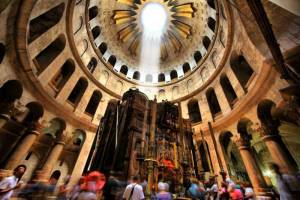
Theosophy | INDIVIDUATION AND INITIATION – I

  The Daimones are . . . the guardian spirits of the human race; ‘those who dwell in the neighbourhood of the immortals, and thence watch over human affairs,’ as Hermes has it. In Esoteric parlance, they are called Chitkala, some of which are those who have furnished man with his fourth and fifth Principles from their own essence; and others the Pitris so-called. . . .The root of the name is Chiti, ‘that by which the effects and consequences of actions and kinds of knowledge are selected for the use of the soul,’ or conscience, the inner Voice in man. With the Yogis, the Chiti is a synonym of Mahat, the first and divine intellect; but in Esoteric philosophy Mahat is the root of Chiti, its germ; and Chiti is a quality of Manas in conjunction with Buddhi, a quality that attracts to itself by spiritual affinity a Chitkala when it develops sufficiently in man. This is why it is said that Chiti is a voice acquiring mystic life and becoming Kwan-Yin.

The Secret Doctrine, i 288

 The integral relationship between initiation and individuation can be grasped through the essential logic of the entire process of evolution. From the standpoint of matter, the logic of transformation involves increasing heterogeneity, differentiation and complexity. At the same time, there is a commensurate withdrawal of subjective and spiritual faculties which cannot function freely through limited projections or distorted reflections. The degree of spiritual volition depends upon the texture of the reflecting medium. In the collective thrust of evolution every single life-atom in all the seven kingdoms of Nature is touched by the same primal universal impulse towards self-consciousness. Within the broad perspective and purpose of evolution as a whole, the possibilities of initiation are enriched by individuation at a high level of self-consciousness. Initiation, in its most hallowed meaning, must always involve the merging of minds of Guru and chela into a state of oneness with the ineffable Source of Divine Wisdom. This mystical and magical relation of Manas and Mahat was comprehended and transmitted in secret sanctuaries. It was intimated in the enigmatic etymology of the word Upanishad, ‘to come and sit close’, so that there could be direct communion of minds and hearts. Sacred teachings are conveyed and communicated through the eyes and not merely through words, although mantramic sounds have a sacred and vital function. In the Bhagavad Gita Arjuna’s earnest enquiries and Krishna’s cosmic affirmations and psychological adjustments bring to birth within the mind of the chela the seed of chit, a level of consciousness which negates, transcends, and also heightens individuality. Initiation is the highest mode of individual communication, and it necessarily involves a mystic rapport between one who has gone before and one who is to come after, rather like the magnetic transference between mother and child. Such a relation is inherent in the logic of evolution because, as a result of an extremely long period of evolution, it is impossible to find any mechanical sameness between all human beings. They are identical in their inmost essence but so markedly different in the internal relations of their vestures that there cannot be complete equivalence between any two persons. Hence experience and reflection reveal both the mystery of each individual human being and the commonality of what it is to be human.

 At one level of communication The Secret Doctrine is a metaphysical treatise on cosmic and human evolution. But at another level, for those who are Buddhic, it is not merely a book, but the initiatory presence of the compelling voice of the Verbum or Brahma Vach, reverberating in the society of sages, the Rishis who are of one mind and one lip. For the ardent seeker of Divine Wisdom, The Secret Doctrine is a series of stepping-stones, as the Upanishads and the great scriptures of all times have been, towards initiations into the mysteries of Selfhood. Through ever-renewed contact with the teaching, the chela begins to enact self-consciously and by degrees the realities which ordinary individuals sporadically experience at some level through deep sleep. This process comes alive through prolonged meditation for the sake of universal compassion, making one’s breathing more benevolent for the purpose of elevating all beings in all the kingdoms of Nature. When a person begins to do this, it is the awakening of Bodhichitta, the seed of enlightenment. It is the first step in translating knowledge into wisdom, words into realities, and resolves into actions. Having turned the key of compassion in the lock of the heart, the disciple will come to realize, through inward communication with the Teacher, the fuller meaning of the Upanishads:

Upa-ni-shad being a compound word meaning ‘the conquest of ignorance by the revelation of secret, spiritual knowledge’. . . They speak of the origin of the Universe, the nature of Deity, and of Spirit and Soul, as also of the metaphysical connection of mind and matter. In a few words: They CONTAIN the beginning and the end of all human knowledge. .

The Secret Doctrine, i 269-270

 The practical import of the metaphysical teaching of The Secret Doctrine lies in the fact that the highest spiritual powers are partly used by each human being every day but without fully knowing it. Light is universal, but it makes all the difference whether one has a blurred sense of perception and merely consumes light, or whether one can take a magnifying glass and concentrate light. There are also those who are like the laser beam which can direct a concentrated shaft of light to destroy cancerous cells and produce a range of extraordinary effects upon the physical plane. There is something of kundalini at work in every human being. Electricity and magnetism are sevenfold and work at the highest cosmic level of Akasha, but they also work at the most heterogeneous and diffusive level because everything is electrical and magnetic, from the occult standpoint. The aspirant must grasp, even at a preliminary level, the moral and psychological implications of this metaphysical “power or Force which moves in a curved path” in man and Nature.

 It is the Universal life-Principle manifesting everywhere in nature. This force includes the two great forces of attraction and repulsion. Electricity and magnetism are but manifestations of it. This is the power which brings about that ‘continuous adjustment of internal relations to external relations which is the essence of life according to Herbert Spencer, and that ‘continuous adjustment of external relations to internal relations’ which is the basis of transmigration of souls . . .

Ibid., i 293

The two aspects of this omnipresent power mentioned here have to be totally mastered by the initiated yogi in all their possible manifestations. Long before this stage is reached, the disciple must begin to learn to govern these internal and external relations through Buddhi Yoga in order to fulfil the prerequisite conditions of magnetic rapport with a true Teacher of Wisdom.

 The universal process of adjustment of the external to the internal, which leads to involuntary reincarnation for human beings, must be understood in terms of karma. At the most primary level, whenever human beings entertain and succumb to emotional reactions, they establish mental deposits and astral grooves which require many lives for proper adjustment. That is why over eighteen million years so many people approach the Path again and again but stumble and lose their track just as often. They cannot make a fundamental breakthrough even when in the presence of great teaching. For those who have made the teaching an internal living power in their consciousness, this is comprehensible as essential, just as the world seems clear to a child when its eyes are directed to the light of the sun. Whilst this is true for all human souls, the philosophical recognition of how this works is important. Every emotion registers an appropriate record in the astral vesture. It is wear and tear on the linga sharira and is at the expense of something or someone else. Thus selfishness is increased. This is true even if the emotion is benevolent for emotion itself is a form of passivity. Emotion is quite different from deep feeling which is unmodified by cyclic change or external event and is totally independent of outward demonstration. Emotion is like cashing a check: whilst it makes money available, it depletes the account. It is a way of demanding proof. As a form of external indulgence it is a passive fantasy which weighs heavily upon the astral vesture. To that extent it obscures one’s inmost feelings which are detached and compassionate. All the higher feelings are ontologically powerful and at the same time they constitute a pure negation psychologically. Though only an initial understanding of the problem, this is sufficient to explain why merely sitting down to postures and trying to control the external breath by hatha yoga exercises cannot make a significant difference to the inevitable adjustment of internal and external relations inherent in life itself. There is no substitute for facing oneself, asking what one is truly living for, how one is affected by likes and dislikes, and how one’s temper — or sophrosyne — is unbalanced through various irritations.

Raghavan Iyer
The Gupta Vidya II

Theosophy |  THE PLEDGE OF KWAN YIN – II

 The light of daring is essential to the timely taking of the Kwan Yin pledge. In the Kwan Yin Sutra there is a reference to the flames of agony that consume personal consciousness. Kwan Yin in its metaphysical meaning is bound up with fire and water. Kwan Yin is connected with the primordial Light of the Logos, which is the paradigm and the pristine source of all creativity in the cosmos, of the hidden power in every human being to produce a result that is beneficent. If Kwan Yin is ontologically connected with light, but is also compared to the ocean, what then is the meaning of the textual reference to extinguishing the flames of agony? This is a metaphysical paradox. What is light on the most abstract level of undifferentiated primordial matter is the darkness of non-being, such as that which is around the pavilion of God in the Old Testament, or that which is sometimes simply referred to as “In the beginning”, the Archaeus, the dark abysm of Space. Kwan Yin is rooted in Boundless Space and therefore involves noumenal existence at so high a level of attributeless compassion in Eternal Duration that it is the paradigm of all the vows and pledges taken by vast numbers of pilgrims throughout unrecorded history. It is also called Bath-Kol, the Daughter of the Voice, in the Hebrew tradition, that which when sought within the inmost sanctuary bestows a merciful response within the human heart. There is a latent Kwan Yin in every human being. It is the voice of conscience at the commonest level. It is the Chitkala of the developed disciple. At the highest level it is Nada, the Voice of the Silence, the Soundless Sound, that which is comprehended in initiation, and ceaselessly reverberates in the Anahata, the deathless centre of the human body, transformed into a divine temple.

 The deeper meaning of the Kwan Yin pledge is enshrined in profound metaphysics, but at the same time, it reaches down to the level of human ignorance and pain, at all levels extinguishing the intensity of craving, the fires of nescience. This is the teaching of the Kwan Yin Sutra. When that which is light at the highest level descends, it becomes like unto cool water, although intrinsically it is so radiant that it would be blinding. But when it is diffused it converts its state into a fluid which is extremely soothing, sometimes compared to the cool rays of the moon. And then it is capable of giving comfort and sustenance. When a person is soothed and cooled, it is possible to let go, to relinquish the intensity of self-concern. Personal heat is intensely painful when it is experienced without any awareness of alternatives. But when one finds that it may be displaced by soothing wisdom, the cooling waters of compassion, then it is possible to ease the pain and to convert one’s mind from a falsely fiery state, which is destructive, into a cooling and regenerative condition. These are all alchemical expressions of processes that are involved in making deliberate changes in states of consciousness connected with different levels of matter.

 Theosophically, every level of thought corresponds to and is consubstantial with a level of differentiation of substance. Therefore, one can even discover in ordinary language certain words that tend to heat up the psycho-mental atmosphere. The very way in which one characterizes one’s own condition may do a lot of violence through language. One can burn oneself or become totally suffocated by the flames, though the Hasidic mystics remind us that even if the castle is burning, there is a lord. Even while one is burning there can be some recognition of that incorruptible, inconsumable essence in oneself. This possibility is the root of all faith in one’s power of spiritual survival, as well the basis of all notions of physical survival, which are only shadowy representations of this deeper urge to persist and prevail. If one has everyday experience of how certain words and shibboleths can engender a lower heat, one can also employ gentler words, healing metaphors and analogies, broader categories, that soothe and cool one’s atmosphere. Even learning to do this is an art, one that can only be practised in a human being’s sincere efforts at apprenticeship to the great masters of the art. Kwan Yin is the cosmic archetype of the art. She who expresses compassion in every conceivable context shows how inexhaustible are the ways of compassion of wise beings, how Initiates use every opportunity to release help. This is part of the universal inheritance of humanity. It is also mirrored in every mother or father who, despite all the lower levels of concern, somewhere knows that what he or she does cannot really be put into the language of calculation, cannot really be weighed or measured.

 Gratitude cannot be compelled, but without it life would not go on. It is as if human beings impose upon what they innately know a false structure of expectations, which entangles them in mental cobwebs that are entirely self-created. If emotion becomes sufficiently intense, bitter and sour, there can be a tremendous burden, but even that burden is an act of compassion of the spirit because its weight eventually burns out the tanha, the persisting thirst for material sensation, for false personal life. It will dissolve at the moment of death, but this does not happen all at once. It will receive certain shocks in life, and thereby human beings come to throw off the enormous excesses of their own compulsive cerebration, a great deal of the wastage and the futility of their own emotions, the wear and tear upon the subtle vestures through their own anxieties.

 What Nature does as a matter of course can be aided by conscious thought. But where it is aided by conscious thought in the name of the highest cosmic principle and in the company of a long lineage, a golden company of great exemplars of the vow and the pledge for universal enlightenment, one can truly consecrate one’s life and thereby refrain from becoming too tensely involved in the process of everyday psychological alchemy. This is implicit in what Buddha taught. If one truly enjoys the very thought of what Kwan Yin is, and of what is in the Kwan Yin pledge, this enjoyment should itself help to reduce much of the agony and the anxiety, the tension and strain of daily striving. The real problem is to be wholehearted with as undivided a mind as can be brought to the pledge. This must be done without qualifications, without contradictions, but with that holy simplicity of which the mystics speak, a childlike innocence, candour and trust. It is an act of acceptance of the universe and a letting go of whatever comes in the way. When anything does interfere, it must be consumed in the fires of sacrificial change that alone will lead to true spiritual growth. Many a monk on the Bodhisattva Path has found immense benefit through the talismanic use of these three verses:

If you are unable to exchange your happiness
For the suffering of other beings,
You have no hope of attaining Buddhahood
Or even of happiness in this lifetime.

If one whom I have helped my best
And from whom I expect much
Harms me in an inconceivable way,
May I regard that person as my best teacher.

I consider all living beings
More precious than ‘wish-fulfilling gems’,
A motivation to achieve the greatest goal:
So may I at all times care for them.

Raghavan Iyer
The Gupta Vidya II
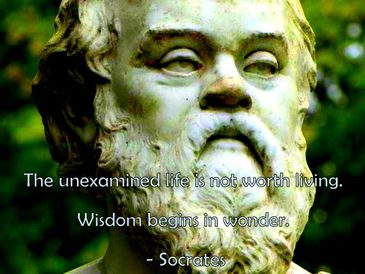
Theosophy |  THE PLEDGE OF KWAN YIN – I

Never will I seek nor receive private, individual salvation; never will I enter into final peace alone; but forever and everywhere will I live and strive for the redemption of every creature throughout the world from the bonds of conditioned existence.

Kwan Yin

 Unconditional affirmation of the Kwan Yin pledge can only come from the unconditional core of the human being. Words are uttered in time, and usually delimit meaning. They express thought, but they also obscure thought. To be able to use words in a manner that reaches beyond limits is to recognize prior to the utterance and to realize after the utterance, that one is participating only on the plane of that which has a beginning and an end, though in emulation and celebration of that which is beginningless and endless. Every word and each day is like an incarnation. Silence and deep sleep convey an awareness of duration that cannot be inserted into ordinary time, but indicate the return to a primal sense of being where one is neither conditioned by nor identified with external events, memories, anticipations, likes and dislikes, hopes and fears, possibilities and limitations. Common speech and ordinary wakefulness, for most individuals, are but clouded mirrors dimly reflecting the resonance and radiance of spiritual wakefulness. Any sacred pledge may be uttered by a human being with a wavering mind and a fickle heart, but it can also be authentically affirmed in the name of the larger Self that is far beyond the utterance and the formulation, yet immanent in both.

 This is the time-honoured basis of religious rites, as well as the original source of civil laws. Émile Durkheim explained how early in the evolution of societies human beings learnt to transfer the potency of religious oaths to secular restraints and thereby established a high degree of reliability in human relationships. Mohandas Gandhi spoke of the sun, the planets and the mighty Himalayas as expressing the ultimate reliability of the universe, and taught that when human beings bind themselves by the power of a vow, they seek to become wholly reliable. If reliability essentially connotes a consistent standard of unqualified and unconditional success, then in taking a vow one is necessarily seeing beyond one’s limitations. If one is wise one allows for the probability of failure and the possibility of forgetfulness, but somewhere deep in oneself one still wants to be measured and tested by that vow. Thereby a vow which is unconditional, which releases the spiritual will, calibrates one’s highest self-respect and is vitally relevant to the mystery of self-transformation.

 The Kwan Yin pledge is a Bodhisattvic vow taken on behalf of all living beings. It is closely connected with the Bodhichitta, wisdom-seeking mind, the seed of enlightenment. The idea that an unenlightened human being can effectively generate a seed of enlightenment is the central assumption behind the compassionate teaching of Mahatmas and Bodhisattvas, of the Buddhas and Christs. A drop of water is suggestive of an ocean; a flashing spark or single flame is analogous to an ocean of light; the miniscule mirrors the large. Herein lies the hidden strength of the Kwan Yin pledge. What may seem small from the standpoint of the personal self, when it is genuinely offered on behalf of the limitless universe of living beings and of all humanity past, present and future, can truly negate the finality of finitude, the ultimacy of what seems urgent, the immensity of what appears immediate. The human mind ceaselessly creates false valuations, giving ephemera an excessive sense of reality, to uphold itself in a world of flux. To negate this tendency in advance and to assign reality only to the whole requires a profound mental courage. It requires, while one is alive, a recognition of the connection between the moment of birth and the moment of death, of the intimate relationship between the pain of one human being and the sorrow of all humanity. But it also involves a recognition that greater beings than oneself have taken precisely such a vow, have affirmed this pledge again and again. Therefore, one can invite oneself, however frail, however feeble, into the family of those who are the self-chosen, unacknowledged but unvanquished friends of the human race.

 The prospect of such a vow is naturally perplexing to the lower mind which is almost totally ignorant of the priorities of the immortal soul, and knows very little about even this life, let alone about previous lives. On what basis could the personality assume a gnostic authority in regard to its own limitations? If one simply looks at the last ten years of one’s life, one will readily see that many things which looked irrelevant, remote, even impossible in the past, unexpectedly become part of one’s way of thinking, one’s depth of feeling. If a human being does not truly know himself, merely to be aware of himself at the personal level in terms of persisting limitations is frustrating. This does not take into account in oneself that which is ineffable and unexpressed, whatever cannot come through the confining parameters of thought, the truncating crudities of speech and the stultifying restrictions of action.

 The Kwan Yin pledge can be taken by anyone at any time, but the level of thought and intensity with which it is taken will determine the degree and reliability of response of the whole of one’s being. Shantideva puts this in the form of an ordination:


 When the Sugatas of former times committed themselves to the Bodhichitta, they gradually established themselves in the practice of a Bodhisattva. So, I too commit myself to the Bodhichitta for the welfare of all beings and will gradually establish myself in the practice of a Bodhisattva.

 Today my birth has become fruitful; my birth as a human being is justified.

 Today I am born in the Buddha Family; I am now a son of the Buddha.

 Now I am determined to perform those acts appropriate to my Family; I will not violate the purity of this faultless, noble Family.

To be able to take one’s place in the glorious company of Bodhisattvas is not to assume that one can, purely on one’s own, fulfil this exalted aim. But once one has truly affirmed it, no other aim has any comparable significance. This recognition would be critical to a timely taking of the mighty vow of the Buddha, the sacred pledge of Kwan Yin, the Bodhisattva ordination of Shantideva. Timeliness in this sense would mean that one simply cannot imagine an alternative. If a person were to take the pledge prematurely, lacking this sense of necessity, it would precipitate difficulties, making that person guilty, tortured with anxiety, involved even more in futile comparisons and contrasts with other human beings, more depressed, more desolate. But out of all these failures there may come some sense of timeliness at a later moment of ripeness.  Timeliness does not occur all at once. Timeliness, like all wisdom, must be the ripe fruit of time-bound experiments and time-bound errors. Because these are time-bound, they are evanescent; they are not enduring. In the same way in which one stumbled and learnt to walk, or mumbled the multiplication tables, one may rediscover something about grace in movement or the deep logic of elementary numbers. So also one may rediscover the higher stage, the fuller meaning, the larger significance for the whole of one’s life, of the pledge one took. Suppose a person truly resolves to injure no human being and wishes to release love in every direction. If one is deeply attracted by this affirmation, what does it matter if there is something imperfect and inconclusive in one’s repeated efforts to embody it? Mature individuals, who have done this again and again, know that soon after one has made such an affirmation one is going to be tested. One has invited the Light of the Logos to shine upon the dark corners of one’s being. Through heightened awareness one sees unconscious elements in one’s nature which one did not even imagine were apt to give offense, but are now discerned as obscurations of one’s deepest feelings, one’s finest nature, one’s truest, profoundest sense of brotherhood. These discoveries are significant, but the hardest lesson at all times is the paramount necessity of patience and persistence. This is a pledge in favour of selfless service, and it cannot ever be premature. It will always be timely, though compelling timeliness can only come when there is serene insight, supported by the strength of personal invulnerability.

 It is the immemorial teaching that the pristine seed of enlightenment, however small, may germinate far in the future into a flowering tree of wisdom, a mighty trunk of enlightenment. Inherent to the pure seed is a potency that represents the complete disavowal of considerations of success and failure for oneself, separate from the whole world. There is a fundamental abnegation of all the earthly criteria of happiness, power and achievement. For the immortal soul, the pledge could never be premature. Nevertheless, every sacred utterance should be the result of deep thought and true feeling, and should be renewed in silence, enriched by contemplation, and carried over from waking through dreamless sleep into the day of daily manifestation. If a person knows this much, then that person knows what is the essential nature of the task of self-transformation. As the task also involves self-forgetfulness and reaching out to all human beings, a point must surely come when the very thought of one’s own progress or lack of it in relation to the pledge will shrink into insignificance simply because one’s consciousness becomes so occupied with the greater growth, the larger welfare of the human race. If a person thought this out carefully, he or she could safeguard against the greatest danger, ignoring which is the mark of immaturity: the cold forgetfulness that arises from the initial unwisdom or psychic heat in taking a vow. A vow is sacred; it must germinate in silence. It invokes sacred speech, but it must ripen through suffering. Where the vow involves a recognition of the ubiquity of human suffering and where one chooses to make one’s own suffering meaningful and creative for a larger purpose, the vow has self-correction built into it. Those who have received this great teaching and have been inspired by the very highest ideal, will be wise to take the Kwan Yin pledge at some level. In the words of Buddha, “Anyone who even hears about Kwan Yin begins the search then and there for enlightenment.”

Raghavan Iyer
The Gupta Vidya II