From The Writings of Paramahansa Yogananda

“As the parlor awakens social consciousness, the library fosters reading consciousness, and the bedroom suggest sleeping, so everyone should have a room or screened off corner, or a well ventilated closet, used exclusively for the purpose of silent meditation. Traditional homes in India always have such a shrine for daily worship.

“A sanctuary in one’s home is very effective in fostering spirituality, because unlike a place of public worship it becomes personalized, and also because it is accessible for spontaneous devotional expressions throughout the day. The children in India are not forced to frequent the shrine, but are inspired to do so by the parents’ example.

“In these home temples, families learn to find the soul peace hidden behind the veil of silence. Here they introspect, and in prayer and meditation recharge themselves with the inner power of the soul, and in divine communion attune themselves to discriminative wisdom by which they may govern their lives according to the dictates of conscience and right judgment.

“Interiorized prayer brings forth the realization that peace and service to divine ideals are the goal of life, without which no amount of material acquisition can assure happiness.”
 

Bearing Witness To Tibet: A Memoir and A Protest

read article here
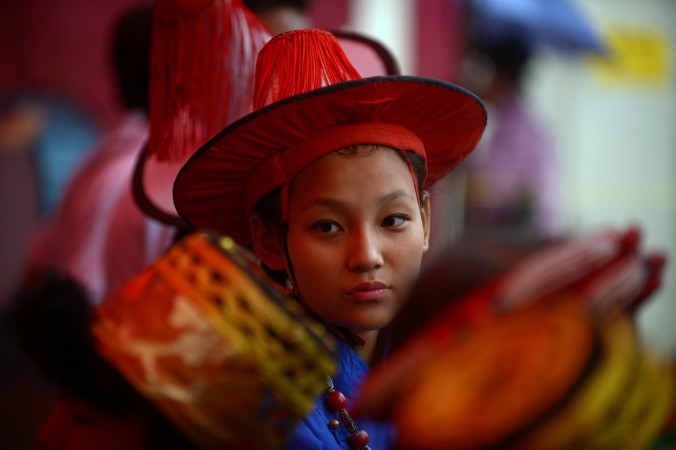
read article here ~ (above) Exiled Tibetans at an event honoring the 78th birthday of the Dalai Lama, at Manag monastry in Kathmandu, India, on July 6, 2013. (Prakash Mathema/AFP/Getty Images)

From Delhi to Peking

I was 15 years old in January of 1973 when my father was appointed U.S. Ambassador to India. I had been a 10th grade student in the American International School for about 2 weeks when I was invited on a class trip to Manali, near the Tibet border.

As we drove through Himachal Pradesh, we passed thousands of Tibetans breaking rocks along the Kangra Highway. I asked, why are these people here? I was told China invaded their country, they are refugees in India.

When we reached Manali we walked to a mountain pass that once linked India and Tibet, sealed by barbed wire, guarded by Chinese soldiers, wearing green Mao caps with the Red Star, clutching rifles. Our Tibetan guide was frightened and told us we had to leave at once. I had never heard of this story, no one seemed to have heard of it. I wondered why.


MEDITATION FOR CESSATION OF THE FLOOD AND ASSISTANCE FOR THE PEOPLE OF JAMMU AND KASHMIR …

Tibetan-children
We are chanting the Green Tara mantra for the people of India and Pakistan and for the region …

In Tibetan, we chant “Om Tare Tuttare Ture Soha” … In Sanskrit, it is “Oṃ Tāre Tuttāre Ture Svāhā”.

Tibetan culture, and some others, green is considered to include all the other colors.

The practice of Green Tara helps to overcome fear and anxiety, but devotees also believe that she can grant wishes, eliminate suffering of all kinds and bring happiness.

When called upon, she instantaneously saves us from eight specific calamities. (Another lineage describes 16.) The First Dalai Lama lists the 8, and interprets them as representative of corresponding defects, flaws, or obscurations: 1) lions and pride 2) wild elephants and delusions 3) forest fires and hatred 4) snakes and envy 5) robbers and fanatical views 6) prisons and avarice 7) floods and lust 8) demons and doubt.

MANTRA:
OM TARE TUTTARE TURE SOHA

OM represents Tara’s sacred body, speech and mind.

TARE means liberating from all discontent.

TUTTARE means liberating from the eight fears, the external dangers, but mainly from the internal dangers, the delusions.

TURE means liberating from duality; it shows the true cessation of confusion.

SOHA means “may the meaning of the mantra take root in my mind.”

—–

PLEASE JOIN US … Namaste’

Meditation ~ Sarovar, with Jai-Jagdeesh

Meditation (9 mins.) ~ Sarovar, with Jai-Jagdeesh


Complete Mantra:

Santaho, Ram Das Sarovar Neeka
Vich kartaa purkh khalo-aa, Vaal na vingaa ho-aa
Majan gur andaa raasay, Jap har har kilavikh naasay
Jai jai kaar jag gaavai, Man chindiarhay fal paavai
Sahee salaamat naaee aaee-ay, Aapnhaa prabhoo dhiaa-ee-ay
Jo naavai so kul taravai, Udhaar ho-aa hai jee kaa

Santaho, Ram Das Sarovar Neeka
Sant sarovar naavai, So jan param gat paavai
Marai na aavai jaaee, Har har naam dhiaa-ee
Eihu brahm bichaar su jaanai, Jis deeaal ho-ei bhagvaanai
Baba Nanak prabh saranh-aa-ee, Sabh chintaa ganhat mittaa-ee
Jo naavai so kul taravai, Udhaar ho-aa hai jee kaa

Santaho, Ram Das Sarovar Neeka

Language: Gurmukhi
Source: Siri Guru Granth Sahib
Author: Guru Arjan Dev

—–

Translation:

Oh Saints, the purifying pool of Ram Das is sublime

Under the protection of the Creator, no harm can come to me

Chanting the Lord’s name, Har, Har, my mistakes are washed away

Whomsoever bathes in the nectar tank is acclaimed all over the world;

The desires of that person’s mind are fulfilled

Bathing (in this sacredness) the mind becomes peaceful, as it meditates on God

Those who bathe here, they liberate and bless themselves and all their generations

Oh Saints, the purifying pool of Ram Das is sublime

One who bathes in the pool of the Saints achieves the state of supreme bliss

There is no death, there is no coming and going;

There is only meditating on the name of the Lord, Har, Har

He alone knows the wisdom of the Lord, on whom this Lord extends merciful kindness

Baba Nanak seeks the sanctuary of God; All his cares and worries are dispelled

Those who bathe here, they liberate and bless themselves and all their generations

Oh Saints, the purifying pool of Ram Das is sublime

——

More Information:

A shabd (hymn) written by Guru Arjan Dev, the fifth teacher of the Sikh faith. It celebrates the healing, uplifting, liberating grace of the Sarovar, the nectar tank, a sacred pool of water surrounding the Golden Temple in Amritsar, Punjab in India.