
Aloha kakou a Hau’oli Aloha Lapule. A hui hou ka kou malama pono. O ka maluhia no me oe.
Hello everyone and Happy Aloha Sunday. Live aloha, Be Aloha, Breathe aloha: live in righteousness. Peace be with you.
Aloha kakou a Hau’oli Aloha Lapule. A hui hou ka kou malama pono. O ka maluhia no me oe.
Hello everyone and Happy Aloha Sunday. Live aloha, Be Aloha, Breathe aloha: live in righteousness. Peace be with you.

Like the Magi, carrying myrrh, frankincense, and gold, researchers from the University of Leicester have, for the first time, demonstrated the potential of treating ovarian cancer using the Christmas gift frankincense.
The origins of frankincense can be traced to the Arabian Peninsula.
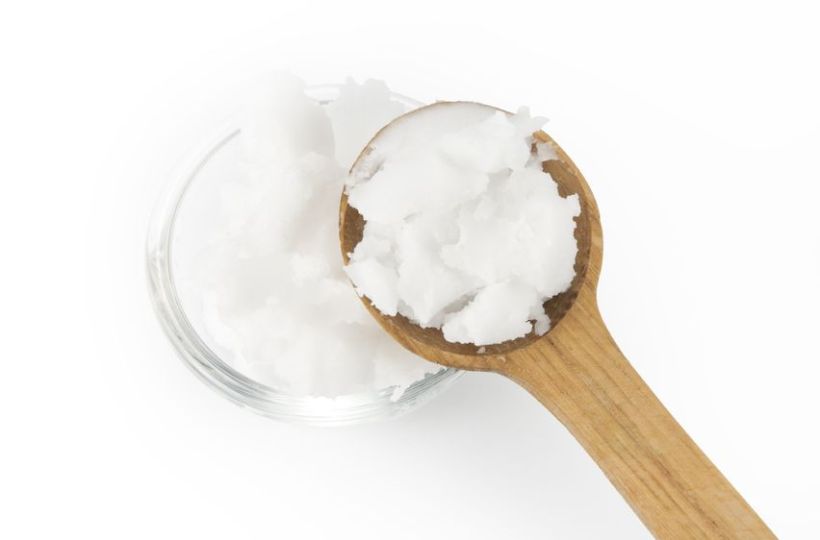
Swishing your mouth out with coconut oil may be a more effective and safer alternative to chemical mouthwashes, according to new research.
A new study has proven for the first time that the oral use of coconut oil is effective in reducing plaque related to gingivitis, a common form of inflammation in the gum tissue of the mouth that occurs in response to bacterial biofilms (known as plaque) adhering to the surfaces of the teeth and which can lead to more serious oral condition known as periodontal disease.

White rice is far from a health food, the excessive consumption of which contributes to overweight, obesity and blood sugar disorders, but new research indicates adding coconut oil while cooking it can dramatically alter its nutritional structure and function.
The way that a food will affect your blood sugar depends on a wide range of factors.
For instance, you can’t just take a particular food’s glycemic rating in isolation, such as white rice, because it is invariably consumed with other ingredients and dishes. And some of them, containing fat or spices, may significantly reduce the effect a particular ingredient within a meal will have on your blood sugar.
White rice, of course, is emblematic of a highly processed grain, as it’s germ and bran have been removed, which constitute the bulk of its vitamins, minerals, essential fats and fiber. What you have remaining is essentially starch, which being comprised of a large number of glucose units, is a form of “hidden sugar.” It rates about 65 on the glycemic index, which compared to brown rice, is about 10 points higher. White sugar (sucrose), for perspective, is rated 68, and an apple 38.
Within certain schools of nutritional thought, it has long been held that if you mix certain fats with carbohydrate-rich, high glycemic starchy foods you will be able to reduce the blood sugar raising effect they have, yet little scientific research has been conducted to prove this.
Now, two scientists from the College of Chemical Sciences, Industrial Technology Institute, Sri Lanka, have found an innovative way to shed light on this theory, making news headlines with their remarkable results.
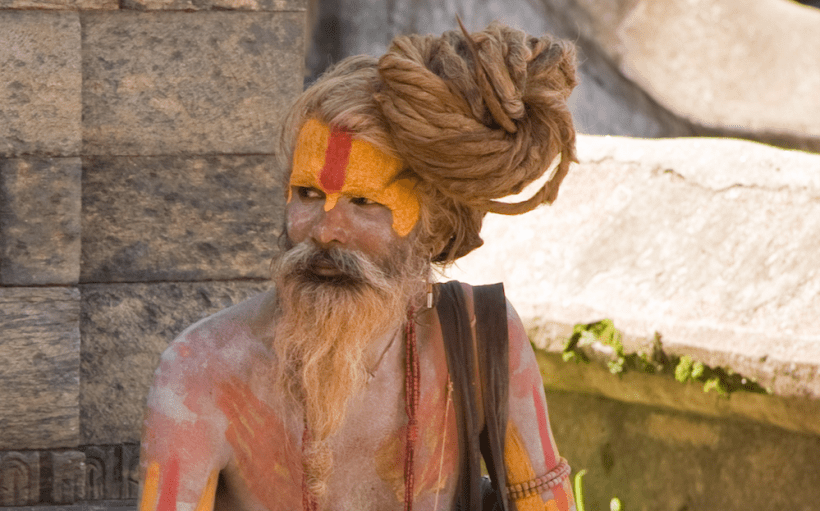
While yoga’s longevity promoting effects have been the subject of legend for millennia, increasingly modern science is confirming this ancient technology for spiritual and physical well-being actually can slow aging and stimulate our regenerative potential.
Yoga has long been believed to be a life-extending practice, with yogis maintaining a level of strength and flexibility late into life far beyond what is considered normal or easily attainable in cultures that don’t practice yoga or related mind-body integrating disciplines.

Taking calcium supplements — even at low doses — linked to brain lesions in the first study of its kind.
Most calcium supplements are just plain bad news. The idea of taking calcium in pill or tablet form to “keep the bones strong” just doesn’t make that much sense given, first, that we are designed to get our calcium from food. Second, our bone is a living tissue, which requires vitamin C, amino acids, magnesium, silica, vitamins D and K, etc., not to mention regular physical activity, just as much as it does calcium. Taking calcium to the exclusion of these other critical factors doesn’t make sense; nor does it make sense to look at osteoporosis as a deficiency of calcium supplements!

From slowing the decline in fatal brain disease, to generating a sense of oneness with one another and the universe, drumming’s physical and spiritual health benefits may be as old as time itself.
Drumming is as fundamental a form of human expression as speaking, and likely emerged long before humans even developed the capability of using the lips, tongue and vocal organs as instruments of communication.
To understand the transformative power of drumming you really must experience it, which is something I have had the great pleasure of doing now for twenty years.

There is no secret that green tea is wonderful for your health, but this particular strain originating in Japan is amazing for your health! Matcha tea is believed to be one of the highest quality powdered green teas in the world.
Antioxidants are the magical nutrients and enzymes responsible for fighting the negative effects of UV radiation, giving us younger-looking healthier skin, as well as preventing a number of life-threatening maladies. Matcha provides us with five times more antioxidant that any other food.
Green tea contains antioxidants known as catechins, which scavenge for dangerous free radicals in the body. The most powerful is found in Matcha Green Tea.
Matcha tea helps the body burn more calories meaning a shedding of the surplus pounds. Studies have shown that if you include matcha tea into your diet you can lose 25% more weight that if you did not.
The anti-aging benefits are connected with the number of antibiotics in the tea. The drink helps to protect against UV radiation, maintaining the skin’s youthful appearance.
Another side effect of L-Theanine is the production of dopamine and serotonin. Two chemicals that serve to enhance mood, memory, and concentration.
During the last three weeks before tea leaves are harvested and made into matcha, Camellia sinensis are covered to deprive them of sunlight. This causes a huge increase of chlorophyll production in the new growth of the plants. Matcha is a powerful detoxifier capable of naturally removing heavy metals and toxins from the body.
Matcha’s antioxidants act as a natural antibiotic and help to support the immune system. The tea is also high in potassium, vitamins A and C, as well as iron and calcium.
How Much to Drink:
The average consumption is 1-2 cups a day. A lot of people drink it in the morning to act as coffee, and in the evening to calm them down.
Sources:
http://matchasource.com/health-benefits-of-matcha-tea/
http://www.naturallivingideas.com/10-amazing-benefits-of-matcha-green-tea/
http://www.bodybuilding.com/fun/8-wonders-of-matcha-green-tea.html
Manu, a bird
Manu Aloha, Parrot
Keep the Hawaiian Language alive by teaching some one you love this word. Stop today to talk to a child about the beauty of the Hawaiian language.

Aloha kakou a aloha awakea. A hui hou ka kou malama pono. O ka maluhia no me oe.
Hello everyone and good day. Always come back to live in righteousness. Peace be with you.

Dear Spirits and Dear God
All Angels and All Saints ~
Tame our hardened hearts
Of life, and please
Remove our stress.
Let our souls be free
From everyday world wide worries ~
From panic and from grief,
May we find shelter and relief.
Give us hope on this day
That pain and joy will find a way ~
To coexist and comprehend
Our limitations, this I pray ~
Hold them together in a place
Of mutual respect, fully.
May we all gather at thy feet
With love and light and softened hearts
May the answers to our prayers
Be in the breezes you impart
May we find everything we need
To make it through each day with you
Help us to understand our lessons
Everyday that we go through
Open our hearts, open our minds
To better ways that we can be
And when we take a step backwards
Show us how we can always see
The path to your forgiveness
The songs that we can sing
The path to our true soul
And all the love it brings
And so it is.

Recent research has shown that one Chinese herb cured 98% of cancer cells in just 16 hours. Amazed? Read on to see more details on this exciting discovery.
We are all too aware of the human epidemic of cancer. Much has been written linking our more unhealthy lifestyles and our over-consumption of processed foods, low-quality meat and dairy, and refined sugars as being contributory factors as well as pollution and environmental factors. Big Pharmas and the mainstream medical community dispel these links but more and more evidence is pointing to nature curing our ills – a fact they often don’t want to hear.
This recent research was published in Life Science and involved the herb, commonly used in Chinese medicine, artemisinin which is a “Sweet wormwood” plant or “Artemisia Annua”derivative.
When mixed with iron, researchers found that, within 16 hours, 98% of the cancer cells were killed. It was effective across all types of cancers. Artemisinin has been used in the past as a powerful anti-malarial herb, but this study was specifically exploring its action against cancer. Mixing with iron seems to be the key point, as when the artemisinin was used in isolation there was only a 28% reduction in cancer cells. So when the patients in this study were given an iron supplement (which often accumulates in breast tissue, but especially so in cancerous cells), the artemisinin was effectively able to target ‘bad’ cells and leave ‘good’ cells alone.
The report concluded that “In general, our results show that artemisinin stops ‘E2F1′ transcription factor and intervenes in destruction of lung cancer cells, meaning it presents a transcription way according to which artemisin controls reproductive cancer cell growth”, “This looks very promising,” says Gary Poser, an organic chemist at Johns Hopkins Universityin Baltimore, Maryland – this could be a huge breakthrough.
Watch this video detailing the promise shown by this herb used with iron by Len Saputo,MD.:
If you found this article useful, share it with family and friends by clicking the links below.
SOURCES/REFERENCES:
http://news.sciencemag.org/chemistry/2001/11/wormwood-extract-kills-cancer-cells
http://www.trueactivist.com/this-chinese-herb-iron-kills-cancer-cells-in-16-hours/

Since health experts associate airway diseases with metabolism disorders and nutritional deficiencies, you can easily assume the benefits provided by this bee product.
Honeycomb works amazing when it comes to treating colds. Chew some honeycomb for 4-6 hours. Actually, for optimal results the treatment should last for a day. Since this home therapy does not have any side-effects, you can repeat it the very next day. It is a great prevention against sinus infections that commonly occur in spring and fall.
Studies have shown that people who have chewed honeycomb in their childhood, until the age of 16, rarely struggle with severe health conditions further in their life. This is an excellent way to strengthen the function and the immunity of your airways, providing an effect that lasts for four years – something you will be grateful for later in your life.
Chewing honeycomb is especially recommended for people who struggle with periodontitis, gum bleeding and sores in the oral cavity. It does miracles when it comes to strengthening your gums or removing any plaque.
Source: www.naturalhealthcareforyou.com
Bacon-Wrapped Salmon Bites
Ingredients:
2 lbs. salmon filet, deboned with skin on
salt and cracked pepper to season the salmon
sliced bacon
maple syrup for glazing
mesquite wood chips for smoking
apple chips for smoking
water to help regulate the heat in your BBQ grill
BBQ grill
Mini Bacon Eggy Toast Baskets
Ingredients (4 servings):
4 slices bacon (don’t do thick cut bacon)
2 slices of toast
2 tbsp grated cheddar
4 eggs
salt and pepper
Oven preheated to 400 degrees F.
This is our feline friend, Rhubarb, whom I call “Mr. R”. He’s really a very sweet, super cuddly old Ginger Tom with beautiful green eyes. But, Mr. R is feeling quite poorly tonight. He had been losing weight, first around his hind quarters and it seems his shoulders are also thinning. He eventually got a clouded over-right eye that was beginning to spread into the left eye … and then, last night, his hind legs failed him.

This was Mr. R’s first time to venture out of the house last year, July 4, 2014. He enjoyed the sun that day … this is how David and I will remember this lovable being.

This morning, we laid him to rest. The pain is gone, Rhubarb … now you can join your brother, Alfredo. Good journey, Mr. R. We’ll always welcome you at our door. Aloha ‘oe.

Aloha kakahiaka a Hau’oli aloha Pōʻalima oukou. I lā maikaʻi nou. Maluhia a me aloha mau loa no oukou.
Good morning and a Happy Aloha Friday to you all! Have a nice day … May peace and love be with you always.
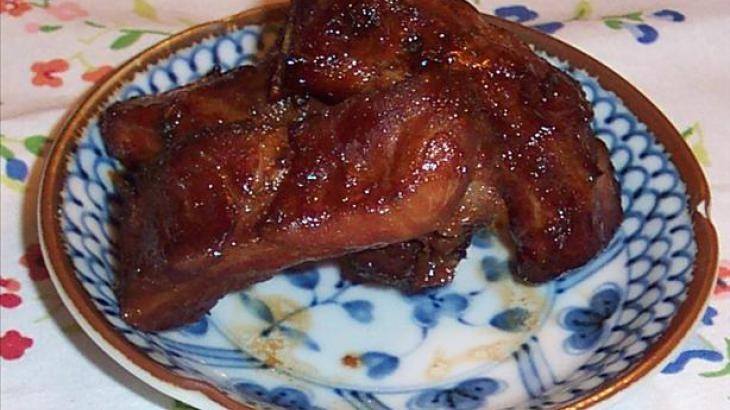
Get your butcher to cut your ribs in half lengthwise for this terrific rib recipe. This has been a hit at every party I’ve ever taken it to so now I just bring copies of the recipes with me when it’s my turn to provide the appetizer. You can also make a meal out of these with some rice and flash-cooked greens. Prep time does not include marinading time.

Take the time each day to write down five things for which you are grateful.
We all know the benefits of a grateful heart. It helps us cultivate a deeper awareness of our true gifts in each moment. And yet, even though we know that the most important things in life aren’t “things” — why do we still have a tendency to want to accumulate material goods? Is there a way to deliberately cultivate gratitude, such that it releases us from our need for those bright, shiny things? New research suggests that the answer to that is, yes.
If the only prayer you said was thank you, that would be enough.

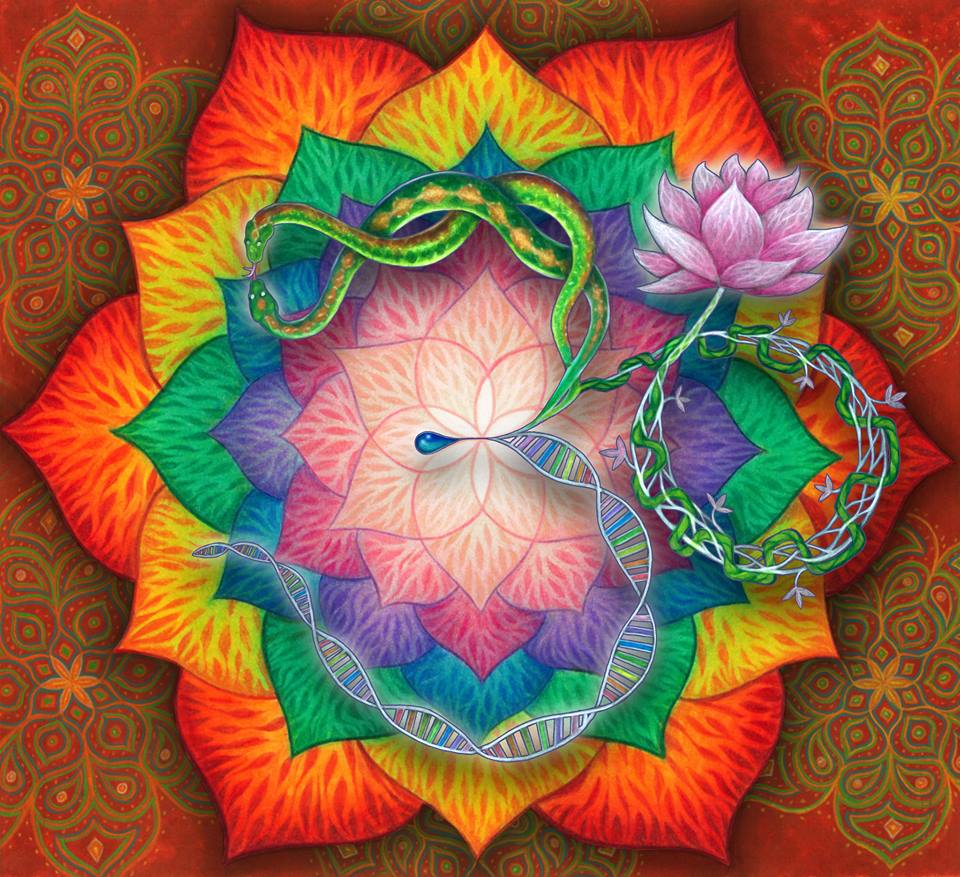
Aloha kakahiaka a Hau’oli aloha Pōʻaha … Maikaʻi lā iā oukou.
Good morning and Happy Aloha Thursday … Have a nice day, everyone!
USING SPACE TO FIND ONESELF | Alan Watts ~ Is it possible to act at all times without a purpose?
Questioner: For truth to come, you advocate action without idea. Is it possible to act at all times without idea, that is, without a purpose in view?
Krishnamurti: I am not advocating anything. I am not a propagandist, political or religious. I am not inviting you to any new experience. All that we are doing is trying to find out what action is. You are not following me to find out. If you do, then you will never find out. You are only following me verbally. But if you want to find out, if you as an individual want to find out what idea and action are, you have to inquire into it, and not accept my definition or my experience, which may be utterly false. As you have to find out, you have to put aside the whole idea of following, pursuing, advocating, propagandist, leader or example.
Let us therefore find out together what we mean by action without idea. Please give your thought to it. Don’t say, ‘I do not understand what you are talking about.’ Let us find out together. It may be difficult, but let us go into it.
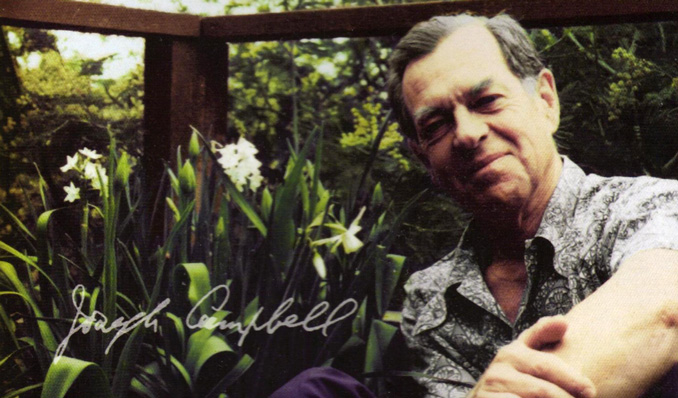
“If you follow your bliss, you put yourself on a kind of track that has been there all the while, waiting for you, and the life that you ought to be living is the one you are living. Wherever you are — if you are following your bliss, you are enjoying that refreshment, that life within you, all the time.”
~ Joseph Campbell

3/4 cup unbleached white flour (Bob’s Red Mill)
1/2 cup pure cane sugar (Zulka)
1/4 teaspoon sea salt
1/2 cup (1 stick) unsalted butter, melted
2 large brown eggs
2 tablespoons lemon zest
2 tablespoons lemon juice
For the lemon icing glaze:
3 tsp. lemon juice
Any leftover zest from the 2 lemons
1/2 cup icing sugar or powdered cane sugar

Now the benefit is to walk with like-minded people, fellow pilgrims. Move away from those who suck your energy by raising doubts, fears, or envy.
The ego, the critic, the inner judge, will try to sneak in while you are traveling on your path and tell you that you need to be reasonable, clever, suspicious, and, above all, to look good in others’ eyes. It would have you create imaginary problems that would cause you to incorrectly evaluate the situation before you. The crux of the teaching in this hexagram is to remain aware and fully present. This will be found in stillness.
Consciously let go of trying to get approval from others. This is the ego trying to interfere and keep you from fully appreciating the beauty and the myriad gifts of life. As you slow down, and allow your childlike innocense to appreciate the beauty all around you, there will emerge a strength that you have not known before. You will find strength wrought not from pain or angst, but from peace, laughter, and joy.


Chicken wings are always a favorite. But, if you can make them teriyaki style and put them over rice and serve a quick veg or salad on the side, you have a delicious and satisfying meal in around 30 minutes that the family will ask for all the time. Of course, if you are having a party, you could always par cook your wings in the pan then sauce them in a crock pot on low for an appetizer. Either way…..Smells…..sooooo……good.

Teriyaki Chicken Wings
1 pound chicken wings (around 12-15 wings), bone in, rinsed (boneless, skinless thighs would also make an dish)
Seasoning salt
Black pepper
2 tablespoons sesame oil
1 tablespoon freshly minced garlic
1 tablespoon freshly grated ginger
2 teaspoons freshly diced lemongrass
¼ cup brown sugar
¼ cup molasses
2 tablespoon soy sauce
1 ½ tablespoon rice wine vinegar
1/3 pineapple juice
¼ cup orange juice
1…
View original post 123 more words


Our brother Anthony at Uncle Tony’s Seafood seriously, hands down, makes the very best smoked salmon on the planet! He recently sent me a shipment of 20 +/- pounds of the pink gold and I couldn’t get to work fast enough. My favorite way to enjoy smoked salmon, other than just plain, is in this simple appetizer. And no matter how many times I take it to a party or tailgating, everyone loves this application. Best of all is that there is no cooking and very little prep time.
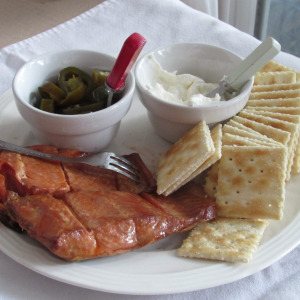
Smoked Salmon and Jalapeno Appetizer
Smoked salmon Cream Cheese
Pickled jalapeno rings
Saltine crackers
Spread crackers with cream cheese, top with a bit of smoked salmon and a jalapeno ring. Sit back and watch as it gets devoured in less time than it took to throw together. Thanks, Anthony!
Eat Well
~Trish


Aloha kakahiaka a Hau’oli aloha Po’akolu. Maikaʻi lā iā oukou.
Good morning and Happy Aloha Wednesday. Have a nice day, everyone.
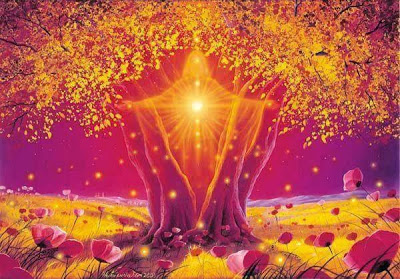
“Graduation,” by Nimesh Patel
Have your eye on the goal, but then let it all go
For everything changes, as you will come to know
Every plan you make, and every seed you sow
Is impermanent, nothing is ever yours to own
Once you realize this, oh you will see the truth
That you never were the planter of your own fruits,
But accept these gifts even if you don’t know from who
And kindly pay it forward to those behind you
Cuz ultimately, what we take will always disappear
But what we give will live on for years
So keep giving, of your stuff and yourself
Until your ego, has completely melted
Be wary of the impact that you wanna make
Instead make sure you are impacted each day
Have your eye on the sky, but still see the ants
For the small things are the foundation of all that will last
We move on
As time passes by
Let’s just hope we move from
Darkness to light
When we reach the top
And we look back, I
Hope you cry,
Filled with tears of joy, satisfied
Be careful not to accumulate too many things
Because you may just end up with a pot full of greed
And doing, likewise can also be deceiving
So I encourage you all to practice just being
Be still, be happy, be loving, be kind
Be humble, be magical, be aware, but be blind
Don’t judge, see the good in each and every soul
Use your mind when needed, but follow your heart even more
Also, don’t forget to thank God, every time you fail,
Cuz your journey from failure, will be your legacy and tale
Remember to feed birds, hug trees and bow to the sun
Until you and Mother Nature are one
The last thing, is to be grateful for all of your gifts
For gratitude and suffering cannot co-exist
When you reach this space, every moment will be bliss
And this graduating class, will mark your success
Happy, free, confused and lonely, miserable and magical at the same time
Our capacity to love is a currency that just never runs out,
Consider the likes of Gandhi, Martin Luther King, Mother Theresa,
And may each of you tap into that generous ocean and discover everyday what it means to give,
In giving may you fully experience what it means to receive,
And as Martin Luther King Says, “Everyone can be great, because everyone can serve”
May you all find greatness in service to life,
May you all give, receive and never ever stop dancing. Thank you.
 Aloha kakahiaka a Hau’oli aloha Pōʻalua oukou. I lā maikaʻi nou. Maluhia a me aloha mau loa no na hoaloha.
Good morning and a wonderful Tuesday to you all! Have a nice day … Peace and love always, my friends!


Here is another great dish from our sister and guest blogger, the OGG, Theresa. What a great way to repurpose that Easter ham bone!
Tired of the usual ham bone leftovers and after a long trip to freezing Colorado, – I was craving soup tonight. This one is just spicy enough to clear the sinuses but not too hot – and still has a ton of flavor. This even wound up on the husband’s must have list.
Theresa’s Black Eyed Pea and Hot Link Soup
Ingredients:
1 – leftover ham bone w/some meat remaining
8 – cups water
1 – 14.5 oz can Muir Glen Organic Diced Fire Roasted Tomatoes
2 – 14.5 oz cans black eyed peas
1 – 4-pack Evergood Louisiana Hot Link Sausages
2 – large poblano chili peppers
1 – stalk Swiss Chard (center removed)
Optional seasonings (you might be able to do without any…
View original post 165 more words
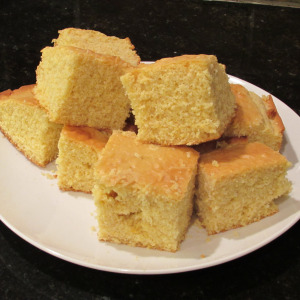
Now that you’ve nearly digested your Easter feast(s) and sworn yourselves to go on that bathing suit diet (I call it “second Lent”), here are some more great recipes in the Local Happenings Magazine to get you through Memorial Day and the rest of the grillin’ season.
Happy Easter!
CPM



Aloha kakou a aloha kakahiaka. Hauʻoli aloha Po’akahi. I lā āwaiwa nou oukou.
Hello everyone and good morning. Happy Aloha Monday. Have a fantastic day, everyone!

Let us beware of creating a darkness at noonday for ourselves by gazing, so to say, direct at the sun . . . , as though we could hope to attain adequate vision and perception of Wisdom with mortal eyes. It will be the safer course to turn our gaze on an image of the object of our quest.
The Athenian Stranger
Plato
Every year more than three hundred and fifty Catholic and Protestant sects observe Easter Sunday, celebrating the Resurrection of Jesus, the Son of God who called himself the Son of Man. So too do the Russian and Greek Orthodox churches, but on a separate calendar. Such is the schism between East and West within Christendom regarding this day, which always falls on the ancient Sabbath, once consecrated to the Invisible Sun, the sole source of all life, light and energy. If we wish to understand the permanent possibility of spiritual resurrection taught by the Man of Sorrows, we must come to see both the man and his teaching from the pristine perspective of Brahma Vach, the timeless oral utterance behind and beyond all religions, philosophies and sciences throughout the long history of mankind.
The Gospel According to St. John is the only canonical gospel with a metaphysical instead of an historical preamble. We are referred to that which was in the beginning. In the New English Bible, the recent revision of the authorized version produced for the court of King James, we are told: Before all things were made was the Word. In the immemorial, majestic and poetic English of the King James version, In the beginning was the Word and the Word was with God, and the Word was God. This is a bija sutra, a seminal maxim, marking the inception of the first of twenty-one chapters of the gospel, and conveying the sum and substance of the message of Jesus. John, according to Josephus, was at one time an Essene and his account accords closely with the Qumran Manual of Discipline. The gospel attributed to John derives from the same oral tradition as the Synoptics, but it shows strong connections with the Pauline epistles as well as with the Jewish apocalyptic tradition. It is much more a mystical treatise than a biographical narrative.
Theosophically, there is no point or possibility for any man to anthropomorphize the Godhead, even though this may be very touching in terms of filial devotion to one’s own physical father. The Godhead isunthinkable and unspeakable, extending boundlessly beyond the range and reach of thought. There is no supreme father figure in the universe. In the beginning was the Word, the Verbum, the Shabdabrahman, the eternal radiance that is like a veil upon the attributeless Absolute. If all things derive, as St. John explains, from that One Source, then all beings and all the sons of men are forever included. Metaphysically, every human being has more than one father, but on the physical plane each has only one. Over a thousand years or thirty generations, everyone has more ancestors than there are souls presently incarnated on earth. Each one participates in the ancestry of all mankind. While always true, this is more evident in a nation with mixed ancestries. Therefore it is appropriate here that we think of him who preached before Jesus, the Buddha, who taught that we ask not of a man’s descent but of his conduct. By their fruits they shall he known, say the gospels.
There is another meaning of the ‘Father’ which is relevant to the opportunity open to every human being to take a decision to devote his or her entire life to the service of the entire human family. The ancient Jews held that from the illimitable Ain-Soph there came a reflection, which could never be more than a partial participation in that illimitable light which transcends manifestation. This reflection exists in the world as archetypal humanity – Adam Kadmon. Every human being belongs to one single humanity, and that collectivity stands in relation to the Ain-Soph as any one human being to his or her own father. It is no wonder that Pythagoras – Pitar Guru, ‘father and teacher,’ as he was known among the ancient Hindus – came to Krotona to sound the keynote of a long cycle now being reaffirmed for an equally long period in the future. He taught his disciples to honour their father and their mother, and to take a sacred oath to the Holy Fathers of the human race, the ‘Ancestors of the Arhats.’
We are told in the fourth Stanza of Dzyan that the Fathers are the Sons of Fire, descended from a primordial host of Logoi. They are self-existing rays streaming forth from a single, central, universal Mahatic fire which is within the cosmic egg, just as differentiated matter is outside and around it. There are seven sub-divisions within Mahat – the cosmic mind, as it was called by the Greeks – as well as seven dimensions of matter outside the egg, giving a total of fourteen planes, fourteen worlds. Where we are told by John that Jesus said, In my Father’s house are many mansions, H.P. Blavatsky states that this refers to the seven mansions of the central Logos, supremely revered in all religions as the Solar Creative Fire. Any human being who has a true wakefulness and thereby a sincere spirit of obeisance to the divine demiurgic intelligence in the universe, of which he is a trustee even while encased within the lethargic carcass of matter, can show that he is a man to the extent to which he exhibits divine manliness through profound gratitude, a constant recognition and continual awareness of the One Source. All the great Teachers of humanity point to a single source beyond themselves. Many are called but few are chosen by self-election. Spiritual Teachers always point upwards for each and every man and woman alive, not for just a few. They work not only in the visible realm for those immediately before them, but, as John reminds us, they come from above and work for all. They continually think of and love every being that lives and breathes, mirroring “the One that breathes breathless” in ceaseless contemplation, overbrooding the Golden Egg of the universe, theHiranyagarbha.
Such beautiful ideas enshrined in magnificent myths are provocative to the ratiocinative mind and suggestive to the latent divine discernment of Buddhic intuition. The only way anyone can come closer to the Father in Heaven – let alone come closer to Him on earth Who is as He is in Heaven – is by that light to which John refers in the first chapter of the Gospel. It is the light that lighteth every man who cometh into the world, which the darkness comprehendeth not. Human beings are involved in the darkness of illusion, of self-forgetfulness, and forgetfulness of their divine ancestry. The whole of humanity may be regarded as a garden of gods but all men and women are fallen angels or gods tarnished by forgetfulness of their true eternal and universal mission. Every man or woman is born for a purpose. Every person has a divine destiny. Every individual has a unique contribution to make, to enrich the lives of others, but no one can say what this is for anyone else. Each one has to find it, first by arousing and kindling and then by sustaining and nourishing the little lamp within the heart. There alone may be lit the true Akashic fire upon the altar in the hidden temple of the God which lives and breathes within. This is the sacred fire of true awareness which enables a man to come closer to the one universal divine consciousness which, in its very brooding upon manifestation, is the father-spirit. In the realm of matter it may be compared to the wind that bloweth where it listeth. Any human being could become a self-conscious and living instrument of that universal divine consciousness of which he, as much as every other man or woman, is an effulgent ray.
This view of man is totally different from that which has, alas, been preached in the name of Jesus. Origen spoke of the constant crucifixion of Jesus, declaring that there is not a day on earth when he is not reviled. But equally there is not a time when others do not speak of him with awe. He came with a divine protection provided by a secret bond which he never revealed except by indirect intonation. Whenever the Logos becomes flesh, there is sacred testimony to the Great Sacrifice and the Great Renunciation – of all Avatars, all Divine Incarnations. This Brotherhood of Blessed Teachers is ever behind every attempt to enlighten human minds, to summon the latent love in human hearts for all humanity, to fan the sparks of true compassion in human beings into the fires of Initiation. The mark of the Avatar is that in him the Paraclete, the Spirit of Eternal Truth, manifests so that even the blind may see, the deaf may hear, the lame may walk, the unregenerate may gain confidence in the possibility and the promise of Self-redemption.
In one of the most beautiful passages penned on this subject, the profound essay entitled “The Roots of Ritualism in Church and Masonry,” published in 1889, H.P.Blavatsky declared:
Most of us believe in the survival of the Spiritual Ego, in Planetary Spirits and Nirmanakayas, those great Adepts of the past ages, who, renouncing their right to Nirvana, remain in our spheres of being, not as ‘spirits’ but as complete spiritual human Beings. Save their corporeal, visible envelope, which they leave behind, they remain as they were, in order to help poor humanity, as far as can he done without sinning against Karmic Law. This is the ‘Great Renunciation,’ indeed; an incessant, conscious self-sacrifice throughout aeons and ages till that day when the eyes of blind mankind will open and, instead of the few,all will see the universal truth. These Beings may well be regarded as God and Gods – if they would but allow the fire in our hearts, at the thought of that purest of all sacrifices, to be fanned into the flame of adoration, or the smallest altar in their honour. But they will not. Verily, ‘the secret heart is fair Devotion’s (only) temple,’ and any other, in this case, would be no better than profane ostentation.
Let a man be without external show such as the Pharisees favoured, without inscriptions such as the Scribes specialized in, and without arrogant and ignorant self-destructive denial such as that of the Sadducees. Such a man, whether he be of any religion or none, of whatever race or nation or creed, once he recognizes the existence of a Fraternity of Divine Beings, a Brotherhood of Buddhas, Bodhisattvas and Christs, an Invisible Church (in St. Augustine’s phrase) of living human beings ever ready to help any honest and sincere seeker, he will thereafter cherish the discovery within himself. He will guard it with great reticence and grateful reverence, scarcely speaking of his feeling to strangers or even to friends. When he can do this and maintain it, and above all, as John says in the Gospel, be true to it and live by it, then he may make it for himself, as Jesus taught, the way, the truth and the light. While he may not be self-manifested as the Logos came to be through Jesus – the Son of God become the Son of Man – he could still sustain and protect himself in times of trial. No man dare ask for more. No man could do with less.
Jesus knew that his own time of trial had come – the time for the consummation of his vision – on the Day of Passover. Philo Judaeus, who was an Aquarian in the Age of Pisces, gave an intellectual interpretation to what other men saw literally, pointing out that the spiritual passover had to do with passing over earthly passions. Jesus, when he knew the hour had come for the completion of his work and the glorification of his father to whom he ever clung, withdrew with the few into the Garden of Gethsemane. He did not choose them, he said. They chose him. He withdrew with them and there they all used the time for true prayer to the God within. Jesus had taught, Go into thy closet and pray to thy father who is in secret, and that, The Kingdom of God is within you. This was the mode of prayer which he revealed and exemplified to those who were ready for initiation into the Mysteries. Many tried but only few stayed with it. Even among those few there was a Peter, who would thrice deny Jesus. There was the traitor, Judas, who had already left the last supper that evening, having been told, That thou doest, do quickly. Some among the faithful spent their time in purification. Were they, at that point, engaged in self-purification for their own benefit? What had Jesus taught them? Could one man separate himself from any other? He had told those who wanted to stone the adulteress, Let him who is without sin cast the first stone. He had told them not to judge anyone else, but to wait for true judgment. Because they had received a sublime privilege, about which other men subsequently argued for centuries and produced myriad heresies and sects, in their case the judgment involved their compassionate concern to do the sacred Work of the Father for the sake of all. The Garden of Gethsemane is always here. It is a place very different from the Wailing Wall where people gnash their teeth and weep for themselves or their tribal ancestors. The Garden of Gethsemane is wherever on earth men and women want to cleanse themselves for the sake of being more humane in their relations with others.
Nor was the crucifixion only true of Jesus and those two thieves, one of whom wanted to have a miracle on his behalf while the other accepted the justice of the law of the day, receiving punishment for offences that he acknowledged openly. Every man participates in that crucifixion. This much may be learnt from the great mystics and inspired poets across two thousand years. Christos is being daily, hourly, every moment crucified within the cross of every human being. There are too few on earth who are living up to the highest possibility of human god-like wisdom, love and compassion, let alone who can say that in them the spirit of Truth, theParaclete, manifests. Who has the courage to chase the money-changers of petty thoughts and paltry desires from the Temple of the universal Spirit, not through hatred of the money-changers, but through a love in his heart for the Restoration of the Temple? Who has the courage to say openly what all men recognize inwardly when convenient, or when drunk, or when among friends whom they think they trust? Who is truly a man? How many men are there heroically suffering? Not only do we know that God is not mocked and that as we sow, so shall we reap, but we also realize that the Garden of Gethsemane is difficult to reach. Nonetheless, it may be sought by any and every person who wants to avoid the dire tragedy of self-annihilation. Indeed, there are many such people all around who barely survive from day to day because of their own self-hatred, self-contempt and despair, and who tremble on the brink of moral death. We live in terribly tragic times, and therefore there is no one who cannot afford to take a little pause for the sake of making the burden of one’s presence easier for one’s wife or husband, for one’s children, or for one’s neighbours. Each needs a time of re-examination, a time for true repentance, a time for Christ-like resolve. The Garden of Gethsemane is present wherever there is genuineness, determination and honesty. Above all, it is where there is the joyous recognition that, quite apart from yesterday and tomorrow, right now a person can create so strong a current of thought that it radically affects the future. He could begin now, and acquire in time a self-sustaining momentum. But this cannot be done without overcoming the karmic gravity of all the self-destructive murders of human beings that he has participated in on the plane of thought, on the plane of feeling, especially on the plane of words, and also, indirectly, on the plane of outward action.
If the Garden of Gethsemane did not exist, no persecuting Saul could ever become a Paul. Such is the great hope and the glad tiding. As Origen said, Saul had to be killed before Paul could be born. The Francis who was a simple crusader had to die before the Saint of Assisi could be born. Because all men have free will, no man can transform himself without honest and sincere effort. Hence, after setting out the nature of the Gods, the Fathers of the human race, H.P. Blavatsky, in the same article quoted, spoke of the conditions of probation of incarnated souls seeking resurrection:
. . . every true Theosophist holds that the divine HIGHER SELF of every mortal man is of the same essence as the essence of these Gods. Being, moreover, endowed with free-will, hence having, more than they, responsibility, we regard the incarnated EGO as far superior to, if not more divine than, any spiritual INTELLIGENCE still awaiting incarnation. Philosophically, the reason for this is obvious, and every metaphysician of the Eastern school will understand it. The incarnated EGO has odds against it which do not exist in the case of a pure divine Essence unconnected with matter; the latter has no personal merit, whereas the former is on his way to final perfection through the trials of existence, of pain and suffering.
It is up to each one to decide whether to make this suffering constructive, these trials meaningful, these tribulations a golden opportunity for self-transformation and spiritual resurrection.
If this decision is not made voluntarily during life, it is thrust upon each ego at death. Every human being has to pass at the moment of death, according to the wisdom of the ancients, to a purgatorial condition in which there is a separation of the immortal individuality. It is like a light which is imprisoned during waking life, a life which is a form of sleep within the serpent coils of matter. This god within is clouded over by the fog of fear, superstition and confusion, and all but the pure in heart obscure the inner light by their demonic deceits and their ignorant denial of the true heart. Every human being needs to cast out this shadow, just as he would throw away an old garment, says Krishna, or just as he would dump into a junkyard an utterly unredeemable vehicle. Any and every human being has to do the same on the psychological plane. Each is in the same position. He has to discard the remnants, but the period for this varies according to each person. This involves what is called ‘the mathematics of the soul.’ Figures are given to those with ears to hear, and there is a great deal of detailed application to be made.
Was Jesus exempt from this? He wanted no exception. He had taken the cross. He had become one with other men, constantly taking on their limitations, exchanging his finer life-atoms for their gross life-atoms – the concealed thoughts, the unconscious hostilities, the chaotic feelings, the ambivalences, the ambiguities, the limitations of all. He once said, My virtue has gone out of me, when the hem of his garment was touched by a woman seeking help, but does this mean that he was exposed only when he physically encountered other human beings? The Gospel according to John makes it crisply clear, since it is the most mystical and today the most meaningful of the four gospels, that this was taking place all the time. It not only applies to Jesus. It takes place all the time for every person, often unknown to oneself. But when it is fully self-conscious, the pain is greater, such as when a magnanimous Adept makes a direct descent from his true divine estate, leaving behind his finest elements, like Surya the sun in the myth who cuts off his lustre for the sake of entering into a marriage withSanjna, coming into the world, and taking on the limitations of all. The Initiator needs the three days in the tomb, but these three days are metaphorical. They refer to what is known in the East as a necessary gestation state when the transformation could be made more smoothly from the discarded vehicle which had been crucified.
People tend to fasten upon the wounds and the blood, even though, as Titian’s painting portrays clearly, the tragedy of Jesus was not in the bleeding wounds but in the ignorance and self-limitation of the disciples. He had promised redemption to anyone and everyone who was true to him, which meant, he said, to love each other. He had washed the feet of the disciples, drawn them together, given them every opportunity so that they would do the same for each other. He told them that they need only follow this one commandment. We know how difficult it is for most people today to love one another, to work together, to pull together, to cooperate and not compete, to add and not subtract, to multiply and serve, not divide and rule. This seems very difficult especially in a hypocritical society filled with deceit and lies. What are children to say when their parents ask them to tell the truth and they find themselves surrounded by so many lies? In the current cycle the challenge is most pointed and poignant. More honesty is needed, more courage, more toughness – this time for the sake of all mankind. One cannot leave it to a future moment for some pundits in theological apologetics and theosophical hermeneutics to say this cycle was only for some chosen people. Every single part of the world has to be included and involved.
The teaching of Jesus was a hallowed communication of insights, a series of sacred glimpses, rather than a codification of doctrine. He presented not asumma theologica or ethica, but the seminal basis from which an endless series of summae could be conceived. He initiated a spiritual current of sacred dialogue, individual exploration and communal experiment in the quest for divine wisdom. He taught the beauty of acquiescence and the dignity of acceptance of suffering – a mode appropriate to the Piscean Age. He showed salvation – through love, sacrifice and faith – of the regenerated psyche that cleaves to the light of no us. He excelled in being all things to all men while remaining utterly true to himself and to his ‘Father in Heaven.’ He showed a higher respect for the Temple than its own custodians. At the same time he came to found a new kind of kingdom and to bring a message of joy and hope. He came to bear witness to the Kingdom of Heaven during life’s probationary ordeal on earth. He vivified by his own luminous sacrifice the universal human possibility of divine self-consecration, the beauty of beatific devotion to the Transcendental Source of Divine Wisdom – the Word Made Flesh celebrating the Verbum In the Beginning.
Above all, there was the central paradox that his mission had to be vindicated by its failure, causing bewilderment among many of his disciples, while intuitively understood only by the very few who were pure in heart and strong in devotion, blessed by the vision of the Ascension. After three days in the tomb, Jesus, in the guise of a gardener, said to a poor, disconsolate Mary Magdalene, Mary! At once she looked back because she recognized the voice, and she said, Rabboni – “My Master” – and fell at his feet. Then he said, Touch me not. Here is a clue to his three days in the tomb. The work of permanent transmutation of life-atoms, of transfiguration of vehicles, was virtually complete. He then said, Go to my brethren, and say unto them, I ascend unto my Father and your Father; and to my God and your God.Subsequently he appeared three times to his disciples.
Jesus gave the greatest possible confidence to all his disciples by ever paying them the most sacred compliment, telling them that they were children of God. But, still, if a person thinks that he is nothing, or thinks that he is the greatest sinner on earth, how can the compassion and praise of Jesus have meaning for him? Each person has to begin to see himself undramatically as one of many sinners and say, “My sins are no different from those of anyone else.” The flesh is weak but pneuma, the spirit, is willing. And pneuma has to do with breath. The whole of the Gospelaccording to John is saturated with the elixir of the breathing-in and breathing-out by Jesus of the life-infusing current that gives every man a credible faith in his promise and possibility, and, above all, a living awareness of his immortality, which he can self-consciously realize when freed from mis-identification with his mortal frame.
The possibility of resurrection has to do with identification and mis-identification. This is the issue not for just a few but for all human beings who, in forgetfulness, tend to think that they are what their enemies think, or that they are what their friends want them to be. At one time men talked of the imago Christi. We now live in a society that constantly deals in diabolical images and the cynical corruption of image-making, a nefarious practice unfamiliar in simpler societies which still enjoy innocent psychic health. Even more, people now engage in image-crippling – the most heinous of crimes. At one time men did it openly, with misguided courage. They pulled down statues and defaced idols. They paid for it and are still paying. Perhaps those people were reborn in this society. That is sad because they are condemning themselves to something worse than hell – not only the hell of loneliness and despair – but much worse. The light is going out for many a human being. The Mahatmas have always been with us. They have always abundantly sent forth benedictory vibrations. They are here on earth where they have always had their asylums and their ashrams. Under cyclic law they are able to use precisely prepared forums and opportunities to re-erect or resurrect the mystery temples of the future. Thus, at this time, everybody is stirred up by the crucial issue of identity – which involves the choice between the living and the dead, between entelechy and self-destruction.
The central problem in the Gospel according to John, which Paul had to confront in giving his sermon on the resurrection, has to do with life and with death. What is life for one man is not life to another. Every man or woman today has to raise the question, “What does it mean for me to be alive, to breathe, to live for the sake of others, to live within the law which protects all but no one in particular?” Whoever truly identifies with the limitless and unconditional love of Jesus and with the secret work of Jesus which he veiled in wordless silence, is lit up. Being lit up, one is able to see the divine Buddha-nature, the light vesture of the Buddha. The disciples in the days of the Buddha, and so again in the days of Jesus, were able to see the divine raiment made of the most homogeneous pure essence of universalBuddhi. Immaculately conceived and unbegotten, it is daiviprakriti, the light of the Logos. Every man at all times has such a garment, but it is covered over. Therefore, each must sift and select the gold from the dross. The more a person does this truly and honestly, the more the events of what we call life can add up before the moment of death. They can have a beneficent impact upon the mood and the state of mind in which one departs. A person who is wise in this generation will so prepare his meditation that at the moment of death he may read or have read out those passages in theBhagavad Gita, The Voice of the Silence, or The Gospel According to St. John, that are exactly relevant to what is needed. Then he will be able to intone the Word, which involves the whole of one’s being and breathing, at the moment when he may joyously discard his mortal garment. It has been done, and it is being done. It can be done, and it will be done. Anyone can do it, but in these matters there is no room for chance or deception, for we live in a universe of law. Religion can be supported now by science, and to bring the two together in the psychology of self-transformation one needs true philosophy, the unconditional love of wisdom.
The crucifixion of Jesus and his subsequent resurrection had little reference to himself, any more than any breath he took during his life. Thus, in the Gospel, we read that Jesus promises that when he will be gone from the world, he will send the Paraclete. This archaic concept has exercised the pens of many scholars. What is the Paraclete? What does it mean? ‘Comforter’? ‘The Spirit of Truth’? Scholars still do not claim to know. The progress made in this century is in the honest recognition that they do not know, whereas in the nineteenth century they quarrelled, hurled epithets at each other out of arrogance, with a false confidence that did not impress anyone for long. The times have changed, and this is no moment for going back to the pseudo-complacency of scholasticism, because today it would be false, though at one time it might have had some understandable basis. Once it might have seemed a sign of health and could have been a pardonable and protective illusion. Today it would be a sign of sickness because it would involve insulting the intelligence of many young people, men and women, Christian, Jewish, Protestant, Catholic, but also Buddhist, Hindu, Moslem, Sikh, and every other kind of denomination. No one wants to settle for the absurdities of the past, but all nonetheless want a hope by which they may live and inherit the future, not only for themselves or their descendants, but for all living beings.
This, then, is a moment when people must ask what would comfort the whole of mankind. What did Jesus think would be a way of comforting all? Archetypally, the Gospel according to John is speaking in this connection of the mystery temple, where later all the sad failures of Christianity took place. This is the light and the fire that must be kept alive for the sake of all. Who, we may ask, will joyously and silently maintain it intact? Who will be able to say, as the dying Latimer said in Oxford in 1555, “We shall this day light such a candle . . . as I trust shall never be put out.” Jesus was confident that among his disciples there were those who had been set afire by the flames that streamed through him. He was the Hotri, ‘the indispensable agent’ for the universal alkahest, the elixir of life and immortality. He was the fig tree that would bear fruit, but he predicted that there would be fig trees that would bear no fruit. He was referring to the churches that have nothing to say, nothing real to offer, and above all, do not care that much for the lost Word or the world’s proletariat, or the predicament and destiny of the majority of mankind.
His confidence was that which came to him, like everything in his life, from the Father, the Paraguru, the Lord of Libations, who, with boundless love for all, sustains in secret the eternal contemplation, together with the two Bodhisattvas – one whose eye sweeps over slumbering earth, and the other whose hand is extended in protecting love over the heads of his ascetics. Jesus spoke in the name of the Great Sacrifice. He spoke of the joy in the knowledge that there were a few who had become potentially like the leaven that could lift the whole lump, who had become true Guardians of the Eternal Fires. These are the vestal fires of the mystery temple which had disappeared in Egypt, from which the exodus took place. They had disappeared from Greece, though periodically there were attempts to revive them, such as those by Pythagoras at Delphi. They were then being poured into a new city called Jerusalem. In a sense, the new Comforter was the New Jerusalem, but it was not just a single city nor was it merely for people of one tribe or race.
Exoterically, the temple of Jerusalem was destroyed in 63 B.C. by Pompey and was rebuilt. Later it was razed to the ground again in 70 A.D. Since the thirteenth century no temple has been in existence there at all because that city has been for these past seven hundred years entirely in the hands of those who razed the old buildings and erected minarets and mosques. Now, people wonder if there really ever was a true Jerusalem, for everywhere is found the Babylon of confusion. Today it is not Origen who speaks to us, but Celsus, on behalf of all Epicureans. Everyone is tempted, like Lot’s wife, to be turned into salt by fixing their attention upon the relics and memories of the past long after they have vanished into the limbo of dissolution and decay.
Anyone, however, who has an authentic soul-vision is El Mirador. Jesus knew that the vision, entrusted to the safekeeping of a few, would inspire them to lay the basis of what would continue, because of what they did, despite all the corruption and the ceaseless crucifixion. Even today, two thousand years later, when we hear of the miracle of the limitless love of Jesus, when we hear the words he spoke, when we read about and find comfort in what he did, we are deeply stirred. We are abundantly grateful because in us is lit the chela-light of true reverential devotion to the Christoswithin. This helps us to see all the Christs of history, unknown as well as renowned, as embodiments of the One and Only – the One without a Second,in the cryptic language of the Upanishads. When this revelation takes place and is enjoyed inwardly, there are glad tidings, because it is on the invisible plane that the real work is done. Most people are fixated on the visible and want to wait for fruits from trees planted by other men. There are a few, however, who have realized the comfort to be derived in the true fellowship of those who seek the kingdom of God within themselves, who wish to become the better able to help and teach others, and who will be true in their faith from now until the twenty-first century. Some already have been using a forty-year calendar.
There have been such persons before us. Pythagoras called them Heroes. The Buddha called them Shravakas, true listeners, and Shramanas, true learners. Then there were some who became Srotapattis, ‘those who enter the stream,’ and among them were a few Anagamin, ‘those who need never return on earth again involuntarily.’ There were also those who were Arhansof boundless vision, Perfected Men, Bodhisattvas, endlessly willing to re-enter the cave, having taken the pledge of Kwan-Yin to redeem every human being and all sentient life. Nothing less than such a vow can resurrect the world today. These times are very different from the world at the time of John because in this age outward forms are going to give no clues in relation to the work of the formless. Mankind has to grow up. We find Origen saying this in the early part of the third century and Philo saying the same even in the first century. Philo, who was a Jewish scholar and a student of Plato, was an intuitive intellectual, while Origen, who had studied the Gnostics and considered various philosophical standpoints, was perhaps more of a mystic or even an ecstatic. Both knew that the Christos could only be seen by the eye of the mind. If therefore thine eye be single, Jesus said, thy whole body shall be full of Light. Those responding with the eyes of the body could never believe anything because, as Heraclitus said, “Eyes are bad witnesses to the soul.” The eyes of the body must be tutored by the eye of the mind. Gupta Vidya also speaks of the eye of the heart and the eye in the forehead – the eye of Wisdom-Compassion. Through it, by one’s own love, one will know the greater love. By one’s own compassion one will know the greater compassion. By one’s own ignorance one will recognize the ignorance around and seek the privilege of recognition of the Paraclete. Then, when the eye becomes single in its concentration upon the welfare of all, the body will become full of the light of the Christos. Once unveiled at the fundamental level of causality, it makes a man or woman an eternal witness to the true resurrection of the Son of Man into the highest mansions of the Father.
Hermes, April 1977
Raghavan Iyer
What does love mean, exactly? We have applied to it our finest definitions; we have examined its psychology and outlined it in philosophical frameworks; we have even devised a mathematical formula for attaining it. And yet anyone who has ever taken this wholehearted leap of faith knows that love remains a mystery – perhaps the mystery of the human experience.
Learning to meet this mystery with the full realness of our being – to show up for it with absolute clarity of intention – is the dance of life.
Indeed, in accordance with the general praxis of Buddhist teachings, Nhat Hanh delivers distilled infusions of clarity, using elementary language and metaphor to address the most elemental concerns of the soul. To receive his teachings one must make an active commitment not to succumb to the Western pathology of cynicism, our flawed self-protection mechanism that readily dismisses anything sincere and true as simplistic or naïve – even if, or precisely because, we know that all real truth and sincerity are simple by virtue of being true and sincere.

At the heart of Nhat Hanh’s teachings is the idea that “understanding is love’s other name” – that to love another means to fully understand his or her suffering. (“Suffering” sounds rather dramatic, but in Buddhism it refers to any source of profound dissatisfaction – be it physical or psychoemotional or spiritual.) Understanding, after all, is what everybody needs – but even if we grasp this on a theoretical level, we habitually get too caught in the smallness of our fixations to be able to offer such expansive understanding. He illustrates this mismatch of scales with an apt metaphor:
If you pour a handful of salt into a cup of water, the water becomes undrinkable. But if you pour the salt into a river, people can continue to draw the water to cook, wash, and drink. The river is immense, and it has the capacity to receive, embrace, and transform. When our hearts are small, our understanding and compassion are limited, and we suffer. We can’t accept or tolerate others and their shortcomings, and we demand that they change. But when our hearts expand, these same things don’t make us suffer anymore. We have a lot of understanding and compassion and can embrace others. We accept others as they are, and then they have a chance to transform.
The question then becomes how to grow our own hearts, which begins with a commitment to understand and bear witness to our own suffering:
When we feed and support our own happiness, we are nourishing our ability to love. That’s why to love means to learn the art of nourishing our happiness.
Understanding someone’s suffering is the best gift you can give another person. Understanding is love’s other name. If you don’t understand, you can’t love.
And yet because love is a learned “dynamic interaction,” we form our patterns of understanding – and misunderstanding – early in life, by osmosis and imitation rather than conscious creation. Echoing what Western developmental psychology knows about the role of “positivity resonance” in learning love, Nhat Hanh writes:
If our parents didn’t love and understand each other, how are we to know what love looks like? … The most precious inheritance that parents can give their children is their own happiness. Our parents may be able to leave us money, houses, and land, but they may not be happy people. If we have happy parents, we have received the richest inheritance of all.
Nhat Hanh points out the crucial difference between infatuation, which replaces any real understanding of the other with a fantasy of who he or she can be for us, and true love:
Sometimes we feel empty; we feel a vacuum, a great lack of something. We don’t know the cause; it’s very vague, but that feeling of being empty inside is very strong. We expect and hope for something much better so we’ll feel less alone, less empty. The desire to understand ourselves and to understand life is a deep thirst. There’s also the deep thirst to be loved and to love. We are ready to love and be loved. It’s very natural. But because we feel empty, we try to find an object of our love. Sometimes we haven’t had the time to understand ourselves, yet we’ve already found the object of our love. When we realize that all our hopes and expectations of course can’t be fulfilled by that person, we continue to feel empty. You want to find something, but you don’t know what to search for. In everyone there’s a continuous desire and expectation; deep inside, you still expect something better to happen. That is why you check your email many times a day!
Real, truthful love, he argues, is rooted in four elements – loving kindness, compassion, joy, and equanimity – fostering which lends love “the element of holiness.” The first of them addresses this dialogic relationship between our own suffering and our capacity to fully understand our loved ones:
The essence of loving kindness is being able to offer happiness. You can be the sunshine for another person. You can’t offer happiness until you have it for yourself. So build a home inside by accepting yourself and learning to love and heal yourself. Learn how to practice mindfulness in such a way that you can create moments of happiness and joy for your own nourishment. Then you have something to offer the other person.
[…]
If you have enough understanding and love, then every moment – whether it’s spent making breakfast, driving the car, watering the garden, or doing anything else in your day – can be a moment of joy.
This interrelatedness of self and other is manifested in the fourth element as well, equanimity, the Sanskrit word for which – upeksha – is also translated as “inclusiveness” and “nondiscrimination”:
In a deep relationship, there’s no longer a boundary between you and the other person. You are her and she is you. Your suffering is her suffering. Your understanding of your own suffering helps your loved one to suffer less. Suffering and happiness are no longer individual matters. What happens to your loved one happens to you. What happens to you happens to your loved one.
[…]
In true love, there’s no more separation or discrimination. His happiness is your happiness. Your suffering is his suffering. You can no longer say, “That’s your problem.”
Supplementing the four core elements are also the subsidiary elements of trust and respect, the currency of love’s deep mutuality:
When you love someone, you have to have trust and confidence. Love without trust is not yet love. Of course, first you have to have trust, respect, and confidence in yourself. Trust that you have a good and compassionate nature. You are part of the universe; you are made of stars. When you look at your loved one, you see that he is also made of stars and carries eternity inside. Looking in this way, we naturally feel reverence. True love cannot be without trust and respect for oneself and for the other person.
To love without knowing how to love wounds the person we love. To know how to love someone, we have to understand them. To understand, we need to listen.
[…]
When you love someone, you should have the capacity to bring relief and help him to suffer less. This is an art. If you don’t understand the roots of his suffering, you can’t help, just as a doctor can’t help heal your illness if she doesn’t know the cause. You need to understand the cause of your loved one’s suffering in order to help bring relief.
[…]
The more you understand, the more you love; the more you love, the more you understand. They are two sides of one reality. The mind of love and the mind of understanding are the same.
Echoing legendary Zen teacher D.T. Suzuki’s memorable aphorism that“the ego-shell in which we live is the hardest thing to outgrow,” Nhat Hanh considers how the notion of the separate, egoic “I” interrupts the dialogic flow of understanding – the “interbeing,” to use his wonderfully poetic and wonderfully precise term, that is love:
Often, when we say, “I love you” we focus mostly on the idea of the “I” who is doing the loving and less on the quality of the love that’s being offered. This is because we are caught by the idea of self. We think we have a self. But there is no such thing as an individual separate self. A flower is made only of non-flower elements, such as chlorophyll, sunlight, and water. If we were to remove all the non-flower elements from the flower, there would be no flower left. A flower cannot be by herself alone. A flower can only inter-be with all of us… Humans are like this too. We can’t exist by ourselves alone. We can only inter-be. I am made only of non-me elements, such as the Earth, the sun, parents, and ancestors. In a relationship, if you can see the nature of interbeing between you and the other person, you can see that his suffering is your own suffering, and your happiness is his own happiness. With this way of seeing, you speak and act differently. This in itself can relieve so much suffering.
Find Your Magic
Tarot Readings, Inspiration, and Self-Empowerment
Making life on earth magick one moon phase at a time.
Astrologer ~ Mystic ~ Writer
of the Collegium Spiritus Sancti, a Golden Dawn Society
An affiliate of the Alpha et Omega Order of Melchizedek
All Knowledge Is Not Contained In Only One School
Connecting the grant community to #LearnGrants
Channelings & Articles
Magic Spell Books & Grimoires
Native Hawaiian Language Revitalization
Poetry & Tales of Love, Mystery, Magic and Spirituality
Organic Herbs, Herbals, Sustainable Gardening
Mother Nature: Feeding The Mind, Body & Soul, with Food, Medicine & Skincare.
"Inheritor of a Dying World, we call thee to the Living Beauty. Wanderer in the Wild Darkness, we call thee to the Gentle Light..."
Time is the most important thing we've been given
Embracing the Divine Within.
"...That I should bear witness to the truth." - John 18:37 // David E. Robinson, Publisher





 million little stitches
 Hālau 'Aha Hui Lānākila