
“Feng Shui only applies to you if you have a body and live on Earth” (me) Fawn Chang One of the biggest problems I encountered when I first learned about Feng Shui over 30 years ago w […]
“Feng Shui only applies to you if you have a body and live on Earth” (me) Fawn Chang One of the biggest problems I encountered when I first learned about Feng Shui over 30 years ago w […]

Chrystian Sensei is a member of the original Hālau located at Vallejo, California, where he also resides. He is a licensed Massage Therapist on staff at Orcanit Wellness in Oakland, California; a Chi Gung practitioner, and a student of the Western Mysteries Tradition. Aloha e komo mai, Chrystian!

The Year of the Snake slinks in on January 29, 2025, at the Aquarius new moon, bringing with it 12 months of renewal and growth. Known for its stealthiness and wisdom, the Snake wants you to move with purpose and precision. Relinquish what no longer serves you so you can evolve. […]
Read on: Wood Snake 2025

Nae karama bāndhe nahīṅ,
kṣīṇa purātana hoya.
Kṣaṇa kṣaṇa jāgrata hī rahe,
sahaja mukta hai soya.
Nae karama bāndhe nahīṅ,
kṣīṇa purātana hoya.
Pratikṣaṇa jāgrata hī rahe,
sahaja mukta hai soya.
Do not generate new karma,
let the old be extinguished,
every moment remain vigilant,
and naturally you become liberated.
Do not generate new karma,
let the old be extinguished,
every moment remain vigilant,
and naturally you become liberated.
–S.N. Goenka

For most of the medieval period, feudalism was the dominant social system across the world. In Japan, however, it took on a distinct form, adapted to the traditions and the cultures of this eastern […]
The universe is even as a great temple. – Claude De St. Martin
The central truths of Gupta Vidya are not derived from any ancient or modern sect but represent the accumulated wisdom of the ages, the unrecorded inheritance of humanity. Its vast scheme of cosmic and human evolution furnishes all true seekers with the symbolic alphabet necessary to interpret their recurrent visions as well as the universal framework and metaphysical vocabulary, drawn from many mystics and seers, which enable them to communicate their own intuitive perceptions. All authentic mystical writings are enriched by the alchemical flavour of theosophical thought. Gupta Vidya is an integrated system of fundamental verities taught by initiates and adepts across millennia. It is the Philosophia Perennis, the philosophy of human perfectibility, the science of spirituality and the religion of responsibility. It is the primeval fount of myriad religious systems as well as the hidden essence and esoteric wisdom of each. Its cosmology is known as Brahma Vidya and its gnoetic psychology is known as Atma Vidya. Man, an immortal monad, has been able to preserve this sacred heritage through the sacrificial efforts of enlightened and compassionate individuals, or Bodhisattvas, who constitute an ancient Brotherhood. They quietly assist in the ethical evolution and spiritual development of the whole of humanity. Gupta Vidya is Divine Wisdom, transmitted and verified over aeons by the sages who belong to this secret Brotherhood.
The supreme presupposition of Gupta Vidya is an eternal substance-principle postulated as the ineffable Ground of all being. It is called a substance-principle because it becomes increasingly substantial and differentiated on the plane of manifestation, while it essentially remains a homogeneous principle in abstract space and eternal duration. The perceived universe is a complex mirroring of this Unknown Source, all finite conceptions of which are necessarily incomplete. It is the Absolute Negation of all that exists. It is Be-ness or Sat, the Secondless Reality, the No-thing of ancient philosophy, the ‘Boundless Lir’, the Unknown Beginning of Celtic cosmogony. Compared with It, all manifestation is no more than an impermanent illusion or maya, a kaleidoscopic medium through which the one Reality shows itself in a series of reflections. Spirit and matter are the two facets of this indivisible principle which only seem to be separate during a vast period of cosmic manifestation. They radiate from this transcendent source, yet are not causally related to It, since neither quality nor mode may properly be ascribed to It. They appear periodically on the objective plane as the opposite poles of this Reality yet they are not inherently separate, but mutually coexist as spirit-matter. In manifestation this substratum differentiates itself into seven planes of increasing density, reaching towards the region of sense data. Everywhere the root essence of homogeneous substance is the same, transforming itself by minute degrees from the most ethereal to the most gross.
The seven planes of manifestation may be seen as condensations of rarefied matter and also as living streams of intelligences – primordial rays proceeding from an invisible Spiritual Sun. All modes of activity in the Universe are internally guided by powers and potencies arrayed in an almost endless series of hierarchies, each with its exact function and precise scope of action. They are called Dhyan Chohans in Tibetan cosmogony and bear many other titles in the rich panoply of religious traditions – Angels, Devas, Dhyani Buddhas, Gods, Elohim, etc. All these are transmitting agents of cosmic Law (̣ṛta) which guides the evolution of each atom on every plane in space, the hierarchies varying enormously in their respective degrees of creative consciousness and monadic intelligence. As an aggregate, this immense host of forces forms the manifesting Verbum of an unmanifest Presence, constituting simultaneously the active Mind of the cosmos and its immutable Law. The idea of myriad hierarchies of intelligences animating visible Nature is a vital key to understanding all true mysticism. Many flashes of intuitive perception reveal multitudes of radiant beings elaborating the interior architecture of matter. Great mystics show a reverential recognition of the Logos or Verbum, the Army of the Voice, operating behind the screen of surface events as the noumenal cause of natural phenomena. This involves deciphering the signs of these intelligent forces by following the traces of their effects. The natural world bears the signatures of a divine archetypal world. With proper keys to archaic symbolism, the true seeker can read these signatures and recover the lost knowledge which would restore a primeval state of gnosis equivalent to that of the Gods. The letters composing the Sanskrit language are the phenomenal expressions of these finer forces, and by understanding them one could discover the root vibration, the ineffable Word, reverberating throughout the sentient world of visible Nature.
The arcane teaching concerning the Great Chain of Being in the supernatural realm continually reappears in human history as the inexhaustible fountain-head of aesthetic expression, heroic action and mystic illumination. The diverse expressions of creativity in the arts, religion and philosophy stem from this common unseen source, and the search for its origin is the hallowed mission of many a mystic and artist. The problem of tracing particulars to universals is as crucial to art as to psychology. The sevenfold classification of man’s inner constitution corresponds to seven cosmic planes of being. Man is truly a microcosm and miniature copy of the macrocosm. Like the macrocosm, the individual is divine in essence, a direct radiation from the central Spiritual Sun. As pure spirit, every human being needs the vestures through which life may be experienced on differentiated planes of existence, so that one can become fully conscious of individual immortality and one’s indissoluble identity with the whole. Every person is a complete reflection of the universe, revealing oneself to oneself by means of seven differentiations. In one’s deepest self, the individual is Atman, the universal spirit which is mirrored in the luminous soul or Buddhi. The light of Buddhi is focussed through Manas or impersonal intellect, the source of human individuation. These three together constitute the imperishable fire in man, the immortal Triad that undertakes an immense pilgrimage through successive incarnations to emerge as an effortlessly self-conscious agent of the divine will, the Light of the Logos, Brahma Vach.
Below this overbrooding Triad is the volatile quaternary of principles drawn from the lower planes of cosmic matter: they are kama, the force of blind passion and chaotic desire shared by man with animal life; prana, the life-current energizing the whirling atoms on the objective plane of existence; the astral paradigmatic body (linga sharira), the original form around which the physical molecules shape themselves, and hence the model for the physical frame (sthula sharira). This quaternary of principles is evanescent and changeable, established for man’s use at the time of incarnation and dissolved at death into its primary constituents on their corresponding planes. The real man, the higher Triad, recedes from the physical plane to await the next incarnation. The function of each of these sheaths differs from one individual to another according to the level of spiritual development of the incarnated soul. The astral body of the Adept is of a much higher degree of resilience and purity than that of the average man. In visionaries and mystics, the sheaths intervening between the spiritual man and the brain-mind are sufficiently transparent so that they can receive communications from the overbrooding Triad in a relatively lucid manner. Man is a compound being simultaneously experiencing two worlds, inner and outer. Each person’s present life experience is but a minute portion of what was witnessed by the immortal individuality in previous incarnations. Thus if men and women assiduously search within themselves, they can recover a vast heritage of knowledge spanning aeons. These memories are locked in mansions of the soul which only ardent desire and strong discipline can penetrate.
Raghavan Iyer
The Gupta Vidya II

Hindū ho yā Bauddha ho,
Musalima ho yā Jaina.
Jaba jaba mana mailā kare,
taba taba ho becaina.
Hindū ho yā Bauddha ho,
Musalima ho yā Jaina.
Jyonhi mana mailā kare,
Tyonhi ho becaina.
Hindu or Buddhist,
Muslim or Jain,
whenever you defile your mind
you become agitated.
Hindu or Buddhist,
Muslim or Jain,
as soon as you defile your mind
you become agitated.
–S.N. Goenka

One must be willing to become fearless in the spirit of virya, the dauntless energy and unwavering courage to enter into the realm of unconditional Truth — SAT. The root teaching of voidness has to do with the emptiness of the notion of self-sufficiency and independence, the falsity of the notion that there is anything that is disconnected from the entire chain. All of this has got to be negated. It is a delusion that arises from linguistic tricks and convention, lax mental habits, refusal to confront the fact of death, unwillingness to confront the life process as it works in Nature. Ultimately, it is a refusal to recognize that conscious immortality means entering the light beyond all forms and conditions. It is, as The Secret Doctrine shows, a fundamental abrogation of one’s destiny as an evolving human being:
. . . as long as we enjoy our five senses and no more, and do not know how to divorce our all-perceiving Ego (the Higher Self) from the thraldom of these senses — so long will it be impossible for the personal Ego to break through the barrier which separates it from a knowledge of things in themselves (or Substance). That Ego, progressing in an arc of ascending subjectivity, must exhaust the experience of every plane. But not till the Unit is merged in the ALL, whether on this or any other plane, and Subject and Object alike vanish in the absolute negation of the Nirvanic State (negation, again, only from our plane), is scaled that peak of Omniscience — the Knowledge of things-in-themselves; and the solution of the yet more awful riddle approached, before which even the highest Dhyan Chohan must bow in silence and ignorance — the unspeakable mystery of that which is called by the Vedantins, the PARABRAHMAM.
The Secret Doctrine, i 329-330
Only when one can prepare oneself through degrees of dhyana rooted in supreme detachment — vairagya — can one enter the light of unconditioned Truth or SAT and remain there in ceaseless contemplation. Wherever there is conditionality, there is the inevitability of discontinuity. Conditionality and discontinuity go together. Instead of becoming disturbed by them, however, one should rejoice in the lesson. The more one becomes unconditional, the more one can confront latent conditionality. Thus, one may begin to discern the persistent origins and causes of distortion, discontinuity and tension. The neophyte should understand at the outset that even when one attains to dhyana in its true sense, as a confirmed chela on the Path, there are still seven lives of the most vigorous self-training yet ahead. Once one understands this, one can let go of all the tension that comes from taking on false burdens. Instead of cluttering the mind with mere words and shadows, the undigested cuds of unchewed ideas, one should learn how to take a phrase, a sentence, an idea from the teaching, and chew on it as thoroughly as possible. In every ancient tradition of dhyana, it is impossible to dispense with higher analysis. Skill lies in striking the right balance — neither too much nor too little. As one engages in the process of dhyana, various hard knots will emerge. It is necessary to stand back and subject them to analysis. One must see the components, the causes, the combinations that form the knot. Along Dhyana Marga there will be a periodic need for such analysis — a kind of self-administered open mind and open heart surgery. It can be done when the need arises if one has prepared adequately and honestly and if one is surcharged by a tremendous love of one’s fellow beings and an ardent desire to become a meditator.
In time, one will begin to generate a continuous rhythm of meditation, broken occasionally bypassing thoughts, but fundamentally flowing as ceaselessly as a current in the heart. When it is interrupted in a more serious way, one will immediately strive to repair one’s foundations through some detailed analysis of the problem so that one may be purged and freed of a particular impediment. Once a momentum of meditation is established, these interruptions become a much rarer occurrence than expected. Depending upon one’s earnestness in meditation, which can only be understood in relation to love of the whole human race, one’s own so-called pain and difficulties will become trifling in relation to the world’s pain. Unless one gets these balances right early on, one will have a distorted importance of the preparatory phase of one’s own quest. That could stall the whole voyage. But once one is truly moved by that fire of universal feeling that exists in everyone, one will find the courage needed to maintain the quest. Taking advantage of the rhythms of the seasons, of Nature, of the teachings of the Cycle, one will become more assured and so more able to stay, for longer periods, in an uninterrupted state of meditation.
One will probably not attain the higher stages of dhyana in waking meditation for quite a while, perhaps a lifetime. Nonetheless, one is invited to think about these stages, to visualize and resonate to them. This is extremely important and has to do with the release of the powers of the soul. One should completely forget about whether one can or cannot do some particular thing right now. One should not be afraid to contemplate any of the glorious possibilities of the very greatest human beings and Masters of meditation. One should take every opportunity to adore perfected human beings; in adoring them one will give life to the seeds and germs of dhyana in oneself. This does not amount to some mechanical and harsh doctrine of pseudo-equality. Rather, it depends upon recognizing that every human being has an exact karmic degree in relation to dhyana and prajna. Paradoxically, it is only by recognizing this that one can truly understand what it means to say that all human beings stand in the same sacred unmanifest ground of the unmodified, impartite Divine Spirit. Thus, as one grows in understanding of these soul powers, one may enjoy reflecting upon higher states of meditation, as represented by the portraits of perfected beings in the sacred texts and scriptures of all traditions. It is irrelevant and counterproductive to be bothered by the inevitable fact that one will not immediately experience these high states of consciousness.
One may, for example, reflect upon that state of dhyana likened to the calm depths of the ocean, recognizing in the metaphor the freedom of the universal Self. To abide in that is like remaining in the Egg of Brahmā. Though this high state of true self-government may seem very distant, one may nevertheless deeply reflect upon it. One may ask what it would be like to have a mind that is so oceanic and so cosmic, so profoundly expansive and inclusive of all things in all minds, that it is capable of reverberating to everything in the mind of Nature. Certainly one should include such lofty thoughts in one’s horizon. In this way, one will come to recognize that what at first seemed a burdensome and laborious task is in fact a joyous working out, stage by stage, of clusters of karma. It is also a lightening and a loosening, in each context, so that there may be a flow from the subtler ethereal vestures into the grosser vestures. How this will actually affect the visible vesture in this life will vary from one individual to the next. Many meditators become wizened, but they have no regrets because they have no attachment to the external skin and shell. Instead, they rejoice in the inner purification that has taken place. Even one’s perspective changes in regard to what is truly helpful to the immortal soul and what is harmful. Once one touches the current of this supreme detachment and begins to enter the light of the void through efforts at dhyana, one may begin to make one’s own honest and yet heroic, courageous and cheerful way towards gaining greater continuity, control and proficiency in meditation. Blending the mind and heart, one may enter the way that leads to the dhyana haven:
The Dhyana gate is like an alabaster vase, white and transparent; within there burns a steady golden fire, the flame of Prajna that radiates from Atma.
Thou art that vase.
The Voice of the Silence
What is it the aspirant of Yoga Vidya strives after if not to gain Mukti by transferring himself gradually from the grosser to the next more ethereal body, until all the veils of Maya being successively removed his Atma becomes one with Paramatma? Does he suppose that this grand result can be achieved by a two or four hours’ contemplation? For the remaining twenty or twenty-two hours that the devotee does not shut himself up in his room for meditation — is the process of the emission of atoms and their replacement by others stopped? If not, then how does he mean to attract all this time — only those suited to his end? From the above remarks it is evident that just as the physical body requires incessant attention to prevent the entrance of a disease, so also the inner man requires an unremitting watch, so that no conscious or unconscious thought may attract atoms unsuited to its progress. This is the real meaning of contemplation. The prime factor in the guidance of the thought is WILL.
D.K. Mavalankar
Raghavan Iyer
The Gupta Vidya II

Ere thou canst settle in Dhyana-Marga and call it thine, thy Soul has to become as the ripe mango fruit: as soft and sweet as its bright golden pulp for others’ woes, as hard as that fruit’s stone for thine own throes and sorrows, O Conqueror of Weal and Woe.
Make hard thy Soul against the snares of Self; deserve for it the name of ‘Diamond Soul’. For, as the diamond buried deep within the throbbing heart of earth can never mirror back the earthly lights, so are thy mind and Soul; plunged in Dhyana-Marga, these must mirror nought of Maya’s realm illusive.
The Voice of the Silence
Every authentic system of spiritual discipline indicates different stages upon the path of progressive mastery over the mind. The path of progressive awakening to supreme unconditional universal Truth is an arduous course of intensified practice leading to serene contemplation. Dhyana Marga — the Path of Meditation — is an inward fusion of mentality and morality that releases the mystical energies of enlightenment. Transcending ratiocinative analysis and ethical endeavour, though yielding to the full fruition of both, dhyana is the mysterious catalyst spoken of by Jesus which “leavens the whole”. It is the living presence of the Dhyani energies vital to any lasting nucleus of universal brotherhood formed by sincere aspirants and neophytes on the Path. Like the fabulous wish-fulfilling gem or the pearl of great price, dhyana is one of the priceless treasures of the Path which must, at a certain stage of development, be earned by the disciple before there can be any further advance. If this is true of the cyclic process of individual growth, it is even more true of the evolutionary stream of humanity.
From the beginning of the 1975 Cycle emphasis has been laid upon reaching beyond discursive reasoning and analytic study. Though skilful analysis can be helpful, it is no more efficacious than one wing of a bird in flight. The other wing is ethical practice, purification of motive and steadfastness in reference to one’s deepest integrity and fidelity of commitment. The balance between these two aspects of development has been stressed from the start, but as in the life of a bird a definite stage comes at which further development of the wings is neither possible nor desirable, so too in the growth of a committed group of sincere individuals, many of whom have bound themselves by commitments to the spirit of the Pledge of Kwan-Yin. Touched by the potent vibration of the Cycle, a strong nucleus of seekers has persisted, despite ups and downs, in creating a distinct current of direction in their lives. In ways known and unknown to themselves, they have resonated to the current Seventh Cycle of the Theosophical Movement, the last of the series initiated by Tsong-Kha-Pa in the fifteenth century in Tibet. It is deeply fitting that all aspirants upon the path of The Voice of the Silence should now seek to become more firm and steadfast with regard to dhyana or meditation.
True meditation begins with intense concentration or dharana — bringing the mind to a clear focus, which then gives way to the uninterrupted contemplation that is the beginning of dhyana. In its full unfoldment it can lead to true wisdom — prajna — complete absorption in one’s higher consciousness with universal self-consciousness, a state of being marked by the attunement of Atma-Buddhi-Manas to the Cosmic Triad. The actual level of attainment reached by anyone attempting this meditation and the pace of his or her development are relatively unimportant. Whatever doubts, anxieties or ambitions some may bring to such attempts are largely irrelevant. What is significant is that a definite and increasing number of human beings should make an attempt, at whatever pace, to learn the practice of true meditation. The simple fact that a number of human beings recognize this common undertaking and obligation, sensing the common joy in the quest for gaining greater proficiency in dhyana, is propitious and encouraging to the alchemical work of the Theosophical Movement. It is a positive contribution to the profound impact of the 1975 Cycle, to the elevation of human consciousness in the world as a whole, and to the careful preparation of the ground for the Mystery Temples of the future.
The apprentice on the path of Dhyana Marga must learn that the senses are liars; it is precisely at that moment when one seems outwardly to be most alone and engaged in the difficult task of acquiring mental concentration that one is in fact most directly related to humanity. Once one sees this clearly, it becomes possible to insert one’s honest and humble efforts in the practice of dhyana into a larger effort by a number of people. If they bind themselves together by invisible threads spun through firmness and contemplation and by a continuous current of meditation, they can leaven up the world, in the metaphor of Jesus. This has nothing to do with any individualistic accomplishment. Rather, through their meditation, they can create a magnetic field into which can be focused the wisdom of Avalokiteshvara, the wisdom of the collective Hosts of Dhyani Buddhas, Mahatmas and Bodhisattvas. Metaphysically, it is the totality of actual and invisible wisdom behind the whole of this system of worlds, which is itself a partial emanation of the primal Adi-Buddha. The aggregate sum-total of actual and potential wisdom forming the radiant core of the system of worlds is nothing but a spark of that absolute and infinite ocean of purely transcendental Wisdom from which arises the possibility of all worlds and all periods of manifestation.
Wisdom is neither created nor destroyed, neither increased nor decreased, but is universal, inexhaustible and vast. It is already self-existent on a primordial plane and is in fact the very ground of the possibility of existence. It may be represented in thought and in collective manifestation as a Host of beings called the Army of the Voice. This is merely a metaphor to intimate something of the virtually inconceivable grandeur and precision of the array of divine elements and beings that constitute the living cosmos. It is possible to focus that light of universal wisdom, continual contemplation and eternal ideation within a matrix created by the love, unity and joint heroic efforts of a nucleus of human beings formed over a period of time. Thus, it is possible to bring down onto the plane of mundane human existence glimpses and rays, sparks and flashes, of that divine light of wisdom that is all-potent on its own plane but is otherwise latent and unavailable. Collectively, a group of human beings can become like a great lens for the drawing down of the light of unmanifest wisdom into our globe to meet the cries of pain, the hungers and the longings of myriads of minds and hearts.
To begin to become an apprentice of eternal wisdom in time, one must gain some minimal understanding of cycles. There can be no practice of concentration and meditation and dhyana unless one can rise above the sequence of alternating states of consciousness involved in the breath, the pulse, sleeping and waking, the passage of seasons, septenates of years, life and death and rebirth. Whilst it would be a false and self-imposed burden to expect to comprehend complex evolutionary cycles, one may, nonetheless, bring a minimal sense of the marriage of continuity and detachment to one’s understanding of the collective human pilgrimage. The 1975 Cycle of the Theosophical Movement, its Seventh Impulsion, marks its anniversary on November 17, a date that is significant not only in the nineteenth and twentieth centuries of the Christian era, but in relation to human consciousness on this earth in general. According to Clement of Alexandria, it was the true birthday of Jesus. Historically, it was the birthday of Pico della Mirandola, the light of the Renaissance. It is also the anniversary of many extraordinary events in history, both recorded and unrecorded. It is one of a series of occult points in the year that may be thought of as birthdays of the Dhyanis, points of intersection in cyclic time of aspects of Avalokiteshvara with manifested humanity. Thus, whilst the Seventh Impulsion of the Theosophical Movement is directly linked to this particular aspect of the manifestation of Avalokiteshvara, it cannot be separated from the other manifestations of the Logos present at other cyclic intervals.
Raghavan Iyer
The Gupta Vidya II

Śīla hamāre puṣṭa hoṅ,
hove citta aḍola.
Pragyā jāge bīndhatī,
deya granthiyāṅ khola.
May we be strong in moral conduct,
may our minds be unwavering,
may penetrating insight arise
to untie our bonds.
–S.N. Goenka

Apanā bhī hove bhalā,
bhalā sabhī kā hoya.
Jisase jaga kā ho bhalā,
śuddha Dharama hai soya.
Apanā bhī hove bhalā,
bhalā jagat kā hoya.
Jismain sabka ho bhalā,
Dharama śuddha hai soya.
Good for oneself,
good for everyone,
good for the world—
this is pure Dhamma.
Good for oneself,
good for the world
good for everyone—
this is pure Dhamma.
–S.N. Goenka
Sampradāya nā Dharama hai,
Dharama na bane divāra.
Dharama sikhāe ekatā,
Dharama sikhāe pyāra.
Sampradāya nā Dharama hai,
Dharama na bane divāra.
Dharama sikhāe ekatā,
Manuj manuj main pyāra.
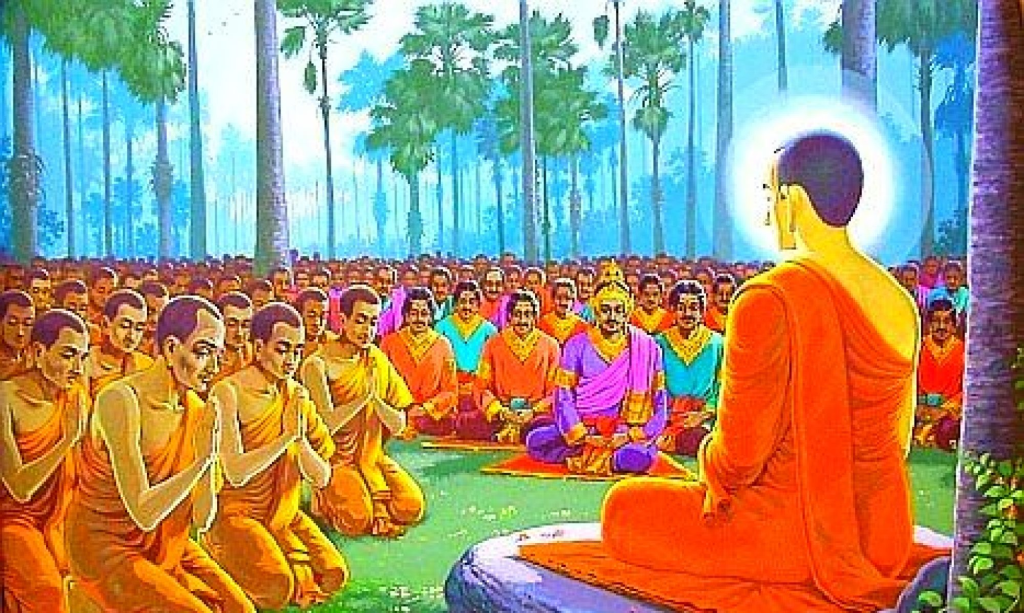
Sectarianism is not Dhamma;
Dhamma raises no walls.
Dhamma teaches oneness,
Dhamma teaches love.
Sectarianism is not Dhamma;
Dhamma raises no walls.
Dhamma teaches oneness,
Love between all humans.
–S.N. Goenka

In the realm of gemstones, few captivate the imagination quite like jade. Renowned for its stunning beauty and deep cultural significance, jade has been revered by civilizations for millennia. From ancient rituals to modern adornments, this gemstone continues to hold a special place in both the material and spiritual […]

Source: The Mystical World of Jade: A Gem of Beauty and Spirituality

Mīṭhī vāṇī Dharama kī,
misarī ke se bola.
Kalyāṇī maṅgalamayī,
bharā amṛtarasa ghola.
Sweet are the words of Dhamma,
each phrase like crystallized sugar,
yielding welfare and happiness,
suffused with the taste of the deathless.
–S.N. Goenka

kasī — ploughing, cultivation of the soil

Sukha vyāpe isa jagata meṅ,
dukhiyā rahe na koya.
Jana jana mana jāge Dharama,
jana jana sukhiyā hoya.
Jana jana maṅgala hoya,
sabakā maṅgala hoya.
May happiness spread through the world,
may no one remain wretched,
may the Dhamma arise in the minds of all,
may everyone be contented,
may everyone be happy,
may all be happy.
–S.N. Goenka
Visible or invisible,
may all beings be happy,
pure-minded, without enmity;
may all be freed of ills.
–S.N. Goenka

Jaise mere dukha kaṭe,
sabake dukha kaṭa jāṅya.
Jaise mere dina phire,
sabake dina phira jāṅya.
As my suffering was cut off,
may the suffering of all be ended.
As my life was renewed,
may that of all be changed.
–Translation by S.N. Goenka
sabbasaṅkhaarasamatha — the calming of all conditions

Kabhī bāga vīrāna hai,
kabhī basanta bahāra.
Samatā meṅ pramudita rahe,
santa nihāra nihāra.
At times the garden withers,
at times spring makes it bloom.
Remaining joyful with equanimity,
the saint simply observes.
–S.N. Goenka

Philippine culture is rich in folklore. One tale I enjoyed during my childhood was the legend of the guava fruit, which comes with a moral lesson. A guava tree or fruit is called bayabas in Tagalog, the Philippines’ language.
The story goes like this:
A long time ago, a king ruled a rich, prosperous island. He had all the things a king could ever ask for: the power, the wealth, and all the delicious foods one could only imagine. The king’s name was King Barabas. […]
Read on: Legend of the Guava

Pathavisamo no virujjhati,
indakhilupamo tādi subbato,
rahadova apetakaddamo
saṃsārā na bhavanti tādino.
There is no more worldly existence for the wise one who,
like the earth, resents nothing,
who is firm as a high pillar
and as pure as a deep pool free from mud.
Dhammapada 7.95
The Dhammapada: The Buddha’s Path of Wisdom, translated from Pāli by Acharya Buddharakkhita

Pathavisamo no virujjhati,
indakhilupamo tādi subbato,
rahadova apetakaddamo
saṃsārā na bhavanti tādino.
There is no more worldly existence for the wise one who,
like the earth, resents nothing,
who is firm as a high pillar
and as pure as a deep pool free from mud.
Dhammapada 7.95
The Dhammapada: The Buddha’s Path of Wisdom, translated from Pāli by Acharya Buddharakkhita

Sukhā virāgatā loke,
Kāmānaṃ samatikkamo;
Asmimānassa yo vinayo —
etaṃ ve paramaṃ sukhaṃ.
Blissful is passionlessness in the world,
The overcoming of sensual desires;
But the abolition of the conceit I am —
That is truly the supreme bliss.
Udāna 2.11
The Udāna and the Itivuttaka, trans. John D. Ireland

Bahumpi ce saṃhita bhāsamāno,
na takkaro hoti naro pamatto,
gopova gāvo gaṇayaṃ paresaṃ,
na bhāgavā sāmaññassa hoti.
Much though one recites the sacred texts,
but acts not accordingly,
that heedless one is like a cowherd
who only counts the cows of others —
one does not partake of the blessings of the holy life.
Dhammapada 1.19
The Dhammapada: The Buddha’s Path of Wisdom, translated from Pāli by Acharya Buddharakkhita

Idha socati pecca socati;
pāpakārī ubhayattha socati.
So socati so vihaññati,
disvā kammakiliṭṭhamattano.
The evil-doer grieves here and hereafter;
one grieves in both the worlds.
One laments and is afflicted,
recollecting one’s own impure deeds.
Dhammapada 1.15
The Dhammapada: The Buddha’s Path of Wisdom, translated from Pāli by Acharya Buddharakkhita

Asāre sāramatino
sāre cāsāradassino,
te sāraṃ nādhigacchanti,
micchāsaṅkappagocarā.
Those who mistake the unessential to be essential
and the essential to be unessential,
dwelling in wrong thoughts,
never arrive at the essential.
Dhammapada 1.11
The Dhammapada: The Buddha’s Path of Wisdom, translated from Pāli by Acharya Buddharakkhita

Sa vedagū,
Vūsitabrahmacariyo,
Lokantagū,
Pāragatoti vuccatī.
One who is a master of knowledge,
Who has lived the holy life,
Is called one gone to the world’s end,
One who has reached the further shore.
Itivuttaka 4.109
The Udāna and the Itivuttaka, trans. John D. Ireland

Thoroughly understanding the Dhamma
and freed from longing through insight,
the wise one rid of all desire
is calm as a pool unstirred by wind.
Itivuttaka 3.92
Gemstones of the Good Dhamma, compiled and translated by Ven. S. Dhammika
Yañca kāmasukhaṃ loke,
yañcidaṃ diviyaṃ sukhaṃ,
taṇhakkhayasukhassete,
kalaṃ nāgghanti soḷasiṃ.
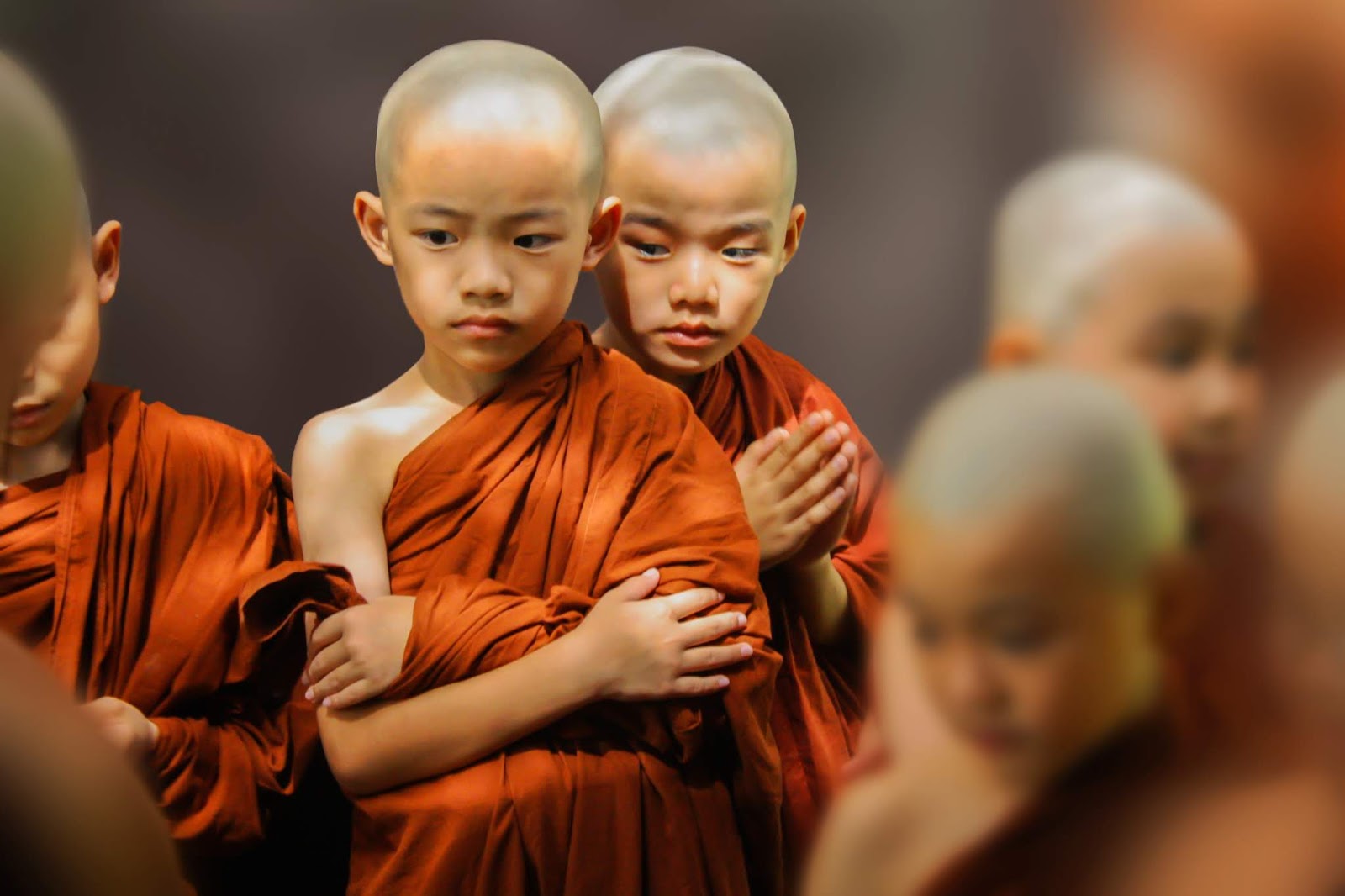
Any sensual bliss in the world,
any heavenly bliss,
isn’t worth one sixteenth-sixteenth
of the bliss of the ending of craving.
Udāna 2.12
Translated from Pāli by Thanissaro Bhikkhu

Yo ca vassasataṃ jīve
apassaṃ udayabbayaṃ
ekāhaṃ jīvitaṃ seyyo
passato udayabbayaṃ.
Better it is to live one day
seeing the rise and fall of things
than to live a hundred years
without ever seeing the rise and fall of things.
Dhammapada 8.113
The Dhammapada: The Buddha’s Path of Wisdom, translated from Pāli by Acharya Buddharakkhita

Yo ca vassasataṃ jīve
dussīlo asamāhito
ekāhaṃ jīvitaṃ seyyo
sīlavantassa jhāyino.
Better it is to live
one day virtuous and meditative
than to live a hundred years
immoral and uncontrolled.
Dhammapada 8.110
The Dhammapada: The Buddha’s Path of Wisdom, translated from Pāli by Acharya Buddharakkhita

Sukho viveko tuṭṭhassa,
sutadhammassa passato.
Abyāpajjaṃ sukhaṃ loke —
pāṇabhūtesu saṃyamo.
Solitude is happiness for one who is content,
who has heard the Dhamma and clearly sees.
Non-affliction is happiness in the world —
harmlessness towards all living beings.
Udāna 2.11
Gemstones of the Good Dhamma, compiled and translated by Ven. S. Dhammika

Sabbadā sīlasampanno,
paññavā susamāhito;
ajjhattacintī satimā,
oghaṃ tarati duttaraṃ.
In every virtue all-accomplished,
with wisdom full and mind composed,
looking within and ever mindful–
thus one crosses the raging flood.
Sutta Nipāta 1.176
Gemstones of the Good Dhamma, compiled and translated by Ven. S. Dhammika

Manopubbaṅgamā dhammā;
manoseṭṭhā manomayā.
Manasā ce pasannena
bhāsati vā karoti vā,
tato naṃ sukhamanveti
chāyāva anapāyinī.
Mind precedes all things;
mind is their chief, mind is their maker.
If one speaks or does a deed
with a mind that is pure within,
happiness then follows along
like a never departing shadow.
Dhammapada 1.2
Gemstones of the Good Dhamma, compiled and
translated by Ven. S. Dhammika
Find Your Magic
Tarot Readings, Inspiration, and Self-Empowerment
Making life on earth magick one moon phase at a time.
Astrologer ~ Mystic ~ Writer
of the Collegium Spiritus Sancti, a Golden Dawn Society
An affiliate of the Alpha et Omega Order of Melchizedek
All Knowledge Is Not Contained In Only One School
Connecting the grant community to #LearnGrants
Channelings & Articles
Magic Spell Books & Grimoires
Native Hawaiian Language Revitalization
Poetry & Tales of Love, Mystery, Magic and Spirituality
Organic Herbs, Herbals, Sustainable Gardening
Mother Nature: Feeding The Mind, Body & Soul, with Food, Medicine & Skincare.
"Inheritor of a Dying World, we call thee to the Living Beauty. Wanderer in the Wild Darkness, we call thee to the Gentle Light..."
Time is the most important thing we've been given
Embracing the Divine Within.
"...That I should bear witness to the truth." - John 18:37 // David E. Robinson, Publisher
 Hālau 'Aha Hui Lānākila