Beloved Practitioners, Teachers, and Keepers of the Current,
Twenty six years ago, a small intention was placed gently into the world, like hands resting over the heart. No spectacle. No urgency. Just trust in the quiet intelligence of healing and the willingness to listen. From that simple beginning, a living lineage has grown.
A school is not walls, syllabi, or certificates. A Reiki school is a field. It is shaped every time one of you pauses, breathes, and allows harmony to move where it is needed most. Over twenty six years, that field has been strengthened by thousands of such moments. Unseen, yet unmistakable.
You have carried Reiki into homes, hospitals, classrooms, offices, and sacred spaces. You have offered it in times of grief, transition, birth, exhaustion, and renewal. Often without recognition. Often without words. Always with presence. This is how real traditions endure.
Twenty six years marks more than longevity. It marks trust. Trust in the practice. Trust in one another. Trust in the quiet power of hands guided by compassion rather than force. In a world that constantly demands speed and certainty, you have chosen attunement and listening.
May this anniversary remind you that your practice matters, even when it feels subtle. Especially when it feels subtle. Healing rarely announces itself loudly. It arrives softly, rearranging things from the inside out.
As we step into the years ahead, may curiosity stay alive in your hands. May humility keep your practice clear. May joy remain part of your discipline. And may the current that first brought us together continue to flow through you, steady and generous.
Thank you for twenty six years of dedication, care, and quiet courage.
The work continues, and so does the blessing of walking it together.
Mahalo Ke ʻĀkūa,
Lanakilaonakupuna Kumu ‘Akahi Reiki Grandmaster, 18th dan Usui Teate System of Natural Healing
The persistent asking of the question “Who am I?” raises a person beyond the boundaries of the personality. The lower mind is typically trapped in the realm of external differentiation, of comparison and contrast. It is fragmented through the fleeting succession of states of consciousness which produces the illusion of time. It is delusively dependent through its polarization between past and future, regrets and anticipations, fears and fantasies. Through deep meditation it is indeed possible to silence the lower mind and initiate a state of true calm. It is essential to release the serene awareness of the higher mind, which is inherently capable of abstraction, universalization and thinking through particulars (dianoia). By repeated and regular efforts in meditation and self-scrutiny, one could correct the more glaring discontinuities. One might make it a daily practice to prepare before sleep by reflecting upon the Anahata, the deathless vibration in the secret heart, the ceaseless pulsation of the AUM. This could be fused with a true feeling of compassion for all beings, as evoked by The Voice ofthe Silence in its poignant lament:
Alas, alas, that all men should possess Alaya, be one with the Great Soul, and that possessing it, Alaya should so little avail them! Behold how like the moon, reflected in the tranquil waves, Alaya is reflected by the small and by the great, is mirrored in the tiniest atoms, yet fails to reach the heart of all. Alas, that so few men should profit by the gift, the priceless boon of learning truth, the right perception of existing things, the knowledge of the non-existent!
All rays of light emanate from a single source. Once one has abstracted from habitual identification with a name and a form and assumed the mental posture of an individual ray of light, one may experience the effulgence of the Atman. Self-knowledge will spontaneously arise through active contemplation, which will be food for the soul. If one found that despite proper preparation at night, one still woke up with no lucid recollection in the mind, intense self-questioning is needed. Who is the ‘I’ that entered sushupti and what is the ‘I’ that cannot remember? One has to make daily experiments with truth. All of this is valuable and valid as a process of knowing, though it is only the partial awareness of a partly self-conscious being of dim reflections of a deeper realm. Nothing learnt is ever lost by the immortal soul. It is important to see the painful process of progressive knowing as constructive and continuous. It is helpful to lose the thraldom and tension of effort by devotedly meditating upon the invisible form of the Guru, the Atmajnani in whom the knower, knowing and the known are all one. This is uplifting because it elevates one’s level of consciousness to meditate on the Self as incarnated in a fully self-conscious Sage, who is outside time and yet in contact with the temporal, who is beyond visible space yet omnipresent, and always accessible on subtler planes of manifestation.
One is only partly awake when asking questions about the true Self; one is more awake when one actively meditates and even more awake when one ardently seeks the Knower of the Atman. The Atmajnani is in a steady state of turiya, continuous spiritual wakefulness. Total wakefulness is only possible on the plane of the Atman, wherein no distinctions made by the mind have any meaning. It is a pure, primordial state of consciousness which is incommunicable. It can neither be described nor characterized but it is approached to some extent when emptying out, when negating and questioning. It is the miniature light in the eyes of every human being. To kindle the small spark of light into the blazing fire of divine wisdom is the task of many lifetimes. The yogin is fully consumed, says Shankaracharya, in the fire of true knowledge. The important thing for each and every person is to make an honest effort to keep moving towards an ideal state of inward freedom. One must grasp all available opportunities for greater knowing, for deeper self-knowledge, profounder knowledge of the Self and pure selflessness.
The feeling of responsibility is the first step towards selflessness. All spiritual Teachers promulgate what everyone already knows at some level – that everything adds up, that nothing is lost, that no one can evade anything. The homilies and proverbs of all traditions only point to the accumulated wisdom of humanity. The half-asleep individual has lost the key and does not know how to use the heritage of universal truth. Great Teachers descend amidst humanity so that a second birth is possible for the disciples who are ready. This profound awakening of spiritual consciousness takes place among many at critical thresholds in human evolution. The karma of the whole of humanity for the duration of an epoch is nobly assumed by one of the Brotherhood of Sages, who comes into the world and becomes responsible for the progress of humanity during a cycle of awakening. The Bodhisattva elevates the idea of responsibility to its greatest height. What does it mean to be responsible for an age and to be responsible for the whole of humanity? This is an awesome and staggering conception. How can it be even sensed by those who refuse to recognize their errors and the future consequences to be faced?
In general, an awareness of individual responsibility is the mark of a Manasa, a thinking being and moral agent. Though one cannot put everything right in this life and all the people one has affected are no longer around or alive, still some things can be rectified right now. It is possible to clean up one’s copybook significantly without any clues to the complex mathematics of the cosmos. It is a waste of energy to fret and fume over the past, which is already part of our present make-up. Every cell of one’s being carries the imprint of every thought, feeling, emotion, word and deed that one emanated in this life. At least, one can be responsible in relation to what one can see. At the present point of history the sense of responsibility has been enormously heightened for the whole of humanity. Never before have there been so many millions of human beings in search of divine wisdom, the science of self-regeneration. The Voice of the Silence instructs the disciple: “Look not behind or thou art lost.” It is an exercise in futility to look behind because what has receded will recur. Instead of idle regret, it is possible to use the gospel of gratitude to transmute every precipitation of Karma into an avenue for fundamental growth through courageous self-correction.
Gratitude is no longer a threatening term, even in the United States. Many people everywhere respond to the beauty of reverence as it is truly innate to the human soul. Miseducation may foster mental presumption but it cannot extinguish the immortal spark of devotion. In all human beings there are natural feelings and intuitions which can be awakened and quickened. It would indeed be wrong to think that purely by penitence one could wipe out the consequences of past irresponsibility. This is a costly failure to understand the law of ethical causation. If one already has wronged others wilfully or thoughtlessly, feelings of remorse or empathy cannot erase past debts. This untenable doctrine of moral evasion did much harm over two thousand years. It was a travesty of true religion, an arbitrary breach of natural harmony. The irresponsible dogma of vicarious atonement traduced the exalted ethical teaching of Jesus. He taught that the Divine is not mocked: as ye sow, so shall ye reap. This is a central tenet in the teachings of all Initiates, and the erosion of the idea of responsibility is everywhere the consequence of priestcraft and ceremonialism. There are myriad ways in which people run away from the mature acceptance of full responsibility for past misdeeds. The Aquarian sees that true responsibility begins in the realm of thought and must include every thought. Surely one can appreciate the profound integrity of the teaching that every thought connects each human being with every other. The intuitive recognition of universal interdependence and of human solidarity is the basis of an ever-expanding conception of moral responsibility, renewed and refined through successive lives of earthly probation by a galaxy of immortal souls in a vast pilgrimage of self-discovery reaching towards universal self-consciousness.
Sit evenly, erect, at ease, with palms folded on the lap, with eyes fixed on the nose; cleanse your lungs by taking a deep breath, holding it in and then discharging it, raise in your heart the OM sounding like the tolling of a bell, and in the lotus of your heart, contemplate My form as encircled by light.
The path of knowledge is for those who are weary of life; those who still have desires should pursue the path of sublimation through works; and to those who are not completely indifferent nor too much attached the devotional path bears fruit.
Perform your actions for Me and with thoughts fixed on Me; untainted like the sky, see yourself within your self; consider all beings as Myself and adore them; bow to everybody, high or low, great or small, kind or cruel; by seeing Me constantly in all, rid yourself of jealousy, intolerance, violence and egoism. Casting aside your pride, prestige, and sense of shame, fall prostrate in humility before all, down to the dog and ass. This is the knowledge of the learned, the wisdom of the wise – that man attains the Real with the unreal and the Immortal with the mortal.
Krishna to Uddhava
The universe is mostly unmanifest, and every human being is a microcosmic reflection of the entire egg-like cosmos. Each individual is a vast but largely hidden force-field, but all are manifesting with varying degrees of knowledge, deliberation and discrimination. These diversities are the product of a long history of use, overuse and misuse of the sheaths and vestures in which immortal monads have been embodied in myriad environments over eighteen million years. Given this far-reaching perspective, how can any person use this potent teaching in order to become a better human being? How can an individual become more attentive and discriminating in using the sacred gift of creative imagination, training the mind as an instrument for concentrated thought, directed with a benevolent feeling towards goals compatible with the purposes of all living beings, towards universal good? Strange as it may seem, everyone can discover indispensable clues for answering this question in the simple fact that he or she is a certain kind of human being. The whole story is recorded from head to toe: the way a person walks and talks; the way a person holds himself or herself; the way a person thinks, feels and acts; the way a person relates to other beings; but, above all, the way a person lives through waking and sleeping from day to day, passing through the three halls of consciousness – jagrat,swapna and sushupti– connecting moments in childhood through the seasons of human life, growing, maturing and mellowing with intermittent glimpses of wisdom.
Every person can test motives and methods in the daily attempts to translate thought and intention into outer modes of expression. If someone gets a chance to work upon certain details of some part of a larger work in which the levels of motivation markedly vary, that person can learn through what karma brings to him or her. If, by mistake, one became involved in more than one can manage, this would be known within a short time because one would get burnt. To be unready is to have a shrunken sense of self and therefore a force-field that is very congested with blurred, contradictory and weak currents liable to short circuits and shocks. As long as there is the opportunity to learn and to correct, it is always possible to make a difference because all human beings are capable in their finest moments of the highest possible motivation. There is hardly a person who has not had moments of pure love of the human race. There are few who have gone through the whole of life without even once having looked at the stars and sky and wondered at the magnitude of the universe. Nature cannot support a human being who cannot ever negate the suffocation of confinement within shallow perspectives of mind and heart. As long as there is the beneficence of sleep, every human being has abundant opportunities to renew the larger Self, the greater motive, the fuller perspective. The problem then is not that a human being is without spiritual resources, but rather how to make those resources tapped during deep dreamless sleep relevant when one is out in the field of duty, Kurukshetra. Wakeful deployment of resources will require sufficient noetic detachment to avert captivity to compulsive activity, and thereby avoid being cut off from the greater Self. When the only correction available is sleep, it is too inefficient to rely upon automatically because the daily passage through confused dream states vitiates the healing effects of deeper dreamless states.
Meditation is the source of noetic understanding, but this depends upon an initial humbling of the false self that otherwise undermines every effort. Learning without unlearning is not only useless, but, like eating without elimination, it can be fatal. Bad habits must be unlearnt while learning new ways of doing things that come from new ways of thinking, and in this continuous process one has to be courageous in assessing one’s spiritual strivings. By seeing where one is going wrong and why, it is possible to make significant connections between causes and consequences and then see where a real difference can be made. It is always possible to make a difference, but only on the basis of self-examination that leaves one more determined and relaxed – more relaxed because of seeing oneself in relation to the whole of humanity. Without running away from the facts, it is possible to take an honest inventory, and if this is done, one will soon begin to discover that it is not that one’s motive is entirely bad or that one is altogether no good. It is rather that one is not very good at learning because of having created blockages in the self through pride, blockages in the mind through prejudice, blockages in the heart through partiality, blockages in the will through perversity. These blockages precipitate very quickly in the presence of great resolves, and if they are not faced, it is difficult to avoid walking backwards. But if this realization brings a sense of defeat, that means one never really understood the teaching of Karma. The Self that has to make the effort of understanding is that ray of the immortal soul which is put in charge of the kingdom in which the different parts of one’s being must be dynamically balanced. When there is a greater harmony within, it is possible to contribute more to harmony without. This is what each is meant to do. The general accounting can be left to Karma. By altering radically one’s attitude to work, to motive and method, and one’s way of balancing them, there is the opportunity for growth on the basis of a larger and a firmer recognition of the invisible forces, realities and laws constantly at work in Nature and in oneself.
An international research team has for the first time designed realistic photonic time crystals––exotic materials that exponentially amplify light. The breakthrough opens up exciting possibilities across fields such as communication, imaging and sensing by laying the foundations for faster and more compact lasers, sensors and other optical devices. […]
In order to gather together the afflicted, the Divine Cowherd summons all awakened souls, wherever and however disguised, through the sounding of the mighty conch. Independent of all modes of external communication, and relying upon the oldest mode of communication known to the Ancient of Days – controlled transference of benevolent thought and ineffable sound – the call is heard by scattered volunteers “in the fierce strife between the living and the dead.” As with Jacob’s ladder in his dream, heaven and earth are reunited, even if momentarily. In this manner, over the coming years the world will move through the darkness, yet mysteriously, step by step, faltering and failing yet persisting, it will move towards that moment when Anno Domini has ceased to be, and a new era will dawn with a new name. There will then be no U.S.A. but a new Republic of Conscience which will take its place in the community of mankind which would have come of age and declared itself as one family.
This is a grand prospect for which there can be inherently no empirical or merely rational proof. Yet it may be tested by any intuitive individual who is courageous enough to pour his or her deepest unspoken feelings, unarticulated dreams and unexpressed inner agony into the alchemical crucible of spiritual striving on behalf of others. It is a tryst that such souls make with destiny, but also with the grandchildren of persons yet unborn. It is a tryst with the humanity of the future, and with the full promise of the Aquarian Age which dawned on the nineteenth of June, 1902, ninety-three years ago, with mathematical precision. This has an exact relationship to that moment five thousand and ninety-seven years ago, in 3102 B.C., when Krishna, having witnessed the outcome of the Mahabharatan war between the greedy Kauravas and the foolish Pandavas, was able to end his seeming life on earth and withdraw from the terrestrial scene. Thus standing apart from this universe, into which he never really enters, he creates therein his mayavi rupas through the mighty magic of prakriti, the seminal potency of mystic thought in the eternal life of self-ideation. Again and again, under different names, it is the same being behind every divine incarnation, whether past or future.
As Dakshinamurti, the Initiator of Initiates, he is seated immovable above Mount Kailaś, in mystic meditation since over eighteen million years ago from the time when there was no Mount Kailaś and no Himalayas as presently understood. Coming down through all the subsequent recorded and unrecorded eras, he carries forth in unbroken continuity the onward spiritual current which is the irresistible, unconquerable, ineluctable forward march of humanity. He is Shiva-Mahadeva, reborn as the four Kumaras in the successive races of humanity, and that still more mysterious and solitary Being alluded to in the secret teachings.
The inner man of the first * * * only changes his body from time to time; he is ever the same, knowing neither rest nor Nirvana, spurning Devachan and remaining constantly on Earth for the salvation of mankind.
The Secret Doctrine, ii p. 281
Attuned to the rhythms of the cosmic ocean of Divine Thought, he is the still motionless centre in its depths around which revolve, like myriad mathematical points in spinning circles, the scattered hosts of humanity. Amidst the larger and larger circles of ripples upon ripples, waves upon waves, all souls are citizens of that universe which is much vaster than the disordered kingdom which, as earthlings, they may seem to inherit but to which they have no claim except as members of a single family.
This mystic vision can only be fleetingly glimpsed and partially understood by beginning to ask sincere if faulty, searching if somewhat confused, questions. Herein lies the starting-point of the dialectical method taught by Krishna in the fourth chapter of the Gita. The sacred teaching of the kingly science was originally given by Krishna to Vivasvat, who in turn imparted it to Manu. Then Vaivaswat Manu taught it to Ikshvaku, who stands for all the regal Initiates of forgotten antiquity in the golden ages of myth and fable. Thus the vigilant preservers and magnanimous rulers of this world, without abdicating from their essential state of Mahatmic wisdom, assumed the guise of visible corporeality to descend on earth and reign upon it as King-Hierophants and Divine Instructors of the humanity then incarnated upon the globe. It is this self-same eternal wisdom that Krishna gives unto Arjuna, an unhappy warrior, not for his own sake, especially when he was not entirely ready to assimilate the Teaching, but for the sake of his work in the world and his help in concluding the Mahabharatan war.
In the great summation of the eighteenth chapter of the Gita, Krishna reveals secrets upon secrets, wrapped in each other in seemingly unending layers, like a Chinese treasure. Every time a secret is revealed, there is more and yet more, because in the end one is speaking of that which is part of the secret of every human soul in its repeated strivings and recurrent lives upon earth. Amidst the chaos and obscuration of misplayed roles, faded memories and fragmented consciousness, coupled with the fatigue of mental confusion, there is also the power of persistence, the sutratmanand its conatus which enables every person to breathe from day to day and through each night. In deep sleep, as in profound meditation and the intervals between incarnations, the immortal soul enters into the orbit of the midnight sun and emerges out of the muddle of mundane life and mangled dreams. There it discerns the melody of the flute of Krishna, the music of the spheres, and the hidden magic of the ages which, when heard self-consciously, frees the soul from the fatuous burden of self-imposed delusions. It is the priceless prerogative of every Arjuna in our time to seek once more the pristine wisdom, the sovereign purifier, through unremitting search, through fearless questions, through grateful devotion and selfless service.
Surveying the wreckage of this century in bewilderment and dismay, many have sought an understanding of events in the oft-quoted, though little understood, remarks of H.P. Blavatsky concerning the role of the New World in the evolution of the races of humanity. Too many have submitted to the delusion, to the strange idea, that spiritual evolution is possible only for a few. The idea that any single people out of the globe’s teeming millions, selected at random and fed on the fat of the land, weighted down by the gifts of blind fortune, should be preferred by Krishna must be firmly repudiated. No instrument of the real work of the Lodge of Mahatmas can ever be permitted to become the refuge of the few, the chosen avenue for the exclusive salvation or cloistered comfort of any élite. Now, thanks to many benefactors and blessings in disguise, Americans are being made to slow down to the point where they may hear some of the echoes of what the pilgrim fathers heard when they landed in Plymouth over three centuries ago. In a way which could not have been known clearly to them, their setting out upon a long and difficult sea voyage was reminiscent of far more ancient voyages of seed-pilgrims across the waters of floods guided by Manu. These pilgrims to the New World had set out after having formed a compact with each other, which was a pure act of faith in themselves and in the future and in whatever their God had to offer them. This was one of many precious moments in the long and unwritten history of this mighty continent, whose vastness extends from the Arctic Circle to the Straits of Magellan, encompassing great rivers, the Grand Canyon, and awesome ranges of mountains girdling a third of the globe.
There is much more in the civilizations and peoples of pre-Columbian history than can ever be garnered through perfunctory reading of post-Columbian events. The brief journey of Columbus from Spain to the Caribbean, in search of India, but resulting in the rediscovery of America, could foretell little of the future birth in these lands of old Hindus from the India of a million years ago. It could convey few hints of the far-flung variety of spiritual strivings that would occur on the American continent, or of the enormous blasphemy, pride and temerity of inscribing the Third Eye upon the dollar bill. Yet somewhere, past all the humbug of petty educators, pompous bureaucrats and self-serving politicians, an impartial witness can only feel a genuine empathy with the series of lonely men carrying a strenuous burden of leadership in the emerging American republics.
In 2008, archaeologists in Iran made a shocking discovery—a mummified body believed to be 12,000 years old, resting in a tomb adorned with a silver crown and […]
Binary stars are, very simply, stars orbiting around each other. They are linked by their gravitational attraction and orbit around their common centre of mass. If, on the contrary, two stars should really be situated very near each other, and at the same time so far insulated as not to be materially affected by the attractions of neighbouring stars, they will then compose a separate system, and remain united by the bond of their own mutual gravitation towards each other. This should be called a real double star; and any two stars that are thus mutually connected, form the binary sidereal system which we are now to consider.
Here’s how a binary system appears. Notice how the stars rotate around each other, in some sort of dance. Binary stars are a very important object in astrophysics because they can help us understand some important things about planet formation and star masses.
Let’s first discuss how useful they are in terms of hosting planets. While a number of binary systems have been found to harbour extrasolar planets, such systems are comparatively rare compared to single star systems. Observations by the Kepler space telescope have shown that most single stars of the same type as the Sun have plenty of planets, but only one-third of binary stars do.
In this interview clip with the Grimerica Show, Reed Summers speaks here on the alien collectives present in our world, and answers important questions about why they are here, how are they manipulating us and what real ET disclosure is.
This video presentation limits its focus to reviewing the most tangible, credible pieces of scientific evidence supported by astronomers and astrophysicists who in turn have devoted effortless time to promoting their controversial findings and conclusions.
This year more than ever the movement’s growing authenticity of the Planet X story is in fact gathering momentum, especially from some rather high profile notables within the scientific community.
This video will chronicle this growing body of empirical evidence validating not only Planet X’s existence but its eminent approach towards earth.
Nestled between Hawaii and the western coast of Mexico lies the Pacific Ocean’s Clarion-Clipperton Zone (CCZ), a 4.5 million-kilometer-square area of abyssal plain bordered by the Clarion and Clipperton Fracture Zones. Although this stretch of sea is a vibrant ecosystem filled with marine life, the CCZ is known best for its immense collection of potato-sized rocks known as polymetallic nodules. These rocks, of which there are potentially trillions, are filled with rich deposits of nickel, manganese, copper, zinc, cobalt. Those particular metals are vital for the batteries needed to power a green energy future, leading some mining companies to refer to nodules as a “battery in a rock.” […]
One must be willing to become fearless in the spirit of virya, the dauntless energy and unwavering courage to enter into the realm of unconditional Truth — SAT. The root teaching of voidness has to do with the emptiness of the notion of self-sufficiency and independence, the falsity of the notion that there is anything that is disconnected from the entire chain. All of this has got to be negated. It is a delusion that arises from linguistic tricks and convention, lax mental habits, refusal to confront the fact of death, unwillingness to confront the life process as it works in Nature. Ultimately, it is a refusal to recognize that conscious immortality means entering the light beyond all forms and conditions. It is, as The Secret Doctrine shows, a fundamental abrogation of one’s destiny as an evolving human being:
. . . as long as we enjoy our five senses and no more, and do not know how to divorce our all-perceiving Ego (the Higher Self) from the thraldom of these senses — so long will it be impossible for the personal Ego to break through the barrier which separates it from a knowledge of things in themselves (or Substance). That Ego, progressing in an arc of ascending subjectivity, must exhaust the experience of every plane. But not till the Unit is merged in the ALL, whether on this or any other plane, and Subject and Object alike vanish in the absolute negation of the Nirvanic State (negation, again, only from our plane), is scaled that peak of Omniscience — the Knowledge of things-in-themselves; and the solution of the yet more awful riddle approached, before which even the highest Dhyan Chohan must bow in silence and ignorance — the unspeakable mystery of that which is called by the Vedantins, the PARABRAHMAM.
The Secret Doctrine, i 329-330
Only when one can prepare oneself through degrees of dhyana rooted in supreme detachment — vairagya — can one enter the light of unconditioned Truth or SAT and remain there in ceaseless contemplation. Wherever there is conditionality, there is the inevitability of discontinuity. Conditionality and discontinuity go together. Instead of becoming disturbed by them, however, one should rejoice in the lesson. The more one becomes unconditional, the more one can confront latent conditionality. Thus, one may begin to discern the persistent origins and causes of distortion, discontinuity and tension. The neophyte should understand at the outset that even when one attains to dhyana in its true sense, as a confirmed chela on the Path, there are still seven lives of the most vigorous self-training yet ahead. Once one understands this, one can let go of all the tension that comes from taking on false burdens. Instead of cluttering the mind with mere words and shadows, the undigested cuds of unchewed ideas, one should learn how to take a phrase, a sentence, an idea from the teaching, and chew on it as thoroughly as possible. In every ancient tradition of dhyana, it is impossible to dispense with higher analysis. Skill lies in striking the right balance — neither too much nor too little. As one engages in the process of dhyana, various hard knots will emerge. It is necessary to stand back and subject them to analysis. One must see the components, the causes, the combinations that form the knot. Along Dhyana Marga there will be a periodic need for such analysis — a kind of self-administered open mind and open heart surgery. It can be done when the need arises if one has prepared adequately and honestly and if one is surcharged by a tremendous love of one’s fellow beings and an ardent desire to become a meditator.
In time, one will begin to generate a continuous rhythm of meditation, broken occasionally bypassing thoughts, but fundamentally flowing as ceaselessly as a current in the heart. When it is interrupted in a more serious way, one will immediately strive to repair one’s foundations through some detailed analysis of the problem so that one may be purged and freed of a particular impediment. Once a momentum of meditation is established, these interruptions become a much rarer occurrence than expected. Depending upon one’s earnestness in meditation, which can only be understood in relation to love of the whole human race, one’s own so-called pain and difficulties will become trifling in relation to the world’s pain. Unless one gets these balances right early on, one will have a distorted importance of the preparatory phase of one’s own quest. That could stall the whole voyage. But once one is truly moved by that fire of universal feeling that exists in everyone, one will find the courage needed to maintain the quest. Taking advantage of the rhythms of the seasons, of Nature, of the teachings of the Cycle, one will become more assured and so more able to stay, for longer periods, in an uninterrupted state of meditation.
One will probably not attain the higher stages of dhyana in waking meditation for quite a while, perhaps a lifetime. Nonetheless, one is invited to think about these stages, to visualize and resonate to them. This is extremely important and has to do with the release of the powers of the soul. One should completely forget about whether one can or cannot do some particular thing right now. One should not be afraid to contemplate any of the glorious possibilities of the very greatest human beings and Masters of meditation. One should take every opportunity to adore perfected human beings; in adoring them one will give life to the seeds and germs of dhyana in oneself. This does not amount to some mechanical and harsh doctrine of pseudo-equality. Rather, it depends upon recognizing that every human being has an exact karmic degree in relation to dhyana and prajna. Paradoxically, it is only by recognizing this that one can truly understand what it means to say that all human beings stand in the same sacred unmanifest ground of the unmodified, impartite Divine Spirit. Thus, as one grows in understanding of these soul powers, one may enjoy reflecting upon higher states of meditation, as represented by the portraits of perfected beings in the sacred texts and scriptures of all traditions. It is irrelevant and counterproductive to be bothered by the inevitable fact that one will not immediately experience these high states of consciousness.
One may, for example, reflect upon that state of dhyanalikened to the calm depths of the ocean, recognizing in the metaphor the freedom of the universal Self. To abide in that is like remaining in the Egg of Brahmā. Though this high state of true self-government may seem very distant, one may nevertheless deeply reflect upon it. One may ask what it would be like to have a mind that is so oceanic and so cosmic, so profoundly expansive and inclusive of all things in all minds, that it is capable of reverberating to everything in the mind of Nature. Certainly one should include such lofty thoughts in one’s horizon. In this way, one will come to recognize that what at first seemed a burdensome and laborious task is in fact a joyous working out, stage by stage, of clusters of karma. It is also a lightening and a loosening, in each context, so that there may be a flow from the subtler ethereal vestures into the grosser vestures. How this will actually affect the visible vesture in this life will vary from one individual to the next. Many meditators become wizened, but they have no regrets because they have no attachment to the external skin and shell. Instead, they rejoice in the inner purification that has taken place. Even one’s perspective changes in regard to what is truly helpful to the immortal soul and what is harmful. Once one touches the current of this supreme detachment and begins to enter the light of the void through efforts at dhyana, one may begin to make one’s own honest and yet heroic, courageous and cheerful way towards gaining greater continuity, control and proficiency in meditation. Blending the mind and heart, one may enter the way that leads to the dhyana haven:
The Dhyana gate is like an alabaster vase, white and transparent; within there burns a steady golden fire, the flame of Prajna that radiates from Atma.
Thou art that vase.
The Voice of the Silence
What is it the aspirant of Yoga Vidya strives after if not to gain Mukti by transferring himself gradually from the grosser to the next more ethereal body, until all the veils of Mayabeing successively removed his Atmabecomes one with Paramatma? Does he suppose that this grand result can be achieved by a two or four hours’ contemplation? For the remaining twenty or twenty-two hours that the devotee does not shut himself up in his room for meditation — is the process of the emission of atoms and their replacement by others stopped? If not, then how does he mean to attract all this time — only those suited to his end? From the above remarks it is evident that just as the physical body requires incessant attention to prevent the entrance of a disease, so also the inner man requires an unremitting watch, so that no conscious or unconscious thought may attract atoms unsuited to its progress. This is the real meaning of contemplation. The prime factor in the guidance of the thought is WILL.
The present period is one of those watersheds in human evolution that represent the end of a complex series of events in recorded history. It involves the end of the old monastic orders, including the Hindu, Tibetan, Chaldean, Egyptian, Jewish and Christian. All of these will disappear in their older forms. If one is attached to these forms, this will seem to be a great loss, a sort of spiritual discontinuity in human affairs. If, on the other hand, one is detached and therefore able to penetrate to the core of the cycle, one will understand the continuity of the transition and sense that which will tap the quintessence of these old orders and yet transcend them. At the end of every long epoch of human evolution, at the dawning of a new epoch, there is inevitably a night of disintegration. Even if one is able to overcome one’s doubts, fears and anxieties in the face of the necessary dissolution of forms, it is still difficult to envisage in advance which of the inexhaustible possibilities of Divine Wisdom will be realized in a subsequent period of development. The wisest of beings are truly agnostic about the future. All neophytes would be wise in their turn not to attempt to extrapolate on the basis of what they think they know about recorded history and the tragedies of the twentieth century. Most human beings are so self-absorbed in their petty personal concerns that they know almost nothing even of the little story called recorded history over three thousand years, much less the broader global developments that have taken place in the first five thousand years of the Kali Yuga.
So long as one is worried about what has happened, is happening and will happen — so long as one is caught up in the illusions of the past, present and future — one cannot hope to understand or assimilate the perspective of meta-history. It is possible, nonetheless, in golden moments to glimpse the presence of the powerful vibration that was predominant in the golden age of humanity a million years ago at the dawn of the Fifth Root Race, an epoch hearkening back to that which existed eighteen and three-quarters million years ago in the Third Root Race. Manifestation itself is a complex-seeming superimposition of derivative vibrations upon the primal Soundless Sound. Moments in history such as the present should not be understood in terms of the seemingly static, though exceedingly ephemeral, images that waver on the surface of space but rather in terms of the vibrant impulsions behind these transitory forms. Thus, at present, the vibration of the Third Root Race may be felt as superimposed upon the process in which there is an inevitable end of all that has become degraded in recorded history. Everything in historical time eventually becomes unusable to the spirit, becomes warped and distorted, attracts lower elementals — forces bound up with human failure, greed, exploitation, self-righteousness, moralism and also universal human ignorance. Buddha put this simply in saying that existence is suffering. Put in another way, most human beings would agree that whatever specific form of happiness they might envisage, they will find it a torment to be condemned to the eternal experience of this form of happiness. Bondage to form is inconsistent with the freedom and immortality of the spirit; it is not in the order of Nature.
The vibration of the Logos associated with Hermes-Mercury-Budha which rejoices in the void anticipates, encompasses and transcends all historical parameters. This vibration represents the reverberation of Brahma Vach, unaffected and unmodified by the great vicissitudes of the historical process and the cycles of manifestation. It is archetypally and magnificently summed up in the figure of Sage Bhusunda in Valmiki’s Yoga Vasishtha. When asked by Sage Vasishtha how he had remained untouched by the dissolution of worlds, Bhusunda replied:
When at the end of a kalpa age the order of the world and the laws of Nature are broken and dissolved, we are compelled to forsake our abode, like a man departing from his best friend.
We then remain in the air, freed from all mundane conceptions, the members of our bodies becoming devoid of their natural functions, and our minds released from all volitions.
When the zodiacal suns blaze forth in their full vigour, melting down the mountains by their intense heat, I remain with intellect fixed in the Varuna mantram.
When the diluvian winds burst with full force, shattering and scattering the huge mountains all around, it is by attending to the Parvati mantram that I remain as stable as a rock.
When the earth with its mountains is dissolved into the waters, presenting the face of a universal ocean, it is by the volatile power of the Vayu mantram that I bear myself aloft.
I then convey myself beyond this perceptible world and rest in the holy ground of Pure Spirit. I remain as if in profound sleep, unagitated in body or mind.
I abide in this quiescence until the lotus-born Brahmā is again employed in his work of creation, and then I re-enter the confine of the re-created world.
Yoga Vasishtha Maharamayana
Nirvana Prakarana XXI
Surveying vast worlds, epochs, civilizations and historical eras, Bhusunda stood apart, rooted in dharana and dhyana. He represents the eternal spectator, unaffected and unmodified by the vicissitudes of the process of history. It is this supreme detachment rooted in meditation that may be called the Hermes current. When that Logoic current is self-consciously sounded at the level of SAT —Truth-Wisdom — it becomes the mirroring in time, on the lower planes of manifested existence, of the eternal vibration of Brahma Vach. To understand this is to see that everything emerging from that Hermes current is a preparation for dhyana — irreversible and boundless meditation. Thus there is already in the rich resources of the 1975 Cycle nourishment available for earnest souls eager to learn how to engage in deep, strong and firm meditation, so as to become lenses for the light of Divine Wisdom.
If this is the nature of the great undertaking of dhyana, and if some individuals confront many difficulties in rising to meet the opportunities of the Cycle, it ultimately must be due to a lack of sufficient motivation. No explanation of deficiency in meditation owing to this or that circumstance can ever be adequate. It is illogical to attempt to explain an inability to maintain continuity of consciousness in the formless realm by pointing to any collection of circumstances in the derivative regions of form. Hence there is strong emphasis in every authentic spiritual tradition upon the purification and cleansing of the heart. Before one can really master the mind, one must cleanse the heart. It is necessary to see all the distorted, complex and awkward elements in one’s feeling nature. And yet there is hardly a human being alive who does not know what it is to care for another, who does not know what it is to suffer, and who does not want to relieve the suffering of others. In fact, the very sense of the hideousness of the deformities of one’s feeling nature is nothing but a reflection of the soul’s awareness of its intrinsic beauty and purity. Like a craftsman with the highest standard of excellence, the soul surveys its self-evolved vestures with an objective eye.
Rather than becoming fascinated with that in oneself, much less in others, which must be let go because it does not measure up to the best in oneself, one must learn to hold fast to those authentic elements that represent, in every human heart, the vibration of a minute point of universal life, light and love. This dharma-energy can be used to purify the heart so that one can bring not just part of oneself but the whole of one’s being into line with a single strong motivation so as to be of help to all living beings. One may release the will to be of service in the relief of human ignorance and the alleviation of the deeper cause of all human pain that is the false notion of the self. One may begin to learn the positive joy of bringing down the light of wisdom and letting that light diffuse into as many beings as it possibly can. When such motivation begins to pervade one’s being, becoming strong and firm, it gives a buoyancy and lightness, an incentive and resolve to keep going.
Once this current is established, one sees that one’s past failures stemmed from either the inability to commit oneself completely and irrevocably to the quest, or a neglect of the detailed and difficult task of burning out every impure element in the heart. In any event, through the release of heart energy, one is prepared to begin burning out all the corrosive motivations that arise from fear, self-protection, body identification, identification with the astral form, with tanha — the clinging to forms in general. Clinging to the realm of sensations is at the root of the hardness and impermeability of the lower mind. Once one begins to understand how much pain obscurity of the mind produces within and without, one can bring a greater honesty and maturity, a greater intensity, to the task of self-purification. One will find it easier if one lets go of the notions of personal salvation, progress and enlightenment, discarding all elements of fascination with the ups and downs of the personal nature. All these represent only the outer rind of human life; they are of little consequence at the moment of death.
July 21, 2024 at 3:17 am PT is a full Moon in Capricorn. Capricorn rules the tenth house of career, social involvement, and your place in society. Capricorn is an Earth sign focusing on earthly mat […]
A deep immersive journey into the heart of the Hawaiian islands. Through the stewards of ‘aina, Kanaka Maoli.
Aloha! In this video I spend the day with Unko I and do a catch and cook. Alot of people were curious about why only Hawaiian’s can live in this area so he talks about it.
Contact Ben for hunts, fishing & adventures on Molokai: florendoben84@gmail.com or 808-269-1149
Out in the Hawaiian islands is a place that stands out on its own. Molokai is the island (outside of unaccessible Niihau) that’s kept development away. This is old Hawaii, a place without traffic lights or bustle. Here, time stands still, and the locals have fought hard to keep it this way. Join me on an epic adventure with a Molokai local into a Hawaiian island that has stayed true to its roots.
We need two ingredients for life to start on a planet: dry land and (fresh) water. Strictly, the water doesn’t have to be fresh, but fresh water can only occur on dry land.
To those who knew that there was more than one key to theogonic symbolism, it was a mistake to have expressed it in a language so crude and misleading. For if the educated and learned philosopher could discern the kernel of wisdom under the coarse rind of the fruit, and knew that the latter concealed the greatest laws and truths of psychic and physical nature, as well as the origin of all things — not so with the uninitiated profane. For him the dead letter was religion; the interpretation — sacrilege. And this dead letter could neither edify nor make him more perfect, seeing that such an example was given him by his gods. . . . Now all the gods of Olympus, as well as those of the Hindu Pantheon and the Rishis, were the septiform personations (1) of the noumena of the intelligent Powers of nature; (2) of Cosmic Forces; (3) of celestial bodies; (4) of gods or Dhyan Chohans; (5) of psychic and spiritual powers; (6) of divine kings on earth (or the incarnations of the gods); and (7) of terrestrial heroes or men. The knowledge how to discern among these seven forms the one that is meant, belonged at all times to the Initiates, whose earliest predecessors had created this symbolical and allegorical system.
The Secret Doctrine, ii 764-765
It is, according to Gautama Buddha, a greater feat to govern oneself than to command all the elements in Nature. All Nature and its powers bend heavenwards before the gentle, irresistible theurgy of the perfected Bodhisattva, the pilgrim-soul who has reached the summit of the Path and become the son of the Dhyanis, compassionator of the triple worlds, greater than all gods. The potential of pure swaraj or self-rule is latent in every Monad, and is quickened by the fiery ray of the Manasa Dhyanis. When first the dark fire of their formless intelligence ignited self-consciousness in the evolved forms of terrestrial humanity over eighteen million years ago, man became a living link between heaven and earth. Conscious of the divine presence within his preceptors, his companions and himself, he was governed by a natural impulse towards gratitude, devotion and benevolence. He lived in effortless sympathy with the hosts of bright devas and devatas that he found in and around himself and throughout the entire realm of Nature. Reflecting the Akashic ideation infused into him by the Manasa, his actions radiated a benign and spontaneous magic.
Although the impress of that primordial time is ineradicable, human beings have descended so low in consciousness that they can scarcely believe, much less recall, their original estate. Emerson’s charitable characterization of man as God playing the fool cannot account for the awful process by which man has become spiritually self-orphaned and blinded, becoming a burden to himself and a parasite on Nature. What, one might ask, are the strange gods and alien altars towards which human beings have directed their pristine powers in degrading themselves? Since there is no power greater than that which made Monads self-conscious, one need not look beyond oneself to find the cause of one’s own impoverishment. Nor need one look anywhere but within to find the means whereby one may embody the divine impulsion towards its transcendent end. The regeneration and restoration of humanity requires individuals to heed the wisdom of Krishna’s teaching that all beings go to the gods they worship, and thereby awaken to self-conscious immortality in unison with the unmanifest godhead.
Such an awakening can be neither metaphysically cheap nor psychologically simple; one must skillfully navigate between the Scylla of desperate salvationism and the Charybdis of cynical materialism. If man is potentially a self-conscious link between heaven and earth, one might ask how man is specifically connected with the earth and with heaven. The elements constituting the human vestures are indeed consubstantial with the fabric of Nature outside the human form. Thus, man is linked to the earth through the five sense-organs, each of which has its astral analogue, and also through a variety of classes of elementals. Through each of the astro-physical senses, and especially the sense of inner touch, man is continuously involved in complex processes of interaction with the elemental kingdoms. On the other side, he is connected with the Dhyanis and the devas through daimons, which are the invisible essences of the elements, elastic, ethereal and semi-corporeal, in Nature. These daimons are made up of a much more subtle matter than that which composes the astral form of the average human being. By consciously drawing upon them, one can bring about the progressive etherealization of one’s vestures. Just as the crucifixion of Jesus symbolizes the bondage of spirit on the cross of matter, so too the Eucharist signifies the spiritualization of material vestures and the liberation of the spirit. This process must be initiated through meditation, intensified through refinement in consciousness, through reverence, renunciation and compassion. If one can suffuse one’s whole being with benevolent and elevated thoughts and feelings, it is possible, over a period of seven years, to reform the life-atoms that constitute the astro-physical form. Such a radical renewal will be apparent in one’s hands, face, toes and tongue — indeed at every point in the body.
This in itself is only one small application of the vast body of arcane and exact knowledge regarding the hosts and hierarchies of beings involved in human evolution. In neo-Platonic thought these beings were divided into three broad classes:
According to the doctrine of Proclus, the uppermost regions from the Zenith of the Universe to the Moon belonged to the Gods or Planetary Spirits, according to their hierarchies and classes. The highest among them were the twelve Huperouranioi, or Supercelestial Gods, with whole legions of subordinate Daimons at their command. They are followed next in rank and power by the Egkosmioi, the Inter-cosmic Gods, each of these presiding over a great number of Daimons, to whom they impart their power and change it from one to another at will. These are evidently the personified forces of nature in their mutual correlation, the latter being represented by the third class, or the Elementals.
H.P. Blavatsky
In every aspect of life, human beings are intimately and immediately engaged with these ordered ranks and legions of daimons or elementals. The elementals are neither immortal spirits nor tangible bodies; they are merely astral forms of the celestial and super-celestial ideas that move them. They are a combination of sublimated matter and rudimentary mind, centres of force with instinctive desires but no consciousness in the human sense. Acting collectively, they are the nature-spirits — the gnomes and sylphs, salamanders and undines of alchemical tradition.
All these daimons, together with the higher gods, are connected with the seven sacred elements. At the highest metaphysical level, these elements have nothing to do with what we call fire, air, earth and water. For, in essence, these elements are not material, nor may they be understood in terms of visible functions on the physical plane. Just as the hosts of celestial and super-celestial gods are guided from within by the power of formless spiritual essences, and act outwardly in their dominion over the daimons of the elements, so these daimons themselves preside directly over the elements of the four kingdoms of organic life, ensouling them and giving them their outward capacities of action. Thus, when human beings arouse Buddhi in kama, the reflection of the sixth principle in the fourth,Buddhi will transmute the lower Manas. In the antaskarana, in the channel of aspiration, the force of Buddhi in Manas will actually become manifest in the fingers, nostrils and lungs.Buddhi will be aroused in all the centres of the brain and the heart. It will then be possible to invite or invoke the chief controllers of the many classes of daimons. When this takes place, the teaching that man is a living link between heaven and earth takes on a concrete meaning in benevolent magic based upon arcane science.
Plato explains, in a myth in the Timaeus, that when the Demiurge was fashioning the form of man, he endowed the human body with a stomach. This was done, according to the myth, out of compassion because otherwise man, unlike the animal, would be in danger of eating continually. Not only would this be disastrous for human health, but it would needlessly preoccupy consciousness with the intake and elimination of physical food. If human consciousness is to mature fully, it cannot be preoccupied with the persona, with the stomach and the libido, with physical space, time and motion. Consciousness must be freed to contemplate eternal motion, boundless space and infinite duration. This liberation from the bonds of the persona cannot be accomplished all at once but must be attempted again and again, through persistent efforts over a lifetime of meditation.
The radical reorientation of consciousness, away from the persona and towards the Divine, requires ceaseless striving and unremitting patience. Such continuity cannot be sustained over a lifetime unless it can be sustained for a year or even a week. In this arena, where clean beginnings and steadiness of application are crucial, one may gain great help from the example of the good gardener, who comes again and again to tend seedlings and plants, and yet allows nature time to work its magic. In fact, people who actually do some planting can gain considerable benefit through the restoration of their contact with the earth and by gaining an organic sense of growth. They can learn that all life is sacred, including the human body, and that every form of life can and should be treated with due respect. To recover this lost sense of the inviolable integrity of nature, however, one must be able to insert oneself into the whole, gaining intimations of what it is like to be a single blade of grass in a field or a single tree in a vast forest. As a modest experiment one might go to a nursery and purchase a seed, a pot and some soil. If one asks properly, the clerk will give whatever instructions are necessary and then one can take these materials home, carefully and with respect. Then after planting the seed in the soil with humility and love, treating it not as a symbol but as life, one can set the pot firmly upright in a place prepared for it. Each day one can give to the growing plant what it requires by way of water and nourishment, but it is important to do this with an assurance and confidence that comes with humility before nature. Forgetting oneself and without anxiety, one can observe the process of organic growth. In doing this properly, one will also be sowing in oneself the seeds of a new confidence rooted not in fear, not in deceit, but rather in fearlessness and truth, the source of authentic humility.
As one spends a few moments each day noting the growth of the plant, one may see this as linked magnetically to the seed of the new astral form which one seeks to gestate within oneself out of the soil of the old astral. This old astral is chiefly composed of patterns of selective memories, which are instinctual, habitual and compulsive, as well as somewhat inefficient and so unreliable that they would be unacceptable in any court of law. Having no firm basis in either fact or truth, they are primarily externalizations based upon misconceptions and predilections directed against those to whom we owe so much. Rather than remaining captive to an appalling burden of memories and an attendant tendency to judgmentalism towards parents, grandparents and ancestors — of whose trials and difficulties one knows little or nothing — one should mainly concentrate the mind upon the nurturing of the new astral form to which one is attempting to give birth. Indeed, one’s motive in doing this should be to benefit all those who have come before and to whom one should be grateful. One is aiming at the attainment of an active state, where one has energy, but in which one is not bound to one’s persona and irrational self through the forces of kama, krodha and lobha — desire, anger and greed. Speaking of the purifying and benevolent energy of the spiritual will, H.P. Blavatsky pointed to the fundamental requirements of spiritual regeneration and their connection with the discovery of one’s true immortality.
It is only when the power of the passions is dead altogether, and when they have been crushed and annihilated in the retort of an unflinching will; when not only all the lusts and longings of the flesh are dead, but also the recognition of the personal Self is killed out and the ‘astral’ has been reduced in consequence to a cipher, that the Union with the ‘Higher Self’ can take place.
H.P. Blavatsky
The path of inner gestation and self-regeneration depends critically upon the recovery of the capacity to think clearly, freely and creatively. This prerogative, guaranteed to every human being by the cosmos, which never has been (and nor can it ever be) abridged by any terrestrial institution, is the sacred and sacrificial birthright of every Monad blessed with the fire of Manas. Whilst true thinking may be rare, this is not the fault of any society or governments and it is irresponsible and immature in the extreme to blame one’s lack of thoughtfulness upon anything outside oneself. Thinking, in fact, has nothing to do with blame; the more one thinks, the less one will be involved with blaming altogether. As Merlin exhorted Arthur, “Think! Think! THINK!” It is extraordinary how rare true thinking is, but as soon as one does begin to think, thinking things through — dianoia — then one begins to concentrate and gains the ability to go back to an original moment. Those who have completed this training, true disciples who have gained effortless mastery over their astral forms at will, can instantly summon the moment of birth or of death. Herein lies the authenticity and integrity of the true spiritual Path. If ever one hears someone speak of astral travel who is unable to say what his thoughts were before the moment of birth, one should know immediately that such a person is deluded, or a dupe. It is too late to be taken in by such twaddle, much less participate in it.
One should begin by trying to think through what is essential in one’s life, seeking to recover, if not one’s moment of birth, then one’s moment of spiritual awakening in this life. What were one’s dreams as a child before seven? Was there any moment of awakening then, when one realized that one was worth more than all of one’s toys and trinkets? Was there any moment of awakening between the ages of seven and fourteen, when bright possibilities of the future were glimpsed and was there a moment around the age of puberty, when one was filled with hopes and ideals in relation to human brotherhood? Did the possibilities of human growth, beauty, fulfillment and promise fire one’s imagination? What were the secret dreams and longings for the good that one whispered to one’s closest friend in school but did not mention to adults? Were there certain withdrawn and sensitive moments in one’s life which one did not mention to another living soul, but rather honoured in the heart? Each person must self-consciously recover these golden moments for himself or herself because no one else can do this for another. Each person must discover the seeds of goodness within himself or herself and nurture them. If one is to take into account one’s failures, mistakes and errors, then it is only fair that one should also note in one’s life-ledger one’s golden dreams and finest thoughts. One should learn to accentuate the positive and not become preoccupied with the negative. The best means to do this is not to speak very much about oneself to others. Be silent for awhile. Learn to talk less and think more. Then, as one takes note of the truest things in one’s life, one will begin gradually to see connections within, and one will no longer be a slave to connections imposed from outside by others.
Ultimately, one’s life is one’s own. It does not belong to parents or friends or spouse or any other. In one’s spiritual life one cannot come closer to the Guru until one has become worthy of the blessing, and this can only be done by voluntarily putting oneself through vows within a period of probation. During that period of probation there will be a tremendous testing brought on by no one else but oneself. By putting oneself as oil in a refinery, or as a jewel in a cleansing solvent, one chooses precisely which trials and tests are to be brought upon oneself by oneself. Through the power of one’s resolve one enters upon an alchemical process of removal and burning out of impurities in one’s nature. If, for example, one pronounces a sacred word like Atman, then one both blesses and curses oneself. One curses oneself in that the darkness will be drawn out; one blesses oneself in that the Light of the Atman will be shed upon one’s nature. One can choose to stand in the Light of the Atman, but then there will be war — war between that part of oneself which loves and is one with the Light, and that part which is incompatible with the Light. It is impossible to cling to Light and darkness at the same time. One cannot worship both God and Mammon. One must choose, and even though one cannot choose all at once, each choice on behalf of the Light increases self-respect. Every time one chooses to meditate instead of cerebrate, every time one chooses to contemplate instead of chit-chat, every time one chooses to learn from other human beings instead of becoming judgmental, one gains dignity and a measure of self-respect. And unless one respects oneself, one cannot earn the respect of others. This does not mean that one should work at this anxiously and with strain. Rather, one should accept and recognize one’s unimportance, seeing oneself as only one amongst billions of human beings, treating this not as an excuse but as one of the primary facts of life.
Human beings must find out for themselves individually the meaning and purpose of their life. Each human soul in incarnation has a sacred mission and goal. One must have the courage to discover what one has come to earth to do. If one has come to work for the City of Man, then one must train oneself. One must come out of the Necropolis, the city of the dead. One cannot work for the City of Man whilst remaining captive to the city of the dead. One must learn compassion for the morally and mentally crippled, the blind and lame, the victims of crime and ignorance, as well as the criminals themselves. One must become a person of strong nerves capable of loving more and more people, and along with this one must become aware of what one can handle and what one cannot. Each individual is different, and it is necessary to learn something about the plastic potency of one’s own astral vesture. What are its capabilities and what its limitations? There is also great meaning and value in meditating upon a vast and general promise which is the glorious goal of universal human evolution. It is good to envisage in the mind, not merely for oneself but on behalf of all, the prospect of that sacred moment far along the Path when, as H.P. Blavatsky said:
the ‘Astral’ reflects only the conquered man, the still living but no more the longing selfish personality, then the brilliant Augoeides, the divine , can vibrate in conscious harmony with both the poles of the human Entity — the man of matter purified, and the ever pure Spiritual Soul — and stand in the presence of the MASTER SELF, the Christos of the mystic Gnostic, blended, merged into, and one with IT forever.
Mahatma K. H., commenting upon the Tibetan proverb that everyone is master of his own wisdom, states that each is at liberty either to honour or degrade the slave. He then goes on to link this with the eternal process of evolving subjective matter into objective atoms. This intimates that one must, through the power of meditation upon extremely abstract and subjective thoughts, evolve new life-atoms. It is these fresh and pure life-atoms which will push out the old life-atoms of one’s astral body. This is analogous to taking a purgative medicine to clean out unhealthy and unwanted residues in the body. It is even more analogous to the taking of an antibiotic, such as penicillin which was discovered in bread mould by Sir Alexander Fleming. One must, so to speak, extract out of the fungus of one’s chaotic mind a purifying idea capable of cleansing one’s entire mental field. One must directly and deliberately intervene in the war between creators and the destroyers within one’s astral frame. Like an antibiotic medicine derived from life itself, yet capable of destroying harmful bacteria, one’s heartfelt ideals, distilled and clarified through meditation, have the power to release the purifying and benevolent energy of the spiritual will. This is only an analogy pointing to the process of mental self-purification through sacrificial meditation, which is a vital part of the sacred science of spirituality. That science is mathematically exact and precise in its laws and is therefore not possessed by human beings who are captive to the illusions of terrestrial existence. It is an arcane science which combines meta-chemistry with meta-biology, and it is rooted in a metaphysics which only becomes dynamized and activated when it is rendered into meta-psychology — that wisdom which is used and applied in daily life. When it is properly used, and this has nothing to do with mere words — though it has a great deal to do with the use of the tongue — it is extremely powerful and is equivalent to the release of the spiritual will flowing from the Atman.
For the neophyte, the initial step is to become a true pragmatist by putting to use the idealism which is within the soul and which is consubstantial with the plane of Mahatmic ideation in the cosmos. It will then become possible to bring into the unreal world of time, which ordinary human beings mistake for reality, the fruit of meditation, the flower of contemplation and the fragrance of self-study and self-correction. When one is filled with the milk of human kindness, it will become possible to extract from the depths of one’s divine nature the ambrosia of immortality. In deep sleep, when one is far from the persona, when the personal nature is reduced to a cipher, one may receive the gift of Krishna, a drop of the divine elixir. The personal nature will know nothing of this secret gift, and when one awakens, it matters little what the personality makes of the change. What is important is that one honour and treasure it and go forth into the day, sifting and selecting that which is of value, that which is good and true and beautiful. One should not do this strenuously, but rather with a lightness and relaxation consistent with one’s own sense of unimportance in relation to the entirety of mankind.
All forms of over-exertion and strain are signs of a sense of personal self-importance and a desire for attention incompatible with spiritual maturity. Karma cannot condone an abnormal desire for attention for oneself at the expense of the human race, because karma cannot shelter the propensity to indulge in attention to the shadowy persona. Therefore, one must learn and enjoy a new set of rules wherein one does not ask for more ego space than one is entitled to. But if one understands what it is to be only one amongst billions of human beings upon the earth and only one of a smaller though extensive class of beings who have come into the Avataric orbit, then one will know how to do this. Instead of yielding to the backward tendency to impose one’s personality and problems upon others, one will learn to do tapas in silence, so as to prepare oneself for the opportunity to serve which comes with being in the presence of other human souls.
If one would become worthy of being in the presence of Krishna, then one must begin by attempting to understand what Krishna meant when he said that he established this entire universe with but a single portion of himself and yet remains separate from it. Whatever be the percentage of that portion of himself, and that would vary with the needs of the era, his essential nature remains Kutastha — He who standeth apart. The sense in which Krishna is separate from the universe is mystical and metaphysical, but one cannot hope to begin to understand this if one remains subject to the delusion that one can understand oneself by understanding Krishna. This is a typically Western misconception. One must understand oneself through understanding other human beings; when one has understood oneself through all other human beings, then one may begin to understand Krishna. Through love and devotion one can cross the barriers of the mind and the heart and the self, and prepare oneself for Mahasmashana — the burning of the corpse of the persona. There one is consumed by the fire of devotion so as to be reborn to live purely for the sake of others and not at all for oneself. Only those who have crossed that sacred threshold, difficult of approach, can participate in the conscious creation of their lower self. Very few have heard of this mystical threshold, and of these, even fewer have been able to approach it. Fewer still are those who have made a burning-ground of their hearts for the sake of the Guru, and thereby truly entered his service. Yet such is the great teaching and rich promise given by Krishna to his devotees, to all those heroic souls who would become willing servants of the City of Man.
Science Redefined. Jain 108 explains the enigmatic work of Terrence Howard!
Does his technology based on the negative space of the 3-dimensional view of the Flower of Life, challenge the world of physics? Is he on the same level as Tesla?
Get ready to view science through a fresh lens, thanks to Howard’s incorporation of Walter Russell’s groundbreaking periodic table, which is founded on waves and octaves of light. This paradigm shift suggests that 1×1 may equal 2, and that straight lines are merely an illusion—only curves exist.
With 97 patents to his name, is Howard pioneering propulsion systems rooted in sacred geometry instead of harmful fossil fuels?
Are we ready to rethink our understanding of gravity, black holes and Creation itself?
The ‘Master’ in the sanctuary of our souls is ‘the Higher Self’ — the divine spirit whose consciousness is based upon and derived solely (at any rate during the mortal life of the man in whom it is captive) from the Mind, which we have agreed to call the Human Soul (the ‘spiritual soul’ being the vehicle of the Spirit). In its turn the former (the personal or human soul) is a compound in its highest form, of spiritual aspirations, volitions, and divine love; and in its lower aspect, of animal desires and terrestrial passions imparted to it by its associations with its vehicle, the seat of all these.
H.P. Blavatsky
Restoration of the right relationship between the Master in the inmost sanctuary and the incarnated consciousness is gained only through a sacrificial process of self-purification. Obscuring and polluting tendencies nurtured in the mind through its misuse over many lives must be removed by a self-chosen and self-administered therapy. Like the Pandava brothers exiled from their kingdom through their own folly, or like the master held prisoner in his own house by those who should be his servants in the parable of Jesus, the pristine divine ray of the Logos in man is trapped and stripped of its sovereign place in human life unless consciously sought by the aspirant. This invocation of wisdom through the supplication of the mind to the spirit was seen by the ancient Greeks as the cultivation of sophrosyne — the subordination of the inferior element to the superior. It is shown in The Voice of the Silence as the shila virtue — the attunement of thought, will and feeling to the pulsation of divine harmony, Alaya-Akasha. The mind stands as the critical link between the divine and the animal nature. The recovery and right use of the privilege of human existence depend upon the subordination of the elements of the lower rupa existence to the spiritual ideation of Arupa Manas.
The sacrificial posture and selfless motive required for this self-purification can be readily grasped through a telling analogy. There is not a modern metropolis which does not maintain the equipment needed to neutralize the effluvia of human waste and thereby reduce the danger of infection to its population. Similarly, a large number of devices are available, both to cities and to individuals, for the purpose of removing sediments and impurities from drinking water, through distillation, filtration and osmosis, to make it available in a purer and fresher form. With the human mind the same principles of public health and civic responsibility would require that each individual and every society strive to purify the muddy stream of human passions which pollute those coming into contact with it. Every human being has received the crystalline waters of life in a pure and unsullied condition, and therefore everyone has the karmic responsibility for every failure to return these waters to the ocean of life in a pristine condition. Insofar as this responsibility has been neglected by individuals, under karma in successive lives they are self-condemned to immersion in the waters they themselves have poisoned. Under the laws of karma affecting the processes of reincarnation and the transmigration of life-atoms, individuals owe it to their neighbours and their descendants, as well as to themselves, to purify their mental emanations.
In practice, this implies a continuous cleansing of one’s thoughts, one’s words and one’s actions; these in turn fundamentally depend upon the purification of the will. Unfortunately, purification of the will, which is vital to the spiritual regeneration of humanity, is itself seriously misunderstood as a consequence of the process of pollution of consciousness and magnetism. Mired in the morbid obscuration of higher consciousness, too many people suppose that a bolstering of the lower will is a means to survival. Nothing could be farther from the truth. The higher spiritual will does not itself need to be strengthened, but it may be released through the removal of obscurations and hindrances. So long as the will is activated by the individual only on behalf of passions and the illusion of the persona, that will is not worth having. Hence, many people have discovered that the will cannot be released on behalf of lesser purposes. This predicament is conspicuous in those diseased societies which place an inordinate emphasis upon the personal will. Will itself is a pure colourless principle which cannot be dissociated from the energy of the Atman released through breathing. Thus when human beings breathe benevolently, blessing others with every breath, they can release the beneficent will-energy of the Atman. As soon as the will is released on behalf of the personal ego, however, against other human beings, it is blunted. This inevitable paralysis of the antagonistic lower will is indeed a beneficent and therapeutic aspect of karma.
Viewed from a collective standpoint, many human beings can be seen as having been weakened because they have absorbed life-atoms from others who have misused spiritual knowledge and the potency of the higher will. Throughout the world perhaps one in ten persons has insistently used the will against other human beings in this or previous lives. This may have been for the sake of bolstering the insecure identity of the persona or, worse, through the misuse of spiritual knowledge connected with false meditation, indulgence in drugs and mediumistic practices. Since 1966 contemporary society has witnessed the emergence of a number of centres of pseudo-spiritual activity; now it is witnessing the inevitable psychological breakdown of many who were responsible for this moral pollution. The waves of spiritual influence initiated by the descent of Krishna offer golden opportunities to all souls, including those inverted natures self-blocked from inward growth by their own failures on the Path in previous lives. Amongst these there were some too cowardly to make a new beginning, who sought instead to compensate for their own weakness and delusion by cashing in on the currents of the 1975 Cycle. Having forfeited timely opportunities offered through compassion, they are self-destroyed when Krishna takes a firm stand on behalf of the entire human family because they are unable to generate a genuine concern for others. Never having generated an interest in the welfare of the vast majority of mankind, they are self-condemned. Sadly, they cast a long shadow over a much larger class of weaker souls who are affected by them, no doubt through their own delusions and vulnerabilities.
Persons are sometimes drawn into dangerous orbits of misused knowledge through loose talk about such sacred subjects as kundalini, kriyashakti and the activation of the higher spiritual centres in man. Ordinary people who enjoy a normal measure of spiritual health wisely avoid those places where they are likely to hear profane chatter. Through a natural sense of spiritual good taste they simply shun those places where self-deluded con men congregate to make a living off the gullible. Today, because the moral and spiritual requirements for participation in the humanity of the future have become more evident to many people, the market for such deceptive opportunism has begun to diminish. The America of P.T. Barnum, who said that a sucker is born every moment, has been replaced to a large extent by the America of Abraham Lincoln, where, as is well known, one cannot fool all the people all the time. Although many souls have to travel a great distance along the path of self-integration, they have learnt enough not to be duped by pseudo-spiritual blandishments. Just as they have learnt not to believe everything conveyed by the mass media and not to leap at every free offer or supermarket discount, they have also learnt to pass up invitations for instant development of kundalini and every facile promise of spiritual development that dispenses with the judicious control of the emotions and passions.
Even in the difficult area of sexuality the idea of strength through celibacy (e.g. Gabrielle Brown, The New Celibacy, 1980) has gained some currency amongst many people, young and old, who find the burden of ego-games and unequal experimentation intolerable. There is nothing wrong with the sacred act of communion and procreation, and as the ancient Jews believed, God is pleased when a man and a woman come together in true unison. Nor need this issue be obscured by pseudo-arguments concerning the Malthusian spectre of over-population. As the economist E.F. Schumacher pointed out, even if the entire population of the globe were concentrated in America, this would result in a population density no greater than that of Great Britain, a nation long noted for the spaciousness and greenery of its countryside. North America itself, over its ancient and almost entirely unwritten history, has supported many varied civilizations, some of which displayed a much greater spiritual maturity than is evidenced in its recent history. Broadly, one cannot understand the physical facts of life on earth, much less the spiritual facts of life, through a language of conflicting claims and counter-claims, rationalizations and compensatory illusions, or pseudo-sophisticated statistical arguments based upon a selfish and shallow view of the nature of the human psyche.
The purification and release of the will must be comprehended in terms of human individuality, and therefore must be considered in the light of the mystery of every human soul. Since this mystery encompasses an entire series of reincarnations extending over eighteen million years, it can only begin to be appreciated through careful consideration of the motley evidence offered by one’s participation in varied states of consciousness in the present life. Any individual concerned to recover the spontaneity and benevolence of the spiritual will must be willing to examine courageously the manner and extent to which he or she has become the servant not of the divine Ego, but rather of the lower astral form and its attendant incubi and succubi.
For this ‘Astral’ — the shadowy ‘double’ (in the animal as in man) is not the companion of the divine Ego but of the earthly body. It is the link between the personal SELF, the lower consciousness of Manas and the Body, and is the vehicle of transitory, not of immortal life. Like the shadow projected by man, it follows his movements and impulses slavishly and mechanically, and leans therefore to matter without ever ascending to Spirit.
Geometric Art has fascinated me for a long time in many ways and in this video I wanted to demonstrate how geometric form connects the different layers of our realities and I wanted to inspire you to reflect upon the connections that are demonstrated in this video. It has been a long journey leading up to this video. This introduction video summarizes my understanding of Geometric Design & Art. Something that I wanted to do for a long time but was not yet capable of because of the vast amount of information related to this knowledge. I have finally finished a part of the challenge. Yet it essentially is nothing more than a short introduction of this subject. And this video is also in many ways an introduction to the course that I have been working on called “Journal Series’. If you are interested in signing up for the course then you can sign up for the course on the website below the video.
Step into the cosmic gateway of the 11/11 Portal with our transformative meditation music. Tuned to the frequencies of 111Hz, 444Hz, and 777Hz, this composition is designed to enhance your spiritual manifestation during this powerful alignment. Feel the energies aligning and manifesting positive change in your life. #1111#1111portal#spiritualawakening
Researchers from Harvard Medical School and Life Biosciences, a Boston-based biotech company, have announced the development of a gene therapy that reversed vision loss in primate models of NAION — by making their eye cells “young” again.
Scientists from the University of East Anglia have proposed a new way of using quantum light to ‘see’ quantum sound. A recent study recently published in the journal Physical Review Letters reveals the quantum-mechanical interplay between vibrations and particles of light, known as photons, in mo
Whenever measurement precision nears the uncertainty limit set by quantum mechanics, the results become dependent on the interaction dynamics between the measuring device and the system. This finding may explain why quantum experiments often produce conflicting results and may contradict basic assum [… ]
October 28 Taurus Partial Lunar Blood Moon Eclipse at 4:15 p.m. EDT. at 5 + degrees Taurus it will NOT be visible in most of North America. The Eclipse lasts for about 4 hours and peaks at the abov…

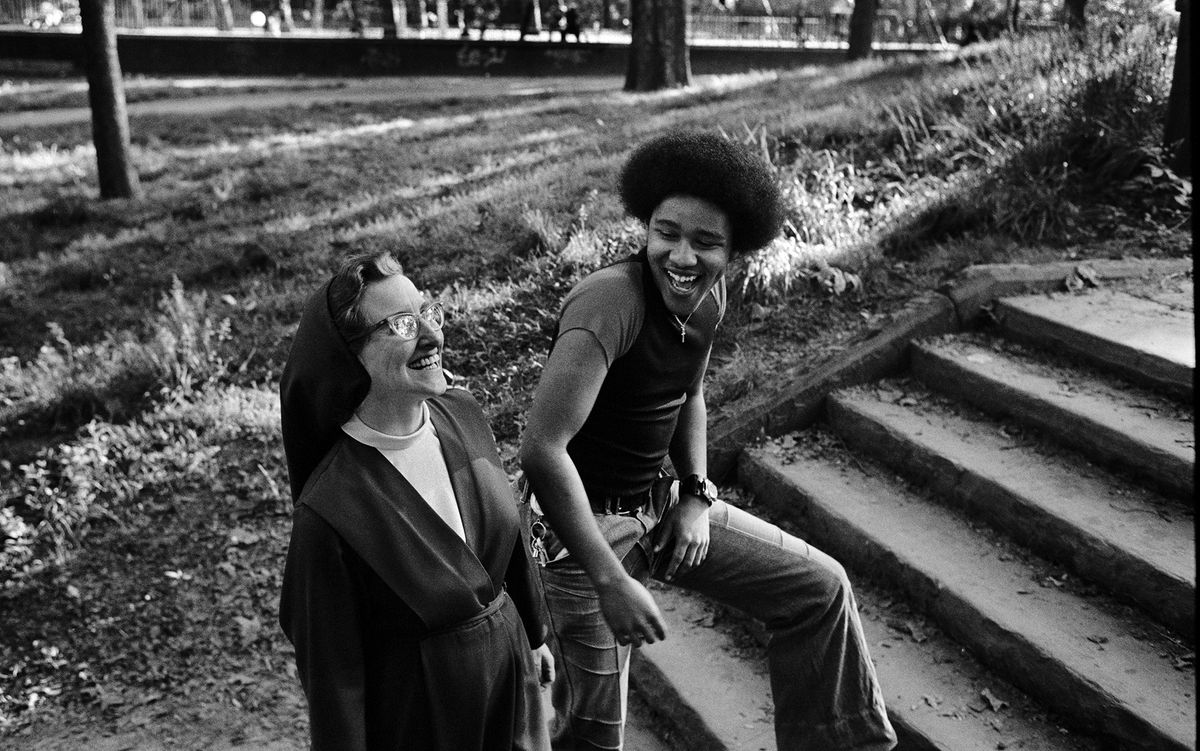















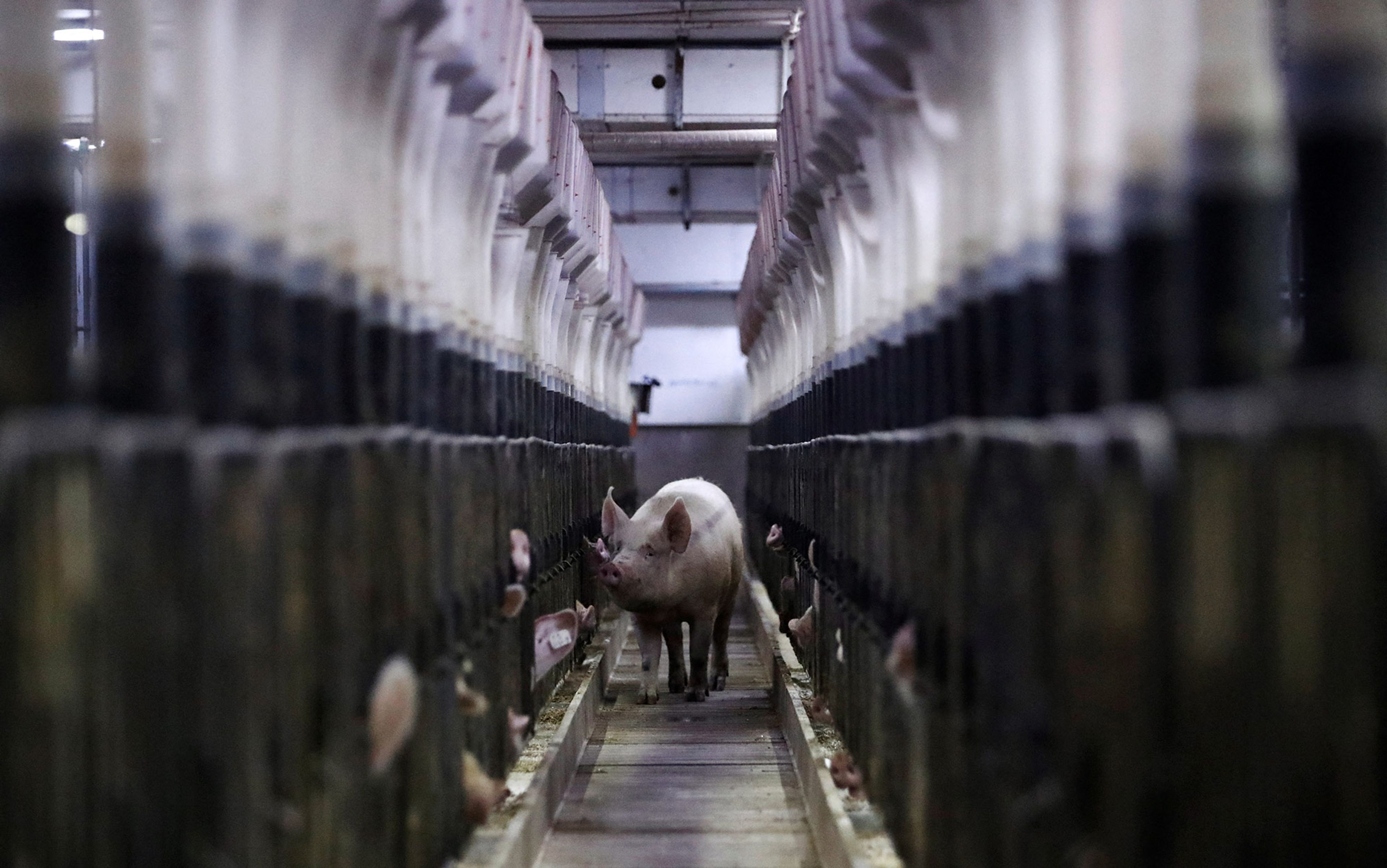



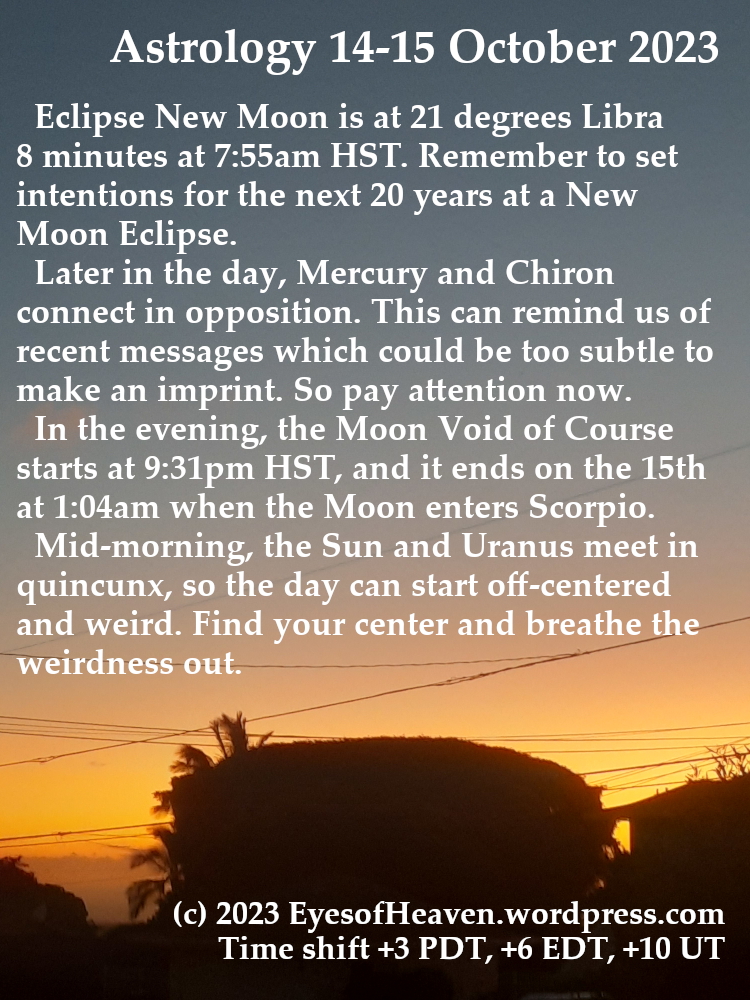
 Hālau 'Aha Hui Lānākila