Theosophy | KARMA AND DESTINY – II

 Choices are not random. Collectively, they show a tonality and texture which traces the line of life’s meditation, the dominant choice over a lifetime. This choice depends upon the degree of discernment of the different types of external and internal conditions surrounding the soul. Externally, there are myriads upon myriads of elemental centres of intelligence already imprinted by the thoughts, feelings and acts of individuals, past and present, embodied and disembodied. They are drawn to each person and respond to the rationalized desires of the lower self, thus giving seeming substantiality to the entrenched delusion of personal existence based upon likes and dislikes. Those who are extremely weak-willed from the standpoint of the soul and excessively self-willed in the eyes of others have fostered the deceptive notion that they are forging their own path in the world, whereas in truth they are only acquiescing through compulsive reaction in their lunar destiny. Alternatively, there are internal conditions which include the solar potency of pure ideation of the Monad, the immortal Buddhi-Manas which is capable of sustaining a strong current of selfless meditation. The range and richness, continuity and depth, of such meditation depend upon mental calm, unconditional compassion and spiritual fearlessness. On the noumenal plane, thought, motivation and volition are indeed inseparable. Authentic mystical states arise from the fusion of the deepest aspirations, the finest feelings and the strongest affirmations of meditation within the solemn stillness of the sanctuary of the soul. Daily renewed in deep sleep, consecrated at dawn and dusk, and invoked with humility before sleep, the inward vision of universal good may be made into a continuous current through the potency of a Vow. In time one can silence the lower mind at will, altering the polarity of the nervous system, and ponder the karmic meanings and lessons inherent in the events and opportunities of each day. Thus reaching beyond any limited sense of identity and in the oceanic calm of one’s true selfhood, one may listen to the voice of God within the heart, the daimon honoured by Socrates and Gandhi. For a trained mystic who has learnt to give Nature time to speak, the inner voice can become the ever-present Chitkala, the benediction of Kwan Yin as a constant guardian.

 For the average person, whose highest vestures are veiled by the samskaric residues of past actions and present vacillation, the inner voice cannot be heard and the pre-birth vision of the soul is forgotten. Yet, they may be mirrored dimly in the muddled personal mind as vague and chaotic recollections, as feeble and faltering notions of some essential reform to be made in life, or some sacrificial act of goodness to be offered in the service of others. Through inconstant flickerings along the invisible spinal cord, there may be sporadic resolves to renew the most precious moment one can recall from early childhood or from fleeting contact with the benevolent current of past teachers. In a variety of ways, even if only fitfully and imperfectly, every person can receive help from internal conditions which can release the spiritual will. The greater the fidelity, the selflessness and self-assurance with which one cleaves to these inner promptings of the immortal soul, the more instantaneously they light up the immediate task at hand. Above all, the more they are heeded, the less the effort needed to sustain continuity. With the same certitude, the opposite consequences follow for those who foolishly ignore or flaunt this inner guidance for the sake of enhancing the delusive sense of personal self-importance. But even the most spiritually impoverished human beings are sheltered by the invisible protection of the Divine Prototype, and therefore even amidst the muddle and froth of psychic fantasy there is a concealed thread of truth. Wise and loving friends might be able to recognize and strengthen it. A true spiritual teacher could help to sift the wheat from the chaff, quicken the inward process of alchemical transmutation, and show the pathway to Divine Wisdom.

 As the One Law of spiritual evolution, Karma is more generous to each and every human soul in need of help than the niggardly thinking of the nihilistic can envisage. It is neither a doctrine that is so abstruse and remote that it cannot be related to the present moment, nor is it nearly as inflexible and hostile as claimed by those who have gratuitously declared a vote of no-confidence in themselves and in the human race. Far from precluding the idea that each human being has a unique and inherently significant mission on this earth, the Law of Karma actually ordains that every single person has a divine destiny which he or she alone can and must fulfill. There is an authentic dignity and beauty, a profound meaning, to the uniqueness of the divine presence in and around every human soul. The sacredness of individual choice was affirmed as the basis of human solidarity by the inspired forerunners of the Aquarian Age, those luminaries who initiated the Renaissance and the Enlightenment in Europe. If the prospect has not yet smiled upon all, this is because too many have laboured under the dead weight of traditional theology or secular fatalism.

 Those who believe in Karma have to believe in destiny which, from birth to death, every man is weaving thread by thread around himself, as a spider does his cobweb; and this destiny is guided either by the heavenly voice of the invisible prototype outside of us, or by our more intimate astral, or inner man, who is but too often the evil genius of the embodied entity called man.

The Secret Doctrine, i 639


 The heavenly voice of the invisible Prototype is heard and felt, without any external tokens of empirical certitude. In the life of a good and simple person, who makes a mental image of Christ or Buddha, Shiva or Krishna, that voice may seem to come in a form engendered by the ecstatic devotion of the individual who has purity of heart. Many thousands of people all over the world belong to the invisible fraternity of fortunate souls who, having made a fearless and compassionate invocation on behalf of a friend or relative in distress, suddenly heard a vibrant voice of authoritative assurance and sensed an aureole of light soon after. This voice may appear to come from outside oneself, and, paradoxically, that other voice, the voice of the intimate astral, all too often the evil genius of man, seems to originate within. When it speaks, it aggravates the confusions of the compulsive persona, inducing the hapless listener to rush into mindless activity. When the heavenly voice speaks to the depths of one’s soul, it has a calming influence and allays the anxieties of kama manas. There is a natural soul-reticence to tell others about the heavenly voice, and a grateful concern to treasure its words in silence. However well-intentioned, anything that is allowed to pass through the matrix of the psychic nature risks distortion and generates a smoky obscuration that acts as a barrier to further guidance and profounder help from the Divine Prototype. What begins as unthinking indiscretion soon becomes delusive, and unless promptly checked, culminates in abject servitude to the astral shadow. Then, deceived by this simulacrum, the shadow of oneself outside the path of dharma, one is drawn in a direction that may be contrary to one’s true destiny. This abdication from the soul’s self-chosen task in the course of evolution may initially be imperceptible but the choice of destinies remains as long as the two voices can be heard.

 Both these lead on the outward man, but one of them must prevail; and from the very beginning of the invisible affray the stern and implacable law of compensation steps in and takes its course, faithfully following the fluctuations. When the last strand is woven, and man is seemingly enwrapped in the net-work of his own doing, then he finds himself completely under the empire of this self-made destiny. It then either fixes him like the inert shell against the immovable rock, or carries him away like a feather in a whirlwind raised by his own actions, and this is — KARMA.

Ibid.

Raghavan Iyer
The Gupta Vidya II

Healing Sounds | Reduce chronic pain | 8 Hz Theta waves | Theta healing | Relaxation music | Binaural beats

Reduce chronic pain | Rem sleep music | Deep meditation music | Theta waves for healing | Healing frequency | Bypass mental blocks | Decrease chronic pain | Healing music | Theta waves | relaxing music

What are the benefits of theta waves?
Going into theta can bypass mental blocks and get you into a mental flow, enabling new levels of thought and perception to approach problems more effectively. They also give you the ability to focus better and be greater motivated on one idea.

Is it good to listen to theta waves?
Theta waves are also associated with drowsiness and meditation. Studies show that listening to binaural beats at a 6 Hz frequency can induce a meditative state10.


Daily Words of the Buddha for June 29, 2023

Kodhaṃ chetvā sukhaṃ seti.
Kodhaṃ chetvā na socati.
Kodhassa visamūlassa, madhuraggassa devate
vadhaṃ ariyā pasaṃsanti,
tañhi chetvā na socatī.

Having killed anger you sleep in ease.
Having killed anger you do not grieve.
The noble ones praise the slaying of anger
— with its honeyed crest & poison root —
for having killed it you do not grieve.

Saṃyutta Nikāya 1.71
Translated from Pāli by Thanissaro Bhikkhu

Daily Words of the Buddha for June 28, 2023

Attānañce piyaṃ jaññā
na naṃ pāpena saṃyuje,
na hi taṃ sulabhaṃ hoti
sukhaṃ dukkaṭakārinā.

If you hold yourself dear
then don’t fetter yourself with evil,
for happiness isn’t easily gained
by one who commits a wrong-doing.

Saṃyutta Nikāya 1.115
Translated from Pāli by Thanissaro Bhikkhu

Theosophy | KARMA AND CHOICE – II

 Metaphysically, in relation to the three planes of the Unmanifested, there is no distinction in the Three-in-One between absolute, attributeless Compassion, absolute, dimensionless Truth, and absolute, unconditional Love. There is no difference because all three together constitute the invisible point in an ever-revolving mainspring that is the vital centre of the great wheel of universal harmony. Through the notion of harmony, a person might come to reflect upon the metaphysical relation between justice and mercy as centripetal and centrifugal forces. The starting point to gain this perspective is self-examination. Take a period in one’s life. A day might be too short for this for the average person — you might take a week, a month, a year — and actually list out on a sheet the number of occasions on which one either omitted or was fortunate to be able to exemplify justice to every other human being. Then on a separate sheet list the number of occasions on which one tried to be merciful to other human beings, or where through thoughtlessness and inconsideration rooted in self-worship — which is nothing but the insecurity of the shadow — one omitted to be merciful. Soon one will make an amazing discovery because one will find that these are two different aspects of a single truth. That truth is the degree to which ignorance was the pole star of one’s life centred in the personal mind, and the extent to which one’s highest ideation became manifest in one’s consciousness and conduct.

 No act is performed without a thought at its root, and this is the basis of karma for thinking beings. This is always the case. What it implies in strict elementary logic is that even the most apparently automatic act has a thought at its core, either at the time of performance or as leading to it. A being who is fully self-conscious, who has attained to universal self-consciousness, and therefore is totally aware of the Self, is incapable of ever engaging in any act at any time without an instantaneous and simultaneous awareness of the intention accompanying it. Because this idea is so sacred, a lot of harm is done by people who talk idly of ‘thought-forms’ and ‘vibrations.’ This is the sad result of dissemination, among the unready mass, of the delusions of the failed students of Philosophia Perennis.

 In ordinary language we all are aware of what it means to say, “Oh, that’s a good idea.” “Oh, that’s a good thought.” Everyone, at some time in his life, maybe at some season of the year, has had a good thought for someone else. “Oh, let me do this for someone else. Let me send this Christmas card. Let me express this goodwill.” Every human being has experienced the most natural form of occultism — having a good thought and seeking for it an appropriate form of expression. In this age where it is so rare, they are very privileged who, through the magic of the madness of love, spend a lot of time not just on the benevolent thought but on the manner and the appropriateness of the expression of the thought. Some people, by a kind of soul-intuition from previous lives, and especially when they are very young, realize that a good idea must have the total purity of privacy if it is to be preserved. There must be an insulation from uncongenial elementals in making that thought inviolate, wrapping it up within an invisible circle of secrecy and privacy, so that it becomes a point in metaphysical space and may find an appropriate form.

 When we begin to see this, we are better able to know what it means to earn the privilege of hearing the teaching that men are manifested gods, creative mind-beings; Manasaputras bearing the burden of the responsibility for raising all manifested matter; carriers of the divine mandate of helping the great architect, the collective demiurge behind the manifested universe. These thrice-blessed “fortune’s favoured soldiers” may suddenly begin to feel the immensity, the grandeur, the glory of the responsibility of being human, a thinking being, capable of choosing at will a thought and, by dwelling upon it and pouring over it the waters of selfless love, being able to find, out of the more subtle matrix of life-atoms which constitute the thought-vehicle, a form for its benevolent expression. In other words, a person who lives by an inner light begins to see that the real form of a true thought is wholly invisible. It has nothing to do with differentiated matter or the externalities of dependent origination in dependent relationships. He really comes to understand something about subtle matter.

 Two alternatives face such a person, and both alternatives apply to different classes of cases, so that he has a constant choice problem, like the choice problem of the Demiurge mentioned in the Timaeus. Out of many worlds is patterned only one world. This is the dilemma which the Demiurge must overcome. The human being, too, must be ready to grasp the fundamental problem of choice facing him. On the one hand, there are certain thoughts which are of such quality — impersonal, universal, unifying, beneficent — that where they are self-consciously generated or drawn from the Akasha, they do not need any form. They are like sparks or like shooting stars that descend with a speed much greater than that of light and they find an appropriate way of sparking off myriads of atoms. On the other hand, there are those thoughts which need to be encased in a purified, distilled essence, but fashioned out of a purified astral form, out of something more than differentiated matter but something less than the pure, undifferentiated, universal, homogeneous essence. Such thoughts, when they are given that kind of force, are deliberately chosen mental assets. They become available for all other human beings encountered in our lives and yet may also become embodied for a very long time to come so that others could draw upon them for almost an indefinite future.

 What a great privilege, then, is open to the human being who has had the good fortune to learn from Brahma Vach. No one should ignore the ideal as a fit object of meditation. Every person is equally entitled to make the attempt, and no one need fear that he is so unworthy that he cannot make it. On the other hand, he should be spared the terrible karma of the delusion that Everest may be climbed quickly. `Climbing Everest here means choosing every single thought. That is very hard. It requires lives. But one can begin right now choosing a few thoughts, having a little less passivity in relation to most thoughts every week, a little less of that disordered, unthinking, thoughtless, machine-like activity which is lower than that of the animal kingdom, and a little more of deliberate thought. One could, within three months, make amazing discoveries about the mystery of karma — more discoveries from three months of this practice than from a lifetime of mere use of the word ‘karma.’

 William Q. Judge pointed out that “the weak and mediocre furnish a weak focus for karma, and in them the general result of a lifetime is limited, although they may feel it all to be very heavy. But that person who has a wide and deep-reaching character and much force will feel the operation of a greater quantity of karma than the weaker person.” A character broad in vision, generous in sympathy, deep in motivation, firm in the degree of deliberation — this is the self-created product of thought ranging from calm consideration to continuous meditation. Whether a man will have “much force” will depend upon becoming one-pointed in the use of force. Kierkegaard spoke about the purity of heart that goes with a concentration of will when it is focused upon one thing at a time. This is the same idea as that expressed by Cardinal Newman in the line, “Lead kindly light, one step enough for me,” which was so much a favourite of Gandhi. These steps form a very beautiful kind of dance. The great pioneers of the future choose to learn this on the physical plane and in the moral realm, but with the intention of making themselves a bridge to other human beings who want to learn to do this dance, step by step by step.

 This means the will is very much involved. The will is weakened by obscurity of mind, by conflict of feelings, by lack of priorities in relation to purposes. The conservation of energy is the baseline upon which every man takes a stand. On this basis alone he determines the degree of intensity to the force that he can release. There have been many men of much force, but their vision was limited. Their motivation was not rooted in the depths of their being, and so they became like Ozymandias. They created huge thought-structures and towards the end of their lives a few wrote manuals for the benefit of others, telling them to do this, that, and the other thing. But the will was disproportionate in relation to the idea. What is most critical, then, in the formation of character is the food that a human being receives in the way of spiritual and mental diet.

Raghavan Iyer
The Gupta Vidya II

Theosophy | KARMA AND DESTINY – I

It is the Spiritual evolution of the inner, immortal man that forms the fundamental tenet in the Occult Sciences. To realize even distantly such a process, the student has to believe (a) in the ONE Universal Life, independent of matter (or what Science regards as matter); and (b) in the individual intelligences that animate the various manifestations of this Principle. . . .
The 
ONE LIFE is closely related to the one law which governs the World of Being — KARMA. Exoterically, this is simply and literally ‘action’, or rather an ‘effect-producing cause.’ Esoterically it is quite a different thing in its far-fetching moral effects. It is the unerring LAW OF RETRIBUTION.

The Secret Doctrine, i 634

 Karma is the universal law of the One Life in all its myriad manifestations from the cosmic to the atomic, spanning eternity and the present in each moment. Every evolving intelligence encapsulated in matter is unerringly subject to the ceaseless effects of Karma and must conform itself, at first unconsciously and then freely, to its inexorable decree of universal harmony. The doctrine of Karma unveils the metaphysical key to the mysteries of authentic human choice, free will and divine destiny, but it can be comprehended only when applied with Buddhic insight to the large experiences and small events of life on earth. To discern the karmic meanings of the complex details of daily life, whilst experiencing the elusive mystery of incarnation, one must begin with the vibratory rates of the simplest thoughts and feelings, words and deeds, linking them to levels of motivation, states of consciousness, fixity of mind and fidelity of heart. Each thoughtful or thoughtless impulse of the inner nature magnetizes one’s environment through the activity of the organs of the outer vestures, invoking exact compensation and ethical retribution. There is nothing mechanical in the karmic adjustment of magnetic differentials; it is an inward and moral process, an integral aspect of a continual choice between spiritualization and materialization. The distinction between distributive and collective Karma, like the difference between the raindrop and the storm, exists within a larger process of essential unity. Humanity and its units, its races, nations, tribes and individuals, embody a vital energy and share a common destiny which none may resist or repel. The eternally patient and compassionate teacher of mankind, Karma sternly instructs each and all in the supreme lesson that there is no individual enlightenment or welfare apart from sacrificial service to every sentient being, collectively constituting the One Life.

 This pivotal principle, the substratum of free will and destiny, may be understood in terms of the choice between the manvantaric star of one’s individuality and the personal star of a single lifetime. Throughout all possible variations in personal destiny over myriad lifetimes, this choice must be made again and again. The clarity and direction of one’s choices in previous lives shape the fabric of circumstances in which one chooses in this life and future lives. That fabric might be a refined tapestry in which may be etched the mystic emblems of the pilgrimage of the soul, or a coarsely knotted cloth of confused dreams and missed opportunities. Psychologically, there is the wayward choice between two voices: one is the voice of illusion and delusion, of the senses and of the separative personal consciousness which cannot embrace a holistic perspective encompassing many lives; the other is the voice of Krishna-Christos, the voice of God in man which speaks in the universal language of the soul. There is a direct relation between one’s recurrent choices in regard to these voices, and one’s readiness, in the realm of action, to ally oneself with Krishna, standing luminously alone, or his innumerable adversaries. In the Mahabharatan war fought on Kurukshetra, the field of external encounters, individuals are constantly making, mostly unconsciously or with partial self-consciousness, fateful choices between Krishna and his armies. This archetypal choice was offered by Krishna to the depraved Duryodhana, who rejected Krishna in favour of the armies trained by him, reflecting shortsighted empiricism. When Arjuna was offered the privilege of having Krishna as his charioteer, he happily and willingly chose Krishna, even though he did not fully fathom the invisible stature of Krishna, let alone his cosmic splendour.

 Philosophically, the Mahabharatan war is emblematic of the inevitable ethical and spiritual struggle to which every human soul is irreversibly committed by the fact of Manasic awareness, traceable to the sacrificial descent and benediction of the solar ancestors over eighteen million years ago. Each chooses, Krishna teaches, according to his lights, whatever seems best. Thereby the subtle threads of one’s self-devised destiny are fused, and one must pass below the throne of Necessity without looking back, like the pilgrims in the Myth of Er, to live out and learn from the karmic results of one’s choice. Recorded by the Lipikas, engraved in one’s vestures and reflected in surrounding circumstances, this destiny rises up to meet the soul at every turn in life. Yet, though it is ‘written in the stars’, destiny does not preclude the risks and possibilities of further choice.

 Only, the closer the union between the mortal reflection MAN and his celestial PROTOTYPE, the less dangerous the external conditions and subsequent reincarnations — which neither Buddhas nor Christs can escape. This is not superstition, least of all is it Fatalism. The latter implies a blind course of some still blinder power, and man is a free agent during his stay on earth. He cannot escape his ruling Destiny, but he has the choice of two paths that lead him in that direction, and he can reach the goal of misery — if such is decreed to him, either in the snowy white robes of the Martyr, or in the soiled garments of a volunteer in the iniquitous course; for, there are external and internal conditions which affect the determination of our will upon our actions, and it is in our power to follow either of the two.

The Secret Doctrine, i 639


 Even if through past actions one is destined to suffer miseries at the hands of various agencies, the power of choice remains. It is a constant factor throughout all the vagaries of karmic precipitation. As Plato taught, the gods are blameless for the inward condition of the soul in every situation, and each sufferer must choose between either preserving purity of consciousness or becoming stained by the iniquities of unthinking reaction, mental violence and a refusal to take responsibility.

Raghavan Iyer
The Gupta Vidya II


Daily Words of the Buddha for June 12, 2023

Yo imasmiṃ dhammavinaye
Appamatto vihassati!
Pahāya jātisaṃsāraṃ dukkhassantaṃ karissatī.

Who so untiringly pursues the Dhamma and the Discipline
Shall go beyond the round of births and make an end of suffering.

Dīgha Nikāya 2.185
Last Days of the Buddha: The Maha-parinibbana Sutta (revised edition), translated from Pāli by Sister Vajira & Francis Story

Daily Words of the Buddha for June 05, 2023

Maraṇenapi taṃ pahīyati
yaṃ puriso mamidanti maññati.
Etampi viditvā paṇḍito,
na mamattāya
nametha māmako.

At death a person abandons
what one construes as mine.
Realizing this, the wise
shouldn’t incline
to be devoted to mine.

Sutta Nipāta 4.812
Translated from Pāli by Thanissaro Bhikkhu

Daily Words of the Buddha for June 03, 2023

Na tena ariyo hoti yena pāṇāni hiṃsati.
Ahiṃsā sabbapāṇānaṃ
“ariyo”ti pavuccati.

One is not noble who injures living beings.
One is called “noble” because
one is harmless towards all living beings.

Dhammapada 19.270
The Dhammapada: The Buddha’s Path of Wisdom, translated from Pāli by Acharya Buddharakkhita

Theosophy | KARMA AND CHOICE – I 

*

My friend, if the whole path and movement of heaven and all its contents are of like nature with the motion, revolution, and calculations of wisdom, and proceed after that kind, plainly we must say it is the supremely good soul that takes forethought for the universe and guides it along that path. — Athenian Stranger

PLATO

 Anyone who wishes to make practical use of the universal principles of justice and compassion inherent in the doctrine of karma must first grasp the idea that what we call the karmic effect is actually inherent in the karmic cause. This could be seen in two ways: first of all, philosophically or metaphysically, and secondly, morally. If karma refers to the totality of interaction of all beings in a single, unified cosmos, then it must be the case that every single act, rooted in a thought or an idea, already contains within itself the whole series of manifestations which appear to exist as its distinct effects. That appearance is illusory. What we call the effect of an act is already contained in the origination of the first impulse of the first thought and feeling constituting the act. This is very difficult to comprehend metaphysically. But anyone could come closer to understanding it from the moral standpoint.

 Each one could look at any single act that he has done and link it up to the state of mind in which he acted and to the quality or colour of feeling that was present in that act. He could look behind ‘thought’ and ‘feeling,’ in the separative and specific sense in which the words are used here, and attempt to see the act in terms of the totality of his character, in relation to the whole of his life, at least since he became a responsible adult, whenever that was for the individual person. The whole of his life has led to this particular act. On this act we have the indelible stamp of the kind of person he is and has become in all the time since the moment of birth, but, more perceptibly, at least since he became a responsible adult. If the whole of his being is imprinted upon that act, in a universe of law he has already, in the very act, determined the consequences of that act to himself as a mind-being, as a unit-being. Therefore, any sound morality would be one that provides a self-validating, compelling and continually applicable basis for ethics, both on the plane of thought and on the plane of feeling, which together are represented in what we call external acts.

 A person who is wise and fortunate enough to include a method of relative and increasing self-scrutiny into his day is engaged in what might be called ‘doing one’s moral arithmetic.’ If he could do this, he would soon be able to work out a few simple sums. Then he would not have to wait, in an Epimethean way, for the sum totals of external effects, from which it is extremely difficult to trace back. Anyone who has studied a bit of elementary mathematics knows, if he is given the answer to a problem, that from the answer one cannot speedily work out the process that leads to the answer. In a very good teaching system, a person would be given more appreciation for grasping the process, even if the actual answer reached is only an approximation. Certainly, this would be preferable to rewarding a person who happened to hit the answer but did not have the proper sequence of steps that follow from the initial statement of the problem, using the relevant basic rules or equations or tables that are provided to him to work out this answer.

 In the moral realm this is extremely difficult, and points to the difference between ignorant human beings and Adepts. An Adept is one who has mastered the mathematics of the soul. Indeed, he embodies it every moment, twenty-four hours a day, and therefore he continually acts with a seeming casualness but out of a profound deliberation based on total detachment. With this perspective, we can understand the reason why the heavenly wisdom in relation to karma should be imparted, in this day and age, with the extraordinary care that has been taken by the Mahatmas. Those who have the good karma — even if not entirely deserved in this life — of coming into contact with Bodhi Dharma are given the opportunity to move from a position of muddle and irresponsibility to a gradual awakening to their responsibility as moral agents: as Manasaputras, as descendants from the divine ancestry of the great collective host that gave the fire of self-consciousness to human beings over eighteen million years ago. Those who do reasonably well render incalculable service. No one can do more than try, and even to try is to make a real choice. They are, in a sense, fortunate, because they are protected from attachment to results since they are not in a position to calculate what Adepts alone can work out precisely. They can render some benefit to the whole of the human race, to the karma of a nation, to the family in which they were born, and to their associates.

 The time has come when no student of Theosophy can afford to ignore the practical moral implications of this aspect of karma, even if he is not immediately ready to grasp the profound philosophical and metaphysical basis of the idea. We have found already in this century, in the last twenty-five years, that the idea has partially come into contemporary thought. Inward responsibility is the focus of several exploratory efforts by contemporary philosophers who want to see its application to punishment. Wittgenstein raised the question whether there is any internal, rather than extrinsic, relation between an act and its reward or punishment. Philosophically, this is difficult to grasp, but deep down we must feel a profound pity and compassion for any person who is a murderer and who is now delighted, in one sense, that he does not have to be executed, but who, on the other hand, is nonetheless excruciatingly tortured by his own thoughts. In some cases, such persons may spend a whole lifetime adding to their karma by broodings that are even worse than the thoughts which led to the murder committed. In other cases, they may be able to look back upon what was done with a sense of relative bewilderment, which Simone Weil would have called a kind of “innocence through penitence.”

 No one could truly make a moral use of the teaching and become a real penitent without becoming ready, before the moment of death, to have deserved the priceless privilege of coming into contact with divine wisdom. To do this seriously requires spending time reflecting upon the idea of the interpenetration of cause and effect and how it applies to each and every one. As long as there is no understanding and proper study of karma, no one will be able to introduce any order into his life relative to the disorders of our time. Nor will he be able to generate a current of true repentance or appreciate the relationship of mercy to justice that is essential to a comprehension of concepts like reward and punishment. There is the statement in The Ocean of Theosophy that “Karma is a beneficent law, wholly merciful, relentlessly just, for true mercy is not favor but impartial justice.” Normally, we think of mercy as gratuitous or arbitrary and justice as relentless or ruthless. In terms of the universal law of karma, human appellations like ‘justice’ and ‘mercy’ are misleading. They are merely approximations arising through an inadequate understanding of connections between causes and effects applicable only over very short time spans and also modified by the gap, not merely between any legal system and the moral justice of the universe, but between the theory of that legal system and its working in practice.

 Suppose a very sincere man truly wanted to find out what is due from him to every other human being on earth — let us say because he has consulted ancient wisdom or merely because he has read Godwin, or even because he thought about it. If this person then asked what could it mean for him to do justice to every human being he ever met in this life, it would be very difficult for him to make a practical response. The mathematics are too complicated. The person hardly knows anyone else. It is forbidding enough to do justice to any human being on earth. But that is what is required on the path of understanding, of Jnana Yoga.

 Supposing, then, this person said, “To the extent to which I cannot know what is due from me to every single being, and yet that is where I want to go — though it take a very long time, even many lives — I have a firm faith that the very desire and determination to go in this direction is not only a holy one, because it is the noblest feeling I feel, but it is wholly compatible with the truth and totality of things.” This makes immensely joyous the prospect of having myriads of opportunities in future lives to be able to perfect the enterprise. Such a person might also say, “Meanwhile, to the extent to which I do not know what doing justice to every single human being means, I might as well err in one direction rather than in the other.” As long as one is caught up in attavada, the delusion of being separate from everyone else — the only conception of sin in the teachings of Buddha — then, if one is going to sin it is better to sin in the direction of exaggerated praise of others than in the opposite direction.

 If this generation is to make the enormously arduous move from being the most abnormal in soul-sickness to becoming human, it would be extraordinarily important to emphasize mercy and compassion. Beyond all else, to be human is to radiate benevolence. As long as one strives to be compassionate and merciful, it will be imperatively and inevitably the case that one will come to understand justice better. Through mercy one may come closer to an appreciation of divine justice, cosmic justice, and above all learn what it means to be just to every living being, every elemental, every constituent of the seven kingdoms of nature. Every single human being has also the prerogative of doing justice to his or her true self.

Raghavan Iyer
The Gupta Vidya II

Daily Words of the Buddha for May 21, 2023

Sukarāni asādhūni,
attano ahitāni ca.
Yaṃ ve hitañca sādhuñca,
taṃ ve paramadukkaraṃ.

Easy to do are things
that are bad and harmful to oneself.
But exceedingly difficult to do
are things that are good and beneficial.

Dhammapada 12.163
The Dhammapada: The Buddha’s Path of Wisdom, translated from Pāli by Acharya Buddharakkhita

Daily Words of the Buddha for May 20, 2023


Attā hi attano nātho;
ko hi nātho paro siyā?
Attanā hi sudantena,
nāthaṃ labhati dullabhaṃ.

One truly is the protector of oneself;
who else could the protector be?
With oneself fully controlled,
one gains a mastery that is hard to gain.

Dhammapada 12.160
The Dhammapada: The Buddha’s Path of Wisdom, translated from Pāli by Acharya Buddharakkhita

Daily Words of the Buddha for May 17, 2023

Kalyāṇamitto yo bhikkhu, sappatisso sagāravo;
Karaṃ mittānaṃ vacanaṃ, sampajāno patissato;
Pāpuṇe anupubbena, sabbasaṃyojanakkhayaṃ.

When a bhikkhu has good friends, and is reverential and respectful;
Doing what one’s friends advise, clearly comprehending and mindful;
One may progressively attain the destruction of all fetters.

Itivuttaka 1.17
The Udāna and the Itivuttaka, trans. John D. Ireland

Daily Words of the Buddha for May 10, 2023

Idha tappati, pecca tappati,
pāpakārī ubhayattha tappati.
“Pāpaṃ me katan”ti tappati,
bhiyyo tappati, duggatiṃ gato.

Idha nandati, pecca nandati,
katapuñño ubhayattha nandati.
“Puññaṃ me katan”ti nandati,
bhiyyo nandati, suggatiṃ gato.

Agony now, agony hereafter,
the wrong-doer suffers agony in both worlds.
Agonized now by the knowledge that one has done wrong,
one suffers more agony, gone to a state of woe.
Rejoicing now, rejoicing hereafter,
the doer of wholesome actions rejoices in both worlds.
Rejoicing now in the knowledge that one has acted rightly,
one rejoices more, gone to a state of bliss.

Dhammapada 1.17, 1.18
The Discourse Summaries by S.N. Goenka

Daily Words of the Buddha for May 09, 2023

Manopubbaṅgamā dhammā,
manoseṭṭhā manomayā.
Manasā ce paduṭṭhena
bhāsati vā karoti vā,
tato naṃ dukkhamanveti
cakkaṃva vahato padaṃ.

Manopubbaṅgamā dhammā,
manoseṭṭhā manomayā.
Manasā ce pasannena
bhāsati vā karoti vā,
tato naṃ sukhamanveti
chāyāva anapāyinī.

Mind precedes all phenomena,
mind matters most, everything is mind-made.
If with an impure mind
one performs any action of speech or body,
then suffering will follow that person
as the cartwheel follows the foot of the draught animal.
Mind precedes all phenomena,
mind matters most, everything is mind-made.
If with a pure mind
one performs any action of speech or body,
then happiness will follow that person
as a shadow that never departs.

Dhammapada 1.1, 1.2
The Discourse Summaries by S.N. Goenka

Theosophy | THE EYE OF WISDOM – I

The idea of Eternal Non-Being, which is the One Being, will appear a paradox to anyone who does not remember that we limit our ideas of being to our present consciousness of existence; making it a specific instead of a generic term. An unborn infant, could it think in our acceptation of the term, would necessarily limit its conception of being, in a similar manner, to the intrauterine life which alone it knows; and were it to endeavour to express to its consciousness the idea of life after birth (death to it), it would, in the absence of data to go upon, and of faculties to comprehend such data, probably express that life as “Non-Being which is Real Being.” In our case the One Being is the noumenon of all noumena which we know must underlie phenomena, and give them whatever shadow of reality they possess, but which we have not the senses or the intellect to cognize at present. . . . Alone the Initiate, rich with the lore acquired by numberless generations of his predecessors, directs the “Eye of Dangma” toward the essence of things in which no Maya can have any influence.

The Secret Doctrine, i 45

 Beyond the range of all maya, and beyond all but the most exalted conceptions of the divine dialectic, lies the highest possible state of supreme noetic vision, the state of the opened Eye of Dangma, spoken of so beautifully in magnificent metaphors in the Stanzas of Dzyan. Beneath this level of pristine consciousness, all ideas of being reflect an inevitable limitation, owing to one’s sense of present existence and awareness of specific circumstances. For us, to be a being is to be a being at a particular time and a particular place, or for a certain period of time in a certain place in this world. The all-enveloping nature of this mayavic limitation of consciousness is brought home by the metaphor of the unborn infant in the womb. Each of us is like this to a greater or lesser degree, and, like the infant in the womb, were it to express its conception of being, we are not directly able to formulate the true nature or causal ground of our being, especially with reference to the larger life of beings outside the self-limiting context of our narrow consciousness. Further, if we contemplate the possibility of being born into a larger and richer world, we can only see the process of that birth itself as equivalent to death — the end of life as we seemingly know it. For typical human beings, then, who think that they have been born once into this world of illusion, the prospect of becoming dwijas, or twice-born, can only be described as a passage into non-being. Nevertheless, the veil of maya is not so impenetrable to the human will and spirit that we cannot cultivate a deepening intuition that this birth — which seems death to the lower nature — is the solemn path of initiation into real Being.

 In our case, and depending upon our degrees of philosophic detachment, we may be vaguely or acutely aware that all the beings we seem to know, including ourselves, are merely shadowy phenomenal representations of noumenal realities, and even of a single supreme Noumenon. Through devotion and tapaswe may learn to sift through the dross of phenomenal experience, thereby quickening the dormant powers of Buddhi-Manas which alone can bring us to the threshold of birth into true life in spirit. Having inverted what we did and knew, what we felt and were as babies, we can learn as fallen adults, like the miner looking for gold.

The impalpable atoms of gold scattered through the substance of a ton of auriferous quartz may be imperceptible to the naked eye of the miner, yet he knows that they are not only present there, but that they alone give his quartz any appreciable value; and this relation of the gold to the quartz may faintly shadow forth that of the noumenon to the phenomenon. The miner knows what the gold will look like when extracted from quartz, whereas the common mortal can form no conception of the reality of things separated from the Maya which veils them, and in which they are hidden.

Ibid., i 45

 In other words, there is not only gold in the hills, but there is gold in every grain of dust, in every atom, in every moment of time if only we would know it. The fact that more human beings do not know this at this point of human evolution is not primarily because of universal ignorance, but more because of avoidable perversity. Where human beings grow up turning their eyes away from what is golden in other human beings — in their acts, in their words and in their lives — it is scarcely surprising that they should develop a peculiar and fatal fascination with dross.

 Hence the vital importance of directing one’s thought, aspiration and devotion towards the ideal of the perfected Sage, who carries with him the inheritance of countless generations of distilled wisdom and directs the faultless Eye of Dangma towards the essence of things where maya casts no shadows. If human beings mired in illusion and a false sense of their own being are to gain what The Voice of the Silence calls ‘the right perception of existing things’ and ‘the knowledge of the non-existent’, then they must seek for Him who will give them birth in the Hall of Wisdom. It is there that the teachings of Gupta Vidya in relation to the twelvefold chain of the nidanas, the chain of dependent origination governing birth and death, and also the four Noble Truths of Buddha have their greatest but most secret meaning. There are secret truths contained within all uttered truths, within the doctrine of the nidanas, and within the four truths. There are secrets within secrets, worlds within worlds. If seekers of wisdom are like miners of gold, they must have some idea what they are looking for, but at the same time they must freely and openly admit their ignorance, recognizing that the true teachings and their accredited custodians are their sole saving grace.

 All true wisdom comes from using the teachings given in the best way one can, and it is virtually fruitless instead to attempt to distill wisdom from the world of empirical unrealities. Certainly if every time divine wisdom is available, it avails little or nothing to so many human beings, even those who come into direct contact with it, it is because they have somehow convinced themselves otherwise without evidence or reason. They falsely suppose that a mere accumulation of worldly experience for its own sake, randomly gathered in the passage of events and from the opinions of others, will somehow add up to wisdom. In the totality of things that happen to a human being gripped by avidya — who is mostly an automaton, acting like a robot most of the time, a creature of habit at best, and moved by drives which produce guilt and repression — there is nothing remotely comparable to what may be found in consciously chosen experience as a means of testing and applying, apprehending, discovering and rediscovering one single sacred spiritual truth intimated by the authentic teachings of the Brotherhood of Sages.

 The wise are those who, when they receive such teaching, become almost from the beginning deaf and blind to everything else, and see all else only in relation to that which is sacred. They make the very best experiments they can as early as possible, therefore garnering the lessons of life and become unacknowledged but self-dependent sources of inner wisdom. Tested by experience and enriched by human pain and suffering, they become endowed with the light and the lustre, the beneficence and the benediction, of true compassion in their conscious ideation in meditation, let alone in their outward utterances and external deeds. As dauntless and detached learners, they make the fields of their experience the basis of Gandhian experiments in truth. Whilst understanding that the Absolute is the ultimate basis of all life and experience, but is wholly untouched by it, they shun the false and cowardly notion all human difficulties arise merely through maya. Illusion is not really the problem, because the whole world is caught up in a transcendental divine process of which is maya is a necessary part. Maya is inseparable from Ishvara in the sum total of everything that exists in the realm of conditioned existence, and to miss this is to fall prey to a sense of pseudo-detachment that has nothing to do with true spirituality.

Raghavan Iyer
The Gupta Vidya II

Melchizedek Seminary | The Sophia Frequencies. Divine Feminine Healing, Miracles, Abundance and the Schumann Resonances

How to properly listen to the Sophia Frequencies for maximum results:

Effects accumulate so daily for a minimum of 21 days may achieve noticeable transformational results, however research from MIT show that the optimum listening period is daily for 9-12 months.

Do not listen through phone speaker. Most phone speakers are piezo electric based, which means all frequencies below 130 HZ may be eliminated.

Do not listen through headphones. Because The Sophia Frequencies incorporate scalar waves, it is highly recommended that they are listened to through speakers with a good bass response (ideally with a frequency range below as 45 HZ).

Sound waves traveling through the atmosphere (or underwater) are longitudinal; as are plasma waves propagating through space (aka Birkeland currents). Longitudinal waves moving through the Earth’s interior are known as “telluric currents”. They can all be thought of as pressure waves of sorts.

Embedded into the piece are very precise Schumann differentials. It has been observed that these differentials are important to any healing process. They also induce a deep delta state which is conducive to sleep, profound meditation and experiencing 5th Jhana. We have proposed and can prove using anecdotal data, that it is in this state that the remarkable healing effects occur.

Ideally, listeners or listening parties will do so by playing this video, which will be the high resolution source file, through a speaker set up that allows space between the listener(s) and the speakers.

Observing | Esoteric Talks

We’ve got to build something in us that can see us, as we are, without going crazy with what it sees. An esoteric system is a way of guiding man to a right relationship to himself, others, and the Infinite Universe, of which he is a part. After we’ve accurately located ourselves in the big scheme of things we are ready to move forward to what we came here to do.

You were created to develop beyond what life offers you.

Daily Words of the Buddha for April 18, 2023

Sabhaggato vā parisaggato vā
ekassa veko na musā bhaṇeyya.
Na bhāṇaye bhaṇataṃ nānujaññā.
Sabbaṃ abhūtaṃ parivajjayeyya.

Having entered a royal court or a company of people
one should not speak lies.
One should not speak lies (oneself) nor incite others to do so.
One should completely avoid falsehood.

Sutta Nipāta 2.399
The Discourse Collection: Selected Texts from the Sutta Nipāta, translated by John D. Ireland

Daily Words of the Buddha for April 15, 2023

Uṭṭhānavato satīmato
sucikammassa nisammakārino,
saññatassa dhammajīvino, appamattassa yasobhivaḍḍhati.

Ever grows the glory of one
who is energetic, mindful and pure in conduct,
discerning and self-controlled, righteous and heedful.

Dhammapada 2.24
The Dhammapada: The Buddha’s Path of Wisdom, translated from Pāli by Acharya Buddharakkhita

Daily Words of the Buddha for April 13, 2023


Appamādo amatapadaṃ.
Pamādo maccuno padaṃ.
Appamattā na mīyanti.
Ye pamattā yathā matā.

Heedfulness is the path to the Deathless.
Heedlessness is the path to death.
The heedful die not.
The heedless are as if dead already.

Dhammapada 2.21
The Dhammapada: The Buddha’s Path of Wisdom, translated from Pāli by Acharya Buddharakkhita

Meditation | Ascended Reiki Wizard Heals You 》528Hz Reiki Healing Music That Calms Down Everything

Enjoy this 3-hour relaxing, calming, and harmonic meditation music release! Where we offer powerful and transformative healing music to help you restore balance and harmony in your life. In this video, our Ascended Reiki Wizard Master will guide you through a healing journey, using the power of Reiki and the frequency of 528Hz to calm down everything and promote deep relaxation.

As you listen to the soothing music, you’ll feel the healing energy flowing through you, releasing any tension or stress you may be holding onto. The frequency of 528Hz is known as the “Love Frequency” and is associated with the vibration of the heart chakra, promoting feelings of love, compassion, and forgiveness.

Whether you’re looking to heal physical, emotional, or spiritual wounds, this Reiki Healing Music will help you connect with your inner wisdom and access your innate healing power. So sit back, relax, and allow yourself to be immersed in the healing energy of this powerful music.

Daily Words of the Buddha for April 08, 2023

Idha modati pecca modati;
katapuñño ubhayattha modati.
So modati so pamodati,
disvā kammavisuddhimattano.

The doer of good rejoices here and hereafter;
one rejoices in both the worlds.
One rejoices and exults,
recollecting one’s own pure deeds.

Dhammapada 1.16
The Dhammapada: The Buddha’s Path of Wisdom, translated from Pāli by Acharya Buddharakkhita

Theosophy | INDIVIDUATION AND INITIATION – I

  The Daimones are . . . the guardian spirits of the human race; ‘those who dwell in the neighbourhood of the immortals, and thence watch over human affairs,’ as Hermes has it. In Esoteric parlance, they are called Chitkala, some of which are those who have furnished man with his fourth and fifth Principles from their own essence; and others the Pitris so-called. . . .The root of the name is Chiti, ‘that by which the effects and consequences of actions and kinds of knowledge are selected for the use of the soul,’ or conscience, the inner Voice in man. With the Yogis, the Chiti is a synonym of Mahat, the first and divine intellect; but in Esoteric philosophy Mahat is the root of Chiti, its germ; and Chiti is a quality of Manas in conjunction with Buddhi, a quality that attracts to itself by spiritual affinity a Chitkala when it develops sufficiently in man. This is why it is said that Chiti is a voice acquiring mystic life and becoming Kwan-Yin.

The Secret Doctrine, i 288

 The integral relationship between initiation and individuation can be grasped through the essential logic of the entire process of evolution. From the standpoint of matter, the logic of transformation involves increasing heterogeneity, differentiation and complexity. At the same time, there is a commensurate withdrawal of subjective and spiritual faculties which cannot function freely through limited projections or distorted reflections. The degree of spiritual volition depends upon the texture of the reflecting medium. In the collective thrust of evolution every single life-atom in all the seven kingdoms of Nature is touched by the same primal universal impulse towards self-consciousness. Within the broad perspective and purpose of evolution as a whole, the possibilities of initiation are enriched by individuation at a high level of self-consciousness. Initiation, in its most hallowed meaning, must always involve the merging of minds of Guru and chela into a state of oneness with the ineffable Source of Divine Wisdom. This mystical and magical relation of Manas and Mahat was comprehended and transmitted in secret sanctuaries. It was intimated in the enigmatic etymology of the word Upanishad, ‘to come and sit close’, so that there could be direct communion of minds and hearts. Sacred teachings are conveyed and communicated through the eyes and not merely through words, although mantramic sounds have a sacred and vital function. In the Bhagavad Gita Arjuna’s earnest enquiries and Krishna’s cosmic affirmations and psychological adjustments bring to birth within the mind of the chela the seed of chit, a level of consciousness which negates, transcends, and also heightens individuality. Initiation is the highest mode of individual communication, and it necessarily involves a mystic rapport between one who has gone before and one who is to come after, rather like the magnetic transference between mother and child. Such a relation is inherent in the logic of evolution because, as a result of an extremely long period of evolution, it is impossible to find any mechanical sameness between all human beings. They are identical in their inmost essence but so markedly different in the internal relations of their vestures that there cannot be complete equivalence between any two persons. Hence experience and reflection reveal both the mystery of each individual human being and the commonality of what it is to be human.

 At one level of communication The Secret Doctrine is a metaphysical treatise on cosmic and human evolution. But at another level, for those who are Buddhic, it is not merely a book, but the initiatory presence of the compelling voice of the Verbum or Brahma Vach, reverberating in the society of sages, the Rishis who are of one mind and one lip. For the ardent seeker of Divine Wisdom, The Secret Doctrine is a series of stepping-stones, as the Upanishads and the great scriptures of all times have been, towards initiations into the mysteries of Selfhood. Through ever-renewed contact with the teaching, the chela begins to enact self-consciously and by degrees the realities which ordinary individuals sporadically experience at some level through deep sleep. This process comes alive through prolonged meditation for the sake of universal compassion, making one’s breathing more benevolent for the purpose of elevating all beings in all the kingdoms of Nature. When a person begins to do this, it is the awakening of Bodhichitta, the seed of enlightenment. It is the first step in translating knowledge into wisdom, words into realities, and resolves into actions. Having turned the key of compassion in the lock of the heart, the disciple will come to realize, through inward communication with the Teacher, the fuller meaning of the Upanishads:

Upa-ni-shad being a compound word meaning ‘the conquest of ignorance by the revelation of secret, spiritual knowledge’. . . They speak of the origin of the Universe, the nature of Deity, and of Spirit and Soul, as also of the metaphysical connection of mind and matter. In a few words: They CONTAIN the beginning and the end of all human knowledge. .

The Secret Doctrine, i 269-270

 The practical import of the metaphysical teaching of The Secret Doctrine lies in the fact that the highest spiritual powers are partly used by each human being every day but without fully knowing it. Light is universal, but it makes all the difference whether one has a blurred sense of perception and merely consumes light, or whether one can take a magnifying glass and concentrate light. There are also those who are like the laser beam which can direct a concentrated shaft of light to destroy cancerous cells and produce a range of extraordinary effects upon the physical plane. There is something of kundalini at work in every human being. Electricity and magnetism are sevenfold and work at the highest cosmic level of Akasha, but they also work at the most heterogeneous and diffusive level because everything is electrical and magnetic, from the occult standpoint. The aspirant must grasp, even at a preliminary level, the moral and psychological implications of this metaphysical “power or Force which moves in a curved path” in man and Nature.

 It is the Universal life-Principle manifesting everywhere in nature. This force includes the two great forces of attraction and repulsion. Electricity and magnetism are but manifestations of it. This is the power which brings about that ‘continuous adjustment of internal relations to external relations which is the essence of life according to Herbert Spencer, and that ‘continuous adjustment of external relations to internal relations’ which is the basis of transmigration of souls . . .

Ibid., i 293

The two aspects of this omnipresent power mentioned here have to be totally mastered by the initiated yogi in all their possible manifestations. Long before this stage is reached, the disciple must begin to learn to govern these internal and external relations through Buddhi Yoga in order to fulfil the prerequisite conditions of magnetic rapport with a true Teacher of Wisdom.

 The universal process of adjustment of the external to the internal, which leads to involuntary reincarnation for human beings, must be understood in terms of karma. At the most primary level, whenever human beings entertain and succumb to emotional reactions, they establish mental deposits and astral grooves which require many lives for proper adjustment. That is why over eighteen million years so many people approach the Path again and again but stumble and lose their track just as often. They cannot make a fundamental breakthrough even when in the presence of great teaching. For those who have made the teaching an internal living power in their consciousness, this is comprehensible as essential, just as the world seems clear to a child when its eyes are directed to the light of the sun. Whilst this is true for all human souls, the philosophical recognition of how this works is important. Every emotion registers an appropriate record in the astral vesture. It is wear and tear on the linga sharira and is at the expense of something or someone else. Thus selfishness is increased. This is true even if the emotion is benevolent for emotion itself is a form of passivity. Emotion is quite different from deep feeling which is unmodified by cyclic change or external event and is totally independent of outward demonstration. Emotion is like cashing a check: whilst it makes money available, it depletes the account. It is a way of demanding proof. As a form of external indulgence it is a passive fantasy which weighs heavily upon the astral vesture. To that extent it obscures one’s inmost feelings which are detached and compassionate. All the higher feelings are ontologically powerful and at the same time they constitute a pure negation psychologically. Though only an initial understanding of the problem, this is sufficient to explain why merely sitting down to postures and trying to control the external breath by hatha yoga exercises cannot make a significant difference to the inevitable adjustment of internal and external relations inherent in life itself. There is no substitute for facing oneself, asking what one is truly living for, how one is affected by likes and dislikes, and how one’s temper — or sophrosyne — is unbalanced through various irritations.

Raghavan Iyer
The Gupta Vidya II

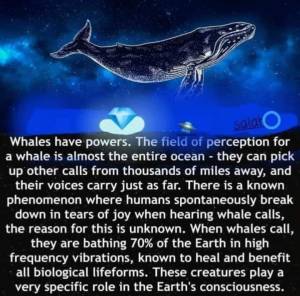
NĀ KOHOLĀ Ō’ HAWAI`I | “Humpback Whales and the Hawaiian,” By Charles Kauluwehi Maxwell Sr. (“Uncle Charlie”)

The “ORAL TRADITIONS” of our Culture passes on from one Generation to another… by being the Story Teller — KAULUWEHI passes his knowledge on to his Mo`opuna — and thus the knowledge is bestowed… like the following story.

The modern day name for the uninhabited island seen off the coast of Wailea, Maui is Kahō’olãwe, though our chants tell us that its ancient name was Kanaloa. Kanaloa was a primordial god from antiquities, and was the deity for the ocean, its animals, fresh water, salt water, and all the growth on earth and in the sea. On the northwest side of Kahō’olãwe is ‘Ahupu Bay, whose west point is called Lae O Na Kohola, or Cape of Whales.  […]


Read on:  More on Nā Koholā

Daily Words of the Buddha for March 08, 2023

Hitānukampī sambuddho
yadaññamanusāsati,
anurodhavirodhehi
vippamutto tathāgato.

When the Buddha teaches others
he does so out of compassion,
because the Tathagata is wholly freed
from both favour and aversion.

Saṃyutta Nikāya 1.150
Gemstones of the Good Dhamma, compiled and translated by Ven. S. Dhammika

Science | Scientists are “pretty sure” they’ve found a Portal into the Fifth Dimension


In a recent study, scientists say they can explain dark matter by positing a particle that links to a fifth dimension.

While the “warped extra dimension” (WED) is a trademark of a popular physics model first introduced in 1999, this research, published in The European Physical Journal C, is the first to cohesively use the theory to explain the long-lasting dark matter problem within particle physics. […]

Read on:  Portal Into The Fifth Dimension

Reset The Vagus Nerve | Heal Your Brain | Release The Stressor Anxiety & Trauma Stored In The Body

The suggested listening time is a minimum of 20 minutes. If you wish to do longer then you can. Having a minimum of 20 minutes allows you to experience the benefits over a period of time. You can also do it any time of the day. Morning and evening time is best, but find what works best for you. Whatever time you choose, try to make it the same every day. If you are listening through headset then you won’t want it too loud. Get the practice of being still, paying attention to the mind body, and concentrating on the breath with this music. Breathe calmly from your diaphragm by inhaling through your nose for a count of one to five. Then breathe out through your nose and count from five to one. Repeat this for 20 minutes. Be consistent in your mindful meditation along with deep breathing practice and you will see the benefits.