Meditative Practice – Kundalini Yoga – 40-Day Sadhana with Snatum Kaur

Snatam Kaur discusses how to practice Jap Ji for the upcoming Spirit Voyage 40 Day Global Sadhana: Meditation of the Soul – An Experience of Jap Ji. We begin on January 1, 2016. To register in English, click here:

http://www.spiritvoyage.com/globalsadhana/experiencejapji_english

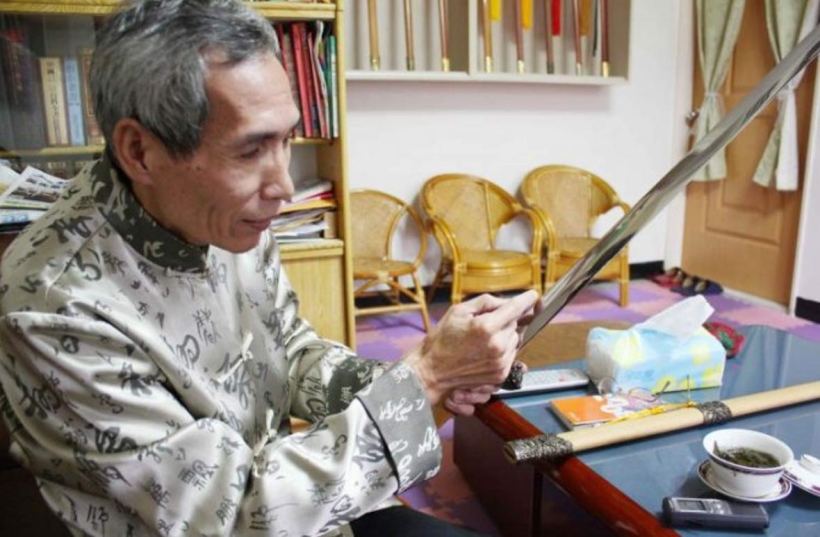
Swordmaker, Instructed in Dreams, Recreates Infallible Sacred Swords of Legend | Ancient Origins

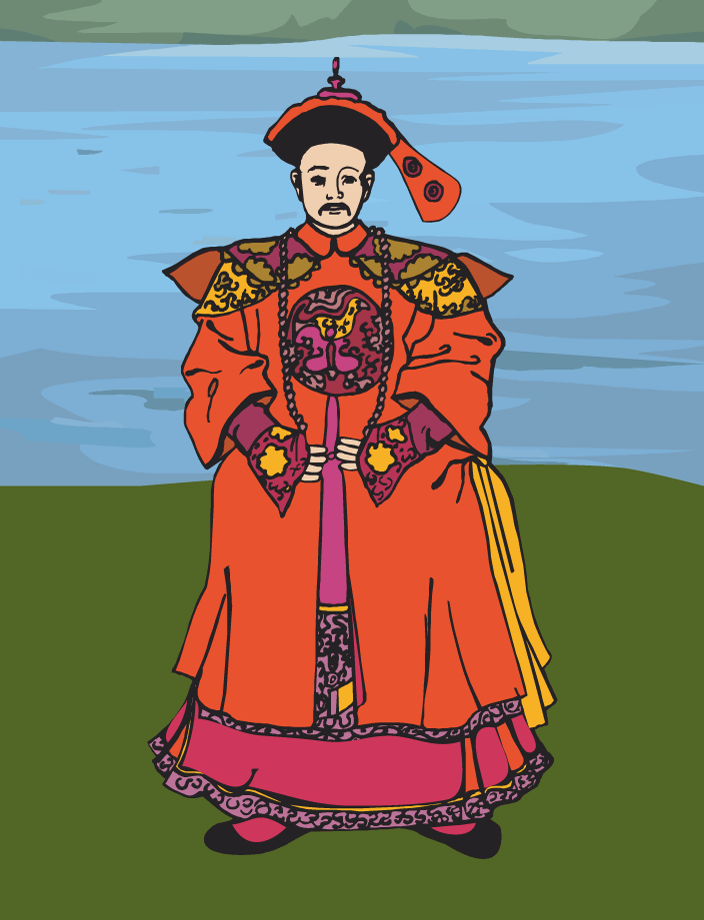
Chinese legends tell of a kind of infallible sacred sword, forged from meteorite material, that gave its bearer an apparently supernatural advantage over his opponents. The creation of such a sword seems beyond the capabilities of ancient technology, but modern sword-maker Chen Shih-Tsung has revived the art successfully—guided, he says, by instructions imparted to him by celestial beings.

Source: Swordmaker, Instructed in Dreams, Recreates Infallible Sacred Swords of Legend | Ancient Origins

Meditation Tips

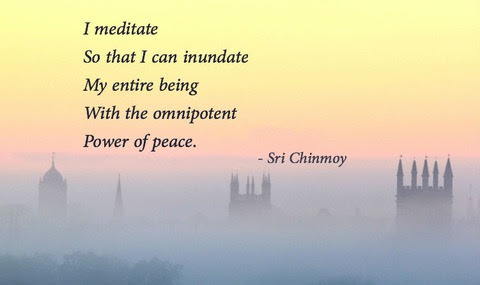
i-meditate

Do you think that you could never achieve a deep, relaxing state of mind?

Believe it or not, meditating really is not that difficult. Just look at it from a simpler point of view for a moment.

There are a lot of people who are interested in meditating because they have heard of the benefits that it can bring into their lives. However, many of the same people refrain from actually meditating, or give up very shortly after trying it, because they feel as if it is too hard or it is something they are not capable of doing.

Believe it or not, meditating really is not that difficult. I would like you to look at things from a simpler point of view for a moment.


Among various possible tips for self-improvement I believe that meditation is a very important one. Often when people hear the word meditation they tend to be a little bit scared. They imagine something somewhat mysterious or religious. They believe it is a very complicated technique that will required them a consequent investment in time and money before they can start getting some hypothetical benefits. Or maybe, if you are like me, you have problems with your knees that prevent you from sitting cross-legged. In this short article I would like to give you simple meditation instructions to get you started.


Meditation Made Simple
Let’s look at what is actually meditation. In a nutshell, meditation is a practice where you focus on your breath while trying not to think about anything. That’s it!


Meditation:


• is not a religious act in itself
• doesn’t required any materials to get started
• doesn’t require you to be a contortionist
• doesn’t have to take a lot of your time


I have only been practicing meditation on a daily basis for several months but I really feel that it helped me become more calm, more at peace and more focused. Meditation is also a great way to enhance well-being in general.


I’m not an expert and it is exactly what I want to tell you: you don’t need to be an expert! If you believe that you need to take meditation classes or read books to get started, only those of you who are really motivated will give it a shot. Since meditation practiced on a daily basis is beneficial for everyone, as a self-improvement advice I would encourage everyone to adopt that new habit.


When you will start meditating, you will realize how hard it is to stop thinking. Your mind won’t stop. Sometimes, people told me: “I can’t even do meditation for 3 minutes, my thoughts are all over the place”. It is totally normal. As long as you are trying to control your thoughts the best you can at your current level, you are doing meditation. And I’m convinced you will get benefits from your daily practice. Meditation will help you become more aware of your thoughts and to better deal with your negative thoughts.


Let’s make it very simple to start with, and progressively work on improving the quality of our meditation practice.


Meditation Exercise
I don’t want to give you any excuses not to try meditation. Here is how you can easily get started:


Close your eyes, breath slowly through your nose, focus on your breath while trying to get rid of any thoughts that come to your mind. Do it just for 3 minutes. That’s it! You can sit on a chair or sit on the floor with your legs crossed. Practice every single day for two weeks, then go for 4 minutes, 5 minutes and so on. If possible aim to reach 20 to 30 minutes per day but it is entirely up to you. Some people do more. If you are busy you can do less. Personally, I’m currently meditating 20 minutes every day but plan to meditate more in the near future. Last but not least, be patient! It takes some time before you feel the benefits of meditation.


Theosophy – Esoteric Psychology

matter

Esoteric Psychology.

“Know ye, ye are threefold in nature,
physical, astral and mental in one…

On Earth, man is in bondage,
bound by space and time to the earth plane.
Encircling each planet, a wave of vibration,
binds him to his plane of unfoldment.
Yet within man is the Key to releasement,
within man may freedom be found.”

— Emerald Tablet XV


Image quote: Helena Blavatsky; The Secret Doctrine.

2016 Chinese Horoscopes Prediction | Master Tsai | Chinese Zodiacs Signs Forecast | 2016 Chinese New Year of Red Monkey

2016 Chinese New Year Horoscopes Prediction for 12 Chinese Zodiac Forecast the Year of Monkey, Year of Red Fire Monkey, Forecasts and Predictions

Source: 2016 Chinese Horoscopes Prediction | Master Tsai | Chinese Zodiacs Signs Forecast | 2016 Chinese New Year of Red Monkey

Pranic Healing Online | Learn.Heal.Connect.

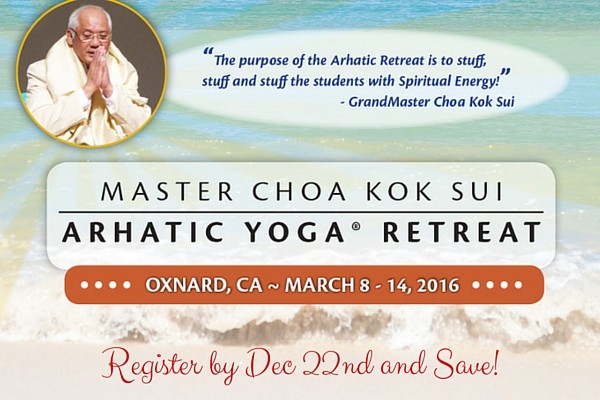
Though Grandmaster Choa Kok Sui passed on in 2007, his legacy lives on through his master-level students.

Master Stephen Co is a senior disciple and personal student of Grandmaster Choa Kok Sui, the founder of PRANIC HEALING®. He and his wife, Daphne, started the first PRANIC HEALING® center outside of the Philippines, the U.S. Pranic Healing Center/American Institute of Asian Studies, LLC, in Chino, California, to promote and teach PRANIC HEALING® the United States.

Source: Pranic Healing Online | Learn.Heal.Connect.

Incredible Shiva Lingas Carvings Emerge from the Shalmala River as Dry Weather Lowers the Water | Ancient Origins

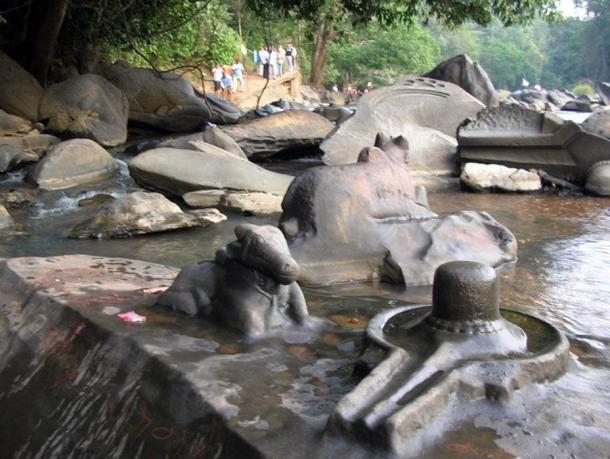
It was said that Shiva’s lingam (phallus) was so impressive that even two other all-powerful gods, Braham and Vishnu, could not find its end. Thousands of rock carvings representing Shiva’s lingam, as well as female sexual symbols, have emerged from a river in Karnataka State because of low water levels. People gather there to worship Shiva in his form as the lingam.

Dry weather has caused a drop in the level of the Shalmala River in Karnataka State, India, revealing thousands of carvings in the rock bed of male and female sexual symbols – linga and yoni – and

#india   #shiva   #god   #worship

Source: Incredible Shiva Lingas Carvings Emerge from the Shalmala River as Dry Weather Lowers the Water | Ancient Origins

Theosophy ~ “Choosing The Tao” – Part 2

TTS-logo

CHOOSING THE TAO – II


The wisest disciples, teachers and sages learn from the Tao all the time. The Tao is not a book. The Tao is not a scripture. The Tao was not given by any one person for the first time to other people. It is everywhere and nowhere. It is what some call God, what others designate as the One Reality, and what still others salute merely by saying “I do not know.” To the extent to which men do not understand the Tao, instead of their choosing the Tao, the Tao seems to use them. A great deal of what is often called choosing is an illusion. No one chooses except by the power of the Tao. No one chooses thoughts except by a self-conscious comprehension of what is behind the energy of the Tao. No one can be a knower of the Tao, a true Taoist, without becoming a skilled craftsman of Akasa, a silent magician of the Alkahest, a self-conscious channel for the universal divine flame which, in its boundless, colourless, intangible, soundless and inexhaustible energy, may be used only for the sake of all. Only these universal, deathless, eternal verities may become living germs in the emerging matrix of the awakening mind of the age of Aquarius, a current of consciousness that flows into the future.

Following the ever-young example of the Ancient of Days, each and every person today may focus his mind upon the eternal relevance of the ever-flexible and never-caring Tao:

Under heaven all can see beauty as beauty only because there is ugliness.
All can know good as good only because there is evil.

Tao Teh Ching, 2

How can one be flexible if one is fiercely attached to any external forms of good and of evil? There is the same mutual relation between existence and non-existence in respect to creation as there is between striving and spontaneity, effort and ease, in respect to accomplishment. What is easy for one person is hard for another; what is easy for the same person at any time was hard once; and what is difficult now might become easy in the future. Fumbling with the strings of a musical instrument may be rather painful in the long period of apprenticeship, yet all can find supreme enjoyment in listening at any time to a great master of music who plays his enchanted instrument with lightness and versatile adeptship. The seeker who is patient and persistent, like the good gardener who plants the seed but does not examine it daily to gauge its growth, does no more than is needed, giving Nature time to do its own alchemical work.

How, then, can one contrive a hard-and-fast distinction between effort and ease in the many modes of human striving? Furthermore, is there any reason for preference between one person and another in human excellence? Not from the serene standpoint of the Sage. Those who enjoy good music do not feel threatened every time they listen to a great musician, but merge their selves into the motion of the music. There is that which every human being knows and yet forgets, though if one chooses one may remind oneself. A person always knows that what helped one to walk as a child may also help one to maintain oneself in a world of turmoil. Through the archetypal logic of non-action in activity, he can move away from the turba and the tumult of the crowd, and discover an inner peace through deliberate but casual control in the midst of spontaneous activity. The same mutual relation exists between long and short in respect to form, as between high and low in respect to pitch. What seem to be precipitous mountains in one country might be seen as hilly ranges in a distant land. The Alps are unquestionably beautiful, but, as Byron suggested, there are beauties in Derbyshire which are no less enjoyable than the Alps. The Sierras may be more inviting than the forbidding Himalayas. Each can make the most of what he finds where he can find it, between treble and bass on the scale of musical pitch, between before and after in the contest of priorities. There are no seniors and juniors among human souls – all alike are pilgrims on multitudinous pathways to enlightenment. All souls have participated variously in the immense pilgrimage extending through and beyond successive millennia. The Voice of the Silence teaches: “Such are the falls and rises of the Karmic Law in nature.” He who was a prince is a beggar now, the Buddha taught, and he who is exalted today may tomorrow “wander earth in rags”.

In the eyes of the Sage, all temporal distinctions are absurd not only because they are foreshortened in time but also because they pretend to an ultimacy which cannot be upheld except by coercion. No one who has not conquered the will to coerce could freely practise the art of Wu-Wei even in everyday encounters. The Tao is the ontological basis of the archetypal teaching of non-violence, non-retaliation and true benevolence. Nature is not partial, partisan or sentimentally benevolent. This is known to the Sage, who fuses wisdom in action with compassion.

Heaven and earth are ruthless;
They see the ten thousand things as dummies.
The wise are ruthless;
They see the people as dummies.

Tao Teh Ching, 5

From a superficial standpoint, it looks as if God is the chief conspirator, but there is no arbitrary theism in the vision of Tao. The inscrutable mathematics of cosmic balance needs nothing like what Hegel called the cunning of history to upset the best-laid plans of mice and men. From a broader perspective, it seems as if what appears bad in the beginning turns out in time for the better, even for the best. The Good Law ever moves inexorably towards righteousness. The Sage is not benevolent to personal claims. He treats all with a light inexorability. From an external locus in the realm of changing appearances, nothing that is true could ever be said or could even be found. It is only by the inner light that a person becomes a disciple of the Tao, and in the progress of time may even become a friend of the Tao with the help of those who are the Masters of the Tao.

In China reverence for the primordial Divine Instructors of mankind eventually degenerated into empty rituals of ancestor worship. As with ancient Chinese civilization, so also with classical Indian culture there was a progressive diffusion and inward loss of meaning. In ancient India there was a solemn kindling of the sacrificial fire, and every sacred word and ritual act were offered at the altar of the Prajapatis, the Kumaras, the Rishis, the Agnishwatha Pitris or Solar Fathers. In time such practices were reduced to ritual propitiation of the dead for fear of consequences. The weaker souls who participated in that ritualization in China and India are no different from those who incarnated in European and American bodies. Immigrants came in succeeding waves from different parts of the world to the American continent not only for the sake of their own future, but also, under Karma, as pathfinders of the future of mankind. That which caused violence and deception in the past must return, but cyclical justice will also bring back gentleness and truth and beauty in the nobler ancestors. No human being is without ancestors of whom one could be proud. Over a thousand years every man and woman has had a million ancestors. Nothing that was accomplished by a million people over a thousand years is irrelevant to any person. Everyone has a lineage that ultimately traces one back to the Divine Instructors of the human family. Everyone has kinship to those who are the Friends of all beings and who forever abide as Silent Watchers in the night, guarding orphan humanity.

Hermes, November 1978
Raghavan Iyer

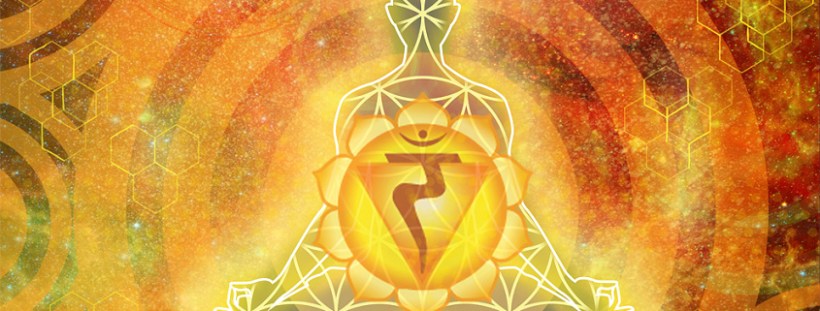
8 Practical Ways To Strengthen Your Solar Plexus | Spirit Science

The strength of our solar plexus, also known as the Manipura Chakra (‘Lustrous Gem’), is of vital importance in our daily lives. This area of the body is the basis of our confidence and decision making skills. A balanced Manipura Chakra will lead to more confidence, better digestion, and overall better quality of life. On…

Source: 8 Practical Ways To Strengthen Your Solar Plexus | Spirit Science

The Sanctuarium ~ Lessons in Esoterica ~ The Vitruvian Man

occult-anatomy-big

The image below depicts the occult anatomy of the human body, as projected on the Vitruvian Man (originally done, obviously, by Leonardo da Vinci). It unifies the Tree of Life, the Yogic Chakras, and information from Kundalini Yoga, Tantra, Astrology, Tarot and Alchemy.

Myths About Meditation

What is Meditation?Meditation is an art of realizing and mastering self. Meditation does not mean the art of obtaining something from outside as it is an art of unlocking your energy from within. It is an art and it can be learn by any person. Some person does meditation for few years and after that they give up it as they were expecting miracles which is a wrong way of looking at meditation. Meditation allow you to enjoy life. It is not the path of running away from family life as it is an art of living a family and social life at it’s best. Now lets look at the first myth.

Source: Myths About Meditation

Today’s Inspiration … from the Upanishads

“A man becomes good by good works, evil by evil.”  Brihadaranyaka Upanishad. 3. 2.13

Brihadaranyaka Upanishad 4:4.3-7 continues  giving more detailed concepts and goes on to explain the concept as follows:

“When a caterpillar has come to the end of a blade of grass, it reaches out to another blade, and draws itself over to it. In the same way the soul, having coming to the end of one life, reaches out to another body, and draws itself over to it.

“Just as a goldsmith, having taken a piece of gold, makes another form, new and more beautiful, so also, verily the Atman having cast off this body and having put away Avidya or ignorance, makes another new and more beautiful form” (Brihadaranyaka Upanishad).

“As people act, so they become. If their actions are good, they become good; if their actions are bad, they become bad. Good deeds purify those who perform them; bad deeds pollute those who perform them.

“Thus we may say that we are what we desire. Our will springs from our desires; our actions spring from our will; and what we are, springs from our actions. We may conclude, therefore, that the state of our desires at the time of death determines our next life; we return to earth in order to satisfy those desires.

“Consider those who in the course of many lives on earth have become free from desire. By this we mean that all their desires have found fulfillment within the soul itself. They do not die as others do. Since they understand God, they merge with God.

‘When all the desires clinging to the heart fall away, the mortal becomes immortal. When all the knots of desire strangling the heart are loosened, liberation occurs.

“As the snake discards its skin, leaving it lifeless on an anthill, so the soul free from desire discards the body, and unites with God who is eternal life and boundless light.”

http://amichai.me/wp-content/uploads/2012/01/images1.jpeg

Katha Upanishad 6.1-5, 10-11, 13-16

“The tree of eternity has its roots in the sky, and its branches reach down to earth. It is God; it is the immortal soul.

The whole universe comes from God; his energy burns like fire, and his power reverberates like thunder, in every part of the universe. In honor of God the sun shines, the clouds rain, and the winds blow. Death itself goes about its business in fear of God.

If you fail to see God in the present life, then after death you must take on another body; if you see God, then you will break free from the cycle of birth and death. God can be seen, like the reflection in a mirror, in a pure heart.

When the senses are calm and the mind is motionless, then your heart is pure; you have reached the highest state of consciousness, in which you are unified with God. If this state of consciousness is firm and secure, so it can never be broken, then you are free.
To calm the senses and still the mind, you must abandon the self. You must renounce ‘I’ and ‘me’ and ‘mine’. You must suppress every desire that surges around the heart. You must untie every knot of attachment.

A hundred and one lights radiate from the heart. One of them shines upwards to the crown of the head. This points the way to immortality. Every other light points to death.”

“Like corn, does a mortal ripen; like corn, does he spring to life again” (Kathopanishad).
In Observance of the Muslim time called The Hajj (Sept. 22-26, 2015)

Hajj-395

Hajj – journey of a lifetime

The Hajj is a religious pilgrimage to Mecca that a Muslim must make at least once in their lifetime. Read the about the experiences of Birmingham Muslims who have taken this trip of a lifetime.  The Hajj is a very important part of the Islamic faith. Every year around 2 million Muslims converge on Mecca in Saudi Arabia. Dressed in white sheets the Pilgrims perform acts of worship and reaffirm their faith.

Difference Between Shinto and Buddhism

shinto_vs_buddhism_s

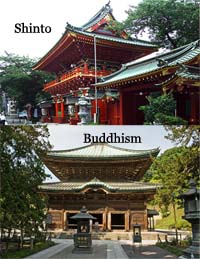
Shinto vs. Buddhism

Shinto or kami-no-michi (the original traditional term) is the natural spiritual cult of Japan extensively followed by the Japanese people. Shinto or literally meaning the way of the Gods was originally adopted from the ancient Chinese inscriptions. The very word Shinto is the combination of the two terms, “shin” or ‘shen’ meaning gods or spirits and “tō” or “do” denoting an idealistic path of study or path of existence. On the other hand, Buddhism is a tradition envisaged as the ultimate path of salvation which is to be achieved through an imminent approach into the absolute nature of reality and existence.

Shinto essentially integrates the various religious practices consequent of the diverse regional and local prehistoric traditions that were practiced in ancient Japan. On the other hand Buddhism takes within its purview many diverse traditions, religious practices and spiritual beliefs which are majorly based on the teachings of the Siddhartha Gautama Buddha.

Shinto is a unique religion where the ritual practices, actions and rites are a lot more significant than the words or preaching. On the other hand, Buddhism is a religion that does not recognize many religious rites or practices. It primarily focuses on the relation and study of the words and philosophies of the Buddha and the paths of existence as showed by him.

Shinto exemplifies the worship of the abstract forces of nature, the ancestors, nature, polytheism, and animism. The central focus remains on ritual purity which revolves around the honoring and celebration of the existence of Kami which is the ultimate spirit of essence. In a differing way, the foundation of Buddhism lies on the performing of altruism and following the paths of ethical conduct. Some of the common practices of Buddhism are cultivation of wisdom through meditation and renunciation, invocating the bodhisattvas and studying the scriptures.

Buddhism has two main branches termed as Mahayana and Theravada. Mahayana includes the traditions of Pure Land, Nichiren Buddhism, Zen, Shingon, Tibetan Buddhism, Shinnyo-en and Tendai whereas Theravada centers on the thoughts from the earliest surviving School of Elders. But Shinto has no branches and exists as one single institution of ancient Japanese religion.

Summary:

1. Shinto is an ancient religion from Japan whereas Buddhism is a tradition envisaged in India by Siddhartha Gautama.
2. Shinto originated from ancient Chinese inscriptions, whereas Buddhism has its inception in the thoughts and teachings of Gautama Buddha.
3. Shinto lays importance to religious actions and rites rather than words and preaching whereas the foundation of Buddhism is the words and preaching of Buddha. Buddhism focuses on an altruistic life that leads to salvation.
4. Buddhism has religious branches in the form of Theravada and Mahayana whereas Shinto has no such religious sects.
5. Shinto worships the forces of nature, polytheism and animism whereas Buddhism is all about following an ethical code of conduct in one’s life and practice meditation and renunciation.


Happy Birthday, Ganesha Ji!!

The most important day of the year to clear obstacles in your life is Ganesha’s birthday. This is a very special time that happens once a year, when Ganesha will take on your karma, and dissolve all obstacles that lie in your future. All rituals and prayers to Ganesha become tremendously magnified during this time, and we have put together 3 packages to help you take advantage of this special power time.

11Ganesha

The elephant head of Ganesha has a tremendous amount of importance because the elephant is associated with Supreme Intelligence. That’s why Ganesha is represented as the Isha, the Lord or the General of the Ganas (Angels).

Ganas are Super-intelligent beings. These are the soldiers in Heaven and they have a tremendous amount of psychic powers. They don’t fight wars like we do with nuclear weapons. They do it with psychically driven weapons.

He is the head of all these soldiers with psychic powers, so you can imagine the kind of intelligence that Ganesha possesses.

The worship of Ganesha represents acquisition of psychic powers and Supreme Intelligence.

Why the elephant head? The elephant is the most intelligent animal according to Indian scriptures and also according to Aristotle. He said that no animal is more intelligent or smarter in wit than the elephant. Aristotle said this long before scientists found out the importance of the elephant brain compared with the human brain like is happening now.

Worshiping Ganesha on his birthday every year has tremendous significance for everyone wanting to develop their intelligence.

Ganesha, Custodian of Intelligence, can give you shortcuts so that you don’t have to grope in the darkness.

That is what Ganesha does.

ganesha_tattoo

Never Underestimate the Power of Divine Archetypes like Ganesha!

Archetypes are able to help us in our day to day life. They have a higher intelligence. They can inform us and warn us of dangers ahead of time and give us a better intelligence. Ancient Scientists of different cultures understood Archetypes and used them in their daily lives.

Obstacles Are Standing Between You & Success

Obstacles are the karmic road blocks we experience in life, interwoven into the very fabric of our destiny. They are responsible for the hardships we face, especially delays, and setbacks, as well as frustration and failure. Ultimately, they block success, both materially and spiritually, and if they are not removed, they make it nearly impossible to reap the fruits of your efforts no matter how hard you try, or how well-intentioned you may be. The Archetype Ganesha, however, has the solution.

The Archetype Ganesha is a universal one that can be found in many cultures all over the world. He is sought by regular people, Mystics, and even by the Gods for his unique ability to both foresee and remove all known and unknown obstacles that lie in the future. Ganesha has the power to take your karma and transform it to ensure an utterly successful and prosperous future. He can give you the ability to enjoy effortless success and unimpeded growth in all areas of your life.

Ganesha_info

Bruce Lee On The Notion of Strength and Suppleness As Complementary, Rather Than Contradictory Forces

YinYang2

Just as an object needs a subject, the person in attack is not taking an independent position but is acting as an assistant. After all, you need your opponent to complete the other half of a whole.

The gentleness/firmness is one inseparable force of one unceasing interplay of movement. If a person riding a bicycle wishes to go somewhere, he cannot pump on both [of] the pedals at the same time or not pump on them at all. In order to move forward he has to pump on one pedal and release the other. So the movement of going forward requires this “oneness” of pumping and releasing, and vice versa, each being the cause of the other.

— Sifu Bruce Lee

Call Me By My True Names ~ by Thich Naht Hahn

Fearless_Larry Andreasen

Do not say that I’ll depart tomorrow
because even today I still arrive.

Look deeply:  I arrive in every second
to be a bud on a spring branch,
to be a tiny bird, with wings still fragile,
learning to sing in my new nest,
to be a caterpillar in the heart of a flower,
to be a jewel hiding itself in a stone.

I still arrive, in order to laugh and to cry,
in order to fear and to hope.
The rhythm of my heart is the birth and
death of all that are alive.

I am the mayfly metamorphosing on the surface of the river,
and I am the bird which, when spring comes, arrives in time
to eat the mayfly.

I am the frog swimming happily in the clear pond,
and I am also the grass-snake who, approaching in silence,
feeds itself on the frog.

I am the child in Uganda, all skin and bones,
my legs as thin as bamboo sticks,
and I am the arms merchant, selling deadly weapons to Uganda.

I am the twelve-year-old girl, refugee on a small boat,
who throws herself into the ocean after being raped by a sea pirate,
and I am the pirate, my heart not yet capable of seeing and loving.

I am a member of the politburo, with plenty of power in my hands,
and I am the man who has to pay his “debt of blood” to, my people,
dying slowly in a forced labor camp.

My joy is like spring, so warm it makes flowers bloom in all walks of life.
My pain is like a river of tears, so full it fills the four oceans.

Please call me by my true names,
so I can hear all my cries and laughs at once,
so I can see that my joy and pain are one.

Please call me by my true names,
so I can wake up,
and so the door of my heart can be left open,
the door of compassion.

Daily Words of the Buddha for July 05, 2015

sunset_couple_Taisen LinUdakañhi nayanti nettikā;
usukārā namayanti tejanaṃ;
dāruṃ namayanti tacchakā;
attānaṃ damayanti paṇḍitā.

Irrigators regulate the rivers;
fletchers straighten the arrow shaft;
carpenters shape the wood;
the wise control themselves.
Dhammapada 6.80

The Dhammapada: The Buddha’s Path of Wisdom,
translated from the Pali by Acharya Buddharakkhita


Daily Words of the Buddha for June 28, 2015

430730_280950681978387_1948318713_nUṭṭhānenappamādena,
saṃyamena damena ca,
dīpaṃ kayirātha medhāvī
yaṃ ogho nābhikīrati.

By effort and heedfulness,
discipline and self-mastery,
let the wise one make for oneself
an island which no flood can overwhelm.


Dhammapada 2.25

The Dhammapada: The Buddha’s Path of Wisdom,
translated from the Pali by Acharya Buddharakkhita

Daily Words of the Buddha for June 26, 2015

1jun13
Saddhīdha vittaṃ purisassa seṭṭhaṃ
Dhammo suciṇṇo sukhamāvahāti.
Saccaṃ have sādutaraṃ rasānaṃ.
Paññājīviṃ jīvitamāhu seṭṭhaṃ.

Conviction is a person’s highest wealth.
Dhamma, when well-practiced, brings bliss.
Truth is the highest of tastes.
Living with discernment, one’s life is called best.
Sutta Nipāta 1.184
Translated from the Pali by Thanissaro Bhikkhu