
maddava — mild, gentle, soft
maddava — mild, gentle, soft

Yassa selūpamaṃ cittaṃ, ṭhitaṃ nānupakampati,
virattaṃ rajanīyesu,
kopaneyye na kuppati:
Yassevaṃ bhāvitaṃ cittaṃ,
kuto taṃ dukkhamessatī?
Whose mind is like rock, steady, unmoved,
dispassionate for things that spark passion,
unangered by things that spark anger:
When one’s mind is developed like this,
from where can there come suffering & stress?
Udāna 4.34
Translated from the Pali by Thanissaro Bhikkhu

I trust my inner light and intuition to guide me.

ajjava — straight, upright, direct, honest

Pāpañce puriso kayirā,
na naṃ kayirā punappunaṃ.
Na tamhi chandaṃ kayirātha,
dukkho pāpassa uccayo.
Should a person commit evil,
let one not do it again and again.
Let one not find pleasure therein,
for painful is the accumulation of evil.
Dhammapada 9.117
The Dhammapada: The Buddha’s Path of Wisdom,
translated from the Pali by Acharya Buddharakkhita

The heart is also the first organ that is being formed in the womb. The rest comes later.
Recently, Neurophysicists have been astonished to discover that the Heart is more an organ of intelligence, than (merely) the bodies’ main pumping station. More than half of the Heart is actually composed of neurons of the very same nature as those that make up the cerebral system. Joseph Chilton-Pearce, author of The Biology of Transcendence, calls it “the major biological apparatus within us and the seat of our greatest intelligence.”
The Heart is also the source of the body’s strongest electromagnetic field. Each heart cell is unique in that it not only pulsates in synchrony with all the other heart cells, but also produces an electromagnetic signal that radiates out beyond the cell. An EEG that measures brain waves shows that the electromagnetic signals from the heart are so much stronger than brain waves, that a reading of the heart’s frequency spectrum can be taken from three feet away from the body…without placing electrodes on it!
The Heart’s electromagnetic frequency arcs out from the Heart and back in the form of a torus field. The axis of this Heart torus extends from the pelvic floor to the top of the skull, and the whole field is holographic, meaning that information about it can be read from each and every point in the torus.
The Hearts’ torus electromagnetic field is not the only source that emits this type of electromagnetic field. Every atom emits the same torus field. The Earth is also at the center of a torus, so is the solar system and even our galaxy…and all are holographic. Scientists believe there is a good possibility that there is only one universal torus encompassing an infinite number of interacting, holographic tori within its spectrum. Because electromagnetic torus fields are holographic, it is more than likely that the sum total of our Universe is present within the frequency spectrum of a single torus.
This means that each one of us is connected to the entire Universe and as such, can access all the information within it at any given moment. When we get quiet and access what we hold in our Hearts, we are literally connecting to the limitless supply and Wisdom of the Universe, thereby enabling what we perceive as “miracles” to enter into our lives.
When we disconnect and shut down the Heart’s innate wisdom of Love-based thinking, the ego-based intellect takes over and operates independently of the Heart, and we revert to a survival mentality based on fear, greed, power, and control. In this way, we come to believe that we are separate, our perception of life shifts into one of limitation and scarcity, and one in which we must fight in order to survive. This amazing organ, that we often time ignore, neglect and build walls around, is where we can find our strength, our faith, our courage and our compassion, enabling our higher emotional intelligence that can, if we allow it, guide us through our lives.
We must now switch the gears out of the fear-based mental state that we have been taught to believe in, and move into Heart Centered living. For this transformation to take place, one must learn to meditate, “go into your Heart” and access the inner wisdom of the Universe. It is the only way, it is THE WAY. As each one of us begins this quiet revolution of living from the Heart, we will begin to see it reflected in our lives and in our World. This is how each one of us will create change in the world, create Peace, create Harmony and Balance, and in this way, will we all create the New World Paradigm of Heaven on Earth.
Interview with the priest John Shelby Spong (3 mins.) — INTERESTING PERSPECTIVE to consider.

Aqua Aura is quartz crystal that has been treated with pure gold solution and when electrical current is applied in a special machine, fuses the gold molecules to the surface of the quartz; taking 12 hours to heat the quartz to 1600F while setting a vacuum equal to 2 earth atmospheres, then letting chemically purified gold vapors into the chamber when the temperature and vacuum are correct. This bonds the gold to the lattice of the crystal, forming a permanent bond to the surface of the quartz and giving it an electric blue color.
The process was awarded the United States Patent No. 6997014 on Feb 14, 2006. The process was invented by Steven F. Starcke, Ronald H. Kearnes and Keven E. Bennet. While the patent might have been given in 2006, this material has been produced by this method for dozens of years prior.
It is the exact same process that is used to coat steel balls to be used as bearings. Additional elements can be used to treat quartz, such as indium, titanium and copper. The coloring of this treatment is only on the surface, so all faceted and polished material you find has been treated after it has been made originally. Often, quartz of lesser quality, with fractures and weak spots, will break apart during the coating process. A little known fact is that the Aqua aura treatment can be used to reveal twinning in quartz crystals that would otherwise go undetected.
Mystical Properties:
Metaphysically Aqua Aura has the qualities of both quartz and gold. Quartz has a harmonizing effect and aligns the chakra system. Gold imparts a more assertive energy to the wearer and the blue color helps stimulate the throat chakra, improving communications abilities through speaking.
Aqua Aura is an outstanding tool for people wishing to increase their psychic skills and awareness, it assists with meditation, telepathy, and psychic healing by bringing more intense energy to the effort. It is particularly helpful for distance spiritual energy healing because of its ability to send energy.
Aqua Aura can enhance communications of all kinds. It can also assist in conscious awareness of one’s own motivations and patterns. Aqua Aura is said to attract success and prosperity, even possibly wealth, and it is also used for protection from psychic attacks.
This wonderful quartz can assist one in plumbing one’s emotional depths and heights while simultaneously retaining inner peace. It can also be an aid to those who wish to become conscious channels for spiritual wisdom, clearing and opening the pathways of inter dimensional communication.
More Healing Information:
Healing Properties:
The gemstone Aqua Aura maintains the wonderful healing and transmitting properties of clear quartz in addition to assisting one in channeling the higher energies of the angels.
Physically Aqua Aura is reputed to help with throat problems, stress-related illness, immune system deficiencies, and the thymus gland.
Aqua Aura Quartz has a very high and intense vibration. It has been used to activate the energy of other minerals and gemstones for healing work, and can be a potent stone when used in body layouts for activation of the Chakras. It can be success fully applied to smooth and heal the Auric field, and to release negativity from one’s emotional, physical, intellectual and spiritual bodies.
Magical Properties:
Energy: Both projective and receptive
Element: Fire and Water
Powers: Protection, healing, psychics and power
Wearing Aqua Aura Quartz is said to help one to shine with one’s inner beauty, to attract wealth and success, to bring forth esoteric wisdom, to relieve depression as well as anxiety, and to assist in creating an aura of peace and well being in oneself and one’s surroundings. It is a stone of spiritual elevation, which can serve to help raise the vibration of humanity.
Zodiac:
Associations: Sun and Moon
Stone of Leo, Gemini and Capricorn this stone contains positive energy that removes mental blocks and promotes a sense of justice.
Chakra Classification:
Although Crystal Quartz has an enlightening effect on all the chakras, Aqua Aura is highly stimulating to the 5th, or Throat Chakra, enhancing one’s ability to communicate inner truth, at it also has a soothing and relaxing effect on the emotional body.
It can be used to soothe anger, cool feverishness, and release stress, as it is strongly connected to the element of water, and it is therefore a stones for enhancing one’s access to the truth of the emotions and the portals of Spirit which are accessed through the emotions.

When people unite in benevolent connection, they align themselves with the force of bestowal that sustains nature and miraculous results occur.

The past has no power and no hold over me anymore.
obhāsa — shine, splendour, light, lustre, effulgence

Yo ca vassasataṃ jīve
apassaṃ udayabbayaṃ
ekāhaṃ jīvitaṃ seyyo
passato udayabbayaṃ.
Better it is to live one day
seeing the rise and fall of things
than to live a hundred years
without ever seeing the rise and fall of things.
Dhammapada 8.113
The Dhammapada: The Buddha’s Path of Wisdom,
translated from the Pali by Acharya Buddharakkhita

Yo ca vassasataṃ jīve
dussīlo asamāhito
ekāhaṃ jīvitaṃ seyyo
sīlavantassa jhāyino.
Better it is to live
one day virtuous and meditative
than to live a hundred years
immoral and uncontrolled.
Dhammapada 8.110
The Dhammapada: The Buddha’s Path of Wisdom,
translated from the Pali by Acharya Buddharakkhita

Put aside your old ways of using your eyes and ears and nose, tongue, body, and mind to focus on issues outside there in the world, to get your knowledge about the world, to figure out how to gain what you want out of the world — and of course getting complacent and careless when you get what you want, and upset when you don’t, and trying to find new ways of getting it. Now we want to use our eyes, ears, nose, tongue, body, and mind for other purposes, just to see the processes of the senses as they happen, in and of themselves. Look at them in a way that highlights the movements of the mind, how the mind makes a choice, and how it enforces that choice, how it justifies that choice to itself.
All these processes are going on all the time, but we usually don’t look at them because our attention is focused somewhere else far away. So stay right here at the breath, because this is a great place to observe all these other things. The Buddha makes a comparison to six kinds of animals. If you tie them all to leashes and tie the leashes together, the animals will all pull in their various directions to feed. The crocodile will want to go down to feed in the river, the monkey will want to go climb up to feed in the tree, the hyena will want to go to feed in a charnel ground, and so on. Depending on which animal is the strongest, the others get dragged along.
But if you tie them all to an immovable post, then no matter how hard they pull, they all end up staying right there at the post. The post here is mindfulness immersed in the body. The prime way of immersing mindfulness in the body is to be mindful of the breath. When you stay with the breath, you can detect the pull that goes out the eyes, ears, nose, tongue, body, or mind to past and future, to your likes and dislikes. But you don’t have to give in to that pull because you’ve got a place where you can stay grounded and secure. […]
These things are all here to be observed. They’re all happening all the time. But to see them we have to change our focus. To change our focus requires a change of heart, telling ourselves that this really is important, much more important than things outside. That’s what conviction is all about. Appropriate attention is the change of focus; conviction, the change of heart. You make up your mind — and your heart — that this is an important issue that’s got to be resolved, and this is the way to do it.
——
Reflection:
What does using our senses to see the process of the senses mean to you?
Can you share an experience where staying with your breath allowed you to be more aware of where you were being pulled, and to act with true freedom?
How can we get immovable in ‘mindfulness immersed in the body’?

I know that peaceful sleep awaits me in dreamland.

Mindfulness is the aware, balanced acceptance of the present experience. It isn’t more complicated than that. It is opening to, or receiving the present moment, pleasant or unpleasant, just as it is, without either clinging to it or rejecting it.
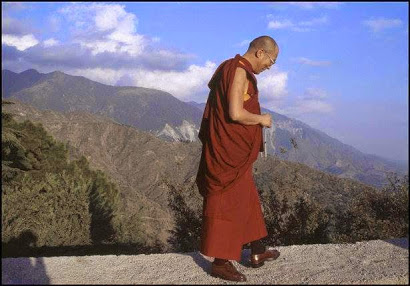
I pray for all of us, oppressor and friend,
that together we may succeed in building a better world
through human understanding and love,
and that in doing so we may reduce
the pain and suffering of all sentient beings.
Be kind whenever possible. It is always possible.
~ Dalai Lama

niraggaḷa — unobstructed, free
Sabbattha ve sappurisā cajanti.
Na kāmakāmā lapayanti santo.
Sukhena phuṭṭhā atha vā dukhena
na uccāvacaṃ paṇḍitā dassayanti.
The good renounce (attachment for) everything.
The virtuous do not prattle with a yearning for pleasures.
The wise show no elation or depression
when touched by happiness or sorrow.
Dhammapada 6.83
The Dhammapada: The Buddha’s Path of Wisdom,
translated from the Pali by Acharya Buddharakkhita

Delish and one of my summer favs! As a Veggie, I would simply substitute the pork with a protein substitute, such as Tempeh, Seitan or seasoned Tofu.

These wraps are a really nice end to a hot day. Simple, filling and refreshing.
Teriyaki Pork Lettuce Wraps
1 pound boneless country style pork spare ribs
2 tablespoons sesame oil
a little seasoning salt and pepper
1 cup teriyaki sauce (recipe below)
romaine or butter lettuce leaves, whole
1 cup cilantro leaves, chopped
2 carrots, peeled and grated
3 Tbsp Mae Ploy Sweet Chili Sauce
1 sheet rice sticks pasta
¼ cup chopped peanuts
In a large bowl, soak rice sticks in water (filtered if your water quality is poor). In a small bowl, stir grated carrot together with Mae Ploy Sauce. Once rice sticks have softened, transfer to colander and drain completely.


Heat a large skillet to medium heat. Rinse pork ribs and sprinkle with seasoning salt and pepper. Heat sesame oil in pan and cook pork, 3-5 minutes per side, until brown. Pour Teriyaki…
View original post 209 more words

Inner peace begins the moment you choose
not to allow another person or event to control your emotions.
Arielle Ford woke up one year into her whirlwind marriage and realised something … Relationships are hard … But …
… we can learn to love our imperfect relationships, not despite the annoyances, but also because of them.
Sick of your partner not picking up his socks? Of always having to fix her car? Of listening to his lame jokes?
In this downright amazing Awesomeness Fest talk, best-selling author Arielle Ford shares the ancient Japanese aesthetic “Wabi Sabi” and how you can apply it to your relationship to turn what drives you nuts into a reminder of love.
Learn how to treasure the cracks, the flaws, the imperfections in the people that you love …

Every flower is a soul blossoming in nature.
 Questions are good, and show you’re alive and thinking. But you’re not going to get the full picture by pecking like a pigeon at crumbs on the sidewalk.
The only way to comprehend what Truth is being said is by a consistent schedule of study and a good teacher.

Giving up is easy and always an option so let us delay it for another day.
Selo yathā ekaghano vātena na samīrati,
evaṃ nindāpasaṃsāsu na samiñjanti paṇḍitā.
Just as a solid rock is not shaken by the storm,
even so the wise are not affected by praise or blame.
Dhammapada 6.81
The Dhammapada: The Buddha’s Path of Wisdom,
translated from the Pali by Acharya Buddharakkhita

Transform your mornings from a hectic routine of chaos,
into a tranquil time for preparing to face the day.
I have a glass of water, start the coffee, then meditate. Then I enjoy the coffee, a good book, and the quiet before the dust and din and steam of the day begins. Then I write.
This is my Lovely Morning, and I get an inordinate amount of pleasure from it.
It wasn’t always this way: I used to wake later, rush through a grumpy routine before diving into email and work and errands and meetings. It was frenetic and dreadful, but that was my life, and I didn’t think it would change.
I was wrong. I’ve changed my mornings for the better, with a few simple ideas.
I’ll share them with you here, and if you begin to enjoy the peace of your mornings more, send a smile in my general direction.
If your mornings are rushed, the simple solution is to get up a bit earlier. This means going to bed a bit earlier too. Do it gradually, just 10 minutes earlier a week, and you’ll barely notice the change.
By Leo Babauta
“Our first encounter with the term ‘selem,’ [image] of course, is in the narrative of man’s creation … ‘In the image of God He created Him’ (Gen. 1:26-27). The nature of this ‘image,’ though, is not sufficiently clear…The Kabbalists often introduce an additional verse, ‘For in the image man shall walk’ (Ps. 39:7), to show that the ‘selem’ is an integral part of man on earth. What then is the ‘selem’ in their conception. There is a basic assumption that two elements diametrically opposed by nature cannot exist together without some mediating entity. This also goes for the ‘nefesh’ [soul] and body…In Neoplatonic teaching and in ancient religions we find mention of an intermediary astral body; in the Kabbalah, the term ‘selem’ is borrowed to speak of the same idea. Thus we read in the Zohar: ‘When a man begins to consecrate himself before intercourse with his wife with a sacred intention, a holy spirit is aroused above him, composed of both male and female. And the Holy One, blessed be He, directs an emissary who is in charge of human embryos, and assigns to him this particular spirit, and indicates to him the place to which it should be entrusted…When the soul descends in order to enter this world…the holy image stands by it until it goes out into the world. When it does out into the world the image is summoned for it and it accompanies it and grows with it…And man’s days exist through the image, and are dependent on it.’ Thus the ‘image’ accompanies man all the days of his life … The ‘selem,’ then, is sometimes identified with a shadow accompanying man. In that sense, the ‘image’ constitutes the principium individuationis [principle of individuation], the individual and unique element in each person.”
– Moshe Hallamish in “An Introduction to the Kabbalah,” p. 274-275
 There’s a myriad of methods for meditation. Some are easy and some are difficult. All require daily practice to perfect. Here are five of the most popular methods of meditation and what they each bring to the Meditation Table. Here’s why You Should Mix them for Maximum Mindfulness.
Mindfulness, or Spiritual Method:
A most popular method comes from Buddhist meditation practice of Vipassana. It’s all about practicing detachment from each thought and being centered in the “here and now.” It focuses on situational awareness and “in the moment” presence. There is also a focus on communion with the cosmos, which can translate to prayer, but not necessarily. The best way to commune with the universe is to ask questions as opposed to seeking answers. In the mindfulness method, answers are mere side-effects of good questioning.
How to: One can practice mindfulness in any position, even lying down. The key is presence with the present moment, and clear and concise communion with the cosmos.
Zen or Zazen Method:
Also from the Buddhist tradition, this method is all about simply sitting. It is often done for long periods of time. Its focus is mostly on posture and spine alignment with minimal focus on breathing techniques. It is the most monastic of all the methods and is therefore difficult to make progress in. Most monks practice this method while concentrating on a Zen koan or spiritual parable.
How to: The most effective positioning of the body for the practice of Zazen is the stable, symmetrical position of the seated Buddha. Keeping the back straight and centered, pretend a silver thread is pulled taut through your spine and up through your head, connecting to the ceiling.
Kundalini or Transcendental Method:
This method comes from the Vedanta Hinduism tradition and ties into different forms of Yoga practices. It focuses more on breathing patterns than the previous methods, using the power of breathing to launch one into a higher sense of self, or even a transformation of self. The electromagnetic field created by the human body is akin to the electromagnetic field created by the Earth. Transcendental method is all about tapping into the stream of energy naturally created by the relationship between the human body’s energy chakras with the environment’s energy vortexes. The main focus of this method is to ride this rising stream into infinity, to learn what needs to be learned, and then to return to the finite realms with new-knowledge in tow.
How to: Breathing is primary. Positioning is secondary. Relax your body, take three deep breaths; then proceed to take deep breaths and hold them for at least ten seconds each. This allows for the oxygen to cleanse the chakras and then release toxins through exhalation, while increasing kundalini energy.
Fractal Enlightenment| There’s a myriad of methods for meditation. Some are easy and some are difficult. All require daily practice to perfect. Here are five of the most popular methods of meditation and what they each bring to the Meditation Table. Here’s why You Should Mix them for Maximum Mindfulness.
Mindfulness, or Spiritual Method:
A most popular method comes from Buddhist meditation practice of Vipassana. It’s all about practicing detachment from each thought and being centered in the “here and now.” It focuses on situational awareness and “in the moment” presence. There is also a focus on communion with the cosmos, which can translate to prayer, but not necessarily. The best way to commune with the universe is to ask questions as opposed to seeking answers. In the mindfulness method, answers are mere side-effects of good questioning.
How to: One can practice mindfulness in any position, even lying down. The key is presence with the present moment, and clear and concise communion with the cosmos.
– See more at: http://www.spiritscienceandmetaphysics.com/5-meaningful-methods-of-meditation/#sthash.VMrUBuh9.dpuf
Qigong Method or Movement Method:
This method comes from the Taoist tradition. It is all about hyper-focus on breathing techniques and/or bodily movements to cultivate and maintain life energy. This is the most philosophical of the methods, deriving most of its techniques from martial arts and meditative healing methods. It focuses on moving Qi (life force) through the body through focused breathing, mental techniques, and precise movements. This method is all about the balance and equilibrium of both inner and outer forces.
How to: No matter what Qi exercise you’re doing, imagine the Qi moving through your body as you breathe in an out. As you inhale through your nose, imagine the Qi moving through your body and down to your Lower Dantian, or naval area. As you exhale through your mouth imagine the Qi moving through the rest of your body. Repeat.
Drumming and/or Om Method:
This may be the oldest form of meditation known to humanity. The drumming method is typically used by native and aboriginal cultures, and is generally shamanic in nature. The Om method is traditionally from Vedanta Hinduism, though the sound itself is fairly universal to mankind. These methods focus on breathing and heart rhythm in accordance with, or even dissonance with, the sound and feel of the percussion or mantra.
The heart beat itself is a drum. Breathing is a drum beat that we can control. These two methods are all about transformation through vibration and the awareness of cosmic frequencies. Shamans often use drum meditation to cross physical, mental, and spiritual thresholds. It’s a bridge that carries them to a higher sense of self in accordance with the greater cosmos.
How to: Create a sacred place. Clear your mind. Breathe with intent. If you’re the drummer, infuse your intention into the drum before drumming. Begin playing or listening to the drum. Give yourself a few minutes to fall into rhythm with the beat. Fade your drumming into silence, feeling your body’s response to the beat, then return to the drum. Repeat with clear intent.
There you have it: a minor helping of meditative methods. Each have specific techniques, but they all overlap in various ways. One of the keys to becoming a meditative master is to use all the methods to your advantage, while also allowing for personal creativity by giving your meditation a signature as unique as your own fingerprint.
Remember: the heartbeat that sustains your life is acting on the same frequency that sustains the universe. The heart with which you feel God is the same heart with which God feels you. May the Om be with you.
By Gary Z McGee
As written by Mariana Caplan, Ph.D. It is a jungle out there, and it is no less true about spiritual life than any other aspect of life. Do we really think that just because someone has been meditating for five years, or doing 10 years of yoga practice, that they will be any less neurotic than the next person? At best, perhaps they will be a little bit more aware of it. A little bit.
It is for this reason that I spent the last 15 years of my life researching and writing books on cultivating discernment on the spiritual path in all the gritty areas–power, sex, enlightenment, gurus, scandals, psychology, neurosis — as well as earnest, but just plain confused and unconscious, motivations on the path. My partner (author and teacher Marc Gafni) and I are developing a new series of books, courses and practices to bring further clarification to these issues.
Several years ago, I spent a summer living and working in South Africa. Upon my arrival I was instantly confronted by the visceral reality that I was in the country with the highest murder rate in the world, where rape was common and more than half the population was HIV-positive — men and women, gays and straights alike.
As I have come to know hundreds of spiritual teachers and thousands of spiritual practitioners through my work and travels, I have been struck by the way in which our spiritual views, perspectives and experiences become similarly “infected” by “conceptual contaminants” — comprising a confused and immature relationship to complex spiritual principles can seem as invisible and insidious as a sexually transmitted disease.
The following 10 categorizations are not intended to be definitive but are offered as a tool for becoming aware of some of the most common spiritually transmitted diseases.
1. Fast-Food Spirituality: Mix spirituality with a culture that celebrates speed, multitasking and instant gratification and the result is likely to be fast-food spirituality. Fast-food spirituality is a product of the common and understandable fantasy that relief from the suffering of our human condition can be quick and easy. One thing is clear, however: spiritual transformation cannot be had in a quick fix.
2. Faux Spirituality: Faux spirituality is the tendency to talk, dress and act as we imagine a spiritual person would. It is a kind of imitation spirituality that mimics spiritual realization in the way that leopard-skin fabric imitates the genuine skin of a leopard.
3. Confused Motivations: Although our desire to grow is genuine and pure, it often gets mixed with lesser motivations, including the wish to be loved, the desire to belong, the need to fill our internal emptiness, the belief that the spiritual path will remove our suffering and spiritual ambition, the wish to be special, to be better than, to be “the one.”
4. Identifying with Spiritual Experiences: In this disease, the ego identifies with our spiritual experience and takes it as its own, and we begin to believe that we are embodying insights that have arisen within us at certain times. In most cases, it does not last indefinitely, although it tends to endure for longer periods of time in those who believe themselves to be enlightened and/or who function as spiritual teachers.
5. The Spiritualized Ego: This disease occurs when the very structure of the egoic personality becomes deeply embedded with spiritual concepts and ideas. The result is an egoic structure that is “bullet-proof.” When the ego becomes spiritualized, we are invulnerable to help, new input, or constructive feedback. We become impenetrable human beings and are stunted in our spiritual growth, all in the name of spirituality.
6. Mass Production of Spiritual Teachers: There are a number of current trendy spiritual traditions that produce people who believe themselves to be at a level of spiritual enlightenment, or mastery, that is far beyond their actual level. This disease functions like a spiritual conveyor belt: put on this glow, get that insight, and — bam! — you’re enlightened and ready to enlighten others in similar fashion. The problem is not that such teachers instruct but that they represent themselves as having achieved spiritual mastery.
7. Spiritual Pride: Spiritual pride arises when the practitioner, through years of labored effort, has actually attained a certain level of wisdom and uses that attainment to justify shutting down to further experience. A feeling of “spiritual superiority” is another symptom of this spiritually transmitted disease. It manifests as a subtle feeling that “I am better, more wise and above others because I am spiritual.”
8. Group Mind: Also described as groupthink, cultic mentality or ashram disease, group mind is an insidious virus that contains many elements of traditional co-dependence. A spiritual group makes subtle and unconscious agreements regarding the correct ways to think, talk, dress, and act. Individuals and groups infected with “group mind” reject individuals, attitudes, and circumstances that do not conform to the often unwritten rules of the group.
9. The Chosen-People Complex: The chosen people complex is not limited to Jews. It is the belief that “Our group is more spiritually evolved, powerful, enlightened and, simply put, better than any other group.” There is an important distinction between the recognition that one has found the right path, teacher or community for themselves, and having found The One.
10. The Deadly Virus: “I Have Arrived”: This disease is so potent that it has the capacity to be terminal and deadly to our spiritual evolution. This is the belief that “I have arrived” at the final goal of the spiritual path. Our spiritual progress ends at the point where this belief becomes crystallized in our psyche, for the moment we begin to believe that we have reached the end of the path, further growth ceases.
“The essence of love is perception,” according to the teachings of Marc Gafni, “Therefore the essence of self love is self perception. You can only fall in love with someone you can see clearly–including yourself. To love is to have eyes to see. It is only when you see yourself clearly that you can begin to love yourself.”
It is in the spirit of Marc’s teaching that I believe that a critical part of learning discernment on the spiritual path is discovering the pervasive illnesses of ego and self-deception that are in all of us. That is when we need a sense of humor and the support of real spiritual friends. As we face our obstacles to spiritual growth, there are times when it is easy to fall into a sense of despair and self-diminishment and lose our confidence on the path. We must keep the faith, in ourselves and in others, in order to really make a difference in this world.
Source: Huffington Post
– See more at: http://www.spiritscienceandmetaphysics.com/10-spiritually-transmitted-diseases/#sthash.BS8FUzAq.dpuf
As written by Mariana Caplan, Ph.D. It is a jungle out there, and it is no less true about spiritual life than any other aspect of life. Do we really think that just because someone has been meditating for five years, or doing 10 years of yoga practice, that they will be any less neurotic than the next person? At best, perhaps they will be a little bit more aware of it. A little bit.
It is for this reason that I spent the last 15 years of my life researching and writing books on cultivating discernment on the spiritual path in all the gritty areas–power, sex, enlightenment, gurus, scandals, psychology, neurosis — as well as earnest, but just plain confused and unconscious, motivations on the path. My partner (author and teacher Marc Gafni) and I are developing a new series of books, courses and practices to bring further clarification to these issues.
Several years ago, I spent a summer living and working in South Africa. Upon my arrival I was instantly confronted by the visceral reality that I was in the country with the highest murder rate in the world, where rape was common and more than half the population was HIV-positive — men and women, gays and straights alike.
As I have come to know hundreds of spiritual teachers and thousands of spiritual practitioners through my work and travels, I have been struck by the way in which our spiritual views, perspectives and experiences become similarly “infected” by “conceptual contaminants” — comprising a confused and immature relationship to complex spiritual principles can seem as invisible and insidious as a sexually transmitted disease.
The following 10 categorizations are not intended to be definitive but are offered as a tool for becoming aware of some of the most common spiritually transmitted diseases.
1. Fast-Food Spirituality: Mix spirituality with a culture that celebrates speed, multitasking and instant gratification and the result is likely to be fast-food spirituality. Fast-food spirituality is a product of the common and understandable fantasy that relief from the suffering of our human condition can be quick and easy. One thing is clear, however: spiritual transformation cannot be had in a quick fix.
2. Faux Spirituality: Faux spirituality is the tendency to talk, dress and act as we imagine a spiritual person would. It is a kind of imitation spirituality that mimics spiritual realization in the way that leopard-skin fabric imitates the genuine skin of a leopard.
3. Confused Motivations: Although our desire to grow is genuine and pure, it often gets mixed with lesser motivations, including the wish to be loved, the desire to belong, the need to fill our internal emptiness, the belief that the spiritual path will remove our suffering and spiritual ambition, the wish to be special, to be better than, to be “the one.”
4. Identifying with Spiritual Experiences: In this disease, the ego identifies with our spiritual experience and takes it as its own, and we begin to believe that we are embodying insights that have arisen within us at certain times. In most cases, it does not last indefinitely, although it tends to endure for longer periods of time in those who believe themselves to be enlightened and/or who function as spiritual teachers.
5. The Spiritualized Ego: This disease occurs when the very structure of the egoic personality becomes deeply embedded with spiritual concepts and ideas. The result is an egoic structure that is “bullet-proof.” When the ego becomes spiritualized, we are invulnerable to help, new input, or constructive feedback. We become impenetrable human beings and are stunted in our spiritual growth, all in the name of spirituality.
6. Mass Production of Spiritual Teachers: There are a number of current trendy spiritual traditions that produce people who believe themselves to be at a level of spiritual enlightenment, or mastery, that is far beyond their actual level. This disease functions like a spiritual conveyor belt: put on this glow, get that insight, and — bam! — you’re enlightened and ready to enlighten others in similar fashion. The problem is not that such teachers instruct but that they represent themselves as having achieved spiritual mastery.
7. Spiritual Pride: Spiritual pride arises when the practitioner, through years of labored effort, has actually attained a certain level of wisdom and uses that attainment to justify shutting down to further experience. A feeling of “spiritual superiority” is another symptom of this spiritually transmitted disease. It manifests as a subtle feeling that “I am better, more wise and above others because I am spiritual.”
8. Group Mind: Also described as groupthink, cultic mentality or ashram disease, group mind is an insidious virus that contains many elements of traditional co-dependence. A spiritual group makes subtle and unconscious agreements regarding the correct ways to think, talk, dress, and act. Individuals and groups infected with “group mind” reject individuals, attitudes, and circumstances that do not conform to the often unwritten rules of the group.
9. The Chosen-People Complex: The chosen people complex is not limited to Jews. It is the belief that “Our group is more spiritually evolved, powerful, enlightened and, simply put, better than any other group.” There is an important distinction between the recognition that one has found the right path, teacher or community for themselves, and having found The One.
10. The Deadly Virus: “I Have Arrived”: This disease is so potent that it has the capacity to be terminal and deadly to our spiritual evolution. This is the belief that “I have arrived” at the final goal of the spiritual path. Our spiritual progress ends at the point where this belief becomes crystallized in our psyche, for the moment we begin to believe that we have reached the end of the path, further growth ceases.
“The essence of love is perception,” according to the teachings of Marc Gafni, “Therefore the essence of self love is self perception. You can only fall in love with someone you can see clearly–including yourself. To love is to have eyes to see. It is only when you see yourself clearly that you can begin to love yourself.”
It is in the spirit of Marc’s teaching that I believe that a critical part of learning discernment on the spiritual path is discovering the pervasive illnesses of ego and self-deception that are in all of us. That is when we need a sense of humor and the support of real spiritual friends. As we face our obstacles to spiritual growth, there are times when it is easy to fall into a sense of despair and self-diminishment and lose our confidence on the path. We must keep the faith, in ourselves and in others, in order to really make a difference in this world.
Source: Huffington Post
– See more at: http://www.spiritscienceandmetaphysics.com/10-spiritually-transmitted-diseases/#sthash.BS8FUzAq.dpuf
As written by Mariana Caplan, Ph.D. It is a jungle out there, and it is no less true about spiritual life than any other aspect of life. Do we really think that just because someone has been meditating for five years, or doing 10 years of yoga practice, that they will be any less neurotic than the next person? At best, perhaps they will be a little bit more aware of it. A little bit.
It is for this reason that I spent the last 15 years of my life researching and writing books on cultivating discernment on the spiritual path in all the gritty areas–power, sex, enlightenment, gurus, scandals, psychology, neurosis — as well as earnest, but just plain confused and unconscious, motivations on the path. My partner (author and teacher Marc Gafni) and I are developing a new series of books, courses and practices to bring further clarification to these issues.
Several years ago, I spent a summer living and working in South Africa. Upon my arrival I was instantly confronted by the visceral reality that I was in the country with the highest murder rate in the world, where rape was common and more than half the population was HIV-positive — men and women, gays and straights alike.
As I have come to know hundreds of spiritual teachers and thousands of spiritual practitioners through my work and travels, I have been struck by the way in which our spiritual views, perspectives and experiences become similarly “infected” by “conceptual contaminants” — comprising a confused and immature relationship to complex spiritual principles can seem as invisible and insidious as a sexually transmitted disease.
The following 10 categorizations are not intended to be definitive but are offered as a tool for becoming aware of some of the most common spiritually transmitted diseases.
1. Fast-Food Spirituality: Mix spirituality with a culture that celebrates speed, multitasking and instant gratification and the result is likely to be fast-food spirituality. Fast-food spirituality is a product of the common and understandable fantasy that relief from the suffering of our human condition can be quick and easy. One thing is clear, however: spiritual transformation cannot be had in a quick fix.
2. Faux Spirituality: Faux spirituality is the tendency to talk, dress and act as we imagine a spiritual person would. It is a kind of imitation spirituality that mimics spiritual realization in the way that leopard-skin fabric imitates the genuine skin of a leopard.
3. Confused Motivations: Although our desire to grow is genuine and pure, it often gets mixed with lesser motivations, including the wish to be loved, the desire to belong, the need to fill our internal emptiness, the belief that the spiritual path will remove our suffering and spiritual ambition, the wish to be special, to be better than, to be “the one.”
4. Identifying with Spiritual Experiences: In this disease, the ego identifies with our spiritual experience and takes it as its own, and we begin to believe that we are embodying insights that have arisen within us at certain times. In most cases, it does not last indefinitely, although it tends to endure for longer periods of time in those who believe themselves to be enlightened and/or who function as spiritual teachers.
5. The Spiritualized Ego: This disease occurs when the very structure of the egoic personality becomes deeply embedded with spiritual concepts and ideas. The result is an egoic structure that is “bullet-proof.” When the ego becomes spiritualized, we are invulnerable to help, new input, or constructive feedback. We become impenetrable human beings and are stunted in our spiritual growth, all in the name of spirituality.
6. Mass Production of Spiritual Teachers: There are a number of current trendy spiritual traditions that produce people who believe themselves to be at a level of spiritual enlightenment, or mastery, that is far beyond their actual level. This disease functions like a spiritual conveyor belt: put on this glow, get that insight, and — bam! — you’re enlightened and ready to enlighten others in similar fashion. The problem is not that such teachers instruct but that they represent themselves as having achieved spiritual mastery.
7. Spiritual Pride: Spiritual pride arises when the practitioner, through years of labored effort, has actually attained a certain level of wisdom and uses that attainment to justify shutting down to further experience. A feeling of “spiritual superiority” is another symptom of this spiritually transmitted disease. It manifests as a subtle feeling that “I am better, more wise and above others because I am spiritual.”
8. Group Mind: Also described as groupthink, cultic mentality or ashram disease, group mind is an insidious virus that contains many elements of traditional co-dependence. A spiritual group makes subtle and unconscious agreements regarding the correct ways to think, talk, dress, and act. Individuals and groups infected with “group mind” reject individuals, attitudes, and circumstances that do not conform to the often unwritten rules of the group.
9. The Chosen-People Complex: The chosen people complex is not limited to Jews. It is the belief that “Our group is more spiritually evolved, powerful, enlightened and, simply put, better than any other group.” There is an important distinction between the recognition that one has found the right path, teacher or community for themselves, and having found The One.
10. The Deadly Virus: “I Have Arrived”: This disease is so potent that it has the capacity to be terminal and deadly to our spiritual evolution. This is the belief that “I have arrived” at the final goal of the spiritual path. Our spiritual progress ends at the point where this belief becomes crystallized in our psyche, for the moment we begin to believe that we have reached the end of the path, further growth ceases.
“The essence of love is perception,” according to the teachings of Marc Gafni, “Therefore the essence of self love is self perception. You can only fall in love with someone you can see clearly–including yourself. To love is to have eyes to see. It is only when you see yourself clearly that you can begin to love yourself.”
It is in the spirit of Marc’s teaching that I believe that a critical part of learning discernment on the spiritual path is discovering the pervasive illnesses of ego and self-deception that are in all of us. That is when we need a sense of humor and the support of real spiritual friends. As we face our obstacles to spiritual growth, there are times when it is easy to fall into a sense of despair and self-diminishment and lose our confidence on the path. We must keep the faith, in ourselves and in others, in order to really make a difference in this world.
Source: Huffington Post
– See more at: http://www.spiritscienceandmetaphysics.com/10-spiritually-transmitted-diseases/#sthash.BS8FUzAq.dpuf

anuttara — an + uttara = nothing + higher, without a superior, incomparable,
second to none, unsurpassed, excellent, preeminent, the unexcelled

Hitānukampī sambuddho
yadaññamanusāsati,
anurodhavirodhehi
vippamutto tathāgato.
When the Buddha teaches others
he does so out of compassion,
because the Tathagata is wholly freed
from both favour and aversion.
Saṃyutta Nikāya 1.150
Gemstones of the Good Dhamma, compiled and translated by Ven. S. Dhammika

The first law of thermal dynamics states that energy cannot be created or destroyed. The Hawaiians must have known this as they believed that while the sacredness of a place could perhaps be defiled, it could never be lost. Energy extends to sacred places and the objects within them, such as pohaku. Pohaku hold a lot of power and seek to be in their proper place at all times. (Just ask anyone who has tried to bring black sand or lava pieces home with them after picking them up from Hawaiian shores. The disasters cease when these items are returned to Hawai’i Nei.) Although Hawai’i is not Mecca, Lhasa or Lourdes, the islands deserve to be recognized as the land of the gods and goddesses. The land is not just filled with sacred objects, the land itself is sacred and blessed. When one makes a journey, they must first chant to the place to which they are traveling, because no one else will ever experience what they will experience there. Every experience mixes our own personal consciousness with the sacred power of the particular place. And, in Hawai’i, there are many powerful and mysterious experiences to be had.
‘Amama ‘ua noa … Let these prayers fly!

Divine Creator, Father, Mother, Son As One
If I, my family, relatives and ancestors have
Offended you, your family, relatives and ancestors,
In thoughts, words, deeds and actions
From the beginning of our creation to the present,
We ask your forgiveness.
Let this cleanse, purify, release and cut all the negative
Memories, blocks, energies and vibrations,
And transmute these unwanted energies to Pure Light.
Amen.
~~
He Pule O Ka Ho’ola Ana
Kou inoa ku’u ho’ola, e ku’u Akua,
A me ka ho’omana’o ana ia oe ku’u la’au.
I kou alo ku’u mana’olana a me ke aloha Nou ku’u hoa like.
Kou aloha ia’u ku’u ho’ola a me ku’u maha
i loko o ka honua a me ka honua o ka wa ma mua.
‘O ‘Oe ke Akua Ho’olako apau, ke Akua Ho’oiai’o,
ke Akua Ho’ona’auao apau.
Find Your Magic
Tarot Readings, Inspiration, and Self-Empowerment
Making life on earth magick one moon phase at a time.
Astrologer ~ Mystic ~ Writer
of the Collegium Spiritus Sancti, a Golden Dawn Society
An affiliate of the Alpha et Omega Order of Melchizedek
All Knowledge Is Not Contained In Only One School
Connecting the grant community to #LearnGrants
Channelings & Articles
Magic Spell Books & Grimoires
Native Hawaiian Language Revitalization
Poetry & Tales of Love, Mystery, Magic and Spirituality
Organic Herbs, Herbals, Sustainable Gardening
Mother Nature: Feeding The Mind, Body & Soul, with Food, Medicine & Skincare.
"Inheritor of a Dying World, we call thee to the Living Beauty. Wanderer in the Wild Darkness, we call thee to the Gentle Light..."
Time is the most important thing we've been given
Embracing the Divine Within.
"...That I should bear witness to the truth." - John 18:37 // David E. Robinson, Publisher


