The universe is full of mysteries that challenge our current knowledge. In “Beyond Science” Epoch Times collects stories about these strange phenomena to stimulate the imagination and open up previously undreamed of possibilities. Are they true? You decide.
In some ways, it’s hard enough to figure out what’s going on in the world today, let alone glimpsing into the dim corners of ancient history or the penumbra of prehistory.
Epigraphers analyze primitive etchings on rock. Geneticists analyze DNA samples from modern Native Americans and the ancient remains of their purported ancestors. Archaeologists pick through the debris of distant eras.
To explore extensively all their findings and hypotheses would require hundreds of pages. We will not provide a comprehensive look at all the evidence and will not include every theory. But, we will provide a glimpse at varying expert opinions to show that the case of Native American ancestry is far from closed.
Did a single wave, or perhaps a few waves, of migration populate the Americas, arriving via the Bering Land Bridge that connected Siberia and Alaska during the Pleistocene epoch (which ended about 11,700 years ago)? Did the ancient Native Americans remain isolated for thousands of years until the Vikings landed?
Or did smaller groups of explorers who haven’t made it into today’s history books slip into the New World throughout the ages?
A Harvard Medical School article published in July, titled “Genetic Studies Link Indigenous Peoples in the Amazon and Australasia,”quoted genetics professor David Reich: “There’s a strong working model in archaeology and genetics, of which I have been a proponent, that most Native Americans today extend from a single pulse of expansion south of the ice sheets—and that’s wrong. We missed something very important in the original data.”
There’s a strong working model … that most Native Americans today extend from a single pulse of expansion south of the ice sheets—and that’s wrong.
— David Reich, Harvard Medical School
Reich is the senior author of a study conducted at Harvard showing that Native Americans in the Amazon bear an unexpected genetic connection to indigenous people in Australasia. This suggests a previously unknown wave of migration to the Americas.
This study supports a single migration event. A single group migrated to America, then split into two distinct populations—the northern and southern populations.
The findings challenge a hypothesis that a second migration crossed the Bering Land Bridge, a hypothesis supported by analyses of skull shapes. Malhi said his study found no genetic evidence to support more than one migration.
“If I am feeling empty inside because I don’t have a loving relationship with someone, then I am being called to create a loving relationship with myself.”
The universe is full of mysteries that challenge our current knowledge. In “Beyond Science” Epoch Times collects stories about these strange phenomena to stimulate the imagination and open up previously undreamed of possibilities. Are they true? You decide.
This Full Moon is the first of three Super Moons this year. The Full Moon will be perigee, closest to the earth and syzygy aligned with the Sun and earth, hours after the full moon making the moon appear larger. Super Moons generate stronger gravitational pulls on the oceans and our own emotions, so we will feel the effects in a stronger way.
Pisces is the twelfth and last sign of the zodiac and the one connected with all things mystical, spiritual, endings, dissolution, and ephemeral. It is water, a feminine, mutable, emotional sign symbolizing the oceanic Source of consciousness from which we all began and to which all things must return.
Pisces, ruled by Neptune in Modern astrology, governs the imagination, the unconscious, that storehouse of…
If it is to be lived with purpose, life is a delicate balancing act of body and soul, heaven and earth. It requires two feet firmly upon the ground and a clear head high up in the air. Only then are you the master.
In a rush, you are not in control of your world—the world is in control of you. Place your foot gently on the brakes, slow down, switch gears from madness to mind. Reclaim mastery.
The dismal fact is that self-respect has nothing to do with the approval of others — who are, after all, deceived easily enough; has nothing to do with reputation, which, as Rhett Butler told Scarlett O’Hara, is something people with courage can do without.
To do without self-respect, on the other hand, is to be an unwilling audience of one to an interminable documentary that deals with one’s failings, both real and imagined, with fresh footage spliced in for every screening. There’s the glass you broke in anger, there’s the hurt on X’s face; watch now, this next scene, the night Y came back from Houston, see how you muff this one. To live without self-respect is to lie awake some night, beyond the reach of warm milk, the Phenobarbital, and the sleeping hand on the coverlet, counting up the sins of commissions and omission, the trusts betrayed, the promises subtly broken, the gifts irrevocably wasted through sloth or cowardice, or carelessness. However long we postpone it, we eventually lie down alone in that notoriously uncomfortable bed, the one we make ourselves. Whether or not we sleep in it depends, of course, on whether or not we respect ourselves.
[C]haracter — the willingness to accept responsibility for one’s own life — is the source from which self-respect springs.
Self-respect is something that our grandparents, whether or not they had it, knew all about. They had instilled in them, young, a certain discipline, the sense that one lives by doing things one does not particularly want to do, by putting fears and doubts to one side, by weighing immediate comforts against the possibility of larger, even intangible, comforts.
[S]elf-respect is a discipline, a habit of mind that can never be faked but can be developed, trained, coaxed forth. It was once suggested to me that, as an antidote to crying, I put my head in a paper bag. As it happens, there is a sound physiological reason, something to do with oxygen, for doing exactly that, but the psychological effect alone is incalculable: it is difficult in the extreme to continue fancying oneself as Cathy in Wuthering Heights with one’s head in a Food Fair bag. There is a similar case for all the small disciplines, unimportant in themselves; imagine maintaining any kind of swoon, commiserative or carnal, in a cold shower.
To have that sense of one’s intrinsic worth, which constitutes self-respect, is potentially to have everything: the ability to discriminate, to love and to remain indifferent. To lack it is to be locked within oneself, paradoxically incapable of either love or indifference. If we do not respect ourselves, we are on the one hand forced to despise those who have so few resources as to consort with us, so little perception as to remain blind to our fatal weaknesses. On the other, we are peculiarly in thrall to everyone we see, curiously determined to live out — since our self-image is untenable — their false notion of us. We flatter ourselves by thinking this compulsion to please others an attractive trait: a gist for imaginative empathy, evidence of our willingness to give. Of course I will play Francesca to your Paolo, Helen Keller to anyone’s Annie Sullivan; no expectation is too misplaced, no role too ludicrous. At the mercy of those we cannot but hold in contempt, we play roles doomed to failure before they are begun, each defeat generating fresh despair at the urgency of divining and meting the next demand made upon us.
It is the phenomenon sometimes called ‘alienation from self.’ In its advanced stages, we no longer answer the telephone, because someone might want something; that we could say no without drowning in self-reproach is an idea alien to this game. Every encounter demands too much, tears the nerves, drains the will, and the specter of something as small as an unanswered letter arouses such disproportionate guilt that answering it becomes out of the question. To assign unanswered letters their proper weight, to free us from the expectations of others, to give us back to ourselves — there lies the great, the singular power of self-respect. Without it, one eventually discovers the final turn of the screw: one runs away to find oneself, and finds no one at home.
Have you ever noticed that when you’re worried about something, all you can think about are your problems?
Then sometimes, out of the blue, someone comes in with a fresh perspective and your “unsolvable” problems suddenly have DOZENS of solutions.
The good news is this: you can be one of those “fresh perspective” people.
This may come as a surprise to some people but we get to choose what kind of world we want to live in!
You can focus on finding problems and live in the realm of “something is wrong,” OR you can focus on solutions and live in the realm of “infinite possibilities.”
People who live in Possibility-ville are known (and sought out) as problem solvers and visionaries.
They still have troubles like anyone else but they find their way out of those troubles a whole lot faster and can easily help others do the same.
The most fun part of focusing on possibilities is that they are truly infinite … so you have permission to get silly and play!
You can start throwing the most ridiculous, fantastic, “left-field” ideas on the table (using your childlike imagination), and one of them will inevitably spark a new idea that will give you the very answers you need.
“By being aware of each breath in my meditation practice, I can decrease tension and stress, anxiety and depression. Meditation is a pathway to well being.”
“When I follow my heart, I notice how much more I trust. I notice how discerning I become, how I do things without any intended outcome, but simply because that is the correct response in the moment.”
Alōha āwakea kākou e hau’ōli aloha Lā’pule. E Mahalo Kakou I ke mea loaʻa‘Ike aku, ‘ike mai. Kōkua aku, kōkua mai. Pēlā ka nohona ‘ohana. Ō kā maluhia no me oe.
Good day to you all and a Happy Aloha Sunday. Watch, observe. Help others and accept help. That is the family way. Peace be with you.
Twenty two years ago, a clinically trained physician from France, Dr. Jacques Mabit, opened up a remote healing facility in the Amazon known as Takiwasi. Employing a variety of shamans, the center specializes in treating drug addiction using natural medicines and spiritual disciplines from the surrounding rain forest.
Recently, they have gained international recognition because of their startling 70% success rate in fully rehabilitating cocaine and heroin addicts who are willing to undergo their full three-month treatment period.
But the healing protocol is no walk in the park.
The standard treatment at Takiwasi includes isolation in the jungle, extensive work with the master plants (including ayahuasca), a very rigid diet, and zero access to external stimuli such as phones, computers, books, etc.
(Sound familiar? We used a very similar approach in the Sacred Science documentary.)
Jacques believes that in order to effectively recover from any type of addiction, one needs “to find clear answers in their existential searches for identity,” and that those answers will lead to abandoning the use of harmful substances.
In the video below, you will see that the “clear answers” Jacques is referring to usually come in the form of a spiritual opening – and that there are three doorways to truth that can be accessed for higher guidance.
His words carry an urgency that should resonate with all seekers; beginner and expert alike.
Every day, you are presented with things that remind you of your own Divinity and the Divinity of the Universe. Each one is a moment that will move your soul and
Speechless – that is what this dessert makes me! It is the most amazing summer dessert you can imagine and it seriously takes less than 5 minutes to whip up! My grandma told me about this recipe last summer, but I never had the chance to try it out {insert me kicking myself here}. When I found out I would be writing for our local parents publication {insert squeal}, and they wanted a recipe easy enough to do with your children I thought of this cake. What better summer recipe than an ice-cream cake that takes little to no thought!?
Step aside, zucchini noodles. There is a new fan favorite in my house for the best way to put the summer zucchini surplus to use, and it comes in the form of zucchini fritters. Best of all, you only need five ingredients and 25 minutes to go from everyday veggie to all-star appetizer, side dish or snack.
The setup is simple: Grated zucchini joins forces with sliced scallions, flour and eggs. Patties are formed and pan-fried then served hot alongside a refreshing dollop of sour cream. These fritters-slash-pancakes (inspired by their culinary cousin, Leftover Mashed Potato Pancakes) make any topping or dunkable sauce fair game, from roasted garlic aioli to tahini yogurt dip. But no matter how you stack ’em, top ’em, slice ’em or serve ’em, one thing is certain: Just a taste isn’t enough when it comes to hot and crispy zucchini fritters.
When you are living in your sweet spot you feel … calm and energetic, accomplished and joyful. As more and more things continue to drain and distract our attention, it is imperative that we uncover ways to gain back our focus. Try creating an environment that is relaxed, comfortable and productive, versus a mental state that is filled with anxiety and stress.
Next time you have an important task to tackle, be sure to make an effort to see if you can achieve a deep focus by getting into your ‘sweet spot.’
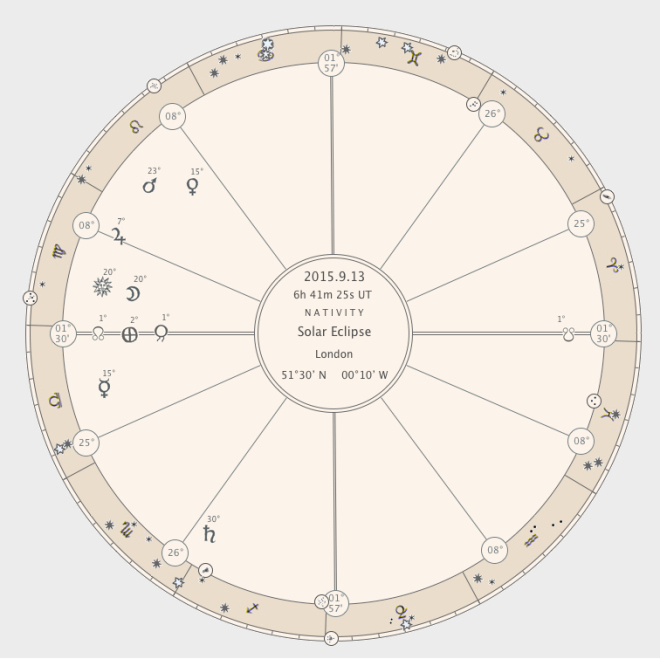
On 13 September 2015, at 06:41UT, there will be a partial solar eclipse. The eclipse will be visible in South Africa, Atlantic and Indian Ocean and Antarctica.The map below shows the visibility of the eclipse:
The astrological chart, cast for London, also shows the event:
Before we will discuss any possible effects on the individual, we should have a look at the mundane astrological implications of this eclipse. To be able to do this, we need to establish where the eclipse is likely to have its greatest effect. For this purpose we need to look at the countries or cities falling under the rulership of Virgo the sign wherein the conjunction between Sun and Moon takes place. We also have to take into consideration that the eclipse’s visibility will greatly enhance its effect.
Looking through traditional source material, we find that Greece with emphasis on Athens, Switzerland with emphasis on Basil…
It isn’t only biblical figures who lived to well-seasoned ages of 900 years or more. Ancient texts from many cultures have listed life spans most modern people find simply and literally unbelievable. Some say it’s due to misunderstandings in the translation process, or that the numbers have symbolic meaning—but against the many explanations are also counterarguments that leave the historian wondering whether the human lifespan has actually decreased so significantly over thousands of years.
For example, one explanation is that the ancient Near East understanding of a year could be different than our concept of a year today. Perhaps a year meant an orbit of the moon (a month) instead of an orbit of the sun (12 months).
But if we make the changes accordingly, while it brings the age of the biblical figure Adam down from 930 to a more reasonable 77 at the time of his death, it also means he would have fathered his son Enoch at the age of 11. And Enoch would have only been 5 years old when he fathered Methuselah.
Similar inconsistencies arise when we adjust the year figures to represent seasons instead of solar orbits, noted Carol A. Hill in her article “Making Sense of the Numbers of Genesis,” published in the journal “Perspectives on Science and Christian Faith” in December 2003.
Similar problems have arisen when adjusting ages in ancient texts with the assumption that authors used a certain pattern for skewing the actual ages (such as multiplying them by a given number).
“Numbers [in Genesis] could have both real (numerical) and sacred (numerological or symbolic) meaning,” Hill wrote.
Mathematical Patterns?
In both Genesis and in the 4,000-year-old Sumerian King List—which lists the reigns of single kings in Sumer (ancient southern Iraq) as exceeding 30,000 years in some cases—analysts have noted the use of square numbers.
Much like the Bible, the King List shows a steady decline in lifespans. The list differentiates between pre-flood and post-flood reigns. The pre-flood reigns are significantly longer than the post-flood, though even post-flood lifespans are shown to be several hundred years or more than 1,000 years. In the Bible, we see a progressive decline over the generations from Adam’s 930-year life, to Noah’s 500 years, to Abraham’s 175.
Dwight Young of Brandeis University wrote of the post-flood lifespans in the Sumerian King List: “It is not merely because of their largeness that some of these numbers appear artificial. Etana’s 1560 years, to cite the longest, is but the sum of the two preceding reigns. … Certain spans seem simply to have arisen as multiples of 60. Other large numbers may be recognized as squares: 900, the square of 30; 625, the square of 25; 400, the square of 20 … even among smaller figures, the square of six appears more frequently than one might expect.” Young’s article, titled “A Mathematical Approach to Certain Dynastic Spans in the Sumerian King List,” was published in the Journal of Near Eastern Studies in 1988. Paul Y. Hoskisson, director of the Laura F. Willes Center for Book of Mormon Studies wrote along a similar vein of the patriarch ages in the Bible in a short article for the Neal A. Maxwell Institute for Religious Scholarship.
On the other hand, looking at patterns, co-founder of the Church of God in South Texas Arthur Mendez thinks the rate of decline in longevity from pre-flood times as recorded in ancient texts to today matches the rate of decay observed in organisms when they are exposed to radiation or toxins.
Accounts in Many Cultures, Including Chinese and Persian
In ancient China, super-centenarians were also commonplace, according to many texts. Joseph P. Hou, Ph.D., acupuncturist, wrote in his book “Healthy Longevity Techniques”: “According to Chinese medical records, a doctor named Cuie Wenze of the Qin dynasty lived to be 300 years old. Gee Yule of the later Han dynasty lived to be 280 years old. A high ranking Taoist master monk, Hui Zhao, lived to be 290 years old and Lo Zichange lived to be 180 years old. As recorded in the The Chinese Encyclopedia of Materia Medica, He Nengci of the Tang dynasty lived to be 168 years old. A Taoist master, Li Qingyuan, lived to be 250 years old. In modern times, a traditional Chinese medicine doctor, Lo Mingshan of Sichuan province, lived to be 124 years old.”
Dr. Hou said the Eastern key to longevity is “nourishing life,” including not only physical nourishment, but also mental and spiritual nourishment.
The Shahnameh or Shahnama (“The Book of Kings”) is a Persian epic poem written by Ferdowsi around the end of the 10th century A.D. It tells of kings reigning 1,000 years, several hundred years, down to 150 years, and so on.
Depiction of Laozi in E.T.C. Werner’s Myths and Legends of China (Public Domain). Laozi was said to have gone to live as a hermit at the age of 160.
Modern Claims of Longevity
Even today, people report lifespans of some 150 or more years. These reports often come from rural areas, however, where documentation is scant. Documentation was probably even less valued in rural communities more than a century ago, making it harder to prove such claims.
One example is that of Bir Narayan Chaudhary in Nepal. In 1996, Vijay Jung Thapa visited Chaudhary in Tharu village of Aamjhoki in the Tarai region. Chaudhary told him he was 141 years old, Thapa wrote in an article for India Today. If this claim was true, Chaudhary trumped the Guinness World Record holder for the longest life ever recorded by almost 20 years.
But Chaudhary didn’t have the papers to prove it. He did, however, have collective village memory.
“Almost all the elders around remember their youth when Chaudhary (already an elder) would talk about working in the first Nepal survey of 1888,” Thapa wrote. “Village logic goes that he must have been more than 21 then, since the survey was a responsible job. Chaudhary claims to have been 33 and still a stubborn bachelor.”
Many people in the Caucasus region of Russia similarly claim ages reaching even over 170 years without the documentation to back their claims.
Dr. Hou wrote: “These exceptionally long-lived people have invariably lived humble lives, doing hard physical work or exercise, often outdoors, from youth well into old age. Their diet is simple, as is their social life involving families. One example is Shisali Mislinlow who lived to be 170 years old and gardened in the Azerbaijan region in Russia. Mislinlow’s life was never hurried. He said, ‘I am never in a hurry, so don’t be in a hurry to live, this is the main idea. I have been doing physical labor for 150 years.’”
A photo of Shisali Mislinlow taken in 1970. (Wikipedia)
A Matter of Faith?
The issue of longevity in ancient times has long been connected to Taoist practices of internal alchemy, or mind-body cultivation, in China. Here, longevity was connected with virtue. Likewise it is intertwined with Western spiritual beliefs as part of the Bible.
Mendez quoted first century Roman-Jewish historian Titus Flavius Josephus: “Now when Noah had lived three hundred and fifty years after the Flood … But let no one, upon comparing the lives of the ancients with our lives, and with the few years which we now live, think that what we have said of them is false; or make the shortness of our lives at present an argument, that neither did they attain to so long a duration of life, for those ancients were beloved of God, and [lately] made by God himself; and because their food was then fitter for the prolongation of life, might well live so great a number of years: and besides, God afforded them a longer time of life on account of their virtue, and the good use they made of it.”
For now, modern scientists are left either to believe what ancient records and village memory have to say about seemingly unbelievable lifespans, or to consider the accounts exaggerations, symbolism, or misunderstandings. For many, it’s simply a matter of faith.
“There is another way, whether it’s wormholes, or warping space, there’s got to be a way to generate energy so that you can pull it out of the vacuum, and the fact that they’re [extraterrestrials] here shows us that they found a way.”(source)– Jack Kasher, Ph.D, Professor Emeritus of Physics, University of Nebraska.
Thanks to the official disclosure of Unidentified Flying Objects (UFOs) by dozens of countries which details encounters with UFOs, more questions are being asked. It seems logical, how are people supposed to respond to the fact that these objects are commonly tracked on radar by military agencies, visually confirmed by the pilots sent out to investigate them, and perform maneuvers that defy our current understanding of physics? You can find out more about that and view some of those documents here. You can find more of our articles on the subject by visiting the exopolitics section of our website here.
It wasn’t too long ago that the existence of ‘UFOs’ was considered nonsense, but now that their existence again, has been ‘officially’ verified in the ‘mainstream,’ the question is now shifting to, “What are they?” As you can see from the quote above, Dr. Jack Kasher believes ‘they’ are extraterrestrial craft, and he is joined by hundreds of other scientists, academicians, high ranking military people, and politicians who share the same opinion.
“There is abundant evidence that we are being contacted, that civilizations have been monitoring us for a very long time.” (source) – Dr. Brian O’Leary, Former NASA Astronaut and Princeton Physics Professor
To view some more statements like the two above, click here.
Apart from wondering what and who exactly these beings are, people are also asking how they got here. Below are some possible explanations, but a civilization so advanced as to visit us probably has methods that we cannot yet comprehend.
THE ALCUBIERRE DRIVE
The idea behind the Alcubierre Drive is to basically place a craft within a space that is moving faster than the speed of light. Therefore the craft itself does not have to travel at the speed of light from its own type of propulsion system. It’s easier to understand if you think in terms of a flat escalator in an airport. The escalator moves faster than you are walking! In this case, the space encompassing the ship would be moving faster than the ship could fly, keeping all the matter of the ship intact. Therefore, we can move faster than light in a massless cloud of space-time.
The Alcubierre Drive is based on Einstein’s field equations, and it suggests that a spacecraft could achieve faster-than-light travel. Rather than exceed the speed of light alone in a craft, a spacecraft would leap long distances by contracting space in front of it and expanding space behind it. This would result in faster than light travel(source). Physicist Miguel Alcubierre was the first (that we know of) to identify this possibility. He described it as remaining still on a flat piece of space-time inside a warp bubble that was made to move at “superluminal” (faster than light) velocity. We must not forget that space-time can be warped and distorted, it can be moved. But what about moving sections of space-time which are created by expanding space-time behind the ship, and by contracting space-time in front of the ship?
A similar concept was also recently illustrated by Mathematician James Hill and Barry Cox at the University of Adelaide. They published a paper in the journal proceedings of the Royal Society A: Mathematical and Physical Sciences (source).
“By creating a ‘warp bubble’ that expands space on one side of a spaceship and contracts it on the other, the spaceship will be pushed away from the Earth and pulled towards a distant star by space-time itself.” – Dr. Alcubierre (source)
Quantum Entanglement: All Points In Space Are Connected
You can view a visual demonstration/basic explanation of quantum entanglementhere. Einstein himself could not wrap his head around it and referred to it as “spooky action at a distance.” The phenomenon was recently confirmed by the Griffith University’s Centre for Quantum Dynamics, you can read more about that story here.
Quantum entanglement suggests that space is just the construct that gives the illusion of seperation. As demonstrated in the vido linked above, if you take two particles and put one of them on the opposite side of the universe, the moment you do something to one of them the same reaction occurs instantaneously in the other one. This suggests that either the pieces of matter are “entangled” or connected, or that information is travelling much faster than the speed of light.
So, if all points in space are connected, perhaps this could provide some insight into travelling to what we perceive to be the far reaches of the universe.
Ben Rich, the second director of Lockheed Skunkwork’s from 1975-1991, also known as the Father of Stealth, made several shocking open statements about the reality of UFOs and extraterrestrials and how they are getting here.
“We already have the means to travel among the stars, but these technologies are locked up in black projects, and it would take an act of God to ever get them out to benefit humanity. Anything you can imagine, we already know how to do it. There are two types of UFOs, ones that we build and ones that ‘they’ build.”
When Rich was asked how UFO propulsion worked, he said, “Let me ask you. How does ESP work?” The questioner responded with, “All points in time and space are connected?” Rich then said, “That’s how it works!”
You can find the source for the above quotes in THIS article, and this information deals with what’s known as the “black budget.” You can read more about the black budget here.
Another hard hitting statement related to this topic:
“It is ironic that the U.S. would begin a devastating war, allegedly in search of weapons of mass destruction when the most worrisome developments in this field are occurring in your own backyard. It is ironic that the U.S. should be fighting monstrously expensive wars allegedly to bring democracy to those countries, when it itself can no longer claim to be called a democracy when trillions, and I mean thousands of billions of dollars have been spent on projects which both congress and the commander in chief know nothing about.” (source)– Former Canadian Defense Minister Paul Hellyer
Wormholes
Wormholes are passages through space-time that would allow one to create ‘shortcuts’ through space in order to travel long distances. They are predicted by the general Theory of Relativity, and as of now still lie within the realm of theoretical physics. In 1935, Einstein referred to these as “bridges” through space-time, again, connecting two different points in space-time to create a shortcut. It’s also important to mention that the existence of these wormholes has been mathematically predicted, but are still considered theoretical.
A paper that was recently published in the Annals of physics offers mathematical evidence that a massive black hole in our galaxy is actually a wormhole. If this is true, it should be possible for humans to navigate it.
“Our result is very important because it confirms the possible existence of wormholes in most of the spiral galaxies.” (source)
If we are being visited, perhaps wormholes are one of many possible means by which it’s happening.
It’s important to note that the human race is still in its adolescence, perhaps there are new discoveries to be made for “those who can remove some of truth’s protective layers.” – Niel Armstrong (source)
Take a moment to re-examine your perspective of an everyday occurrence: try slowing down a bite during a meal, or walking more deliberately down the hall. What do you notice that’s always there, but easily missed?
Our senses provide us with our etchings of reality, various fabrics we draw together to create a semblance of what is real. And yet, how different is the world to a bird, or to a bee, who perceives the world in ultraviolet? Thus, is the secret life of our senses who together weave what is from what could be.
Nothing can cure the soul but the senses, just as nothing can cure the senses but the soul.
The Venus figurines is a term given to a collection of prehistoric statuettes of women made during the Paleolithic Period, mostly found in Europe, but with finds as far as Siberia. To date, more than 200 of the figurines have been found, all of whom are portrayed with similar physical attributes, including curvaceous bodies with large breasts, bottoms, abdomen, hips, and thighs, and usually tapered at the top and bottom. The heads are often of relatively small size and devoid of detail, and most are missing hands and feet. Some appear to represent pregnant women, while others show no such signs. There have been many different interpretations of the figurines, but none based on any kind of solid evidence. Like many prehistoric artifacts, the cultural meaning may never be known.
The Paleolithic period lasted from around 30,000 BC to 10,000 BC and is characterised by the emergence of human creativity. Man-made artifacts from this period show the very earliest signs of workmanship, from small personal adornments and cave paintings to the prevalent Venus figurines, which represent the earliest known works of figurative art.
The figurines were carved from all manner of different materials, ranging from soft stone (such as steatite, calcite, or limestone) to bone, ivory, or clay. The latter type are among the earliest ceramic works yet discovered. The oldest statuette was uncovered in 2008 in Germany. The “Venus of Hohle Fels”, as the figure has since been called, was carved from a mammoth’s tusk and dates to at least 35,000 years old.
The size of the figurines ranges from 1.5 inches to 9.8 inches in height. They have mostly been discovered in settlement contexts, both in open-air sites and caves, and on rare occasions, they have been found in burials. Considering they were found all throughout Europe, and were sometimes separated by thousands of years, the general similarity of these sculptures is extraordinary.
A selection of some of the Venus figurines found throughout Europe. Image source.
The term ‘Venus figurines’ is controversial in itself. Inspired by Venus, the ancient Greek goddess of love, it assumes that the figures represent a goddess. Of course, this is one possible explanation, but it is just one of many interpretations that have been proposed. A considerable diversity of opinion exists in the archeological and paleoanthropological literature regarding the possible functions and significance of these objects. Some of the different theories put forward include: fertility symbols, self-portraits, Stone Age dolls, realistic depictions of actual women, ideal representations of female beauty, religious icons, representations of a mother goddess, or even the equivalent of pornographic imagery.
According to Soffer, Adovasio, and Hyland (2000), the garments that many of the Venus figures have been found wearing, including basket hats, netted snoods, bandeaux, string skirts, and belts, were not typical Paleolithic day wear. The authors suggest that the garments are more likely ritual wear, real or imagined, which served as a signifier of distinct social categories.
Dixson and Dixson (2011) argue that it is unlikely that the figures were realistic representations of women. At the time the statuettes were made, Europe was in the grip of a severe ice age and it is unlikely that obesity was a common feature. Instead, the authors proposed that the figures may have symbolized abundance and hope for survival and longevity, and for well-nourished and reproductively successful communities, during the harshest period of the major glaciation in Europe.
Unfortunately, the true meaning and purpose of these statuettes may never be known, leaving us to wonder why prehistoric people separated by significant time and distance created such similar figures, and what they really meant.
Legend has it that centuries ago a witch turned a would-be king of England and his men and knights to stone, which still stand and are among the Rollright Stones circle at Warwickshire. Now a new legend has cropped up: A 7th century AD skeleton recently unearthed at the site is being called the witch who turned the ambitious men to stone.
The woman stood between 4 feet 11 inches and 5 feet tall (about 152 cm) and was buried with a Roman patera or bronze vessel possibly used to cook offerings to the gods, a large amber bead and an amethyst set in silver. The patera is only the fifth found in England. She also had with her a large spindle whorl, which, with the patera, ITV.com says, indicates that “Rita,” the Saxon pagan Rollright Witch, as she is being called, was a spiritual woman of high status.
The person who found the grave is Charles Wood. He was using a metal detector at the Rollright Stones with friends. He explains to ITV:
‘This was more of a social event as we weren’t expecting to find much. The ground is difficult to dig and you normally just find bottle caps from the Rollright Fayre they hold here. When my metal detector made a faint murmur I knew I’d have to dig down deep, but thought it would only be a plough tooth that had been pressed into the ground. I got 14 inches down and a small bronze rim appeared, but it seemed in too good condition to be anything significant. As I dug further though I saw it had a handle and it soon became obvious it was a patera, which is a very significant find. There’s a myth around here of the Rollright Witch, and this find is certainly very interesting because of the spiritual element. I’m not saying anything for sure, but there’s no smoke without fire. It was a once in a lifetime find. I could detect for the next 14 years and not find anything like it.’
Anni Byard, a British antiquities official, said in a report:
“The location of the grave is of significance, and the items found with her were possibly religious in nature. She was definitely somebody of importance at that time, but this will take further investigation. We are currently trying to raise grants to examine the soil of the grave, this might be able to tell us something more.”
The Bronze Age Rollright Stones have much lore and myth surrounding them to this day. RollrightStones.co.uk is a website devoted just to the stone circle that gives the legend of the king and his entourage. The site says many stone circles in the British Isles were supposedly revelers petrified by God or the devil for dancing and fiddling or picking turnips on the Sabbath. The Rollright Stones legend is different.
There lived a king who aspired to rule England. He got as far as the Rollright Stones when he encountered a witch, possibly Mother Shipton of Shipton-under-Wychwood, who lived from 1488 to 1551 AD. (Mother Shipton is another story, but suffice to say she is England’s most famous prophetess who in childhood was a strange girl raised in a cave and who went on to become an accomplished herbalist and seeress who foretold many calamities of English history.)
The King’s Men stone circle at Rollright Stones (Photo by Midnightblueowl/Wikimedia Commons)
According to the legend reported by Rollrightstones.co.uk, the witch challenged the king:
“Seven long strides shalt thou take And if Long Compton thou canst see, King of England thou shalt be.”
The king continued on toward Long Compton, which is not far from the Rollright Stones, and as he strode along he shouted:
“Stick, stock, stone as King of England I shall be known.”
The King Stone at Rollright Stones in Warwickshire, England (Poliphilo/Wikimedia Commons)
When he hit his seventh stride, the ground rose up before him in the form of what is now sometimes called the Arch-Druid’s barrow. The witch said:
“As Long Compton thou canst not see King of England thou shalt not be. Rise up stick and stand still stone for King of England thou shalt be none; Thou and thy men hoar stones shall be And I myself an eldern tree.”
Then legend says she turned him into the King Stone, his men into the King’s Men Stone Circle and his knights into the Whispering Knights.
The Whispering Knights, a Neolithic dolmen at the Rollright Stones in the Cotswolds, England (Midnightblueowl/Wikimedia Commons)
Rollrightstones.co.uk says it is unknown what the king did to incur the witch’s wrath or why she turned herself into a witch-elder tree, which is said to still grow in a nearby hedge.
The site says folk tales tell of caves under the King Stone and King’s Men that are the haunt of fairies or the little folk who dance around the stones at midnight. When people go into the caves, tales say, they report being in the fairy realm for years but only a few hours have passed outside. Similar tales are told of other stone circles and megalithic monuments in the British Isles.
Rita’s remains and her grave goods were shipped to the British Museum in London for further study.
Featured Image: The skeleton of the Rollright Stone “witch” (News Team International photo).
Some 6,000 years ago, not far from Earth, a dim and unremarkable star suddenly exploded in the violent fireball that modern astronomers call a supernova.
On Earth it would have looked like a new star, brighter than the moon and visible even in the daytime for months.
Among the early peoples who saw it were the Sumerians – Persian Gulf farmers and fisherman poised at the brink of civilization. They recorded the event in their myths and gods.
Now the scholar who first identified their record says the legend linking the star to the origins of civilization has turned up in Egyptian hieroglyphs, written thousands of years later.
George Michanowsky, a New York linguist, author and historian, believes the legend was passed along in Sumerian symbols borrowed by the Egyptians.
If so, it would force a reinterpretation of such familiar hieroglyphs as the “ankh” – or symbol of life – and King Tut’s royal emblem.
Some other scholars of the ancient near East disagree with the theory. But Michanowsky, a self-described “lone wolf” who works without support form institutions or foundations, counters that his critics do not understand astronomy. Astronomers believe the supernova may have been the most cataclysmic sky event ever witnessed by men.
The Vela supernova remnant is a supernova remnant in the southern constellation Vela. Its source type II supernova exploded approximately 11,000-12,300 years ago (and was about 800 light years away).
A radio telescope has detected remnants of the explosion. It is a fast spinning dense star called a “pulsar” in the constellation Vela of the southern hemisphere. By timing radio pulses coming from the object, astronomers estimate that it erupted between 8,000 and 4,000 BC. It was toward the end of that period that the Sumerians living on the northern shore of the Persian Gulf developed the world’s first astronomy, mathematics and writing.
The Sumerians had a legend which held that they were taught these arts by a god called Ea, linked to a special star in the constellation Vela.
The reference has puzzled scholars because there are no bright stars today in that part of the sky.
But Michanowsky believes the reference was to the Vela supernova, a theory he propounds in a 1978 book, “the Once and Future Star”. The Vela star was two or three times closer to the earth than the famous supernova seen by Chinese astronomers in 1054.
The Sumerians would have seen it rise and set each day low over the watery southern horizon, and Michanowsky believes the sight so impressed them that it was anthropomorphisized into Ea and supporting legends and deities.
The symbolic record of the Vela star, he says, can be traced from its Sumerian origin to Egyptian hieroglyphs by “one unified train of imagery.”
For example, the Egyptian ankh, or looped cross, is usually thought to represent a sandle thong. But Michanowsky suggests its loop could represent the star, its cross bar the horizon of the Persian Gulf, and its descending bar the reflection of the star on the water.
And he says, the Egyptian goddess Seshat patronness of scribes, may derive from a Sumerian goddess called Nidaba who was patroness of mathematics, writing and astronomy.
Seshat is pictured with a seven pointed headdress often interpreted as a flower. But Michanowsky thinks the headdress comes from a sevenfold Sumerian palm-tree symbol linked both to Ea and to the Vela star, and may represent the star itself rather than the flower.
He also believes the Vela star figures in one hieroglyphic symbol from Tut’s cartouche or royal emblem.
The symbol, a pillar, is among the last three in the cartouche. It usually is taken to refer a southern Egyptian city, and the three symbols together are translated “Ruler of Southern Egypt.” But the translation has troubled Egyptologists since it seems to slight the northern part of Tut’s kingdom.
The supernova explosion that formed the Vela Supernova Remnant most likely occurred 10,000–20,000 years ago. In 1976, NASA astronomers suggested that inhabitants of the southern hemisphere may have witnessed this explosion and recorded it symbolically. A year later, Michanowsky recalled some incomprehensible ancient markings in Bolivia that were left by Native Americans. The carvings showed four small circles flanked by two larger circles. The smaller circles resemble stellar groupings in the constellations Vela and Carina. One of the larger circles may represent the star Capella. Another circle is located near the position of the supernova remnant, George Michanowsky suggested this may represent the supernova explosion as witnessed by the indigenous residents.



 Aloha kakahiaka kākou a me Hauʻoli aloha Pōʻalima. ‘O ka ‘olu‘olu e hau‘oli ia. Ō kā maluhia no me oe.











 Welina mai e hau’ōli aloha Pō’aono. Ō kā maluhia no me oe.


 Alōha āwakea kākou e hau’ōli aloha Pō’alima. E Mahalo Kakou I ke mea loaʻa. Ō kā maluhia no me oe.
 Alōha āwakea kākou e hau’ōli aloha Pō’aha. Ūa lā pōmaikaʻi au. Ō kā maluhia no me oe.


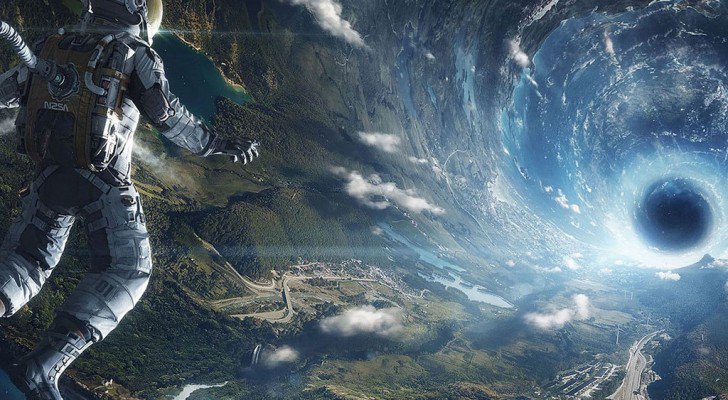
 Wormholes are passages through space-time that would allow one to create ‘shortcuts’ through space in order to travel long distances. They are predicted by the general Theory of Relativity, and as of now still lie within the realm of theoretical physics. In 1935, Einstein referred to these as “bridges” through space-time, again, connecting two different points in space-time to create a shortcut. It’s also important to mention that the existence of these wormholes has been mathematically predicted, but are still considered theoretical.
 Alōha āwakea kākou e hau’ōli aloha Pō’akolu. O ka mihi laʻau mua, a he piko hou. Ūa lā pōmaikaʻi au. Ō kā maluhia no me oe.


 Alōha kākahiaka kākou e hau’ōli aloha La’pule. E piha keīa lā mea ke aloha a me kā pono. Hōʻokuʻu ōla ʻole Lōkahi. Ō kā maluhia no me oe.
 Hālau 'Aha Hui Lānākila
