
Mai ho’okaumaha,e Hau’oli . ʻOhoihoi kou lā.
Don’t worry, be Happy … Enjoy your day
Mai ho’okaumaha,e Hau’oli . ʻOhoihoi kou lā.
Don’t worry, be Happy … Enjoy your day

The highest courage is to dare to be yourself in the face of
adversity.
Choosing right over wrong, ethics over convenience,
and truth over popularity.
These are the choices that measure your life.
Travel the road of integrity without looking back, for there is never a wrong time to do the right thing.
ALOHA!
 Alōha kākahiaka kākou e hau’ōli aloha Pō’aono. I lā hoʻokamahaʻo nou oukou. Ō kā maluhia no me oe.
Good morning to you all and a Happy Aloha Saturday. Have a wonderful day, everyone. Peace be with you.


New research has found that people with high levels of autistic traits are more likely to produce unusually creative ideas.
Psychologists from the University of East Anglia (UEA) and University of Stirling examined the relationship between autistic-like traits and creativity. While they found that people with high autistic traits produced fewer responses when generating alternative solutions to a problem – known as ‘divergent thinking’ – the responses they did produce were more original and creative. It is the first study to find a link between autistic traits and the creative thinking processes.
The research, published today in the Journal of Autism and Developmental Disorders, looked at people who may not have a diagnosis of autism but who have high levels of behaviours and thought processes typically associated with the condition. This builds on previous research suggesting there may be advantages to having some traits associated with autism without necessarily meeting criteria for diagnosis.
Co-author of the study Dr Martin Doherty, from UEA’s School of Psychology, said: “People with high autistic traits could be said to have less quantity but greater quality of creative ideas. They are typically considered to be more rigid in their thinking, so the fact that the ideas they have are more unusual or rare is surprising. This difference may have positive implications for creative problem solving.”
Previous studies using the same tasks have found most people use simple undemanding strategies, for example word association, to produce the obvious answers first. Then, they move on to more cognitively demanding strategies and their answers become more creative. The new research suggests that people with high autistic traits go straight to these more difficult strategies.
“People with autistic traits may approach creativity problems in a different way,” said Dr Doherty. “They might not run through things in the same way as someone without these traits would to get the typical ideas, but go directly to less common ones. In other words, the associative or memory-based route to being able to think of different ideas is impaired, whereas the specific ability to produce unusual responses is relatively unimpaired or superior.”
Dr Doherty said the finding addressed an apparent paradox – that in a condition characterised by restricted behaviour and interests, some of the best known people with autism, such as British architectural artist Stephen Wiltshire and American author and activist Temple Grandin, seem to be unusually creative. The British Channel 4 television series the Autistic Gardener also illustrates the unique contribution someone with autism can make to a creative activity such as garden design.
The finding could help researchers understand more about the relationship between autistic traits and how the brain adapts to problem solving in the general population.
Dr Catherine Best, Health Researcher at the University of Stirling, said: “This is the first study to find a link between autistic traits and the creative thinking processes. It goes a little way towards explaining how it is that some people with what is often characterised as a ‘disability’ exhibit superior creative talents in some domains.
“It should be noted that there is a lot of variation among people with autism. There can be people whose ability to function independently is greatly impaired and other people who are much less affected. Similarly not all individuals with the disorder, or the traits associated with it, will exhibit strengths in creative problem solving. Trying to understand this variation will be a key part of understanding autism and the impact it has on people’s lives.”
The researchers analysed data from 312 people who completed an anonymous online questionnaire to measure their autistic traits and took part in a series of creativity tests. Participants were recruited through social media and websites aimed at people with Autistic Spectrum Disorder and their relatives. Seventy-five of the participants said they had received a diagnosis of an Autistic Spectrum Disorder.
To test their divergent thinking participants were asked to provide as many alternative uses as they could for a brick or a paper clip. Their responses were then rated for quantity, elaborateness and unusualness. People who generated four or more unusual responses in the task were found to have higher levels of autistic traits.
Some of the more creative uses given for a paper clip were: as a weight on a paper airplane; as wire to support cut flowers; counter/token for game/gambling; as a light duty spring. Common ones included: hook; pin; to clean small grooves; make jewellery.
Participants were also shown four abstract drawings and asked to provide as many interpretations as they could for each figure in one minute. The higher the number of ideas produced, the lower the participant’s level of autistic traits tended to be.
Source: Cat Bartman – University of East Anglia
Image Source: The image is in the public domain
Original Research: Abstract for “The relationship between subthreshold autistic traits, ambiguous figure perception and divergent thinking” by Catherine Best, Shruti Arora, Fiona Porter, and Martin Doherty in Journal of Autism and Developmental Disorders. Published online August 13 2015doi:10.1007/s10803-015-2518-2
Abstract
The relationship between subthreshold autistic traits, ambiguous figure perception and divergent thinking
This research investigates the paradox of creativity in autism. That is, whether people with subclinical autistic traits have cognitive styles conducive to creativity or whether they are disadvantaged by the implied cognitive and behavioural rigidity of the autism phenotype. The relationship between divergent thinking (a cognitive component of creativity), perception of ambiguous figures, and self-reported autistic traits was evaluated in 312 individuals in a non-clinical sample. High levels of autistic traits were significantly associated with lower fluency scores on the divergent thinking tasks. However autistic traits were associated with high numbers of unusual responses on the divergent thinking tasks. Generation of novel ideas is a prerequisite for creative problem solving and may be an adaptive advantage associated with autistic traits.
“The relationship between subthreshold autistic traits, ambiguous figure perception and divergent thinking” by Catherine Best, Shruti Arora, Fiona Porter, and Martin Doherty in Journal of Autism and Developmental Disorders. Published online August 13 2015 doi:10.1007/s10803-015-2518-2
Alōha kākahiaka kākou e hau’ōli aloha Pō’alima. I lā hoʻokamahaʻo nou oukou. Ō kā maluhia no me oe.
Good morning to you all and a Happy Aloha Friday. Have a wonderful day, everyone. Peace be with you.
A note of caution: We can never achieve goals that envy sets for us. Looking at your friends and wishing you had what they had is a waste of precious energy. Because we are all unique, what makes another happy may do the opposite for you. That’s why advice is nice but often disappointing when needed.

Pare ca na vijānanti
mayamettha yamāmase.
Ye ca tattha vijānanti
tato sammanti medhagā.
There are those who do not realize
that one day we all must die.
But those who do realize this
settle their quarrels.
Dhammapada 1.6
The Dhammapada: The Buddha’s Path of Buddha,
translated from the Pali by Acharya Buddharakkhita
Welina mai e nā hoa ē a hau’ōli alōha Pō’aha. ‘Ohoihoi kou lā. Ō kā maluhia no me oe.
Warmest greetings to you, Friends, and a happy aloha Thursday. Enjoy your day. Peace be with you.
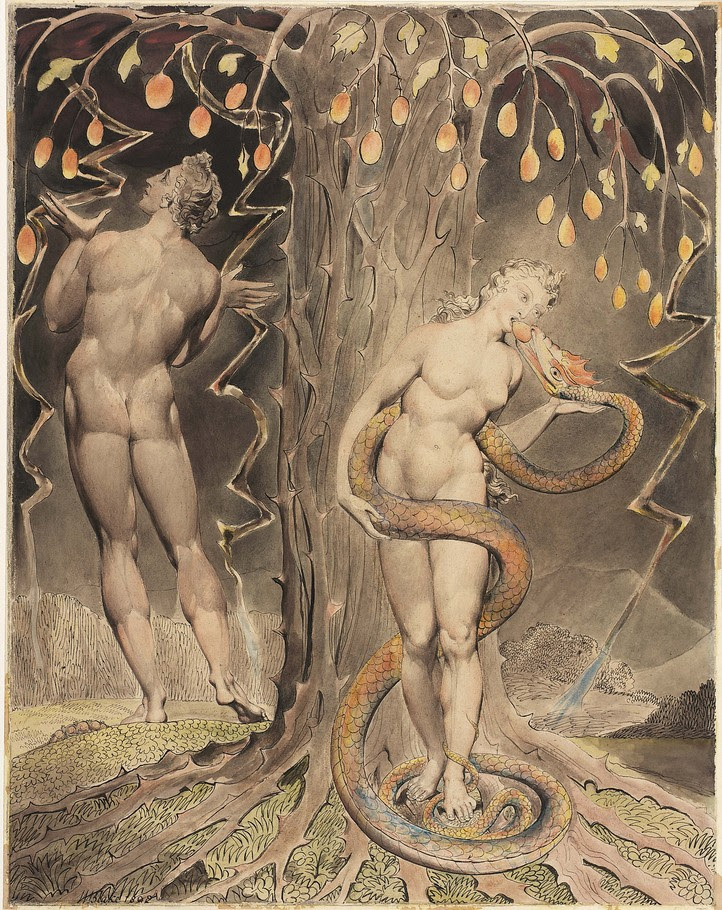
The biological machinery behind each of our senses can be regarded as a function of consciousness, folding the physical into the poetic in order to transcend it and enter the realm of the spiritual. It is therefor befitting to call to mind Thoreau’s defiant defense of “useful ignorance”:
Deep down, we know our devotion to reality is just a marriage of convenience, and we leave it to the seers, the shamans, the ascetics, the religious teachers, the artists among us to reach a higher state of awareness, from which they transcend our rigorous but routinely analyzing senses and become closer to the raw experience of nature that pours into the unconscious, the world of dreams, the source of myth.
[…]
Our several senses, which feel so personal and impromptu, and seem at times to divorce us from other people, reach far beyond us. They’re an extension of the genetic chain that connects us to everyone who has ever lived; they bind us to other people and to animals, across time and country and happenstance. They bridge the personal and the impersonal, the one private soul with its many relatives, the individual with the universe, all of life on Earth. In REM sleep, our brain waves range between eight and thirteen hertz, a frequency at which flickering light can trigger epileptic seizures. The tremulous earth quivers gently at around ten hertz. So, in our deepest sleep, we enter synchrony with the trembling of the earth. Dreaming, we become the Earth’s dream.
[…]
It began in mystery, and it will end in mystery. However many of life’s large, captivating principles and small, captivating details we may explore, unpuzzle, and learn by heart, there will still be vast unknown realms to lure us. If uncertainty is the essence of romance, there will always be enough uncertainty to make life sizzle and renew our sense of wonder. It bothers some people that no matter how passionately they may delve, the universe remains inscrutable. “For my part,” Robert Louis Stevenson once wrote, “I travel not to go anywhere, but to go. I travel for travel’s sake. The great affair is to move.” The great affair, the love affair with life, is to live as variously as possible, to groom one’s curiosity like a high-spirited thoroughbred, climb aboard, and gallop over the thick, sun-struck hills every day. Where there is no risk, the emotional terrain is flat and unyielding, and, despite all its dimensions, valleys, pinnacles, and detours, life will seem to have none of its magnificent geography, only a length. It began in mystery, and it will end in mystery, but what a savage and beautiful country lies in between.
— Dianne Ackerman, A Natural History of the Senses (1990)
August 14, 2015
7:53 AM PDT / 10:53 AM EDT / 2:53 PM GMT
21 Leo 30
Impulses that have been smoldering all summer catch fire with August’s Leo New Moon. The event takes influences from two overlapping cycles, rolls them into a fireball and hurtles them — and us — forward.
Under normal circumstances, the Leo Moon gives a boost to our egos, playfulness and need for recognition and attention. This time around, the Moon is not merely priming our inner spark. It is pouring desire and willpower into that spark and catalyzing dramatic developments.
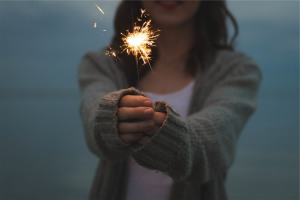
The catalyst angle comes from the New Moon’s tight, easy flow to Uranus, cosmic agent provocateur. Pressures and impulses from the last three years, and from the end of June in particular, are catching fire. (Again.) This link imbues the New Moon with the radically liberating, individuating end of the change imperative that has…
View original post 861 more words
Welina mai e nā hoa ē a hau’ōli alōha Pō’akolu. ‘Ohoihoi kou lā. Ō kā maluhia no me oe.
Warmest greetings to you, Friends, and a happy aloha Wednesday. Enjoy your day. Peace be with you.


For the first time since August 2003, exactly 12 years ago, Jupiter returns to the sign of Virgo from today, 11th of August until the 10th of September 2016. It leaves behind, 12-month journey through the sign of Leo with a lot of benefits and excesses that the Leos, will surely not forget that easily.
Virgo is an Earth sign, so this period of Jupiter transiting this sign for a year, will be rather less idealistic than the previous one. In traditional astrology Jupiter in Virgo is considered in its detriment by being in the sign opposite to the one (PISCES) which rules. Jupiter in Virgo believes that is work and dedication that creates opportunities, rather than luck. Given this and the fact that for modern astrologers, with whom I identify myself more, Jupiter ruled Sagittarius, sign that also challenges to Virgo, due to its extraordinary optimism, I tend to…
View original post 832 more words

Welina mai e nā hoa ē a hau’ōli alōha Pō’alua. Hoʻokuʻu ola ʻole Maluhia e Lokahi. Ō kā maluhia no me oe.
Warmest greetings to you, Friends, and a happy aloha Tuesday. Let’s live in peace and harmony. Peace be with you.
 on the Old Airport Walking Path
Sunday – Lapule (lay-poo-lay )
Monday – Po’akahi (poh ah-kah-hee)
Tuesday – Po’alua (poh ah-loo-ah)
Wednesday – Po’akolu (poh ah-ko-loo)
Thursday – Po’aha (poh ah-ha)
Friday – Po’alima (poh ah-lee-mah)
Saturday – Po ‘aono (poh ah-o-no)

You are loved.
I appreciate you.
You are an inspiration.
You are a wonderful person.
Continue to follow your heart.
I appreciate who you have become.
The world needs more people like you.
You are a blessing to those around you.
You are doing the right thing; keep going.
You make a difference in people’s
lives and are loved by them.
 |
 |
 |
The following referenced history of Reiki is taken from Reiki, The Healing Touch and has been carefully researched to contain verified information from dependable sources. You have permission to copy and paste this history including the photos on to your own web site as long as you use the entire text and do not make changes to it.
Mrs. Hawayo Takata (Takata Sensei) brought Reiki from Japan to the West in 1937 and continued to practice and teach until her passing in 1980. Because of her devotion, Reiki has been passed on to millions of people all over the world, and the numbers continue to grow! And as you will see, if it wasn’t for her, Reiki most likely would never have been discovered by the West and even in Japan would have been practiced secretly by only a small number of people.
Until the 1990s, the only information we had about Reiki came from Takata Sensei. Her story of Reiki was recorded on tape, and this recording is still available along with a transcript of the contents.(1) In the past most people including many authors simply accepted Takata Sensei’s interpretation of the history of Reiki as accurate without attempting to do any additional research. Because of this, her version of the story was repeated in all the earlier books written on Reiki. (Fortunately many current authors are using more recent historical information.)
In the course of researching the origins of Reiki, I learned that Takata Sensei took liberties with the history of its development. In 1990, for example, I wrote to Doshisha University in Kyoto, Japan where Takata Sensei reported that the founder of Reiki, Usui Sensei, had held the office of president. I had hoped to gain additional information that would help us understand who Usui Sensei really was. I also contacted the University of Chicago, from which Usui Sensei had obtained a degree according to Takata Sensei. Neither university had ever heard of him.(2) This disappointing discovery led me to wonder if other parts of the Takata Sensei version of Reiki were also inaccurate. In talking with several early Reiki Masters about this discovery, I was told that Takata Sensei had westernized the story of Reiki by changing certain details and adding others to make it more appealing to Americans.
I continued to seek additional information about the history of Reiki, but attempts to secure it went slowly at first. The main reason for this is that after World War II, the U.S. government had complete control over Japan for a time and banned all Eastern healing methods in Japan and required that only Western medicine be practiced there. The members of the organization Usui Sensei started, the Usui Reiki Ryoho Gakkai, decided they wanted to find a way to continue to practice Reiki. Some of the other healing groups such as the Acupuncturists were able to get a license to practice, but the Gakkai chose not to go through this process. In order to continue to practice Reiki, they decided to become a secret society and practice only among themselves and not talk about Reiki to anyone outside their organization.(3) This made it difficult for anyone to learn about Reiki including the Japanese. In fact, if someone in Japan wanted to learn Reiki after the war, he or she had to travel to the U.S. to learn or had to learn from a Western trained Reiki teacher who traveled to Japan. Because of this, even now most Reiki practiced in Japan is a combination of Western and Japanese Reiki.
This is why an accurate history of Reiki took so long to unfold up to that point in time. Then in 1996, I received from Japan a copy of the Original Reiki Ideals, which were different and more expansive than what had been presented by Mrs. Takata. They included the idea that chanting and offering prayers are important to Reiki practice.(4) In 1997, Arjava Petter’s book, Reiki Fire was published, which was the first of a series of books on Japanese Reiki. He along with his wife, Chetna Kobayashi, had made contact with the Gakkai. They had discovered the location of Usui Sensei’s grave and many other facts including information on the Japanese Reiki Techniques, all of which were revealed in his books and subsequent workshops.
Invited by Arjava Petter, Laura Gifford (now Laurelle Gaia) and I went to Japan in 1997, and with Arjava as our guide, we were taken to Usui Sensei’s grave and Mt. Kurama and much of the new information was explained to us.(5)
In 1999 and 2000 I invited Arjava and Chetna to come to teach workshops on the Japanese Reiki Techniques across the United States. In addition, in November, 2001, I took Reiki I&II from Chiyoko Yamaguchi in Japan, a Shihan (Reiki Master) who received her training from Hayashi Sensei. (She passed on in 2003). In October 2002 I took Gendai Reiki training from Hiroshi Doi—who is a member of the Usui Reiki Ryoho Gakkai—and also had two detailed interviews with him.(6) It is from these sources and my continued contact with these and other Reiki researchers that my understanding of the history of Reiki along with how Usui Sensei and Hayashi Sensei taught and practiced Reiki has developed.
A More Accurate History of Reiki
The following is an updated history of Reiki based on accurate, verifiable information. Where possible, sources have been referenced so others can follow up on this research if desired. The history begins with a look at the inscription on the memorial stone that was erected in 1927 in memory of Mikao Usui Sensei, founder of the Reiki healing system.
The Inscription on the Usui Memorial
 |
|
|
The Usui Memorial
|
The inscription on the Usui Memorial, dating from 1927, was written by Juzaburo Ushida, a Shihan who was trained by Usui Sensei and able to teach and practice Reiki the same way he did.(7) He also succeeded Usui Sensei as president of the Usui Reiki Ryoho Gakkai. Masayuki Okata, also a member of the Usui Reiki Ryoho Gakkai, was the editor. The English translation was done by Tetsuyuki Ono and is reprinted here from the book, lyashino Gendai Reiki- ho, with permission from the author, Hiroshi Doi.
The large kanji at the top of the memorial stone reads: “Memorial of Usui Sensei’s Virtue.” The remainder of the inscription reads as follows:
What you can naturally realize through cultivation and training is called “VIRTUE” and it is called “MERIT” to spread a method of leadership and relief and practice it. It is people of many merits and a good deal of virtue that can be eventually called a great founder. People who started a new learning and founded a fresh sect among sages, philosophers, geniuses etc., named from the ancient times, were all those as mentioned above. We can say that Usui-Sensei is also one of those people.
He started newly a method to improve body and spirit based on REIKI in the universe. Hearing of the rumor, people who would like to learn the treatment and undergo the cure gathered from all quarters all at once. Really, it was very busy indeed.
 |
|
|
Mikao Usui
(Usui Sensei), founder of the Reiki System of Healing |
Usui-Sensei, whose popular name is Mikao and whose pen name is Gyohan, came from Taniai-village, Yamagata- district, Cifu Prefecture, and had forefathers named Tsunetane Chiba who had played an active part as a military commander between the end of Heian Period and the beginning of Kamakura Period (1180-1230). His father’s real name is Taneuji and his popular name is Uzaemon. His mother came and got married from the family named Kawai.
Usui-Sensei was born on 15th August, 1865. Having learned under difficulties in his childhood, he studied hard with efforts and he was by far superior in ability to his friends.
After growing up, he went over to Europe and America, and also studied in China. In spite of his real ability, however, he was not always successful in life. Although he was compelled to lead an unfortunate and poor life so often, he strove much more than before to harden his body and mind without flinching from the difficulties.
One day, Usui-Sensei climbed Mt. Kurama, where he began to do penance while fasting. Suddenly on the twenty first day from the start, he felt a great REIKI over his head, and at the same time as he was spiritually awakened he acquired the REIKI cure. When he tried it on his own body and members’ of his family also, it brought an immediate result on them.
Having said “It is much better to give this power widely to a lot of people in the world and enjoy it among them than to keep it exclusively by his family members,” Usui-Sensei moved his dwelling to Aoyama Harajuku, Tokyo in April, 1922 and established an institute, where the REIKI cure was instructed openly to the public and the treatment was given, too. People came there from far and near to ask for his guidance and cure, and they over-flowed outside, making a long line.
Tokyo had a very big fire caused by a great earthquake in Kanto district in September, 1923, when the injured and sick persons suffered from pains everywhere. Usui-Sensei felt a deep anxiety about that, and he was engaged in a cure, going around inside the city every day. We can hardly calculate how many persons were saved from death with his devotion. His activities of relief, in which he extended his hands of love over to those suffering people against this emergent situation, can be outlined as noted above.
Thereafter, his training center became too small to receive the visitors, so he built a new house in Nakano outside the city in February 1925 and transferred there. As his reputation got higher and higher, it was so often when he received an offer of engagement from everywhere throughout the nation. In accordance with these requests he traveled to Kure and Hiroshima, then entered Saga and reached Fukuyama. It was at the inn at which he stayed on his way that he caught a disease abruptly, and he passed away at the age of sixty-two.
His wife got married, coming from the Suzuki family, and she is named Sadako and has a son and a daughter. The son’s name is Fuji, and he succeeds to the Usui family.
Usui-Sensei’s natural character was gentle and prudent, and he did not keep up appearances. His body was big and sturdy, and his face was always beaming with a smile. But when he faced the difficulties he went ahead with a definite will and yet persevered well, keeping extremely careful. He was a man of versatile talents and also a book lover, knowing well in the wide range from history, biography, medical science, canons of Christianity and Buddhism and psychology up to magic of fairyland, art of curse, science of divination and physiognomy.
In my opinion, it is evident to everybody that Usui-Sensei’s cultivation & training were based on his career of art and science, and the cultivation & training became a clue to create the REIKI cure.
Reviewing the fact, I understand what the REIKI cure is aiming at is not only to heal the diseases but also to correct the mind by virtue of a God-sent spiritual ability, keep the body healthy and enjoy a welfare of life. In teaching the persons, therefore, we are supposed to first let them realize the last instructions of the Emperor Meiji, and chant the 5 admonitions morning and evening to keep them in mind.
The 5 admonitions in question are:
1. Don’t get angry today.
2. Don’t be grievous.
3. Express your thanks.
4. Be diligent in your business.
5. Be kind to others.
These are really the important precepts for a cultivation, just the same as those by which the ancient sages admonished themselves. Usui-Sensei emphasized that ‘This is surely a secret process to bring a good fortune and also a miraculous medicine to remedy all kinds of diseases,’ by which he made his purpose of teaching clear and accurate. Furthermore, he tried to aim at making his way of guidance as easy and simple as possible, so nothing is difficult to understand therein. Every time when you sit quietly and join your hands to pray and chant morning and evening, you can develop a pure and sound mind, and there is just an essence in making the most of that for your daily life. This is the reason why the REIKI cure can very easily spread over anybody.
The phase of life is very changeable in these days, and people’s thoughts are apt to change, too. Could we fortunately succeed in spreading the REIKI cure everywhere, we feel sure that it would have to be very helpful in order to prevent people from disordering their moral sense. It never extends people anything but the benefits of healing long term illness, chronic disease and bad habit.
The number of pupils who learned from Usui-Sensei amounts to more than 2000 persons. Some leading pupils living in Tokyo among them gather at the training center and take over his work, while other pupils in the country also do everything to popularize the REIKI cure. Although our teacher already passed away, we have to do the very best to hand the REIKI cure down to the public forever and spread it much more. Ah! What a great thing he did; to have unsparingly given people what he had felt and realized by himself!
As a result of our pupils’ recent meeting and discussion, we decided to erect a stone monument at the graveyard in his family temple so that we may bring his virtuous deed to light and transmit it to posterity; so, I was requested to arrange an epitaph for the monument. As I was much impressed by his great meritorious deed and also struck by our pupils’ warm hearts of making much of the bond between master and pupil, I dared not refuse the request, but described the outline.
Therefore, I do expect heartily that people in the future generations would not forget to look up at the monument in open-eyed wonder.
— Usuida, in February, 1927. Edited by Masayuki Okada, The Junior 3rd Rank, the 3rd Order of Merit, Doctor of Literature. Written by Juzaburo Usuhida, The Junior 4th Class of Services, Rear Admiral.
Mikao Usui
Mikao Usui, or Usui Sensei as he is called by Reiki students in Japan, was born August 15, 1865 in the village of Taniai in the Yamagata district of Gifu prefecture, which is located near present-day Nagoya, Japan.(8)
He had an avid interest in learning and worked hard at his studies. As he grew older, he traveled to Europe and China to further his education. His curriculum included medicine, psychology and religion as well as the art of divination, which Asians have long considered to be a worthy skill.(9) Usui Sensei also became a member of the Rei Jyutu Ka, a metaphysical group dedicated to developing psychic abilities.(10) He had many jobs including civil servant, company employee and journalist, and he helped rehabilitate prisoners.(11) Eventually he became the secretary to Shinpei Goto, head of the department of health and welfare who later became the mayor of Tokyo. The connections Usui Sensei made at this job helped him to also become a successful businessman.(12)
The depth and breadth of his experiences inspired him to direct his attention toward discovering the purpose of life. In his search he came across the description of a special state of consciousness that once achieved would not only provide an understanding of one’s life purpose, but would also guide one to achieve it. This special state is called An-shin Ritus-mei (pronounced on sheen dit sue may). In this special state, one is always at peace regardless of what is taking place in the outer world. And it is from this place of peace that one completes one’s life purpose. One of the special features of this state is that it maintains itself without any effort on the part of the individual; the experience of peace simply wells up spontaneously from within and is a type of enlightenment.
Usui Sensei understood this concept on an intellectual level and dedicated his life to achieving it; this is considered to be an important step on Usui Sensei’s spiritual path. He discovered that one path to An-shin Ritsu-mei is through the practice of Zazen meditation. So he found a Zen teacher who accepted him as a student and began to practice Zazen. After three years practice, he had not been successful and sought further guidance. His teacher suggested a more severe practice in which the student must be willing to die in order to achieve An-shin Ritsu-meiwhich.(13)(14)
So with this in mind he prepared for death and in February, 1922, he went to Mt. Kurama to fast and meditate until he passed to the next world. In addition, we know there is a small waterfall on Mt. Kurama where even today people go to meditate. This meditation involves standing under the waterfall and allowing the water to strike and flow over the top of the head, a practice that is said to activate the crown chakra. Japanese Reiki Masters think that Usui Sensei may have used this meditation as part of his practice. In any case, as time passed he became weaker and weaker. It was now March, 1922 and at midnight of the twenty-first day, a powerful light suddenly entered his mind through the top of his head and he felt as if he had been struck by lightning; this caused him to fall unconscious.
As the sun rose, he awoke and realized that whereas before he had felt very weak and near death, he was now filled with an extremely enjoyable state of vitality that he had never experienced before; a miraculous type of high frequency spiritual energy had displaced his normal consciousness and replaced it with an amazingly new level of awareness. He experienced himself as being the energy and consciousness of the Universe and that the special state of enlightenment he had sought had been given to him as a gift. He was overjoyed by this realization.
When this happened, he was filled with excitement and went running down the mountain. On his way down he stubbed his toe on a rock and fell down. And in the same way anyone would do, he placed his hands over the toe, which was in pain. As he did this, healing energy began flowing from his hands all by itself. The pain in his toe went away and the toe was healed. Usui Sensei was amazed by this. He realized that in addition to the illuminating experience he had received, he had also received the gift of healing.(15)
Usui Sensei practiced this new ability with his family and developed his healing system through experimentation and by using skills and information based on his previous study of religious practices, philosophy and spiritual disciplines. He called his system of healing Shin-Shin Kai-Zen Usui Reiki Ryo-Ho (The Usui Reiki Treatment Method for Improvement of Body and Mind)(16) or in its simplified form Usui Reiki Ryoho (Usui Reiki Healing Method). It is important to know that Usui Sensei didn’t create Reiki as there were other methods of Reiki healing in Japan prior to Usui Sensei creating his method and in fact one was called Reiki Ryoho.(17)
In April 1922, he moved to Tokyo and started a healing society that he named Usui Reiki Ryoho Gakkai (Usui Reiki Healing Method Society). He also opened a Reiki clinic in Harajuku, Aoyama, Tokyo. There he taught classes and gave treatments.(18)
The first degree of his training was called Shoden (First Degree) and was divided into four levels: Loku-Tou, Go-Tou, Yon-Tou, and San-Tou. (Note that when Takata Sensei taught this level, which in the West we refer to as Reiki Level I, she combined all four levels into one. This is most likely why she did four attunements for Level I.) The next degree was called Okuden (Inner Teaching) and had two levels: Okuden-Zen-ki (first part), and Okuden-Koe-ki (second part). The next degree was called Shinpiden (Mystery Teaching), which is what Western Reiki calls Master level. The Shinpiden level includes, Shihan-Kaku (assistant teacher) and Shihan (venerable teacher).(19)
Contrary to previous understanding, Usui Sensei had only three symbols, the same three we use in the West in Reiki II. He did not use a master symbol. This fact has been verified by Hiroshi Doi and by research done by Hyakuten Inamoto, Arjava Petter and Tadao Yamaguchi.(20)
In 1923, the great Kanto earthquake devastated Tokyo. More than 140,000 people died and over half of the houses and buildings were shaken down or burned. An overwhelming number of people were left homeless, injured, sick and grieving.(21) Usui Sensei felt great compassion for the people and began treating as many as he could with Reiki. This was a tremendous amount of work, and it was at this time that he began training other Shihan (teachers) so that they could help him more quickly train others to be Reiki practitioners and help the sick and injured. It was also at this time that he further developed his system of Reiki, including adding the three symbols and devising a more formal Reiju (attunement) process.(22)
The Reiju process was different than the method used now in that Usui Sensei had just one type of Reiju that was given over and over. He didn’t have a different Reiju for each level and there was no Reiju to activate the symbols. It was taught that it is important for the student to get as many Reiju as possible as this was an important way to increase and refine the quality of one’s Reiki energy.(23)
Demand for Reiki became so great that he outgrew his clinic, so in 1925 he built a bigger one in Nakano, Tokyo. Because of this, Usui Sensei’s reputation as a healer spread all over Japan. He began to travel so he could teach and treat more people. During his travels across Japan he directly taught more than 2,000 students and initiated twenty Shihan,(24) each being given the same understanding of Reiki and approved to teach and give Reiju in the same way he did.(25)
The Japanese government issued him a Kun San To award for doing honorable work to help others.(26) While traveling to Fukuyama to teach, he suffered a stroke and died March 9, 1926.(27) His grave is at Saihoji Temple, in Suginami, Tokyo, although some claim that his ashes are located elsewhere.
After Usui Sensei died, his students erected a memorial stone next to his gravestone. (See page 14.) Mr. J. Ushida, a Shihan trained by Usui Sensei, took over as president of the Usui Reiki Ryoho Gakkai, and was responsible for creating and erecting the Usui Memorial stone and ensuring that the gravesite would be maintained. Mr. Ushida was followed by Mr. Ilichi Taketomi, Mr. Yoshiharu Watanabe, Mr. Toyoichi Wanami and Ms. Kimiko Koyama. The current successor to Usui Sensei is Mr. Mahayoshi Kondo, who became president in 1998.
Contrary to what we have been told in the West, there is no “lineage bearer” or “Grand Master” of the organization started by Usui Sensei—only the succession of presidents listed above.(28) Among the twenty teachers initiated by Usui Sensei are Toshihiro Eguchi, Jusaburo Guida, Kan’ichi Taketomi, Toyoichi Wanami, Yoshiharu Watanabe, Keizo Ogawa, J. Ushida, and Chujiro Hayashi.(29) Contrary to one version of the Reiki story, Chujiro Hayashi was not the Gakkai’s successor to Usui Sensei, but rather Mr. J. Ushida as previously mentioned. It is also important to note that the first four presidents of the Gakkai who followed Usui Sensei were Shihan who had been trained directly by Usui Sensei, thus assuring that the Gakkai understanding, practice and teaching methods were the same as that of Usui Sensei.
Chujiro Hayashi
Before his passing, Usui Sensei had asked Hayashi Sensei to open his own Reiki clinic and to expand and develop Reiki Ryoho based on his previous experience as a medical doctor in the Navy. Motivated by this request, Hayashi Sensei started a school and clinic called Hayashi Reiki Kenkyukai (Institute). After Usui Sensei’s passing he left the Gakkai.(30)
At his clinic he kept careful records of all the illnesses and conditions patients who came to see him had. He also kept records of which Reiki hand positions worked best to treat each patient. Based on these records he created the Reiki Ryoho Shinshin(Guidelines for Reiki Healing Method).(31) This healing guide was part of a class manual he gave to his students. Many of his students received their Reiki training in return for working in his clinic.(32)
Hayashi Sensei also changed the way Reiki sessions are given. Rather than have the client seated in a chair and treated by one practitioner as Usui Sensei had done, Hayashi Sensei had the client lie on a treatment table and receive treatment from several practitioners at a time. He also created a new more effective system for giving Reiju (attunements).(33) In addition, he developed a new method of teaching Reiki that he used when he traveled. In this method, he taught both Shoden and Okuden (Reiki I&II) together in one five-day seminar. Each day included two to three hours of instruction and one Reiju.(34)
Because of his trip to Hawaii in 1937–38 prior to the Japanese attack on Pearl Harbor, he was asked by the Japanese military to provide information about the location of warehouses and other military targets in Honolulu. He refused to do so and was declared a traitor. This caused him to “lose face,” which meant he and his family would be disgraced and would be ostracized from Japanese society. The only solution was seppuku (ritual suicide), which he carried out. He died honorably on May 11, 1940.(35)
Hawayo Takata
The following is a summary of Mrs. Hawayo Takata’s version of her early years leading up to her contact with Reiki at the Hayashi clinic:
She stated that she was born on December 24th, 1900, on the island of Kauai, Hawaii. Her parents were Japanese immigrants and her father worked in the sugar cane fields. She eventually married the bookkeeper of the plantation where she was employed. His name was Saichi Takata and they had two daughters. In October 1930 Saichi died at the age of 34, leaving Mrs. Takata to raise their two children.
In order to provide for her family, she had to work very hard with little rest. After five years she developed severe abdominal pain and a lung condition, and she had a nervous breakdown. Soon after this one of her sisters died and it was Mrs. Takata’s responsibility to travel to Japan, where her parents had resettled to deliver the news. She also felt she could receive help for her health in Japan.
After informing her parents, she entered a hospital and stated that she was diagnosed with a tumor, gallstones, appendicitis and asthma.(36) She was told to prepare for an operation but opted to visit Hayashi Sensei’s clinic instead.
Mrs. Takata was unfamiliar with Reiki but was impressed that the diagnosis of Reiki practitioners at the clinic closely matched the doctor’s at the hospital. She began receiving treatments. Two Reiki practitioners would treat her each day. The heat from their hands was so strong, she said, that she thought they were secretly using some kind of equipment. Seeing the large sleeves of the Japanese kimono worn by one, she thought she had found the secret place of concealment. Grabbing his sleeves one day she startled the practitioner, but, of course, found nothing. When she explained what she was doing, he began to laugh and then told her about Reiki and how it worked.
Mrs. Takata got progressively better and in four months was completely healed. She wanted to learn Reiki for herself. In the spring of 1936 she received First Degree Reiki from Dr. Hayashi. She then worked with him for a year and received Second Degree Reiki. Mrs. Takata returned to Hawaii in 1937, followed shortly thereafter by Hayashi Sensei and his daughter who came to help establish Reiki there. In February of 1938 Hayashi Sensei initiated Hawayo Takata as a Reiki Master.
To summarize Takata Sensei’s Reiki background, she traveled from Hawaii to Japan to tell her parents about the death of her sister. Having been diagnosed with several ailments, the main one being asthma, she was guided to Hayashi Sensei’s clinic in Tokyo and after receiving four months of Reiki treatments was completely cured.(37) She wanted to learn Reiki in order to continue treating herself and also to take it back to Hawaii to share with others. Hayashi Sensei allowed her to work at his clinic and also began giving her Reiki training. She worked one year at the clinic and eventually received the Shinpiden level (Reiki Master). Hayashi Sensei officially acknowledged this in Hawaii on February 21, 1938, and also stated that she was one of thirteen Reiki Masters trained by him.(38)
Takata Sensei practiced Reiki in Hawaii, establishing several clinics, one of which was located in Hilo on the Big Island. She gave treatments and initiated students up to Reiki II. She became a well-known healer and traveled to the U.S. mainland and other parts of the world teaching and giving treatments. She was a powerful healer who attributed her success to the fact that she did a lot of Reiki on each client. She would often do multiple treatments, each sometimes lasting hours, and she often initiated members of a client’s family so they could give Reiki to the client as well.
It was not until after 1970 that Takata Sensei began initiating Reiki Masters. She charged a fee of $10,000 for Mastership even though the training took only a weekend.(39) This high fee was not part of the Usui system, and she may have charged this fee as her way of creating a feeling of respect for Reiki. She said that one should never do treatments or provide training for free, but should always charge a fee or get something in return. She also said that one must study with just one Reiki teacher and stay with that teacher the rest of one’s life.(40) In addition, she said that she did not provide written instruction or allow her students to take notes or to tape record the classes and students were not allowed to make any written copies of the Reiki symbols. She said that this was because Reiki is an oral tradition and that everything had to be memorized.(41) While this is generally true, she didn’t always teach the same way and in at least one class she allowed her students to take notes and gave them handouts.(42)
It is not certain why she said Reiki is an oral tradition or why she taught Reiki this way. What we do know from our research in Japan and the research of others is that these rules are not part of the way Usui Sensei or Hayashi Sensei practiced Reiki. In fact, Takata Sensei received a Reiki manual from Hayashi Sensei indicating that the oral tradition was not how Hayashi Sensei taught.(43) In addition, Takata Sensei taught Reiki differently from how she had been taught. She simplified and standardized the hand positions so that every treatment would be the same. She called this the “foundation treatment,” containing just eight hand positions.(44) She also eliminated the Japanese Reiki Techniques.
It is also likely that she is the one who changed the attunement process by creating a different attunement for each level, indicated that the attunement empowered the symbols and added the Master symbol, as these features were not taught by either Usui Sensei or Hayashi Sensei.(45)
Before Mrs. Takata made her transition on December 11, 1980, she had initiated twenty-two Reiki Masters.(46) These twenty-two Masters began teaching others. However, Mrs. Takata had made each one take a sacred oath to teach Reiki exactly as she had taught. This made it difficult for most of them to change, even though some of her rules made it more difficult to learn, which seemed to go against the nature of Reiki.
This version of the history of Reiki from Usui Sensei to Mrs. Takata relies on verifiable information that has taken a long time to reach the West. In addition to the reasons for this mentioned earlier, there are a number of others. After Hayashi Sensei died and World War II ended, Takata Sensei stated that all the other Reiki Masters in Japan had died during the war and that she was the only Reiki Master in the world.(47) Therefore, most people refrained from researching the history of Reiki, thinking she was the only authority. Many of the Masters she initiated also discouraged people from doing such research, stating that it was not needed, as their knowledge of Reiki was complete. Add to all this the fact that the Gakkai had become a secret society along with the linguistic, cultural, and geographic barriers that separated the United States from Japan, and it is easy to see why most authors simply accepted her story as true without seeking verification. Most did not realize that the organization started by Usui Sensei still existed in Japan and that contact with them, while difficult, was still possible.
Reiki since Mrs. Takata
Reiki energy is very flexible and creative, treating each unique situation with a unique response and working freely with all other forms of healing. The Reiki energy itself provides a wonderful model for the practice of Reiki. This began to be acknowledged gradually after Takata Sensei passed on. In the mid-1980s, Iris Ishikura, one of Takata’s Masters, trained two Reiki Masters at a more reasonable fee and made them promise they would also charge a reasonable fee. The Masters trained by Ishikura at this lower fee began training many other Masters in turn. Out of this group, many were open to change and began allowing the wisdom of the Reiki energy to guide them in the way they should practice and teach Reiki. Because of this, restrictive rules began to fall away. Reiki classes became more open and more supportive of the learning process. Workbooks were created, notes and tape recordings were allowed, reasonable fees were charged, and many began studying with more than one teacher. All this generated greater respect for Reiki. It also increased people’s understanding of Reiki and improved their healing skills. With lower fees, the practice of Reiki began to grow quickly and spread all over the world. It is estimated that there are at least 1,000,000 Reiki Masters in the world today with well over 4,000,000 practitioners, and the numbers continue to grow!
I learned Reiki I on the Big Island of Hawaii in 1981 from Bethel Phaigh, who had learned from Mrs. Takata. In 1982, I received Reiki II from Bethel. I loved Reiki and started a Reiki practice. Because of the high fee for Reiki Master training at that time and other restrictive rules, I did not think that becoming a Reiki Master was part of my spiritual path. However, Reiki has a way of guiding us in the way we should go, and through a number of coincidences and fortunate circumstances I met Diane McCumber in 1989. She was a Reiki Master of the Ishikura lineage and was charging a very reasonable fee to train Reiki Masters. I took her training and began to teach.
I chose to allow the Reiki energy to guide how I would teach. Rather than adhere strictly to the rules set by Takata Sensei, I wanted to do everything I could to help my students learn Reiki and use it in a way that was right for them. If they wanted to start a Reiki practice or to teach, then I wanted them to be as successful as possible.
To further this purpose, I took everything I had learned about Reiki to that point, organized the information and placed it in a class workbook that included drawings of the Reiki hand positions, which I then gave to my Reiki students. I have continued to expand and update the workbook until it evolved into the workbook you are reading now.
From the beginning, I encouraged students to take notes and to tape record my classes; I openly answered all questions and actively encouraged my students to do well. I taught the value of developing one’s intuition and having confidence in one’s experience and personal decision-making abilities. Knowing that one can always learn more, I continued to study Reiki from others and eventually took the Master Training from four additional Masters including two from Japan. This added to my understanding of Reiki, as each teacher had gained many unique insights about how Reiki works and how to practice it. I make it a point to acknowledge the value of other teachers and practitioners. In my travels, I continue to exchange Reiki information with them, looking for new information to use and pass on to others.
Because I based my Reiki practice on the process of working in harmony with the qualities and values apparent in Reiki energy and following Reiki’s guidance in carrying out my plans, my classes were filled with students right from the beginning.
A newsletter was started in 1990 that continued to grow in size and readership and in 2002 became the Reiki News Magazine.
Wanting to maintain high standards for Reiki, I started a teacher certification program (now called our Professional Licensed Teachers program) that required additional training and takes about three years to complete.
In 1995 a website was started (www.reiki.org) that now offers over 300 free articles on Reiki and lots of resources for those wanting to practice or teach Reiki. We also have a web store, which offers class workbooks, Reiki tables, and other products. (www.reikiwebstore.com)
We began the Center for Reiki Research in 2009 (www.centerforreikiresearch.org). Staffed by seven Ph.D qualified researchers, it contains references and summaries of all Reiki research studies published in peer-reviewed journals, a description of over 70 hospital Reiki programs, and many useful articles and other features to help those interested in promoting an evidence-based understanding of Reiki. We’ve also started our own research study on pain in orthopedic patients due to be completed in 2012.
In 2010, we created a professional Reiki Membership Association (www.reikimembership.com). The current membership of over 1800 Reiki practitioners and teachers offers Reiki sessions and classes across the U.S. and in some foreign countries.
1 Mrs. Takata Speaks, The History of Reiki, (Southfield, MI: Vision Publications, 1979).
2 See http://www.reiki.org/Download/TakataLettersAnd Documents.pdf
3 Tadao Yamaguchi, Light on the Origins of Reiki (Twin Lakes, WI: Lotus Press, 2007), p. 66.
4 Toshitaka Mochizuki, Iyashi No Te [Healing Hands] (1995), p. 227, ISBN 4-88481-420-7 C0011 P1400E; “The Original Reiki Ideals,” Reiki News (Fall 1996); and page vi of this manual. To order the Original Reiki Ideals: http://www.reikiwebstore.com.
5 For more information, see Appendix A, “Discovering the Roots of Reiki,” and The Inscription on the Usui Memorial section below.
6 William Lee Rand, “An Interview with Hiroshi Doi,” Reiki News Magazine, Pts. 1 and 2 (Summer 2003), 9-11; (Fall 2003), p. 12-14.
7 Tadao Yamaguchi. “Excerpts from Light on the Origin of Reiki” Reiki News Magazine (Spring 2011), p. 19. Included in this article is a photo of the 20 shihan taught by Usui Sensei. The text below the photo indicates that these are the students of Usui Sensei who are authorized to teach in the same way he taught. Juzaburo Ushida is in the photo.
8 Inscription on Usui Memorial, Saihoji Temple, Suginami, Tokyo, Japan.
9 Inscription on Usui Memorial.
10 Mochizuki, lyashi No Te. See note 3.
11 Yamaguchi, Light on the Origins of Reiki, p. 61.
12 “Searching the Roots of Reiki,” The Twilight Zone (April 1986),: p. 140-143. This article can be viewed on the web at http://www.pwpm.com/threshold/origins2.html. (Note that this Japanese magazine is no longer in business.)
13 Frank Arjava Petter, This is Reiki: Transformation of Body, Mind and Soul, From the Origins to the Practice (Twin Lakes: WI: Lotus Press) p. 44.
14 In an alternate version of this story it is said that Usui Sensei’s personal life and business had failed and that he had gone to Mt. Kurama to meditate to gain clarity on what to do to solve his problems. See Takai, “Searching the Roots of Reiki,” p. 140-143.
15 Doi, Iyashino Gendai Reiki-ho, Modern Reiki Method of Healing, p. 35. This story has been passed down within the Usui Reiki Ryoho Gakkai. According to Doi, it is also written in “Kaiin no tame no Reiki Ryoho no Shiori” (Guide of Reiki Ryoho for the members), September 1, 1974.
16 This is based on the translation of an original document written by Usui Sensei. See: http://www.reiki.org/japanesetechniques/5principles.html
17 William Lee Rand, “Reiki Before Usui,” Reiki News Magazine (Spring 2014), p. 32-33.
18 Yamaguchi, Light on the Origins of Reiki, p. 63-64.
19 Walter Lubeck, Frank Arjava Petter, William Lee Rand, The Spirit of Reiki(Twin Lakes, WI: Lotus Press, 2003).
20 William Lee Rand, “Interview with Hiroshi Doi, Part I,” Reiki News Magazine(Spring 2014) p. 27. Frank Arjava Petter, This is Reiki (Twin Lakes, WI: Lotus Press, 2012), p. 174
21 “Earthquakes Tokyo-Yokohama,” Encyclopedia Britannica (1997), CD-ROM.
22 Frank Arjava Petter, Reiki Darma Newsletter Number 31, January 1, 2011
23 William Lee Rand, “An Interview with Doi Sensei,” Reiki News Magazine(Spring 2014), p. 27.
24 Go to Reiki News Magazine (Spring 2011), p. 18 for a photo of Usui Sensei and the twenty Shihan. Note that while all in the photo were authorized to give Reiju, some were not Shinpiden. In those days some of the centers did not have a Shinpiden to give Reiju so Reiju was taught to the leader of the center.
25 Yamaguchi, Light on the Origins of Reiki, p. 63-64.
26 Takai, The Twilight Zone, p. 140-143.
27 Inscription on Usui Memorial.
28 Frank Arjava Petter, Reiki Fire, (Twin Lakes, WI: Lotus Light, 1997), p. 26. ISBN 0-914955-50-0.
29 This list comes from the research of Frank Arjava Petter.
30 William Lee Rand, “An Interview with Hiroshi Doi, Part II,” Reiki News Magazine, (Fall 2003), p. 13.
31 A translation of this healing guide can be found on p. 63.
32 Frank Arjava Petter interviewing Tsutomo Oishi, a member of Usui Reiki Ryoho Gakkai.
33 Rand, “An Interview with Hiroshi Doi, Part II,” Reiki News Magazine, (Fall 2003), p. 12.
34 Yamaguchi, Light on the Origins of Reiki, p. 28.
36 Vera Graham, “Mrs. Takata Opens Minds to Reiki,” The (San Mateo) Times, May 17, 1975.
37 Patsy Matsura, “Mrs. Takata and Reiki Power,” Honolulu Advertiser, Feb. 25, 1974.
38 This information was recorded on Mrs. Takata’s Reiki certificate and in Mrs. Takata’s handwritten notes dated May 1936. A copy of her Reiki certificate is included in the article “How Hawayo Takata Practiced and Taught Reiki” located on page 157.
39 Bethel Phaigh, “Journey into Consciousness,” p. 130. Other Masters initiated by Mrs. Takata have confirmed that she gave Reiki Master training in a weekend.
40 We know that Keizo Ogawa took Reiki Master training from Usui Sensei and Kan’ichi Taketomi, so it is not likely this rule came from Usui Sensei.
41 “Mrs. Takata Speaks.” See footnote 1. This was also explained to me by Bethal Phaigh in 1981 when I took Reiki I from her.
42 William Lee Rand, “Takata’s Handouts,” Reiki News Magazine (Summer 2009): 58. This article contains the handouts and notes taken during one of her classes.
43 A translation of this manual is on p. 63.
44 John Harvey Gray and Lourdes Gray with Steven McFadden and Elisabeth Clark, Hand to Hand, The Longest-Practicing Reiki Master Tells His Story (Gray, 2002), p. 93.
45 Rand, “Origin of the Usui Reiki Master Symbol,” p. 34-35.
46 Before she died, Takata Sensei created a list of the twenty-two Masters she had initiated. They are: George Araki (deceased), Dorothy Baba (deceased), Ursula Baylow (deceased), Rick Bockner, Barbara Brown (deceased), Fran Brown (deceased), Patricia Ewing, Phyllis Lei Furumoto, Beth Gray (deceased), John Gray (deceased), Iris Ishikura (deceased), Harry Kuboi, Ethel Lombardi (deceased), Barbara McCullough (deceased), Mary McFadyen, Paul Mitchell, Bethel Phaigh (deceased), Barbara Weber Ray, Shinobu Saito, Kay Yamashita (Mrs. Takata’s sister), Virginia Samdahl (deceased), and Wanja Twan.
47 Graham, “Mrs. Takata Opens Minds to Reiki.” This is also stated on her Reiki flyers dated July 1975 and June 1976.
The text above is reprinted from Reiki the Healing Touch byWilliam Lee Rand. Permission is granted to reprint the text onto your web site as long as you use the entire text and do not make changes and indicate that the source is from www.reiki.org.

The most common reason that people lose their magical “mojo” is that they don’t practice daily rituals. Daily rituals provide regular contact with spirit guides and the Universe, and a good working relationship with these beings does improve chances of getting assistance in magical acts. Also consistent practice of regular magical rituals helps boost your magical force — every successful daily ritual adds magical force until your magical bank account is overflowing; but failing to keep in touch with your magical practice can leave you magically bankrupt!
As Above So Below
How much do you move your body? Many of us spend a great part of the day sitting and not moving. By the esoteric law of “As Above, So Below” each part of our being affects the other parts. So when you find yourself mentally stuck, moving your body helps get your mind moving. By this law, when we change one part of our being, every other part has to change to match it. So as you move your body, your mind and spirit move to match it. Understanding how this law works can help you transform every area of your life.
Slow Movement
Now that you see how moving your body can help get your mind and spirit moving too, you can also use this principle to control your mind when it starts running away with you. That means times when you start obsessing about something that happened during the day or incessant worry or just mind chatter that interferes with your inner silence or trying to meditate. In these cases when you get up and move your body, move it slowly. Walk across the room taking slow deliberate steps or slowly do some Tai Chi or yoga moves. Whatever type of movement you do, do it consciously and slowly, feeling all the sensations of your body moving and your breathing. This slowing down of the body will help slow down your mind so you can have some inner silence to hear your guides, higher powers and beings and your own inner wisdom. Regularly practice with moving your body slowly will help your mind slow down and stay more focused and help you get better sleep at night. The next time you’re feeling nervous or anxious, give this a try and magically help slow down your racing feelings and thoughts.
Give these techniques a try and add them to your magical toolbox.
Creating Future Memories
Once we have put out to the Universe what it is we want, the Universe starts working on delivering it. Many manifestations don’t appear because either we aren’t ready to receive them or we get in the way somehow of them being delivered. Our job is to clearly state exactly what we want to have happen and then it is up to us to let it go and give the Universe room to work its magic and deliver. This is sometimes very difficult for people, especially those movers and shakers that believe they have to “do” something or be in control. One daily ritual you can do to help stay out of the way, build energy and force into what you are manifesting and let you feel like you are still playing a part is creating future memories. We usually think of memories as coming from past experiences, but you can also create memories of future events. By adding specific thoughts, emotions, and physical actions into memories we create, we make them real and create them in our lives. The more energy put into creating these memories, the greater likelihood of them manifesting in our lives.
We sometimes refer to this daily ritual as the “Pack Your Bags” ritual because if you are for example working on manifesting a great vacation for yourself, one of the actions you can do while waiting for the Universe to deliver is to pack your suitcase acting as if your dream vacation is already a reality. For this example, here’s how you would do the future memory ritual.
1. Sit in a quiet space relaxing your mind and body.
2. Envision the future situation as if it has come to fruition already. For this example you might see yourself on the beach reclining in a beach chair.
3. See as many details as you can – smell the ocean, feel the sand between your toes, experience the joy of relaxing with a cool drink taking in the spectacular view, and so on.
4. Sit this way for at least 3 minutes a day adding more textures, feelings and sensations each time.
You’ll find that the more time you spend creating these type of future memories, the faster they will manifest in your life. You can use this type of ritual for making changes to negative things in your life too. Just start envisioning the goal that you have not been able to accomplish and see yourself changing the actions you do. For example, if you are trying to lose weight, but can’t keep away from the cookies, see yourself starting to reach for the cookies and instead reaching for an apple or for the phone to call someone for support or getting up and going for a walk. Add in the sensations, sounds, emotions and as many details into the new memory as you can. Creating future memories gives you a way to influence and help create your own future magically.
In years past, when Lana lived in the San Francisco Bay Area, she enjoyed the oysters offered at the Hog Island Oyster Company restaurant at the San Francisco Ferry Terminal. This is the third in a series of videos about sustainable agriculture and healthy eating. The series was produced in collaboration with the Global Food Initiative at the University of California.
New York Times | This is kind of the good news/bad news department, as so many things are: The good news is that terrific oysters are being farmed in several locations in California; the bad news is that ocean acidification — the absorption of carbon dioxide into the sea, a direct result of high levels of carbon in the atmosphere — is a direct threat to that industry.
I saw both when I visited Hog Island Oyster Co. in Marshall, an operation north of San Francisco on Tomales Bay. (Actually, I’ve eaten at and of Hog Island dozens of times, and even shot video there for a PBS series more than 10 years ago.)
I went with Tessa Hill, who’s been researching ocean acidification at Bodega Marine Laboratory for eight years. Hill studies how changes in marine chemistry impact a variety of marine animals, including oysters, whose shells are getting thinner, smaller and more susceptible to predators. Her research looks at current conditions and develop a baseline for tracking the effects of climate change going forward.
This isn’t theoretical: Hog Island had noticed that its oysters (which arrive as babies “imported” from Oregon and Washington) grow less reliably, more slowly, and with a higher mortality rate than they did several years ago. The business and Hill have since formed a partnership, and Hill’s team dropped instruments monitoring temperature, salinity, pH and oxygen among the oyster beds to see what, if anything, can be done to help the company plan for the future.
Ocean acidification, like everything associated with climate change, is probably going to get worse before it gets better. But in addition to gathering data that Hog Island can use to protect their crop, understanding the impact of climate change and ocean acidification — in this case, oysters that will most likely become more expensive — can help us make those connections less theoretical and more real.
Back to the good news: I got to go on a cool boat ride and eat a couple of dozen oysters. A slight mitigation of the bad news.

Welina mai e nā hoa ē a hau’ōli alōha Pō’akahi. Hoʻokuʻu ola ʻole Maluhia e Lokahi. Ō kā maluhia no me oe.
Warmest greetings to you, Friends, and a happy aloha Monday. Let’s live in peace and harmony. Peace be with you.
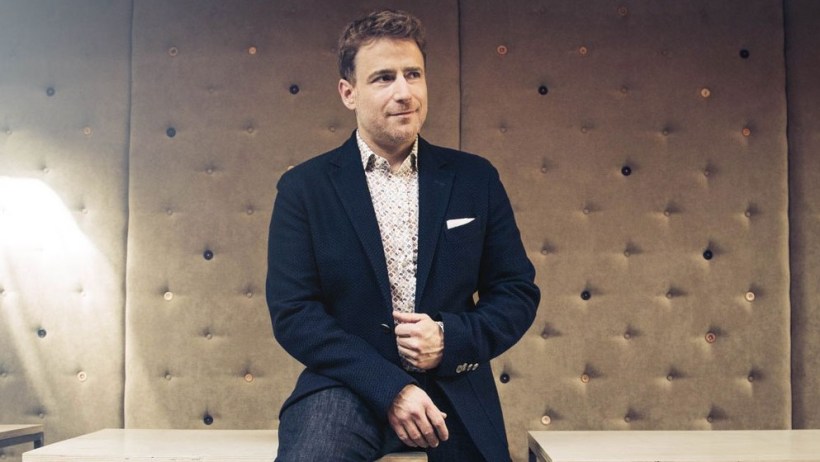
Forbes | In less than two years Slack Technologies has become one of the most glistening of tech’s ten-digit “unicorn” startups, boasting 1.1 million users and a private market valuation of $2.8 billion. If you’ve used Slack’s team-based messaging software, you know that one of its catchiest innovations isSlackbot, a helpful little avatar that pops up periodically to provide tips so jaunty that it seems human.
Such creativity can’t be programmed. Instead, much of it is minted by one of Slack’s 180 employees, Anna Pickard, the 38-year-old editorial director. She earned a theater degree from Britain’s Manchester Metropolitan University before discovering that she hated the constant snubs of auditions that didn’t work out. After dabbling in blogging, videogame writing and cat impersonations, she found her way into tech, where she cooks up zany replies to users who type in “I love you, Slackbot.” It’s her mission, Pickard explains, “to provide users with extra bits of surprise and delight.” The pay is good; the stock options, even better.
What kind of boss hires a thwarted actress for a business-to-business software startup? Stewart Butterfield, Slack’s 42-year-old cofounder and CEO, whose estimated double-digit stake in the company could be worth $300 million or more. He’s the proud holder of an undergraduate degree in philosophy from Canada’s University of Victoria and a master’s degree from Cambridge in philosophy and the history of science.
“Studying philosophy taught me two things,” says Butterfield, sitting in his office in San Francisco’s South of Market district, a neighborhood almost entirely dedicated to the cult of coding. “I learned how to write really clearly. I learned how to follow an argument all the way down, which is invaluable in running meetings. And when I studied the history of science, I learned about the ways that everyone believes something is true–like the old notion of some kind of ether in the air propagating gravitational forces–until they realized that it wasn’t true.”
Slack’s core business benefits from the philosopher’s touch. Hard-core engineers have been trying to build knowledge-management software for at least 15 years. Most of their approaches are so cumbersome that corporate users can’t wait to quit. Slack makes everything simple. It bridges everything from Dropbox to Twitter, helping users organize documents, photos and data files into streamlined channels for easy browsing. Considering that Butterfield spent his early 20s trying to make sense of Wittgenstein’s writings, sorting out corporate knowledge might seem simple.
And he’s far from alone. Throughout the major U.S. tech hubs, whether Silicon Valley or Seattle, Boston or Austin, Tex., software companies are discovering that liberal arts thinking makes them stronger. Engineers may still command the biggest salaries, but at disruptive juggernauts such as Facebook and Uber, the war for talent has moved to nontechnical jobs, particularly sales and marketing. The more that audacious coders dream of changing the world, the more they need to fill their companies with social alchemists who can connect with customers–and make progress seem pleasant.
Think of the ways the automobile revolution of the 1920s created enormous numbers of jobs for people who helped fit cars into everyday life: marketers, salesmen, driving instructors, road crews and so on. Something similar is afoot today. MIT professors Erik Brynjolfsson and Andrew McAfee argue in a recent book, The Second Machine Age, that today’s tech wave will inspire a new style of work in which tech takes care of routine tasks so that people can concentrate on what mortals do best: generating creative ideas and actions in a data-rich world.
The Bureau of Labor Statistics predicts that by 2022 some 1 million more Americans will enter the workforce as educators. Another 1.1 million newcomers will earn a living in sales. Such opportunities won’t be confined to remedial teaching or department store cashiers. Each wave of tech will create fresh demand for high-paid trainers, coaches, workshop leaders and salespeople. By contrast, software engineers’ ranks will grow by 279,500, or barely 3% of overall job growth. Narrowly defined tech jobs, by themselves, aren’t going to be the answer for long-term employment growth, says Michael Chui, a partner at McKinsey Global Institute.
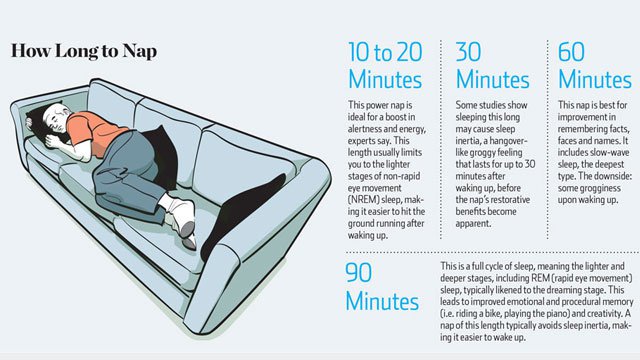
Napping can be great! But sometimes when you wake up after a nap, you feel groggy, almost as if you are more tired than you were before taking the nap. Why does this happen? According to Dr. Michael Breus, “If you take it longer than 30 minutes, you end up in deep sleep. Have you ever taken a nap and felt worse when you woke up? That’s what’s happening — you’re sleeping too long and you’re going into a stage of sleep that’s very difficult to get out of.”[1]
So what are the most ideal ways to nap? Napping can be seen as a quick reboot or boost for the brain. Think of when your computer is starting to perform slowly and things aren’t responding up to par, after you shut everything down and do a reboot, things are back up to speed. The brain is quite similar in that as you nap, even for very short periods of time, benefits can be seen in a number of areas.
Sleep experts suggest that taking a 10-to-20-minute power nap can give you a quick burst of alterness and mental clarity when you don’t have much time. This can be used throughout the day, late at night, before something important, or right before you are trying to beat the final boss of a video game you’ve been playing all night and you know you’ll need the extra quickness.
When I was interested in trying to maximize my time awake (which I still am, but haven’t tried much lately) I did some research into sleeping cycles and how to minimize the amount of sleep you need while still being able to function well. I ended up choosing a cycle that gave me a core sleep and then several naps throughout the day that lasted about 20 minutes. I found that after the 20 minute naps, I felt great – I was very alert, my mental clarity was high, and I was ready to go for the next 3 or 4 hours easily.[2]
I found though, that near the beginning of my experiment with cycles, I would start to lose cognitive clarity as I got closer to the end of the day. While this was part of the transition portion of the cycle, I got to feel what it’s like when the brain just isn’t getting enough deep sleep. According to Dr. Mednick, this is where longer naps of 60 minutes or so are said to be good for increasing that cognitive power again. [1] Mednick also states that the 90-minute nap will likely involve a full cycle of sleep, which aids creativity and emotional and procedural memory, such as learning how to ride a bike. Waking up after REM sleep usually means a minimal amount of sleep inertia.
A study evaluating the recuperative effects of short and ultra short naps found that napping for 5-10 minutes can create a heightened sense of alertness and increase cognitive ability when compared to not taking a nap at all.
If you are looking for a quick recharge: nap for 5 – 20 minutes.
If you are looking for deeper sleep rejuvenation: nap for 60 – 90 minutes.
Final tip: When you take your shorter naps, sit up slightly, as it will allow you to avoid falling into a deeper sleep. If you dream during these power naps, it could be a sign that you are sleep deprived.
The Scientific Power of Naps:
Sources:
1.http://online.wsj.com/news/articles/SB10001424127887323932604579050990895301888
2. http://www.collective-evolution.com/2013/07/13/alternative-sleep-cycles-7-10-hours-is-not-needed/
http://www.spiritscienceandmetaphysics.com/how-long-to-nap-for-the-biggest-brain-benefits/
Mercury Opposite Neptune 2015-08-12
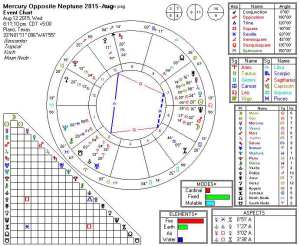
Mercury opposes Neptune on August 12, 2015. This is reputed to be a very good time for writing poetry, playing music, and making photographs and video. It is likely a very bad time for drafting or signing contracts are making lasting commitments.
This particular Merc Opp Neptune contains a Rosetta, a pattern we believe is evident of short lived alliances and sometimes treachery. The Rosetta itself contains Mercury (communications and transportation) along with Pallas (sudden insights, often of a military nature), Vesta (traditions), and Astraea (law and the legal system). This is a particularly bad night for parties that involve alcohol or other drugs. (Do not be surprised if the police show and make arrests.)
Here is the chart, filtered for the Rosetta:
[Click Image to Enlarge]
Again, we encourage you to use this as a period for introspection and “housecleaning” and wait to launch major…
View original post 26 more words
An apt reminder of Who You Are …

Welina mai e nā hoa ē a hau’ōli alōha Lā’pule. Ō ka mihi laʻau mua, a he piko hou. ʻOhoihoi keia nani lā. Ō kā maluhia no me oe.
Warmest greetings to you, Friends, and a happy aloha Sunday. New beginnings start with forgiveness. Enjoy this beautiful day. Peace be with you.

Energy moves in waves. Waves move in patterns.
Patterns move in rhythms. A human being is just that…
Energy, waves, patterns, rhythms…
Nothing more. Nothing less. A dance…~ Gabrielle Roth

There is a law in conscious creation of reality that is even higher than the Law of Attraction. It is the Law of God Action. It is The Secret Above The Secret. When you operate with the Law of God Action, you are operating at the highest level of all things, which is the level of spirit. It is the highest level governs that all other levels. When you work with the Law of God Action, you’re not trying to create anything but you are simply allowing the universe to create through you. You are co-creating with God himself.
The Law of God Action states that God is the one who is acting through you. Therefore there is nothing for you to do, but simply for you to allow God to do everything though you. It doesn’t mean you do not take any action, but it means you do not take action that you are not naturally guided from within to do. When you try to do things that you’re not inspired to do, you are forcing action. The way of God Action is to do non-doing action. It is to allow yourself to do what is seeking expression through you.
Mastery of the world is achieved by letting things take their natural course. You can not master the world by changing the natural way. The Law of God action is to go with the flow in every moment. When you follow your heart in every moment, you are connecting to the essence of who you really are, which is the power and the presence of God. The best action to do is non-doing action, which is doing things the natural way. You are doing God’s work. The Law of God Action is creating from the highest level.

You have no need to travel anywhere – journey within yourself – Enter a mine of Rubies and bathe in the splendor of you own light.
— Rumi
Welina mai e nā hoa ē a hau’ōli alōha Pō’aono! Ua lā pomaikaʻi au. I Hopenapule maika’i. Ō kā maluhia no me oe.
Warmest greetings to you, Friends, and a happy aloha Saturday! Have a blessed day and have a nice weekend. Peace be with you.

Pets are a big concern for many potential expats.
While the financial and personal advantages of retiring abroad are obvious, it’s not so obvious how to fit four-legged family members into the mix.
The mechanics and paperwork for getting Fido or Fluffy from your old home to your new overseas location aren’t overwhelming, but they differ from country to country…and even from season to season.
Also, some of the paperwork requirements, like a valid international health certificate, can be time-sensitive and need to be properly planned for in your relocation timeline.
In most cases, for the countries most expats consider, quarantines aren’t an issue. But like visa and other relocation issues, that can change, and current information is essential.
Another consideration is the cultural norms of the destination country. For example, throughout much of Latin America and Asia, dogs and cats aren’t viewed as the cherished family members they’ve become in North America. The treatment of stray animals and guard dogs can shock some North Americans who consider their own animals to be almost like children. Knowing beforehand how personal pets are viewed in a particular culture can be an important part of acclimating to that culture.
My wife, Suzan, and I traveled for years throughout Mexico, Panama, Ecuador, and Nicaragua with our dog, Jack. Not only did paperwork requirements and timelines change depending on what country we were leaving and going to, but they also changed over time, and varied between airlines.
But we were happy to tackle the learning curve of traveling the world with Jack, because leaving him behind was simply not an option. He was a rescue puppy who never, as long as he lived, forgot what Suzan did for him by adopting him from the pound. He lived to be close to Suzan, and he was only sad when she wasn’t around or he thought he’d disappointed her. He didn’t particularly enjoy travel…he topped out at about 90 pounds, so he rode in the cargo hold, and the look on his face when we brought out his travel kennel said it all. But he’d endure anything to stay close to Suzan. And we’d endure any amount of paperwork and travel logistics to make that happen.
He finally passed away while we were living in Merida, Mexico, and by that time he was better traveled than most of our human friends. He was a dog of the world, and he taught Suzan and I the ropes of living and traveling with a beloved pet.
Jack contributed greatly to what we included in the section on traveling and relocating with pets in The Dream Retirement Project. This is the place to find these tips and tricks, along with practical advice on every other aspect of choosing and moving to the best retirement destinations in the world.
 At the dinner table today, recount a story of how compassion has touched your life.
We may imagine love to be quite utopian, but consider the alternatives. In not choosing love we are left with law and the prospect of global bureaucratic stagnation. In not choosing law we are left with force and the prospect of either global devastation or global domination. If we value our freedom and vitality as a species, we are obliged to do no less than learn to love one another as a human family. And it start with the stories we tell — because those stories shape our view of ourselves and the path we take through this time of collective awakening and global turning. To achieve authentic and lasting reconciliation as the foundation for our future, we can conscisouly choose narrative that require the power of love and compassion as a practical basis for organizing human affairs.
As I get older, I realize that the thing I value the most is good-heartedness.
– Alice Walker
Find Your Magic
Tarot Readings, Inspiration, and Self-Empowerment
Making life on earth magick one moon phase at a time.
Astrologer ~ Mystic ~ Writer
of the Collegium Spiritus Sancti, a Golden Dawn Society
An affiliate of the Alpha et Omega Order of Melchizedek
All Knowledge Is Not Contained In Only One School
Connecting the grant community to #LearnGrants
Channelings & Articles
Magic Spell Books & Grimoires
Native Hawaiian Language Revitalization
Poetry & Tales of Love, Mystery, Magic and Spirituality
Organic Herbs, Herbals, Sustainable Gardening
Mother Nature: Feeding The Mind, Body & Soul, with Food, Medicine & Skincare.
"Inheritor of a Dying World, we call thee to the Living Beauty. Wanderer in the Wild Darkness, we call thee to the Gentle Light..."
Time is the most important thing we've been given
Embracing the Divine Within.
"...That I should bear witness to the truth." - John 18:37 // David E. Robinson, Publisher


 Hālau 'Aha Hui Lānākila