
The past has no power and no hold over me anymore.
The past has no power and no hold over me anymore.
obhāsa — shine, splendour, light, lustre, effulgence

Yo ca vassasataṃ jīve
apassaṃ udayabbayaṃ
ekāhaṃ jīvitaṃ seyyo
passato udayabbayaṃ.
Better it is to live one day
seeing the rise and fall of things
than to live a hundred years
without ever seeing the rise and fall of things.
Dhammapada 8.113
The Dhammapada: The Buddha’s Path of Wisdom,
translated from the Pali by Acharya Buddharakkhita

Yo ca vassasataṃ jīve
dussīlo asamāhito
ekāhaṃ jīvitaṃ seyyo
sīlavantassa jhāyino.
Better it is to live
one day virtuous and meditative
than to live a hundred years
immoral and uncontrolled.
Dhammapada 8.110
The Dhammapada: The Buddha’s Path of Wisdom,
translated from the Pali by Acharya Buddharakkhita

Put aside your old ways of using your eyes and ears and nose, tongue, body, and mind to focus on issues outside there in the world, to get your knowledge about the world, to figure out how to gain what you want out of the world — and of course getting complacent and careless when you get what you want, and upset when you don’t, and trying to find new ways of getting it. Now we want to use our eyes, ears, nose, tongue, body, and mind for other purposes, just to see the processes of the senses as they happen, in and of themselves. Look at them in a way that highlights the movements of the mind, how the mind makes a choice, and how it enforces that choice, how it justifies that choice to itself.
All these processes are going on all the time, but we usually don’t look at them because our attention is focused somewhere else far away. So stay right here at the breath, because this is a great place to observe all these other things. The Buddha makes a comparison to six kinds of animals. If you tie them all to leashes and tie the leashes together, the animals will all pull in their various directions to feed. The crocodile will want to go down to feed in the river, the monkey will want to go climb up to feed in the tree, the hyena will want to go to feed in a charnel ground, and so on. Depending on which animal is the strongest, the others get dragged along.
But if you tie them all to an immovable post, then no matter how hard they pull, they all end up staying right there at the post. The post here is mindfulness immersed in the body. The prime way of immersing mindfulness in the body is to be mindful of the breath. When you stay with the breath, you can detect the pull that goes out the eyes, ears, nose, tongue, body, or mind to past and future, to your likes and dislikes. But you don’t have to give in to that pull because you’ve got a place where you can stay grounded and secure. […]
These things are all here to be observed. They’re all happening all the time. But to see them we have to change our focus. To change our focus requires a change of heart, telling ourselves that this really is important, much more important than things outside. That’s what conviction is all about. Appropriate attention is the change of focus; conviction, the change of heart. You make up your mind — and your heart — that this is an important issue that’s got to be resolved, and this is the way to do it.
——
Reflection:
What does using our senses to see the process of the senses mean to you?
Can you share an experience where staying with your breath allowed you to be more aware of where you were being pulled, and to act with true freedom?
How can we get immovable in ‘mindfulness immersed in the body’?
I know that peaceful sleep awaits me in dreamland.

Mindfulness is the aware, balanced acceptance of the present experience. It isn’t more complicated than that. It is opening to, or receiving the present moment, pleasant or unpleasant, just as it is, without either clinging to it or rejecting it.
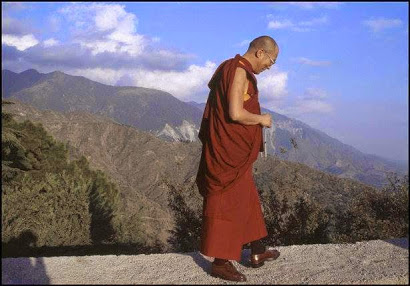
I pray for all of us, oppressor and friend,
that together we may succeed in building a better world
through human understanding and love,
and that in doing so we may reduce
the pain and suffering of all sentient beings.
Be kind whenever possible. It is always possible.
~ Dalai Lama

niraggaḷa — unobstructed, free
Sabbattha ve sappurisā cajanti.
Na kāmakāmā lapayanti santo.
Sukhena phuṭṭhā atha vā dukhena
na uccāvacaṃ paṇḍitā dassayanti.
The good renounce (attachment for) everything.
The virtuous do not prattle with a yearning for pleasures.
The wise show no elation or depression
when touched by happiness or sorrow.
Dhammapada 6.83
The Dhammapada: The Buddha’s Path of Wisdom,
translated from the Pali by Acharya Buddharakkhita

Delish and one of my summer favs! As a Veggie, I would simply substitute the pork with a protein substitute, such as Tempeh, Seitan or seasoned Tofu.

These wraps are a really nice end to a hot day. Simple, filling and refreshing.
Teriyaki Pork Lettuce Wraps
1 pound boneless country style pork spare ribs
2 tablespoons sesame oil
a little seasoning salt and pepper
1 cup teriyaki sauce (recipe below)
romaine or butter lettuce leaves, whole
1 cup cilantro leaves, chopped
2 carrots, peeled and grated
3 Tbsp Mae Ploy Sweet Chili Sauce
1 sheet rice sticks pasta
¼ cup chopped peanuts
In a large bowl, soak rice sticks in water (filtered if your water quality is poor). In a small bowl, stir grated carrot together with Mae Ploy Sauce. Once rice sticks have softened, transfer to colander and drain completely.


Heat a large skillet to medium heat. Rinse pork ribs and sprinkle with seasoning salt and pepper. Heat sesame oil in pan and cook pork, 3-5 minutes per side, until brown. Pour Teriyaki…
View original post 209 more words

Inner peace begins the moment you choose
not to allow another person or event to control your emotions.
Arielle Ford woke up one year into her whirlwind marriage and realised something … Relationships are hard … But …
… we can learn to love our imperfect relationships, not despite the annoyances, but also because of them.
Sick of your partner not picking up his socks? Of always having to fix her car? Of listening to his lame jokes?
In this downright amazing Awesomeness Fest talk, best-selling author Arielle Ford shares the ancient Japanese aesthetic “Wabi Sabi” and how you can apply it to your relationship to turn what drives you nuts into a reminder of love.
Learn how to treasure the cracks, the flaws, the imperfections in the people that you love …

Every flower is a soul blossoming in nature.
 Questions are good, and show you’re alive and thinking. But you’re not going to get the full picture by pecking like a pigeon at crumbs on the sidewalk.
The only way to comprehend what Truth is being said is by a consistent schedule of study and a good teacher.

Giving up is easy and always an option so let us delay it for another day.
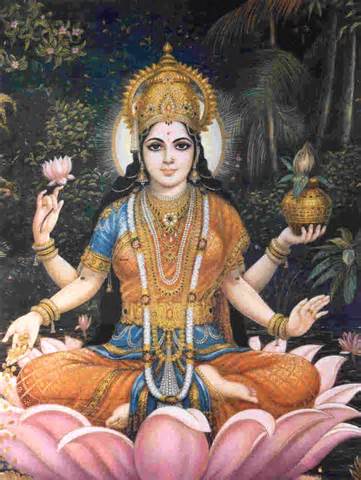
Selo yathā ekaghano vātena na samīrati,
evaṃ nindāpasaṃsāsu na samiñjanti paṇḍitā.
Just as a solid rock is not shaken by the storm,
even so the wise are not affected by praise or blame.
Dhammapada 6.81
The Dhammapada: The Buddha’s Path of Wisdom,
translated from the Pali by Acharya Buddharakkhita

Transform your mornings from a hectic routine of chaos,
into a tranquil time for preparing to face the day.
I have a glass of water, start the coffee, then meditate. Then I enjoy the coffee, a good book, and the quiet before the dust and din and steam of the day begins. Then I write.
This is my Lovely Morning, and I get an inordinate amount of pleasure from it.
It wasn’t always this way: I used to wake later, rush through a grumpy routine before diving into email and work and errands and meetings. It was frenetic and dreadful, but that was my life, and I didn’t think it would change.
I was wrong. I’ve changed my mornings for the better, with a few simple ideas.
I’ll share them with you here, and if you begin to enjoy the peace of your mornings more, send a smile in my general direction.
If your mornings are rushed, the simple solution is to get up a bit earlier. This means going to bed a bit earlier too. Do it gradually, just 10 minutes earlier a week, and you’ll barely notice the change.
By Leo Babauta
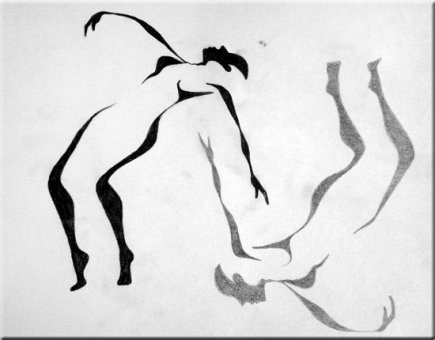
“Our first encounter with the term ‘selem,’ [image] of course, is in the narrative of man’s creation … ‘In the image of God He created Him’ (Gen. 1:26-27). The nature of this ‘image,’ though, is not sufficiently clear…The Kabbalists often introduce an additional verse, ‘For in the image man shall walk’ (Ps. 39:7), to show that the ‘selem’ is an integral part of man on earth. What then is the ‘selem’ in their conception. There is a basic assumption that two elements diametrically opposed by nature cannot exist together without some mediating entity. This also goes for the ‘nefesh’ [soul] and body…In Neoplatonic teaching and in ancient religions we find mention of an intermediary astral body; in the Kabbalah, the term ‘selem’ is borrowed to speak of the same idea. Thus we read in the Zohar: ‘When a man begins to consecrate himself before intercourse with his wife with a sacred intention, a holy spirit is aroused above him, composed of both male and female. And the Holy One, blessed be He, directs an emissary who is in charge of human embryos, and assigns to him this particular spirit, and indicates to him the place to which it should be entrusted…When the soul descends in order to enter this world…the holy image stands by it until it goes out into the world. When it does out into the world the image is summoned for it and it accompanies it and grows with it…And man’s days exist through the image, and are dependent on it.’ Thus the ‘image’ accompanies man all the days of his life … The ‘selem,’ then, is sometimes identified with a shadow accompanying man. In that sense, the ‘image’ constitutes the principium individuationis [principle of individuation], the individual and unique element in each person.”
– Moshe Hallamish in “An Introduction to the Kabbalah,” p. 274-275
 There’s a myriad of methods for meditation. Some are easy and some are difficult. All require daily practice to perfect. Here are five of the most popular methods of meditation and what they each bring to the Meditation Table. Here’s why You Should Mix them for Maximum Mindfulness.
Mindfulness, or Spiritual Method:
A most popular method comes from Buddhist meditation practice of Vipassana. It’s all about practicing detachment from each thought and being centered in the “here and now.” It focuses on situational awareness and “in the moment” presence. There is also a focus on communion with the cosmos, which can translate to prayer, but not necessarily. The best way to commune with the universe is to ask questions as opposed to seeking answers. In the mindfulness method, answers are mere side-effects of good questioning.
How to: One can practice mindfulness in any position, even lying down. The key is presence with the present moment, and clear and concise communion with the cosmos.
Zen or Zazen Method:
Also from the Buddhist tradition, this method is all about simply sitting. It is often done for long periods of time. Its focus is mostly on posture and spine alignment with minimal focus on breathing techniques. It is the most monastic of all the methods and is therefore difficult to make progress in. Most monks practice this method while concentrating on a Zen koan or spiritual parable.
How to: The most effective positioning of the body for the practice of Zazen is the stable, symmetrical position of the seated Buddha. Keeping the back straight and centered, pretend a silver thread is pulled taut through your spine and up through your head, connecting to the ceiling.
Kundalini or Transcendental Method:
This method comes from the Vedanta Hinduism tradition and ties into different forms of Yoga practices. It focuses more on breathing patterns than the previous methods, using the power of breathing to launch one into a higher sense of self, or even a transformation of self. The electromagnetic field created by the human body is akin to the electromagnetic field created by the Earth. Transcendental method is all about tapping into the stream of energy naturally created by the relationship between the human body’s energy chakras with the environment’s energy vortexes. The main focus of this method is to ride this rising stream into infinity, to learn what needs to be learned, and then to return to the finite realms with new-knowledge in tow.
How to: Breathing is primary. Positioning is secondary. Relax your body, take three deep breaths; then proceed to take deep breaths and hold them for at least ten seconds each. This allows for the oxygen to cleanse the chakras and then release toxins through exhalation, while increasing kundalini energy.
Fractal Enlightenment| There’s a myriad of methods for meditation. Some are easy and some are difficult. All require daily practice to perfect. Here are five of the most popular methods of meditation and what they each bring to the Meditation Table. Here’s why You Should Mix them for Maximum Mindfulness.
Mindfulness, or Spiritual Method:
A most popular method comes from Buddhist meditation practice of Vipassana. It’s all about practicing detachment from each thought and being centered in the “here and now.” It focuses on situational awareness and “in the moment” presence. There is also a focus on communion with the cosmos, which can translate to prayer, but not necessarily. The best way to commune with the universe is to ask questions as opposed to seeking answers. In the mindfulness method, answers are mere side-effects of good questioning.
How to: One can practice mindfulness in any position, even lying down. The key is presence with the present moment, and clear and concise communion with the cosmos.
– See more at: http://www.spiritscienceandmetaphysics.com/5-meaningful-methods-of-meditation/#sthash.VMrUBuh9.dpuf
Qigong Method or Movement Method:
This method comes from the Taoist tradition. It is all about hyper-focus on breathing techniques and/or bodily movements to cultivate and maintain life energy. This is the most philosophical of the methods, deriving most of its techniques from martial arts and meditative healing methods. It focuses on moving Qi (life force) through the body through focused breathing, mental techniques, and precise movements. This method is all about the balance and equilibrium of both inner and outer forces.
How to: No matter what Qi exercise you’re doing, imagine the Qi moving through your body as you breathe in an out. As you inhale through your nose, imagine the Qi moving through your body and down to your Lower Dantian, or naval area. As you exhale through your mouth imagine the Qi moving through the rest of your body. Repeat.
Drumming and/or Om Method:
This may be the oldest form of meditation known to humanity. The drumming method is typically used by native and aboriginal cultures, and is generally shamanic in nature. The Om method is traditionally from Vedanta Hinduism, though the sound itself is fairly universal to mankind. These methods focus on breathing and heart rhythm in accordance with, or even dissonance with, the sound and feel of the percussion or mantra.
The heart beat itself is a drum. Breathing is a drum beat that we can control. These two methods are all about transformation through vibration and the awareness of cosmic frequencies. Shamans often use drum meditation to cross physical, mental, and spiritual thresholds. It’s a bridge that carries them to a higher sense of self in accordance with the greater cosmos.
How to: Create a sacred place. Clear your mind. Breathe with intent. If you’re the drummer, infuse your intention into the drum before drumming. Begin playing or listening to the drum. Give yourself a few minutes to fall into rhythm with the beat. Fade your drumming into silence, feeling your body’s response to the beat, then return to the drum. Repeat with clear intent.
There you have it: a minor helping of meditative methods. Each have specific techniques, but they all overlap in various ways. One of the keys to becoming a meditative master is to use all the methods to your advantage, while also allowing for personal creativity by giving your meditation a signature as unique as your own fingerprint.
Remember: the heartbeat that sustains your life is acting on the same frequency that sustains the universe. The heart with which you feel God is the same heart with which God feels you. May the Om be with you.
By Gary Z McGee
As written by Mariana Caplan, Ph.D. It is a jungle out there, and it is no less true about spiritual life than any other aspect of life. Do we really think that just because someone has been meditating for five years, or doing 10 years of yoga practice, that they will be any less neurotic than the next person? At best, perhaps they will be a little bit more aware of it. A little bit.
It is for this reason that I spent the last 15 years of my life researching and writing books on cultivating discernment on the spiritual path in all the gritty areas–power, sex, enlightenment, gurus, scandals, psychology, neurosis — as well as earnest, but just plain confused and unconscious, motivations on the path. My partner (author and teacher Marc Gafni) and I are developing a new series of books, courses and practices to bring further clarification to these issues.
Several years ago, I spent a summer living and working in South Africa. Upon my arrival I was instantly confronted by the visceral reality that I was in the country with the highest murder rate in the world, where rape was common and more than half the population was HIV-positive — men and women, gays and straights alike.
As I have come to know hundreds of spiritual teachers and thousands of spiritual practitioners through my work and travels, I have been struck by the way in which our spiritual views, perspectives and experiences become similarly “infected” by “conceptual contaminants” — comprising a confused and immature relationship to complex spiritual principles can seem as invisible and insidious as a sexually transmitted disease.
The following 10 categorizations are not intended to be definitive but are offered as a tool for becoming aware of some of the most common spiritually transmitted diseases.
1. Fast-Food Spirituality: Mix spirituality with a culture that celebrates speed, multitasking and instant gratification and the result is likely to be fast-food spirituality. Fast-food spirituality is a product of the common and understandable fantasy that relief from the suffering of our human condition can be quick and easy. One thing is clear, however: spiritual transformation cannot be had in a quick fix.
2. Faux Spirituality: Faux spirituality is the tendency to talk, dress and act as we imagine a spiritual person would. It is a kind of imitation spirituality that mimics spiritual realization in the way that leopard-skin fabric imitates the genuine skin of a leopard.
3. Confused Motivations: Although our desire to grow is genuine and pure, it often gets mixed with lesser motivations, including the wish to be loved, the desire to belong, the need to fill our internal emptiness, the belief that the spiritual path will remove our suffering and spiritual ambition, the wish to be special, to be better than, to be “the one.”
4. Identifying with Spiritual Experiences: In this disease, the ego identifies with our spiritual experience and takes it as its own, and we begin to believe that we are embodying insights that have arisen within us at certain times. In most cases, it does not last indefinitely, although it tends to endure for longer periods of time in those who believe themselves to be enlightened and/or who function as spiritual teachers.
5. The Spiritualized Ego: This disease occurs when the very structure of the egoic personality becomes deeply embedded with spiritual concepts and ideas. The result is an egoic structure that is “bullet-proof.” When the ego becomes spiritualized, we are invulnerable to help, new input, or constructive feedback. We become impenetrable human beings and are stunted in our spiritual growth, all in the name of spirituality.
6. Mass Production of Spiritual Teachers: There are a number of current trendy spiritual traditions that produce people who believe themselves to be at a level of spiritual enlightenment, or mastery, that is far beyond their actual level. This disease functions like a spiritual conveyor belt: put on this glow, get that insight, and — bam! — you’re enlightened and ready to enlighten others in similar fashion. The problem is not that such teachers instruct but that they represent themselves as having achieved spiritual mastery.
7. Spiritual Pride: Spiritual pride arises when the practitioner, through years of labored effort, has actually attained a certain level of wisdom and uses that attainment to justify shutting down to further experience. A feeling of “spiritual superiority” is another symptom of this spiritually transmitted disease. It manifests as a subtle feeling that “I am better, more wise and above others because I am spiritual.”
8. Group Mind: Also described as groupthink, cultic mentality or ashram disease, group mind is an insidious virus that contains many elements of traditional co-dependence. A spiritual group makes subtle and unconscious agreements regarding the correct ways to think, talk, dress, and act. Individuals and groups infected with “group mind” reject individuals, attitudes, and circumstances that do not conform to the often unwritten rules of the group.
9. The Chosen-People Complex: The chosen people complex is not limited to Jews. It is the belief that “Our group is more spiritually evolved, powerful, enlightened and, simply put, better than any other group.” There is an important distinction between the recognition that one has found the right path, teacher or community for themselves, and having found The One.
10. The Deadly Virus: “I Have Arrived”: This disease is so potent that it has the capacity to be terminal and deadly to our spiritual evolution. This is the belief that “I have arrived” at the final goal of the spiritual path. Our spiritual progress ends at the point where this belief becomes crystallized in our psyche, for the moment we begin to believe that we have reached the end of the path, further growth ceases.
“The essence of love is perception,” according to the teachings of Marc Gafni, “Therefore the essence of self love is self perception. You can only fall in love with someone you can see clearly–including yourself. To love is to have eyes to see. It is only when you see yourself clearly that you can begin to love yourself.”
It is in the spirit of Marc’s teaching that I believe that a critical part of learning discernment on the spiritual path is discovering the pervasive illnesses of ego and self-deception that are in all of us. That is when we need a sense of humor and the support of real spiritual friends. As we face our obstacles to spiritual growth, there are times when it is easy to fall into a sense of despair and self-diminishment and lose our confidence on the path. We must keep the faith, in ourselves and in others, in order to really make a difference in this world.
Source: Huffington Post
– See more at: http://www.spiritscienceandmetaphysics.com/10-spiritually-transmitted-diseases/#sthash.BS8FUzAq.dpuf
As written by Mariana Caplan, Ph.D. It is a jungle out there, and it is no less true about spiritual life than any other aspect of life. Do we really think that just because someone has been meditating for five years, or doing 10 years of yoga practice, that they will be any less neurotic than the next person? At best, perhaps they will be a little bit more aware of it. A little bit.
It is for this reason that I spent the last 15 years of my life researching and writing books on cultivating discernment on the spiritual path in all the gritty areas–power, sex, enlightenment, gurus, scandals, psychology, neurosis — as well as earnest, but just plain confused and unconscious, motivations on the path. My partner (author and teacher Marc Gafni) and I are developing a new series of books, courses and practices to bring further clarification to these issues.
Several years ago, I spent a summer living and working in South Africa. Upon my arrival I was instantly confronted by the visceral reality that I was in the country with the highest murder rate in the world, where rape was common and more than half the population was HIV-positive — men and women, gays and straights alike.
As I have come to know hundreds of spiritual teachers and thousands of spiritual practitioners through my work and travels, I have been struck by the way in which our spiritual views, perspectives and experiences become similarly “infected” by “conceptual contaminants” — comprising a confused and immature relationship to complex spiritual principles can seem as invisible and insidious as a sexually transmitted disease.
The following 10 categorizations are not intended to be definitive but are offered as a tool for becoming aware of some of the most common spiritually transmitted diseases.
1. Fast-Food Spirituality: Mix spirituality with a culture that celebrates speed, multitasking and instant gratification and the result is likely to be fast-food spirituality. Fast-food spirituality is a product of the common and understandable fantasy that relief from the suffering of our human condition can be quick and easy. One thing is clear, however: spiritual transformation cannot be had in a quick fix.
2. Faux Spirituality: Faux spirituality is the tendency to talk, dress and act as we imagine a spiritual person would. It is a kind of imitation spirituality that mimics spiritual realization in the way that leopard-skin fabric imitates the genuine skin of a leopard.
3. Confused Motivations: Although our desire to grow is genuine and pure, it often gets mixed with lesser motivations, including the wish to be loved, the desire to belong, the need to fill our internal emptiness, the belief that the spiritual path will remove our suffering and spiritual ambition, the wish to be special, to be better than, to be “the one.”
4. Identifying with Spiritual Experiences: In this disease, the ego identifies with our spiritual experience and takes it as its own, and we begin to believe that we are embodying insights that have arisen within us at certain times. In most cases, it does not last indefinitely, although it tends to endure for longer periods of time in those who believe themselves to be enlightened and/or who function as spiritual teachers.
5. The Spiritualized Ego: This disease occurs when the very structure of the egoic personality becomes deeply embedded with spiritual concepts and ideas. The result is an egoic structure that is “bullet-proof.” When the ego becomes spiritualized, we are invulnerable to help, new input, or constructive feedback. We become impenetrable human beings and are stunted in our spiritual growth, all in the name of spirituality.
6. Mass Production of Spiritual Teachers: There are a number of current trendy spiritual traditions that produce people who believe themselves to be at a level of spiritual enlightenment, or mastery, that is far beyond their actual level. This disease functions like a spiritual conveyor belt: put on this glow, get that insight, and — bam! — you’re enlightened and ready to enlighten others in similar fashion. The problem is not that such teachers instruct but that they represent themselves as having achieved spiritual mastery.
7. Spiritual Pride: Spiritual pride arises when the practitioner, through years of labored effort, has actually attained a certain level of wisdom and uses that attainment to justify shutting down to further experience. A feeling of “spiritual superiority” is another symptom of this spiritually transmitted disease. It manifests as a subtle feeling that “I am better, more wise and above others because I am spiritual.”
8. Group Mind: Also described as groupthink, cultic mentality or ashram disease, group mind is an insidious virus that contains many elements of traditional co-dependence. A spiritual group makes subtle and unconscious agreements regarding the correct ways to think, talk, dress, and act. Individuals and groups infected with “group mind” reject individuals, attitudes, and circumstances that do not conform to the often unwritten rules of the group.
9. The Chosen-People Complex: The chosen people complex is not limited to Jews. It is the belief that “Our group is more spiritually evolved, powerful, enlightened and, simply put, better than any other group.” There is an important distinction between the recognition that one has found the right path, teacher or community for themselves, and having found The One.
10. The Deadly Virus: “I Have Arrived”: This disease is so potent that it has the capacity to be terminal and deadly to our spiritual evolution. This is the belief that “I have arrived” at the final goal of the spiritual path. Our spiritual progress ends at the point where this belief becomes crystallized in our psyche, for the moment we begin to believe that we have reached the end of the path, further growth ceases.
“The essence of love is perception,” according to the teachings of Marc Gafni, “Therefore the essence of self love is self perception. You can only fall in love with someone you can see clearly–including yourself. To love is to have eyes to see. It is only when you see yourself clearly that you can begin to love yourself.”
It is in the spirit of Marc’s teaching that I believe that a critical part of learning discernment on the spiritual path is discovering the pervasive illnesses of ego and self-deception that are in all of us. That is when we need a sense of humor and the support of real spiritual friends. As we face our obstacles to spiritual growth, there are times when it is easy to fall into a sense of despair and self-diminishment and lose our confidence on the path. We must keep the faith, in ourselves and in others, in order to really make a difference in this world.
Source: Huffington Post
– See more at: http://www.spiritscienceandmetaphysics.com/10-spiritually-transmitted-diseases/#sthash.BS8FUzAq.dpuf
As written by Mariana Caplan, Ph.D. It is a jungle out there, and it is no less true about spiritual life than any other aspect of life. Do we really think that just because someone has been meditating for five years, or doing 10 years of yoga practice, that they will be any less neurotic than the next person? At best, perhaps they will be a little bit more aware of it. A little bit.
It is for this reason that I spent the last 15 years of my life researching and writing books on cultivating discernment on the spiritual path in all the gritty areas–power, sex, enlightenment, gurus, scandals, psychology, neurosis — as well as earnest, but just plain confused and unconscious, motivations on the path. My partner (author and teacher Marc Gafni) and I are developing a new series of books, courses and practices to bring further clarification to these issues.
Several years ago, I spent a summer living and working in South Africa. Upon my arrival I was instantly confronted by the visceral reality that I was in the country with the highest murder rate in the world, where rape was common and more than half the population was HIV-positive — men and women, gays and straights alike.
As I have come to know hundreds of spiritual teachers and thousands of spiritual practitioners through my work and travels, I have been struck by the way in which our spiritual views, perspectives and experiences become similarly “infected” by “conceptual contaminants” — comprising a confused and immature relationship to complex spiritual principles can seem as invisible and insidious as a sexually transmitted disease.
The following 10 categorizations are not intended to be definitive but are offered as a tool for becoming aware of some of the most common spiritually transmitted diseases.
1. Fast-Food Spirituality: Mix spirituality with a culture that celebrates speed, multitasking and instant gratification and the result is likely to be fast-food spirituality. Fast-food spirituality is a product of the common and understandable fantasy that relief from the suffering of our human condition can be quick and easy. One thing is clear, however: spiritual transformation cannot be had in a quick fix.
2. Faux Spirituality: Faux spirituality is the tendency to talk, dress and act as we imagine a spiritual person would. It is a kind of imitation spirituality that mimics spiritual realization in the way that leopard-skin fabric imitates the genuine skin of a leopard.
3. Confused Motivations: Although our desire to grow is genuine and pure, it often gets mixed with lesser motivations, including the wish to be loved, the desire to belong, the need to fill our internal emptiness, the belief that the spiritual path will remove our suffering and spiritual ambition, the wish to be special, to be better than, to be “the one.”
4. Identifying with Spiritual Experiences: In this disease, the ego identifies with our spiritual experience and takes it as its own, and we begin to believe that we are embodying insights that have arisen within us at certain times. In most cases, it does not last indefinitely, although it tends to endure for longer periods of time in those who believe themselves to be enlightened and/or who function as spiritual teachers.
5. The Spiritualized Ego: This disease occurs when the very structure of the egoic personality becomes deeply embedded with spiritual concepts and ideas. The result is an egoic structure that is “bullet-proof.” When the ego becomes spiritualized, we are invulnerable to help, new input, or constructive feedback. We become impenetrable human beings and are stunted in our spiritual growth, all in the name of spirituality.
6. Mass Production of Spiritual Teachers: There are a number of current trendy spiritual traditions that produce people who believe themselves to be at a level of spiritual enlightenment, or mastery, that is far beyond their actual level. This disease functions like a spiritual conveyor belt: put on this glow, get that insight, and — bam! — you’re enlightened and ready to enlighten others in similar fashion. The problem is not that such teachers instruct but that they represent themselves as having achieved spiritual mastery.
7. Spiritual Pride: Spiritual pride arises when the practitioner, through years of labored effort, has actually attained a certain level of wisdom and uses that attainment to justify shutting down to further experience. A feeling of “spiritual superiority” is another symptom of this spiritually transmitted disease. It manifests as a subtle feeling that “I am better, more wise and above others because I am spiritual.”
8. Group Mind: Also described as groupthink, cultic mentality or ashram disease, group mind is an insidious virus that contains many elements of traditional co-dependence. A spiritual group makes subtle and unconscious agreements regarding the correct ways to think, talk, dress, and act. Individuals and groups infected with “group mind” reject individuals, attitudes, and circumstances that do not conform to the often unwritten rules of the group.
9. The Chosen-People Complex: The chosen people complex is not limited to Jews. It is the belief that “Our group is more spiritually evolved, powerful, enlightened and, simply put, better than any other group.” There is an important distinction between the recognition that one has found the right path, teacher or community for themselves, and having found The One.
10. The Deadly Virus: “I Have Arrived”: This disease is so potent that it has the capacity to be terminal and deadly to our spiritual evolution. This is the belief that “I have arrived” at the final goal of the spiritual path. Our spiritual progress ends at the point where this belief becomes crystallized in our psyche, for the moment we begin to believe that we have reached the end of the path, further growth ceases.
“The essence of love is perception,” according to the teachings of Marc Gafni, “Therefore the essence of self love is self perception. You can only fall in love with someone you can see clearly–including yourself. To love is to have eyes to see. It is only when you see yourself clearly that you can begin to love yourself.”
It is in the spirit of Marc’s teaching that I believe that a critical part of learning discernment on the spiritual path is discovering the pervasive illnesses of ego and self-deception that are in all of us. That is when we need a sense of humor and the support of real spiritual friends. As we face our obstacles to spiritual growth, there are times when it is easy to fall into a sense of despair and self-diminishment and lose our confidence on the path. We must keep the faith, in ourselves and in others, in order to really make a difference in this world.
Source: Huffington Post
– See more at: http://www.spiritscienceandmetaphysics.com/10-spiritually-transmitted-diseases/#sthash.BS8FUzAq.dpuf

anuttara — an + uttara = nothing + higher, without a superior, incomparable,
second to none, unsurpassed, excellent, preeminent, the unexcelled

Hitānukampī sambuddho
yadaññamanusāsati,
anurodhavirodhehi
vippamutto tathāgato.
When the Buddha teaches others
he does so out of compassion,
because the Tathagata is wholly freed
from both favour and aversion.
Saṃyutta Nikāya 1.150
Gemstones of the Good Dhamma, compiled and translated by Ven. S. Dhammika

The first law of thermal dynamics states that energy cannot be created or destroyed. The Hawaiians must have known this as they believed that while the sacredness of a place could perhaps be defiled, it could never be lost. Energy extends to sacred places and the objects within them, such as pohaku. Pohaku hold a lot of power and seek to be in their proper place at all times. (Just ask anyone who has tried to bring black sand or lava pieces home with them after picking them up from Hawaiian shores. The disasters cease when these items are returned to Hawai’i Nei.) Although Hawai’i is not Mecca, Lhasa or Lourdes, the islands deserve to be recognized as the land of the gods and goddesses. The land is not just filled with sacred objects, the land itself is sacred and blessed. When one makes a journey, they must first chant to the place to which they are traveling, because no one else will ever experience what they will experience there. Every experience mixes our own personal consciousness with the sacred power of the particular place. And, in Hawai’i, there are many powerful and mysterious experiences to be had.
‘Amama ‘ua noa … Let these prayers fly!

Divine Creator, Father, Mother, Son As One
If I, my family, relatives and ancestors have
Offended you, your family, relatives and ancestors,
In thoughts, words, deeds and actions
From the beginning of our creation to the present,
We ask your forgiveness.
Let this cleanse, purify, release and cut all the negative
Memories, blocks, energies and vibrations,
And transmute these unwanted energies to Pure Light.
Amen.
~~
He Pule O Ka Ho’ola Ana
Kou inoa ku’u ho’ola, e ku’u Akua,
A me ka ho’omana’o ana ia oe ku’u la’au.
I kou alo ku’u mana’olana a me ke aloha Nou ku’u hoa like.
Kou aloha ia’u ku’u ho’ola a me ku’u maha
i loko o ka honua a me ka honua o ka wa ma mua.
‘O ‘Oe ke Akua Ho’olako apau, ke Akua Ho’oiai’o,
ke Akua Ho’ona’auao apau.

Ka Pule No Ka Malumalu ~ Ka Pule Lokahi
The Prayer of Protection ~ The Unity Prayer
~~~
Ka Malamalama O Ke Akua E Ho’opuni Mai Ia Kakou
The Light of God surrounds us.
Ke Aloha O Ke Akua E Kipuni Mai Ia Kakou
The Love of God enfolds us.
Ka Mana O Ke Akua E Ho’opakele Mai Ia Kakou
The Power of God protects us.
Ke Alo O Ke Akua E Malama Mai Ia Kakou
The Presence of God watches over us.
Ma Kahi A Kakou, E Hele Aku Ai He Akua No.
Where we are, God is.
Amene
Amen

David Haye explains why, six months ago, he took the decision to become a vegan: “I watched a TV documentary about how animals are farmed, killed and prepared for us to eat. I saw all those cows and pigs and realised I couldn’t be a part of it any more. It was horrible. I did some research to make sure I could still obtain enough protein to fight and, once satisfied that I could, I stopped. I’ll never go back.”
When the mind is pure, joy follows like a shadow that will never leave.
~ Buddha
For the next few days, notice when your thoughts start racing and stress levels begin to escalate- and take that opportunity to stop and observe this process. What are those thoughts about? Where are they coming from? What’s causing them? The more you can detach from spiraling thoughts, the less likely you are to become victimized by them.
Begin your day with this inspired Sunrise Guided Meditation, and use this time to simply observe your thoughts as you begin your day. Namaste’.

nirupatāpa — untroubled, without vexation

Energy debris can be a result of negative emotions, thoughts, occurrences, and stress that you have experienced in your space. Your house is like a sponge. Whatever transpires in your environment is absorbed into the walls, furniture, carpet, ceiling, and objects.
Frequently, these negative energies accumulate in the corners and tucked away places. Also, if you had a negative event happen recently or a lot of sadness or fear, cleanse your space immediately! Visualize space cleansing as wiping away dust bunnies from the past.
When Should You Space Cleanse?
The following situations are appropriate times to space cleanse:
After you remove clutter
After an argument
When you move into a new space
When a roommate or companion moves out
After a divorce or break-up
After an illness or death
When you buy an antique or second-hand item
Anytime you desire fresh energy for a new project or beginning.
Before implementing feng shui
How to Cleanse a Space:
Here is a simple space-cleansing technique to perform on your home, office, or even on a specific object:
Create a strong intention in your mind to clear the space in order to bring in vibrant, healthy energy.
Burn Palo Santo, Sandalwood #incense or dried #sage to disintegrate the negative energy in each room. (Buy incense imported from India, Japan or China as the energy is stronger: http://shrsl.com/?~5uvl – Wave it counterclockwise in each corner, closet, and cabinet.
You may also let one stick burn in each room. Say, “Thank you for the complete disintegration of all negative energies, thoughts, and emotions from this room now.”
After cleansing, always open East windows and doors to allow fresh energy of the sun to enter.
Light a candle to dedicate energy to your endeavors. Say your wish out loud. For example, “I am so grateful for all the love, harmony, and healthy energy pouring into my home right now.”
Imagine brilliant white light filling the whole space. Visualize your home or office as a shining star emanating light, positive energy and blessing to everyone who enters.
Feel confident that the energy in your home is fresh and ready to receive all the opportunities Summer has in store for you!
#PaloSanto is a #sacred #wood that comes from the Palo Santo trees of South America. When burned, the smoke has medicinal and therapeutic healing power. It also inspires creativity & clears negative energy. You can find some reasonably priced here: http://shrsl.com/?~5uvl

Carañce nādhigaccheyya
seyyaṃ sadisamattano,
ekacariyaṃ daḷhaṃ kayirā;
natthi bāle sahāyatā.
Should a seeker not find
a companion who is better or equal,
let one resolutely pursue a solitary course;
there is no fellowship with the fool.
Dhammapada 5.61
The Dhammapada: The Buddha’s Path of Wisdom,
translated from the Pali by Acharya Buddharakkhita

Nutrition can save America … But from what, exactly?
Every day, it seems, there are more signs of the accelerating decline of the American Empire. The economy is tanking, the currency is being abandoned by other nations, health care remains a disastrous failure, unemployment is atrociously high, prisons are filled to capacity, public education is failing yet another generation of children, and the population seems to be getting more diseased with each generation.
The question, though, is why?
Why is our population so diseased? Why is unemployment so high? Why can’t our kids learn well in school? Why is America losing its leadership position in the world? Why are so many jobs being offshored to other countries?
What if there were a single underlying reason that answered all these questions? As you may have guessed, there is:
Nutrition.
Poor nutrition destroys any nation. Good nutrition saves it. And in this NaturalNews special report, you’ll learn why nutrition plays such a powerful role in the rise or fall of any nation.
It’s also a warning message for America: If we don’t make immediate, radical changes in the available food supply — and the marketing of foods to consumers — we won’t survive much longer as a nation. America will fall, brought down by the inevitable consequences of a nutritionally deficient, chronically diseased population.
But to understand why this is the case, you first have to see why food has such a powerful impact on everything that matters in society: Health, happiness, employment, productivity, education and even freedom. To explain all that, let’s start with a lesson on poor nutrition.
You are what you eat. It’s a saying as old as written history. Throughout every culture, people have known this simple truth since the dawn of Man (and Woman). But before we can even talk about the consequences of “bad” food choices for a nation, we have to engage in some honest talk about what “bad” foods really are.
It’s a sobering discussion, too, because most people follow atrociously bad diets… Including many people who think they eat a fairly healthy diet. Perhaps 90 percent of the U.S. population eats a “bad” diet right now.
The official government definition of a bad diet is nonexistent. The USDA wants Americans to eat more of everything: More dairy, more meat, more grains, and even more sugar. That’s because these are the industries served by the USDA. In their minds, “poor nutrition” just means people aren’t eating enough dairy, meat, grains and sugar. The USDA remains stuck in the mindset of the 1930’s when people were literally starving from a lack of calories. So their policy incessantly remains “Eat More!”
But Americans don’t need to eat more. They need to eat less. A lot less. And especially less of the highly toxic, disease-promoting foods described below.
Here are the characteristics of a bad diet:
• Primarily consists of dead foods (cooked, microwaved, etc.)
• Primarily consists of processed foods (milled, bleached, etc.)
• Lacks large quantities of fresh, living fruits and vegetables.
• Avoids adequate water hydration (and focuses on manufactured beverages).
• Very high in processed sugars and processed carbohydrates.
• Contains genetically-modified foods such as corn, soy or sugar from GM sugar beets.
• Includes a large amount of processed, pasteurized dairy products such as cow’s milk.
• Is made with hundreds of different chemical food additives from MSG and aspartame to chemical preservatives.
• Is packaged in toxic food containers, including plastics and epoxy resins that contaminate the food with BPA.
• Primarily consists of conventionally-grown, pesticide-contaminated foods.
• Contains a large quantity of unhealthy oils such as corn oil, soy oil or partially-hydrogenated oils.
• Consists of a large number of fried foods or foods cooked at very high temperatures that destroy nutrients while creating carcinogenic compounds.
• Is made with many modified, unnatural ingredients such hydrogenated oils, refined sugar (which removes the minerals), homogenized milk fats, and so on.
• Consists of a large quantity of animal products.
As I mentioned, perhaps 90 percent of the U.S. population currently eats a diet that’s largely consistent with the above description. As you’ll soon see, this is destroying our nation.
The diet previously described is a diet of death that delivers physical and mental impairment. Here’s an accounting of some of the major consequences of pursuing such a diet:
Personal Health: This diet causes rapid aging and the aggressive development of degenerative disease: Cancer, heart disease, diabetes, obesity, Alzheimer’s disease, etc. The population also remains highly susceptible to infectious disease.
Health Care Costs: In a nation that follows a bad diet, health care costs spiral out of control, eventually consuming a quarter (or more) of the GDP, driving the nation into bankruptcy.
Education: Growing up on this bad diet, children suffer severe cognitive impairment and are unable to learn in school. In time, academic achievement of the nation falls sharply, and the great “dumbing down” of the population accelerates.
Employment & Economy: A sick, diseased population is very expensive to maintain on the payrolls of Corporate America. Poisoned by processed food diets, workers suffer from repeated sick days and poor cognitive performance at work (inability to focus, failure to learn, failure to create new ideas, etc.), all of which make the workforce increasingly expensive for corporations to maintain. Not surprisingly, this causes yet a further shift of jobs to other nations where workers are more productive, healthier and less expensive.
Violent Crime: With their brains fueled by junk foods (and with failed education giving them few options for earning an honest living), more people turn to crime. In time, the prisons become filled with people incarcerated for behavior that could have been at least partially prevented with proper nutrition.
Happiness: With disease rates skyrocketing, violent crime on the rise, education failures rampant and health care costs bankrupting families, happiness plummets to all-time lows.
Genetic Integrity: As junk food consumption continues through multiple generations, the genetic integrity of the population erodes. Birth defects increase while fertility rates plummet. The population increasingly becomes haunted with unhealthy genetic mutations that promote yet more disease in future generations.
Economic Productivity: Poor nutrition leads to disastrous economic productivity. Powered by junk foods, the population becomes virtually useless as a workforce. Instead of producing new ideas, new products and new innovations that improve the world, people sit around eating Fritos and watching YouTube videos. Economic productivity plummets, and employers shift jobs to overseas markets where people often demonstrate much higher levels of productivity.
World Leadership: With its population falling behind the world academically and economically, the nation loses its leadership position on the world stage and begins to lose its leverage for maintaining the dominance of its currency.
Democracy & Freedom: When the voters subsist on a bad diet, their minds are clouded and child-like. They are easily manipulated to vote for politicians who are essentially “entertainers” — people who look good on TV but have no real ability to improve the long-term situation for the country. Voters on junk foods elect the very people who continue to drive the nation into disease and disaster.
As you can see, the problems caused by poor nutrition can literally destroy a nation. They reach into every area of society: The economy, education, health care, global competitiveness and even Democracy itself.
And yet, instead of treating these nutrition problems with a sound nutritional program, the United States of America has chosen to ignore the problem and treat people with chemical prescription drugs.
This widespread use of prescription drugs to mask the symptoms of nutritional imbalances causes the following problems that further erode the strength of any nation:
Public Safety: Medicated drivers are unsafe drivers. In the United States today, as much as one-third of all traffic accidents involve medication-impaired drivers. Instead of being alert with the help of healthful foods, our drivers are mentally compromised by meds.
Impaired Cognitive Function: This impaired cognitive function continues at work, too, where medicated workers make mistakes, suffer reduced productivity and ultimately fail to perform to their full potential.
Deterioration of Democracy: Along with impaired cognitive function comes the inability to vote intelligently, causing voters to repeatedly elect disastrously unqualified representatives to Congress (and other offices). This, in turn, erodes the bedrock of Democracy as dishonest or unqualified politicians betray the future of the People for their own personal gain.
More Disease: Medications used to treat one disease today end up causing more diseases in the future (virtually all medications cause some level of liver and kidney damage, and many promote brain and heart damage at the same time). For example, common over-the-counter painkillers cause the deaths of several thousand Americans each year just from gastrointestinal bleeding (http://www.naturalnews.com/019945_d…).
Huge Increase in Health Care Costs: During all this, the monopoly pricing of medications causes health care costs to continue skyrocketing, further threatening the financial stability of the nation.
Environmental Destruction: After all those medications pass through the bodies of consumers, they end up in the sewage systems, where they are eventually dumped into rivers and other waterways. (Most drugs, such as HRT drugs, are not filtered out by water treatment systems.) These potent chemicals pose a huge threat to aquatic ecosystems and contribute to the destruction of coral reefs and ocean life.
Do you see where all this is heading? Higher costs and lower productivity. Increased rates of disease and decreased economic productivity. Environmental destruction. It’s not difficult to extrapolate this pattern and see where such a nation might be headed. The accelerating downfall of the United States of America is a textbook example of how a nation rapidly deteriorates under the influence of excessive medication and disease-promoting processed foods.
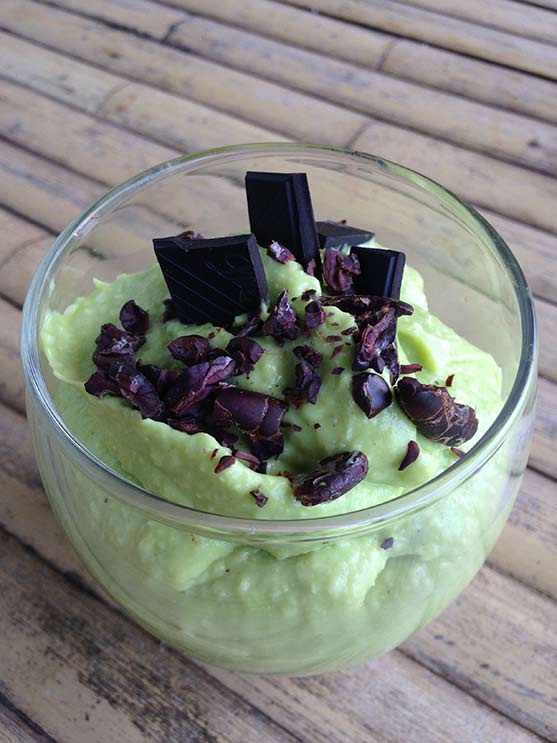 This vegan avocado mousse is super simple to make and totally delicious. Full of healthy fats to support the nervous system, it also gives you beautiful skin and hair. I love it as breakfast but it can also be a great healthy, sugar-free treat.
What you need
1/2 ripe avocado
1/2 cup young coconut flesh
Caco nibs for topping (optional)
What you do
– Blend all your ingredients in your hight speed blender.
– Add a dash of filtered water or coconut water if needed.
– Pour in a nice glass and garnish with some cacao nibs or and chocolate chunks.
Note: If you’d like a sweeter taste, you can add half a banana to the preparation or any sweetener of your choice.
Above is a video of Dr. Christina Sanchez, a molecular biologist at Compultense University in Madrid, Spain, clearly explaining how THC (the main psychoactive constitute of the cannabis plant) completely kills cancer cells.
Not long ago, we published an article examining a case study recently published where doctors used cannabis to treat Leukemia, you can read more about that here (http://www.collective-evolution.com/2014/02/10/cannabis-helped-treat-leukemia-in-teenage-girl-doctors-publish-case-study/). To read more articles and view studies about how cannabis is an effective treatment and cure for cancer, click here (http://www.collective-evolution.com/?s=Cannabis+Cancer).
Cannabinoids refer to any of group of related compounds that include cannabinol and the active constituents of cannabis. They activate cannabinoid receptors in the body. The body itself produces compounds called endocannabinoids and they play a role in many processes within the body that help to create a healthy environment. I think it’s also important to note that cannabis has been shown to treat cancer without any psychoactive effects.
Cannabinoids have been proven to reduce cancer cells as they have a great impact on the rebuilding of the immune system. Although not every strain of cannabis has the same effect, more and more patients are seeing success in cancer reduction in a short period of time by using cannabis. Contrary to popular belief, smoking cannabis does not assist a great deal in treating disease within the body as therapeutic levels cannot be reached through smoking. Creating oil from the plant or eating the plant is the best way to go about getting the necessary ingredients, the cannabinoids.
The world has come a long way with regards to accepting this plant as a medicine rather than a harmful substance. It’s a plant that could benefit the planet in more ways than one. Cannabis is not something offered in the same regard as chemotherapy, but more people are becoming aware if it, which is why it’s so important to continue to spread information like this. Nobody can really deny the tremendous healing power of this plant.
Find Your Magic
Tarot Readings, Inspiration, and Self-Empowerment
Making life on earth magick one moon phase at a time.
Astrologer ~ Mystic ~ Writer
of the Collegium Spiritus Sancti, a Golden Dawn Society
An affiliate of the Alpha et Omega Order of Melchizedek
All Knowledge Is Not Contained In Only One School
Connecting the grant community to #LearnGrants
Channelings & Articles
Magic Spell Books & Grimoires
Native Hawaiian Language Revitalization
Poetry & Tales of Love, Mystery, Magic and Spirituality
Organic Herbs, Herbals, Sustainable Gardening
Mother Nature: Feeding The Mind, Body & Soul, with Food, Medicine & Skincare.
"Inheritor of a Dying World, we call thee to the Living Beauty. Wanderer in the Wild Darkness, we call thee to the Gentle Light..."
Time is the most important thing we've been given
Embracing the Divine Within.
"...That I should bear witness to the truth." - John 18:37 // David E. Robinson, Publisher

 Hālau 'Aha Hui Lānākila