Just For Today … Mindfulness

magical child
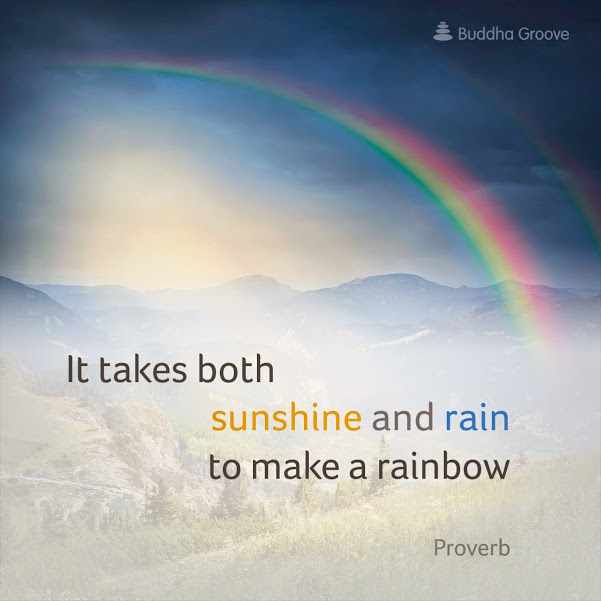
BE MINDFUL. Be mindful of your own daily ups and downs, the joys and pains, and how that it’s what makes up the circle of life.

As Mark Twain once said,”What is joy without sorrow? What is health without illness? You have to experience each if you are to appreciate the other. There is always going to be suffering. It’s how you look at your suffering, how you deal with it, that will define you.”

“The deeper that sorrow carves into your being, the more joy you can contain.” — Kahil Gabran


DISCUSSION ~ CHAKRA SYSTEM ~ A Closer Look At The Chakras And How They Influence Your Life

meditating chakras_3Each of your Chakras has its own unique “personality”, each controlling a specific aspect of your life. So if you’re experiencing any form of physical or mental shortcomings, limitations or challenges in your life, there’s a high chance one of your Chakras is weak or closed.

But how do you tell which of your Chakras are strong, and which need repairing? Simple–take a good look at the circumstances in your life.

Use the guide below and evaluate yourself.

The Foot Chakra influences your unique life experience.

Location: Below the feet

The little known ‘Foot Chakra’ or Chakra 0 that supports you in standing and living your truth.

Energies: Earth, grounding, structure

You know your Foot Chakra is STRONG when you stand by your convictions and beliefs. You are grounded and focused on the tasks at hand, and get things done your way in a timely and efficient manner. You are able to manifest and attract to you what is needed, grounding your positive desires and affirmations and live a life of comfort.

You know your Foot Chakra is WEAK or CLOSED when you face difficulty manifesting the things you want in life. You have trouble accomplishing things and feel unsure of your convictions or directions. You suffer from lack of focus and drive, which may be stopping you from making decisions, facing up to challenges or generally moving forward with your life.

The Root Chakra influences your career and money mindset.

Location: Base of the spinePrimarily influences your career, money mindset and sense of belonging.

Energies: Earth, grounding, focusing, centering

You know your Root Chakra is STRONG when you love your career and get rewarded for being so good at it. Everybody envies you for your uncanny ability to make, save and invest money. You always have more than enough money to go on holiday and buy what you want, without feeling guilty afterwards. You always feel wanted and loved by your friends and family, and you feel good about yourself when you look in the mirror, both physically and emotionally.

You know your Root Chakra is WEAK or CLOSED when you’re stuck in an unfulfilling and unrewarding career, and you never seem to have enough money–which leaves you worried and in debt. Spending money is a harrowing experience for you, as you doubt your ability to budget effectively. You suffer from weight or body issues, which leave you feeling unworthy and uncomfortable in your own skin.

The Sacral Chakra influences your sexuality.

Location: Lower abdomen
The energy center of sexuality and pleasure.
Energies: Water, energizing, charging

You know your Sacral Chakra is STRONG when you see sex in a positive light, as a glorious, pleasurable and healthy activity. You enjoy passionate, frequent and long-lasting sex with your partner. Orgasms are mind-blowing, and you and your partner often orgasm at the same moment. You make time to have sex at least a few times a week, even if you’ve been married or attached to the same person for years. You are always able to attract the right partners–compatible people who nourish you, fill you with joy and make you a better person.

You know your Sacral Chakra is WEAK or CLOSED when the thought of sex conjures images of guilt and pain in your mind. You rarely have the time or inclination to have sex, and when you do, it’s lackluster. You and your partner rarely orgasm at the same time, and premature or delayed ejaculation may be a frequent problem. You struggle to see yourself as ‘sexy’, and sometimes wonder how anyone could desire you. Your partners are often wrong and incompatible for you, and you find yourself wondering if you’ll ever find “the one”.

The Personal Power Chakra influences your self-esteem.

Location: Above the navel
Influences your personal power and ability to channel
Energies: Fire, energizing, charging, lends energy

You know your Personal Power Chakra is STRONG when you are admired for your confidence and healthy self-esteem, both in your career and personal life. You’re never afraid to speak your mind, and you empower those around you to do the same. Your family, colleagues and community see you as a charismatic individual, determined to use your charisma and power for making the world a better place.

You know your Personal Power Chakra is WEAK or CLOSED when you struggle with self-esteem issues, and feelings of unworthiness. You tend to question yourself when faced with important decisions like whether to move to another city, change your career, get married to your partner or to have children. You feel like a victim in the world, and often feel powerless to circumstances and other people’s desires. You may also suffer from frequent stomach pains and stomach anxiety.

The Heart Chakra influences your relationships.

Location: Center of the chest
The Chakra for love, relationships and self-acceptance.
Energies: Water, calming, soothes, relaxes

You know your Heart Chakra is STRONG when you enjoy comfortable, loving and empathic relationships at home, at work and in your community. You get along with your family. Your friends see you as a reliable person. At work, you’re known as the one people can talk to. You feel a heartfelt sense of gratitude for how wonderful your life is, and feel compassion for all around you.

You know your Heart Chakra is WEAK or CLOSED when you tend to sabotage your relationships with distrust, anger, and a sense that you’ll lose your independence if you rely too much on others. You may struggle with commitment, experience frequent fights or misunderstandings with your loved ones, and always keep yourself “on guard” in case you get hurt by someone.

The Throat Chakra influences your self-expression.

Location: Throat
“The Chakra of your “true voice”
Energies: Water, calming, soothes, relaxes

You know your Throat Chakra is STRONG when you are good at voicing out your thoughts, ideas and emotions to those around you. You’re admired for your willpower and strong communication skills, and your conviction to speak the truth, even if it may be uncomfortable to some. Your career and personal life are enriched as a result.

You know your Throat Chakra is WEAK or CLOSED when you constantly feel like nobody cares about your opinions, and that you have nothing of value to say. You’re likely to be known as the ‘quiet one’ in your professional and social circles, and you frequently settle with following other people’s opinions. You often suffer from a blocked and sore throat.

The Intuitive Chakra influences your intuition.

Location: Center of the forehead
This Chakra acts as your inner compass
Energies: Air, meditative, intuition, promotes thought

You know your Intuitive Chakra is STRONG when you are able to make accurate intuitive decisions and evaluations about your career, your family and the intentions of other people. You often know things without knowing exactly how you know them, and you have a clear sense of direction and clarity in everything that you do. You have a vivid picture of where your life is headed, and the people around you are likely to rely on you for guidance and advice.

You know your Intuitive Chakra is WEAK or CLOSED if you feel lost and helpless when faced with decisions and judgment calls. You are indecisive, uncommitted and unconfident of the decisions you end up making, because you have a history of making the wrong ones. You feel spiritually lost, and your true purpose is unclear to you. You often get headaches and feel tension in your brow area.

The Crown Chakra influences your connection to source.

Location: Top of the head
The Chakra of divine consciousness.
Energies: Air, meditative, intuition, promotes thought

You know your Crown Chakra is STRONG when you perpetually feel connected to a higher power, be it God, Universal Consciousness or simply your higher self. As you go through your daily life, you are always reminded that you are being watched over, and you feel immense gratitude for the universal love and appreciation you feel towards yourself and others. Others describe you as “glowing”.

You know your Crown Chakra is WEAK or CLOSED when you feel little or no connection to a higher power, and always feel alone. You feel unworthy of spiritual help, and perhaps even angry that your higher power has abandoned you. You often suffer from migraines and tension headaches.
 

Just for Today … Innovate!

kitesINNOVATE.  A kite flies because of pressure dynamics in the air, but the string facilitates that condition. Cut the string and it will crash. In other words, constraints can be guides. Placing limitations on processes is not normally associated with innovation. However, as explained in this article, setting boundaries and playing within them can foster creative solutions to complex problems, encourage a sense of humility in acknowledging the things that one cannot do, and even drive one towards “perfection”.

There are no limitations to the mind except those we acknowledge.


Just For Today … Indulge Your Inner Child

aar3Channel your child-like self and ask a courageous question about the world! Share your question as a comment to this posting, or with your family and friends, and feel free to post their responses here, too.

Do animals like sheep and cows have accents? Why do we cry? Is new technology always good? The art of asking big questions often comes from brave little people who are innocent to the complexities of the answers. Sometimes, it takes a whole book and the world’s leading experts to respond to these simple yet profound inquiries about life, nature, and the cosmos …

“Joy in the universe, and keen curiosity about it all – that has been my religion.” — John Burroughs


Just For Today ~ Be Change

TO THE LIGHT Jose GonzalezBe proactive.  Look for solutions to the problems your community faces, rather than call on someone else to solve them.

For too long, too many of us have been entranced by heroes. Perhaps it’s our desire to not have to do the hard work, to rely on someone else to figure things out. But perhaps it’s time for us to face the truth of our situation — that we’re all in this together, that we all have a voice — and figure out how to mobilize the hearts and minds of everyone in our workplaces and communities.

“I alone cannot change the world, but I can cast a stone across the waters to create many ripples.”  — Mother Teresa


Just For Today … Focus on Personal Connection

be present
Nurture kindness through personal connection.  Try to bring awareness to those moments of disconnectedness. Or, alternately, why not designate an hour of your day to go ‘hands free’ instead?

Years ago, we didn’t have to try so hard to stay connected. People lived in neighborhoods, and there weren’t many strangers that didn’t ultimately become friends. We watched over one another with relationships built upon a foundation of shared interdependence, ensuring plenty of kindness to go around. Sadly though, through our own scientific progress, we now live in an age of ‘connected disconnection.’ Even the most basic of needs are provided by faceless entities. But, at what cost?

“We are all so much together, but we are all dying of loneliness.”  — Albert Schweitzer


This is how nurturing kindness through personal connection looks … how ’bout it?

JUST FOR TODAY … Sing!

Apple-world nature artwork by blankenho
Find a song that expresses how you feel about a loved one and share that song with them.

We all have a story.  When we listen, and listen well enough to take our  words and turn them into art, and sing it back to those with whom we interact, something happens. Alchemy through heightened communication … the spark of creative innovation … and it’s powerful.

“Music is what feelings sound like.”  — Georgia Cates


Just For Today ~ Take Up A Hobby

gatitodelfin

Take up a hobby. You need play time. Slowly make a point to began an activity that you’ve always found interesting – be it gardening, cooking, reading, or participating in some type of sport.

When thinking of ways to create a better and healthier lifestyle, oftentimes people tend to think in terms of cutting back on certain choices, be it eating desserts, drinking alcohol, or perhaps just sitting on the couch watching TV. But one area in life that has been almost cut out entirely is something that actually should have never been cast aside — having a hobby. Not only is it a fulfilling, sometimes creative outlet, but it is also beneficial to your overall health.

“Get interested in something. Shake yourself awake. Develop a hobby. Let the winds of enthusiasm sweep through you. Live today with gusto.” — Dale Carnegie


JUST FOR TODAY …

cat_cockatooExperiment in slowing down the pace of your life today.


Images flash at us from every direction — from our social media accounts to advertisements on the road, and we have little time to take in anything. Seeing is not the whole story of learning — it takes time to process what we see. When we give ourselves time, on any subject, not just art, a new world of detail and understanding opens up to our consciousness. And, that kind of patience in education — learning how to slow down — is an essential part of a good education.

Nothing really worth having comes quickly and easily; If it did, I doubt that we would ever grow.

JUST FOR TODAY … It’s About Hope

Blue Trees Path, Great Smoky Mountains National Park, Tennessee

Instead of feeling overwhelmed by your circumstances, take a moment to invite the practice of hope into your day.

Hope is among the strongest human emotions. Research shows it’s good for our physical and emotional well being. And it’s often the ‘thread’ that pulls us through. Traditionally hope has been thought to be one of those things that you either have … or, you don’t. But, what if hope can be learned?  Psychology research reveals that yes, hope is a skill you can acquire. It is active—you can cultivate and nourish it. It is multifaceted—there are 14 distinct aspects, according to Researcher Anthony Scioli, a professor of psychology at Keene State College in New Hampshire and author of The Power of Hope. It is self-perpetuating—hopeful people tend to be more resilient, more trusting, more open, and more motivated than those less hopeful, so they are likely to receive more from the world, which in turn makes them more hopeful—which is why it’s so important.

“Hope is the thing with feathers. That perches in the soul.  And sings the tune without the words.  And never stops at all.”   – Emily Dickinson


JUST FOR TODAY ….

EVENING MEDITATION (30 mins.) ~ Just for Today … If we are a global village, everything you do affects others. This week notice how your dreams and actions affect other people. You can bring light if you choose to.

Stories about the human colonization of other worlds were popular in the 1950s, with a promise of material abundance, and much of the population of the Western world excited about the possibilities offered by new technologies and a beneficial, authoritative science. That humans could extend their reach to other worlds seemed inevitable progress. Today, the popular faith in science and technology has drained away, to be replaced by a widespread, if often unspoken, fear. We have opened the box and seen where our ambition leads, and though we might quickly close it again and look away, it is too late in the day for any kind of innocence. We must move past the delusions of society.

“All that we are is the result of what we have thought. The mind is everything. What we think we become.”  ~ The Buddha

JUST FOR TODAY …

balloons girlGo on adventures, splash through those puddles, or play outdoors until the streetlights come on. These are just a few ways in which you might find, and embrace, your inner child again.

Do you remember how wonderful it felt to be a child? Adventure was our only calling, and courage seemed never ending. And subsequently, we seemed to enjoy our life so much more. Incorporate your younger self back into the joy of your daily being.

Life is more fun if you play games!


Just For Today … Be Creative!

creativity
Creativity is not found just in the chosen few who exhibit artistic talent. It is a force that flows through every single one of us, allowing us to dream things up and make them happen. This week, look for an opportunity to use your hands and your creativity to make something you would normally buy.

Do you consider yourself creative? If you answer, “no,” you are in the majority; most people don’t think they are creative. It turns out, though, that you don’t have to be a great artist to be creative. Creativity is simply our ability to dream things up and make them happen. Cooking breakfast, planting a garden, even developing a business plan are all creative acts. Creative expression boosts serotonin levels, decreases anxiety, and opens the door to the inner world of our imaginations. It is here that we make meaning of our lives and that motivation takes root. The more creative we are, the more capacity we have to imagine what’s possible and make those visions real.

When did you stop singing? When did you stop dancing? When did you stop telling your story? When did you stop sitting in silence? Numerous studies show that activities like drawing and creative writing—even knitting—raise serotonin levels and decrease anxiety.

Creative expression opens the door to the inner world of our imaginations. It is here that we make meaning of our lives. It is here that motivation takes root. The more creative we are, the more capacity we have to imagine what’s possible and make those visions real.


Just For Today …

Anti-social
Let your definition of play expand this week, as you find the fun side of everything you do.

Did you know that the rough-and-tumble play of children actually prevents violent behavior? Play is actually a science unto itself, because it can grow human talents and character across a lifetime. To any other parent that’s listening with a young child, you know, say a child over 3 but under 12, I ask you to think about this: if you just observe the children and don’t try and direct them, and watch what it is they like to do in play, you often will see a key to their innate talents. And if those talents are given fairly free reign, then you see that there is a union between self and talent … that this is nature’s way of sort of saying this is who you are and what you are. I’m sure if you go back and think about both of your children or yourself and go back to your earliest emotion-laden, visual, and visceral memories of what really gave you joy, you’ll have some sense of what was natural for you and where your talents lie. When crucial experiences are missed, the ability to regulate emotions and to establish empathy and to live with trust with one’s companions is definitely attenuated, or definitely constricted.

“Play is often talked about as if it were a relief from serious learning. But for children play is serious learning. Play is really the work of childhood.” ~ Fred Rogers


Just For Today …

breaking day rainbowPay attention to your breathing and the feeling of your body, and investigate the sensations of being alive.

The matter of being alive is something to be investigated. I think we take it for granted too much. That we’re going to wake up in the morning and just go on, do our stuff, run around, go to our jobs, have careers, and all that … In my work I’m trying to find the unmediated self. I think there are aspects of self that are unchanged, that echo the past, the present and the future. I’m interested in that part of reality, not the culturally created one, although that’s a layer.

Be an artist:  make the invisible visible.

Just For Today …

Rainbow_proverbMake it a point to try and form a new habit that will create a positive effect on either your, or someone else’s life.

Have you ever wanted to change a bad habit or perhaps just form a new, good habit, but then found that you lack the discipline to stick to your intention? if so changing that pattern might not be as difficult as you think.

“We are what we repeatedly do. Excellence then, is not an act, but a habit.”  ~  Aristotle


The Key To Awakening: Awaken The Master Navigator In YOU

the_deep_sleep_dreaming_by_MrsCullen

You are in a sleep, a sleep that is far from ordinary … But a feeling inside moved you to question the world around you … It made you restless and set you out on your search. That part of you is your Navigator here to rouse you from that sleep.

“The Universe left you a secret key.”

Do you want to know what this key is?

What if I told you it is something you already have? In fact, it is something you have probably heard of before, but cast it aside. Perhaps others discouraged you from using it. I wonder what you will do with it if I tell you. Will you listen to your Navigator and use it or push it back under the doormat and forever lock yourself out from awakening? The Universe gave us all a sense so that we can move to the place where the sleeper exists and bring back the knowledge we needed. It gave us the sixth sense. The sixth sense is the missing link that will open the door to awakening.

How does a Sleeper awaken?

The Navigator tells us what we need to do.

It guides and directs us through life, and we must learn to enhance that sense. We must enhance that
sense ….

~ Eric Pepin


Just For Today …

divine light columnTry to see the things that happen to you in life, both the good and the bad things, as opportunities to practice responding with love.

When you look at your life … if you think about all the details of what happened to you, you will find that there was a time where you had the extra cup of coffee, where if you hadn’t, you wouldn’t have met Person A. Your life depends on how you react to those opportunities and challenges that the randomness presents to you. If you’re awake and paying attention, you will find that things happen. They might seem good, they might seem bad but the important thing is how you react to it. It’s all about our search for Beauty … through free will, consciousness, chaos, beauty, spirituality … and Star Trek.


“Mankind’s greatest gift, also its greatest curse, is that we have free choice. We can make our choices built from love or from fear.” ~ Elisabeth Kubler-Ross


JUST FOR TODAY …

3 sleeping birds
Instead of checking your email or social media the next time you have a free moment, savor the feeling and discomfort of “being bored.” Write down any insights you learn in that moment.

When was the last time you were bored — truly bored — and didn’t instantly spring to fill your psychic emptiness by checking Facebook or Twitter or Instagram? The last time you stood in line at the store or the boarding gate or the theater and didn’t reach for your smartphone seeking deliverance from the dreary prospect of forced idleness? But boredom might not be as not as bad as it seems; in fact, it could be a good thing, which is rather counterintuitive to much that we have learned as adults about what makes life interesting. It is a state we need to reckon with if we want to know ourselves more intimately, and it has the potential to bring us to the present moment.

“The present moment is filled with joy and happiness. If you are attentive, you will see it.”  ~ Thich Nhat Hanh

JUST FOR TODAY …

green shade tree - Dragana BiočaninDo one thing today that you have been procrastinating for awhile.

People often say that they want options. When it comes to getting things done, however, options aren’t always a good thing. When everything is a possibility, it actually becomes harder to make the right choice (or any choice at all). This is the paradox of choice. But, when we place a constraint on ourselves, it can become much easier to get something done. This is especially true if it is a constraint that forces us to start small. Constraints can make it easier to stick to good habits by eliminating the number of decisions you need to make to move forward. We often think that we want an open road and the ability to choose any direction for ourselves. But sometimes, what we need is a tunnel that can reduce our choices and send us in a focused direction.

“It is one of the unexpected disasters of the modern age that our new unparalleled access to information has come at the price of our capacity to concentrate on anything much.” ~ Alain de Botton


JUST FOR TODAY …

fly away
Spend some time with someone you look to as an elder.

As life-prolonging technologies continue to lengthen our stay on earth, we still are learning how to confront the challenges of longer lives. How do we preserve human dignity and joy as our bodies struggle with the inevitable decline of age?

“Wrinkles should merely indicate where smiles have been.”  ~ Mark Twain

Zatorre and Salimpoor ~ “Why Music Makes Our Brains Sing”

By Robert J. Zatorre and Valorie N. Salimpoor

MUSIC is not tangible. You can’t eat it, drink it or mate with it. It doesn’t protect against the rain, wind or cold. It doesn’t vanquish predators or mend broken bones. And yet humans have always prized music — or well beyond prized, loved it.

In the modern age we spend great sums of money to attend concerts, download music files, play instruments and listen to our favorite artists whether we’re in a subway or salon. But even in Paleolithic times, people invested significant time and effort to create music, as the discovery of flutes carved from animal bones would suggest.

So why does this thingless “thing” — at its core, a mere sequence of sounds — hold such potentially enormous intrinsic value?

The quick and easy explanation is that music brings a unique pleasure to humans. Of course, that still leaves the question of why. But for that, neuroscience is starting to provide some answers.

More than a decade ago, our research team used brain imaging to show that music that people described as highly emotional engaged the reward system deep in their brains — activating subcortical nuclei known to be important in reward, motivation and emotion. Subsequently we found that listening to what might be called “peak emotional moments” in music — that moment when you feel a “chill” of pleasure to a musical passage — causes the release of the neurotransmitter dopamine, an essential signaling molecule in the brain.

When pleasurable music is heard, dopamine is released in the striatum — an ancient part of the brain found in other vertebrates as well — which is known to respond to naturally rewarding stimuli like food and sex and which is artificially targeted by drugs like cocaine and amphetamine.

But what may be most interesting here is when this neurotransmitter is released: not only when the music rises to a peak emotional moment, but also several seconds before, during what we might call the anticipation phase.

The idea that reward is partly related to anticipation (or the prediction of a desired outcome) has a long history in neuroscience. Making good predictions about the outcome of one’s actions would seem to be essential in the context of survival, after all. And dopamine neurons, both in humans and other animals, play a role in recording which of our predictions turn out to be correct.

To dig deeper into how music engages the brain’s reward system, we designed a study to mimic online music purchasing. Our goal was to determine what goes on in the brain when someone hears a new piece of music and decides he likes it enough to buy it.

We used music-recommendation programs to customize the selections to our listeners’ preferences, which turned out to be indie and electronic music, matching Montreal’s hip music scene. And we found that neural activity within the striatum — the reward-related structure — was directly proportional to the amount of money people were willing to spend.

But more interesting still was the cross talk between this structure and the auditory cortex, which also increased for songs that were ultimately purchased compared with those that were not.

Why the auditory cortex? Some 50 years ago, Wilder Penfield, the famed neurosurgeon and the founder of the Montreal Neurological Institute, reported that when neurosurgical patients received electrical stimulation to the auditory cortex while they were awake, they would sometimes report hearing music. Dr. Penfield’s observations, along with those of many others, suggest that musical information is likely to be represented in these brain regions.

The auditory cortex is also active when we imagine a tune: think of the first four notes of Beethoven’s Fifth Symphony — your cortex is abuzz! This ability allows us not only to experience music even when it’s physically absent, but also to invent new compositions and to reimagine how a piece might sound with a different tempo or instrumentation.

We also know that these areas of the brain encode the abstract relationships between sounds — for instance, the particular sound pattern that makes a major chord major, regardless of the key or instrument. Other studies show distinctive neural responses from similar regions when there is an unexpected break in a repetitive pattern of sounds, or in a chord progression. This is akin to what happens if you hear someone play a wrong note — easily noticeable even in an unfamiliar piece of music.

These cortical circuits allow us to make predictions about coming events on the basis of past events. They are thought to accumulate musical information over our lifetime, creating templates of the statistical regularities that are present in the music of our culture and enabling us to understand the music we hear in relation to our stored mental representations of the music we’ve heard.

So each act of listening to music may be thought of as both recapitulating the past and predicting the future. When we listen to music, these brain networks actively create expectations based on our stored knowledge.

Composers and performers intuitively understand this: they manipulate these prediction mechanisms to give us what we want — or to surprise us, perhaps even with something better.

In the cross talk between our cortical systems, which analyze patterns and yield expectations, and our ancient reward and motivational systems, may lie the answer to the question: does a particular piece of music move us?

When that answer is yes, there is little — in those moments of listening, at least — that we value more.

Robert J. Zatorre is a professor of neuroscience at the Montreal Neurological Institute and Hospital at McGill University. Valorie N. Salimpoor is a postdoctoral neuroscientist at the Baycrest Health Sciences’ Rotman Research Institute in Toronto.