
jaggati — to watch, to lie awake, to watch over,
i.e., to tend, to nourish, rear, bring up
jaggati — to watch, to lie awake, to watch over,
i.e., to tend, to nourish, rear, bring up

Those souls who do decide to remain with the Earth are going through a spiritual awakening. For some, it begins with coming to a realization that there is more to life than the nine to five workplace and raising a family.
The popularized rite of passage known as the “mid-life crisis” is an example of a partial spiritual awakening that occurs in much of your population.

Because Earth’s own survival is now threatened (from a lower density point of view), a series of Divine Dispensations have been granted, allowing the Earth to move into fourth density.
This implies that only those souls vibrating at fourth density and above will be allowed to incarnate on Earth from this point forward (from December 21, 2012 onward).
Yes, you have souls from every conceivable level of consciousness here, from extremely ignorant to sublimely enlightened.
You also have souls who have dedicated themselves to paths of darkness and so-called “evil.” In this case, the word “evil” means, “Having a conscious intent to hold souls back on their spiritual evolution.”

You must remember, dear Creators, that Earth has been a melting pot for souls from all over the Universe, including many of the renegades and rejects from other worlds.
Souls that do not fit into the order and structure of a particular world have often been sent to Earth.

I replace my anger with understanding and compassion.
 #18 — Gu — decay/corruption/repair
Above: Gen quiet mountain; unshakable, steady, firm, and still
Below : Sun root; standing on a firm platform to achieve a slow and nourishing penetration into the heart of the matter.
The Wisdom:
There is one thing you can count on: all things change.
The root of the situation is breaking down.
This is in the natural order;
No blame, no fear, don’t try to stop it or slow it down.
In the past, when you have been confronted with situations that are falling apart and not working, you have called on tried and true methods to make repairs and clear the way. The old ways are no longer working, as times, energy, and world intent have drastically changed—and this is just the beginning
Dangerous times such as these bring opportunity for creative transformation. Take a look at the foundation of your creations. Examine your health, business, relationships, and state of mind to see if there is some hidden decay beginning to eat away at what you have built and worked so hard for. You are bound to find corruption at the foundation of your ways of thinking that must be repaired and renewed. If you do not see it or find it, you are either not looking hard enough or looking in the wrong places.
As you enter into the internal archeology of the heart and soul, you are getting the feeling of being thwarted in your movement forward and this is causing angst and fear to arise. The churning in the belly, or what you smell and feel burning like acid at the back of your throat is fear. This overpowering sense that is waking you in the night, or distracting you in your daily toil is a signal that you must call on all your resources to access those hidden recesses where there is decay or weakness in your matrix, so you can make a plan of reconstruction, change your ways of thinking and interacting with others, and embrace your fears until they turn into light. You are a light being, a spiritual warrior, now act like one.
Having a plan is vital now. In the original text of the oracle, the Yi Jing, the ideograms for this hexagram indicate to “wait three days” before you make any move to repair the decaying components. The reference to “three days” means a period of contemplation, meditation, and concentration. This is good advice as the weirdness of what is going on is not like any other time. Normally when we spot something that is out of order, our first thought is to move immediately to fix it. In this situation, however, that would not be of benefit as things are not normal. They are, in fact, strange, very strange. If you move too quickly, you will glide over the fine points that need attention, or you may, in your hurry to get out of the discomfort of disrepair, totally miss seeing the actual, true root of the corruption, as it may be masked by pain and suffering. It may be an idea has been corrupted, or it may be that a person involved in your plan has been corrupted by greed or infatuation, or it may be you. Whatever the case, you are called upon to move without fear as the spiritual warrior into the heart of the matter and thoroughly look to your own actions to see that you are not being spurred on by fear, avarice, or greed.
Note well that three days is a brilliant metaphor for slowing down, going into contemplation, and being mindful. In actuality you can do this in just one session of stillness. The important thing is to not jump in too fast. Take your time and open your heart. When you find an aspect of your situation that brings up fear or shame, then you’ve hit on it—this is exactly where you need to address the present breakdown of your very foundation and beliefs. Now go into it heart first. It may mean a change of approach or way of thinking. It may mean rooting out people or situations that are not in harmony with the true you at this time. This is the action that brings change for the better, which places you right where you need to be to work for your own clarity, and for progress in your relationships with tribe and associates.
Everything that manifests as reality begins as a thought form—everything. And we are suffering and living under a very screwed-up view of what reality really is. So in a very real sense you are what you think: Change your way of thinking. This is a time of great opportunity. If you miss this train it will not serve you well; it could, in fact, destroy what you hold close as your wisdom and truth. Do not fear admitting that you totally bought into the global lie; this isn’t about beating yourself up. To the contrary, you have only to admit this to yourself, and then take action to correct your habitual, programmed thinking. No worries about timing; you are right on time.
Be unrelentingly honest with yourself about your recent behavior and ways of thinking. Look at the problems of the past and how your patterned thoughts (and those of the collective tortured reality), stale and childish bad habits, and fear of being your authentic self have held you back and have placed a burden on others and made them miserable. No blame, you can change it up now. You have a window of opportunity now to recognize these negative attitudes, actions, and beliefs and replace them with the truth you are channeling and believe it. Timing and consideration are of utmost importance, as this cycle will soon end and a new one will begin. So, start now.
Look into the past
And examine what has
Led to this period of dissolution.
Liberate negative emotions by acknowledging them.
The words you think are much more powerful then the words you say.
A great and joyous transformation awaits you on your path. Do not let what lies ahead daunt you or cause you to stop because of fear of failure or fear of success. Look evil in the face and raise a swift metaphoric or real kick to the groin.
To make your foundation strong and steady at this important juncture, look to what led you here. From this vantage point you can see clearly where you diverted from the path of authenticity and truth. Then, apply the antidote. And yes, you have it. The greatest curative is an open heart, where your thoughts have no judgment or blame, of either self or others. And when those little devils appear and appear, as they must at a time like this, recognize them, take a deep breath, and then do a ritual to let them go, using focused intent and the power of creative ceremony. Will them away. Your will and intent for the greater good will roll over any negative person, thought form, organized urban terrorists or the obstacles that society places in front of you to suck the fight out of you with its promise for greatness without work, riches that come easy or love that is too good to be true. And when you take the risk to do this, you will be free to give and receive love in grand measures as you proceed on your path toward bliss, accomplishment, and abundance in all things.
And know this: You do not have to come to a full stop in your life to accomplish the tasks before you. Proceed with your work and take time to have fun. Make time for finding yourself in joy. Dance with life and dance with love, as the full galactic universe is playing the tune, and all you have to do is shut up and listen and act on what you hear, see, and feel. Fellow pilgrims, we spiritual warriors are coming home. We are the Warrior Generation. Breathe it, feel it and be it…and the “it” of which I speak and write is Love.
Peace…
BobbyK

I let go of my anger so I can see clearly.
 Dreaming, after all, is a form of planning …

Sukhā matteyyatā loke,
atho petteyyatā sukhā,
sukhā sāmaññatā loke,
atho brahmaññatā sukhā.
In this world, good it is to serve one’s mother,
good it is to serve one’s father,
good it is to serve the monks and nuns,
and good it is to serve the holy ones.
Dhammapada 23.332
The Dhammapada: The Buddha’s Path of Wisdom,
translated from the Pali by Acharya Buddharakkhita

We can no longer prosper by increasing human productivity. The more we try to do, the more poverty we will create. As a species, we humans possess some unique capacities. We can stand apart from what’s going on, think about it, question it, imagine things being different. We are also curious. We want to know “why?” We figure out “how.” We think about what’s past … we dream forward to the future. We create what we want rather than just accept what is. So far, we’re the only species we know that does this. But as the world speeds up, we’re forfeiting these wonderful human capacities … Do you equate productivity with speed?
Slowing down just might be the difference between ideas and action …
Now that you’ve contemplated this, take three slow breaths, and smile.
 Following my intuition and my heart keeps me safe and sound.
On this Solstice, we bow to Divine Mother in Gratitude for all that has come and is coming to fruition … Namastasyai, namastasyai, namastasyai, namo namaha …

Sabbapāpassa akaraṇaṃ,
kusalassa upasampadā,
sacittapariyodapanaṃ —
etaṃ buddhāna sāsanaṃ.
To avoid all evil,
to cultivate good,
and to purify one’s mind —
this is the teaching of the Buddhas.
Dhammapada 14.183
The Dhammapada: The Buddha’s Path of Wisdom,
translated from the Pali by Acharya Buddharakkhita

maddava — mild, gentle, soft

I trust my inner light and intuition to guide me.

ajjava — straight, upright, direct, honest

Pāpañce puriso kayirā,
na naṃ kayirā punappunaṃ.
Na tamhi chandaṃ kayirātha,
dukkho pāpassa uccayo.
Should a person commit evil,
let one not do it again and again.
Let one not find pleasure therein,
for painful is the accumulation of evil.
Dhammapada 9.117
The Dhammapada: The Buddha’s Path of Wisdom,
translated from the Pali by Acharya Buddharakkhita
Interview with the priest John Shelby Spong (3 mins.) — INTERESTING PERSPECTIVE to consider.

The past has no power and no hold over me anymore.

Put aside your old ways of using your eyes and ears and nose, tongue, body, and mind to focus on issues outside there in the world, to get your knowledge about the world, to figure out how to gain what you want out of the world — and of course getting complacent and careless when you get what you want, and upset when you don’t, and trying to find new ways of getting it. Now we want to use our eyes, ears, nose, tongue, body, and mind for other purposes, just to see the processes of the senses as they happen, in and of themselves. Look at them in a way that highlights the movements of the mind, how the mind makes a choice, and how it enforces that choice, how it justifies that choice to itself.
All these processes are going on all the time, but we usually don’t look at them because our attention is focused somewhere else far away. So stay right here at the breath, because this is a great place to observe all these other things. The Buddha makes a comparison to six kinds of animals. If you tie them all to leashes and tie the leashes together, the animals will all pull in their various directions to feed. The crocodile will want to go down to feed in the river, the monkey will want to go climb up to feed in the tree, the hyena will want to go to feed in a charnel ground, and so on. Depending on which animal is the strongest, the others get dragged along.
But if you tie them all to an immovable post, then no matter how hard they pull, they all end up staying right there at the post. The post here is mindfulness immersed in the body. The prime way of immersing mindfulness in the body is to be mindful of the breath. When you stay with the breath, you can detect the pull that goes out the eyes, ears, nose, tongue, body, or mind to past and future, to your likes and dislikes. But you don’t have to give in to that pull because you’ve got a place where you can stay grounded and secure. […]
These things are all here to be observed. They’re all happening all the time. But to see them we have to change our focus. To change our focus requires a change of heart, telling ourselves that this really is important, much more important than things outside. That’s what conviction is all about. Appropriate attention is the change of focus; conviction, the change of heart. You make up your mind — and your heart — that this is an important issue that’s got to be resolved, and this is the way to do it.
——
Reflection:
What does using our senses to see the process of the senses mean to you?
Can you share an experience where staying with your breath allowed you to be more aware of where you were being pulled, and to act with true freedom?
How can we get immovable in ‘mindfulness immersed in the body’?

I know that peaceful sleep awaits me in dreamland.
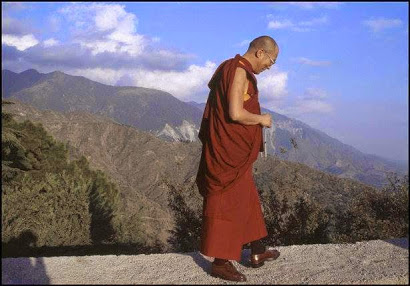
I pray for all of us, oppressor and friend,
that together we may succeed in building a better world
through human understanding and love,
and that in doing so we may reduce
the pain and suffering of all sentient beings.
Be kind whenever possible. It is always possible.
~ Dalai Lama

Delish and one of my summer favs! As a Veggie, I would simply substitute the pork with a protein substitute, such as Tempeh, Seitan or seasoned Tofu.

These wraps are a really nice end to a hot day. Simple, filling and refreshing.
Teriyaki Pork Lettuce Wraps
1 pound boneless country style pork spare ribs
2 tablespoons sesame oil
a little seasoning salt and pepper
1 cup teriyaki sauce (recipe below)
romaine or butter lettuce leaves, whole
1 cup cilantro leaves, chopped
2 carrots, peeled and grated
3 Tbsp Mae Ploy Sweet Chili Sauce
1 sheet rice sticks pasta
¼ cup chopped peanuts
In a large bowl, soak rice sticks in water (filtered if your water quality is poor). In a small bowl, stir grated carrot together with Mae Ploy Sauce. Once rice sticks have softened, transfer to colander and drain completely.


Heat a large skillet to medium heat. Rinse pork ribs and sprinkle with seasoning salt and pepper. Heat sesame oil in pan and cook pork, 3-5 minutes per side, until brown. Pour Teriyaki…
View original post 209 more words

Inner peace begins the moment you choose
not to allow another person or event to control your emotions.

Every flower is a soul blossoming in nature.

Giving up is easy and always an option so let us delay it for another day.
Selo yathā ekaghano vātena na samīrati,
evaṃ nindāpasaṃsāsu na samiñjanti paṇḍitā.
Just as a solid rock is not shaken by the storm,
even so the wise are not affected by praise or blame.
Dhammapada 6.81
The Dhammapada: The Buddha’s Path of Wisdom,
translated from the Pali by Acharya Buddharakkhita

Transform your mornings from a hectic routine of chaos,
into a tranquil time for preparing to face the day.
I have a glass of water, start the coffee, then meditate. Then I enjoy the coffee, a good book, and the quiet before the dust and din and steam of the day begins. Then I write.
This is my Lovely Morning, and I get an inordinate amount of pleasure from it.
It wasn’t always this way: I used to wake later, rush through a grumpy routine before diving into email and work and errands and meetings. It was frenetic and dreadful, but that was my life, and I didn’t think it would change.
I was wrong. I’ve changed my mornings for the better, with a few simple ideas.
I’ll share them with you here, and if you begin to enjoy the peace of your mornings more, send a smile in my general direction.
If your mornings are rushed, the simple solution is to get up a bit earlier. This means going to bed a bit earlier too. Do it gradually, just 10 minutes earlier a week, and you’ll barely notice the change.
By Leo Babauta
 There’s a myriad of methods for meditation. Some are easy and some are difficult. All require daily practice to perfect. Here are five of the most popular methods of meditation and what they each bring to the Meditation Table. Here’s why You Should Mix them for Maximum Mindfulness.
Mindfulness, or Spiritual Method:
A most popular method comes from Buddhist meditation practice of Vipassana. It’s all about practicing detachment from each thought and being centered in the “here and now.” It focuses on situational awareness and “in the moment” presence. There is also a focus on communion with the cosmos, which can translate to prayer, but not necessarily. The best way to commune with the universe is to ask questions as opposed to seeking answers. In the mindfulness method, answers are mere side-effects of good questioning.
How to: One can practice mindfulness in any position, even lying down. The key is presence with the present moment, and clear and concise communion with the cosmos.
Zen or Zazen Method:
Also from the Buddhist tradition, this method is all about simply sitting. It is often done for long periods of time. Its focus is mostly on posture and spine alignment with minimal focus on breathing techniques. It is the most monastic of all the methods and is therefore difficult to make progress in. Most monks practice this method while concentrating on a Zen koan or spiritual parable.
How to: The most effective positioning of the body for the practice of Zazen is the stable, symmetrical position of the seated Buddha. Keeping the back straight and centered, pretend a silver thread is pulled taut through your spine and up through your head, connecting to the ceiling.
Kundalini or Transcendental Method:
This method comes from the Vedanta Hinduism tradition and ties into different forms of Yoga practices. It focuses more on breathing patterns than the previous methods, using the power of breathing to launch one into a higher sense of self, or even a transformation of self. The electromagnetic field created by the human body is akin to the electromagnetic field created by the Earth. Transcendental method is all about tapping into the stream of energy naturally created by the relationship between the human body’s energy chakras with the environment’s energy vortexes. The main focus of this method is to ride this rising stream into infinity, to learn what needs to be learned, and then to return to the finite realms with new-knowledge in tow.
How to: Breathing is primary. Positioning is secondary. Relax your body, take three deep breaths; then proceed to take deep breaths and hold them for at least ten seconds each. This allows for the oxygen to cleanse the chakras and then release toxins through exhalation, while increasing kundalini energy.
Fractal Enlightenment| There’s a myriad of methods for meditation. Some are easy and some are difficult. All require daily practice to perfect. Here are five of the most popular methods of meditation and what they each bring to the Meditation Table. Here’s why You Should Mix them for Maximum Mindfulness.
Mindfulness, or Spiritual Method:
A most popular method comes from Buddhist meditation practice of Vipassana. It’s all about practicing detachment from each thought and being centered in the “here and now.” It focuses on situational awareness and “in the moment” presence. There is also a focus on communion with the cosmos, which can translate to prayer, but not necessarily. The best way to commune with the universe is to ask questions as opposed to seeking answers. In the mindfulness method, answers are mere side-effects of good questioning.
How to: One can practice mindfulness in any position, even lying down. The key is presence with the present moment, and clear and concise communion with the cosmos.
– See more at: http://www.spiritscienceandmetaphysics.com/5-meaningful-methods-of-meditation/#sthash.VMrUBuh9.dpuf
Qigong Method or Movement Method:
This method comes from the Taoist tradition. It is all about hyper-focus on breathing techniques and/or bodily movements to cultivate and maintain life energy. This is the most philosophical of the methods, deriving most of its techniques from martial arts and meditative healing methods. It focuses on moving Qi (life force) through the body through focused breathing, mental techniques, and precise movements. This method is all about the balance and equilibrium of both inner and outer forces.
How to: No matter what Qi exercise you’re doing, imagine the Qi moving through your body as you breathe in an out. As you inhale through your nose, imagine the Qi moving through your body and down to your Lower Dantian, or naval area. As you exhale through your mouth imagine the Qi moving through the rest of your body. Repeat.
Drumming and/or Om Method:
This may be the oldest form of meditation known to humanity. The drumming method is typically used by native and aboriginal cultures, and is generally shamanic in nature. The Om method is traditionally from Vedanta Hinduism, though the sound itself is fairly universal to mankind. These methods focus on breathing and heart rhythm in accordance with, or even dissonance with, the sound and feel of the percussion or mantra.
The heart beat itself is a drum. Breathing is a drum beat that we can control. These two methods are all about transformation through vibration and the awareness of cosmic frequencies. Shamans often use drum meditation to cross physical, mental, and spiritual thresholds. It’s a bridge that carries them to a higher sense of self in accordance with the greater cosmos.
How to: Create a sacred place. Clear your mind. Breathe with intent. If you’re the drummer, infuse your intention into the drum before drumming. Begin playing or listening to the drum. Give yourself a few minutes to fall into rhythm with the beat. Fade your drumming into silence, feeling your body’s response to the beat, then return to the drum. Repeat with clear intent.
There you have it: a minor helping of meditative methods. Each have specific techniques, but they all overlap in various ways. One of the keys to becoming a meditative master is to use all the methods to your advantage, while also allowing for personal creativity by giving your meditation a signature as unique as your own fingerprint.
Remember: the heartbeat that sustains your life is acting on the same frequency that sustains the universe. The heart with which you feel God is the same heart with which God feels you. May the Om be with you.
By Gary Z McGee
As written by Mariana Caplan, Ph.D. It is a jungle out there, and it is no less true about spiritual life than any other aspect of life. Do we really think that just because someone has been meditating for five years, or doing 10 years of yoga practice, that they will be any less neurotic than the next person? At best, perhaps they will be a little bit more aware of it. A little bit.
It is for this reason that I spent the last 15 years of my life researching and writing books on cultivating discernment on the spiritual path in all the gritty areas–power, sex, enlightenment, gurus, scandals, psychology, neurosis — as well as earnest, but just plain confused and unconscious, motivations on the path. My partner (author and teacher Marc Gafni) and I are developing a new series of books, courses and practices to bring further clarification to these issues.
Several years ago, I spent a summer living and working in South Africa. Upon my arrival I was instantly confronted by the visceral reality that I was in the country with the highest murder rate in the world, where rape was common and more than half the population was HIV-positive — men and women, gays and straights alike.
As I have come to know hundreds of spiritual teachers and thousands of spiritual practitioners through my work and travels, I have been struck by the way in which our spiritual views, perspectives and experiences become similarly “infected” by “conceptual contaminants” — comprising a confused and immature relationship to complex spiritual principles can seem as invisible and insidious as a sexually transmitted disease.
The following 10 categorizations are not intended to be definitive but are offered as a tool for becoming aware of some of the most common spiritually transmitted diseases.
1. Fast-Food Spirituality: Mix spirituality with a culture that celebrates speed, multitasking and instant gratification and the result is likely to be fast-food spirituality. Fast-food spirituality is a product of the common and understandable fantasy that relief from the suffering of our human condition can be quick and easy. One thing is clear, however: spiritual transformation cannot be had in a quick fix.
2. Faux Spirituality: Faux spirituality is the tendency to talk, dress and act as we imagine a spiritual person would. It is a kind of imitation spirituality that mimics spiritual realization in the way that leopard-skin fabric imitates the genuine skin of a leopard.
3. Confused Motivations: Although our desire to grow is genuine and pure, it often gets mixed with lesser motivations, including the wish to be loved, the desire to belong, the need to fill our internal emptiness, the belief that the spiritual path will remove our suffering and spiritual ambition, the wish to be special, to be better than, to be “the one.”
4. Identifying with Spiritual Experiences: In this disease, the ego identifies with our spiritual experience and takes it as its own, and we begin to believe that we are embodying insights that have arisen within us at certain times. In most cases, it does not last indefinitely, although it tends to endure for longer periods of time in those who believe themselves to be enlightened and/or who function as spiritual teachers.
5. The Spiritualized Ego: This disease occurs when the very structure of the egoic personality becomes deeply embedded with spiritual concepts and ideas. The result is an egoic structure that is “bullet-proof.” When the ego becomes spiritualized, we are invulnerable to help, new input, or constructive feedback. We become impenetrable human beings and are stunted in our spiritual growth, all in the name of spirituality.
6. Mass Production of Spiritual Teachers: There are a number of current trendy spiritual traditions that produce people who believe themselves to be at a level of spiritual enlightenment, or mastery, that is far beyond their actual level. This disease functions like a spiritual conveyor belt: put on this glow, get that insight, and — bam! — you’re enlightened and ready to enlighten others in similar fashion. The problem is not that such teachers instruct but that they represent themselves as having achieved spiritual mastery.
7. Spiritual Pride: Spiritual pride arises when the practitioner, through years of labored effort, has actually attained a certain level of wisdom and uses that attainment to justify shutting down to further experience. A feeling of “spiritual superiority” is another symptom of this spiritually transmitted disease. It manifests as a subtle feeling that “I am better, more wise and above others because I am spiritual.”
8. Group Mind: Also described as groupthink, cultic mentality or ashram disease, group mind is an insidious virus that contains many elements of traditional co-dependence. A spiritual group makes subtle and unconscious agreements regarding the correct ways to think, talk, dress, and act. Individuals and groups infected with “group mind” reject individuals, attitudes, and circumstances that do not conform to the often unwritten rules of the group.
9. The Chosen-People Complex: The chosen people complex is not limited to Jews. It is the belief that “Our group is more spiritually evolved, powerful, enlightened and, simply put, better than any other group.” There is an important distinction between the recognition that one has found the right path, teacher or community for themselves, and having found The One.
10. The Deadly Virus: “I Have Arrived”: This disease is so potent that it has the capacity to be terminal and deadly to our spiritual evolution. This is the belief that “I have arrived” at the final goal of the spiritual path. Our spiritual progress ends at the point where this belief becomes crystallized in our psyche, for the moment we begin to believe that we have reached the end of the path, further growth ceases.
“The essence of love is perception,” according to the teachings of Marc Gafni, “Therefore the essence of self love is self perception. You can only fall in love with someone you can see clearly–including yourself. To love is to have eyes to see. It is only when you see yourself clearly that you can begin to love yourself.”
It is in the spirit of Marc’s teaching that I believe that a critical part of learning discernment on the spiritual path is discovering the pervasive illnesses of ego and self-deception that are in all of us. That is when we need a sense of humor and the support of real spiritual friends. As we face our obstacles to spiritual growth, there are times when it is easy to fall into a sense of despair and self-diminishment and lose our confidence on the path. We must keep the faith, in ourselves and in others, in order to really make a difference in this world.
Source: Huffington Post
– See more at: http://www.spiritscienceandmetaphysics.com/10-spiritually-transmitted-diseases/#sthash.BS8FUzAq.dpuf
As written by Mariana Caplan, Ph.D. It is a jungle out there, and it is no less true about spiritual life than any other aspect of life. Do we really think that just because someone has been meditating for five years, or doing 10 years of yoga practice, that they will be any less neurotic than the next person? At best, perhaps they will be a little bit more aware of it. A little bit.
It is for this reason that I spent the last 15 years of my life researching and writing books on cultivating discernment on the spiritual path in all the gritty areas–power, sex, enlightenment, gurus, scandals, psychology, neurosis — as well as earnest, but just plain confused and unconscious, motivations on the path. My partner (author and teacher Marc Gafni) and I are developing a new series of books, courses and practices to bring further clarification to these issues.
Several years ago, I spent a summer living and working in South Africa. Upon my arrival I was instantly confronted by the visceral reality that I was in the country with the highest murder rate in the world, where rape was common and more than half the population was HIV-positive — men and women, gays and straights alike.
As I have come to know hundreds of spiritual teachers and thousands of spiritual practitioners through my work and travels, I have been struck by the way in which our spiritual views, perspectives and experiences become similarly “infected” by “conceptual contaminants” — comprising a confused and immature relationship to complex spiritual principles can seem as invisible and insidious as a sexually transmitted disease.
The following 10 categorizations are not intended to be definitive but are offered as a tool for becoming aware of some of the most common spiritually transmitted diseases.
1. Fast-Food Spirituality: Mix spirituality with a culture that celebrates speed, multitasking and instant gratification and the result is likely to be fast-food spirituality. Fast-food spirituality is a product of the common and understandable fantasy that relief from the suffering of our human condition can be quick and easy. One thing is clear, however: spiritual transformation cannot be had in a quick fix.
2. Faux Spirituality: Faux spirituality is the tendency to talk, dress and act as we imagine a spiritual person would. It is a kind of imitation spirituality that mimics spiritual realization in the way that leopard-skin fabric imitates the genuine skin of a leopard.
3. Confused Motivations: Although our desire to grow is genuine and pure, it often gets mixed with lesser motivations, including the wish to be loved, the desire to belong, the need to fill our internal emptiness, the belief that the spiritual path will remove our suffering and spiritual ambition, the wish to be special, to be better than, to be “the one.”
4. Identifying with Spiritual Experiences: In this disease, the ego identifies with our spiritual experience and takes it as its own, and we begin to believe that we are embodying insights that have arisen within us at certain times. In most cases, it does not last indefinitely, although it tends to endure for longer periods of time in those who believe themselves to be enlightened and/or who function as spiritual teachers.
5. The Spiritualized Ego: This disease occurs when the very structure of the egoic personality becomes deeply embedded with spiritual concepts and ideas. The result is an egoic structure that is “bullet-proof.” When the ego becomes spiritualized, we are invulnerable to help, new input, or constructive feedback. We become impenetrable human beings and are stunted in our spiritual growth, all in the name of spirituality.
6. Mass Production of Spiritual Teachers: There are a number of current trendy spiritual traditions that produce people who believe themselves to be at a level of spiritual enlightenment, or mastery, that is far beyond their actual level. This disease functions like a spiritual conveyor belt: put on this glow, get that insight, and — bam! — you’re enlightened and ready to enlighten others in similar fashion. The problem is not that such teachers instruct but that they represent themselves as having achieved spiritual mastery.
7. Spiritual Pride: Spiritual pride arises when the practitioner, through years of labored effort, has actually attained a certain level of wisdom and uses that attainment to justify shutting down to further experience. A feeling of “spiritual superiority” is another symptom of this spiritually transmitted disease. It manifests as a subtle feeling that “I am better, more wise and above others because I am spiritual.”
8. Group Mind: Also described as groupthink, cultic mentality or ashram disease, group mind is an insidious virus that contains many elements of traditional co-dependence. A spiritual group makes subtle and unconscious agreements regarding the correct ways to think, talk, dress, and act. Individuals and groups infected with “group mind” reject individuals, attitudes, and circumstances that do not conform to the often unwritten rules of the group.
9. The Chosen-People Complex: The chosen people complex is not limited to Jews. It is the belief that “Our group is more spiritually evolved, powerful, enlightened and, simply put, better than any other group.” There is an important distinction between the recognition that one has found the right path, teacher or community for themselves, and having found The One.
10. The Deadly Virus: “I Have Arrived”: This disease is so potent that it has the capacity to be terminal and deadly to our spiritual evolution. This is the belief that “I have arrived” at the final goal of the spiritual path. Our spiritual progress ends at the point where this belief becomes crystallized in our psyche, for the moment we begin to believe that we have reached the end of the path, further growth ceases.
“The essence of love is perception,” according to the teachings of Marc Gafni, “Therefore the essence of self love is self perception. You can only fall in love with someone you can see clearly–including yourself. To love is to have eyes to see. It is only when you see yourself clearly that you can begin to love yourself.”
It is in the spirit of Marc’s teaching that I believe that a critical part of learning discernment on the spiritual path is discovering the pervasive illnesses of ego and self-deception that are in all of us. That is when we need a sense of humor and the support of real spiritual friends. As we face our obstacles to spiritual growth, there are times when it is easy to fall into a sense of despair and self-diminishment and lose our confidence on the path. We must keep the faith, in ourselves and in others, in order to really make a difference in this world.
Source: Huffington Post
– See more at: http://www.spiritscienceandmetaphysics.com/10-spiritually-transmitted-diseases/#sthash.BS8FUzAq.dpuf
As written by Mariana Caplan, Ph.D. It is a jungle out there, and it is no less true about spiritual life than any other aspect of life. Do we really think that just because someone has been meditating for five years, or doing 10 years of yoga practice, that they will be any less neurotic than the next person? At best, perhaps they will be a little bit more aware of it. A little bit.
It is for this reason that I spent the last 15 years of my life researching and writing books on cultivating discernment on the spiritual path in all the gritty areas–power, sex, enlightenment, gurus, scandals, psychology, neurosis — as well as earnest, but just plain confused and unconscious, motivations on the path. My partner (author and teacher Marc Gafni) and I are developing a new series of books, courses and practices to bring further clarification to these issues.
Several years ago, I spent a summer living and working in South Africa. Upon my arrival I was instantly confronted by the visceral reality that I was in the country with the highest murder rate in the world, where rape was common and more than half the population was HIV-positive — men and women, gays and straights alike.
As I have come to know hundreds of spiritual teachers and thousands of spiritual practitioners through my work and travels, I have been struck by the way in which our spiritual views, perspectives and experiences become similarly “infected” by “conceptual contaminants” — comprising a confused and immature relationship to complex spiritual principles can seem as invisible and insidious as a sexually transmitted disease.
The following 10 categorizations are not intended to be definitive but are offered as a tool for becoming aware of some of the most common spiritually transmitted diseases.
1. Fast-Food Spirituality: Mix spirituality with a culture that celebrates speed, multitasking and instant gratification and the result is likely to be fast-food spirituality. Fast-food spirituality is a product of the common and understandable fantasy that relief from the suffering of our human condition can be quick and easy. One thing is clear, however: spiritual transformation cannot be had in a quick fix.
2. Faux Spirituality: Faux spirituality is the tendency to talk, dress and act as we imagine a spiritual person would. It is a kind of imitation spirituality that mimics spiritual realization in the way that leopard-skin fabric imitates the genuine skin of a leopard.
3. Confused Motivations: Although our desire to grow is genuine and pure, it often gets mixed with lesser motivations, including the wish to be loved, the desire to belong, the need to fill our internal emptiness, the belief that the spiritual path will remove our suffering and spiritual ambition, the wish to be special, to be better than, to be “the one.”
4. Identifying with Spiritual Experiences: In this disease, the ego identifies with our spiritual experience and takes it as its own, and we begin to believe that we are embodying insights that have arisen within us at certain times. In most cases, it does not last indefinitely, although it tends to endure for longer periods of time in those who believe themselves to be enlightened and/or who function as spiritual teachers.
5. The Spiritualized Ego: This disease occurs when the very structure of the egoic personality becomes deeply embedded with spiritual concepts and ideas. The result is an egoic structure that is “bullet-proof.” When the ego becomes spiritualized, we are invulnerable to help, new input, or constructive feedback. We become impenetrable human beings and are stunted in our spiritual growth, all in the name of spirituality.
6. Mass Production of Spiritual Teachers: There are a number of current trendy spiritual traditions that produce people who believe themselves to be at a level of spiritual enlightenment, or mastery, that is far beyond their actual level. This disease functions like a spiritual conveyor belt: put on this glow, get that insight, and — bam! — you’re enlightened and ready to enlighten others in similar fashion. The problem is not that such teachers instruct but that they represent themselves as having achieved spiritual mastery.
7. Spiritual Pride: Spiritual pride arises when the practitioner, through years of labored effort, has actually attained a certain level of wisdom and uses that attainment to justify shutting down to further experience. A feeling of “spiritual superiority” is another symptom of this spiritually transmitted disease. It manifests as a subtle feeling that “I am better, more wise and above others because I am spiritual.”
8. Group Mind: Also described as groupthink, cultic mentality or ashram disease, group mind is an insidious virus that contains many elements of traditional co-dependence. A spiritual group makes subtle and unconscious agreements regarding the correct ways to think, talk, dress, and act. Individuals and groups infected with “group mind” reject individuals, attitudes, and circumstances that do not conform to the often unwritten rules of the group.
9. The Chosen-People Complex: The chosen people complex is not limited to Jews. It is the belief that “Our group is more spiritually evolved, powerful, enlightened and, simply put, better than any other group.” There is an important distinction between the recognition that one has found the right path, teacher or community for themselves, and having found The One.
10. The Deadly Virus: “I Have Arrived”: This disease is so potent that it has the capacity to be terminal and deadly to our spiritual evolution. This is the belief that “I have arrived” at the final goal of the spiritual path. Our spiritual progress ends at the point where this belief becomes crystallized in our psyche, for the moment we begin to believe that we have reached the end of the path, further growth ceases.
“The essence of love is perception,” according to the teachings of Marc Gafni, “Therefore the essence of self love is self perception. You can only fall in love with someone you can see clearly–including yourself. To love is to have eyes to see. It is only when you see yourself clearly that you can begin to love yourself.”
It is in the spirit of Marc’s teaching that I believe that a critical part of learning discernment on the spiritual path is discovering the pervasive illnesses of ego and self-deception that are in all of us. That is when we need a sense of humor and the support of real spiritual friends. As we face our obstacles to spiritual growth, there are times when it is easy to fall into a sense of despair and self-diminishment and lose our confidence on the path. We must keep the faith, in ourselves and in others, in order to really make a difference in this world.
Source: Huffington Post
– See more at: http://www.spiritscienceandmetaphysics.com/10-spiritually-transmitted-diseases/#sthash.BS8FUzAq.dpuf

The first law of thermal dynamics states that energy cannot be created or destroyed. The Hawaiians must have known this as they believed that while the sacredness of a place could perhaps be defiled, it could never be lost. Energy extends to sacred places and the objects within them, such as pohaku. Pohaku hold a lot of power and seek to be in their proper place at all times. (Just ask anyone who has tried to bring black sand or lava pieces home with them after picking them up from Hawaiian shores. The disasters cease when these items are returned to Hawai’i Nei.) Although Hawai’i is not Mecca, Lhasa or Lourdes, the islands deserve to be recognized as the land of the gods and goddesses. The land is not just filled with sacred objects, the land itself is sacred and blessed. When one makes a journey, they must first chant to the place to which they are traveling, because no one else will ever experience what they will experience there. Every experience mixes our own personal consciousness with the sacred power of the particular place. And, in Hawai’i, there are many powerful and mysterious experiences to be had.
‘Amama ‘ua noa … Let these prayers fly!

Ka Pule No Ka Malumalu ~ Ka Pule Lokahi
The Prayer of Protection ~ The Unity Prayer
~~~
Ka Malamalama O Ke Akua E Ho’opuni Mai Ia Kakou
The Light of God surrounds us.
Ke Aloha O Ke Akua E Kipuni Mai Ia Kakou
The Love of God enfolds us.
Ka Mana O Ke Akua E Ho’opakele Mai Ia Kakou
The Power of God protects us.
Ke Alo O Ke Akua E Malama Mai Ia Kakou
The Presence of God watches over us.
Ma Kahi A Kakou, E Hele Aku Ai He Akua No.
Where we are, God is.
Amene
Amen

Energy debris can be a result of negative emotions, thoughts, occurrences, and stress that you have experienced in your space. Your house is like a sponge. Whatever transpires in your environment is absorbed into the walls, furniture, carpet, ceiling, and objects.
Frequently, these negative energies accumulate in the corners and tucked away places. Also, if you had a negative event happen recently or a lot of sadness or fear, cleanse your space immediately! Visualize space cleansing as wiping away dust bunnies from the past.
When Should You Space Cleanse?
The following situations are appropriate times to space cleanse:
After you remove clutter
After an argument
When you move into a new space
When a roommate or companion moves out
After a divorce or break-up
After an illness or death
When you buy an antique or second-hand item
Anytime you desire fresh energy for a new project or beginning.
Before implementing feng shui
How to Cleanse a Space:
Here is a simple space-cleansing technique to perform on your home, office, or even on a specific object:
Create a strong intention in your mind to clear the space in order to bring in vibrant, healthy energy.
Burn Palo Santo, Sandalwood #incense or dried #sage to disintegrate the negative energy in each room. (Buy incense imported from India, Japan or China as the energy is stronger: http://shrsl.com/?~5uvl – Wave it counterclockwise in each corner, closet, and cabinet.
You may also let one stick burn in each room. Say, “Thank you for the complete disintegration of all negative energies, thoughts, and emotions from this room now.”
After cleansing, always open East windows and doors to allow fresh energy of the sun to enter.
Light a candle to dedicate energy to your endeavors. Say your wish out loud. For example, “I am so grateful for all the love, harmony, and healthy energy pouring into my home right now.”
Imagine brilliant white light filling the whole space. Visualize your home or office as a shining star emanating light, positive energy and blessing to everyone who enters.
Feel confident that the energy in your home is fresh and ready to receive all the opportunities Summer has in store for you!
#PaloSanto is a #sacred #wood that comes from the Palo Santo trees of South America. When burned, the smoke has medicinal and therapeutic healing power. It also inspires creativity & clears negative energy. You can find some reasonably priced here: http://shrsl.com/?~5uvl

My nature is Divine; I am a spiritual being.

Jayaṃ ve maññati bālo
vācāya pharusaṃ bhaṇaṃ,
jayañcevassa taṃ hoti
yā titikkhā vijānato.
The fool thinks one has won a battle
when one bullies with harsh speech,
but knowing how to be forbearing
alone makes one victorious.
Saṃyutta Nikāya 1.189
Gemstones of the Good Dhamma,
compiled and translated by Ven. S. Dhammika
Find Your Magic
Tarot Readings, Inspiration, and Self-Empowerment
Making life on earth magick one moon phase at a time.
Astrologer ~ Mystic ~ Writer
of the Collegium Spiritus Sancti, a Golden Dawn Society
An affiliate of the Alpha et Omega Order of Melchizedek
All Knowledge Is Not Contained In Only One School
Connecting the grant community to #LearnGrants
Channelings & Articles
Magic Spell Books & Grimoires
Native Hawaiian Language Revitalization
Poetry & Tales of Love, Mystery, Magic and Spirituality
Organic Herbs, Herbals, Sustainable Gardening
Mother Nature: Feeding The Mind, Body & Soul, with Food, Medicine & Skincare.
"Inheritor of a Dying World, we call thee to the Living Beauty. Wanderer in the Wild Darkness, we call thee to the Gentle Light..."
Time is the most important thing we've been given
Embracing the Divine Within.
"...That I should bear witness to the truth." - John 18:37 // David E. Robinson, Publisher

 Hālau 'Aha Hui Lānākila